Decorative Chests and Boxes

Elaborate chests and boxes with intricate designs and materials, reflecting artistic styles from different periods, showcasing craftsmanship.
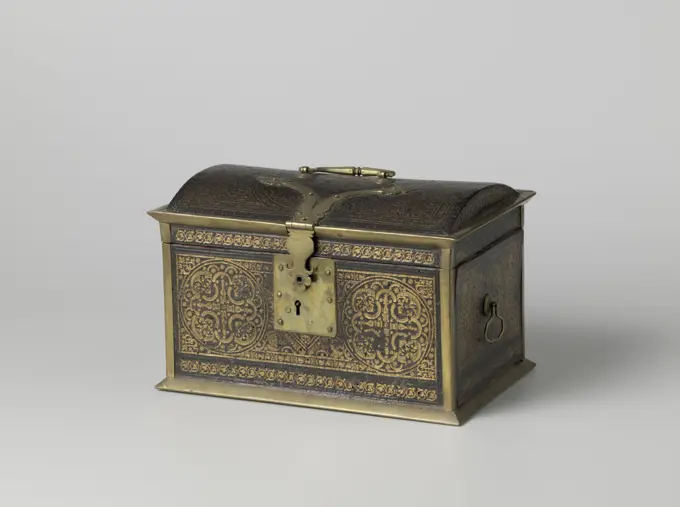
Gold leather suitcase with copper edges, anonymous, c. 1600 - c. 1625 Gold leather suitcase with bombarded lid, new copper edges.  leather. brass (alloy) Gold leather suitcase with bombarded lid, new copper edges.  leather. brass (alloy)
Gold leather suitcase with copper edges, anonymous, c. 1600 - c. 1625 Gold leather suitcase with bombarded lid, new copper edges. leather. brass (alloy) Gold leather suitcase with bombarded lid, new copper edges. leather. brass (alloy)
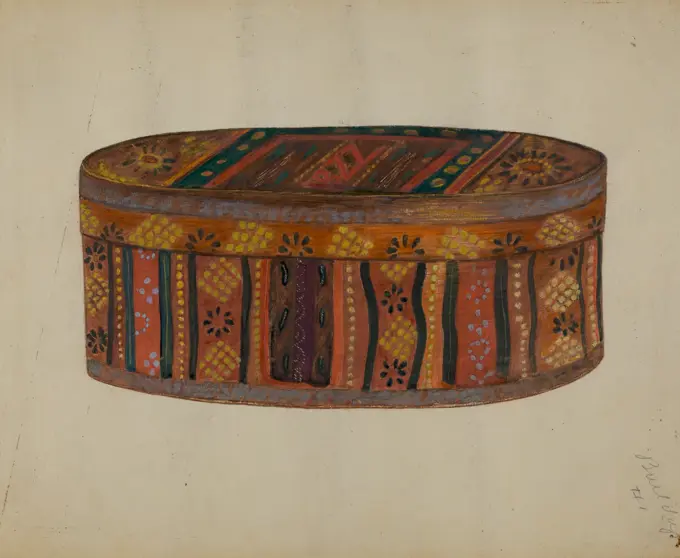
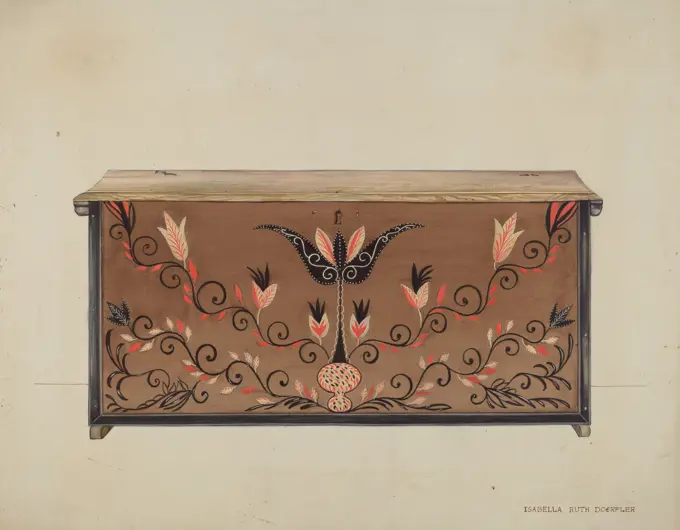
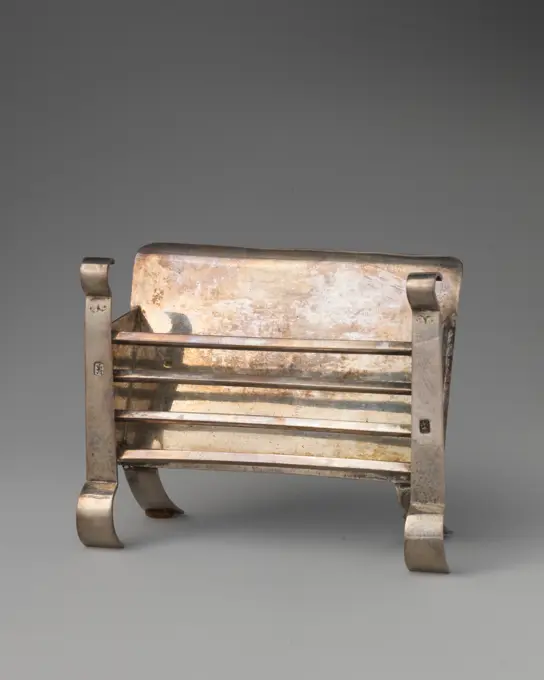
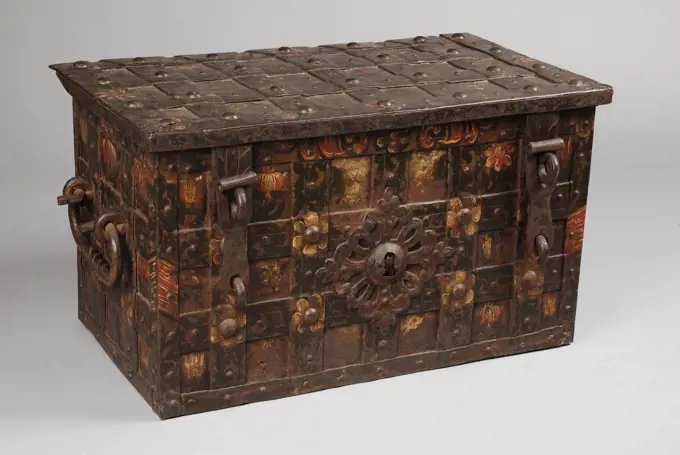
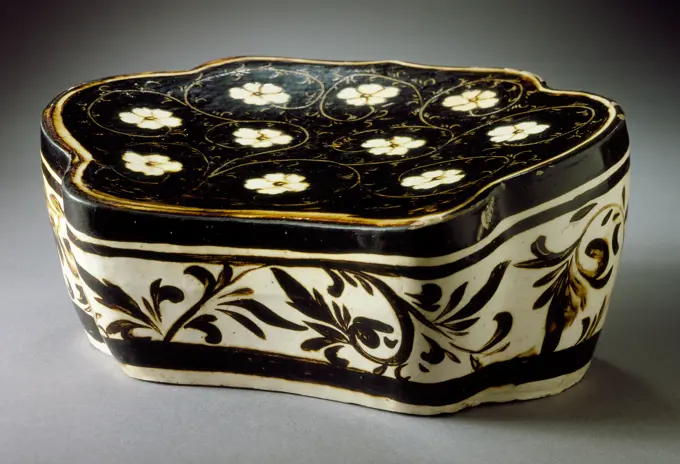
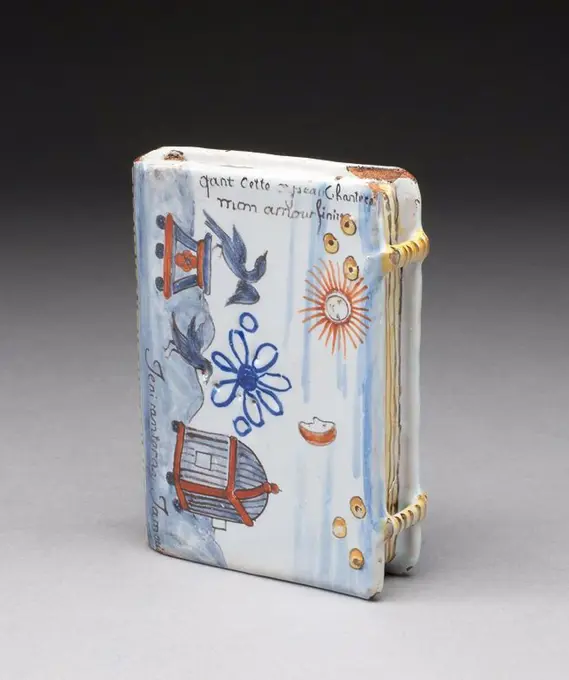
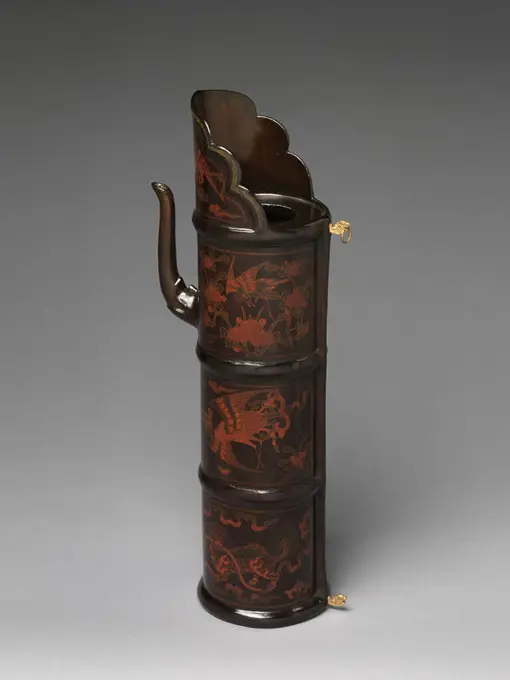
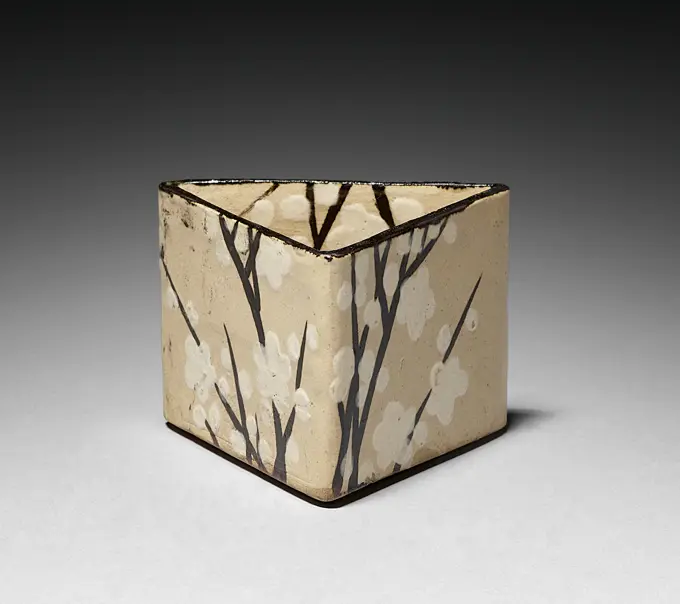
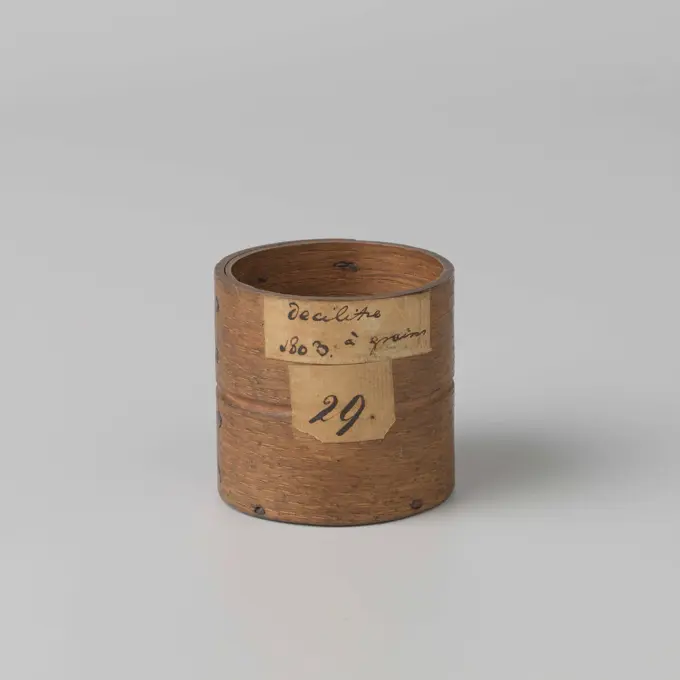
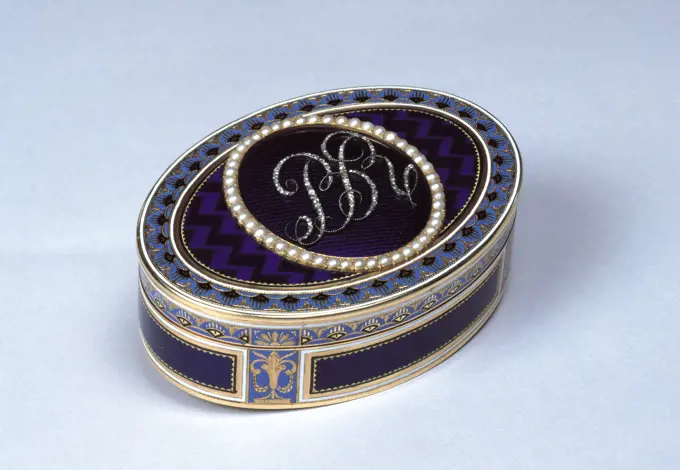
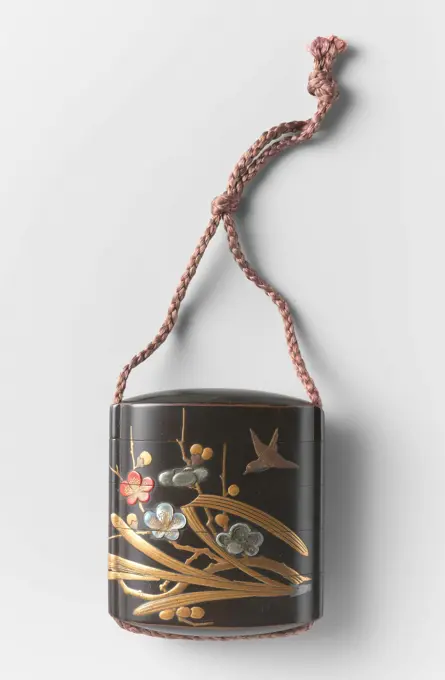
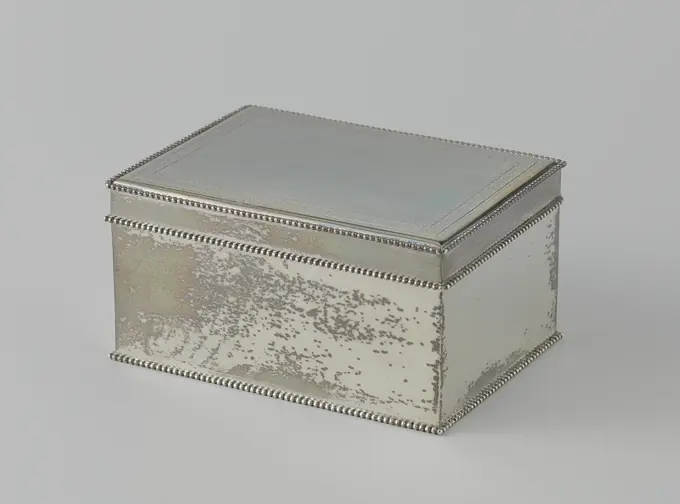
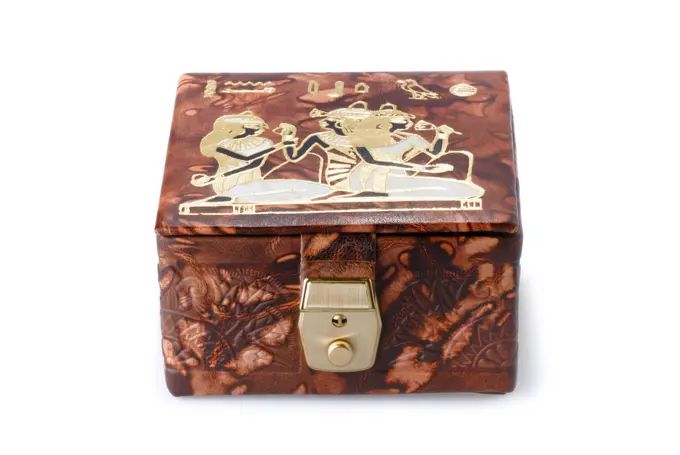
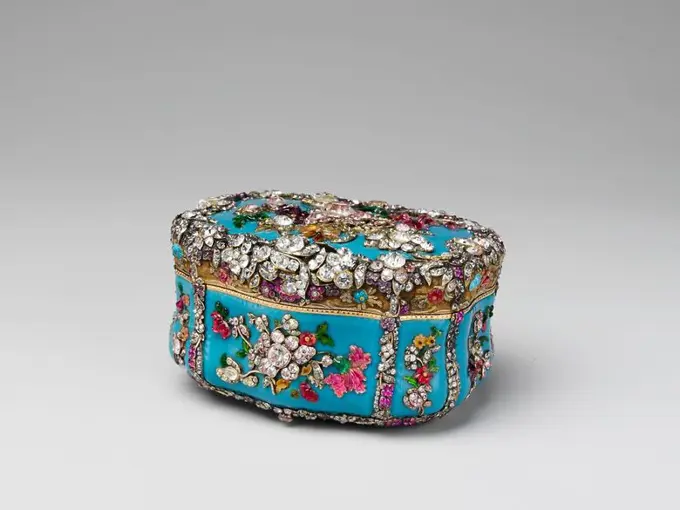
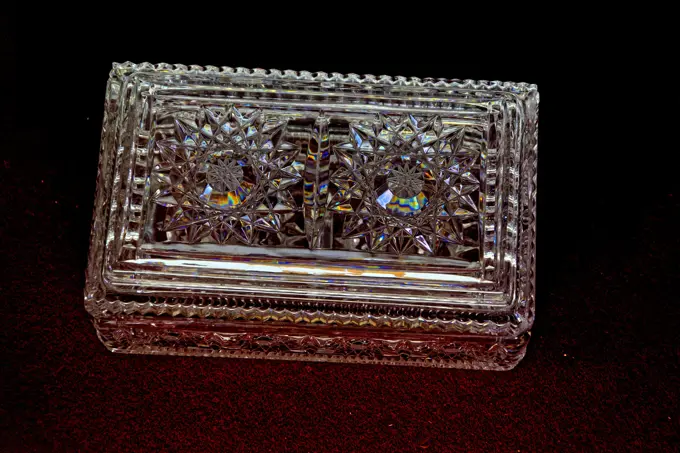
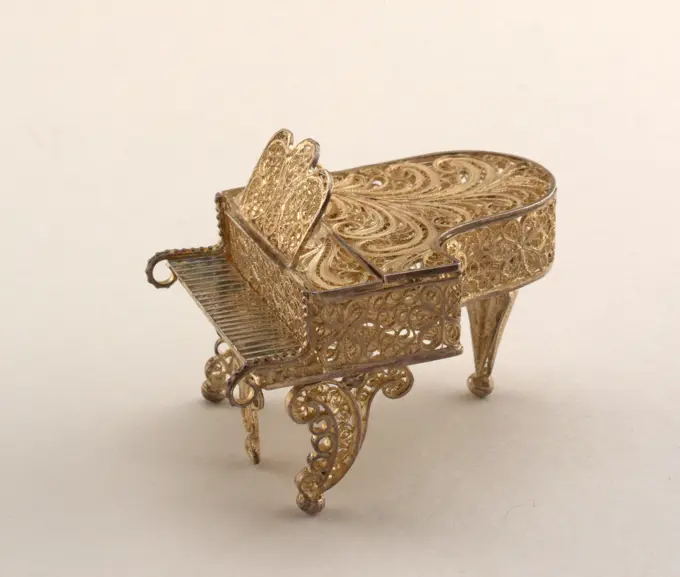
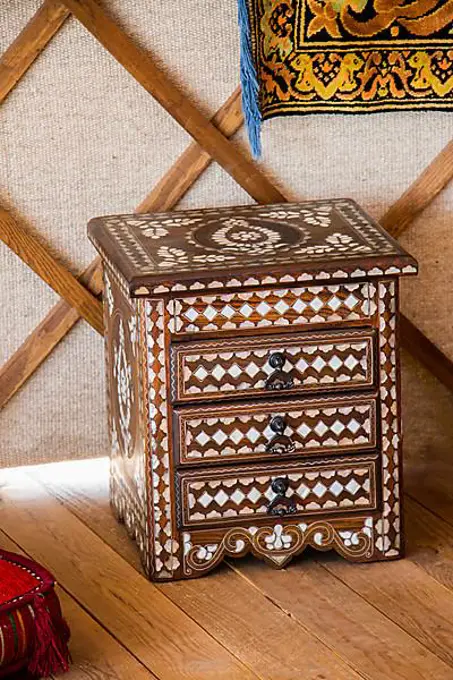
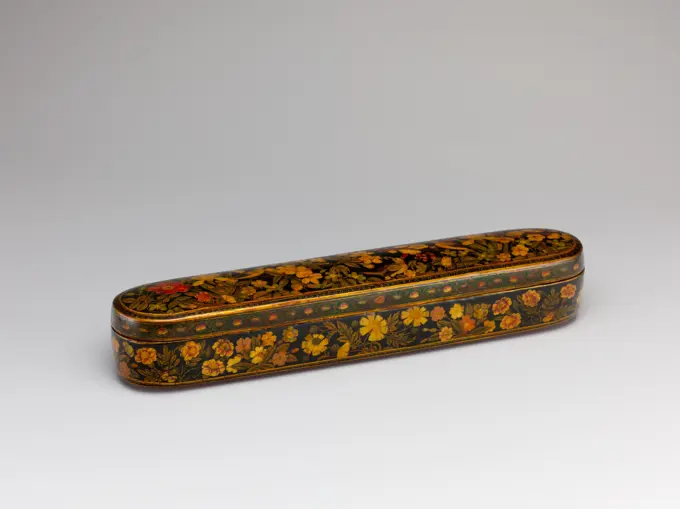
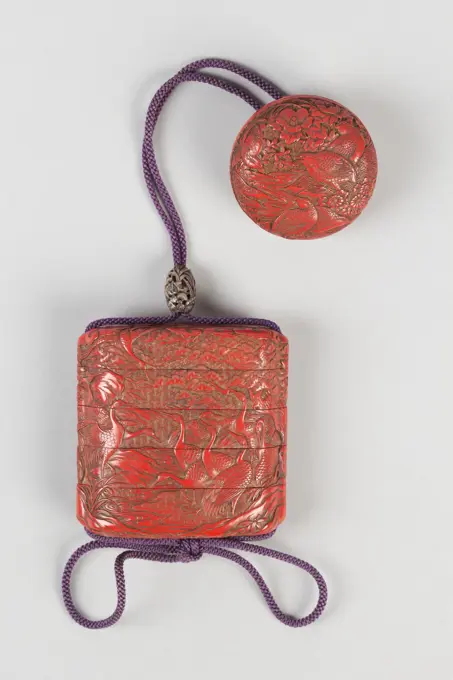
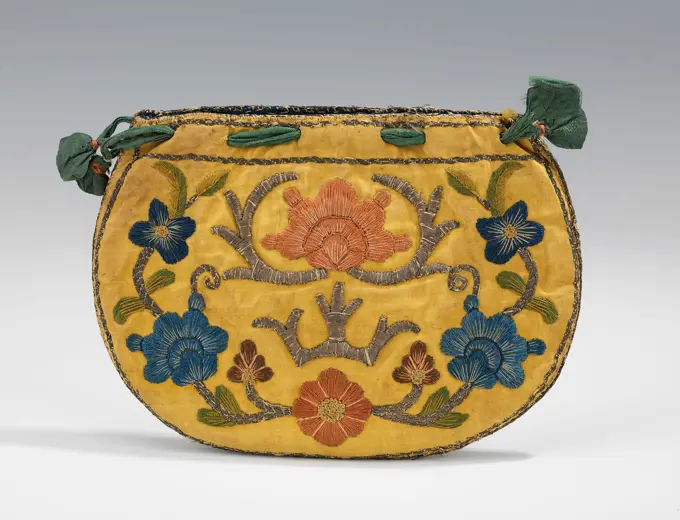
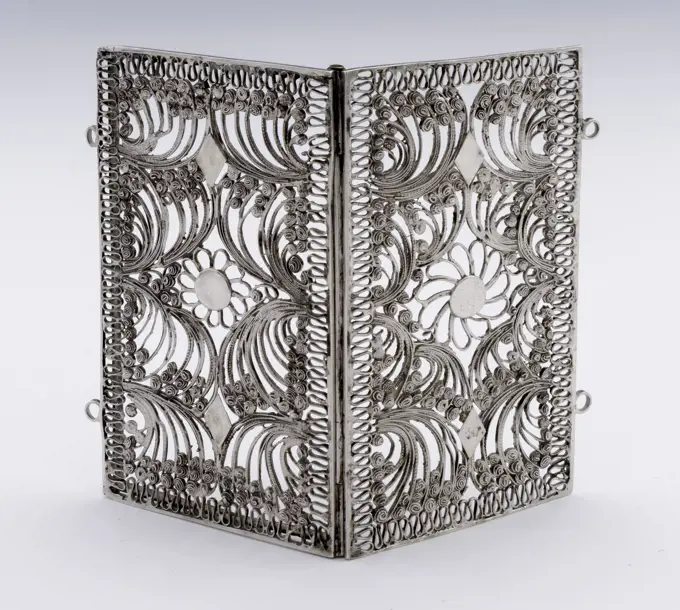
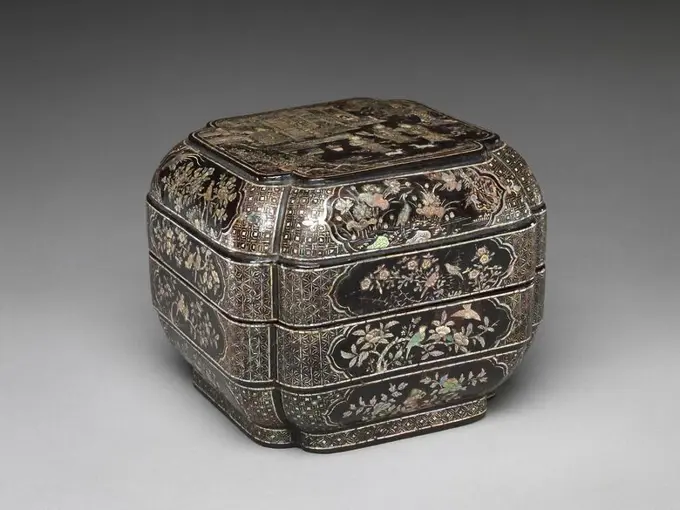
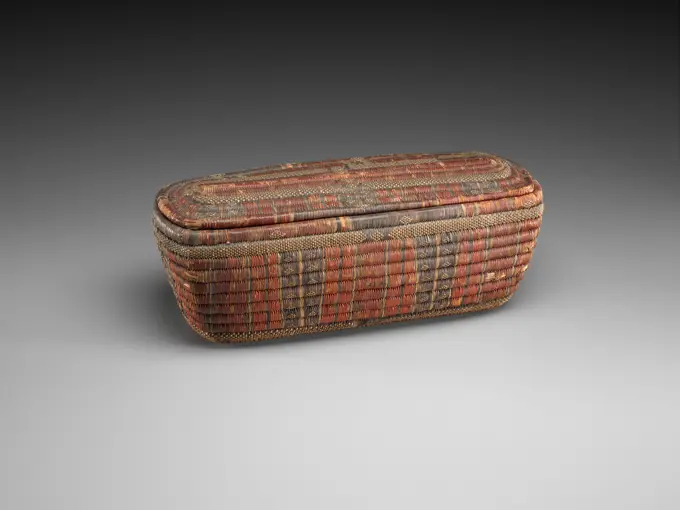
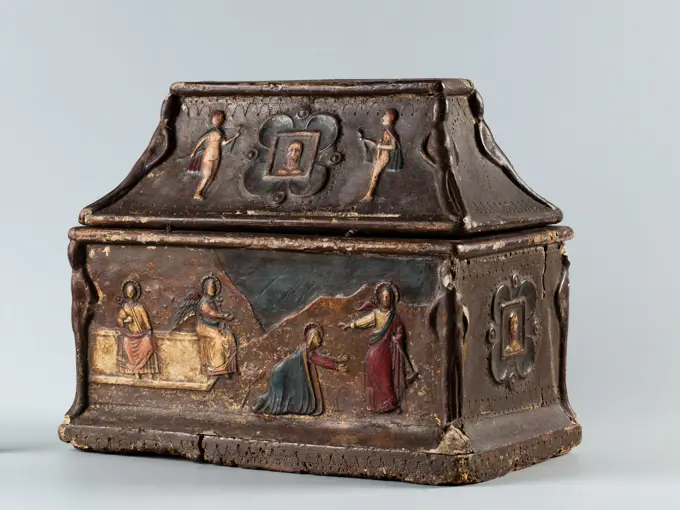
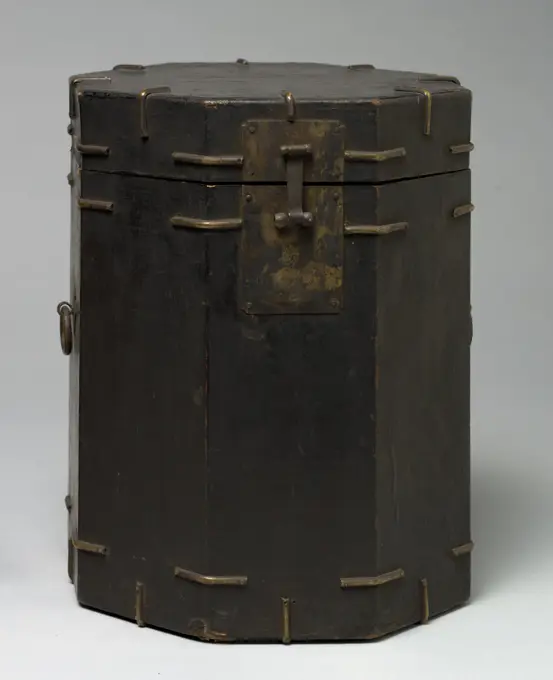
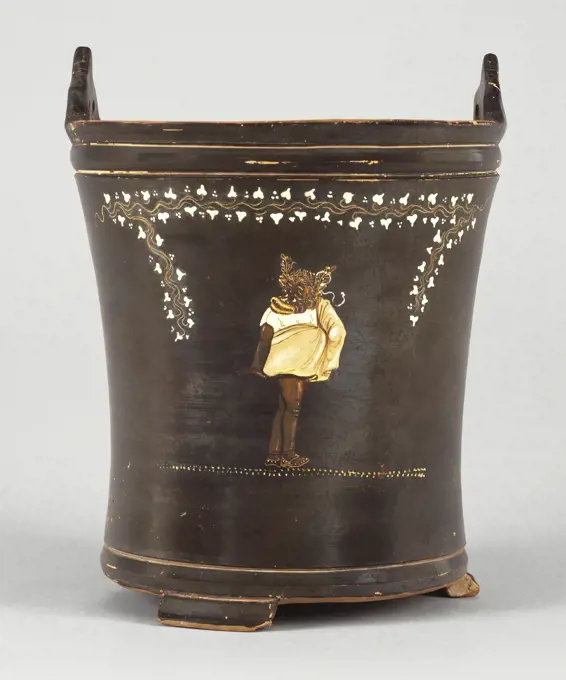
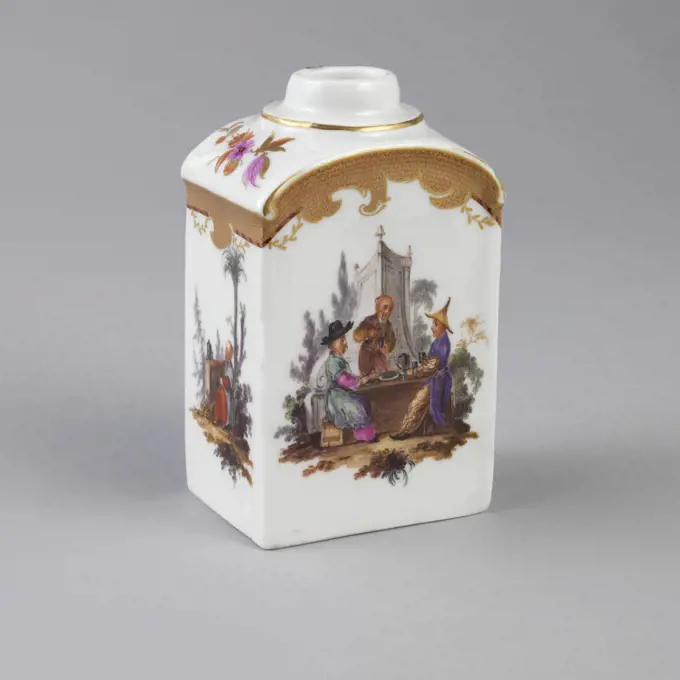
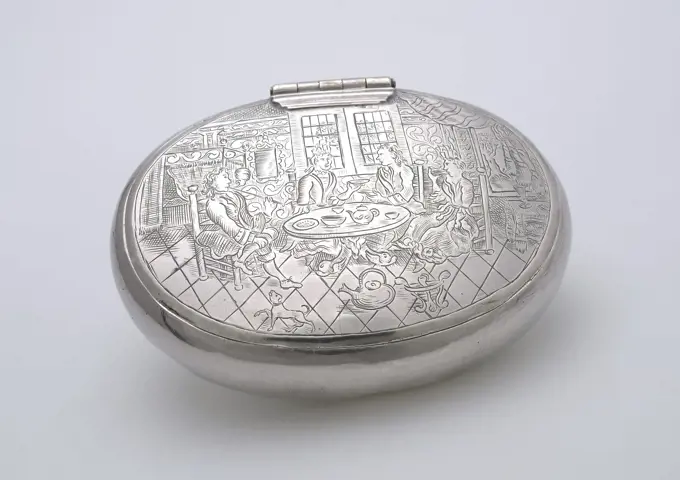
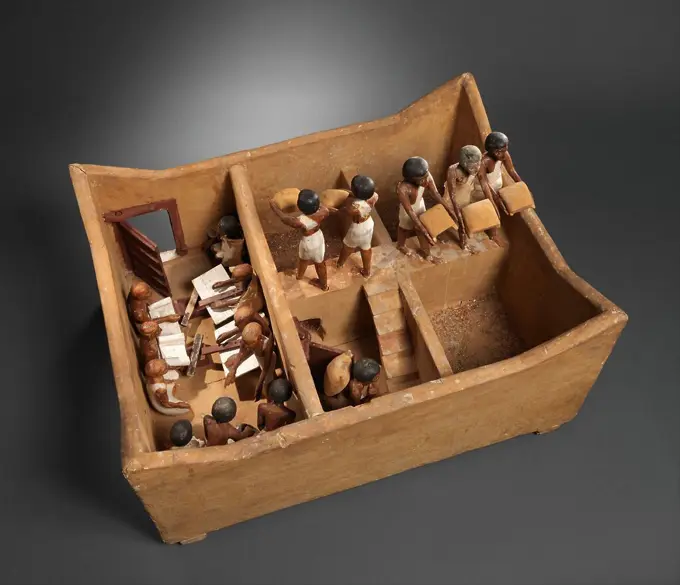
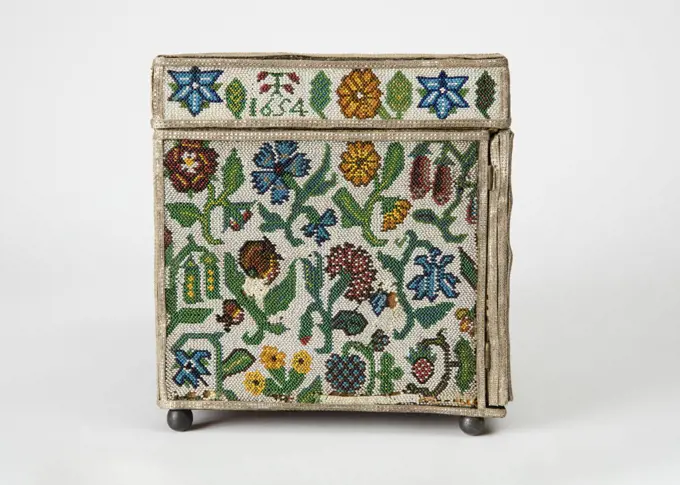
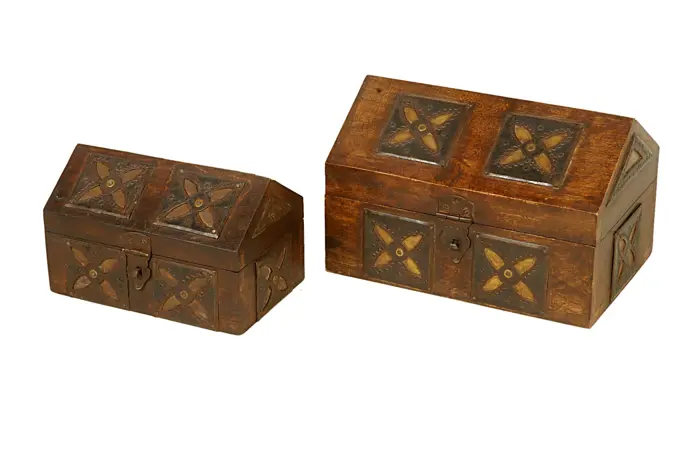
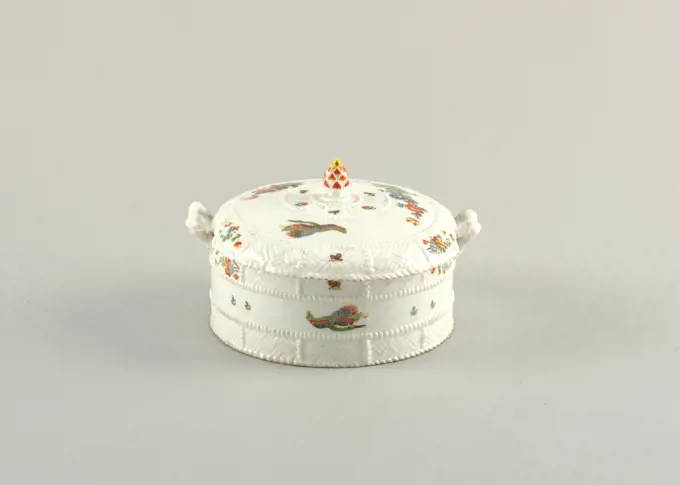
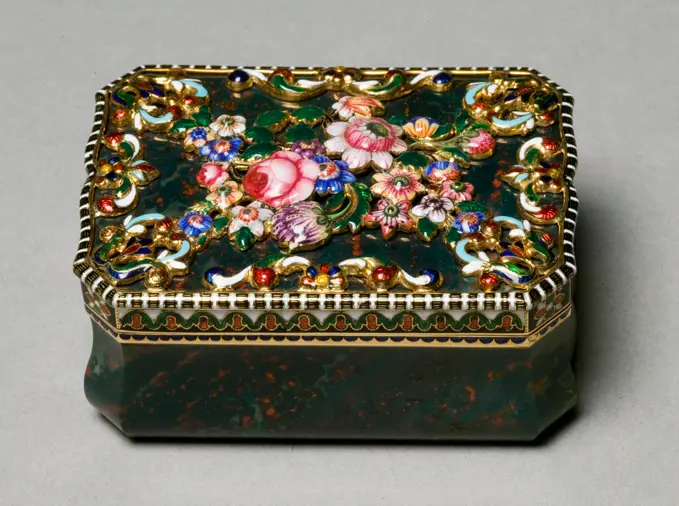
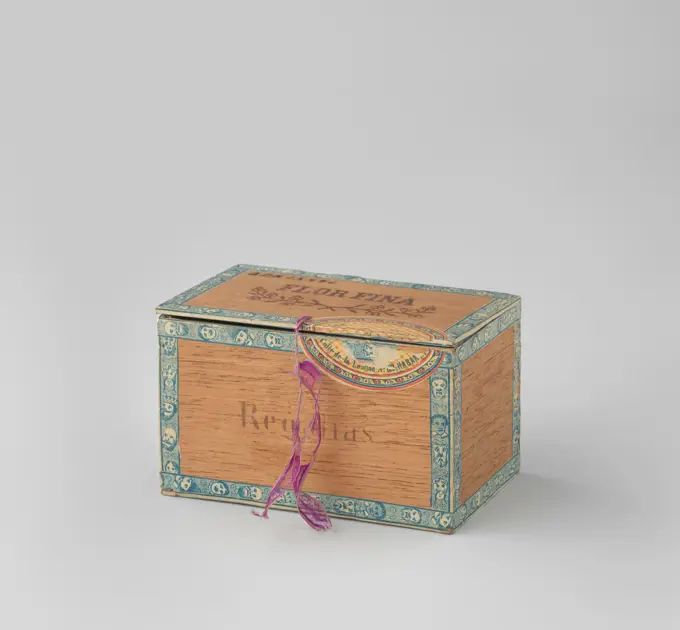
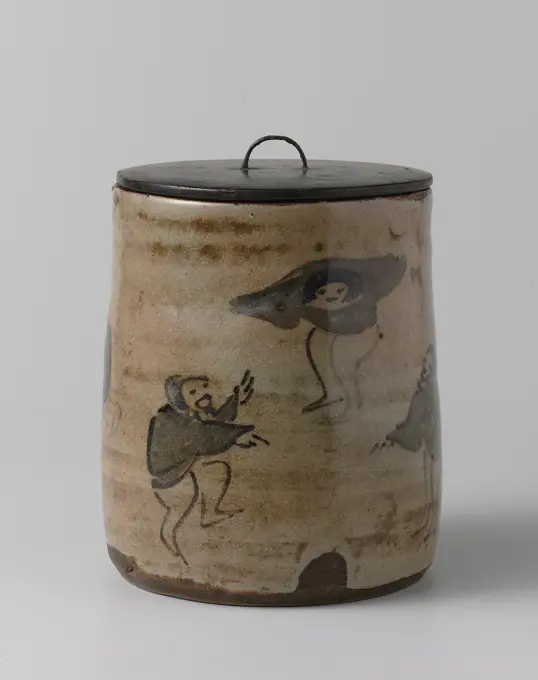
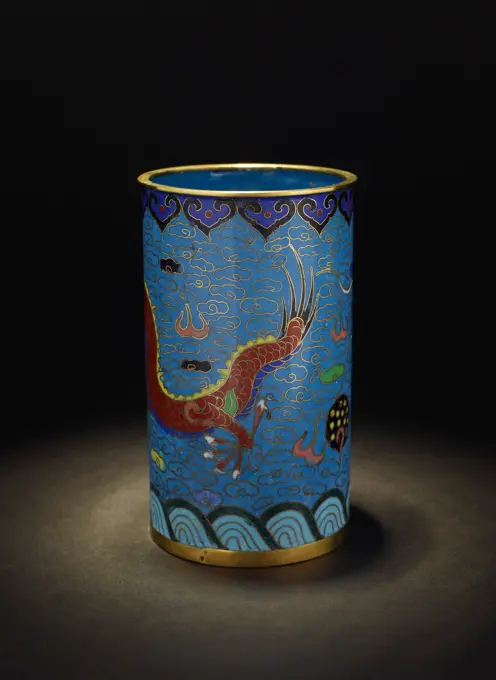
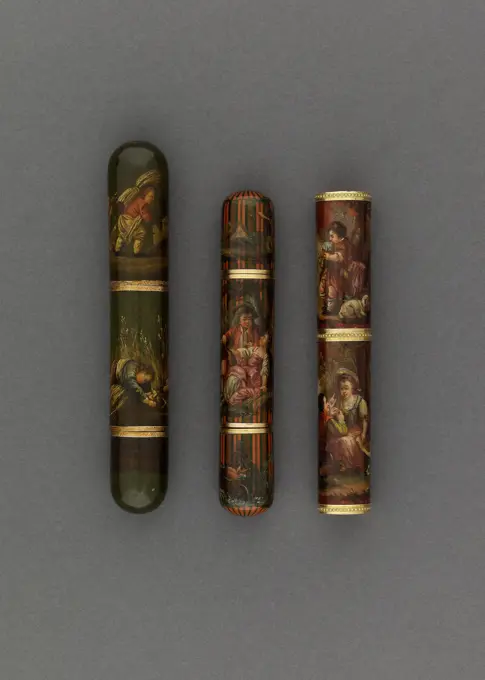
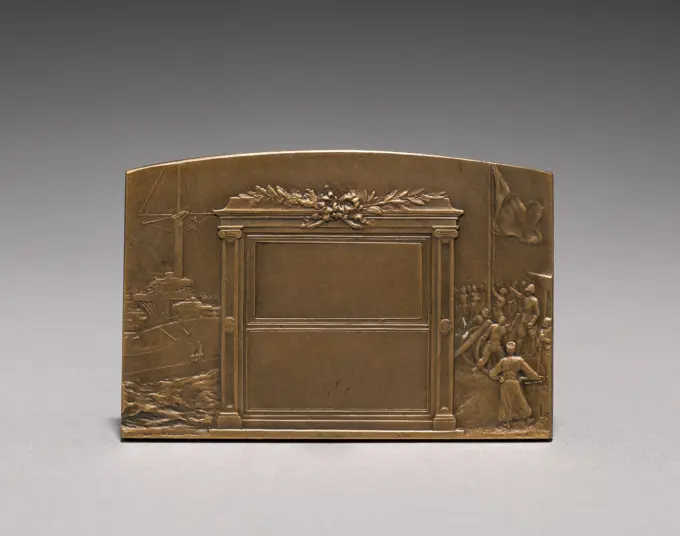
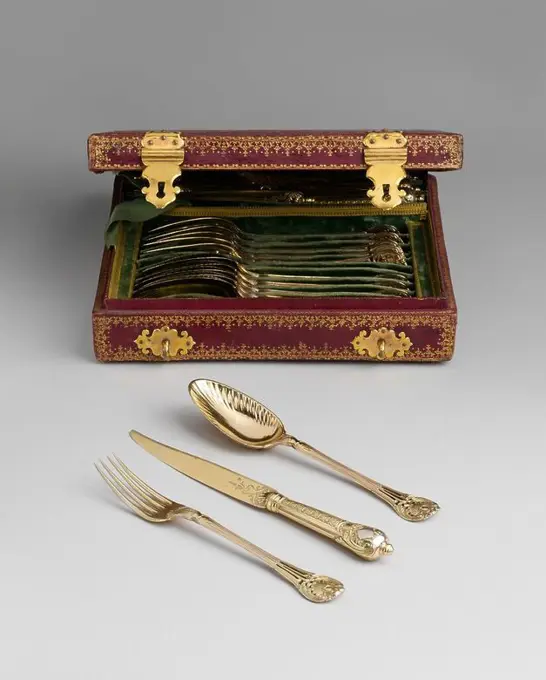
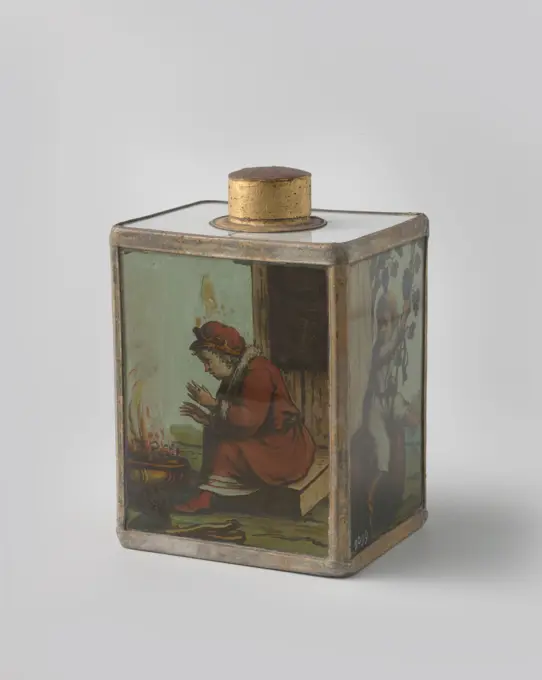
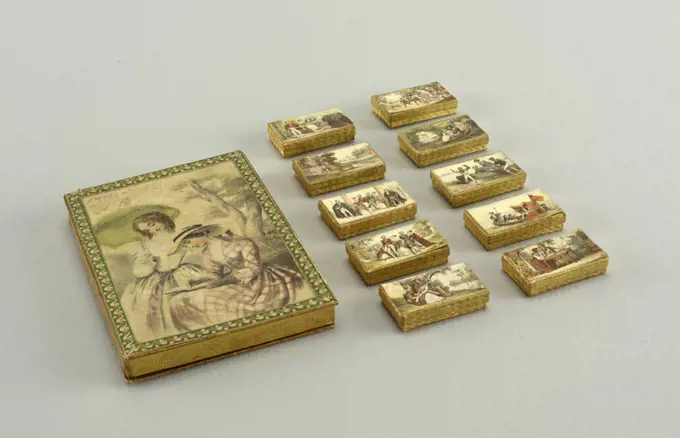
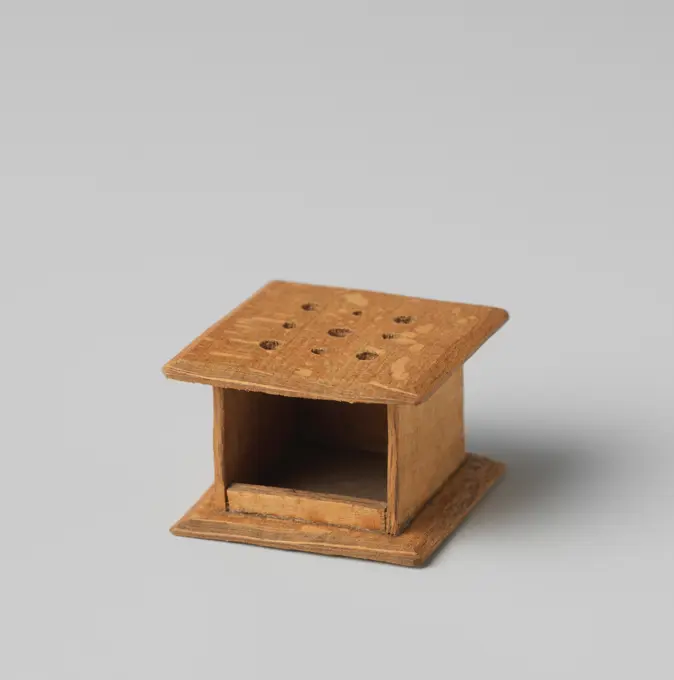
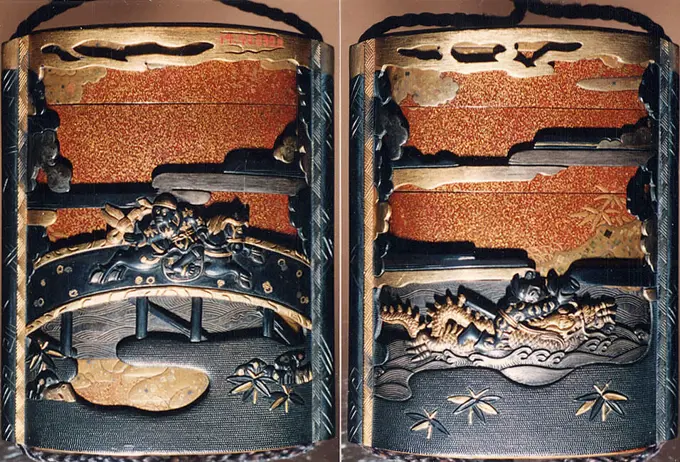
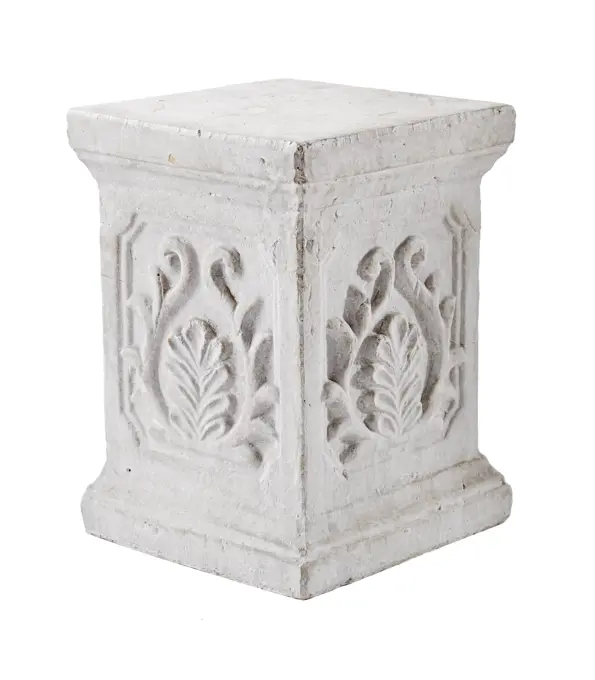
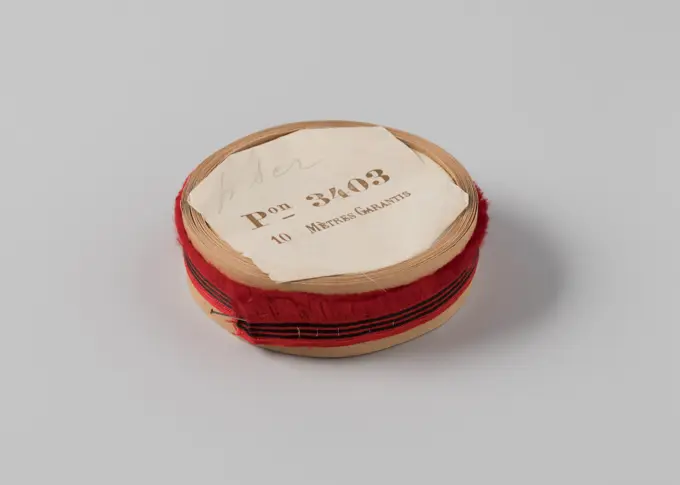
Lidded Basket ca. 1840 Onondaga. Lidded Basket 319011Meyer Goldbaum, Pa German's Bride's Box, c 1936 Pa. German's Bride's BoxBandbox. Dated: c. 1938. Dimensions: overall: 30.5 x 40.7 cm (12 x 16 in.) Original IAD Object: 16 7/8" high; 16 1/2" long, 13 1/2" wide. Medium: watercolor, gouache, and graphite on paperboard. Museum: National Gallery of Art, Washington DC. Author: Gilbert Sackerman.Casket, Enamel, metal, gold, Rectangular, with four palmette bracket feet. Hinged cover with high canted sides and flat top. Gold, decorated in translucent red, green and blue, and opaque white champleve enamel. On cover, lion couchant and floral motifs. On sides small circular medallions with white fan-tail pigeons on red ground, and leaf motifs. On base, formal floral design., It has an outer case or box with concave sides and domed cover, covered with garnet-colored silk embroidered in yellow, blue, black and cream, with small pieces of mirror applied. Lined with white crepe de Chine., India, 19th century, enamels, Decorative Arts, CasketRectangular box with scene of a visit late 16th-early 17th century China Depicted on the top of this box is a scene of a visit between a man in official costume and an elderly gentleman. The paintings on the sides illustrate popular stories.. Rectangular box with scene of a visit. China. late 16th-early 17th century. Red lacquer painted with gold and oil colors. late Ming (1368-1644)-early Qing (1644-1911) dynasty. LacquerCase, Gilt leather, velvet, metal, ivory, ebony, Barrel-shaped red leather case with stamped gold decoration along the borders (bottom, centre, top). Case opens in the centre, small press button on front, hinge on back. Inside covered in green velvet. Small press-button on the front, hinge on back., Paris, France, 1809-19, cutlery, Decorative Arts, CaseBandbox, Block-printed paper on pasteboard support, Small box. Blue field, with hunters, horses and dogs in white, black, gray and brown. Name inside cover: Susan Osborne; on bottom, C.D. Cobb Bridgeport, C. Two express labels on top., USA, ca. 1830, Wallcoverings, BandboxIsabella Ruth Doerfler, Guilford Blanket Chest, c 1936 Guilford Blanket ChestMiniature fireback ca. 1720-30 David Clayton British. Miniature fireback. British, London. ca. 1720-30. Silver. Metalwork-Silver-MiniaturePainted wrought iron Nuremberg coffin, archive case coffin cabinet furniture furniture interior decoration iron paint, approx. 71 kg Iron box with outside band iron attached with rivets; two large handles on both sides turned halfway; two transfer wackets at the front which can be pushed over the protruding staples on the lid but which now hang downwards. At the front fake key plate of driven iron for decoration. Centrally on the lid is rectangular iron plate recessed. Whole is painted on the outside with primitive painted flowers and landscapes on dark ground. Rear painted completely dark. Here are also two big holes in saving money saving theft prevention hang-and-sealTiered Box with Reeds and Crane 18th century Japan. Tiered Box with Reeds and Crane 57596Pair of Corner Cupboards.Headrest (Zhen) with Floral Scrolls. China, Jin dynasty, 1127-1234. Furnishings; Furniture. Cizhou ware, slab-built stoneware with painted, incised, and wax-resist decoration and white and black glazesPerfume Flask in the form of a Book. France. Date: 1775-1785. Dimensions: 10.2 × 7.6 × 2.4 cm (4 × 3 × 15/16 in.). Tin-glazed earthenware (faience). Origin: France. Museum: The Chicago Art Institute, Chicago, USA.Bank of Commerce' safe still bank, c. 1904, Kenton Hardware Manufacturing Co., Kenton, Ohio, 1890-1950, 6 7/16 x 5 x 4 3/4 in. (16.35 x 12.7 x 12.07 cm), Iron, 19th-20th centuryCasket (Cofrecillo). Unidentified artist. Mexico, Campeche, 18th century. Furnishings; Accessories. Wood, metal, tortoiseshell, boneVessel with mythical creatures, flowers, and birds. Culture: China. Dimensions: H. 22 3/8 in. (56.8 cm); W. incl. spout 9 1/4 in. (23.5 cm); Diam. 5 7/8 in. (14.9 cm). Date: 18th century.The shape of this vessel, probably used for pouring liquids, derives from Tibet and may have been made for use in China or as a gift to a Tibetan temple or high-ranking monk. Museum: Metropolitan Museum of Art, New York, USA.One of Five Serving Bowls (Mukozuke) with Prunus Design, 1700s-1800s. School of Ogata Kenzan (Japanese, 1663-1743). Kyoto Ware: stoneware with underglaze iron oxide and slip decoration; overall: 6.9 cm (2 11/16 in.); each side: 9 cm (3 9/16 in.). Note the rough, tan, clay bodies of these bowls with their deliberate irregularities. The design of branches was first painted in a black iron oxide, then the blossoms and buds in a white slip, followed by the application of a very thin transparent overglaze.Granary model unknownPedestal, mid 7th Century. China, Tang dynasty (618-907). Ivory; overall: 7.8 cm (3 1/16 in.); diameter of base: 9 cm (3 9/16 in.).Knottekist, Reyndert Bel (attributed to), 1667 Silver bridal suitcase on four pear -shaped paws, with gilded lock plate and handle. Silver key. All around with biblical scenes: Suzanna spied by two old men; Joseph and the wife of Potifar; David and Bathseba and the wedding in Kana. Two connected hands on the lid of the lid, including a burning heart. Under the coffin: Trijntie Claes Glofs. Hoorn (North Holland) silver (metal). gilding (material) gilding Silver bridal suitcase on four pear -shaped paws, with gilded lock plate and handle. Silver key. All around with biblical scenes: Suzanna spied by two old men; Joseph and the wife of Potifar; David and Bathseba and the wedding in Kana. Two connected hands on the lid of the lid, including a burning heart. Under the coffin: Trijntie Claes Glofs. Hoorn (North Holland) silver (metal). gilding (material) gildingBook still bank, 19th century, 5 5/16 x 3 5/16 x 1 7/16 in. (13.49 x 8.41 x 3.65 cm), Wood, England (possibly), 19th centuryVinaigrette, Silver, gilding, Birmingham, England, 1815-16, containers, Decorative Arts, VinaigretteSjako from J.W.C. Baron van Ittersum, Anonymous, in or after 1828  Head cover of slit cloth, black leather bottom, valve (ribbed = French model), black velvet galons around the bottom and bottom corpus. White metal chin tires and rosettes. Chin tires mounted on black velvet, to which buckle. White metal eight -pointed star with government weapons. Inscription on the weapon: your Maintiendrai. Oranje Kokarde. Interior black leather edge. Netherlands felt (textile). cloth. alloy. leather. cardboard. copper (metal). silk. velvet (fabric weave) striking (metalworking)  GelderlandJager met waldhoorn, Gerard Sterzenbach, 1761 Silver tobacco box. Engraved with a hunter on the Waldhoorn Blindly among other ornaments. Netherlands silver (metal) Silver tobacco box. Engraved with a hunter on the Waldhoorn Blindly among other ornaments. Netherlands silver (metal)Grain size of 1 deciliter. Chips grain size of 1 deciliter, v.zv. labelsPyksis orientalized in the style of Silhouette with Sphinx and animal performances;  590-550 BC (-590-00-00--550-00-00);Castellani, Alessandro (1823-1883)-collection, Działyńska, Izabela (1830-1899), Działyński, Jan (1829-1880), Central and Corvo period, Images of animalsWooden grain size., Anonymous, 1650 - 1823  Wooden round object with flat bottom. The outside is laid and cramed. On the outside, next to the seam, the stamp (standing lion) is applied. The bottom is mounted in the outer edge with nails. Netherlands wood (plant material). metal   NetherlandsBox (probably Germany); wood, painted and gildedengraver: Christoffel Hagen, Golden snuff box with brilliants and pearls by Pieter Havelaar, snuffbox holder metal gold pearl glass enamel, enamelled engraved oval golden box with hinging lid. Case of leather with two locking pins. Dark blue enamelled surfaces along the edges light blue and black enamelled fan-shaped motifs. Between the blue areas on the sidewalls light blue enamelled French lilies with garlands Top cover laid with brilliant monogram w forming inside oval of imposed pearls Engraved inscription inside cover inscription inside cover (engraved) Batavian Republic banker Pieter Havelaar sniffing save tobacco tobacco box In 1802 the cashier firm borrowed (Jan and Pieter) Havelaar money to the Batavian Republic As thank you everyone got snuff box The bill of both boxes delivered by Hagen amounted to f 1071.81. For the same type of service, Gogel received silver tableware now in the Rijksmuseum Amsterdam (inv. RBK 14585-14593).. Five part inro decorated with flowers and a bird in golden lacquer and insert. Signed "toshihide".Pair of biscuit containers, Diederik Willem Rethmeyer, 1791 The bunch of drums consists of a round (BK-14423) and a rectangular copy (BK-14422), both with a hinged lid. The straight wall of the drum is on the bottom, the also straight wall of the lid along the top and top decorated with a pearl list. The upper frame surrounds the slightly raised top of the lid, which is decorated along the edge with a ribbons -lined ribbons with rosettes, waved with dots decorated edges. Amsterdam silver (metal) The bunch of drums consists of a round (BK-14423) and a rectangular copy (BK-14422), both with a hinged lid. The straight wall of the drum is on the bottom, the also straight wall of the lid along the top and top decorated with a pearl list. The upper frame surrounds the slightly raised top of the lid, which is decorated along the edge with a ribbons -lined ribbons with rosettes, waved with dots decorated edges. Amsterdam silver (metal)CDK unknownEgyptian casket Egyptian casket isolated on white Copyright: xZoonar.com/DrobzhevxEvgenyx 3258995Drom, old model of the arches. Groom of the militia. The brass boiler is provided with a veal sheet on both sides, held by a hoop and tense by means of a tensioner with tractors and screws. Both hoops are decorated with a motif of triangles in the colors red, white and blue. With engraved numbers: 1855-33.A Sand-Box. Dated: c. 1500. Dimensions: overall: 8 x 10.6 x 9.4 cm (3 1/8 x 4 3/16 x 3 11/16 in.). Medium: bronze//Black lacquer over medium brown bronze. Museum: National Gallery of Art, Washington DC. Author: Paduan 16th Century.Cassette with a pair of pistols with a capither castle with dishes Kuchenreuter, Johann Andreas, I (1716 1795)Box, wood, Tartanware, Specifically made for American market, Scotland, ca. 1880-1900, containers, Decorative Arts, BoxTrinket Box. Culture: American. Dimensions: 2 1/2 x 8 1/8 x 8 1/2 in. (6.4 x 20.6 x 21.6 cm). Maker: Henry Bucher. Date: ca. 1780. Museum: Metropolitan Museum of Art, New York, USA.arqueta de reliquias con las armas de Castilla, Leon y Aragon, siglo XIII, Sala de reliquias, Monasterio de Santa María de San Salvador de Cañas, Cañas, La Rioja, Spain.Jeweled Snuffbox. Culture: German, Berlin. Dimensions: H. 6 cm, L. 10 cm, D. 8.8 cm. Date: ca. 1765.Elaborately jeweled in multi-colored floral motifs, this snuffbox was probably commissioned by Frederick II of Prussia (1712-87), along with a group of 125 works of similar design known as the "Potsdam boxes." This is the only glass-bodied piece. The design of all of the boxes have been attributed to the English-born artist Guillaume George Krüger, who was active in Berlin between 1753 and 1774. Museum: Metropolitan Museum of Art, New York, USA.Bleikristall Kassette aus Ajka *** Lead crystal Cassette from Ajka 1033902582piano Miniature Of A Piano; Italy; silver filigreeJapanese Gold and Black Lacquer Box with Carp Meiji Period, 1868 - 1912 This small gold and black lacquer box is in the form of a figure-of-eight, which is a holy number in Japanese culture. The cover of the box features a pair of carp (koi), which symbolise perseverance and faithfulness in marriage. The sides of the box are decorated with gold bamboo shoots which represent endurance. Lacquerware originated in China at the beginning of the 4th century B.C. It is made from the sap of the native tree Rhus Vernicifera, which produces a varnish that is used either on its own or applied to a number of media including wood, fabric, bronze, and porcelain. In addition to carving, lacquer was also inlaid and painted. Black or deep rich brown lacquer, which imitated tortoiseshell, was a popular background for mother of pearl, hardstone and metal inlays as well as rich gold handpainted decoration. In Japan, decorative lacquerware was made just a few centuries after the Chinese, around the 6th cenQuasi-Triangular Box, c. 1895. Firm of Karl Karlovitch Hahn (Russian). Jade, gold, enamel, diamonds, rubies; overall: 3.7 x 9.3 x 9.6 cm (1 7/16 x 3 11/16 x 3 3/4 in.).Ottoman art example of Mother of Pearl inlays from IstanbulBox belonging to the brooch Java Motor Club, 1939 - c. 1950 box White square cardboard box, inlaid with purple velvet. On lid inscription. Batavia cardboard. velvet (fabric weave)   JavaPen Box with a Europeanizing Landscape late 17th-early 18th century Haji Muhammad This pen box is signed by the later Safavid artist Haji Muhammad. The Europeanized landscape depicted on the inside cover of this box is associated with the style of this artist and other members of his family, most famously his celebrated brother Muhammad Zaman. The high status accorded to the arts of calligraphy and writing in the Islamic world led to the production of many handsome accessories such as this pen box.. Pen Box with a Europeanizing Landscape. Haji Muhammad (Iranian). late 17th-early 18th century. Papier-maché; painted and lacquered. Made in Iran. LacquerInr with Cranes in Plum, Bamboo and Pine 19th century Japan. Inr with Cranes in Plum, Bamboo and Pine. Japan. 19th century. Carved red lacquerNetsuke: bird and flower; lacquer, tsuishuOjime: cricket among flowers; pierced and carved silver bead. Edo period (1615-1868). InrBandbox Design - Stagecoach. Dated: c. 1941. Dimensions: overall: 40.5 x 53.7 cm (15 15/16 x 21 1/8 in.) Original IAD Object: 13" high; 16" wide; 20" long. Medium: watercolor, gouache, and graphite on paper. Museum: National Gallery of Art, Washington DC. Author: Eleanor Ruelos.Waldhoorn with brackets and coffin. Copper Waldhoorn with fourteen associated brackets and coffin. Signature: C.G. Schüster.Pouch 1740-70 Russian This object is from the collection of Natalia de Shabelsky (1841-1905), a Russian noblewoman compelled to preserve what she perceived as the vanishing folk art traditions of her native country. Traveling extensively throughout Great Russia, she collected many fine examples of textile art of the wealthy peasant class. From the 1870s until moving to France in 1902, Shabelsky amassed a large collection of intricately embroidered hand-woven household textiles and opulent festival garments with rich decoration and elaborate motifs. The Brooklyn Museum holdings include many fine examples including the majority of the garments. Portions of Shabelsky's collection are also housed at the Museum of Fine Arts, Boston, the Cleveland Art Museum, and the Russian Museum of Ethnography in St. Petersburg. Peter the Great's (1672-1725) attempts to Westernize Russia were partially manifested in changes to the traditional costume of the court. Though they were not required by law to aSilver miniature case, filigree, casing holder dolls toy recreation tool miniature model silver, drawn filigrein rectangular casing with hinge and four rings on the side packing play home interior bookTiered Box with Figural Scenes, Flowers, and Birds. Culture: China. Dimensions: H. 6 1/2 in. (16.5 cm); W. 8 1/8 in. (20.6 cm); D. 8 1/8 in. (20.6 cm). Date: first half of the 15th century.The adorable girls peeking around the wall at the woman and dogs in the garden are found in at least two other works from the period. This scene likely illustrates a well-known moment from a literary work or a play. Every panel and column of the architecture is decorated with a distinct pattern, attesting to the painstaking labor needed to create the scene. Each of the sixteen cartouches on the sides shows different flowers and birds. Museum: Metropolitan Museum of Art, New York, USA.Box with Lid. American. Date: 1759. Dimensions: 6 × 12.4 × 7.1 cm (2 3/8 × 4 7/8 × 6 3/4 in.). White pine and hickory or ash. Origin: United States. Museum: The Chicago Art Institute, Chicago, USA.Box decorative ancient with pieces of marbleLidded Basket with SecretCompartmentMoney-box. unknown, contractor1800 -1855, Konbaung period, Box made from gold, diamonds, emeralds and rubies. The quality of this box and pot suggests that they were made for royalty or a high ranking member of the court at one of the former capital cities. The sides of the box are decorated with a wave (acheik)pattern. Its top bears the protective nine planet' (narawat) design formed by eight diamonds around a large ruby. Burma (probably Amarapura or Ava, now Inwa)Crown Box for the Royal Ceremonial Costume, late 1800s-early 1900s. Korea, Joseon dynasty (1392-1910). Wood with metal hardware; This is a set of royal ceremonial robe and accessories worn by a high-ranking court official for attending special state ceremonies. The set consists of an inner coat, an outer coat, a skirt, a back apron, a crown, a pair of jade tassels, a tablet, and a belt.Vessel with a Comic Actor; Attributed to the Workshop of the Konnakis Painter (Greek (Gnathia), active about 375 - 350 B.C.); Apulia, South Italy; about 360 - 350 B.C; Terracotta; 21.9 cm (8 5,8 in.)Tea Caddy with Chinoiserie Vignettes, Royal Porcelain Manufactory, Berlin, German, established 1763, hard paste porcelain, vitreous enamel, gold, Rectangular with rounded shoulders and cylindrical neck. Vignettes of Chinoiserie figures in landscape, with gilded and painted imbricated borders., Germany, ca. 1770, ceramics, Decorative Arts, tea caddy, tea caddySilversmith: Gerardus Vinck, Silver snuffbox or tobacco box, with engraved representation of tea-drinking company in interior, snuff box holder metal silver, engraved Oval with convex wall flat lid with hinge attached to the outside profiled hinge fastening inside clip bottom inside (smashed) tobacco tea drinking smoking sniffing storing tobacco boxModel of a Granary with Scribes. Dimensions: L. 74.9 (29 1/2 in); W. 56 cm (22 1/16 in); H. 36.5 (14 3/8 in);average height of figures: 20 cm (7 7/8 in.). Dynasty: Dynasty 12. Reign: early reign of Amenemhat I. Date: ca. 1981-1975 B.C..This model of a granary was discovered in a hidden chamber at the side of the passage leading into the rock cut tomb of the royal chief steward Meketre, who began his career under King Nebhepetre Mentuhotep II of Dynasty 11 and continued to serve successive kings into the early years of Dynasty 12.The four corners of this model granary are peaked in a manner that is sometimes still found in southern Egypt today presumably to offer additional protection against thieves and rodents. The interior is divided into two main sections: the granary proper, where grain was stored, and an accounting area. Keeping track of grain supplies was crucial in an agricultural society, and it is noteworthy that the six men carrying sacks of grain here are outnumbered by nineCasket, Medium: wood, silk, glass beads Technique: wooden casket covered with satin fabric and embroidered with glass beads Label: wooden casket covered with silk satin and embroidered with glass beads, A beaded casket with a hinged top and two doors which open to show a series of small drawers. The wooden frame is covered with white satin and beaded with many colors of glass beads, strung on linen thread in a simple looping structure. The doors are lined with green silk and the whole is trimmed with silver braid. The arms of Basnet appear on the left door and the arms of Dand on the right. On the top is a scene of four figures visiting a royal personage, and the remainder is covered with flowers and birds., Coventry, England, 1654, embroidery & stitching, CasketBrass iron design fitting on antique wooden box, Jodhpur, Rajasthan, India Copyright: xSafatxAli/DinodiaxPhotoxChest. Dated: c. 1938. Dimensions: overall: 27.1 x 35.9 cm (10 11/16 x 14 1/8 in.) Original IAD Object: 43 1/2"long; 20 1/2"high; 20 3/4"wide. Medium: watercolor, colored pencil, and graphite on paperboard. Museum: National Gallery of Art, Washington DC. Author: Georgine E. Mason.Treasure chest decorated sheet chest - free on white background copyright: xzoonar.com/heikexbrauerx 1017114Covered Butter Dish, Meissen Porcelain Manufactory, German, active from 1710 to the present, hard paste porcelain, vitreous enamel, A white porcelain covered dish with a basket textured exterior. The covered dish has basket textured handles and an acorn knob., Germany, ca. 1735, ceramics, Decorative Arts, dish, dishSnuff Box, c. 1820-40. Attributed to Jean-Louis Richter (Swiss, 1766-1841). Gold, champlevé enamel, bloodstone;Wood chest, edges covered with blue paper on which image of heads, anonymous Chest of wood, edges covered with blue paper on which images of heads. On lid: Flor Fina. On the side: Colorado.  wood (plant material). paper Chest of wood, edges covered with blue paper on which images of heads. On lid: Flor Fina. On the side: Colorado.  wood (plant material). paperWriting case ca. 1760-1800 British, Staffordshire. Writing case. British, Staffordshire. ca. 1760-1800. Copper, enamel. Enamels-Painted. Flat, wooden water pot lid (Mizusashi) from stoneware.Bandbox (USA); block-printed on paper, pasteboard support; 44 x 35.5 x 31 cm (17 5/16 x 14 x 12 3/16 in.)Chessboard American 19th centuryWatercolor travel illustration. Hand painted pile of leather vintage suitcase. Travel bags on white background.. Watercolor travel illustration. Hand painted pile of leather vintage suitcase. Travel luggage on white backgroundCasket; German germany; beginning of the 18th century (1695-00-00-1720-00-00);Polish National Museum (Rapperswil - 1870-1927) - collection, Polish Army Museum (Warsaw - 1920-) - collectionCup with a dragon motif among clouds, over the waves unknownFire basket, Anonymous, c. 1725 - c. 1750 Round fire basket of braided silver wire. The basket is on a foot and has a handle. Three Spangen are tense over the basket, two others have probably been demolished. The basket is not marked. Netherlands silver (metal) filigree Round fire basket of braided silver wire. The basket is on a foot and has a handle. Three Spangen are tense over the basket, two others have probably been demolished. The basket is not marked. Netherlands silver (metal) filigreeMetal box Rectangular and shiny silver box with ornaments Copyright: xZoonar.com/Baloncicix 7816926Anonymous French. Studies. Martin varnish. 18th century. Paris, Cognacq-Jay museum. 56641-9 Etui, Martin, varnishSt. Joseph's Society for Foreign Missions' still bank, late 19th century, 4 1/16 x 6 7/16 x 2 13/16 in. (10.32 x 16.35 x 7.14 cm), Wood, paper, England, 19th centuryMedal (reverse). Jules Prosper Legastelois (French, 1855-1931). Bronze; overall: 5.8 x 3.9 cm (2 5/16 x 1 9/16 in.).Set of six forks (part of a set). Culture: French, Paris. Dimensions: Length (each): 7 5/8 in. (19.4 cm). Maker: Louis-Joseph Lenhendrick (master 1747, died 1783). Date: 1767-71.The tooled leather box contains six couverts--the French term for two or more matched pieces of flatware--which in this instance each comprise a fork, spoon, and knife. Six identical couverts housed in a similar box are also in the Museum's collection. It is not known for whom these thirty-six pieces of flatware were made because the coats of arms that decorated each fork, knife, and spoon have been erased. However, the two boxes are decorated on the lids with the Noailles arms, suggesting that a member of that distinguished aristocratic family owned the cutlery in the eighteenth century.The designs of the flatware are unusually elaborate and ambitious, especially in the use of openwork in the stems of the fork and spoon, and in the molded and chased decoration of the knife blades. The amount of work requiredAlkmaar 1/128 bag size, anonymous, 1800  Spans size of 1/128 bag, equipped with calibration brand and labels. Alkmaar wood (plant material)   AlkmaarTheBus, square, lit -sized glass, anonymous, c. 1675 - c. 1700 Teabus, square, lit -sized glass (Peinture Sous Verre). On the side sections of the seasons, suggested by a young woman or a young man with the necessary attributes. One of the side pockets broken.  lead (metal). glass Teabus, square, lit -sized glass (Peinture Sous Verre). On the side sections of the seasons, suggested by a young woman or a young man with the necessary attributes. One of the side pockets broken.  lead (metal). glassBox and cover, Printed paper, cardboard, ca. 1860, containers, Decorative Arts, Box and coverCupola' still bank, 1872, J. & E. Stevens Company, Cromwell, Connecticut, 1843-1950s, 3 1/8 x 2 5/8 x 2 3/16 in. (7.94 x 6.67 x 5.56 cm), Iron, pigment, 19th centuryDrum, anonymous, c. 1600 - c. 1699 musical instrument. percussion instrument. drum Wooden drum with a decoration of copper nails on the front. Netherlands wood (plant material). parchment (animal material)Bird Cage. Gyokusensai Tomochika (Japan, active early 19th century). Japan, early 19th century. Costumes; Accessories. Wood18th century French Porcelain China 2013Souvenir ca. 1770 British. Souvenir. British. ca. 1770. Gold, enamel, diamonds. Metalwork-Gold and PlatinumSouvenirs of Józef Czapski  a casket with water paints Winsor & Newtonsilver hand made pots, india Copyright: xAxModi/DinodiaxPhotoxStew, square with nine holes. A square stove from beech wood with nine holes in the topHoly Book Quran with decorative cover and boxCock Robin Junior Savings Bank' still bank, late 19th century, 5 3/8 x 5 7/16 x 5 1/2 in. (13.65 x 13.81 x 13.97 cm), Wood, paper, England, 19th centuryCase (Inr) with Design of Chry and Ksekik with Plants, Waves and Clouds 18th-19th century Japan. Case (Inr) with Design of Chry and Ksekik with Plants, Waves and Clouds. Japan. 18th-19th century. Lacquer, metal saya, various metals, openwork, relief, nashiji inro; Interior: nashiji and fundame. Edo period (1615-1868). InrColumn Decorative plaster pillar column isolated on white. Copyright: xZoonar.com/J.xSandvikx 3560250Roll with red ribbon with one frayed silk and three black horizontal stripes, c. 1935 Roll with red ribbon with one frayed silk and three black horizontal stripes. Nijmegenfrance textile materials. paper. cardboard Roll with red ribbon with one frayed silk and three black horizontal stripes. Nijmegenfrance textile materials. paper. cardboard