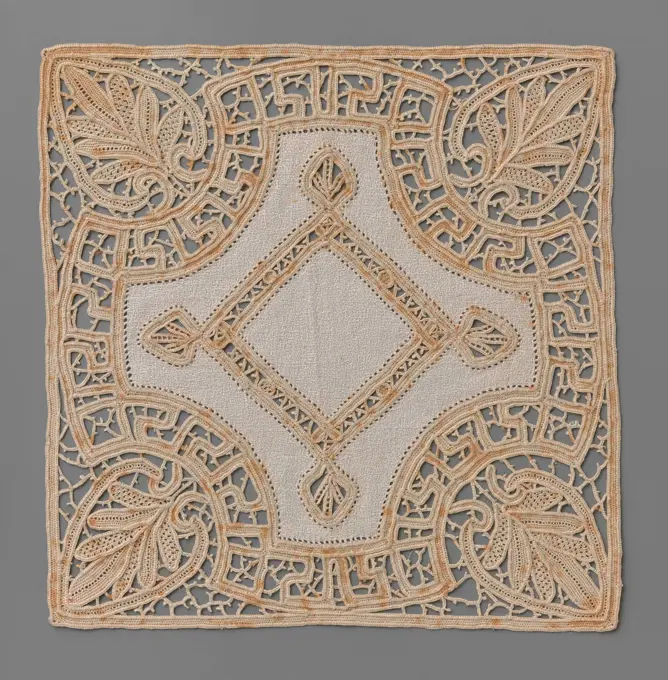
Decorative Fabrics and Textiles

Intricate textile pieces featuring floral and ornate patterns, reflecting historical designs from different cultures.
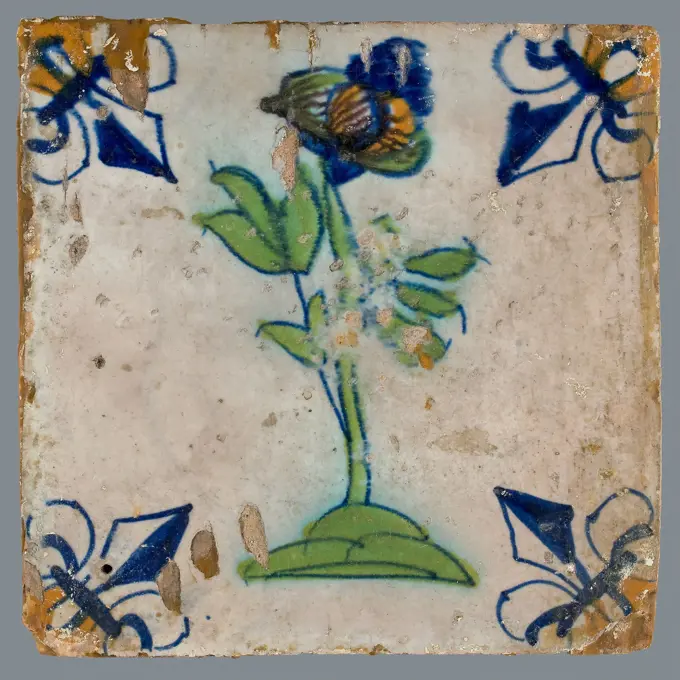
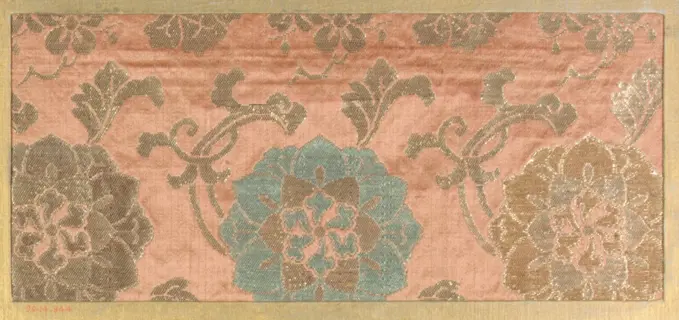
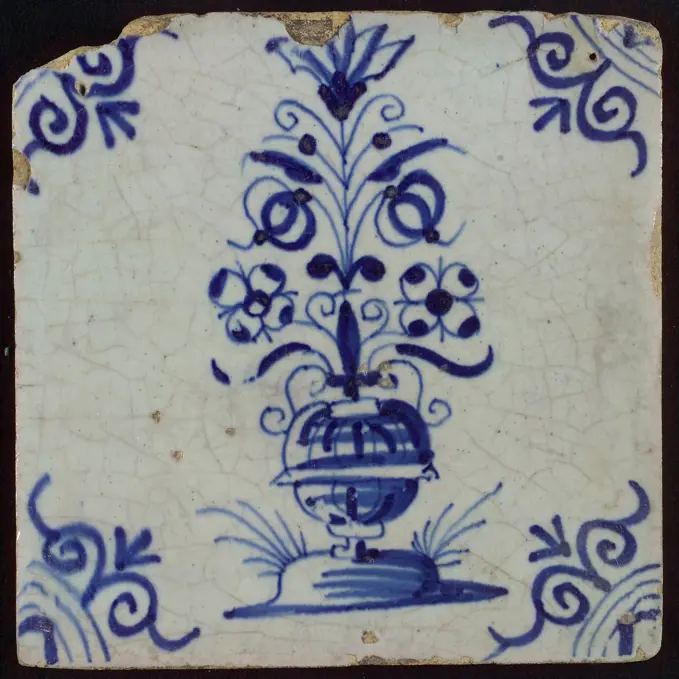
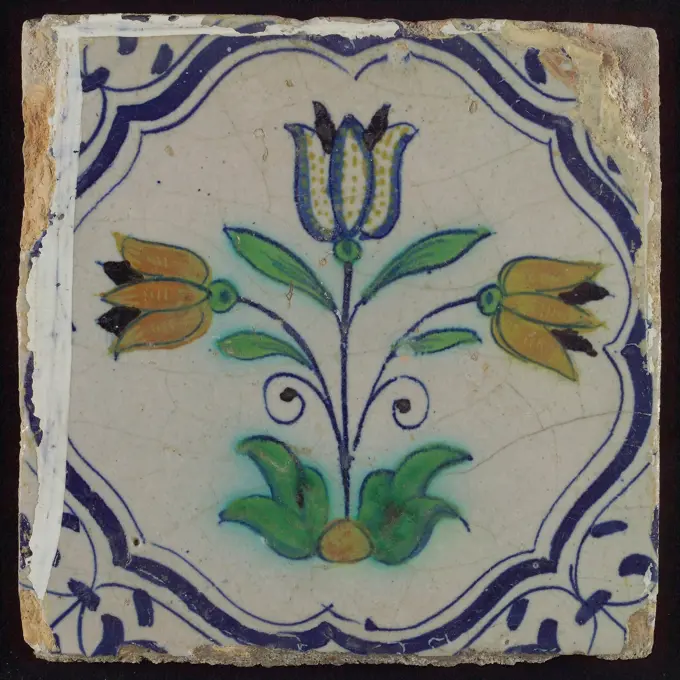
Tile, flower on ground in yellow, green and blue on white, corner pattern french lily, corner point orange, wall tile tile sculpture ceramic earthenware glaze, baked 2x glazed painted
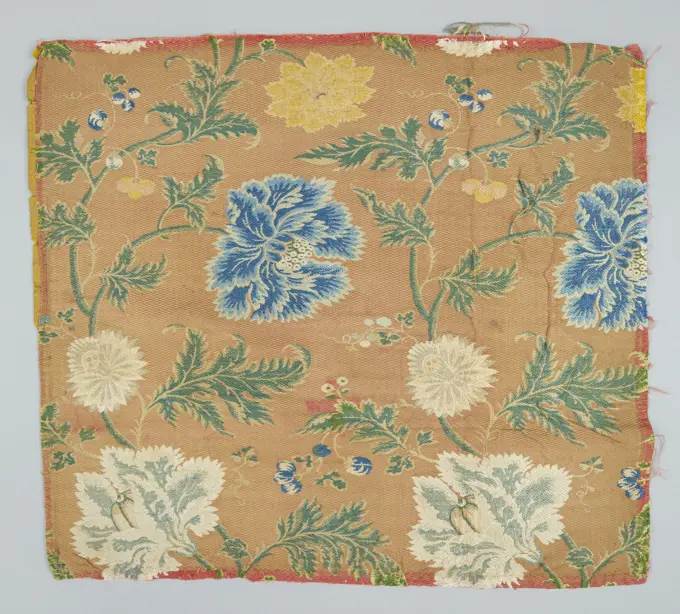
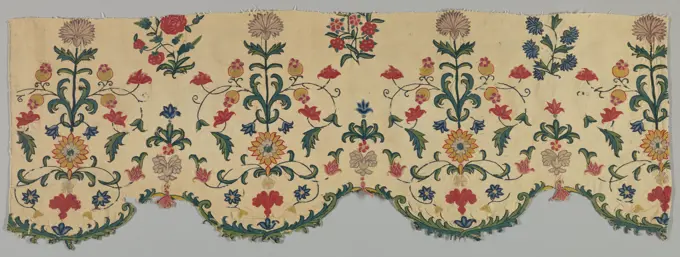
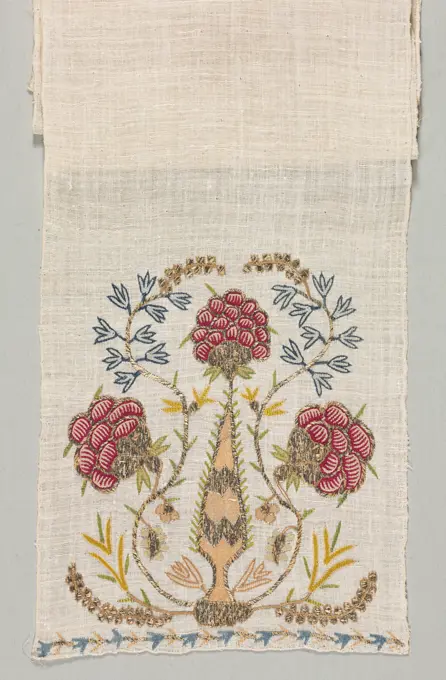
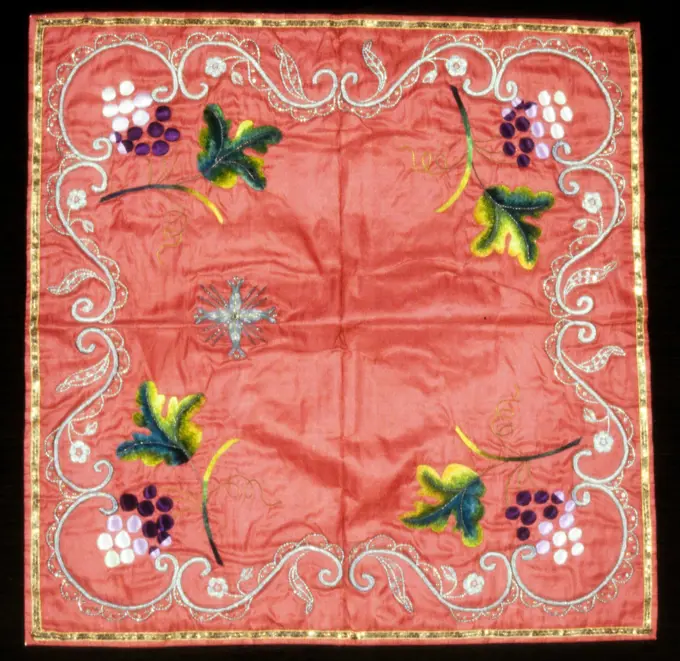
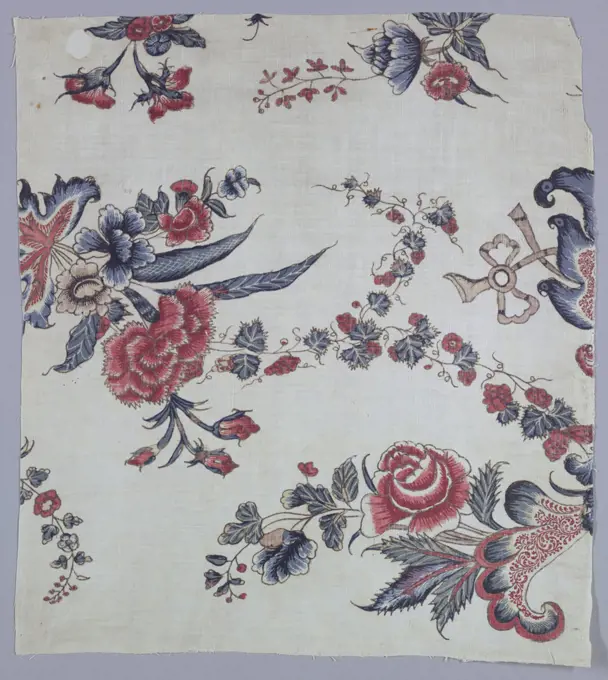
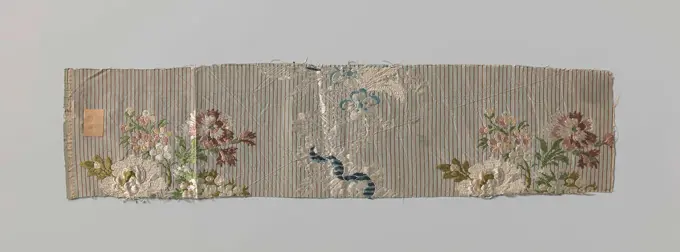
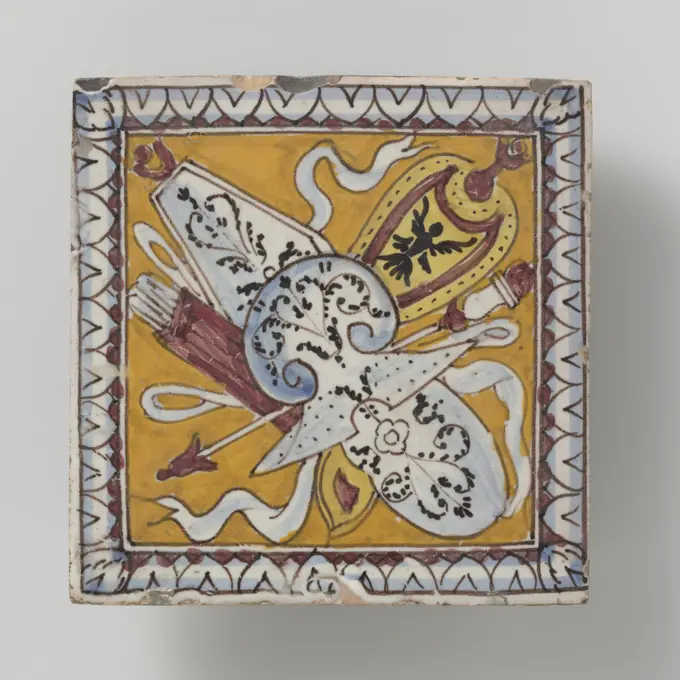
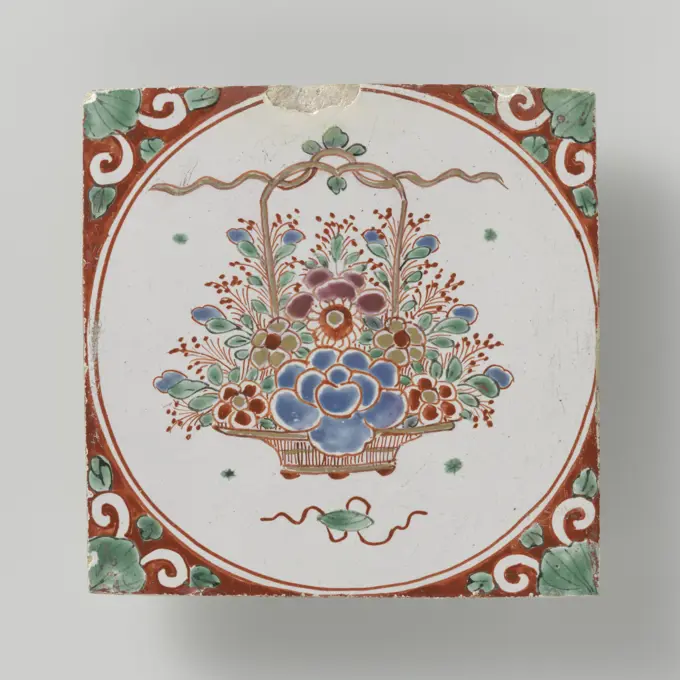
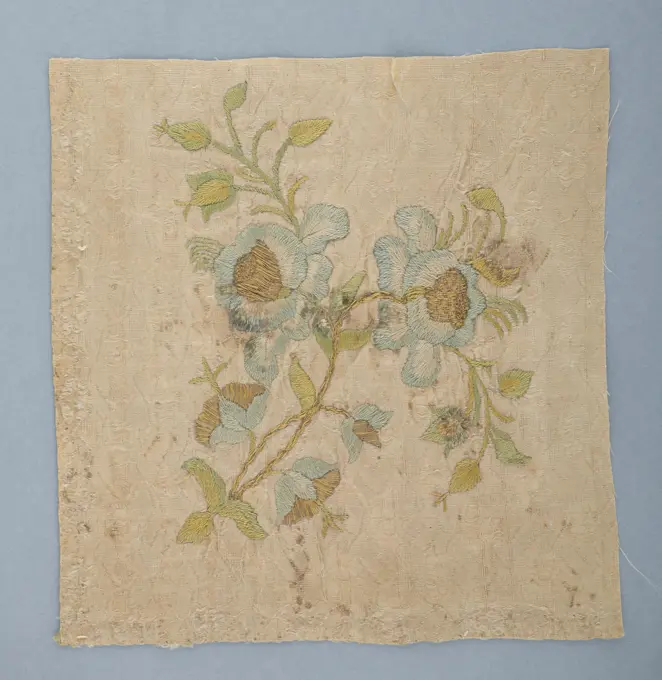
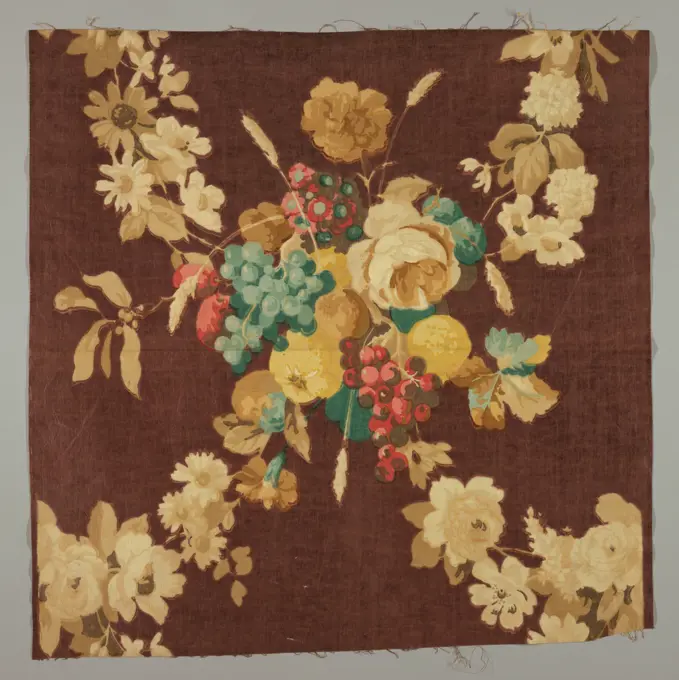
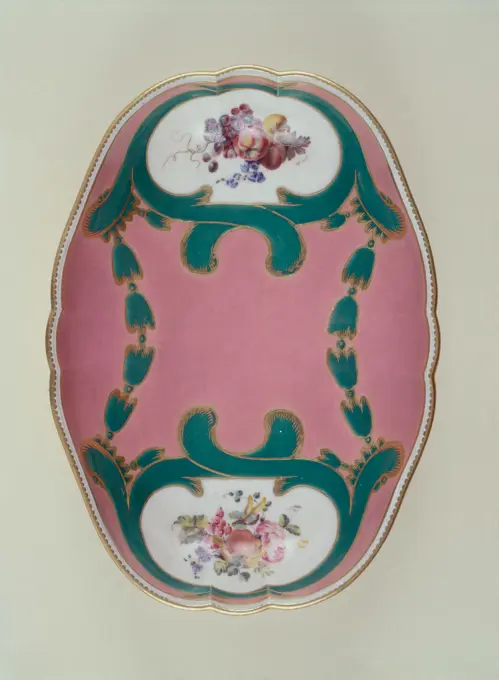
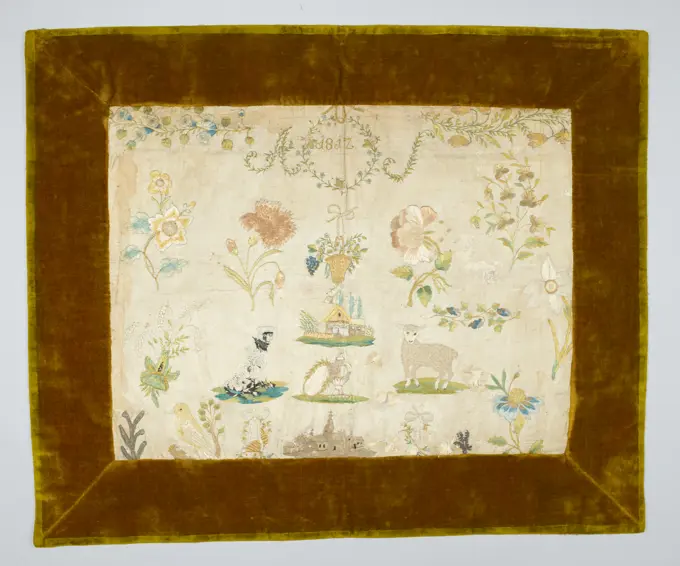
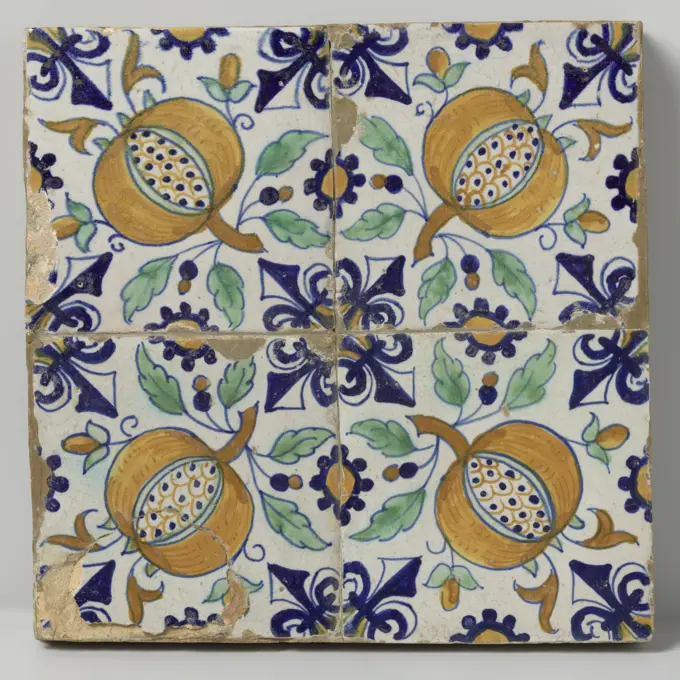
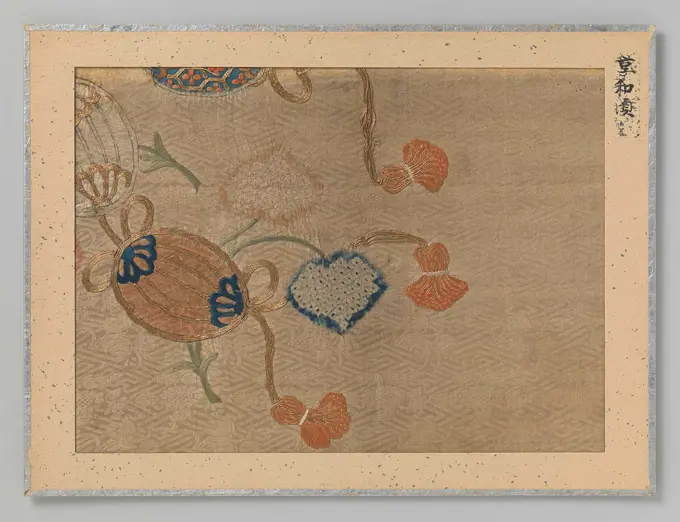
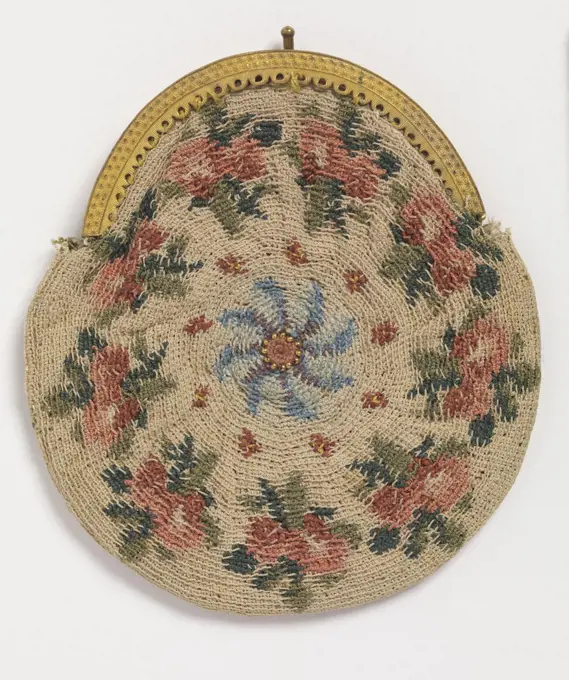
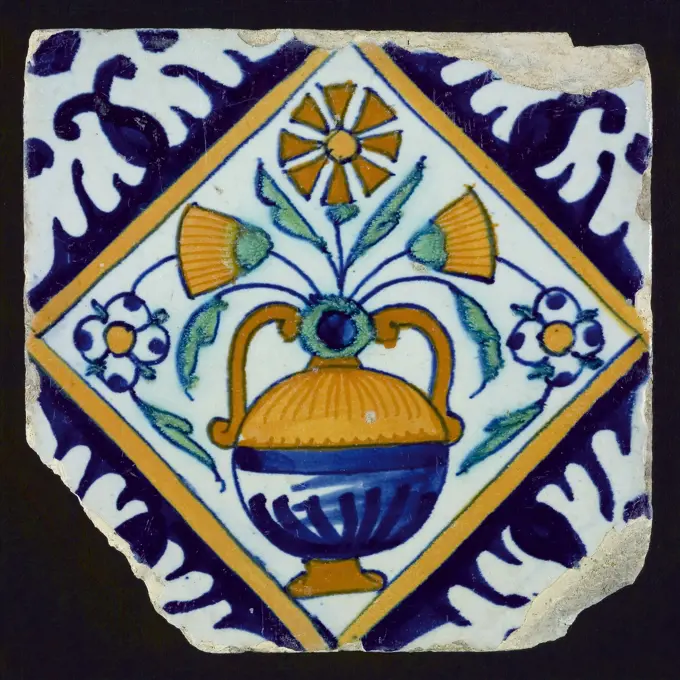
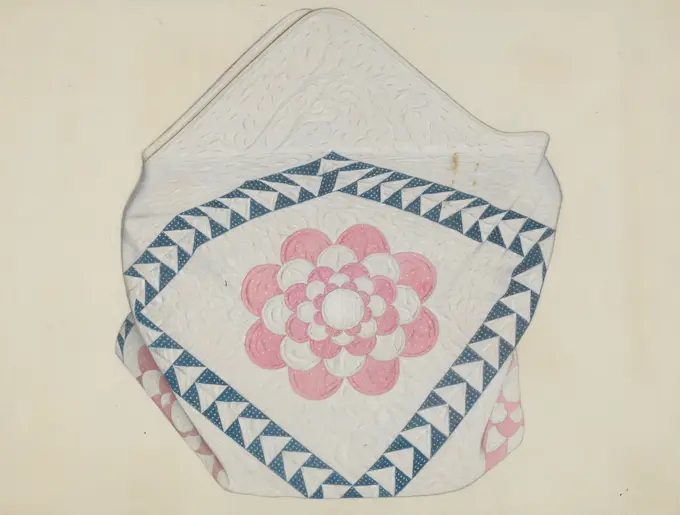
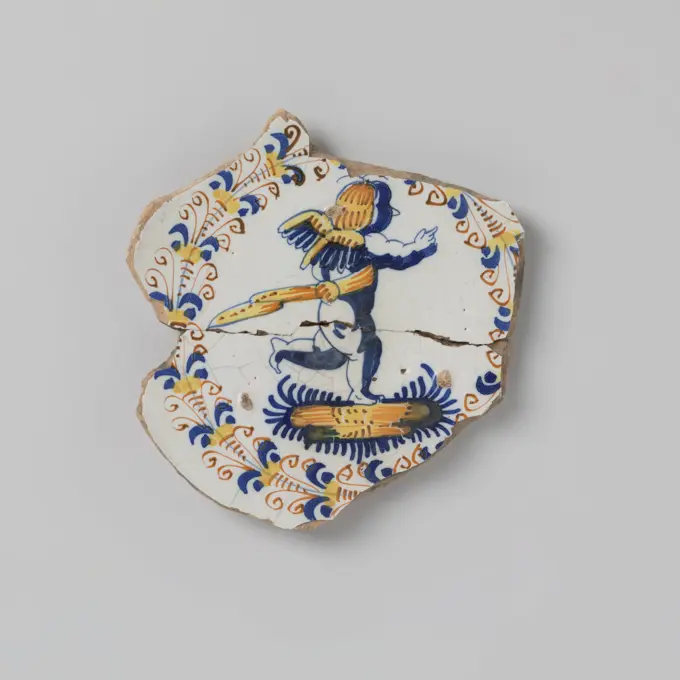
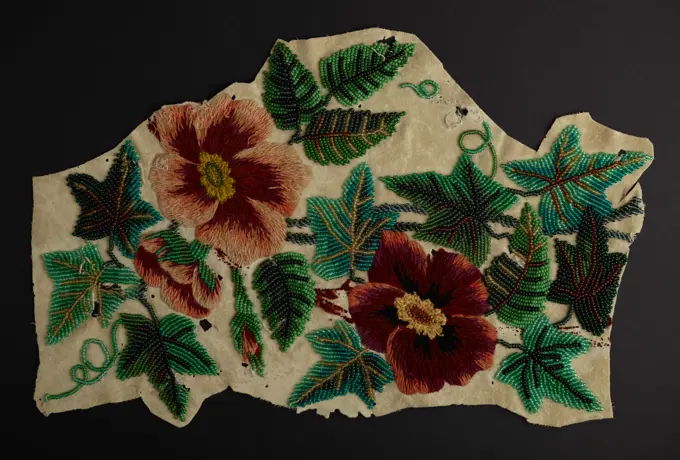
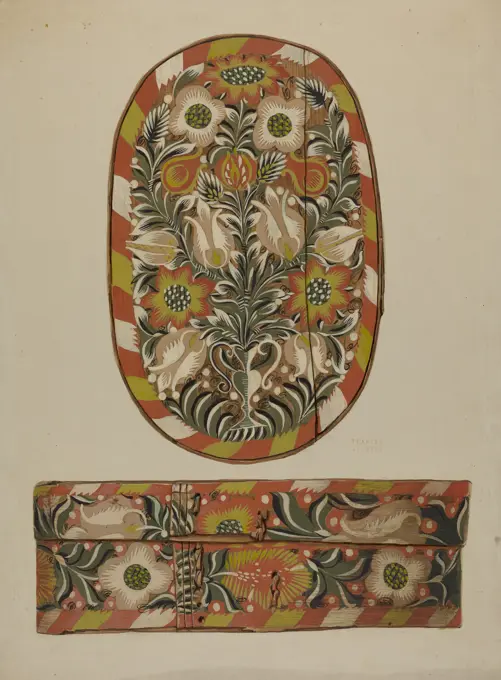
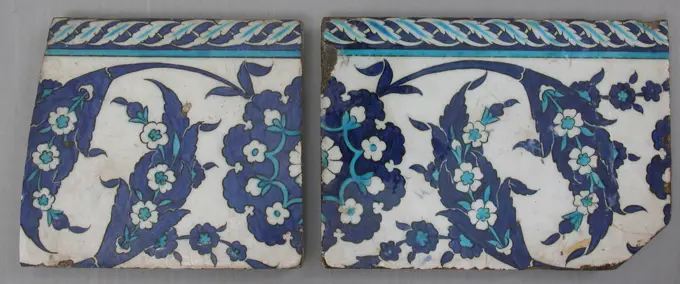
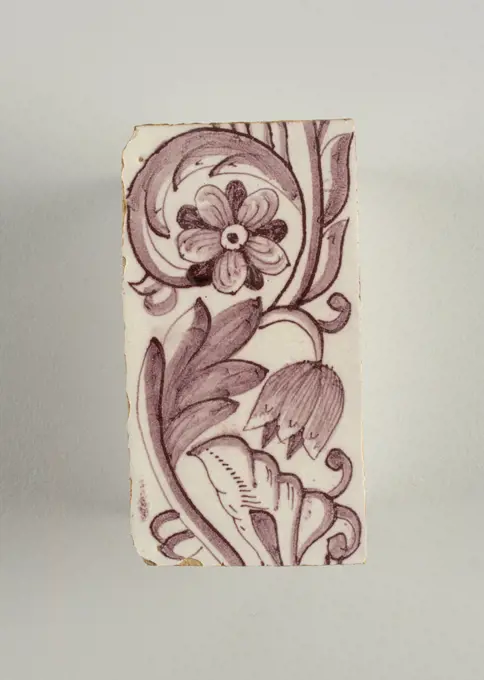
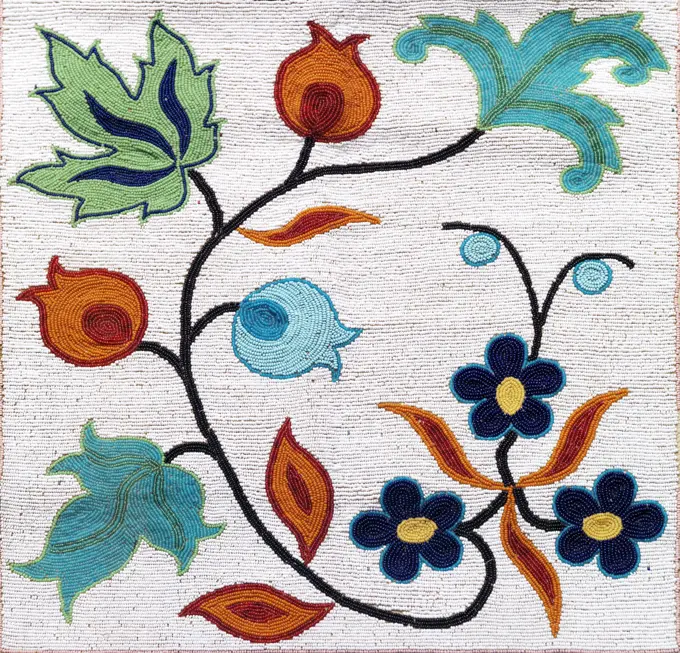
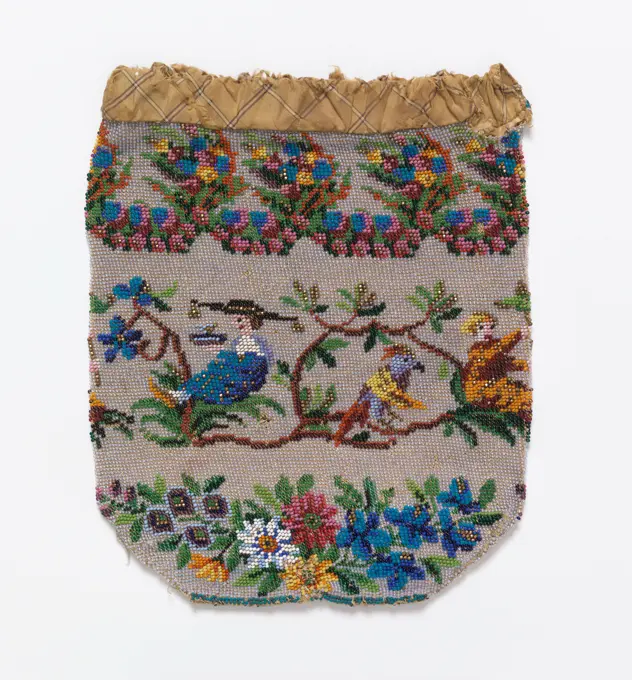
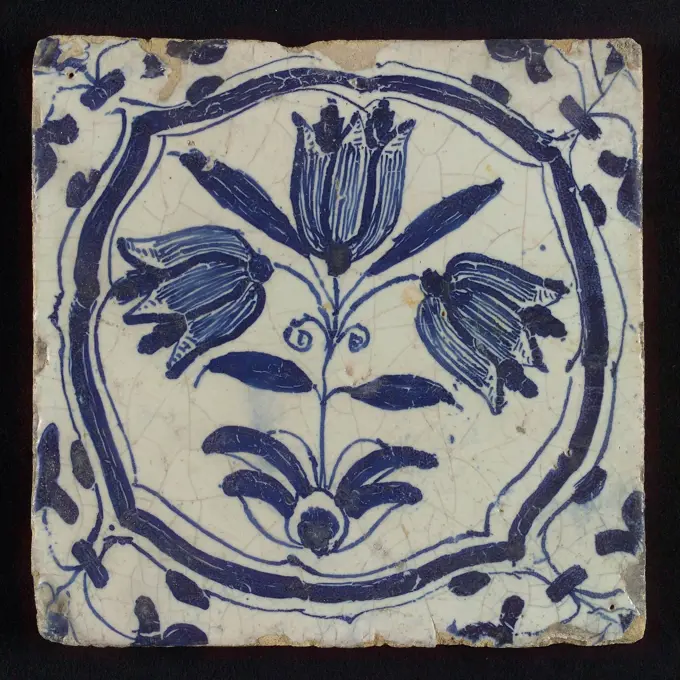
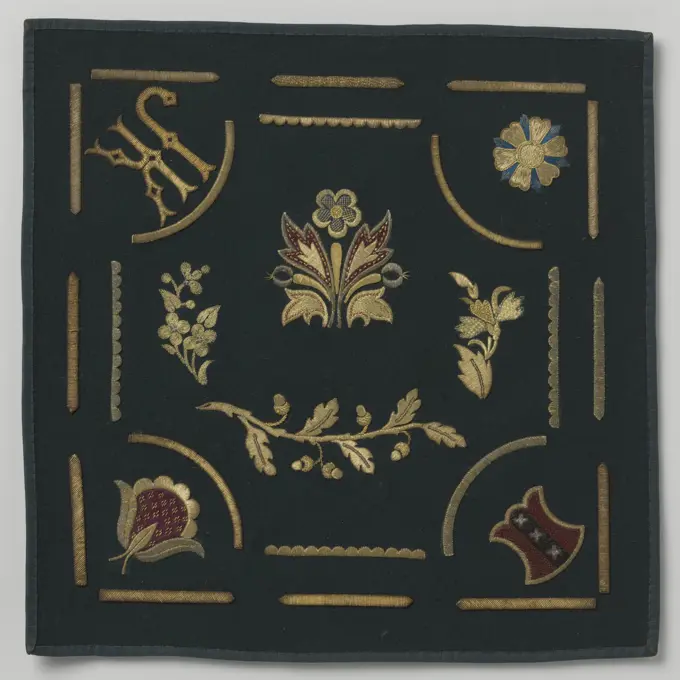
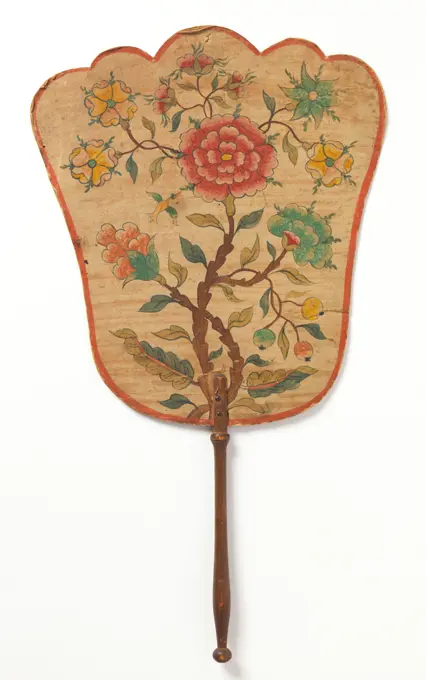
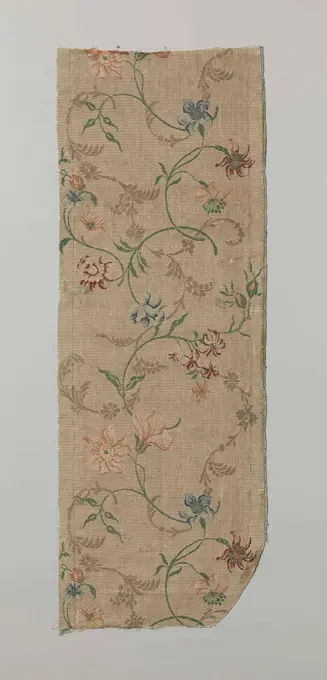
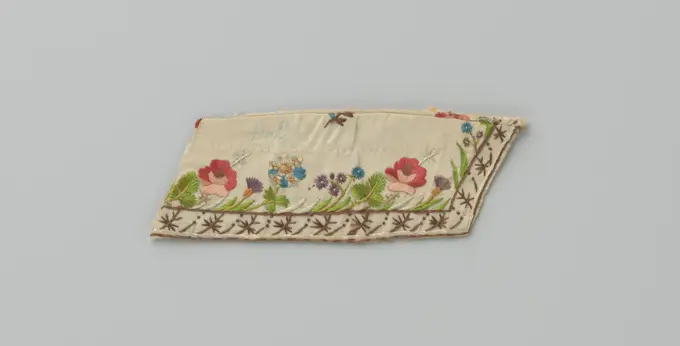
Piece 18th-19th century Japan. Piece 66568Chintz (India); cotton; Warp x Weft: 34 x 57 cm (13 3/8 x 22 7/16 in.)Border, Medium: silk. metallic Technique: embroidery using chain stitch with attached sequins on plain weave, Rectangular border of swags and detached floral sprigs on an off-white foundation fabric., France, 1750-1800, embroidery & stitching, BorderFragment of silk fabric  flower pattern unknownPair of chair backs 1760-80 Probably designed by Maurice Jacques French. Pair of chair backs 226983Fragments (France); cottonBordered fragment, Medium: silk Technique: plain weave with supplementary wefts, Polychrome large flowers and bird with border on white., 17th century, woven textiles, Bordered fragmentSidewall Sample; machine-printed on paper; 22.5 x 22.5 cm (8 7/8 x 8 7/8 in.)Tile, flower on ground in yellow, green and blue on white, corner pattern french lily, corner point orange, wall tile tile sculpture ceramic earthenware glaze, baked 2x glazed paintedCharlotte Winter, Brussels Carpet, c 1937 Brussels CarpetChair seat mid-19th century British. Chair seat 227444Fragment multicolored brochure silk, c. 1740 - c. 1760 Three fragments of white silk tissue with a pattern of multicolored flowers. Netherlands silk Three fragments of white silk tissue with a pattern of multicolored flowers. Netherlands silkTextile (France); crewel wool on linenEmbroidered Sash (Uckur), 18th century. Turkey, 18th century. Embroidery: silk and silver filé on linen tabby ground; average: 200 x 26.2 cm (78 3/4 x 10 5/16 in.).Tile, flower vase, blue decor white ground, corner filling oxen head, wall tile tile sculpture ceramic earthenware enamel tinglage, in form made baked painted baked Wall tile with blue decor on white ground Central show large flower vase on piece of ground with sprieten. Vase with two thin curled ears. Corner filling large ox head. Yellow-orange shard scraped pottery Slightly slanted sides of indigenous potteryTile, blue on white, central flower within star shape, three-spot around, half rosette, corner pattern lily, wall tile tile sculpture ceramics pottery glaze, baked 2x glazed painted 'Haarlem tile'. Yellow ruddy and red shard square Two or four nail holes. AIb3 HaarlemStorage box. unknown, authorChalice veil, 19th century, 20 1/2 x 20 3/4 in. (52.1 x 52.7 cm), Embroidered silk, Colombia, 19th centuryTextile, Medium: cotton Technique: mordants for 2 reds; brown and black applied by pen and brush; madder dyed; blue applied over resist; yellow applied over blue for green; chintz on plain weave, Garlands and bunches of flowers. Fragment of a palampore., India, 18th century, printed, dyed & painted textiles, TextileFragment; linen; 1933-1-133Linnamast finger cloth with a flower pattern, c. 1920 - c. 1930 Finger cloth from Linnamast with multicolored woven edges (cotton). In the middle rose branches in white, rose branches in the green, red and white rose branches against a yellow stock. Around Ajourzomen. In a corner a green -embroidered monogram pvr. The finger cloth belongs to five finger cloths (BK-1980-168-A to BK-1980-168-F) and a tablecloth (BK-1980-167). Germany (possibly) linen (material) damask Finger cloth from Linnamast with multicolored woven edges (cotton). In the middle rose branches in white, rose branches in the green, red and white rose branches against a yellow stock. Around Ajourzomen. In a corner a green -embroidered monogram pvr. The finger cloth belongs to five finger cloths (BK-1980-168-A to BK-1980-168-F) and a tablecloth (BK-1980-167). Germany (possibly) linen (material) damaskBag of multicolor printed tripe. Bag of multicolor printed tripe. Decorated with poppies and in the background grass. The bag is lined with salmon-colored silk and has two green sides aty bandjes.Table Topper Made 1760 United States . Mary ToppinLetter Case (USA); cotton, silkTextile fragment. Textile fragment, embroidery and pressure of flowers and branches and fruits.Field of four tiles with grape roses. Field of four tiles (2 x 2) each with a multi-colored (blue, green, orange and yellow) painted grape roos, diagonally placed. Along the edges, half a rosette and in the corners, a lily.Fragment veelkleurige gebrocheerde zijde.Fragment of vale silk tissue. A gray soil has thin red stripes on which a white lace garland with a blue striped ribbon and blue and white flowers, between multicolored flower bouquets.Tegel, Anonymous, 1870 - 1890 Tile with a multicolored (blue, brown, yellow, white and black) painted trophy composed of weapons and shields surrounded by a border with zigzag ornament. France earthenware. tin glaze majolica Tile with a multicolored (blue, brown, yellow, white and black) painted trophy composed of weapons and shields surrounded by a border with zigzag ornament. France earthenware. tin glaze majolicaTile with multicolored flower vase, anonymous, c. 1720 - c. 1750 Tile multicolored painted with a flower vase inside a circle. In the corners, flower motifs. Delft . Tile multicolored painted with a flower vase inside a circle. In the corners, flower motifs. Delft .Fragment of embroidery unknownSquare, Medium: cotton Technique: printed, White muslin square kerchief with a looped edge. Blue border design in a pattern resembling seaweed and coral., USA, late 19th century, printed, dyed & painted textiles, SquareSteel sits, probably original lining of Zeeland sun hat, with 'torsade' pattern. Steel sits, fragment of a Zeeland sun hat. Pattern of 'torsade' of alternating turns of white with red shub cores of white and yellow, the last two with a miniature floral edge and speckles in gold; The whole wounded with a narrow indigo ribbon. Other background with a large tendrilder pattern in red on indigo blue on which very composite palmet flowers and incised leaves. Secured on square hardboard.Ornaments, Bernard Willem Wierink, c. 1910 print   paper  ornaments ~ art. fable of Reynard the FoxDoily (USA); Manufactured by Deerfield Society of Blue and White Needlework (American, 1896-1926) (United States); linen; diam.: 23.2 cm (9 1/8 in.)Wall Facing (Netherlands); tin-glazed earthenware, underglazeFragment; silk; Warp x Weft: 49.8 x 22.5 cm (19 5/8 x 8 7/8 in.)White tile with blue fruit bowl, corner pattern ox head, wall tile tile sculpture ceramic earthenware glaze, baked 2x glazed paintedTextile; cotton; Warp x Weft: 81 x 80 cm (31 7/8 x 31 1/2 in.)Fragment (France); silkCuvette alone, Manufacture de Sèvres. Anonymous, 18th century. Museum of Fine Arts of the City of Paris, Petit Palais. 24087-4 Anonymous, single bowl, floral decor, decoration, coming from the Manufacture SevresCiborium Cover; silk, metal, cottonTile Tableau with Prince Maurits, c. 1600 - c. 1625 Loose tile belonging to the tile tableau with Prince Maurits. Netherlands earthenware. tin glaze majolica Loose tile belonging to the tile tableau with Prince Maurits. Netherlands earthenware. tin glaze majolicaTile, flowerpot in blue on white, corner motif oxenkop, fine painting, wall tile tile sculpture ceramic earthenware glaze, baked 2x glazed paintedNeedlework sampler unknownAltar rug with symbols and polychrome, Floralistic motifs, anonymous, 1600 - 1699 Altar rug with symbols and polychrome, floralistic motifs. China silk Altar rug with symbols and polychrome, floralistic motifs. China silkField of four tiles with calibrated pomegranates, anonymous, c. 1600 - c. 1625 Field of four tiles (2 x 2) each with a multicolored (blue, green, orange and yellow) painted open cracked pomegranate, placed diagonally. Along the edges, half a rosette and a lily in the corners. Netherlands earthenware. tin glaze majolica Field of four tiles (2 x 2) each with a multicolored (blue, green, orange and yellow) painted open cracked pomegranate, placed diagonally. Along the edges, half a rosette and a lily in the corners. Netherlands earthenware. tin glaze majolicaFloral Ribbon, 18th century, 25 x 2 1/2 in. (63.5 x 6.4 cm), Silk; passementerie, 18th centuryTextile; silk, metallic threadTile, orange, brown, green, and blue on white, flowerpot in square, corner pattern palmet, wall tile tile sculpture ceramic earthenware glaze, baked 2x glazed paintedWall Facing (Holland); tin-glazed earthenware, underglaze; 5 tiles tall, various wideA Zimet, Applique and Patchwork Quilt, c 1939 Applique and Patchwork QuiltFragment textile. Textile fragment, embroidery and print of fruits and leaves on damask-like background.Field of sixteen tiles. Field of sixteen tiles (4 x 4) each with a blue (one tile purple) painted pots maker or image on a console. In the corners, a Regence motif.Handkerchief, 1800s. France, 19th century. Embroidery on linen ground; lace edging; overall: 57.7 x 57.2 cm (22 11/16 x 22 1/2 in.).Purse, Medium: linen, metal Technique: crochet, Round flat purse with gilt metal clasp. Bouquets of roses in pinks and greens surround a central blue motif. Crocheted in a circular fashion from the center out., France, 19th century, costume & accessories, PurseDog blanket -Vogel E., vegetable ornaments (without date): View. Pencil watercolor on the box, 17.7 x 42.6 cm (including scan edges) Vogel E. : Pflanzliche OrnamenteSalesman's Sample (Waistcoat Pocket). France, probably Lyon. Date: 1780-1790. Dimensions: 27.3 × 27.7 cm (10 3/4 × 10 7/8 in.). Silk, warp-float faced satin weave; embroidered with silk floss in satin, single satin and stem stitches; French knots. Origin: France. Museum: The Chicago Art Institute, Chicago, USA.Tile, three-tier in blue, green, orange and purple on white, inside frame with accolades, corner motif, wing, wall tile tile sculpture ceramic earthenware glaze, baked 2x glazed paintedDoll Bed Applique Patchwork Quilt. Dated: c. 1937. Dimensions: overall: 37.5 x 38.3 cm (14 3/4 x 15 1/16 in.) Original IAD Object: 22"square. Medium: watercolor, gouache, colored pencil, and graphite on paperboard. Museum: National Gallery of Art, Washington DC. Author: Beverly Chichester.Bed Curtain Made 1750-1800 United States. Two panels joined; linen, plain weave; embroidered with wool yarn in bullion, long-armed cross, satin, and stem stitches; Roumanian and trellis couching .Lap of embroidered silk, anonymous, c. 1700 - c. 1799 Lap of embroidered side. Fragment of embroidered white silk with a pattern of flowers in pink, green, orange, blue, purple, white and yellow.  silk. linen (material) Lap of embroidered side. Fragment of embroidered white silk with a pattern of flowers in pink, green, orange, blue, purple, white and yellow.  silk. linen (material)Tile with blue leaves, tile picture footage fragment ceramics pottery glaze, d 1.3Flower tile with flower pot with five flowers, corner motif, with flowerpot on the back of the drawing, wall tile tile sculpture ceramic earthenware glaze, baked 2x glazed painted Yellow shard square. Multicolored. Orange green blue and brown on white background. Excerpt: flowerpotWilliam High, Quilt, c 1937 QuiltTile. Four tiles from pottery, painted in green, yellow orange and manganese. Windows in alternating yellow and green. (In modern wooden table).Ribbon mid-19th century French. Ribbon 221436Textile, Medium: silk, metallic yarns Technique: plain weave with discontinuous supplementary weft patterning (brodade), Length of ivory silk brocaded in gold metallic and colored silks in a spare pattern of tight squiggling vines with flowers and buds in pinks and blues., Spitalfields, England, 1743-44, woven textiles, TextileDishwarm of earthenware with multicolored drawing of a putto in a decorative edge, Anonymous, 1500 - 1799   earthenware. glaze   earthenware. glazeTegelveld of four tiles, anonymous, 1600 - 1640 Tile field of 4 tiles (2 x 2) with a multicolored (blue, orange and purple) pattern of zigzag motifs with rosettes or flower vines. Netherlands earthenware. tin glaze majolica Tile field of 4 tiles (2 x 2) with a multicolored (blue, orange and purple) pattern of zigzag motifs with rosettes or flower vines. Netherlands earthenware. tin glaze majolicaFragment of embroidery on white woollen cloth unknownPicture (Needlepoint) Made 1701-1800 France. Silk, plain weave; embroidered with silk threads in satin and chain stitch .Mitre; silk, metalFrances Lichten, Pa German Bride or Cap Box, c 1937 Pa. German Bride or Cap BoxBorder Tiles with 'Saz' Leaf Design 16th century These two fragmentary pieces are examples of "blue and white" Iznik tiles. The decoration presents a linear repeating pattern: a pair of feathery saz leaves grows out on the sides of a rosette-flower formed with ten multi-lobed petals. Little flowers in white and turquoise are painted over the two main motifs in dark blue. They follow the circular design of the rosette and enhance the spiral-like movement of the saz leaves.These tiles were produced in a period when the ceramic workshops of Iznik acted as an industrial-like production center in the sixteenth century. In fact, it was under Sultan Süleyman the Magnificent (r. 1520-66) and particularly from the 1550s onwards, that the increased building activity in the Ottoman capital Istanbul, and other cities and places, demanded a massive tile fabrication in order to decorate and embellish the walls of monuments.. Border Tiles with 'Saz' Leaf Design 453400Lampas wall covering with lovebird pattern, c. 1770 - c. 1790 Wall extension, consisting of a lane Lampas. Lovebird pattern. Lyon (possibly) lampas (textile material) Wall extension, consisting of a lane Lampas. Lovebird pattern. Lyon (possibly) lampas (textile material)Tile, Tin-enamelled earthenware, Vertical rectangles. Each tile with identical pattern of two flowers and leaves on continuous scrolling stem. One flower faces the observer and the other is in profile. Manganese violet on white ground., Holland, 18th century, tiles, Decorative Arts, TileTile, orange, brown, green, and blue on white, flowerpot in square, corner pattern palm, wall tile tile sculpture ceramic earthenware glaze, baked 2x glazed paintedAboriginal beadwork native Indian floral pattern bead artPurse or case. unknown, authorChair Seat Made 1870-1890 England. Linen, plain weave; embroidered with wool yarns in tent stitch .Purse (tobacco Pouch) (Germany); silk, glass and metal beadsTile, three-tier in braces in blue on white, corner motif, wing-leaf, wall tile tile sculpture ceramic earthenware glaze, baked 2x glazed paintedStitch pap from gold thread border on dark blue -green sheet., Industrial school De Windroos, c. 1900 - c. 1925 Stitch pap from gold thread border on dark blue -green sheet. Square, trimmed with ribbon in the same color. In the middle four flower stalks including an oak branch. Scashed and straight, constantly interrupted edge frames, in cross or sloping stitches with the initials J.K, the weapon of Amsterdam (in color), a chalice and a rosette flower. Amsterdam, 1900-1925. Rotterdam Linen (Material). Wool. Lining: Linen (Material). embroidering Stitch pap from gold thread border on dark blue -green sheet. Square, trimmed with ribbon in the same color. In the middle four flower stalks including an oak branch. Scashed and straight, constantly interrupted edge frames, in cross or sloping stitches with the initials J.K, the weapon of Amsterdam (in color), a chalice and a rosette flower. Amsterdam, 1900-1925. Rotterdam Linen (Material). Wool. Lining: Linen (Material). embroideringFragment, Medium: silk, metallic thread Technique: ciselé voided satin velvet., Pilaster-like pattern of large-scale leaves and flowers in green ciselé velvet on yellow satin ground. Satin ground originally shot through with flat strips of gold, which is now almost entirely worn away., Italy, ca. 1700, woven textiles, FragmentHandscreen (France); painted paper leaf, turned wood handleFragment majolica plate, blue on white, with four-leaf motif in the middle, plate dish crockery holder soil find ceramic earthenware glaze, majolica baked underside covered with lead glaze. Monochrome archeology adorn serving foodFragment veelkleurige gebrocheerde zijde.A silk tissue, consisting of two rectangular pieces, green tendrils with various floral o.a. large salmon-colored cheries blue, red and white rosette flowers. Note: Two panels put together left and right a self-side; 0.3 cm Plain bond.Field of twenty -five tiles with tulips, anonymous, c. 1640 - c. 1670 Field of twenty -five tiles (5 x 5) each with a blue painted tulip within a squared cushion with in the corners, a lily. Netherlands earthenware. tin glaze majolica Field of twenty -five tiles (5 x 5) each with a blue painted tulip within a squared cushion with in the corners, a lily. Netherlands earthenware. tin glaze majolicaFragment of a bed of oriental textile with embroidery. Fragment of a multi-colored belonger Indo-Persian bedspread, decorated with volutes and flowers. Entertained into a trapezoidal chair cover. With a sewn linen strap on the center of four sides.Sampler, Medium: silk embroidery on linen foundation Technique: embroidered in rococo (Queen) and cross stitches on plain weave foundation, 'Spot' sampler of assorted geometric and floral motifs., Netherlands, 18th century, embroidery & stitching, SamplerCalmet Screen, five -leaf, gold leather decorated with leaves, flower vines, birds and butterflies on the foundation of triangles, Anonymous, 1700 - 1800 Caminaire of gold leather, consisting of five sheets that are decorated with flower vines, leaves, birds and butterflies on a golden stock of triangles. Northern Netherlands (possibly)Netherlands (possibly) . Caminaire of gold leather, consisting of five sheets that are decorated with flower vines, leaves, birds and butterflies on a golden stock of triangles. Northern Netherlands (possibly)Netherlands (possibly) .Kant pattern for a rug of bobbin with golden rain branches and flowers, Louise Wilhelmina van der Meulen -Nulle, c. 1912 Side letter or edge pattern with a part of the pattern for a rug with invnr. BK-1979-84. The letter is numbered (7) and the name Bloemink is written on the front. Apeldoorn paper drawing Side letter or edge pattern with a part of the pattern for a rug with invnr. BK-1979-84. The letter is numbered (7) and the name Bloemink is written on the front. Apeldoorn paper drawingVelvet palla with embroidery, c. 1500 - c. 1600 Red velvet palla, embroidered with silver thread, on which a cross. The palla is fed with linen and reinforced with wood.  velvet (fabric weave). silver thread. linen (material). wood (plant material) embroidering Red velvet palla, embroidered with silver thread, on which a cross. The palla is fed with linen and reinforced with wood.  velvet (fabric weave). silver thread. linen (material). wood (plant material) embroideringField of four tiles, Anonymous, 1600 - 1625 Field of 4 tiles (2 x 2) each with a multicolored (blue, orange and yellow) painted rosette surrounded by four French lilies. Along the edges, half a rosette and in the corners a fifty practice. Netherlands earthenware. tin glaze majolica Field of 4 tiles (2 x 2) each with a multicolored (blue, orange and yellow) painted rosette surrounded by four French lilies. Along the edges, half a rosette and in the corners a fifty practice. Netherlands earthenware. tin glaze majolicaFragment with embroidery with flowers, anonymous, c. 1800 - c. 1930  Europe textile materials embroidering  Europe textile materials embroideringDress of needle side with palmets and woven diamond. Natural needle side dress: Venetian relief side. Square model with a four-sided, cave scalloped linen middle piece. A lace window has been put in the center of the linen. Around the linen runs a border that is made up of an inner list with broken meanders. The angular motif is the same for every angle and consists of a drop-shaped cartouche with a palm with it.Ornament tile, diagonal ornament in quatrefoil with bows in which orange-apples and flowers, palm corner, corner pattern rosette, wall tile tile sculpture ceramics pottery glaze, baked 2x glazed painted Yellow and reddish shard square two and four nail holes. Multicolored: brown blue green yellow on white ground (variation in light and dark). Saving technique in blue on white.Fragment (Italy); silk, metallic thread; Overall: 55 x 46 cm (21 5/8 x 18 1/8 in.)Embroidery sample for a man's suit. Culture: French. Dimensions: L. 4 7/8 x W. 3 5/8 inches12.4 x 9.2 cm. Date: ca. 1785. Museum: Metropolitan Museum of Art, New York, USA.