Decorative Lace Strips

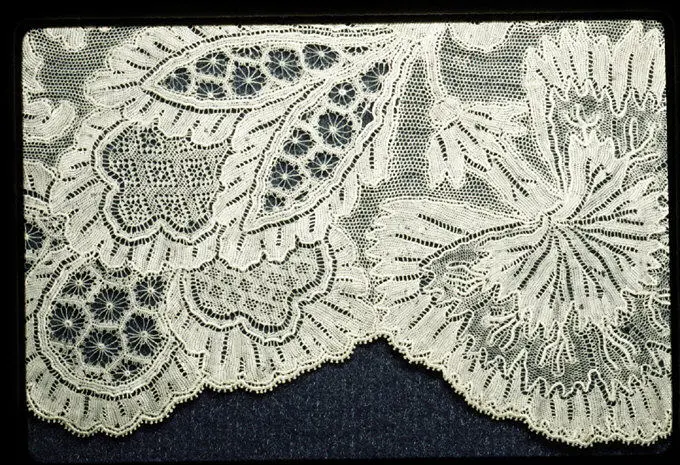
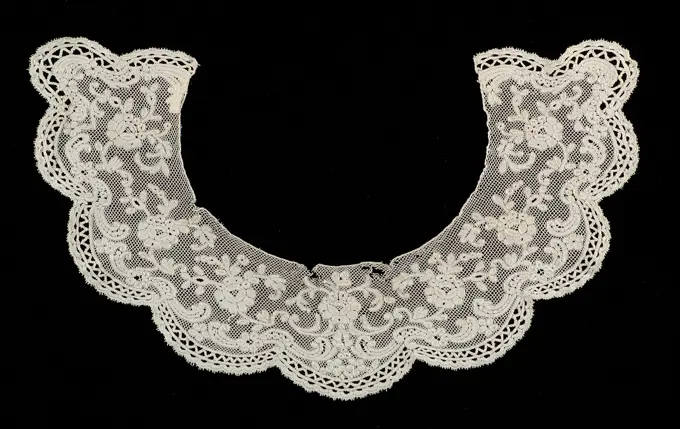
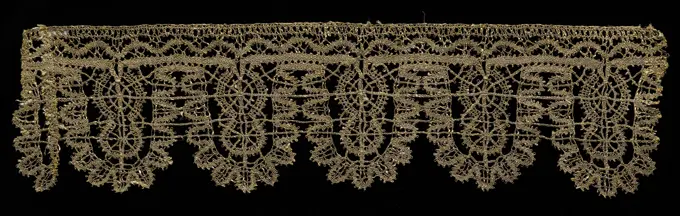
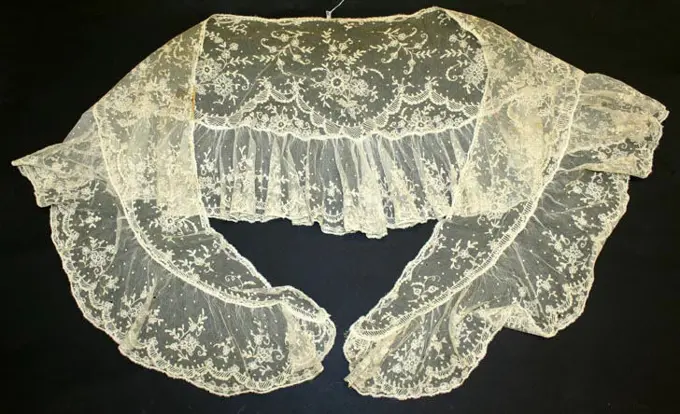
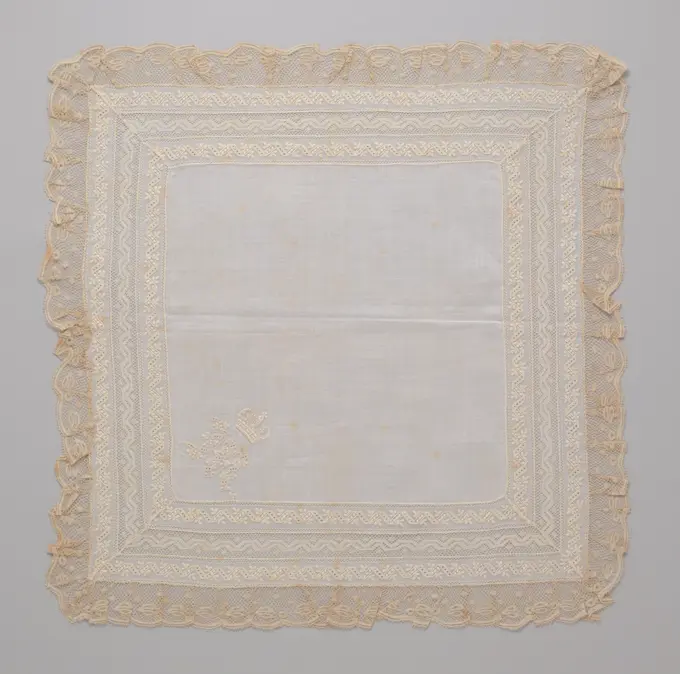
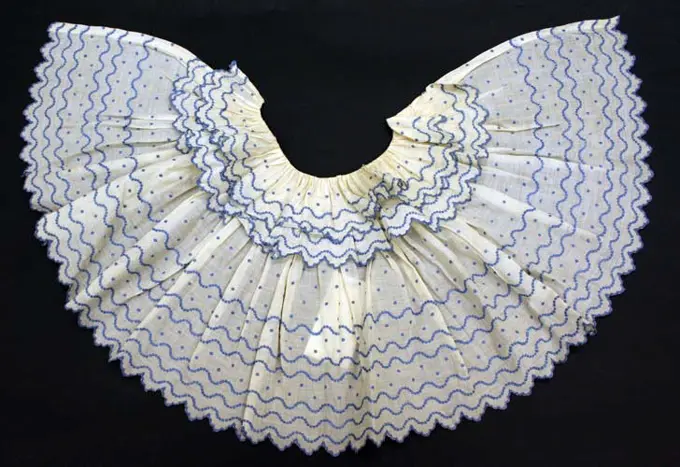
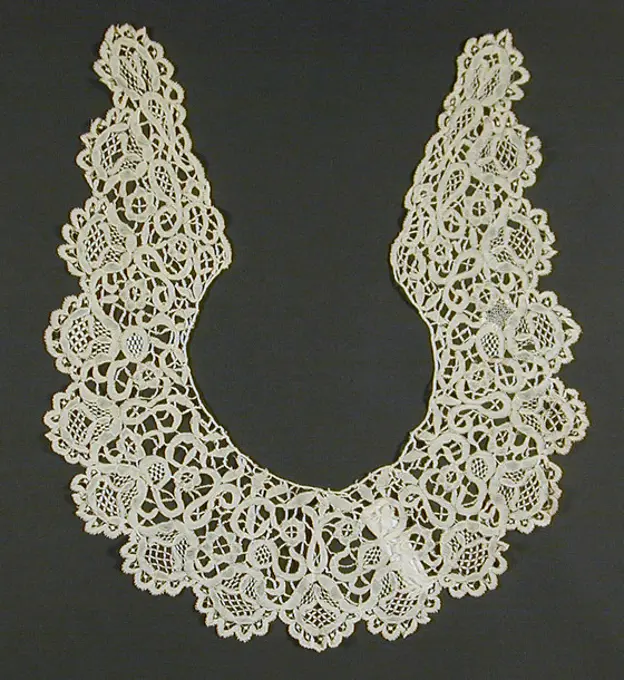
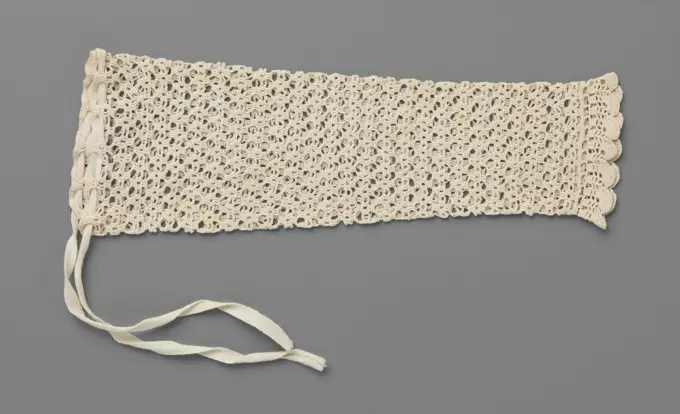
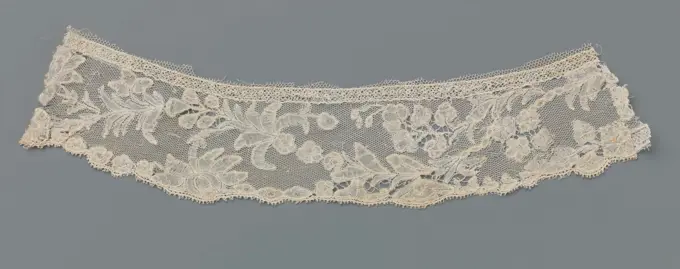
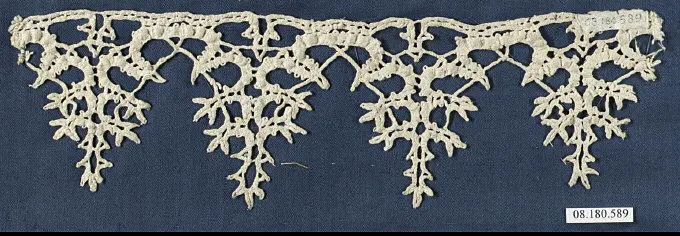
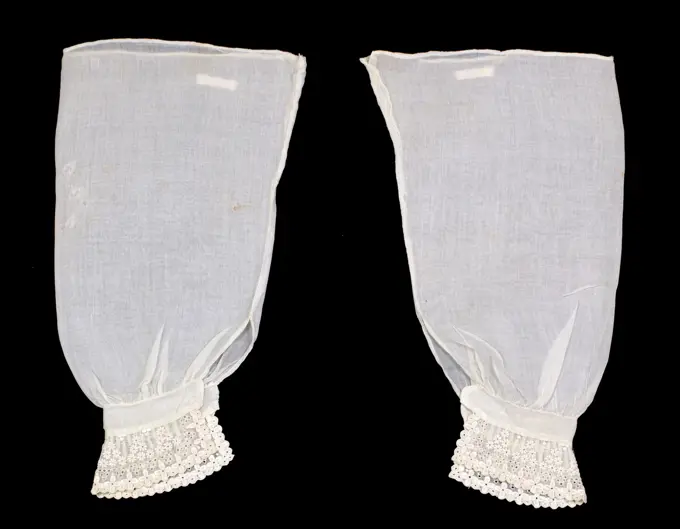
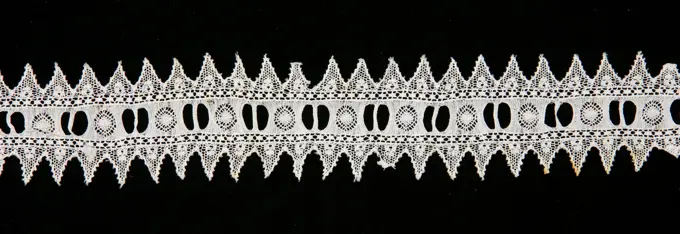
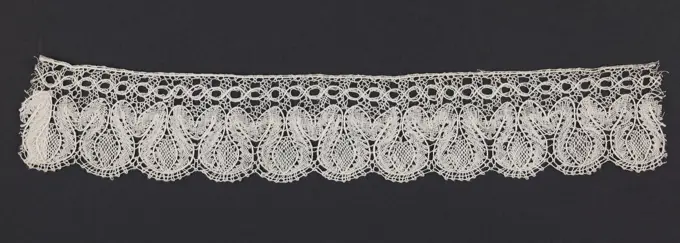
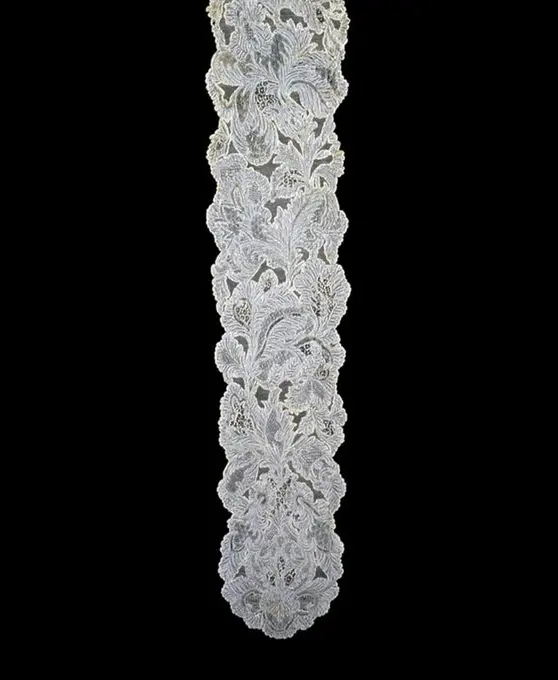
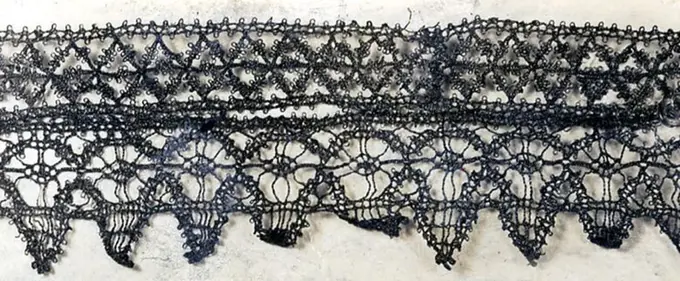
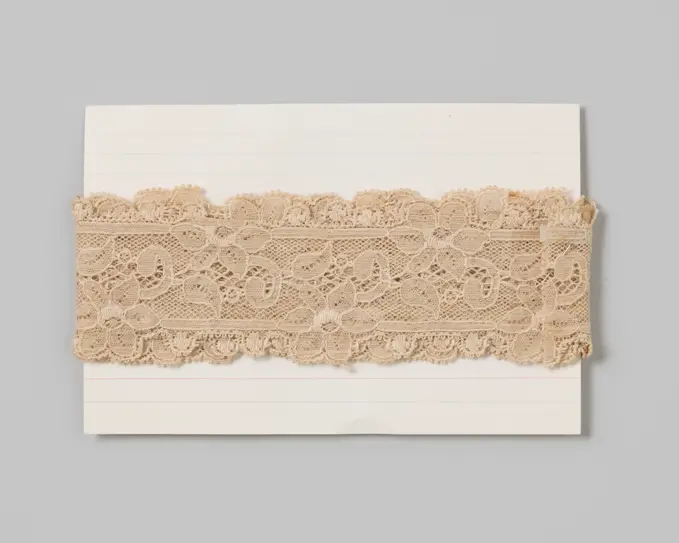
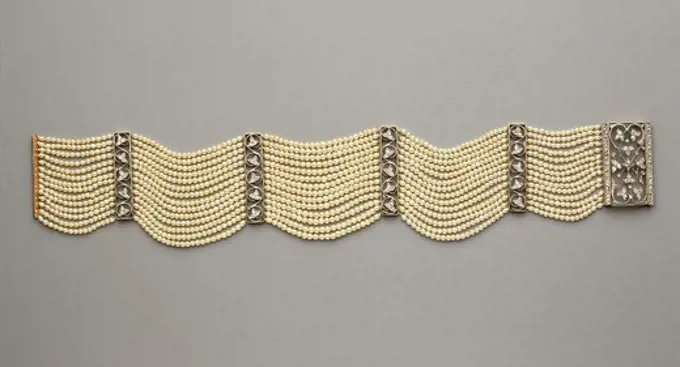
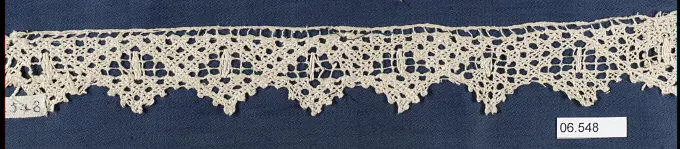
A variety of intricate lace strips from different eras, featuring floral patterns, geometric shapes, and delicate borders, showcasing craftsmanship in textiles.

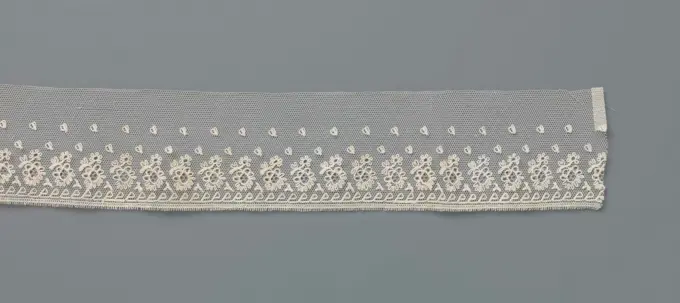
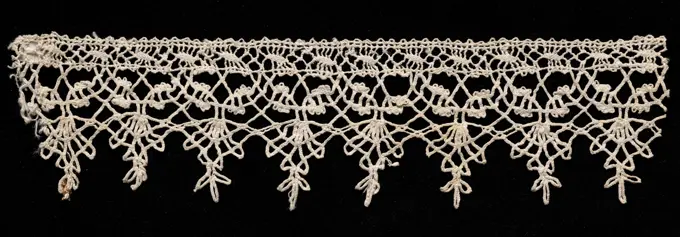
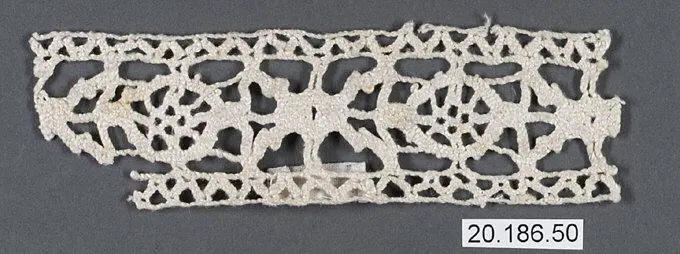
Strip of needle side with diamond and rosette in squares, anonymous, c. 1620 - c. 1630 Strip of natural needle side, reticella. A repeating pattern of a square, alternately with a window or rosette, which is made up of 4x4 small squares. Along the bottom edge under large square a semicircular shell with changing filling between two bell -shaped, hanging flowers. The top is trimmed with a woven edge. Italy linen (material) Strip of natural needle side, reticella. A repeating pattern of a square, alternately with a window or rosette, which is made up of 4x4 small squares. Along the bottom edge under large square a semicircular shell with changing filling between two bell -shaped, hanging flowers. The top is trimmed with a woven edge. Italy linen (material)
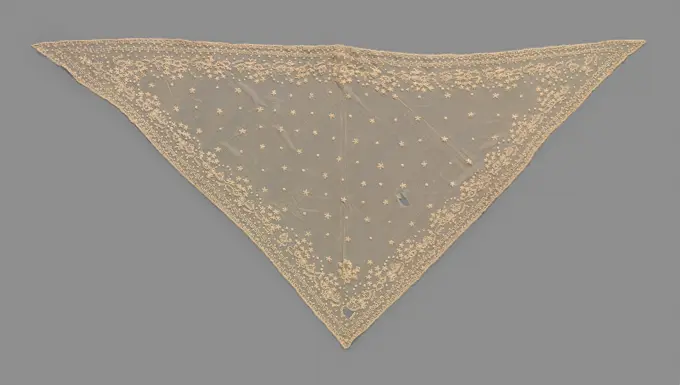
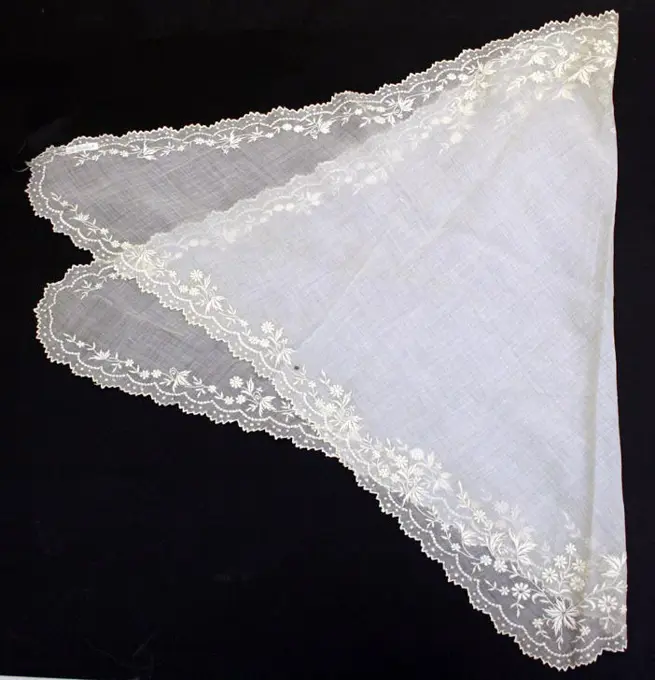
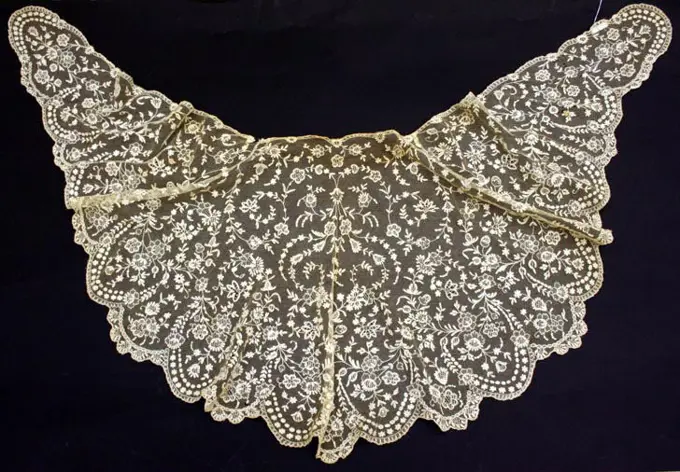
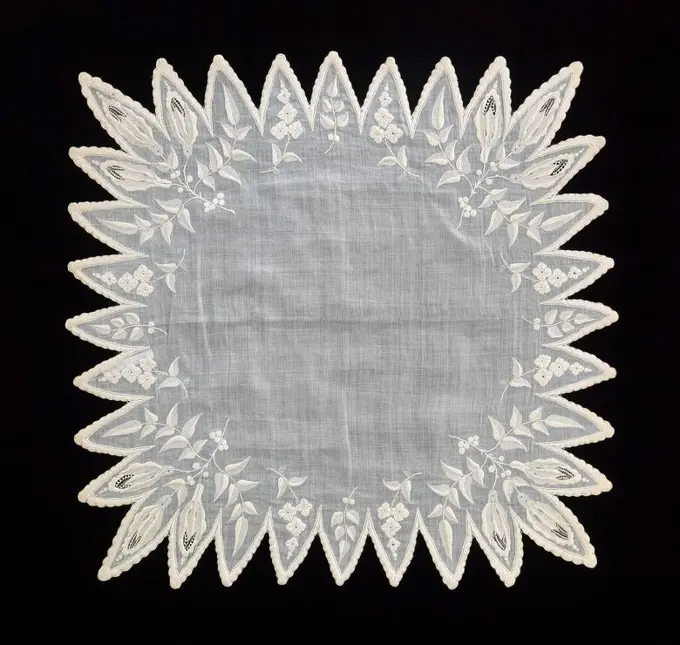
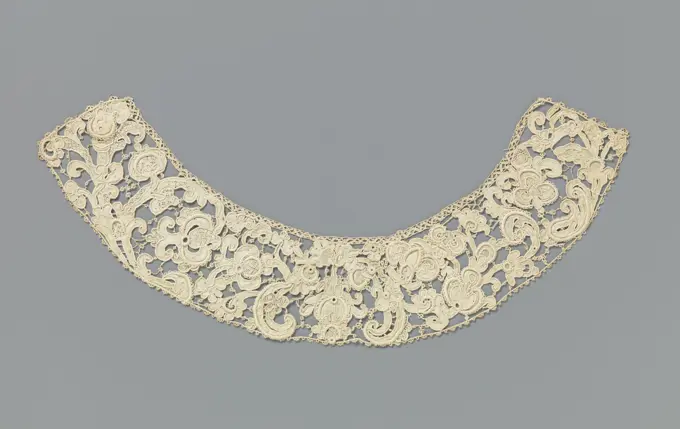
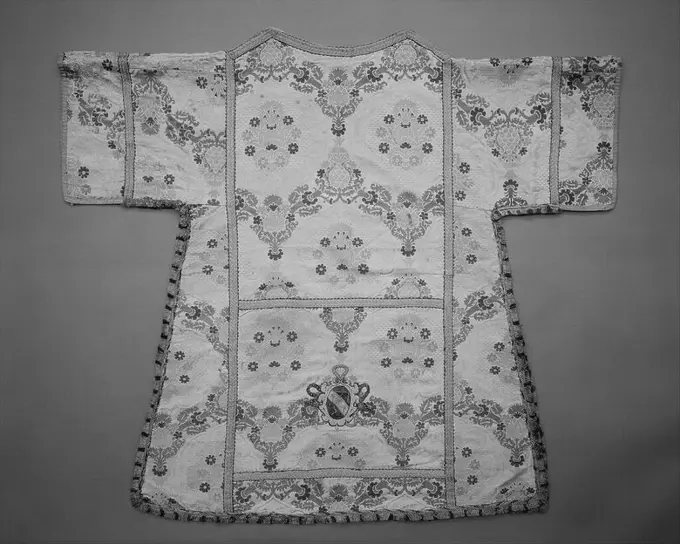
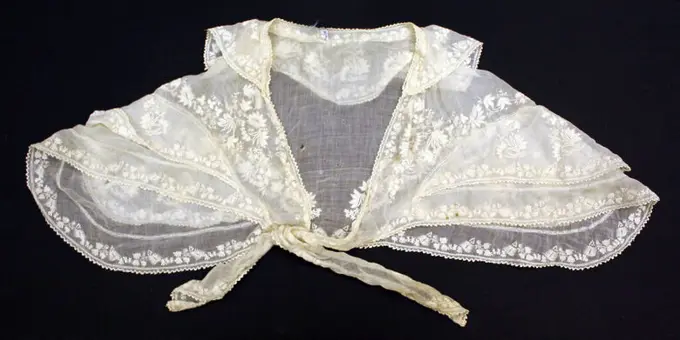
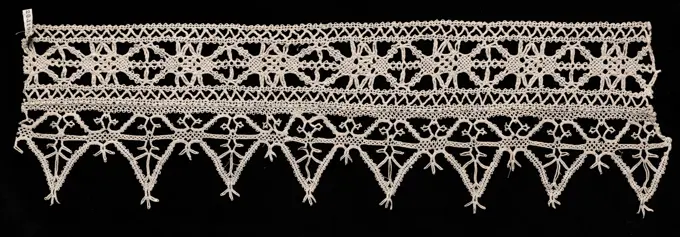
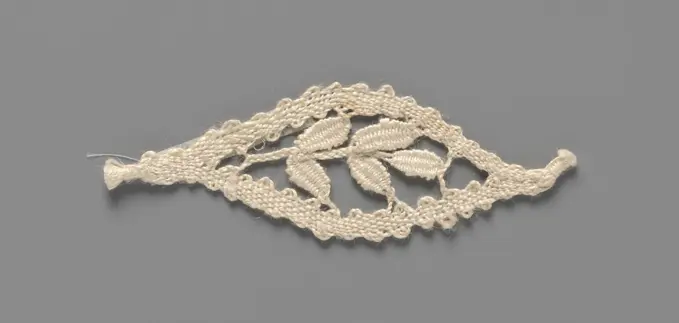
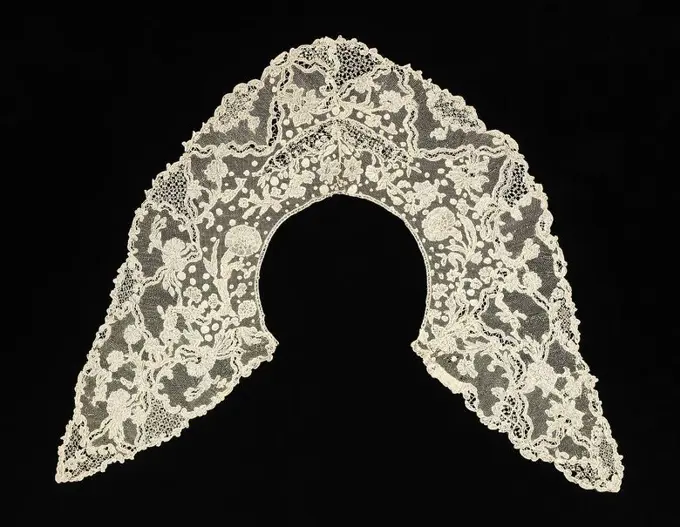
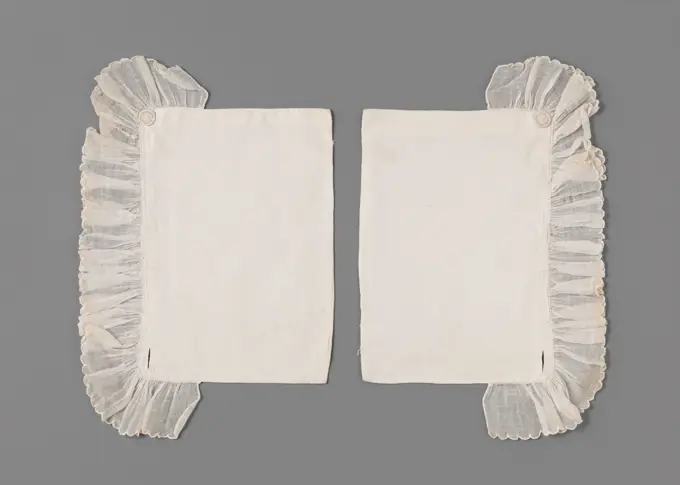
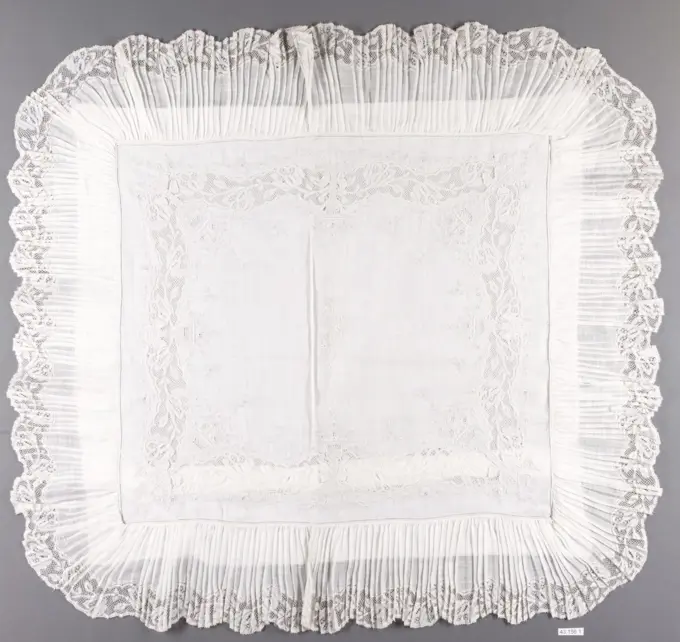
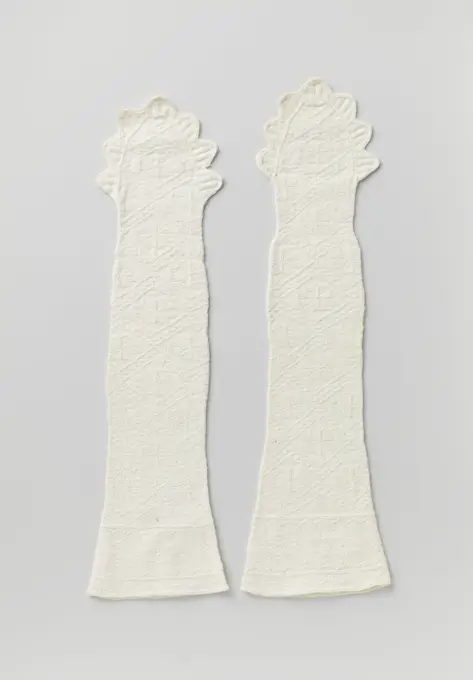
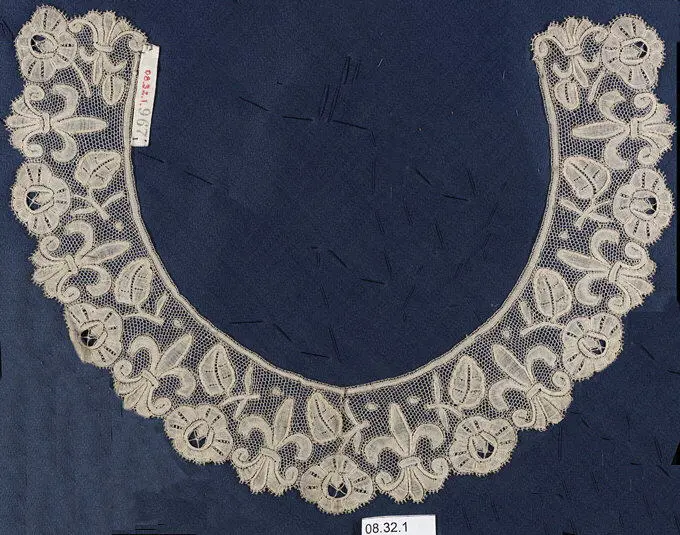
Kleed van batist met lichtroze linten tussen machinaal borduurwerk en machinale kant.Dress of natural batist, square model with rounded corners and trimmed with a border machine side: Valenciennes-side. The rug is decorated with three courses, each of which consists of two intermediates of valenciennes lace and between the machine embroidery with notches where a light pink ribbon is strung through. The repetitive pattern of the lace edge consists of a V-shaped flower branch with two flowers. The six intermediate sets have a pattern of a regularly wavy rank with rose hips or pomegranates. Embroidery consists of the same open-worked round flower surrounded by round petals. The back of the rug with the decorated lanes has been lined.Fichu van kantborduurwerk werk mogelijk van Zaanse dracht.Fichu of natural-colored edge embroidery: Lierse side or limerick side, with tambourish on machine tulle. The pattern has two likes of angular meanders along the sides, within which an ongoing pattern of loose stems with clock and star flowers. In the middle, rows of stars and mashes alternate.Fichu 1830s American. Fichu 119368Mitaine of white knitted cotton, anonymous, c. 1750 - c. 1800 Mitaine of white knitted cotton, with a pattern of rows of hearts. Falling triangle with seven scoops. Marked: AEL / G. Netherlands whole: Cotton (textile) knitting Mitaine of white knitted cotton, with a pattern of rows of hearts. Falling triangle with seven scoops. Marked: AEL / G. Netherlands whole: Cotton (textile) knittingAccessory set. Culture: Philippine. Date: ca. 1850.The production of pineapple cloth is specific to the Philippines and West Indies. Woven by hand from the leaf fiber of the pineapple plant, and embellished with intricate embroidery, this highly valued fabric was fashioned into clothing and accessories that were a part of the traditional Filipino cultural heritage for centuries. Exportation to Europe and America started early, but became widespread during the 19th century, when it was promoted by Christian missionaries. The exported items, fashioned for both men and women, were highly prized for their beauty and novelty. Museum: Metropolitan Museum of Art, New York, USA.Pelerine 1830s American. Pelerine 100175Demolition with white embroidery with the name Lucille, Anonymous, c. 1890 - c. 1910 Demolition with white embroidery with the name Lucille. With matching sheet and a second demolition (A, C). Netherlands yarn. bobbin lace / embroidering Demolition with white embroidery with the name Lucille. With matching sheet and a second demolition (A, C). Netherlands yarn. bobbin lace / embroideringBatist handkerchief with thin wavy branch of plumetis embroidery and a border bobbin with three rows of moesjes, anonymous, c. 1800 - c. 1899 Batist handkerchief with a thin wavy branch with leaves and flowers from Plumetis embroidery along the edges. The handkerchief is finished along the edges with a strip of natural-colored bobbin: Valenciennes side. The lace has a pattern of three rows of picons in a grid, a square Valenciennes ground, above a scrap edge that is finished with picots. Europe cotton (textile). batiste Bobbi Lace / Valenciennes Lace / Embroidering Batist handkerchief with a thin wavy branch with leaves and flowers from Plumetis embroidery along the edges. The handkerchief is finished along the edges with a strip of natural-colored bobbin: Valenciennes side. The lace has a pattern of three rows of picons in a grid, a square Valenciennes ground, above a scrap edge that is finished with picots. Europe cotton (textile). batiste Bobbi Lace / Valenciennes Lace / EmbroiderinHandkerchief. Culture: probably American. Date: second quarter 19th century.Striking forms with exaggerated points enclosing the border motifs contribute to this handkerchief's distinctive look. The pod forms are unusual and beautifully detailed. The alternating use of different embroidery stitches creates shading and depth within the graphic images. Museum: Metropolitan Museum of Art, New York, USA.Border 18th century Italian or Flemish. Border 227672Collar of needle side with flowers and C-volutes, anonymous, c. 1695 - c. 1899 Collar of natural -colored needle side: Venetian relief side. Curved strip -shaped model. The pattern consists of a more or less symmetrical composition with a flower that is flanked by C-Voluten. The remaining pattern, with mainly flowers, a few leaves and stems, is not symmetrical. The motifs are made with feston stitches and are equipped with relief contours and thick cordons decorated with picots. The top is finished with a messing strap. The collar is finished along the short sides and underside with a bow edge. It is possible a 19th century imitation of a late 17th century fragment. Europe linen (material) Venetian raised work Collar of natural -colored needle side: Venetian relief side. Curved strip -shaped model. The pattern consists of a more or less symmetrical composition with a flower that is flanked by C-Voluten. The remaining pattern, with mainly flowers, a few leaves and stems, is not symmetriCollar ca. 1860 European. Collar 169666Dalmatic. Culture: Italian. Dimensions: L. 43 1/2 x W. 50 3/4 inches (110.5 x 128.9 cm). Date: late 15th-early 16th century. Museum: Metropolitan Museum of Art, New York, USA.Place mat made from paper, elevated viewFragment of a Border with Floral Vine and Geometric Patterns, 16th century. Italy, 16th century. Needle lace, burato (twined ground and darned in two directions) and reticella; bleached linen (est.); overall: 32.9 x 69.3 cm (12 15/16 x 27 5/16 in.). Textiles often incorporate multiple techniques within a single piece, providing visual interest, and also demonstrating the skill and versatility of the maker. This fragment incorporates both reticella, a type of geometric needle lace worked on a grid of plaited or laid thread, and a border of burato.Strip bobbin with stylized symmetrical flowers, anonymous, c. 1800 - c. 1899  Strip of natural -colored bobbin, Eastern European side. The pattern consists of two stylized symmetrical flowers, where the contours are made with winding ribbons, which at least vary in width. One flower has a chalice with three lobes and could represent a tulip. The other is a palm flower has five lobes. Both flowers hang down from the top of the strip to almost at the bottom. The motifs are connected by a variation of mesh grounds. The ribbons are made in linen battle with openwork edges. The top is finished with a straight -ribbon ribbon in linen stroke with edges open on both sides. The underside is finished with a scrap edge where the shells are made with braids. Abruzzi linen (material) bobbin lacedetail knitted sweatshirtStrip tulle crossed with picro edge, decorated with running pattern with one-sided waving oval leaves growing up from blades. Strip Tulle Crossed With a Straight Edge and PicoTrand Mounted. Running Pattern Consisting Of One-Sided Waving Oval Leaves, Which Grow Up Between Blades Of GrassLace application for a dress;  around 1920 (1915-00-00-1925-00-00);Magdalena, Witwińska, Dar (provenance)Crocheted white sleeves, anonymous, c. 1850 - c. 1920 The sleeves are sewn together with a label. Netherlands textile materials crocheting The sleeves are sewn together with a label. Netherlands textile materials crochetingFragment 17th century Italian. Fragment 218786Pelerine. Culture: probably American. Date: 1825-50. Museum: Metropolitan Museum of Art, New York, USA.Cooper Union Museum Lace Study Card, Medium: linen Technique: bobbin lace, Lace fragment with a ground called 'armure,' which is a chain-like pattern. Fragment is mounted on a fabric-covered board and framed behind glass. Frame is natural wood., Belgium, 18th century, lace, Fragment, FragmentBobbin Lace Insertion and Edging of Points, 16th-17th century. Italy, Venice, 16th-17th century. Lace, bobbin; average: 15.9 x 54.7 cm (6 1/4 x 21 9/16 in.).Bobbin Lace Edging of Points, 17th century. Italy, Genoa, 17th century. Lace, bobbin: metal thread; overall: 14 x 54 cm (5 1/2 x 21 1/4 in.).Fragment late 18th or early 19th century French. Fragment 213488Tie or hat-lip from Kloskant with the East Indian cherry, anonymous, c. 1850 - c. 1880 Das or barbe of black bobbin: Chantilly side. Rectangular rectangular. Double -sided symmetrical design. On a mesh stock, scattered apart, tufts of ranks () And roses with pointed shoots to both sides. There are a wide straight profile frame and doubled narrower profile frames that always form a shell with radiating leaves. At the ends there is a symmetrical backdrop of a C-Volut, three times a dash of three 'East Indian Kerskelkjes' and two overhoek ovals. Caen (possibly) silk bobbin lace Das or barbe of black bobbin: Chantilly side. Rectangular rectangular. Double -sided symmetrical design. On a mesh stock, scattered apart, tufts of ranks () And roses with pointed shoots to both sides. There are a wide straight profile frame and doubled narrower profile frames that always form a shell with radiating leaves. At the ends there is a symmetrical backdrop of a C-Volut, three times a dash of three 'East Sleeve Ruffle; linenFichu 19th century probably European. Fichu 118925Handkerchief 1840-80 French or Swiss. Handkerchief 236962Collar ca. 1900 American or European. Collar 118988Fontaneldoek of white linen with lace; marked in Red Cross stitch: H8, Anonymous, c. 1750 - c. 1900 12 linen fontanelletjes with different side deposited, 4 marked LH8, 3 gem. H8, 5 Gem. HVS (Gr. Hoogenhuize "1772-1852" tr. 1802 S.E. von Schmid "1771-1843"). 1 of Damast gem. HH6 (W.R. Hoogenhuize "1747-1804" TR 1787 W. Helmerich "1752"). Europe linen (material). 12 linen fontanelletjes with different side deposited, 4 marked LH8, 3 gem. H8, 5 Gem. HVS (Gr. Hoogenhuize "1772-1852" tr. 1802 S.E. von Schmid "1771-1843"). 1 of Damast gem. HH6 (W.R. Hoogenhuize "1747-1804" TR 1787 W. Helmerich "1752"). Europe linen (material).Handkerchief 19th century French. Handkerchief 212535Fragment, Medium: linen Technique: withdrawn element with needle lace (reticella), Fragment of reticella insertion lace. Serpentine line in a central band topped by a narrow band with small circles and oval diagonals., Italy, 16th century, lace, FragmentPlastron of needle side with flower branch hanging on three rosettes and a ribbon. Portrait of natural-colored coniferous lace: Brussels mesh edge. In the middle a sprig with flowers and leaves hanging on three rosettes and a ribbon. Annealed with C-Volutes and flowers and at the bottom of a flower medallon.Strip tulle throughput with picot edge, decorated with running pattern with one -sided waving oval leaves that grow up from grass blades, anonymous, c. 1820 - c. 1830 Strip Tulle through with a straight edge and picotrand set. Walking pattern consisting of one -sided waving oval leaves, growing up between grass blades Northern Netherlands (possibly) whole: embroidering Strip Tulle through with a straight edge and picotrand set. Walking pattern consisting of one -sided waving oval leaves, growing up between grass blades Northern Netherlands (possibly) whole: embroideringWoman's Collar and CuffsEdging 16th century Italian. Edging 221113Kindermitaine van gehaakte kant.Children's mitaine of natural-colored crochet side. Network of rows of opened circles and narrow straight tracks with cubes and semicircles. Something tapered rectangular model. The mitaine can be captured above by means of a ribbon.Strip bobbin with star and crescent, anonymous, c. 1900 - c. 1929 Strip of black bobbin, cluny side. Symmetrical design with deep scoops and a braid ground. Each shell is filled with an eight -pointed star that is comprised by a lying half moon at the bottom. The scrap edge is finished with arcs and fine dots of potented braids. The top of the strip is straight finished. France (possibly) silk bobbin lace / Cluny lace Strip of black bobbin, cluny side. Symmetrical design with deep scoops and a braid ground. Each shell is filled with an eight -pointed star that is comprised by a lying half moon at the bottom. The scrap edge is finished with arcs and fine dots of potented braids. The top of the strip is straight finished. France (possibly) silk bobbin lace / Cluny laceStrook kloskant met parelsnoer in samengestelde rank.Strip natural colored Brussels climbing side. The pattern consists of a wavy rank, composed of all kinds of leaves, a pearl necklace and flower clusters. The rank overcasts with two larger flowers and leaves partly the pattern along the underside of the strip, which includes concerted leaves and roset flowers. The motifs are connected by a fine Maas soil, a slighten ground. The full work is largely made in linen stroke with openwork edges and partly in a cut-off. Most motifs are equipped with closted relief contours. If ornamental soil, among other things, used between the bunch of bunches, piced braids. The top is finished with a separate splitting strap, to which fragments are stuck from a hexagonal maas soil. The slight and irregular scalloped underside comes from the edge pattern and is finished with picots.Two fragments of white laceTab 17th century Italian. Tab 214919Black Machinial Side with volutes between branches and a thin pendulum, anonymous, c. 1890 - c. 1899 Stola of Machinale Black Silk Lace, imitation Chantilly side. Pattern with volutes between branches and a thin pendulum. Calais silk Stola of Machinale Black Silk Lace, imitation Chantilly side. Pattern with volutes between branches and a thin pendulum. Calais silkStrip of black machining side with horizontal daisies and V-forming leaves, anonymous, c. 1900 Strip of black machine side: Machinal Chantilly side. The repeating pattern consists of a succession of daisies on a lying curved stem along the underside of the strip with seven drop -shaped leaves. Above the stalks there is always a twig with two narrow elongated leaves that form a V and between which a rough sprig with three -drip -shaped berries or flowers. Between this twig there is always one mush. The motives are provided with contour threads, the fullwork is relatively translucent. The motifs are connected by a machine tulip. The daisies and flower stems form a lobed edge of the scales along the underside of the strip, which is finished with picots. The top of the strip is straight finished. Calais cotton (textile) Strip of black machine side: Machinal Chantilly side. The repeating pattern consists of a succession of daisies on a lying curved stem along the underside of the strip withFragment 16th century Italian. Fragment 214939CRêpe collar with Machinal Point Coupé, Anonymous, c. 1910 CRêpe collar with Machinal Point Coupé. The model is square from behind and one has a V-neck at the front. The outer edge is toothed. Belgium (possibly) crepe (textile). CRêpe collar with Machinal Point Coupé. The model is square from behind and one has a V-neck at the front. The outer edge is toothed. Belgium (possibly) crepe (textile).Fragment early 18th century Flemish. Fragment 214576Handkerchief, early 1800s. France, 19th century. Embroidery: linen; overall: 34.9 x 34.9 cm (13 3/4 x 13 3/4 in.).Propagation of crocheted lace imitation coarse Venetian needle side. Instructions with two pointed points of natural-colored Irish crochet side, imitation coarse Venetian needle side. Finished on all sides with a picoted bow edge.Undersleeves ca. 1860 American. Undersleeves 168505Lace laceCollar; linen; Bequest of Marian Hague; 1971-50-255Kloskant motif in the shape of a rush-in with a branch with five leaves, Sophia Gerardine Cenijn-Smit, c. 1914 Motif in the form of a pointed dial of natural-colored bobbin: Cluny side. The contour of the oval is made in Linnenlag. Within the contour there is a branch with five leaves made in form. The branch is formed by a braid. Amsterdam linen (material) bobbin lace / Cluny lace Motif in the form of a pointed dial of natural-colored bobbin: Cluny side. The contour of the oval is made in Linnenlag. Within the contour there is a branch with five leaves made in form. The branch is formed by a braid. Amsterdam linen (material) bobbin lace / Cluny laceFragment of lace unknown, national coronary schoolKerchief. unknown, authorFragment; linen; Bequest of Marian Hague; 1971-50-396Fragment of the lace;  18th century (1701-00-00-1800-00-00);Pair of Lappets (Joined). Belgium, Flanders, Brussels. Date: 1730-1739. Dimensions: 121.5 × 13.4 cm (47 7/8 × 5 1/4 in.). Linen, needle lace. Origin: Flanders. Museum: The Chicago Art Institute, Chicago, USA.Two Border Fragments. Belgium, probably Bruges. Date: 1880-1899. Dimensions: a: 9.3 × 31.2 cm (3 5/8 × 12 1/4 in.)b: 9.5 × 29.5 cm (3 3/4 × 11 5/8 in.)Width repeat: 9.3 cm (3 5/8 in.). Cotton, bobbin part lace of a type known as "Duchesse de Bruges". Origin: Belgium. Museum: The Chicago Art Institute, Chicago, USA.Piece of fabric. unknown, authorBorder. Italy. Date: 1601-1625. Dimensions: 8.2 x 25.5 cm (3 1/4 x 10 in.)Width repeat: 2.5 cm (1 in.). Gold-gilt-silver-strip-wrapped silk, bobbin straight lace. Origin: Italy. Museum: The Chicago Art Institute, Chicago, USA.Lace ribbon, sculpted and potented, with flower decoration, Gustav Schnitzler, c. 1920 Lace ribbon, scalloped and potented, with flower decoration. NijmegenBelgium (possibly) . Lace ribbon, scalloped and potented, with flower decoration. NijmegenBelgium (possibly) .Edging French, Arlauc 19th centuryNeedlepoint (Punto Avorio or Ivory Stitch) Lace Insertion, 17th century. Italy, 17th century. Lace, needlepoint; average: 3.2 x 20.7 cm (1 1/4 x 8 1/8 in.).Batist girl's hat, decorated with Plumétis regime in scatter motif of leaves and leaf vines, the main motif of which runs between two bubble edges, anonymous, c. 1845 - c. 1855 A baby hat of Batist, with round ball and straight dwarfland (for a girl), decorated with plumétisboard of feathered leaves and berries. Second Empire. Netherlands batiste embroidering A baby hat of Batist, with round ball and straight dwarfland (for a girl), decorated with plumétisboard of feathered leaves and berries. Second Empire. Netherlands batiste embroideringGoldsmith's art, Italy, 19th century. Gold, silver and diamonds dog collar (collier de chien), around 1890.Collar ca. 1890 Irish. Collar 169514Bobbin Lace Edging of Points, late 16th century. Italy, Venice, late 16th century. Lace, bobbin; average: 5.1 x 19.4 cm (2 x 7 5/8 in.).Linnamast napkin with butterflies, Chris Lebeau, c. 1904 Linnamast napkin with butterflies: Butterfly Motif, Dessin No. 505. The napkin belongs to twelve napkins (BK-1979-259-A to BK-1979-259-M), twelve finger cloths (BK-1979-260-A T/m BK-1979-260-L) and two tablecloths (BK-1979-258-A and BK-1979-258-B). Eindhoven linen (material) damask Linnamast napkin with butterflies: Butterfly Motif, Dessin No. 505. The napkin belongs to twelve napkins (BK-1979-259-A to BK-1979-259-M), twelve finger cloths (BK-1979-260-A T/m BK-1979-260-L) and two tablecloths (BK-1979-258-A and BK-1979-258-B). Eindhoven linen (material) damaskCollar. Culture: French. Date: 1840-60.Lace in the eighteenth century was an expensive item that was only affordable for the upper classes. It was therefore highly valued and kept. As fashions changed in the 19th century, it was common practice to reconfigure the lace from its original form to one that expressed the current mode. This collar is such an example. The lack of symmetry in the design as well as the collar shape which did not exist in the eighteenth century are evidence of this practice. Museum: Metropolitan Museum of Art, New York, USA.Pair of cuffs;  19th century (1801-00-00-1900-00-00);Linnenbatist cuff, fell off with a strip of wrinkled batist with scallops, c. 1875 - c. 1925 Cuff of linen batist, trimmed with a wrinkled strip of batist with scallops. The cuff closes with a knot. Possibly women's clothing. West-Europa linen (material) embroidering Cuff of linen batist, trimmed with a wrinkled strip of batist with scallops. The cuff closes with a knot. Possibly women's clothing. West-Europa linen (material) embroideringPillowcase ca. 1890 French. Pillowcase 226977Insertion 16th century Italian. Insertion 220860Lace laceBorder, Medium: linen Technique: bobbin lace, discontinuous tape, Border with a repeat pattern of three large rounded pendants. In each, a central motif is comprised of a siren surmounted by a vase with a rising, foliated spray. Flanking the central motif are birds in flight, animals and peacocks. Each pendant is framed by a border of stylized floral forms., Belgium or Italy, 17th century, lace, BorderFragment 18th century French. Fragment 218803Linen and lace trimmed woman's band (collar). Dated 17th CenturyFragment (USA); Manufactured by A .G. Jennings & Sons; cottonMitaine of blue-pink silk with silver-colored metal wire and lace strip, c. 1800 - c. 1850 Mitaine of blue pink silk in jacquard pattern, sales with silver -colored metal wire and silver -colored metal bond strip. West-Europa whole: Silk. Sales ribbon: metal thread. Sales side: Metal thread. Mitaine of blue pink silk in jacquard pattern, sales with silver -colored metal wire and silver -colored metal bond strip. West-Europa whole: Silk. Sales ribbon: metal thread. Sales side: Metal thread.Lace, 1900s, maker unknown. Acquisition history unknown.Textile (Russia); silk, metallic foil on a silk coreFichu ca. 1850 British. Fichu 168482Sample Belgian, Brussels 19th centuryBand 16th century Italian. Band 220845Strip of needle side with tulips and pineapples, anonymous, c. 1925 - Before 1929  Piece of natural needle side, knotted side. The pattern is based on a 17th-century drawing and consists of two tulip-like flowers with a smaller tulip on either side flanked by a pineapple and crowned by a rosette flower. Netherlands linen (material)Undersleeves 1860s American. Undersleeves. American. 1860s. cottonHead scarf, Medium: silk Technique: bobbin lace, Chantilly style, Shaped head scarf in black Chantilly lace showing pattern of garlands of floral sprays. Scarf outlined along edges by border motif of straight lines and repeated floral spray., France, early 19th century, lace, Head scarfKloskant motif in the form of a six-leaf rose on a short handle, Sophia Gerardine Cenijn-Smit, c. 1914 Motif in the form of a six-leaf rose on a short handle made of bobbin: Duchesse side. The horseshoe -shaped contours of the openwork petals are made in linen battle with openwork edges and with a thicker and shiny contour wire along the outer edges. The Bloemhart has a grid filling (decorative land) with cubes made in form. The short blunt stem is partly made in linen stroke such as the petals and partly in netslag. Amsterdam cotton (textile) bobbin lace Motif in the form of a six-leaf rose on a short handle made of bobbin: Duchesse side. The horseshoe -shaped contours of the openwork petals are made in linen battle with openwork edges and with a thicker and shiny contour wire along the outer edges. The Bloemhart has a grid filling (decorative land) with cubes made in form. The short blunt stem is partly made in linen stroke such as the petals and partly in netslag. Amsterdam cotton (Fragment; linen; 1897-8-322Propagation of crocheted lace imitation coarse Venetian needle side. Instructions with two pointed points of natural-colored Irish crochet side, imitation coarse Venetian needle side. Finished on all sides with a picoted bow edge.Mitaine of white knitted cotton, anonymous, c. 1750 - c. 1800 Mitaine of white knitted cotton, with a pattern of zigzag stripes between which a flower consisting of four hearts. Hand ridge with seven scoops. West-Europa whole: Cotton (textile) knitting Mitaine of white knitted cotton, with a pattern of zigzag stripes between which a flower consisting of four hearts. Hand ridge with seven scoops. West-Europa whole: Cotton (textile) knittingCollar Belgian, Bruges 19th centurySAARDER LEAD OF BLOCK KLOSKANT with three large flower branches, anonymous, c. 1850 - c. 1899 Black bobbin fan: Chantilly side. Within a list of C-Voluten there is a pattern of three large flower branches in midfield. There is a flat sculpe of larger and smaller rosette flowers and leaves around the list of volutes. The motifs are connected by a Maas soil. The motifs are made in netslag and one type of decorative land has been used, thicker contour threads run around the motifs. Chantilly (possibly)  bobbin lace Black bobbin fan: Chantilly side. Within a list of C-Voluten there is a pattern of three large flower branches in midfield. There is a flat sculpe of larger and smaller rosette flowers and leaves around the list of volutes. The motifs are connected by a Maas soil. The motifs are made in netslag and one type of decorative land has been used, thicker contour threads run around the motifs. Chantilly (possibly)  bobbin laceLace Collar, 9 1/2 x 21 in. (24.13 x 53.34 cm), LaceFringe, Medium: cotton, Header of gauze with leaf and lozenge shapes. Loops underneath support groups of interlaced threads that terminate in large tassels., India, 19th century, trimmings, FringeTurkish needle work embroidery Ornamental with lace patterns, details, flowersSits met overdwars patroon van serpentines en takjes.Multicolor sites with across pattern of serpentines and twigs. Like New.Edging ca. 1600 Italian. Edging 212769