Decorative Lace Strips

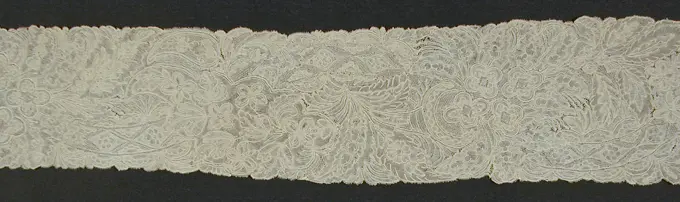
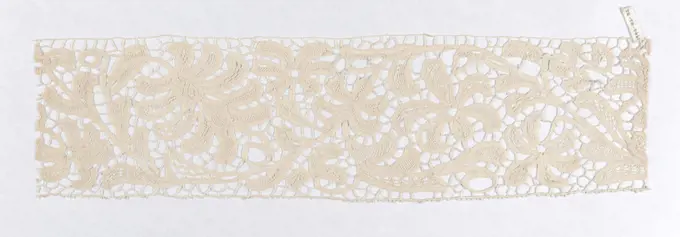
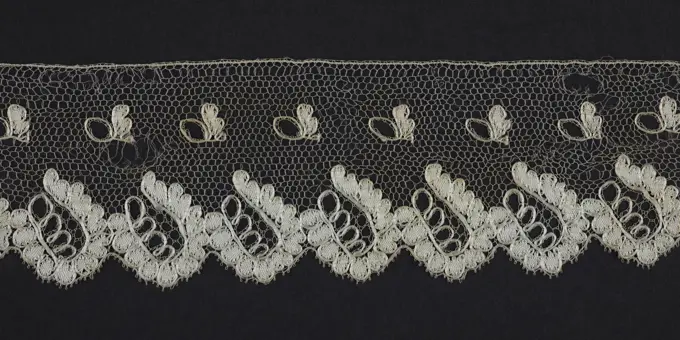
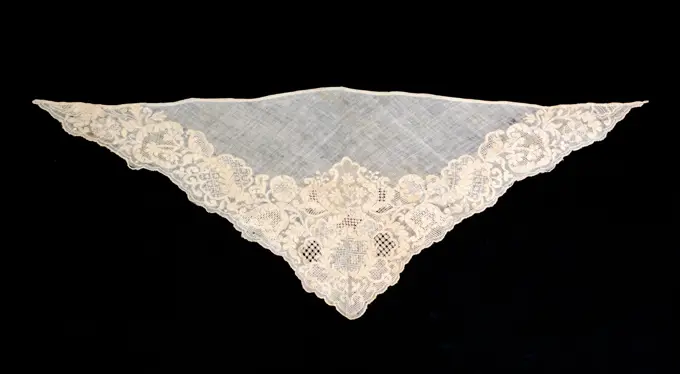
A variety of intricate lace strips from different eras, featuring floral patterns, geometric shapes, and delicate borders, showcasing craftsmanship in textiles.

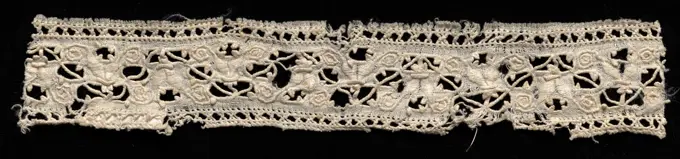
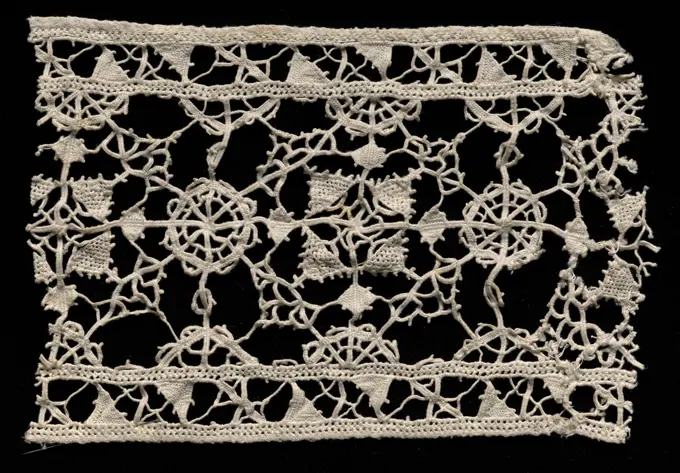
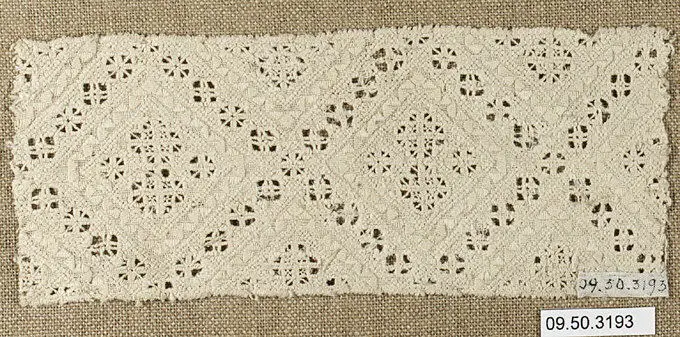
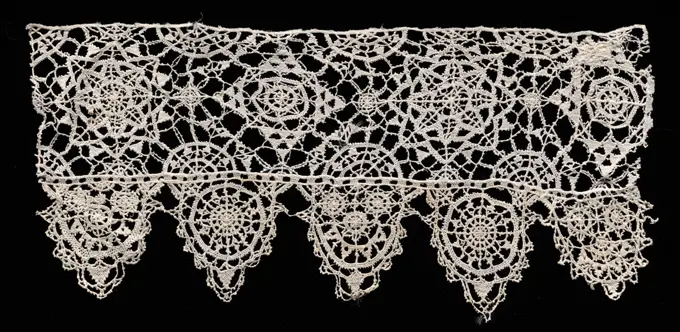
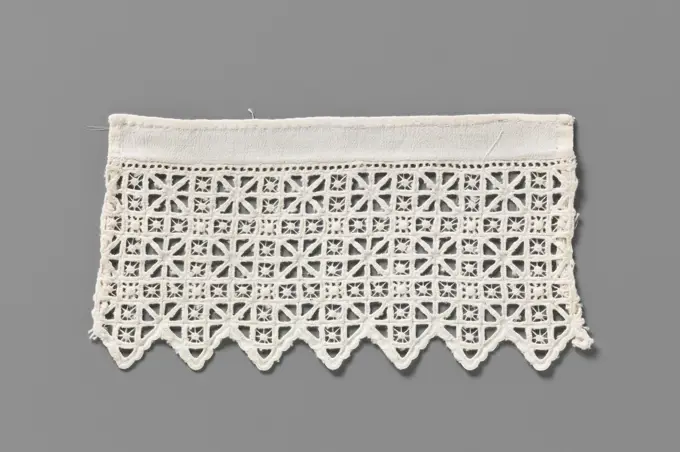
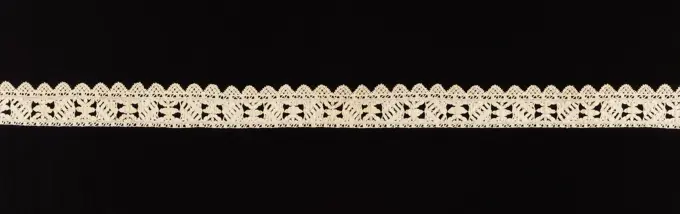
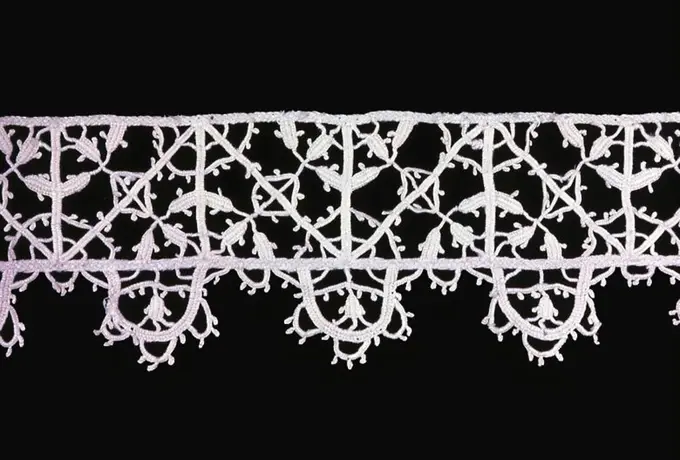
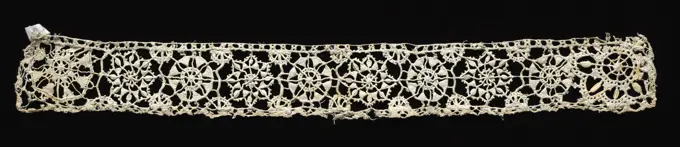
Strip of needle side with diamond and rosette in squares, anonymous, c. 1620 - c. 1630 Strip of natural needle side, reticella. A repeating pattern of a square, alternately with a window or rosette, which is made up of 4x4 small squares. Along the bottom edge under large square a semicircular shell with changing filling between two bell -shaped, hanging flowers. The top is trimmed with a woven edge. Italy linen (material) Strip of natural needle side, reticella. A repeating pattern of a square, alternately with a window or rosette, which is made up of 4x4 small squares. Along the bottom edge under large square a semicircular shell with changing filling between two bell -shaped, hanging flowers. The top is trimmed with a woven edge. Italy linen (material)
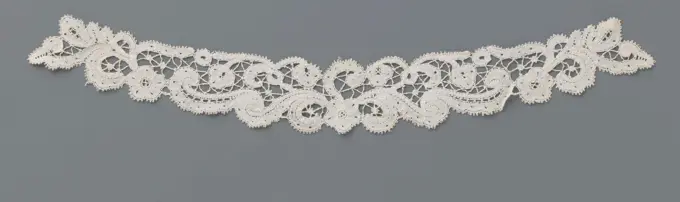
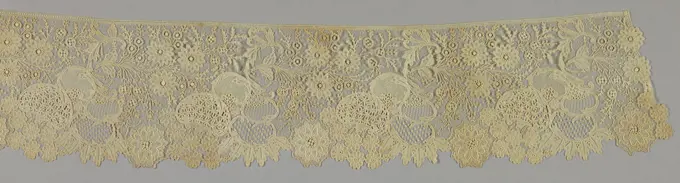
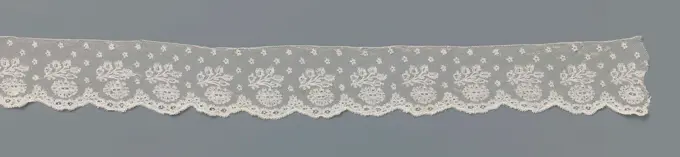
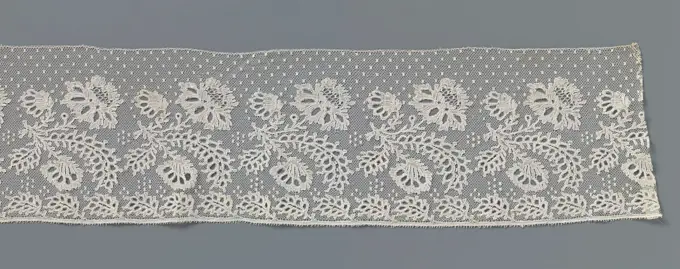
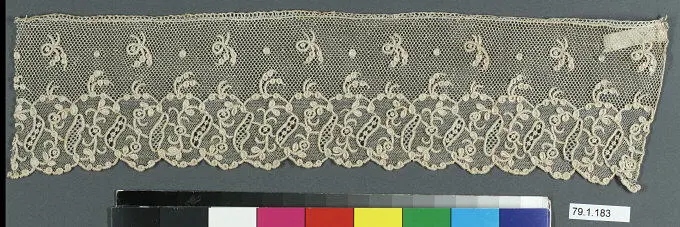
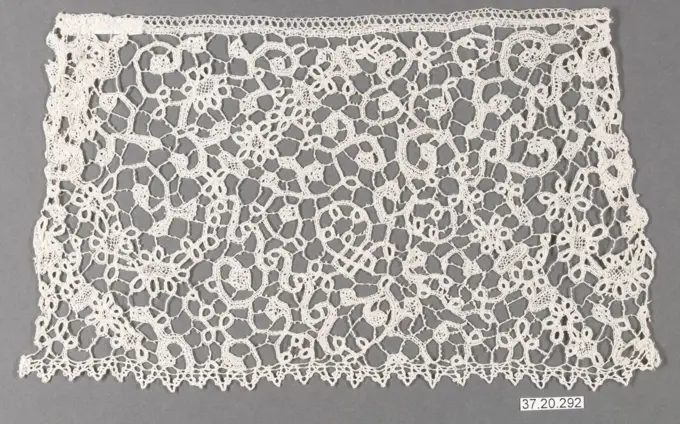
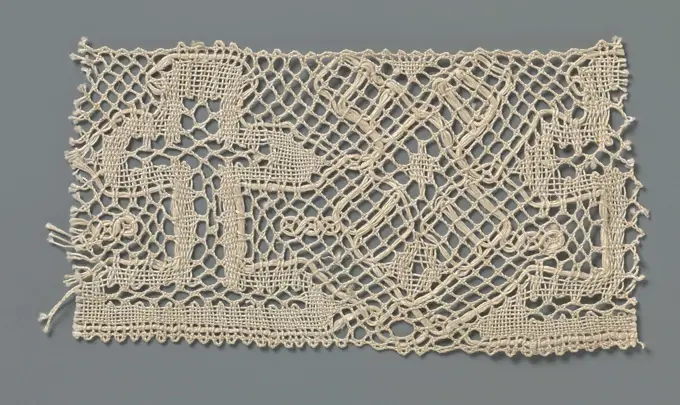
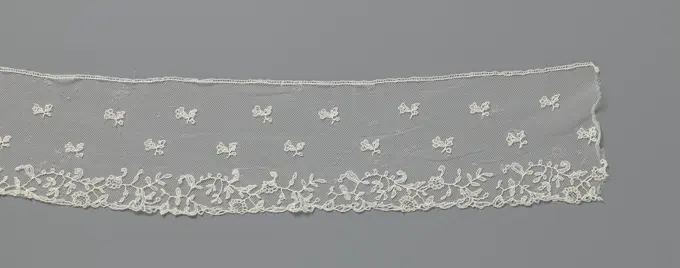
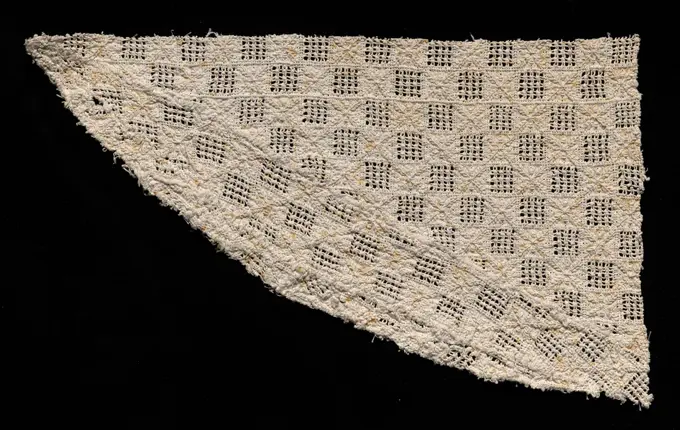
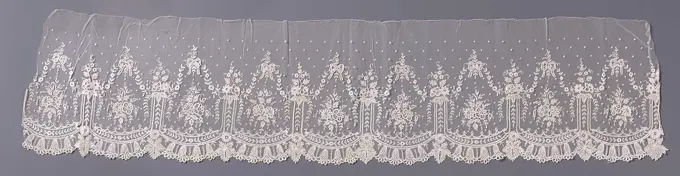
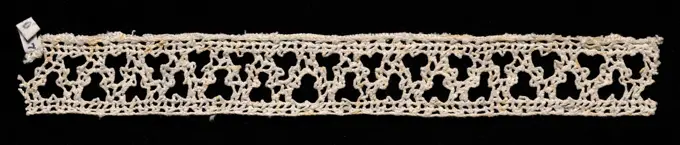
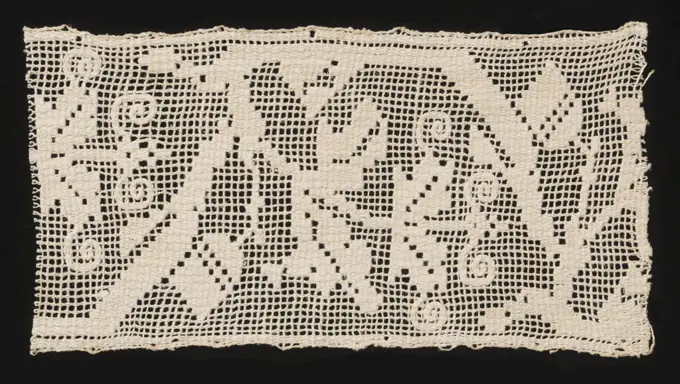
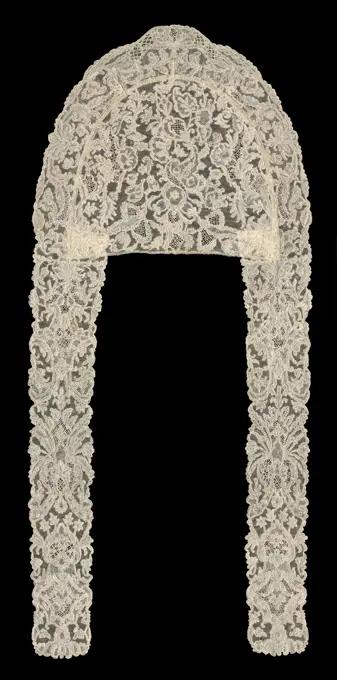
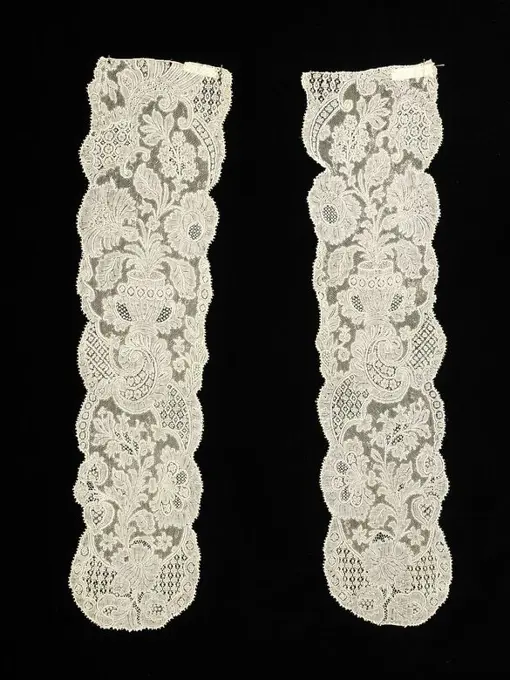
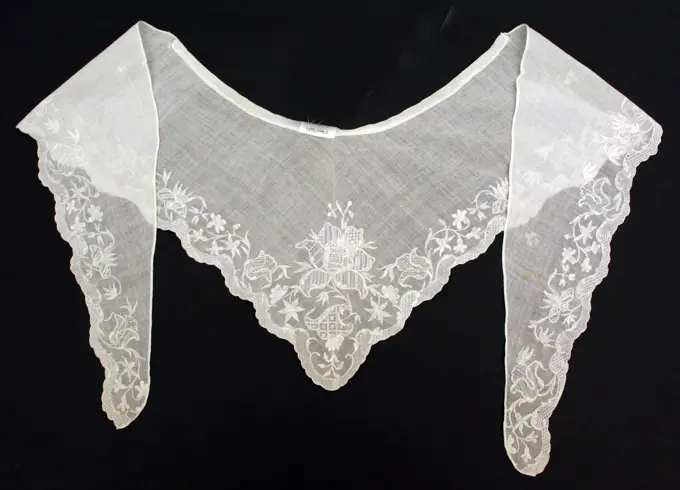
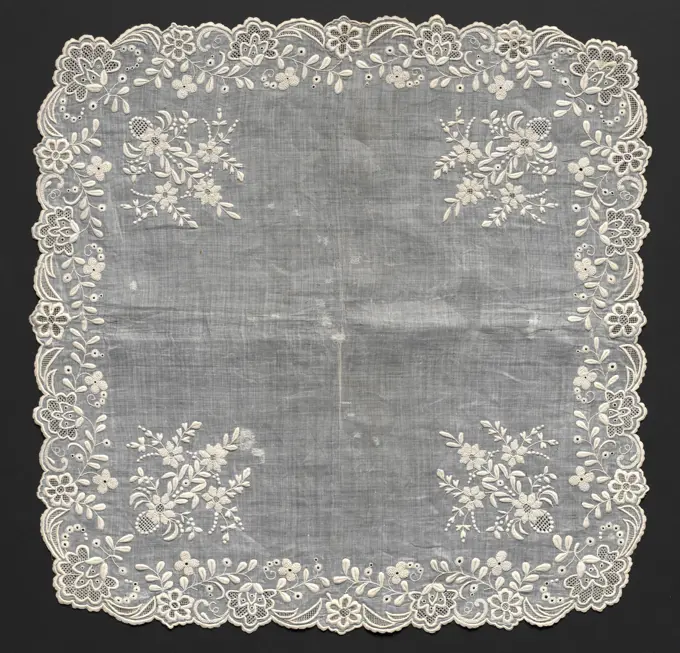
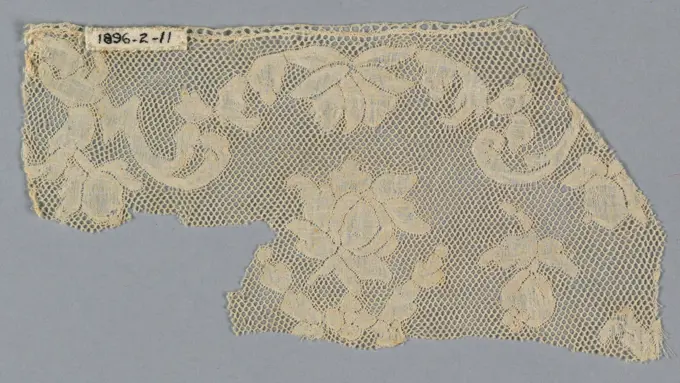
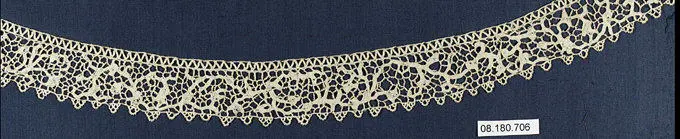
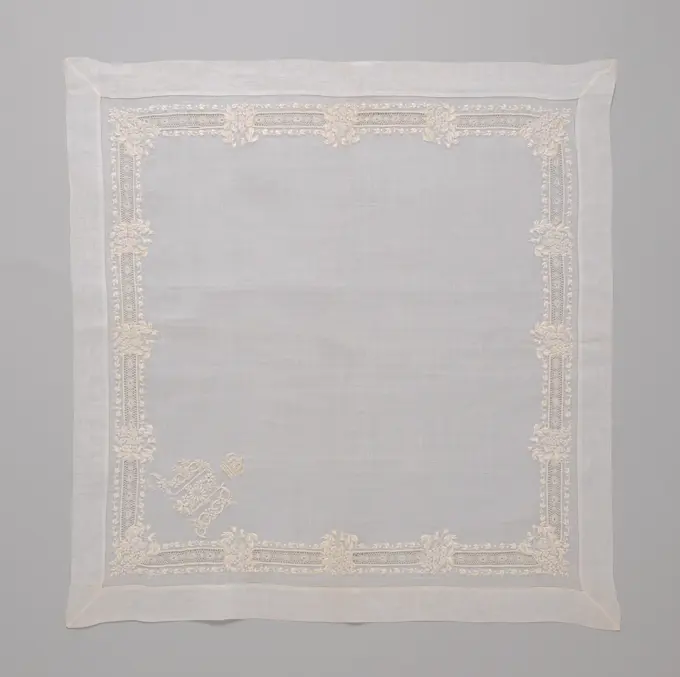
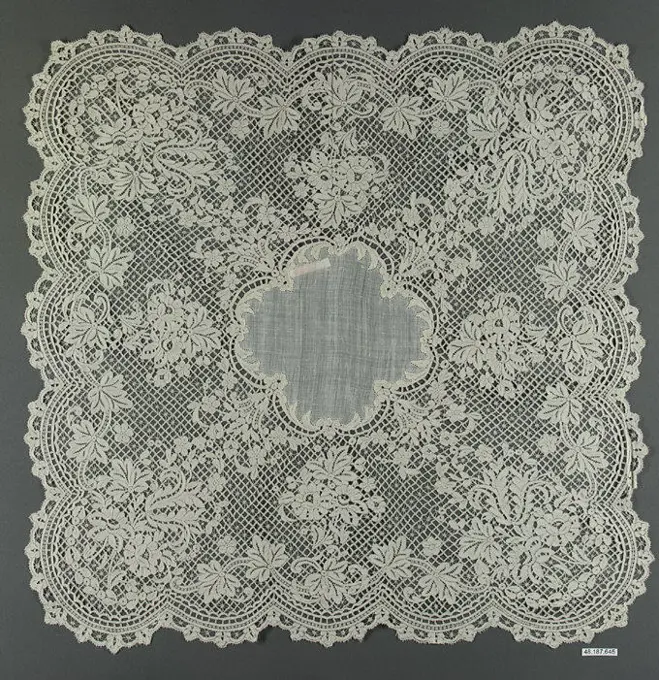
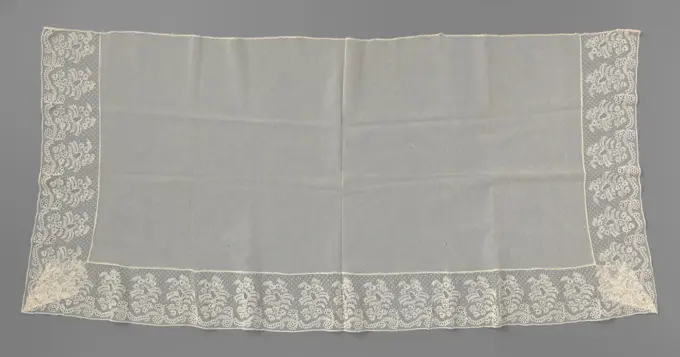
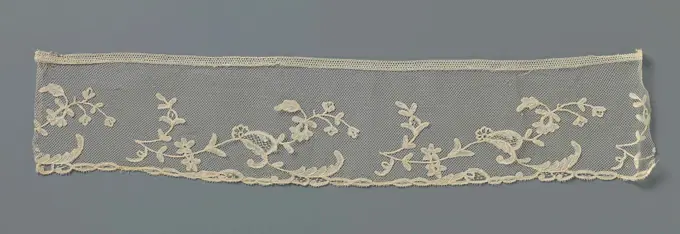
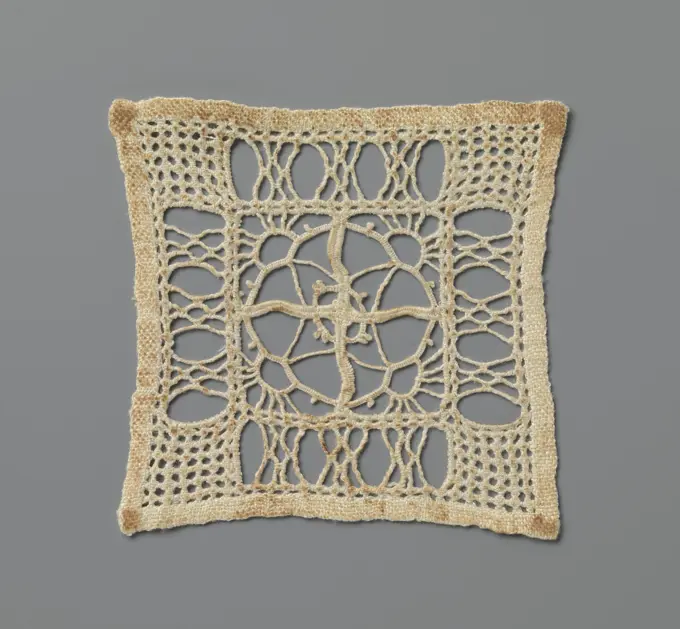
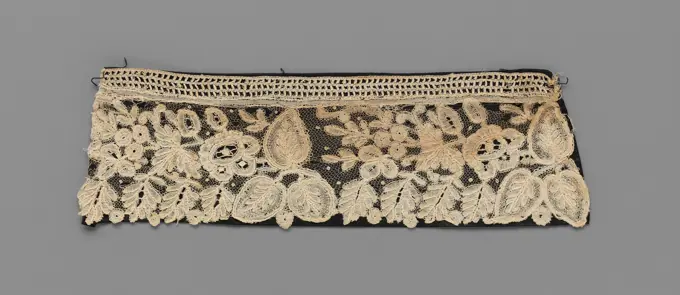
Cuff of mixed side with heart-shaped leaves interspersed by bunches of roses or berries.Manchet of natural mixed side - doll edge in combination with a coniferous lace - Brussels Duchesse. The pattern consists of heart-shaped leaves, placed in three and piety, and interspersed by bunches of roses (or berries). The motifs are clamped in linen stroke and power base. The large motifs are accentuated by contour wires that consist of coarsely attached thread bundles. The side has been put on a black (art) sides underground.Pair of Lace Lappets. Belgium, Brussels, 1700-1725. Costumes. Linen point d'Angleterre bobbin laceBobbin Lace (Needlepoint Design) Insertion, second half of 16th century. Italy, Genoa, second half of 16th century. Lace, bobbin; average: 4.5 x 13.4 cm (1 3/4 x 5 1/4 in.).Border 17th century Italian. Border 214809Fragment, Medium: linen Technique: lace of early premade bobbin tape with needlework fillings, Italy, 17th century, lace, FragmentKloskant Albesto smoke with flowers in pointed arch, anonymous, c. 1725 - c. 1735 Albesto smoke of natural -colored bobbin: old Brabant side. Two almost symmetrical motifs alternate. I. A palm -flower and a fan -shaped leaf rod are under a high pointed arch. Ii. A small Fleur de Lys is under a low pointed arch. Bandwerk is found in the sculpes of lying C-volutes, which always include a flower basket. From this a large branch with fed leaves and very large flowers. There is little space between the closed ornament for narrow strips of an open braiding ground. Southern Netherlands linen (material) bobbin lace / old Brabant lace Albesto smoke of natural -colored bobbin: old Brabant side. Two almost symmetrical motifs alternate. I. A palm -flower and a fan -shaped leaf rod are under a high pointed arch. Ii. A small Fleur de Lys is under a low pointed arch. Bandwerk is found in the sculpes of lying C-volutes, which always include a flower basket. From this a large branch with fed leaves andFragment 18th century French. Fragment 214591Bobbin lace unknownJaponstrook van kloskant met varens.Japon strip from black climbing side: Chantilly side. On a blank mesh stock is a closed edge with slot, filled with a garland of flowers and leaves. On the intersections there is a small shell with a hanging rose, above which a striker bouquet rises from four large fern leaves and a flower branch, which reaches the top edge. Here a horizontal ivy drink with hanging twigs runs, while a large bouquet depends on the large scallop of this ivy drink, among other things with a tulip.Insertion 16th century Italian, Venice. Insertion 220895Bobbin Lace (Needlepoint Design) Insertion with Edging of Points, second half of 16th century. Italy, Genoa, second half of 16th century. Lace, bobbin; average: 5.8 x 26.1 cm (2 5/16 x 10 1/4 in.).Fichu 1740-80 Austrian. Fichu 168312Needlepoint (Cutwork) Lace Band, 17th century. Italy, 17th century. Lace, cutwork: linen; average: 4.5 x 22.9 cm (1 3/4 x 9 in.).Lace Fragment (France); cottonGuimpe van kloskant met symmetrisch voluten patroon.Flumpy of natural colosside: Flemish Guipure. Symmetrical pattern of s vultuts and c-voluten between which in total three round-shaped flowers or fruits and three rosette flowers. Braiding ground. Finish on all sides with uneven slot, which arise from the pattern. The guimpe is bent rectangular.Rectangular scarf of white tulle with a large diamond pattern in the middle of the silver lamé, filled with zigzag lines, around which a row of stylized human figures and branches, anonymous, c. 1925 Rectangular scarf of white tulle with a large diamond pattern in the middle of the silver ramp, filled with zigzag lines, around which a row of stylized human figures and branches in turn. Indonesia whole:. whole: Cotton (textile). Decoration: Rectangular scarf of white tulle with a large diamond pattern in the middle of the silver ramp, filled with zigzag lines, around which a row of stylized human figures and branches in turn. Indonesia whole:. whole: Cotton (textile). Decoration:Strook kloskant met klimopblad.On a coarse fond of square meshes, separate from each other, unilaterally directed ivy leaves and mashes above deep slip, which are formed by connected cogs. Valenciennes side.Piece mid-17th century Italian, Venice. Piece 218048LaceBorder, Medium: cotton (analyzed in lab) Technique: needle lace with ground of loop & twist with loop & twist return, Wide needle lace border patterned by a repeat of a sprig of flowers and a cluster of bean like forms with a variety of interior patterns., Europe, late 19th century, lace, BorderStrip bobbin with a regular wavy line and fan shells, anonymous, c. 1900 - c. 1924  Strip of natural -colored bobbin: sling. The repeating pattern consists of a regular wavy line in linen battle. The waves form U-shaped fields. Under the wave top are under two windows placed in Ovenlag, the wave top touches the straight decorative band along the top of the strip. Under the wave valleys hang fan -shaped scumples. A decorative land has been used in the wave valleys that forms square cubes. The top of the strip is straight finished. Russia linen (material) Bobbi lace / lace clothBorder, Technique: bobbin lace, Bobbin lace border, floral borders; early 19th century Point de Lille, early 19th century, lace, BorderJabot from the application side consisting of two layers with C-Voluten, Anonymous, c. 1925 - c. 1949 Jabot of natural -colored application side: bobbin side on needle. This type of lace is also known under the name: Point d'Angleterre. The Jabot consists of two layers with a pattern of C-shaped volutes, flowers, leaves and moesjes. The sculpting edges are finished with picots. Belgium linen (material) bobbin lace Jabot of natural -colored application side: bobbin side on needle. This type of lace is also known under the name: Point d'Angleterre. The Jabot consists of two layers with a pattern of C-shaped volutes, flowers, leaves and moesjes. The sculpting edges are finished with picots. Belgium linen (material) bobbin laceNeedlepoint (Reticella) Lace Insertion, 19th century. Italy, 19th century. Lace, needlepoint: linen; average: 11.5 x 16.5 cm (4 1/2 x 6 1/2 in.).Fragment, Medium: linen Technique: bobbin lace (late Valenciennes ground), Floral petals with scalloped edges., Belgium, 19th century, lace, FragmentStrook kloskant met schulpen van rozetjes.On the ground soil, a mechelen soil (also known as ice soil), stands between sprays of twigs, whose heavy daisies depend on. The circle arc shaped are equal and formed by a chain of rosettes. Mechelen side.Strook kloskant met liggende bloemtak met twee omhoog en één omlaag buigende bloem.Strip natural colosside: Lille side. Under a narrow job with a stroke pattern of square moes, it consists of a repeating pattern from a horizontal flower branch, with two top bending flowers and one down bending flour where a large leaf hangs over. There are some configurations of seven and four mashes between the consecutive flower branches. Along the underside of the strip, one-sided leaves from a straight spent spent strap. The motifs are connected by a fine grille, a tulet. The motifs are made in linen stroke with large recesses and thicker and shiny contour wires. An ornamental ground has been applied in the largest flowers. The Moeses are made in shape stroke. The top of the strip is straight finished. The clusted strap along the underside is finished with picots.Band, Medium: linen Technique: bobbin lace, continuous tape with net added, Band of bobbin lace, loosely worked pattern of scrolls and floral motifs., Belgium, 17th century, lace, BandStrip 19th century French. Strip 212390Fragment, Cooper Union Museum Lace Study Card; Made for Cooper Union Museum; Belgium; linenFragment 18th century French. Fragment 214632Scarf collar of embroidered tulle, white, anonymous, c. 1860 - c. 1880 Scarf collar of embroidered tulle, white. The collar is flat, round and has a scrap edge that is subdivided into smaller sculptures. The embroidery consists of flower and leaf motifs. West-Europa Button: Metal embroidering Scarf collar of embroidered tulle, white. The collar is flat, round and has a scrap edge that is subdivided into smaller sculptures. The embroidery consists of flower and leaf motifs. West-Europa Button: Metal embroideringFragment 17th century () Flemish. Fragment 226148Albestrook van naaldkant met harten en bokalen en baldakijnen.Strip natural needle side: point de france. It concerns half an altitude. The rich pattern consists of two symmetrical main motifs, which are made up of C-Volutes. One is heart-shaped and is surrounded by playful curls. The other main motif has the shape of a vase or jar, with a French lily in the top. Flower and leaf motifs occur and also architectural elements, including salinacins. The motifs are connected to each other by a picoted triphoto soil with irregular hexagons. Full work with recesses and a rich variety of ornamental grounds. Relief contour lines are particularly used to emphasize the C-voltages and also different rosette flowers and circles. The scalloped edge is formed by means of alternating deeply incised palmets and three or five-spinned motifs. The top is trimmed with a border clamping side.Strook kloskant met kruis en ruit of "silverkors".Natural collate strip, Swedish side. The strip is attached with pins on a light blue carton, with seven other strips. Above the strip is on the cardboard "Laces from Dalecarlia. (Dalarna)" written and underneath "Silvercross. (Silkors)". The repeating pattern is formed by a bundle wires, which has been worked through a maas basis, a diamond-shaped nozzle ground. The wires alternately form the contours of a cross on a flat base and a diamond-shaped motif by two rectangles. Within the contour wires of the cross, a border is made in linen battle with openwork edges. In the diamond-shaped motif, two small motifs are made in linen stroke and one small triangular motif above it. Upper and bottom of the strip are straight finished and provided with picots.Hapslip van Kloskant with Rivières, Anonymous, c. 1750 - c. 1759 Capslip of natural -colored Brussels bobbin side. A rivière with a wasting ground is cut over by a branched branch with flowers and lancet leaves, while on the fields with a fine mesh network one branch grows with a flower, the open heart of pear -shaped. The scums are flat and show many medallions filled with gridwork. By mistake, a matching Brussels hat-slip (BK-BR-J-J-175-A) has been set a Mechelen Capshot (BK-BR-J-J-175-B), while the matching second Brussels hat slip (BK-BR-J here described here -177) remained separately. Brussels linen (material) bobbin lace / Brussels bobbin lace Capslip of natural -colored Brussels bobbin side. A rivière with a wasting ground is cut over by a branched branch with flowers and lancet leaves, while on the fields with a fine mesh network one branch grows with a flower, the open heart of pear -shaped. The scums are flat and show many medallions filled with gridwork. By mistake, a matchiBobbin Lace Edging, 18th century. Spain, Huelva , 18th century. Lace, bobbin; average: 6.4 x 14 cm (2 1/2 x 5 1/2 in.).Length of Lace. Belgium, 1825-1850. Textiles; textile lengths. Silk Chantilly bobbin laceFragment, Medium: linen Technique: bobbin lace, Valenciennes fragment with lower edge missing. Design very fragmentary with a rose in the center. Top border design has swinging scrolls and buds. Round mesh., France, mid-18th century, lace, FragmentStrip application side with bell flowers and wavy flower branch, anonymous, c. 1840 - c. 1849 Strip of natural -colored Brussels application side, needle side applied on mechanical tulle. Strooi pattern with two rows of twigs on which one bell flower always, on a fine hexagonal mesh ground. The faintly scalloped lower edge comes from the repetitive motif of a wavy leaf branch with two flowers and a flower bud. Motives with relief contours of wide -founded wire bundles. Ornamental stitches in the flowers and flower buds and between a few leaves. The top is finished with a messing strap. Brussels linen (material) Brussels Applied Strip of natural -colored Brussels application side, needle side applied on mechanical tulle. Strooi pattern with two rows of twigs on which one bell flower always, on a fine hexagonal mesh ground. The faintly scalloped lower edge comes from the repetitive motif of a wavy leaf branch with two flowers and a flower bud. Motives with relief contours of wide -foundeFragment of Needlepoint (Cutwork) Lace, 16th century. Italy, Venice, 16th century. Lace, needlepoint: linen; average: 20.7 x 34.7 cm (8 1/8 x 13 11/16 in.).Strook applicatiekant met u-vormige cartouches met strikken en bloemslingers erboven en klokjesbloemen eronder.Natural-colored Brussels Application Board: Climbing side with needle lace-up stabbing - Brussels Duchesse - Appliqued on machine tulle. The repeating pattern consists of U-shaped cartouches with a flower branch in each. Above every cartouche a flower garland with a bow. Under every cartouche, four bells of blue leaves hang between two large leaves that each are crowned by a rosette flower. The machining tulet is strewn with annular moots. The motifs are made in linen stroke with openwork edges. The motifs are largely equipped with contour wires and closted relief contours in different places. In the largest flowers, needle lace agent stitches have been applied, whether or not applicated to the pieces of finer tulle. The top of the strip has been cut and not finished. The tube edge stems from the pattern with the U-shaped cartouches, whereby the bells flowers between the leaveTwo sewing triangular points of Batist from an Omlagboord, Anonymous, c. 1875 - c. 1900 Two sewn-sewn triangular points of Batist from a cover with whitework and a wrinkled strip of Valenciennes side. The decoration consists of different edges with leaf and ajour work. Within the edges, a flower with four sheets of small branches is embroidered. West-Europa linen (material). Valenciennes lace / embroidering Two sewn-sewn triangular points of Batist from a cover with whitework and a wrinkled strip of Valenciennes side. The decoration consists of different edges with leaf and ajour work. Within the edges, a flower with four sheets of small branches is embroidered. West-Europa linen (material). Valenciennes lace / embroideringStrip early 17th century Italian. Strip. Italian. early 17th century. Needle lace. Textiles-LacesBobbin Lace Edging, 19th century. Spain, 19th century. Lace, bobbin; average: 15.9 x 24.5 cm (6 1/4 x 9 5/8 in.).Bobbin Lace Insertion, mid 16th century. Italy, Venice, mid 16th century. Lace, bobbin; average: 3.5 x 26.1 cm (1 3/8 x 10 1/4 in.).Border; linenFragment; 1897-8-328Strook kloskant met gespiegeld s-motief.Strip natural colosside, osteuropese side. The pattern consists of a ribbon that is placed in the form of two connected mirrored S and, standing and elongated and a round recess in each bend. In the center of the motif is a stylized flower with six petals. The strip shows two of these S-motifs side by side, which are reversed relative to each other. With such a ribbon laid in turns, other shapes are also made on either side of this pattern, but these are partly cut and no longer complete. The ribbons are made in linen stroke, as well as the straight band that runs along the top of the strip. The leaves in the center of the S-shaped motifs are made in shape stroke. The motifs are connected by a braid ground. Upper and bottom of the strip are straight finished, the underside with picots.Needlepoint Lace (Alençon Lace) Garniture for Cap with Lappets, 1730s. France, Alençon, 18th century. Lace, needlepoint: linen; overall: 77.5 x 44.5 cm (30 1/2 x 17 1/2 in.).Border ca. 1600 Italian, Genoa. Border. Italian, Genoa. ca. 1600. Bobbin lace. Textiles-LacesStrip bobbin with star and crescent, anonymous, c. 1900 - c. 1929 Strip of black bobbin, cluny side. Symmetrical design with deep scoops and a braid ground. Each shell is filled with an eight -pointed star that is comprised by a lying half moon at the bottom. The scrap edge is finished with arcs and fine dots of potented braids. The top of the strip is straight finished. France (possibly) silk bobbin lace / Cluny lace Strip of black bobbin, cluny side. Symmetrical design with deep scoops and a braid ground. Each shell is filled with an eight -pointed star that is comprised by a lying half moon at the bottom. The scrap edge is finished with arcs and fine dots of potented braids. The top of the strip is straight finished. France (possibly) silk bobbin lace / Cluny lacePiece 18th century German, Saxony. Piece 214720Lappet. Culture: Flemish. Date: mid-18th century. Museum: Metropolitan Museum of Art, New York, USA.Irish crochet, c. 1900, 28 x 40 in. (71.12 x 101.6 cm), Lace, Ireland, 19th centuryCut -ball of needle side, anonymous, c. 1750 - c. 1775  Cap from the needle side. The pattern has a flower branch and some loose bouquets in an oval. Around it ranks and loose branches in a mesh ground. West-Europa . Alençon LaceUndersleeves ca. 1855 American. Undersleeves 169996Bobbin Lace (Point d'Angleterre) Cap Crown, early 18th century. Belgium, Brussels, early 18th century. Lace, bobbin; average: 19.4 x 28.6 cm (7 5/8 x 11 1/4 in.).Cuff made of crocheted side with a twist twig and star -shaped flower, anonymous, c. 1890 - c. 1909 Cuff made of natural Irish crocheted side. Pattern in which a flower branch with a rosette flower and several elongated leaves is interspersed with a hanging star -shaped flour on a short stem without leaves. Crochet diamond -shaped Maas soil with picots. The top is finished with a straight edge. The wavy lower edge is trimmed with potentially three -part arches. Ireland cotton (textile) Cuff made of natural Irish crocheted side. Pattern in which a flower branch with a rosette flower and several elongated leaves is interspersed with a hanging star -shaped flour on a short stem without leaves. Crochet diamond -shaped Maas soil with picots. The top is finished with a straight edge. The wavy lower edge is trimmed with potentially three -part arches. Ireland cotton (textile)Needlepoint (Point de Gaze) Lace Handkerchief, late 19th century. Belgium, Brussels, late 19th century. Linen center, needlepoint lace border; linen; average: 33.1 x 33.1 cm (13 1/16 x 13 1/16 in.).Fichu third quarter 18th century British. Fichu 120956Collar, Medium: linen Technique: bobbin lace (continuous tape like bobbin lace) with needle ground (ground is loop & twist with twist return), Collar formed from pieces of 17th century Milanese lace joined by needlework., Italy, 17th century, lace, CollarInteresting of clamping side with windows formed by tire laid in U-shapes. Strip natural colosside, sling. The cartridge consists of connected windows that are formed by a tire laid in U-shapes. In the diamond-shaped field that creates a smaller window, with a spiral snowflake in the center. The full work is made in linen stroke. The windows are connected by a grille, a five-grade ground. As ornamental ground, a coarse has been applied to snowflakes, in large triangular fields along the outer edges of the pattern. The top and bottom of the strip are directly finished.Fragment 18th century () German. Fragment 217784Edging 16th century Italian, Abruzzi. Edging 221140. Although both collars originated in the same period, the 1630s, the type of lace used to embellish them differs greatly. The pattern of the Italian needle lace is highly geometric, while that of the Southern-Netherlandish bobbin lace is freer and has a more compact structure.Strip bobbin with fan shell under a pattern with a zigzag and leaf -shaped shape strokes, anonymous, c. 1800 - c. 1899 Strip of natural -colored bobbin: tie. The pattern probably repeats itself, but the strip is too short to be sure. The pattern consists of two triangular fields at the bottom of the strip, in which a fan -shaped motif is placed, which also forms a shell. The triangular fields are made with a traly land: a tie. The fan is made in linen battle with an openwork center line. A zigzag band runs above this pattern, made with a litter. The fields under the zigzag consist of a coarse braid of soil, with a pair of next to each other placed in each field made in shape. A much flatter zigzag line made with a braid between crossing couples repeats itself in a narrow lane on the top of the strip, which is straightened up, with a narrow strap made with a tie. Italy linen (material) Bobbi lace / lace cloth Strip of natural -colored bobbin: tie. The pattern probably repeats itself, buHandkerchief, 1800s. France , 19th century. Embroidery: linen; overall: 45.7 x 45.7 cm (18 x 18 in.).Fragment (France); linenNeedlepoint (Punto in aria) Lace Edging, late 16th century. Italy, late 16th century. Lace, needlepoint: linen; average: 13.4 x 31.2 cm (5 1/4 x 12 5/16 in.).Strook gehaakte kant met waaiervormige reticella schulpen.Strip natural-colored Irish crochet side, inspired by Reticella. Crocheted wire or line with impeller-shaped picoted slot, made up of loops and arcs.Border with Renaissance Motif, early 19th century. Italy, early 19th century. Needle lace, machine-made burato (twined ground and darned in one direction); bleached linen (est.); overall: 31.1 x 297.4 cm (12 1/4 x 117 1/16 in.). A scrolling vine or a tendril motif is a recurring pattern in needle lace. The frequent use of the motif, adapted in lace from different centuries and regions, suggests that it may have been inspired by a design in a printed pattern book.Strip 18th century Italian. Strip 217799Fragment 17th century Italian. Fragment 215055Strip of needle side with rosette and geometric shapes, anonymous, c. 1600 - c. 1624 Strip of natural -colored needle side: Reticella in combination with Punto in Aria. The strip consists of a row of eleven squares, alternately filled with a rosette and a pattern that is made up of different, more or less triangular shapes. Under each square a shell is formed with arcs and triangles. The top of the strip is straight finished with a tie. Italy linen (material) Strip of natural -colored needle side: Reticella in combination with Punto in Aria. The strip consists of a row of eleven squares, alternately filled with a rosette and a pattern that is made up of different, more or less triangular shapes. Under each square a shell is formed with arcs and triangles. The top of the strip is straight finished with a tie. Italy linen (material)Dresser cloth 1840-80 French or Swiss. Dresser cloth 236958Border, Medium: linen Technique: bobbin lace, discontinuous tape, Small scale floral and geometric shapes set within repeat grouping of four pendants., Belgium, 1600-1650, lace, BorderManchet van machinale point coupé.Cuff from a strip crepe to which a wide edge mechanic side: machined work. Rectangular model with point shellars. The pattern consists of a grid of larger squares with a cross through diagonal and straight lines, framed by smaller squares with a circle between tension threads, like suns.Needlepoint (Cutwork) and Bobbin Lace Cloth, 16th century. Italy, Venice, 16th century. Lace, needlepoint and bobbin: linen; average: 66.7 x 100.3 cm (26 1/4 x 39 1/2 in.).Handkerchief British, Honiton late 19th centuryStrip bobbin with drops under a zigzag line, anonymous, c. 1800 - c. 1899 Strip of natural-colored bobbin, Buckingham side. The repeating pattern consists of a zigzag line of connected diamonds over the center of the strip. There is a drop -shaped cartouche under each zigzag. Above the zigzag line, the strip consists of a mesh soil, a tuler floor, with four-fold moses above each zigzag. The Mosjes are made in form. A decorative land has been used under the Zigzag line, a rose ground. The checks in the zigzag and the frames of the drops are made in linen stroke with thick and shiny contour threads. A double contour wire is used around the outside of the drops, where the inner of the two threads make loops through the linen work. The top of the strip is straight finished. The scrap edge along the bottom comes from the drop -shaped cartouches and is finished with picots. Buckingham cotton (textile) bobbin lace / Bucks point (lace) Strip of natural-colored bobbin, Buckingham side. The repeFragment of the lace;  XVII/18th century (1601-00-00-1900-00-00);Insertion 16th century Italian, Venice. Insertion 221039Three Fragments (Border) Made 1675-1750 Aquila. Linen, bobbin part lace (continuous cloth work tapes) .Lappet French 19th centuryBorder (Italy); linenFragment (Italy); linenWoman's handkerchief handkerchiefsBobbin Lace Edging of Points, mid 16th century. Italy, Venice, mid 16th century. Lace, bobbin; average: 3 x 20.8 cm (1 3/16 x 8 3/16 in.).Volanced climbing side with degrees S-Volutes. Valance of black climbing side: Chantilly side. On a mesh sofond there is an almost symmetrical pattern of large, per pair of degrees S-SEN, crossed by black flowerguird builds. The shelters are half circular and alternately filled with said garland and with a leaf edge. Above the tops of the S-SEN is a loose branch with anemone, tulip and daffodils. There is a flower wreath above the second shell. The inside and one of the sides are decorated with a row of hearts and blossoms.Voile with a strip of bobbin with 'diamond feathers', anonymous, c. 1900 - c. 1924 Voile on three sides trimmed with a strip of natural torway side: Lillese side. On a mesh stock strewn with mushes, a row of one -sided curved branches, crowned with a flower and leaves, formed as diamond feathers. The row is accompanied by a wave line of such 'diamond feathers' and raspberries along the straight outside. Belgium (possibly) linen (material) bobbin lace / Lille lace Voile on three sides trimmed with a strip of natural torway side: Lillese side. On a mesh stock strewn with mushes, a row of one -sided curved branches, crowned with a flower and leaves, formed as diamond feathers. The row is accompanied by a wave line of such 'diamond feathers' and raspberries along the straight outside. Belgium (possibly) linen (material) bobbin lace / Lille laceApron (Italy); linenCollar mid-19th century American. Collar 98132Scarf. Culture: Italian, Burano. Dimensions: L. 78 x W. 17 inches (198.1 x 43.2 cm). Date: 18th century. Museum: Metropolitan Museum of Art, New York, USA.Collar ca. 1850 British. Collar 168620Strook applicatiekant met mimosatakjes.Strip natural colored application side, climbing side applicated on machine tulle. The cartridge shows a row of wavy mimosis branches.Border. Italy. Date: 1601-1625. Dimensions: 50.6 x 69.9 cm (2 1/4 x 27 1/2 in.). Linen, needle lace worked on a laid and plaited thread grid. Origin: Italy. Museum: The Chicago Art Institute, Chicago, USA.Dress of lace pledger with rising suns along diamond shape, anonymous, c. 1900 - c. 1949 Square rug of natural -colored lace bobbins, cut work. Pattern with a square that is made up of four small squares. Each small square is divided by a diagonal line, with a 'rising sun' on the outside and a triangle on the inside. Together this provides a diamond shape with a four -pointed star in the middle in the large square. Around the large square on all sides, a border with rectangles, filled with bundles of wires or with a dense grid with openwork diamonds. A finished edge in linen battle on all sides. unknown cotton (textile) Square rug of natural -colored lace bobbins, cut work. Pattern with a square that is made up of four small squares. Each small square is divided by a diagonal line, with a 'rising sun' on the outside and a triangle on the inside. Together this provides a diamond shape with a four -pointed star in the middle in the large square. Around the large square on all sides, a boNeedlepoint (Reticella) Lace Insertion, 16th century. Italy, Venice, 16th century. Lace, needlepoint: linen; average: 4.2 x 36.9 cm (1 5/8 x 14 1/2 in.).Cap Streamers (Belgium); linen