Decorative Lace Strips

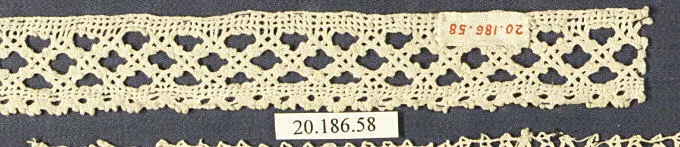
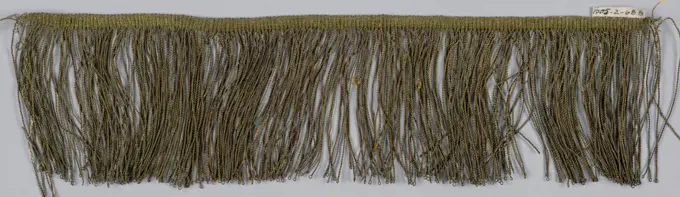
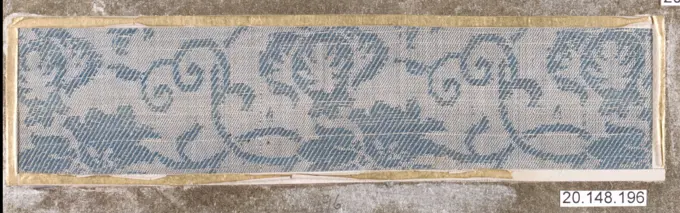
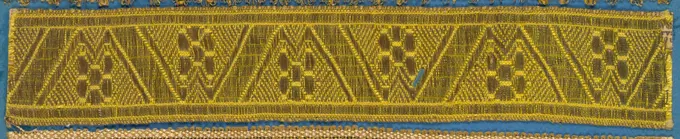
A variety of intricate lace strips, featuring delicate floral patterns and detailed craftsmanship. These ornamental textiles reflect historical design elements.

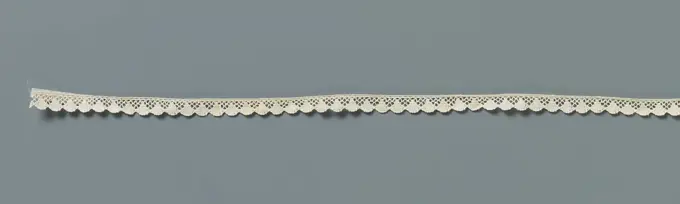
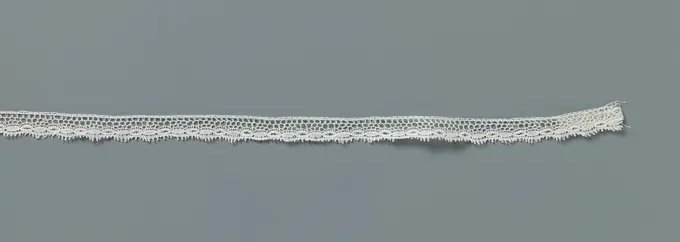
Kloskant intermediate base with tormented straps, 's-Gravenmoersche Kantvereniging, c. 1920 - c. 1929 Piles of natural-colored bobbin, Valenciennes side. Two tormented straps are running in the middle against a background. 's Gravenmoer linen (material) Bobbi Lace / Valenciennes Lace Piles of natural-colored bobbin, Valenciennes side. Two tormented straps are running in the middle against a background. 's Gravenmoer linen (material) Bobbi Lace / Valenciennes Lace
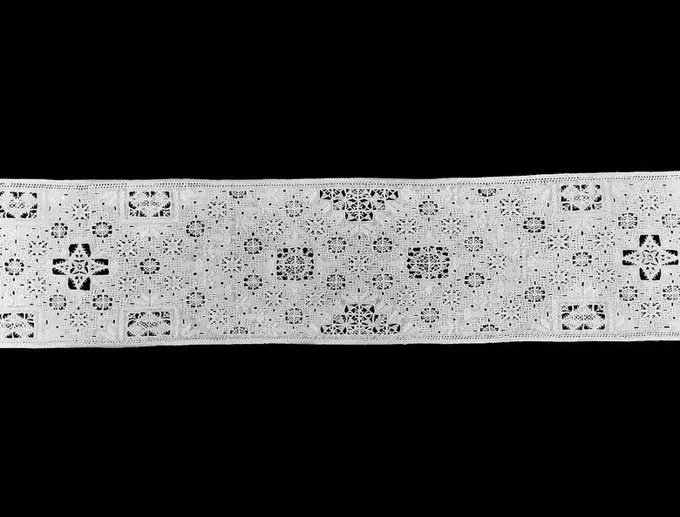
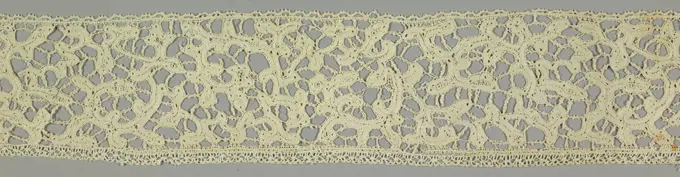
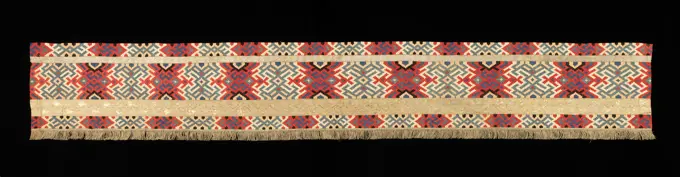
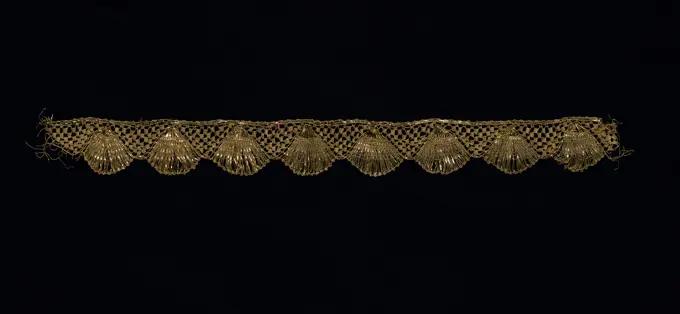
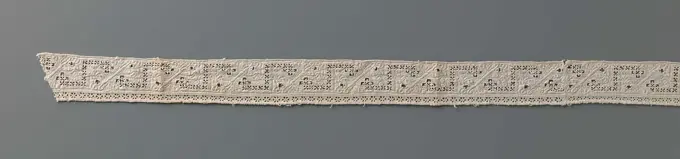
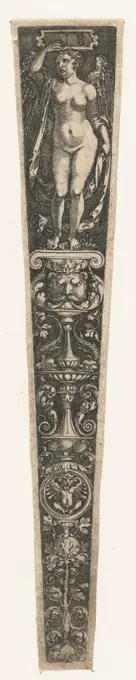
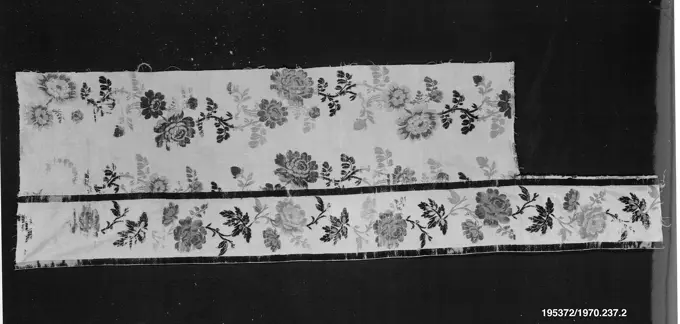
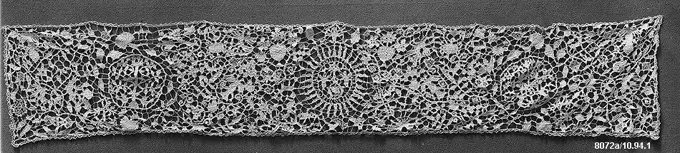
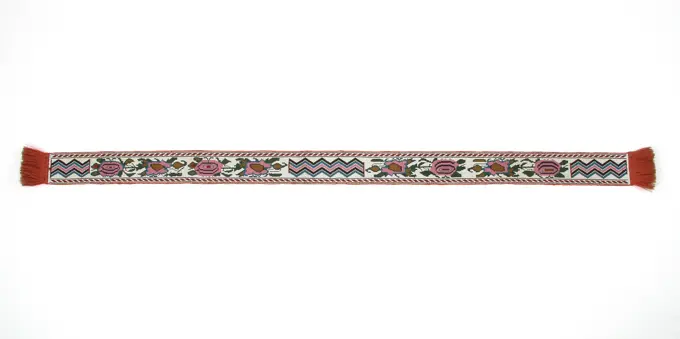
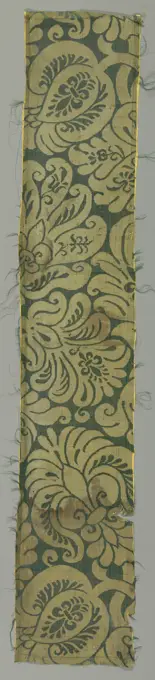
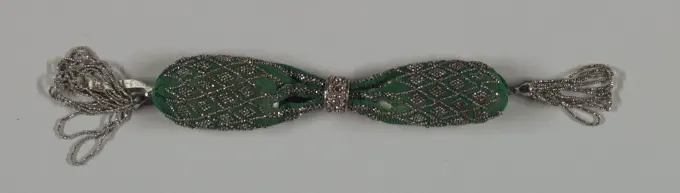
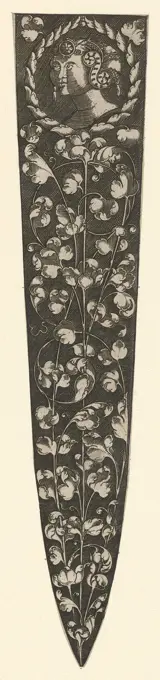
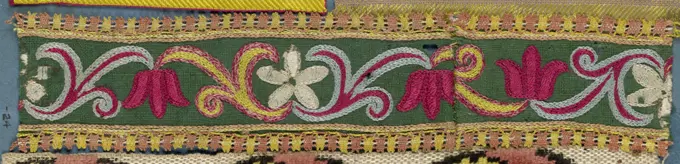
Witte Strik, Unknown, 1920 - 1980  Europe textile materials  Europe textile materialsFragment (Three Joined Strips) Made 1750-1775 Flanders. Cotton and linen, bobbin straight lace of a type known as Mechlin with a kat stitch and Rose mesh ground .Fragment (France); linenTrimming (France); silkScreen 16th-17th century. Screen. 16th-17th century. Wood; turned, carved, and painted. Country of Origin Morocco. WoodTrimming (France); silkBorder, Medium: linen Technique: bobbin lace (early Valenciennes ground), Valenciennes type consisting of a leaf border with carnations and sprays., Belgium, 18th century, lace, BorderBelt, one of a pair, 30 3/8 x 2 7/16 in. (77.15 x 6.19 cm), Cotton, ChinaRibbon early 19th century French. Ribbon 221538Strook machinale kant met waaiermotiefjes die de schulpenrand vormen.Strip natural-colored machining. The repeating pattern consists of hanging torchon-like fan motifs that, connected to the widest points, form the slip edge. The rangetjes are almost at the top of the very narrow strip and are connected by a machining ground.Cap streamer, Medium: linen Technique: bobbin lace (Mechlin style), Cap streamer of Mechlin lace worked with a design of rose sprays. Ground is semé with dots. Border of bell flowers hanging from C-shaped scrolls, their petals forming scalloped edge., Belgium, 1850-1900, lace, Cap streamerGimp 18th century Italian. Gimp 213733Fragment in Kashmierjaaltechniek, Anonymous, c. 1800 - c. 1850 Fragment in Kashmierjaaltechniek. The strip comes from a scarf (). Fragment equal to BK-TN-821. Nîmes (Possible) silk. wool. cashmere (wool) Fragment in Kashmierjaaltechniek. The strip comes from a scarf (). Fragment equal to BK-TN-821. Nîmes (Possible) silk. wool. cashmere (wool)Trimming, Medium: silk Technique: woven, Ivory, pink and yellow trimming fragment in a design of leaf motifs placed alternately up and down and separated by a curving band ornamented with flowers., France, 19th century, trimmings, TrimmingGimp 18th century Italian. Gimp 213743Border, Block printed on handmade paper, Black arcade with pink oak leaves in center. Between arches is a stylized black and white floral pattern that rises above it. Lower border of black and white diamonds and two black-lined circles on pink ground., France, 1825, Wallcoverings, BorderTie. Belgium, Brussels, 1870-1890s. Costumes. Cotton point de gaze needle laceDecorated with a Torii hidden behind foliage and chrysanthemums.Piece 18th century French. Piece 214106Bobbin (Appliqué) Lace Edging, late 18th century. Belgium, Brussels, late 18th century. Lace, bobbin: linen; average: 7 x 99.1 cm (2 3/4 x 39 in.).Insertion (For a Cover). Belgium, Possibly Flanders. Date: 1550-1600. Dimensions: a: 10.5 × 79.7 cm (4 1/8 × 31 3/8 in.)b: 10.3 × 78.8 cm (4 × 31 in.)Width repeat: 32.8-33 cm (12 7/8-13 in.). Linen, needle lace worked on plain weave; cut and drawn thread grid; embroidered in chained border, double hem, eyelet, and stem stitches. Origin: Flanders. Museum: The Chicago Art Institute, Chicago, USA.Border, Block printed and flocked on machine-made paper., Passementerie border in imitation of fancy gimp. Upper and lower arches with central band. Printed in pink on white ground. Printed two across., H#46, France, 1830-50, Wallcoverings, BorderNeedlepoint (Burano Point) Lace Edging, 18th century. Italy, Burano , 18th century. Lace, needlepoint: silk; average: 6.4 x 45.4 cm (2 1/2 x 17 7/8 in.).Trimming (France); silkPiece 19th century Japan. Piece. Japan. 19th century. Silk / Compound weave. Textiles-WovenFragment Made 1600-1650 Italy. brocaded silk .Bobbin Lace Edging, 18th century. Belgium, Mechelen, 18th century. Lace, bobbin: linen; average: 4.2 x 48.3 cm (1 5/8 x 19 in.).Factory Mark (France); Company: Oberkampf & Cie. (France); printedTrimming (France); silkBobbin Lace (Needlepoint Design) Edging of Points, second half of 16th century. Italy, Genoa, second half of 16th century. Lace, bobbin; average: 3.2 x 21.6 cm (1 1/4 x 8 1/2 in.).Border (France); linenBand, Medium: linen Technique: bobbin made continuous tape with bars added, Scrolls and leaves held in place by bars with picots., Burano, Italy, 18th century, lace, BandDECORACION EN EL MARGEN SUPERIOR DE UN LIBRO. Location: INSTITUTO DE COOPERACION IBEROAMERICANA. MADRID. SPAIN.Belt (Denmark); leather, wool felt, silk()Bed curtain border late 19th century Russian This object is from the collection of Natalia de Shabelsky (1841-1905), a Russian noblewoman compelled to preserve what she perceived as the vanishing folk art traditions of her native country. Traveling extensively throughout Great Russia, she collected many fine examples of textile art of the wealthy peasant class. From the 1870s until moving to France in 1902, Shabelsky amassed a large collection of intricately embroidered hand-woven household textiles and opulent festival garments with rich decoration and elaborate motifs. The Brooklyn Museum holdings include many fine examples including the majority of the garments. Portions of Shabelsky's collection are also housed at the Museum of Fine Arts, Boston, the Cleveland Art Museum, and the Russian Museum of Ethnography in St. Petersburg.Kilim or split tapestry is a hand weaving technique most usually used to produce heavyweight rugs. Kilim weaves produce no pile and have a characteristic geoLength of metal lace, circa 1900, maker unknown. Gift of Dr Tom Farrar, 2010.Strook geborduurd linnen met tussen diagonale lijnen steeds een opengewerkte Z.Strip natural colored linen with embroidery and edge embroidery: carved work. The repetitive pattern consists of embroidered diagonal lines, between which a cut-away z is (with a straight instead of diagonal axis). The Z consists of a concatenation of cut-off squares that are matched with feston stitches and are decorated with a kind of picots. Along the top of the strip a strap is sewn that consists of openwork squares with spokes.Fringe (Spain); silkOrnament met gevleugelde vrouw.Design for a dull sheath. Kandelaber with leaf refrences, a medallion with a winged being, two fish and a mascaron. On top of it is a winged woman, Victoria.Necklace Middle Kingdom-Early New Kingdom ca. 1981-1295 B.C. View more. Necklace. ca. 1981-1295 B.C.. Faience. Middle Kingdom-Early New Kingdom. From Egypt, Memphite Region, Lisht North, south of pyramid, debris, MMA excavations, 1913-14. Dynasty 12-18Panel 18th century French. Panel 229297Spitsovaalvormige kousinzet van kloskant met bloemenmand.Stocking of black climbing side: Chantilly side. Spiralo-shaped model. The pattern consists of a floral basket with ribbons, which hang down to the tip of the stocking. The motifs are made in a power base with thicker contour wires. They are connected by a hexagonal grille, a toel. As ornamental ground, a rose soil has sparingly applied. Along the circumference of the stocking insert, a edge has been made in the inside, which is finished inside and outside with a thicker contour wire.Narrative Frieze: Life of a Hermit in Forest Retreat Architrave from a Jain Temple, 1500s-1600s. India, Gujarat, 16th-17th century. Wood with traces of color; overall: 20.4 x 255.2 x 10.2 cm (8 1/16 x 100 1/2 x 4 in.).Bobbin Lace (Punto di Milano) Flounce, 16th-17th century. Italy, Milan, 16th-17th century. Lace, bobbin; average: 19.7 x 373.4 cm (7 3/4 x 147 in.).Trimming (France); silkAltar frontal second half 17th century Italian. Altar frontal 218750Bobbin Lace Insertion, 18th century. Belgium, Binche, 18th century. Lace, bobbin; average: 6.4 x 81 cm (2 1/2 x 31 7/8 in.).Concha Belt, c. 1930, 41 in. (104.14 cm) (5 3/4 in. concha), Silver, leather, United States, 20th centuryTrimming (USA); wool, linen, silkStole, 18th century, 95 3/4 x 8 3/4 in. (243.21 x 22.23 cm), Embroidered silk, France, 18th centuryStrip -Ribbon 18th century French. Ribbon 216402Textiles; silkFragment 18th century French. Fragment 218797Edging 16th century Italian, Venice. Edging 220868Fragments, Medium: silk Technique: satin weave, Green satin ground with weft that is alternately yellow and white silk. Wefts floated out over face to form design of four different small-scale floral sprays arranged in horizontal rows., Italy, early 17th century, woven textiles, FragmentsTest piece with balein. Test piece with balein; With a brushed cross motif.Fringe, Medium: gilt foil on a silk core Technique: woven, Gold fringe with a plain-woven heading and a skirt of looped and twisted threads., Italy, 18th century, trimmings, FringePiece 17th century Japan. Piece 71185Ribbon 18th century French. Ribbon 226324Fragment Swedish, Skane 19th centuryTrimming (France); 1909-2-170Miser's purse, Medium: silk, glass beads, metal Technique: bead-linked mesh, Strings of tiny opalescent beads form a network of mesh. A gold bead is centered at each intersection of the mesh. Two honeycombed gold rings control side opening; two gold drops, also honeycombed, are at each end., France, 1830-60, costume & accessories, Miser's purseBailey railing.In 1656 Quellinus was paid for making a model of a railing with scrolled foliage to be cast in bronze. This railing may well be the end result. It was meant for the Wisselbank (Exchange Bank), which was responsible for turning Amsterdam into the financial heart of the world in the 17th century. The bank was located on the ground floor of the Town Hall.Fragment, Medium: silk Technique: machine made, Black lace band with design of detached flowers and scallops on both edges., France, 1850-99, lace, FragmentTextile, Medium: silk Technique: plain compound twill, brocaded, Hexagonal motif enclosing rosettes. Blue, red and green on tan ground., China, 18th century, woven textiles, TextileBand.  Artist: UnknownFragment Of A Maniple Or Stole (France); silkStrip bobbin with dot in shell, anonymous, c. 1880 - c. 1914 Strip of natural-colored bobbin, Valenciennes side. Along the underside of the strip runs a strap in linen stroke, which forms the silly regular sculptes. Each shell contains one dot in the Maas soil, a diamond-shaped Valenciennes ground. The motifs are made in linen battle with openwork edges. The top of the strip is straight finished and sewn to a strip of unfinished machine tulle. The scums along the bottom are finished with picots. Belgium cotton (textile) Bobbi Lace / Valenciennes Lace Strip of natural-colored bobbin, Valenciennes side. Along the underside of the strip runs a strap in linen stroke, which forms the silly regular sculptes. Each shell contains one dot in the Maas soil, a diamond-shaped Valenciennes ground. The motifs are made in linen battle with openwork edges. The top of the strip is straight finished and sewn to a strip of unfinished machine tulle. The scums along the bottom are finished with picots. BelBobbin Lace Edging, 19th century. Russia, 19th century. Lace, bobbin; average: 5.1 x 33 cm (2 x 13 in.).Tie. Possibly Denmark, circa 1880. Costumes; Accessories. Cotton and silk bobbin laceBed curtain border 1800-1850 Russian. Bed curtain border 173343Fragment, Medium: silk Technique: plain compound cloth, Diagonally facing flower with large leaf in white on dark blue., Italy, 17th century, woven textiles, FragmentTextile Fragment 5th century Coptic. Textile Fragment 475280Fragments; silk; Bequest of Richard Cranch Greenleaf in memory of his mother, Adeline Emma Greenleaf; 1962-56-179-a/fRibbon; silk, metallicTrimming Turkish 18th-19th centuryTrimming, Medium: silk, Trimming has a woven header finished with loops and tassels. Color are primarily light blue with green, red, yellow, orange, and white., USA, 19th century, trimmings, TrimmingPiece 17th century Japan. Piece 71097Trimming, Medium: silk Technique: woven, Trimming fragment in a design of crossing ribbons in red on a yellow ground with red stripes; picot edges., France, 19th century, trimmings, TrimmingTrimming (Spain)Fragment of an aurifries, with embroidery of silk and gold board.. fragment of an aurifries, with embroidery. The pattern has a vaulted ground of gold thread on which angels with shields, on which a thorn crown, spood, a chalice with host, a trumpet, a bucket, a short sword, a cross, a bishop's mushroom and a hat. Two fragments with Invnr belong to the fragment. BK-NM-4165-D-1 and BK-NM-4165-D-3.Fragment, 1800s. India, 19th century. Brocade; silk and metal; overall: 96.5 x 5.7 cm (38 x 2 1/4 in.).Strook machinale kant met een aaneenschakeling van afwisselend dicht- en opengewerkte ovaaltjes langs de onderzijde.Natural-colored Machine Side Strip: Machine Valenciennes. The repeating pattern exists along the underside of the narrow strip from a row of alternating an oval with a cut-away center and a narrower poached oval. The motifs are provided with open edges within which a thicker and shiny contour wire is running. The contour wire is a-typical of Valenciennes side. At the top, the ovals are connected by a machining ground. The slight sloping edge along the bottom of the strip is finished with picots: under every circle of three picots, under each oval six picots. The top of the strip is straight finished.Embroidered Border Fragment 4th-3rd century B.C. Paracas. Embroidered Border Fragment 308073Renaissance ornamentField of seven tiles, Anonymous, c. 1660 - c. 1700 Field of 7 tiles (1 x 7) each with a figure or animal painted in blue and purple. Netherlands earthenware. tin glaze majolica Field of 7 tiles (1 x 7) each with a figure or animal painted in blue and purple. Netherlands earthenware. tin glaze majolicaVelvet strip with embroidery in gold thread and text Monstra .... matre, anonymous, c. 1500 - c. 1600 Red velvet strip with embroidery. The strip has a border in gold council and lovers, from a golf vank with an alternating palm-volute. The embroidery has the text: Monstra ... Matre. A flower and leaf ornament is embroidered around the M van Monstra. The strip is on a strip with invnr. BK-NM-3198 sewn on a wooden framework. France (possibly) silk. velvet (fabric weave) / embroidering Red velvet strip with embroidery. The strip has a border in gold council and lovers, from a golf vank with an alternating palm-volute. The embroidery has the text: Monstra ... Matre. A flower and leaf ornament is embroidered around the M van Monstra. The strip is on a strip with invnr. BK-NM-3198 sewn on a wooden framework. France (possibly) silk. velvet (fabric weave) / embroideringPiece 18th-19th century Japan. Piece 66126Border; 1974-52-35Sampler 19th century German. Sampler 228528Cushion Cover, 1700s. China, Qing dynasty (1644-1911). Silk, metallic thread; overall: 5.7 x 42.5 cm (2 1/4 x 16 3/4 in.).Textile; silk; 1950-140-40Blanket strip -Textile Sample from Sample Book 19th century Japan. Textile Sample from Sample Book 68084Miser's Purse (France); silk, metal; L: 27.5 cm (10 13/16 in.)Ornament with head of woman. Design for a sheath. Leaf rights with a laurel wreath at the top of a woman's head.Border, Block-printed and flocked on machine made paper, The flat, two-dimensional design of this border consists of stylized motifs: rounded mustace-shaped garlands connected by oval ornaments; printed in black, gray and white with blue flocking., H# 38, France, 1835-60, Wallcoverings, BorderSwaddling cloth, Medium: cotton Technique: predominantly warp-faced plain weave patterned by warp floats, Italy, late 19th century, woven textiles, Swaddling clothTrimming, Medium: silk Technique: chain stitch embroidery on plain weave (possibly), Trimming fragment in a design of tulips and five-petal flowers with leaves worked in chain stitch in red, yellow, white and blue on a green ground. Narrow lace edging on both sides in pink and yellow., France, 19th century, trimmings, Trimming