Decorative Lace Trimmings

Exquisite lace trimmings featuring intricate designs and delicate patterns, showcasing craftsmanship with vintage appeal, perfect for sewing and embellishments.

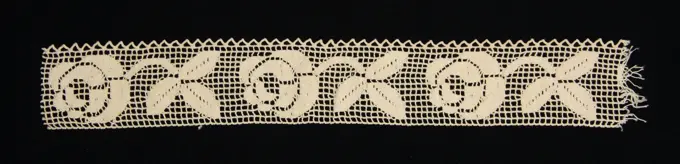
Trimming, Medium: metal-wrapped silk thread and metallic foil Technique: bobbin lace, metallic, Border of bobbin lace with metallic strips and metallic thread of gold color. Pattern of floral clusters and leaves alternating., Spain, 17th century, lace, Trimming
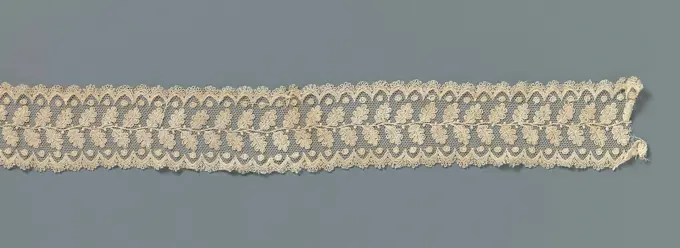
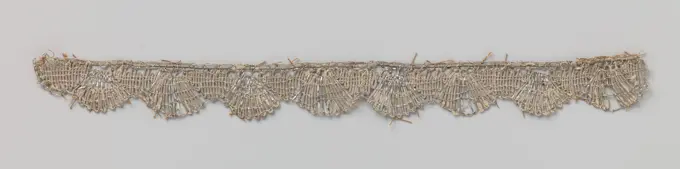
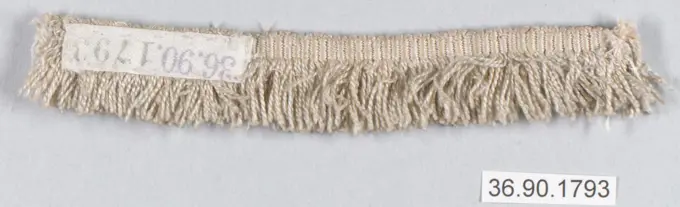
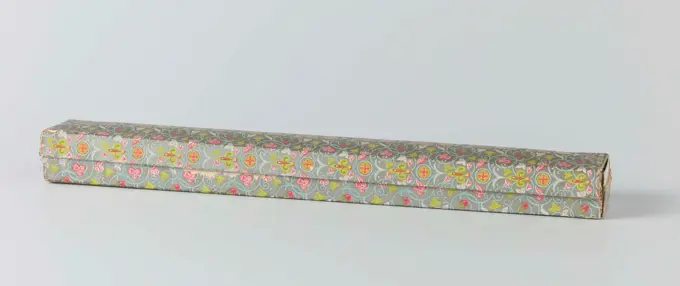
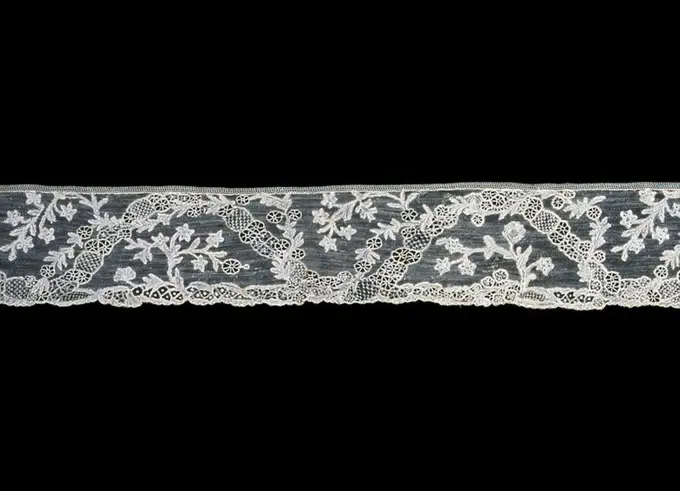
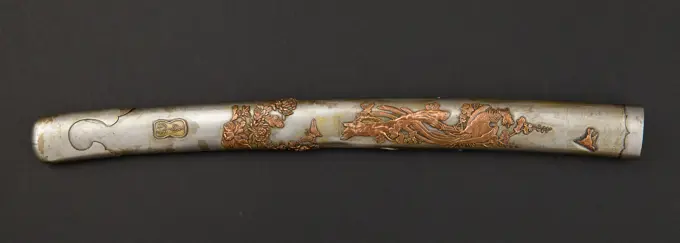
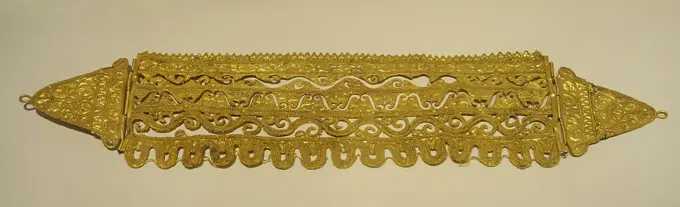
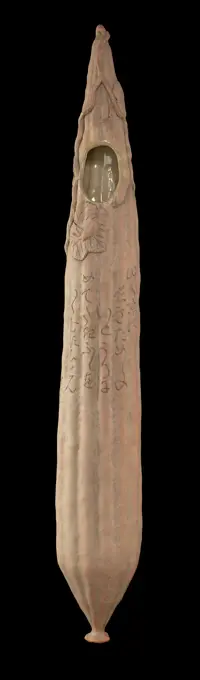
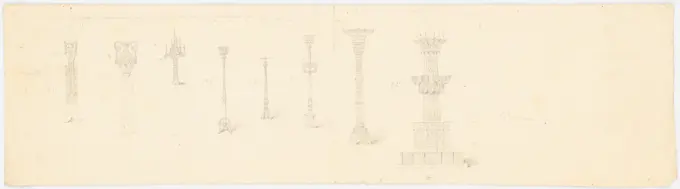
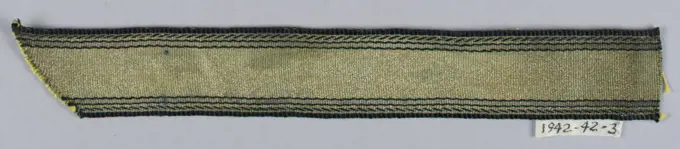
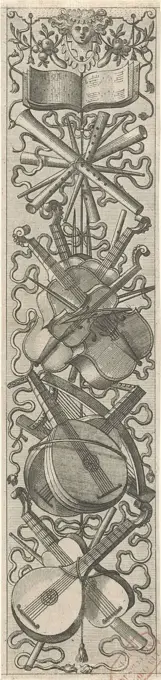
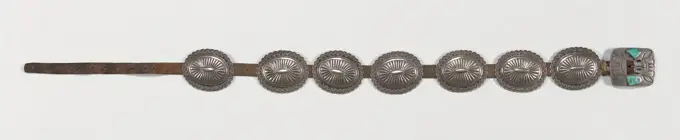
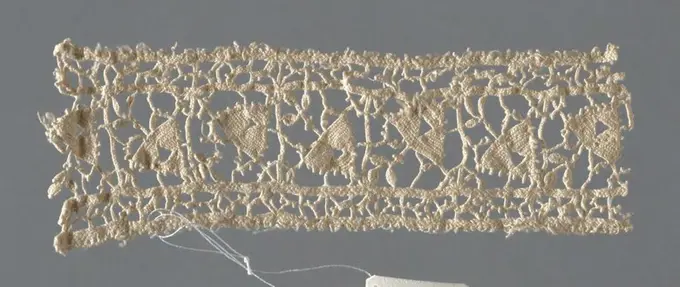
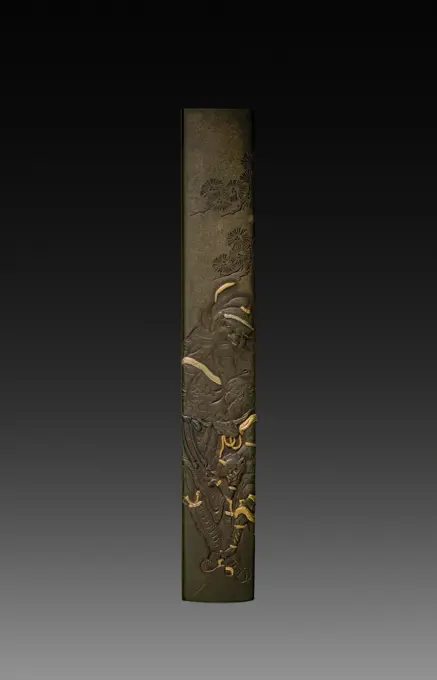
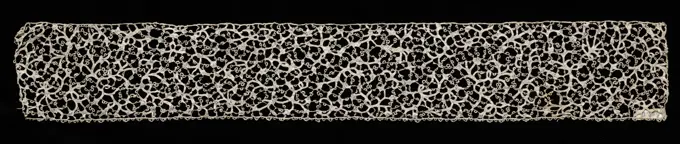
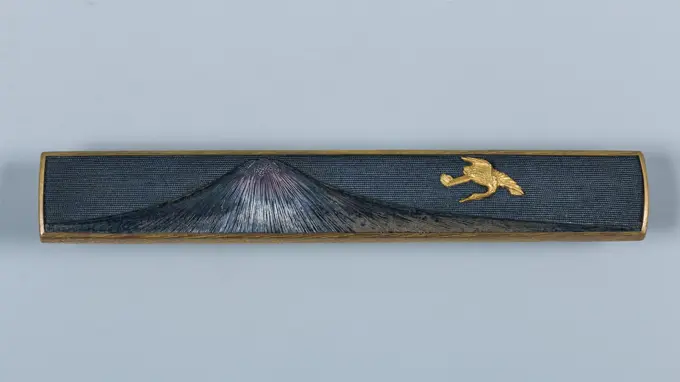
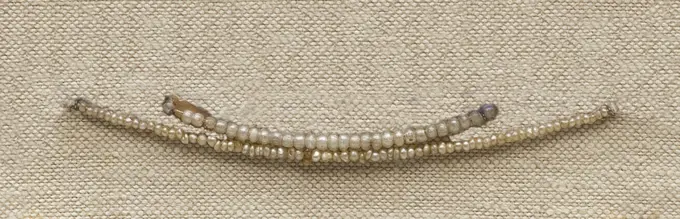
Fringe; silk, metallic thread; Bequest of Richard Cranch Greenleaf in memory of his mother, Adeline Emma Greenleaf; 1962-56-60-cCarpet Fragment (USA); woolTrimming, Medium: silk Technique: woven, Trimming fragment in a design of lozenge shapes in green and yellow between green borders and a white ground., France, 19th century, trimmings, TrimmingCap streamers, Medium: linen Technique: bobbin lace, Brussels style, Cap streamers with a design of sprays of flowers with brides. Edges have leaves, flowers and rococo forms. The tip of the streamer has an ornamental needle ground finished with bobbin made single blossoms., Belgium, 18th century, lace, Cap streamersRibbon, Medium: silk Technique:, Grey ribbon with moiré stripe and picot edge., USA, mid-19th century, woven textiles, RibbonTussenzetsel van machinale kant met eikenblaadjes.Interesting of machining: Machined embroidery on machining. The pattern consists of a slightly wavy thin center line, with an oak leaf and a dot on both oak. Top and bottom of the strip are finished with a slip edge. Every scivel is a pointed arch, accented by three contour wires and with a dot in the center. The scivels are finished with round loops, made on the tulle.Border late 17th century Italian. Border 226041Kraag van applicatiekant met keten van miniatuuurrozetten.Collar of natural application side, dock edge - duchesse-lace - applicated on machine tulle. Narrow, rectangular. Symmetrical design of a stiff edge of connected miniature rosettes and bowets with palms. A speckled distance is only decorated in the pointed collar tips with a loose flour branch.Fringe ca. 1750 British. Fringe 224858Fringe, Medium: silk Technique: woven, Fringe with a green striped woven heading. Pink, white, yellow and green skirt threads are arranged to form colored stripes., Italy, 17th century, trimmings, FringeBelt -Silver side strip with fan shells, anonymous, c. 1800 - c. 1899  Strip bobbin, silver side. The pattern consists of semicircular scales formed by a fan -shaped motif with loops. The space between the two consecutive fans, just like with the fans, is filled by a up and down and winding double filé thread that forms loops. Lamp silk wires are also used between the loops in the fans, which are missing in the intermediate pieces. The motifs are associated with a double thread, where the up and down and winding threads are braided. The side comes from ecclesiastical clothing from Sicily. Italy silver thread bobbin laceFancon or tullet of lace -up on tulle with a curled browsing branch with berry branches and two clusters of three rosette flowers, anonymous, c. 1800 - c. 1849 Fancchon or das of natural -colored lace -ups on tulle: tuledoor stop work. Elongated rectangular model. At the ends the pattern consists of a curling branch with incised leaves, leaf branches, berry branches and two clusters of three rosette flowers. The field is filled with a spray pattern of flower branches with one rosette flower, a incised leaves and berries on it and made between thrown 'Mosjes' with a thread that forms a double circle. The Das or Fancchon is finished all around with a fine sculpe edge with triangular shells along which a frame is embroidered with a double zigzag line with circles on the tops. A kind of decorative land has been created between the zigzag lines with an extra wire with which larger openings are made in the tulle. Europe linen (material). Fancchon or das of natural -colored lace -ups on tulleFragment, Medium: silk Technique: damasse (5-harness satin plus 14 twill), Chasuble piece with medium-scale, close set diagonal repeat of stylized floral sprays. Alternate rows have small birds perched on flowers. One selvage continuous with field and ends in a bunch of warps., Spain, 17th century, woven textiles, FragmentShoulder Cloth(Selendang)Galloon early 19th century Italian. Galloon 213399Strip early 19th century Southern German. Strip 215501Border (England); cottonBorder, Medium: linen Technique: bobbin lace, Mechlin style, Mechlin-style border with asymmetrically placed floral garlands., Belgium, mid-18th century, lace, BorderNeedlepoint Lace Lappets and Edging for Cap, 1700-1715. France, Alençon, 18th century (Louis XIV Period, 1638-1715). Lace, needlepoint; overall: 180 x 10.8 cm (70 7/8 x 4 1/4 in.).Needlepoint (Reticella) Lace Band, 19th century. Italy, 19th century. Lace, needlepoint: linen; average: 38.8 x 2.9 cm (15 1/4 x 1 1/8 in.).Piece 18th century Austrian. Piece 218571Fringe mid-19th century British. Fringe 224881Textile Fragment early 17th century. Textile Fragment. early 17th century. Silk, metal thread. Made in Iran. TextilesLappet 18th century Italian. Lappet 218121Band, Medium: linen Technique: bobbin made continuous tape with bars added, Design of thin scrolling stems with leaves and flowers., Italy, 17th-18th century, lace, BandTobacco Pipe 19th century Japan. Tobacco Pipe 62452Fragment ca. 1500 Italian. Fragment 213369Strip late 17th century Northern Italian. Strip 217736Fringe (Italy); silkCompass. UnknownMiser's Purse (France); metal beads, silk; L: 29.5 cm (11 5/8 in.)Needlepoint (Burano Point) Lace Edging, 18th century. Italy, Burano, 18th century. Lace, Burano Point: linen; overall: 7 x 112.7 cm (2 3/4 x 44 3/8 in.).Rectangular fan box of cardboard on the outside pasted with fantasy paper with a gray fond. White paper is stuck along the upright edges of the box. The lid is somewhat sphere. In the lid Address Label: J.A. Tognacca & F. Tocca / Bronzes / Objets d'Art / Amsterdam.Rip ribbon of beige silk, with Krinkel effect, anonymous, c. 1400 - c. 1950 Rip ribbon of beige silk. With Krinkel effect. West-Europa silk. Rip ribbon of beige silk. With Krinkel effect. West-Europa silk.Border. Belgium, Flanders. Date: 1760-1769. Dimensions: 8.7 × 120.2 cm (3 3/8 × 47 1/4 in.). Linen, needle lace. Origin: Flanders. Museum: The Chicago Art Institute, Chicago, USA.Cuff of needle side with button -shaped flowers, anonymous, c. 1690 - c. 1699 Cuff of natural -colored needle side: Venetian rose side. Stijlen soil that forms regular six-sided meshes, with thin ganks with button-shaped flowers and here and there a relief rose. Venice linen (material) Venetian rose point Cuff of natural -colored needle side: Venetian rose side. Stijlen soil that forms regular six-sided meshes, with thin ganks with button-shaped flowers and here and there a relief rose. Venice linen (material) Venetian rose pointFragment, Medium: linen Technique: needle lace, Border fragment of tiny rounded points., Italy, early 17th century, lace, FragmentSampler 19th century German. Sampler. German. 19th century. Wool and silk on canvas. Textiles-EmbroideredFragment of a Band. Dimensions: 13.25 in. high 1.75 in. wide (33.65 cm high 4.44 cm wide). Date: 3rd-4th century. Museum: Metropolitan Museum of Art, New York, USA.Towel 16th century Italian. Towel. Italian. 16th century. Silk and metal thread on linen. Textiles-EmbroideredVagina unknownBracelet, Agate, gold, Scotland, ca. 1870, jewelry, Decorative Arts, BraceletCap streamer, Medium: linen Technique: needle lace, Design consists of asymmetric floral sprays bordered by scalloped ribbon, crossing at intervals and dividing pattern into compartments., Italy, mid-18th century, lace, Cap streamerTrimming (France); 1909-2-172Javea Hoard. Diadem. Gold. 4th century BC. Iberian culture. Filigree openwork decoration with triangular ends. Partida de la Lluca (Javea, Alicante province, Valencian Community, Spain). National Archaeological Museum. Madrid. Spain.Border, Medium: linen Technique: bobbin lace (late Valenciennes ground), Naturalistic vine with a wreath of floral scalloped edge., France, mid-19th century, lace, BorderHanging flower vase (hana ike), mid 19th century, Ōtagaki Rengetsu, Japanese, 1791 - 1875, 35 × 4 3/4 × 4 1/4 in. (88.9 × 12.07 × 10.8 cm), Stoneware, Japan, 19th century, Ōtagaki Rengetsus distinctive calligraphy is a subtle and elegant yet integral part of this hanging flower vase. While her professional career floundered for many years, it was only in her late forties and early fifties when this nun-turned-poet literally made her mark on ceramics of everyday objects that she became famous. Her poetry and calligraphic style has been emulated and forged and it is said Rengetsu had even signed forgeries as her own works in order to help other potters studios succeed. The poem on the vase reads: My happy times stretch out like a long cucumber; how many have there been' RengetsuInsertion 17th-18th century Greek, Crete. Insertion. Greek, Crete. 17th-18th century. Linen and silk, bobbin lace. Textiles-LacesDiebitsch Carl von (1819-1869), lamp, candlestick, vases, Cairo (without date): views of 5 candles, 1 hanging lamp and 2 vases on socket with size, scale bar. Pencil on the box, 13.6 x 48.6 cm (including scan edges) Diebitsch Carl von  (1819-1869): Lampe, Leuchter, VasenFringe ca. 1750 British. Fringe 224862Copper pin. Dimensions: L: 6.2 cm (2 7/16 in.). Dynasty: Dynasty 2. Reign: reign of Khasekhemui. Date: ca. 2650 B.C.. Museum: Metropolitan Museum of Art, New York, USA.Old Paris City Hall. Cup on the axes of the pavilion and Arcade St Jean Edouard Deslandes (death in 1914). Old Paris City Hall. Cup on the axes of the flag and Arcade St Jean.Trimming, Medium: silk, metallic thread Technique: plain weave, Gold and black with warps of gold and black threads. Weft is yellow silk. The design consists of black stripes along each side with a diagonal pin stripe just within the final black edging., Russia, 18th century, trimmings, TrimmingTrimming Made 1850-1900 China. White gauze, embroidered strips . Han-ChineseGallon;  19th century (1801-00-00-1900-00-00);Plat decoration with a squatted satar at the bottom, 1510 - 1527 print The squatted, winged satar wears a candle slicer of vases and leaf vines. Shaded background. One of 2 sheets. Germany (possibly) paper engravingVarious string instruments, including a lute and a prawn. From series, consisting of a title page and 16 sheets.Border, Medium: linen Technique: punto in aria needle lace, Border of five pendants showing stylized floral forms., Italy, late 16th century, lace, BorderTextile swatch, Deerfield Society of Blue and White Needlework, (Deerfield, Massachusetts, USA, 1896-1926), Deerfield, Massachusetts, USA, 1910-20, Textile swatchLincrusta, Linseed oil, Lincrusta border with horizontal arabesque design., England or USA, 1877-1890, Wallcoverings, LincrustaGarter of green ripszijde decorated with brochure work; With the text 'Nothing but the kills you can separate. Brings your two hearts to one ', Anonymous, Before 1877 Garter of green ripszijde decorated with brochure work. A silver band runs across the center of the band in which the text 'Nothing but the kills you can separate. Then brings your two hearts to a 'has been saved. Netherlands whole: Silk Garter of green ripszijde decorated with brochure work. A silver band runs across the center of the band in which the text 'Nothing but the kills you can separate. Then brings your two hearts to a 'has been saved. Netherlands whole: SilkBand. Date/Period: Mid- 16th century. Band. Medium: linen. Technique: grid of withdrawn element work with reticella style needle lace and embroidery. Author: UNKNOWN.Fringe 18th century French. Fringe 224902Bobbin Lace Lappet, 18th century. Belgium, Mechelen, 18th century. Lace, bobbin; average: 115.6 x 11.5 cm (45 1/2 x 4 1/2 in.).Concha Belt, c. 1930, 45 in. (114.3 cm) (3 3/4 in. conchas), Silver, leather, United States, 20th centuryFragment, 17th century; silk, velvetTrimming (France); silkTrimming (France); 1909-2-179Trimming, Medium: silk Technique: woven, Trimming fragment in a design of four-petal flowers in red between cream-colored borders., France, 19th century, trimmings, TrimmingTrimming, Medium: silk Technique: woven, Green trimming fragment in a checkerboard design., France, 18th century, trimmings, TrimmingBobbin Lace Lappet, 18th century. Belgium, Brussels, 18th century. Lace, bobbin: linen; average: 10.2 x 111.1 cm (4 x 43 3/4 in.).Strip -Fragment (Border). Italy. Date: 1601-1625. Dimensions: 4.2 x 12.2 cm (1 5/8 x 4 7/8 in.)Width repeat: 3.4-3.6 cm (1 3/8 - 1 1/2 in.). Linen, needle lace worked on a laid and plaited thread grid. Origin: Italy. Museum: The Chicago Art Institute, Chicago, USA.Fringe, Medium: silk Technique: woven, Yellow fringe with a plain weave heading and skirt threads., Italy, 17th century, trimmings, FringeBorder (Germany); embossed, die cut, air brushed; 83 x 9 cm (32 11/16 x 3 9/16 in.)Oranjelint ,, 1775 - 1800 ribbon (material) Fishered orange ribbon with blue plant motifs on the edges. In the middle an oval with a bundle of arrows on one side and a thistle in a vase on the other. This motif is repeated three times with flour in between. In the oval the inscription: Alli / Anz (3 x repeated). Netherlands silk printingBand.  Artist: UnknownKnife Handle (Kozuka), c 1800s. Japan, Edo period (1615-1868). Inlaid bronze; overall: 1.4 cm (9/16 in.).Design for a Book Binding, Alice Cordelia Morse, American, 1863-1961, Brush and gouache, gold paint on paper, On dark gray ground, green vines and light blue flowers; rectangular gold painted cartouche., USA, ca. 1896-1903, graphic design, Drawing, DrawingTrimming (France); silkLace laceTrimming (France); 1909-2-177Strip of Border of Sari, 1800s. India, Aurangabad , 19th century. Plain weave and tapestry weave: silk and metal thread; overall: 6.4 x 52.1 cm (2 1/2 x 20 1/2 in.).Trimming; wrapping and knotting silk and Trimming, Medium: silk Technique: cut supplementary warp pile (velvet), Trimming fragment in a design of alternating red and white diagonal bands on a yellow ground., France, 19th century, trimmings, TrimmingRibbon, Medium: silk, metallic thread Technique: woven, Narrow woven ribbon with a pattern of fruit and floral forms on a curving ribbon in multicolors on a gold background., France, 18th century, woven textiles, RibbonBliżej Kultury unknownTextile Fragment 5th-6th century. Textile Fragment 444129Trim, looped braid, 18th-19th century, 18 x 1 1/2 in. (45.72 x 3.81 cm), Passementerie, 18th-19th centuryNeedlepoint (Coralline Point) Lace Edging, late 17th century. Italy, Venice, late 17th century. Lace, needlepoint; average: 7.7 x 51.2 cm (3 1/16 x 20 3/16 in.).Knife Handle (Kozuka) early 19th century Got Mitsuyoshi (Shinj) Japanese This kozuka features a design of Mount Fuji and a flying crane.. Knife Handle (Kozuka). Japanese. early 19th century. Copper-gold alloy (shakud), gold, silver. Sword Furniture-KozukaIndian ornamentHindu ornamentString of 29 Beads 2nd century BC-2nd century AD Ptolemaic or Roman Period. String of 29 Beads. 2nd century BC-2nd century AD. Silvered glass. Ptolemaic or Roman Period. From EgyptTrimming, Medium: silk Technique: woven, Trimming fragment in a design of conventionalized flowers and leaves in red, pink and tan; one picot edge., France, 19th century, trimmings, TrimmingTrimming, Medium: silk Technique: woven, Trimming fragment with a central red stripe between two yellow stripes., France, 18th century, trimmings, TrimmingPiece 18th century Japan. Piece 71633Trimming (France); silkReconstructed remains of a 5th century BC, ceremonial wagon, Czech. A gilded wagon made from wood dating from the Iron Age. Dated 5th Century BC