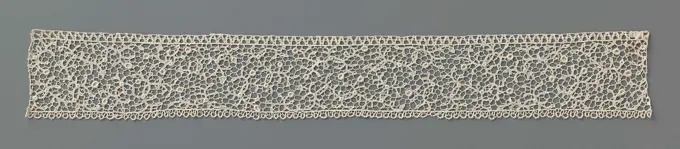
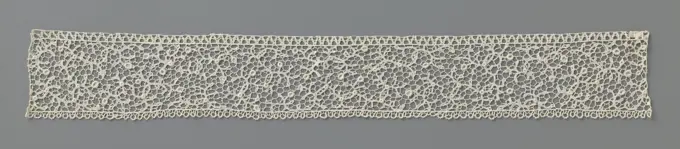
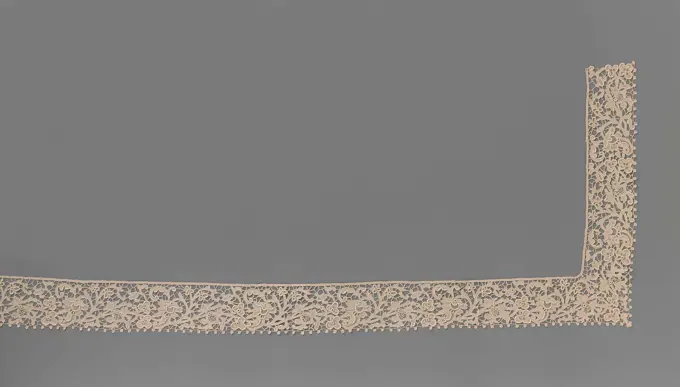
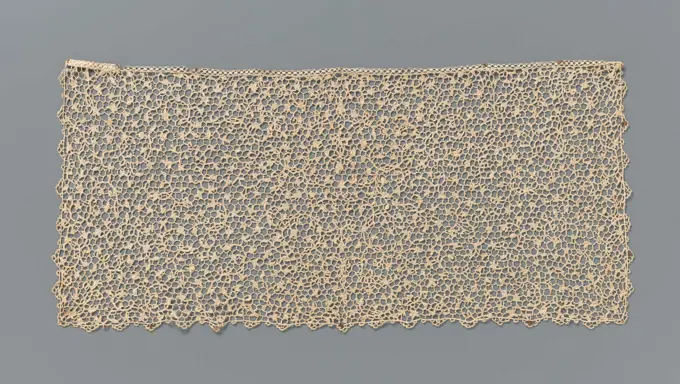
Decorative Lace Trimmings

Exquisite lace trimmings featuring intricate designs and delicate patterns, showcasing craftsmanship with vintage appeal, perfect for sewing and embellishments.

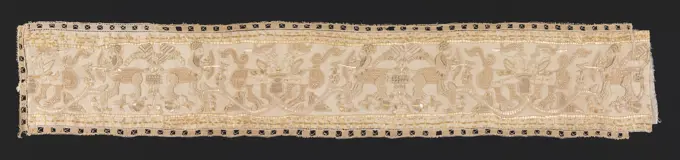
Trimming, Medium: metal-wrapped silk thread and metallic foil Technique: bobbin lace, metallic, Border of bobbin lace with metallic strips and metallic thread of gold color. Pattern of floral clusters and leaves alternating., Spain, 17th century, lace, Trimming
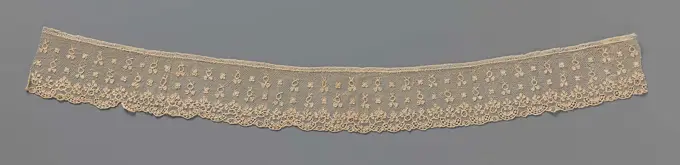
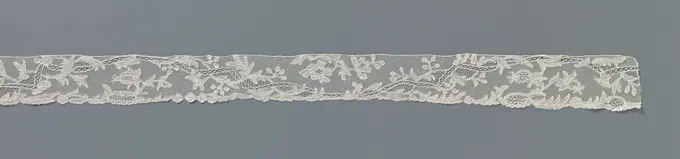
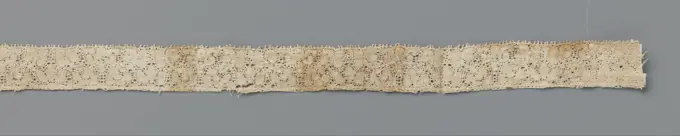
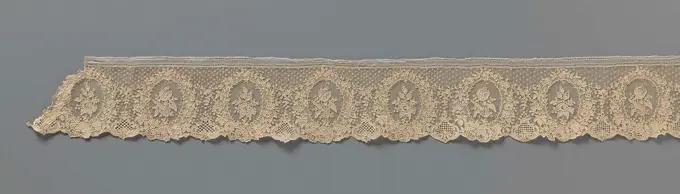
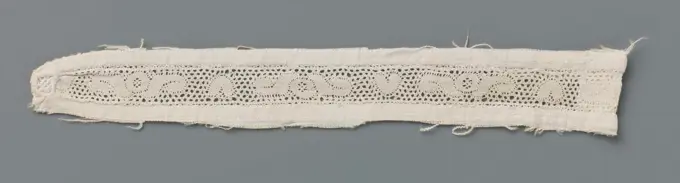
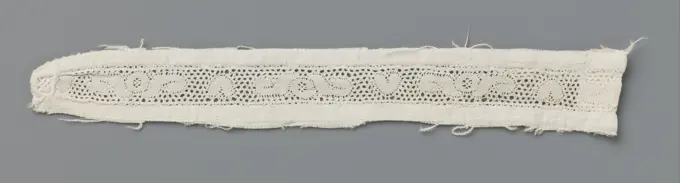
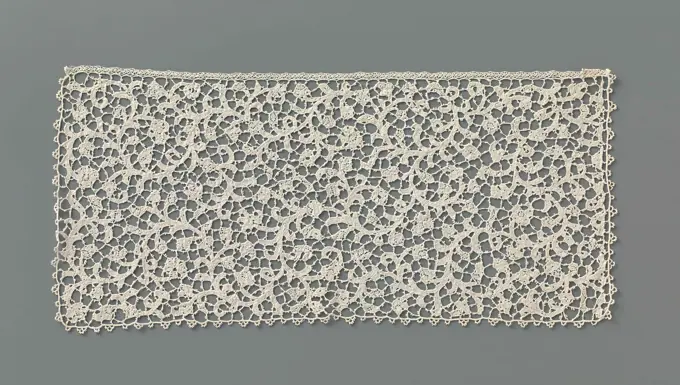
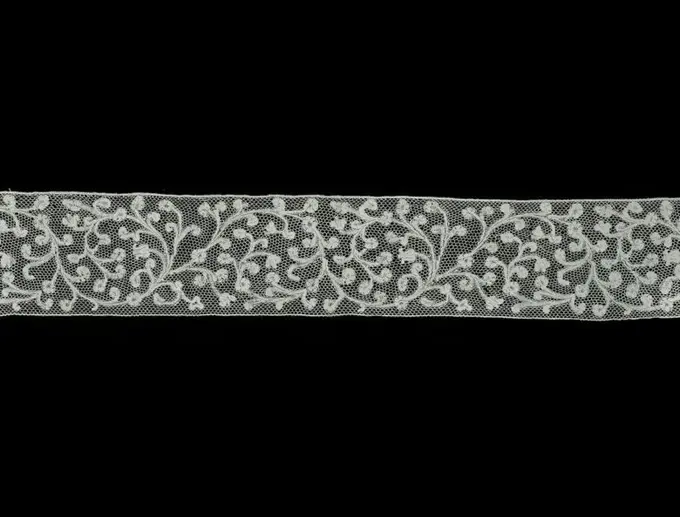
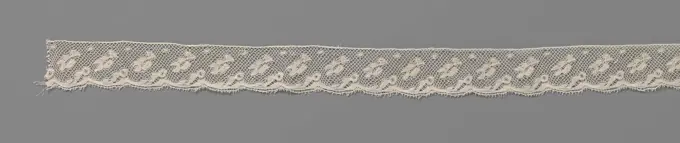
Strook kloskant met vallend blaadje.On a fond of square meshes are falling leaves above flat scallops, which are filled with a reverse V-shaped sheet with berry. Valenciennes side.Trimming, Medium: metal-wrapped silk thread and metallic foil Technique: bobbin lace, metallic, Border of bobbin lace with metallic strips and metallic thread of gold color. Pattern of floral clusters and leaves alternating., Spain, 17th century, lace, TrimmingStrip early 18th century Flemish, Mechlin. Strip. Flemish, Mechlin. early 18th century. Bobbin lace. Textiles-LacesStrip ca. 1750 Flemish. Strip. Flemish. ca. 1750. Bobbin lace, point d'Angleterre. Textiles-LacesBorder, Medium: linen Technique: needle lace with ground of loop & twist with twist return, Slightly scalloped border with floral sprays in small scale allover pattern., France, 1750-99, lace, BorderBorderGalloon 17th-18th century French. Galloon 213907Bobbin Lace Edging, early 18th century. Belgium, Mechelen, early 18th century (Regence or Louis XV period). Lace, bobbin; average: 5.8 x 93.4 cm (2 5/16 x 36 3/4 in.).Edging mid-18th century French. Edging. French. mid-18th century. Needle lace, point d'Argentan. Textiles-LacesStrook kloskant met cirkeltjes en blaadjes langs de onderzijde.Strip natural colosside, Paris side. The pattern consists along the underside of the strip from a concatenation of a large and a small circle and two different leaves. The motifs are connected by a Maas soil, a Paris soil. The motifs are made in loosened linse stroke and scroll, with thicker and shiny contour wires. In the circles, a rose soil has been applied as ornamental ground. Upstairs and bottom are straight finished, with the underside with picots.Galloon 18th century French. Galloon 214008Bands, Medium: linen Technique: bobbin lace (Valenciennes ground), Valenciennes borders with delicate leaf scrolls., Belgium or France, 18th century, lace, BandsPiece 18th century French or Italian. Piece 214059Kraag van naaldkant.Collar of needle side. The scalloped edge consists of a border of leaves and medallions with various fillings. Spreading flowers are spread over the Maas soil.Strook naaldkant met hartjes.Strip Ecru-colored needle side decorated with a regular pattern of heart-shaped moes on a fine hexagonal maase. The bottom edge consists of arcs with alternating one loose flour and the same flower connected to a landscape flower branch. The flour branches lying row forms the transition from the sauce pattern to the bottom edge. The top is finished with a straight edge. Alençon side.Bobbin Lace Garniture, 18th century. Flanders, 18th century. Lace, bobbin: linen; average: 139.7 x 10.9 cm (55 x 4 5/16 in.).Trimming, Medium: silk, metallic thread Technique: woven, Design of a vine with grapes and fruit in an angular arrangement. In yellow and metallic thread., Italy, 18th century, trimmings, TrimmingEdge lace, Medium: luinen Technique: needle lace, late 17th to early 19th c, 6-sided ground, Commonly called 'Point d'Alencon', late 18th century, lace, Edge laceStrip 18th century Flemish, Brussels. Strip 218156Hatslip of application side with large flower. Handslip of natural-colored application side, climbing side applicated on machine tulle. The rectangular field is with wide sprayed twigs of decorative, to which different flowers grow. At the ends there is always a thin stem with a large, openwork palmet flower, rising from a triangular 'hill', the sides of which are composed of scaled tires and medallions. There is a bow in the cross edges; The long edges betsane from flat shelters of switchbands, rosettes and long bonding tires.Fragment, 1700s - 1800s. India, 18th-19th century. Block printed, painted and overprinted with gold leaf; cotton; overall: 5.1 x 54.6 cm (2 x 21 1/2 in.).Strip 17th century Flemish. Strip 218249Textile (USA); cottonFringe 18th century British. Fringe 224888Border, Medium: linen Technique: bobbin lace, Mechlin style, Straight border of Mechlin lace with a design of buds sprinkled over the field, and a border of conventionalized ornament., Belgium, early 19th century, lace, BorderNeedlepoint (Reticella) Lace Insertion, 16th century. Italy, Venice, 16th century. Lace, needlepoint: linen; average: 2.6 x 30.8 cm (1 x 12 1/8 in.).Strook naaldkant met bessen en cirkelvormen.Natural coniferous strip: Men-Alençon. Spreading motif with two rows of alternating a berry or circle with two leaves underneath and a four-leaf clover. The scatter photograph is on a fine hexagonal maas. In the berries a nuance by applying a finer hexagonal maas soil. The pattern on the underside of the strip consists of lying arcs between which and above that larger and smaller circle shapes. Twigs with small heart-shaped and oval leaves escaped from the circle forms. Full work without recesses in the leaves. Ornamental ground with raderpicots in the bowjes and decorative soil in the smaller circles. Relief with closed feston sign past all contours. Slight slip edge at the bottom. The top is trimmed with a border clamping side.Trimming, Medium: silk Technique: woven, Design of white lozenges set in a red square with yellow borders and a scalloped picot edge., France, 17th century, trimmings, TrimmingBorder, Medium: linen Technique: needle lace, six-sided reworked ground, Border with floral sprays forming garlands and edging one border. Isolated sprays powdered over remaining area., France, mid-18th-early 19th century, lace, BorderMutsenstrook van kloskant met zigzag-rivière.Strip natural colored Brussels climbing side. A river in zigzag line is crossed by spiral raft, enclosing impeller-shaped medallions. The motifs are connected by a draft ground. A coarse hexagonal soil has been applied in the Rivieres. On the fields that are bounded by the Rivier are twigs, to which flowers in the form of pomegranates, pears or winged insects. The strip is probably used or made for a hat.Trimming (France); silk, metallic threadStrip bobbin with Drieblad flanked by rosette flowers, anonymous, c. 1640 - c. 1660 Strip of natural -colored bobbin, Old Flemish side. With small recesses, a repeating symmetrical pattern can be distinguished by a three -leaf along one long side, which is flanked on both sides by a rosette flower, and along the other long side a stylized French lily, which is flanked on both sides by a butterfly -shaped leaf. There is hardly any soil. The motifs are made in linen battle with openwork edges. At the top and bottom are straight finished, with picots along one side. Antwerp linen (material) bobbin lace / old Flemish lace Strip of natural -colored bobbin, Old Flemish side. With small recesses, a repeating symmetrical pattern can be distinguished by a three -leaf along one long side, which is flanked on both sides by a rosette flower, and along the other long side a stylized French lily, which is flanked on both sides by a butterfly -shaped leaf. There is hardly any soil. The motifs are madTussenzetsel van kloskant met spitsovaaltje tussen twee ronde vormen.Interesting of natural Dutch clamping side. With small recesses, a repeating pattern can be distinguished from a spindle release that is clamped under two slightly larger rounds or at the bottom between two slightly larger round. There is hardly any floor. The motifs are made in linen stroke with openwork edges. Straight finished and bottom.Strook naaldkant met tulp en rozentak in medaillons.Strip natural-colored coniferous lace: Alençon side. Pattern with a repetitive motif of medallions on a fine hexagonal maase soil, strewn at the top with moes. In the medallions around and around a tulip and a rose roof. The outer edge of the medallions consists of multi-layer flowers and leaves that grow upwards. On either side of the largest flower at the bottom of an acanthus sheet. Different ornamental grounds in the diamond-shaped spaces between the acanthus leaves and in a single flower. Along the bottom of the flowers, leaves that shot off. The top is trimmed with a border clamping side.Strip early 18th century Flemish. Strip 218827Tamboerie scarf on machine tulle with relief flowers.Sjaal of natural tilt embroidery: Machine tulle with tamish work. Elongated rectangular model. Pattern: There is a spreading pattern of twigs with three serrated leaves in midfield. Along the edges flower branches are always one flower. The branches are bland S-shaped and are partly over each other through which a wavy effect is achieved. Along both short sides, the latter branches come out of the edge with a large curling bow together with extra flowers and form a symmetrical pattern that is awarded with one flower where three branches with each a flower bud. The relief in the flower hearts is made with tambourish edges along strips of woven cotton that are fixed to the tulle. The tubular edge with lobby slip comes from the wavy branches with serrated leaves.Fragment of the lace;  18th century (1701-00-00-1800-00-00);Strook naaldkant met ijle spiraalranken.Strip natural needle side: Venetian rosion side. On a regular six-sided Maas soil there is an open backdrop of Iche Spiral Rinks that are decorated here and there with a relief rose. Straight outer edge with a row of contiguous arcs.Border 18th century French. Border 227680Strip of needle side with thin spiral ranks, anonymous, c. 1690 - c. 1699 Strip of natural -colored needle side: Venetian rose side. On a regular six-sided Maas soil there is an open backdrop of thin spiral vines that are decorated here and there with a relief rose. Straight outer edge with a row of contiguous arcs. Venice linen (material) Venetian rose point Strip of natural -colored needle side: Venetian rose side. On a regular six-sided Maas soil there is an open backdrop of thin spiral vines that are decorated here and there with a relief rose. Straight outer edge with a row of contiguous arcs. Venice linen (material) Venetian rose pointBands; linenStrook naaldkant in L-vormig model met getongde bloem.Strip natural needle side: Venetian relief side. L-shaped model. Against an open bars ground is an ongoing pattern of tendrils with pomegranates and a tongue flower. Along three sides a list of doubled arcs.Fringe; silk, metallicGalloon 17th-18th century Unknown. Galloon 213771Dasslip van naaldkant met elkaar oversnijdende ijle spiraalranken.Natural Carriage Dasslip: Flat Venetian side. Apparently confused but symmetrical pattern with a vertical axis in the middle from which thin, moving each other, excellent spiral drinks with small star-shaped flowers and flowers with three leaves. In the corners there are small lily-like flowers that are tilted inwards. The motifs are made with a strongly connected feston sign, where simple patterns have been realized in different flowers and leaves with recesses. The motifs are connected by a hexagonal soil with picoted bars. The top of the strip is finished with a splitting strap. The underside and two short sides are finished with a bow edge.Sierstuk voor een avondmantel van gemengde kant met rozenhaag.Decorative piece for an evening casing of natural-colored mixed side - climbing side in combination with coniferous lace - Brussels Duchesse. In a widely spread braid soil there are roses that usually support two leaves. An intermediate ornament consists of a few and double voluntaries and many small flowers.Border 17th century Italian. Border. Italian. 17th century. Macrame. Textiles-LacesBorder, Medium: linen Technique: needle lace with ground of loop and twist with twist return, In the center of the design is a blossom flanked by stylized floral and foliated forms in connecting overall serpentine design. Cordonnet; Fond: petite réseau. Modes: portes, enchainettes, St. Esprit avec Rangs Clairs, gaze quadrillée, réseau mouché., Italy, 1700-1750, lace, BorderFragment ca. 1800 Flemish or Spanish. Fragment 212929Fringe (France); silk, glass and imitation pearl beadsBorder (Portugal); silk embroidery on linen foundationGalloon 17th-18th century Unknown. Galloon 213864Ribbon (France); silk, metallic threadsStrip bobbin with long feathered and curling leaves, anonymous, c. 1760 Strip of natural-colored bobbin, binche side. The repeating fine pattern consists of long and richly feathered leaves, with splits and curling ends. Between the leaves, two large flowers can be distinguished with many narrow pointed petals, such as with a clover flower. The successive patterns run smoothly into each other, where a blading leaf with an arc curls over the flour from the preceding pattern. The motifs are connected by a decorative land, a snowflake ground. The fullwork is mainly made in linen battle with openwork edges and partly in netslag. At the top and bottom are straight finished, with the bottom with picots. Binche linen (material) Bobbi Lace / Binche Lace Strip of natural-colored bobbin, binche side. The repeating fine pattern consists of long and richly feathered leaves, with splits and curling ends. Between the leaves, two large flowers can be distinguished with many narrow pointed petals, sucBorder 17th century Flemish, Mechlin. Border 218579Edge, Medium: linen Technique: bobbin lace (early Valenciennes ground), 17th century, lace, EdgeBobbin Lace Lappet, 18th century. Belgium, Mechelen, 18th century. Lace, bobbin: linen; average: 111.2 x 10.2 cm (43 3/4 x 4 in.).Bobbin Lace Edging, late 17th century. Flanders, late 17th century. Lace, bobbin; average: 5.8 x 149.2 cm (2 5/16 x 58 3/4 in.).Wampum belt -Trimming (France); silkDzeklek of the fingernail Jan Stanis Stanis Awski, Jan (1860-1907); End of the 19th century (1890-00-00-1900-00-00);Strip of mechanical side with lying flour followed by a lying leaf, anonymous, c. 1850  Strip of natural -colored machine side: machine blonde. The repeating pattern consists of a horizontal flower followed by a lying leaf and some smaller leaf branches. The flowers and leaves ensure a sculpy edge along the underside of the strip. The motifs are equipped with thick shiny contour threads and are connected to each other with a traly land, a mechanical tuler land. A decorative land has been used in the Bloemharten, a machine rose ground. The top of the strip is straight finished. The scrap edge is finished with picots.  silkStrip early 18th century Flemish. Strip. Flemish. early 18th century. Bobbin lace. Textiles-LacesBobbin Lace (Point d'Angleterre) Lappets and Edging for a Cap, 18th century. Belgium, Brussels, 18th century (Louis XV period). Lace, bobbin: linen; overall: 226.4 x 10 cm (89 1/8 x 3 15/16 in.).Band (Italy); linen; 1946-42-57Strip of bobbin with x shapes made from narrow decorative straps with rectangular shape strokes, anonymous, c. 1700 Strip of natural-colored bobbin, binche side. The repeating pattern consists of Wirwar made of small motifs made with different decorative grounds. The outlets of this are partially emphasized with narrow decorative straps with rectangles, made in shape. Under the center line, the decorative straps make an X-shaped motif at a regular distance from each other, with mains filling. The motifs are connected by an irregular decorative land, a snowflake land. The top and bottom of the strip are straight finished, with the bottom with picots. One short side is finished straight. A seam runs at about 15 cm over the entire width of the strip, where possible two strips are put together.  linen (material) Bobbi Lace / Binche Lace Strip of natural-colored bobbin, binche side. The repeating pattern consists of Wirwar made of small motifs made with different decorative grounds. The outSilk brokaat ribbon; A continuous tire of lobed Balderen has been applied to a gold -colored surface, with a green flower, anonymous, c. 1735 - c. 1765 Silk brokaat ribbon. A continuous tire of lobed Balderen has been applied to a gold -colored surface, with a green flower always in the middle. The edges are trimmed with decorative band. West-Europa whole: Silk. brocade (textile) Silk brokaat ribbon. A continuous tire of lobed Balderen has been applied to a gold -colored surface, with a green flower always in the middle. The edges are trimmed with decorative band. West-Europa whole: Silk. brocade (textile)Border 16th century German. Border 226301Braid Made 1651-1700 France. Gold-gilted-silver strip-wrapped silk and gold-gilted-silver strips, bobbin straight lace .Band, Medium: linen Technique: needle lace with ground of loop and twist with twist return, Band in a symmetrical design of stylized palm trees framed by architectural shapes and foliage., France, early 18th century, lace, BandTrimming (Spain); silkSlendang, 1800s. Indonesia, Central Java, 19th century. Batik; cotton; overall: 261.5 x 50.8 cm (102 15/16 x 20 in.).Galloon 17th century () European. Galloon. European. 17th century (). Silk and metal thread. Textiles-TrimmingsFragment (France); silkGuenbri late 19th century Algerian. Guenbri 501018Cloth; Sirat. Cloth with geometric motifs and man figures.Cap Streamers (Belgium); linenFringe, Medium: silk Technique: woven, Blue fringe with a plain-woven heading and thread skirt., Italy, 16th century, trimmings, FringeGalloon ca. 1580 Italian. Galloon. Italian. ca. 1580. Metal thread. Textiles-TrimmingsSection of Border from Thanka (Religious Picture) Made 1701-1800 China. Silk, warp-float faced 2 1 's' twill weave with plain interlacings of secondary binding warps and supplementary patterning wefts . ManchuBand, Medium: linen Technique: bobbin lace (continuous tape with bars added), Band with tape like scroll design., late 17th or early 18th century, lace, BandBand, Medium: silk Technique: plain weave with supplementary warp, Narrow band fringed at both ends. Woven in red, green, yellow, and gold in geometric design., 19th century, woven textiles, BandBelt -Borders, Medium: linen Technique: needle lace, Borders of needle lace, Gros Point de Venise, in large floral pattern connected by brides picotées and outlined by cordonnet., Italy or France, late 17th century, lace, BordersStrook kloskant met drielobbige waaiervormige blaadjes.Strip natural colosside: Mechelen side. The repeating pattern consists of a rough pendulum that forms a very silly slumping edge along the bottom of the strip. A triple fan-shaped leaf exprings from the pavil from the pavil. The pendulum with leaves is made in a fine Maas soil, a Malinois. The sparse fullwork is made in linen stroke with thicker and shiny contour wires. A strip of tulle is attached along the top of the strip, both strips are straight finished. The very slight sloping edge is finished with picots.Strip bobbin with thick curved leaves and three -lobe flowers, anonymous, c. 1700 - c. 1709 Strip of natural-colored bobbin: binche side. The repeating pattern consists of two thick curved leaves that tapered. From each leaf a three -lobe flower is created on a short curved stem. Above the Holling of one of the leaves, a four -lobed rosette flower is visible in the not so clearly defined pattern. The motifs are made in linen battle with openwork edges and in netslag. The motifs are connected by a decorative land, a coarse snowflake ground. At the top and bottom are straight finished and a bit ragged due to damage. Binche (Possible) linen (material) bobbin lace / Binche lace / snowflake filling Strip of natural-colored bobbin: binche side. The repeating pattern consists of two thick curved leaves that tapered. From each leaf a three -lobe flower is created on a short curved stem. Above the Holling of one of the leaves, a four -lobed rosette flower is visible in the not so clearly defineLambijn, Anonymous, 1720 - 1740 Yellow silk lambin of a bed garnish embroidered with peacocks, flowers, butterflies, horns of abundance in multicolored silk, omboard and decorated with blue passion, lined with coarse linen and yellow silk. Intended for the left side of the bed, outside. Canton silk. linen (material) Yellow silk lambin of a bed garnish embroidered with peacocks, flowers, butterflies, horns of abundance in multicolored silk, omboard and decorated with blue passion, lined with coarse linen and yellow silk. Intended for the left side of the bed, outside. Canton silk. linen (material)Fragment. Culture: Italian, possibly Milan. Dimensions: L. 41 x W. 15 1/2 inches (104.1 x 39.4 cm). Date: 18th century. Museum: Metropolitan Museum of Art, New York, USA.Border (China); cottonPiece 18th century Japan. Piece 71686Sash, 18th century, Paschalis Jacobowicz, 85 x 14 1/2 in. (215.9 x 36.8 cm), Silk, metallic thread, Poland, 18th century, This Polish sash bears the name of its maker 'Paschalis' in the lower corner. Paschalis migrated to Poland from Armenia in 1761.Fragment of the lace;  18th century (1701-00-00-1800-00-00);Fringe 18th century probably European. Fringe 213724Tussenzetsel van kloskant met hartje en rond bloempje.Interesting of natural Dutch clamping side. The repeating pattern consists alternately from a heart and a flower ride between two elongated curly leaves. The heart is alternately upright and vice versa. The motifs are connected by a round table ground with braid. The motifs are made in linen stroke with openwork edges and recesses in the circular flower heart. Upper and bottom of the strip are straight finished and attached to a fragment linen from a demolition.Fragment of a bed garnish of yellow waved wool with green passion and hanging bobbins, c. 1795 - c. 1815 Fragment of a bed garnish of yellow waved wool, omboard with a green passion with a yellow motif and with a green and yellow border with hanging spools that are wound with yellow and green side. Northern Netherlands wool Fragment of a bed garnish of yellow waved wool, omboard with a green passion with a yellow motif and with a green and yellow border with hanging spools that are wound with yellow and green side. Northern Netherlands woolRibbon, Medium: silk Technique: woven, White silk moiré center with borders of tiny roses and foliage in extra warps of green and rose silks., France, late 19th century, woven textiles, RibbonKloskant intermediate mate with heart and round flower, anonymous, c. 1640 - c. 1660 Intermediate springs of natural -colored Dutch bobbin side. The repeating pattern consists alternately of a heart and one round flower between two elongated curling leaves. The heart is alternately upright and vice versa. The motifs are connected by a round grid with braid strokes. The motifs are made in linen battle with openwork edges and recesses in the circular flower heart. Top and bottom of the strip are straight finished and sewn to a fragment linen from a demolition. Antwerp linen (material) bobbin lace Intermediate springs of natural -colored Dutch bobbin side. The repeating pattern consists alternately of a heart and one round flower between two elongated curling leaves. The heart is alternately upright and vice versa. The motifs are connected by a round grid with braid strokes. The motifs are made in linen battle with openwork edges and recesses in the circular flower heart. Top and bottom oJabot van naaldkant met spiraalranken.Jabot of natural needle side: Flat Venetian side. Spiral reflections are symmetrical in open bars with respect to a standing center axle. Button-shaped flowers grow to any side volutes. Straight outlines with animals triangles and single arcs.Trimming (France); 1909-2-187Border. Flanders. Date: 1675-1700. Dimensions: 14.3 × 311.2 cm (5 5/8 × 122 1/2 in.)Width repeat: 28.2 cm 28.3 cm (11 1/8 in.). Linen, bobbin part lace. Origin: Flanders. Museum: The Chicago Art Institute, Chicago, USA.