Decorative Metal Artifacts

A collection of exquisite metalworks including purse frames, collars, rings, and belts from different periods, showcasing intricate designs in silver and gold.

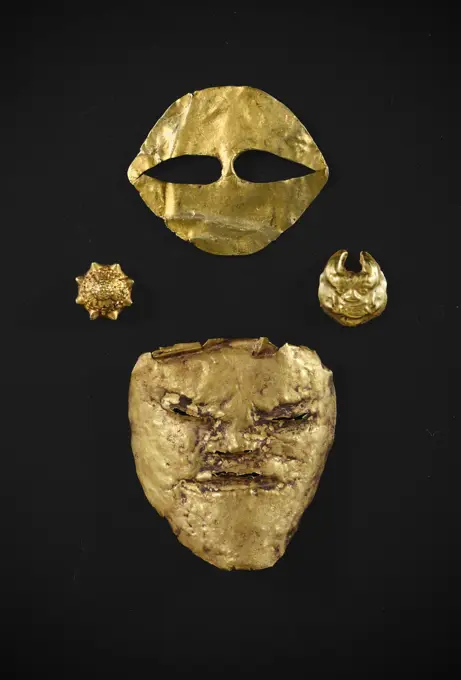
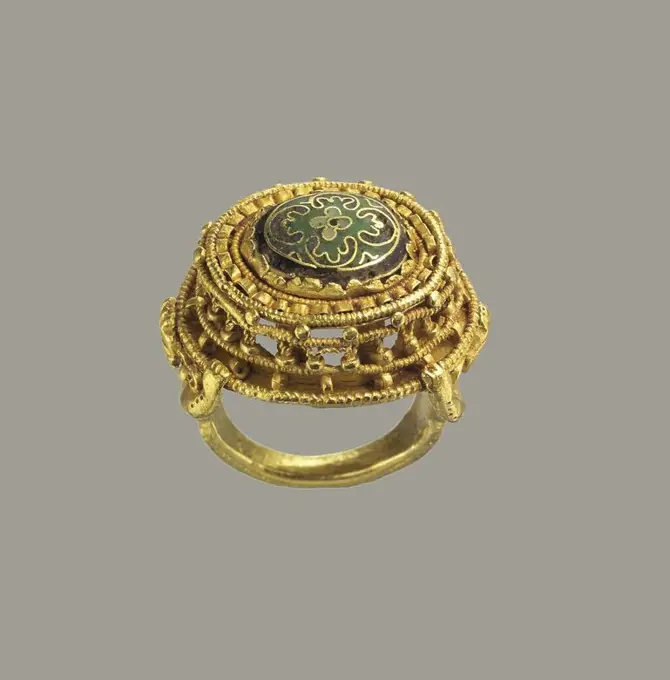
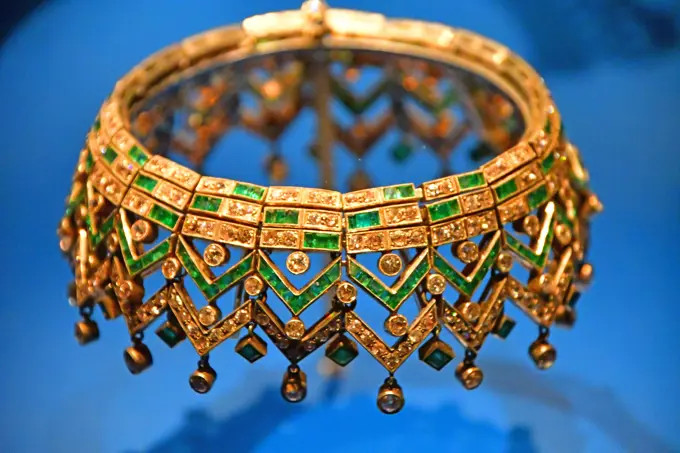
Anonymous, collar at the Héraclès node (main title), -0330. Yellow gold. Petit Palais, Museum of Fine Arts of the City of Paris.
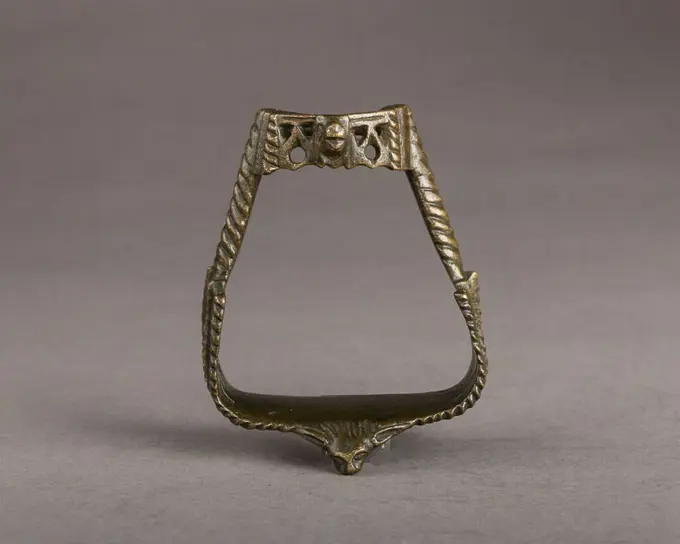
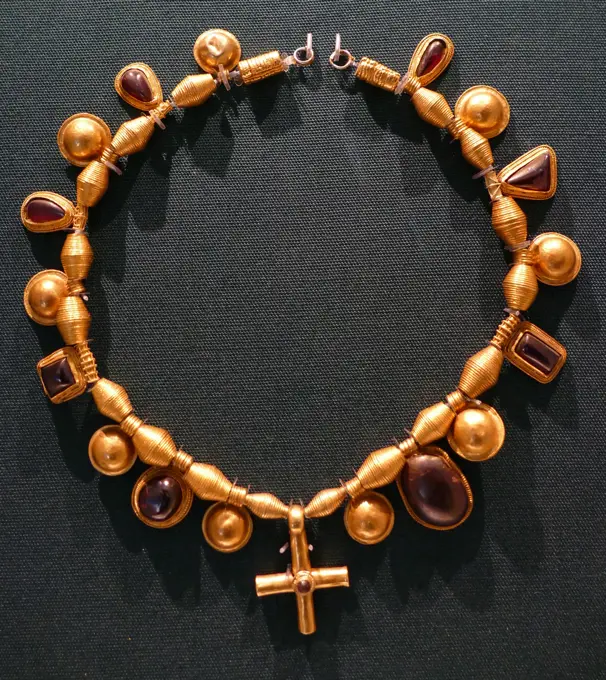
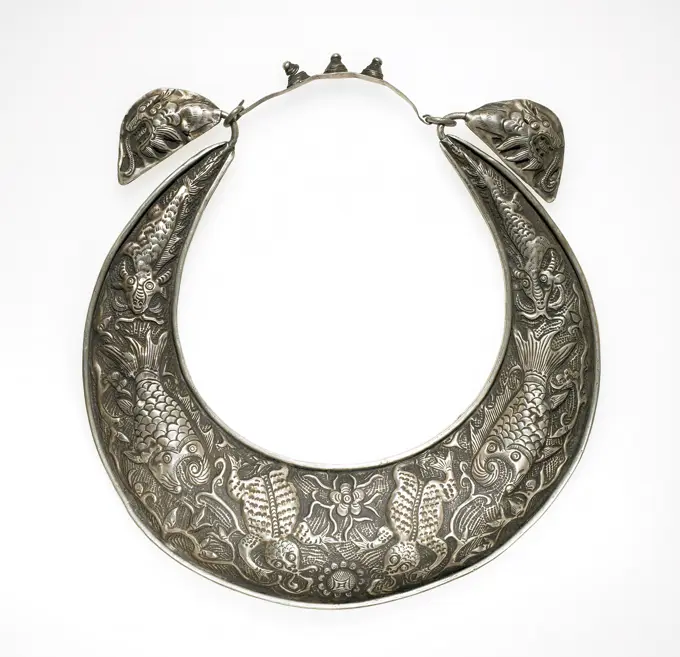
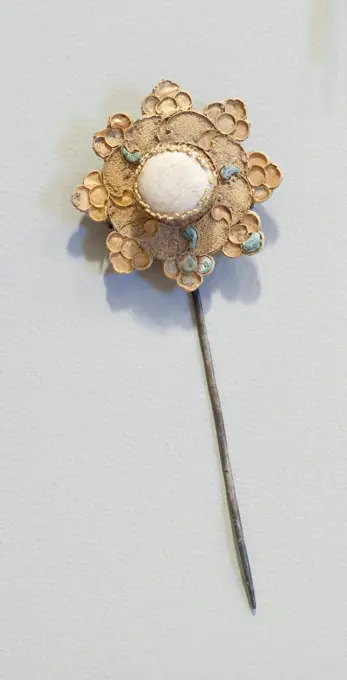
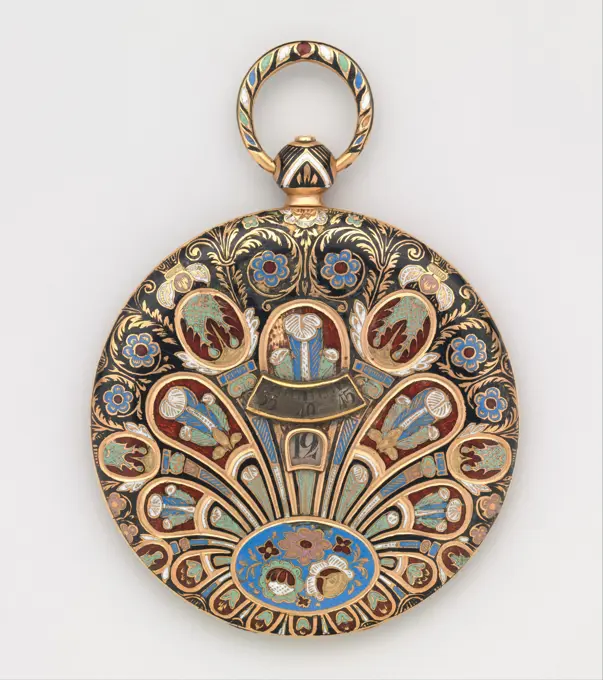
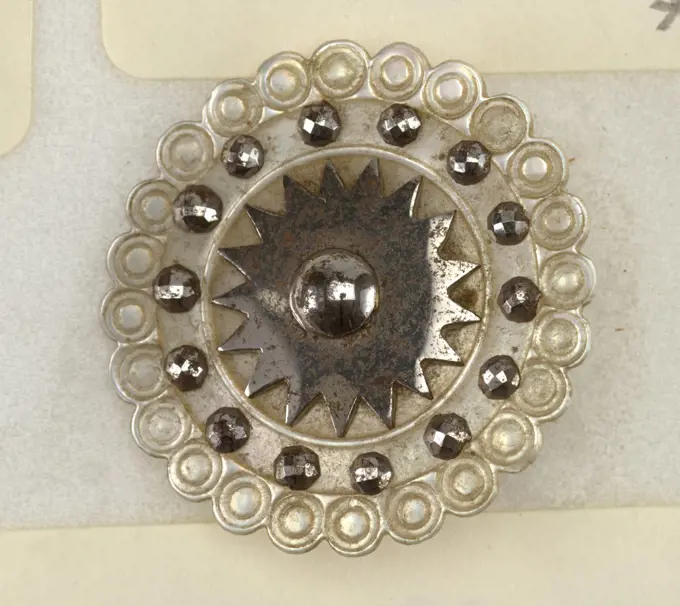
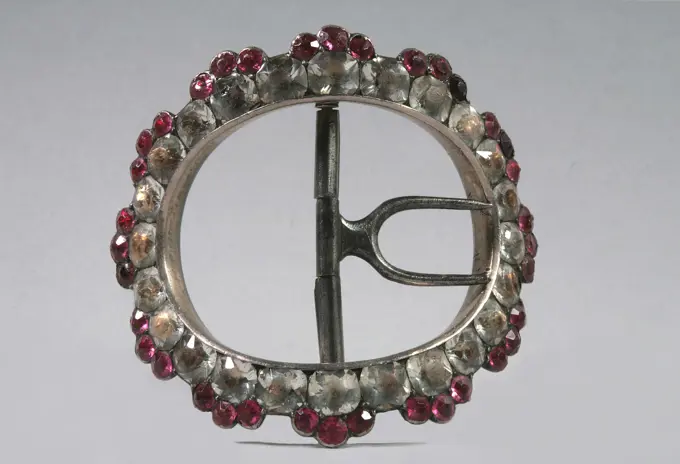
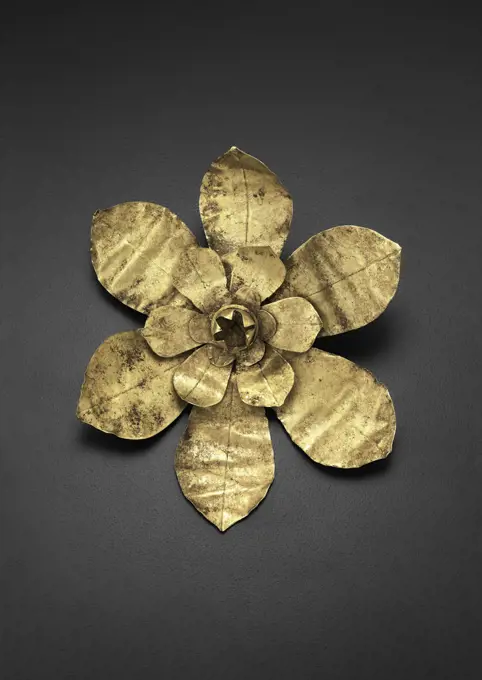
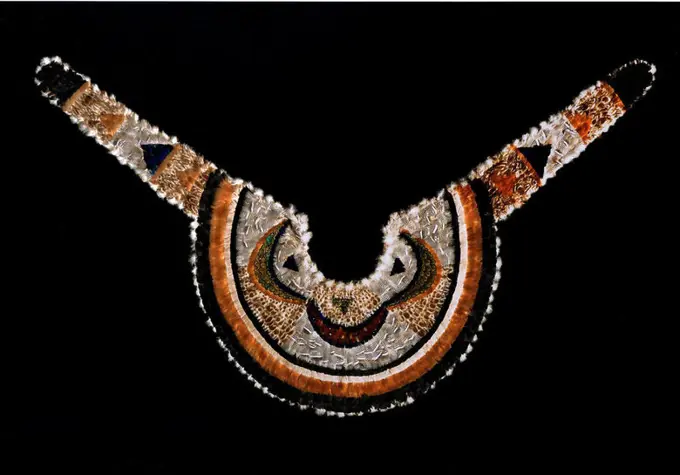
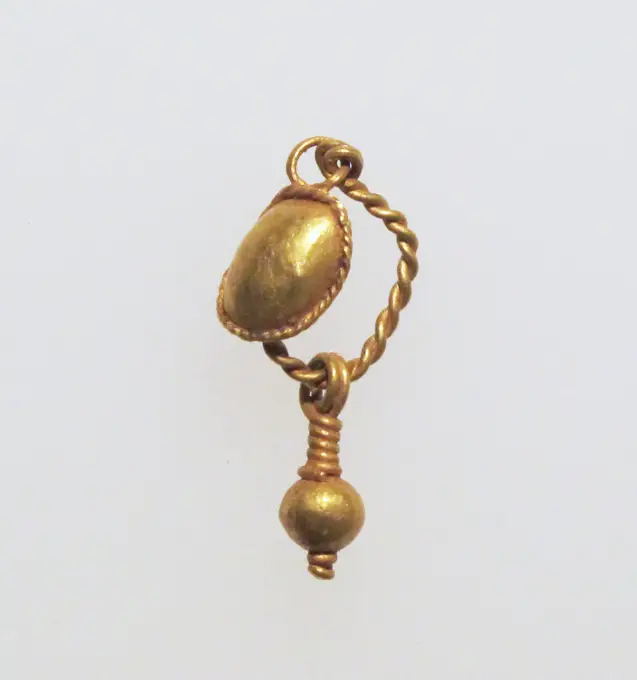
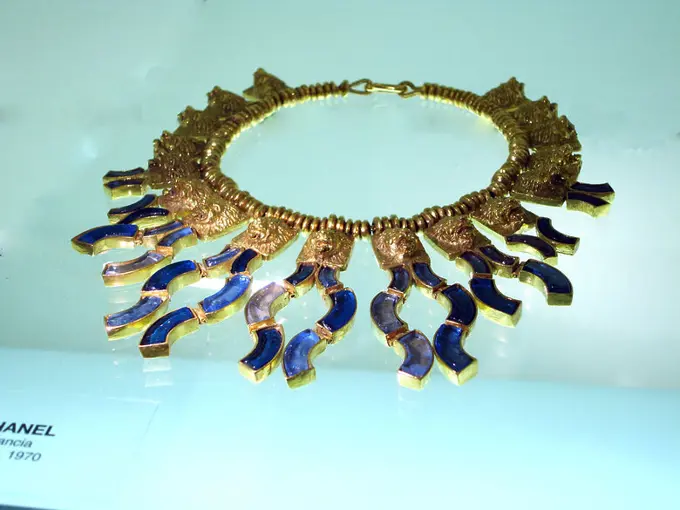
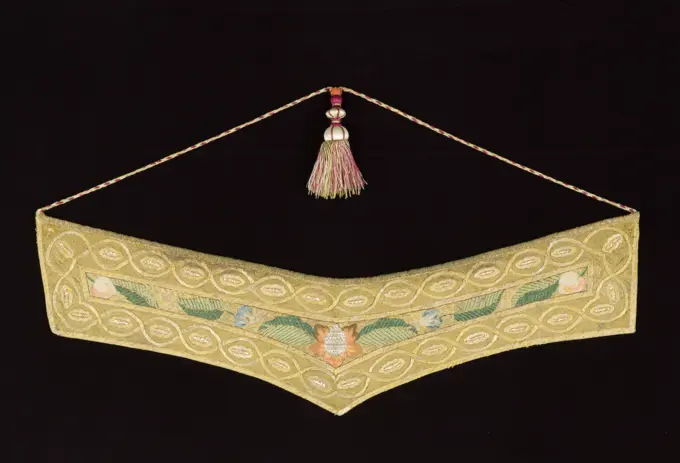
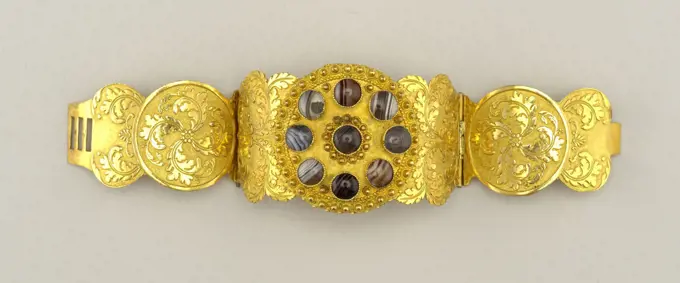
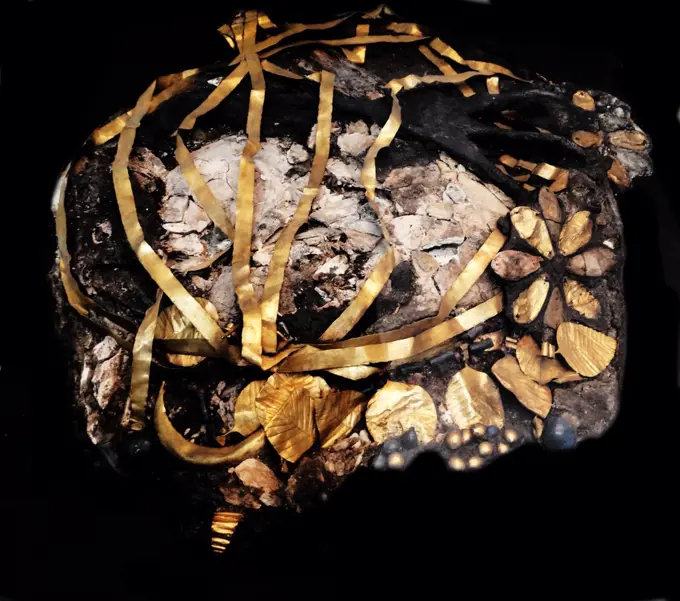
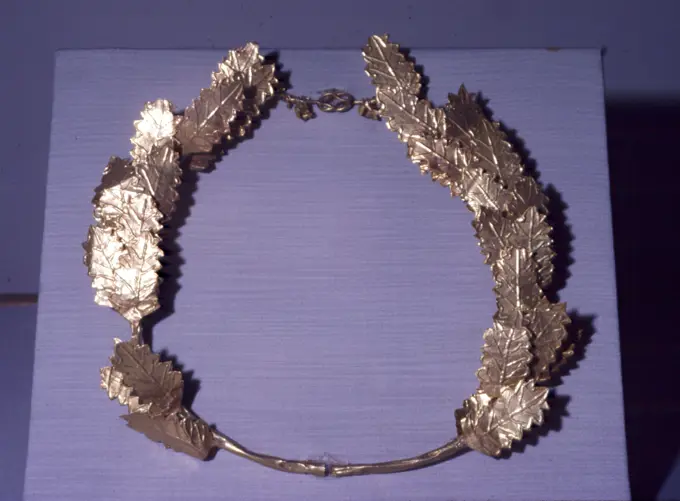
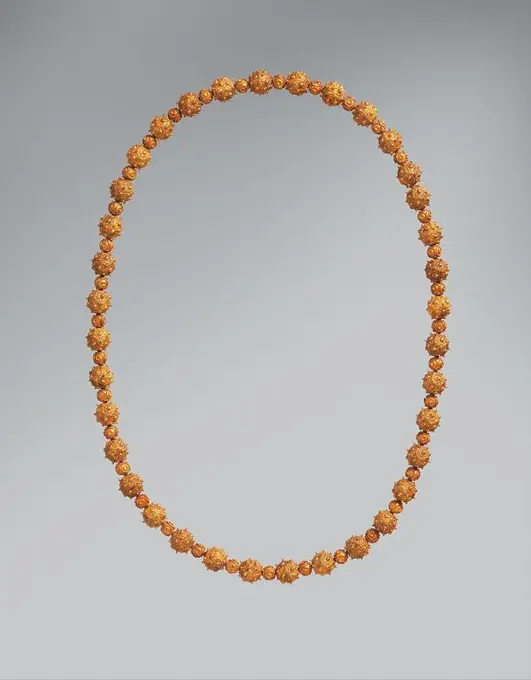
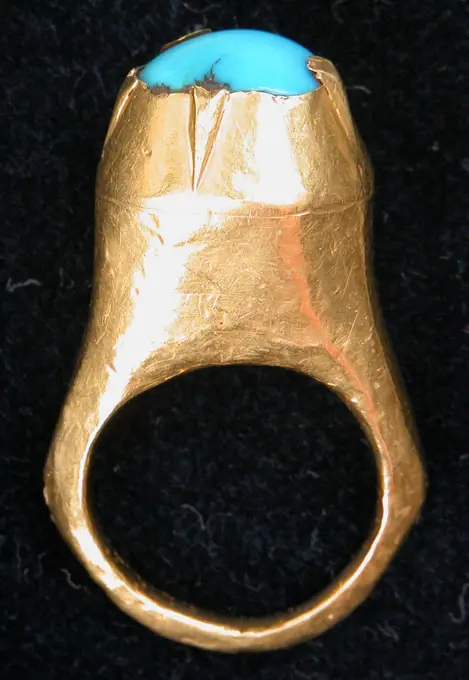
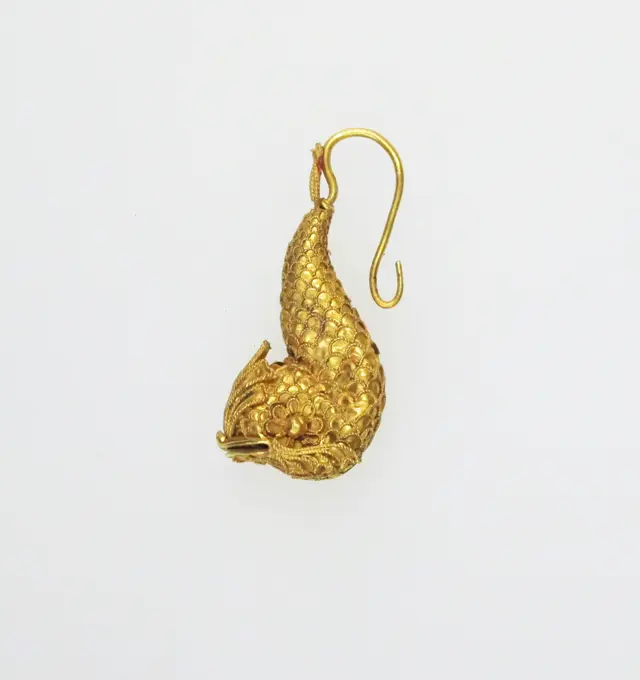
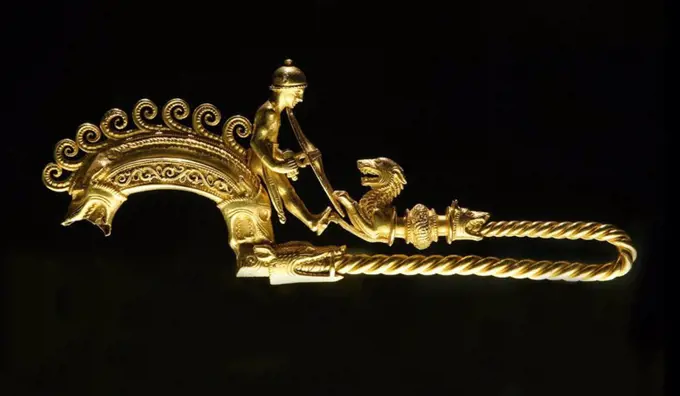
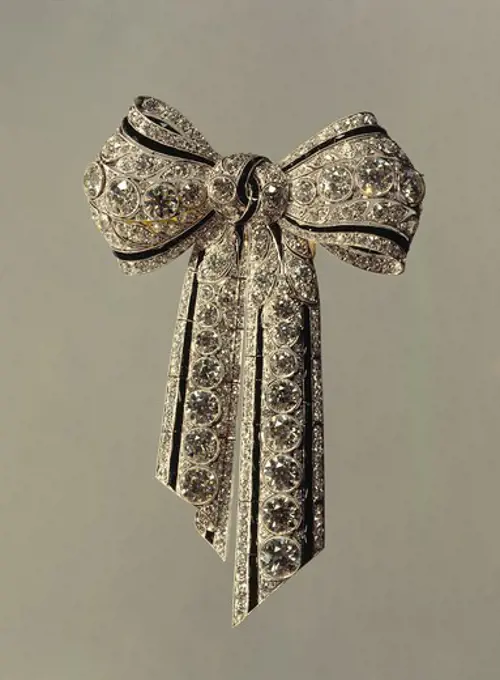
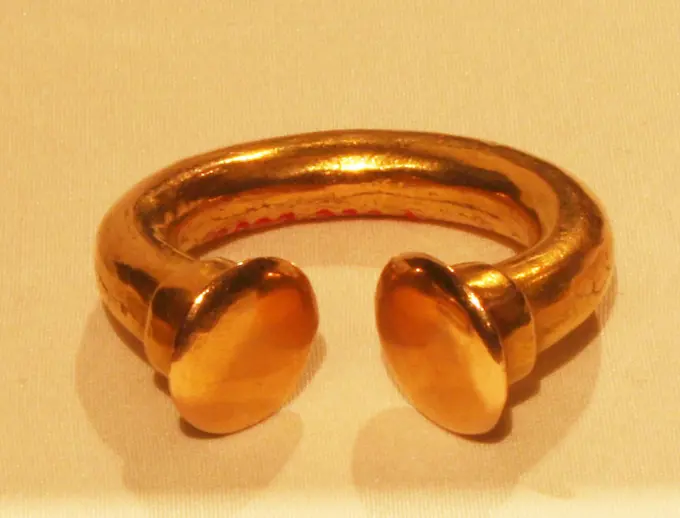
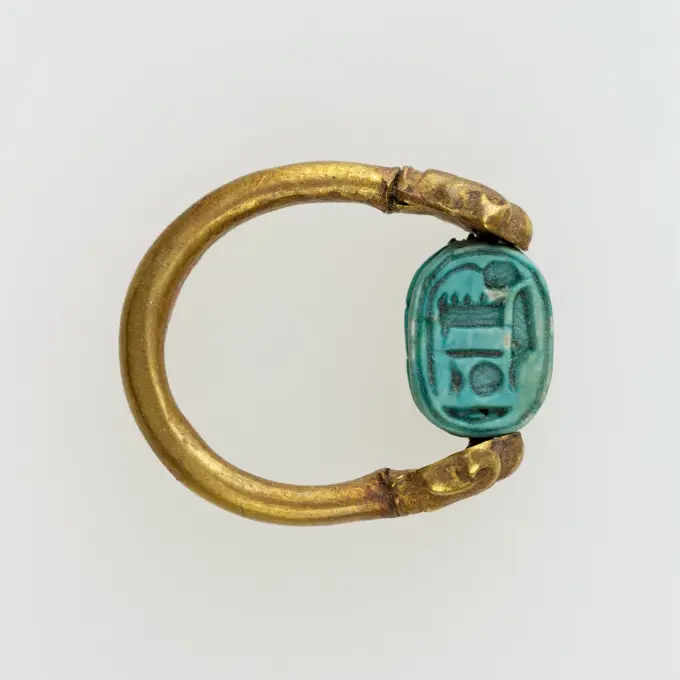
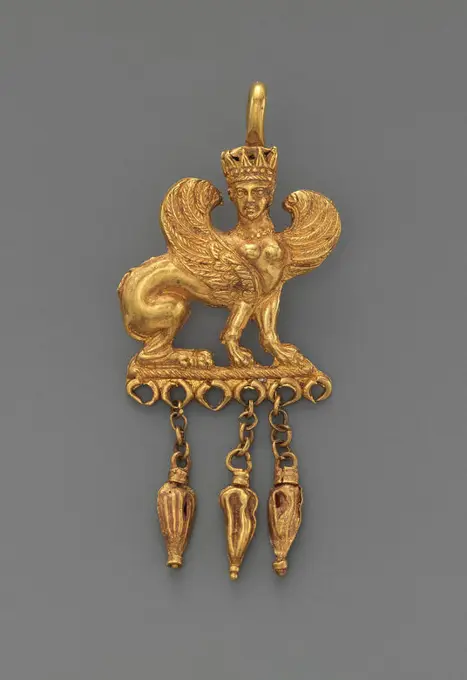
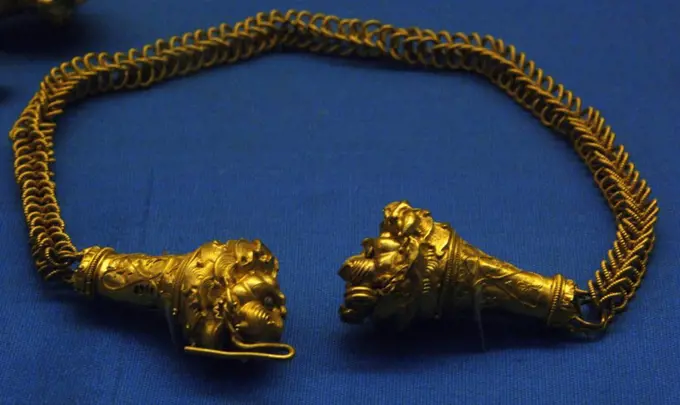
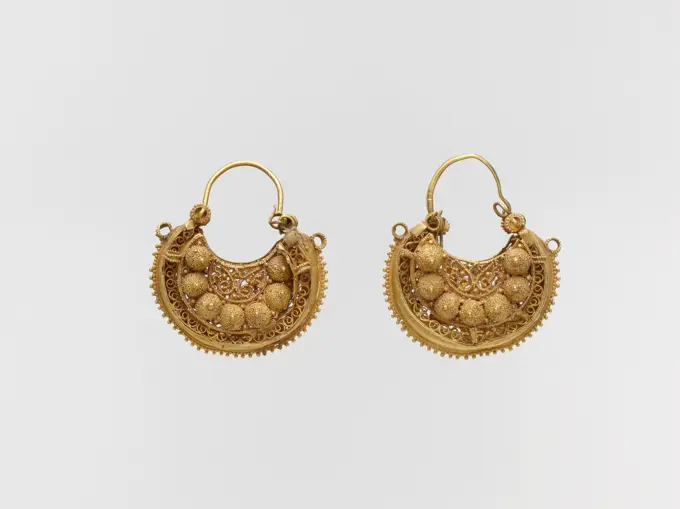
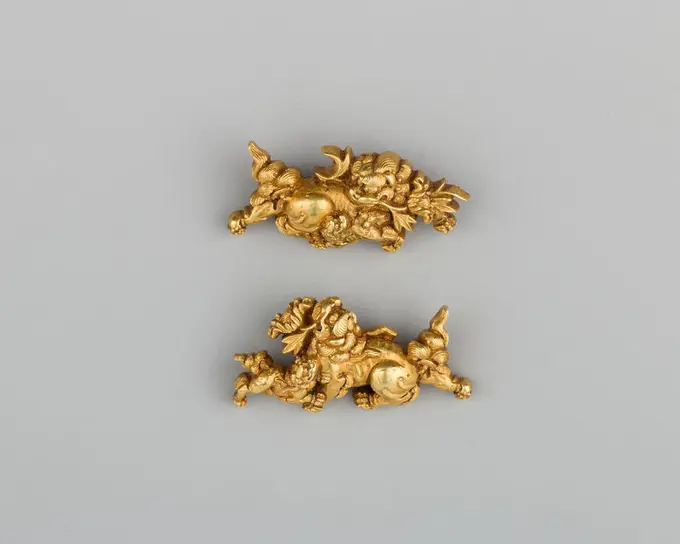
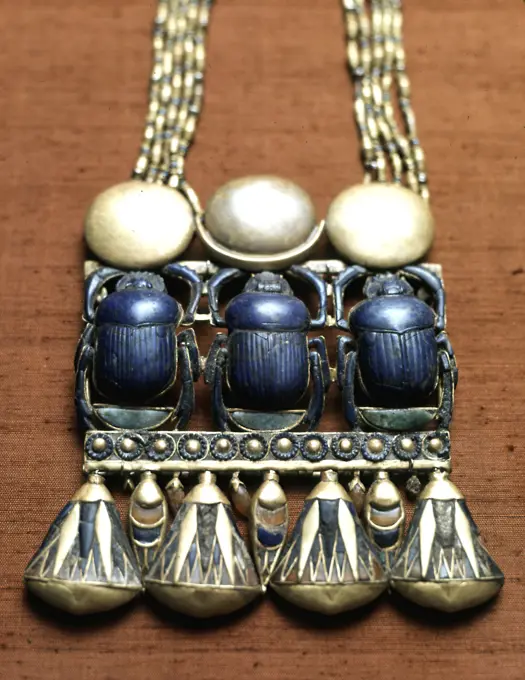
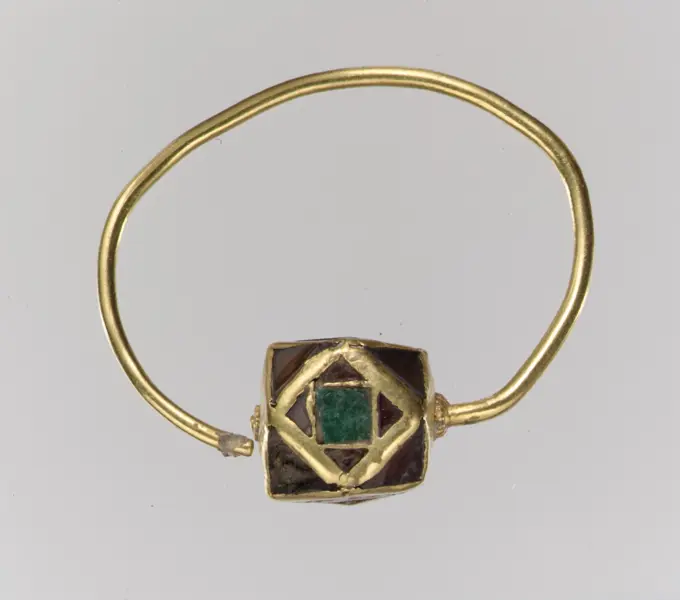
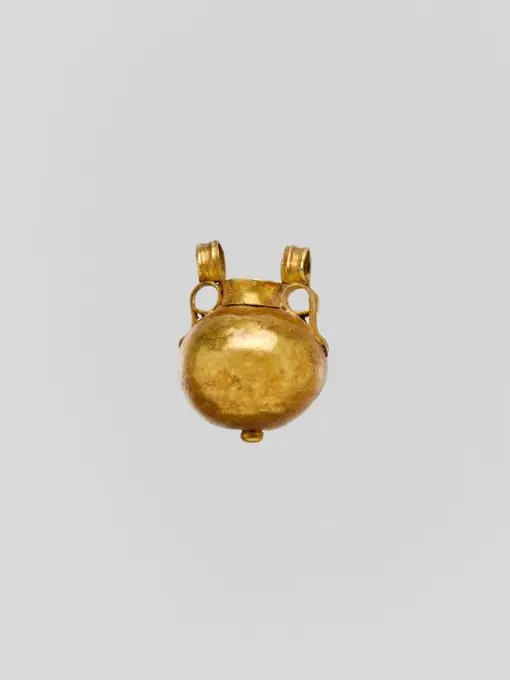
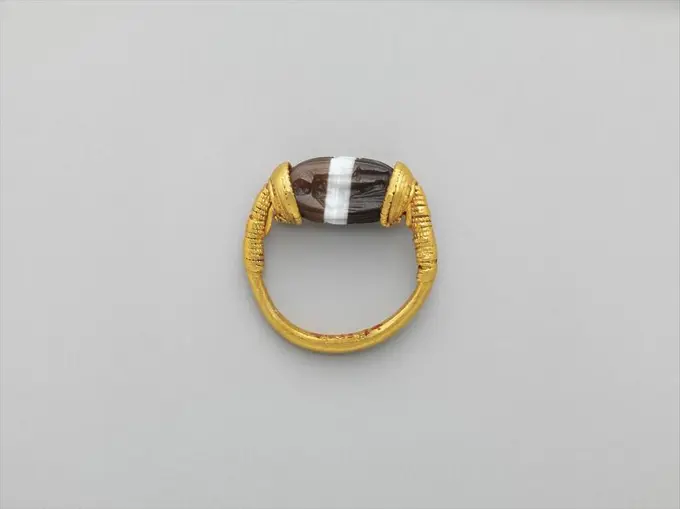
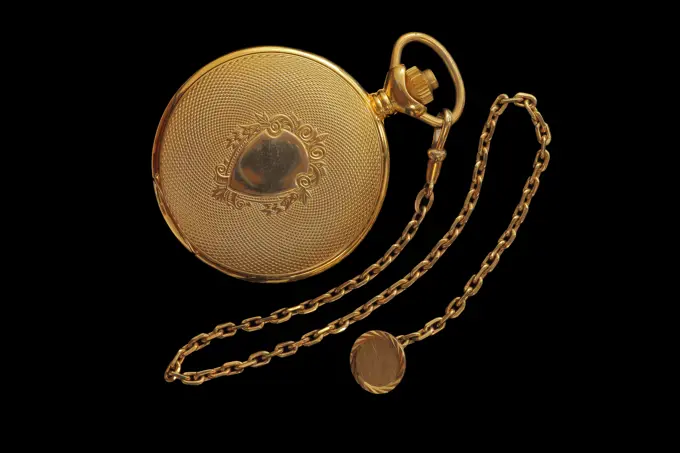
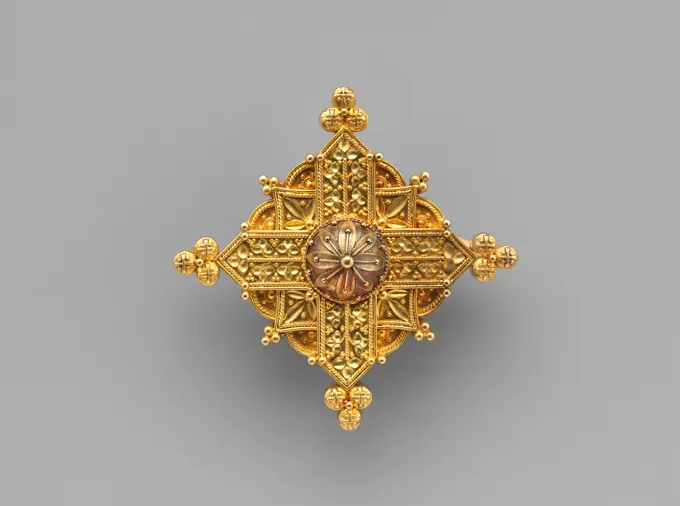
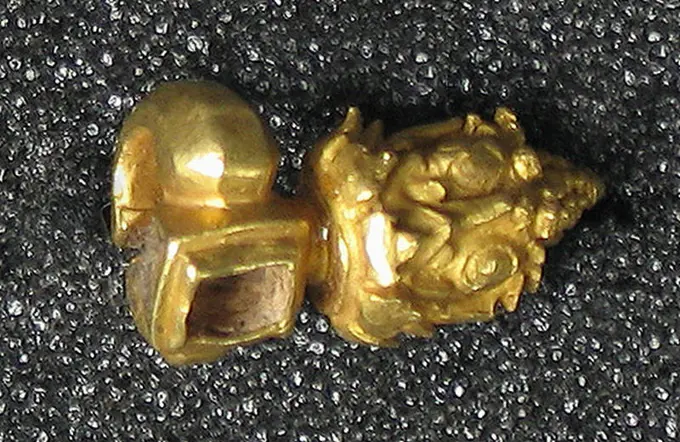
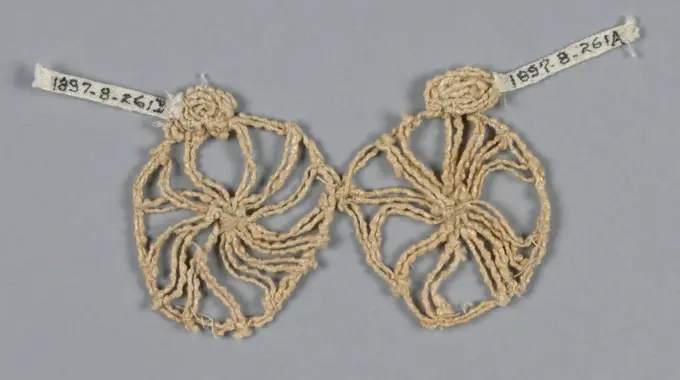
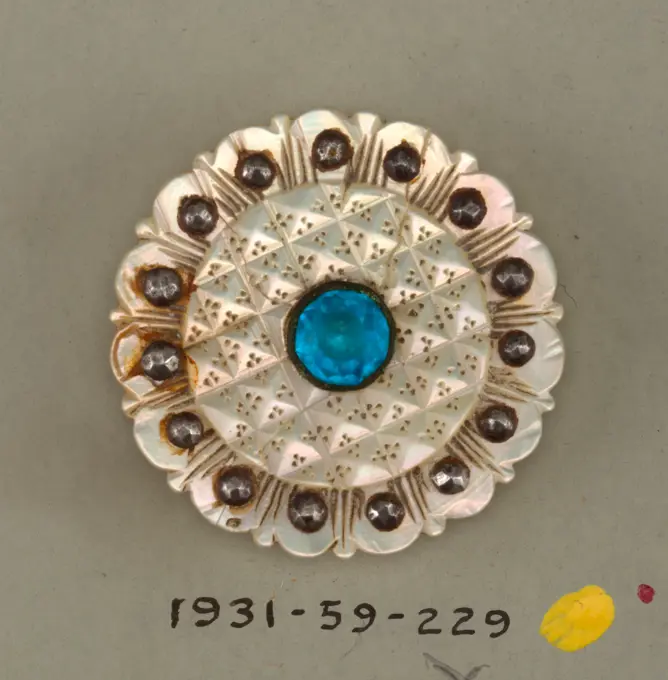
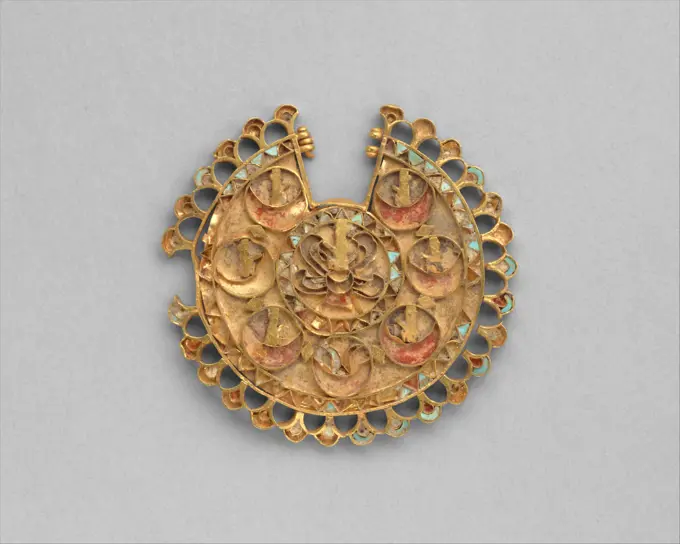
Earring ca. 6th-4th century B.C. Achaemenid This gold earring is an example of a technique called cloisonné, in which the design is outlined in precious metal - gold in this case - and filled with other materials, such as the turquoise, lapis lazuli and carnelian colored by cinnabar seen here.In the center of the earring a circle encloses a partial male figure with incised decoration above a winged disk. The male figure, shown from around the waist up, wears a robe with flaring sleeves and circular decorations and a tall cap with voluminous hair spilling out from beneath. He has a long beard and he raises one hand while holding the other in front of his waist, where he grasps a bow or staff. The disk has a crescent inside of it, and two wings on either side of it which curl inward at the top. A trapezoidal feathered tail emerges from the bottom of the disk. The enclosing circle is decorated with triangles.Seven smaller circles with crescents inside them, separated by gold rhombuses, suFragment first half 14th century. Fragment 452482Earrings 18th century-19th century European, Eastern. Earrings 102416antique golden skeleton key  isolated on white backgroundBrooch (England); Made by Carlo Giuliano (Italian, 1831 - 1895); gold, enamel, diamondsThe Desborough Necklace Anglo-Saxon, English, late 600's AD, Found in the grave of an Anglo-Saxon noblewomanTorque, 12 x 11 x 1 5/8 in. (30.48 x 27.94 x 4.13 cm), Silver, ChinaJOYA DE NACAR ORO Y PIEDRAS PRECIOSAS (CARA DE CHINO).Hairpin or ornament, 7th-10th century, 5 5/8 x 2 3/8 x 2 3/8 in. (14.29 x 6.03 x 6.03 cm), Gold, China, 7th-10th centuryWatch ca. 1820-30 probably Swiss. Watch 195585Wreath of ivy and berries, funerary 4th-3rd century B.C. Greek. Wreath of ivy and berries, funerary. Greek. 4th-3rd century B.C.. Gold. Late Classical. Gold and SilverGold swivel ring with carnelian scarab 5th century B.C. Etruscan On the scarab, head of a man.. Gold swivel ring with carnelian scarab. Etruscan. 5th century B.C.. gold. Classical. GemsCollar of Shell Beads 11th-late 15th century Chimú or Chancay. Collar of Shell Beads 309254Button, Pearl, shell, steel, glass, Flat circular button with shanks, varying. -a: engraved pearl and steel beads arranged in rings; -b: flower with petals of colored steel; -c: pearl and colored steel in rings; -d,h: smoked pearl and cut steel; -f,g,j,m: engraved pearl centers on disc of steel; -e,k,l,n: ornamented steel centers on pearl discs; -i: pearl shell, colored yellow, and set in steel rim., Components -a/-c,-e/-g/-j,-k,-m,-n are on card 31, France, 19th century, costume & accessories, Decorative Arts, ButtonEvening Purse, c. 1900. Marcus & Co. (American, New York, 1892-1962). Gold mesh bag, 14k gold frame, amethyst, diamonds, tsavorites; overall: 13.4 x 11.5 cm (5 1/4 x 4 1/2 in.).Loop . Circle of 24 white stones and 12 patterns of 3 small ruby stonesLotusFlower, 9th-10thcentury, Gold; hammered, cut, 1.4 × 9.9 cm, 16.635 g, 0.014 cm (9/16 × 3 7/8 in., 16.635g), Made in Wonosobo, Java, Indonesia, Java, Early Classic Period(650-1000), RitualObjectsShoulder Cape (Pelerine). Culture: Great Lakes. Dimensions: H. 36 x W. 61 in. (91.4 x 154.9 cm). Date: 1830-60.By the nineteenth century, American Indian life had changed dramatically from that originally encountered by Europeans some centuries earlier. The growth of the colonies, then the gradual establishment of permanent states in the federal union had, with the ever-increasing numbers of settlers, continually restricted Native activities and Native peoples. Material adaptations to their changed circumstances took various forms, many of which were extremely inventive. The initial inclusion of indigenous materials such as birch bark, porcupine quills, moosehair, and feathers into objects of Euro-American form but Native use would eventually lead to works such as boxes, chair seats, and pincushions that relied on the Native materials for their appeal. Intentionally made for sale and produced to please western tastes, they maintained a necessary degree of "Indianness" in order to valiBrooch late 19th-early 20th century American or European. Brooch 124228Gold earring with disc and pendant 2nd century A.D. Roman. Gold earring with disc and pendant 243168Mouth piece, funerary. Culture: Greek or Roman. Dimensions: Other: 1 3/8 × 1/16 × 4 1/8 in. (3.5 × 0.1 × 10.5 cm). Museum: Metropolitan Museum of Art, New York, USA.COLLAR PROCEDENTE DE FRANCIA - 1970 BISUTERIA - DISEÑO DE CHANEL. Location: PRIVATE COLLECTION.Plume Shaped BirdRingNecklace;  VI-IV century BC (-600-00-00--301-00-00);Antique Art Collection, Piątkowski A.Set of Ecclesiastical Vestments (Collar). Mexico, first quarter of the 18th century. Costumes; ecclesiastical. Silk, metallic-thread, and lamella embroidery with silk and metallic-thread plaited cord and silk and metallic-thread tasselTieredFinialDancing Maenad; 400-350 B.C; Gold; 1.9 × 1.3 cm (3,4 × 1,2 in.)Bracelet, Gilded metal, agates, France, ca. 1820-40, jewelry, Decorative Arts, BraceletAn excavated woman's head with jewellery from the Royal Cemetery at Ur, an archaeological site in modern day Dhi Qar Governorate in southern Iraq. Dated 3800 BCGold wreath. Hellenistic from Chalcidice, 4th cent. BC. GREECE.Necklace. Date: 12th-13th century. Museum: Metropolitan Museum of Art, New York, USA.Shoe buckles fourth quarter 19th century American. Shoe buckles 156145Head Ornament 18th century This large ornament may have been originally used to adorn the head, as part of a necklace, or a hand jewel (hathphul). The central gemstone is a light green beryl, which was originally foiled on the backside to create a vibrant and deep green color. The foil has since deteriorated, leaving an uneven appearance in the center stone. Red, green and white enameling (meenakari) on the backside enhances the floral shape of this ornament.. Head Ornament 446775Stirrup for a Child. Culture: German or Bohemian. Dimensions: H. 3 in. (7.62 cm); W. 3 1/8 in. (7.94 cm); Wt. 7 oz. (198.45 cm). Date: second half 15th century.Some decorative features of this stirrup, like the pierced 'window' motif on the sides, are typically Bohemian, but were also sometimes adopted by surrounding regions like eastern Germany. This stirrup reproduces in bronze more common examples made of twisted and pierced iron. The animal heads at the front are more unusual, and take advantage of the greater malleability of this material. The small size of this stirrup means that it was probably made for a child. Children from wealthy families would start riding lessons as soon as they could sit on a pony, usually around the age of 3. Horsemanship was an important component of European noble society, and children of the elite were expected to master the art of equitation. Moreover, as many nobles served in the cavalry, it was essential for them to be skillful riders by the timeBeads, 22. Beads, 22. Glass. GlassRing 11th-12th century Iranian turquoise, of which deposits were exploited in the mountains near Nishapur in Khorasan, has been known and valued since proto-historic times, and it was widely exported to the West. Precious and semi-precious stones were sometimes believed to have apotropaic properties. The polymath al-Biruni, who wrote a book on precious stones in the early 11th century, explains that turquoise was believed to dispel immediately the effect of the evil eye, i.e. curse, and that for this reason people wore it and necklaces were made for children.In contemporary Persian poems poets often use the image of precious stones as metaphors of magnificence and to represent colors, whether they are describing flowers, natural settings or architectural monuments. Here, the shape is a development of an older one in use under the Parthians, as in one ring brought to light in the excavations at Masjid-i Sulayman in south-west Iran. Claws, as the small wedge-shaped ones here, are consideNecklace Ornaments 5th-10th century Tolima. Necklace Ornaments 312714Set of Buttons, 1800s. Balkans, 19th century. Silver; average: 8.3 cm (3 1/4 in.).Earring in the form of a dolphin 5th century B.C. Etruscan. Earring in the form of a dolphin. Etruscan. 5th century B.C.. Gold. Classical. Gold and SilverPurse (France); silk, metalFIBULA DE BRAGANZA. EXPOSICIÓN "EL HÉROE Y EL MONSTRUO". (DEPOSITO: MUSEO ARQUEOLOGICO NACIONAL).Goldsmith's art, 20th century. Platinum bowknot brooch set with pearls and diamonds, by Cartier, 1910.Heart Scarab of Neferkhawet ca. 1504-1447 B.C. New Kingdom. Heart Scarab of Neferkhawet 545166Nose Ornament A.D. 1-1000 Zenú This nose ornament is a common form of metalwork made by Zenú people, who lived and live today in the Caribbean Lowlands of Colombia. The ornament is likely made of gold or an alloy of gold with copper, and was primarily created by lost-wax casting. (For more information on this process, please see Metropolitan Museum of Art 2008.569.13a, b). The object consists of a solid, curved bar with a circular cross-section, with two capped ends. Zenú ceramic figurines show people wearing such an ornament with the two ends pointing downward, in at least three cases by passing the ornament through the septum of the nose (Museo del Oro, Bogotá CS4272, CS4197, CS4195) and in at least one case apparently by balancing the ornament over the nose (Museo del Oro, Bogotá CS4270). Falchetti (1976, 81) notes that a ceramic funerary urn from the area of the Tapias River shows a person wearing a similar nose ornament, but with the "opening turning to one side." Other ceramic fiTulita Westfall, Earrings and Brooch, c 1937 Earrings and BroochPapyrus scepter (wadj) amulet 664-380 B.C. Late Period. Papyrus scepter (wadj) amulet 561550Earrings and Nose Rings. Dimensions: 9/16 in. (1.4 cm). Date: 9th-10th century. Museum: Metropolitan Museum of Art, New York, USA.Scarab finger ring with name of Amun-Re ca. 1550-1295 B.C. New Kingdom The Chantress of Amun, Henettawy, died in around 1000 B.C. at about the age of twenty. She was buried in a tomb located just outside the temple of the New Kingdom pharaoh Hatshepsut. This tomb originally may have been the resting place of one of Hatshepsuts officials, Minmose, part of whose coffin was found in the debris inside. Henettawy seems to have been laid to rest hurriedly, as she had not even been embalmed but was simply wrapped in layers of linen bandages, and had no funerary furniture other than her nested coffins.When the mummy was unwrapped (something the Museum no longer does today) two rings were found on Henettawys left hand. Their bezels are in the form of sacred scarab beetles, associated with the rising sun and regeneration. This scarab is inscribed on the underside with the name of the sun god Amun-Re,whose cult Henettawy served, placed beneath a large lotus bud and above a basket, the hieroglypGold earring with a sphinx. Culture: Greek. Dimensions: Overall: 2 3/4 x 1 3/16in. (7 x 3cm). Date: 4th-3rd century B.C..The sphinx and her base, including the six loops, are modeled in one piece in repoussé and chasing. Museum: Metropolitan Museum of Art, New York, USA.Plaque with Head. Culture: China (Xinjiang Autonomous Region, Central Asia). Dimensions: H. 1 5/8 in. (4.1 cm); W. 1 in. (2.5 cm). Date: 7th-9th century.The nomadic communities of Central Asia used such plaques to embellish clothing and horse trappings. As these nomadic cultures herded animals and were constantly moving, their artistic production was expressed in portable objects that marked the wearer's status and wealth. The outstanding preservation of these fragile ornaments suggests they were used in conjunction with burials, where the body was aggrandized with valuable textiles and augmented with gold. Although it is difficult to date and place these objects geographically, their presence in Central Asia and has a long, established history. Museum: Metropolitan Museum of Art, New York, USA.Treasure of El Carambolo. Tartessian and Phoecian culture. 5th-7th century BC. Camas, Andalusia, Spain. Archaeological Museum of Seville. Spain.Sword-Hilt Pommel (Kashira), 1700-1850. Japan, Edo period (1615-1868). Shakudo; average: 3.5 x 1.8 cm (1 3/8 x 11/16 in.).Hinged Earclip with Shankha Mofif ca. 13th century Indonesia (Java). Hinged Earclip with Shankha Mofif. Indonesia (Java). ca. 13th century. Gold. Eastern Javanese period. JewelryNecklace with lion-head terminals. Gold. C. 300 BC. Probably made in Taranto. British Museum. London. England. United Kingdom.Bracelet, Nicolaas Harmanus van Veen, c. 1850 - c. 1875 Gold bracelet, in the form of a garter (suspender). Amsterdam gold (metal) Gold bracelet, in the form of a garter (suspender). Amsterdam gold (metal)Nose Ring 19th century. Nose Ring 454088Gem Engraved with a Two-Horse Chariot and Driver; Etruria; 400-300 B.C; Carnelian and gold; 0.8 × 1.5 × 1.2 cm (5,16 × 9,16 × 7,16 in.)Pair of Earrings 11th century An elaborate example of filigree and granulation work from the Fatimid period in Egypt and Greater Syria (969-1171), this pair of earrings is illustrative both of the most characteristic goldsmith work and of one of the most popular shapes for jewelry of this period-the hilal, or crescent (moon). The basic vocabulary-a box construction, rings for stringing pearls or semiprecious stones, openwork S-curves, arabesque designs, and the crescent shape itself-seems to have dominated jewelry production in the Fatimid world into the second half of the eleventh century and perhaps later. The influence of this vogue was widespread. Goldsmiths working under the Mamluks (1250-1517) adapted this vocabulary, as did jewelers of Nasrid Spain (1232-1492), while echoes reverberated into Kievan Russia, Ottoman Turkey, Mughal India, and North Africa.. Pair of Earrings. 11th century. Gold; filigree and granulation. Attributed to Syria. JewelryKokoschnik, Element der russischen Nationaltracht der Frauen. Russische Nationalkleidung. Kokoshnik, Element of the Russian national costume of women. Russian national clothing. Copyright: xZoonar.com/DenisxPomortsevx 22651059John H Tercuzzi, Locket, c 1937 LocketKala or LionMaskAmulet of a Duck (strung on beads) 1550 BCE Egypt. Stone (amulet) . Ancient EgyptianARRACADA DE BRETONA. Location: MUSEO PROVINCIAL. LUGO. SPANIEN.Ring. Culture: German. Dimensions: Overall: 1 x 7/8 x 11/16 in. (2.5 x 2.3 x 1.8 cm)Bezel: 3/8 x 7/8 x 11/16 in. (0.9 x 2.3 x 1.8 cm)Band width & thickness at thinnest: 1/16 x 1/16 in. (0.2 x 0.2 cm). Date: 10th-11th century.This ring consists of multiple elements soldered together to create a rich, micro-architectural form, a feature typical of Ottonian goldsmithing. The varied techniques used in its fabrication resulted in areas of granulation, swabbed and twisted wires, and ribbons of bent wire, as well as cast, punched, and chased elements. At the center is a flowerlike ornament in cloisonné enamel. The ring bears witness to the high degree of sophistication at the court of the Ottonian emperors, who ruled central Europe from 936 until 1024. Museum: Metropolitan Museum of Art, New York, USA.Two fragments of the upper part of the earringsPair of Sword-Grip Ornaments (Menuki). Culture: Japanese. Dimensions: L. of each 1 1/8 in. (2.9 cm); Wt. of each 0.2 oz. (5.7 g). Date: 18th century. Museum: Metropolitan Museum of Art, New York, USA.Pair of Silver Earrings. Iran, 11th-13th centuries. Jewelry and Adornments; earrings. Fabricated from sheet, and decorated with plain and twisted wireSpur linked with King Gustav II AdolfPair of Sword-Grip Ornaments (Menuki). Culture: Japanese. Dimensions: Menuki (a); L. 1 1/4 in. (3.2 cm); Wt. 0.6 oz. (17 g); menuki (b); L. 1 1/4 in. (3.2 cm); Wt. 0.3 oz. (8.5 g). Date: 18th century. Museum: Metropolitan Museum of Art, New York, USA.Amethyst set. Amethysts, gold. France, around 1820-1830. Museum of Fine Arts of the City of Paris, Petit Palais. Fashion accessory, jewelryPrzeszo Przyszoci unknownNecklace with pendants ca. 5th-4th century B.C.. Necklace with pendants 327510Triple scarab pectoral. Tutankhamun treasure.wrought iron details of structure and ornaments of wrought iron fence and gate Copyright: xZoonar.com/VladimirxNenezicx 11096760One of a Pair of Gold Cloisonné Earring 500-550 Frankish Hoop earrings with polyhedral beads, derived from late Roman jewelry, remained fashionable among Frankish women from the 400s through the 700s. Many are delicate pieces, their beads decorated with garnets or precious stones. Others, often with the least imposing beads, impress by their large hoops and distinctive closures.. One of a Pair of Gold Cloisonné Earring. Frankish. 500-550. Gold, garnets with patterned foil backings, green stone; garnets with unpatterned foil backings are restorations. Metalwork-GoldCOLLAR DE ORO Y PIEDRAS PRECIOSAS DE LA REINA MERERET- PROCEDE TUMBAS DE DASHUR- 1800 AC- DIN XII. Location: EGYPTIAN MUSEUM. KAIRO. EGYPT.Gold pendant in the shape of a vase. Culture: Greek or Cypriot. Dimensions: Other: 1/2 in. (1.3 cm). Date: late 6th-5th century B.C..Vase-shaped. Museum: Metropolitan Museum of Art, New York, USA.Pearl jewellery, christmas angel, Cape Town, South Africa, AfricaSet of Two Ornaments Last quarter of the 10th-last quarter of the 15th century Indonesia (Java). Set of Two Ornaments 50128Crown-shaped matchsafe, Gilded metal, Europe, ca. 1900, containers, Decorative Arts, Matchsafe, MatchsafeGold earring with head of a bull 4th-3rd century B.C. Greek. Gold earring with head of a bull 242879Gold ring with two horizontal ribs 8th-7th century B.C. Cypriot or Greek Elaborate moulding on the outside.. Gold ring with two horizontal ribs. Cypriot or Greek. 8th-7th century B.C.. Gold. Geometric. Gold and SilverGold earring with head of a lion 4th3rd century B.C. Greek Circlet of gold wire, which tapers from the animal's head at the front end to a point.. Gold earring with head of a lion. Greek. 4th3rd century B.C.. Gold. Classical or Hellenistic. Gold and SilverFinger Ring 7th century Frankish. Finger Ring 465256 Frankish, Finger Ring, 7th century, Copper alloy, partial gilt, stone or glass paste cabochon, Overall: 1 1/8 x 13/16 x 1/2 in. (2.9 x 2.1 x 1.2 cm) bezel: 1/2 x 3/8 in. (1.2 x 0.9 cm). The Metropolitan Museum of Art, New York. Gift of J. Pierpont Morgan, 1917 (17.192.193)Jewelry from the Kingdom of Jodphur on display at the Royal Ontario Museum in TorontoDrawing, Design for a necklace and earring; Italy; 1940-86-572Latticed Diamond-shaped Pendant Last quarter of the 10th-last quarter of the 15th century Indonesia (Java). Latticed Diamond-shaped Pendant. Indonesia (Java). Last quarter of the 10th-last quarter of the 15th century. Gold. Eastern Javanese period. JewelryShoe buckles late 18th century French. Shoe buckles. French. late 18th century. metal, rhinestoneGold and banded carnelian ring: on scarab bezel, a youth. Culture: Etruscan. Dimensions: Diam.: 7/8 in. (2.2 cm). Date: early 5th century B.C..Ring with scarab from a tomb group allegedly from Vulci, one of the richest and most impressive sets of Etruscan jewelry ever found. Museum: Metropolitan Museum of Art, New York, USA.Tocket watch pocket watch with watch chainHinged Oval EarOrnamentPendant brooch in the form of a Gothic Cross ca. 1880 Carlo Giuliano Italian This object and the group to which it belongs (see also 2014.713.1-.10) reflect the keen interest in historical styles in nineteenth-century Europe. Artists and designers looked to various artistic periods for forms and motifs. There was also an interest in reproducing works of art from earlier epochs with historical accuracyan approach that is particularly evident in the taste for so-called archaeological jewelry (jewelry based on excavated examples from antiquity), which reached its zenith in the middle of the century.The jewelry made during this period encompassed Etruscan, ancient Roman, early Christian, Byzantine, and medieval styles. The firm of Castellani in Rome both pioneered and dominated the production of archaeological jewelry. Founded by Fortunato Pio Castellani in 1814, the company was run by three generations of the family before closing in 1927. Castellani jewelry achieved enormous popularity Collar and pectoral, worn by Tutankhamen. rom the tomb treasures of Tutankhamen, discovered in 1922. Tutankhamen was an Egyptian pharaoh of the 18th dynasty (ruled c. 1332-1323 BC). Now on display in the Cairo Museum.Gaming purse late 17th century French. Gaming purse 170356Pair of Stirrups. Culture: Indian, Central India. Dimensions: Stirrup (a); H. 4 1/2 in. (11.4 cm); W. 5 5/8 in. (14.3 cm); D. 1 1/2 in. (3.8 cm); Wt. 9.7 oz. (275 g); stirrup (b); H. 4 1/4 in. (10.8 cm); W. 5 5/8 in. (14.3 cm); D. 1 1/2 in. (3.8 cm); Wt. 9.7 oz. (275 g). Date: 18th-19th century. Museum: Metropolitan Museum of Art, New York, USA.Earring Indonesia (Central Java) 8th-12th centuryRosettes ; linenButton (France); pearl, steel, glass, copperARRACADAS DE ORO CELTAS. Location: ARCHAEOLOGICAL MUSEUM. Pontevedra. SPAIN.Egypt. Scarabs. Symbol of Sun God. Used as amulet or seal. Archaeological Museum. Istanbul. Turkey.