Decorative Oriental Carpets

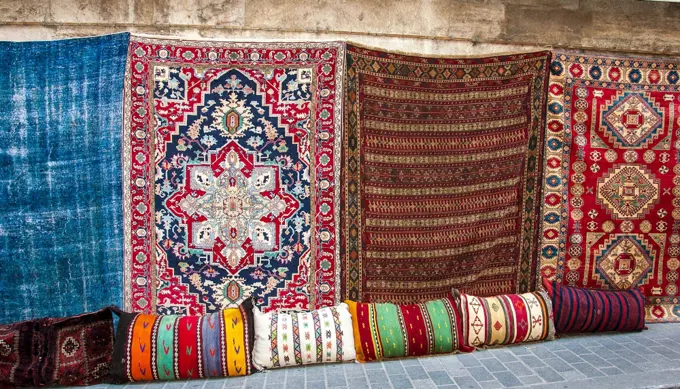
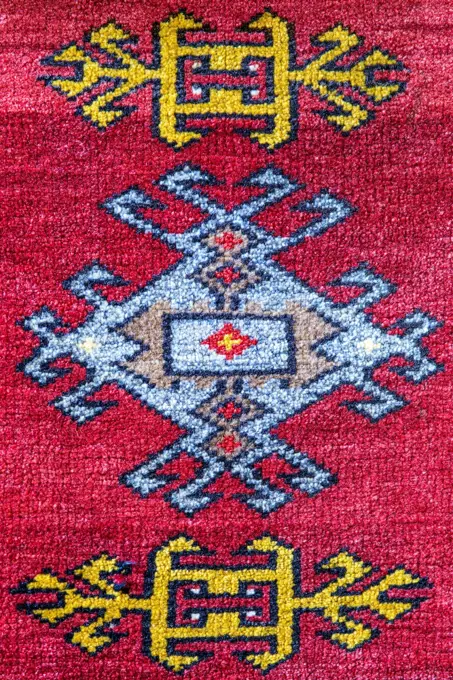
A collection of traditional wool carpets featuring intricate geometric patterns, vibrant colors like red, blue, yellow, and various decorative borders.
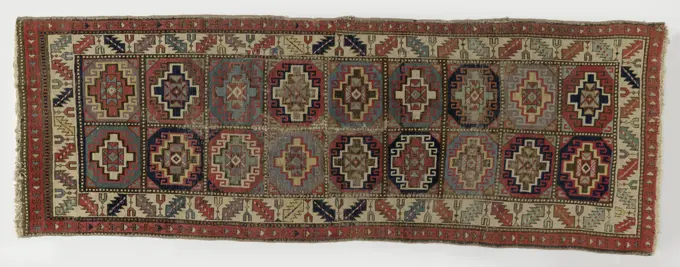
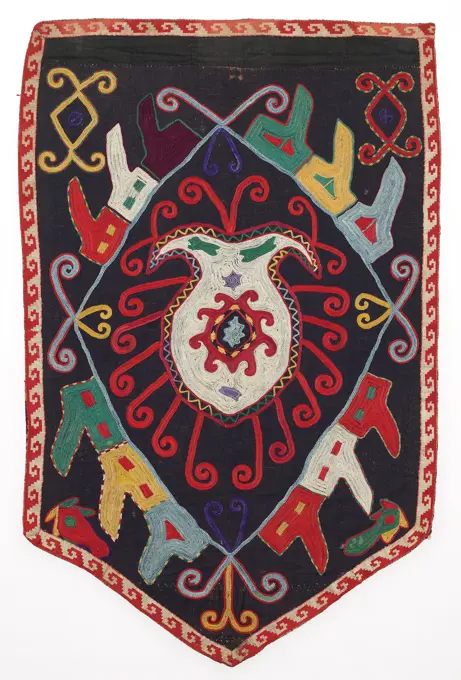
Wool carpet with geometric figures, anonymous, c. 1800 - c. 1899 The middle section is divided into eighteen rectangular compartments, in which geometric figures, surrounded by various edges, the width of which has a beige soil with stylized diagonally placed leaf shapes. Colors: mainly red, otherwise dark and light blue, brown and dull yellow. Caucasus wool The middle section is divided into eighteen rectangular compartments, in which geometric figures, surrounded by various edges, the width of which has a beige soil with stylized diagonally placed leaf shapes. Colors: mainly red, otherwise dark and light blue, brown and dull yellow. Caucasus wool
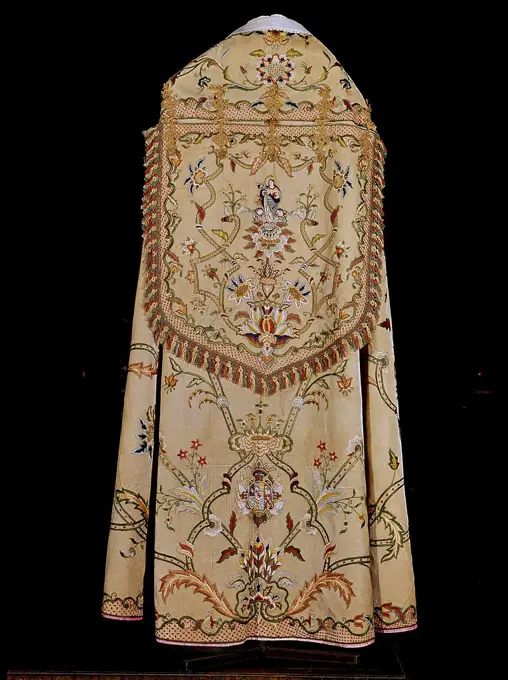
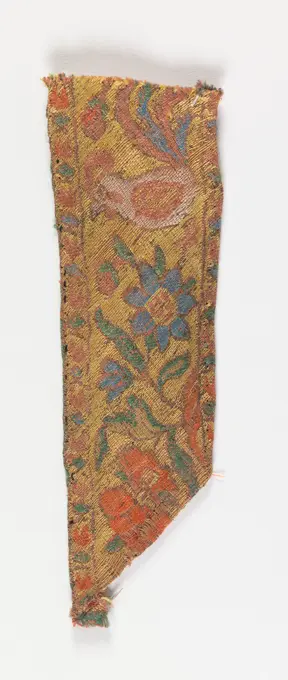
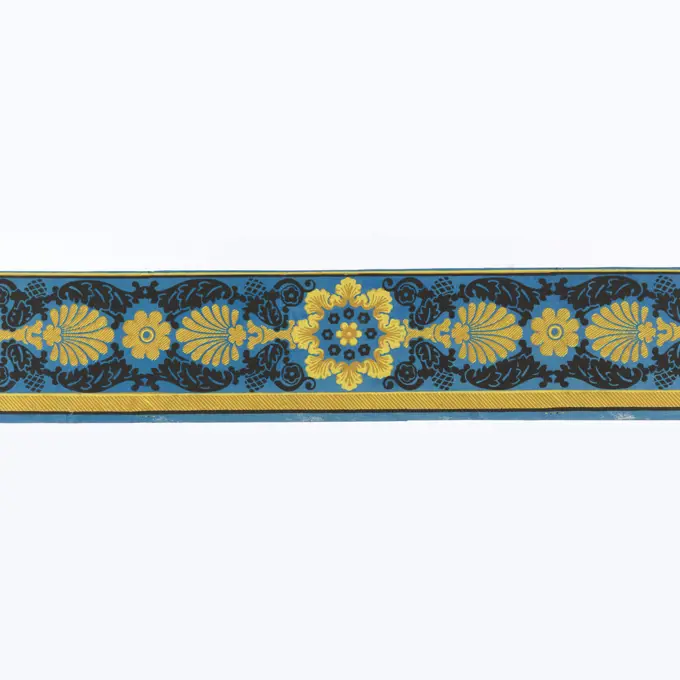
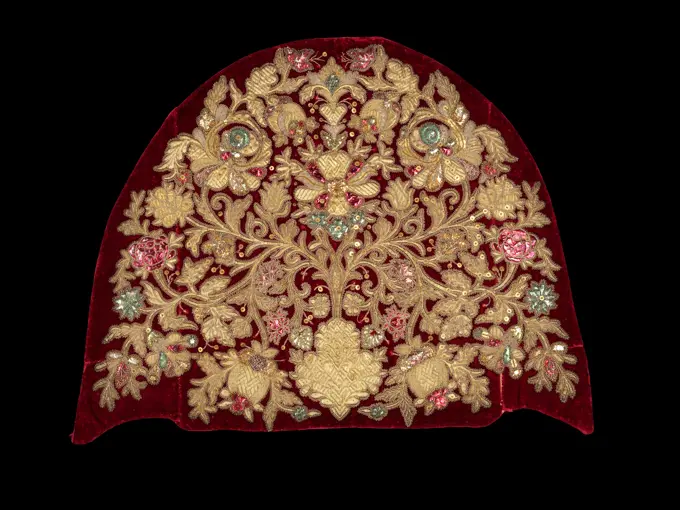
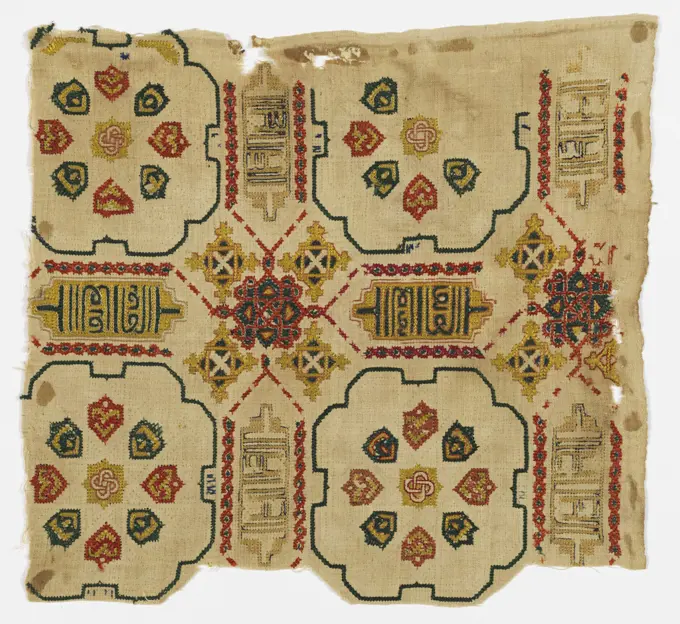
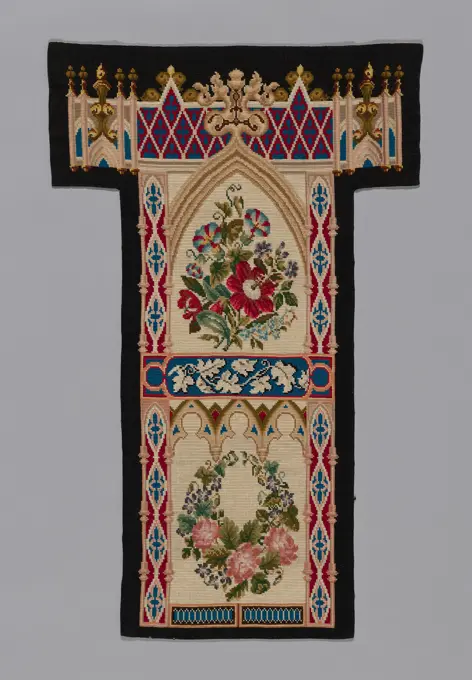
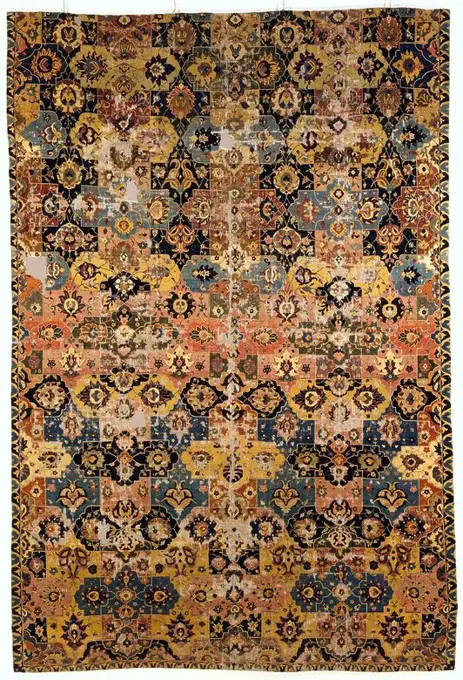
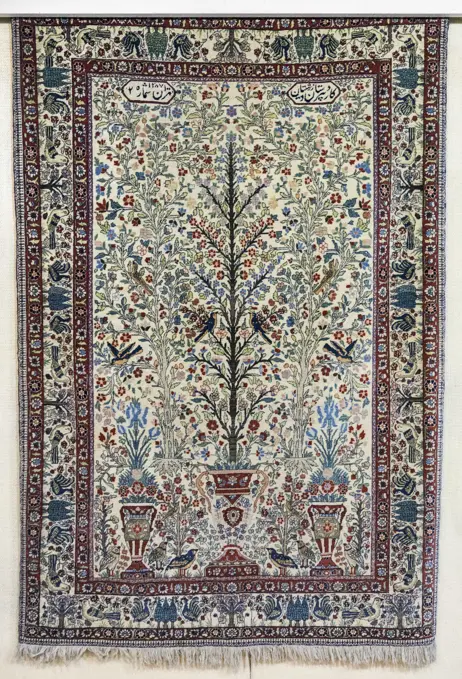
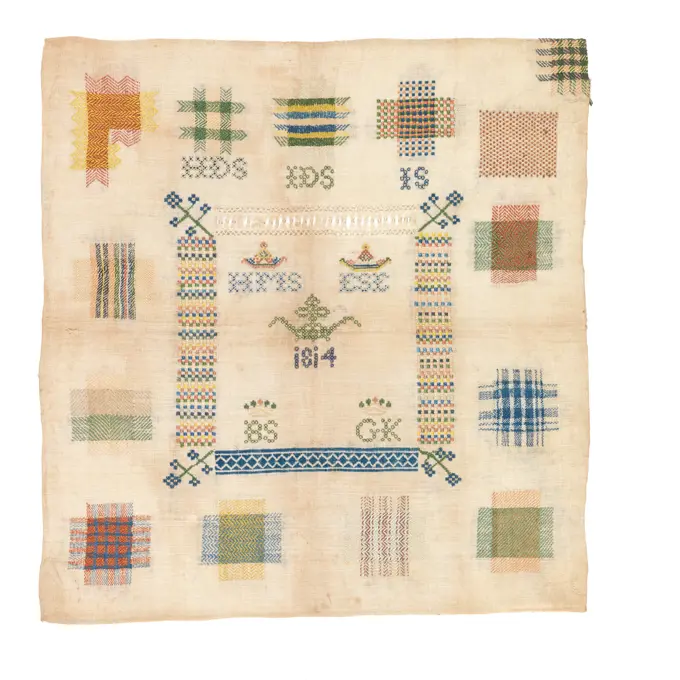
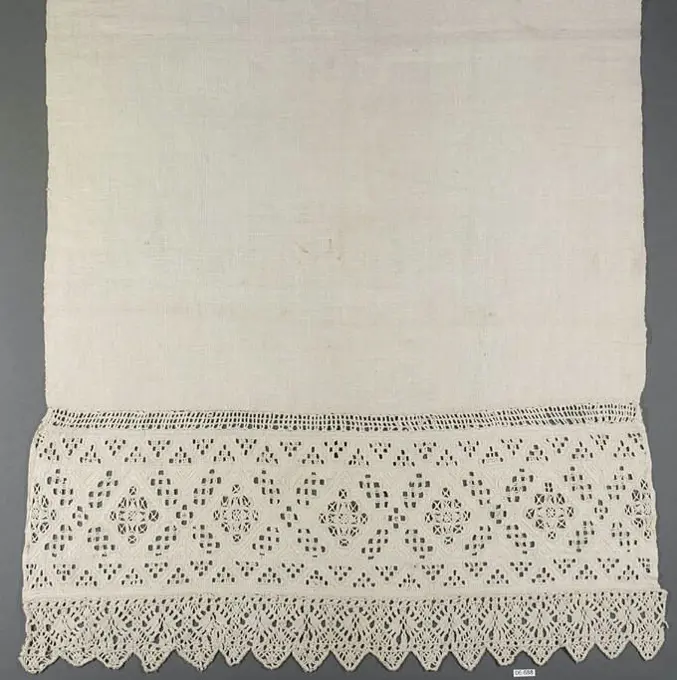
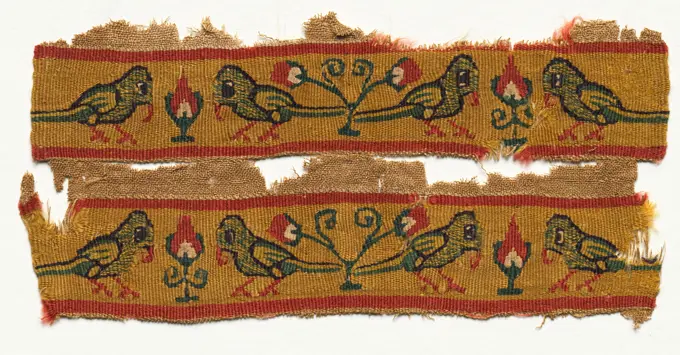
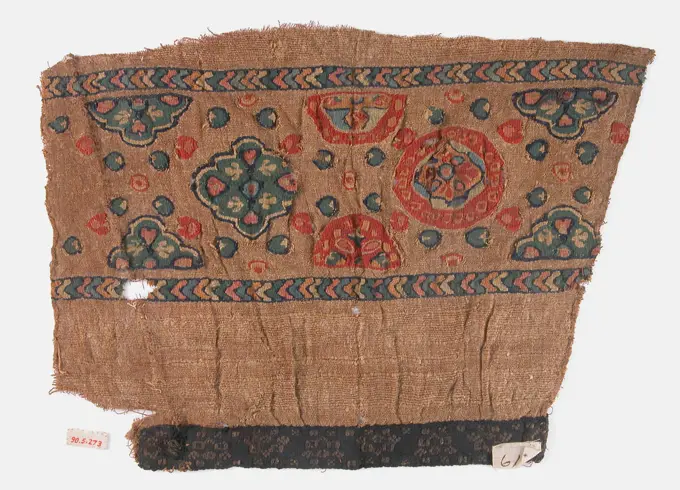
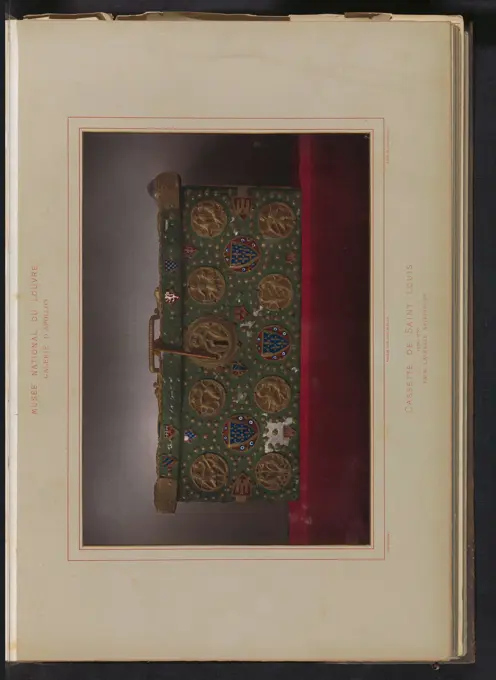
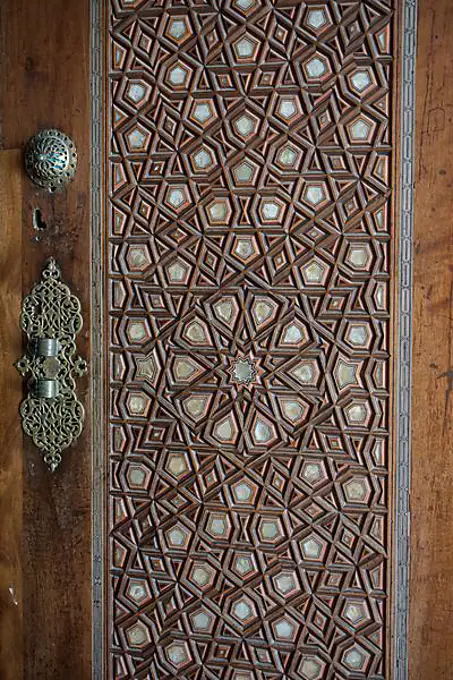
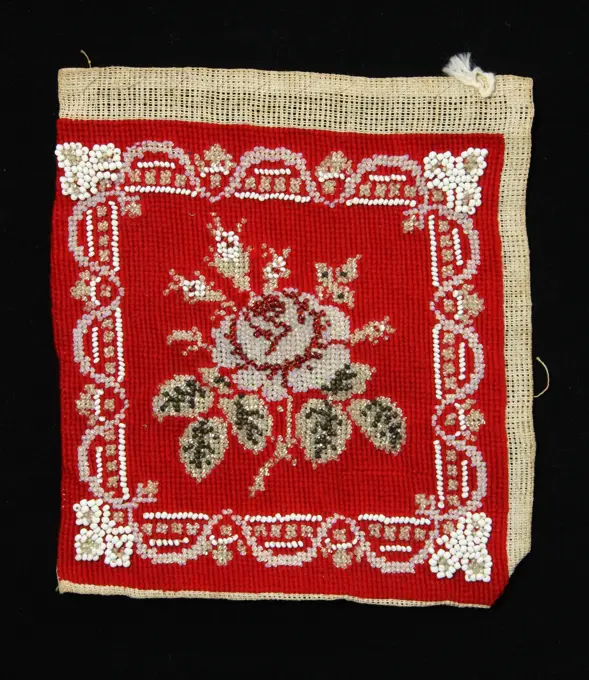
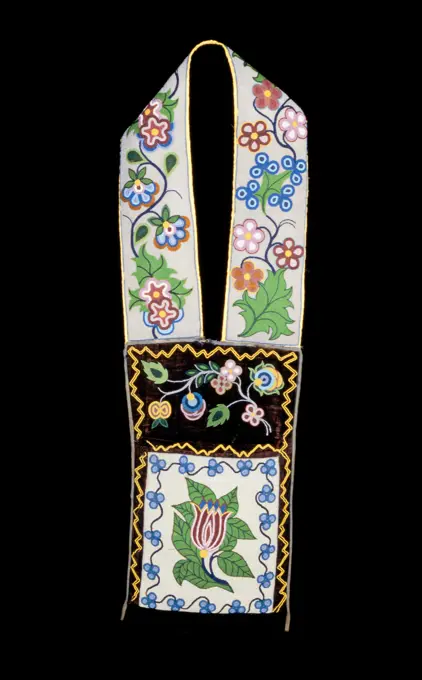
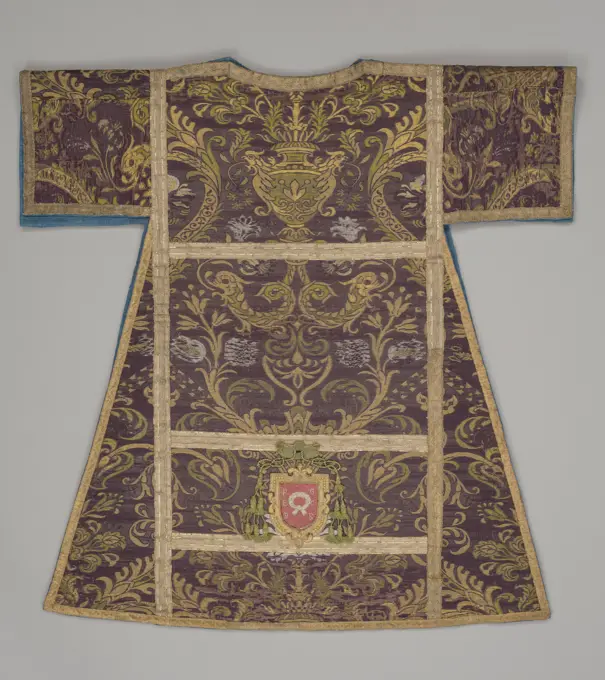
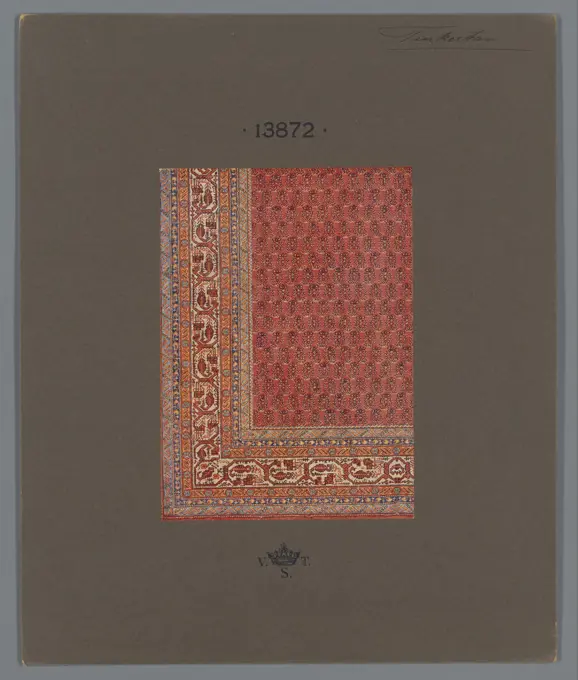
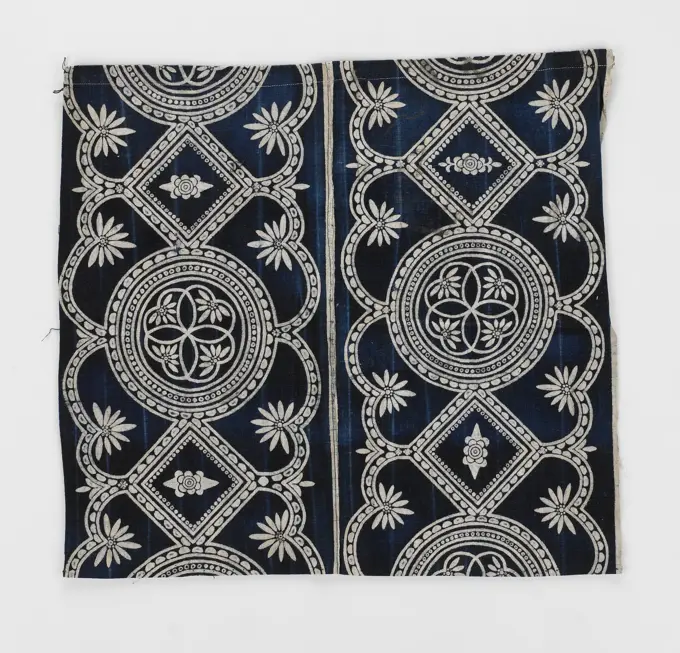
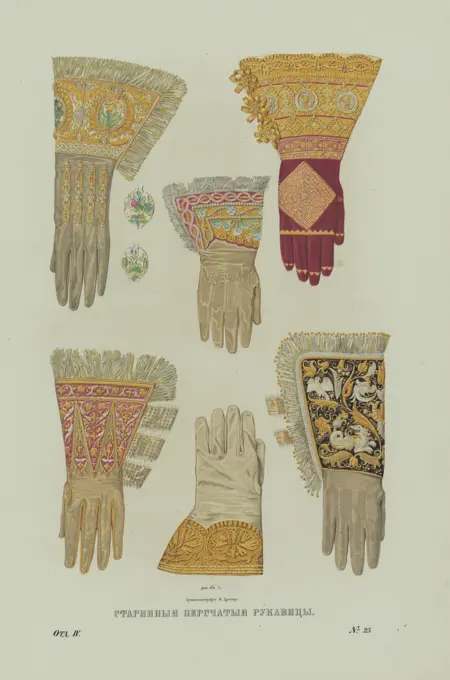
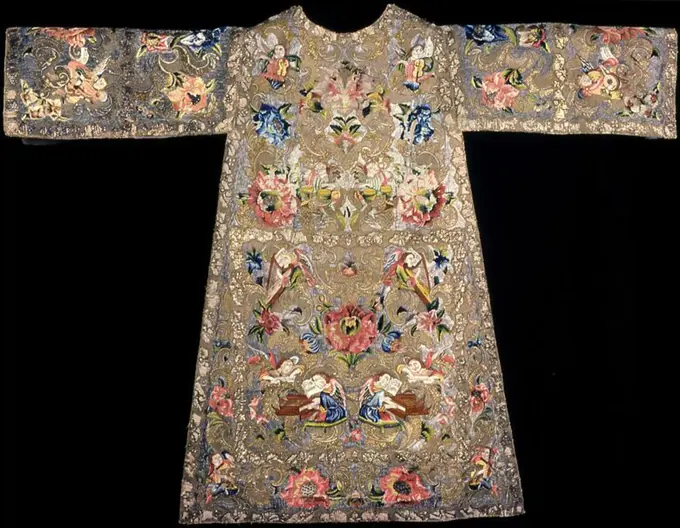
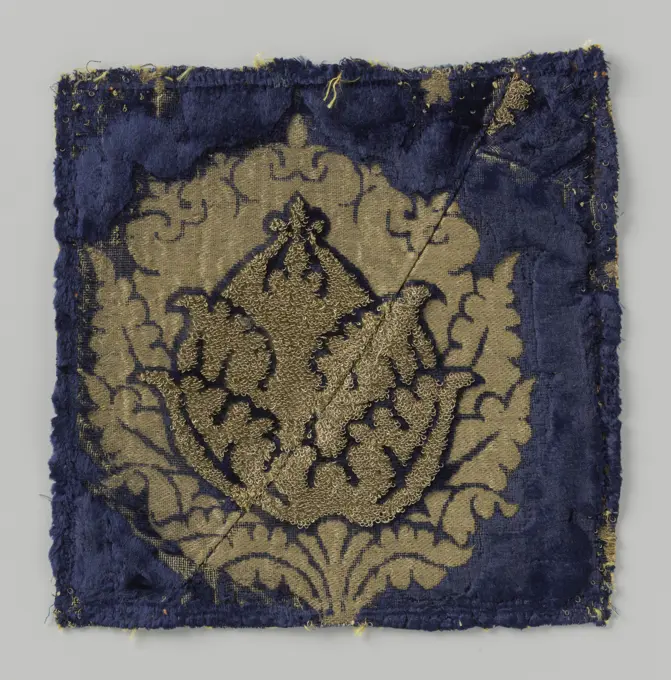
Fragment blue velvet brocade with pomegranate moths, anonymous, c. 1420 - c. 1499 Three fragments of blue silk velvet brocade with a pattern of wavy tendrils, rose hottles and large pomegranates. For similar fragments, see A, B and D TM F. Italy silk. Three fragments of blue silk velvet brocade with a pattern of wavy tendrils, rose hottles and large pomegranates. For similar fragments, see A, B and D TM F. Italy silk.Shoulder Apron, 6 1/8 x 14 1/8 in. (15.56 x 35.88 cm), Cotton, metal, ChinaMan's Outer Hip Wrapper (double Saput) (Indonesia); silk, metallic threadRug, c. 1900, 132 x 184 in. (335.28 x 467.36 cm), Wool, cotton, Iran, 19th-20th centuryFragment of red silk. Fragment of red silk with pattern of rectangular flower and leafwork.CAPA PLUVIAL DE TERCIOPELO BLANCO BORDADO FILIPINO. Location: CONVENTO DE SAN CLEMENTE-MUSEO. Toledo. SPAIN.Fragment Made 1800-1825 China. Silk, plain weave with supplementary patterning wefts bound in secondary binding warps in plain interlacings .Betty Jacob, Coverlet, c 1941 CoverletTwo Orphrey Sections made into a Hanging or Cover mid-16th century Spanish. Two Orphrey Sections made into a Hanging or Cover. Spanish. mid-16th century. Silk; metal; hemp plain weave. Textiles-EcclesiasticalBuddhist Priest Robe and Sash, 1800s. Japan, Edo period (1615-1868) or Meiji period (1868-1912), 19th century. Silk, brocaded; metal thread; overall: 116.8 x 203.2 cm (46 x 80 in.).Fragment; silk, metallic yarnsCover. Culture: Italian or German. Dimensions: Overall: 93 1/2 x 64 1/2 in. (237.5 x 163.8 cm). Date: 16th-17th century. Museum: Metropolitan Museum of Art, New York, USA.Long Sarong (Indonesia); silk, metallic threadsBorder, Block printed on handmade paper, Heavy black acanthus leaves frame anthemions and stylized blossoms printed on buff ground with diagonal yellow stripes. Light blue ground., France, 1815-25, Wallcoverings, BorderFragment Made 1000-1476 Peru. Cotton, plain weave, double cloth .Headdress fourth quarter 18th century Russian This object is from the collection of Natalia de Shabelsky (1841-1905), a Russian noblewoman compelled to preserve what she perceived as the vanishing folk art traditions of her native country. Traveling extensively throughout Great Russia, she collected many fine examples of textile art of the wealthy peasant class. From the 1870s until moving to France in 1902, Shabelsky amassed a large collection of intricately embroidered hand-woven household textiles and opulent festival garments with rich decoration and elaborate motifs. The Brooklyn Museum holdings include many fine examples including the majority of the garments. Portions of Shabelsky's collection are also housed at the Museum of Fine Arts, Boston, the Cleveland Art Museum, and the Russian Museum of Ethnography in St. Petersburg.The colored foil in this partial headdress is particularly striking in contrast with the red velvet and gold embroidery. Headdresses, or kokoshniks had the Fragment, Medium: silk on linen Technique: embroidered on plain weave, Fragment with an allover pattern of lobed squares containing small shield-like motifs and stars. Between squares are cartouches with Kufic inscriptions. Embroidery is predominantly red, dark yellow and black., 16th century, embroidery & stitching, FragmentPrie-Dieu Cover Made 1847-1870 England. Cotton, plain weave; embroidered with wool and silk in cross stitches .Textile Fragments 17th century. Textile Fragments. 17th century. Silk; brocaded. Country of Origin India. Textiles-BrocadesTrimming, Medium: silk Technique: woven, Trimming fragment in a design of alternating ornaments comprised of leaves, scrolls and dots in white and yellow on a blue ground., France, 19th century, trimmings, TrimmingConciliate belt;  End of the 18th century (1791-00-00-1800-00-00);gift (provenance), flower bushes (ornament), plant ornament, four -sided belts, Polish belts, Poland (culture), Polish clothing, Żeglikowski, Jacek (Fl. Ca 1973) - collectionBow case (Łubie)Altar frontal, 19th century, 72 1/2 x 25 1/4 in. (184.2 x 64.14 cm), Silk, gold braid, linen, embroidery, China, 19th centuryVase-technique Carpet with Overlapping Cartouches. Dimensions: Rug: L. 189 in. (480.1 cm) W. 127 in. (322.6 cm)Tube: L. 140 in. (355.6 cm)Diam. 20 in. (50.8 cm)Wt. 75 lbs. (34 kg) (Carpet weighed with 120 lb. tube at 195 lbs.). Date: 17th century.The tightly controlled pattern of compartments is formed by overlapping cartouches, which are exceptionally varied in coloring and adorned with finely drawn palmettes growing from a vine system. In its floral forms, technical structure, and rich color scheme, this carpet is related to the so-called Vase carpets, believed to have been made in Kirman in southern Iran. Its unusual design of cartouches, however, is also found in two "Polonaise" silk carpets that have been attributed to central Iran. Museum: Metropolitan Museum of Art, New York, USA.Palempore of Sits with pattern of flowering tree. Palempore of Sits with pattern of flowering tree.Iran, Tehran, Carpet Museum of Iran. A very fine carpet woven in 1870, on display at the Carpet Museum of Iran.Darning Sampler (Netherlands); silk embroidery on cotton foundationThai textile, ThailandTowel 16th century Danish or Northern German. Towel 212905Fragment 17th-18th century Italian, Lucca. Fragment 216728Sleeve Bands and Segmentum from a Tunic, 600s-700s. Egypt, Umayyad period (661-750). Wool and linen: tabby weave, inwoven tapestry ornament; overall: 10.7 x 11.7 cm (4 3/16 x 4 5/8 in.); sleeves: 10.2 x 21.2 cm (4 x 8 3/8 in.).Border (USA); machine-printed paper, flocked, gilt; 64 x 22 cm (25 3/16 x 8 11/16 in.)Handmade traditonal rugs in close-upBanner of Louis XIV, King of France (r. 1643-1715) 17th century French. Banner of Louis XIV, King of France (r. 1643-1715) 26933Tunisia traditional arabic ornament, decorativeSleeve Fragment with Floral Motives 6th-9th century This lavishly decorated sleeve fragment demonstrates many of the characteristics of textiles dating from the end of Byzantine rule in Egypt and the years following the Arab conquest: bright colors, heavy outlines, and abstracted natural elements. Brightly colored roundels, flowers, and small florets are symmetrically arranged in a diamond grid of jewel-like leaflets; a border of linked chevrons completes the design. The sleeve is finished with a dark weft-pattern band decorated with rosettes.. Sleeve Fragment with Floral Motives 443759Scrapbook (Japan); paper, cotton, silk, metallic threadWoman's Hip Wrapper (Sarung Bang-Bangan). Indonesia, Java, Batavia (Jakarta), circa 1870-circa 1880. Costumes; principal attire (lower body). Hand-drawn wax resist (batik) on machine-woven cotton, natural dyesConciliate belt; Manufaktura P.C. Salzhüber (Gdańsk; Pasów label; Ca 1775-1800); before 1793 (1701-00-00-1793-00-00);Suzanne Roy, Crib Coverlet, c 1936 Crib CoverletIspahan animal rug from 16th centuryTextile Fragment 16th-17th century. Textile Fragment 454526Carpet with arm of Pallandt van Eerde / van Neukirchen called Nyvenheim. Carpet of knotted wool. Dessin: In the middle of a red fond with a pattern of flowers and lancet-shaped toothed leaves PALLAND / NEUGE / NEUKIRCEN coat of Nyvenheim on a white fond reversely by oak leaves and a wreath of flowers and oaks () Leaves. The edge of the carpet is made up of nine edges of various width with oriental geometric (flower) designs.Piece of fabric. unknown, authorUuk kap Ilgich, 19th century, 25 x 16 in. (63.5 x 40.64 cm), Silk, wool, cotton; chain stitch, cross-stitch, Uzbekistan, 19th centuryPouch third quarter 19th century Mexican. Pouch 170251Grand Bazaar with fine carpets, Istanbul, Turkey, AsiaBand, Medium: wool Technique: twined ground with pile, Vertical strip of eleven rectangular vertical panels containing bird motifs. The nine top panels contain stylized standing bird with two-toed feet and S-curved tail, in left profile; the two lower panels a spotted angular S-shape terminating with bird head at both ends. In blues, olive green, red, white, yellow, brownish mauve woolen pile on twined ground in broad horizontal bands of brown, tans, beige wool., Peru, before 500 AD, woven textiles, BandTable cover, Medium: linen Technique: withdrawn element work with embroidery and deflected element work, Oblong table cover with a border design in simple, geometric pattern. Trimmed with narrow pointed lace., Italy, 18th century, lace, Table coverTurkish rugs in the Grand BazaarTextile Fragment 17th-18th century. Textile Fragment 454551Rain Cloak (Yattha Charkhab), early 20th century, 47 x 53 1/2 in. (119.38 x 135.89 cm), Wool; discontinuous supplementary weft patterning, Bhutan, 20th centuryVeil. unknown, authorblur in iran antique carpet textile  handmade beautiful arabic ornamentMoon Shawl (Chand-Dar) Made 1775-1800 India. Wool (pashmina), double interlocking twill tapestry weave; twisted warp fringe .Pouch 1830-60 American. Pouch 168390Piece 18th-19th century China. Piece 67566Sampler 19th century German, Vierlande. Sampler 227939Patchwork and Applique Quilt. Dated: c. 1940. Dimensions: overall: 29.2 x 22.5 cm (11 1/2 x 8 7/8 in.) Original IAD Object: 93" high; 93" wide. Medium: black and white photograph. Museum: National Gallery of Art, Washington DC. Author: American 20th Century.Embroidery Tatreez pattern, Palestinian fashion vector ornamentColorful textile, BhutanBox of King Louis IX from France, seen from the front; Cassette de saint louis; Musée National du Louvre Galerie d'Apollon. .Canada, Newfoundland and Labrador, St. Anthony. Historic Grenfell Center, vintage handicraft museum display.Ottoman art example of Mother of Pearl inlaysBobbin Lace Border, 18th century (probably). Spain, 18th century (probably). Lace, bobbin; average: 21 x 45.8 cm (8 1/4 x 18 1/16 in.).Towel Made 1801-1900 Turkey. embroidered .Strip ca. 1600 Greek, Crete. Strip 212955Pocketbook. France or Switzerland, 18th century. Costumes; Accessories. Silk satin, straw embroideryBeaded square, 1800s , maker unknown.Sampler, Medium: silk embroidery, linen foundation Technique:, Alphabets, vases, baskets, birds, dogs, people, hearts and other designs. One corner is cut in a curve., Italy, 19th century, embroidery & stitching, SamplerBandolier Bag, early 20th century, 42 1/2 x 12 1/4 in. (107.95 x 31.12 cm), Cloth, beads, United States, 20th centuryFragment of a Band 7th-8th century. Fragment of a Band 445674Leather; leather, stamped, embossed, silvered, varnishedPrzeszłośc Przyszłości unknownBaby Carrier, 29 x 22 in. (73.66 x 55.88 cm), Cotton, silk; needlework, ChinaFragment with pattern of French lilies in windows. Fragment red silk with pattern in yellow from French lilies in windows. On the intersections of the windows a star or flower. Pattern is signed.Part of a carpet with a pattern of fantasy ornaments, Anonymous, in or after 1907 - 1929 photomechanical print   paper. cardboard  carpet, rug. fantasy ornamentBaby Carrier Fragment, 15 1/2 x 16 3/4 in. (39.37 x 42.55 cm), Cotton; dyed, ChinaCuff Hungarian 19th centuryBack doubleur. Brillat-Savarin (1755-1826). bindings (gathered matter components), Book covers. 1879. Spencer Collection. BookbindingTunic Band with Repeating Motif of Confronted Griffins 8th-9th century. Tunic Band with Repeating Motif of Confronted Griffins. 8th-9th century. Linen, wool. Attributed to Egypt. Textiles-WovenTrimming Fragment (France); silkPillow case, Medium: linen, cotton Technique: embroidered on plain weave, Light brown pillow case has a trio of stylized oval forms topped with plume-like clusters embroidered in black, orange, dark yellow, blue, green, and brown., USA, ca. 1910, embroidery & stitching, Pillow caseMerklap of cotton on which with red silk a.de.mdk.hav.Sdk.edk.zdk./ ick mk/ anno 1857 and a number of performances are embroidered., A. de Kat, 1857 Symmetrically structured. At the top with cross stitch in capital A.D.Kat, the handicraft; MDK, her father; HAV, her mother; Brothers and sisters SDK, Edk and ZDK. The Girl A. de Kat made the Merklap in the orphanage of the Nederduitsch Reformed Diakonie in Amsterdam. The regents were addressed with 'mother' by the orphans. The italic initials in Capital MLVB, MI, MP, MV are the names of the Regentessen. The handicrafts are ick and mbk. It is not known who PDK and ADH are in the wreath. Central is a large ship where the helm, anchor and the lantern are embroidered in the wrong place (rudder and anchor hear behind; lantern in the front). The initials of the four regents are always included on the brand and stop laps of this orphanage. Double open hem. Dutch Reformed Diaconie Orphanage linen (material). silk embroidering Symmetrically structRank Badge (China); silk, canvas linenTrimming fragment, Medium: silk Technique: woven, Leaves and berries in red and yellow., France, ca. 1830, woven textiles, Trimming fragmentCarpet Made 1875-1900 Iran. Wool, plain weave with supplementary wrapping wefts forming cut pile through a technique known as Ghiordes knots .Silk sash unknownTextile Fragment 6th-7th century. Textile Fragment 445808Starinnyia perschatyia rukavitsy (Old Gloves), Chromolithography by F. Dreger, created between 1849 and 1853. The image depicts old gloves rendered in a decorative fashion, showcasing intricate designs and colors, captured at half actual size. Published in Moscow by Tip. A. Semenacarpet, old, handmadeFinger  18th century (1701-00-00-1800-00-00);Sampler (Germany); silk embroidery on linen foundationAlbert Eyth, Coverlet, c 1936 CoverletTrimming (Spain); white, black and colored silk in uncut velvet weave.; Overall: 30 x 5 cm (11 13/16 x 1 15/16 in.)Textile (India); cottonDalmatic and Humeral Veil. Bavaria, Austria, Spain, or Mexico. Date: 1675-1725. Dimensions: a: 116.6 × 151 cm (45 7/8 × 59 3/8 in.)b: 241.2 × 50.5 cm (95 × 19 7/8 in.). Silk, plain weave; underlaid with linen, plain weave; embroidered with silk, gilt-metal strips and purl, and gilt- and silvered-metal-strip-wrapped silk in back, satin, split, and stem stitches; laid work, couching, padded couching, and French knots; gilt-metal spangles; edged with appliquéd linen, plain weave; embroidered with gilt-metal strips and gilt-metal-strip-wrapped silk in laid work, couching, and padded couching; lined with linen, plain weave. Origin: Bayern. Museum: The Chicago Art Institute, Chicago, USA.Textile Fragment, Figure 9th-13th century Lambayeque (Sicán). Textile Fragment, Figure 307452Quilt with Buildings, Animals, and Coats of Arms Made 1880-1900 New York. AppliquÈd and embroidered quilt; dyed and printed cotton, wool and silk plain, twill, satin, velvet and patterned weave fabrics; silk embroidery threads .CAPA PLUVIAL-DET BORDADO ESPANOL S XVII. Location: CONVENTO DE LAS CLARISAS / MUSEO DE ARTE SACRO. MONFORTE DE LEMOS. LUGO. SPAIN.