Decorative Oriental Carpets

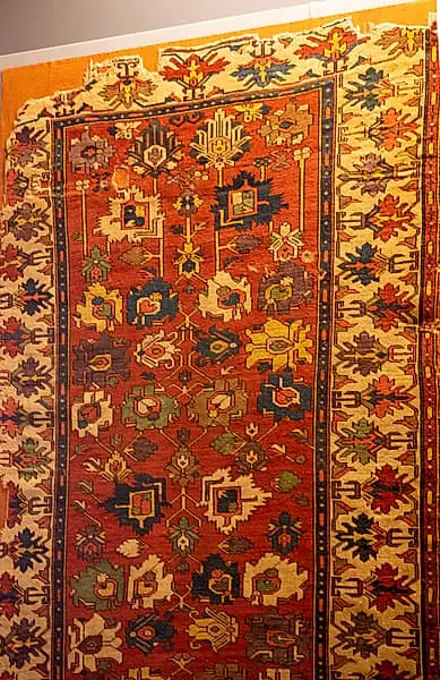
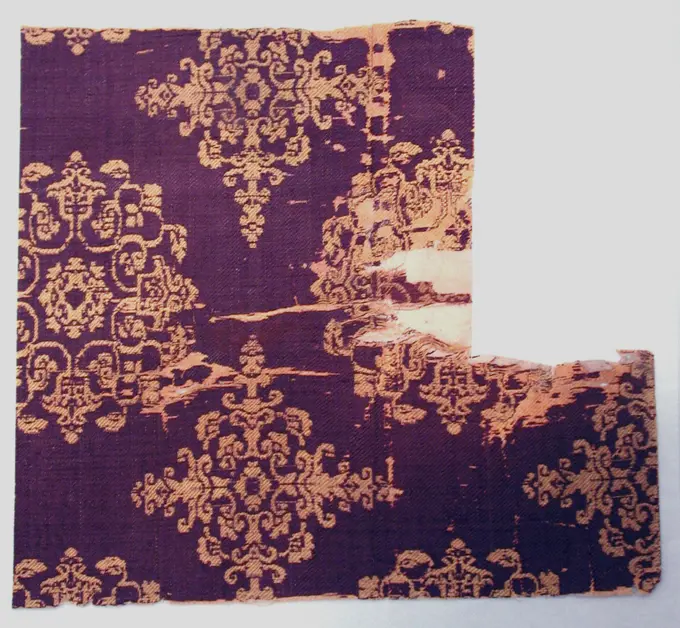
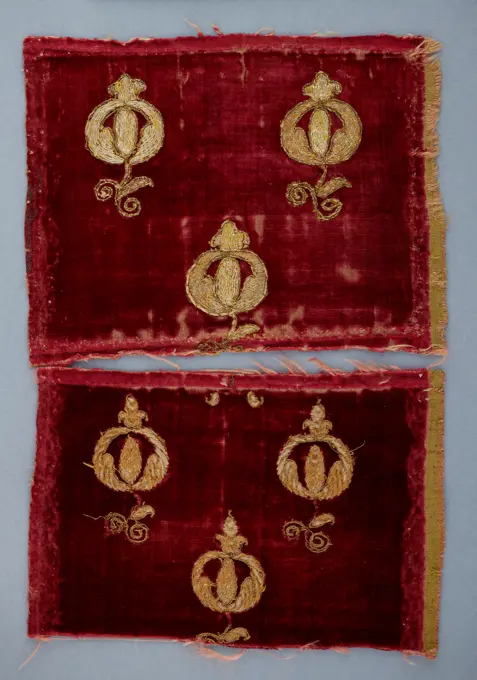
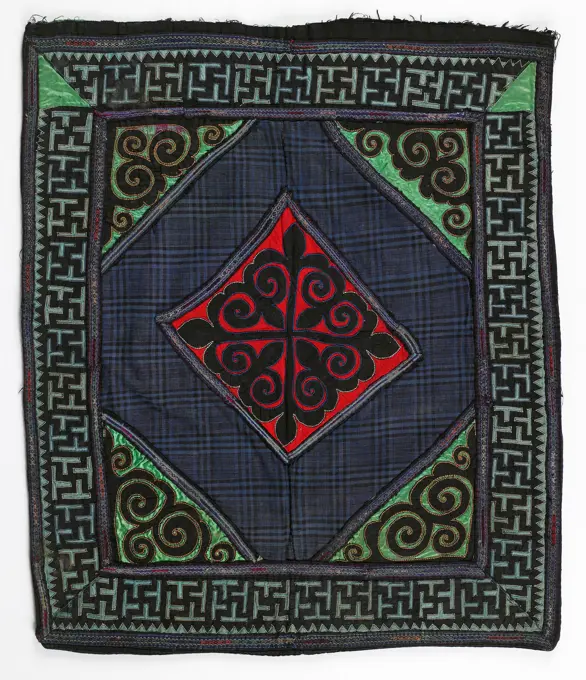
A collection of traditional wool carpets featuring intricate geometric patterns, vibrant colors like red, blue, yellow, and various decorative borders.
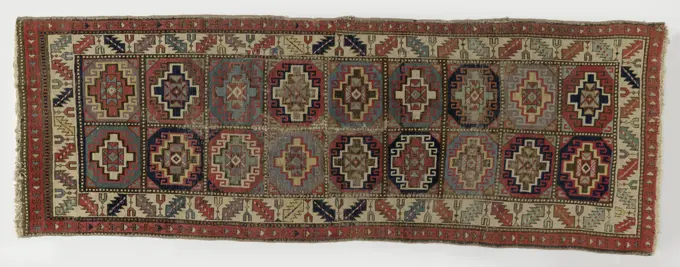
Wool carpet with geometric figures, anonymous, c. 1800 - c. 1899 The middle section is divided into eighteen rectangular compartments, in which geometric figures, surrounded by various edges, the width of which has a beige soil with stylized diagonally placed leaf shapes. Colors: mainly red, otherwise dark and light blue, brown and dull yellow. Caucasus wool The middle section is divided into eighteen rectangular compartments, in which geometric figures, surrounded by various edges, the width of which has a beige soil with stylized diagonally placed leaf shapes. Colors: mainly red, otherwise dark and light blue, brown and dull yellow. Caucasus wool
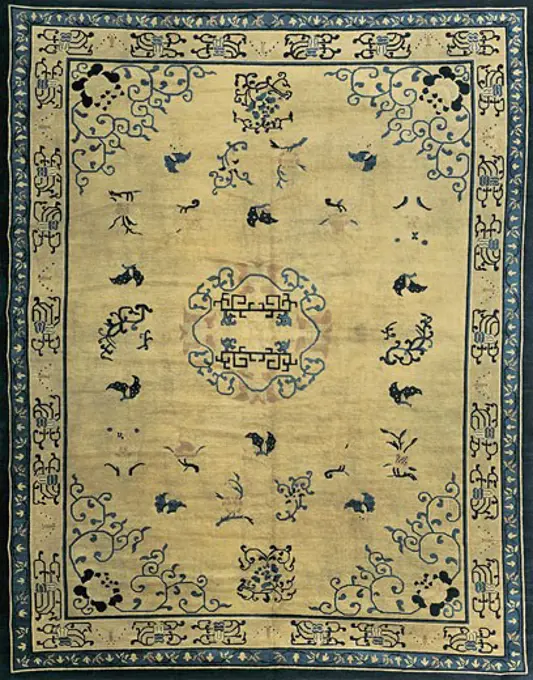
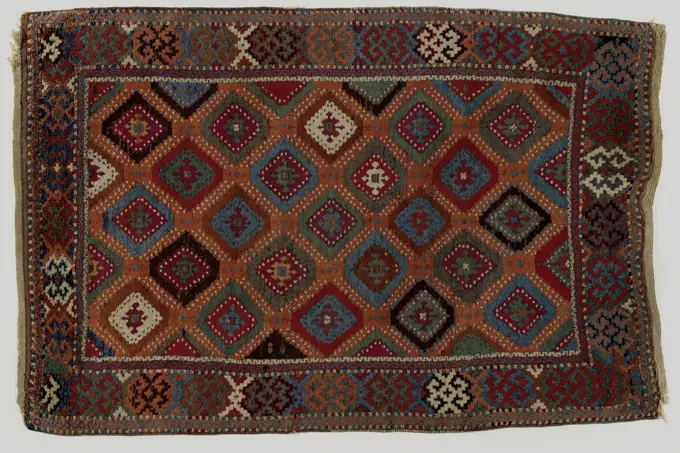
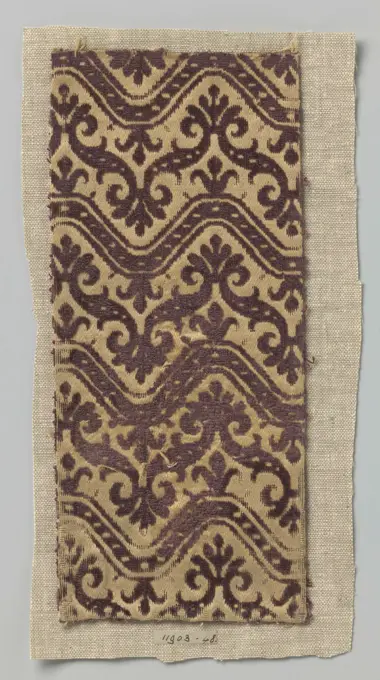
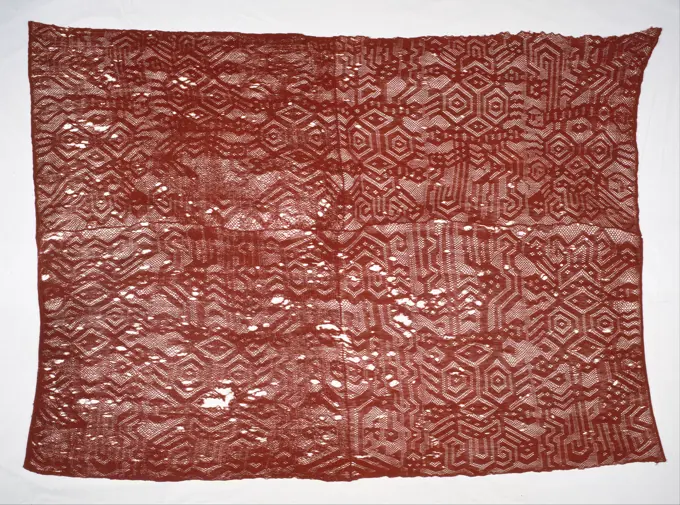
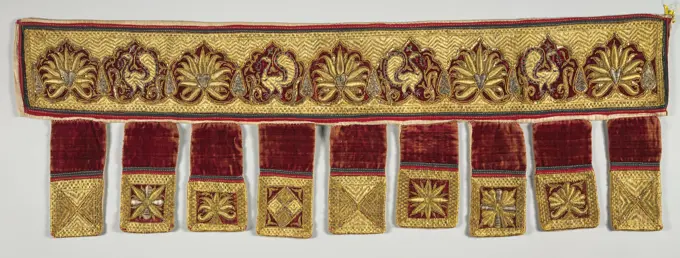
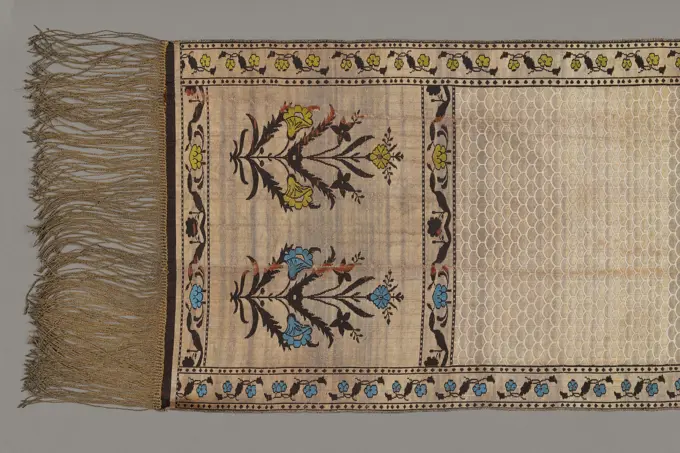
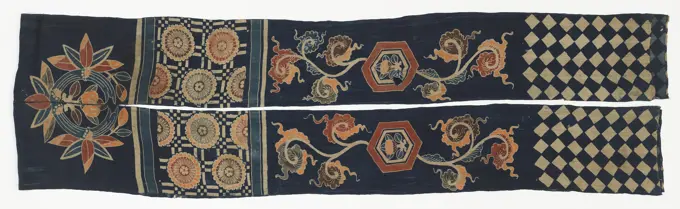
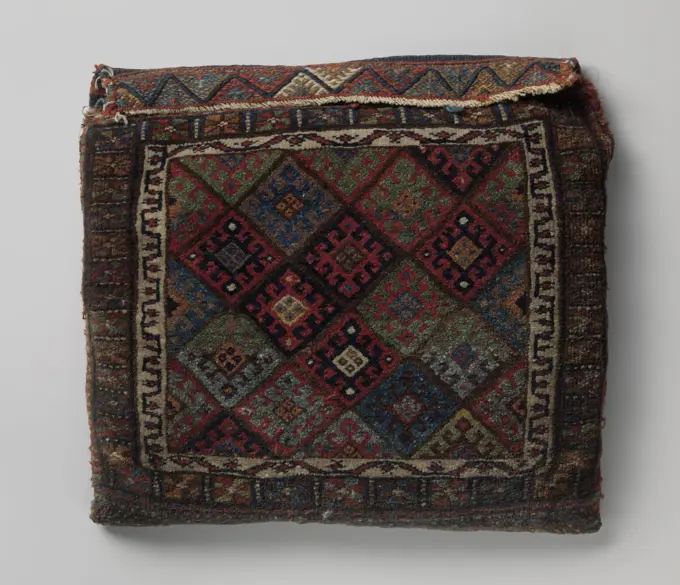
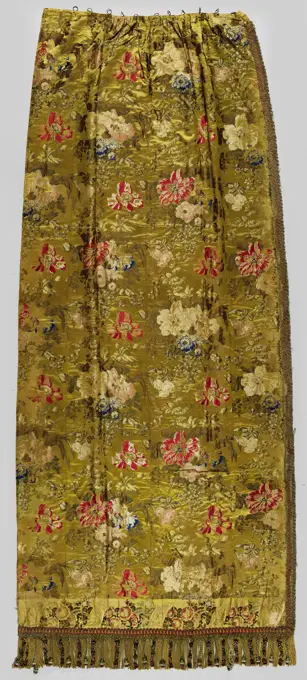
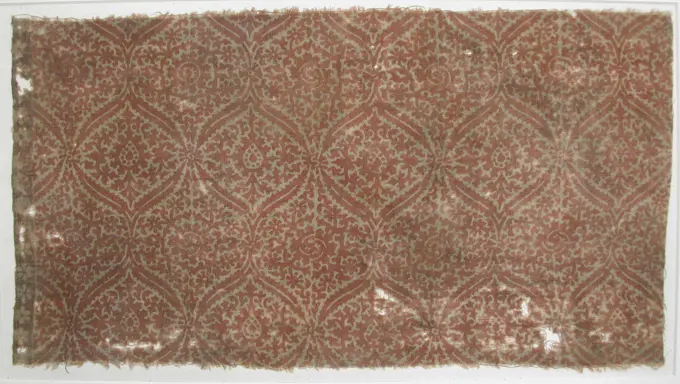
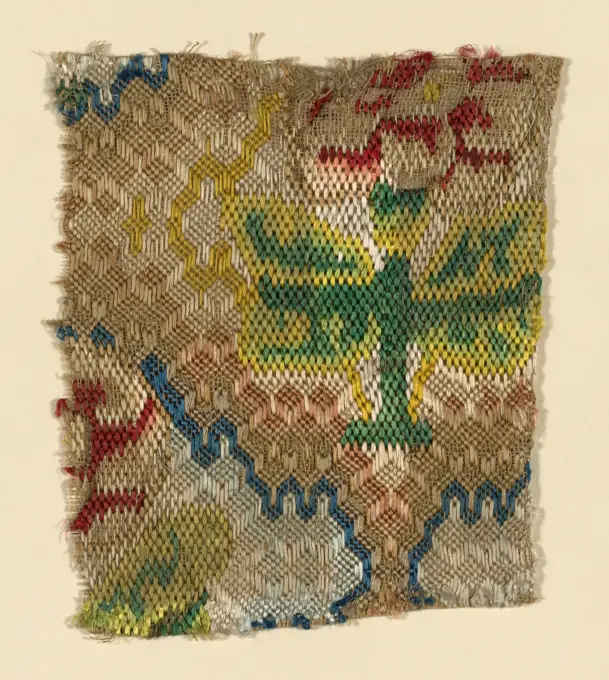
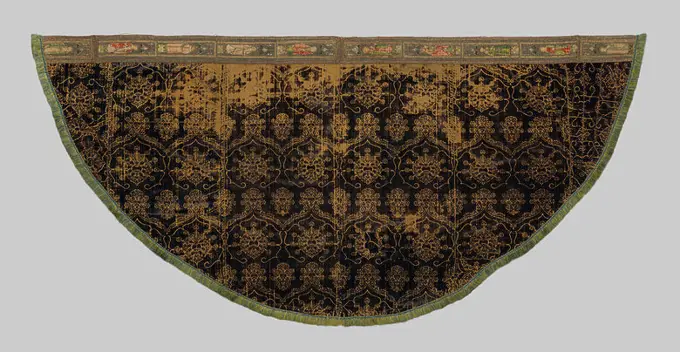
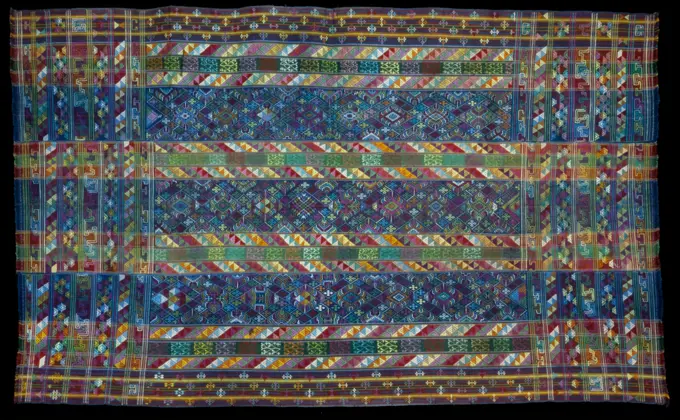
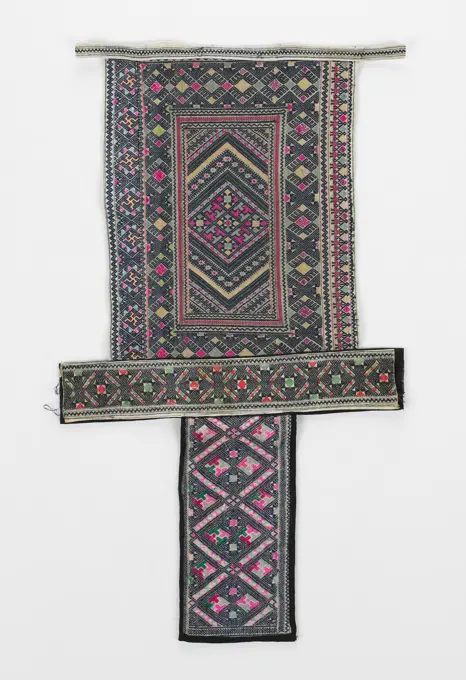
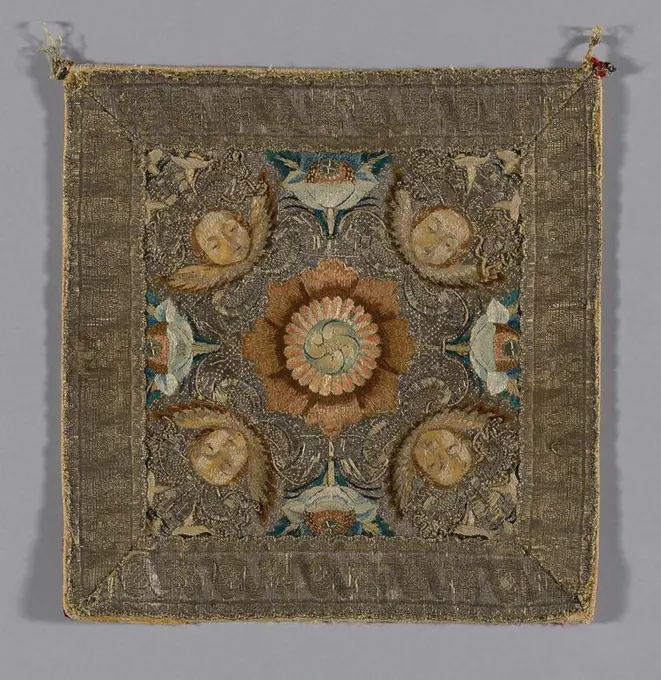
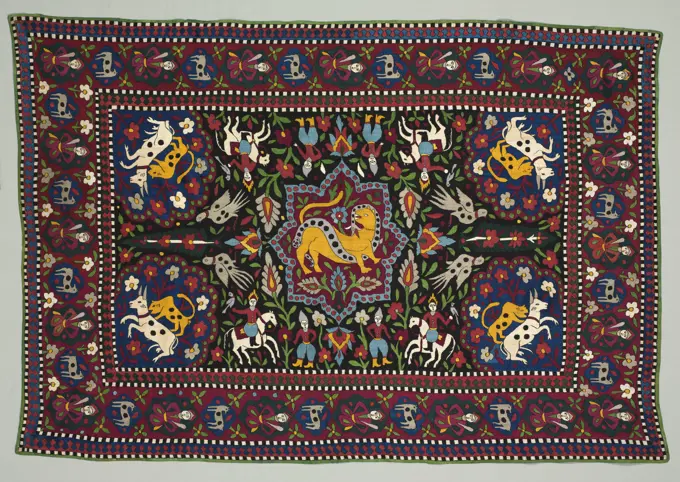
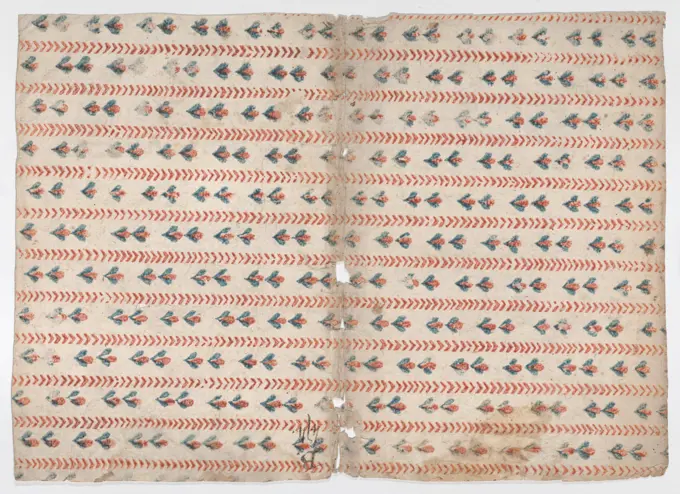
Cushion Cover Made 1700-1900 Rhodes. Linen, plain weave; embroidered with silk in cross and four-sided stitches; edged with silk needle lace .Sleeve, Medium: silk Technique: woven, Portion of the sleeve of a man's coat. Small scale floral pattern, mid-18th century, woven textiles, SleevePanel (India); cottonWool and Cotton Carpet. Date/Period: 1625 - 1675. Carpet. Author: Pakistan Unknown.Close-up of a Beijing carpet, ChinaFragment early 16th century Italian, Venice or Turkish. Fragment. Italian, Venice or Turkish. early 16th century. Silk, metal thread. Textiles-VelvetsScarf 1812-20 probably French. Scarf 119303Window and grid ,, 1800 - 1900 Window and grid rug. Midfield: In a wide -tilted orange grid, there are windows in blue, gray -green, dark terra and brown with inner windows in cardinal savings, green, blue and white, on which a star flower in stir -light color. Edges: triple. The widest has connected cartouches in green, blue, black, terra, orange and rust color. There are double crochet stars in opposite colors. The inner zoom is purple, with a green-running dog motif. The outside zoom is rust -colored with an equal motif in light blue. Beard: Short, brown beards and embroidered finish in dirty cotton color. Eastern small Asia wool Window and grid rug. Midfield: In a wide -tilted orange grid, there are windows in blue, gray -green, dark terra and brown with inner windows in cardinal savings, green, blue and white, on which a star flower in stir -light color. Edges: triple. The widest has connected cartouches in green, blue, black, terra, orange and rust color. There are double crochetHeadhunters Turban (Siga)Fragment zijde fluweel..A fragment of a velvet. On a white wave in purple velvet a decor of chattered tires and palmets.Medaillas, so-called Holbein variant, Kazak ,, c. 1800 - c. 1900 Medaillon suffering, in 2-1-2 formula, Holbein variant, Kazak. Midfield: ultramarine blue, petrol-colored fond with medallions in 2-1-2 formation on top; From one large octagon in white, within which one stocky red and two smaller huge horses and top and below two white quadries. The octhoek has been completed to a rectangle by triangles with fine cubes in red and blue, all with a white dot. On the field twice two white squares with stars and two purple blue with an ocher-colored motif, all between litter, including X motifs in red. Rand: triple. The middle one is brick -red with zigzag placed saw tooth leaves in blue on a angular slender in black. Equal hems of matching triangles. Jumper wool Medaillon suffering, in 2-1-2 formula, Holbein variant, Kazak. Midfield: ultramarine blue, petrol-colored fond with medallions in 2-1-2 formation on top; From one large octagon in white, within which one stocky red and two smaller hMantle 2nd-1st century B.C. Ocucaje Images of twelve "oculate beings" are worked into this mantle by a technique called sprang, which replicates the pattern in mirror image on either side of the vertical center. The oculate beings are composed of stylized frontal heads with concentrically ringed eyes (from which they get their name) and semierect spotted bodies. They stand in two horizontal registers, alternately right side up and upside down across the width of the mantle. Their heads, too, can be read two ways, indicating yet again the visual complexity of which the ancient Peruvians were capable. The mantle is an early example of a textile type thought to be a man's cloaklike garment that was long in use in Precolumbian Peru. Fully articulated by the late centuries B.C.E., mantles continued to be made until long after the Spanish conquest of the sixteenth century. A number of complete early mantles are known from Ocucaje in the southern Ica Valley, the source of this example. It is Piece 18th-19th century Japan. Piece. Japan. 18th-19th century. Silk. Textiles-WovenTextile Fragment, 1800s. Japan, 19th century. Silk; average: 21 x 5.5 cm (8 1/4 x 2 3/16 in.).Fragments; silk, linenEmbroidered Door Hanging, 1700s. India, 18th century. Velvet; overall: 32.4 x 97.2 cm (12 3/4 x 38 1/4 in.).Conciliate belt; Manufaktura Karol Stanisław Radziwiłł (Słuck; Pasów label; Ca 1767-1790), Madżarski, Jan (fl. Ante 1757-Ca 1800); 1767-1780 (1767-00-00-1780-00-00);Horse Wrapping Cloth (Japan); bast fiber, probably hempCarpet 17th century. Carpet. 17th century. Wool (warp, weft and pile); symmetrically knotted pile. Attributed to Probably West Central Turkey. Textiles-RugsDeath cloth; Pore Lonjong. Cloth with geometric motifs.Cover 19th century Russian (). Cover 461578Sampler (England); Embroidered by Elanor Guest; silk, metal-wrapped silk and hair embroidery, linen foundation; Warp x Weft: 47.5 x 20.5 cm (18 11/16 x 8 1/16 in.); Bequest of Mrs. Henry E. Coe; 1941-69-229Sarong Malaysia (Malayan) 19th centuryHip cloth; Sarung. Hip cloth with floral motifs and tumps.Piece 16th-17th century Italian. Piece 223430Square 18th century Italian. Square. Italian. 18th century. Silk, filet. Textiles-LacesSaddle bag, decorated with brown grid and swastikas, Jaffi Volk, c. 1800 - c. 1900 Saddle bag, Jaffi Kurdistan-Mosul. The midfield is divided into windows by a brown grid, all filled with equal diamond -shaped and fitted flowers. The middle edge is divided into rectangles with a flower. At the top a chattering beard in different colors. Back of the surface woven with stripes in different colors. Kurdistan Necklace and impact: Wool Saddle bag, Jaffi Kurdistan-Mosul. The midfield is divided into windows by a brown grid, all filled with equal diamond -shaped and fitted flowers. The middle edge is divided into rectangles with a flower. At the top a chattering beard in different colors. Back of the surface woven with stripes in different colors. Kurdistan Necklace and impact: WoolPillowcase Unknown, Association for Embroidery Przemysł ParisCurtain, with flower design on yellow distance, le mirepère et fils, 1850 - 1860 Silk curtain with flower design on yellow stock from the small dance hall of Noordeinde Palace. manufacturer: LyonThe Hague silk. lampas (textile material) Silk curtain with flower design on yellow stock from the small dance hall of Noordeinde Palace. manufacturer: LyonThe Hague silk. lampas (textile material)Textile Fragment 13th-14th century Dated to either the thirteenth or fourteenth century, this plain-woven cotton fragment once belonged to a larger textile. This densely decorated fragment emulates common methods of ornamentation and technique used in the province of Gujarat during the Middle Ages. Its border is decorated with a repeated stylized floral motif. The fragments larger design consists of small ogival motifs enclosed within intertwined tendrils forming larger medallions that run parallel to each other and repeat vertically. The textiles ornamentation is associated to Gujarat as the fragments decorative program borrows heavily from Jain painted manuscript traditions and architecture commonly found and made in the province. The vibrancy of the red dye comes from the Indian mulberry plant, which was commonly used in dye practices also associated with Gujarat.Found near the site of Fustat, Egypt, these textiles have been preserved largely due to the arid and dry climate of thSampler 18th century Swiss. Sampler 228671Fragment Made 1601-1700 Italy. Linen, plain weave; embroidered with silk floss in threadcounted technique .Cope with an Orphrey. Culture: Italian and French. Dimensions: From center back neck to hem, with fringe: 55 1/4 x 168 3/4 in. (circumference of hem) (140.3 x 428.6 cm). Date: 15th century. Museum: Metropolitan Museum of Art, New York, USA.Square Made 1801-1900 Indonesia. Cotton; batik dyed .Sheet with overall zig zag and stripe pattern 19th century Anonymous. Sheet with overall zig zag and stripe pattern. Anonymous , 19th century. 19th century. Relief print (wood or metal). PrintsFragment. Italy. Date: 1625-1675. Dimensions: 23 x 12.5 cm (9 x 5 in.). Plain compound cloth. Origin: Italy. Museum: The Chicago Art Institute, Chicago, USA.Kira, 20th century, 90 x 54 1/2 in. (228.6 x 138.4 cm), Silk, cotton, Bhutan, 20th centuryoriental carpetStrip 16th century Italian. Strip 217258Baby Carrier, 27 x 15 1/2 in. (68.58 x 39.37 cm)10 1/2 x 5 1/4 in. (26.67 x 13.34 cm) (object part, top portion)14 x 11 1/2 in. (35.56 x 29.21 cm) (object part, bottom portion), Cotton; needlework, ChinaHeaddress 18th-19th century. Headdress. 18th-19th century. Linen and silk. Attributed to Iran. Textiles-CostumesFragment, Medium: linen, silk Technique: plain weave with counted running stitch and bordered with slit tapestry, Narrow horizontal band, the center of which is embroidered with stylized floral forms in blue, green, red and yellow silk. Edges are embroidered in a geometric pattern. Trimmed with fragments of slit tapestry., Egypt, 10th-12th century, woven textiles, FragmentCossack rug, Bordjalou district, Caucasus. Artist: UnknownFragments, Medium: silk Technique: plain compound satin with supplementary weft, Allover design of stylized leaf motifs and birds in yellow and green on a red ground., Spain, 16th-17th century, woven textiles, FragmentsBorder Fragment 10th-15th century Chimú (). Border Fragment. Chimú (). 10th-15th century. Camelid hair, cotton. Peru, Lima province. Textiles-WovenWall pocket, Medium: silk, metal Technique: Embroidery on coral silk plain weave moire. Stem and satin stitches plus couching using gold and silver-wrapped silk; attached bobbin-lace of gold-wrapped silk., Wall pocket with two pockets and a rounded top. Made from coral-colored silk taffeta, embroidered in gold and silver threads. The lower pocket has a house surrounded by flowering vines. The upper pocket shows a cardinal's hat with flowering vines. At the top, a bishop's mitre with a red stone inset, and crossed croziers. Trimmed with gold fringe and gold lace. Pockets lined with blue silk. Backed with leather., Germany, Austria, or Switzerland, 18th century, embroidery & stitching, Wall pocketFragment (China); silk; Warp x Weft: 16.8 x 22.9 cm (6 5/8 in. x 9 in.)Band Made 1875-1900 China. Forty-four pairs and eight odd pieces of embroidered sleeve, ankle bands, etc. on gauze. . Han-ChineseBand, Medium: linen Technique: woven with embroidered trim, Woven band, red and white, with design of confronted lions, fountain; embroidered borders., Italy, late 16th century, woven textiles, BandBorder 17th century Italian. Border 227254Blanket, 52 1/4 x 35 1/2 in. (132.72 x 90.17 cm), Cotton; needlework, ChinaClose-up of a Sevan carpet, ArmeniaSampler (Spain); linen, silk; Bequest of Marian Hague; 1971-50-173Wearing Blanket. Culture: Navajo. Dimensions: H. 67 1/2 x W. 49 in. (171.5 x 124.46 cm). Date: 1860-70. Museum: Metropolitan Museum of Art, New York, USA.Sampler, Medium: silk embroidery on linen foundation Technique: embroidered in cross stitches on plain weave foundation, Within a curving acorn vine border, isolated motifs including an alphabet and crowned monograms, a pair of affronted rabbits, and a coat of arms of the city of Amsterdam., Amsterdam, Netherlands, 1830, embroidery & stitching, SamplerConciliate belt;  2nd half 19th century (1851-00-00-1900-00-00);Carpet Fragment 17th-18th century. Carpet Fragment. 17th-18th century. Cotton (warp and weft), silk (weft), wool (pile); asymmetrically knotted pile. Attributed to Iran. Textiles-RugsSleeve, 1700s. Greece, Dodecanese Islands, 18th century. Embroidery: silk on cotton tabby ground; overall: 55.3 x 24.2 cm (21 3/4 x 9 1/2 in.).Portion of a Bedspread, 1700s. Greece, Epirus, Yaninna, 18th century. Embroidery: silk on linen tabby ground; overall: 102.9 x 33 cm (40 1/2 x 13 in.).Fragment, Technique: withdrawn element work, Fragment with fringe with an interlocked lozenge border., Italy, 16th-17th century, lace, FragmentEmbroidered Raffia Pile Cloth, 1900s. Africa, Central Africa, Democratic Republic of Congo, Kuba peoples, 20th century. Raffia and dye; overall: 52.3 x 122.5 cm (20 9/16 x 48 1/4 in.).Fragment (Japan)Fragment, Medium: silk Technique: two integrated textile structures; plain weave and plain weave (lampas), Ground divided into squares which contain palmettes. Griffins, grape leaves, and birds., Italy, 14th century, woven textiles, Fragment. Square palm scarf with a red center, on which small botas, a large around middle medallion, quadrangle circles in blue, green and creamShawl mid-19th century. Shawl 447775Chagsi pangkheb, 20th century, 78 x 38 1/2 in. (198.12 x 97.8 cm), Silk, cotton, Bhutan, 20th centuryTrimming (France); silkChintz Border (India); cottonFragment (Band) Made 1000-1532 Peru. . IcaPiece 18th-19th century Japan. Piece 67115Fabric gore. unknown, authorDoek, Anonymous, 1900 - 1999 Cloth with geometric motifs. Sumatra silk. Cloth with geometric motifs. Sumatra silk.Textile Fragment 4th century. Textile Fragment 443546Hanging 18th century Furnishings for the home, subjected to rough use, were usually woven in wool or camel and goat hair, so this fine curtain in silk must have been made for a special occasion or an aristocratic home. Curtains were composed of a number of panels-usually at least six-joined together by silk ribbons or fine lace. The geometric patterns on traditional Tunisian textiles are similar to those used on pottery, jewelry, and designs painted on women.. Hanging. 18th century. Silk; damask weave, joined. Attributed to Tunisia. Textiles-WovenEmbroidery of silk on linen in floral motifs, c. 1875 - c. 1900 photograph  Europe cardboard. paper. printing ink collotype textile fabric, cloth. flowers ~ ornament EuropeRug;  19th century (1801-00-00-1900-00-00);Kilimy, purchase (provenance)Ceremonial Manta , c. 1863-1874. America, Native North American, Southwest, Pueblo, Post-Contact, Late Classic Period. Plain weave with embroidery: cotton and wool (handspun, Gernamtown, and bayeta); overall: 124 x 165 cm (48 13/16 x 64 15/16 in.).Shawl Made 1860-1869 Norwich. Silk, twill weave . Clabburn, Sons and Crisp (Producer)Dalmática del Tern de Sant Valeri, 1215-1275. Museu del Disseny de Barcelona.Conciliate belt;  2nd half 18th century (1751-00-00-1800-00-00);Cloth; PA Moon. Cloth with geometric motifs.Man's Mantle 17th-18th century () Aymara. Man's Mantle. Aymara. 17th-18th century (). Camelid hair. Bolivia. Textiles-WovenFragment. Italy. Date: 1601-1635. Dimensions: 35.6 x 56.7 cm (14 x 22 1/4 in.). Silk, warp-float faced broken twill weave with supplementary pile warps forming cut, solid velvet; stamped. Origin: Italy. Museum: The Chicago Art Institute, Chicago, USA.Fragment, Medium: silk Technique: plain compound satin, Floral roundels enclosing dragons on a diaper background with small swastikas in yellow, rose and blue., China, 17th century, woven textiles, FragmentPiece ca. 1850 French or British. Piece 229368Sampler, Medium: wool embroidery on cotton foundation Technique: embroidered in cross and counted satin stitches with open work on plain weave foundation, Worked in brightly colored wools in blue, green, yellow, orange, red and violet on a linen ground. Four different cross stitch borders around a central panel of bargello and openwork motifs., Mexico, ca. 1880, embroidery & stitching, SamplerRug China. Rug 68435Sampler (Mexico); silk embroidery on linen foundationHandmade traditonal rugs in close-upCoverlet Fragment (USA); wool, linenTextile with floral medallions 8th century China This extremely rare and elegant textile is identical to an eighth-century example preserved in Shsin, a famous treasury in the Todai-ji temple in Nara, Japan, that houses imperial gifts from Tang-dynasty China. These works were given to the temple by the Japanese Empress Kmy in 756 and continue to serve as important pieces for the study of the art of Tang China.. Textile with floral medallions. China. 8th century. Weft-faced compound twill. Tang dynasty (618-907). Textiles-WovenFragments of embroidery  branches with pomegranate fruit unknownBaby Quilt, 31 3/4 x 26 3/4 in. (80.65 x 67.95 cm), Cotton, satin; needlework, ChinaShawl mid-19th century. Shawl 447675Fragments, Medium: silk and metal thread Technique: appliqué, Fragments of an appliquéd and embroidered orphrey has symmetrical scrolling leaf and flowers forms of dark yellow on a red ground., Spain, 16th century, embroidery & stitching, FragmentsChalice Cover or Portion of a Burse. Italy or Spain. Date: 1675-1725. Dimensions: 24.5 x 23.7 cm (9 5/8 x 9 3/8 in.). Silk, plain weave; embroidered in silk floss and gilt strips wound around a silk fibre core in satin stitches, French knots; attached metal pailllettes; lining: silk, plain weave; backing: linen, plain weave; paper cor e in braid; bound edges. Origin: Italy. Museum: The Chicago Art Institute, Chicago, USA.Baby Carrier, 33 1/2 x 24 in. (85.09 x 60.96 cm), Cotton; needlework, ChinaHeadhunters Turban (Siga)Ceremonial or summer floor cover, 1800s. Iran, Qajar period. Plain weave: cotton; embroidery: silk; overall: 175.2 x 118.1 cm (69 x 46 1/2 in.).Book cover with overall floral pattern 19th century Anonymous. Book cover with overall floral pattern. Anonymous , 19th century. 19th century. Relief print (wood or metal). Prints