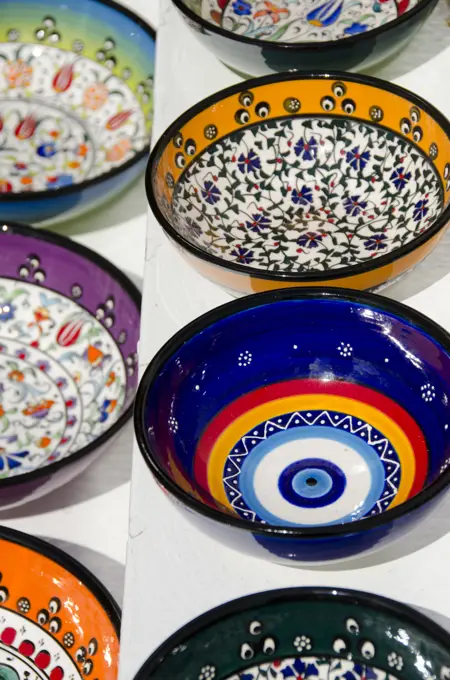
Decorative Painted Dishes

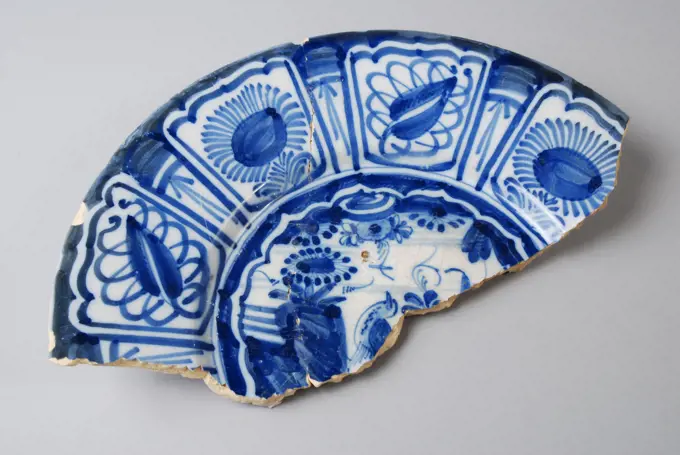
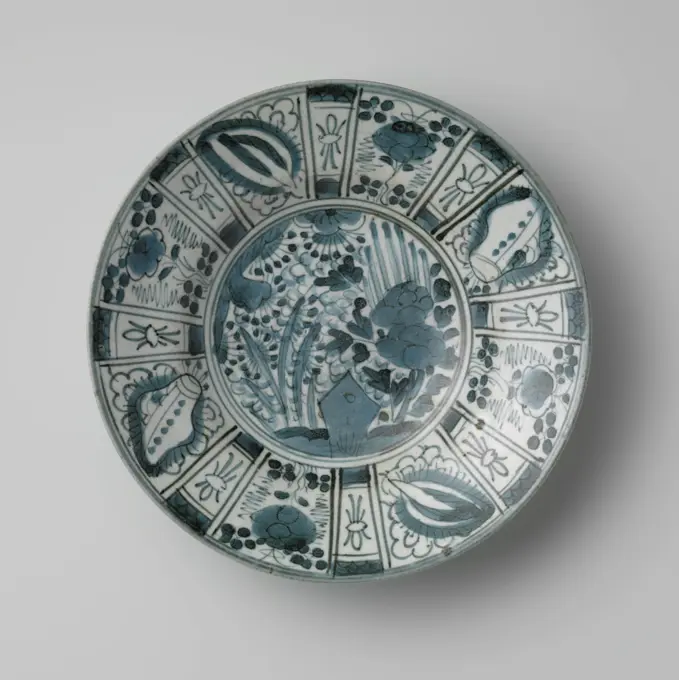
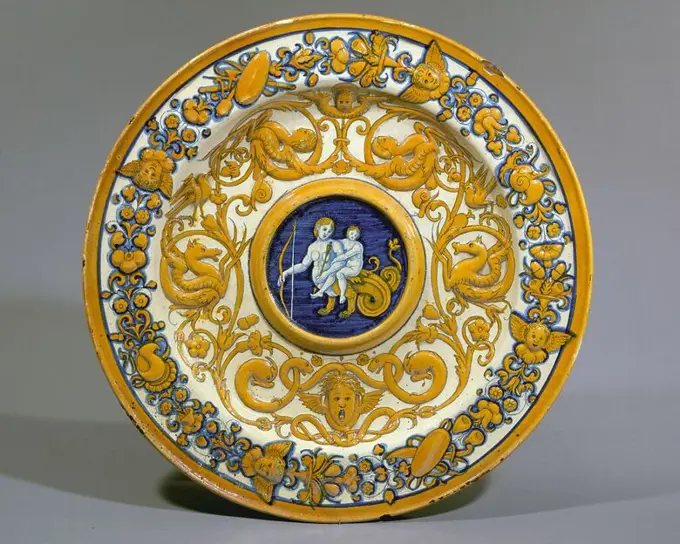
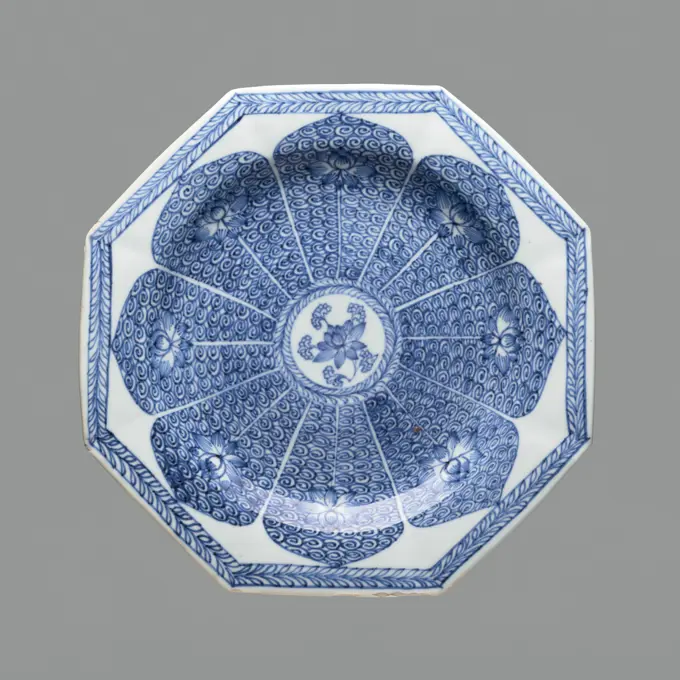
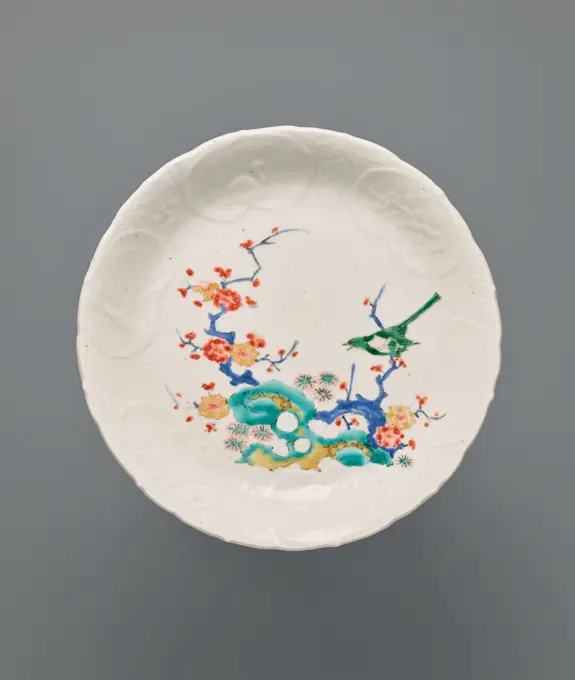
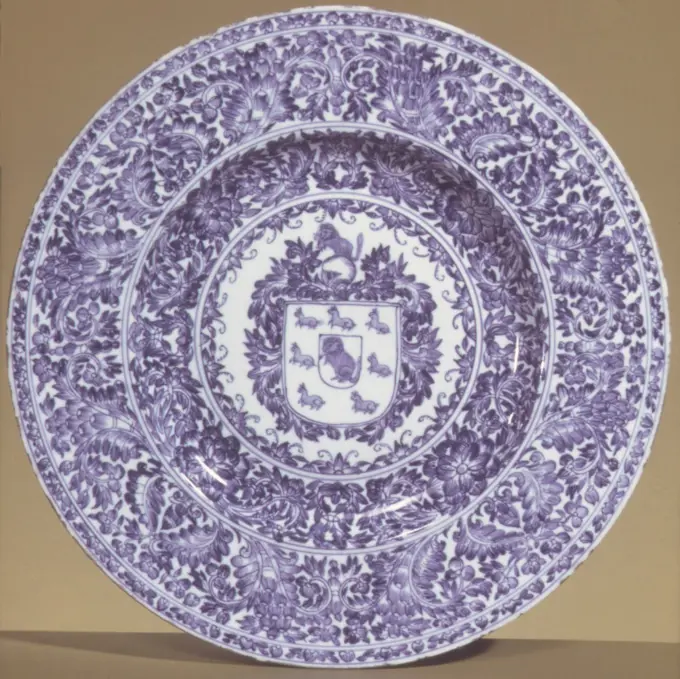
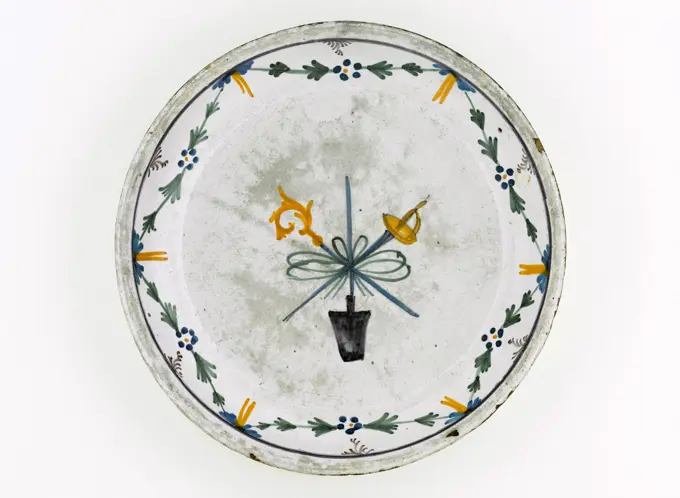
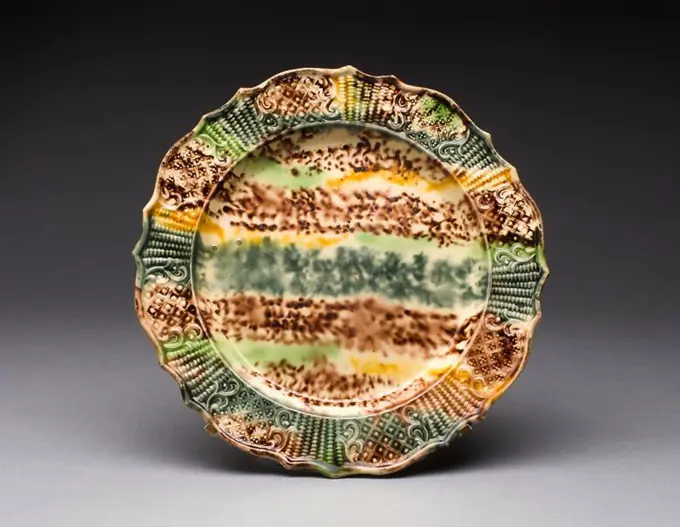
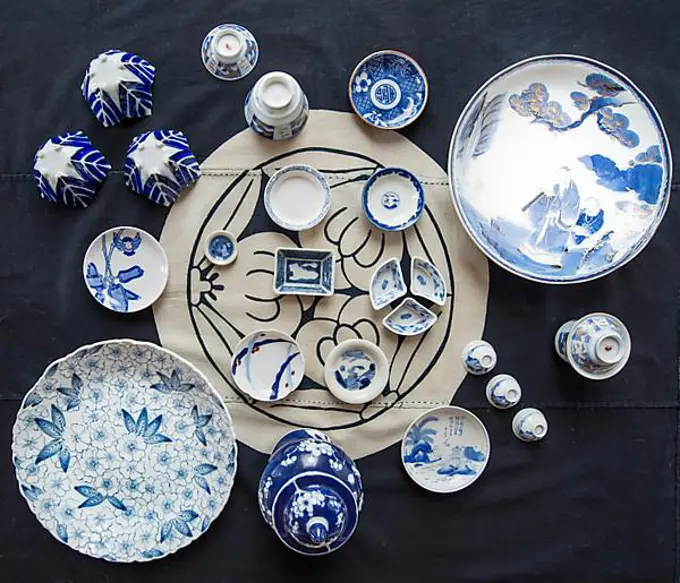
Various blue-painted dishes and plates featuring intricate floral and ornamental designs, showcasing historical ceramics and craftsmanship.

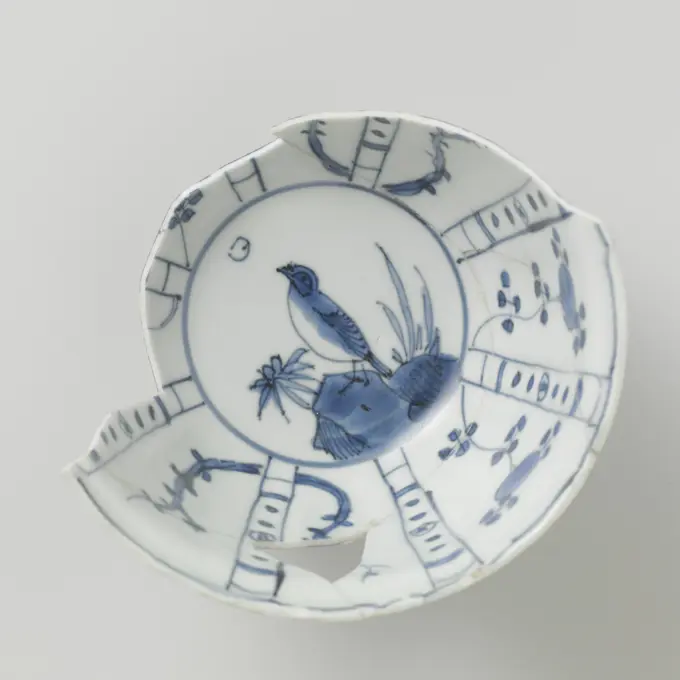
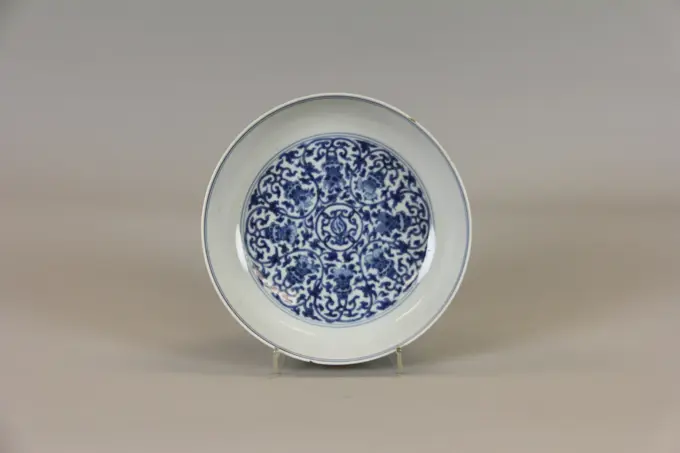
Dish with a pheasant on a rock, butterfly and flower sprays, anonymous, c. 1680 - c. 1720 Deep dish of porcelain with lobed edge, painted in underlaze blue. On the flat a medallion of Ruyi motifs with a pheasant on a rock with two flowering plants, butterfly and insects; A flower branch four times around the medallion; the edge with alternately a lobed cartouche with a flower in reserve and a larger cartouche with a geometric pattern; The back with three flower branches. Two drill holes and a chip in the edge. Blue White. China porcelain. glaze. cobalt (mineral) painting / vitrification Deep dish of porcelain with lobed edge, painted in underlaze blue. On the flat a medallion of Ruyi motifs with a pheasant on a rock with two flowering plants, butterfly and insects; A flower branch four times around the medallion; the edge with alternately a lobed cartouche with a flower in reserve and a larger cartouche with a geometric pattern; The back with three flower branches. Two drill holes and
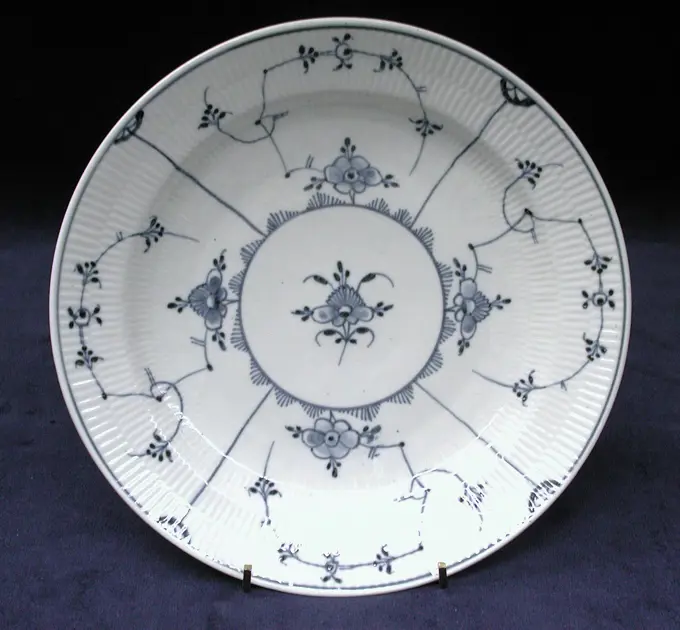
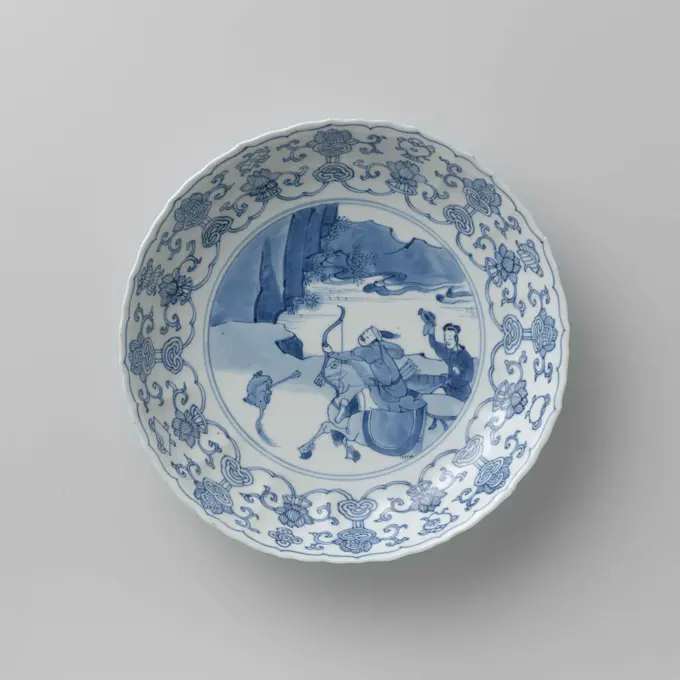
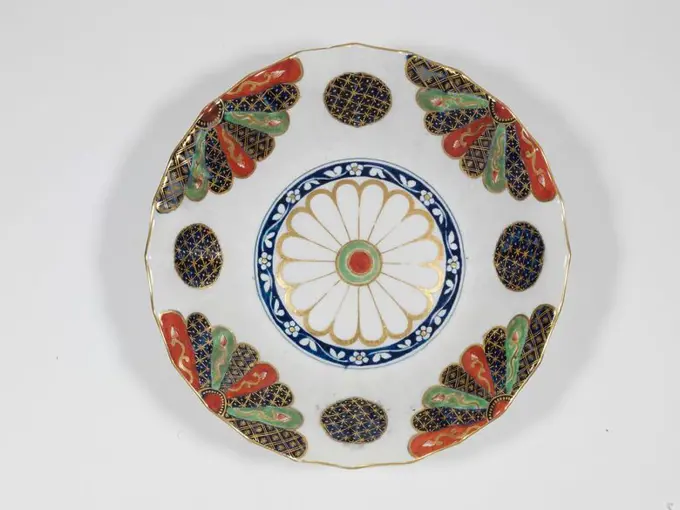
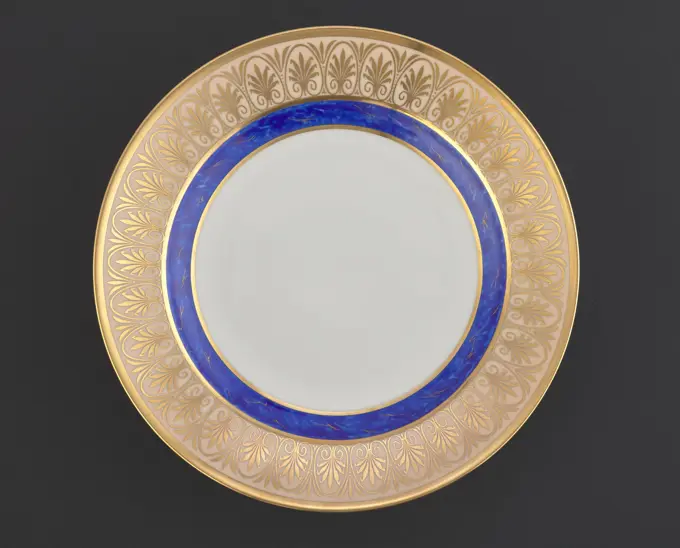
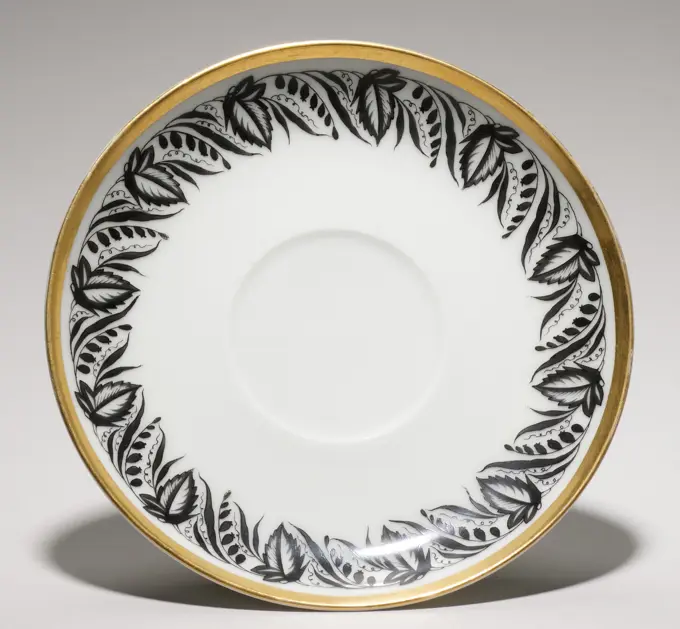
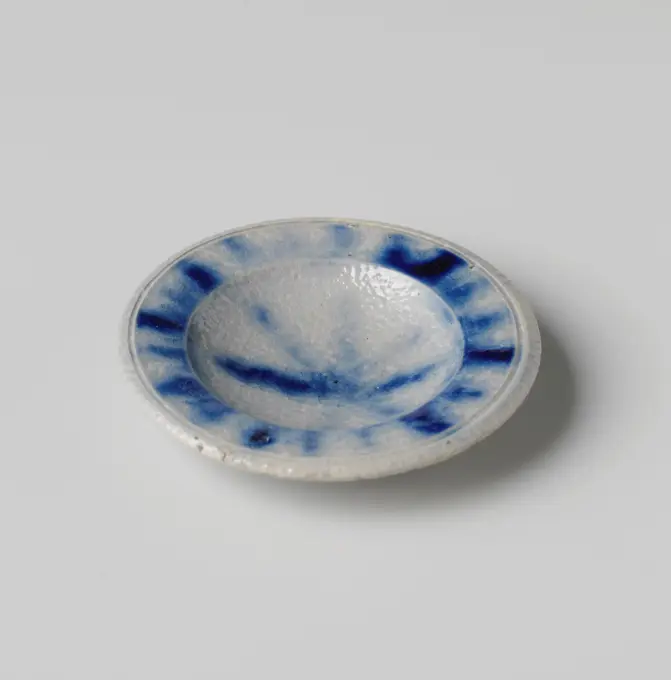
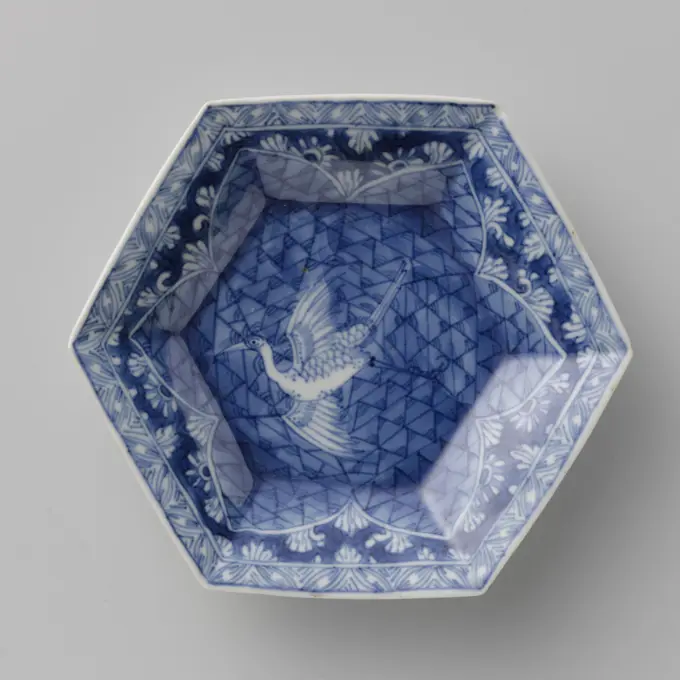
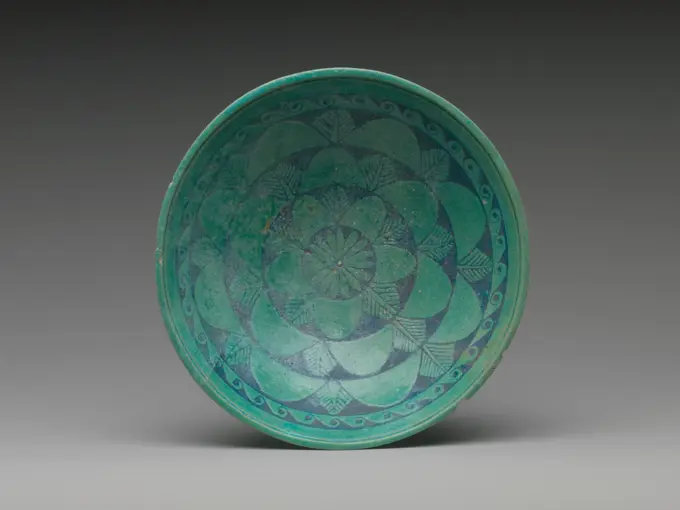
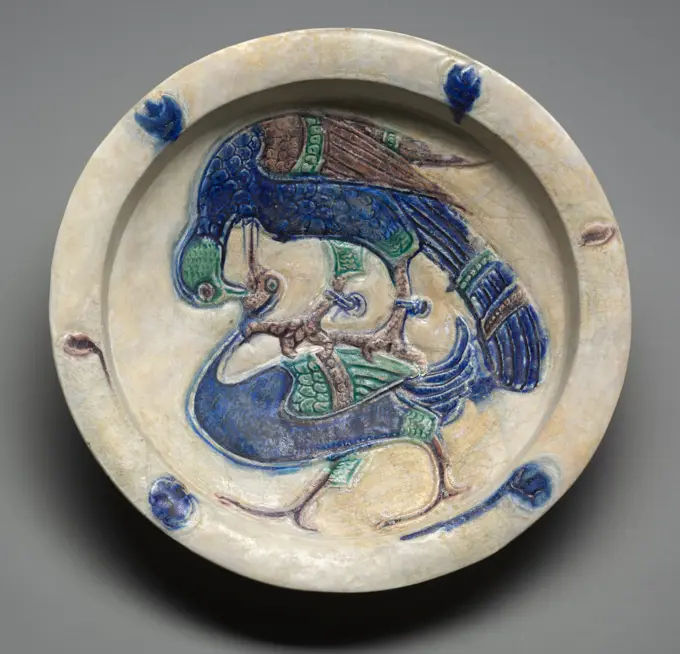
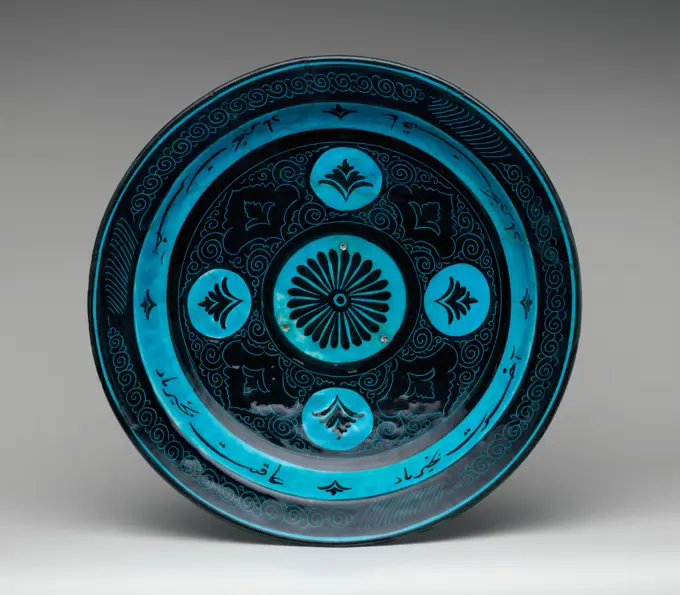
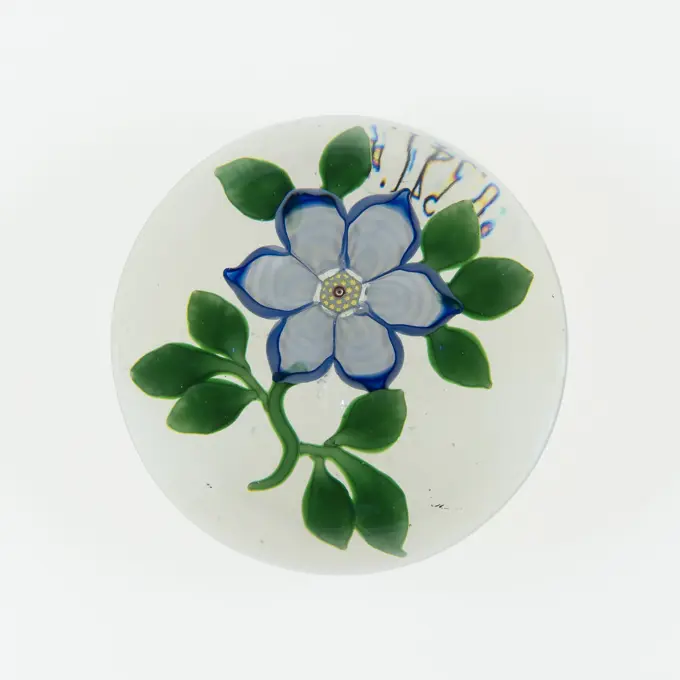
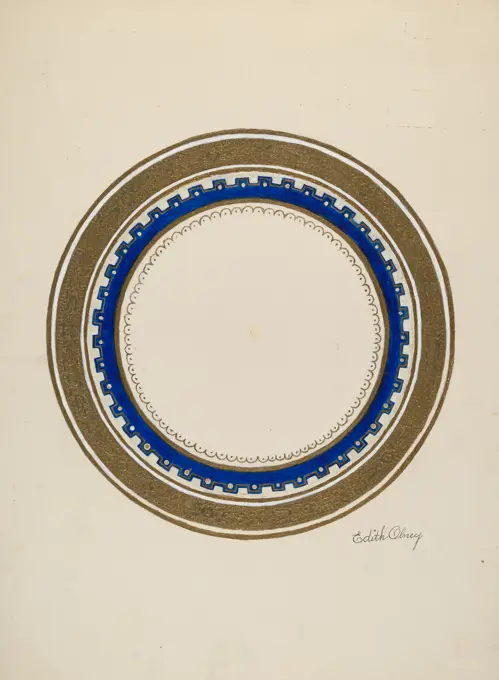
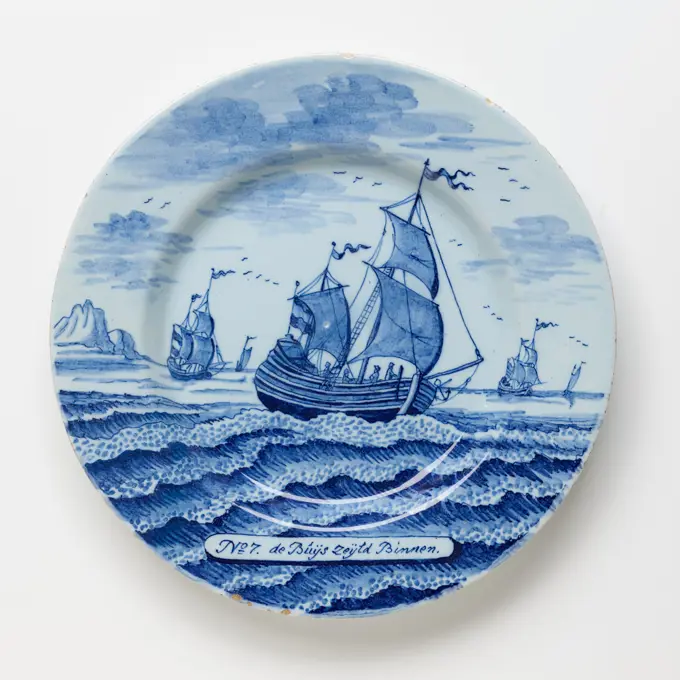
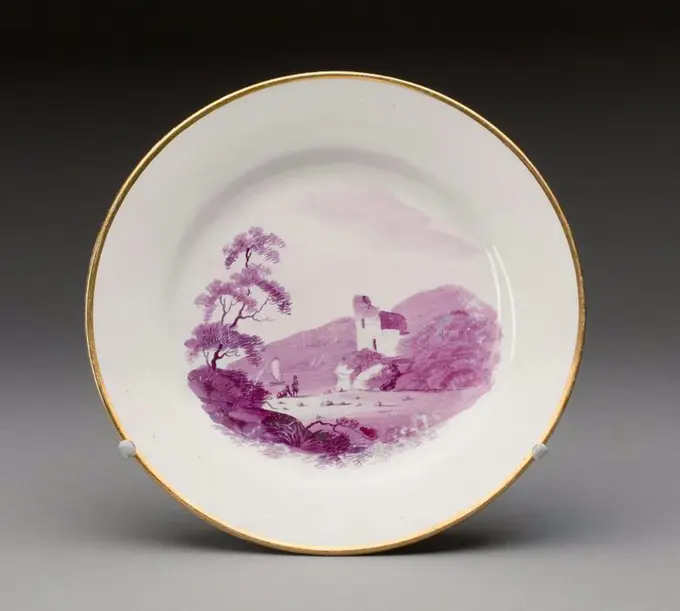
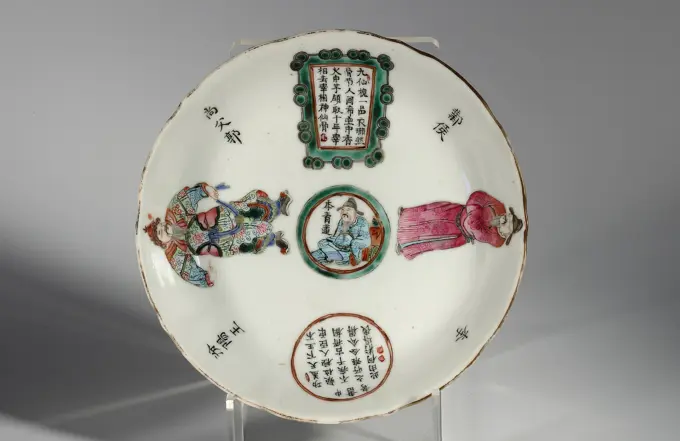
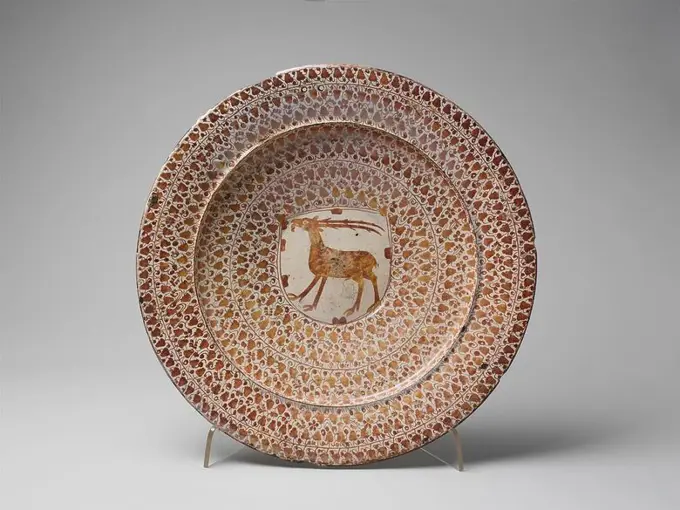
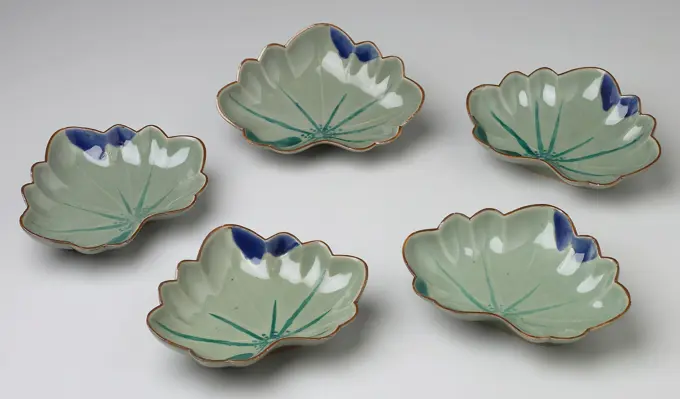
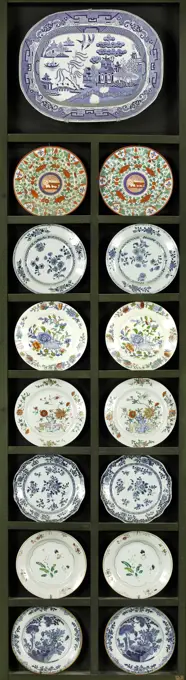
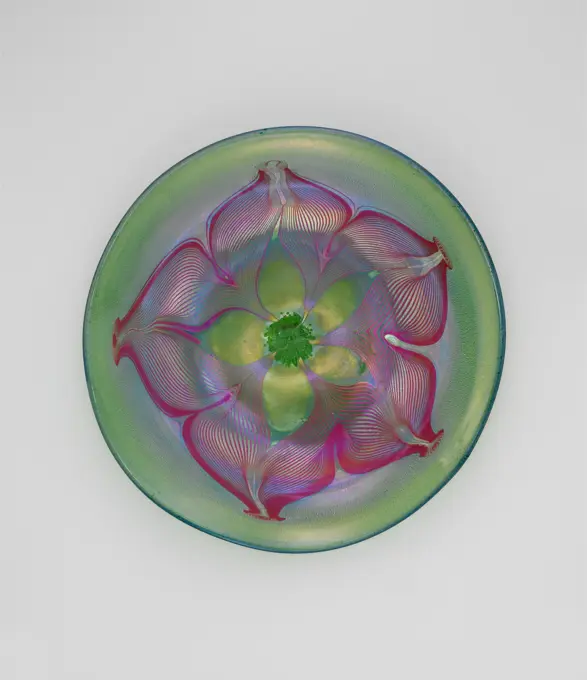
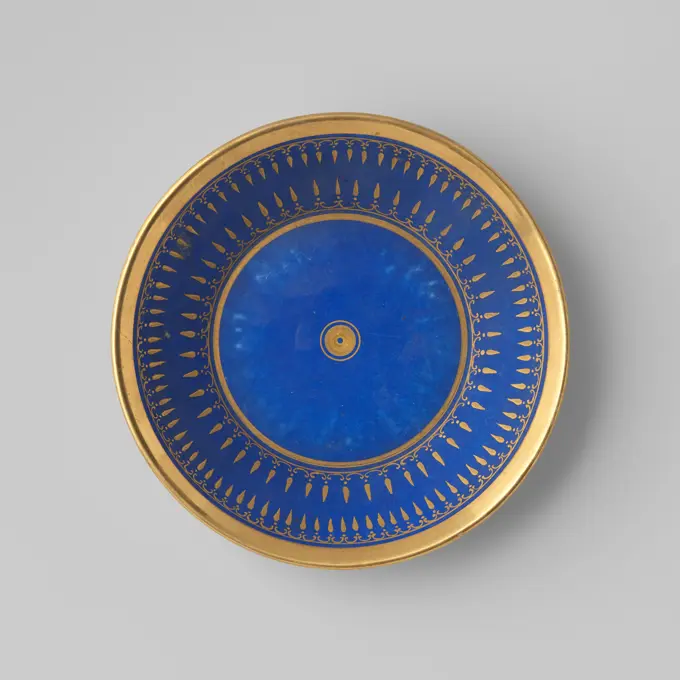
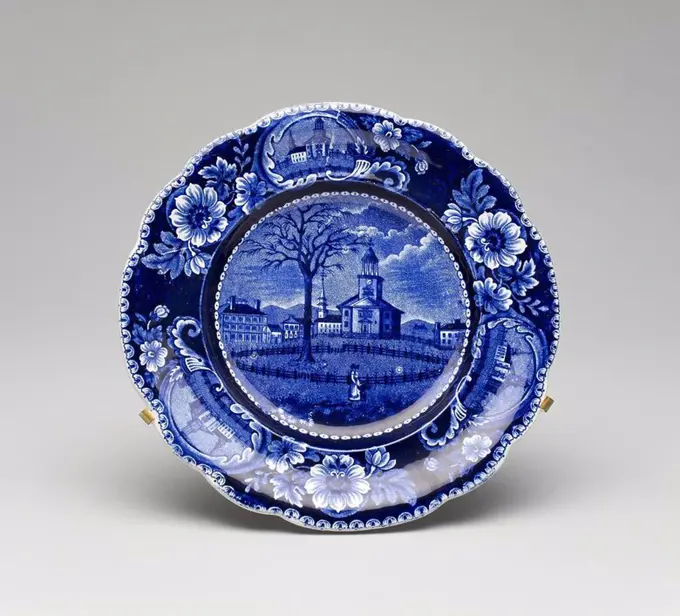
Plate. James and Ralph Clews; English, active 1818-36; Made for the American market; West Midlands, Stoke-on-Trent, England. Date: 1827-1836. Dimensions: Diam. 22.5 cm (8 7/8 in.). Earthenware. Origin: England. Museum: The Chicago Art Institute, Chicago, USA.Saucer-dish with hunting scene, Lotus Scrolls and auspicious Symbols. Scale of porcelain with round, ribbed wall and scalloped edge, painted in underglaze blue. On the flat a yacht scene with two armed riders, one with a bird on the hand, in a landscape, jaming on an animal; the edge with a linked band of lotus drinks with Ruyi-Motef, between which happiness symbols (shell, parasol, vase) and valuables (artemisia leaf, pearl, diamond, books); The back with sixteen loose flower branches. Marked on the underside with the six character mark of Emperor Chenghua in a double circle. A crack in the edge. Blue White.Large Plate Japan. Large Plate. Japan. Porcelaneous stoneware painted in underglaze blue (Arita ware, Imari type). Edo period (1615-1868), Kanei era (1624-43). CeramicsDish. Culture: British, Worcester. Dimensions: Overall: 1 3/4 × 8 1/4 in. (4.4 × 21 cm). Factory: Worcester factory (British, 1751-2008). Date: ca. 1770.The design is adapted from imported Japanese "Imari" porcelains. Museum: Metropolitan Museum of Art, New York, USA.Plate; Koenigliche Porzellan Manufaktur (KPM; Berlin; 1763-1918); 1870-82 (1823-00-00-1832-00-00);Saucer with an ornamental border, anonymous, c. 1800 - c. 1824 Porcelain dish with a straight wall, painted on the glaze in gold. On the flat a gold medallion with a flower branch. The inner wall is with a pendulum of stars, half moon shapes with dots and triangles and a golden edge. Marked on the bottom with g. Empire. France porcelain. glaze. gold (metal) painting / gilding / vitrification Porcelain dish with a straight wall, painted on the glaze in gold. On the flat a gold medallion with a flower branch. The inner wall is with a pendulum of stars, half moon shapes with dots and triangles and a golden edge. Marked on the bottom with g. Empire. France porcelain. glaze. gold (metal) painting / gilding / vitrificationNational Russian Round Floral Pattern With Birds Russian national round floral pattern with birds. Blue floral pattern in gzhel style applied to the ceramic plate. Vector illustration. Copyright: xIricatxFoliate Bowl with Stylized Poeny Spray 1100-1127 China. Qingbai ware; porcelain with underglaze carved decoration .Saucer, 1881-1917. St. Petersburg Imperial Porcelain Factory (Russian). Porcelain; diameter: 14.3 cm (5 5/8 in.).Miniature plate with a star, anonymous, c. 1700 - c. 1799 Miniature board of stoneware, painted in cobalt blue with a star on the flat and lines on the edge. An entry line on the edge. Westerwald. Westerwald stoneware. glaze. cobalt (mineral) vitrification Miniature board of stoneware, painted in cobalt blue with a star on the flat and lines on the edge. An entry line on the edge. Westerwald. Westerwald stoneware. glaze. cobalt (mineral) vitrificationDishes of white-baking earthenware, with a transfer print in blue of flowers on the inside and a building on the outside, anonymous, c. 1850 - c. 1949 fragment   earthenware. glazeDish with decoration of leaves in gold and blue. Dish of porcelain, decorated with leaves in gold and blue.Pair of cups and saucers, anonymous, c. 1700 Hexagonal porcelain dish, painted in underly glaze blue. On the flat a flying crane against a soil of 'crackled-ice' in a star-shaped cartouche; Lotus drinks around the cartouche; the edge with a decorative band; On the back five valuables (Artemisiablad, Pearl, Roll, window, musical stone) and a toaist symbol (castagnets). Marked on the underside with the seal brand 'Fú' in a double circle. Blue White. China porcelain. glaze. cobalt (mineral) painting / vitrification Hexagonal porcelain dish, painted in underly glaze blue. On the flat a flying crane against a soil of 'crackled-ice' in a star-shaped cartouche; Lotus drinks around the cartouche; the edge with a decorative band; On the back five valuables (Artemisiablad, Pearl, Roll, window, musical stone) and a toaist symbol (castagnets). Marked on the underside with the seal brand 'Fú' in a double circle. Blue White. China porcelain. glaze. cobalt (mineral) painting / vitrificationBowl 200-150 B.C.  Ptolemaic Period The relief decoration of this shallow bowl is enhanced by the contrast between its primary light turquoise color and the dark blue used in the interstices and background. On the exterior, five petals of the nelumbo lotus interspersed with the tips of inner lotus petals and ribbed leaves of an unknown plant surround the base like a flower. Inside, three rings of nelumbo petals and ribbed leaves enclose the central rosette; a wave-crest pattern and plain band surround the whole.Bowls were part of the widespread faience production in Hellenistic and Imperial Roman times. Examples have been found in Egypt and around the Mediterranean, from Israel in the east to southern Italy in the west. Dual-color relief of varying height is a standard feature of this ware, as is the mixture of Egyptian and Greek motifs. Elements imitating metal vessels are noticeable in some instances. Most bowls of the ware are hemispherical and bear decoration exclusively on the exBowlDish. Culture: Japan. Dimensions: H. 1 in. (2.5 cm); Diam. 3 1/8 in. (7.9 cm). Date: ca. 1640. Museum: Metropolitan Museum of Art, New York, USA.Dish with a woman holding a deer on the flat. Dish of Pottery with a Purple Transfer Decor. On the flat a representation of a woman who performs a deer. On the edge of the dish three cartouches with deer.Dish with Falcon Attacking a Water Bird, 1100s. Syria, possibly Tell Minis, Zangid (1127-1251) or Ayyubid period (1171-1260). Fritware with carved decoration and underglaze design, Lakabi ware; overall: 8.3 x 40 cm (3 1/4 x 15 3/4 in.).Barber bowl, ceramic. Museum: COLECCION PRIVADA.Half faience plate with decor in Wanli style, the Chinese garden with bird, plate crockery holder soil find ceramic earthenware glaze tin glaze, ring 14,5 hand turned fried glazed painted baked Faience plate on wide stand ring Covered with tin glaze Painted in the style from the period wanli the Chinese garden with bird Wide upright flag. The glaze on the underside is partly wrinkled. Cassette prints of red earthenware pens under the saucer edge archeology Rotterdam City Center Stadsdriehoek Newhaven indigenous earthenware serving up food Soil discovery Nieuwe Haven Rotterdam 1979 or 1980.Bowl;  XVII century (1601-00-00-1700-00-00);Plate, anonymous, c. 1700 - c. 1799 Deep plate made of porcelain with a flat edge, painted in underly glaze blue with a closed decoration of plants with a stylized rock on the flat, surfaces with brush motifs and alternating flowers and valuables. Four prenes on the bottom, chip in a foot ring. Decoration following the Chinese squatter porcelain. Blue White. Japan porcelain. glaze. cobalt (mineral) painting / vitrification Deep plate made of porcelain with a flat edge, painted in underly glaze blue with a closed decoration of plants with a stylized rock on the flat, surfaces with brush motifs and alternating flowers and valuables. Four prenes on the bottom, chip in a foot ring. Decoration following the Chinese squatter porcelain. Blue White. Japan porcelain. glaze. cobalt (mineral) painting / vitrificationTile, Anonymous, 1620 - 1640 tile Tile with a blue -painted bird in a Chinese garden within an Akkolade surrounded by a meander. Netherlands earthenware. tin glaze majolicabasin with polychrome scroll motif on strippled ground First half of the 19th century Mexican. basin with polychrome scroll motif on strippled ground 9731. Wide bowl of porcelain, painted in underglaze blue and red and white sludge. On the wall prunus packs between which flying birds; a rock on the bottom; The outside with the same decoration. Marked on the underside with the seal brand 'Zhi' in a double circle. Middle blue with copper red.Octagonal plate with an image of Shiba Onko and floral scrolls, Chelsea, c. 1745 - c. 1755 Octagonal plate made of soft-paste porcelain (pâte tendre), painted on the glaze in blue, red, green, black and gold. On the flat a performance of Shiba Onko (Sima Guang) next to the water pot that has made a child. A third person is on the other side of the pot. On the edge a band with flower vines. Three prenes on the bottom. The board is in the style of Japanese Kakiemon porcelain. Chelsea porcelain. soft-paste porcelain. glaze. gold (metal) painting / gilding / vitrification Octagonal plate made of soft-paste porcelain (pâte tendre), painted on the glaze in blue, red, green, black and gold. On the flat a performance of Shiba Onko (Sima Guang) next to the water pot that has made a child. A third person is on the other side of the pot. On the edge a band with flower vines. Three prenes on the bottom. The board is in the style of Japanese Kakiemon porcelain. Chelsea porcelain. soft-paste porcelaBlue asian soup bowls and spoon.Dish for a ewer (bacile da versatore). Culture: Italian, Deruta. Dimensions: Diameter: 15 9/16 in. (39.6 cm). Date: ca. 1520-30. Museum: Metropolitan Museum of Art, New York, USA.Large Dish. Culture: Italian. Dimensions: Overall: 27 1/4 x 3 3/8 in. (69.2 x 8.6 cm). Date: ca. 1420.A rare showpiece of early Florentine maiolica, this large cotino, or basin, depicts a mounted cavalier--a favorite motif on chests, tapestries, and other decorative arts of the time. Smaller cotini were used as serving plates, but the size and accomplished decoration of this work suggest that it was intended for display rather than a utilitarian purpose. Museum: Metropolitan Museum of Art, New York, USA.Tray (Netherlands); Manufactured by Grieksche A de (the Greek A Factory) (Netherlands); tin-glazed earthenware; 3.7 x 27 x 27 cm (1 7/16 x 10 5/8 x 10 5/8 in.); Bequest of Walter Phelps Warren; 1986-61-52Soul of majolica dish, dish with blue decor, armor plate soil find ceramic earthenware glaze tin glaze lead glaze, w 13.2 majolica painted baked 2x glazed Soul of majolica dish dish. Standring. Monochrome decor coat of arms under stylized helmet surrounded by large plumes. Coat of arms in four quarters, in which above cross and at the bottom two vertical lines. Fantasy weapon. Proof printing in the mirror. underside covered with milky lead glaze archeology Rotterdam Stadscentrum Stadsdriehoek Schielandshuis heraldry indigenous pottery food serving table serving decorate stewter crockery artisan Soil discovery: Schielandshuis.Unknown (n. - d.), Ombilician dish. Earthenware, clay earth, stanniferous enamel, metal chandelier with red reflections. Petit Palais, Museum of Fine Arts of the City of Paris.Octagonal plate;  18th century (1701-00-00-1800-00-00);Dish second half 15th century This striking turquoiseandblack bowl belongs to a group of ceramics known as Kubachi ware. Named for a village in the Caucasus where this pottery was discovered in quantity, Kubatchi wares may have been produced elsewhere in northwestern Iran. This bowl— painted in black under a pale turquoise glaze, with an incised pattern of spirals and floral elements—is among the earliest examples. The bowl displays an inscription of wishes for good fortune.. Dish. second half 15th century. Stonepaste; painted in black under a turquoise glaze, incised (Kubachi ware). Attributed to Iran, probably Tabriz. CeramicsDish bottom. unknown, craftsmanRealistic Plate Vector. Closeup Porcelain Tableware Isolated. Ceramic Kitchen Dish Top View. Cooking Template For Food Presentation.. Realistic Plate Vector. Closeup Porcelain Tableware Isolated. Ceramic Kitchen Dish Top View. Template For Food Presentation.Octagonal plate. unknown, craftsmanPlate late 18th century Wallendorf Porcelain Manufactory The gift of the Hans Syz Collection in 1995 endowed the Museum with nearly three hundred examples of European and Asian ceramics meticulously acquired by Swiss-born collector Dr. Syz (1894-1991) to chart the migration of models and patterns from East to West. Documenting a continuous process of influence and adaptation, these pieces provide a discriminating review of the nuances of stylistic change resulting from three centuries of trade.. Plate 208435Saucer-dish with Budai and two servants, anonymous, c. 1630 - c. 1640 Scale of porcelain with lobed edge, painted in underlaze blue. A sitting Budai or Putai on the flat with a galebas grid and a shoe in the foreground. Two servants behind him. The wall is modeled in twisted courses with alternately a leaf motif in blue or saved in a blue background. The edge with a band with spiral work. Marked on the bottom with 'Fuku' in a double square. Ko-Oometsuke in Blauw-Wit. China porcelain. glaze. cobalt (mineral) painting / vitrification Scale of porcelain with lobed edge, painted in underlaze blue. A sitting Budai or Putai on the flat with a galebas grid and a shoe in the foreground. Two servants behind him. The wall is modeled in twisted courses with alternately a leaf motif in blue or saved in a blue background. The edge with a band with spiral work. Marked on the bottom with 'Fuku' in a double square. Ko-Oometsuke in Blauw-Wit. China porcelain. glaze. cobalt (mineral) painting / vitrificSaucer with a lady, gentlemen and two panels with characters. Dish of porcelain with straight wall, painted on the glaze in blue, red, pink, green, yellow, black and gold. On the flat of the dish a lady and a gentleman and two cartouches with Chinese characters; a fan-shaped cartouche with a band of 'crackled ice' and a book-shaped cart shower; The head also with a lady and lord (in other clothing) and two cartouches with characters; The fan-shaped with 'crackled ice' and a cartouche formed by a bamboo roof. Family Rose.Dessert Service (Saucer). Flight, Barr & Barr (England, Worcester, 1813-1840). England, 1813. Furnishings; Serviceware. PorcelainFragment Kraaikop from V.O.C. ship De 'Witte Leeuw', Anonymous, Before 1613 bowl Fragment Kraaikop from V.O.C. ship De 'Witte Leeuw', 75 present. Jingdezhen bone china (material)   Sint-HelenaDish with Design of Seven Jars 1700-1720 Japan. Dish with Design of Seven Jars 52344Paperweight 1800-1899 France. Technological improvements to optical scientific instruments in the mid-nineteenth century spurred a veritable obsession across Europe with identifying and classifying the natural world. Amateur botanists were eager to collect and preserve floral specimens, which they intently researched and catalogued. In response to this broad appeal, French glassmakers made paperweights that portrayed the very botanical subjects that were so enthusiastically sought. Many weights represented specimens with horticultural correctness, but others were entirely fanciful creations. Paperweights like this example speak to the periodís fascination with taxonomic systems.From the late 1840s to early 1860s, French manufacturers of fine glass and crystalósuch as Baccarat (Alsace), Clichy (Paris), and Saint-Louis (Lorraine)ócatered to the vast public enthusiasm for beautiful yet functional desk accessories. Paperweights, which were designed to secure loose papers against drafts, weDish 17th century. Dish. 17th century. Stonepaste; underglaze painted in black, blue, and green with red and yellow slips. Attributed to Iran. CeramicsDish, the ribs alternately blue and white, separated by golden piping. Saucer, ribbed, the edges serrated. The ribs separated by vertical golden piping. Dark blue caves (Blue du ROI), the ribs white, on which a decoration of leafwork and braid band. The edges gilt, gilt inside serrated. Marked in underglaze blue.Sweetmeat Stand. Worcester Porcelain Factory; Worcester, England, founded 1751. Date: 1765-1775. Dimensions: 16.5 x 22.2 cm (6 1/2 x 8 3/4 in.). Soft-paste porcelain, underglaze blue. Origin: Worcester. Museum: The Chicago Art Institute, Chicago, USA. Author: Worcester Royal Porcelain Company.Faience plate on stand, blue decor on white background, fruit and insects, plate crockery holder soil find ceramic pottery glaze tin glaze, hand turned baked decorated glazed fried Faience plate on stand Just shoulder on the top of the transition from mirror to flag Shallow board with almost flat flag. Blue decor on white fond. Pears and insects Baked archeology indigenous earthenware decorate serving up food Rotterdam archaeological find in the soil Rotterdam.Dish. Culture: Japan. Dimensions: H. 7/8 in. (2.2 cm); Diam. 5 3/4 in. (14.6 cm). Museum: Metropolitan Museum of Art, New York, USA.Plate, one of five, 18th century, 7/8 x 5 5/8 in. (2.2 x 14.29 cm), Porcelain, China, 18th centuryPaperweight 1840-1865 Baccarat. The colorful geometric clusters embedded in this paperweight reflect the nineteenth-century European fascination with optical effects. Sir David Brewster invented the kaleidoscope in 1815, and its colorful and changing patterns brought great visual entertainment. Paperweights such as this example reformed this childlike pastime for a sophisticated adult audience. Depicted in glass were tiny glittering flowers, small black and blue cameos of figures, and even miniature bottlecaps. These were delicately arranged within the orb for the observant eye to discover.From the late 1840s to early 1860s, French manufacturers of fine glass and crystalósuch as Baccarat (Alsace), Clichy (Paris), and Saint-Louis (Lorraine)ócatered to the vast public enthusiasm for beautiful yet functional desk accessories. Paperweights, which were designed to secure loose papers against drafts, were among their most popular products.. Glass . Baccarat GlassworksMosque dome decorations inside Camlica mosque, Istanbul, Turkey Istanbul, Turkey - 03.01.2023: Mosque dome ceiling decorations inside Camlica mosque, Istanbul, Turkey. Camlica mosque is the largest mosque in Turkey Copyright: xZoonar.com/DaixNtx 21278233Cup Stand (Tuozhan) with Longevity (Shou) Character and Dragons among Waves. China, Jiangxi Province, Jingdezhen, Qing dynasty, Qianlong mark and period, 1736-1795. Furnishings; Serviceware. Wheel-thrown porcelain with incised patterns, clear glaze, overglaze painted enamel decoration (fencai), and gildingPlate. unknown, craftsmanPlate late 17th-early 18th century Chinese, for Portuguese market. Plate 202616Anonymous. Plate. Earthenware. Paris, Carnavalet museum. 71478-8 Attribut, beche, butt, emblem, spell, revolutionary time, faience, decorative motif, knot, French revolution, three orders, dishes, plateShards of a bowl from V.O.C. ship De 'Witte Leeuw', Before 1613 bowl The high bowl has a moulded pattern on the inside which consists of vertical ribs. The central decoration consists of a crow or a bird on a rock which is encircled by a single band. There is no panel-division on the walls which are decorated with two peach sprays. The outside too has no panel division ans is decorated with a landscape with birds. Jingdezhen porcelain. bone china (material)   Sint-HelenaWater basin 1800-1810 Chinese. Water basin 9750Plate. England, Staffordshire. Date: 1760-1770. Dimensions: Diam. 23.3 cm (9 3/16 in.). Lead-glazed earthenware (creamware). Origin: Staffordshire. Museum: The Chicago Art Institute, Chicago, USA.Plate 1701-1800 Japan. Arita ware; porcelain with underglaze-blue decoration .Dish late 17th-early 18th century China. Dish 50953Paperweight 1840-1865 Baccarat. Technological improvements to optical scientific instruments in the mid-nineteenth century spurred a veritable obsession across Europe with identifying and classifying the natural world. Amateur botanists were eager to collect and preserve floral specimens, which they intently researched and catalogued. In response to this broad appeal, French glassmakers made paperweights that portrayed the very botanical subjects that were so enthusiastically sought. Many weights represented specimens with horticultural correctness, but others were entirely fanciful creations. Paperweights like this example speak to the periodís fascination with taxonomic systems.From the late 1840s to early 1860s, French manufacturers of fine glass and crystalósuch as Baccarat (Alsace), Clichy (Paris), and Saint-Louis (Lorraine)ócatered to the vast public enthusiasm for beautiful yet functional desk accessories. Paperweights, which were designed to secure loose papers against drafts, Cricket feeding dish, one of a pair, 7/16 x 1 7/16 x 3/4in. (1.1 x 3.7 x 1.9cm), Ceramic, China, Qing dynastyFragment sign from V.O.C. ship De 'Witte Leeuw', Anonymous, Before 1613 plate (dishes) Fragment sign from V.O.C. ship De 'Witte Leeuw', 40 present. Jingdezhen porcelain   Sint-HelenaEdith Olney, Plate, c 1940 PlateNo. 7, de Buys Zeytd Binnen (The fishing boat sails into port), from 'The Herring Catch', c. 1780, Porcelain Axe (Porceleyne Bijl) Factory, 1 × 9 × 9 in. (2.54 × 22.86 × 22.86 cm), Tin-glazed earthenware, Netherlands, 18th century, The 17th century has been called the Golden Age of the Dutch Republic, its prosperity built by a new and expanding merchant class which had become wealthy through industry and international trade, its tolerance of religious and intellectual diversity, and its patronage of home grown and international traders, craftsmen and artists. This radiance was in large part supported by the Dutch mastery of fishing for herring and by preserving this otherwise undistinguished silver fish. So much of the national wealth was accumulated through this industry that Amsterdam was said to have been built on herring bones. What could be a more appropriate subject to be celebrated by the potteries in Delft'Plate. Wedgwood Manufactory; England, founded 1759. Date: 1815-1825. Dimensions: Diam. 20.8 cm (8 3/16 in.). Porcelain with monochrome purple and gilding. Origin: Burslem. Museum: The Chicago Art Institute, Chicago, USA.spring flowers for spa and aromatherapy over wooden backgroundTraditional Japanese ceramicsA plate;  19th century (1801-00-00-1900-00-00);Paderewski, Ignacy Jan (1860-1941), Paderewski, Ignacy Jan (1860-1941)-collection, qing (style), ceramics, Chinese (culture), gift (provenance), inscriptions, colorful porcelain, figural scenes, Chinese art, Chinese art, platesFragment board from v.O.c.-ship the 'white lion'. Fragment board from v.O.c.-ship the 'white lion', 60%% present. Plate with a flat edge and a light scalloped lip, decorated in underglaze blue. In the flat lucky symbols, surrounded by a wide star-shaped band with geomtris motifs. On the wall and edge wide and narrow fields with flower branches and lucky symbols. Type 1.1.4e.Dish. Culture: Spanish. Dimensions: Overall: 17 3/4 x 3 in. (45.1 x 7.6 cm). Date: ca. 1430-1470. Museum: Metropolitan Museum of Art, New York, USA.Set of leaf-shaped food dishes (mukōzuke), 1660s, Unknown Japanese, H.1-5/8 x W.6-9/16 in., Ko-imari ware; porcelain with overglaze enamels, Japan, 17th century, The Chinese porcelain industry began to collapse in the early 1600s. In response, Japanese potters started creating porcelain wares, decorated in the Chinese manner, for the European market. By the 1660s and 70s, however, Japanese-style shapes and designs, like leaves and folding fans, became popular among both foreign and domestic buyers. Tea masters of the time prized elegant plates such as these for use in kaiseki, meals served in conjunction with a tea gathering.. Dish of porcelain with round wall, painted in underglaze blue and red. The front is covered with bleu poudré (powder blue) with a lady (long lice) looking at the orchid in her hand and standing at a table with a lid bowl and vase with lotus; Two unlinking branches on the outside. Marked on the bottom with a tripod in a double circle. Middle blue with copper red.Fragmentary on board, anonymous, c. 1650 - c. 1670 Fragmentary octagonal plate made of blue painted faience. On the flat, a landscape with a man on a shore and a ship is painted and four -leaf rosettes on the edge. The board is a bottom find of Leiden and consists of three pieces. Delft earthenware. tin glaze.   Leiden Fragmentary octagonal plate made of blue painted faience. On the flat, a landscape with a man on a shore and a ship is painted and four -leaf rosettes on the edge. The board is a bottom find of Leiden and consists of three pieces. Delft earthenware. tin glaze.   LeidenPlatesBowl from Faenza, Italy. Tin-glazed earthenware, painted in colours. Dated 16th CenturyVictor Hugo (1802-1885). Chinese decor from Juliette Drouet's house in Guernsey, West Wall. Green wooden record containing plates and dishes, composed of fourteen compartments (right side of the fireplace). Painted wood. 1857-1864. Paris, house of Victor Hugo. 78171-20 Asian art, decorative arts, painted wood, Chinese cabinet, chinoiserie, compartment, decor, earthenware, storage, Chinese living room, dishes, 19th 19th 19th 19th 19th 19th century, plate, dishFragment deep plate from V.O.C. ship De 'Witte Leeuw', Before 1613 plate (dishes) Fragment deep plate from V.O.C. ship the 'Witte Leeuw'. Jingdezhen bone china (material)   Sint-HelenaRoundel 1893-96 Designed by Louis Comfort Tiffany American. Roundel 6907Dish at Cup with inscription: Welcome healthy memory physicians . DOF is in a porcelain dish of blue and gold belonging to Cup with inscription: Welcome healthy memory physicians .Green Dragon Saucer-Dish Chinese ArtCharger plate (ôzara). unknown, craftsmanFor a long time (ôzara);  around 1890-1910 (1890-00-00-1910-00-00);Turkey, Istanbul. Colorful hand painted souvenir pottery.