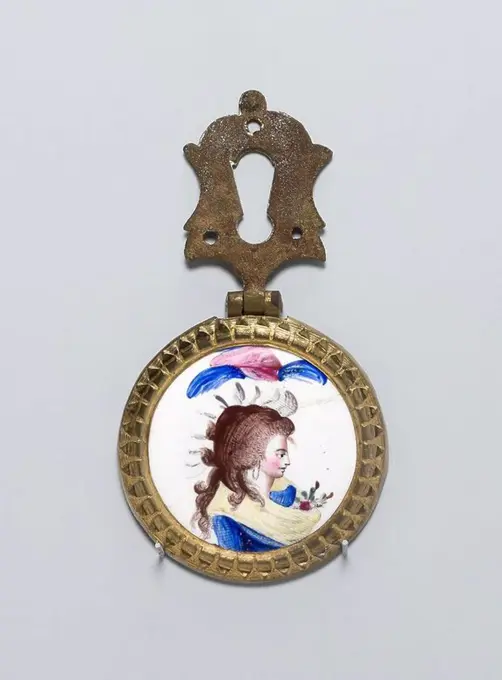
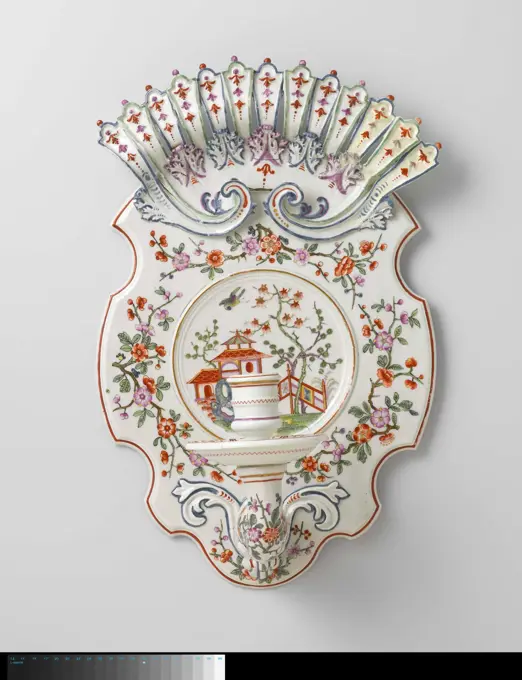
Decorative Plates

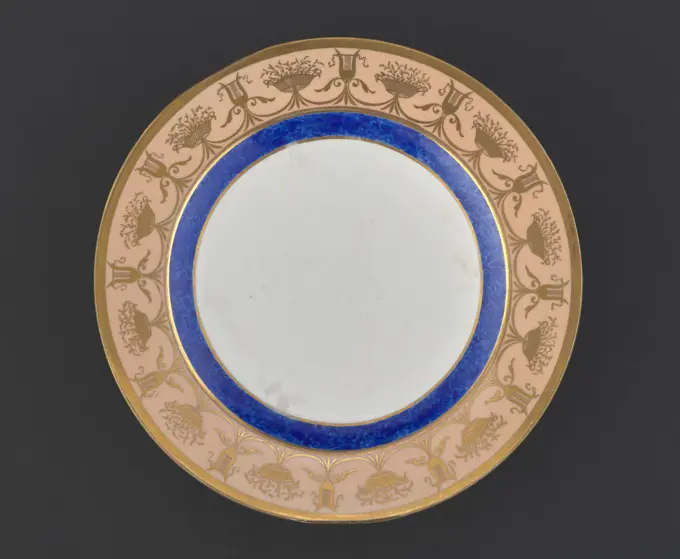
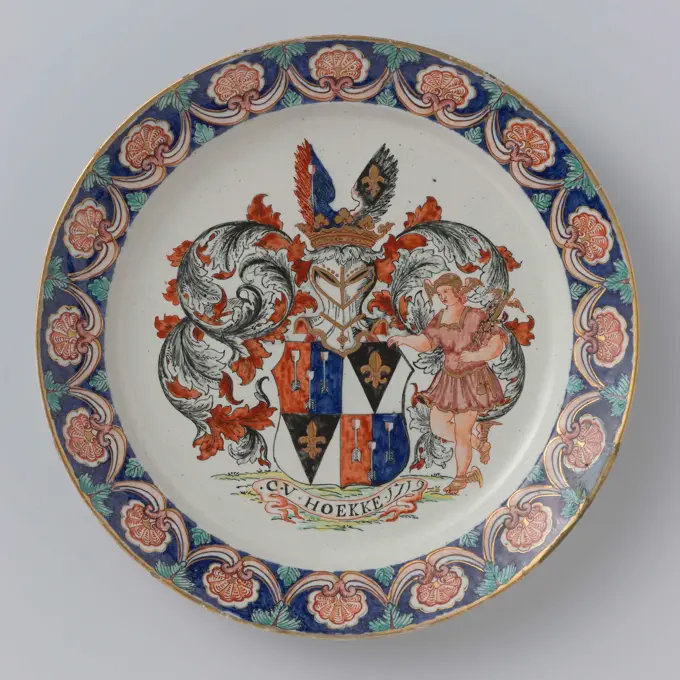
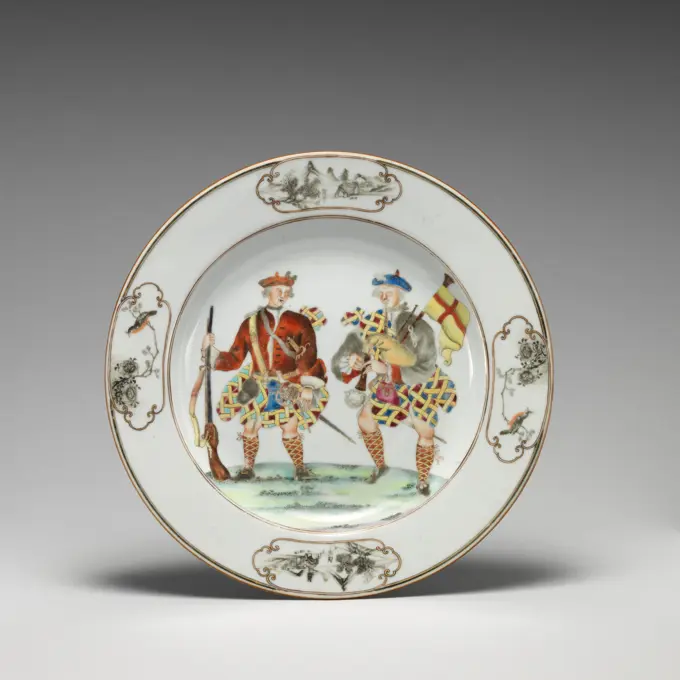
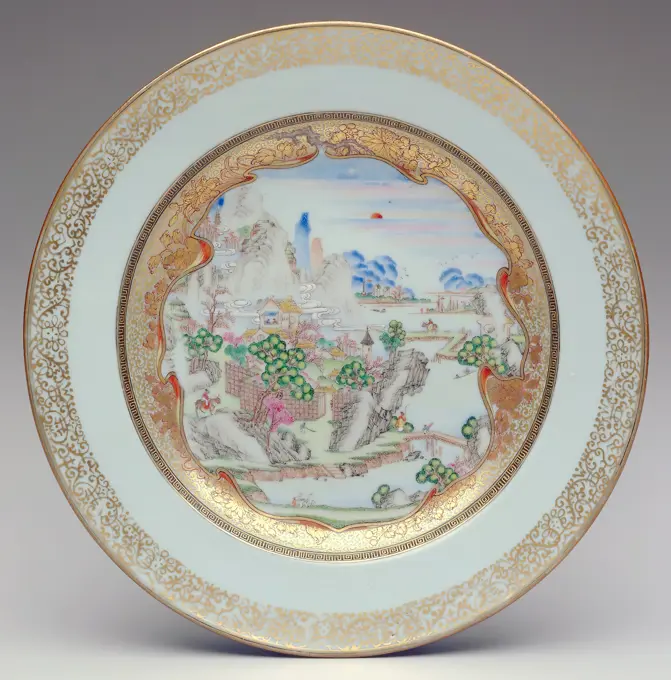
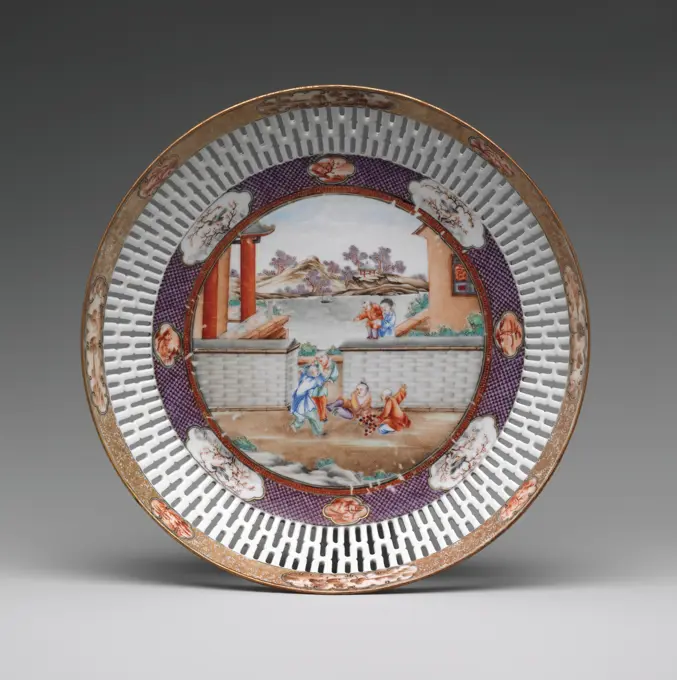
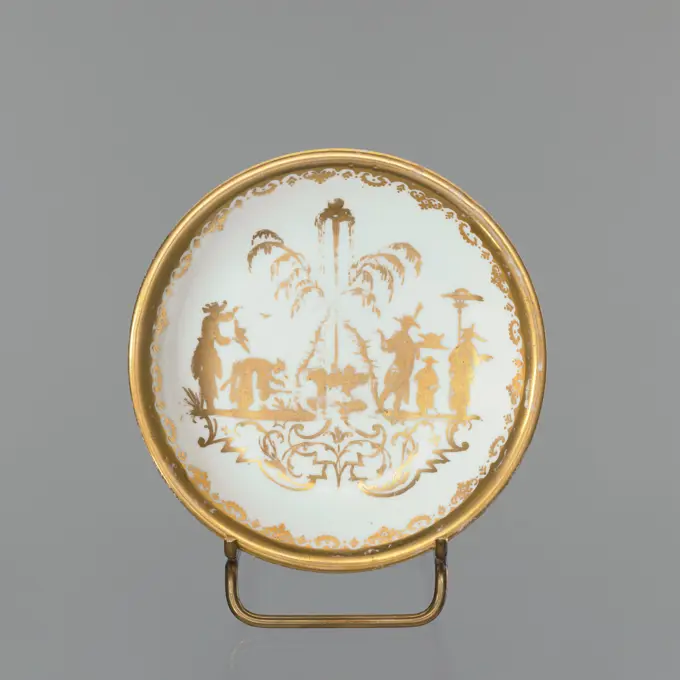
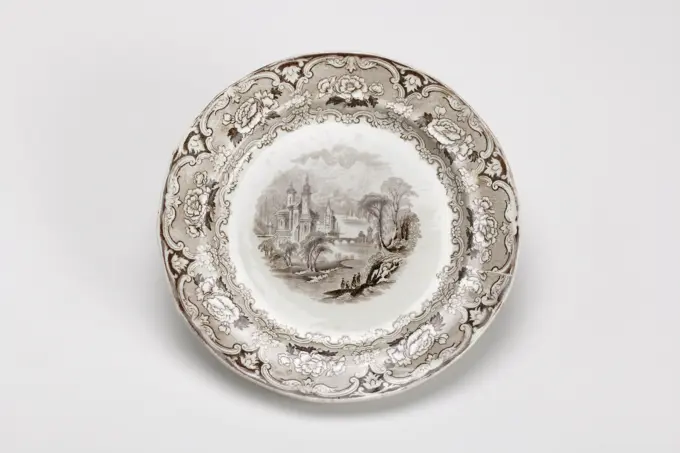
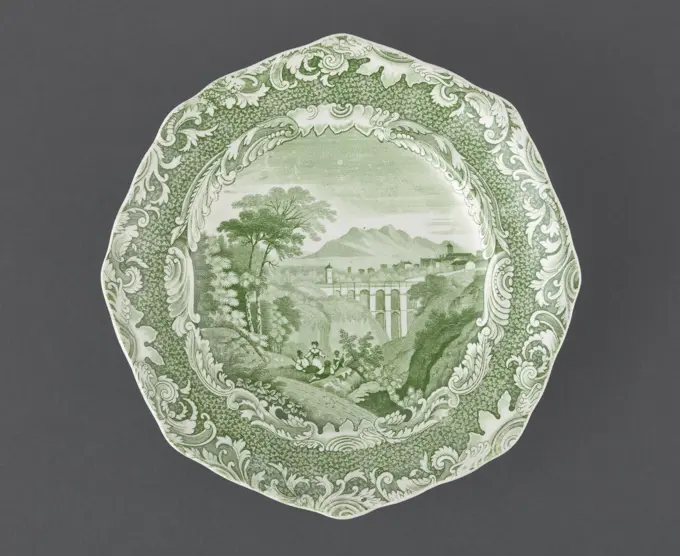
Elegant porcelain plates featuring intricate designs and historic motifs. Rich colors and detailed hand-painted decorations stand out.

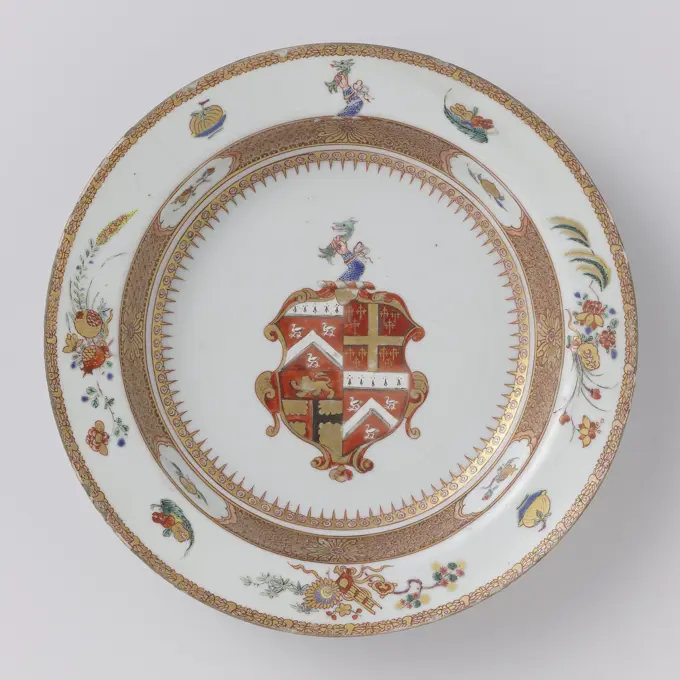
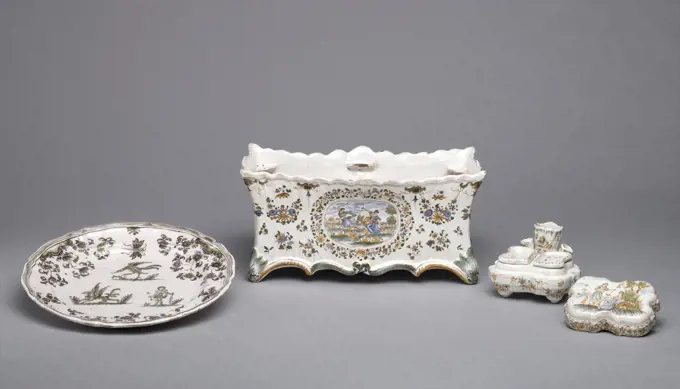
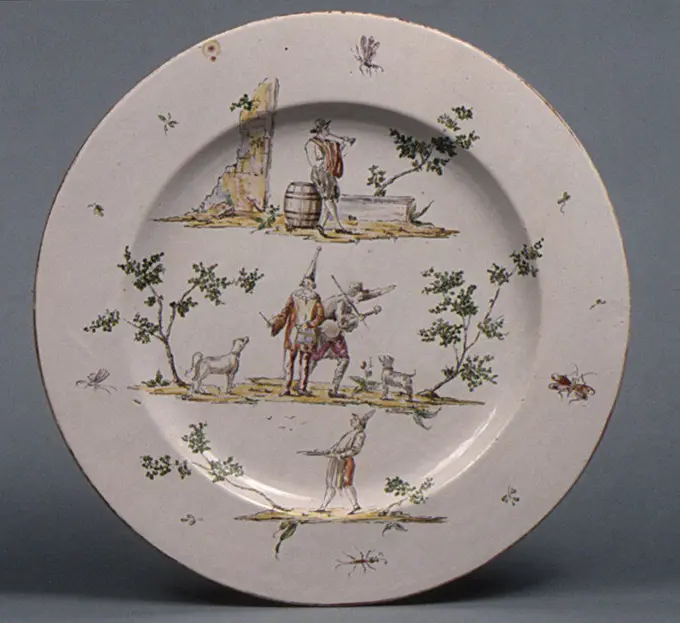
Plate; Antonibon, Pasquale (Facans Factory; 1670-1884); around 1750 (1745-00-00-1755-00-00);
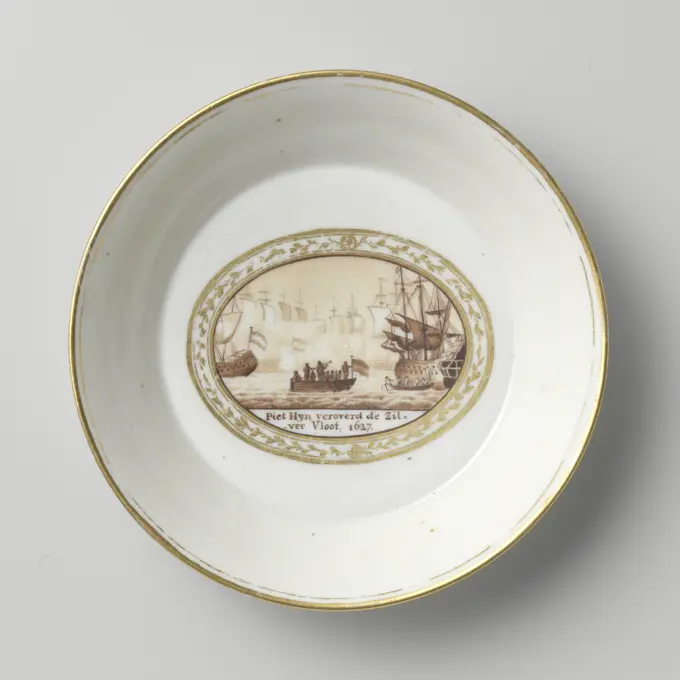
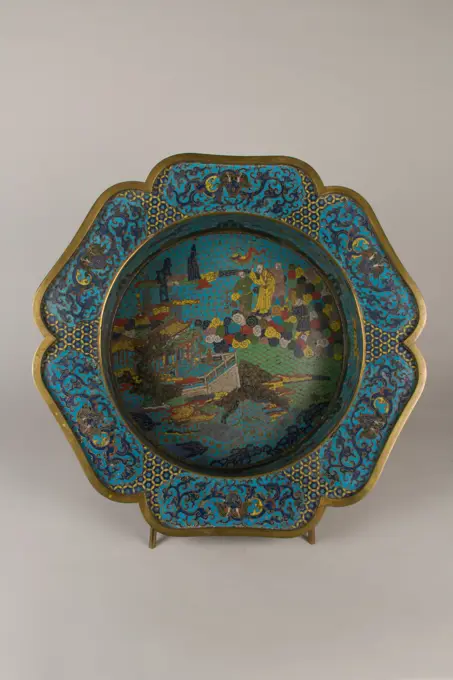
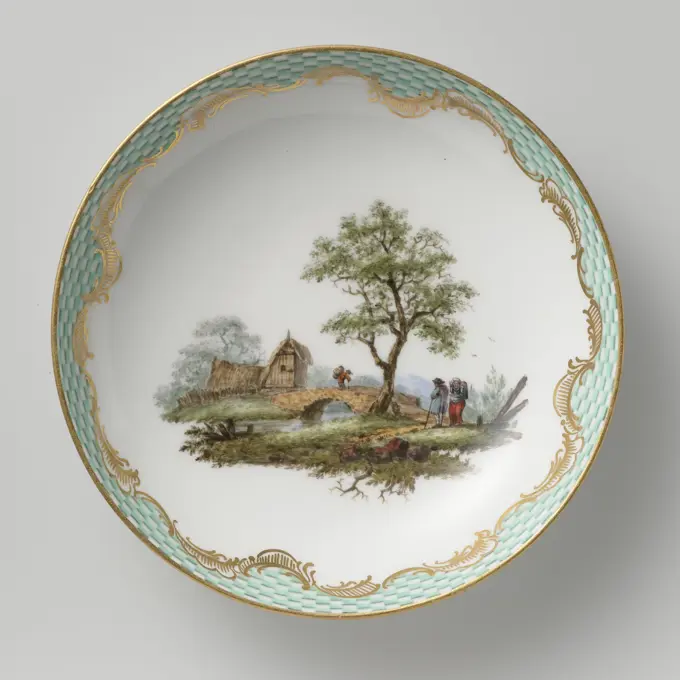
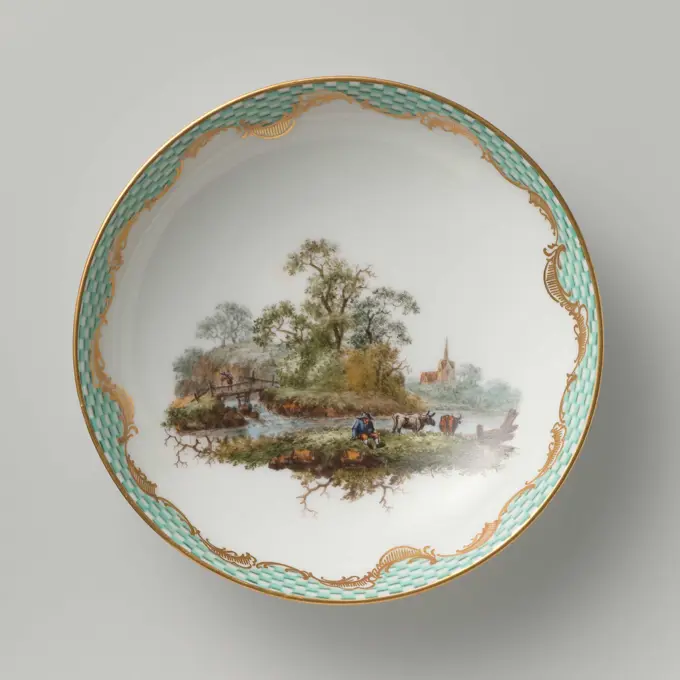
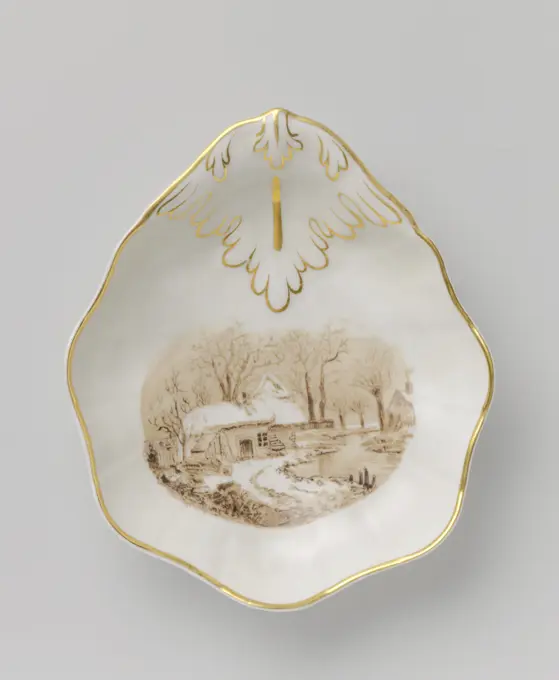
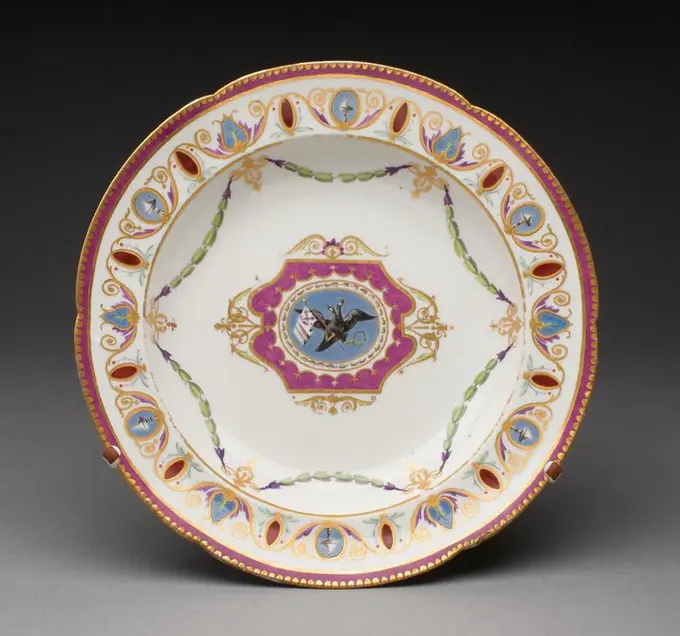
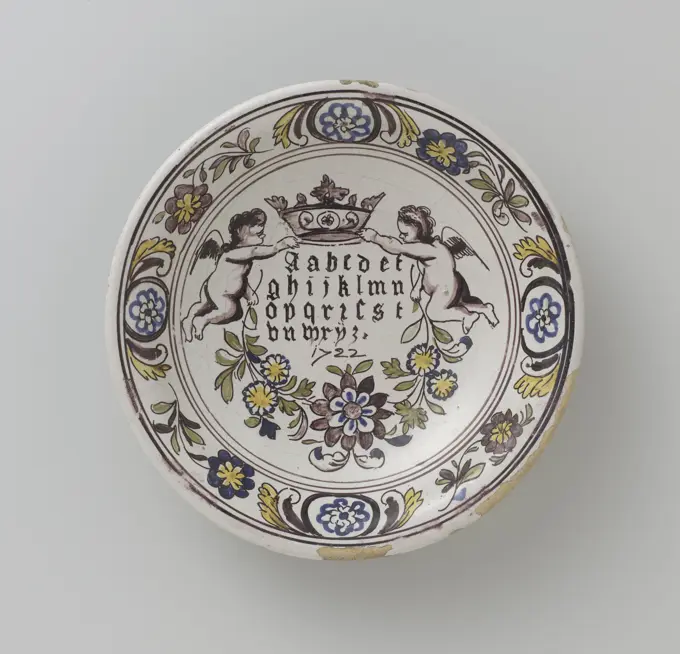
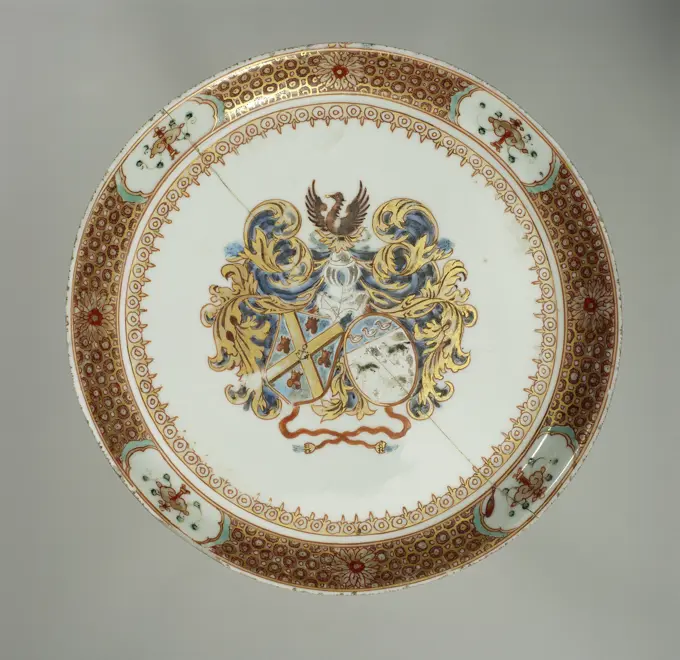
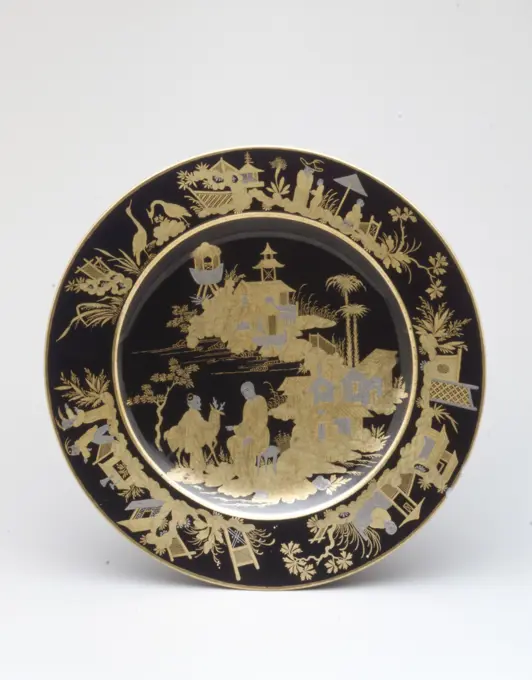
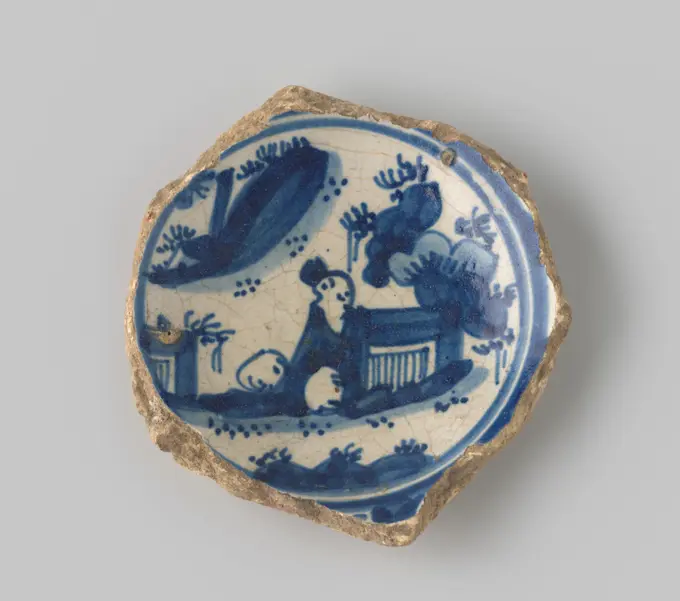
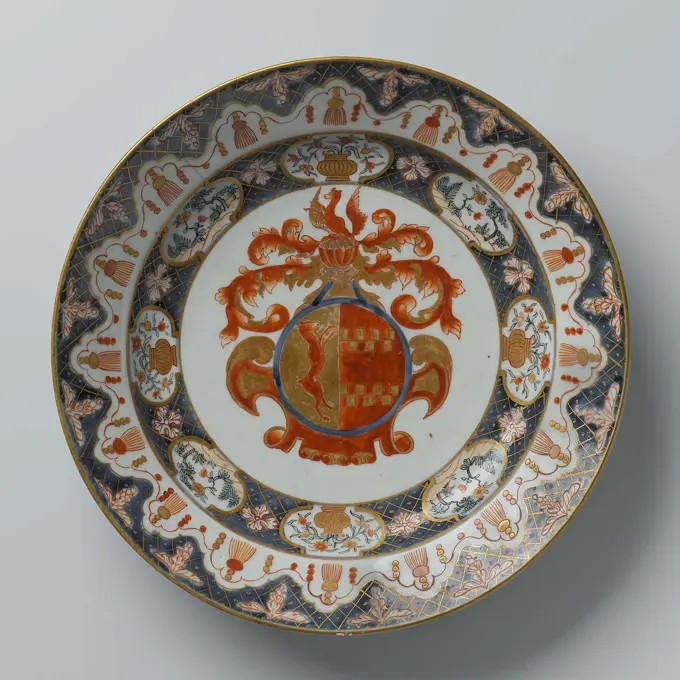
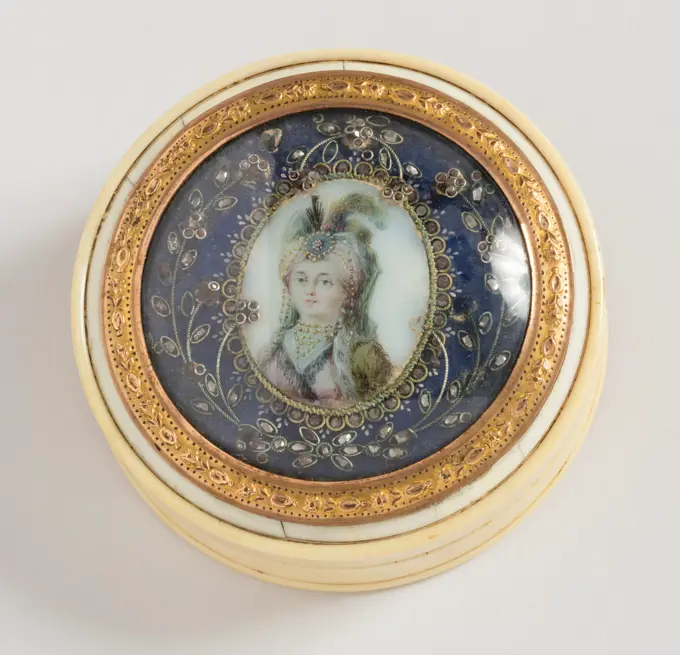
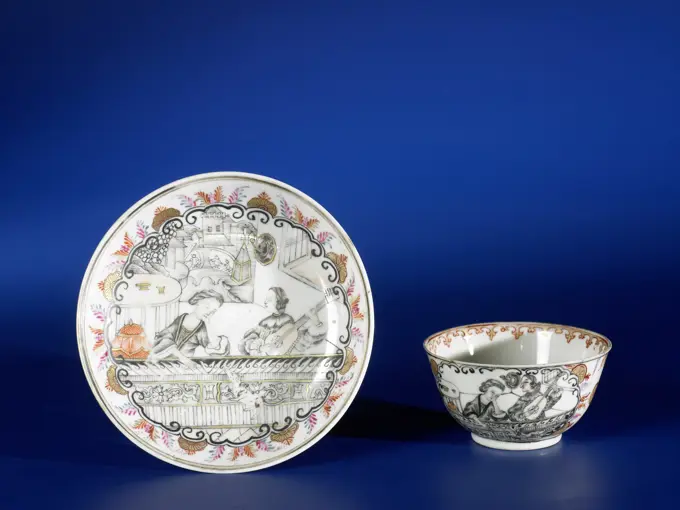
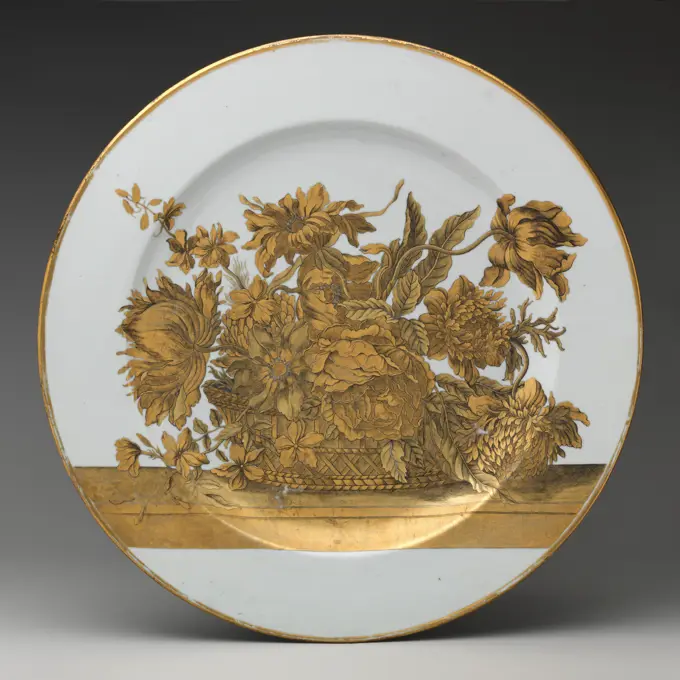
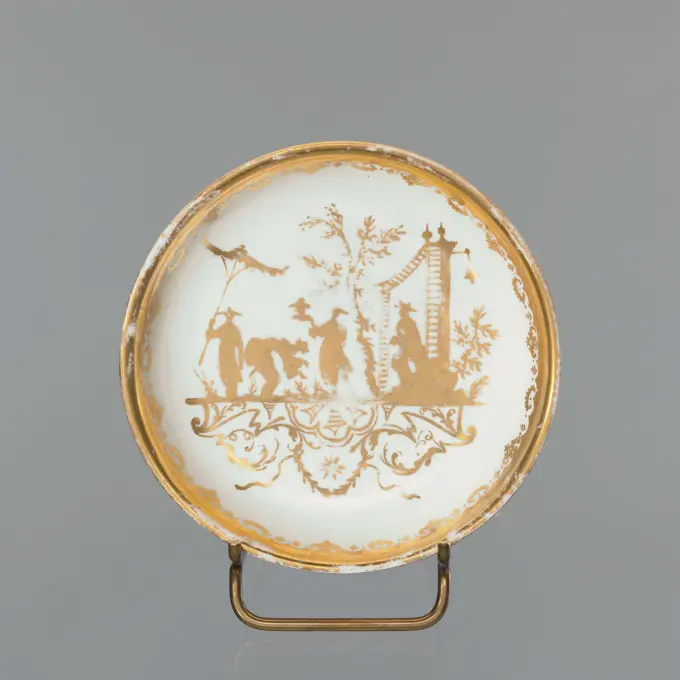
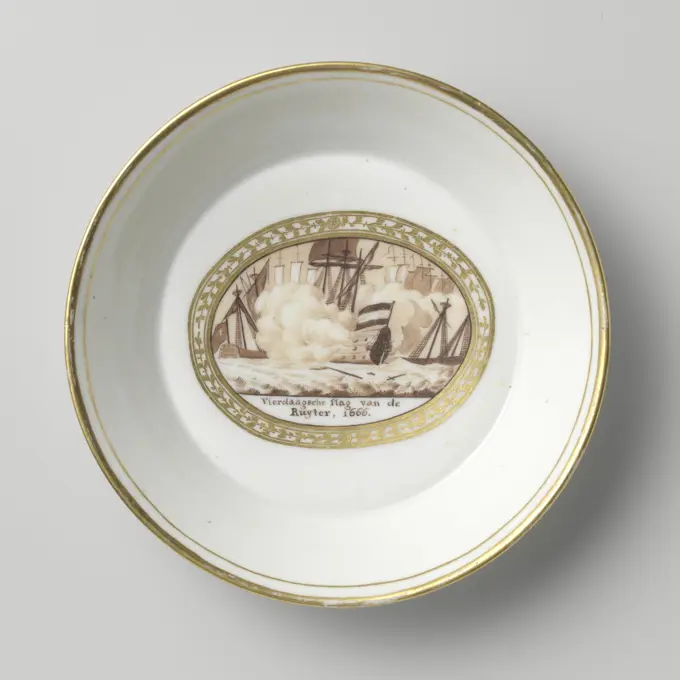
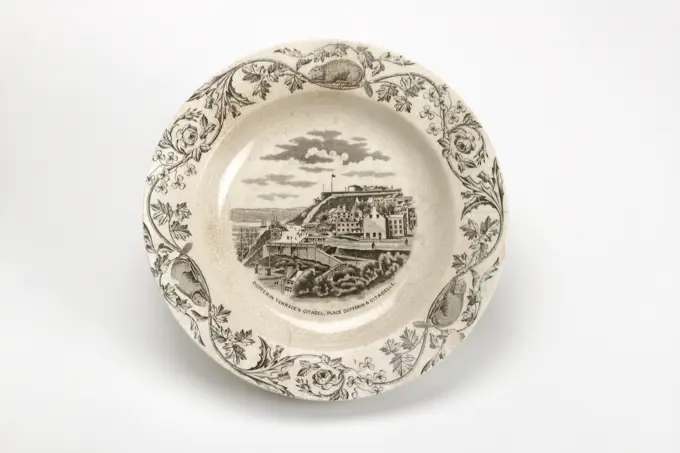
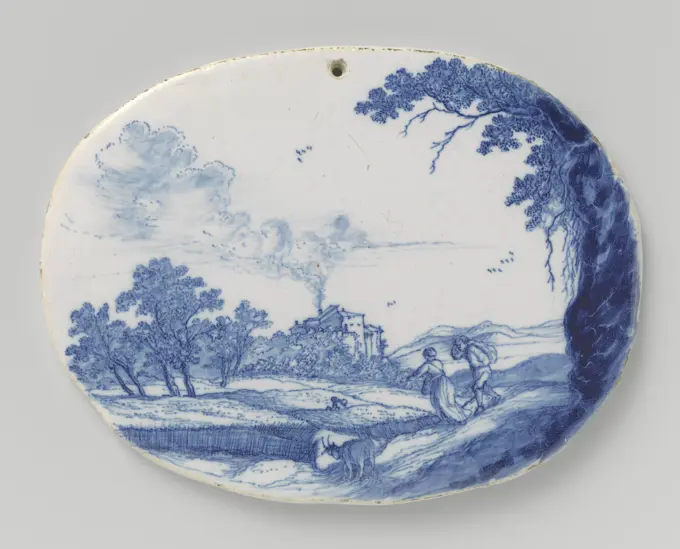
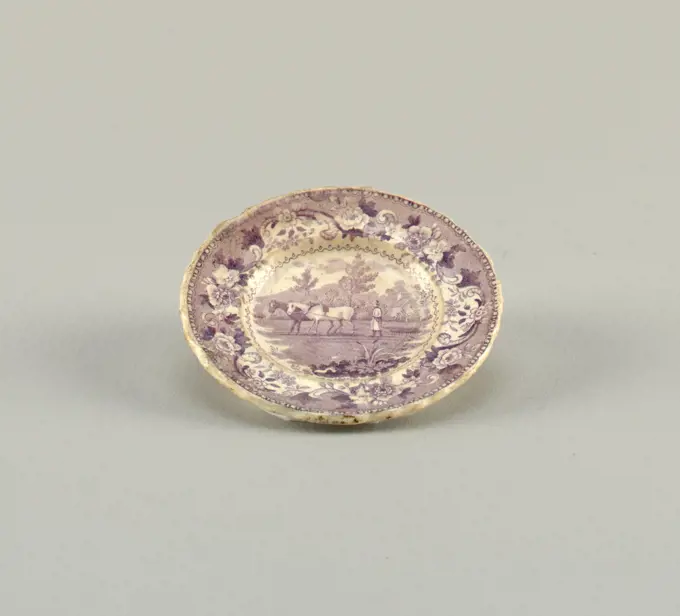
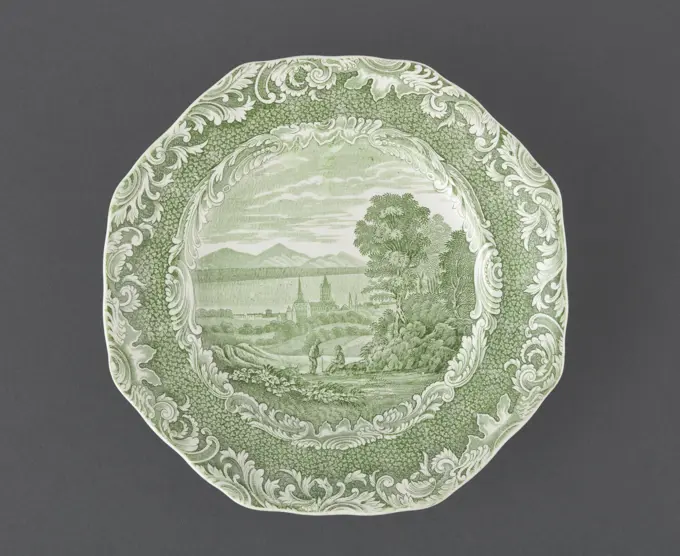
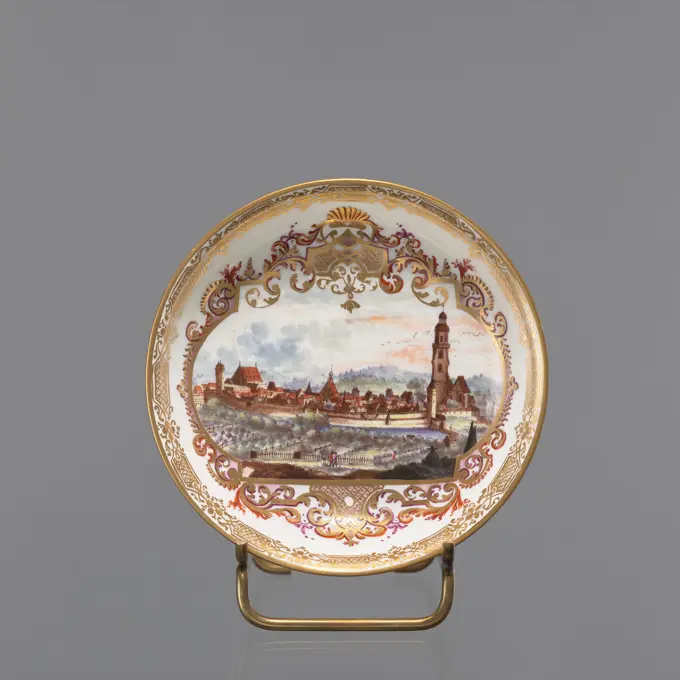
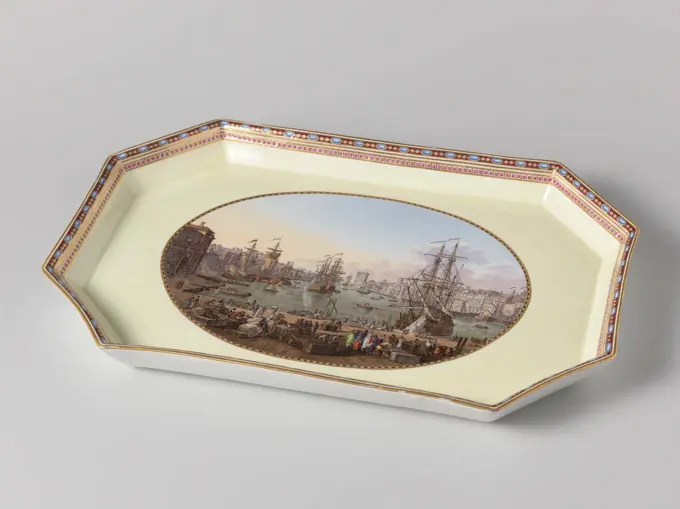
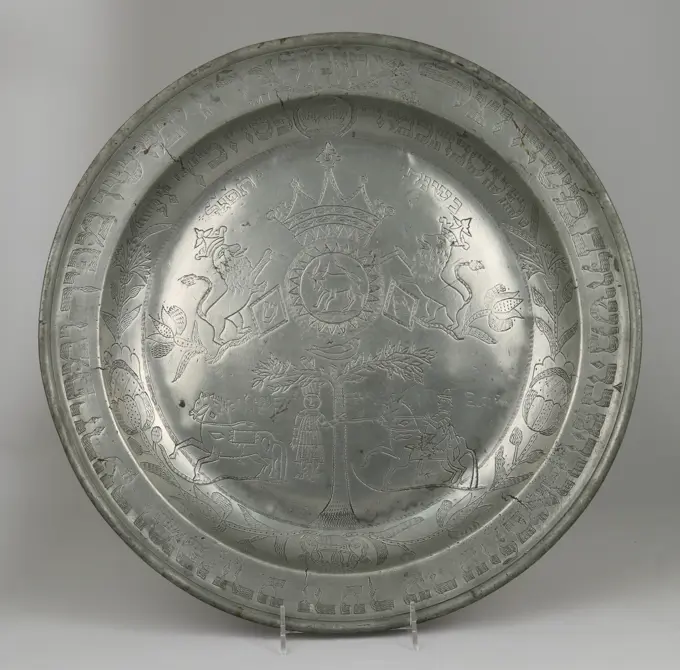
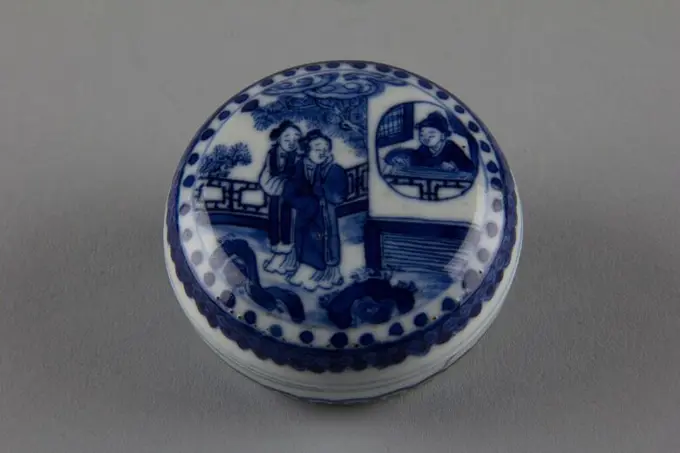
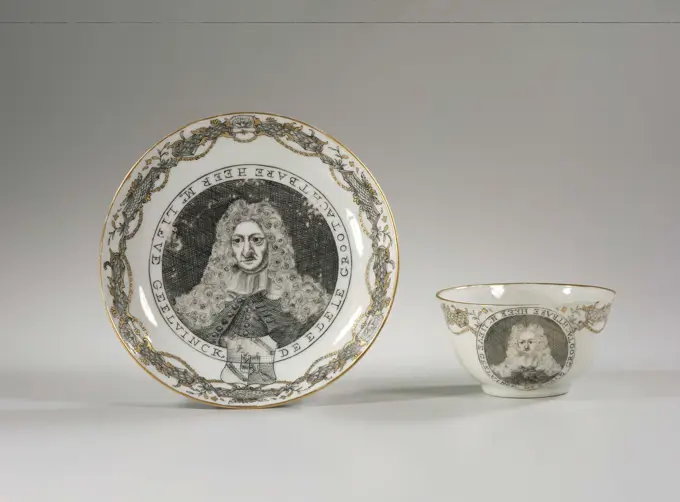
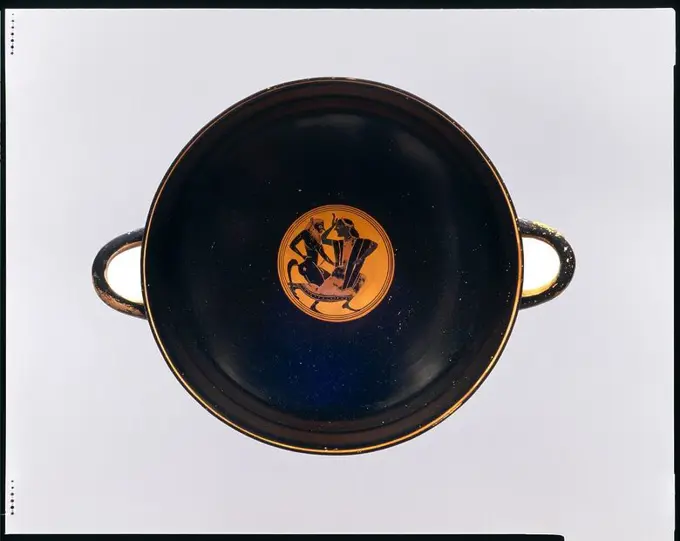
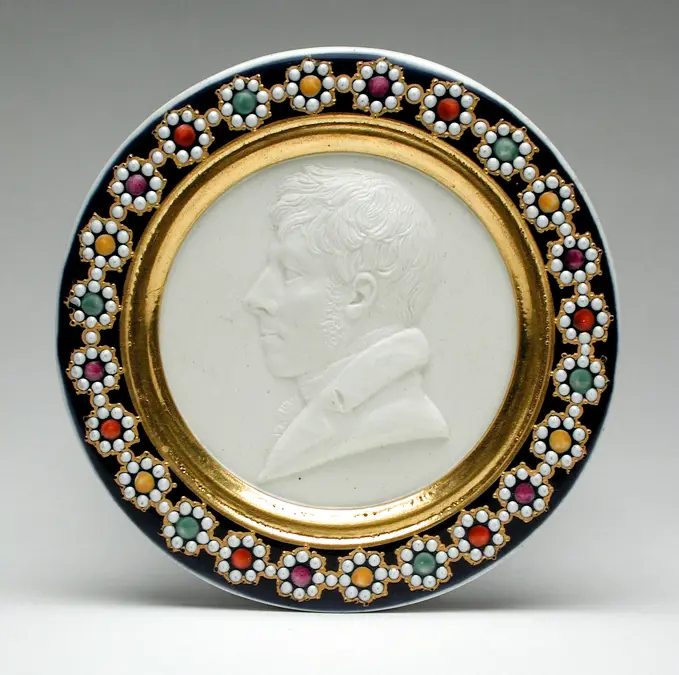
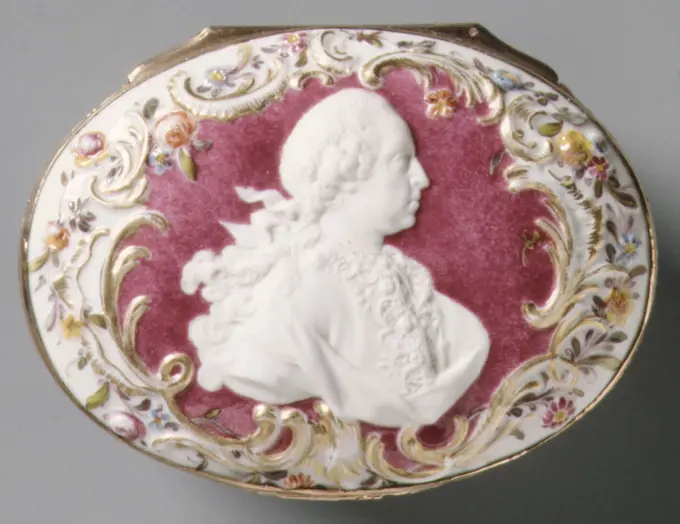
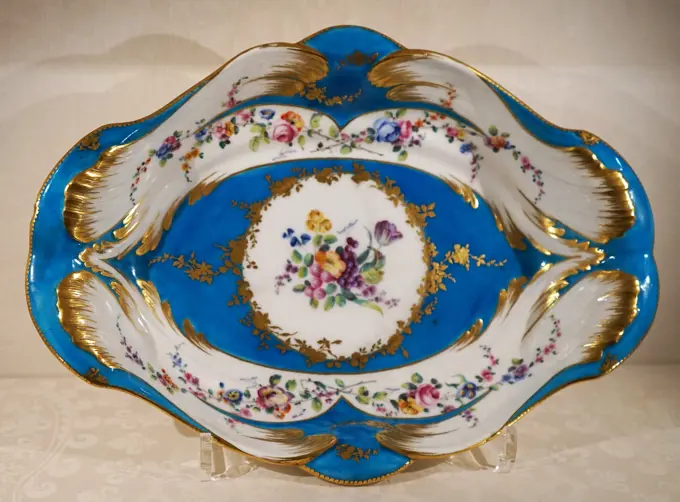
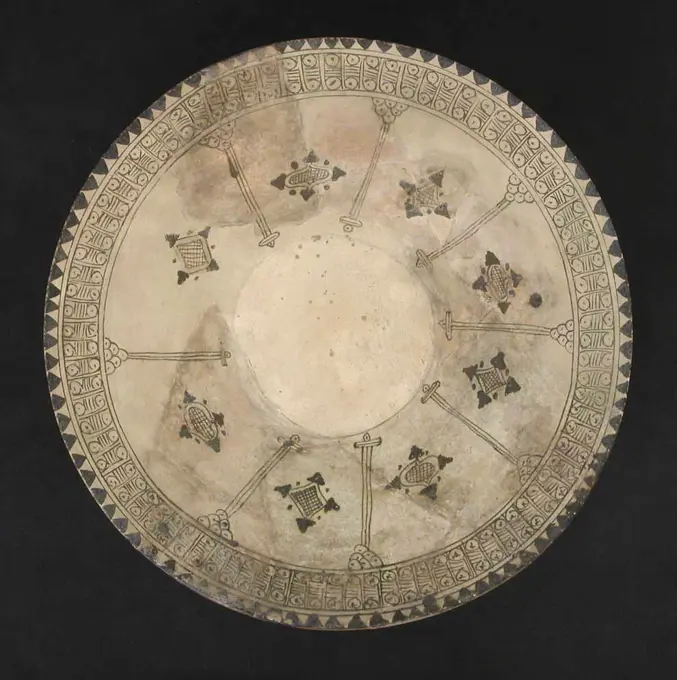
Soup plate with the arms of the Sayer, Woodhave and Brooke family, anonymous, c. 1725 - c. 1749 Porcelain soup plate, painted on the glaze in blue, red, green, yellow, black and gold. On the flat the coat of arms of the Sayer, Woodhave and Brooke families, with an arm as a helmet that holds a dragon head; To the weapon a Spearhead border. On the wall a honeycomb pattern with a stylized Lotus, interrupted by lobed cartouches with a fruit branch (pomegranate, peach). On the edge again the helmet sign, fruit branches, lucky symbols (Ruyi-SCEPTER, LOTUS stem) in the 'Three Friends of Winter' (pine, prunus, bamboo), fingercitroen on an artimisia leaf and a piece of fruit in a bowl; On the edge also a narrow band with a decorative pattern. Four flower branches on the back. Old label on the bottom with 'Sayer'. A few chips and a crack in the edge. Weapon porcelain with email colors. China porcelain. glaze. gold (metal) painting / gilding / vitrification Porcelain soup plate, painted on the glSaucer with a man on the coast, anonymous, c. 1790 - c. 1800  Soft-Paste porcelain dish (Pâte Tendre), painted on the glaze in red, pink, black and gold. On the flat a medallion with a man on the coast. He is about to climb his horse. A few boats on the water in the background. Above the medallion a garland and two flower branches underneath. On the inner edge a wavy band of a ribbon and a leaf vank that cross each other. Europe porcelain. glaze. gold (metal) painting / gilding / vitrificationSaucer with an image of Piet Heyn and the Silver Fleet, anonymous (attributed to), after 1794 service (set) Porcelain dish, painted on the glaze in Sepia and Gold. On the flat a medallion with a performance with the inscription 'Piet Hyn conquered the silver fleet, 1628'. A bond with a leaf vine around the medallion. Golden Rand. Marked on the underside with N 103 and 10. porcelain company: Schwarzburgdesigner: Amsterdam porcelain. glaze. gold (metal) painting / gilding / vitrificationSeven plates from the service of Stadtholder William v. These seven plates are from a 435-part service owned by Stadtholder William v of Orange. The service was produced in Meissen between 1772 and 1774, possibly on commission for the Dutch East India Company (VOC). The plates bear scenes of various Dutch cities and buildings, as well as views of Java and Ceylon, then important Company territories.Saucer, part of Breakfast Service (déjeuner) 1813 Sèvres Manufactory French This breakfast service (56.29.1-.8) was presented by Napoleon I to Princess Auguste-Amélie, wife of his stepson Eugène Beauharnais, on New Year's Day of 1814. The overall theme of the decoration was described in the factory records as the "loves of amors and nymphs," and the title given to the scene on the tray was "Accused Nymphs Appearing before the Tribunal of Love.". Saucer, part of Breakfast Service (déjeuner). French, Sèvres. 1813. Hard-paste porcelain. Ceramics-PorcelainOctagonal plate with the arms of the Machell and Holloway family, anonymous, c. 1750 - c. 1774 Octagonal plate of porcelain, berged on the glaze in blue, red, pink, green, yellow, black and gold. On the flat the weapon of the Machell and Holloway families surrounded by flower vines. The helmet sign is a deer head. On the wall a band with switch motif; The edge with flower branches, birds on a leaf vank and a switch motif. Weapon porcelain with email colors. China porcelain. glaze. gold (metal) painting / gilding / vitrification Octagonal plate of porcelain, berged on the glaze in blue, red, pink, green, yellow, black and gold. On the flat the weapon of the Machell and Holloway families surrounded by flower vines. The helmet sign is a deer head. On the wall a band with switch motif; The edge with flower branches, birds on a leaf vank and a switch motif. Weapon porcelain with email colors. China porcelain. glaze. gold (metal) painting / gilding / vitrificationPlate; Antonibon, Pasquale (Facans Factory; 1670-1884); around 1750 (1745-00-00-1755-00-00);Saucer (part of a service) 1750-70 Chinese, for Continental European market. Saucer (part of a service) 201235Bowl with Scene of Daoist Immortals 17th century China The color palette of cloisonné, an enamel decoration that usually features vibrant turquoises and blues, is well suited to depicting the magical landscape of Daoist immortals. Here, a supernatural being, attended by servants, arrives at a pavilion on a billowing cloud.. Bowl with Scene of Daoist Immortals 40738Dish, multi -colored painted with a water landscape in a saved four pass in an Oranjerode fond, Meissener Porzellan Manufaktur, c. 1735 Subtotel of painted porcelain. The dish is covered with an Oranjerode Fond, in which accolade -shaped four -passes are saved with (water) landscapes with European figures, sometimes with bales and ships. The dish is marked and belongs to a head (BK-17402-I-1) and an equal head and saucer (BK-17402-H-1 and BK-17402-H-2. The dish belongs to a tea and chocolate shears (BK-17402-A to BK-17402-X). Float porcelain Subtotel of painted porcelain. The dish is covered with an Oranjerode Fond, in which accolade -shaped four -passes are saved with (water) landscapes with European figures, sometimes with bales and ships. The dish is marked and belongs to a head (BK-17402-I-1) and an equal head and saucer (BK-17402-H-1 and BK-17402-H-2. The dish belongs to a tea and chocolate shears (BK-17402-A to BK-17402-X). Float porcelain. Dish of Faïence. In blue on the flat the presentation of Mattheus 14 verse 18. around it a multicolored floral edge with putti and landscape in blue.Dish, multi -colored painted with a landscape with figures., Meissener Porzellan Manufaktur, 1777 Round dish of painted porcelain. The dish is painted with landscapes in which figures and along the edge a wide strip of green braid. The dish is marked. Float porcelain Round dish of painted porcelain. The dish is painted with landscapes in which figures and along the edge a wide strip of green braid. The dish is marked. Float porcelainSoup Plate 1763-1764 Meissen. Hard-paste porcelain, polychrome enamels, and gilding . Meissen Porcelain Manufactory (Manufacturer). Round dish of painted porcelain. The dish is painted with landscapes in which figures and along the edge a wide strip of green braid. The dish has been marked.Dish with a landscape, anonymous, A.T. Vaillant, c. 1850 - c. 1860 Leaf -shaped bowl of porcelain, painted on the glaze in sepia and gold. On the narrow side a modeled leaf, turned on with gold. On the flat a winter landscape with bare trees and snowy houses along a river. Golden Rand. Signed in the performance with A.T.V. And marked on the underside with V . Europe porcelain. glaze. gold (metal) painting / gilding / vitrification Leaf -shaped bowl of porcelain, painted on the glaze in sepia and gold. On the narrow side a modeled leaf, turned on with gold. On the flat a winter landscape with bare trees and snowy houses along a river. Golden Rand. Signed in the performance with A.T.V. And marked on the underside with V . Europe porcelain. glaze. gold (metal) painting / gilding / vitrificationSoup Plate. Russian Imperial Porcelain Factory; Russian, founded 1744. Date: 1762-1766. Dimensions: Diam. 24 cm (9 7/16 in.). Hard-paste porcelain, polychrome enamels, and gilding. Origin: Saint Petersburg. Museum: The Chicago Art Institute, Chicago, USA.Dish, painted with figures in landscapes. Part of a crockery. Dish of porcelain, painted multi-colored with figures in landscapes. Part of a crockery. Marked with two crossed swords and rebel: MHS.Bowl - John Goodwin John GoodwinDish with the arms of Van Buren and two ornamental borders, anonymous, anonymous, c. 1700 - c. 1715 Porcelain saucer, painted in under -glaze blue and on the glaze red, green, black and gold. On the flat the family crest of Van Buren with a grin against a gold background on the left and twice seven golden rectangles on a red background. The helmet sign is a greyhound with wings surrounded by acanthus leaves. The wall with servetwork with a stylized flower, interrupted by cartouches with a landscape or a flower vase. The edge with a band with brushes and a band with leaves on servetwork. The underside with proenen. The dish is caught in a metal frame. Weapon porcelain in Imari. Arita. Japan Porcelain. Glaze. Cobalt (Mineral). Gold (Metal). frame: Metal painting / gilding / vitrification Porcelain saucer, painted in under -glaze blue and on the glaze red, green, black and gold. On the flat the family crest of Van Buren with a grin against a gold background on the left and twice seven golCup and Saucer, porcelain factory The Hague, c. 1777 - c. 1790 Cup and saucer multi -colored painted with a river landscape. Along the edges, a yellow band wounded with a flower garland. Marked with a stork in underlaze blue, the headgrift L and the dish 3. N.B. Ansbach's hard porcelain painted in The Hague. The Hail Hate Company: Ansbach porcelain Cup and saucer multi -colored painted with a river landscape. Along the edges, a yellow band wounded with a flower garland. Marked with a stork in underlaze blue, the headgrift L and the dish 3. N.B. Ansbach's hard porcelain painted in The Hague. The Hail Hate Company: Ansbach porcelainA plate;  18th century (1701-00-00-1800-00-00);Dish, multi -colored painted with a landscape with figures., Meissener Porzellan Manufaktur, 1777 Round dish of painted porcelain. The dish is painted with landscapes in which figures and along the edge a wide strip of green braid. The dish is marked. Float porcelain Round dish of painted porcelain. The dish is painted with landscapes in which figures and along the edge a wide strip of green braid. The dish is marked. Float porcelainPlate; Koenigliche Porzellan Manufaktur (KPM; Berlin; 1763-1918); approx. 1800 (1823-00-00-1832-00-00);. Plate of Faïence, painted multi-colored with the clander's family crest of corner.Saucer with a Crowned, illegible monogram surrounded by two Flower sprays. Dish of porcelain, painted on the glaze in blue, red, pink, green, yellow, black and gold. On the flat a crowned, unreadable monogram surrounded by two flower branches; The wall with flower refines with four cartouches with a landscape and four medallions with plants. European performance in email colors.Plate (one of a pair) Chinese, for British or Scottish market mid-18th century View more. Plate (one of a pair). Chinese, for British or Scottish market. mid-18th century. Hard-paste porcelain. Ceramics-Porcelain-ExportPlate, c. 1740, 1 3/16 x 8 15/16 in. (3.02 x 22.7 cm), Porcelain with enamel and gilded decoration, China, 18th centuryDish with alphabet in Gothic letters and year 1722, Anonymous, 1722 Round dish of multi -colored painted majolica. Two angels are painted on the dish that hold a crown in their one hand and hold flower vines in the other, in which the alphabet is written in Gothic letters and the year 1722. Makkum earthenware. tin glaze. lead glaze majolica Round dish of multi -colored painted majolica. Two angels are painted on the dish that hold a crown in their one hand and hold flower vines in the other, in which the alphabet is written in Gothic letters and the year 1722. Makkum earthenware. tin glaze. lead glaze majolicaPlate with the arms of the De Neufville and De Wolff family, anonymous, c. 1740 - c. 1760 Porcelain plate, painted on the glaze in blue, red, turquoise, black and gold. On the flat the weapons of the De Neufville family and the Wolff. The weapon on the left belongs to the De Neufville family and consists of four towers and a golden Sint-Andries cross with an anchor in the middle. The weapon on the right is from the De Wolff family and consists of wolves and common swifts. The helmet sign is a bird. The weapons are surrounded by a cover of blue and gold leaf vines and at the bottom of two brushes in iron red. To the weapon a Spearhead border; On the wall a honeycomb pattern with stylized Lotus interrupted by four cartouches with mushroom (Lingzhi). The rear with four flower branches. The board has been broken, the edge has been ground. Weapon porcelain with email colors. China porcelain. glaze. gold (metal) painting / gilding / vitrification Porcelain plate, painted on the glaze in bluePlate ca. 1791 Sèvres Manufactory French Porcelain decorated with a black ground in imitation of Asian lacquer was produced at Sèvres for about a fifteen-year period beginning in 1790. Furniture decorated with imported black lacquer panels saw a resurgence of popularity in the last two decades of the eighteenth century, and the Sèvres factory's efforts to simulate black lacquer on porcelain were probably stimulated by this renewed general interest in lacquer decoration. Black-ground Sèvres porcelain was decorated with chinoiserie scenes executed in gold, which was often applied in subtle tones of yellow, green, and red. Small decorative highlights were often executed in platinum, and the ability to apply platinumfirst mastered by the factory in 1790may have been an impetus to produce these lacquer-inspired pieces.[Jeffrey H. Munger, 2015. Plate 202651Fragment of a dish, c. 1600 - c. 1625 Fragment of a dish on a low foot ring. Crème shard covered with ting laze on the front and green lead glaze at the rear. Painted in blue with a Chinese sitting at a fence in a garden inside circles. Northern Netherlands earthenware. tin glaze. lead glaze majolica Fragment of a dish on a low foot ring. Crème shard covered with ting laze on the front and green lead glaze at the rear. Painted in blue with a Chinese sitting at a fence in a garden inside circles. Northern Netherlands earthenware. tin glaze. lead glaze majolica. Medallion with portrait in profile with inscription: fred.soph.wilh: Princ: Borvs: Princes: Aravs: Conivx, presenting Frederica Sophia Wilhelmina Princess of Prussian, De Gemalin of Stadholder Prince Willem V. under the bust, the brand: F. Meyer . FEC. Berl. 1773.Anonymous. Plate at the Tree of Liberty. Earthenware. 1792-1793. Paris, Carnavalet museum. 72429-50 Tree, Phrygian Bonnet, Faience, Liberte, Revolutionary Periode, French Revolution, PlateAnonymous. Plate. Earthenware. Paris, Carnavalet museum. 71478-39 Attribut, Beche, Canon, Flag, Embleme, Epee, Revolutionary Pilot, Faience, Law, French Revolution, Tambour, three orders, dishes, platePlate; Copeland & Garret (England; Ceramics; 1833-1847); 1833-46 (1833-00-00-1846-00-00);Dish, multi -colored painted with a landscape with figures., Meissener Porzellan Manufaktur, 1777 Round dish of painted porcelain. The dish is painted with landscapes in which figures and along the edge a wide strip of green braid. The dish is marked. Float porcelain Round dish of painted porcelain. The dish is painted with landscapes in which figures and along the edge a wide strip of green braid. The dish is marked. Float porcelainJardinière, Enameled and gilt tôle, Oval, with shaped edge and simple handles. Black field, decorated in colors and gilding with Chinese figures, slightly raised., France, 1800-1825, metalwork, Decorative Arts, JardinièreDish with the Arms or Van Buren and Two Ornamental Borders. Dish of porcelain, painted in underglaze blue and on the glaze red, green, black and gold. On the flat neighborhood of from neighbors with left a greyhound against a golden background and right twice seven golden rectangles on a red background. The helmet sign is a greyhound with wings surrounded by acanthus leaves. The wall with napkin with a stylized flower, interrupted by cartouches with a landscape or a flower vase. The edge with a band with brushes and a bond with leaves on napkin. Four preen on the bottom. A crack in the wall. Weapon porcelain in Imari. Arita.. Plaque of faïence with a chinoiserie decoration.. Porcelain plate, painted on the glaze in red, black and gold. At the Flat The Arm of the Vijnkershoek family. The weapon and helmet sign consist of a golden sword and feather or slices of stars. The cover consists of leaves in black or silver and gold. A bond with flower drinks on the wall; The edge with four flower branches (Aster, Peony, Prachtanjer). Old label on the underside with 'Van Bynkershoek'. A crack and a chip in the edge. Weapon porcelain min encre de chine.Plate, Olérys-Laugier Factory, France, founded 1738, Tin-glazed earthenware, Circular form with shaped rim. Monochrome green decoration on a white ground shows a flying insect, Feng Huang (Ho-ho bird), griffin, and youth bearing bow and arrow. The rim decorated is with thin bands and flowers., Moustiers-Sainte Marie, France, 1760s, ceramics, Decorative Arts, PlateBox; ivory; Bequest of Katherine Strong Welman; 1908-23-19-a,bBell-shaped cup and saucer with a woman and a man with a mandolin, anonymous, c. 1760 - c. 1780 Klock -shaped head and dish of porcelain, painted on the glaze in blue, red, pink, black and gold. On the flat of the dish a lobed cartouche with a European woman and a man with a mandolin on a terrace in front of a building, a spinging dog for the balustrade; A castle in the background; Around the cartouche half flower straws and leaves. The head with the same decoration; On the inner edge a 'Spearhead border'. European performance in email colors and Encre de Chine. China porcelain. glaze. gold (metal) painting / gilding / vitrification Klock -shaped head and dish of porcelain, painted on the glaze in blue, red, pink, black and gold. On the flat of the dish a lobed cartouche with a European woman and a man with a mandolin on a terrace in front of a building, a spinging dog for the balustrade; A castle in the background; Around the cartouche half flower straws and leaves. The head with the Dish 1763 Decorator (obverse) Felice Clerici. Dish 200949Plate (one of a pair) ca. 1735-40 After engravings by Jean-Baptiste Monnoyer French The beautifully painted flower baskets on these two dishes derive from French engravings based on the work of Jean Baptiste Monnoyer (1634-1699). On the back of each dish are the arms of a Scottish family named French from Berwickshire.. Plate (one of a pair). After engravings by Jean-Baptiste Monnoyer (French, Lille 1636-1699 London). Chinese, possibly for Scottish market. ca. 1735-40. Hard-paste porcelain with gilding. Ceramics-Porcelain-ExportPlate with a river face on the flat, Peter Regout, c. 1801 - c. 1879 Plate of pottery with pink transfer decor. On the flat a river face with boats and some buildings. The edge with flowers and leaf work in relief and pink fillets. Maastricht earthenware Plate of pottery with pink transfer decor. On the flat a river face with boats and some buildings. The edge with flowers and leaf work in relief and pink fillets. Maastricht earthenwareSaucer with a Crowned, illegible monogram surrounded by two Flower sprays. Dish of porcelain, painted on the glaze in blue, red, pink, green, yellow, black and gold. On the flat a crowned, unreadable monogram surrounded by two flower branches; The wall with flower refines with four cartouches with a landscape and four medallions with plants. European performance in email colors.Saucer. Augsburg (miasto), atelier, Koenigliche Porcellain Fabrique, Meissen (1710-1763), factorySaucer with an image of the Four Days' Battle, anonymous (attributed to), after Jan Gerritsz. Visser, after 1794 service (set) Porcelain dish, painted on the glaze in Sepia and Gold. On the flat a medallion with a performance with the inscription 'Vierdaagse Battle of De Ruyter, 1666'. A bond with a leaf vine around the medallion. Golden Rand. Marked on the underside with 103-N and 15. porcelain company: Schwarzburgafter print by: Amsterdam porcelain. glaze. painting / gilding / vitrification  North ForelandDish 1736-95 Chinese. Dish 3234Dessert plate - Wolfe & Montcalm Monument. Monument de Wolfe & Montcalm, Quebec Views D'après Cochran & Fleming, 1896-1920Dish, Manufactuur Oud-Loosdrecht, c. 1778 - c. 1782 Porcelain scale. Scalloped and gilded edge. Painted in beet red with litter flowers and on the flat a representation with figures in a landscape with obelisk. Around the flat a leaf wreath in gold. Loosdrecht porcelain Porcelain scale. Scalloped and gilded edge. Painted in beet red with litter flowers and on the flat a representation with figures in a landscape with obelisk. Around the flat a leaf wreath in gold. Loosdrecht porcelainSaucer with chinoiseries; Koenigliche Porcellain Fabrique, Meissen (1710-1763), Augsburg (city); around 1715-1725 (1715-00-00-1725-00-00);Dessert plate - Joseph Clementson, 1839-1864 Joseph Clementson, 1839-1864Plate, multicolored painted with a bear hunt, Meissener Porzellan Manufaktur, c. 1750 Round plate of painted porcelain. On the mirror, a battery -shaped four -pass is painted within which a performance of the hunt for a bear by two hunters, one on horseback and five dogs. The board is marked. Porcelain Company: MEISSENPRIZECNÁ porcelain Round plate of painted porcelain. On the mirror, a battery -shaped four -pass is painted within which a performance of the hunt for a bear by two hunters, one on horseback and five dogs. The board is marked. Porcelain Company: MEISSENPRIZECNÁ porcelainPlate; Copeland & Garret (England; Ceramics; 1833-1847); 1833-46 (1833-00-00-1846-00-00);Soup plate - Dufferin Terrace & Citadel. Place Dufferin & Citadelle D'après Robert Cochran & Company, 1846-1896Saucer with a crowned, illegible monogram surrounded by two flower sprays, anonymous, c. 1750 - c. 1774 Porcelain dish, painted on the glaze in blue, red, pink, green, yellow, black and gold. On the flat a crowned, illegible monogram surrounded by two flower branches; The wall with flower vines with four cartouches with a landscape and four medallions with plants. Two chips and two cracks in the wall. European performance in email colors. China porcelain. glaze. gold (metal) painting / gilding / vitrification Porcelain dish, painted on the glaze in blue, red, pink, green, yellow, black and gold. On the flat a crowned, illegible monogram surrounded by two flower branches; The wall with flower vines with four cartouches with a landscape and four medallions with plants. Two chips and two cracks in the wall. European performance in email colors. China porcelain. glaze. gold (metal) painting / gilding / vitrificationSèvres Porcelain Manufactory, Cup and Saucer, 1793, soft-paste porcelain.VegetableDish.   Maker: Job and John Jackson, British, active 1831-35Two oval plaques with landscapes, anonymous, c. 1650 - c. 1675 Faïence plate, painted with a landscape in blue. Delft . Faïence plate, painted with a landscape in blue. Delft .Remembrance Board Boer War: soldiers, Petrus Regout & Co., 1899 - 1925 plate (dishes) Memory board Boer War: white plate with decoration in black and golden edges. British prisoners of war are taken away by a few soldiers from the farmers. In the background hills on which some men and clouds. Possibly it is the Battle of Majuba won by the farmers on 27 February 1881. Signed on the underside: manufacturer brand, below that. Belonged to a series of 6 signs: NG-1982-19-A to F. Performances and edges somewhat faded. Maastrichtzuid-Africa earthenware printing troop movements, transportation Majon HillPlate; Copeland & Garret (England; Ceramics; 1833-1847); 1833-46 (1833-00-00-1846-00-00);Butter plate, Tin-glazed earthenware, transfer-printed decoration, Marli with wavy edge. Mauve transfer print of horses pulling rake, in flower and scroll framing., Staffordshire, England, mid- 19th century, ceramics, Decorative Arts, Butter plateBotervloot, anonymous, 1870 - 1880 FaaMence butter fleet. The lid of the fleet may have been made later. Delft . FaaMence butter fleet. The lid of the fleet may have been made later. Delft .Plate; Copeland & Garret (England; Ceramics; 1833-1847); 1833-46 (1833-00-00-1846-00-00);Saucer-dish with the arms of England, anonymous, c. 1700 - c. 1724 Porcelain saucer with ribbed wall and scalloped edge, painted in underly glaze blue and on the glaze blue, red, green, yellow, black and gold. On the flat in a medallion the weapon of England with the inscription 'Englandt', around the weapon of flower branches, two butterflies and two birds. The wall is divided into twelve petal subjects with alternating a flower vase and a person in a landscape; Between the compartments of servetwork. The back with two flower branches. A crack in the wall. Weapon porcelain with famille e -mail colors. China porcelain. glaze. cobalt (mineral). gold (metal) painting / gilding / vitrification Porcelain saucer with ribbed wall and scalloped edge, painted in underly glaze blue and on the glaze blue, red, green, yellow, black and gold. On the flat in a medallion the weapon of England with the inscription 'Englandt', around the weapon of flower branches, two butterflies and two birds. The waPlate; Copeland & Garret (England; Ceramics; 1833-1847); 1833-46 (1833-00-00-1846-00-00);Dish with Figures on Horseback, wood, paper, paint, lacquer, Oblong lobed tray with molded edge, of painted wood. Engraved decoupage of four persons on horseback, and a standing woman and child at center. On the rim, chinoiserie and an elephant., possibly France, 18th century, Decorative Arts, Dish, DishPaul de Lamerie, Salver, 1739/40, silver.Anti-Slavery Medallion 1787 Burslem. A man of African descent, kneeling and shackled in chains, poses the powerful question ìAm I not a Man and a Brother î Employing a stark contrast of black against a white background, here the Wedgwood pottery used its famous jasperware technique to tackle an issue dear to its foundersí heart the abolition of the slave trade. Josiah Wedgwood was part of a prominent circle of antislavery reformers and entrepreneurs, along with activist Thomas Clarkson and the physician and scientist Erasmus Darwin (grandfather of Charles Darwin).Decades before the American Civil War, this medallion was adopted as the seal for the Society for the Abolition of the Slave Trade, founded in Britain in 1787. Also known as ìThe Seal of the Slave,î it was made in large quantities by Wedgwood and was both sold and distributed for free to promote the cause. Women wore it on bracelets and hair ornaments, and it was even incorporated into clay pipes. The medallion was much like tDish with white figures on black ground. Dish of porcelain, decorated with white figures on black ground and with golden edges and emblems. Signature in gold: Neeles. With a corresponding head.Bowl with Buddhist Assembly China Made for use in Japan, either in a Buddhist context or as part of a meal during a Japanese tea ceremony, this charming bowl is painted with a rare scene of a Buddhist assembly.. Bowl with Buddhist Assembly. China. Porcelain painted with cobalt blue under a transparent glaze (Jingdezhen ware). Ming dynasty (1368-1644), Tianqi period (1620-27). Ceramics. Manufacturing Oud-Loosdrecht Sugar Bowl: Manufacturing Oud-Loosdrecht or Porcelainfabriek aan den Amstelelessrecht and Ouder-Amstel, c. 1782-1784Hard-Paste PorcelainHandscreen (France); engraved and hand-colored paper leaf, turned wood handleAnonymous. Plate at the civic altar. Earthenware. Around 1790. Paris, Carnavalet museum. 72429-37 Civic altar, faience, law, nation, revolutionary period, French revolution, king, civic sermont, w, plateSaucer. Koenigliche Porcellain Fabrique, Meissen (1710-1763), factory. Tray of painted porcelain. The leaf is covered with a yellow part in which an oval spread over the face of the port of Marseille to Jos. VERNET. The show is dated at the bottom right of bale. The magazine is marked.Redemption of the First-Born Ceremony Plate dated 1767 German The names of the owners in Hebrew translated as “Katz” appear above the date, translated to “in the year 1767.” The symbol of the two hands at the top shows that the owner was a descendent of the priestly class from the ancient Temple. The Hebrew verse around the plate's rim comes from a biblical verse in the Book of Isaiah 59:21. The drawing at the center depicts the biblical scene when Joab kills Absalom from 2 Samuel 18:9-14. The ram at the center in a circle possibly represents the biblical scene of the Binding of Isaac (Akedat Yizchak) from Genesis 22:1-19.. Redemption of the First-Born Ceremony Plate. German. dated 1767. Pewter. Metalwork-Pewter. Dish of porcelain with ribbed wall and scalloped edge, painted in underglaze blue and on the glaze blue, red, green, yellow, black and gold. On the flat in a medallion the coat of arms of France with the inscription 'Frankryk', around the flour branches, two butterflies and two birds. The wall is divided into twelve flower leaf-shaped compartments with alternating a flower vase and a person in a landscape; between the napkin workers. The back with two flower branches. Some chips in the edge. Weapon porcelain with famille verte email colors.Covered Box. Culture: China. Dimensions: H. with cover: 1 1/8 in. (2.9 cm); Diam. 2 3/16 in. (5.6 cm). Museum: Metropolitan Museum of Art, New York, USA.. Bell-shaped cup and saucer of porcelain, painted on the glaze in black and gold. On the platter of the dish a medallion with a portrait of Lieve Geelvinck (176-1743), mayor of Amsterdam and one of the directors of the v.O.c., to the portrait an inscription 'the noble greater Mr. Lieve Geelvinck ', the inscription is interrupted by its coat of arms; The inner edge with a decorative band in the style of the Viennese du Paquier porcelain. The head with the same decoration. European performance in Encre de Chine.Plate ca. 1750-60 Chinese, for Continental European market. Plate 202465Round box with a back glass painting on the lid with a loving pair, anonymous, 1773 Round box with a back glass painting on the lid with a loving pair on a couch with canopy for a balustrade on which two pigeons, flanked by flower pots. In the air a horn with falling child. Randschrift: Die Futte hat nor Wohl Stets Genug zu, Du must nicht faul seyn und dich darnach pure. Zeuner, inv.1773. The raised wall is painted with flower branches on golden soil, separated by geometric ornament on green soil. Netherlands wood (plant material). glass Round box with a back glass painting on the lid with a loving pair on a couch with canopy for a balustrade on which two pigeons, flanked by flower pots. In the air a horn with falling child. Randschrift: Die Futte hat nor Wohl Stets Genug zu, Du must nicht faul seyn und dich darnach pure. Zeuner, inv.1773. The raised wall is painted with flower branches on golden soil, separated by geometric ornament on green soil. Netherlands wood (plant material). glBell-shaped cup and saucer with a portrait of Lieve Geelvinck, anonymous, c. 1760 Bell -shaped head of porcelain, painted on the glaze in black and gold. On the wall of the head, a medallion with a portrait of Lieve Geelvinck (176-1743), mayor of Amsterdam and one of the directors of the V.O.C., for the portrait an inscription 'The noble great-powered Mr. Mr. Dear Geelvinck ', the inscription is interrupted by his coat of arms; The inner edge with a decorative band in the style of the Viennese du Paquier porcelain. European performance in Encre de Chine. ChinaNetherlandspainter: Netherlands porcelain. glaze. gold (metal) painting / gilding / vitrification  Amsterdam Bell -shaped head of porcelain, painted on the glaze in black and gold. On the wall of the head, a medallion with a portrait of Lieve Geelvinck (176-1743), mayor of Amsterdam and one of the directors of the V.O.C., for the portrait an inscription 'The noble great-powered Mr. Mr. Dear Geelvinck ', the inscription is interrupDish with the arms of the Van Reede van Oudtshoorn and Boesses families, anonymous, c. 1725 - c. 1749 Porcelain dish, painted on the glaze in red, pink, green, brown, black and gold. On the flat the alliance weapon of the families of Reede van Oudtshoorn and Boesses. On the left the weapon of the Van Reede van Oudtshoorn family in gray and black. On the right the weapon of the Boesses family divided into four areas: 1. and 4. A golden glans on a green background, 2. and 3. A tree on a red background. The helmet sign is a crown and the cover is in Louis XIV style in pink, gray, green and gold with palm leaves on either side. On the edge a gold acanthus decoration. Weapon porcelain with email colors. China porcelain. glaze. gold (metal) painting / gilding / vitrification Porcelain dish, painted on the glaze in red, pink, green, brown, black and gold. On the flat the alliance weapon of the families of Reede van Oudtshoorn and Boesses. On the left the weapon of the Van Reede van OudtshoornPlaque. An engraving on mother-of-pearl in a black wooden table with the representation of a Roman soldier, smoking a pipe. Signature.Serving plate - Robert Cochran & Company, 1846-1896 Robert Cochran & Company, 1846-1896Terracotta kylix: Siana cup (drinking cup). Culture: Greek, Attic. Dimensions: H. 5 1/2 in. (14 cm)diameter 10 1/2 in. (26.7 cm). Date: ca. 560-550 B.C..Interior, satyr pursuing maenadExterior, palmette-lotos chainWhile nonfigural motifs often frame or emphasize a specific zone or subject, they can also serve as the primary decoration. In this respect, it is useful to compare the role of ornament in architecture. The alternating stylized palmettes and lotos flowers represent a combination that later becomes standard on the necks of neck-amphorae. Museum: Metropolitan Museum of Art, New York, USA.Toy dessert plate - Georgeville D'après Francis Morley, 1845-1850Plate; Copeland & Garret (England; Ceramics; 1833-1847); 1833-46 (1833-00-00-1846-00-00);Button (Haiti); Attributed to Agostino Brunias (Italian, ca. 1730-1796); Made for Toussaint L'Ouverture; gouache paint on tin verre fixé, ivory (backing), glass, gilt metalPortrait Medallion. Thomas Baxter, Jr. (England, London, 1782-1821)Flight, Barr & Barr (England, Worcester, 1813-1840). England, 1815. Furnishings; Accessories. White biscuit porcelainSnuffbox ca. 1765 Nymphenburg Porcelain Manufactory. Snuffbox 207210Object from a Dessert Service 'The Razumovsky Service', made from soft-paste porcelain. Dated 18th CenturySèvres Porcelain Manufactory, Cup and Saucer, 1783, soft-paste porcelain.Bowl 9th-10th century. Bowl. 9th-10th century. Earthenware; white slip, black decoration under glaze. Excavated in Iran, Nishapur. Attributed to Iran, Nishapur. CeramicsCloak Pin (Knob or Tieback). England. Date: 1810-1830. Dimensions: Diam. 4.8 cm (1 7/8 in.). Copper, transfer printed and polychrome enamel, gilt bronze, and iron. Origin: England. Museum: The Chicago Art Institute, Chicago, USA.. Round dish of painted porcelain. The dish is painted with Höroltt-chinoiseries and the weapon of the Venetian Morosini family. The dish has been marked.. Wall blender of porcelain. The wall plate, a standing oval, is scalloped and has been awarded with a range, consisting of acanthus and lambrequins. At the bottom of a loose with a screw and nut fixed arm with candle holder and fat catcher. The blakers are painted multi-colored with flower branches around a medallion placed in the middle of the wall plate with a landscape with houses in Chinese style. Arms decorated with the same branches. The fat catchers and candle holders with piping in red, purple and gold. Acanthus of the crown alternate in purple and blue, the lambrequins in blue, red and purple or green, red and purple. The edge of the wall plate has a trim in red. Around the medallion a golden trim. Note: Rear wall plate unglazed. NOTE: Both wall blakers (A, B) have a lot of frying cracks. The wall plate from A is broken and restored to a boundary burst in two. The turns on the arms on the wall plates have been restored. The first two and the last three lambrequins were restor