Decorative Plates

Elegant round plates from porcelain with intricate, multicolored Kakiemon and floral designs, featuring scalloped edges and vibrant motifs.

Round plate, multi-colored painted with a kakiemon decor, meissener porzellan manufaktur, c. 1740 - c. 1745 Round plate of painted porcelain. The board is ribbed and has a scalloped edge. The board is painted with a tiger that is turned around a blue bamboo stalk between flowers, spreaded Indianic blums, butterflies and branches on which birds. The edge is decorated with the 'altbrandenstein' pattern. The board is marked. Float porcelain Round plate of painted porcelain. The board is ribbed and has a scalloped edge. The board is painted with a tiger that is turned around a blue bamboo stalk between flowers, spreaded Indianic blums, butterflies and branches on which birds. The edge is decorated with the 'altbrandenstein' pattern. The board is marked. Float porcelain
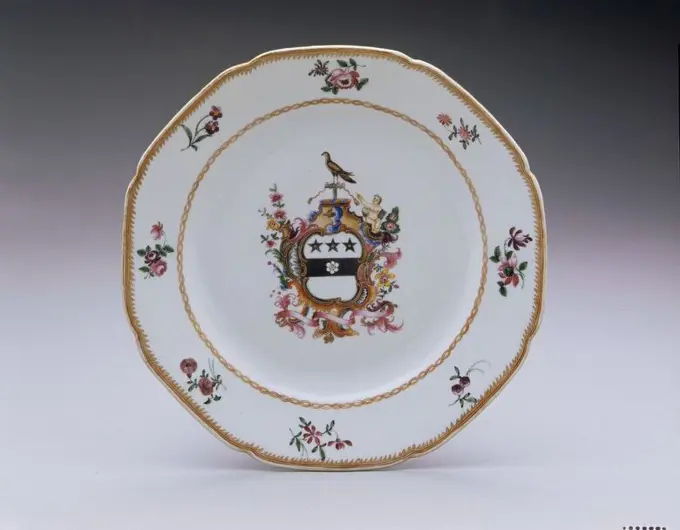
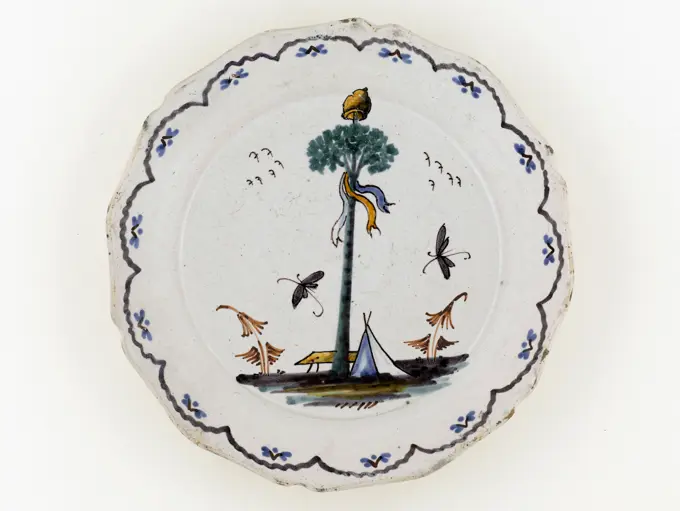
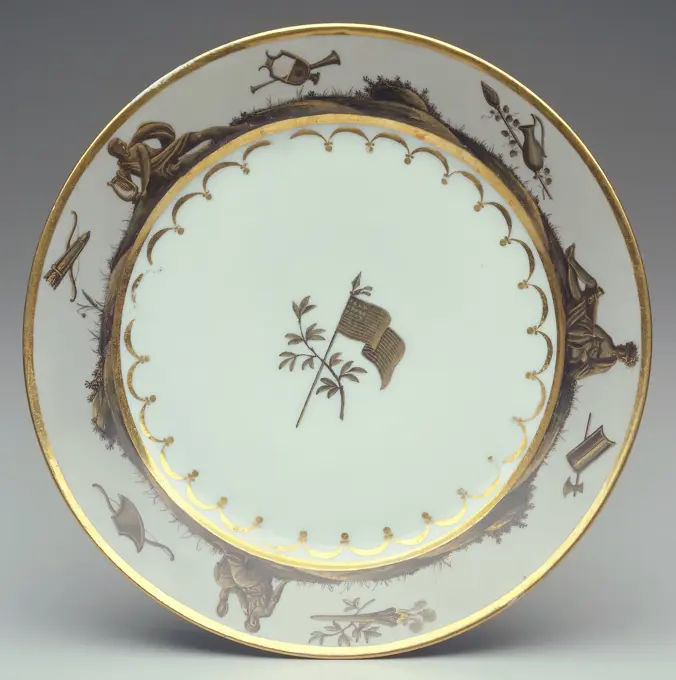
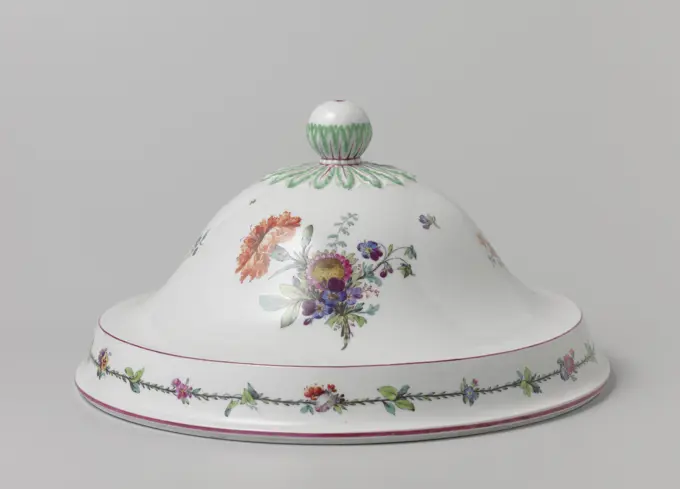
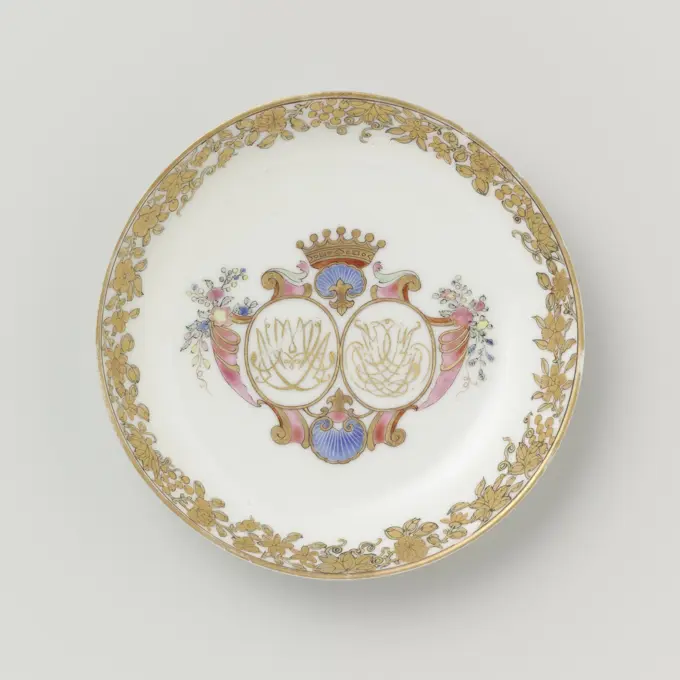
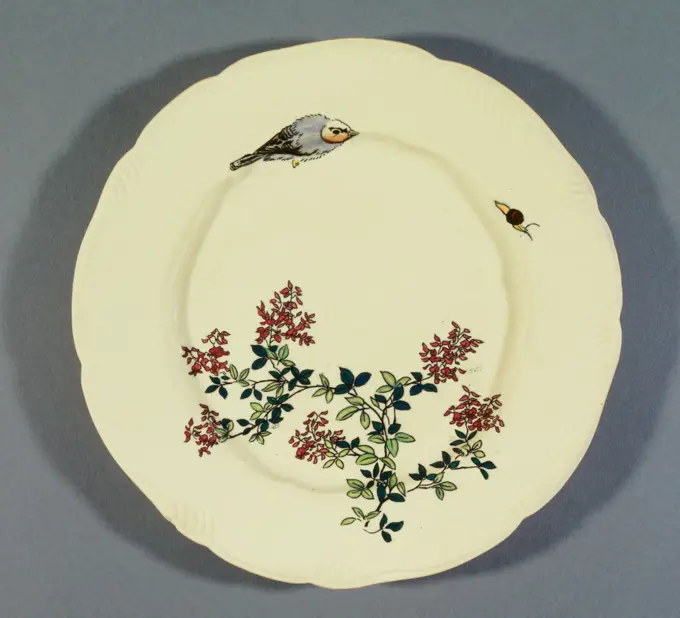
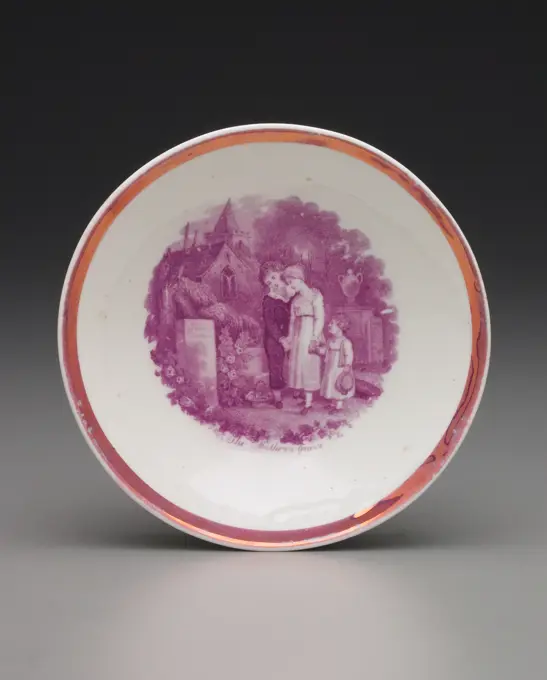
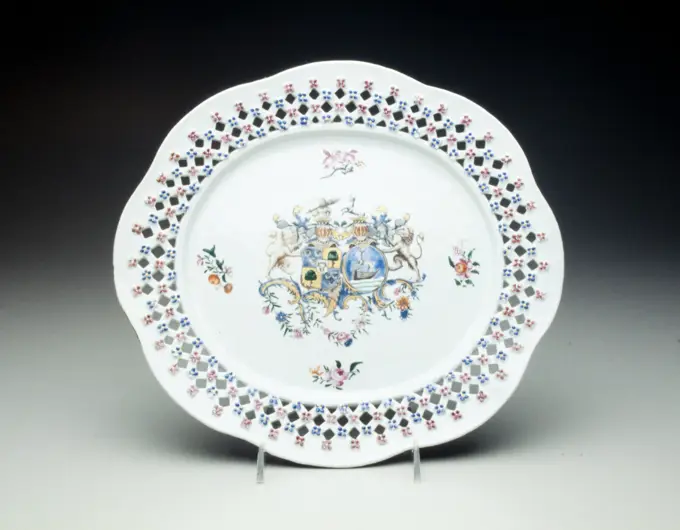
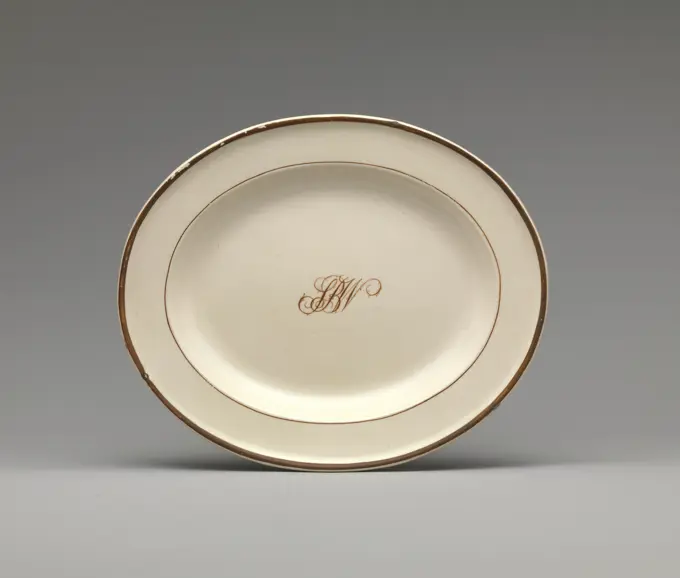
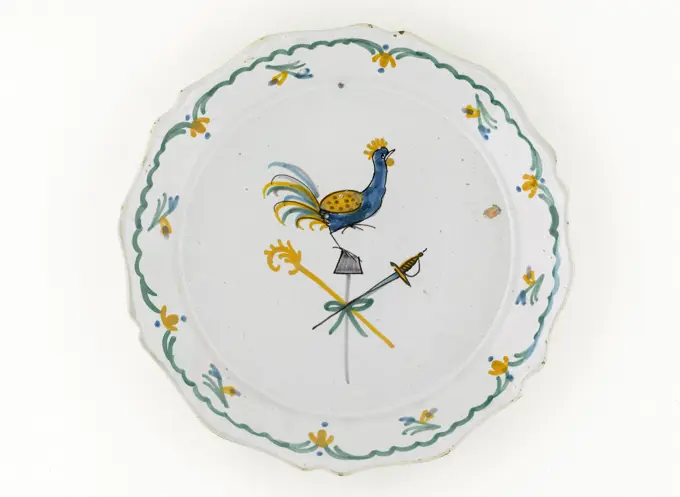
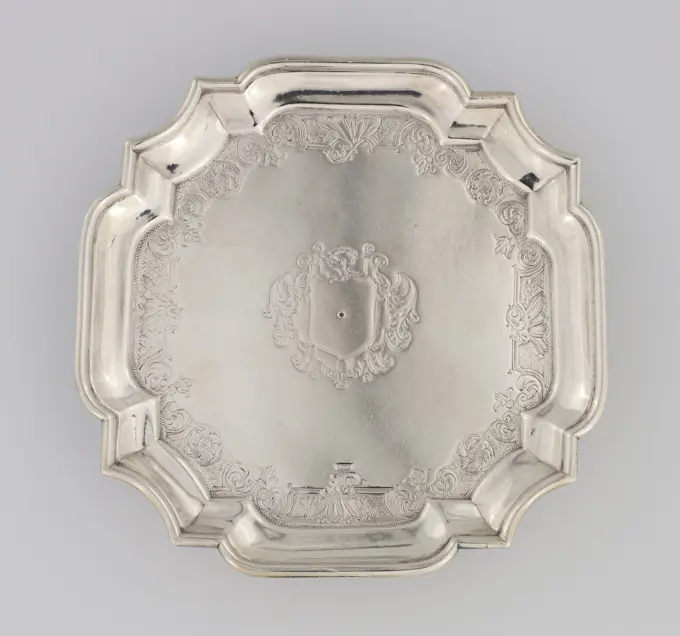
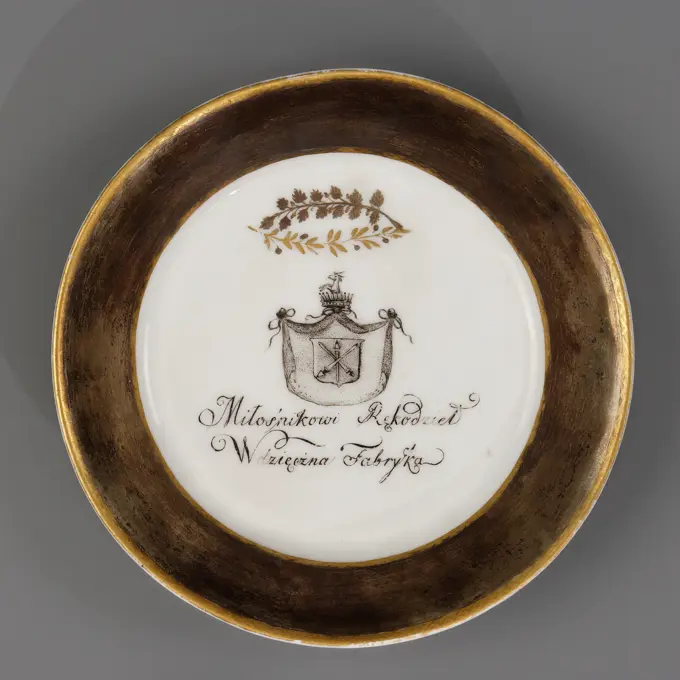
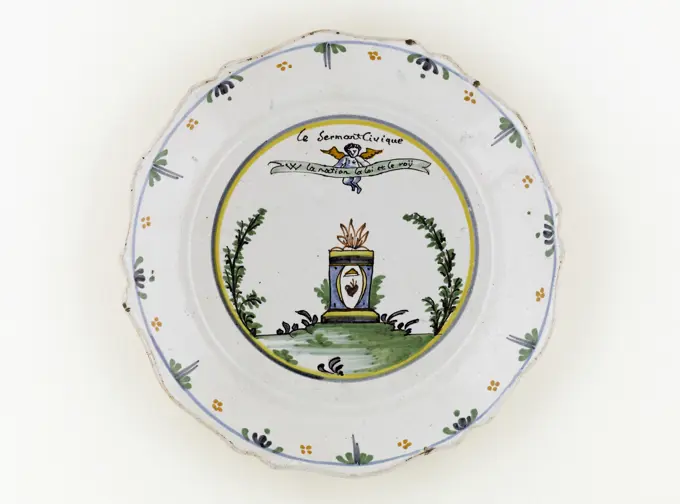
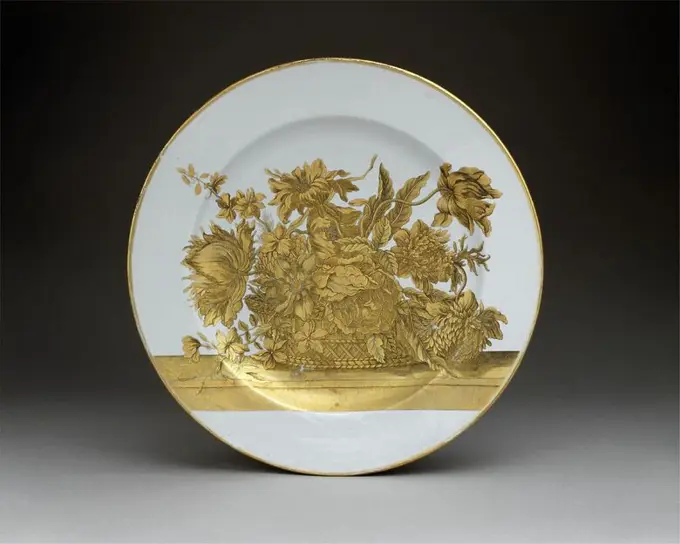
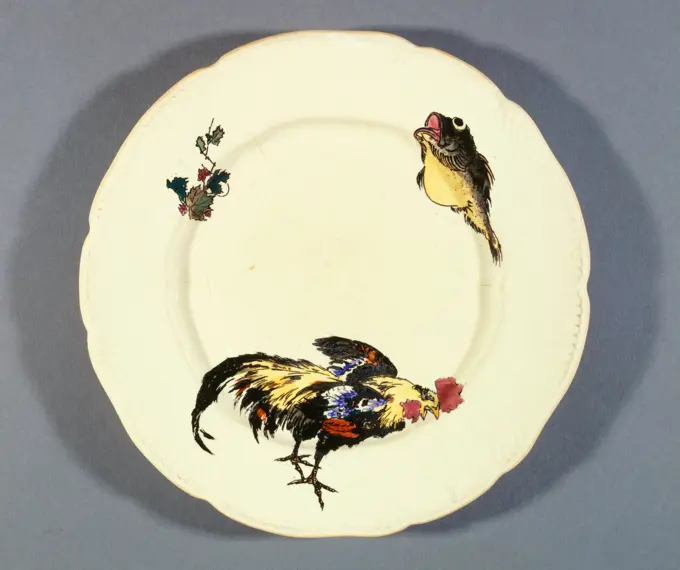
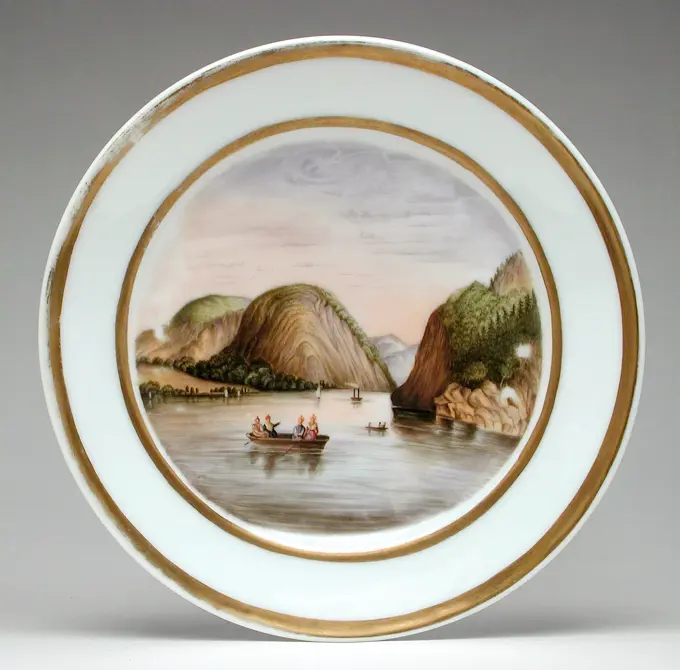
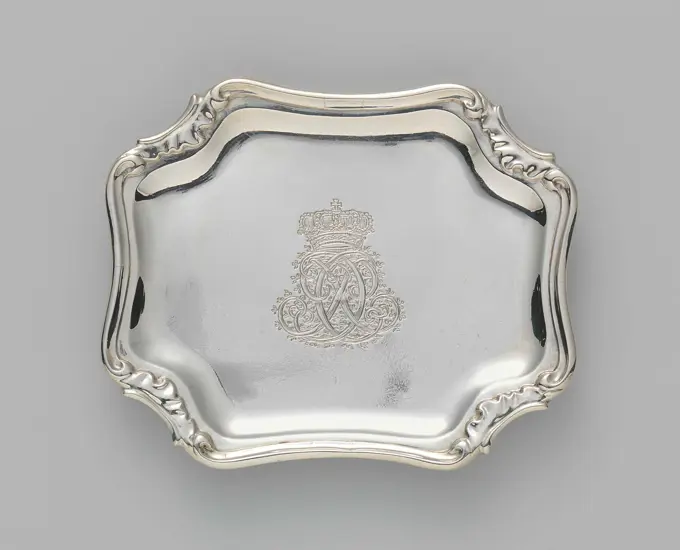
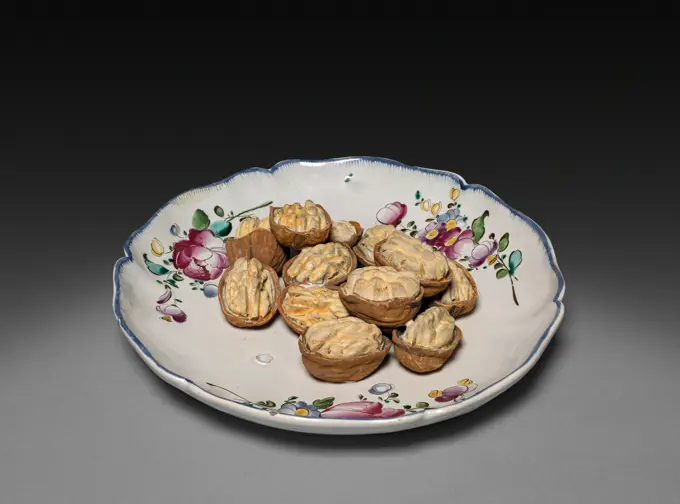
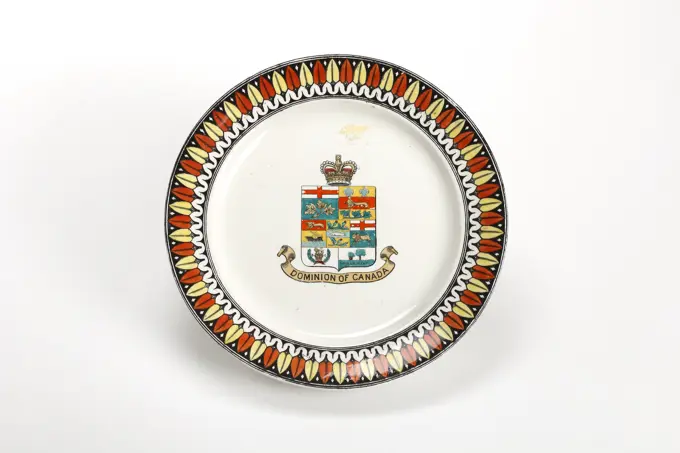
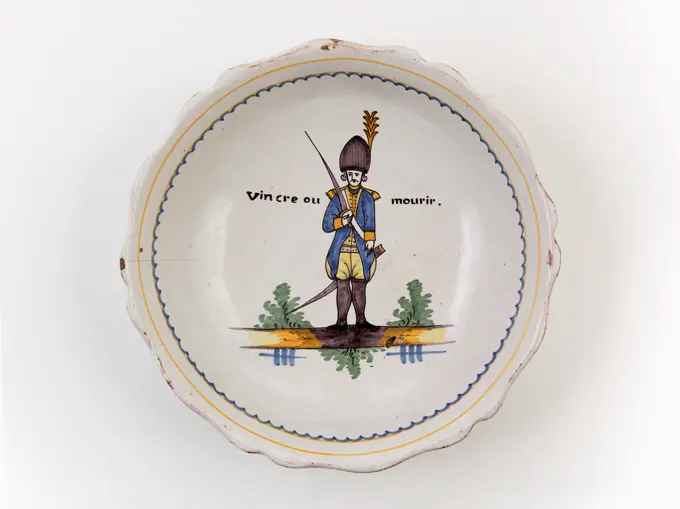
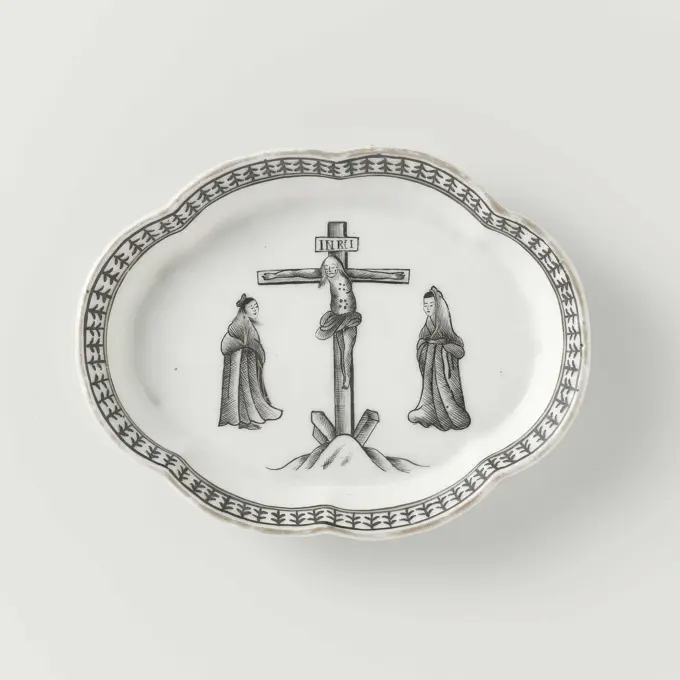
Dish with a representation of the uprising of the Batavians under the leadership of Claudius Civilis. Dish, one of a series of ten, part of a crockery with medallions painted in brown in which historical events and portraits of people from national history. The dish has been decorated with a representation of the uprising of the Batavians led by Claudius Civilis in the year 69. Signed.Anonymous. Plate at the Tree of Liberty. Earthenware. Paris, Carnavalet museum. 71683-16 Tree, decoration, faience, revolutionary period, French revolution, plate, hatPlate, c. 1805, Guérhard et Dihl, Paris, 1 3/8 x 9 1/4 in. (3.49 x 23.5 cm), Porcelain, France, 19th century, Rather than adorn their dinner services with heraldic crests like the aristocracies of Europe, Americans preferred nationalistic imagery. While encouraging the French to support America's fight for independence, Benjamin Franklin promised them that the new nation would be an ideal market for luxury goods from France. The French monarchy obliged, and manufacturers in France eagerly produced ceramics, glassware, and other decorative arts combining the American symbols-in this case the flag-with classical iconography.Dish, multi -colored painted with chinoiseries, Meissener Porzellan Manufaktur, c. 1725 - c. 1730 Dish of painted porcelain. A lace ornament runs in gold along the foot edge. The dish is decorated with a Höroldt chinoiseries within a four-pass with a golden edge and surrounded by mother-of-pearl fields and band and leaf work. Introduced are two figures and a child in a garden. The dish is marked. Float porcelain Dish of painted porcelain. A lace ornament runs in gold along the foot edge. The dish is decorated with a Höroldt chinoiseries within a four-pass with a golden edge and surrounded by mother-of-pearl fields and band and leaf work. Introduced are two figures and a child in a garden. The dish is marked. Float porcelainSaucer With Two Deer in a Landscape. Dish of porcelain, painted on the glaze in blue, red, pink, green, yellow and black. On the flat of the dish two deer in a landscape with mushrooms (Lingzhi) and a bird in a flowering prunus. Family Rose.Saucer with antiquities and flower sprays, anonymous, c. 1725 - c. 1749 Porcelain dish with straight wall, painted on the glaze in blue, pink, green, black and gold. On the flat of the dish a group of antiques (vase with peacock springs and coral, staff with musical stone, tripod) and a fruit basket with, among other things, pomegranate and fingercitroen; The inner edge with servetwork interspersed with flower branches in cartouches. Dish has been broken. Famle Rose. China porcelain. glaze. gold (metal) painting / gilding / vitrification Porcelain dish with straight wall, painted on the glaze in blue, pink, green, black and gold. On the flat of the dish a group of antiques (vase with peacock springs and coral, staff with musical stone, tripod) and a fruit basket with, among other things, pomegranate and fingercitroen; The inner edge with servetwork interspersed with flower branches in cartouches. Dish has been broken. Famle Rose. China porcelain. glaze. gold (metal) painting / gilding A plate; Copeland & Garret (England; Ceramics; 1833-1847); 1833-46 (1833-00-00-1846-00-00);Plate (USA); creamware with underglaze transfer-printing and paintingPlate, c. 1880, Royal Worcester Porcelain Company, Worcester England, est. 1751, 9 1/4 in. (23.5 cm), Porcelain with gilt and silver decoration, England, 19th centuryDISH COVER (Cloche) from a Service for Frederick William II of Prussia, Royal Porcelain Manufaktur, c. 1780 - c. 1785 Cloche (bell) of porcelain, painted on the glaze in blue, red, pink, green, yellow, purple and black. The Cloche is decorated with bouquets of different flowers. A continuous flower drink on the edge. The lower part of the button and a band around the base with stylized leaf motifs in relief. Marked on the underside with the scepter, the number 3 and IIII. Berlin porcelain. glaze. gold (metal) gilding / vitrification Cloche (bell) of porcelain, painted on the glaze in blue, red, pink, green, yellow, purple and black. The Cloche is decorated with bouquets of different flowers. A continuous flower drink on the edge. The lower part of the button and a band around the base with stylized leaf motifs in relief. Marked on the underside with the scepter, the number 3 and IIII. Berlin porcelain. glaze. gold (metal) gilding / vitrificationPlatter with a View of New York from the Heights nearBrooklyn. Manufacturer: Andrew Stevenson, British, 1780-after 1845Etcher Source material by: John Hill, American, born England, 1770-1850Publisher source material by: William Guy Wall, American. born Ireland, 1792-after 1863Tray. Culture: Austrian, Vienna. Dimensions: Overall (confirmed): 1 3/8 x 9 1/8 x 7 in. (3.5 x 23.2 x 17.8 cm). Factory: Vienna. Factory director: Du Paquier period (1718-1744). Date: ca. 1730-40.One of the delights of Du Paquier porcelain is that areas of objects where embellishments are not expected or necessary are often decorated. This characteristic reflects the manufactory's acute awareness of Baroque style, with its concept of fine craftsmanship enlivened by surprise. Both of these oval tureen stands are elaborately decorated on their bases, with interlocking strapwork reminiscent of the designs for French parterre gardens. The decoration was painted in enamels directly on the unglazed porcelain, another hallmark of Du Paquier. Museum: Metropolitan Museum of Art, New York, USA.Compote. Culture: American. Dimensions: H. 7 in. (17.8 cm); Diam. 9 1/4 in. (23.5 cm). Maker: Union Porcelain Works (1863-ca. 1922). Date: 1885.Union Porcelain Works was one of the most important and inventive American porcelain manufacturers in the second-half of the nineteenth century. In addition to their imaginative works designed by the German-born artistic director, Karl H. L. Müller, the firm's mainstay was the production of heavy porcelain hotel dinnerware. This extensive service was made by Thomas Carll Smith, head of the Union Porcelain Works, as a gift to his daughter, Pastora Forest Smith Chace. The neoclassical decoration of the gilt bellflower and basket motif is complimented by turquoise enamel. Unlike the firm's more eccentric and lavish designs created for their display at the Philadelphia Centennial Exposition in 1876, the pottery favored a more restrained classical style for their dinner services. This service descended in the Chace family. Museum: Metropolitan MuseCzarka, Spodek; Koenigliche Porcellain Fabrique, Meissen (1710-1763), Augsburg (city); around 1715-1725 (1725-00-00-1725-00-00), around 1715-1720 (1720-00-00-1720-00-00);Four Plates. China, Qianlong period, 18th century. Furnishings; Serviceware. PorcelainDinner plate. Korzec (manufaktura porcelany ; 1790-1832), factoryTacaSaucer from the 'Swellengrebel service' with a double crowned monogram and a border with floral scrolls, c. 1740 Porcelain dish, painted on the glaze in blue, red, pink, green, yellow, black and gold. On the flat a crowned, double mirror monogram with 'mva' and 'hstd' surrounded by shell motifs, curls and flower branches; The inner edge with a band with flower vines. European performance in email colors. China porcelain. glaze. gold (metal) painting / gilding / vitrification Porcelain dish, painted on the glaze in blue, red, pink, green, yellow, black and gold. On the flat a crowned, double mirror monogram with 'mva' and 'hstd' surrounded by shell motifs, curls and flower branches; The inner edge with a band with flower vines. European performance in email colors. China porcelain. glaze. gold (metal) painting / gilding / vitrificationPlateToy serving plate - Hampton Ridgways, 1879-1920 Ridgways, 1879-1920Félix Bracquemond (1833-1914). "Crêtes" service. Flat plate. Ceramics, earthenware. Museum of Fine Arts of the City of Paris, Petit Palais. ART MENAGER, PLATE, CERAMIC PATTER, SPENGOT, FAIENCE, FLOWER, BIRD, CRETE service, table service, service, dishes, plate. Scale of porcelain, covered with a pink glaze and painted on the glaze in blue, red, pink, green, yellow, purple, black and gold. On the flat a seated Chinese lady with two boys surrounded by lucky objects; The wall with a tire napkin interspersed with leaf-shaped cartouches with flower branches; On the inner edge a band with napkin; The rear is covered with a pink glaze. Famille Rose with a Ruby Back.SaucerLid for a Jar, c. 1775. Faubourg Saint-Denis (French). Porcelain; diameter: 9.6 cm (3 3/4 in.); overall: 14 cm (5 1/2 in.).Plate, painted with the Cramer van Hoekke, Anonymous, 1719 Faïence board, multi -colored painted with the helmeted family arms Cramer van Hoekke. Delft . Faïence board, multi -colored painted with the helmeted family arms Cramer van Hoekke. Delft .Plate of sides; Koenigliche Porzellan Manufaktur (KPM; Berlin; 1763-1918); 1803-10 (1823-00-00-1832-00-00);Heart-Shaped Dessert Dish. Derby Porcelain Works (England, 1756-1848)William Billingsley (England, 1758-1828). England, circa 1795. Furnishings; Serviceware. PorcelainFruit basket stand with arms of Reets van Tets, c. 1770, 1 x 10 3/16 x 11 1/4 in. (2.54 x 25.88 x 28.58 cm), Porcelain, China, 18th century, In pierced form and floral decoration, these elemnts of a dessert service closely imitate English and German models from the 1720s to the 1750s.Spoon tray ca. 1775 Höchst Manufactory This partial tea and coffee service is distinguished by its relative completeness and its two components (the coffee pot and the hot milk jug) signed by the painters who decorated themJoseph Angele and Johann Heinrich Usinger, respectivelya rarity on 18th-century porcelain.[Jeffrey H. Munger, 2009. Spoon tray 234893Cup and saucer ca. 1785 Royal Porcelain Manufactory Danish. Cup and saucer. Danish, Copenhagen. ca. 1785. Hard-paste porcelain. Royal Porcelain Manufactory (Danish, 1775-present). Ceramics-PorcelainPlate China. Plate 51195Dish 1750-75 British Creamware, so-called for its cream-colored body, is a refined earthenware with a lead-based glaze that was developed in Staffordshire, England around 1750. Due to its light color and glossy glaze, it was ideal for dinnerware. Economically affordable to produce, creamware was imported to America in large quantities. Although much creamware was used in America, it is rare to find pieces associated with a particular family. This dinner service (36.22.1 -.38) bears the initials SBW” for Samuel Blachley Webb. The set was imported from England in 1774 by Webb, who was an aide-de-camp and military secretary to General George Washington.. Dish 3332Anonymous. Plate. Earthenware. Paris, Carnavalet museum. 71478-22 Attribut, Beche, Crosse, Embleme, Epee, Revolutionary Epoque, Faience, knot, French revolution, three orders, dishes, plateSaucer With Scattered Stylised Flowers. Dish of porcelain with straight wall, painted on the glaze in blue, red, pink, green, yellow and black. On the front of the saucer seven loose, stylized flowers. Marked on the underside with the six-character seal brand from Emperor Qianlong. Family Rose.Dish, painted with flowers and ladder motif, manufacture Oud-Loosdrecht, c. 1775 - c. 1778 Porcelain dish. Multicolored painted with flower bouquets and a ladder motif along the edges. Loosdrecht porcelain Porcelain dish. Multicolored painted with flower bouquets and a ladder motif along the edges. Loosdrecht porcelain. Round dish of painted porcelain. The dish is painted with landscapes in which figures and along the edge a wide strip of green braid. The dish has been marked.BACIA DE BARBERO DE CERAMICA. Location: MUSEO RUIZ DE LUNA. TALAVERA DE LA REINA. Toledo. SPAIN.Plate. Culture: Chinese, for American market. Dimensions: Diam. 9 in. (22.9 cm). Date: 1785-90.This object belongs to a large dinner service (10.149.1-.248) bearing the Townley family coat-of-arms. The service, probably ordered by Justice Samuel Chase (1741-1811) of Annapolis, Maryland, displays the enamel-painted arms of Margaret Townley, Chase's aunt. Museum: Metropolitan Museum of Art, New York, USA.. Octagonal soup plate made of porcelain, painted on the glaze in blue, red, pink, green, yellow, black and gold. On the flat a seated Chinese lady with two servants. On the wall a tire with a link pattern interrupted by the coat of arms of the Powell family, a lion against a gold and white background with as a heart shield. The weapon of the CLIAND family, a hare against a blue background. The weapon is surrounded by leaf rights; The helmet sign on the edge on the other side. On the edge two cartouches with a landscape in Encre de Chine. Some chips in the edge. Weapon porcelain with email colors.Board, with on the flat hare-over jumping boys. Pottery plate with black transfer decor, frequently completed. On the flat hare-over jumping boys. The edge of the board is deposited with a red and a black trim.Shallow Dish with Peony Scrolls, Chrysanthemum Sprays, and Key-Fret Border; Lotus Panels Panels Under Rim. China. Date: 1368-1388. Dimensions: H. 2.4 cm (15/16 in.); diam. 19.6 cm (7 3/4 in.). Porcelain painted in underglaze blue. Origin: China. Museum: The Chicago Art Institute, Chicago, USA.Platter ca. 1750 Chinese, for Swedish market. Platter 207310. Dish of porcelain, painted on the glaze in red, pink, green, brown, black and gold. On the flat alliance weapon of the families of Oudtshoorn and Boesses. On the left the coat of arms of the van Oudtshoorn family in gray and black. On the right the coat of arms of the Boesses family divided into four surfaces: 1. And 4. A golden jerk on a green background, 2. and 3. a tree on a red background. The helmet sign is a gravy crown and the cover is in Louis XIV style in pink, gray, green and gold with palm leaves on either side. A golden acanthus decoration on the edge. Weapon porcelain with email colors.Dessert plate - W. T. Copeland & Sons, 1868-1931 W. T. Copeland & Sons, 1868-1931Saucer with a Chinese junk and the arms or amsterdam. Dish of porcelain, painted on the glaze in blue, red, pink, green, yellow, black and gold. On the front of the dish a Chinese jonk with crew on the waves, above the arms of Amsterdam. Weapon porcelain.Set of Four Soup Plates. Coalport Porcelain Works (England, Shropshire, circa 1796-1926)Thomas Baxter, Jr. (England, London, 1782-1821). England, 1809. Furnishings; Serviceware. Painted porcelainSaucer (trembleuse) ca. 1735-50 Saint-Cloud factory. Saucer (trembleuse) 201720Salver, c. 1740-1750, Jacob Hurd, American, 1703-1758, 1 x 6 3/8 in. (2.5 x 16.19 cm), Silver, United States, 18th century, Jacob Hurd was one of five of the most prominent Boston goldsmiths between the 1720s and 1750 and was one of the most talented engravers of this period, influencing the designs of numerous others. His skill is evidenced in the delicately engraved border of this salver. Unfortunately, some of this fine work is no longer visible in the center cartouche's engraving as the original coat of arms or initials have been removed by a previous owner. Small waiters such as this were often used as stands for coffeepots to prevent the hot vessel from damaging the surface of the table beneath.CERAMICA POPULAR DE ALCORA S XVIII-PLATO.Memorial sign Boer War: Two men. Souvenir board Boer War: White sign with decoration in black and gold edges. In the foreground is a man with beard, pipe, hat and gun. Seated man at rock blocks. Sign up to the underside: Manufacturer brand, including farmers. Belody a series of 6 plates: NG-1982-19-A to F. performances and edges slightly faded.Oval dish of hard-baked pottery, spet true, creamware .. oval dish of hard-baked pottery, with a gerked edge. The dish is part of a fruit basket. The open edge is decorated with light green enamelled embossed tires. Inside a brown painted leaf edge runs. The dish is marked with a blind stamp: spoduct.Saucer; Tomaszów Lubelski (faience and porcelain manufacture; 1794-1827); 1808 (1808-00-00-1808-00-00);Jelita (coat of arms), Lubomirscy (collection), Zamoyszy (families), dedications, coats of arms, laurelsPlate, Palestine” Pattern.   Maker: William Adams and Sons, British, 1819-1863Plate at the civic altar. Earthenware. Around 1790. Paris, Carnavalet museum. 76184-13 Former regime, angel, civic altar, banner, rebellious faience, law, decorative motive, nation, french revolution, king, civic sermon, vegetation, plateDessert plate - Wolfe & Montcalm Monument. Monument de Wolfe & Montcalm, Quebec Views D'après Cochran & Fleming, 1896-1920Sauceboat; Copeland & Garret (England; Ceramics; 1833-1847); 1833-46 (1833-00-00-1846-00-00);Pair of Cups and Saucers Decorated with Harbor Scenes. Meissen Porcelain Manufactory (Germany, Meissen, founded 1710). Germany, circa 1740. Furnishings; Serviceware. Porcelain with enamel and gildingAnonymous. Plate with three orders. Earthenware. Around 1789. Paris, Carnavalet museum. 72430-43 Faience, Revolutionary Periode, Reunion, French Revolution, three orders, plateBowl plate; Koenigliche Porcellain Fabrique, Meissen (1710-1763); around 1745-1750 (1745-00-00-1750-00-00);Insects, birds, relief altosier, purchase (provenance)Lemon saucer with a miniature. Korzec (manufaktura porcelany ; 1790-1832), factoryHandscreen, Les Solitaires de Normandie; engraved, hand-colored and painted paper leaf, turned wood handle; 1927-17-9Saucer with a landscape, Cozzi, c. 1775 - c. 1799  Porcelain dish, painted on the glaze in blue, red, pink, green, brown and gold. On the front a landscape with a gate and cypresses. A flower branch four times around the landscape. Golden Rand. Marked on the underside with the anchor. Venice porcelain. glaze. gold (metal) painting / gilding / vitrificationLemon saucer from miniatures; Korzec (Porcelain and faience manufacture; 1790-1832); 1790-1796 (1790-00-00-1796-00-00);miniatures, purchase (provenance)Plate (one of a pair). Artist: After a design by Jean-Baptiste Monnoyer (French, Lille 1636-1699 London). Culture: Chinese, possibly for Scottish market. Dimensions: Overall: 1 7/8 × 15 1/4 in. (4.8 × 38.7 cm). Date: ca. 1735-40.This beautifully drawn flower basket derives from an untraced engraving after Jean-Baptiste Monnoyer (1636-1699)--one of his many variant compositions that were freely adapted to a wide range of media long after his death. The dish is one of two in the Metropolitan, and a third is in the Peabody Essex Museum, Salem, Massachusetts; originally there was probably a set of four or, at most, six. The placement of the basket on a gold ground may have originated with the Chinese painter but, alternatively, could have been inspired by Western familiarity with Yongzheng export porcelains richly patterned in gold, silver, and black.Little is known of the French family of Berwickshire whose arms appear on the reserve of this dish. The same armorial appears on the reversPlate from "Lenin" Service Plate; Designed by Alexei Nikolaevich Kolosov; Manufactured by Dulevo Porcelain Factory; porcelain, enamel, gilding; Diameter: 25 cm (9 13/16 in.); The Henry and Ludmilla Shapiro Collection; Partial gift and partial purchase through the Decorative Arts Association Acquisition and Smithsonian Collections Acquisition Program Funds; 1989-41-23Félix Bracquemond (1833-1914). "Crêtes" service. Flat plate. Ceramics, earthenware. Museum of Fine Arts of the City of Paris, Petit Palais. ART MENAGER, PLAT, CERAMIC PLATE, COQ, FAIENCE, FLOWER, FISH, CRETE SERVICE, TABLE SERVICE, SERVICE, TABLETS, Animal, PLATEPlate (one of two) ca. 1750-55 Chinese, for German market. Plate (one of two) 205190Plate with 'Shanghai' pattern. Old Hall Factory (England, Staffordshire)Christopher Dresser (Scotland, 1834-1904). England, circa 1886. Furnishings; Serviceware. EarthenwarePlate. William Ellis Tucker Factory (United States, Pennsylvania, Philadelphia, 1826-1838). United States, 1828-1838. Furnishings; Serviceware. Porcelain, gildingBlade of silver, rectangular with eight inzwins along the sides and resting on four volutely legs. With engraved mirror monogram, ee. Rectangular, slightly deepened, leaves with eight swamed sides, resting on four volutely legs. On the top of the blade and on either side of the jar (BK-15783-a) (later) a crowned mirror monogram with the letters EE is engraved. Signature and dated.Plate of Walnuts, c. 1770. France, Sceaux, 18th century. Faience; diameter: 5.8 x 22.9 cm (2 5/16 x 9 in.).Commemorative dinner plate - Coat-of-arms, Prince Edward Island Adams Adams9 Plates of Americanviews.  After: William Henry Bartlett, British, 1809-1854Cup from a christening set, 1864-1865, George Adams; Manufacturer: Chawner & Co.; Retailer: J. Turner, English (London), English, active 1840-1883, 4 in. (10.16 cm), Silver, gilt, England, 19th century, During the 1860s, Queen Victoria ordered several christening sets as gifts. She selected this group for Albert Victor Arthur Wellesley. Wellesley was a godson, and the great-nephew of the first Duke of Wellington, who after defeating Napoleon at the Battle of Waterloo, received numerous dinner services as congratulatory gifts from royal figures across Europe. This christening set would have served as the child's welcome to the Protestant faith as well as to a family with a long history of celebrating the art of dining.Saladier, soldier, "defeat or die". Faïence in the big fire, polychrome decor; A consolidation clip on the back. Nivernais, Nevers, around 1791. Paris, Carnavalet museum. Salad bowl, soldier, defeat or die Staple, consolidation, crockery, polychrome decor, defeat, die, back, earthenware, faience great fire, french revolution, dying, military, nivernais, French revolution, salad bowl, saladar, serviceman, soldier, defeat, dishes, winPlate, with a man playing with a child on the flat. Pottery plate with black transfer decor, frequently completed. On the flat a man in a chair playing with a child. The edge of the plate with a red and a black trim.. Pattipan of porcelain with oval, six-pitched wall, painted on the glaze in black and gold. On the flat a representation of the crucifixion with the two Maria's; On the inner edge a band with a decorative pattern. Bottom unglazed. Part of a tea service. European performance in Encre de Chine.