Decorative Plates and Dishware

A collection of elegant porcelain plates showcasing intricate designs and historical motifs, including family coats of arms and scenic views.
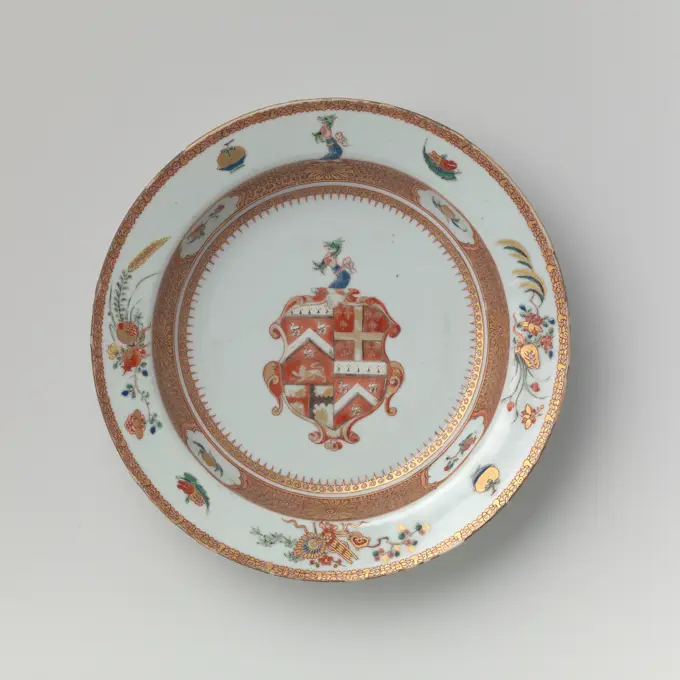
Soup Plate with the Arms of the Sayer, Woodhave and Brooke Family. Porcelain soup plate, painted on the glaze in blue, red, green, yellow, black and gold. On the Flat Families Sayer, Woodhave and Brooke Coat of Arms, with an arm that holds a dragon head; To the weapon a Spearhead border. On the wall a honeycomb pattern with a stylized lotus, interrupted by lobby cartouches with a fruit branch (pomegranate, peach). On the edge again the helmet mark, fruit branches, lucky symbols (Ruyi-Scepter, lotus stalk) at the 'three friends of the winter' (pine, prunus, bamboo), finger lemon on an artimisia leaf and a piece of fruit in a bowl; On the edge also a narrow band with a decorative pattern. Four flower branches on the back. Some chips in the edge. Weapon porcelain with email colors.
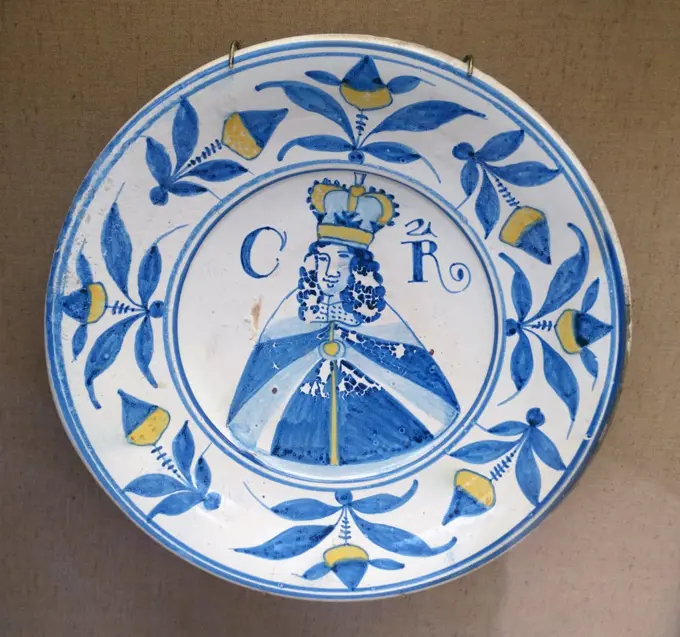
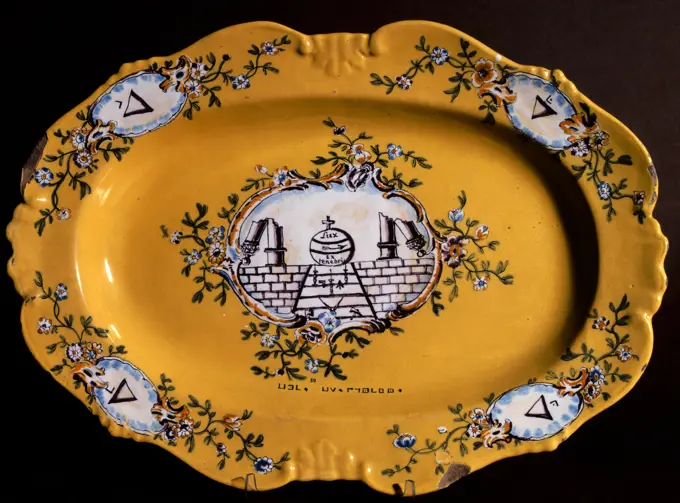
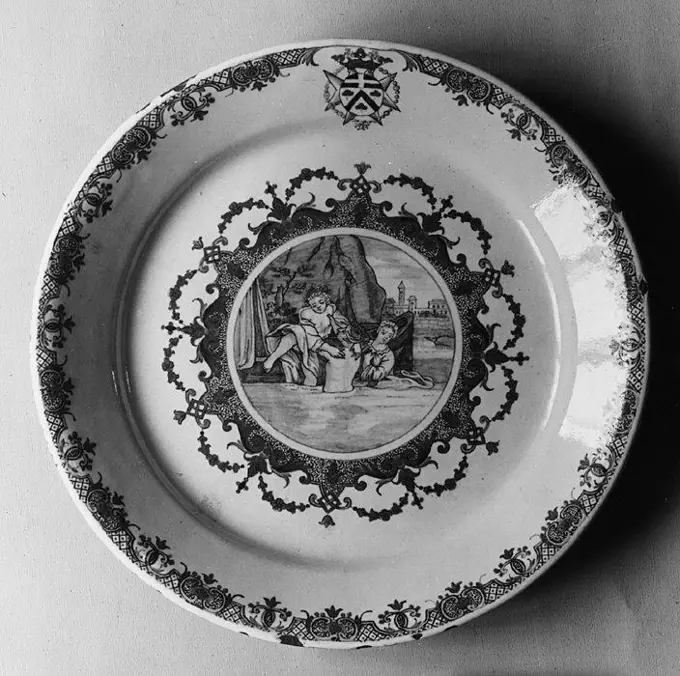
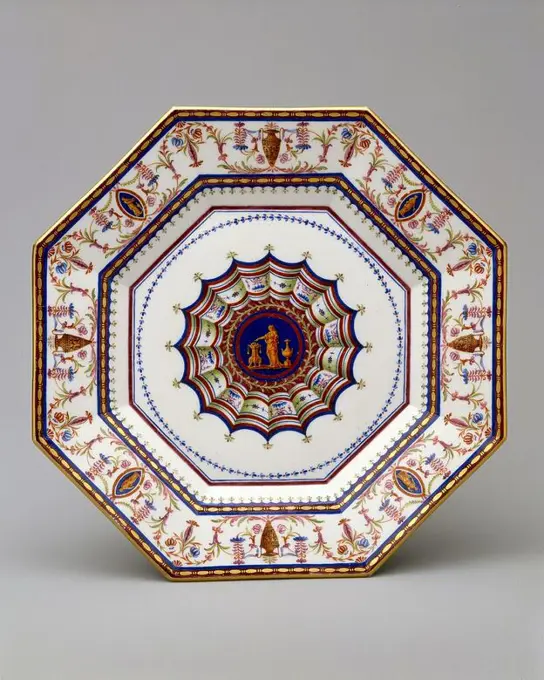
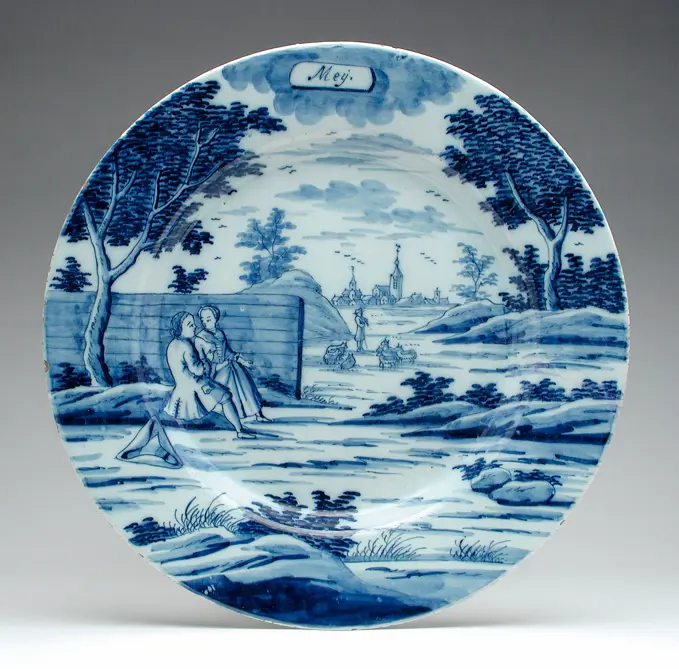
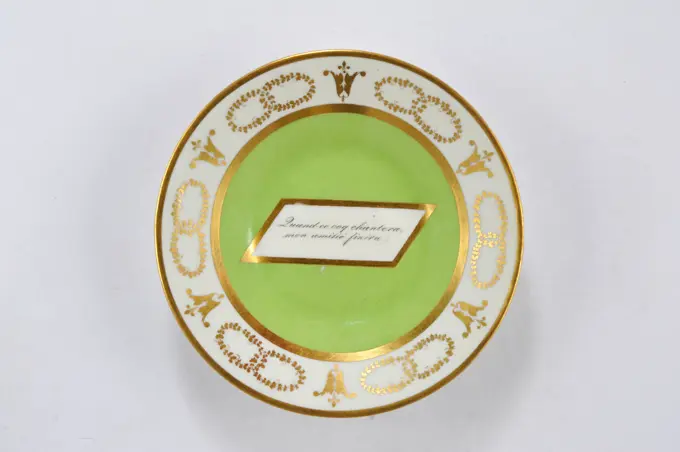
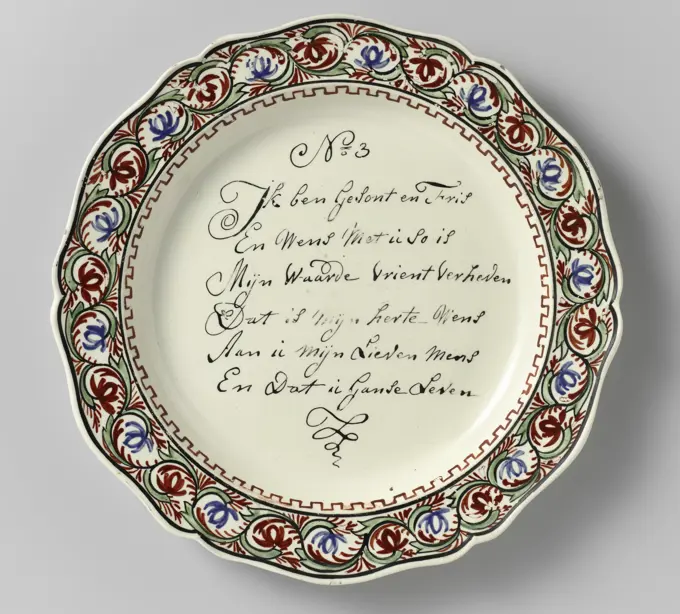
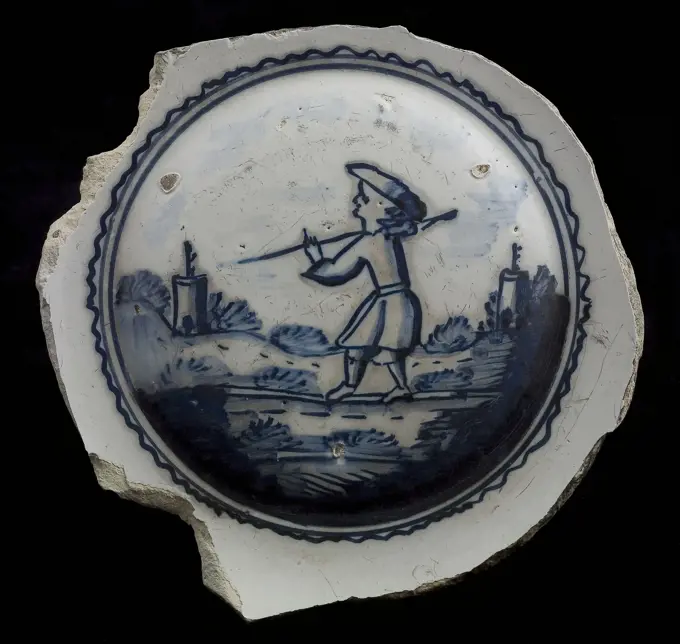
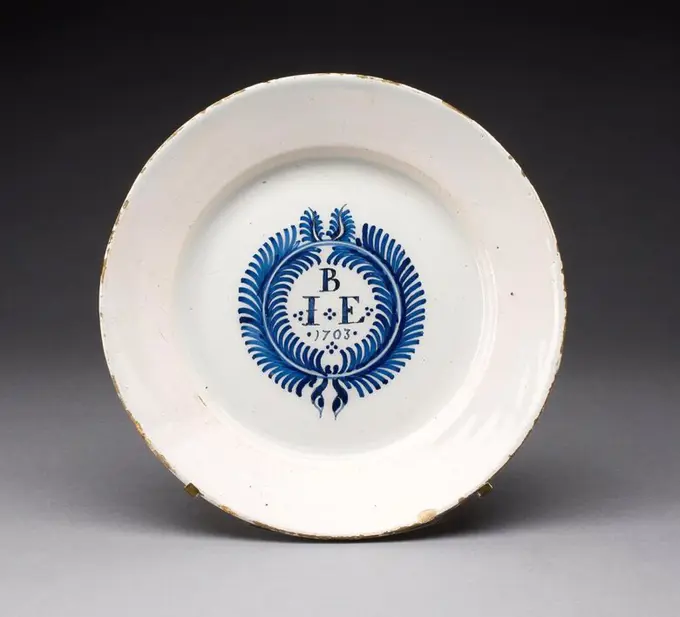
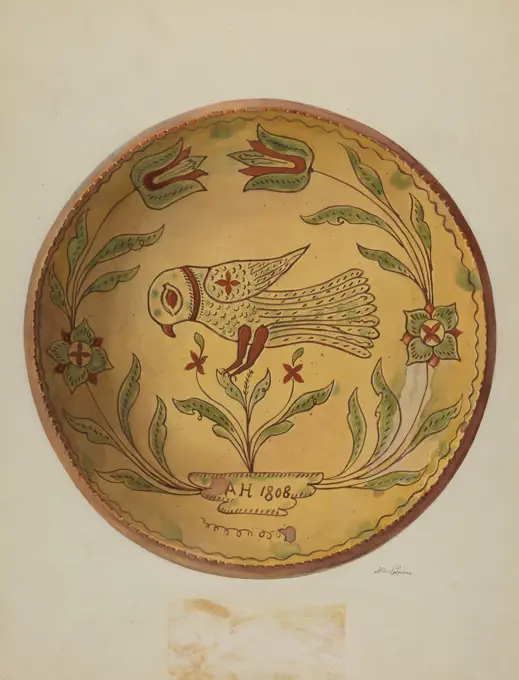
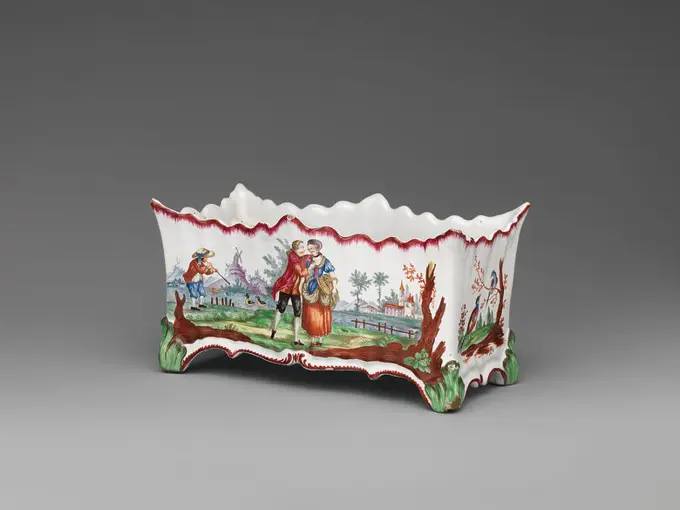
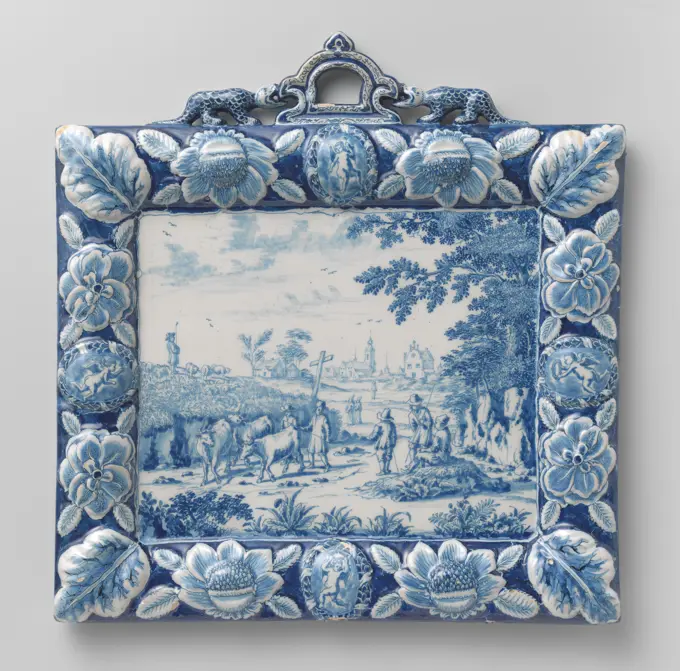
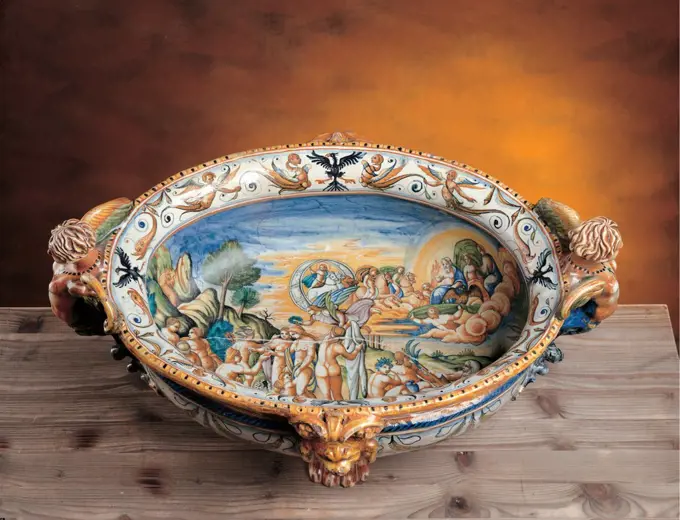
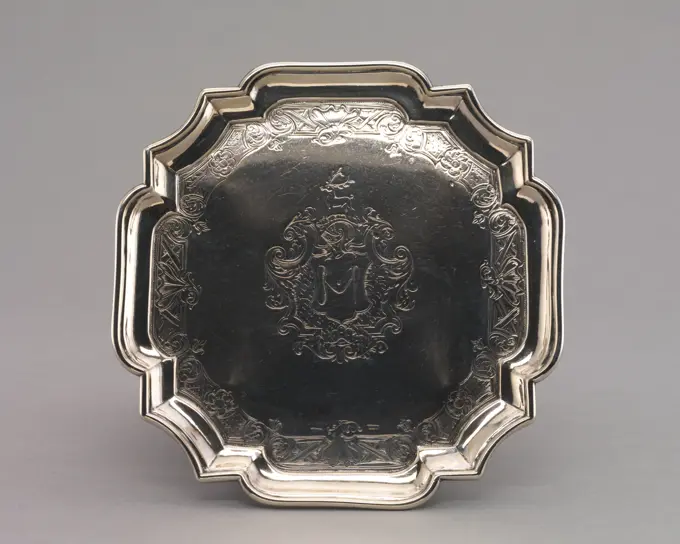
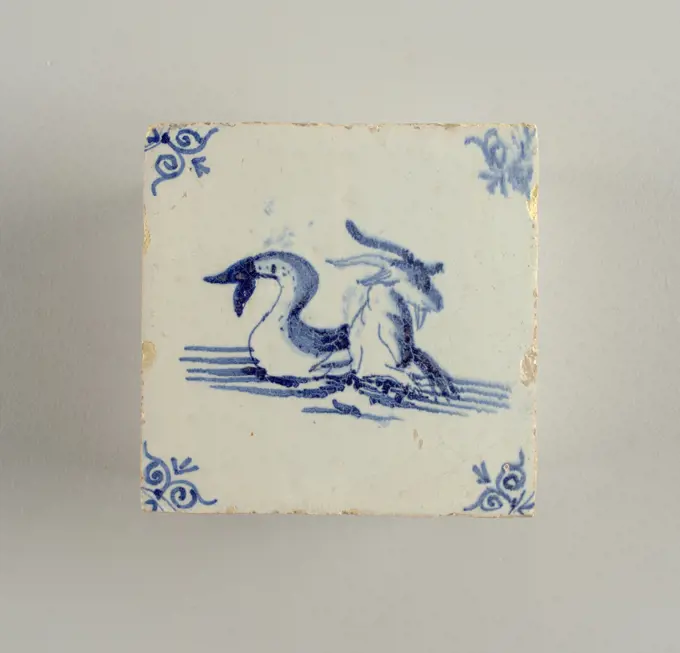
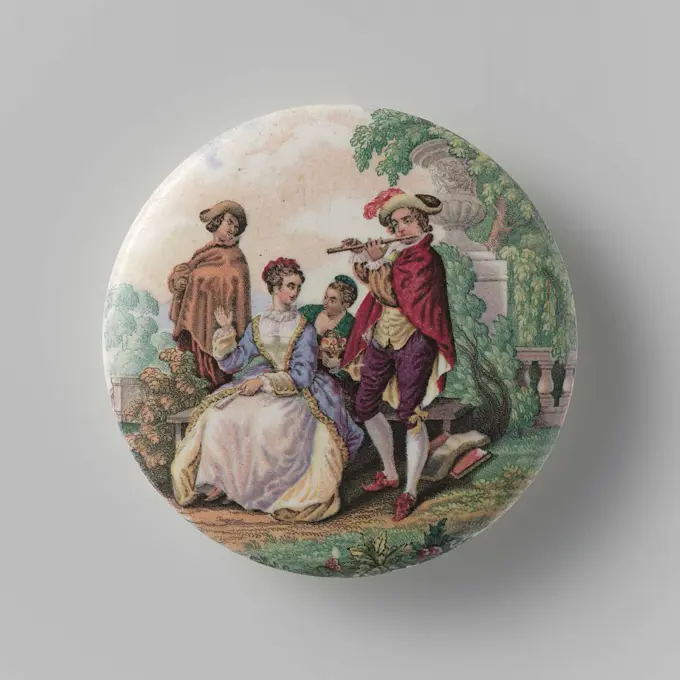
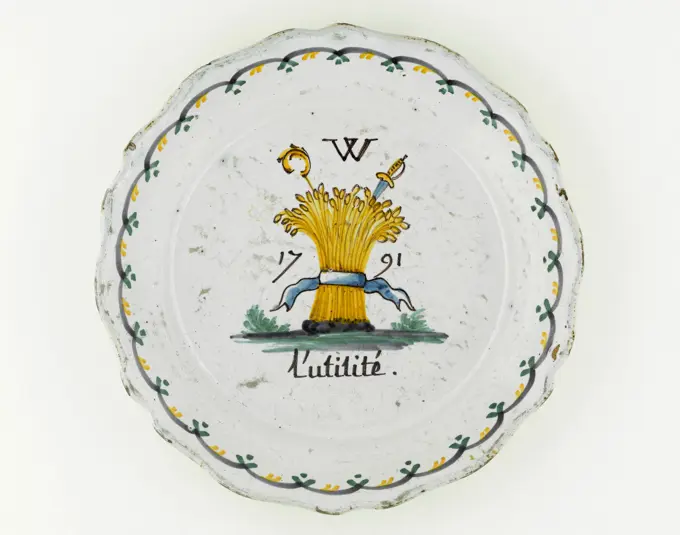
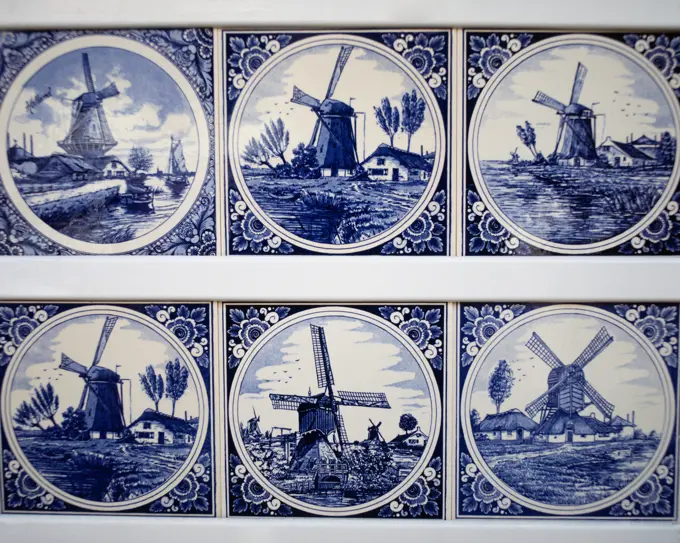
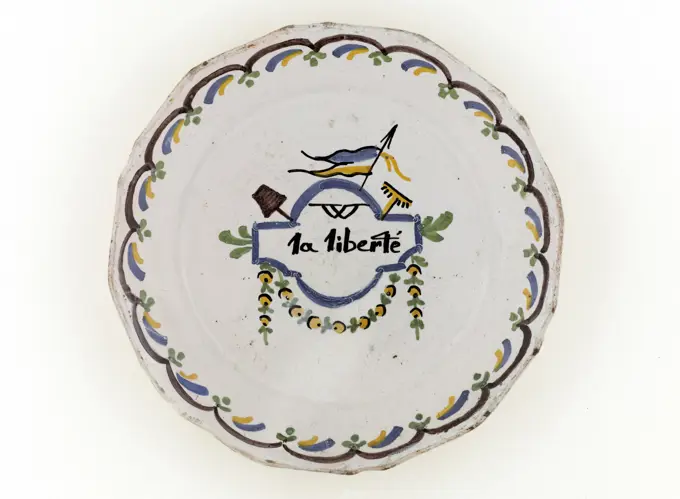
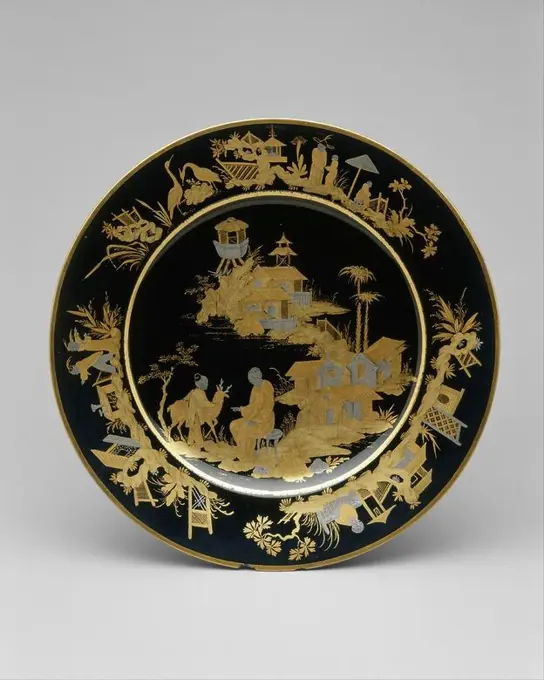
Plate. Culture: French, Sèvres. Decorator: Jean-Jacques Dieu (French, active 1776-91, 1794-98, 1801-5). Dimensions: Diameter: 9 1/2 in. (24.1 cm). Factory: Sèvres Manufactory (French, 1740-present). Date: 1791.Porcelain decorated with a black ground in imitation of Asian lacquer was produced at Sèvres for about a fifteen-year period beginning in 1790. Furniture decorated with imported black lacquer panels saw a resurgence of popularity in the last two decades of the eighteenth century, and the Sèvres factory's efforts to simulate black lacquer on porcelain were probably stimulated by this renewed general interest in lacquer decoration. Black-ground Sèvres porcelain was decorated with chinoiserie scenes executed in gold, which was often applied in subtle tones of yellow, green, and red. Small decorative highlights were often executed in platinum, and the ability to apply platinum--first mastered by the factory in 1790--may have been an impetus to produce these lacquer-inspired pieces.Jacob's Dream ca. 1567 Possibly engraved by P.M. The fine engraving on this set of plates (65.260.1-.12) depicts scenes from the Old Testament. The engraver, who must have been trained on the Continent, based his compositions on illustrations in a Concordance to the Bible, improvising where necessary to fill in the circular frame offered by the plates. The plates and a related piece engraved with a portrait of Queen Elizabeth I must have been made as a gift to or from the queen herself.. Jacob's Dream 204605Anonymous. "Finest" plate. Earthenware. Paris, Carnavalet museum. 71684-52 Decoration, Revolutionary Faience, Law, Peace, Revolutionary Periode, French Revolution, PlateDrinking Bowl, Adam van Vianen (I), 1624 Oval scale of silver. On the slippery middle part a weapon surrounded by a border of lobe ornament, in which Bacchus flanked by Venus with Amor and Ceres with Satyrkind. Utrecht silver (metal) Oval scale of silver. On the slippery middle part a weapon surrounded by a border of lobe ornament, in which Bacchus flanked by Venus with Amor and Ceres with Satyrkind. Utrecht silver (metal)19th century French (Marseilles), porcelain dish with masonic symbols.Plate 18th century French, Rouen With the arms of Bernard d'Avernes, Prior of the Knights of Malta. At the center an elopement scene, possibly after an engraving by Bernard Picard (1673-1733).. Plate 194402Plate (assiette octogone or assiette platte) from the "Service Arabesque". Culture: French, Sèvres. Decorator: Jean Armand Fallot (French, active 1764-90). Designer: Louis Le Masson (French, 1743-1829). Dimensions: Diameter: 9 3/8 in. (23.8 cm). Factory: Sèvres Manufactory (French, 1740-present). Date: ca. 1783-85.This plate is from a remarkable service that reflected the most up-to-date Neoclassicism of the late eighteenth century. The shapes and the decoration were commissioned from the architect Louis le Masson who was instructed that the service should represent "the most rigorous antique taste." The need for new forms and decorative schemes for the service delayed its production, and it remained incomplete at the outbreak of the Revolution. Less than twenty pieces from the service Arabesque are known today. Museum: Metropolitan Museum of Art, New York, USA.Tile (England); Painted by John Bowen; Manufactured by Redcliff Back, Joseph Fowler Factory; tin-enameled earthenwarePlate from a Calendar Set. 'de Porceleijne Bijl' Shop (Holland, 1679-1803)Hugo or Justus Brouwer (Holland, 1739-1775). Holland, 1739-1775. Furnishings; Serviceware. Earthenware with tin glaze and enamel (Delft)CERAMICA DE TALAVERA S XVIII. Location: CONVENTO DE SAN CLEMENTE-MUSEO. Toledo. SPAIN.Toy dessert plate - Inconnu / UnknownSaucer with a French maxim. Kaiserliche Porzellanmanufaktur in Wien (1744-1864), factoryPlatter ca. 1845-ca. 1859 Francis Morley & Co.. Platter 6525Platter, Neptune” Pattern.  Manufacturer: John & George Alcock, British, 1839-1846Tray ca. 1770 Chinese, for European market. Tray 202962John Parker I, Pair of Salvers, 1761/62, silver.Round plate of hard baked pottery; Liverpool Creamware, Anonymous, c. 1780 - c. 1800 Round plate of hard baked pottery; Creamware with decoration on the glaze. A Dutch text is painted on the flat: no 3 I am thin and fresh ... and that you all lives. The edge is painted with a swinging leaf vank. The board is marked: Herculaneum. The board includes the same plate with a different text (BK-NM-4394-A). maker: LiverpoolNetherlands earthenware Round plate of hard baked pottery; Creamware with decoration on the glaze. A Dutch text is painted on the flat: no 3 I am thin and fresh ... and that you all lives. The edge is painted with a swinging leaf vank. The board is marked: Herculaneum. The board includes the same plate with a different text (BK-NM-4394-A). maker: LiverpoolNetherlands earthenwareMirror fragment of majolica pancake dish with shepherd in landscape, in blue on white fond, pancake dish dish crockery holder soil find ceramic earthenware glaze tin glaze lead glaze, hand turned fried glazed fried Mirror fragment of large dish with convex mirror pancake dish. Monochrome representation in blue Presentation consists of shepherd with shepherd's staff walking on the shoulder to the left through landscape Possible walking over bridge even tightrope walker with balancing stick is real interpretation Yellow shard underside lead glaze Wide stand ring archeology underground pit indigenous earthenware serve decorate food table room serve Rotterdam Kralingen-Crooswijk Kralingen East 's Gravenweg Soil discovery underground pit' s-Gravenweg Rotterdam from vuillaag 1978.05.12.Plate with view of YaleCollege.  Manufacturer: Wedgwood, British, 1759-1998Retailer: Jones, McDuffee and Stratton, American, 1810-ca. 1975Bread plate -Plate - "Newburgh on the Hudson". Dated: c. 1936. Dimensions: overall: 20.3 x 25.4 cm (8 x 10 in.) Original IAD Object: 17 5/8" long; 14 3/8" wide. Medium: black and white photograph. Museum: National Gallery of Art, Washington DC. Author: Helmut Hiatt.Plate - "Insane Hospital, Boston". Dated: c. 1936. Dimensions: overall: 20.3 x 25.4 cm (8 x 10 in.) Original IAD Object: 7 1/4" in diameter. Medium: black and white photograph. Museum: National Gallery of Art, Washington DC. Author: Helmut Hiatt.Plate. England, Staffordshire. Date: 1703. Dimensions: Diam. 22.2 cm (8 3/4 in.). Tin-glazed earthenware. Origin: Staffordshire. Museum: The Chicago Art Institute, Chicago, USA.Albert Levone, Pa German Pie Plate, c 1936 Pa. German Pie PlatePlate ca. 1786 Chinese. Plate 6045Jardinière. Culture: French, Rouen. Dimensions: Overall: 4 5/16 × 8 1/4 × 4 1/8 in. (11 × 21 × 10.5 cm). Factory: Levavasseur. Date: ca. 1775.Faience, or tin-glazed and enameled earthenware, first emerged in France during the sixteenth century, reaching widespread usage among elite patrons during the seventeenth and early eighteenth centuries, prior to the establishment of soft-paste porcelain factories. Although characterized as more provincial in style than porcelain, French faience was used at the court of Louis XIV as part of elaborate meals and displays, with large-scale vessels incorporated into the Baroque garden designs of Versailles. Earlier examples of French faience attest to the strong influence of maiolica artists from Italy. Later works demonstrate the ways in which cities such as Nevers, Rouen, Lyon, Moustiers, and Marseille developed innovative vessel shapes and decorative motifs prized among collectors throughout Europe.While faience can be created from a wide mixturTwo plates in Lijsten, De Witte Starre (attributed to), After Dirck Witsenburg (I), After Dammas Hofdijck, c. 1690 - c. 1705 A plaque of Delft pottery, painted in blue with a landscape in a frame with floors, leaves and medallions in relief. Brand: a big star. Delft earthenware A plaque of Delft pottery, painted in blue with a landscape in a frame with floors, leaves and medallions in relief. Brand: a big star. Delft earthenwarePair of Plates. Chamberlain's Factory (England, Worcester, 1788-1852). England, circa 1805. Furnishings; Serviceware. Porcelain, gildingTwo Plates (Two of a pair). William Ellis Tucker Factory (United States, Pennsylvania, Philadelphia, 1826-1838). United States, circa 1830. Furnishings; Serviceware. PorcelainBasin, by Urbino craftsmanship, 16th Century, majolica. Italy: Marche: Pesaro Urbino: Urbino: Galleria Nazionale delle Marche. Whole artwork. Water basin grotesquerie protomes Leonine handles border decoration eagle heraldic coat of arms Judgement of Paris gods pome/apple young girls chariot Apollo Zeus clouds yellow green blue whitePaul Farkas, Bandbox, c 1953 BandboxSalver, 1740-1750. Jacob Hurd (American, 1702-1758). Silver; overall: 3 x 16 x 16.3 cm (1 3/16 x 6 5/16 x 6 7/16 in.).Plate - "Bank of U.S., Philadelphia". Dated: c. 1936. Dimensions: overall: 20.3 x 25.4 cm (8 x 10 in.) Original IAD Object: 10 3/16" in diameter. Medium: black and white photograph. Museum: National Gallery of Art, Washington DC. Author: Helmut Hiatt.Tile, painted multi-colored with a soldier or a standard bearer. Tile, painted multi-colored with a soldier or a standard bearer.Tile, Tin-enamelled earthenware, Bluish-white field. In center, blue sea-goat riding upon water. In corners, scroll decoration., Friesland, Netherlands, 1701-25, tiles, Decorative Arts, TilePlate c 1790 England. Creamware .Portrait of King Charles II (1630-1685) King of England, King of Scotland and King of Ireland, on a dish. By Arnold Taylor Bequest. Dated 17th CenturyPlate with the Rijksmuseum on the flat. Powerboard board with a representation of the Rijksmuseum on the flat in Black Transfer Decor. The edge with Kruisbrodé and golden fillets.Commemorative dinner plate - Coat-of-arms, City of St. John, New Brunswick Josiah Wedgwood Josiah WedgwoodPot lid with a company in a garden, including a flute-playing man. Pot lid of pottery with multicolor transfer decor. Shown is a company in a garden, including a flute-playing man.Dish, multi -colored painted with chinoiseries and the coat of arms of the Venetian Morosini family, Meissener Porzellan Manufaktur, 1731 Round dish of painted porcelain. The dish is painted with Höroldt chinoiseries and the coat of arms of the Venetian Morosini family. The dish is marked. Float porcelain Round dish of painted porcelain. The dish is painted with Höroldt chinoiseries and the coat of arms of the Venetian Morosini family. The dish is marked. Float porcelain18 plates, each decorated with a Netherlandish province. These plates reflect the period when the Netherlands and Belgium together formed the United Kingdom of the Netherlands (1815-1830). The kingdom consisted of 17 provinces plus the grand duchy of Luxembourg. The gold decoration is in the Neoclassical style. On the upper edge are the arms of the kingdom, on the lower border those of each province. Today the Netherlands consists of 12 provinces.Anonymous. Plate. Earthenware. Paris, Carnavalet museum. 71478-13 1791, attribute, crosse, emblem, eplee, epic ble, revolutionary time, faience, knot, French revolution, three orders, utility, dishes, w, plateDisplay of Delft porcelain in Amsterdam in the Netherlands (Holland).Blue Delft pottery tiles, NetherlandsPlate. Baranówka (manufaktura porcelany ; 1804-post 1900 ), factoryAnonymous. "W Liberty" plate. Earthenware. Paris, Carnavalet museum. 71683-5 Decoration, flag, faience, freedom, revolutionary period, rake, French revolution, plate