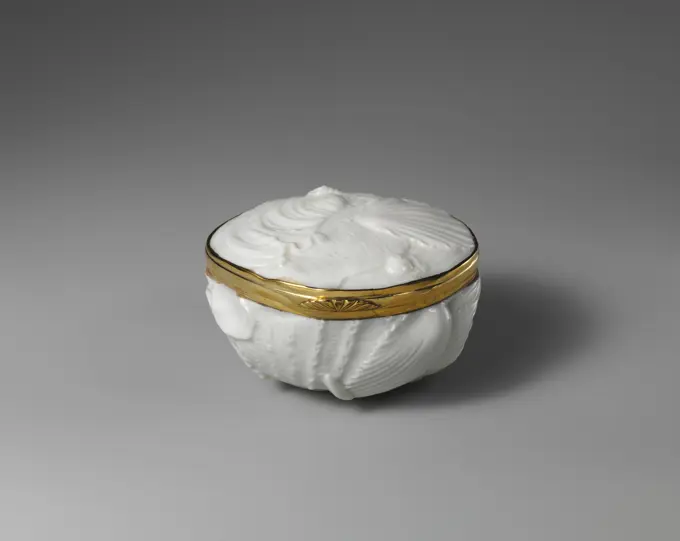
Decorative Porcelain Bowls

Elegant porcelain bowls featuring intricate blue patterns and designs on white backgrounds, showcasing craftsmanship from different eras.
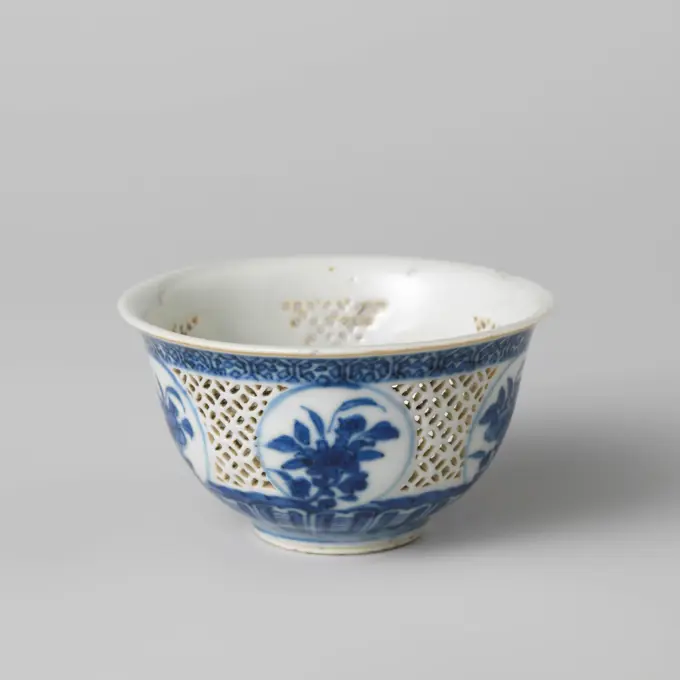
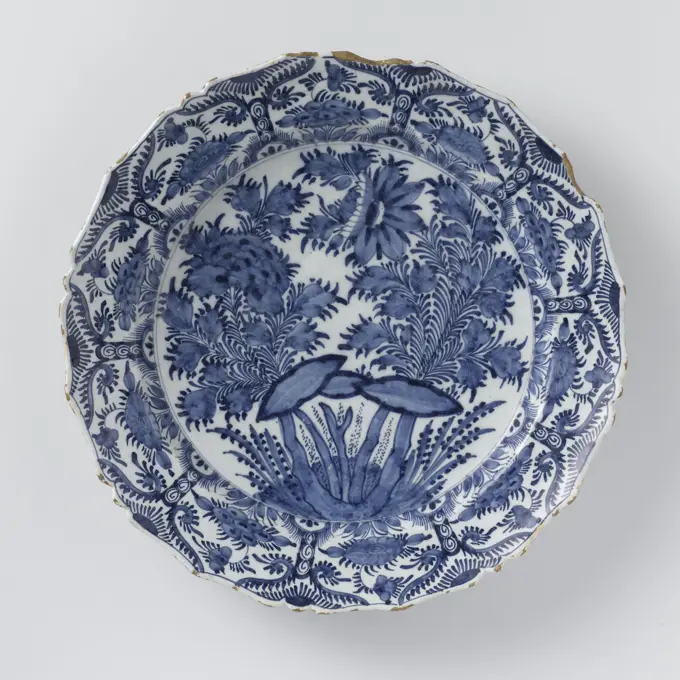
Bell-shaped bowl with pierced sides and flower sprays in medallions, anonymous, c. 1635 - c. 1650 Klock -shaped bowl of porcelain, painted in under -glaze blue. The wall of the bowl is opened with medallions saved. In the medallions of flower branches (Prunus, Lotus, Aster, Camelia). The underside of the wall with a tire stylized leaf motifs. On the outer edge a band with servetwork. The underside and the outer edge are unglazed. A chip in the edge. Transitional porcelain in blue and white. China porcelain. glaze. cobalt (mineral) painting / vitrification Klock -shaped bowl of porcelain, painted in under -glaze blue. The wall of the bowl is opened with medallions saved. In the medallions of flower branches (Prunus, Lotus, Aster, Camelia). The underside of the wall with a tire stylized leaf motifs. On the outer edge a band with servetwork. The underside and the outer edge are unglazed. A chip in the edge. Transitional porcelain in blue and white. China porcelain. glaze. cobalt (mineral)
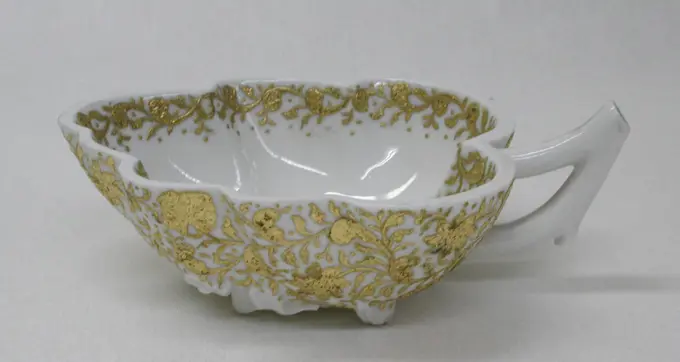
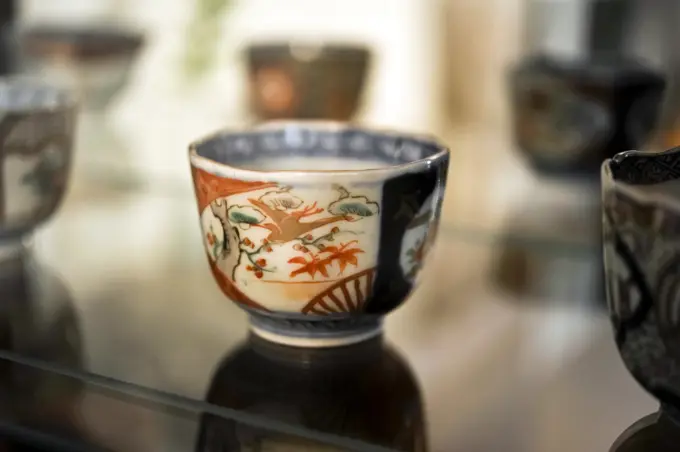
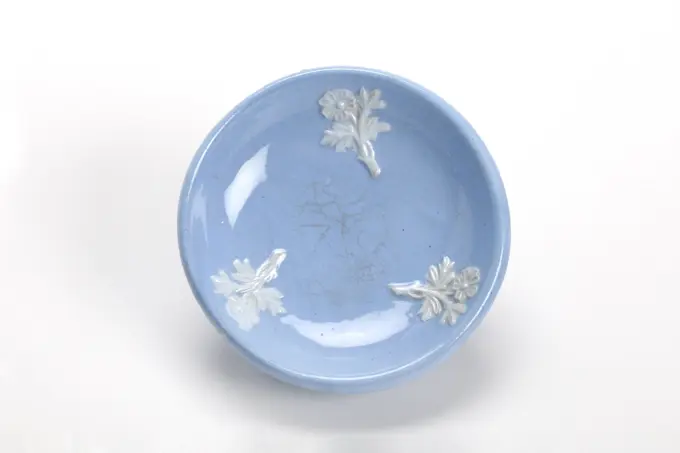
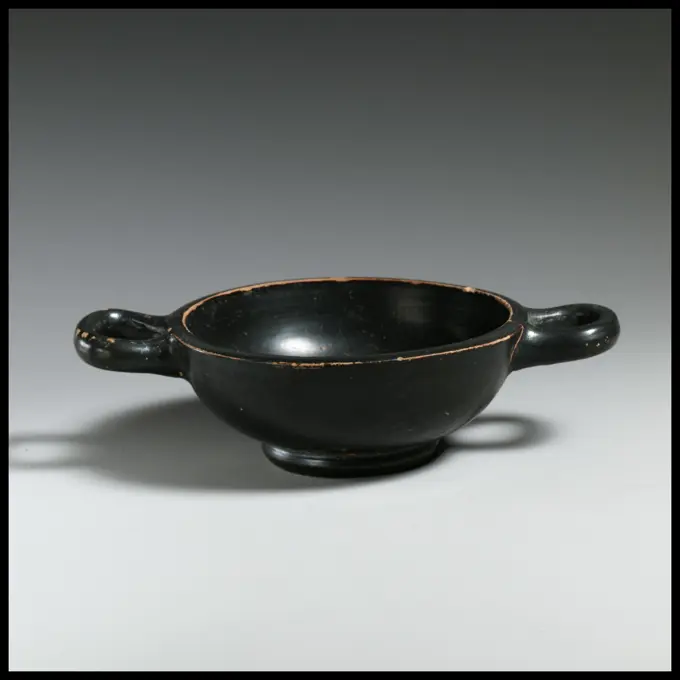
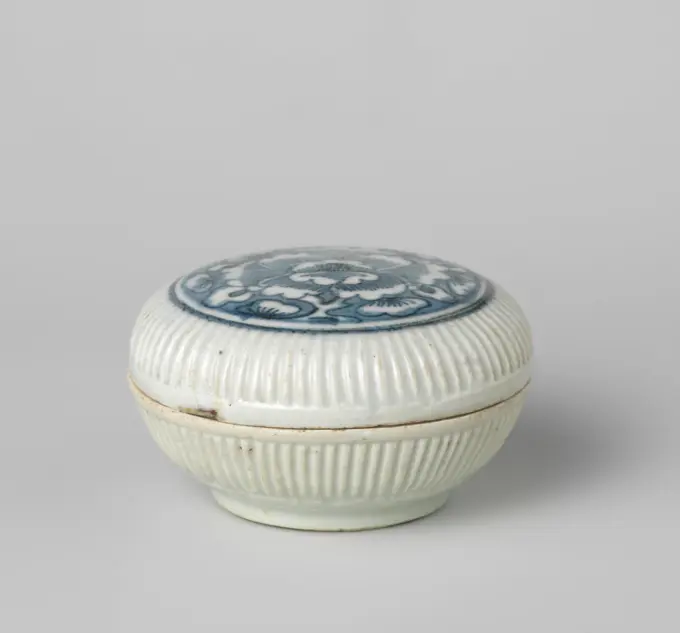
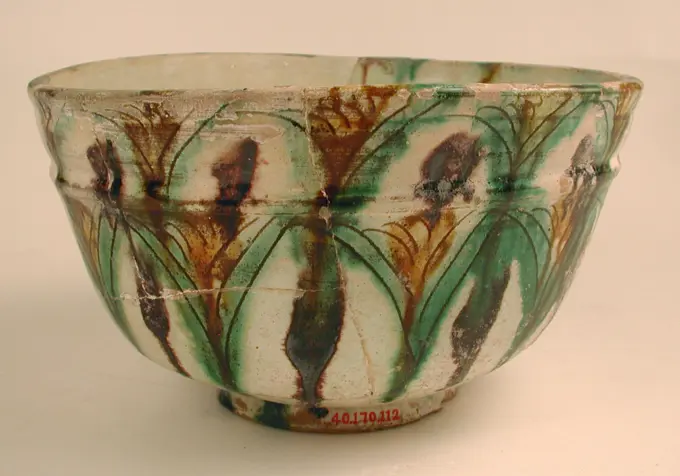
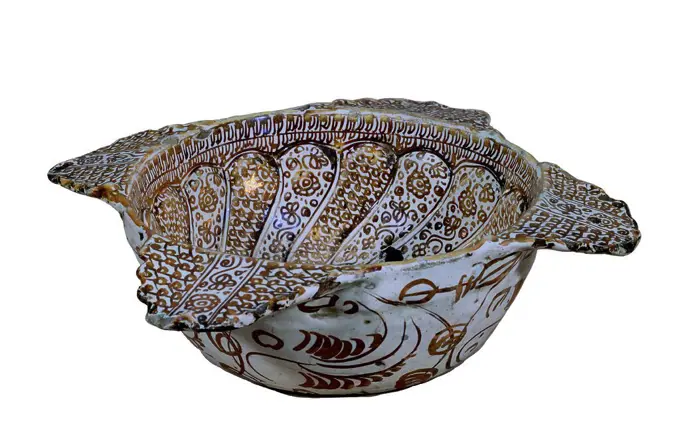
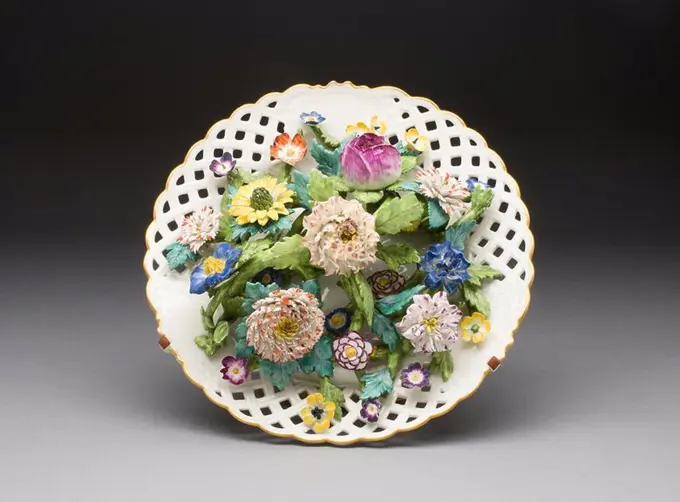
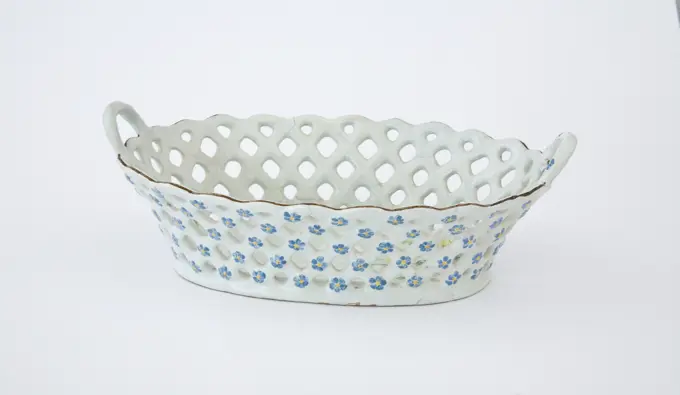
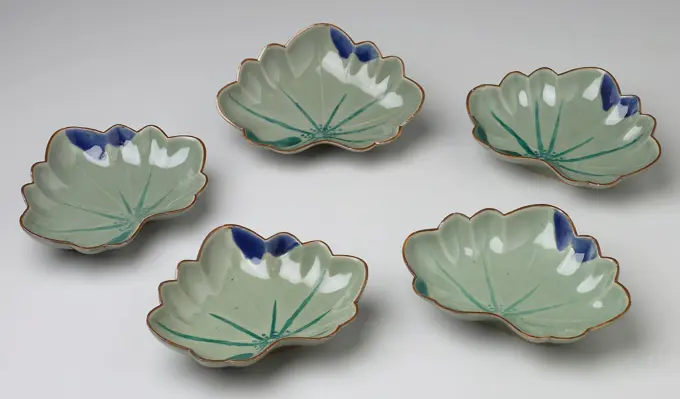
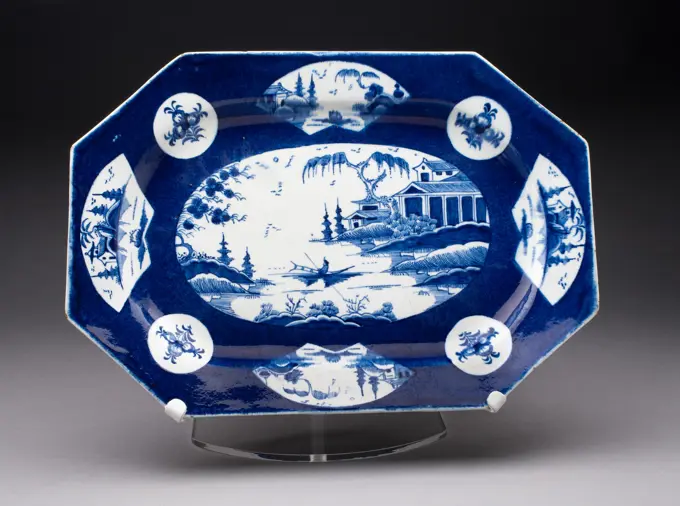
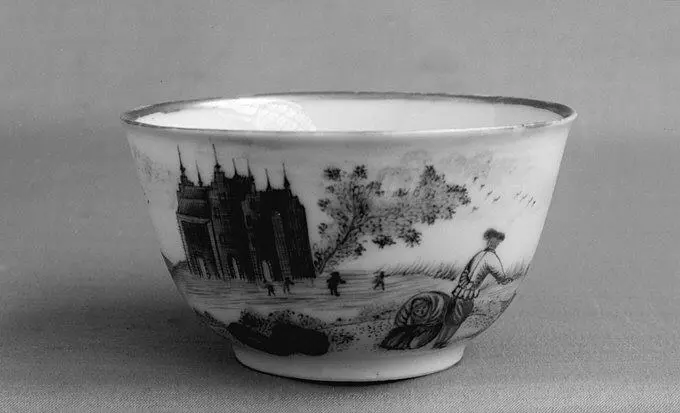
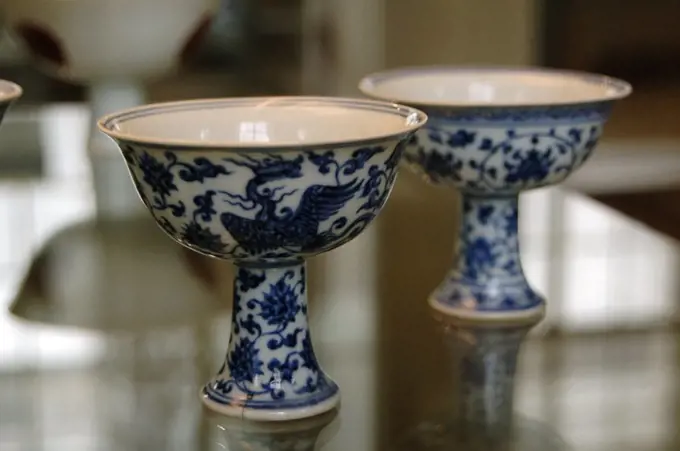
Sugar bowlBasket of English Hardy Pottery, Boch. Basket of hard-baked pottery. The basket has a scalloped edge and two twisted ears. The basket is painted in blue with a floral branch on the bottom. The basket has been marked. A subset is kept with Invnr at the basket. BK-1978-108-b.Cup with landscape late 17th-early 18th century China. Cup with landscape. China. late 17th-early 18th century. Porcelain painted in underglaze cobalt blue (Jingdezhen ware). Qing dynasty (1644-1911), Kangxi period (1662-1722). CeramicsSauce Dish 1870-90 Challinor, Taylor and Company. Sauce Dish 7170Schotel van Faience, de porceleyne was, c. 1760 - c. 1790  Dish of Faience. Blue painted with flower decorations. Delft .Cylindrical Tripod Censer (Incense Burner) with Cloud-Scroll Feet 1127-1279 China. Longquan ware; stoneware with underglaze molded decoration .Leaf-shaped dish (part of a service) ca. 1720 Meissen Manufactory German. Leaf-shaped dish (part of a service) 231642Bowl with Medallions of Flowers 1665-1735 China. Porcelain painted in underglaze blue, red, and green .Japanese imari porcelain cup. Fabric tea bus or chair of stoneware with a spherical body and an ivory lid, covered with a green glaze. Decoration embossed under the glaze with a tire with flower drinks on the shoulder; Below there a band with leaf motifs. Celadon.. Butter fleet of multi-colored padded faience, with a lid and standing on a plate. The fleet has the shape of a blue grape food and is attached to the plate. The branch of the bunch forms the ear. Flowers and leaves are attached to the board around the bunch. The plate has a scalloped edge. The butter dish has been marked.Bread plate - St. Johns Stone Chinaware Company (founded 1873) St. Johns Stone Chinaware Company (founded 1873)Punch Bowl. Culture: Chinese, for American market. Dimensions: Diam. 16 in. (40.6 cm). Date: ca. 1786-90.This extraordinary punchbowl features a remarkably faithful replica of the engraved certificate, dated December 1785, issued to Ebenezer Stevens (1751-1823) by the Society of the Cincinnati. Stevens was a major-general in command of the New York artillery and was vice president of the New York branch of the society. The decorative silver-gilt mount on the rim and around the foot were probably made during the early nineteenth century in response to an earlier crack--evidence of the extent to which the bowl was valued by its owner. A related bowl, a polychrome version, was made for Colonel Richard Varick (1753-1831). Varick was president of the New York branch of the society while Stevens was vice president. Although Varick's military career was tarnished by his association with Benedict Arnold, he later became Washington's confidential secretary and was mayor of New York from 1789 tKylix, stemless Greek, South Italian, Apulian. Kylix, stemless 255235 Greek, South Italian, Apulian, Kylix, stemless, Terracotta, H. 4.09 cm.. The Metropolitan Museum of Art, New York. Rogers Fund, 1967 (67.11.3)Round Box With Ribbed Sides. Round box of porcelain with ribbed wall, painted in underglaze blue. Ming porcelain in blue and white.Cup and saucer ca. 1740 Meissen Manufactory German. Cup and saucer. German, Meissen. ca. 1740. Hard-paste porcelain. Ceramics-PorcelainBowl 9th century. Bowl 449806Scale. Fruit shell in leaf shape with a branch like ear. Marked with a stork in blue.Punch Bowl. England, Liverpool, circa 1730. Furnishings; Serviceware. Earthenware with tin glaze and enamel (Delftware)ESCUDILLA "AB ORELLES TREPAES" DECORADA CON GALLONES FLORECILLAS ENCAJE Y SOLFA - MANISES - SIGLO XVI. Location: INSTITUTO VALENCIA DE DON JUAN-COLECCION. MADRID. SPAIN.Oyster shell, painted with a sprig, c. 1778 - c. 1782 Porcelain oyster shell, painted with blue decor along the lower and upper edge and a symmetrical branch on the bottom. Not marked. Loosdrecht porcelain Porcelain oyster shell, painted with blue decor along the lower and upper edge and a symmetrical branch on the bottom. Not marked. Loosdrecht porcelainTureen 1883 Providence. This exuberant tureen exemplifies the highly imaginative and technically advanced hollowware that made Gorham one of the leading silver manufacturers in the 19th century. In 1869 the firm was the first major American silver company to introduce Japanese-inspired designs into their product line, ahead of competitors like Tiffany and Company. This vessel features aquatic motifs, likely drawn from Japanese prints giant carp and a turtle, articulated in deep relief, thrash in violent waters, while the undulating body of the tureen itself suggests the movement of the sea.. Silver . Gorham Manufacturing CompanyPlate with Applied Flowers. Meissen Porcelain Manufactory; German, founded 1710. Date: 1763-1774. Dimensions: H. 7.6 cm (3 in.); diam. 23.2 cm (9 1/8 in.). Hard-paste porcelain, polychrome enamels, and gilding. Origin: Meissen. Museum: The Chicago Art Institute, Chicago, USA.Wedding Cup, anonymous, c. 1700 - c. 1724 Ritual head of porcelain with a spreading wall and a wooden, rock -shaped standard, painted on the biscuit in red, green and black. The outer wall of the head is covered with peach blossoms (prunus) against a background of 'crackled ice'; In this, saved medallions with a flower branch. The outer edge with a band with curl. The inner edge with a tire servetwork interrupted by a cartouche with a flower. The ear is modeled in the form of a chilong (polled dragon). The wooden standard is from later date. Email sur biscuit with family distance colors. China Porcelain. Standard: Wood (Plant Material) painting Ritual head of porcelain with a spreading wall and a wooden, rock -shaped standard, painted on the biscuit in red, green and black. The outer wall of the head is covered with peach blossoms (prunus) against a background of 'crackled ice'; In this, saved medallions with a flower branch. The outer edge with a band with curl. The inner edge with a Can with two handles. Acquired from the Atelier de Glatigny on the Paris World Fair 1900Miseczka. unknown, authorButter fleet of multicolored hard-baked pottery; Staffordshire. Butter fleet (oval) Of Multicolor Hardy Pottery. The fleet is decorated with spotted lead glazing in the colors blue, gray, green and yellow with a mangane dot. The fleet includes a lid on which a lying cow (BK-1987-36-e) and a subset (BK-1987-36-a).Changsha (ceramic production center), box (common name), 0900. sandstone. Covered Qingbai. Cernuschi Museum, Asia Museum of Asia in the city of Paris. On the lid, a flower with five petals, molded in low relief.Cup with incised flower heads, anonymous, c. 1800 - c. 1849 Porcelain head, covered with a translucent white glaze. CONically shaped head with four incoming flowers on the inside. Blanc the Chine. China porcelain. glaze engraving / vitrification Porcelain head, covered with a translucent white glaze. CONically shaped head with four incoming flowers on the inside. Blanc the Chine. China porcelain. glaze engraving / vitrificationTwo platesBasket Bia And undergroundSet of leaf-shaped food dishes (mukōzuke), 1660s, Unknown Japanese, H.1-5/8 x W.6-9/16 in., Ko-imari ware; porcelain with overglaze enamels, Japan, 17th century, The Chinese porcelain industry began to collapse in the early 1600s. In response, Japanese potters started creating porcelain wares, decorated in the Chinese manner, for the European market. By the 1660s and 70s, however, Japanese-style shapes and designs, like leaves and folding fans, became popular among both foreign and domestic buyers. Tea masters of the time prized elegant plates such as these for use in kaiseki, meals served in conjunction with a tea gathering.Bowl, Black transfer on stoneware, Yellow bowl with depiction of a family at piano-forte in black; black lines around rim and foot., England, 1800-1820, ceramics, Decorative Arts, BowlCup and Trembleuse Saucer Cup And Saucer; Manufactured by Meissen Porcelain Manufactory (Germany); porcelain, vitreous enamel, goldDinner service (julita)  bowl Ruszczyński, Edmund (1920 Ca 1995), Wałbrzych, WawelWashing bowl and water jugLid of soap tray, part of a toilet garnish. Lid, part of a toilet garnish of pottery. Decorated with red piping and Arenberg Duke arm with crown in red and yellow.Box base China. Box base. China. Painted enamel. Qing dynasty (1644-1911), Qianlong period (1736-95). EnamelsPlatter Made 1755-1765 Bow. Soft-paste porcelain, underglaze blue decoration . Bow Porcelain FactoryDish with Dragons Writhing amid Floral Scrolls 1506-1521 China. Porcelain painted in underglaze blue .Teabowl and saucer ca. 1750 Chinese with European decoration. Teabowl and saucer. Chinese with European decoration. ca. 1750. Hard-paste porcelain. Ceramics-Porcelain-ExportDish with scalloped edge and olives tiled. Round, white dish with olives, from multicolored faience painted. The dish has a scalloped edge and olives are attached to the dish.China. Underglazee blue cups. Ming dynasty, Xuande period (1426-35 AD). British Museum. London. England. United Kingdom.Tumbler (Stehaufbecher). Unknownunknown (unknown), Urn, technique text: porcelain, art industry, hork. 24 cm, Photo no. 32105.179, 13.8.2002, photographer: Aaltonen, Hannu, photo type: lakadia v/k, content description: Covered urn. Rose and leaf relief ornament. Bird on cover. MariebergSnuffbox ca. 1745-50 Capodimonte Porcelain Manufactory. Snuffbox 207215Still Life of Porcelain Sake Pitchers and Cups