Decorative Porcelain Crockery

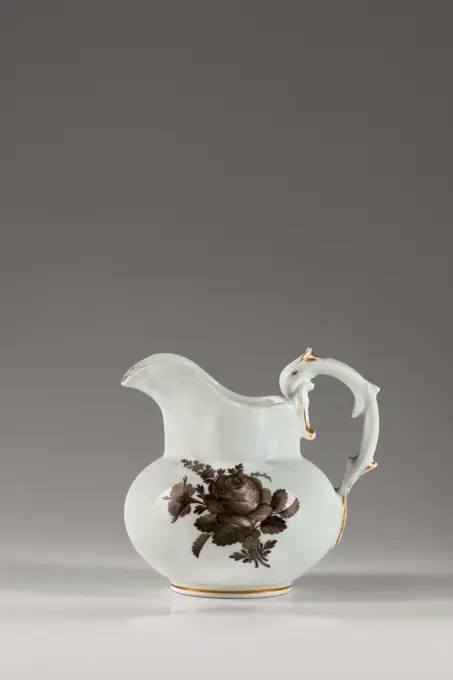
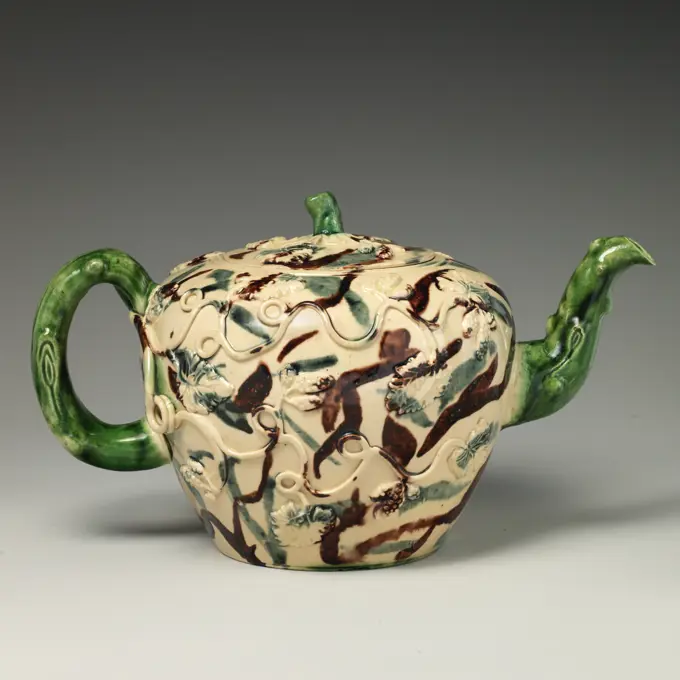
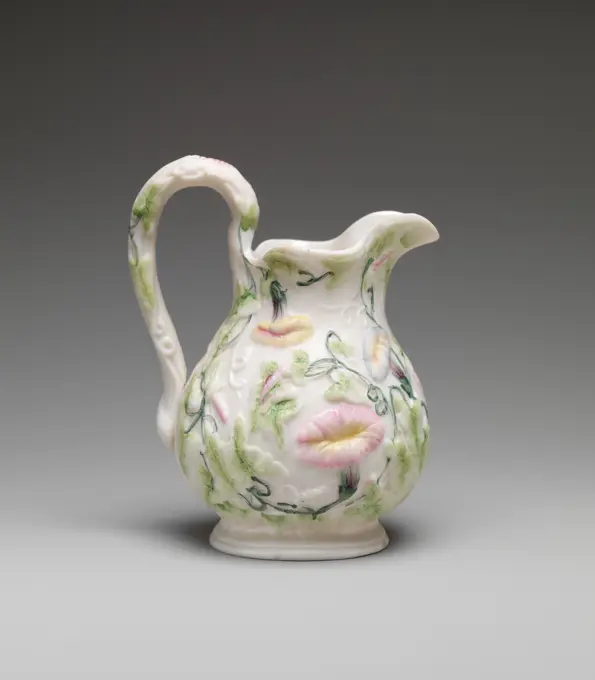
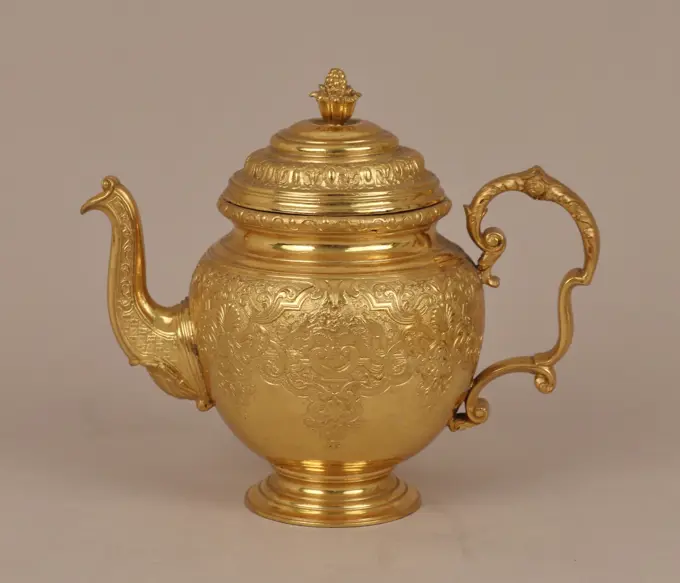
Elegant porcelain pieces featuring floral and gold motifs. Includes various milk and teapots, showcasing intricate designs and vibrant colors.

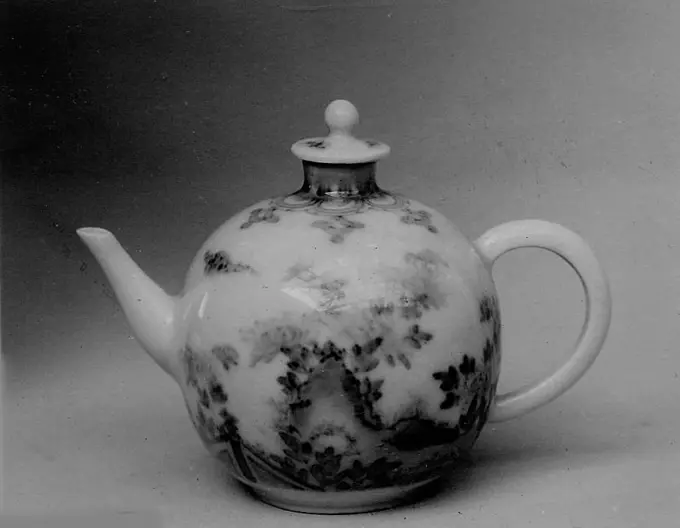
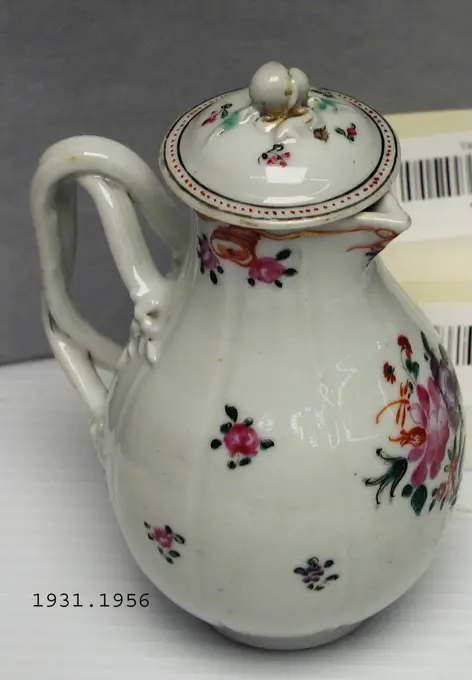
Pearshaped milkjug with a crane near a peony plant and rock, anonymous, c. 1725 - c. 1749 Pear-shaped can be made of porcelain with C-shaped ear and short spout from the edge, painted on the glaze in blue, red, pink, green, black and gold. On the wall a leaf -shaped cartouche with a crane in a landscape in a flourishing peoning plant and a rock; For the cartouche flower ranks in Bianco Sopra Bianco; The edge with a decorative pattern. Part of a service. European forms with Famle Rose. China porcelain. glaze. gold (metal) painting / gilding / vitrification Pear-shaped can be made of porcelain with C-shaped ear and short spout from the edge, painted on the glaze in blue, red, pink, green, black and gold. On the wall a leaf -shaped cartouche with a crane in a landscape in a flourishing peoning plant and a rock; For the cartouche flower ranks in Bianco Sopra Bianco; The edge with a decorative pattern. Part of a service. European forms with Famle Rose. China porcelain. glaze. gold (metal) p
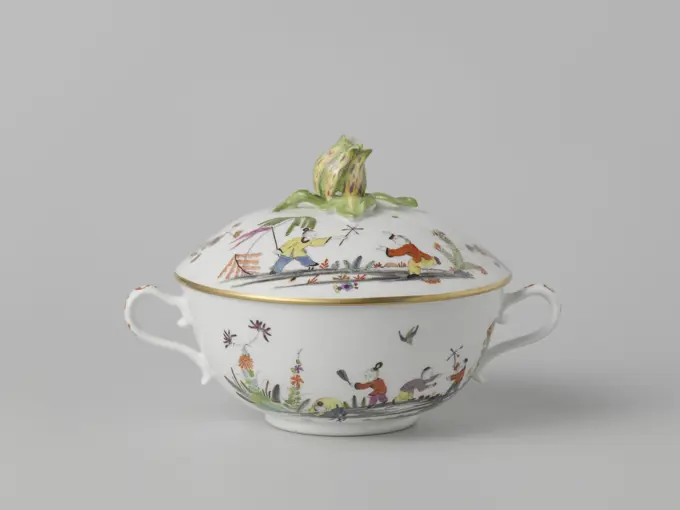
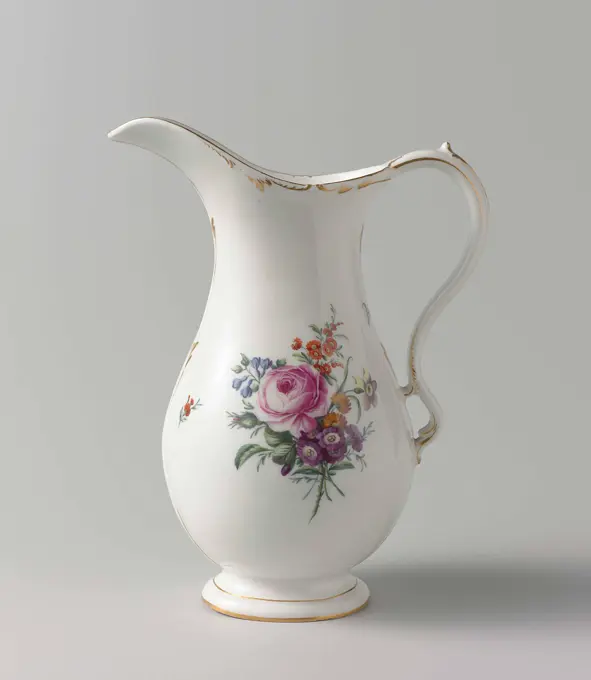
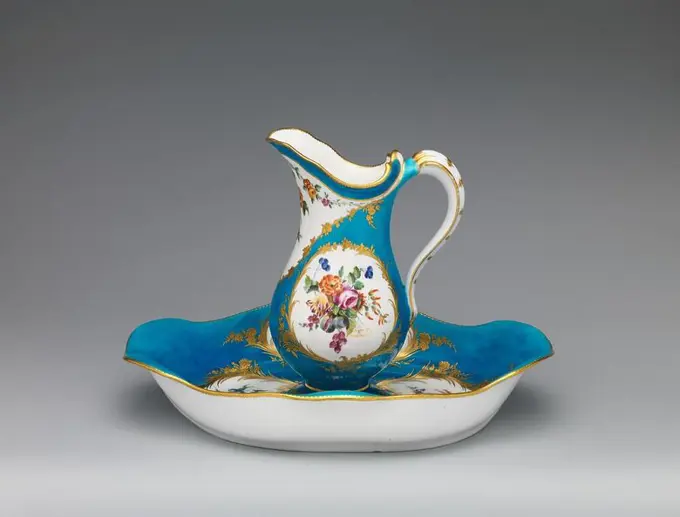
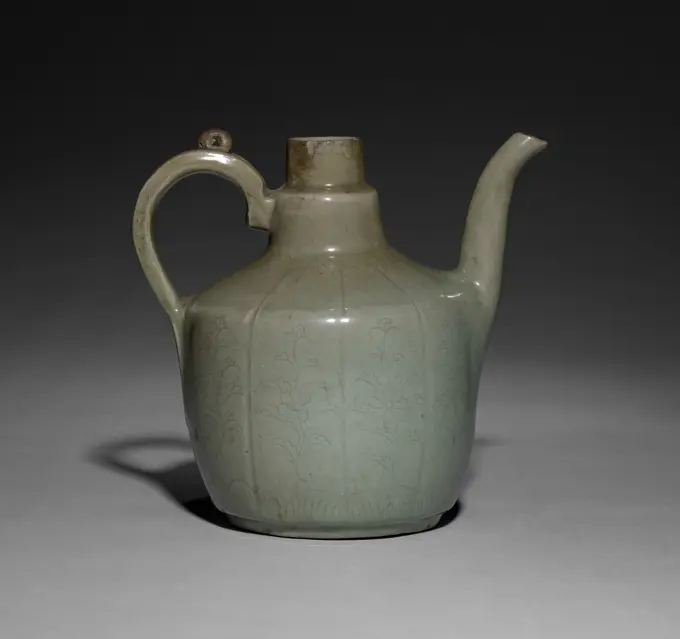
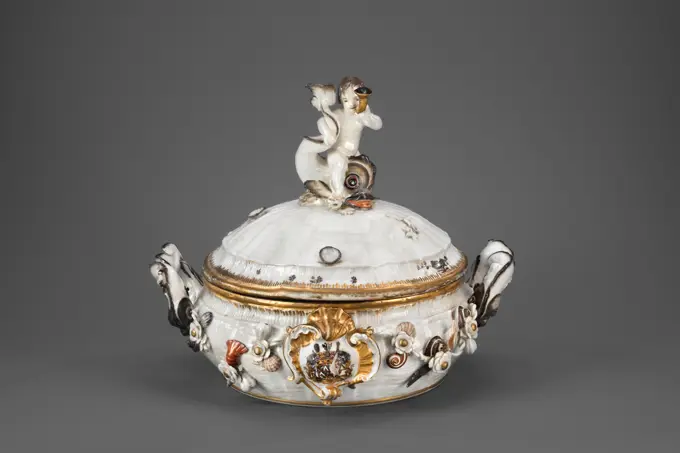
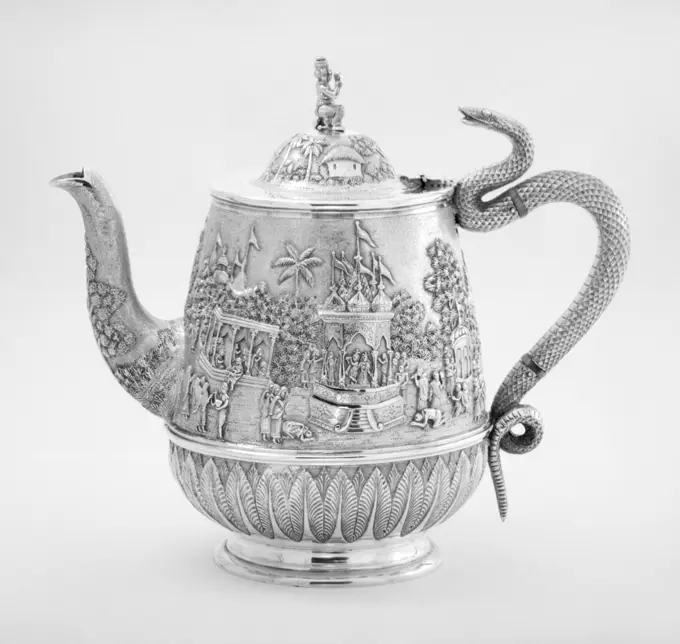
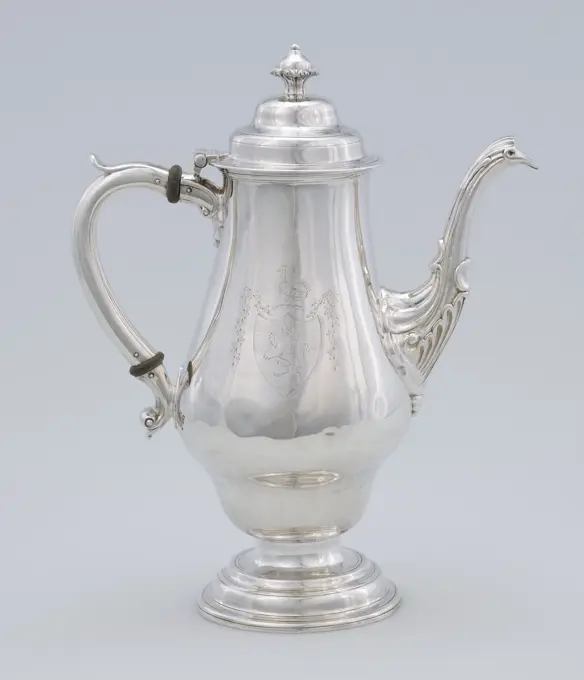
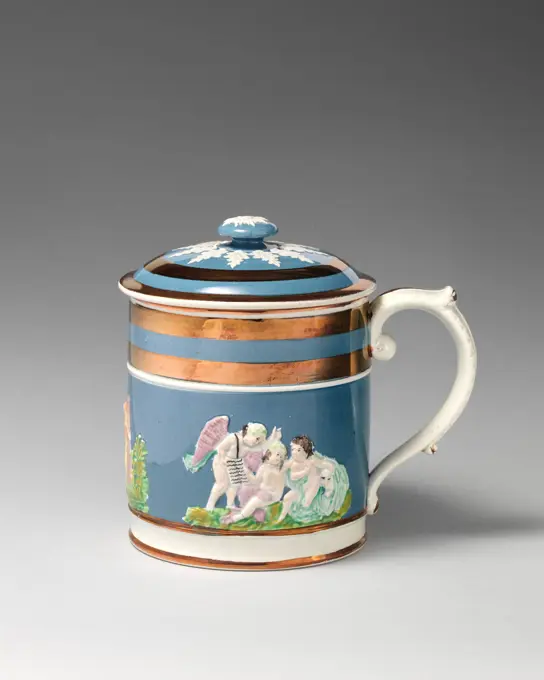
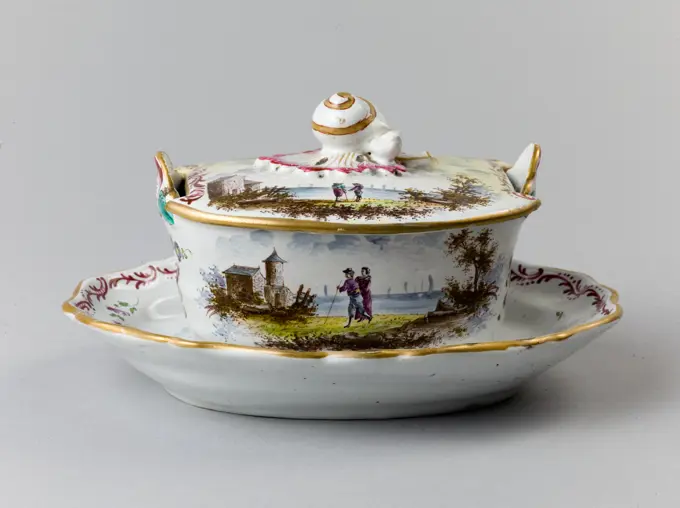
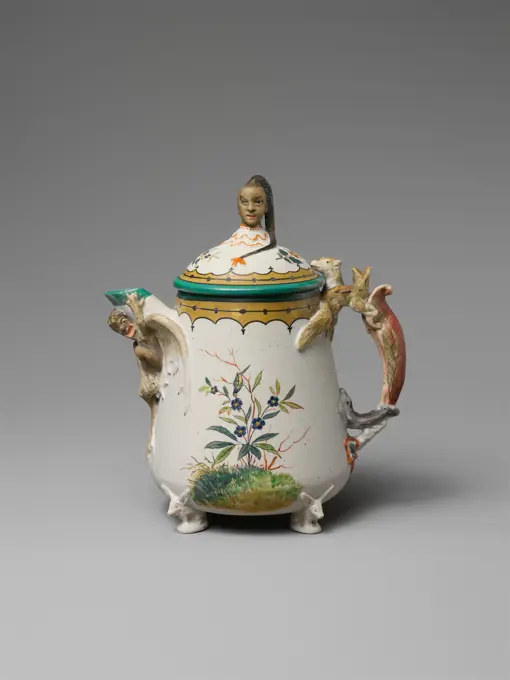
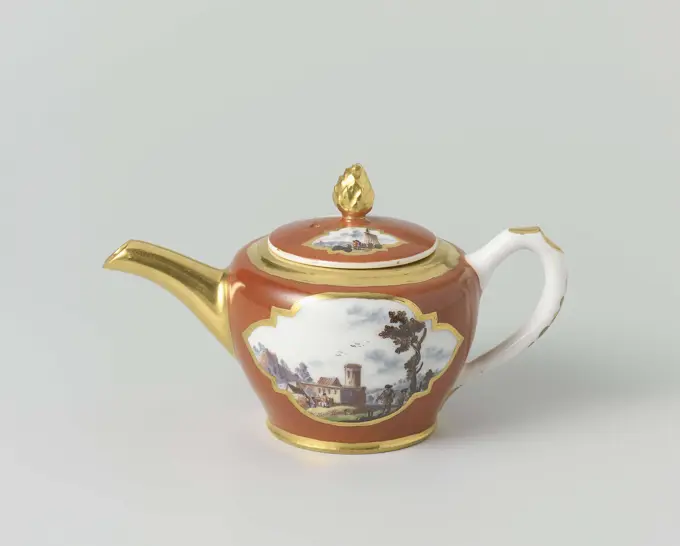
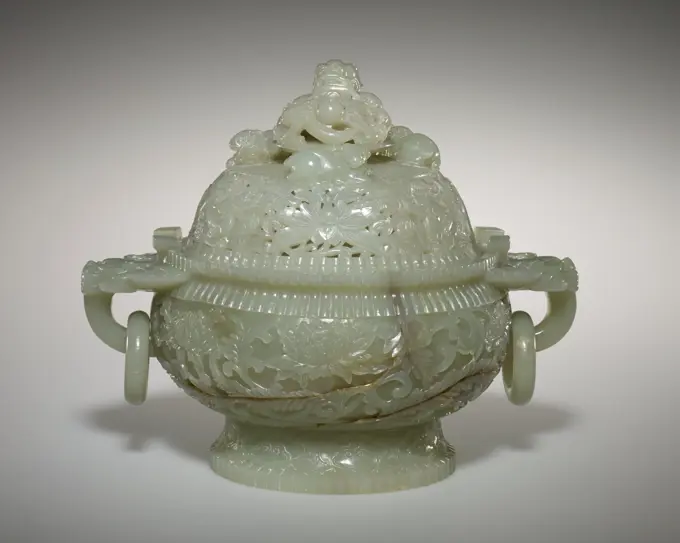
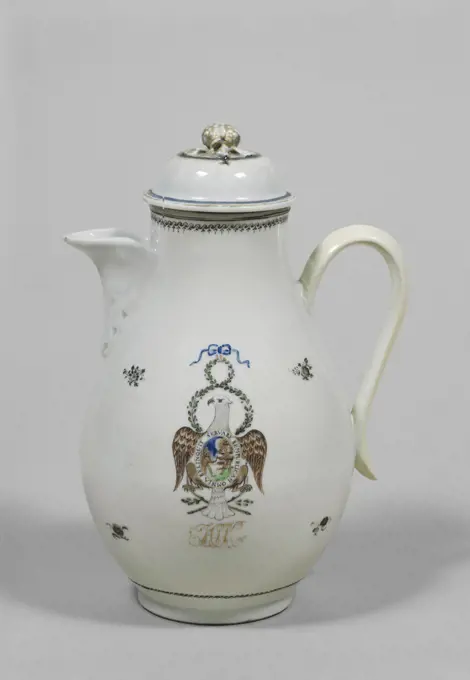
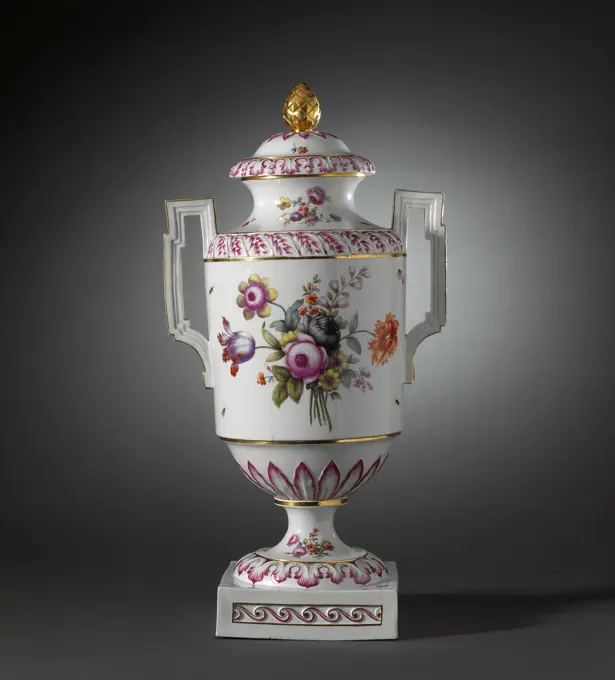
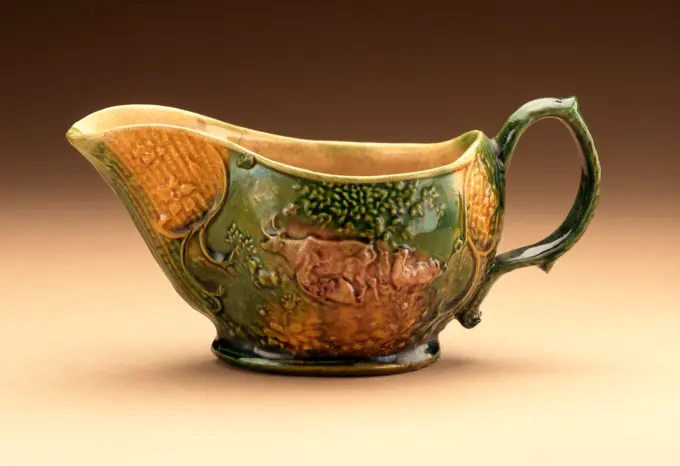
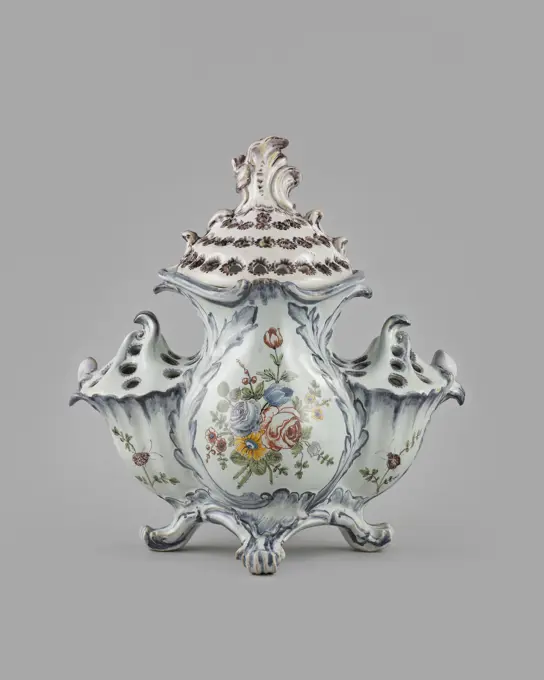
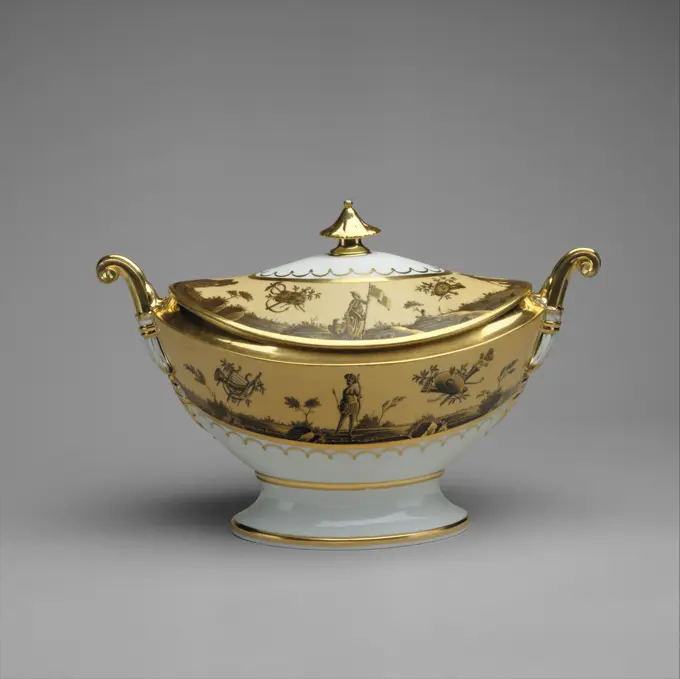
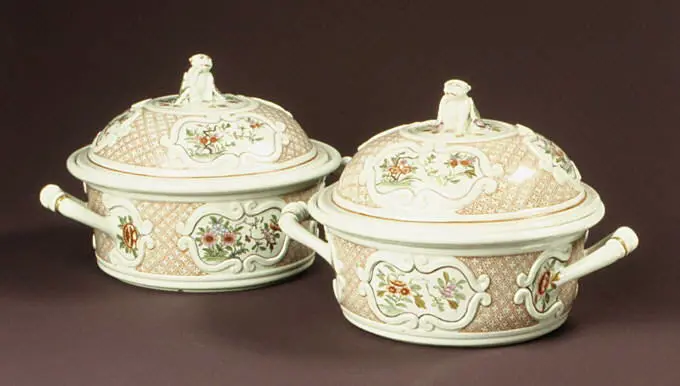
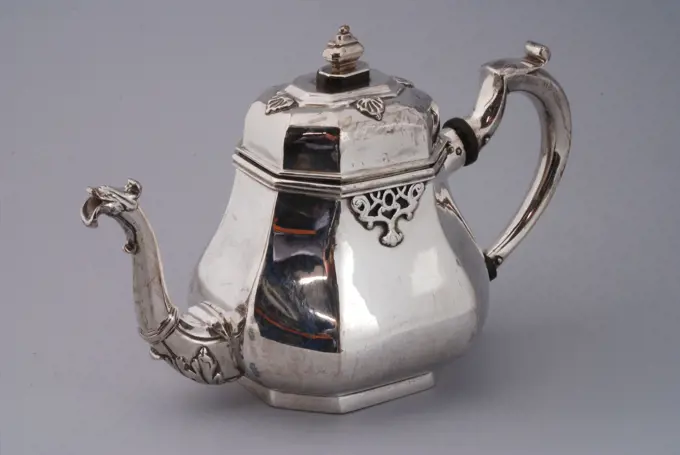
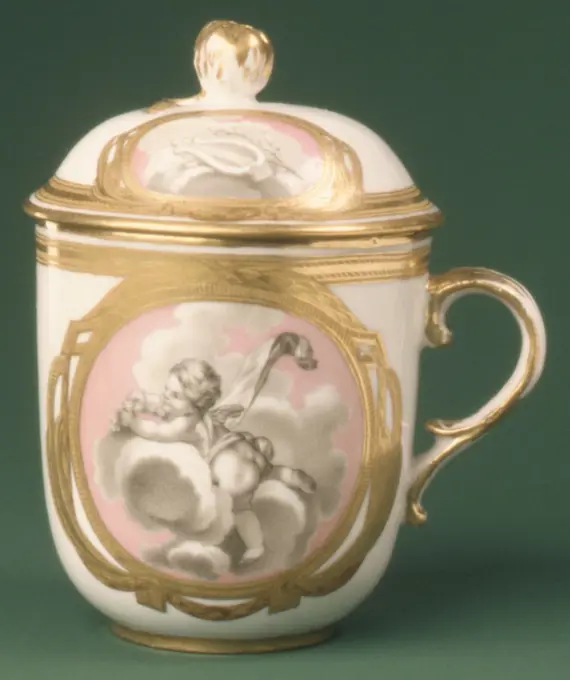
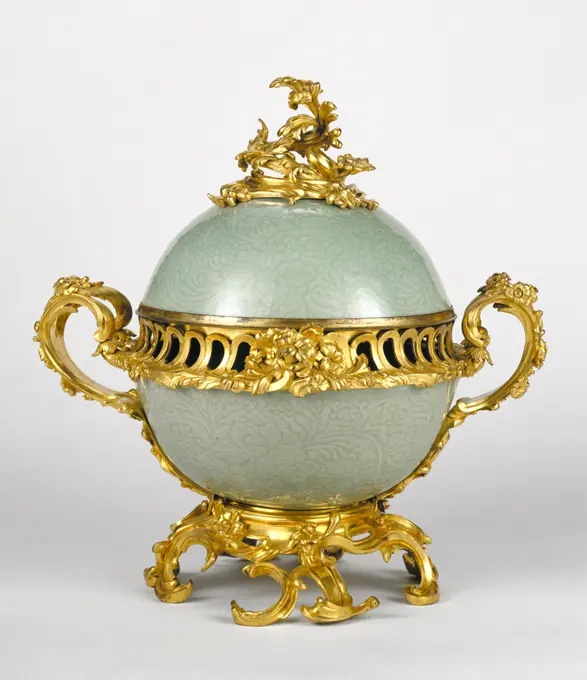
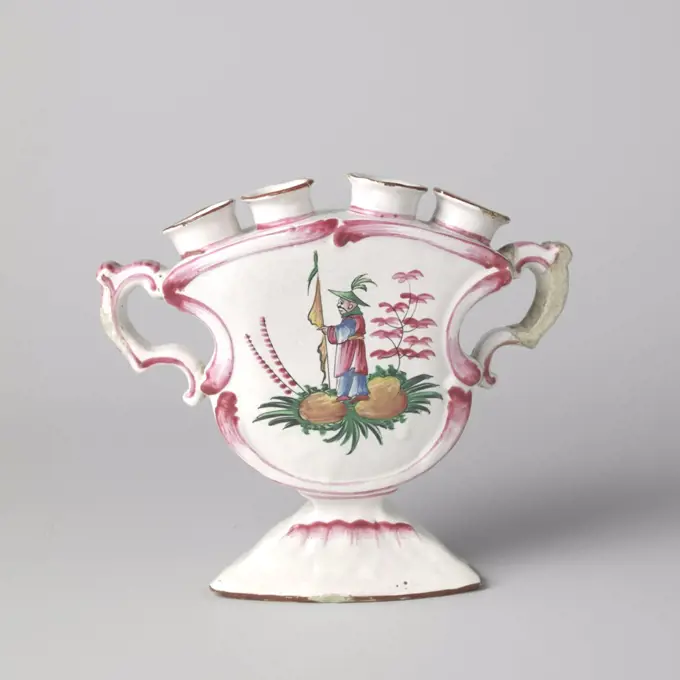
Flower Holder polychrome painted faience, Anonymous, c. 1760 - c. 1800. On the body of the pot are small unglazed figurines. They represent the Eight Immortals, legendary figures in Taoism, who feature in many wondrous Chinese tales. The jar was meant for making offerings on a Chinese altar. In the 17th century a number of these vessels found their way to the Netherlands as rarities. Amalia, Stadtholder Frederick Henrys consort, also had one.Teapot, blue, with leaves and flowers in relief, Peter Regout, c. 1801 - c. 1879 Teapot made of bluestone, with leaves and flowers in relief over the entire surface. The top edge of the pot is sculpted. The curved lid, with leaves and flowers in relief, is crowned by a flower bud. Maastricht earthenware Teapot made of bluestone, with leaves and flowers in relief over the entire surface. The top edge of the pot is sculpted. The curved lid, with leaves and flowers in relief, is crowned by a flower bud. Maastricht earthenwareVincennes Porcelain Manufactory, Teapot and Cover, porcelain, c. 1765; decoration later, soft-paste porcelain.Terrine lid, multi -colored painted with chinoiseries, Meissener Porzellan Manufaktur, after Pieter Schenk (II), c. 1730 - c. 1735 Cover of painted porcelain. The lid a flower bud with leaves as a button. Float porcelain Cover of painted porcelain. The lid a flower bud with leaves as a button. Float porcelainTerrine with lid and underput, multicolored painted with chinoiseries, Meissener Porzellan Manufaktur, after Pieter Schenk (II), c. 1730 - c. 1735 Terrine with lid and underpotel of painted porcelain. The terrine has two ears and the lid a flower bud with leaves as a button. Two contour chinoiseries were painted on the terrine: one with four and one with two children playing. The lid has three chinoiseries with children playing. The terrine is marked. Float porcelain Terrine with lid and underpotel of painted porcelain. The terrine has two ears and the lid a flower bud with leaves as a button. Two contour chinoiseries were painted on the terrine: one with four and one with two children playing. The lid has three chinoiseries with children playing. The terrine is marked. Float porcelainTeapot, melon -shaped, Willem Schiff (attributed to), 1778 - 1779 Silver teapot, melon -shaped, standing on five leaves of a continuous slender. The spout is overgrown with branches and leaves in relief. The lid has the shape of a leaf and is crowned by a branch with fruit. The pot has an ebony ear. Nijmegen silver (metal). ebony (wood) casting Silver teapot, melon -shaped, standing on five leaves of a continuous slender. The spout is overgrown with branches and leaves in relief. The lid has the shape of a leaf and is crowned by a branch with fruit. The pot has an ebony ear. Nijmegen silver (metal). ebony (wood) castingClose-up of a tea kettle on a burner, Paris, FranceCan with two flower bouquets. Can of porcelain, with wide spout. Decorated with two large flower bouquets. Along the edges of golden piping.Jug with a mask, fluting and chip carving, anonymous, c. 1590 - c. 1610 Can be made of stoneware on high foot with an egg -shaped body and narrow neck with pinched spout. The ear is attached to the neck and shoulder. Profiles on the neck, belly and foot. Partly covered with cobalt blue. The lower part of the abdomen with canelures and the widest part with profiles and a stamped decoration. The vaulted shoulder is slightly narrower than the belly and decorated with core cut. On the neck in relief a printed and imposed mask. Attached to the ear a pewter frame with lid with an unreadable brand on the inside. Raeren. Rae Stoneware. Glaze. Cobalt (Mineral). frame: tin (metal) vitrification Can be made of stoneware on high foot with an egg -shaped body and narrow neck with pinched spout. The ear is attached to the neck and shoulder. Profiles on the neck, belly and foot. Partly covered with cobalt blue. The lower part of the abdomen with canelures and the widest part with profiles and a stampEwer and basin, soap and brush boxes 1880-90 probably British, Staffordshire. Ewer and basin, soap and brush boxes. probably British, Staffordshire. 1880-90. Earthenware. Ceramics-PotteryEwer and basin (pot à la Romaine uni et jatte ovale). Culture: French, Vincennes. Dimensions: Height (ewer .177): 9 3/8 in. (23.8 cm);Overall (basin .178): 14 3/8 × 10 1/8 in. (36.5 × 25.7 cm). Factory: Vincennes Manufactory (French, ca. 1740-1756). Date: 1754-55.The form of this ewer and basin is based on contemporary French silver examples. Silver, the more expensive medium, frequently provided the model for the forms of French porcelain in the eighteenth century. Museum: Metropolitan Museum of Art, New York, USA.Wine Pot, 918-1392. Korea, Goryeo period (918-1392). Pottery; overall: 17.8 x 13.9 cm (7 x 5 1/2 in.). As early as the seventh century, the practice of drinking tea and wine became an important part of elite culture in Korea. Elites of the Goryeo period commissioned a variety of types of utensils and vessels including this elegant wine pot, not only to make their drinking experience more exciting, but also to show their appreciation of nature.Jacob Hurd, Sauceboat, c. 1745, silver.Cream Jug, c. 1810-1820. John McMullin (American, 1765-1843). Silver; overall: 18 cm (7 1/16 in.); with handle: 13.8 cm (5 7/16 in.); without handle: 7.7 cm (3 1/16 in.).Lampet can, painted with flowers. Lampet can from blue painted faience, on a light blue fond. The can be egg-shaped, has a wide lip, a C-shaped ear and stands on a high, wide foot. The can be painted with flowers.Vase with a lid; Koenigliche Porcellain Fabrique, Meissen (1710-1763), Kaendler, Johann Joachim (1706-1775), Eberlein, Johann Friedrich (1695-1749); 1739-1741 (1739-00-00-1741-00-00);Bruehl, Henryk (1700-1763), swan service, coats of arms, purchase (provenance)Coffee service with flowers, Pirkenhammer, c. 1935 Porcelain coffee service, painted on the glaze in blue, red, green and gold. The crockery consists of twelve parts, including a leaf, coffee pot, milk jug, sugar bowl and four cups with dishes. All decorated with blue flowers. Marked on the underside with the crossed hammers with crown. Carlsbad porcelain. glaze. gold (metal) painting / gilding / vitrification Porcelain coffee service, painted on the glaze in blue, red, green and gold. The crockery consists of twelve parts, including a leaf, coffee pot, milk jug, sugar bowl and four cups with dishes. All decorated with blue flowers. Marked on the underside with the crossed hammers with crown. Carlsbad porcelain. glaze. gold (metal) painting / gilding / vitrificationTeapot with lid of earthenware with black -covered glaze., Anonymous, c. 1740 - c. 1770 Teapot of earthenware with black -covering glaze. With a lid. Staffordshire earthenware Teapot of earthenware with black -covering glaze. With a lid. Staffordshire earthenwareTeapot (part of a set) 1860-80 Anglo-Indian Part of a set that includes a sugar bowl (1972.116.2) and cream jug (1972.116.3). The decoration combines Indian festival scenes amid palms and temples with domestic ones in European-style interiors.. Teapot (part of a set) 205465Teapot with lid, anonymous, c. 1750 - c. 1800 Spherical body, curved spout and C-shaped handle. Overhanging lid with round button. Glassblower: Japanmaker: Europe glass glassblowing Spherical body, curved spout and C-shaped handle. Overhanging lid with round button. Glassblower: Japanmaker: Europe glass glassblowingCoffeepot, c. 1770-1780, Benjamin Burt, American, 1729-1805, 12 7/8 x 10 3/4 x 5 3/4 in. (32.7 x 27.31 x 14.61 cm), Silver and wood, United States, 18th centuryMug with lid British 19th century View more. Mug with lid. British. 19th century. Lustreware. Ceramics-PotterySpirit Kettle,  1766-1806Lid of Roompot, painted with flower branches. The lid knob is also decorated in beet red and gold. Golden piping along ear and mouth and lid edge.Milk jug. Korzec (manufaktura porcelany ; 1790-1832), factoryTeapot ca. 1750 Style of Astbury-Whieldon Listen to experts illuminate this artwork's story Listen Play or pause #407. Teapots Supported by Bloomberg Philanthropies We're sorry, the transcript for this audio track is not available at this time. We are working to make it available as soon as possible.. Teapot. British, Staffordshire. ca. 1750. Lead-glazed earthenware. Ceramics-PotteryTerrine with lid and handle, multi-colored painted with a kakiemon decor, Meissener Porzellan Manufaktur, c. 1740 - c. 1745 Half -spherical terrine of painted porcelain. The terrine has a SNEB and a profiled handle. The semi -full lid has a button in the shape of a branch with leaves and flowers in relief. The terrine and the lid are ribbed and painted with a tiger around a bamboo stalk, sprinkled Indianic blums, butterflies and branches with birds. The edges are decorated with the 'Altbrandenstein' pattern. Float porcelain Half -spherical terrine of painted porcelain. The terrine has a SNEB and a profiled handle. The semi -full lid has a button in the shape of a branch with leaves and flowers in relief. The terrine and the lid are ribbed and painted with a tiger around a bamboo stalk, sprinkled Indianic blums, butterflies and branches with birds. The edges are decorated with the 'Altbrandenstein' pattern. Float porcelainSauceboat 1765-66 Robert Peaston British. Sauceboat. British, London. 1765-66. Silver. Metalwork-SilverCoffeepot (part of a service) ca. 1875-81 Coalport. Coffeepot (part of a service). British, Coalport. ca. 1875-81. Porcelain. Ceramics-PorcelainChocolate boiler with the lid of pottery, wedgwood black basalt. With lid .. spherical chocolate boiler with lid of pottery, black basalt. The boiler has a raised, braco-shaped border with two holes in which the loose handle of wound reed hangs. The spout is S-shaped and the lid has a knob in the form of a sitting woman with a piece of paper in her left hand. The abdomen of the boiler is embossed decorated with playing naked children, above an edge of cut-out vertical piping. The boiler has been marked.Teapot. Culture: British (American market). Dimensions: H. 4 1/2 in. (11.4 cm). Date: 1750. Museum: Metropolitan Museum of Art, New York, USA.Pitcher 1830-70 American. Pitcher 5730Can with gilded frame, daum frères, c. 1900 Can of überfang glass with a decor of poppy flowers with gilded elements on a roughly etched surface. The gold-plated silver frame contains flower and leaf motifs. On the bottom in gold against a black background the signature Daum Nancy, the Lotharingse Cross and a wilted flower. glassblower: Nancysilversmith: Paris glass. silver (metal). gilding (material) blow molding / gilding / etching Can of überfang glass with a decor of poppy flowers with gilded elements on a roughly etched surface. The gold-plated silver frame contains flower and leaf motifs. On the bottom in gold against a black background the signature Daum Nancy, the Lotharingse Cross and a wilted flower. glassblower: Nancysilversmith: Paris glass. silver (metal). gilding (material) blow molding / gilding / etchingTeapot 19th century, after 1730-40 original After an original by Johann Ludwig Biller This electrotype is after an eighteenth-century original (1730-40) at the Winter Palace, St. Petersburg, at the time of reproduction. It belongs to a toilet service made for and presented to the Empress Anna Ivanovna.. Teapot 186522Water Pot for Desk 1830 Japan. Water Pot for Desk 44936. Meissener Porzellan ManufakturMeissen, c. 1730-1735lid: after 1735hard-paste porcelain, parcel-gilt silverFactory widow Perrin. "Beurrier, cover and historical decor display". Faïence, polychrome history decor. Paris, Museum of Romantic Life. BEURRIERCovered Jar With Peacocks and Flowering Plants in a Fenced Garden. Porcelain lid pot on a high foot and with two raised ears, painted on the glaze in blue, red, green, yellow and black. The pot is covered with loose flowers on a background of 'crackled ice'; Two rectangular cartouches with flowering plants (Peony, Prachtanjer) and a butterfly or two peacocks and bamboo in a fenced garden. At the foot a bond with flower drinks. The lid with flowering plants at a rock. Chip in the lid knob and one ear. Famille Verte.Teapot ca. 1876 Designed by Karl L. H. Müller American Made as a prototype for a porcelain service exhibited at the 1876 Philadelphia Centennial Exhibition, this tea set depicts troubling imagery on the finials of the teapot and sugar bowl in the form of heads of an Asian and a Black man. While designer Karl Mullers intent was undoubtedly to present well-known iconography for tea and sugar—a goat is also depicted on the handle of the creamer—the representations reveal the pervasiveness of racist thought in 19th-century America. The Black head also underscores how the commodity of sugar was inextricably linked to the exploitation of enslaved labor, especially in the Atlantic World.. Teapot 8378. Teapot of painted porcelain. The teapot is covered with an orange-red fond, in which braco-shaped four passes are saved with (water) landscapes with European figures, sometimes with bales and ships. The teapot has been marked.Crocus Pot. Wedgwood Manufactory; England, founded 1759. Date: 1815-1825. Dimensions: 14 × 18.7 × 27.2 cm (5 1/2 × 7 3/8 × 10 11/16 in.). Stoneware: glazed ivory jasperware with green relief. Origin: Burslem. Museum: The Chicago Art Institute, Chicago, USA.SOLITARIO (SERVICIO DE DESAYUNO) DE PORCELANA DE CUATRO PIEZAS - VIENA 1825 - PINTADO EN 1828. Author: LAMPRECHT GEORG. Location: MUSEO ERMITAGE-COLECCION. ST. PETERSBURG. RUSSIA.Teapot. Malcz, Karol (1797-1867), goldsmithTwo-handled cup 1830-70 American. Two-handled cup. American. 1830-70. Blown glass with applied decoration. Possibly made in New Jersey, United States; Probably made in New York, United StatesVase, 1749. Meissen Porcelain Factory (German). Porcelain mounted in gilt bronze; overall: 37.4 x 32.7 x 21 cm (14 3/4 x 12 7/8 x 8 1/4 in.). One of these vases is dated 1749. They were perhaps part of a set of four covered vases that we know from documents were acquired by Mme. de Pompadour, mistress of Louis XV in 1752.Melon - shaped Ewer and LidTea Service (Teapot), 1801. Anne Bateman (British, 1748-1813), Peter Bateman (British, 1740-1825), William (I) Bateman (British, 1774-1850). Silver, ivory, wood; overall: 17 x 8.5 x 30.5 cm (6 11/16 x 3 3/8 x 12 in.).Gravy Boat (2 of 2), 1746-1747. Samuel Wood (British). Silver; average: 10.2 cm (4 in.); lip to handle: 20.4 cm (8 1/16 in.); to handle: 10 cm (3 15/16 in.); to lip: 9 cm (3 9/16 in.).Covered Incense Burner, 19th century, 7 3/4 in. (19.69 cm), Greenish-white nephrite, China, 19th century, This elaborately carved incense burner is a classic example of 'Mughal' or 'Indian-style' jade carving. Muslim merchants from India often acted as middlemen in the jade trade between Turkestan, Burma and China. Certain types of carved jade and silver vessels manufactured in India and popular in the Mughal courts found their way to China. The Indian floral and tendril motifs, along with a preference for openwork and thinly walled vessels influenced Chinese carvers, who responded by incorporating these motifs and techniques into some of their own work, like this censer. Although it takes the shape of an ancient Chinese bronze vessel called a tui and a coiled dragon surmounts the lid, the extensive use of chrysanthemum motifs, the thin walls and the elaborate pierce-work of the cover evoke the 'Indian-style.'Trois Usages. Trois Usages of earthenware with blue continuous floral decor, belonging to a children's service. Two half-bottling bins on either side of the mustard pot. The mustard pot has an ear whose thumb handle is formed by a leaf. The round, vaulted lid has an opening for a spoon and is crowned by a flower-shaped button.Teapot ca. 1765 British (American market). Teapot. British (American market). ca. 1765. Stoneware. Made in Staffordshire, EnglandHot MilkPot, Porcelain with overglaze enamel, 9 × 5 × 6 1/4 in. (22.86 × 12.7 × 15.88cm), Made in China, Chinese, 18thcentury, Containers -CeramicsTeapot on Stand, Model 730, W.A.S. Benson Ltd., England, 1880 - 1920, William Arthur Smith Benson, English, 1854 - 1924, silver-plated metal, Squat circular teapot (a) having split strap handle with looped wire decoration through center, above a conical lid (b) with spherical ebonized wood knob. Teapot sits on circular tripod stand (c) with curved legs terminating in pad feet; circular burner (d) sits in base of stand., London, England, ca. 1890, metalwork, Decorative Arts, teapot, stand, and burner, teapot, stand, and burnerChinese tea pot isolated on white backgroundTeapot ca. 1735-40, decorated 19th century Meissen Manufactory German. Teapot 199209Teapot ca. 1755 British, Staffordshire. Teapot 197628a ceramic old bowl isolated on a white background. Milk jug from painted porcelain. The milk jug is covered with an orange-red fond, in which braco-shaped four passes are saved with (water) landscapes with European figures, sometimes with bales and ships. The milk jug has been marked. The lid is missing.. Porcelain lid, painted multi-colored with flowers and insects. The button in the shape of a gold colored pine cone.Cup and Saucer, Weesper Porseleinfabriek, c. 1759 - c. 1771 Porcelain head, multi -colored painted with figures in landscapes. Part of a service. Marked with two crossed swords and grabs: MHS. Weesp porcelain Porcelain head, multi -colored painted with figures in landscapes. Part of a service. Marked with two crossed swords and grabs: MHS. Weesp porcelain. Oval terrine with lid and standing on volutes. The wall runs out in two handles with a pearl edge. The lid rests on four hooks in the terrine. The button of the lid is formed by a bunch of flowers. The wall of the terrine is engraved with garlands and vases. The terrine was marked: STK. = Amsterdam, JRL. = Y (1783) and Mt. = Foot 430. The terrine is stored on a round not associated dish (BK-Nm-11177-131-b). The terrine looks like two terrines with Invnrs. BK-NM-11177-254 and BK-NM-11177-255.Cream Jug. Greatbach (factory of), William (England, Staffordshire, Fenton, 1762-1782). England, Staffordshire, Fenton, circa 1765. Furnishings; Serviceware. Earthenware with lead glazeUnknown (n. - d.), Bouquetière pot on fire with cover (title of the whole). Great fire earthenware, polychrome enamels. Petit Palais, Museum of Fine Arts of the City of Paris.Coffee maker - Fraunfelter China Company, 1923- Fraunfelter China Company, 1923-Covered tureen ca. 1800-1815 Attributed to Dihl et Guérhard French This now-partial dinner service originally contained more than 125 pieces, including dinner and soup plates, sauceboats, tureens, platters, serving dishes, and butter dishes on stands. Porcelain dinner services made in Europe and Asia for the American market typically included motifs that resonated with consumers in the United States.. Covered tureen 15392Benjamin Wynkoop Jr., Altered Teapot, c. 1730, silver.Pair of covered tureens ca. 1725 Vienna These tureens belonged to a service that appears to have consisted solely of tureens of three different models. While clearly not a service in the conventional sense, this group of tureens is one of the earliest assemblages of porcelains with matching decoration intended to be used together. The tureens are traditionally believed to have been made for one of the princes of Rohan.. Pair of covered tureens 207133Teapot ca. 1765 British, Staffordshire. Teapot. British, Staffordshire. ca. 1765. Salt-glazed stoneware with enamel decoration. Ceramics-PotteryLid belonging to teapot of red pottery. Lid belonging to teapot of red pottery.Teapot ca. 1760 British (American market). Teapot. British (American market). ca. 1760. Stoneware. Made in Staffordshire, EnglandChinese tea pot isolated on whiteGermany, Meissen, Meissen Porcelain Exhibit, VaseAncient lamp isolated on the whiteSauceboat ca. 1765 Paul Revere Jr. American American silver sauceboats, also called butter boats, first appeared around 1725-30 and were intended to hold the melted butter, gravy, or sauces served with meat and vegetable dishes. Sauceboats were usually made in pairs or occasionally in sets of four, to be placed at either side of the table for easy access. The earliest models, following French and English fashion, had two pouring lips and two handles, but by the 1740s single-lipped vessels became the norm. With their scalloped upper rims, freestanding double-scroll handles, bulbous knees, and pad feet, the Revere sauceboats epitomize Rococo styling. Each is inscribed on its underside with the initials "M" over "M R" for Ruth Coney and Mungo Mackay, who were married in 1763. Mungo Mackay was a Scots sea captain whom the silversmith paid in 1781 for "freight on some goods from France." Listen to experts illuminate this artwork's story Listen Play or pause #1133. Kids: Sauceboat Supported Silversmith: Hieronimus Willem Grau, Silver teapot, teapot tableware holder silver wood ivory, cast Pitcher. Pear shaped body on stand ring constricted arched lid with hinge Lid body and stand ring octagonal Horned ear with two ivory rings spout profiled button on wooden ring bottom bottom (smashed) serve serve tea drink drink tea setCup with cover (from a tea service) ca. 1775 Imperial Porcelain Manufactory, St. Petersburg Russian Similar porcelain serviceseither the so-called tête-à-tête (for two persons) or the egoist type (for a single user)were typical wedding gifts from Catherine the Great to her ladies-in-waiting.. Cup with cover (from a tea service) 207069Potpourri Vase with Figurine of a Boy, Frankenthal Porcelain Factory, German, active mid- to late 18th century, hard paste porcelain, vitreous enamel, gold, White vase and lid with pink abstract flower painted on the sides and lid. On the top, a boy leans over the abstract flowers., Germany, 1755-1762, ceramics, Decorative Arts, potpourri vase, potpourri vaseMounted Lidded Bowl. UnknownCoffeepot, Wallendorf Porcelain Manufactory, German, established 1764, hard paste porcelain, vitreous enamel, Cylindrical with rounded shoulder; short spout; flat strap handle, rectangular, with simulated screw heads; cover cylindrical, with rectangular strap handle, and pierced with three round openings. Overglaze polychrome decorations of roses and other flowers., Germany, ca. 1800, ceramics, Decorative Arts, coffeepot, coffeepotTeapot Made 1750-1770 Staffordshire .Two-handled cup with cover 1718-20 Augustin Courtauld British. Two-handled cup with cover 199658Porcelain teapot with a russian traditional pattern khokhloma isolated on white background. Culture dish. Design element for cards, posters, banners. Vector illustration.. Porcelain teapot with a russian traditional pattern khokhloma isolated on white background.Jug withCoverCeltic civilization, Germany. Two-handled black ceramic pitcher with incised geometric motifs. From Beilngries.Brass design fitting on antique wooden camels, Jodhpur, Rajasthan, India Copyright: xSafatxAli/DinodiaxPhotox