Decorative Porcelain Cups

Colorful porcelain cups featuring floral designs and intricate motifs, showcasing craftsmanship from various historical periods.

Kom, anonymous, c. 1770 - c. 1800 Round, upwards wide -ranging bowl on a stand ring of multicolored painted faience. The bowl is painted on the outside with two vases, flowers and twice two opposite roosters. The colors used are blue, red and green. Delft earthenware. tin glaze. Round, upwards wide -ranging bowl on a stand ring of multicolored painted faience. The bowl is painted on the outside with two vases, flowers and twice two opposite roosters. The colors used are blue, red and green. Delft earthenware. tin glaze.
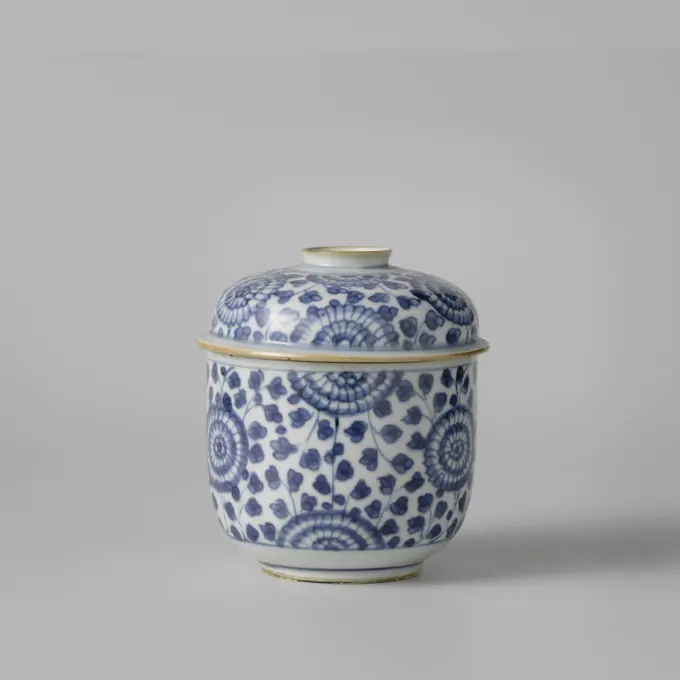
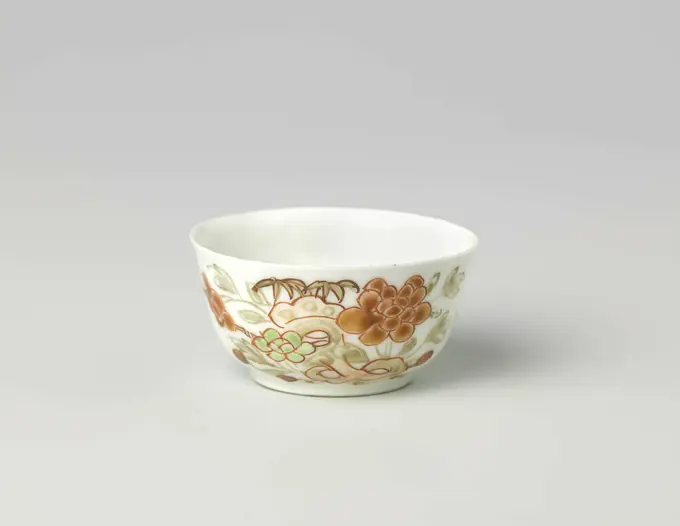
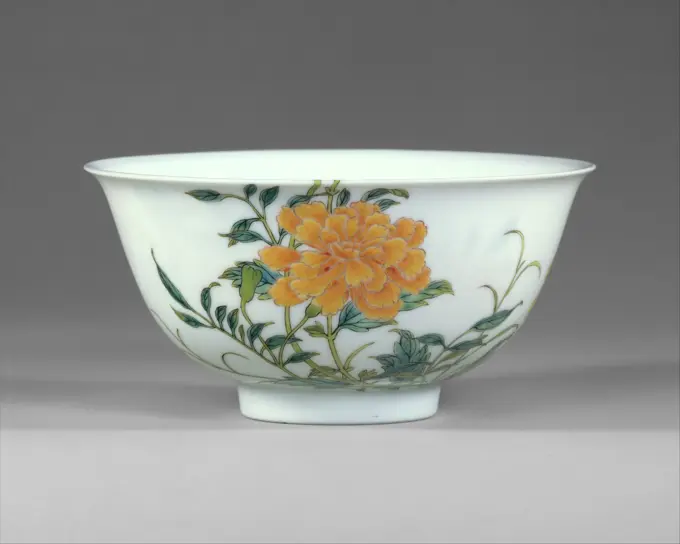
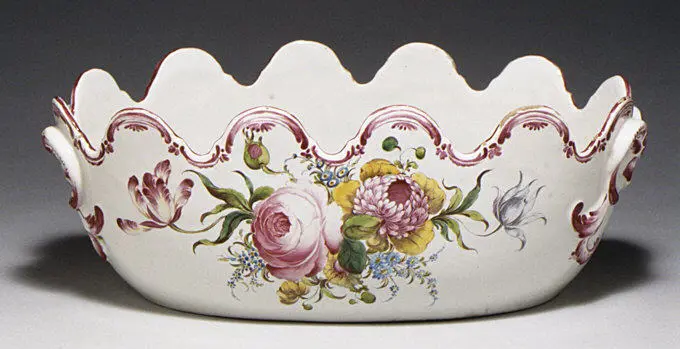
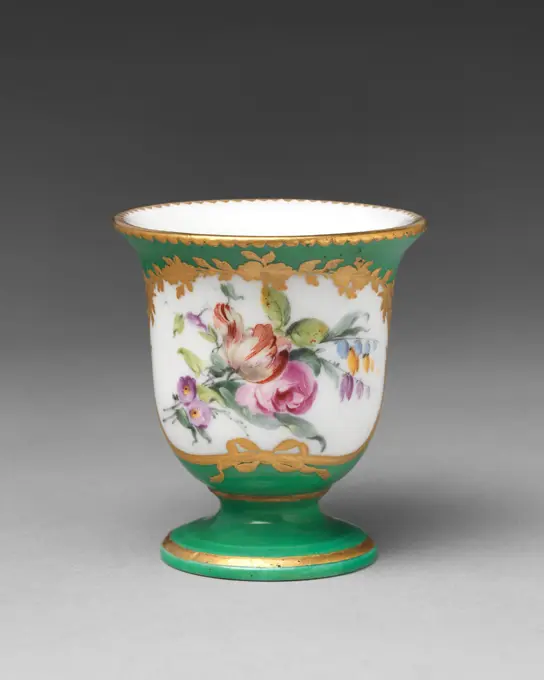
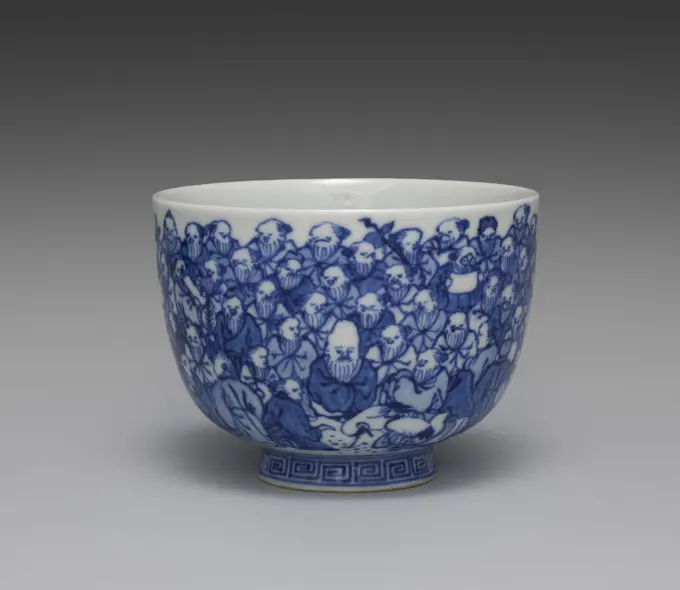
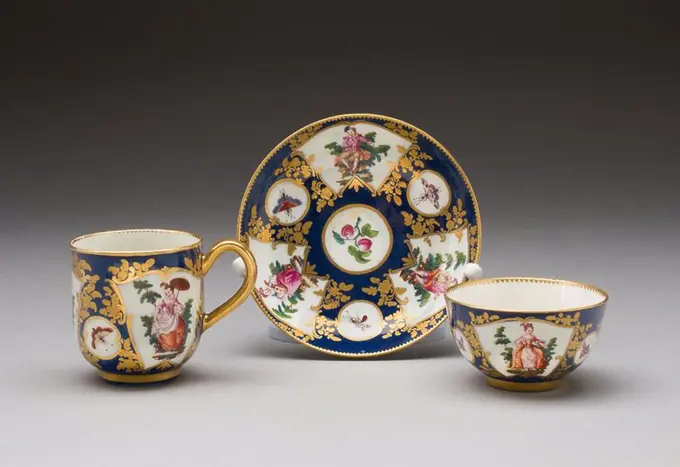
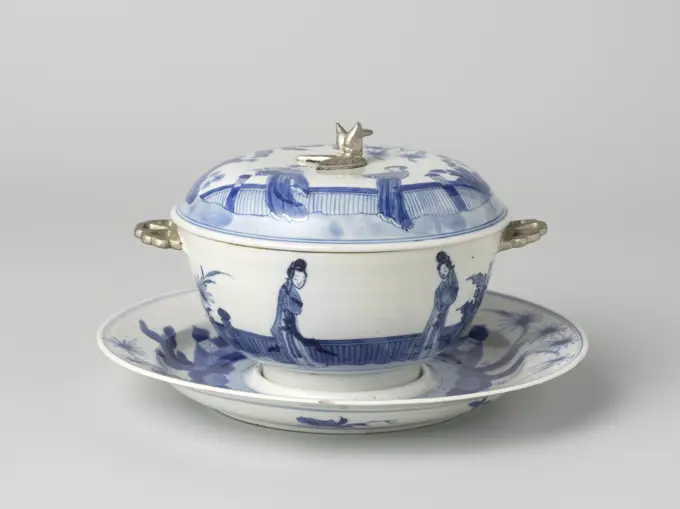
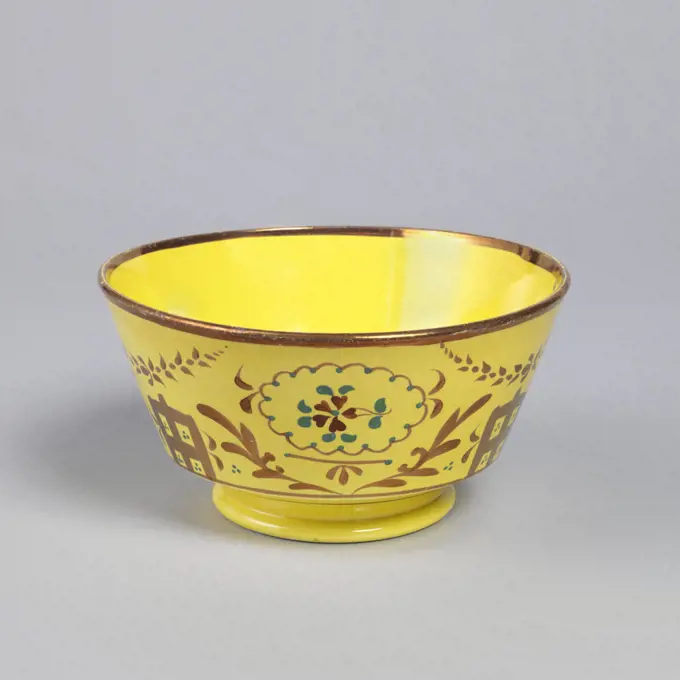
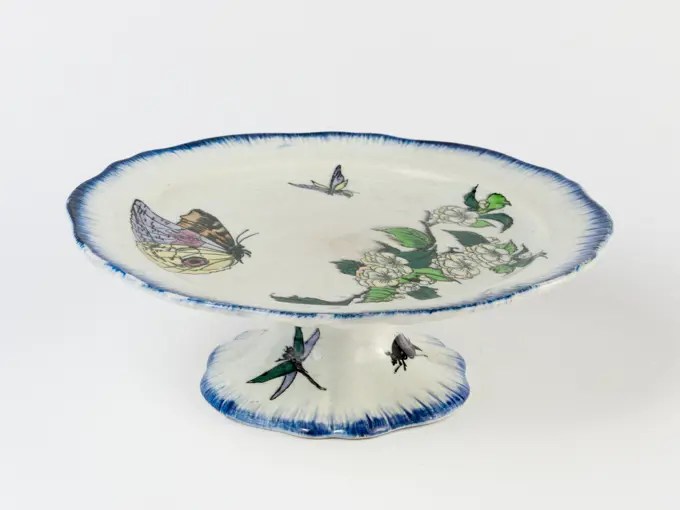
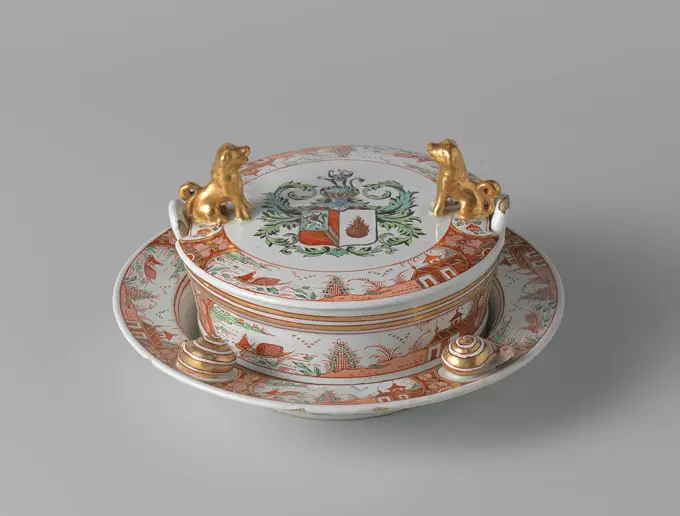
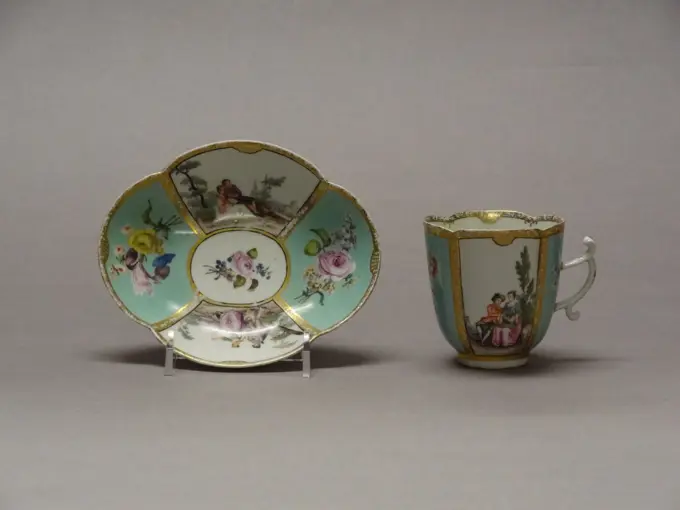
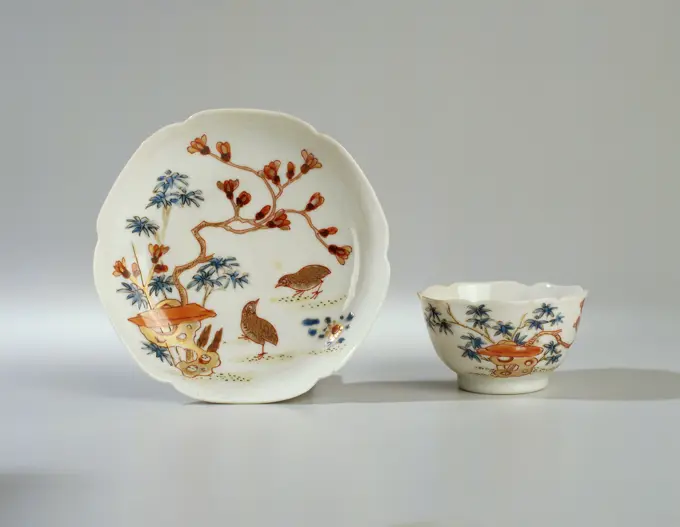
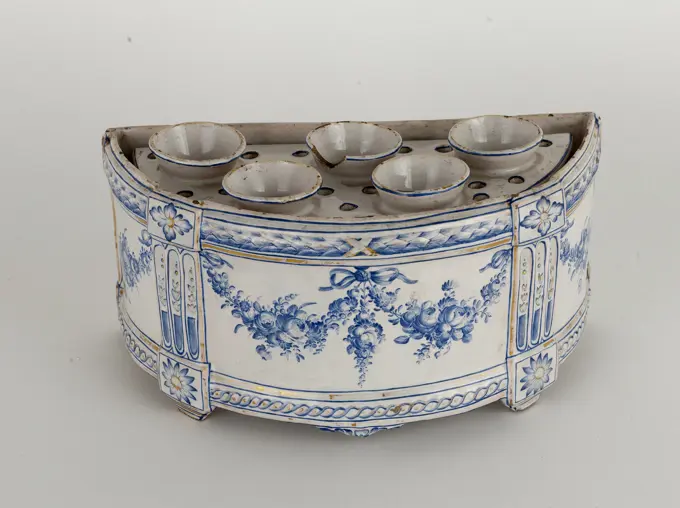
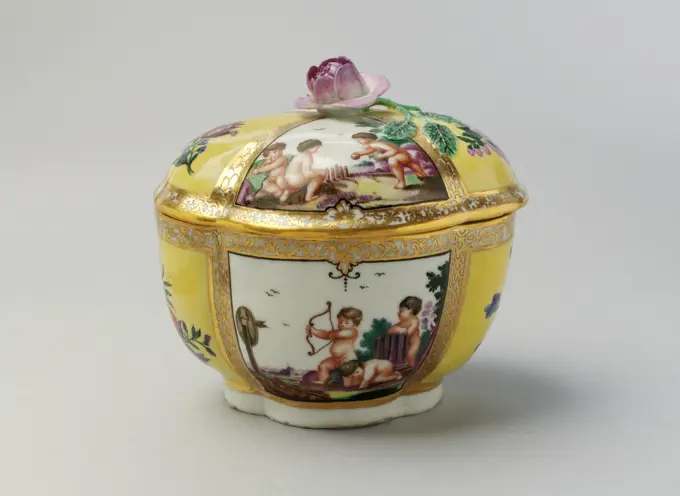
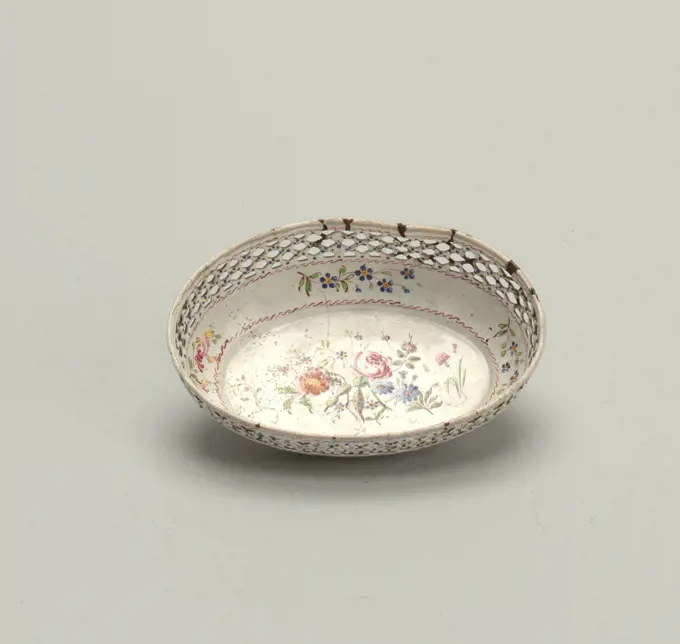
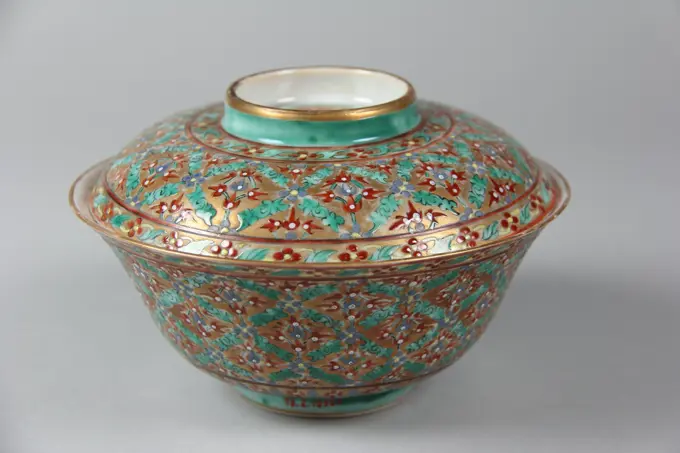
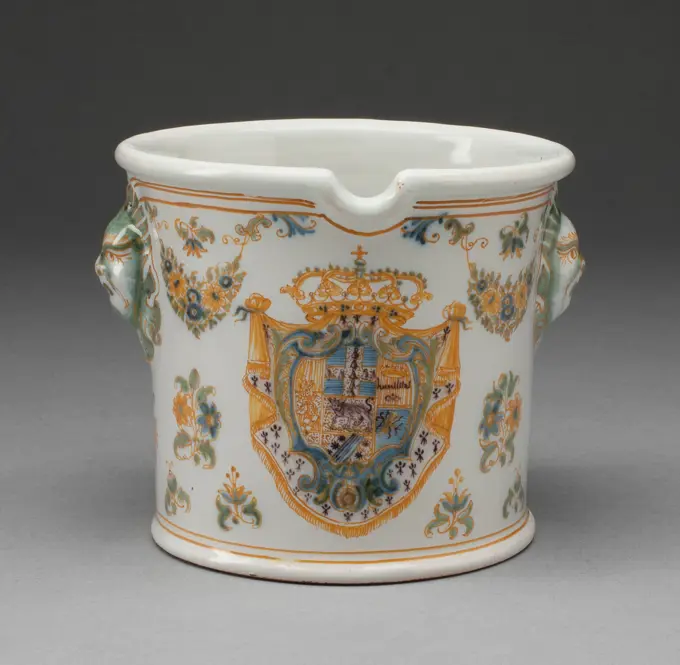
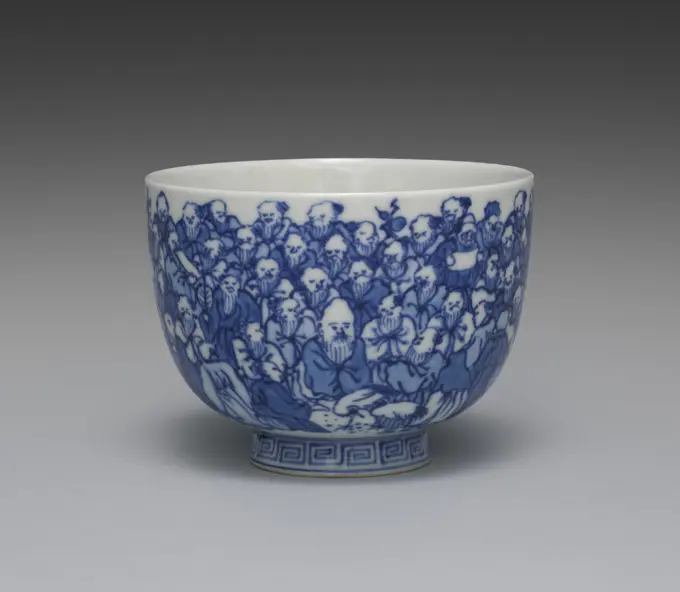
Teacup from Teacups with a Hundred Sages, c. 1893-1914. Seifū Yohei III (Japanese, 1851-1914). One from a set of five teacups; porcelain with underglaze blue; overall: 6.5 x 9 cm (2 9/16 x 3 9/16 in.).Cup and Saucer with a Chinese Junk and the Arms of Amsterdam. Cup and saucer of porcelain, painted on the glaze in blue, red, pink, green, yellow, black and gold. On the front of the dish a Chinese jonk with crew on the waves, above the arms of Amsterdam. The head with the same decoration. Weapon porcelain.Covered Jar With Flower sprays and stylized chrysanthemums. Porcelain lid pot, painted in underglaze blue. The pot and the lid are covered with flower branches and stylized chrysanthemums. A crack in the lid; glued lid. Blue White.Furnishing bowl with decoration of trophies on tied ribbons, Royal Porcelain Factory Dommer & Co., 1809 - in Or Before 1814 Tea set consisting of a teapot, a sugar bowl, a coil and twelve cups and saucers multicolored painted with trophies hanging on blue bows. The trophies relate to various professions. Marked in black: Amstel (the sugar bowl Amstel N. 805 and Inganglift A). Various entry brands in the heads and saucers. Nieuwer-Amstel porcelain Tea set consisting of a teapot, a sugar bowl, a coil and twelve cups and saucers multicolored painted with trophies hanging on blue bows. The trophies relate to various professions. Marked in black: Amstel (the sugar bowl Amstel N. 805 and Inganglift A). Various entry brands in the heads and saucers. Nieuwer-Amstel porcelainPunch bowl with arms of Doone, c. 1755, 5 1/16 x 12 1/16 x 12 1/16 in. (12.89 x 30.67 x 30.67 cm), Porcelain, China, Chinese exportOctagonal Cup and Saucer With Foral Scrolls in Petal-Shaped Panels. Octagonal cup and saucer of porcelain with straight, flared wall, painted on the glaze in red, green, yellow and black. On the flat of the dish compartments in the shape of a flower, in the center a flower drink and in the flower leaf-shaped lotus drinks on napkin; a swastika pattern with flour between the leaf-shaped compartments; On the edge napkin. The head with the same decoration. A crack in the edge of the dish. Family Rose.Covered cup with three panels with two seated figures, anonymous, c. 1800 - c. 1899 Porcelain's clock -shaped lid head, painted on the glaze in red and gold. On the wall of the head three cartouches with two sitting people surrounded by a tire curly; A geometric pattern between the cartouches. Marked on the underside with three unidentified characters. Japan porcelain. glaze. gold (metal) painting / gilding / vitrification Porcelain's clock -shaped lid head, painted on the glaze in red and gold. On the wall of the head three cartouches with two sitting people surrounded by a tire curly; A geometric pattern between the cartouches. Marked on the underside with three unidentified characters. Japan porcelain. glaze. gold (metal) painting / gilding / vitrificationCovered Serving Dish ca. 1860-66 Chinese, for American market. Covered Serving Dish 2460Oval basin with four masks connected by garlands, anonymous, c. 1740 Oval water basin of porcelain, painted in underly glaze blue and on the glaze gold. Four stylized masks on the outer edge with curls and ranks on either side, the masks are connected by garlands over the abdomen; Between the garlands each time a flower rosette; Under the masks a band with a decorative pattern; the inner wall with four large peon branches and butterflies; the inner edge with six butterflies; Around the foot a band with hanging leaves. European performance in Blauw-Wit. China porcelain. glaze. cobalt (mineral). gold (metal) painting / gilding / vitrification Oval water basin of porcelain, painted in underly glaze blue and on the glaze gold. Four stylized masks on the outer edge with curls and ranks on either side, the masks are connected by garlands over the abdomen; Between the garlands each time a flower rosette; Under the masks a band with a decorative pattern; the inner wall with four large peon braCup With Rock, Peony and Bamboo. Bell-shaped head of porcelain, painted on the glaze in red, pink, green and gold. A rock with peony and bamboo depicted. Family Rose.Holder, part of an oil and vinegar set. Holder for oil and vinegar jugs from Faïence. Painted multi-colored. The holder is part of an oil and vinegar set.Tureen and stand. In 1760 the French king Louis XV presented a Sèvres porcelain dinner service with avian decoration to Elector Charles Theodore of Bavaria. Though the service had 24 place settings, Charles Theodore decided to order many additional pieces. He did not do this at Sèvres, but rather at the local Frankenthal porcelain factory. The painted decoration on this tureen closely resembles that of its Sèvres model, but its shape is simpler.Octagonal bowl with chinese ladies on a terrace and playing boys. Octagonal bowl of porcelain with squeezed corners, painted in underglaze blue. On the outer wall eight compartments with a Chinese lady (long lice) in a fenced garden or on a terrace, sometimes with a ruyi scepter or range in her hand. On the bottom two playing boys (oceans) with a ball in a landscape. The inner edge with a decorative band. Marked with the six character mark of Emperor Chenghua in a double circle. Blue White.Lid of butter fleet, anonymous, c. 1740 - c. 1765 Butterfall Delft . Butterfall Delft .Schotel, veelkleurig beschilderd met een wapen binnen concentrische cirkels en op de rand dolfijnen en bladeren.Round dish of multi-colored painted majolica, with a corrugated edge. A weapon is painted in concentric circles in the middle. The weapon has been shared; On the right an eagle and on the left a star above a moon (). Stylized leaves and dolphins are painted on the edge.This tea set with orchids has a side-handled pot called a kysu, used for steeping, straining, and serving tea. Seif Yohei III’s painting teacher, Tanomura Chokuny (1814-1907), made a visual record of famous sencha events that shows how these kinds of porcelains fit with objects such as a stove and kettle to form a complete set of utensils for tea preparation, and with ensembles of decorative objects meant to inspire creativity. Teacup from Tea Set with Orchids, c. 1893-1914. Seifū Yohei III (Japanese, 1851-1914). Porcelain with underglaze blue; overall: 5 x 7.7 cm (1 15/16 x 3 1/16 in.).Bowl Mi Nia (Meissen)Octagonal bowl. unknown, craftsmanBowl China. Bowl 42319Cup early 18th century China. Cup 47746Tureen. Joannes de Mol, a Reformed minister, founded a porcelain factory in Loosdrecht in 1774 in the hopes of creating employment for the inhabitants of the impoverished community. He bought up the stock of the porcelain factory in Weesp, which had closed down around 1770. This tureen of Weesp porcelain was decorated in Loosdrecht on 19 February 1774, perhaps as the first sample of the new factorys work.Arita (Ceramic Production Center), Pot and Imari decor cover (title of the whole). Porcelain, polychrome enamels. Petit Palais, Museum of Fine Arts of the City of Paris.Wine glass cooler (Verriere) 1763-66 Protais Pidoux Faience, or tin-glazed and enameled earthenware, first emerged in France during the sixteenth century, reaching widespread usage among elite patrons during the seventeenth and early eighteenth centuries, prior to the establishment of soft-paste porcelain factories. Although characterized as more provincial in style than porcelain, French faience was used at the court of Louis XIV as part of elaborate meals and displays, with large-scale vessels incorporated into the Baroque garden designs of Versailles. Earlier examples of French faience attest to the strong influence of maiolica artists from Italy. Later works demonstrate the ways in which cities such as Nevers, Rouen, Lyon, Moustiers, and Marseille developed innovative vessel shapes and decorative motifs prized among collectors throughout Europe. While faience can be created from a wide mixture of clays, it is foremost distinguished by the milky opaque white color achieved by the adTea head, Manufactuur Oud-Loosdrecht, c. 1774 - c. 1778 Tea head without an ear of porcelain. Painted in sepia with figures in a landscape. Along the edges a lilac fries between golden piping. Loosdrecht porcelain Tea head without an ear of porcelain. Painted in sepia with figures in a landscape. Along the edges a lilac fries between golden piping. Loosdrecht porcelainRinse bowl, the ribs alternately blue and white, separated by golden piping, c. 1775 - c. 1800  Rinse bowl, ribbed, the edges serrated. The ribs separated by vertical gold piping. The Cavities Dark Blue (Blue du Roi), the ribs white, on which a decoration of leaf work and braid tire. The edges gilded, gilding inwards. Marked in underlaze blue. Worcester earthenware vitrificationFlowerpot with flowering plants and birds, anonymous, c. 1675 - c. 1699 Porcelain flowerpot with slightly flared wall and flat edge, painted on the glaze in blue, red, green, yellow, eggplant and black. On the wall two flying birds and a pheasant on a rock near a flourishing peony; On the edge a geometric pattern with flowers. Two chips in the edge; hole in the bottom with a few cracks. Famle Verte. China porcelain. glaze. painting / vitrification Porcelain flowerpot with slightly flared wall and flat edge, painted on the glaze in blue, red, green, yellow, eggplant and black. On the wall two flying birds and a pheasant on a rock near a flourishing peony; On the edge a geometric pattern with flowers. Two chips in the edge; hole in the bottom with a few cracks. Famle Verte. China porcelain. glaze. painting / vitrificationIce cream cup (tasse à glace) (one of thirty-one) (part of a service) 1771 Sèvres Manufactory French. Ice cream cup (tasse à glace) (one of thirty-one) (part of a service). French, Sèvres. 1771. Soft-paste porcelain. Ceramics-PorcelainTeacup from Teacups with a Hundred Sages, c. 1893-1914. Seifū Yohei III (Japanese, 1851-1914). One from a set of five teacups; porcelain with underglaze blue; overall: 6.5 x 9 cm (2 9/16 x 3 9/16 in.).Pair of Bowls (Wan) with Dragons Chasing Flaming Pearl. China, Jiangxi Province, Jingdezhen, Chinese, Qing dynasty, Kangxi mark and period, 1662-1722. Furnishings; Serviceware. Wheel-thrown porcelain with underglaze blue, clear glaze, and overglaze painted enamel decoration (doucai)Sugar bowl Mi Nia (Meissen)Bowl - Portneuf potteryStraight-Sided Bowl With Buddhist Figures and Cloud Motifs Between Ornamental Borders. Bowl of porcelain with straight wall, painted on the glaze in red, pink, green, yellow and black. On the outer wall of the bowl of Buddhist figures between cloud motives; around the foot and on the edge two decorative tires. Two cracks in the wall. Old label on the bottom with 'bock'. Manufactured for export to Thailand. Porcelain with email colors.. Dish of high porcelain lid pot, painted in underglaze blue and on the glaze blue, red, green, yellow, black and gold. On the flat of the dish two circular tires with flower drinks (chrysanthemum) with a stylized flower in the center. Flower drinks blooming on the outer wall. Seven preen on the bottom. Imari.Sauce tureen with arms of Stewart, c. 1770, 4 1/2 x 7 5/8 x 4 1/8 in. (11.43 x 19.37 x 10.48 cm), Porcelain, China, 18th centuryCup and Saucer. Sèvres Porcelain Manufactory; French, founded 1740; Painted by André-Vincent Vielliard (French, 1717-1790, active 1752-1790). Date: 1766. Dimensions: Cup: 6.4 x 9.8 x 7.8 cm (2 1/2 x 3 7/8 x 3 1/16 in.); Saucer: 3.2 x 13.5 cm (1 1/4 x 5 5/16 in.). Soft-paste porcelain, underglaze dark blue and green ground, polychrome enamels, and gilding. Origin: Sèvres. Museum: The Chicago Art Institute, Chicago, USA. Author: Manufacture nationale de Sevres.Head, painted with cornflowers, manufacture Oud-Loosdrecht, c. 1784 Head, decorated with cornflowers. Marked Amstel in blue under the glaze and Inganglift L48 Loosdrecht porcelain Head, decorated with cornflowers. Marked Amstel in blue under the glaze and Inganglift L48 Loosdrecht porcelainVase with a lid. Wolff, Karol (wytwórnia fajansu ; 1783-ca. 1800), factoryPuzderko z nakrywką. unknown, craftsmanFinger Bowl. Culture: British. Dimensions: H. 2 in. (5.1 cm); Diam. 3 3/8 in. (8.6 cm). Date: ca. 1760. Museum: Metropolitan Museum of Art, New York, USA.Lidded bowl, anonymous, c. 1710 - c. 1720 Terrine with fowence lid. Multicolored painted with flower baskets and landscapes. Delft . Terrine with fowence lid. Multicolored painted with flower baskets and landscapes. Delft .Half -ball -shaped head of hard baked earthenware., Anonymous, c. 1800 - c. 1830 Half -ball -shaped head of hard baked pottery, multi -colored painted. A tire stylized leaves runs along the edge, between which a stylized flower or fruit consisting of three dots. Hanging, stylized leaves are painted under the tire, between which a stylized flower or fruit consisting of three dots. The head includes a similar head with a different decoration, with invnr. BK-NM-7527-A. England earthenware Half -ball -shaped head of hard baked pottery, multi -colored painted. A tire stylized leaves runs along the edge, between which a stylized flower or fruit consisting of three dots. Hanging, stylized leaves are painted under the tire, between which a stylized flower or fruit consisting of three dots. The head includes a similar head with a different decoration, with invnr. BK-NM-7527-A. England earthenwareVegetable Dish, early 1800s. Davenport Pottery and Porcelain Factory (British). overall: 16.5 x 24.2 cm (6 1/2 x 9 1/2 in.).Cooling Pail (France); Manufactured by Clérissy Factory (France); tin-glazed earthenwareButter Tub Made 1755-1765 Worcester. Soft-paste porcelain with underglaze blue decoration . Worcester Royal Porcelain CompanySalt 1755-65 Josiah Austin American. Salt 7083Tea Bowl, Coffee Cup, and Saucer. Worcester Porcelain Factory; Worcester, England, founded 1751. Date: 1760-1770. Dimensions: Tea bowl: diam. 4.2 cm (1 5/8 in.); Cup: H. 6.3 cm (2 1/2 in.); Saucer: diam. 11.6 cm (4 9/16 in.). Soft-paste porcelain with polychrome enamels and gilding. Origin: Worcester. Museum: The Chicago Art Institute, Chicago, USA. Author: Worcester Royal Porcelain Company.Punchbowl, anonymous, 1851 An interior scene is shown on both sides of the spherical porcelain pot. On one side two slender female figures are depicted, who hand over a wrapped Qin (lute) to a child, a show from the Chinese story "The history of the Western room." On the other side, a senior military is depicted, flanked by two sabbing guards and a kneeling man in civil clothes, a scene from a military history. The light spherical lid is decorated with the hundred children, a common symbolization of happiness in China. The stand ring of the pot is caught in a smooth, curved, silver border with asymmetrical leaves on the four corners, which curls around at the top and form legs at the bottom. The leaves are flanked by C-Voluten that form the bottom edge; In the middle of each side they are connected by a leaf. The upper edge is caught in a raised, slightly constricted, smooth, silver frame. This is bordered by a straight profile and below a border, which is made up of a pang of a hanginBell-shaped cup with undulating flower petals on diaper pattern and flower sprays, anonymous, c. 1840 - c. 1860 Bell -shaped head of porcelain with lobed edge, painted on the glaze in blue, red, pink, green and black. In the center a flower with two rows with wavy petals depicted on a ground of servetwork; The outside of the head with three flower branches. Famle Rose. China porcelain. glaze. painting / vitrification Bell -shaped head of porcelain with lobed edge, painted on the glaze in blue, red, pink, green and black. In the center a flower with two rows with wavy petals depicted on a ground of servetwork; The outside of the head with three flower branches. Famle Rose. China porcelain. glaze. painting / vitrification. Cup of porcelain with a straight wall, painted on the glaze in blue, black and gold. On the outside wall a family crest surrounded by leaf raft. The weapon is divided into four compartments with 1. and 4. a lion on a black-shaded soil; 2. and 3. with three boar heads on a cross-shaded land. The downside of the cup with a lion. A Spearhead border on the inner edge. Weapon porcelain in email colors.Conical mug. Koenigliche Porcellain Fabrique, Meissen (1710-1763), factory. Bowl of pottery, inside black, decorated from outside with decor "proof" in green, yellow, brown, purple and red. Labeled with: around the factory stamp; "Proof"; 31 AP in black; Reimburse 12.Cup and Saucer with an Abolitionist Scene. This cup and saucer were probably made for a Dutch anti-slavery committee. Such womens groups sold embroidery, jewellery and chinaware for the benefit of the slaves in ‘the West. The decoration is after a design by the English porcelain manufacturer Josiah Wedgwood, a leading supporter of the anti-slavery movement. The English abolished slavery in 1833. In Suriname and the Dutch Antilles, this took place only in 1863.Small vase with a lid. Kaiserliche Porzellanmanufaktur in Wien (1744-1864), factoryTea bowl - Ontario Lake Scenery Joseph Heath Joseph HeathCup and saucer with three fans with flower sprays, anonymous, c. 1725 - c. 1749 Porcelain head and saucer with spreading wall, painted on the glaze in blue, pink, green and black. A flower on the dish flat; around the flower three fans with flower branches (including Prunus, Chrysanthemum); Between the faaders servetwork. The head with the same decoraite. Two cracks in the wall of the dish. Famle Rose. China porcelain. glaze. painting / vitrification Porcelain head and saucer with spreading wall, painted on the glaze in blue, pink, green and black. A flower on the dish flat; around the flower three fans with flower branches (including Prunus, Chrysanthemum); Between the faaders servetwork. The head with the same decoraite. Two cracks in the wall of the dish. Famle Rose. China porcelain. glaze. painting / vitrificationTerrine, multi -colored painted with Deutsche Blumen, Insekten and Fruits, Meissener Porzellan Manufaktur, c. 1750 - c. 1760 Oval terrine of painted porcelain. The terrine has a vaulted wall and a vaulted lid. The edges are decorated with the Neuozier pattern in relief. The terrine is painted with Deutsche Blumen, Insekten and Fruits. The terrine has two ears in rocaille shape, the lid has plastic flowers and a button in the shape of a putto in a green robe with a horn of abundance. The Terrine is part of a service (BK-17474-1 to BK-17474-253). The terrine is marked. Float porcelain Oval terrine of painted porcelain. The terrine has a vaulted wall and a vaulted lid. The edges are decorated with the Neuozier pattern in relief. The terrine is painted with Deutsche Blumen, Insekten and Fruits. The terrine has two ears in rocaille shape, the lid has plastic flowers and a button in the shape of a putto in a green robe with a horn of abundance. The Terrine is part of a service (BK-17474-1 toCovered bowl with stand, anonymous, c. 1700 - c. 1724 Come with a lid and underpot by porcelain with half flower -shaped ears in biscuit, painted in underlaze blue and on the glaze silver. On the bowl a continuous representation of a fenced terrace with two times two women (long lips), palm tree and banana plant. Bottom marked with the six-character brand of Emperor Kangxi in a double circle. Ears later in Europe cashed in. Blue White. China porcelain. glaze. cobalt (mineral). biscuit (porcelain, material). metal painting / vitrification Come with a lid and underpot by porcelain with half flower -shaped ears in biscuit, painted in underlaze blue and on the glaze silver. On the bowl a continuous representation of a fenced terrace with two times two women (long lips), palm tree and banana plant. Bottom marked with the six-character brand of Emperor Kangxi in a double circle. Ears later in Europe cashed in. Blue White. China porcelain. glaze. cobalt (mineral). biscuit (porcelain, materialBowl, Stoneware, Footed bowl with copper luster decoration with foliage and square motifs on a yellow background; rim is copper luster., France, 18th-mid-19th century, ceramics, Decorative Arts, BowlSèvres Porcelain Manufactory, Cup and Saucer, 1763, soft-paste porcelain.Félix Bracquemond (1835-1914). Eugène Rousseau, publisher. Creil and Montereau Manufacture. "Plate on foot". Earthenware. 1866-1875. Museum of Fine Arts of the City of Paris, Petit Palais. Faience, flower, insect, dragonfly, butterfly pattern, foot, dishes, 19th 19th 19th 19th 19th 19th century, plateOctagonal Cup With Light Brown, Animals and Flower Sprays. Octagonal head of porcelain, partially covered with café-au-lait, painted in underglaze blue and on the glaze red, green, yellow, eggplant and black. The outside of the head is covered with a café-au-lait-colored glaze with flower branches and butterflies with famille verte email in trade decoration; on the bottom two hare and two birds at a rock with flowering plants; the inside of the wall with butterflies; The edge with zigzag work interspersed with flowers. Famille Verte.Butterfish on the lower part. Butter fleet on a multi-colored painted with the coat of arms of the Josselet family. On the lid two appliqué dogs and on the edge four snails.Salt barrel, painted multi-colored with Deutsche Blumen, insects and fruits. Oval salt barrel of painted porcelain. The salt barrel has a cured wall. The edge is decorated with the Neuozier pattern in relief and the painting consists of Deutsche Blumen, insects and fruits. The salt barrel belongs to a tableware (BK-17474-1 to BK-17474-253). The salt barrel has been marked.Mustard pot with cover and stand ca. 1745-55 Chantilly. Mustard pot with cover and stand 201714Cup and saucer with peachtree and crane on a woodcolored ground, anonymous, c. 1730 - c. 1750 Porcelain cup and saucer with spreading wall, covered with a red -brown glaze and painted on the glaze in red, pink, green, yellow, eggplant and black. The head and saucer are completely covered with a brown wood imitation; It saves a peach tree (prunus) with flowers and fruits in addition to two cranes. Head with the same decoration with a peach on the bottom. Famle Rose. China porcelain. glaze. painting / vitrification Porcelain cup and saucer with spreading wall, covered with a red -brown glaze and painted on the glaze in red, pink, green, yellow, eggplant and black. The head and saucer are completely covered with a brown wood imitation; It saves a peach tree (prunus) with flowers and fruits in addition to two cranes. Head with the same decoration with a peach on the bottom. Famle Rose. China porcelain. glaze. painting / vitrificationShaving basin.Bowl - Portneuf potteryTobacco Jar, the Greek A, c. 1768 - c. 1796 Tobacco spot of multi -colored painted faience, painted with colored bouquets. The tobacco spot is square with truncated corners and has a lid and an inner lid with a button. The tobacco spot is marked. Delft earthenware. tin glaze. Tobacco spot of multi -colored painted faience, painted with colored bouquets. The tobacco spot is square with truncated corners and has a lid and an inner lid with a button. The tobacco spot is marked. Delft earthenware. tin glaze.Platter cover with an Antikzierat relief and flowers. Meyer, Friedrich Elias (1723-1786), sculptor, Koenigliche Porzellan Manufaktur - KPM (Berlin ; 1763-1918), factoryMeissen Porcelain Manufactory, Cup and Saucer, porcelain: c. 1740-45; decoration: 19th century, hard-paste porcelain.Ashtray Matejko, Stefan Witold (1872 1933), J. Nieg Wiecki, Kraków D BnikiBowl - Portneuf potteryAnonymous. "Chapter". Painted sheet, iron. 1750. Paris, Carnavalet museum. 101429-2Covered Bowl With Scrolls, Diaper Pattern and Scattered Flowers. Cover bowl of porcelain with ribbed wall and lobed edge, painted on the glaze in red, green, yellow, eggplant, turquoise, black and gold. The outer wall of the bowl is divided into elongated compartments with alternating napkin and flour rinks; Around the foot a bond with curl. A stylized flower on the bottom; The inner wall with five loose stylized flowers. The lid with the same decoration; Within the annular lid knob a prunus branch. Porcelain with emailing.Sauce bowl of multicolored painted faïence, anonymous, c. 1740 - c. 1765 Saus bowl with corrugated edge and incorporated foot multicolour painted with a sitting man in a ruin. Marked from The Saskom is on an underpot. Delft . Saus bowl with corrugated edge and incorporated foot multicolour painted with a sitting man in a ruin. Marked from The Saskom is on an underpot. Delft .Straight-sided bowl with stylized flowers on a feather or scale ground and scrolls, anonymous, c. 1725 - c. 1749 Come from porcelain with straight wall, painted on the glaze in red and gold. On the outside of the bowl three stylized flowers against a ground with feathers or scaly motif; Ranks around the foot; A stylized flower on the bottom; The inner edge with flower vines. A crack in the bowl; A chip in the edge. Part of a tea set. European forms with email colors. China porcelain. glaze. gold (metal) painting / gilding / vitrification Come from porcelain with straight wall, painted on the glaze in red and gold. On the outside of the bowl three stylized flowers against a ground with feathers or scaly motif; Ranks around the foot; A stylized flower on the bottom; The inner edge with flower vines. A crack in the bowl; A chip in the edge. Part of a tea set. European forms with email colors. China porcelain. glaze. gold (metal) painting / gilding / vitrificationSand spreader of stoneware. Sand spreader of stoneware in gray with blue decoration.Bell-shaped cup with two quail near a rock, anonymous, c. 1725 - c. 1749 Klock -shaped head of porcelain with a six -squeezed edge, painted on the glaze in blue, red, green, black and gold. Two quail on the wall with a rock with a magnolia and bamboo. A crack in the edge of the head. Porcelain with email colors. China porcelain. glaze. gold (metal) painting / gilding / vitrification Klock -shaped head of porcelain with a six -squeezed edge, painted on the glaze in blue, red, green, black and gold. Two quail on the wall with a rock with a magnolia and bamboo. A crack in the edge of the head. Porcelain with email colors. China porcelain. glaze. gold (metal) painting / gilding / vitrificationWijnkom from v.o.c.-ship De 'Witte Leeuw', Anonymous, Before 1613 bowl Wijnkom from V.O.C. ship De 'Witte Leeuw', complete. Jingdezhen porcelain   Sint-HelenaSnuffbox. Culture: British, South Staffordshire. Dimensions: Overall (confirmed): 1 3/4 × 3 3/16 × 2 1/2 in. (4.4 × 8.1 × 6.4 cm). Date: ca. 1770. Museum: Metropolitan Museum of Art, New York, USA.Cup and Saucer With Two Figures in a Water Landscape and a Flowering Tree. Cup and saucer of porcelain with straight wall, painted on the glaze in red, black and gold. On the flat of the dish two people next to a flowering tree and a fence in a river landscape; the edge with curlwork; The cup with the same decoration, with a flower on the bottom. Milk and blood.Kop, porcelain factory The Hague, 1777 - 1790 Cup multicolour painted with figures in a water landscape. Golden piping along the edges. The Hague porcelain Cup multicolour painted with figures in a water landscape. Golden piping along the edges. The Hague porcelainTeacup, Coffee Cup, and Saucer. Worcester Porcelain Factory; Worcester, England, founded 1751. Date: 1765-1775. Dimensions: Teacup: H. 4.8 cm (1 7/8 in.); diam. 8.3 cm (3 1/4 in.)Coffee cup: H.6.2 cm (2 7/16 in.); diam. 6 cm (2 3/8 in.)Saucer diam. 13.2 cm (5 3/16 in.). Soft-paste porcelain with purple enamel and gilding. Origin: Worcester. Museum: The Chicago Art Institute, Chicago, USA. Author: Worcester Royal Porcelain Company.Seals Manufacture. Bouquetière. Great fire earthenware, polychrome enamels. 2nd half of the 18th century. Museum of Fine Arts of the City of Paris, Petit Palais. Bouquetiere, Faience, Vase, 18th 18th 18th 18th 18th 18th 18th centuryBotersloot lid. Botersloot lid from faience. The lid of the fleet may have been made later.Lid of a sugar bowl. Lid of a sugar bowl (BK-NM-i-Z-B-1).Bell-Shaped Cup And Saucer With A Putto Holding A LotusBranch. Bell-shaped cup and saucer of porcelain with ribbed wall and scalloped edge, painted on the glaze in blue, red, pink, green, purple, black and gold. On the flat of the dish a medallion with a winged putto with a lotus roof in his hand; The wall is divided into eight compartments with a different pattern against alternating a blue, green, purple or pink soil; The courses are separated by a gold band. Family Rose.Bowl with Dragons Chasing Flaming Pearls amid Clouds 1501-1600 China. Porcelain painted in overglaze enamels .Bell-Shaped Covered Cup With Flowering Plants in Shaped Panels. Bell-shaped head of porcelain, covered with a turquoise glaze and stained in blue, red, pink, green, black and gold. Covered with a turquoise glaze with a scalloped medallion in the center in the center with plant, around it three saved cartouches with flowering plants and a bird shown on a branch. Family Rose.Sugar bowl with cover ca. 1750-55 Doccia Porcelain Manufactory Italian. Sugar bowl with cover 205119Bell-Shaped Cup With Flower Sprays, Symbols and Translucent Dots. Bell-shaped head of porcelain, painted in underglaze blue. The wall with glazed rice grain Ajourwerk; On the underside of the wall four symbols; to the edge napkin; on the bottom a flower branch with butterfly; around the edge on the inside a decorative band. Marked on the bottom with the four-character mark of Emperor Kangxi. Two cracks in the wall. Blue White.Basket, Enamel, coooper, Cygl, pierced sides; white field decorated on inside with stipple and floral designs on outside with stipple designs, in color., ca. 1750, enamels, Decorative Arts, BasketBox ca. 1730 Meissen Manufactory German Probably once part of a toilet service, this five-lobed box is based on a Japanese lacquer prototype and may have been placed on a matching stand.. Box 206017Sèvres Porcelain Manufactory, Small Cup and Saucer, 1768 or 1770, soft-paste porcelain.Tobacco Jar. Weesper Porcelainfabriekweesp, c. 1759-1771Hard-Paste PorcelainCovered Bowl first half of the 19th century China. Covered Bowl 46188Cover Made 1760-1770 Junyao. Enameled copper decorated with canton enamels .Sugar bowl belonging to a tea set from chromolith stoneware, decorated in blue and tan. Sugar bowl belonging to a tea set from Chromolith Stoneware. Decoration in blue and tan. The lower half of the pot is hexagonal.Cup and Saucer. Ludwigsburg Porcelain Factory; German, 1756-1824. Date: 1765-1775. Dimensions: Cup: 5.1 x 9.8 cm (2 x 3 7/8 in.); diam. 7.8 cm (3 1/16 in.); Saucer: H. 3.3 cm (1 5/16 in.); diam. 13.7 cm (5 3/8 in.). Hard-paste porcelain with polychrome enamels and gilding. Origin: Ludwigsburg. Museum: The Chicago Art Institute, Chicago, USA.. Olerys Pottery Manufactory (Manufacturer)