Decorative Porcelain Cups

Colorful porcelain cups featuring floral designs and intricate motifs, showcasing craftsmanship from various historical periods.

Kom, anonymous, c. 1770 - c. 1800 Round, upwards wide -ranging bowl on a stand ring of multicolored painted faience. The bowl is painted on the outside with two vases, flowers and twice two opposite roosters. The colors used are blue, red and green. Delft earthenware. tin glaze. Round, upwards wide -ranging bowl on a stand ring of multicolored painted faience. The bowl is painted on the outside with two vases, flowers and twice two opposite roosters. The colors used are blue, red and green. Delft earthenware. tin glaze.
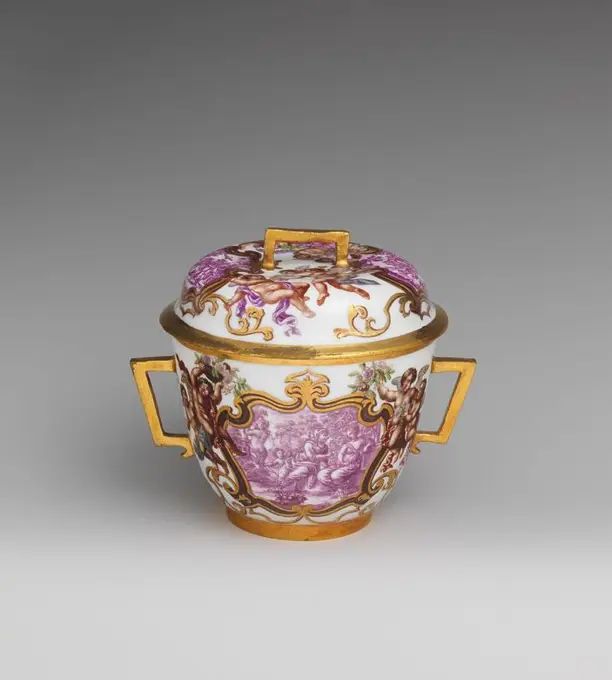
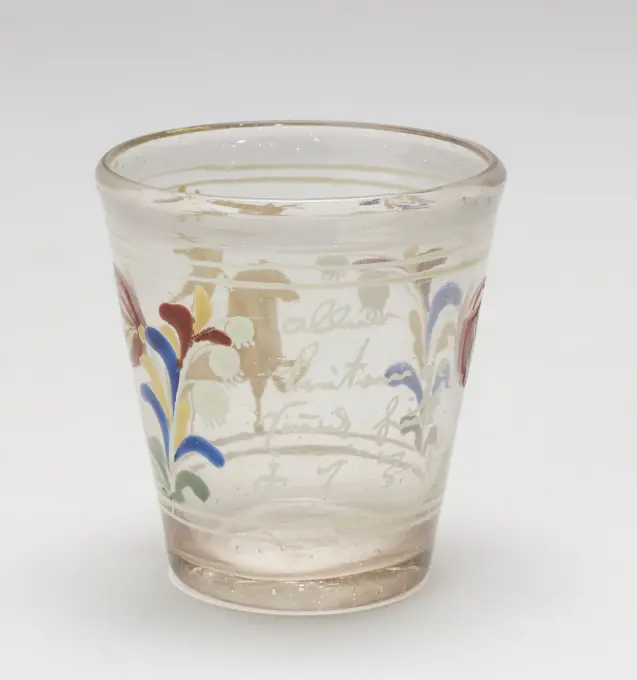
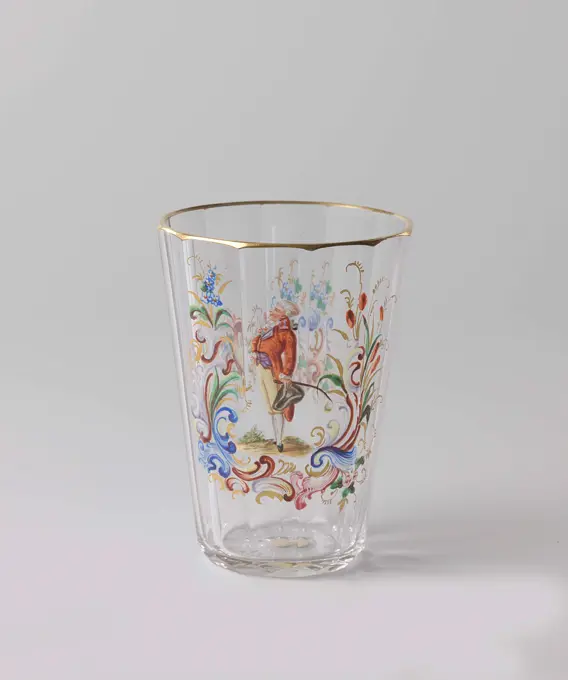
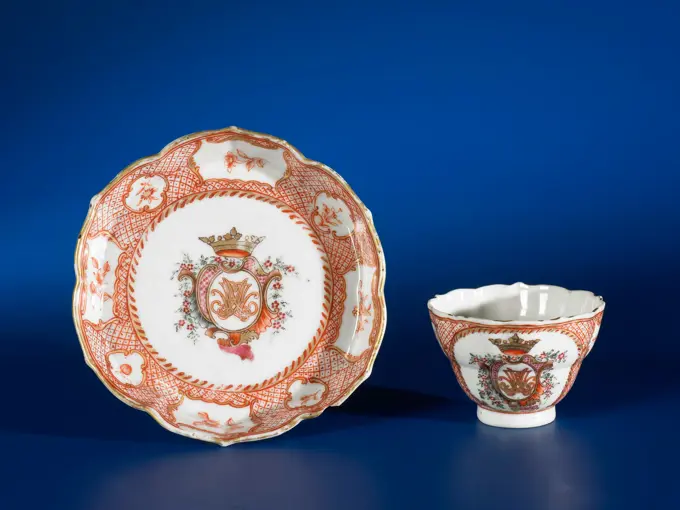
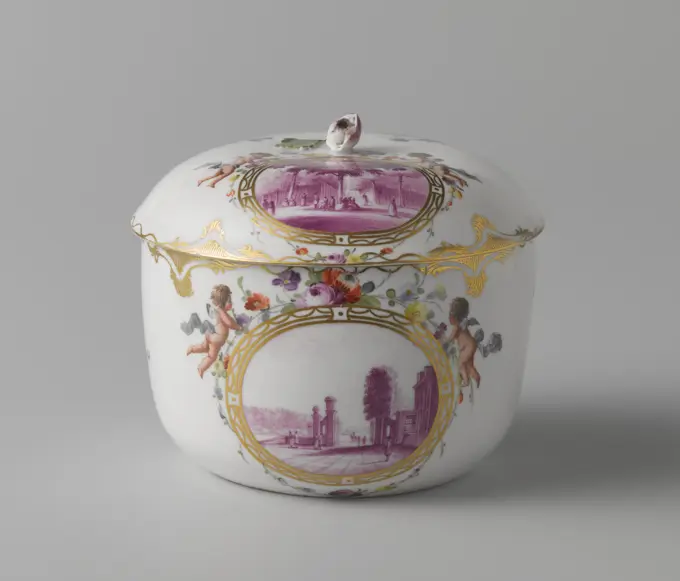
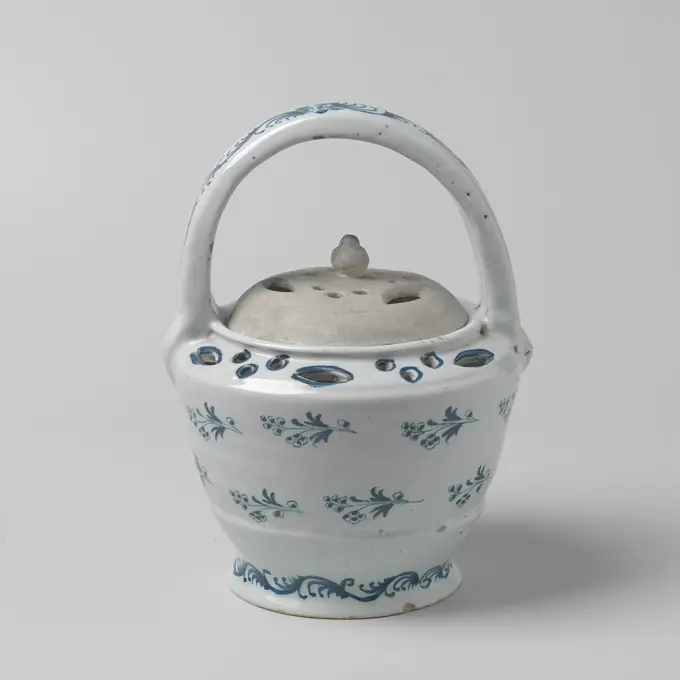
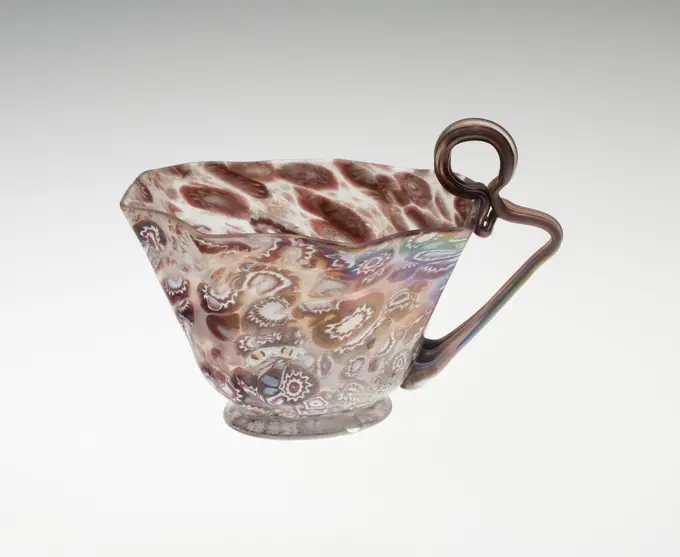
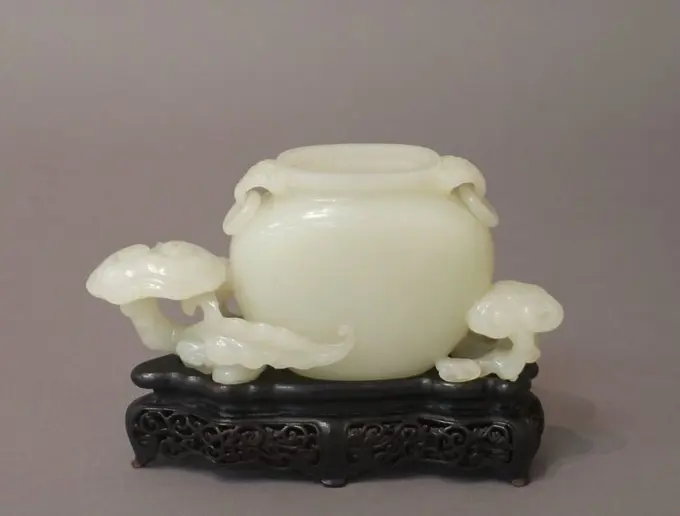
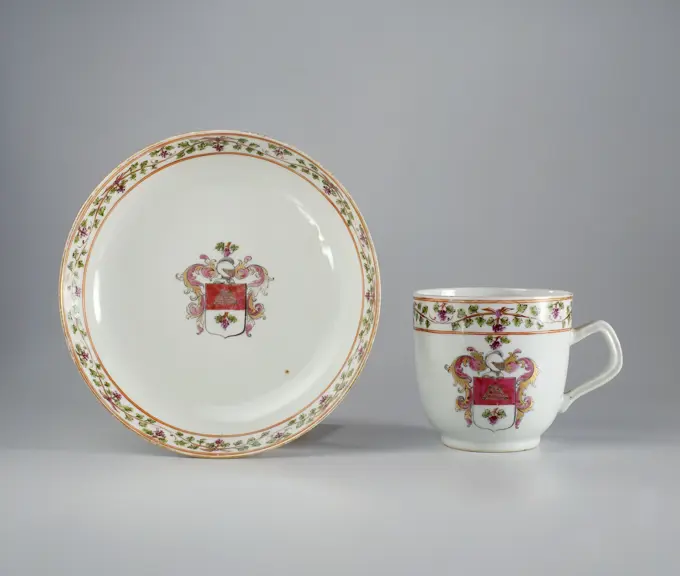
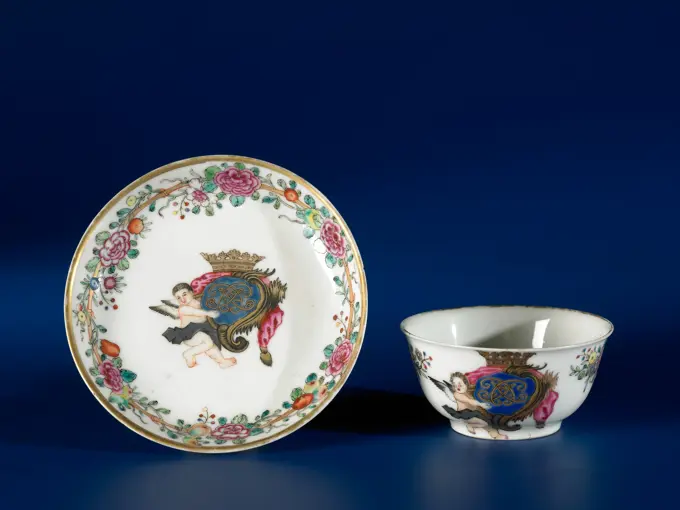
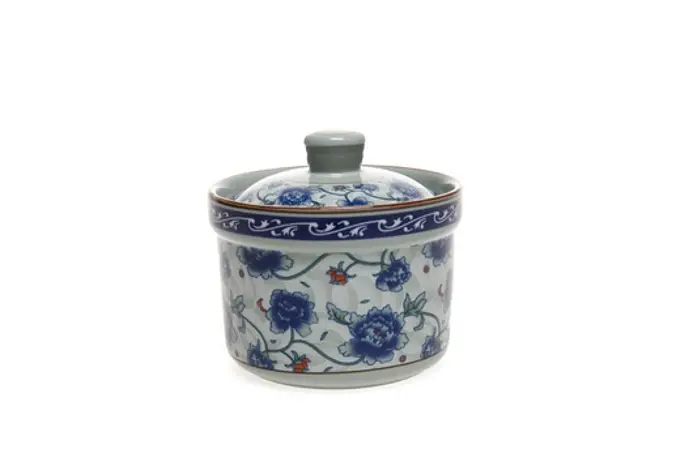
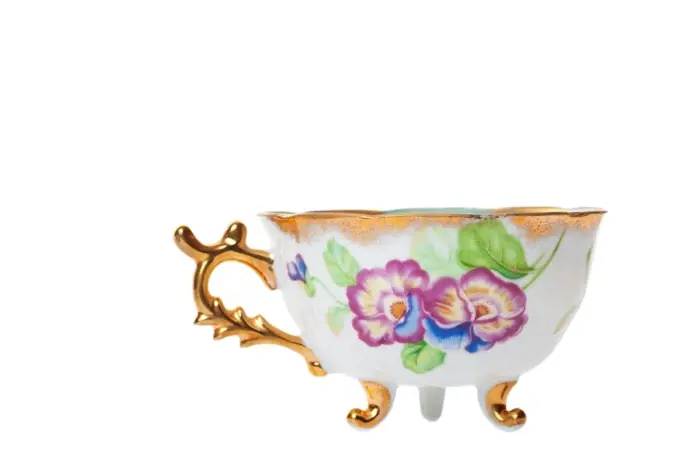
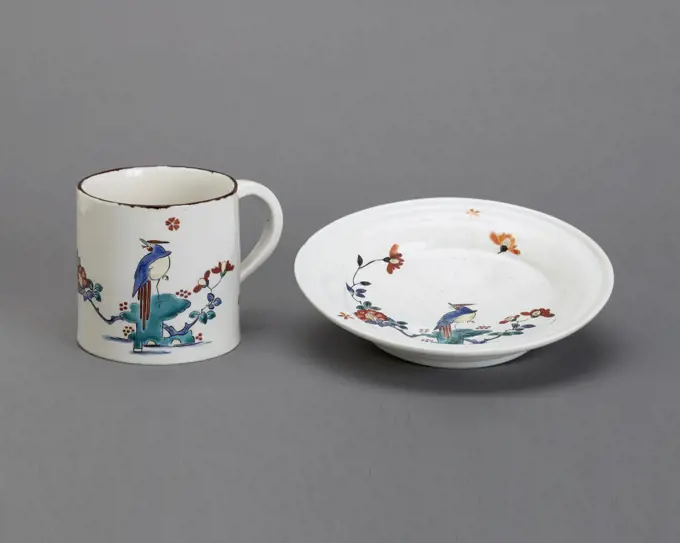
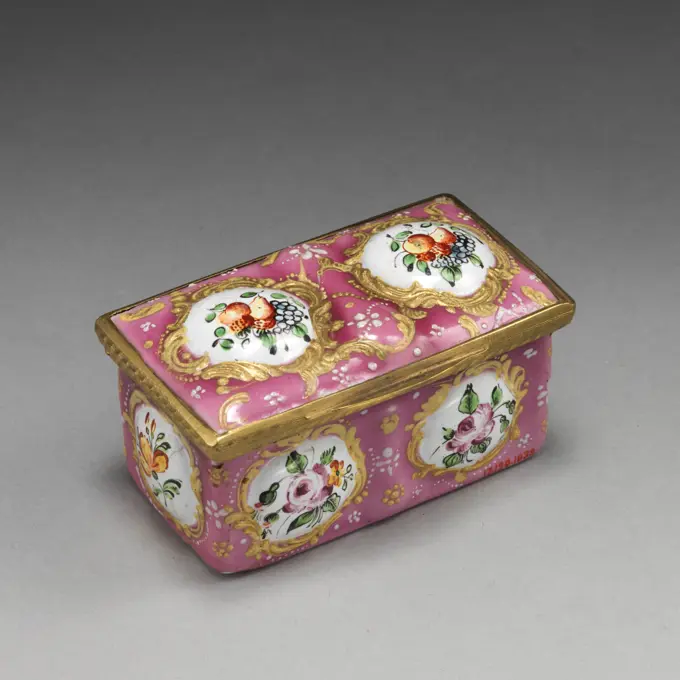
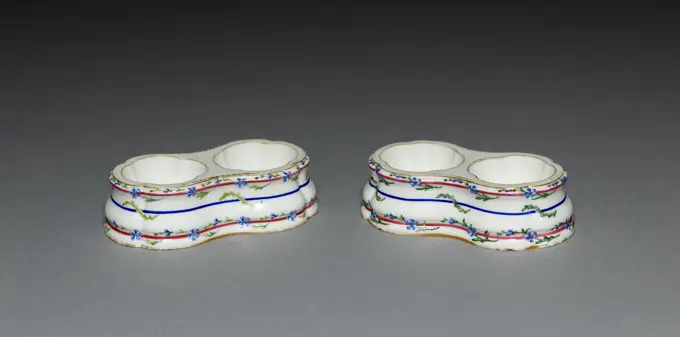
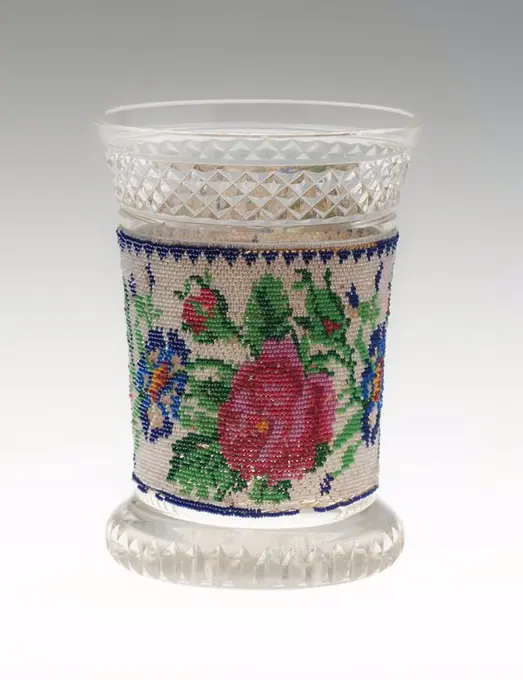
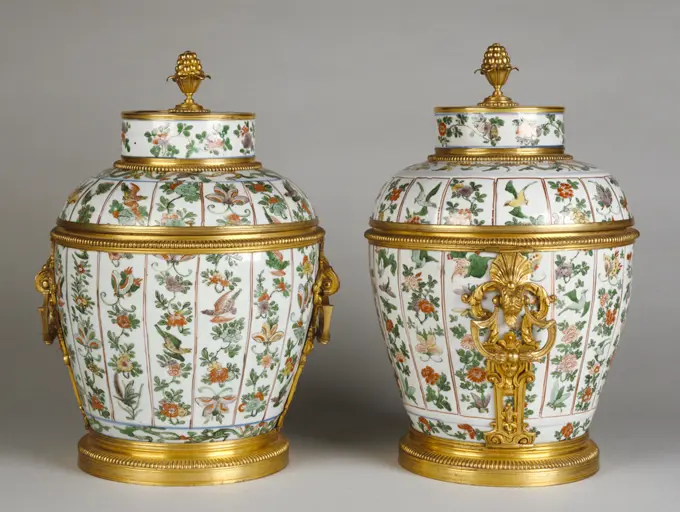
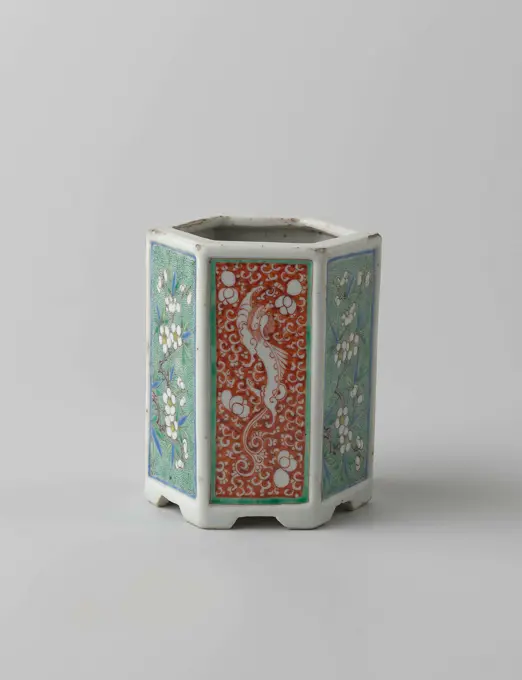
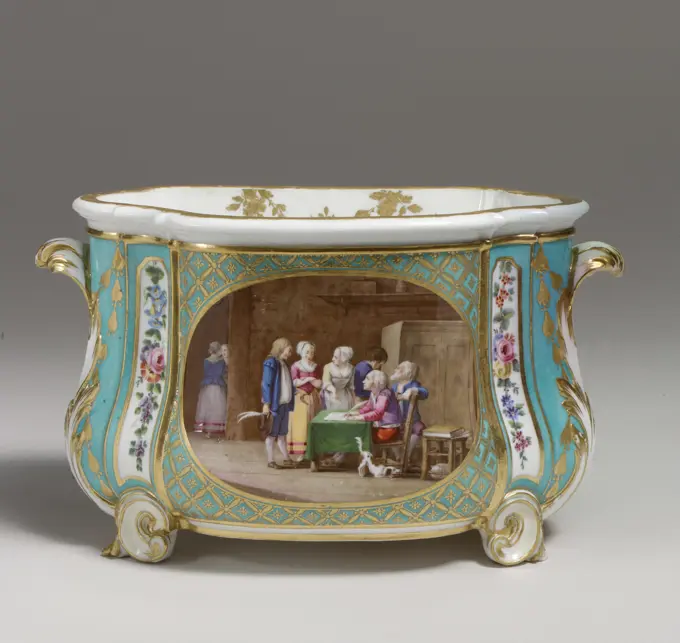
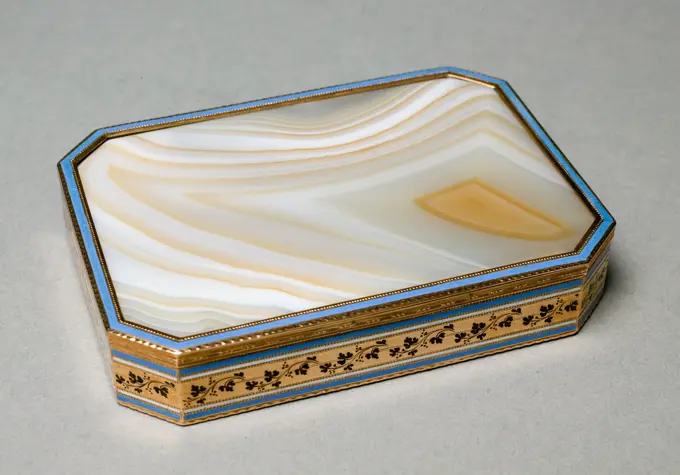
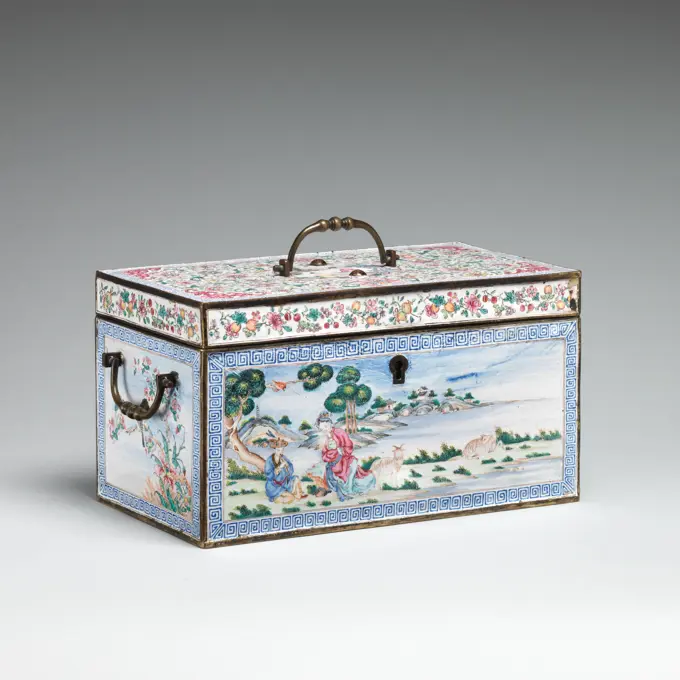
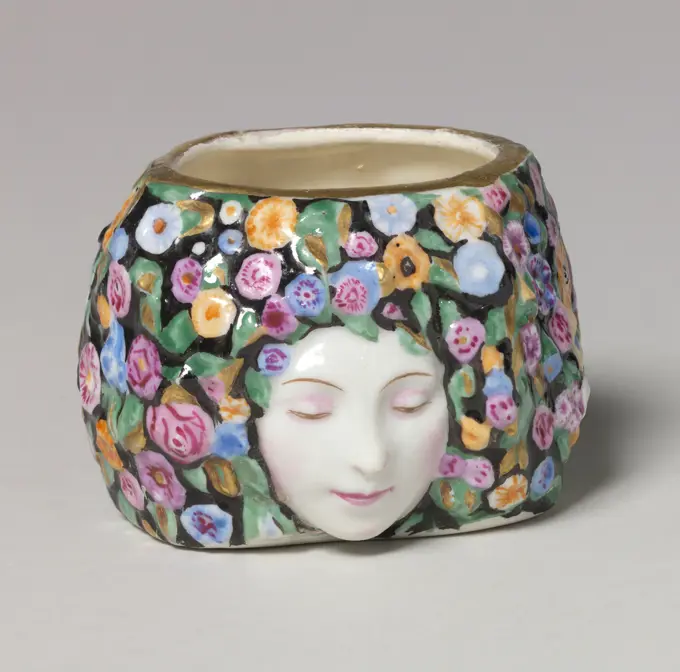
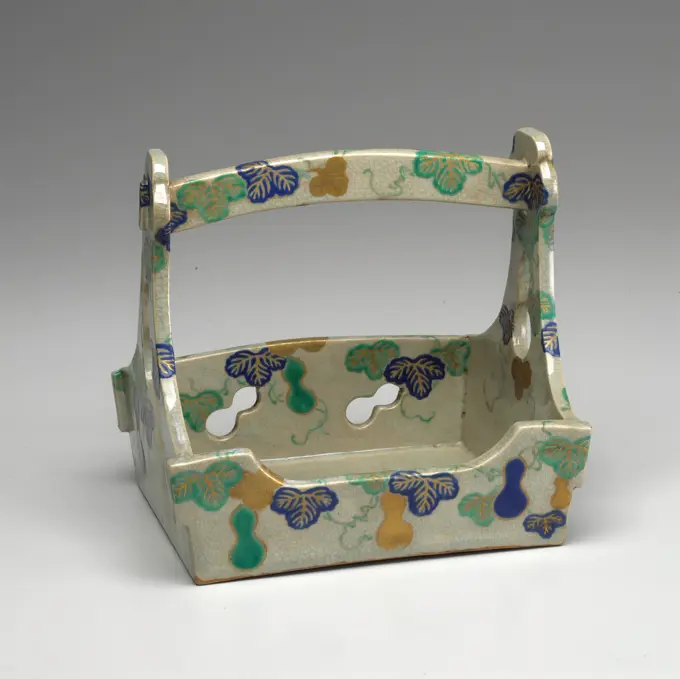
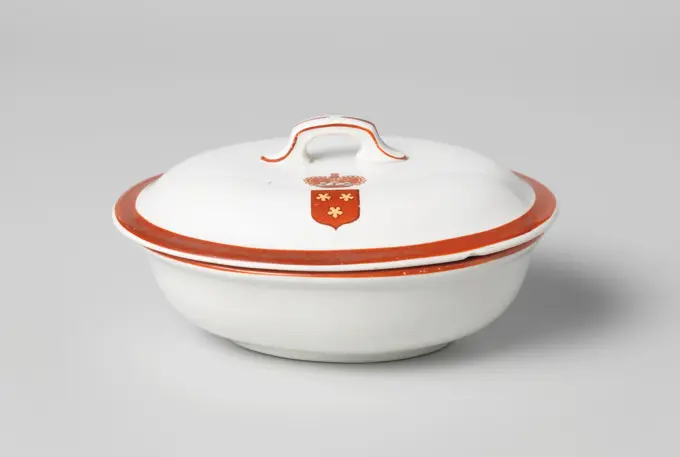
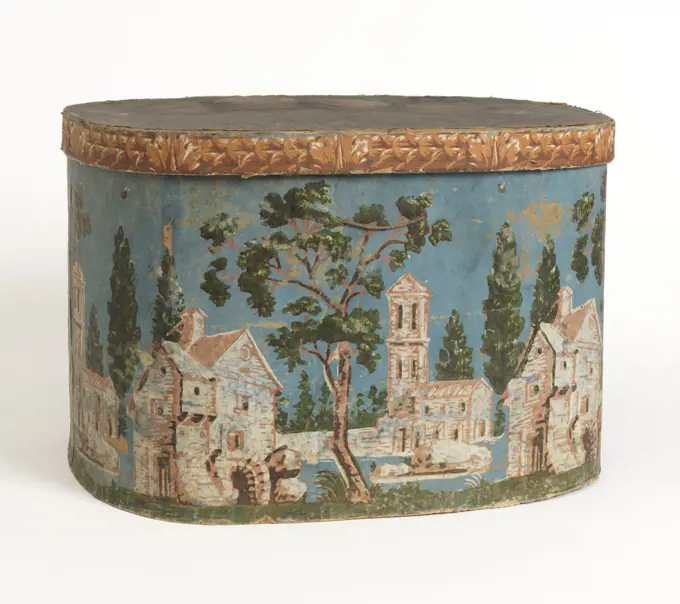
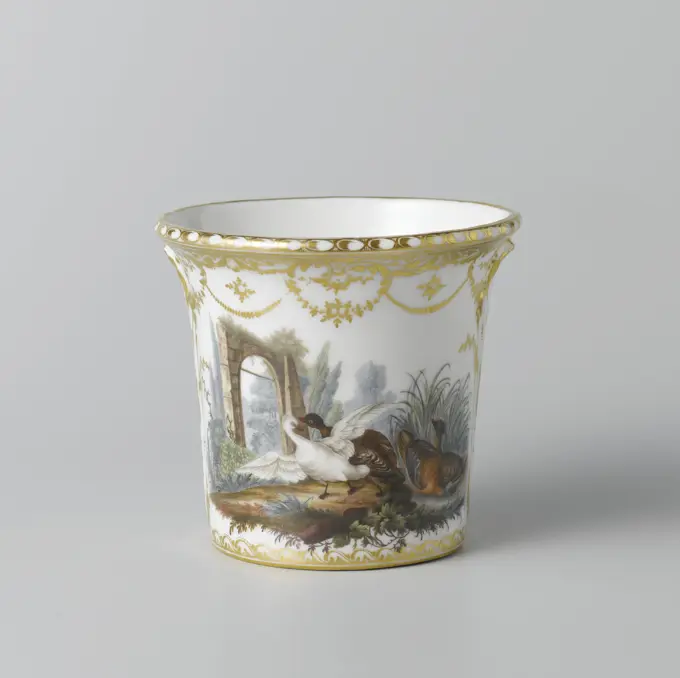
Three Flowerpot Containers (Cache-Pots) and stands, Manufactuur Oud-Loosdrecht, c. 1778 - c. 1782 Cachepot of porcelain. On the sides a standing pilastatic motif in relief, which runs into leaves and is richly decorated with gold. Front and backs multi-colored painted with birds in a landscape, where the front is very richly upholstered. Along foot and mouth edges a very rich decoration in gold. Loosdrecht porcelain Cachepot of porcelain. On the sides a standing pilastatic motif in relief, which runs into leaves and is richly decorated with gold. Front and backs multi-colored painted with birds in a landscape, where the front is very richly upholstered. Along foot and mouth edges a very rich decoration in gold. Loosdrecht porcelainTwo-handled cup with cover. Culture: German, Meissen. Decorator: Decoration attributed to Ignaz Bottengruber (active ca. 1720-ca. 1730, Breslau, ca. 1728-30). Dimensions: Height: 4 3/4 in. (12.1 cm). Factory: Meissen Manufactory (German, 1710-present). Date: 1725-30. Museum: Metropolitan Museum of Art, New York, USA.Bowl with Floral Scrolls. China. Date: 1821-1850. Dimensions: H. 6.5 cm (2 9/16 in.); diam. 12.9 cm (5 1/16 in.). Porcelain painted in overglaze red enamel. Origin: China. Museum: The Chicago Art Institute, Chicago, USA.Small Beaker, 1735, 2 3/4 x 2 1/2 x 2 1/2 in. (7 x 6.35 x 6.35 cm), Glass, enamel, Switzerland, 18th centuryBilling doves 1760 Chelsea Porcelain Manufactory. Billing doves. British, Chelsea. 1760. Soft-paste porcelain. Chelsea Porcelain Manufactory (British, 1745-1784, Red Anchor Period, ca. 1753-58). Ceramics-PorcelainCup with a man in an 18th-century costume. Flat ground. Fully shaped, in vertical faceted body, on which a man in an 18th century costume with a raco sweep and three-wearing stitch, surrounded by Rococo ornaments. On the downside also Rococo ornament of flowers. The top edge gilt. At the bottom signature J L W (Joseph and Ludwig Wien).Covered Sauce Tureen 1785-90 Chinese, for American market This object belongs to a large dinner service (10.149.1-.248) bearing the Townley family coat-of-arms. The service, probably ordered by Justice Samuel Chase (1741-1811) of Annapolis, Maryland, displays the enamel-painted arms of Margaret Townley, Chase's aunt.. Covered Sauce Tureen 2451Wine cooler 1801-25 Imperial Porcelain Manufactory, St. Petersburg Russian. Wine cooler 208561Pair of Covered Jars, c. 1775. Faubourg Saint-Denis (French). Porcelain; diameter: 9.6 cm (3 3/4 in.); overall: 14 cm (5 1/2 in.).. Bell-shaped head of porcelain, painted on the glaze in blue, red, pink, green, yellow and black. On the wall a group of people sitting in a landscape at a rock, tree and plants, in the background mountains; People are dressed in classic robes. Based on an unidentified European source. European performance in email colors.. Cup and saucer of porcelain. The dish with a short, straight, ribbed wall and brace-shaped edge. The wall of the head divided into two sections, the upper with ribbed wall, and with a brace-shaped edge. Painted on the glaze in blue, red, pink, green, yellow, black and gold. On the flat of the dish the monogram 'JM' in a crowned medallion with shell pattern, napkin work and flower branches; For the medallion and on the wall napkin work with four small and four large cartouches with flower branch. The head with the same decoration. Bottom of the dish unglazed. A crack and two chips in the wall of the dish; Two cracks in the wall of the head. European performance in email colors.Inkwell, Tin-glazed earthenware, Ink well with polychrome floral decoration. Modern ceramic center well., France, 18th century, ceramics, Decorative Arts, Inkwell. Bell-shaped head and pattipan of porcelain, painted on the glaze in blue, red, pink, green, yellow, gardenquoise, black and gold. On the Buitnwand the coat of arms of the families of Reed of Oudtshoorn and Boesses. In the center the weapon whose shield is divided into two. Left The weapon of Van Oudtshoorn Reed in Gray, right the coat of arms of Boesses in red and blue. There is a griffin on either side of the weapon. The helmet mark consists of a crown and wings. On the wall loose flower branches in European style and a decorative band on the inner edge. The Pattipan has an oval, eight meal lobed wall and the same decoration as the head. Weapon porcelain with email colors.Pot with a lid. Baranówka (manufaktura porcelany ; 1804-post 1900 ), factoryA cup with a saucer Mi Nia (Meissen)Slop Bowl with Symbols of England, Ireland, and Scotland 1825-1835 Staffordshire. Earthenware with copper lustre decoration .Sugar Bowl, porcelain factory The Hague, c. 1777 - c. 1790 Sugar bowl with lid on two sides decorated with a medallion multicolour painted with buildings in a landscape, one is probably the Zwanenburg house. Two winged putti on either side of the medallion. Marked with a stork in blue on the glaze. N.B. German porcelain painted in The Hague. The Hail Hate Company: Ansbach porcelain Sugar bowl with lid on two sides decorated with a medallion multicolour painted with buildings in a landscape, one is probably the Zwanenburg house. Two winged putti on either side of the medallion. Marked with a stork in blue on the glaze. N.B. German porcelain painted in The Hague. The Hail Hate Company: Ansbach porcelainSauce Dish 1870-90 Challinor, Taylor and Company. Sauce Dish 7177TheBus, painted with flowers and ladder motif, manufacture Oud-Loosdrecht, c. 1775 - c. 1778 Porcelain tea. Painted with flowers and a ladder motif in bright colors. Loosdrecht porcelain Porcelain tea. Painted with flowers and a ladder motif in bright colors. Loosdrecht porcelainCup with chrysanthemum and birds, anonymous, c. 1670 - c. 1700 Round head of porcelain, painted on the glaze in blue, red, green, yellow and black, with two chrysanthemum branches and two birds, one in the air. Kakiemon style. Japan porcelain. glaze. painting / vitrification Round head of porcelain, painted on the glaze in blue, red, green, yellow and black, with two chrysanthemum branches and two birds, one in the air. Kakiemon style. Japan porcelain. glaze. painting / vitrificationClose-up of a Porcelain bowl, ItalyTerrine, painted with flower branches. Oval terrine of multicolored painted faience. The terrine is geribd, stands on a foot and has a lid. The ears of the terrine have the shape of a tree branch that are mounted on the terrine with leaves. Painted with flower branches.Water jar China. Water jar 44260Dish 1760-1770 Worcester. Soft-paste porcelain, polychrome enamels and gilding . Worcester Royal Porcelain Company (Manufacturer)Dinner plate, c. 1865, Minton's Pottery and Porcelain Factory, British, 1 1/8 x 10 3/8 in. (2.86 x 26.35 cm), Ceramic, England, 19th centuryBottle cooler (seau à demi-bouteille). Chantilly Porcelain Manufactory, manufacturer (French, active about 1730 - 1805) about 1730-1735 The cylindrical bottle cooler has straight sides tapered slightly inward, a subtly protruding foot ring, and a plain narrow molding at the top. Two dragon-shaped handles are directly under the lip and the outside is decorated sparingly with three groups - an Asian male figure standing on a square of blue tiles facing a shishi (mythical lion-like creature), a different man holding a lantern over a potted plant near an architectural motif representing a window, and a large branch of pomegranates - all rendered in blue, turquoise green, orangish red, yellow, and black enamel. The ornamentation is inspired by Japanese Kakiemon ware, a distinctive style of porcelain decoration characterized by sparse asymmetrical designs rendered with a limited palette on a white ground. Here the shishi and nearby figure were copied directly from motifs on known Japanese exTerrine lid. Terrine lid of faience. Not original.Octagonal Cup with Handle 1800-1899 Venice. Glass; iridescent with manganese and white opaque millefiori decoration .Saucer; Tashiro (Tajiro; Fl. Ca 1880-1920); around 1910-1920 (1901-00-00-1910-00-00);Foot warmer. Octagonal stew of blue painted faience, with a slide and a copper handle. There is a test (BK-NM-4001-1) in the stew. The stew is on four legs and a river landscape is painted with boats, a house and a tower on the underside of the stew. The side walls of the stove are painted with flowers. The test is dated: 1760.Water jar. Culture: China. Dimensions: H. 3 3/16 in. (8.1 cm); W. 6 7/8 in. (17.4 cm); D. 1 15/16 in. (4.9 cm). Museum: Metropolitan Museum of Art, New York, USA.Cup with handle with a coat of arms and a monogram, anonymous, c. 1750 - c. 1774 Porcelain ear head, painted on the glaze in red, pink, green, brown, purple, black and gold. On the wall an unidentified family crest divided into two subjects with an object on a pink soil; 2. A grape branch against a white background. The helmet sign is a grape branch. The weapon is surrounded by leaf vines. On the edge a band with grape vines. A second weapon with the monogram 'G.R. '. Weapon porcelain with email colors. China porcelain. glaze. gold (metal) painting / gilding / vitrification Porcelain ear head, painted on the glaze in red, pink, green, brown, purple, black and gold. On the wall an unidentified family crest divided into two subjects with an object on a pink soil; 2. A grape branch against a white background. The helmet sign is a grape branch. The weapon is surrounded by leaf vines. On the edge a band with grape vines. A second weapon with the monogram 'G.R. '. Weapon porcelain with email. Dish of porcelain, painted on the glaze in blue, red, pink, green, yellow, black and gold. On the flat a crazy monogram with 'I.E.'. The weapon is worn by a flying putto. On the wall a bamboo tire with flower drinks. A chip in the edge of the dish. Weapon porcelain with email colors.Close-up of tea cupAntique footed tea cup with ornate handle.  Shot on white background.Cup and Saucer, Chantilly Porcelain Manufactory, French, active ca. 1725 - ca. 1789, soft paste porcelain, vitreous enamel, A white cup and saucer with a very cynlidrcal form. Both painted with a bird and flowers., France, ca. 1740, ceramics, Decorative Arts, cup and saucer, cup and saucerBox ca. 1760-1800 British, Staffordshire. Box. British, Staffordshire. ca. 1760-1800. Enameled copper. Enamels-Painted. Bell-shaped cup and saucer of porcelain, painted on the glaze in blue, red, pink, black and gold. On the flat of the dish a lobd cartouche with a European lady and gentleman with a mandolin on a terrace for a building, for the balustrade a spingy dog; A castle in the background; To have the cartouche half flower rosettes and leaves. The head with the same decoration; On the inner edge a 'Spearhead-Border'. European performance in email colors and encre de chine.Pair of Double Salt Dishes (Deux salières), 1790. Sèvres Porcelain Factory (French, est. 1756). Soft-paste porcelain; overall: 3.5 x 12.4 x 7 cm (1 3/8 x 4 7/8 x 2 3/4 in.).. Tea cup from porcelain, without ear. Painted with figures in a landscape in beet red and golden piping.Vaas, Meissener porcelain manufactory, c. 1750 Vase of painted porcelain. The vase is cylindrical and has an outstanding mouth. The painting consists of multicolored flower bouquets. Vase is part of a seven -part cabinet set. Float porcelain Vase of painted porcelain. The vase is cylindrical and has an outstanding mouth. The painting consists of multicolored flower bouquets. Vase is part of a seven -part cabinet set. Float porcelainBeaker with Beaded Band. Bohemia, Czech Republic. Date: 1820-1840. Dimensions: 12.4 × 9.2 cm (4 7/8 × 3 5/8 in.). Glass; blown, cut and polished, encased in sleeve of roses and pansies made of colored glass beads woven on a silk net ground. Origin: Bohemia. Museum: The Chicago Art Institute, Chicago, USA.Pomade Pot, c. 1730-40. Saint Cloud Porcelain Factory (French). Soft-paste porcelain; diameter: 5 cm (1 15/16 in.); overall: 6.1 cm (2 3/8 in.).Cup and Saucer, Wallendorf Porcelain Manufactory, German, established 1764, hard paste porcelain, vitreous enamel, Cylindrical cup; rectangular strap handle, with simulated screw heads. Saucer flat with flaring sides., Germany, ca. 1800, ceramics, Decorative Arts, cup and saucer, cup and saucerButter dish in the shape of a melon, Blankenburg, Arie Blankers, c. 1755 - c. 1760Pair of Mounted Lidded Vases. UnknownCup China. Cup 47709Water Jar (Mizusashi) with the Seven Sages of the Bamboo Grove late 18th century Japan. Water Jar (Mizusashi) with the Seven Sages of the Bamboo Grove 45555Kylix Gnathia;  End of the 4th-century BC (-310-00-00--291-00-00);Hexagonal Brush Pot With Prunus Sprays And Dragons. Hexagonal brush pot made of porcelain, painted on the glaze in blue, red, green, yellow, eggplant and black. The walls modeled in recessed compartments with alternating a prunus branch against a black speckled green ground and a dragon with curling work in a red soil. Old label on the bottom with 'Huth 46 17/5/05'. Famille Verte.John Cutting, Toilette Box, c 1940 Toilette BoxBandbox. Dated: c. 1937. Dimensions: overall: 22.2 x 28.7 cm (8 3/4 x 11 5/16 in.) Original IAD Object: 9" high; 11 wide; 13" long. Medium: watercolor, gouache, and graphite on paperboard. Museum: National Gallery of Art, Washington DC. Author: John Tarantino.Flower vase (cuvette à fleurs Courteille) (one of a pair) 1761 Sèvres Manufactory French. Flower vase (cuvette à fleurs Courteille) (one of a pair). French, Sèvres. 1761. Soft-paste porcelain. Ceramics-PorcelainBandbox (USA); block-printed on paper, pasteboard support; 51 x 42 x 30 cm (20 1/16 x 16 9/16 x 11 13/16 in.)Snuff Box, 1800-1815. Switzerland. Striated agate in gold and enamel mounts; overall: 8.6 cm (3 3/8 in.).Coffret ca. 1730-60 Listen to experts illuminate this artwork's story Listen Play or pause #407. Teapots Supported by Bloomberg Philanthropies We're sorry, the transcript for this audio track is not available at this time. We are working to make it available as soon as possible.. Coffret. ca. 1730-60. Copper, enamel, brass. Probably made in Canton, Guangdong, ChinaSugar Bowl with Rose Medallion Sugar Bowl; Manufactured by Fürstenberg Porcelain Manufactory (Germany); porcelain, vitreous enamel, goldPrzeszo Przyszoci unknownCup, painted with a landscape with houses. Cup of porcelain, painted with a landscape with houses. Signature in black: Amstel. The ear is missing.. Sled of faience. Painted blue. Four holes in the bottom.Woman's Head (Two Faces) Salt Dish; Designed by Natalya Yakovlevna Danko (Russian, b. Georgia, 1892-1942); Manufactured by State Porcelain Factory (Russia); gilt and enameled porcelain; H: 4.7 cm (1 7/8 in.); The Henry and Ludmilla Shapiro Collection; Partial gift and partial purchase through the Decorative Arts Association Acquisition and Smithsonian Collections Acquisition Program Funds; 1989-41-59Tobacco tray, 18th century, Unknown Japanese, 7 3/4 x 7 7/8 x 6 1/4 in. (19.69 x 20 x 15.88 cm), Kyōyaki ware, Ko Kiyomizu type, Seikanji kiln; stoneware with underglaze enamels and gold, Japan, 18th century, Portuguese traders first introduced tobacco to Japan in the 1500s. After repeated attempts to ban its use, the government legalized its cultivation in 1625. Throughout the Edo period, Japanese used long pipes with small bowls, which, when filled with finely shredded tobacco, afforded the smoker only a puff or two. Tobacco trays held a hiire, a small container with hot ashes—used to light the pipe—and a container half filled with water into which the exhausted contents of the pipe could be safely emptied. Tea masters placed tobacco sets in the waiting areas used by their guests prior to tea gatherings. This ceramic example imitates the construction of wooden tobacco boxes but is richly decorated with trailing calabash gourd vines rendered in blue, green, and gold enamels and reticBandBox.   Maker: John Avery, Jr., American, 1755-1815Branches; Bleras et sauvage (couples 1815-1820 (1815-00-00-1815-00-00);Covered tureen, c. 1748-54, 7 3/4 x 13 3/4 x 8 1/4 in. (19.7 x 34.9 x 21.0 cm), Tin-glazed earthenware, France, 18th centuryCover of soap bin, part of a toilet garnish, Villeroy & Boch Ceramic Werke K.G., 1874 Cover, part of a toilet garnish of earthenware. Decorated with red piping and the weapon of the Duke of Arenberg with crown in red and yellow. Wallerfangen earthenware Cover, part of a toilet garnish of earthenware. Decorated with red piping and the weapon of the Duke of Arenberg with crown in red and yellow. Wallerfangen earthenwareSoap bin, part of a toilet garnish, Villeroy & Boch Ceramic Werke K.G., 1874 Soap bin with lid, part of a toilet garnish of earthenware. Decorated with red piping and the weapon of the Duke of Arenberg with crown in red and yellow. Wallerfangen earthenware Soap bin with lid, part of a toilet garnish of earthenware. Decorated with red piping and the weapon of the Duke of Arenberg with crown in red and yellow. Wallerfangen earthenwareTwo Pipe Rests, Manufactuur Oud-Loosdrecht, c. 1778 - c. 1782 Porcelain pipe slit. Painted with rocailles in beet red, within which intersecting branches with leaves in green with purple contours. Along the top edge rocailles in faint relief. Loosdrecht porcelain Porcelain pipe slit. Painted with rocailles in beet red, within which intersecting branches with leaves in green with purple contours. Along the top edge rocailles in faint relief. Loosdrecht porcelain3CupsTypical Austrian crockery Typical Austrian crockery with Edelweiss isolated over white Copyright: xZoonar.com/IvonnexWierinkx 7469814Bandbox, Block-printed paper, pasteboard support, Unknown buildings and architecture lined up along grassy green field at bottom, with trees interspersed. Printed in pink, white, green, adn black on blue fie4ld., USA, ca. 1830, Wallcoverings, BandboxBeaker. Austria, Vienna; Anton Kothgasser (Austrian, 1769-1851). Date: 1810-1825. Dimensions: 12.2 x 7 cm (4 13/16 x 2 3/4 in.). Glass. Origin: Vienna. Museum: The Chicago Art Institute, Chicago, USA.Inkwell.  Manufacturer: Tucker and Hemphill, American, active 1831-38Easter cake and colored easter eggs close to. Easter cake