Decorative Porcelain Cups and Saucers

Elegant porcelain cups and saucers with intricate floral and symbolic designs, showcasing traditional Chinese craftsmanship from various periods.

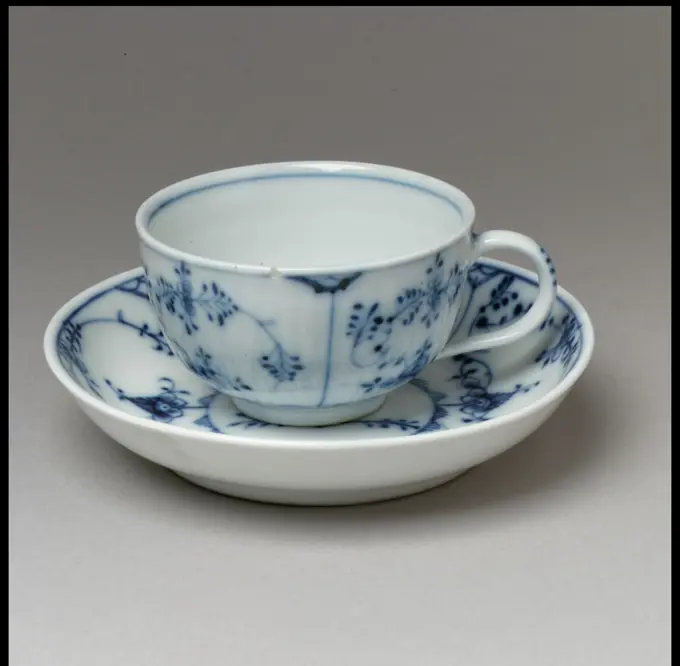
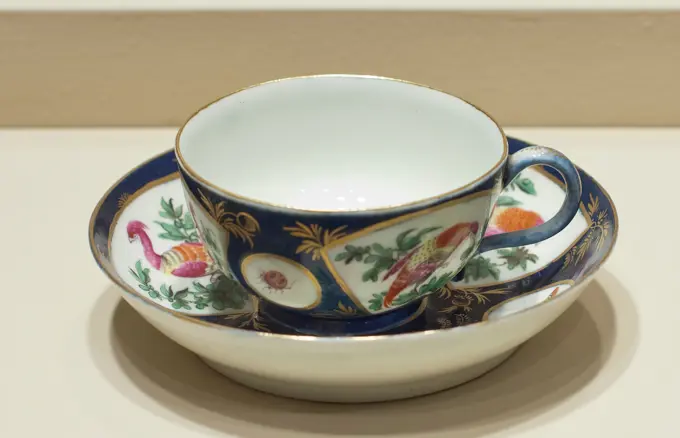
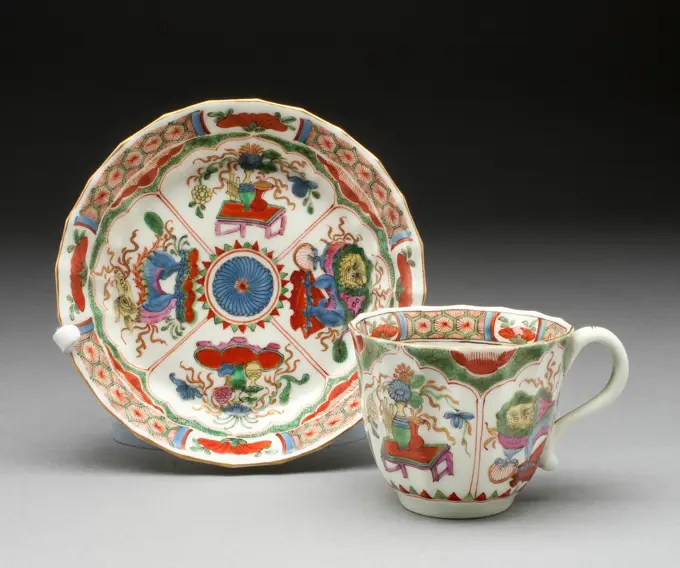
Worcester porcelain lid, Anonymous, 1800 - 1900 The non -fitting lid shows the same decoration, has a white flower bud and a few white leaves and relief as a button. Worcester porcelain The non -fitting lid shows the same decoration, has a white flower bud and a few white leaves and relief as a button. Worcester porcelain
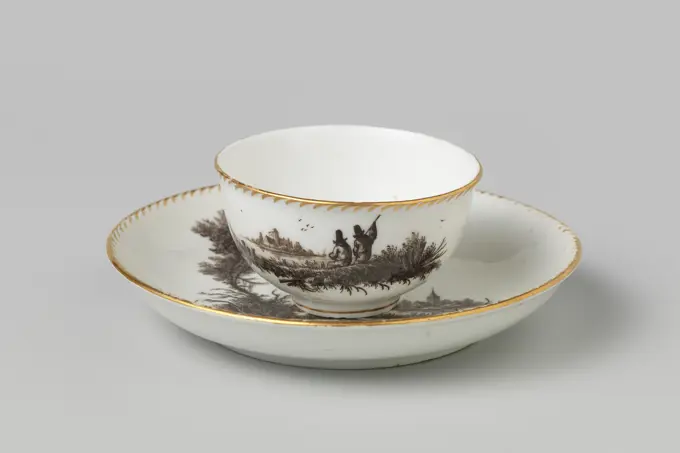
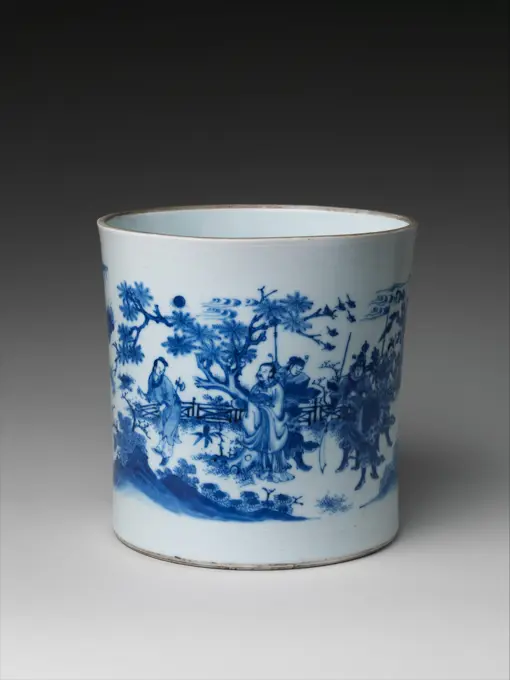
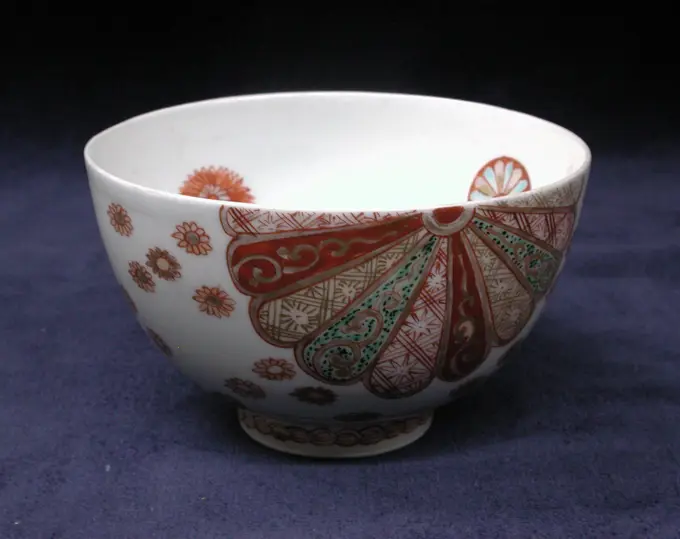
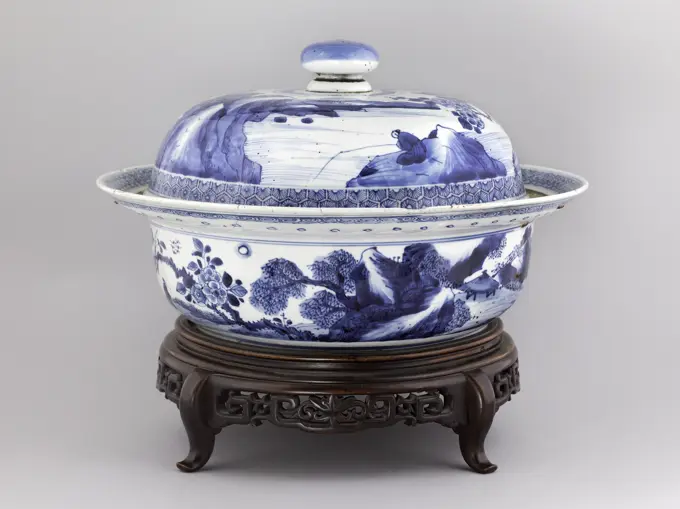
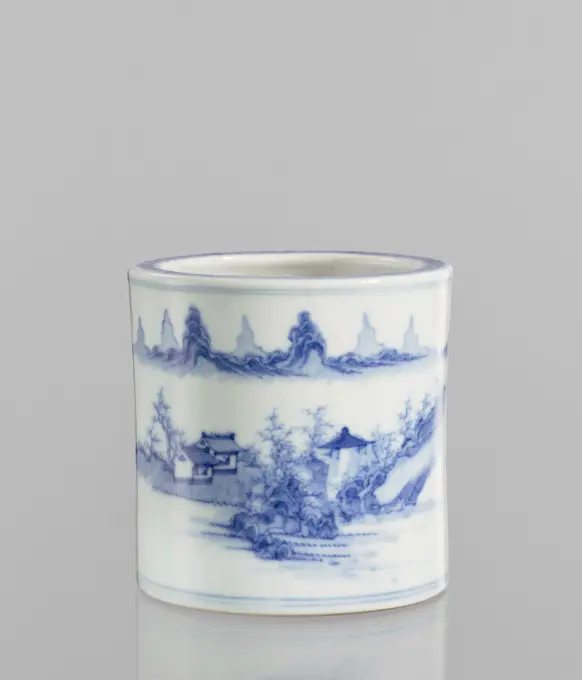
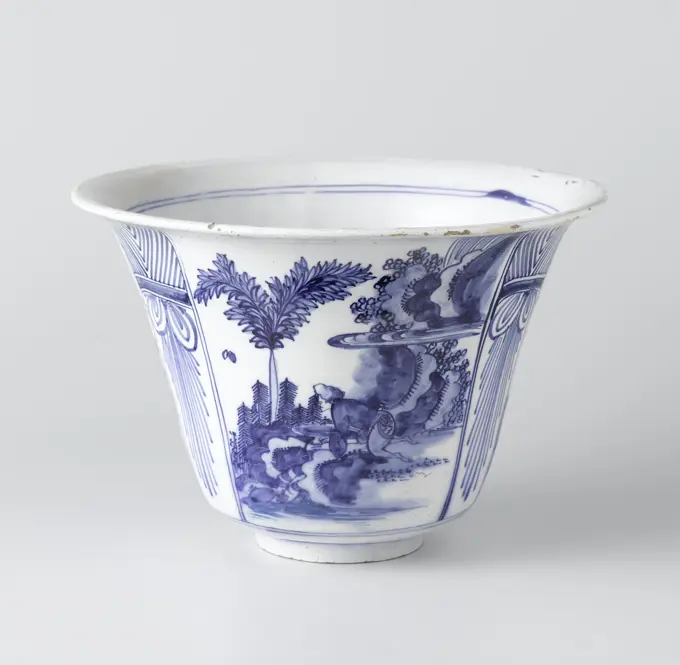
Come from tinglaze pottery with the year 1581., Anonymous, c. 1650 - c. 1670 Come from blue painted faience. The bowl is reversed clock -shaped and has a stand ring. Three courses were painted on the bowl with a stripe decor. A man (Chinese) is painted in a compartment and knees lying down, a man (Chinese) is painted in a box with a flag in his hands and in the other box a man (Chinese) is painted with an elongated object in his Hands. The bowl is dated in the inside on the bottom (1581). Delft earthenware. tin glaze. Come from blue painted faience. The bowl is reversed clock -shaped and has a stand ring. Three courses were painted on the bowl with a stripe decor. A man (Chinese) is painted in a compartment and knees lying down, a man (Chinese) is painted in a box with a flag in his hands and in the other box a man (Chinese) is painted with an elongated object in his Hands. The bowl is dated in the inside on the bottom (1581). Delft earthenware. tin glaze.Bowl. Culture: British, Staffordshire. Dimensions: Overall: 2 1/2 × 5 1/2 in. (6.4 × 14 cm). Date: ca. 1745. Museum: Metropolitan Museum of Art, New York, USA.Cup and saucer with river face. Cup and saucer of porcelain. Painted with a river face with two mans figures and a large tree in the foreground. All edges in gold.Brush Pot with King Wen and the Scholar Jiang Taigong mid-17th century China The widespread literacy that marked the late sixteenth century and the concurrent flowering of woodblock-printed books had a significant impact on Chinese porcelain produced between the late sixteenth and the mid-seventeenth century, helping to spread historical tales such as that of the visit of an ancient king to a famous scholar. Listen to experts illuminate this artwork's story Listen Play or pause #7437. Brush Holder Supported by Bloomberg Philanthropies We're sorry, the transcript for this audio track is not available at this time. We are working to make it available as soon as possible.. Brush Pot with King Wen and the Scholar Jiang Taigong 42340Scalloped cup with The three friends of winter, anonymous, c. 1670 - c. 1700 Sculpted head of porcelain, painted on the glaze in blue, red, green, black and gold with the three friends of winter on the outer wall: pine, prunus and bamboo, with two bound hedges, a five -leaf flower on the inside and a red Line with loops along the edge. Kakiemon style. Japan porcelain. glaze Sculpted head of porcelain, painted on the glaze in blue, red, green, black and gold with the three friends of winter on the outer wall: pine, prunus and bamboo, with two bound hedges, a five -leaf flower on the inside and a red Line with loops along the edge. Kakiemon style. Japan porcelain. glazeBell-Shaped Cup with a Crowned, illegible monogram surrounded by two Flower sprays. Bell-shaped head of porcelain, painted on the glaze in blue, red, pink, green, yellow, black and gold. On the outside wall twice a crowned, unreadable monogram surrounded by two flower branches; In between flower drinks containing two cartouches with a landscape and four medallions with plants. A crack in the wall. European performance in email colors.Cup and saucer with a lady, gentlemen and two panels with characters. Cup and saucer of porcelain with straight wall, painted on the glaze in blue, red, pink, green, yellow, black and gold. On the flat of the dish a lady and a gentleman and two cartouches with Chinese characters; a fan-shaped cartouche with a band of 'crackled ice' and a book-shaped cart shower; The head also with a lady and lord (in other clothing) and two cartouches with characters; The fan-shaped with 'crackled ice' and a cartouche formed by a bamboo roof. Family Rose.Flowerpot on Subtotel van Porcelain, Manufactuur Oud -Loosdrecht, 1774 - 1784 On the straight pot a river landscape is painted with a ruin. A landscape with tower on the underpoter. Loosdrecht porcelain On the straight pot a river landscape is painted with a ruin. A landscape with tower on the underpoter. Loosdrecht porcelainCup (from a set of eight) China. Cup (from a set of eight) 46884Fruit test, multi -colored painted, anonymous, c. 1760 - c. 1790 Fruit test with scalloped edge, openwork soil and two ears in the form of dolphins. Delft . Fruit test with scalloped edge, openwork soil and two ears in the form of dolphins. Delft .Dish, painted with cornflowers. Dish of porcelain, painted in blue, green, lilac and black with cornflowers. Along the edge of the dish a zigzag piping in gold. Marked with a crowned dolphin in red on the glaze.Bowl with Chinese Landscape, c. 1893-1914. Seifū Yohei III (Japanese, 1851-1914). Porcelain with underglaze blue and overglaze red; height: 8 cm (3 1/8 in.); diameter: 21 cm (8 1/4 in.).Tea cup with ear, painted with flowers and corners. Tea cup with ear, from porcelain, part of a tea set, multi-colored painted with flowers and corners.A cup with a saucer KorzecPair Of Salt Cellars; tin-glazed earthenwareCup and saucer painted with gold and stars and necklaces. Parts of a cylindrical coffee set consisting of a can (A) and 6 heads and saucers (B to g) painted in purple and gold with asterisks and necklaces. Mounted with a factory brand in underglazing blue and rebel 801 26 (Can), 791 33 (heads) 791 39 (Dishes).Cup with Four Ladies in a Landscape. Cup of porcelain with straight wall, painted on the glaze in red, black and gold. Four ladies, two standing and two sitting, shown in a landscape with trees, rocks, plants and a building; A decorative band on the edge. A crack in the wall. Encre the chine.Three Flowerpot Containers (Cache-Pots) and stands, Manufactuur Oud-Loosdrecht, c. 1778 - c. 1782 Cachepot of porcelain. On the sides a standing pilastatic motif in relief, which runs into leaves and is richly decorated with gold. Front and backs multi-colored painted with birds in a landscape, where the front is very richly upholstered. Along foot and mouth edges a very rich decoration in gold. Loosdrecht porcelain Cachepot of porcelain. On the sides a standing pilastatic motif in relief, which runs into leaves and is richly decorated with gold. Front and backs multi-colored painted with birds in a landscape, where the front is very richly upholstered. Along foot and mouth edges a very rich decoration in gold. Loosdrecht porcelainCome from v.o.c.-ship the 'white lion'. Come from v.o.c.-ship the 'white lion', 100%% present.Tea cup, from a tea service, 18th century, Worcester Porcelain Works (a.k.a. Royal Worcester Porcelain Company), Worcester, England, est. 1751, Porcelain, England, 18th centuryBell-shaped bowl with pierced sides and water landscapes in medallions, anonymous, c. 1635 - c. 1650 Klock -shaped bowl of porcelain, painted in under -glaze blue. The wall of the bowl is opened with medallions saved. In the medallions of river landscapes with trees, mountains and pavilions; One medallion with a plant at a rock. The underside of the wall with a tire stylized leaf motifs. On the outer edge a band with servetwork. The underside and the outer edge are unglazed. Some chips in the edge. Transitional porcelain in blue and white. China porcelain. glaze. cobalt (mineral) painting / vitrification Klock -shaped bowl of porcelain, painted in under -glaze blue. The wall of the bowl is opened with medallions saved. In the medallions of river landscapes with trees, mountains and pavilions; One medallion with a plant at a rock. The underside of the wall with a tire stylized leaf motifs. On the outer edge a band with servetwork. The underside and the outer edge are unglazed. Some chipSugar bowl of stoneware, decorated with purple applications. Sugar bowl of stoneware, decorated with purple applications. The sugar bowl has two upright ears. The ears are flat and out. The top edge of the pot is decorated with an ornament edge with rosettes. The sugar bowl has been marked. The sugar bowl belongs to a milk jug with Invnr. BK-NM-13190-A.Bowl. Worcester Porcelain Factory; Worcester, England, founded 1751. Date: 1780-1790. Dimensions: H. 9.9 cm (3 7/8 in.); diam. 23.5 cm (9 1/4 in.). Soft-paste porcelain with black transfer-printed decoration. Origin: Worcester. Museum: The Chicago Art Institute, Chicago, USA. Author: Worcester Royal Porcelain Company.Cup And Saucer; Possibly by Spode Ceramic Works; porcelain, overglaze enameling and gilding; cup: 6.8 x 10.2 cm (2 11/16 x 4 in.) saucer: 14.5 x 3.1 cm (5 11/16 x 1 1/4 in.)Cover of a bowl with a putto in a medallion, Fürstenberg, c. 1765 - c. 1775 Cover of a bowl of porcelain with a slightly ribbed wall, painted on the glaze in blue, red, pink, green, yellow, black and gold. Decorated with twice a bird in a landscape. In between bouquets and sprinkling flowers. On the edge a pink band with semi -circles, including a rocaille decoration. Round lid button with a rosette. Fürstenberg porcelain. glaze. gold (metal) painting / gilding / vitrification Cover of a bowl of porcelain with a slightly ribbed wall, painted on the glaze in blue, red, pink, green, yellow, black and gold. Decorated with twice a bird in a landscape. In between bouquets and sprinkling flowers. On the edge a pink band with semi -circles, including a rocaille decoration. Round lid button with a rosette. Fürstenberg porcelain. glaze. gold (metal) painting / gilding / vitrificationOctagonal covered jar with plants, bundles of bamboo and ornamental borders, anonymous, c. 1690 - c. 1700 Octagonal lid pot of porcelain, painted in under -glaze blue. On the wall two compartments with bundles of bamboo, two with plants and four with a swastika pattern in relief. Craqueled glaze. Blue White. Japan porcelain. glaze. cobalt (mineral) painting / vitrification Octagonal lid pot of porcelain, painted in under -glaze blue. On the wall two compartments with bundles of bamboo, two with plants and four with a swastika pattern in relief. Craqueled glaze. Blue White. Japan porcelain. glaze. cobalt (mineral) painting / vitrificationUnknown (n. - d.), Cup with his saucer (title of the whole). Tender porcelain, polychrome enamels .. Small palace, Museum of Fine Arts of the City of Paris.Flowerpot and Subtotel van Porcelain, Manufactuur Oud -Loosdrecht (Possibly), 1774 - 1784 Painted in beet red with landscapes, on the flowerpot with a man with dog. Loosdrecht (Possible) porcelain Painted in beet red with landscapes, on the flowerpot with a man with dog. Loosdrecht (Possible) porcelainServing Dish, Cozzi Porcelain Factory, Italian, 1763 - 1812, hard paste porcelain, vitreous enamel, gold, Shell form, decorated in Chinese style with carnations, in red and blue with gilt highlights, on a blue-grey glaze., Italy, ca. 1770, ceramics, Decorative Arts, dish, dishTeabowl ca. mid-19th century Japan. Teabowl. Japan. ca. mid-19th century. Stoneware with polychrome enamels and gold over finely crackled glaze (Satsuma ware). late Edo (1615-1868)-early Meiji period (1868-1912). CeramicsPunchkom, porcelain factory The Hague, c. 1777 - c. 1790 The punchykom is multi -colored with vegetables, fruits and flowers. The Hail Hate Company: Ansbach porcelain The punchykom is multi -colored with vegetables, fruits and flowers. The Hail Hate Company: Ansbach porcelainSugar bowl with lid of stoneware, decorated with purple applies, Wedgwood, c. 1790 - c. 1810 Sugar bowl of stoneware, decorated with purple appliees. The sugar bowl has a lid and two raised ears. The lid is arched and has a profiled button. The ears are flat and bent out. The lid is decorated with three groups of Genii and three mythological scenes. The top edge of the pot is decorated with an ornament edge with rosettes. The sugar bowl is marked. The sugar bowl belongs to a milk jug with invnr. BK-NM-13990-A. England stoneware Sugar bowl of stoneware, decorated with purple appliees. The sugar bowl has a lid and two raised ears. The lid is arched and has a profiled button. The ears are flat and bent out. The lid is decorated with three groups of Genii and three mythological scenes. The top edge of the pot is decorated with an ornament edge with rosettes. The sugar bowl is marked. The sugar bowl belongs to a milk jug with invnr. BK-NM-13990-A. England stonewareCup with flower sprays, Manufacture de Sèvres, c. 1800  Porcelain head with an ear in the shape of a curly palmet, painted on the glaze in blue, red, green, purple, black and gold. The outer wall is covered with flower branches (poppy, cornflower). Golden line on the foot and edge. The ear is turned on with gold. Marked on the bottom with 'Sèvre RF M', G, UT and RN. Sèvres porcelain. glaze. gold (metal) painting / gilding / vitrificationCabinet on foot, with a pink stock with white surfaces and a fan, on which birds, Petrus Regout & Co., 1892 Cabinet bowl on foot of earthenware, the outside with a pink stock with three white surfaces and a fan, on which birds are shown in a black transfer pressure, with gold. The top edge and the foot edge of the bowl have a golden trim. Maastricht earthenware Cabinet bowl on foot of earthenware, the outside with a pink stock with three white surfaces and a fan, on which birds are shown in a black transfer pressure, with gold. The top edge and the foot edge of the bowl have a golden trim. Maastricht earthenwareCup and Saucer, Sèvres Porcelain Manufactory, French, established 1756 to the present, porcelain, vitreous enamel, gold, A porcelain cup and saucer with floral pattern in gilding., France, 1781, ceramics, Decorative Arts, cup and saucer, cup and saucer, Cup and Saucer, Sèvres Porcelain Manufactory, French, established 1756 to the present, porcelain, vitreous enamel, gold, A porcelain cup and saucer with floral pattern in gilding., France, 1781, ceramics, Decorative Arts, cup and saucer, cup and saucerCup with insects and birds on a branch in a landscape, Porseleinfabriek Ludwigsburg, c. 1760 - c. 1800  Porselen head with a C-shaped ear, painted on the enamel in email colors and gold. The outer wall of the head is decorated with a scaly motif. A landscape with two birds on this on a branch and different insects. A beetle on the inside. Golden Rand. The ear is made up of leaf vines. Marked on the underside with the crowned double C, B, OI and 13. Ludwigsburg porcelain. glaze. gold (metal) painting / gilding / vitrification. Oval Terrine of manganese painted faience. The terrine has a foot and a lid. The terrine has two ears that attach against the terrine and the lid has a button. The terrine and lid are painted in manganese with two flower branches, two flying birds and stipel packs.Cup with fish between water plants, c. 1700 - c. 1724 Cup of porcelain with ribbed wall and lobed edge, painted in underly glaze blue and on the glaze blue, red, green, yellow, eggplant, black and gold. The outside of the head with four fish between aquatic plants, the edge with a band Ruyi motif; On the bottom a fish and the inside with four fish in iron red, the edge with a band Ruyi motif. Marked on the bottom with 'yù', Jade, in a double circle. Famle Verte. China porcelain. glaze. cobalt (mineral). gold (metal) painting / vitrification Cup of porcelain with ribbed wall and lobed edge, painted in underly glaze blue and on the glaze blue, red, green, yellow, eggplant, black and gold. The outside of the head with four fish between aquatic plants, the edge with a band Ruyi motif; On the bottom a fish and the inside with four fish in iron red, the edge with a band Ruyi motif. Marked on the bottom with 'yù', Jade, in a double circle. Famle Verte. China porcelain. glaze. cobalt (mineral)Chicken Cup. Culture: China. Dimensions: H. 1 5/8 in. (4.1 cm); Diam. of rim 3 1/4 in. (8.3 cm); Diam. of foot 1 1/2 in. (3.8 cm).This type of small, bowl-shaped vessel from the imperial kiln of the mid-Ming dynasty has been cherished as the pinnacle of fine Chinese porcelain. The pictorial decoration was achieved through a complicated process. First, the designs were drawn in cobalt blue on the unfired vessel. After glazing and high-temperature firing, they were filled in with overglaze enamel pigments and then fired at a lower temperature to bring out the vibrant colors. Known as a "chicken cup" for its decoration, this object's charming scene of small chickens feeding in a garden conveys a core Chinese value: nurturing the young is essential to the continuation of the family line. Museum: Metropolitan Museum of Art, New York, USA.Cylindrical jar with lid. unknown, craftsmanWine Bottle Cooler (Seau à Demi-Bouteille), Saint-Cloud Porcelain Manufactory, French, active by 1693 - 1766, soft paste porcelain, vitreous enamel, Cylindrical, with rounded base and slightly splayed foot; projecting gadrooned rim and rodent-head handles. Lower portion of body gadrooned. Bands of blue diapering with recurrent medallions about neck and base., France, ca. 1730, ceramics, Decorative Arts, wine cooler, wine coolerTiered Box Composed of Three Layers with Dragons and Precious Objects. Round stack box made of porcelain consisting of three layers and a lid, painted in underglaze blue. The walls of the boxes and the lid with cloud motifs and valuables (pearl, diamond, music stone); The top of the lid with a four-chewed dragon and a pearl surrounded by clouds. Blue White.Bottle cooling vessel from Louis XVs dinner set. Vavasseur, Fran\cois (1753-1770), painter, Manufacture de porcelaine (Vincennes ; 1740-1756), factoryChueh-chi-Yung-Cheng, Cup, 1723-35, hard-paste porcelain.Bowl with Pearl Chasing Dragons on a Green Ground. Bowl of porcelain with spreading edge, painted in underglaze blue and on the glaze green and eggplant. On the wall Two pearl purveying five-handed dragons in reserve against a green ground; Around the foot in reserve a wave pattern. Marked on the underside with the six character mark of Emperor Kangxi in a double circle. Famille Verte.Saucer, 18th century, 1 1/4 x 5 1/8 x 5 1/8 in. (3.2 x 13.02 x 13.02 cm), Glass, Switzerland, 18th centuryRound Box With Ribbed Sides and a Coiling Dragon in a Medallion on the cover. Round box with ribbed wall, painted in underglaze blue. On the lid a medallion with a winding dragon. Slightly gray, cracked glaze. Ming porcelain in blue and white.Dish, belonging to a trembleuse. Dish of faience, belonging to a trembleuse. Multicolor painted with flower branches.Fragment Come from V.O.C. ship De 'Witte Leeuw', Before 1613 bowl Fragment come from V.O.C. ship De 'Witte Leeuw'. Jingdezhen bone china (material)   Sint-HelenaWhite bowl with golden band with acorn and leaf decoration, rinse bowl holder coffee service tea set dinnerware ceramics porcelain enamel enamel, fried glazed Coffee pot teapot sugar bowl milk jug 10 cup and saucers rinse bowl drink serve tea setCup of cup and saucer with lying woman and man in landscape hidden in bushes, cup and saucer drinking utensils tableware holder ceramics porcelain glaze, baked glazed painted enamelled, wide bowl-shaped cup on stand ring famille verte Cephalus Procris mythology chine de commande drinkCup and saucer painted with gold and stars and necklaces. Parts of a cylindrical coffee set consisting of a can (A) and 6 heads and saucers (B to g) painted in purple and gold with asterisks and necklaces. Mounted with a factory brand in underglazing blue and rebel 801 26 (Can), 791 33 (heads) 791 39 (Dishes).Cup and saucer ca. 1780 Royal Porcelain Manufactory, Berlin The gift of the Hans Syz Collection in 1995 endowed the Museum with nearly three hundred examples of European and Asian ceramics meticulously acquired by Swiss-born collector Dr. Syz (1894-1991) to chart the migration of models and patterns from East to West. Documenting a continuous process of influence and adaptation, these pieces provide a discriminating review of the nuances of stylistic change resulting from three centuries of trade.. Cup and saucer 208430Bird feeder with geese 18th century China. Bird feeder with geese 48009Trumpet-shaped Beakerase With Flower Baskets and Austricious Symbols. Trumpet-shaped cup earridge made of porcelain, painted in underglaze blue and on the glaze in blue, red, pink, green, black and gold. On the wall an openworked handle basket. The basket is filled with flower and fruit varieties (peony, chrysanthemum, prunus, finger lemon, magnolia). The other side with a flower vase with 'crackled ice' on a low table. The vase is surrounded by lucky objects (table with books, a Qin and objects of a scholar, ruyi scepter, impeller, incense burner and rolls). On the outer edge an irregular bond with peony reflections on 'frog', leaf refrices, chrysanthemin, flower rosettes and peach blossom 'crackled ice'. A relationship with chrysanthranks around the foot. Decoration differs from the other parts of the cabinet set. Bekervaas is part of cabinet set AK-RBK-15919. Family Rose.Head, multicolored painted with a kakiemon decor, meissener porzellan manufaktur, c. 1730 Cup of painted porcelain. The head has no ear and is painted with two quail in a flowering prunus. The head is marked. Float porcelain Cup of painted porcelain. The head has no ear and is painted with two quail in a flowering prunus. The head is marked. Float porcelainTea Bowl, Coffee Cup, and Saucer. Worcester Porcelain Factory; Worcester, England, founded 1751. Date: 1760-1770. Dimensions: H. 5.5 cm (2 3/16 in.); diam. 7.8 cm (3 1/16 in.). Soft-paste porcelain with polychrome enamels and gilding. Origin: Worcester. Museum: The Chicago Art Institute, Chicago, USA. Author: Worcester Royal Porcelain Company.. Porcelain plant, painted multi-colored with a parrot.Cup and saucer, Blown and enameled blue milk glass, Light blue opaque glass with painted decoration of white and yellow ivy border., Switzerland, 18th century, glasswares, Decorative Arts, Cup and saucerCup and Saucer, Sèvres Porcelain Manufactory, French, established 1756 to the present, porcelain, vitreous enamel, gold, Short, cylindrical cup (a) with scroll handle; enamel and gilded decoration consisting of gilt dots picked out in black, on blue ground; large, central, gilt-bordered oval cartouch with spray of three tulip blooms (red/cream, yellow/red, purple/cream) tied with pink ribbon; narrow gilt bands at mouth and base. Saucer (b) with everted rim decorated en suite with cup, the circular well with spray of vari-colored, petalled flowers tied with yellow ribbon., France, 1787, ceramics, Decorative Arts, cup and saucer, cup and saucerBell-shaped bowl with feng huangs, anonymous, c. 1680 - c. 1720 Klock -shaped bowl of porcelain, painted in under -glaze blue. On the outside eight Flying Feng Huangs and around the foot a decorative band with Ruyi motifs; On the bottom a flying Feng Huang in a double circle; On the edge a decorative band with flower vines. Marked on the underside with the six-character brand of Keizer Chenghua in a double circle. Two cracks in the edge; A crack in the foot. Blue White. China porcelain. glaze. cobalt (mineral) painting / vitrification Klock -shaped bowl of porcelain, painted in under -glaze blue. On the outside eight Flying Feng Huangs and around the foot a decorative band with Ruyi motifs; On the bottom a flying Feng Huang in a double circle; On the edge a decorative band with flower vines. Marked on the underside with the six-character brand of Keizer Chenghua in a double circle. Two cracks in the edge; A crack in the foot. Blue White. China porcelain. glaze. cobalt (mineral) paintinBowl Japanese, for European market 19th century The gift of the Hans Syz Collection in 1995 endowed the Museum with nearly three hundred examples of European and Asian ceramics meticulously acquired by Swiss-born collector Dr. Syz (1894-1991) to chart the migration of models and patterns from East to West. Documenting a continuous process of influence and adaptation, these pieces provide a discriminating review of the nuances of stylistic change resulting from three centuries of trade.Anonymous. Chinese lounge, decor from Juliette Drouet's house in Guernsey, southern wall. Porcelain cut with cover on turned wooden base. Porcelain and wood. Nineteenth century. Paris, house of Victor Hugo. 77437-5 Asian art, Chinese art, cover with lid, porcelain, 19th XIXth 19th 19th 19th 19th century, dish, dishBrush pot. unknown, craftsman. The octagonal porcelain head with ear is polychrome painted with violets (purple, light and dark blue and yellow) within an ornamental decor. Labeled with: Kroon, Rozenburg, Stork, The Hague (upper each other); on the left the brand before 1913, on the right the work order number 332 (at one head 333); under the painting mark of c.w.j. 't heart. The head has partially browned.Bowl with Pearl Chasing Dragons Against a Green Ground. Bowl of porcelain with spreading edge, painted in underglaze blue and on the glaze green and eggplant. On the wall Two pearl purveying five-handed dragons in reserve against a green ground; Around the foot in reserve a wave pattern. Marked on the underside with the six character mark of Emperor Kangxi in a double circle. Porcelain with email colors.Bowl ca. 1625 Japan. Bowl 52221Dish from Snow-Flake Side Dishes, c. 1893-1914. Seifū Yohei III (Japanese, 1851-1914). One from a set of six porcelain dishes; porcelain with lobed rims and pink glaze; overall: 5 x 13.5 cm (1 15/16 x 5 5/16 in.).Ripe sweet Yellow persimmon on colourful white with red flower painted pedestal tray China ware, Chinese porcelain on wooden backgroundCup and Saucer, porcelain, vitreous enamel, gold, A porcelain cup and saucer with floral pattern in gilding., Austria, ca. 1805, ceramics, Decorative Arts, cup and saucer, cup and saucerCup. China, 18th century. Furnishings; Serviceware. Porcelain, overglaze enamelsTeacup and Saucer. Worcester Porcelain Factory; Worcester, England, founded 1751. Date: 1765-1775. Dimensions: Cup: H. 9.8 (3 7/8 in.); diam. 8.1 cm (3 3/16 in.)Saucer diam. 13.1 cm (5 3/16 in.). Soft-paste porcelain, polychrome enamels and gilding. Origin: Worcester. Museum: The Chicago Art Institute, Chicago, USA. Author: Worcester Royal Porcelain Company.Covered Butter Dish, Meissen Porcelain Manufactory, German, active from 1710 to the present, hard paste porcelain, vitreous enamel, A white porcelain covered dish with a basket textured exterior. The covered dish has basket textured handles and an acorn knob., Germany, ca. 1735, ceramics, Decorative Arts, dish, dishSalt barrel, multi-colored painted with a kakiemon decor, Meissener Porzellan Manufaktur, c. 1740 - c. 1745 Salt vessel made of painted porcelain. The salt barrel is rectangular and has accolade -shaped curved walls. The salt barrel is decorated with a tree stump in Violet, on which branches with flowers in Kakiemon style and with a tiger around a bamboo stalk. Float porcelain Salt vessel made of painted porcelain. The salt barrel is rectangular and has accolade -shaped curved walls. The salt barrel is decorated with a tree stump in Violet, on which branches with flowers in Kakiemon style and with a tiger around a bamboo stalk. Float porcelainOctagonal Cup With Dancing Boys And Flowering Plants. Octagonal head of porcelain, covered with a translucent glaze and painted on the glaze in blue, red, green, yellow, black and gold. Above the foot a tire with modeled, pointed leaf motifs. Painted in Europe with alternating a dancing boy with an instrument and flowering plants. A floral drink on the bottom. Bak sand at the foot ring. Brown edge. Blanc de Chine in Europe decorated in the Japanese Kakiemon style.Lid of toilet box. On the lid a vase-shaped button, around which an oval rosette embossed. Seed beads in beets are painted red around this rosette. The inside of the lid is painted with figures in a river landscape with church tower in beets red. Golden piping.Tea set consisting of a teapot with lid, a sugar bowl with lid, a milk jug, a flush bowl and six cups and dishes decorated with multicolored landscapes. Along the edges of golden piping. Signature: Amstel.Pitcher. Prószków Śląski (fabryka fajansu ;1763-1853), factoryBasket, anonymous, c. 1760 - c. 1770  Delft .  Delft .Goblet Made 1810-1820 Staffordshire. Lead-glazed earthenware with lustre decoration .Fragment board from v.O.c.-ship the 'white lion'. Fragment board from v.O.c.-ship the 'white lion', 95%% present. Scale with a raised, scalloped lip, decorated in underglaze blue. In the center a frog and an insect on the waterfront, between the lotus plants. The show is enclosed by a decorative bond, on the inside brace-shaped, star-shaped on the outside, filled with white flower branches against a blue background. In the wall droppold fields with lucky symbols and flower branches.Pijpen sleigh van Porcelain, Manufactuur Oud -Loosdrecht, 1774 - 1784 Painted in beet red with flower branches and rocaille ornament along the edges. Loosdrecht porcelain Painted in beet red with flower branches and rocaille ornament along the edges. Loosdrecht porcelainSalt vessel, multi -colored painted with Deutsche Blumen, Insekten and Fruits, Meissener Porzellan Manufaktur, c. 1750 - c. 1760 Salt vessel made of painted porcelain. The salt barrel has the shape of a shell with a scalloped edge and stands on three volute -shaped legs. The salt barrel is painted with Deutsche Blumen, Insekten and Fruits. The edge is decorated with the Neuozier pattern in relief. The salt barrel is marked and belongs to a service (BK-17474-1 to BK-17474-253). Float porcelain Salt vessel made of painted porcelain. The salt barrel has the shape of a shell with a scalloped edge and stands on three volute -shaped legs. The salt barrel is painted with Deutsche Blumen, Insekten and Fruits. The edge is decorated with the Neuozier pattern in relief. The salt barrel is marked and belongs to a service (BK-17474-1 to BK-17474-253). Float porcelain. Head without ear, painted porcelain. The head is covered with an orange-red fond, in which brace-shaped four passes are saved with (water) landscapes with European figures, sometimes with bales and ships. The head is noticed.Anonymous. Petit Palais, Museum of Fine Arts of the City of Paris.Mukozuke. Square bowl of pottery with tining. Decorated on the outside with flower, bird and insect motifs. At the bottom and top closed by a blue stripe. On the inside on each of the sides a small plant motif.Tea Cup and Saucer, from a Tea Service, 1765-70, Worcester Porcelain Works (a.k.a. Royal Worcester Porcelain Company), Worcester, England, est. 1751, 1 3/4 x 3 3/16 x 3 7/8 in. (4.45 x 8.1 x 9.84 cm) (a) - (cup), Porcelain, England, 18th centuryBowl with Dragons Chasing a Flaming Pearl. China. Date: 1506-1521. Dimensions: H. 8.9 cm (3 1/2 in.); diam. 20.0 cm (7 7/8 in.). Porcelain with incised and overglaze enamel decoration. Origin: China. Museum: The Chicago Art Institute, Chicago, USA.Flower Pot And Stand (England); poly-chromed triple rose border; Overall: 10.8 x 12 cm (4 1/4 x 4 3/4 in.) Flower Pot: 10 x 12 cm (3 15/16 x 4 3/4 in.) Stand: 2.8 x 11.6 cm (1 1/8 x 4 9/16 in.); Bequest of Jane M. Epstine; 2006-20-7-a,bSaucer, branch Koenigliche Porcellain Fabrique, Meissen (1710-1763); 1725-1735 (1725-00-00-1735-00-00);Terrine, painted multi-colored with Deutsche Blumen, insects and fruits. Oval terrine of painted porcelain. The terrine has a vaulted wall and a vaulted lid. The edges are decorated with the neuoozier pattern in relief. The terrine is painted with Deutsche Blumen, insects and fruits. The terrine has two ears in rocaille shape, the lid has plastic flowers and a button in the form of a putto in a green robe with a cornucopia. The terrine belongs to a service (BK-17474-1 to BK-17474-253). The terrine has been marked.Come from V.O.C.-Schip De 'Witte Leeuw', Anonymous, Before 1613 bowl Come from V.O.C. ship De 'Witte Leeuw', 100 & present. Jingdezhen porcelain  flowers ~ ornament - AA - stylized Sint-HelenaCovered Jar With a Red Glaze and Cock-Shaped Finial. Lid with in the form of a rooster from porcelain lid pot, covered with a monochrome red glaze. Within the foot ring a translucent glaze with the six-character brand of Keier Yongzheng in a double circle. The edges are white. Monochromes.. Cup without ear, painted multi-colored with a bird on a branch on a ground. Along the edges a golden trim and a bond of vertical stripes wound with a leaf garland. Marked with two crossed swords with three dumplings in underglazing blue.Cup, part of a set, painted with violins, N.V. Haagsche Plateelfabriek Rozenburg, C.W.J. 't Hart, 1913Inkwell and stand, Glazed earthenware, Earthenware box with two cups for ink at top and shelf at bottom; decorated with orange and blue flowers on white background., Switzerland, 18th century, ceramics, Decorative Arts, Inkwell and standFragment Come from V.O.C. ship De 'Witte Leeuw', Before 1613 bowl Fragment come from V.O.C. ship De 'Witte Leeuw'. Jingdezhen bone china (material)   Sint-HelenaTeacup and Saucer 1765-1775 Worcester. Soft-paste porcelain, polychrome enamels and gilding . Worcester Royal Porcelain Company (Manufacturer)Fruit bowl on underput with ears and openwork wall and edge, painted with flowers and insects, anonymous, c. 1770 - c. 1820 Oval fruit bowl on Subtotel, of multi -colored fowence. The dish and the dish have a diamond -shaped openwork wall and edge. A flower bouquet is painted on the bottom of the dish and three insects and small flowers and two green ears on the outer wall. A flower bouquet is painted on the flat of the underpot and an insect and small flowers on the edge. France earthenware. tin glaze. Oval fruit bowl on Subtotel, of multi -colored fowence. The dish and the dish have a diamond -shaped openwork wall and edge. A flower bouquet is painted on the bottom of the dish and three insects and small flowers and two green ears on the outer wall. A flower bouquet is painted on the flat of the underpot and an insect and small flowers on the edge. France earthenware. tin glaze.Set of mukozuke. The VOC ordered a great deal of porcelain in Japan, but occasionally Japanese patrons commissioned pottery made in Delft. These were small plates or dishes, mukozuke, which were used for the light meal preceding the tea ceremony. The Japanese tea master could cut a dash for his guests with these exclusive goods from the faraway Low Countries.