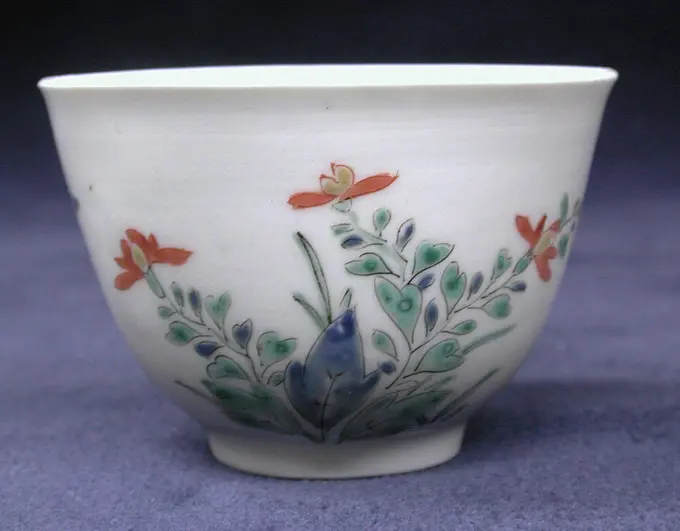
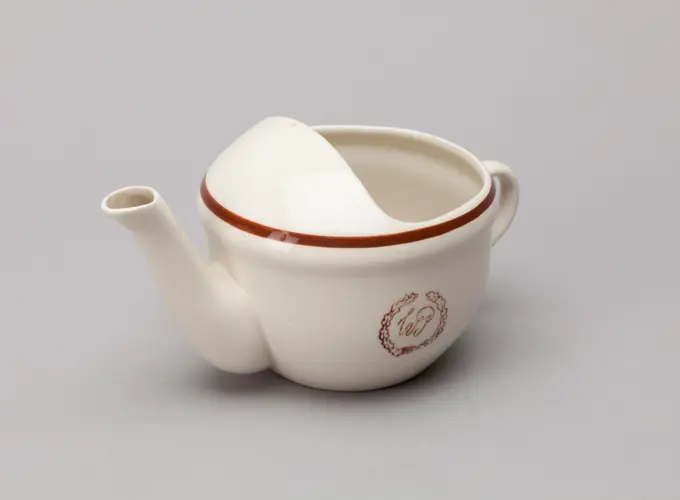
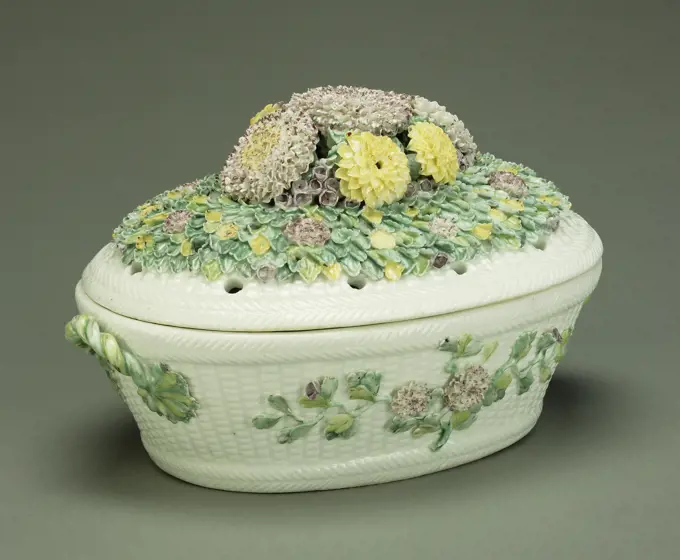
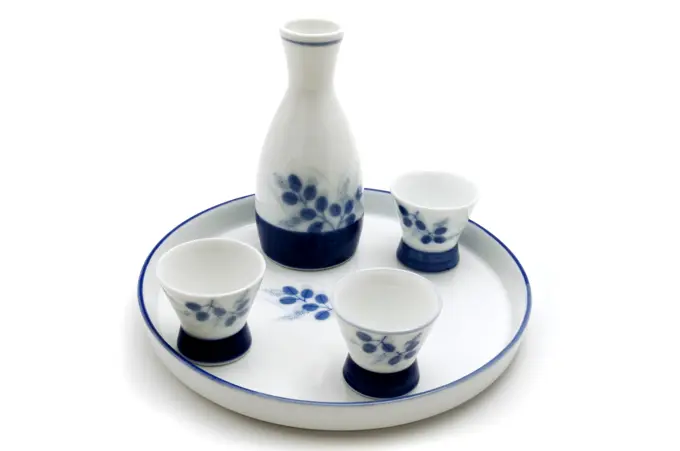
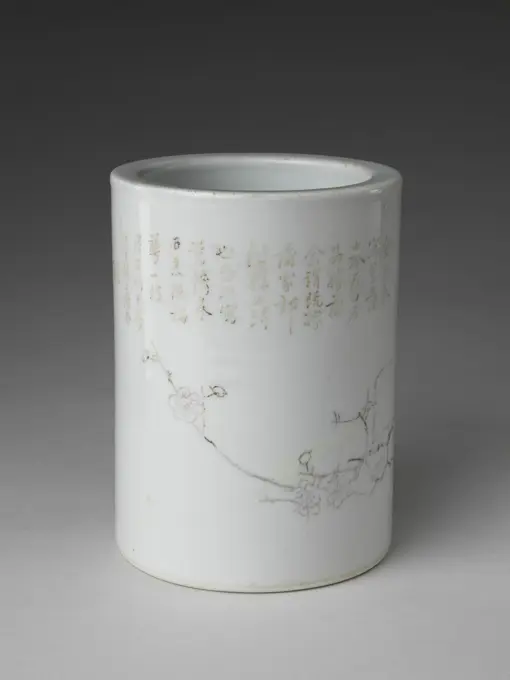
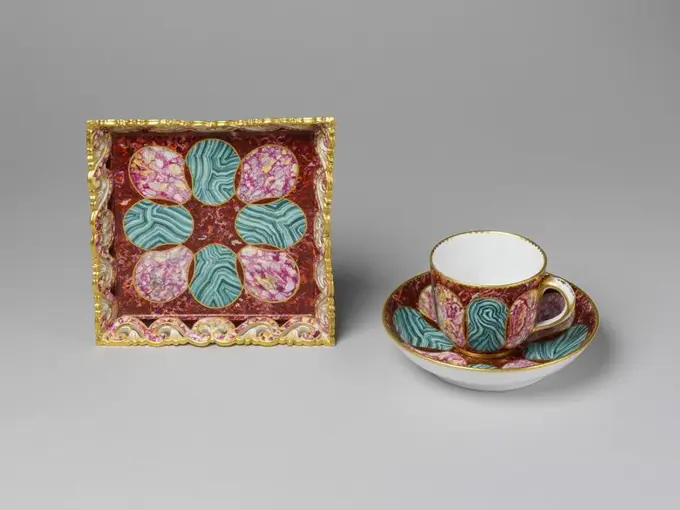
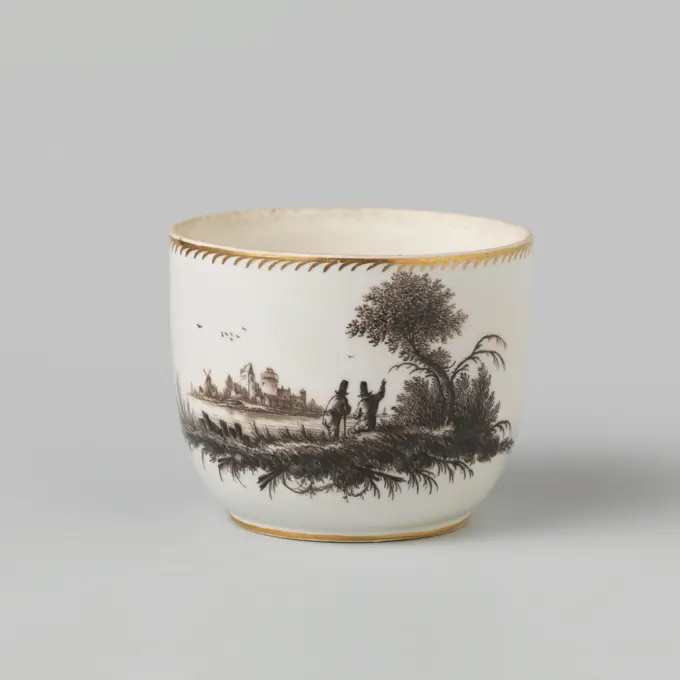
Decorative Porcelain Cups and Saucers

Elegant porcelain cups and saucers with intricate floral and symbolic designs, showcasing traditional Chinese craftsmanship from various periods.

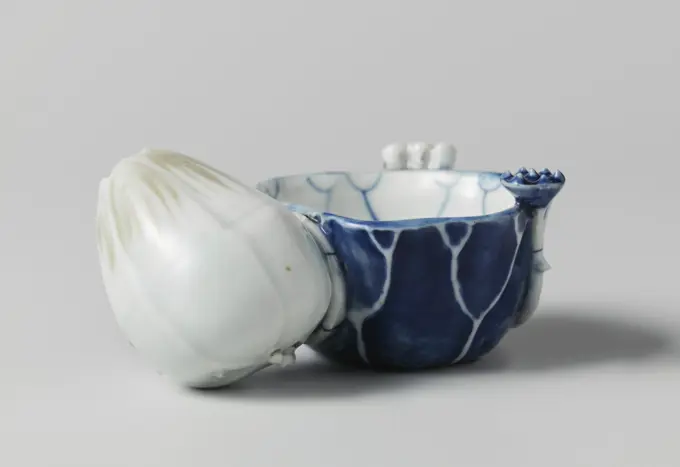
Worcester porcelain lid, Anonymous, 1800 - 1900 The non -fitting lid shows the same decoration, has a white flower bud and a few white leaves and relief as a button. Worcester porcelain The non -fitting lid shows the same decoration, has a white flower bud and a few white leaves and relief as a button. Worcester porcelain
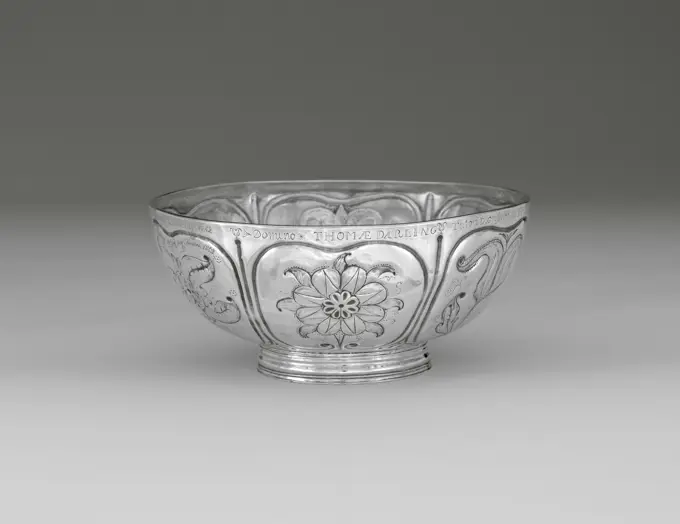
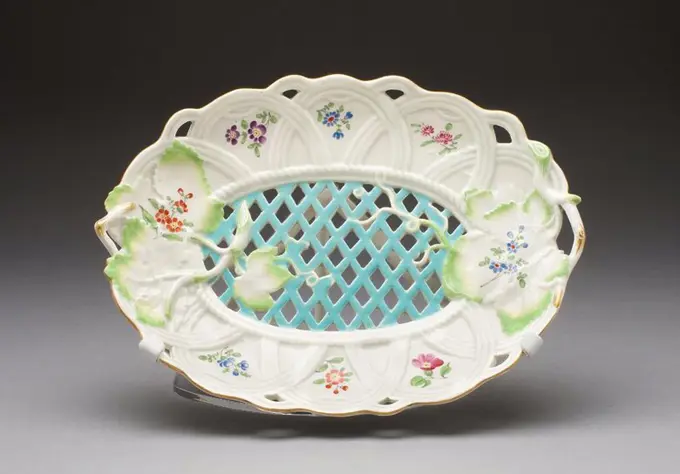
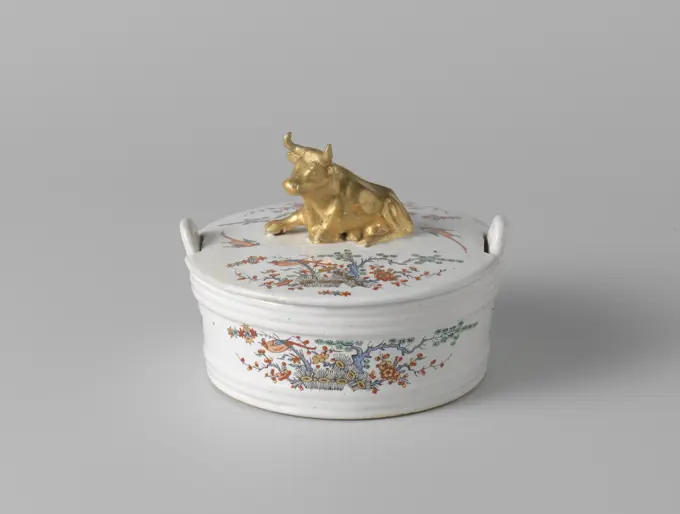
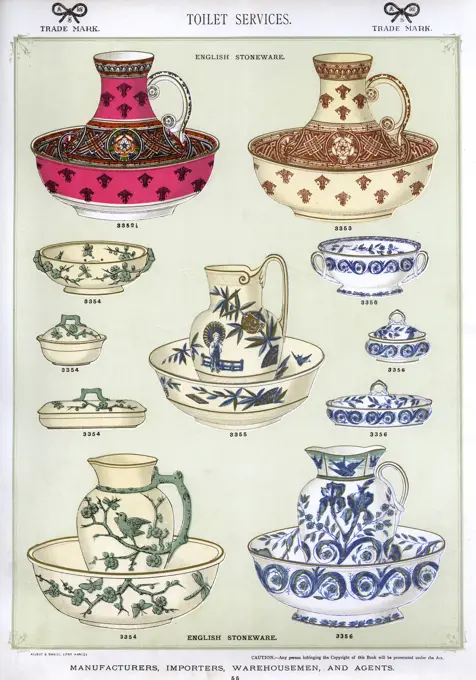
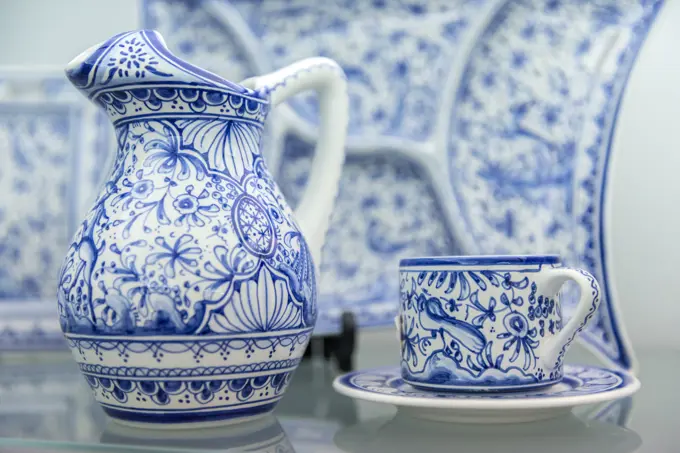
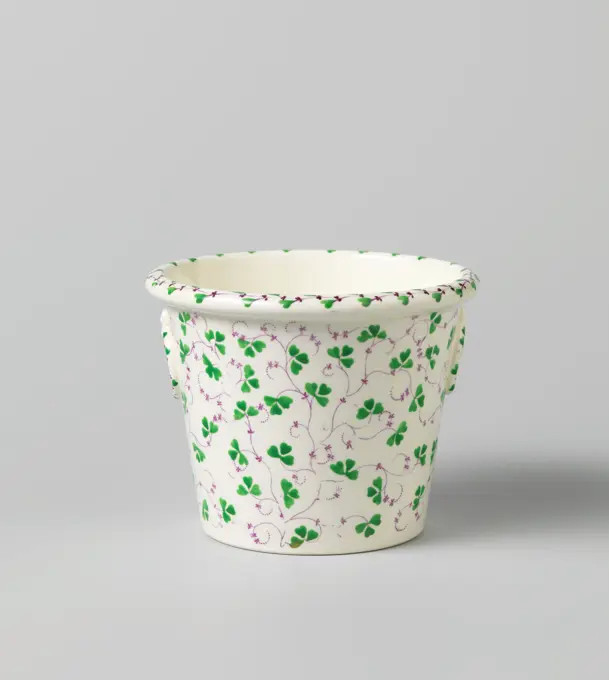
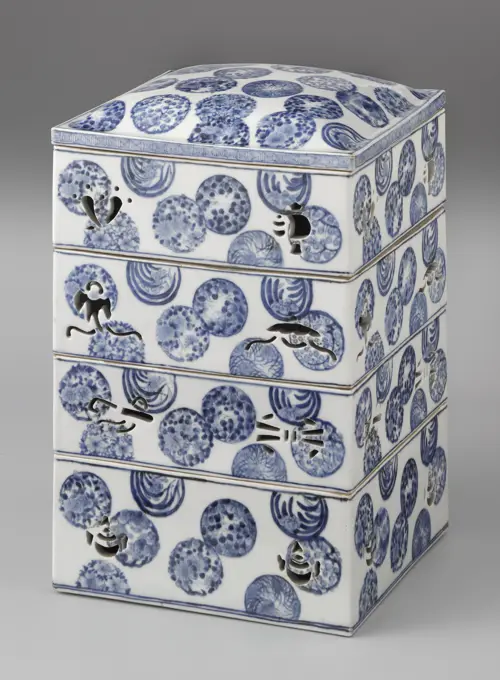
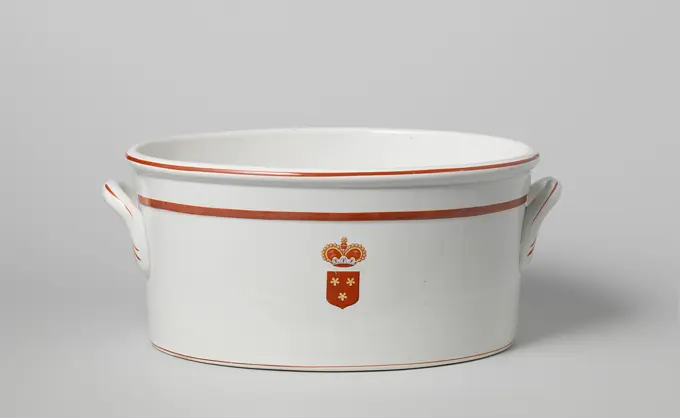
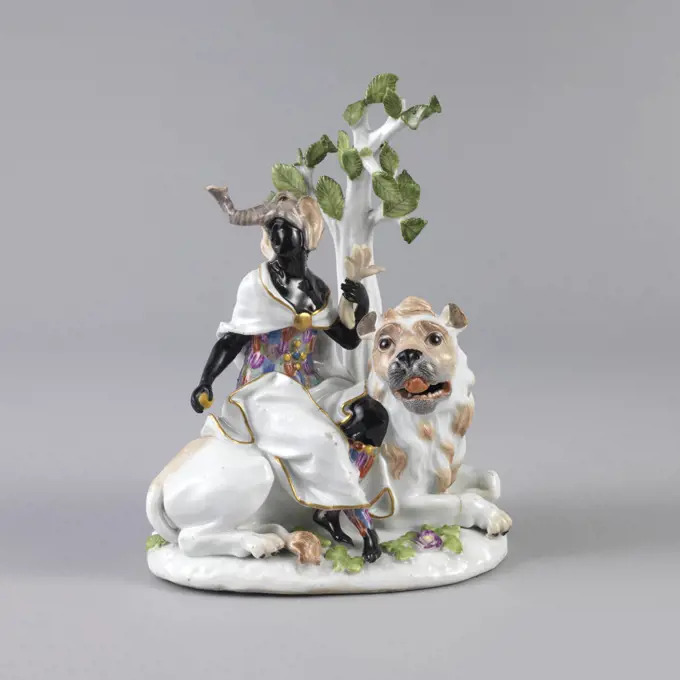
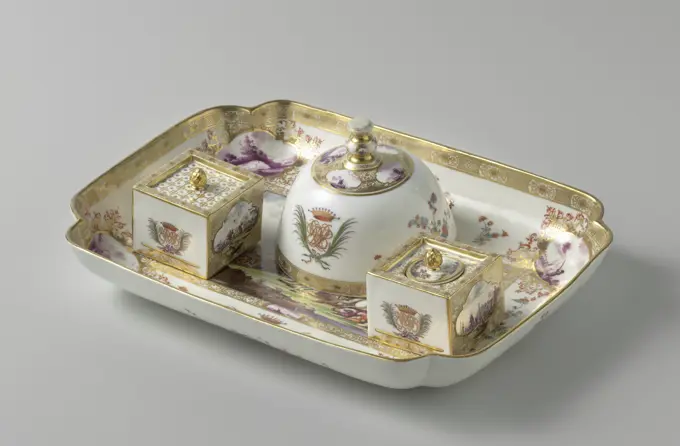
Inkstand with the Arms of Ernst Johann von Biron, Meissener Porzellan Manufaktur, c. 1735 - c. 1740 Porcelain ink set, consisting of a leaf, a table bell, a sand spreader and an ink jar, multi-colored painted with landscapes, including rider fights and naval battles, and the weapon of Ernst Johann Graaf van Biron (1690-1772) and the mirror monogram BGVT of his wife Benigne Gottlieba Trotha, called Von Treyden. Float porcelain Porcelain ink set, consisting of a leaf, a table bell, a sand spreader and an ink jar, multi-colored painted with landscapes, including rider fights and naval battles, and the weapon of Ernst Johann Graaf van Biron (1690-1772) and the mirror monogram BGVT of his wife Benigne Gottlieba Trotha, called Von Treyden. Float porcelainRinse bowl, multi -colored painted with water landscapes in saved four passes in an Oranjerode Fond, Meissener Porzellan Manufaktur, c. 1735 Rinse bowl of painted porcelain. The bowl is covered with an Oranjerode Fond, in which accolade -shaped four passes are saved with (water) landscapes with European figures, sometimes with bales and ships. The rinsing bowl is marked. Float porcelain Rinse bowl of painted porcelain. The bowl is covered with an Oranjerode Fond, in which accolade -shaped four passes are saved with (water) landscapes with European figures, sometimes with bales and ships. The rinsing bowl is marked. Float porcelainBowl.  Maker: Cornelius Kierstede, American, 1675-1757Two Pipe RESTS. Manufacturing former loose ruderecht, c. 1778-1782Hard-Paste PorcelainCooling (ice-cream) dish. Kaiserliche Porzellanmanufaktur in Wien (1744-1864), factoryBowl with pearl chasing dragons on a green ground, anonymous, c. 1680 - c. 1720 Come from porcelain with a spreading edge, painted in under -glaze blue and on the glaze green and eggplant. On the wall two pearl pursuit five -clawy dragons in reserve against a green soil; A golf pattern around the foot in reserve. Marked on the underside with the six-character brand of Kangxi in a double circle. Famle Verte. China porcelain. glaze. cobalt (mineral) painting / vitrification Come from porcelain with a spreading edge, painted in under -glaze blue and on the glaze green and eggplant. On the wall two pearl pursuit five -clawy dragons in reserve against a green soil; A golf pattern around the foot in reserve. Marked on the underside with the six-character brand of Kangxi in a double circle. Famle Verte. China porcelain. glaze. cobalt (mineral) painting / vitrificationCan with a lid with Kakiemon decoration. Koenigliche Porcellain Fabrique, Meissen (1710-1763), factoryCombing tray with lid with multicolored flowers, Petrus Regout, 1882 Bake with lid of earthenware with blue -black transfer decor, painted with moffel colors and Okluster. The rectangular container has rounded corners and a vaulted wall. The soil is divided into three courses by two raised edges. The wall with multicolored flowers and leaves. The excellent top edge of the wall is decorated with an abstract motif under Okluster. The rectangular, curved lid has a strap of multicolored flowers and leaves along the edge. The lid is crowned by a button in the form of curled leaf work. Maastricht earthenware. luster glaze vitrification Bake with lid of earthenware with blue -black transfer decor, painted with moffel colors and Okluster. The rectangular container has rounded corners and a vaulted wall. The soil is divided into three courses by two raised edges. The wall with multicolored flowers and leaves. The excellent top edge of the wall is decorated with an abstract motif under Okluster.Basket of multicolored painted faïence. Basket of faïence. Painted multi-colored.Cup, painted with water landscape with castle / palace. Cup of porcelain, painted multi-colored with water landscape in green and brown with figures in blue, red-brown and purple on the shore and with a large castle / palace across the street with light blue windows and roofs. Golden piping along the edges, the ear is also decorated in gold.Cup and Saucer, c. 1760-70. France, Chantilly, 18th century. Porcelain; overall: 6.1 cm (2 3/8 in.).Cup with flowering plants, Würzburg, c. 1775 - c. 1780  Porcelain head with a C-shaped ear, painted on the glaze in email colors and gold. On the outer wall a continuous representation of grass on which flowering plants (including strawberry, grape vipel, grains) grow. The ear with leaf motifs. Marked on the underside with the W and II. Würzburg porcelain. glaze. gold (metal) painting / gilding / vitrificationDish. Worcester Porcelain Factory; Worcester, England, founded 1751. Date: 1760-1770. Dimensions: 22.1 x 29.7 cm (8 1/16 x 11 11/16 in.). Soft-paste porcelain, polychrome enamels and gilding. Origin: Worcester. Museum: The Chicago Art Institute, Chicago, USA. Author: Worcester Royal Porcelain Company.Botervloot, anonymous, c. 1700 - c. 1725 Round butter fleet of multi-colored painted faience, with Kakiemon decor. The parts are painted in the moffel colors blue, red, green, black and gold with two bound hedges, a flowering tree, a bird on a branch and loose birds. The butter fleet is marked and the butter fleet includes an identical copy with InvNR. BK-1968-199-A. Delft earthenware. tin glaze. Round butter fleet of multi-colored painted faience, with Kakiemon decor. The parts are painted in the moffel colors blue, red, green, black and gold with two bound hedges, a flowering tree, a bird on a branch and loose birds. The butter fleet is marked and the butter fleet includes an identical copy with InvNR. BK-1968-199-A. Delft earthenware. tin glaze.Teabowl 18th century Japanese, for European market The gift of the Hans Syz Collection in 1995 endowed the Museum with nearly three hundred examples of European and Asian ceramics meticulously acquired by Swiss-born collector Dr. Syz (1894-1991) to chart the migration of models and patterns from East to West. Documenting a continuous process of influence and adaptation, these pieces provide a discriminating review of the nuances of stylistic change resulting from three centuries of trade.. Teabowl 208341Box. Culture: German, Meissen. Dimensions: 2 × 3 11/16 in. (5.1 × 9.4 cm). Factory: Meissen Manufactory (German, 1710-present). Date: ca. 1730.Probably once part of a toilet service, this five-lobed box is based on a Japanese lacquer prototype and may have been placed on a matching stand. Museum: Metropolitan Museum of Art, New York, USA.Lotus-Shaped Water Dropper, anonymous, c. 1625 - c. 1649 Porcelain water vessel and dropper in the shape a lotus leaf and button painted in underlaze blue, with a few keys copper red and gray and on the glaze brown. The stem of the lotus forms the handle and a small button the brushrest. The two parts have a joint water channel, which is hidden behind a dark brown glazed water snail. The water vessel is completely covered on the outside with underly glaze blue, in which white veins are saved; The inside is white with underly glaze blue veins. There are five prenes on the underside of the barrel; On the bottom of the Druppelaar Vier. Blue White. China porcelain. glaze. cobalt (mineral). copper (metal) painting / vitrification Porcelain water vessel and dropper in the shape a lotus leaf and button painted in underlaze blue, with a few keys copper red and gray and on the glaze brown. The stem of the lotus forms the handle and a small button the brushrest. The two parts have a joint water Japanese, Cup and Saucer, 19th century, hard-paste porcelain.A drunken drunk in military hospital Chodzież, Porcelite factorySugar bowl with lid from the coffee and tea set 'Saxonia', Meissener Porzellan Manufaktur, c. 1904 Sugar bowl with porcelain lid, painted in blue and gray. The pot has a lid. The pot is part of the coffee and tea set Saxonia. The sugar bowl is marked. Float porcelain. uranium oxide Sugar bowl with porcelain lid, painted in blue and gray. The pot has a lid. The pot is part of the coffee and tea set Saxonia. The sugar bowl is marked. Float porcelain. uranium oxideLidded Bowl; Mennecy Porcelain Manufactory (French, active 1735 - 1773); about 1735; Soft-paste porcelain, polychrome enamel decoration; 27 cm (10 5,8 in.)Sake serving set on a white backgrounda beautiful vintage coffee or tea cupCoffee Can and Saucer 1785-1795 Burslem. Stoneware green jasperware with white relief . Wedgwood Manufactory (Manufacturer)Soap tray, part of a toilet garnish. Soap bin with lid and colander, part of a toilet garnish of pottery. Decorated with red piping and Arenberg Duke arm with crown in red and yellow.Come, part of a toilet garnish. Come, part of a toilet garnish of pottery. Decorated with red piping.Cup With Handle With Two Ladies at a Table Surrounded by Objects. Porcelain earhead, painted on the glaze in blue, red, pink, green, yellow, black and gold. On the outside of the head two seated ladies at a table with a tray with tea sets; The ladies are surrounded by different objects such as tables, vases, tripod, finger lemon, impeller, rollers etc.; Around the edge a bond with napkin interspersed with a flower branch in a cartouche. Family Rose.Brush Holder China dated 1908 The brush pot is painted in ink with a scene of a twisting plum branch growing above and behind a craggy and precariously-tilted rock. A poem, presumably written by the artist who painted the pot, fills the remaining space. A six-character mark written on the bottom indicates that the pot was produced during the Guangxu period at the end of the Qing dynasty:  [Jin Jijin [Jin Nong, 1687-1764 painted the calamus, mentioning [in the inscription the [metaphorical marriage of a lump of rock to the calamus. In my opinion, for marrying the young man of the calamus family, the plum is indispensable. I paint calamus and rocks, too, to set off the plum branch. In the wuwu year [1858 Hu Gongshou (1823-1886) records this in his studio in Shanghai. [seal: Gongshou Made in the Guangxu reign era [1875-1908 of the Great Qing dynasty. View more. Brush Holder. China. dated 1908. Porcelain painted with Small tray, cup and saucer (déjeuner carré). Culture: French, Sèvres. Dimensions: Tray, Overall: 1 1/4 x 5 13/16 in. (3.2 x 14.8 cm);Cup, Overall: 2 5/16 x 3 11/16 x 2 13/16 in. (5.9 x 9.4 x 7.1 cm);Saucer, Overall: 1 1/4 x 5 1/4 in. (3.2 x 13.3 cm). Factory: Sèvres Manufactory (French, 1740-present). Date: ca. 1765-70.The fascination with the decorative and artistic qualities of hardstones (pietre dure) was a strong current in European court and aristocratic taste in the sixteenth through nineteenth centuries, and the Sèvres porcelain manufactory acknowledged this taste by occasionally using imitation hardstone surfaces to decorate its products. One of its most ambitious attempts at reproducing the appearance of hardstones can be seen in this cup and saucer with matching tray, which simulate malachite and jasper on a porphyry ground. A less complex but equally elegant decoration is found on the cup and saucer painted to imitate lapis lazuli. Museum: Metropolitan Museum of Art, New Old cooking pot isolated on white backgroundMiniature Water Bucket with Birds by Lotus Flowers 1425-1435 China. Porcelain with underglaze blue and overglaze enamel decoration .Blue and white Dutch clogs Typical Dutch Delfts blue clogs as souvenir isolated over white background Copyright: xZoonar.com/IvonnexWierinkx 15058598Cup and Saucer. Wedgwood Manufactory; England, founded 1759. Date: 1815-1825. Dimensions: Cup: 7.1 × 12.1 cm (2 13/16 × 4 3/4 in.); diam. 10.2 cm (4 in.); Saucer: H. 3.5 cm (1 3/8 in.); diam. 15.6 cm (6 1/8 in.). Porcelain with monochrome purple and gilding. Origin: Burslem. Museum: The Chicago Art Institute, Chicago, USA.Russian khokhloma Russian wood painting handicraft style and national ornament, Khokhloma, known for its vivid flower patterns, red and gold colors over a black background. First appeared in the second half of the 17th century in the Nizhny Novgorod. Copyright: xZoonar.com/NatalliaxYaumenenkax 4780371Bell-shaped Cup With Two Deer in a Landscape. Bell-shaped head of porcelain, painted on the glaze in blue, red, pink, green, yellow and black. Two deer in a landscape with mushrooms (Lingzhi) and a bird pictured on a flowering prunus. A crack in the edge. Family Rose.Sugar bowl with river face, manufacture Oud-Loosdrecht, c. 1774 - c. 1784 Porcelain sugar bowl. Painted with a river face with two man figures in the foreground and a large tree. All edges in gold. Loosdrecht porcelain Porcelain sugar bowl. Painted with a river face with two man figures in the foreground and a large tree. All edges in gold. Loosdrecht porcelainSnuffbox. Meissen porcelain manufactory ice cream, c. 1760Hard Paste Porcelain, Copper is validImari wareToilet Services, English Stoneware, Plate 55, showing patterned washing bowls, jugs and soap dishes.      Date: circa 1880sPortugal, Evora, hand painted ceramic dishes for sale (Large format sizes available)Flowerpot, anonymous, c. 1770 - c. 1810 pot Cup -shaped flowerpot made of multicolored painted faience fines. The pot is painted with purple, thin branches with green leaves. The edge is thickened and rounded at the top. Two carrying rings are attached to the outer wall and there is a hole in the bottom of the pot. A second flowerpot and four dishes belong to the flowerpot. France earthenware. tin glaze.Square tiered box with cover with medallions, anonymous, c. 1775 - c. 1824 Square stile box (Jubako) with lid of porcelain consisting of four layers with openwork walls in various shapes, painted in under -glaze blue. On the walls, medallions formed from different flower vines (Prunus, Chrysanthemum, peony, orchid, lily, etc.). A meander pattern on the edge of the lid. Blue White. Japan porcelain. glaze. cobalt (mineral) painting / vitrification Square stile box (Jubako) with lid of porcelain consisting of four layers with openwork walls in various shapes, painted in under -glaze blue. On the walls, medallions formed from different flower vines (Prunus, Chrysanthemum, peony, orchid, lily, etc.). A meander pattern on the edge of the lid. Blue White. Japan porcelain. glaze. cobalt (mineral) painting / vitrificationBak, deel van een toilet garnituur.Bij, oval with ears, part of a toilet garnish of pottery. Decorated with red piping and Arenberg Duke arm with crown in red and yellow.Russian khokhloma Old Russian national wooden painting handicraft - Khokhloma. Traditional souvenir from Russia, first appeared in the second half of the 17th in the Nizhny Novgorod. Copyright: xZoonar.com/NatalliaxYaumenenkax 4752390decorationPottery at marketCeramicjars with flower ornaments and birds on cream wooden backgroundTea setCache-Pot with HR monogram;  4Allegorical Figure of 'Africa', Meissen Porcelain Manufactory, German, active from 1710 to the present, Peter Reinicke, German, 1715 - 1768, Gottfried Bernhard Göz, German, 1708 - 1774, hard paste porcelain, vitreous enamel, gold, Female figure, black, with elephant-head headdress, feather tunic and leggings, holding lemon and sheaf of wheat, seated on crouching lion facing right; in background, a tree., Germany, 1775-1825, ceramics, Decorative Arts, figure, figure