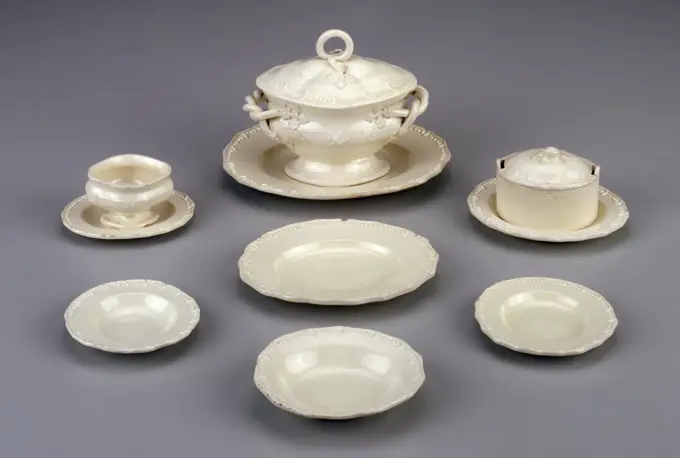
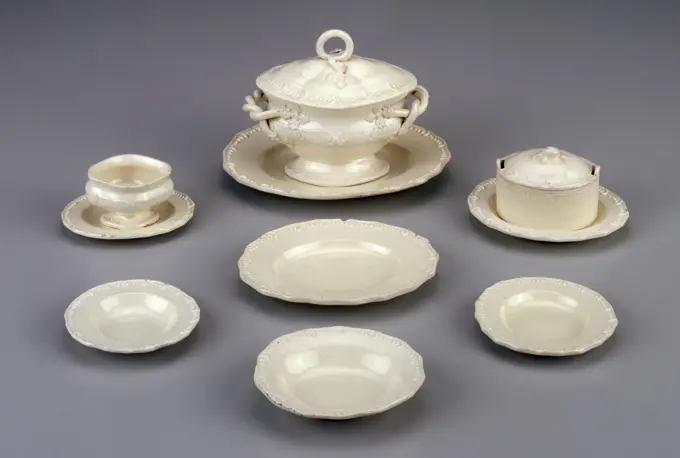
Decorative Porcelain Cups

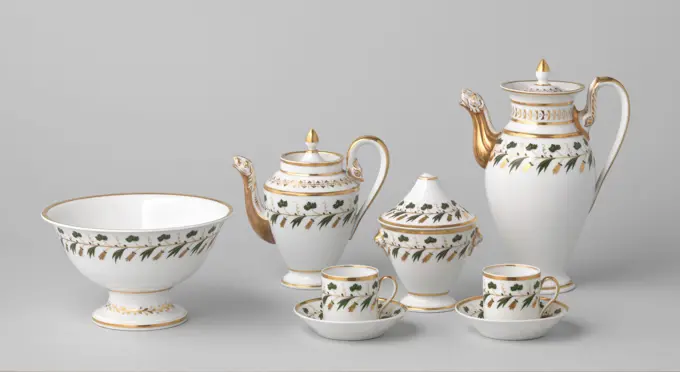
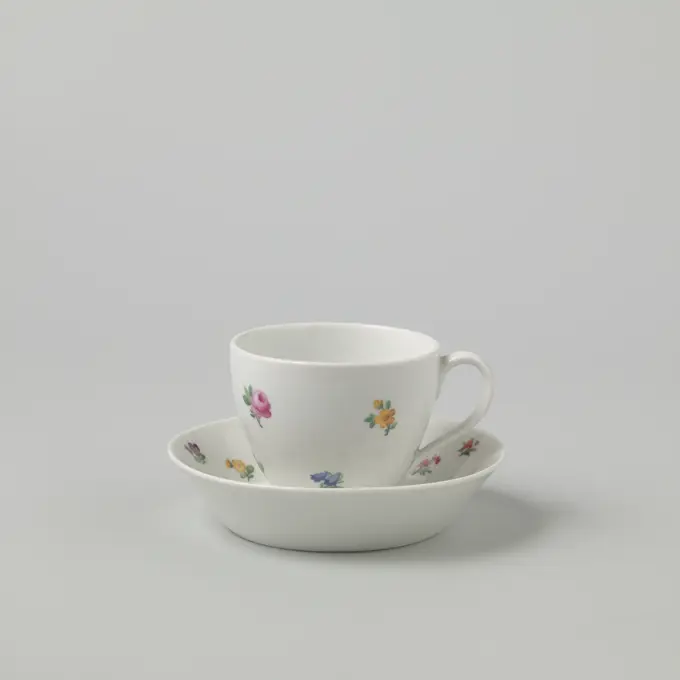
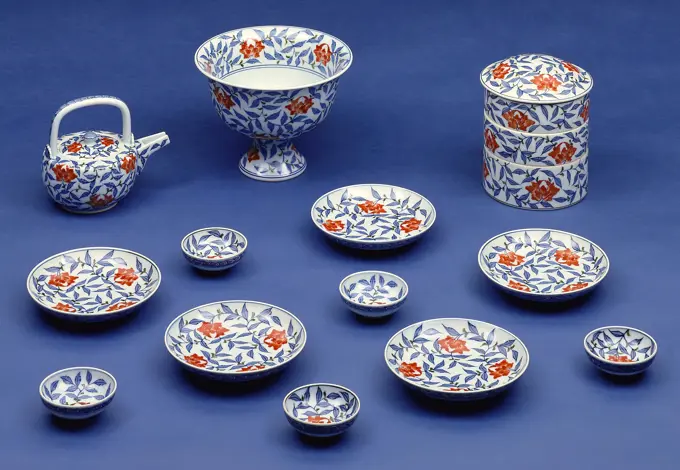
An assortment of elegant porcelain cups and saucers, featuring intricate floral designs, vibrant colors, and gilded elements, reflecting fine craftsmanship.

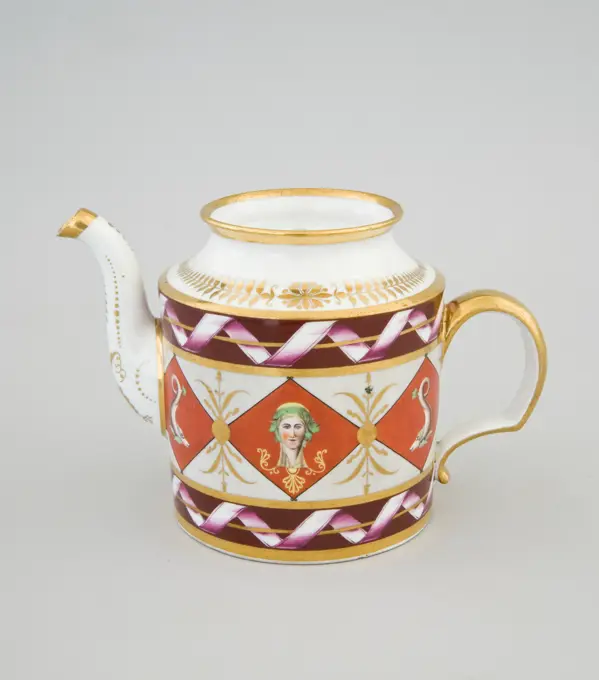
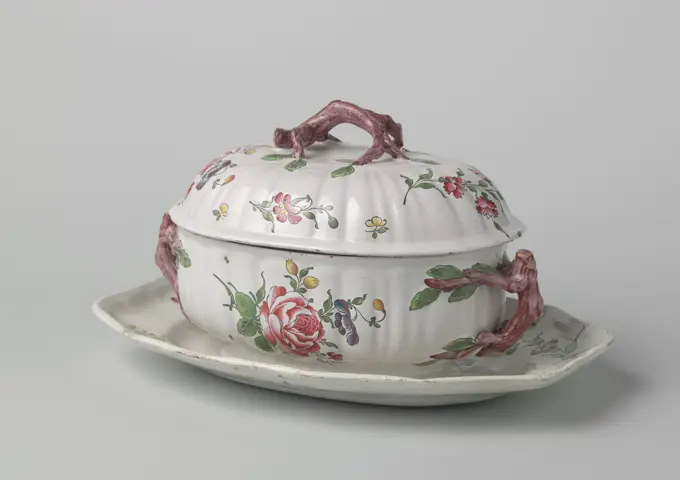
Bell-shaped cup and saucer with antiquities in panels on a ground of floral scrolls, anonymous, c. 1800 - c. 1899 Bell -shaped head and dish of porcelain, painted on the glaze in blue, red, pink, turquoise, yellow, pink and gold. On the flat of the saucer a medallion in a triangle with servetwork, around three cartouches with antiques (fruit bowl with fingercitroen, vases with peacock springs and coral, incense burner, scepter, objects of a scholar etc.) against a background of flower vines. The head with the same decoration. A crack in the edge of the dish. Famle Rose. China porcelain. glaze. gold (metal) painting / gilding / vitrification Bell -shaped head and dish of porcelain, painted on the glaze in blue, red, pink, turquoise, yellow, pink and gold. On the flat of the saucer a medallion in a triangle with servetwork, around three cartouches with antiques (fruit bowl with fingercitroen, vases with peacock springs and coral, incense burner, scepter, objects of a scholar etc.) agains
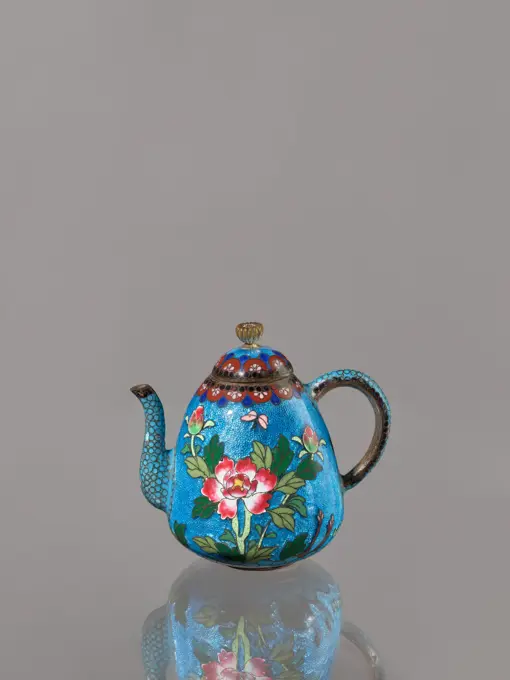
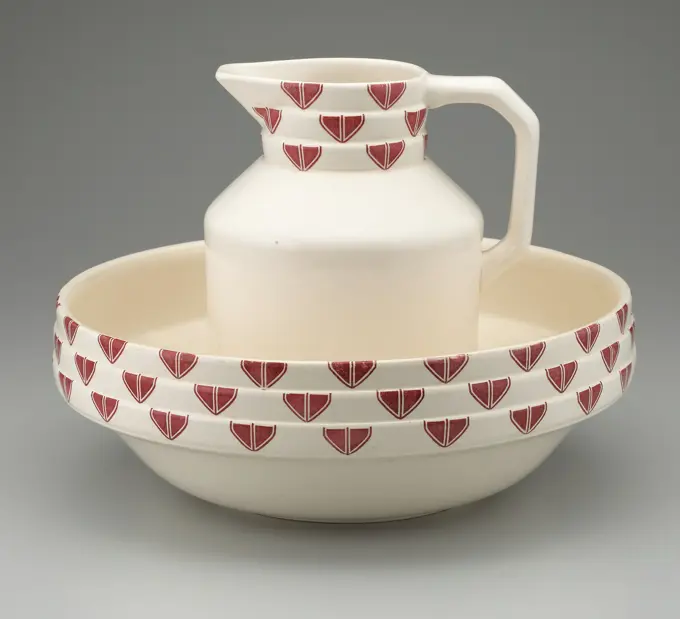
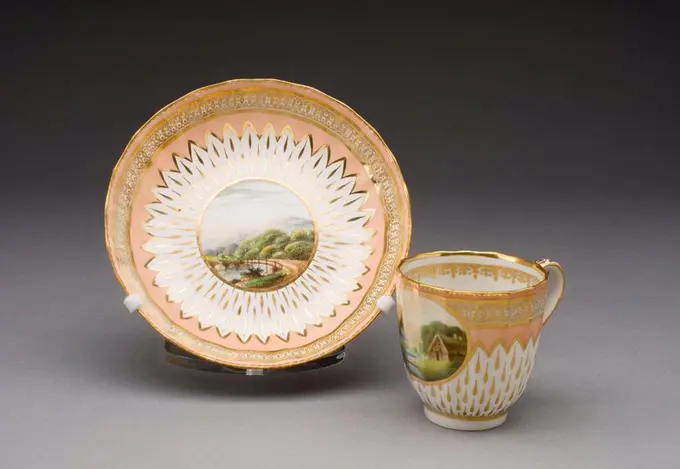
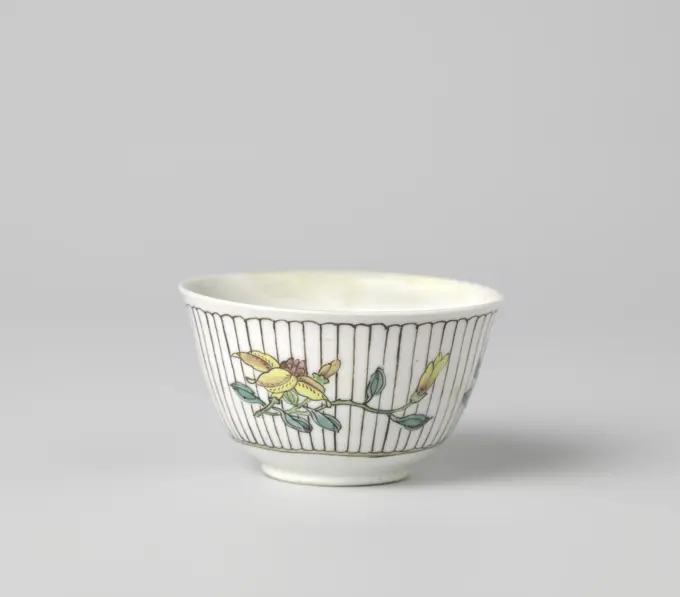
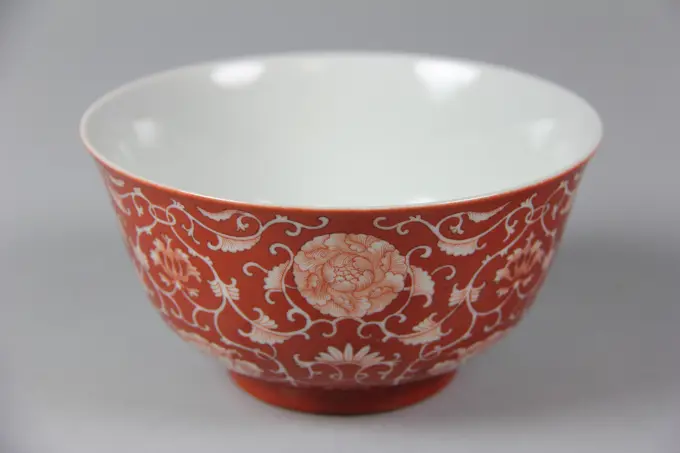
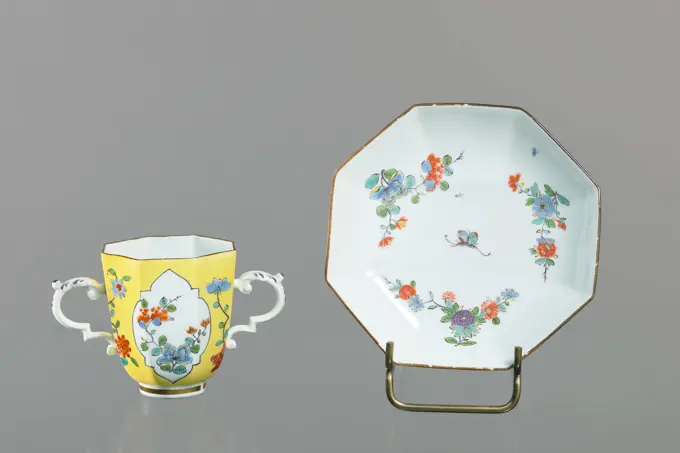
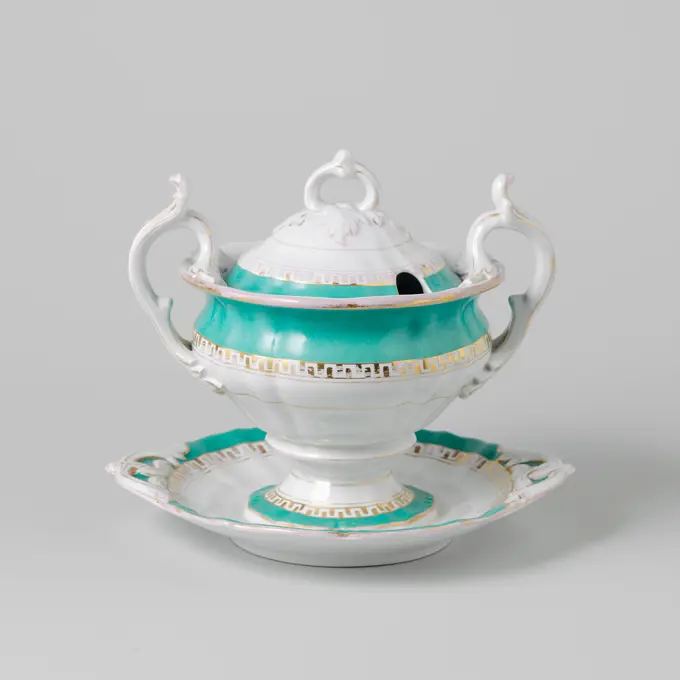
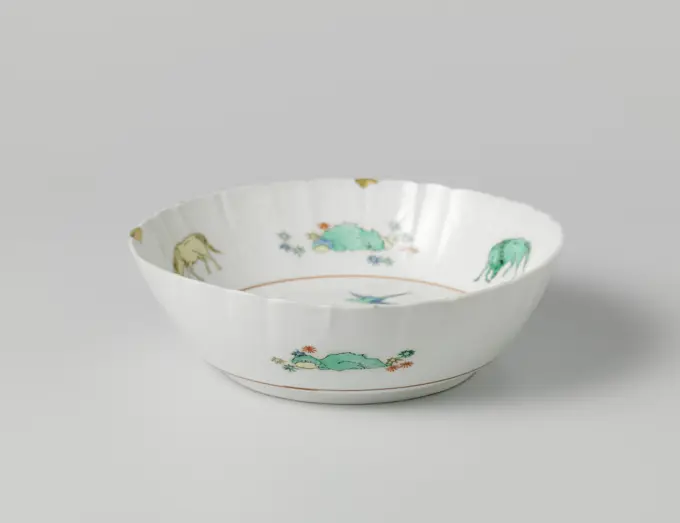
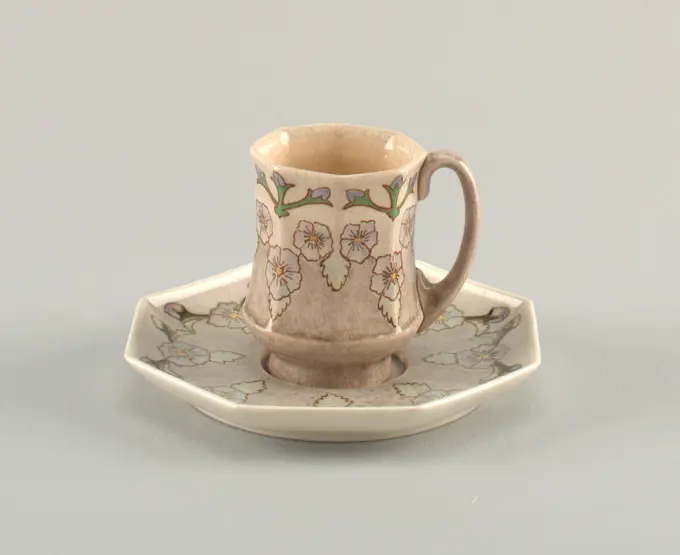
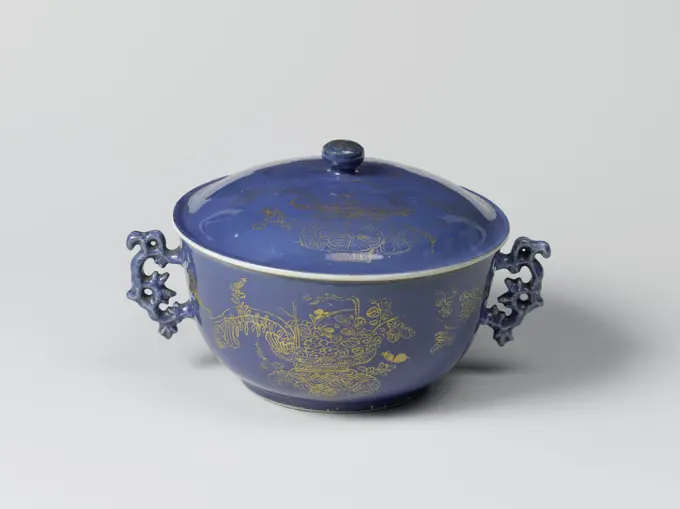
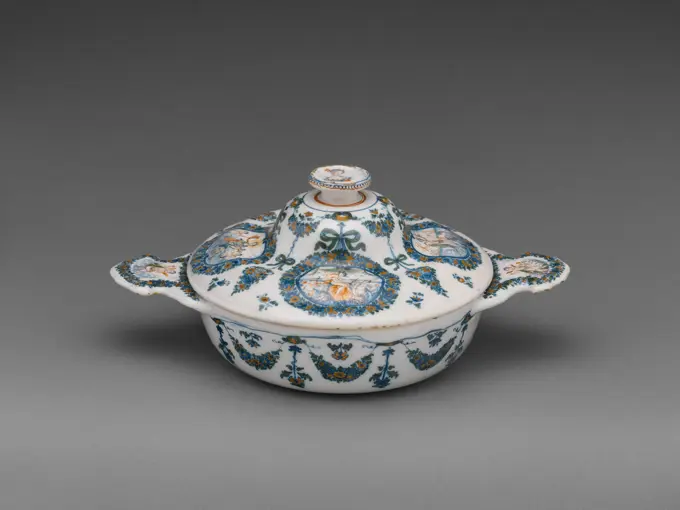
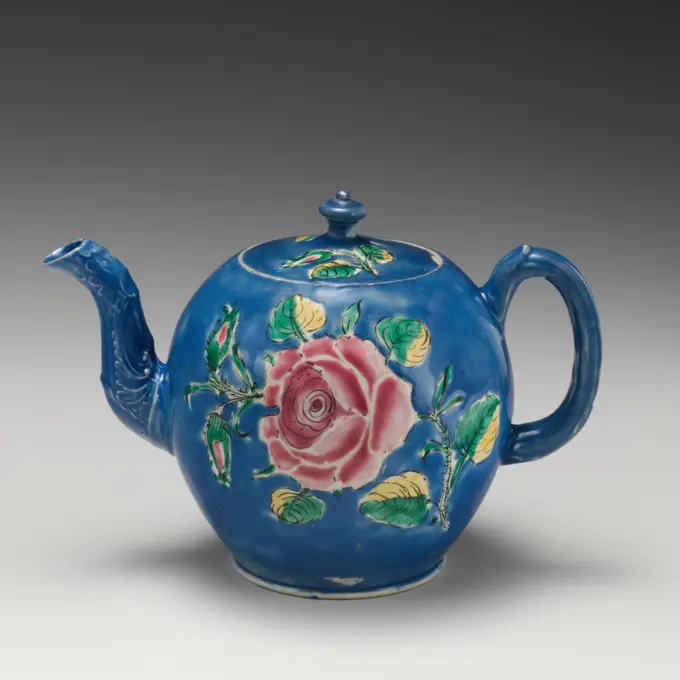
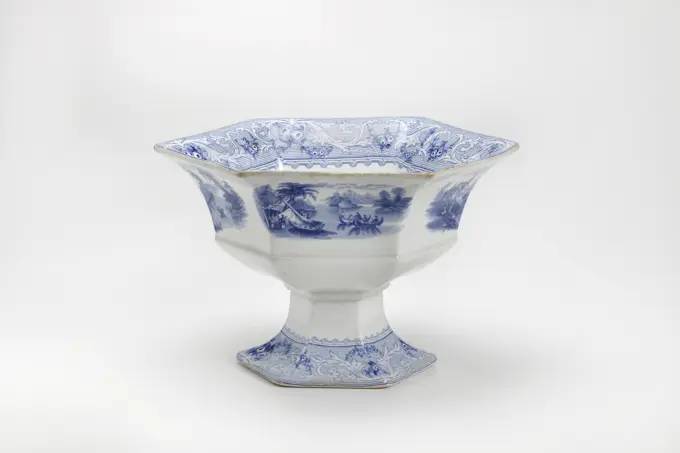
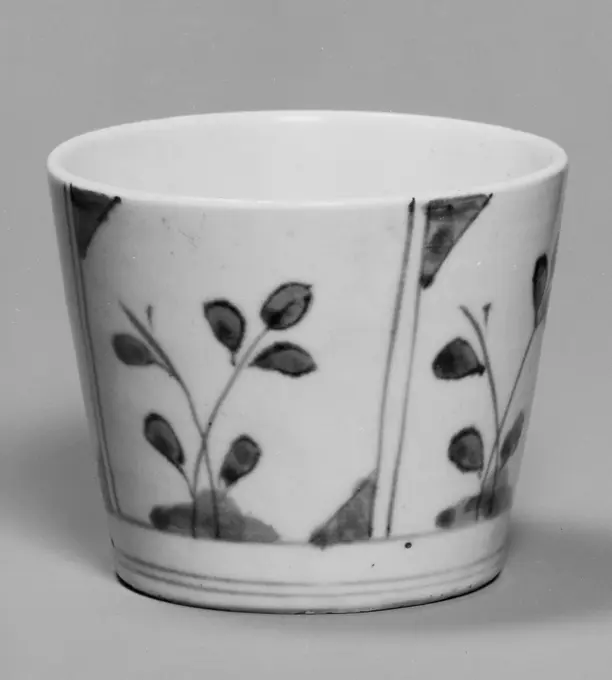
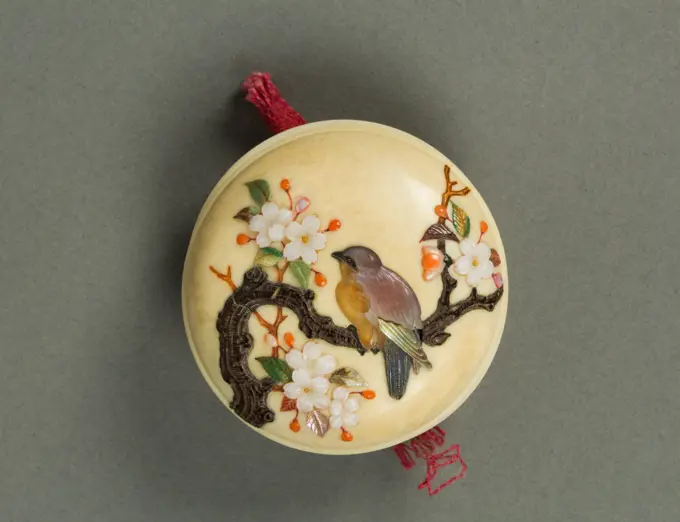
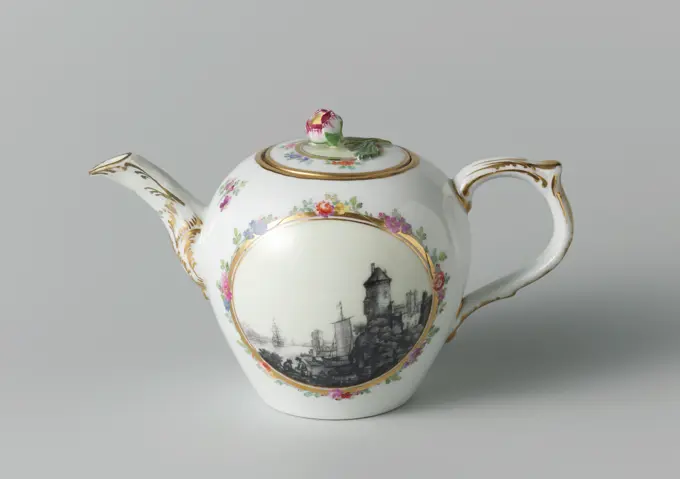
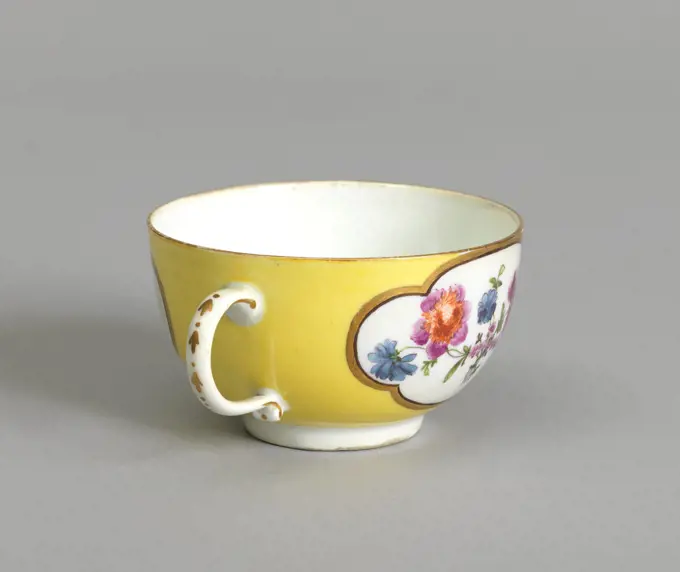
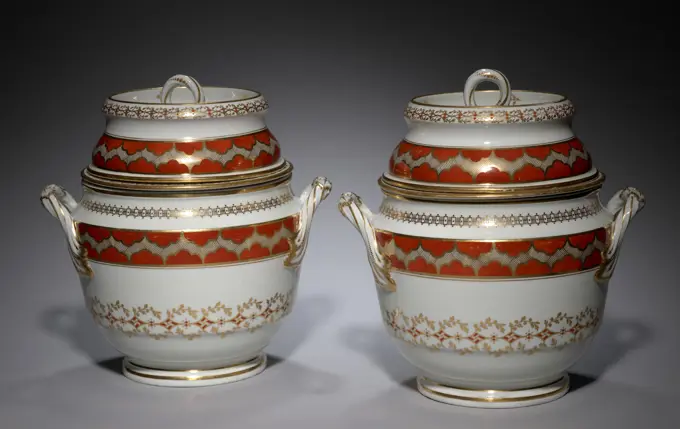
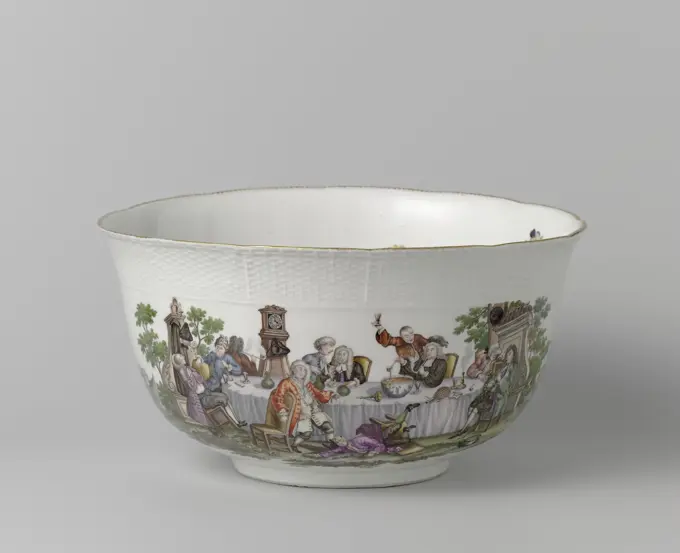
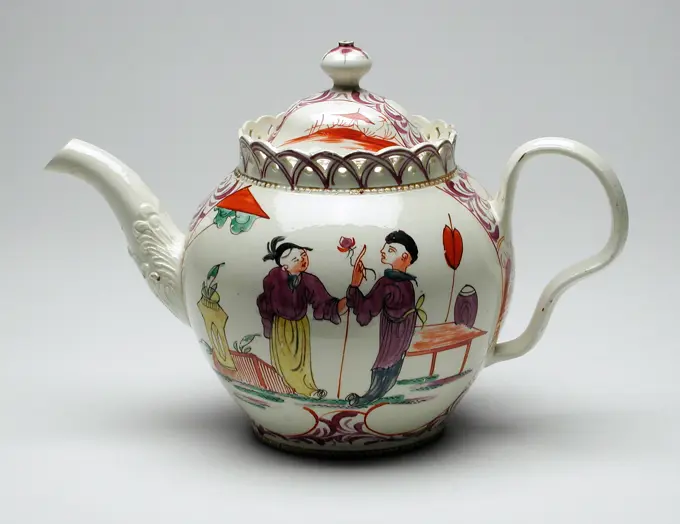
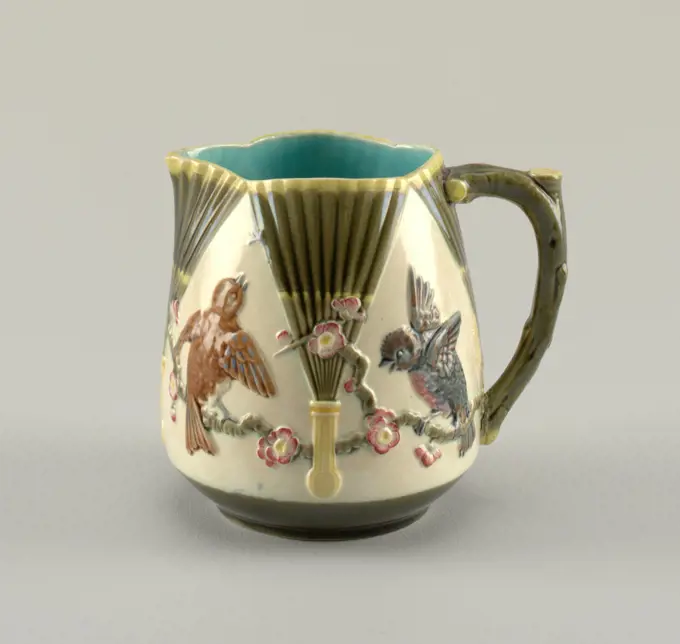
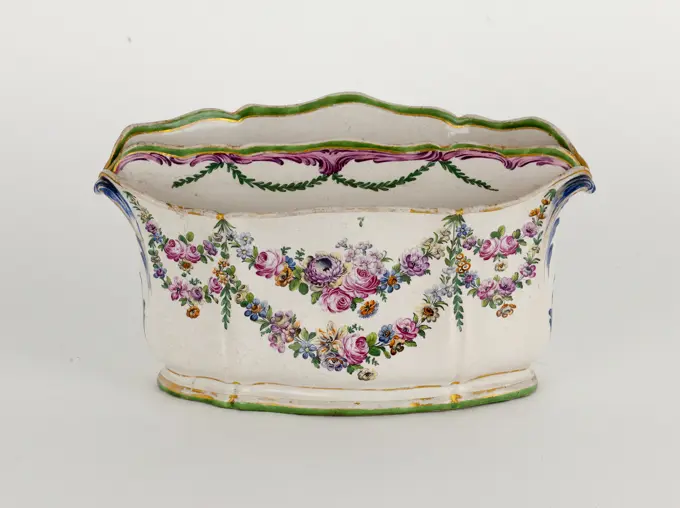
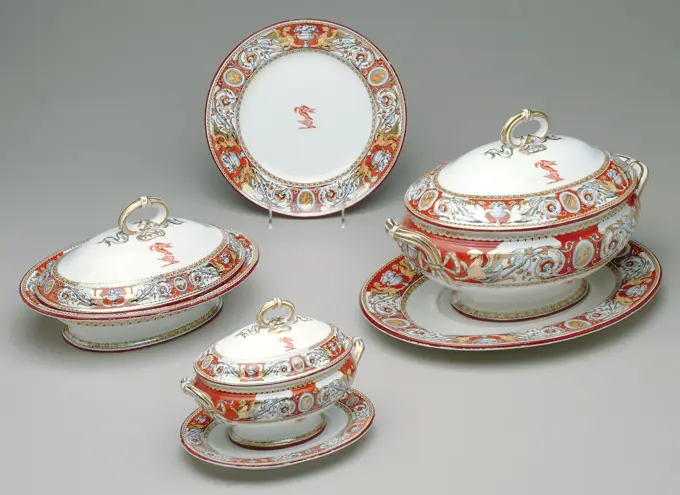
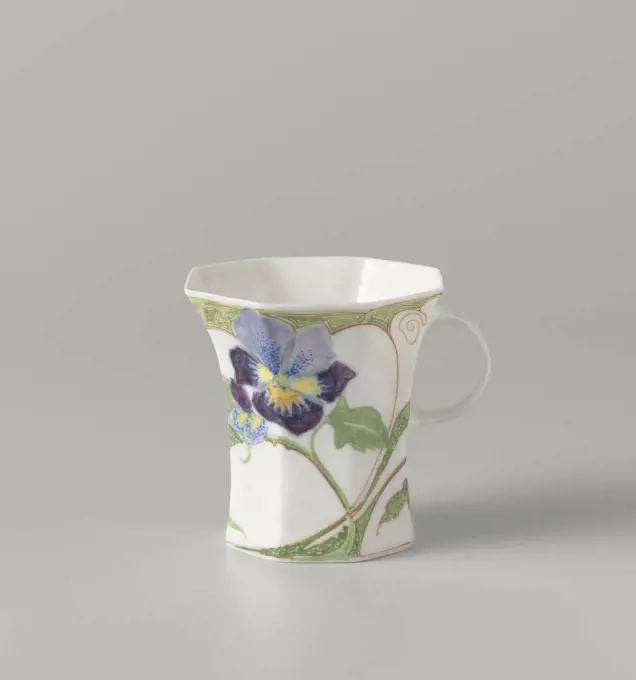
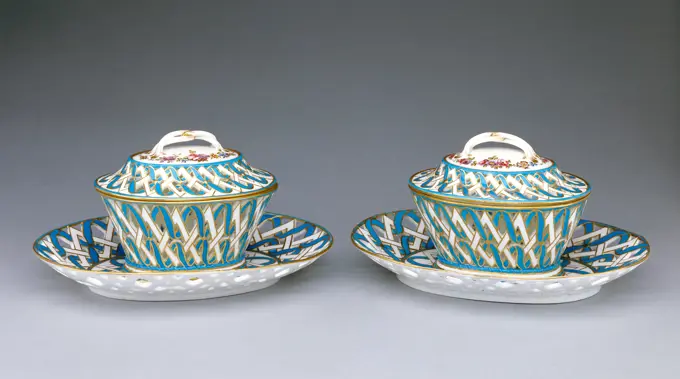
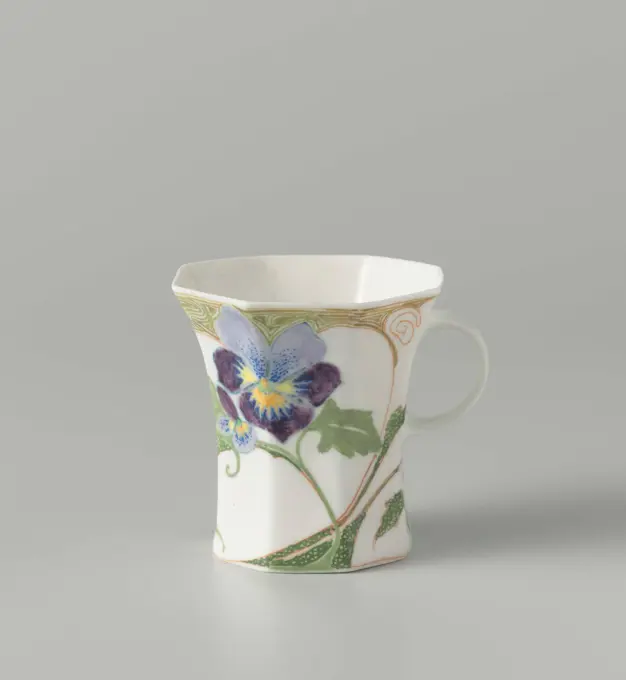
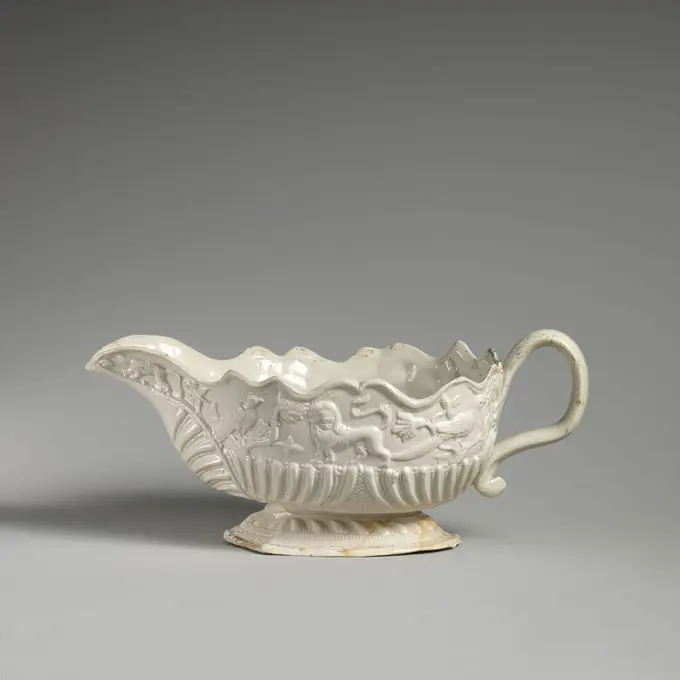
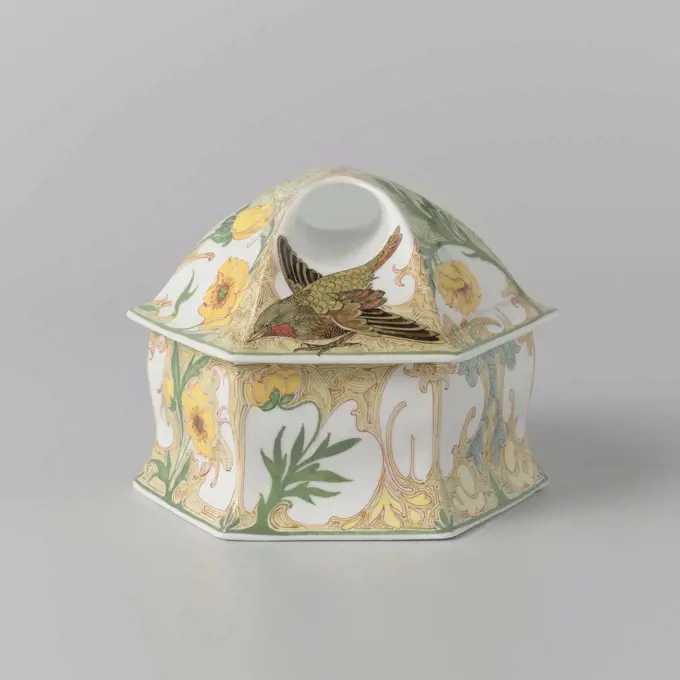
Kettle KorzecTeapot (kyûu) with a cover;  around 1910-1920 (1910-00-00-1920-00-00);Ewer, c. 1902, Josef Maria Olbrich; Manufacturer: Villeroy & Boch, Audun-le-Tiche, Germany, est. 1748, 11 1/2 x 9 1/2 in. (29.21 x 24.13 cm) (at handles), Glazed earthenware with transfer printed decoration, Germany, Art NouveauMeissen Porcelain Manufactory, Cup and Saucer, c. 1740, hard-paste porcelain.Cup and Saucer. Derby Porcelain Manufactory; England, 1750-1848. Date: 1780-1795. Dimensions: Cup: 6.3 × 6.7 cm (2 1/2 × 2 5/8 in.). Soft-paste porcelain, polychrome enamels and gilding. Origin: Derby. Museum: The Chicago Art Institute, Chicago, USA.Bell-shaped cup with three flower sprays on a vertically striped ground, anonymous, c. 1725 - c. 1749 Bell -shaped head of porcelain, painted on the glaze in blue, red, pink, green, yellow, black and gold. On the outside three flower branches (peony, magnolia, iris) on a vertical striped soil; A stylized flower on the bottom. Rand restored. Famle Rose. China porcelain. glaze. gold (metal) painting / gilding / vitrification Bell -shaped head of porcelain, painted on the glaze in blue, red, pink, green, yellow, black and gold. On the outside three flower branches (peony, magnolia, iris) on a vertical striped soil; A stylized flower on the bottom. Rand restored. Famle Rose. China porcelain. glaze. gold (metal) painting / gilding / vitrification. Manufacturing former loose ruderecht, c. 1774-1778 Tea Caddy: c. 1782Hard-suited porcelainBowl China. Bowl. China. Porcelain painted in overglaze red enamel. Qing dynasty (1644-1911), Daoguang mark and period (1821-50). CeramicsFlowerpot and two underpotes of porcelain, manufacture Oud -Loosdrecht, 1774 - 1784 Flowerpot and 2 underpotes of porcelain. Multicolored painted with landscapes, on the flowerpot with birds, and below and above golden tires. Loosdrecht porcelain Flowerpot and 2 underpotes of porcelain. Multicolored painted with landscapes, on the flowerpot with birds, and below and above golden tires. Loosdrecht porcelainBowl, anonymous, c. 1400 - c. 1599 Come from stoneware, painted on the glaze in red, green and gold. On the outer wall a band with flower vines; Above the foot a band with leaf motifs. The inner wall with a tire elongated leaf motifs containing flowers or servetwork. On the messengers a band with leaf vines. Vietnam stoneware. glaze. gold (metal) painting / gilding / vitrification Come from stoneware, painted on the glaze in red, green and gold. On the outer wall a band with flower vines; Above the foot a band with leaf motifs. The inner wall with a tire elongated leaf motifs containing flowers or servetwork. On the messengers a band with leaf vines. Vietnam stoneware. glaze. gold (metal) painting / gilding / vitrificationEight-sided saucer (Fondporzellan). Koenigliche Porcellain Fabrique, Meissen (1710-1763), factoryTerrine, at a fixed lower part, with a green edge and golden Greek band. Terrine of pottery at solid understaffe, round, scalloped, with green edge and golden Greek band.Lid, at a fixed underfacy, with a green edge and golden Greek band. Pottery lid, round, scalloped, with green border and golden Greek tie. The button in the form of leaf RINKS.Bowl with floral scrolls in relief, horses and flowering plants, anonymous, c. 1700 - c. 1799 Come from porcelain with a ribbed wall and a scalloped edge. On the inner wall a relief decoration of flower ranks. Alternately a rock and a horse. On the bottom a pain and prunus branch with a rock and a flying bird. A rock three times on the outside wall. Two old labels on the bottom with 'Gewerbemuseum Zurich/ No. 4737 'and' Collection Westendorp/ 104 '. Three gold break repairs in the edge. Arita, Kakiemon style. Japan porcelain. glaze. painting / vitrification Come from porcelain with a ribbed wall and a scalloped edge. On the inner wall a relief decoration of flower ranks. Alternately a rock and a horse. On the bottom a pain and prunus branch with a rock and a flying bird. A rock three times on the outside wall. Two old labels on the bottom with 'Gewerbemuseum Zurich/ No. 4737 'and' Collection Westendorp/ 104 '. Three gold break repairs in the edge. Arita, Kakiemon style. Japan porcelainSugar bowl, the ribs alternately blue and white, separated by golden piping, c. 1775 - c. 1800  Sugar Bowl. Ribbed, the edges are serrated. The ribs separated by vertical gold piping. The Cavities Dark Blue (Blue du Roi), the ribs white, on which a decoration of leaf work and braid tire. The edges gilded, gilding inwards. Marked in underlaze blue. With accompanying lid (BK-NM-I-Z-B-2). Worcester earthenware vitrificationPear-Shaped Milk Jug with Stylized Flowers on a Feather or Scale Ground and Scrolls. Porcelain pear-shaped milk jug with spout and J-shaped ear, painted on the glaze in red and gold. Three stylized flowers on the belly against a ground with feather or scaffolding; to the foot tendrils; Bank on the ear and the spout. Lid with the same decoration. Lid has been broken; Lid knob broken off, apart from two modeled leaves. Part of a tea service. European forms with email colors.Cup and Saucer Cup And Saucer; Designed by Jan Willem Mijnlief (1862 - 1937); Manufactured by Holland Pottery, Utrecht; Netherlands; earthenware. Bowl of porcelain with a spreading edge, painted in underglaze blue. The outer wall is divided into four compartments with two people in an interior: two Chinese ladies (long likes) with a man in a room and two Chinese men sitting in a room, one with a range. Thereafter trees at a rock (banana plant, pine). Three guys playing on the bottom (oceans) in a landscape. The inside and outer edge with napkin interrupted by cartouches. On the inside filled with peach branches, the outside with lucky objects (wheel, parasol, shell). Marked on the underside with the six character mark of Emperor Kangxi in a double circle. Blue White.Tureen, anonymous, c. 1700 - c. 1724 Come with a lid of porcelain with two standing ears with curl work, completely covered with underlaze Bleu Poudré (powder blue) and painted with gold on the glaze. On the bowl a flower basket and a flower vase (lotus, blue rain, aster, peony). The lid with the same decoration. Bleu Poudré with gold. China porcelain. glaze. cobalt (mineral). gold (metal) painting / gilding / vitrification Come with a lid of porcelain with two standing ears with curl work, completely covered with underlaze Bleu Poudré (powder blue) and painted with gold on the glaze. On the bowl a flower basket and a flower vase (lotus, blue rain, aster, peony). The lid with the same decoration. Bleu Poudré with gold. China porcelain. glaze. cobalt (mineral). gold (metal) painting / gilding / vitrificationDish with cover (Écuelle) ca. 1745-50 Olérys Factory Faience, or tin-glazed and enameled earthenware, first emerged in France during the sixteenth century, reaching widespread usage among elite patrons during the seventeenth and early eighteenth centuries, prior to the establishment of soft-paste porcelain factories. Although characterized as more provincial in style than porcelain, French faience was used at the court of Louis XIV as part of elaborate meals and displays, with large-scale vessels incorporated into the Baroque garden designs of Versailles. Earlier examples of French faience attest to the strong influence of maiolica artists from Italy. Later works demonstrate the ways in which cities such as Nevers, Rouen, Lyon, Moustiers, and Marseille developed innovative vessel shapes and decorative motifs prized among collectors throughout Europe. While faience can be created from a wide mixture of clays, it is foremost distinguished by the milky opaque white color achieved by the aSmall teapot (kyusu) with lid. unknown, craftsman. Sleeper, belonging to a porcelain tableware decorated with a swapped ribbon motif in purple and gold with green leafy branches, flower bouquets and scattered flower branches. Edges light corrugated, with decoration in gold with purple leaf motif. Since green crossed leaf motif. Signature: M.O.L. and Amstel. Note: Broken through middle.Teapot ca. 1765 British, Staffordshire Listen to experts illuminate this artwork's story Listen Play or pause #407. Teapots Supported by Bloomberg Philanthropies We're sorry, the transcript for this audio track is not available at this time. We are working to make it available as soon as possible.. Teapot. British, Staffordshire. ca. 1765. Salt-glazed stoneware with enamel decoration. Ceramics-PotteryBowl, anonymous, c. 1700 Come from porcelain with modeled wall and lobed edge, painted on the glaze in blue, red, green, yellow, eggplant, black and gold. The wall is divided into four courses with narrative scenes: a scholar behind a desk on a pavilion with two servants, another man addresses him; Three warriors on a terrace, one the sword raised for a begging man kneeling on the floor; Three people in an interior; The fourth with a sleeping man behind a desk and a man and woman on the steps of the terrace. On the bottom a sitting man with a book and jugs near rocks (perhaps Li Taibai, Chinese poet from the eighth century); On the edge a geomtric pattern with flowers interspersed with four cartouches with flower branches (Lotus, chrysanthemum, prunus, peony). Wand has been broken. Famle Verte. China porcelain. glaze. cobalt (mineral). gold (metal) painting / gilding / vitrification Come from porcelain with modeled wall and lobed edge, painted on the glaze in blue, red, green, yellow, Botersloot lid, painted with river landscapes with figures and monuments. Butterfish from porcelain. Shell-shaped ears, fruit with leaf on the lid as a button. On both sides and on the lid painted with river landscapes with figures and monuments in beet red. Ornament in gold on the ears and lid bud. Golden trim along mouth and lid edge.Butter fleet, painted with river landscapes with figures and monuments, manufacture Oud-Loosdrecht, c. 1774 - c. 1778 Porcelain butter fleet. Shell -shaped ears, fruit with leaf on the lid as a button. On both sides and on the lid painted with river landscapes with figures and monuments in beet red. Ornament in gold on the ears and lid button. Golden trims along mouth and lid edge. Loosdrecht porcelain Porcelain butter fleet. Shell -shaped ears, fruit with leaf on the lid as a button. On both sides and on the lid painted with river landscapes with figures and monuments in beet red. Ornament in gold on the ears and lid button. Golden trims along mouth and lid edge. Loosdrecht porcelainService with foliate scrolls, La Courtille Parijs, c. 1800 - c. 1824 Porcelain service, painted on the glaze in green, black and gold. The service consists of 28 parts with a coffee pot, teapot, bowl, sugar bowl and twelve cups and saucers. Decorated with a band with vines on one side and flowers and leaves on the other. Marked on the underside with the crossed arrows. Paris porcelain. glaze. gold (metal) painting / gilding / vitrification Porcelain service, painted on the glaze in green, black and gold. The service consists of 28 parts with a coffee pot, teapot, bowl, sugar bowl and twelve cups and saucers. Decorated with a band with vines on one side and flowers and leaves on the other. Marked on the underside with the crossed arrows. Paris porcelain. glaze. gold (metal) painting / gilding / vitrificationMukozuke. Square bowl of pottery with tining. Decorated on the outside with flower, bird and insect motifs. At the bottom and top closed by a blue stripe. On the inside on each of the sides a small plant motif.Cup and saucer (gobelet à lait et soucoupe) ca. 1752 Vincennes Manufactory French. Cup and saucer (gobelet à lait et soucoupe) 200865Cup and Saucer (gobelet litron), 2nd size. Sèvres Manufactory, manufacturer (French, founded 1756) Decoration by the painter Niquet (French, active Sèvres, France 1764 - 1792) about 1786 Jewel-like ornamentation was popular during the late eighteenth century. It is seen here in the blue borders that are decorated with delicate gilding and small medallions painted to look like veined gemstones surrounded by pearls. The elegant pattern against the white is made up of floral garlands, acanthus-leaf swags, and scrolls laced around vases of flowers.. Bell-shaped tea cup of porcelain, painted on the glaze in red, pink, green, yellow, purple, brown and black. On the outside two medallions with a lying Venus and two cupids in an interior. Two flower branches between the medallions. European performance in email colors.Tea pot with flowering plants and diaper patterns, anonymous, c. 1725 - c. 1749 Porcelain teapot with a curved spout and C-shaped ear, painted on the glaze in blue, red, pink, green, turquoise, eggplant and black. On the wall twice a flowering plant (peony). On the shoulder a tire with servetwork interrupted by flower branches in cartouches. The spout and the ear with flower vines. The lid with the same decoration. Famle Rose. China porcelain. glaze. painting / vitrification Porcelain teapot with a curved spout and C-shaped ear, painted on the glaze in blue, red, pink, green, turquoise, eggplant and black. On the wall twice a flowering plant (peony). On the shoulder a tire with servetwork interrupted by flower branches in cartouches. The spout and the ear with flower vines. The lid with the same decoration. Famle Rose. China porcelain. glaze. painting / vitrificationBell-Shaped Cup Model LED in The Shape of a Flower. Bell-shaped head of porcelain with scalloped edge, painted on the glaze with blue, red, pink, green and gold. The wall is modeled in the form of three rows of flower leaves; a flower branch on the bottom; the inner wall with ingrangled lines and three flower branches; A flower on the bottom. Family Rose.Mortar ca. 1735-40 Chantilly. Mortar 200819Compote - Scene among the Thousand Isles / Indian Scene / Village of Cedars, River St. Lawrence D'après Francis Morley & Company, 1850-1858Teacup. Korzec (manufaktura porcelany ; 1790-1832), factoryJar with cover 1830 Japan. Jar with cover. Japan. 1830. Porcelain decorated in red and gold (Koto ware). Edo period (1615-1868). CeramicsCups, Glazed porcelain, A pair of octagon cups with a thin red border around the lip of the cup both painted with a birds in an outdoor scene., Japan, late 18th-early 19th century, ceramics, Decorative Arts, CupsBowl - Portneuf potteryWine Pot.Cylindrical Covered Jar With Flower Heads in reserve. Cylindrical lid pot of porcelain, painted in underglaze blue. Covered with a 'crackled ice' blue ground with plum blossoms in reserve. A crack in the wall. Blue White.Bowl. Painting attributed to Ignaz Preissler (German, 1676 - 1741)Cup, painted multily painted with spreading flowers. Cup of porcelain, painted multi-colored with spreading flowers and with the letter A. Signature: Scepter; Rijkeappel with KPM in red; Relive the number 10. With associated dish.Sugar Bowl ca. 1838 Tucker Factory. Sugar Bowl 7975Bell-shaped cup with flowering plants, a rock and stylized flower sprays, anonymous, c. 1740 - c. 1760 Bell -shaped head of porcelain, with a lobed wall, painted in underlaze blue. On the soil a medallion with flowering plants (pine, lotus) behind a fence by a rock; The inner edge is divided into courses with a flower drink. The outer wall is modeled in petal -shaped compartments filled with a stylized flower branch. The outer edge is divided into courses with a flower vank. Blue White. China porcelain. glaze. cobalt (mineral) painting / vitrification Bell -shaped head of porcelain, with a lobed wall, painted in underlaze blue. On the soil a medallion with flowering plants (pine, lotus) behind a fence by a rock; The inner edge is divided into courses with a flower drink. The outer wall is modeled in petal -shaped compartments filled with a stylized flower branch. The outer edge is divided into courses with a flower vank. Blue White. China porcelain. glaze. cobalt (mineral) painting / vSoba cup 18th century Japan. Soba cup. Japan. 18th century. Porcelain with underglaze blue (Hizen ware). middle Edo period (1615-1868). CeramicsPair of incense burners. Ansbachpainted decoration: Porseleinfabriek Den Haag, c. 1777-1790hard-paste porcelainTerrine lid, anonymous, c. 1775 - c. 1820 Lid of Terrine van Faience. Not original. Brussels . Lid of Terrine van Faience. Not original. Brussels .Bell-shaped bowl with a water landscape and stylized lotuses. Bell-shaped head of porcelain, painted in underglaze blue. On the outside wall a continuous bond with stylized lotus plants with alternating a flower and a bird on a leaf. The inside with a continuous landscape with pavilions, people and a pine at a rock. Marked on the underside with two unidentified Chinese characters in a circle. Blue White.Cup and saucer with a boy and a butterfly in a landscape. Bell-shaped cup and saucer of porcelain, painted on the glaze in red, black and gold. On the platter of the dish a medallion with a boy and a butterfly in a landscape; to the medallion eight flower leaf-shaped boxes with alternating the boy in the landscape and a tree; between the curlwork boxes; On the edge a band with napkin interspersed with a flower in a cartouche. The head with the same decoration. Encre the chine.Terrine lid, painted with flower branches, anonymous, c. 1760 - c. 1790 Lid of oval terrine of multicolored painted faience. The ears of the lid have the shape of a tree branch that is attached to the lid with leaves. Painted with flower branches. France earthenware. tin glaze. Lid of oval terrine of multicolored painted faience. The ears of the lid have the shape of a tree branch that is attached to the lid with leaves. Painted with flower branches. France earthenware. tin glaze.Oval, four-lobed cup with moulded flower sprays, anonymous, c. 1750 - c. 1774 Oval, four times lobed head of porcelain, painted in undermglaze blue and on the glaze red, pink, green, purple and gold. A flower branch depicted; the wall with two modeled flower branches in high-relief; A decorative pattern on the edge; The edge is brown glazed. Famle Rose. China porcelain. glaze. gold (metal) painting / gilding / vitrification Oval, four times lobed head of porcelain, painted in undermglaze blue and on the glaze red, pink, green, purple and gold. A flower branch depicted; the wall with two modeled flower branches in high-relief; A decorative pattern on the edge; The edge is brown glazed. Famle Rose. China porcelain. glaze. gold (metal) painting / gilding / vitrificationSake set, 20th century, Unknown Japanese, 4 1/2 x 5 3/4 in. (11.43 x 14.61 cm), Imari ware; porcelain, enamels, Japan, 20th centuryBowl 1736-95 Chinese. Bowl. Chinese. 1736-95. Porcelain. Made in ChinaCup and saucer Factory Worcester factory British ca. 1770 The gift of the Hans Syz Collection in 1995 endowed the Museum with nearly three hundred examples of European and Asian ceramics meticulously acquired by Swiss-born collector Dr. Syz (1894-1991) to chart the migration of models and patterns from East to West. Documenting a continuous process of influence and adaptation, these pieces provide a discriminating review of the nuances of stylistic change resulting from three centuries of trade.Teapot (lid), c. 1750-1770. China, Chinese Export -- European Market, 18th century. Porcelain; overall: 14 x 10.9 cm (5 1/2 x 4 5/16 in.).Teapot, c. 1750-70. Meissen Porcelain Factory (German). Porcelain; overall: 12 x 43.5 x 19.5 cm (4 3/4 x 17 1/8 x 7 11/16 in.).Vintage porcelain sauce-boat isolated on white background. Salt-glazed stoneware, polychrome enamelsTeapot with lid, blue, with scalloped wall, interrupted by a smooth horizontal band, Peter Regout, c. 1860 - c. 1890 Teapot with pottery lid, blue stone. The scalloped wall is interrupted by a smooth horizontal tire. The S-shaped spout is decorated with volute-shaped reliëfrand. The C-shaped ear ends at the bottom in a stylized leaf. The spherical, scalloped lid has a glans -shaped button, which contains an air hole. Maastricht . Teapot with pottery lid, blue stone. The scalloped wall is interrupted by a smooth horizontal tire. The S-shaped spout is decorated with volute-shaped reliëfrand. The C-shaped ear ends at the bottom in a stylized leaf. The spherical, scalloped lid has a glans -shaped button, which contains an air hole. Maastricht .Netsuke 19th century Japan. Netsuke. Japan. 19th century. Ivory inlaid. Edo (1615-1868) or Meiji period (1868-1912). NetsukeSèvres Porcelain Manufactory, Cup and Saucer, 1892, soft-paste porcelain.Sèvres Porcelain Manufactory, Small Cup and Saucer, 1768, soft-paste porcelain.Teapot with a landscape and flower sprays, Berlijn, c. 1780 Porcelain teapot with an egg-shaped body, C-shaped ear and slightly bent spout. Painted in email colors and gold. On the abdomen twice a medallion of flower branches with a landscape in it. The ear and the spout are decorated in rocaillest style. Marked on the underside with the scepter and II. Berlin porcelain. glaze. gold (metal) painting / gilding / vitrification Porcelain teapot with an egg-shaped body, C-shaped ear and slightly bent spout. Painted in email colors and gold. On the abdomen twice a medallion of flower branches with a landscape in it. The ear and the spout are decorated in rocaillest style. Marked on the underside with the scepter and II. Berlin porcelain. glaze. gold (metal) painting / gilding / vitrification. Pen holder of Delft Pottery.Pair of Cups 1723-1735 China. The emperors of Chinaís last dynasty, the Qing, were enamored of exquisitely decorative objects and recruited remarkable craftsmen to serve their court. During his brief reign, the Yongzheng emperor, himself an artist and astute connoisseur, took a personal role in overseeing the imperial kilns. In their elegance and technical sophistication, these extraordinarily thin cups exemplify his exacting standards. Their floral medallions were delicately outlined in pale cobalt blue and, after glazing and firing, filled with soft, translucent enamels. So perfectly do these enamels fill the outlines that this technique is known as doucai (joined or dovetailed colors). Although quite different from the naturalistic floral motifs that characterize many Qing imperial porcelains, these medallions are also seen in rare examples of exquisite Yongzheng ware in the Palace Museum in Beijing. Their style may reflect the influence of Japanese lacquers, which were imported intCup and Saucer, Meissen Porcelain Manufactory, German, active from 1710 to the present, hard paste porcelain, vitreous enamel, gold, Cup with simple loop handle; saucer deep, with curved sides. Inside of cup and saucer white, with scattered flowers; outside of cup and underside of rim of saucer yellw, with white reserve panels, on cup, in which are flowers. Edges of cup and saucer brown., ca. 1750, ceramics, Decorative Arts, cup and saucer, cup and saucerOctagonal Cup With Dancing Boys And Flowering Plants. Octagonal head of porcelain, covered with a translucent glaze and painted on the glaze in blue, red, green, yellow, black and gold. Above the foot a tire with modeled, pointed leaf motifs. Painted in Europe with alternating a dancing boy with an instrument and flowering plants. A floral drink on the bottom. Marked on the underside with an unidentified seal brand. Bak sand at the foot ring. Brown edge. Blanc de Chine in Europe decorated in the Japanese Kakiemon style.Tobacco Jar, Weesper Porcelain Factory, c. 1759 - c. 1771 Tobacco spot, multi -colored painted with sprinkling flowers and with rocailles in relief. Two fruits on the lid as a button. Marked with two crossed swords and three bulbs in under -glaze blue. Weesp porcelain Tobacco spot, multi -colored painted with sprinkling flowers and with rocailles in relief. Two fruits on the lid as a button. Marked with two crossed swords and three bulbs in under -glaze blue. Weesp porcelainPair of Ice Pails , 1793-1807. Flight & Barr (British). Porcelain; diameter of mouth: 16.1 cm (6 5/16 in.); overall: 28.6 cm (11 1/4 in.).a vintage coffee cup on white backgroundRound box with ribbed sides and a coiling dragon in a medallion on the cover, anonymous, c. 1500 - c. 1599 Cover of round box with ribbed wall, painted in undermglaze blue. On the lid a medallion with a winding dragon. Somewhat gray, crawl glaze. Ming porcelain in blue and white. China porcelain. glaze. cobalt (mineral). porcelain. glaze painting / vitrification Cover of round box with ribbed wall, painted in undermglaze blue. On the lid a medallion with a winding dragon. Somewhat gray, crawl glaze. Ming porcelain in blue and white. China porcelain. glaze. cobalt (mineral). porcelain. glaze painting / vitrificationBowl with Plum, Peach, Bamboo, and Lingzhi Mushrooms 1723-1735 China. Porcelain painted in overglaze enamels .Beaker and saucer ca. 1743 Capodimonte Porcelain Manufactory. Beaker and saucer. Italian, Naples. ca. 1743. Soft-paste porcelain. Ceramics-PorcelainBowl, with a depiction of A Midnight Modern Conversation by William Hogarth (1697-1764), Meissener Porzellan Manufaktur, c. 1760 Half -ball -shaped bowl on a stand ring, made of painted porcelain. The edge is decorated with the Ozier pattern. The inside of the bowl is painted with 'Deutsche Blumen', the outside with two performances: one to a print by William Hogarth (A Midnight Modern Conversation) and one with a landscape in which a woman serves coffee or tea to a smoking man to one Table and a servant who fell on the ground with a tray with sweets. Behind the woman a clock on a pedestal. Both scenes are situated in a garden. A golden band with leaf work has been painted along the inside of the edge. The painting is made of blue, red, two colors of green, yellow, two colors purple, brown and black. Float porcelain Half -ball -shaped bowl on a stand ring, made of painted porcelain. The edge is decorated with the Ozier pattern. The inside of the bowl is painted with 'Deutsche Blumen', Head with a multi -colored landscape in a medallion saved in a geometric pattern, Weesper Porcelain factory, c. 1759 - c. 1771 Head with a multi -colored landscape in a medallion spared in a purple geometric pattern. Not marked. Part of a head and dish. Weesp porcelain Head with a multi -colored landscape in a medallion spared in a purple geometric pattern. Not marked. Part of a head and dish. Weesp porcelainCzarka;  19th century (1801-00-00-1900-00-00);Tea set consisting of a sheet, teapot, milk jug, sugar bowl, rinsing bowl and eleven heads and saucers, painted with cornflowers, manufacture Oud-Loosdrecht, c. 1784 Tea set consisting of a leaf, teapot, milk jug, sugar bowl, rinsing bowl and eleven cups and saucers decorated with cornflowers. Marked Amstel in blue under the glaze, on the edge of the sugar bowl M.O.L. and Ingrift L48 on heads and L1 on dishes. Loosdrecht porcelain Tea set consisting of a leaf, teapot, milk jug, sugar bowl, rinsing bowl and eleven cups and saucers decorated with cornflowers. Marked Amstel in blue under the glaze, on the edge of the sugar bowl M.O.L. and Ingrift L48 on heads and L1 on dishes. Loosdrecht porcelainvintage cup a beautiful vintage coffee or tea cup Copyright: xZoonar.com/SvetlanaxFootex 3079604Bowl China. Bowl. China. Porcelain. Qing dynasty (1644-1911), Kangxi period (1662-1722). CeramicsWhite crockery for tea: teapot, cup, serving plate and sugar bowl on a beautiful tableclothsTeapot with Cover. England, Staffordshire, circa 1775. Furnishings; Serviceware. Creamware (lead-glazed earthenware)Pitcher, Wedgwood, English, established 1759, Norton Spritz, Glazed earthenware (majolica”), Ovoid jug, tapered inward toward circular foot and toward lip. Body moldedwith pattern of upright Japanese fans, joined at lip, and alternating with prunus branches and birds. Ground is white, fans green-brown, with poly- chrome flowers and birds. Molded applied handle in the form of a branch. Interior glazed turquoise. Underside of base glazed white., Burslem, England, ca. 1879, ceramics, Decorative Arts, PitcherSeals Manufacture. Bouquetière. Small fire earthenware, polychrome enamels. 2nd half of the 18th century. Museum of Fine Arts of the City of Paris, Petit Palais. Bouquetiere, Faience, Vase, 18th 18th 18th 18th 18th 18th 18th centuryDinner plate, c. 1865, Minton's Pottery and Porcelain Factory, British, 1 1/8 x 10 3/8 in. (2.86 x 26.35 cm), Cceramic, England, 19th centuryTripod Incense Burner (Censer) with Monster-Head Feet and Loop Handles 1127-1279 China. Longquan ware; stoneware with underglaze molded decoration .Tea Bowl and Saucer with View of Town (Cleves), c. 1770-85. China, Chinese Export -- Continental Market, 18th century. Porcelain; diameter: 7 cm (2 3/4 in.); overall: 3.9 cm (1 9/16 in.).Cup, part of a set, painted with violins, N.V. Haagsche Plateelfabriek Rozenburg, C.W.J. 't Hart, 1913Coffee in a porcelain cup with a blue pattern is isolated on a white backgroundPair of Lidded Chestnut Bowls (marronnières à ozier).Close-up of tea cupBowl (Wan) with Floral Sprays. China, Jiangxi Province, Jingdezhen, Qing dynasty, Qianlong mark and period, 1736-1795. Furnishings; Serviceware. Wheel-thrown porcelain with blue painted decoration under clear glazeTeapot 1755-1765 Staffordshire .. The octagonal porcelain head with ear is polychrome painted with violets (purple, light and dark blue and yellow) within an ornamental decor. Labeled with: Kroon, Rozenburg, Stork, The Hague (upper each other); on the left the brand before 1913, on the right the work order number 332 (at one head 333); under the painting mark of c.w.j. 't heart.Sauceboat. Culture: British, Staffordshire. Dimensions: 3 3/4 × 8 1/2 in. (9.5 × 21.6 cm). Date: ca. 1745. Museum: Metropolitan Museum of Art, New York, USA.Penny Woodens' Tea Set, 1913-1917, S. Fielding and Company; Maker: Railway Pottery; Maker: Devon Pottery, 2 3/8 x 4 11/16 in. (6 x 11.91 cm), Railway pottery, devon pottery, England, 20th centuryLid of a bonbonnière with flowers and bird, N.V. Haagsche Plateelfabriek Rozenburg, Sam Schellink, 1914Soup Plate, from a Child's Dinner Service, c. 1775, 7/16 x 2 5/8 in. (1.1 x 6.67 cm), Creamware, England, 18th centuryPlate, from a Child's Dinner Service, c. 1775, 3/8 x 2 11/16 in. (1 x 6.83 cm), Creamware, England, 18th century. Porcelain earhead, painted on the glaze in blue, red, pink, green, yellow, black and gold. On the wall the weapon of the Gordon and Forbes families. The weapon is divided into four courses with Gordon in 1. and 4. with three boar heads against a blue background; 2. And 3. Forbes with three cups on a light blue background. The helmet sign is an arm with a sword and the inscription 'Corde Manuque'. A Spearhead border on the inner edge. On either side of the weapon a cartouche with a landscape. Ear has been broken. Weapon porcelain with email colors.