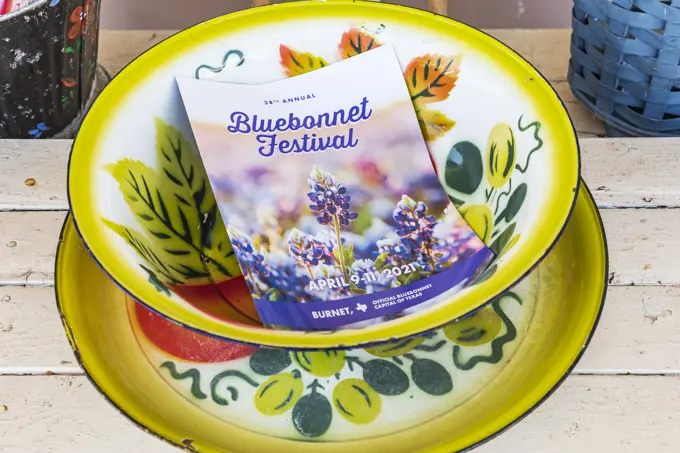
Decorative Porcelain Dishes

A selection of intricately designed porcelain dishes with floral patterns, showcasing craftsmanship and historical artistry in ceramics.

Saucer-dish with a group of flowers and flower sprays in panels, anonymous, c. 1750 - c. 1774 Porcelain dish, painted on the glaze in blue, red, pink, green, yellow, purple, black and gold. On the front a flower group with four cartouches with flower branches around it; On the inner edge a 'Spearhead border'. A few cracks and chips in the edge. Famle Rose. China porcelain. glaze. gold (metal) painting / gilding / vitrification Porcelain dish, painted on the glaze in blue, red, pink, green, yellow, purple, black and gold. On the front a flower group with four cartouches with flower branches around it; On the inner edge a 'Spearhead border'. A few cracks and chips in the edge. Famle Rose. China porcelain. glaze. gold (metal) painting / gilding / vitrification
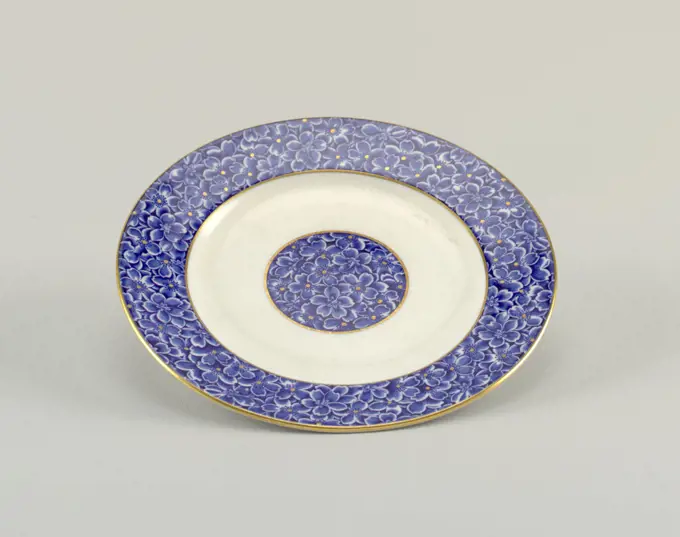
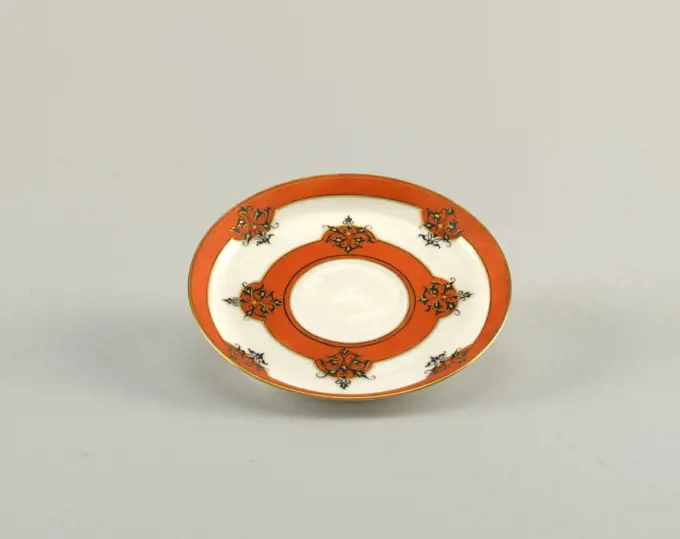
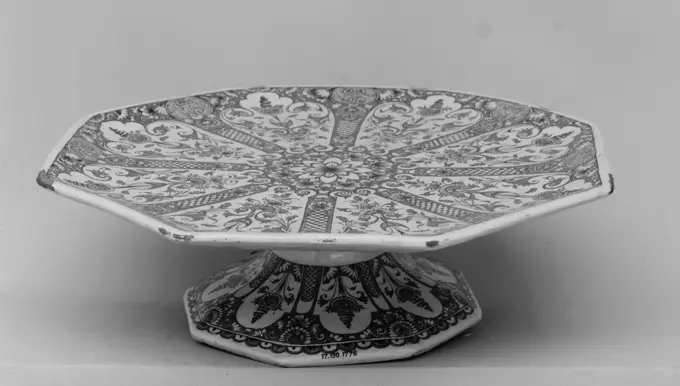
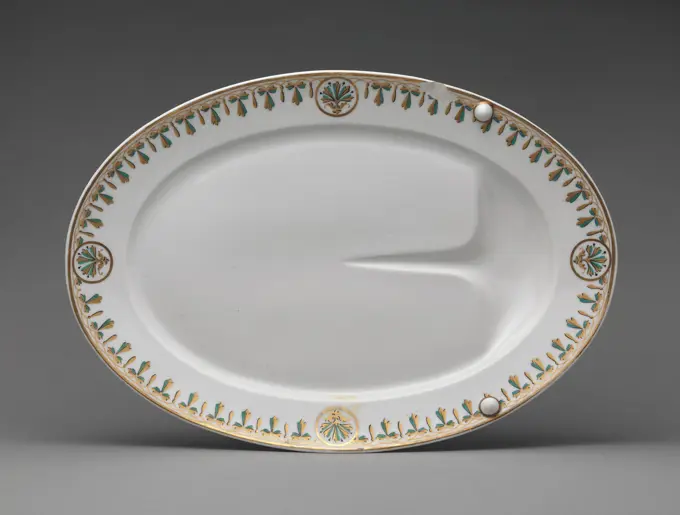
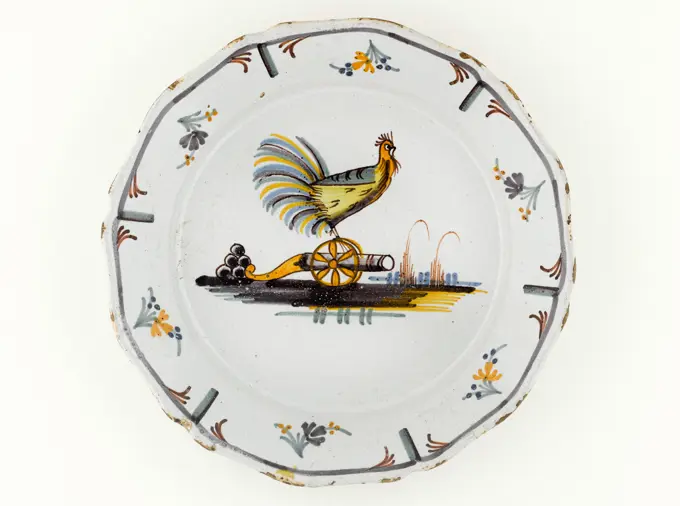
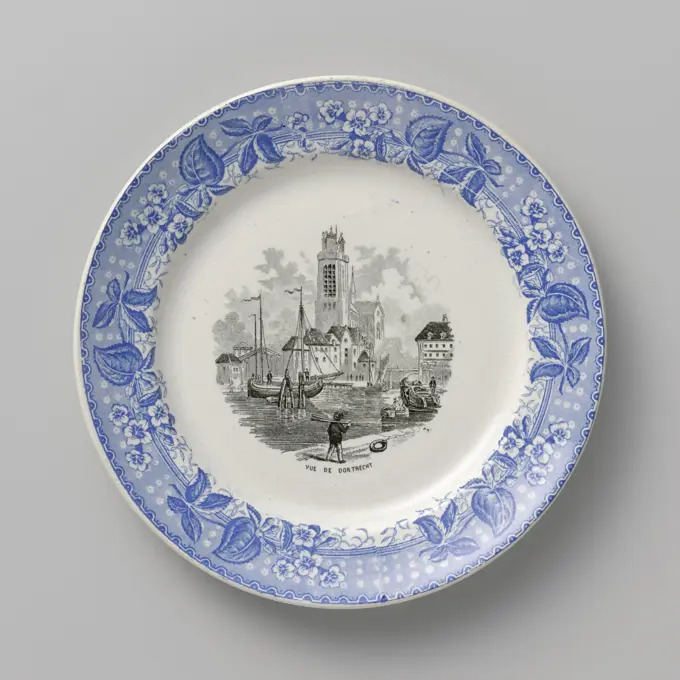
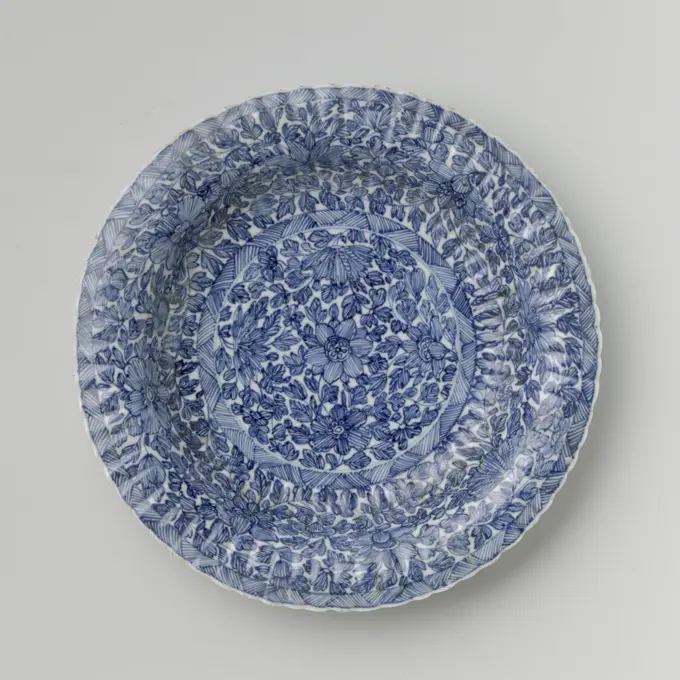
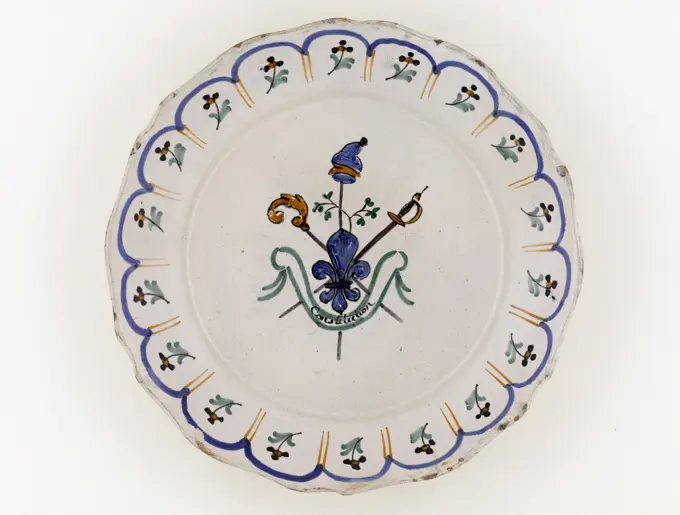
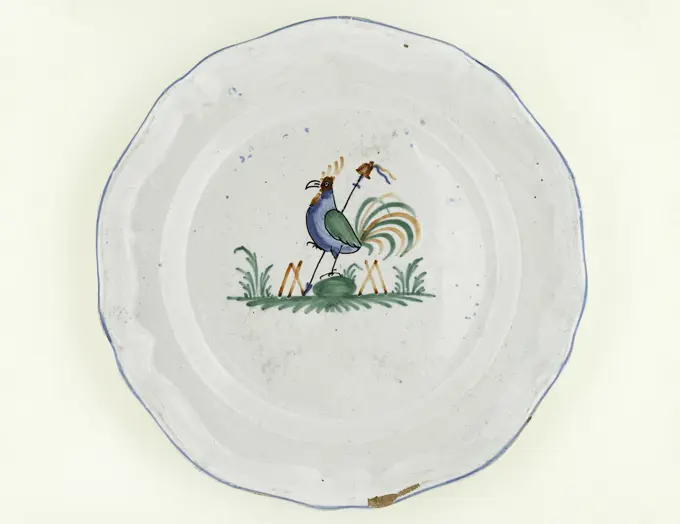
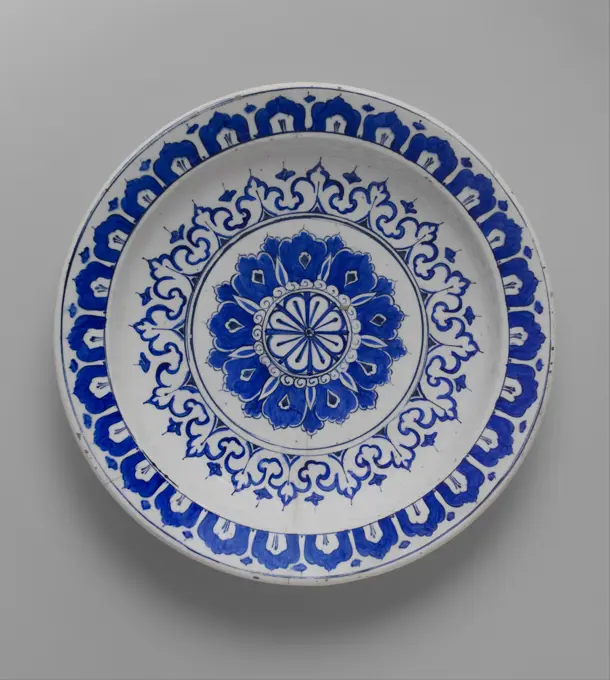
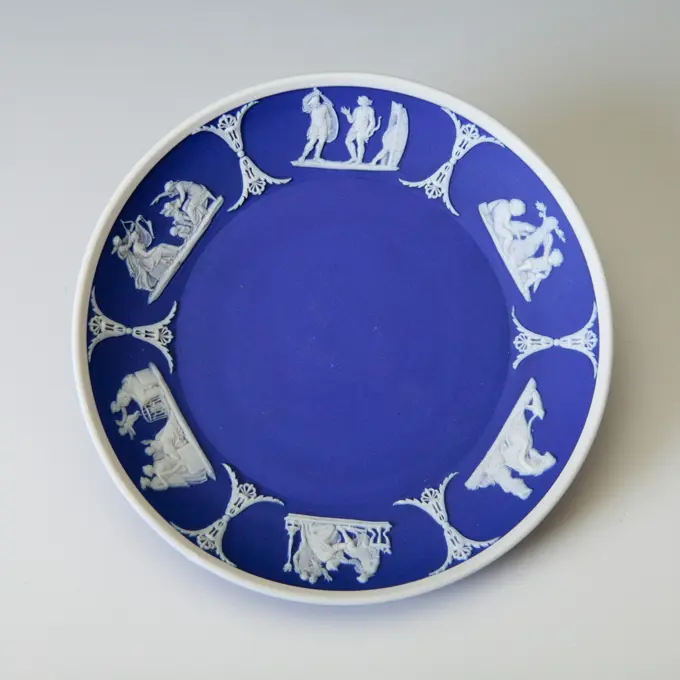
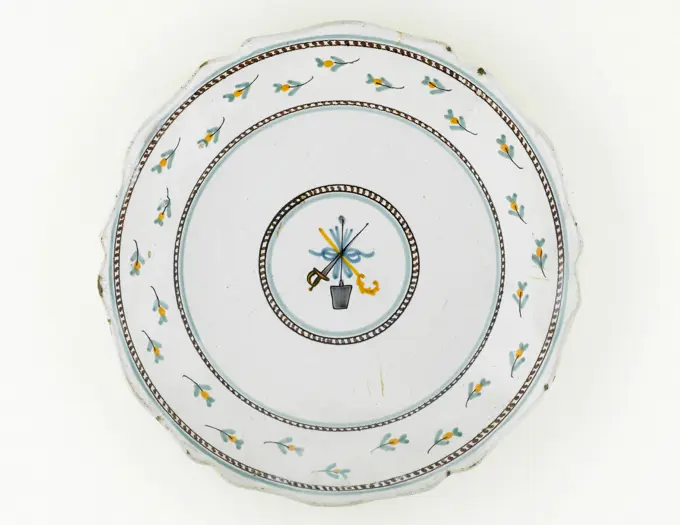
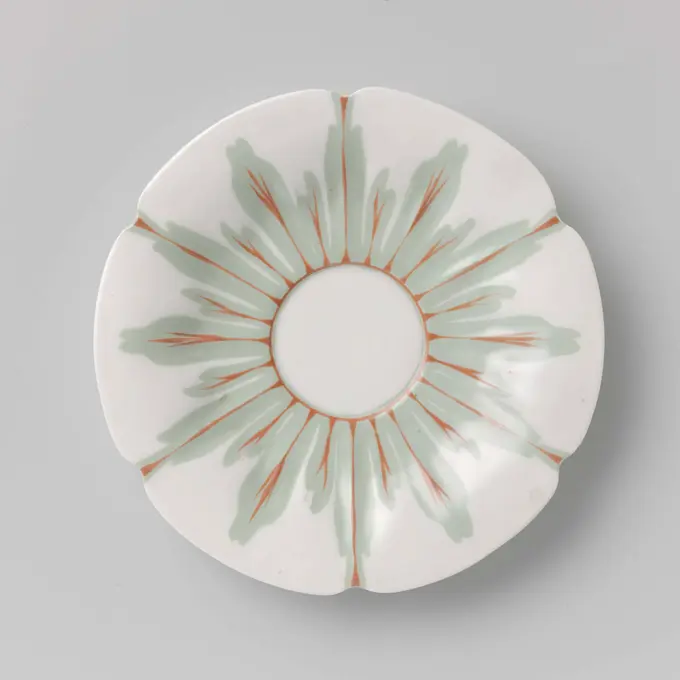
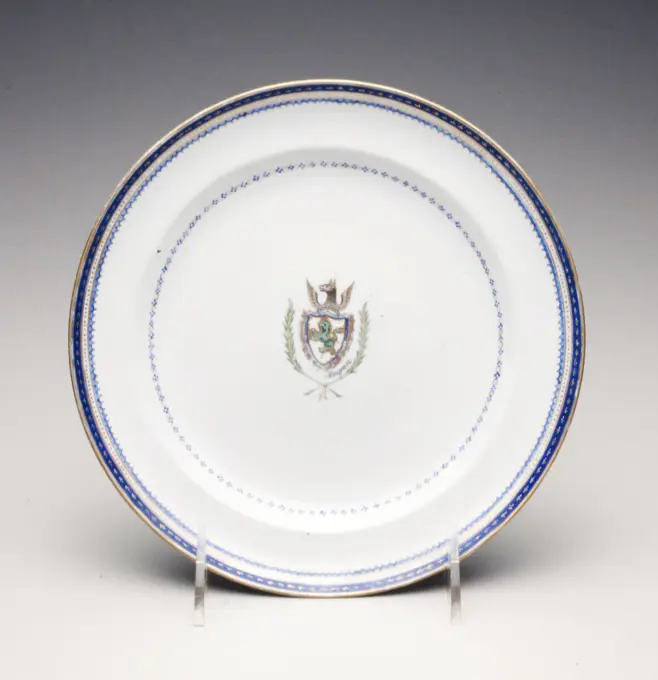
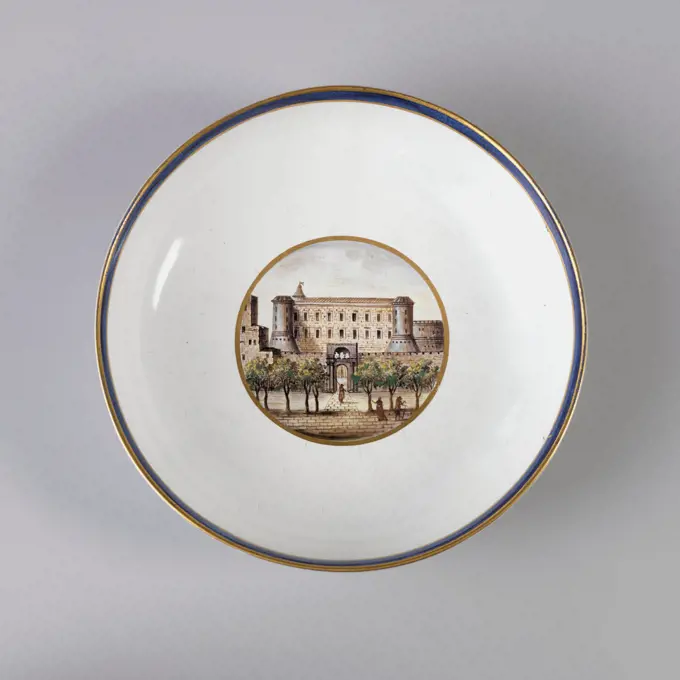
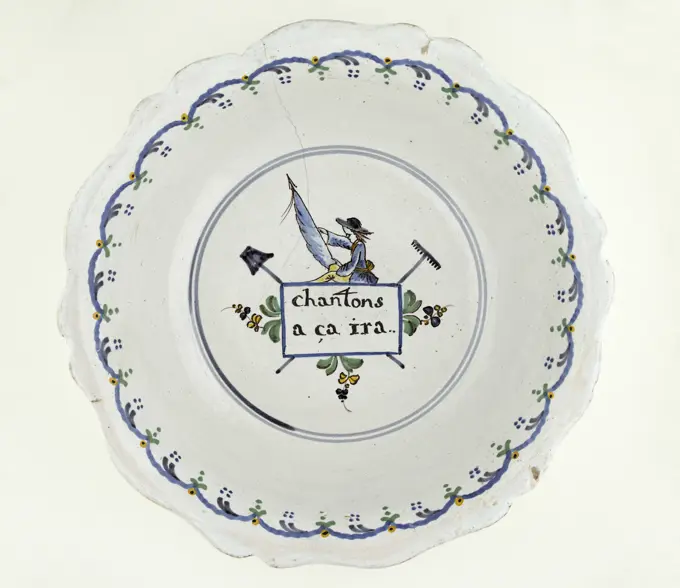
Lid, elongated, with button, belonging to a tableware with swirled ribbon motif with leaf branches, flower bouquets and sprinkled flower branches. Lid, elongated, with button, belonging to a porcelain crockery with roared motif in purple and gold with green leaf branches, flower bouquets and scattered flower branches. Edges lightly waved with decoration in gold with purple leaf motif. Since green crossed leaf motif. Signature: M.O.L. and Amstel.Plate, Royal Worcester, English, established 1751, hard paste porcelain, vitreous enamel, gold, Blue floral marli and center medallion on white ground., England, 1904, ceramics, Decorative Arts, plate, plateAnonymous. Pink family decor dish. Porcelain. 18th century. Museum of Fine Arts of the City of Paris, Petit Palais. 122742-23Dish, Manufactuur Oud-Loosdrecht, 1775 Porcelain dish. Part of a series of Twaafl pieces. Painted with figures in a landscape in beet red and gold piping. Loosdrecht porcelain Porcelain dish. Part of a series of Twaafl pieces. Painted with figures in a landscape in beet red and gold piping. Loosdrecht porcelainDish, decorated with insects. Dish of porcelain, part of a tea set, decorated with golden edges, insects in colors and golden spreading flowers. Note: Some parts of the tea set are marked with the letters GB, rue Thirou à Paris.Toy dessert plate - Inconnu / UnknownSaucer, Porcelain, Overglaze and underglaze decoration in colors of American flag, eagels, head of Liberty with decorative borders of orange, gold, and black., USA, 19th century, ceramics, Decorative Arts, SaucerStand on foot ca. 1705-20 French, Rouen Faience, or tin-glazed and enameled earthenware, first emerged in France during the sixteenth century, reaching widespread usage among elite patrons during the seventeenth and early eighteenth centuries, prior to the establishment of soft-paste porcelain factories. Although characterized as more provincial in style than porcelain, French faience was used at the court of Louis XIV as part of elaborate meals and displays, with large-scale vessels incorporated into the Baroque garden designs of Versailles. Earlier examples of French faience attest to the strong influence of maiolica artists from Italy. Later works demonstrate the ways in which cities such as Nevers, Rouen, Lyon, Moustiers, and Marseille developed innovative vessel shapes and decorative motifs prized among collectors throughout Europe. While faience can be created from a wide mixture of clays, it is foremost distinguished by the milky opaque white color achieved by the addition of tiRoast Platter 1885-86 Union Porcelain Works Union Porcelain Works was one of the most important and inventive American porcelain manufacturers in the second-half of the nineteenth century. In addition to their imaginative works designed by the German-born artistic director, Karl H. L. Müller, the firms mainstay was the production of heavy porcelain hotel dinnerware. This extensive service was made by Thomas Carll Smith, head of the Union Porcelain Works, as a gift to his daughter, Pastora Forest Smith Chace. The neoclassical decoration of the gilt bellflower and basket motif is complimented by turquoise enamel. Unlike the firms more eccentric and lavish designs created for their display at the Philadelphia Centennial Exposition in 1876, the pottery favored a more restrained classical style for their dinner services. This service descended in the Chace family.. Roast Platter 6573Anonymous. Plate. Earthenware. Paris, Carnavalet museum. 71680-7 Ball, cannon, rooster, standing, revolutionary time, faience, nation, awakening, French revolution, dishes, plateFoliate Bowl with Stylized Poeny Spray. China. Date: 1100-1127. Dimensions: H. 5.6 cm (2 3/16 in.); diam. 19.7 cm (7 3/4 in.). Qingbai ware; porcelain with underglaze carved decoration. Origin: China. Museum: The Chicago Art Institute, Chicago, USA.Set: plate Glassworks J. Stolle NiemenFoliate Dish with Lotus Flower. China. Date: 1250-1299. Dimensions: H. 2.8 cm (1 1/8 in.); diam. 15.6 cm (6 1/8 in.). Longquan ware; celadon-glazed stoneware with underglaze carved and mold-impressed decoration. Origin: China. Museum: The Chicago Art Institute, Chicago, USA.Holiday dish ca. 1890 French, Lunéville region. Holiday dish 201744Plate with a face on Dordrecht on the flat, n.v. Société Céramique, c. 1863 - c. 1958 Plate of earthenware with black and blue transfer decor. On the flat in black transfer pressure a face on Dordrecht. Under the show the text: Vue de Dortrecht. The edge of the plate with a blue transfer pressure with, among other things, blue flowers and leaves. Maastricht earthenware Plate of earthenware with black and blue transfer decor. On the flat in black transfer pressure a face on Dordrecht. Under the show the text: Vue de Dortrecht. The edge of the plate with a blue transfer pressure with, among other things, blue flowers and leaves. Maastricht earthenwarePlate with fluted sides and continuous flower pattern, anonymous, c. 1700 - c. 1724 Plate of porcelain with ribbed wall and scalloped edge, painted in underlaze blue. On the flat flower vines in a medallion with a tire archive work; the wall with flower vines and a band with shadowing; The back with four lotus plants. Marked on the bottom with a window in a double circle. Blue White. China porcelain. glaze. cobalt (mineral) painting / vitrification Plate of porcelain with ribbed wall and scalloped edge, painted in underlaze blue. On the flat flower vines in a medallion with a tire archive work; the wall with flower vines and a band with shadowing; The back with four lotus plants. Marked on the bottom with a window in a double circle. Blue White. China porcelain. glaze. cobalt (mineral) painting / vitrificationPorcelain lid, manufacture Oud-Loosdrecht, c. 1774 - c. 1784 Porcelain lid. Painted with bouquets and sprinkling flowers. Loosdrecht porcelain Porcelain lid. Painted with bouquets and sprinkling flowers. Loosdrecht porcelainPlate with the arms of the Samler and Shaw family, anonymous, c. 1775 - c. 1799 Porcelain plate, painted on the glaze in blue, red, pink, green, black and gold. On the flat the weapon of the Samler and Shaw families with a griffin and a lion. The helmet sign is a unicorn. Around the weapon two palm branches and underneath a banderole with the inscription 'Pax et Copia', 'Peace and abundance'; A decorative band on the wall and edge. Some chips in the edge. Weapon porcelain with email colors. China porcelain. glaze. gold (metal) painting / gilding / vitrification Porcelain plate, painted on the glaze in blue, red, pink, green, black and gold. On the flat the weapon of the Samler and Shaw families with a griffin and a lion. The helmet sign is a unicorn. Around the weapon two palm branches and underneath a banderole with the inscription 'Pax et Copia', 'Peace and abundance'; A decorative band on the wall and edge. Some chips in the edge. Weapon porcelain with email colors. China porcelain.Dish (part of a service) 1844 Sèvres Manufactory French. Dish (part of a service) 201388Round plate of hard baked pottery with a blue decoration; Wedgwood, Wedgwood, c. 1840 - c. 1860 plate (dishes) Round plate of hard baked earthenware, with a decoration under the glaze in transfer technology. The decoration is in blue and has a representation of a landscape on the flat in which a building (Chinese pagoda), Trees and figures. The edge has flowers and acanthus leaves. The board is marked: Wedgwood Aa. England earthenwareDish with Lotus Flowers. China. Date: 960 AD-1279. Dimensions: H. 5.3 cm (2 1/16 in.); diam. 21.0 cm (8 1/4 in.). Ding ware; porcelain with underglaze carved decoration; metal rim. Origin: China. Museum: The Chicago Art Institute, Chicago, USA.Anonymous. Plate to the Constitution of 1791. Faïence. Paris, Carnavalet museum. 71680-56 Phrygian cap, constitution, decoration, priest, earthenware, laurel, blue lilies, revolutionary period, French revolution, royaute, plateServing plate - D'après George L. Ashworth & Brothers, 1862-1968Realistic Plate Vector Set. Closeup Porcelain Tableware Isolated. Ceramic Kitchen Dish Top View. Cooking Template For Food Presentation.. Realistic Plate Vector Set. Closeup Porcelain Tableware Isolated. Ceramic Kitchen Dish Top View. Template For Food Presentation.Anonymous. Coq dish. Earthenware. Around 1792. Paris, Carnavalet museum. 72430-18 Rooster, faience, revolutionary period, French revolution, dishDish, decorated with tendrils and a wreath. Dish of porcelain, decorated with thin tiles in black, gold and red and with a green wreath.Dish with 'Kaleidoscope' Design ca. 1580-85 This dynamically decorated sixteenth-century dish in cobalt blue was produced at the famous kilns at Iznik, in western Anatolia. Stylized variations of lotus petals, ultimately of Chinese inspiration but geometrically patterned into a radiating sunburst of powerful Islamic design, bear witness to one of the most fruitful cultural exchanges in history: the mutual influences flourishing for centuries between the artists, especially potters, of eastern and western Asia. Chinese influences on Islamic art peaked in the thirteenth and fourteenth centuries, when nearly all Asia came under the sway of the Great Khans, the Mongol overlords ruling from Beijing. The Ilkhanids who governed the Near East from their capital at Tabriz, in modern northwestern Iran, imported precious Chinese wares, commanding local Muslim artists to study Chinese technique and design. The sixteenth-century potters of the Ottoman court though set at the westernmost limit of thServing plate - Richelieu & Ontario Navigation Company (1875-1913) W. H. Grindley & Company W. H. Grindley & CompanySaucer WedgwoodContinental Porcelain Plate, Ohio. Culture: American. Dimensions: Body diameter: 8 3/8 in. (21.3 cm). Maker: Joseph S. Potter (1822-1904). Date: ca. 1878-89. Museum: Metropolitan Museum of Art, New York, USA.Pair of plates with Rearing Horses, anonymous, c. 1660 - c. 1690 Faïence plate with a standing horse to the left Delft . Faïence plate with a standing horse to the left Delft .Dish with Lotus Flower and Petals 960 CE-1279 China. Stoneware with underglaze molded and carved decoration .Dinner plate - Mintons MintonsPair of Foliate-Rimmed Dish 907 CE-999 CE China. Yue ware; glazed stoneware .Plate; Koenigliche Porzellan Manufaktur (KPM; Berlin; 1763-1918); 1870-82 (1823-00-00-1832-00-00);Plate 1750-60 British (American market). Plate. British (American market). 1750-60. Stoneware. Made in Staffordshire, EnglandSaucer first half of the 19th century China. Saucer. China. first half of the 19th century. Porcelain painted in overglaze famille rose enamels, rose pink glaze on reverse. Qing dynasty (1644-1911). CeramicsAnonymous. Plate with three orders. Earthenware. Around 1789-1791. Paris, Carnavalet museum. 70956-11 Crosse, Epee, Faience, Shovel, Revolutionary Period, three orders, dishes, plateDish with Peonies and Leaves. China. Date: 960 AD-1279. Dimensions: H. 1.9 cm (3/4 in.); diam. 16.0 cm (6 5/16 in.). Qingbai ware; stoneware with underglaze carved and incised decoration. Origin: China. Museum: The Chicago Art Institute, Chicago, USA.Plate, Porcelain with gilding, flat bottom; slightly cavetto marly decorated with concentric bands of wreath enclosing a peacock on cylindrical vessel, flanked by armorial devices - caption below, in Gothic letters: Les Repas de Chevalerie - pendant to 1938-57-319, -320, to -324, -326, to -330 - compare with: 1936-13-14., porcelain decorated in yellow, green, red and brown with gilding, France, 1824, ceramics, Decorative Arts, PlateYaozhou style glazed dish. China. Date: 1723-1735. Dimensions: H. 3.4 × diam. 15.5 cm (1 5/16 × 6 1/8 in.). Porcelain. Origin: China. Museum: The Chicago Art Institute, Chicago, USA.Dish, painted with the Krokus decor. Dish of painted porcelain. The dish is painted in green and brown. The dish has been marked.Munich Olympiad. Plate, blue painted with image of Olympic fire in torch within years. With inscription. Rear v.z.v. Two holes and iron wire to hang plate. Marked and v.z.v. A round black label.Plate, painted with the Flügelmuster decor. Painted porcelain plate. The plate is painted in green and blue with the flügelmuster. The sign belongs to a tableware (BK-1976-65-1 to BK-1976-65-34) and has been marked.Saucer with an ornamental border, anonymous, c. 1800 - c. 1824 Porcelain dish with a straight wall, painted on the glaze in gold. On the flat a gold medallion with a flower branch. The inner wall is with a pendulum of stars, half moon shapes with dots and triangles and a golden edge. Marked on the bottom with g. Empire. France porcelain. glaze. gold (metal) painting / gilding / vitrification Porcelain dish with a straight wall, painted on the glaze in gold. On the flat a gold medallion with a flower branch. The inner wall is with a pendulum of stars, half moon shapes with dots and triangles and a golden edge. Marked on the bottom with g. Empire. France porcelain. glaze. gold (metal) painting / gilding / vitrificationDoily of linen rosette -shaped with eight lobes and around a border bobbin, anonymous, the Molenwiekje, c. 1925 - c. 1949 Doily of natural linen with a border bobbin all around: Dutch side. Rosette -shaped model with eight semi -circular scallops or lobes. The Doily is sewn with a few stitches to three the same rugs, forming a larger rug. They almost overlap each other half. It is a merger of the rugs with the following object numbers: BK -1970-370 -B, -c, -e and -f. Netherlands linen (material) bobbin lace Doily of natural linen with a border bobbin all around: Dutch side. Rosette -shaped model with eight semi -circular scallops or lobes. The Doily is sewn with a few stitches to three the same rugs, forming a larger rug. They almost overlap each other half. It is a merger of the rugs with the following object numbers: BK -1970-370 -B, -c, -e and -f. Netherlands linen (material) bobbin laceSoup plate (part of a service) 1785-1800 Chinese, for British market. Soup plate (part of a service). Chinese, for British market. 1785-1800. Hard-paste porcelain. Ceramics-Porcelain-ExportBowl with Scene from Romance of the Western Chamber. China. Date: 1655-1665. Dimensions: H. 3.7 cm (1 7/16 in.); diam. 14.6 cm (5 3/4 in.). Porcelain painted in underglaze blue. Origin: China. Museum: The Chicago Art Institute, Chicago, USA.Dessert plate with arms of Morgan, c. 1785, 1 x 7 1/2 in. (2.54 x 19.05 cm), Porcelain, China, 18th century, The service to which this dessert plate belongs was commissioned for John Morgan of Hartford, Connecticut. Brought back on the iEmpress of Chinai in 1785, the service was among the earliest customized for an American. By 1784, when America began trading with China as an independent nation, armorial porcelain had already fallen out of fashion with Europeans.Plate with view of Vanderbilt-ScienceHall.  Manufacturer: Wedgwood, British, 1759-1998Retailer: Jones, McDuffee and Stratton, American, 1810-ca. 1975Saucer-dish with Pearl Chasing Dragons. Dish of porcelain with round wall, painted in underglaze blue. On the flat a pearl purveyous, five-handed dragon; Two pearls with pearls on the outer wall. Marked on the underside with the six character mark of Emperor Guangxu. Blue White.Plate, painted with the Flügelmuster decor. Painted porcelain plate. The plate is painted in green and blue with the flügelmuster. The sign belongs to a tableware (BK-1976-65-1 to BK-1976-65-34) and has been marked.Bowl, Doccia Porcelain Factory, Italian, established 1735, porcelain, vitreous enamel, gold, Gold and blue rimmed bowl; at center, a view of a white brick palazzo, flanked by two towers, facing a garden with figures., Doccia, Italy, ca. 1780, ceramics, Decorative Arts, bowl, bowlAnonymous. Saladier "Let's sing to that will go". Earthenware. 1790-1792. Paris, Carnavalet museum. 72430-11 Ca ira, revolutionary song, flag, faience, revolutionary period, French revolution, salad bowlPaperweight 1840-1865 Baccarat. Technological improvements to optical scientific instruments in the mid-nineteenth century spurred a veritable obsession across Europe with identifying and classifying the natural world. Amateur botanists were eager to collect and preserve floral specimens, which they intently researched and catalogued. In response to this broad appeal, French glassmakers made paperweights that portrayed the very botanical subjects that were so enthusiastically sought. Many weights represented specimens with horticultural correctness, but others were entirely fanciful creations. Paperweights like this example speak to the periodís fascination with taxonomic systems.From the late 1840s to early 1860s, French manufacturers of fine glass and crystalósuch as Baccarat (Alsace), Clichy (Paris), and Saint-Louis (Lorraine)ócatered to the vast public enthusiasm for beautiful yet functional desk accessories. Paperweights, which were designed to secure loose papers against drafts, Dinner service (julita)  deep plate Ruszczyński, Edmund (1920 Ca 1995), Wałbrzych, WawelHerring dish, De Porceleyne Byl, c. 1760 - c. 1790 Haring scale from Faience. Blue painted with a herring. Delft . Haring scale from Faience. Blue painted with a herring. Delft .Marble Falls, Texas, USA. Brochure for the Bluebonnet Festival in the Texas Hill Country. (Editorial Use Only)