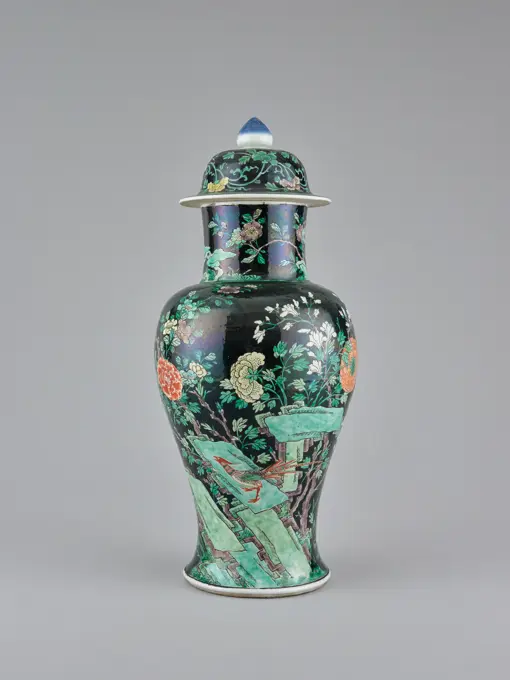
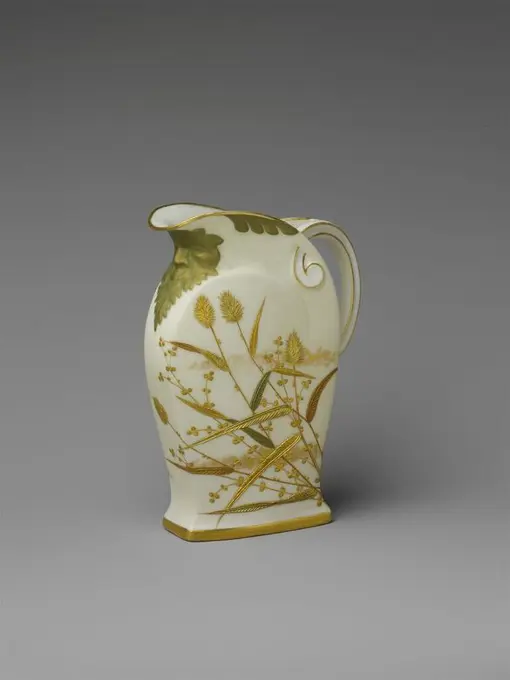
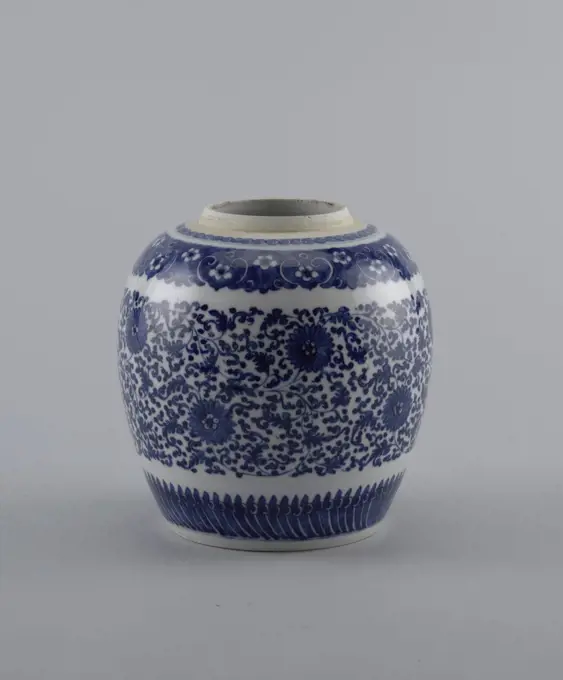
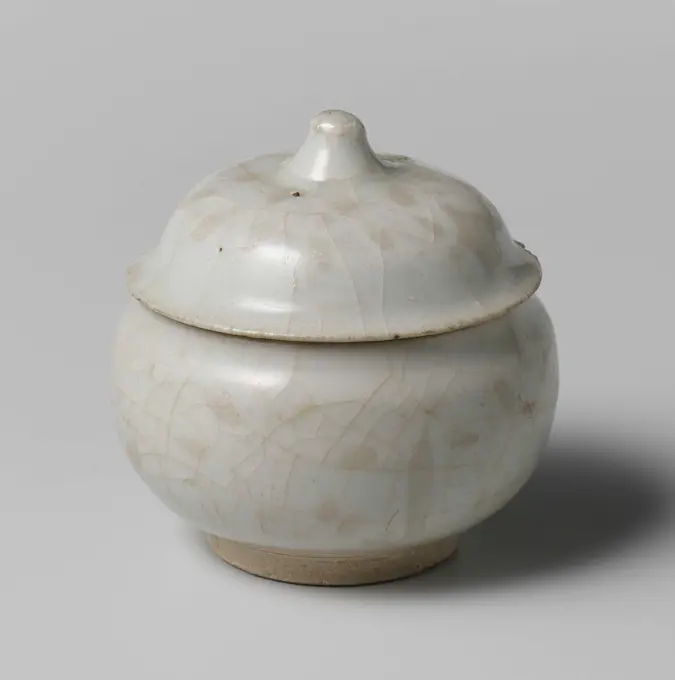
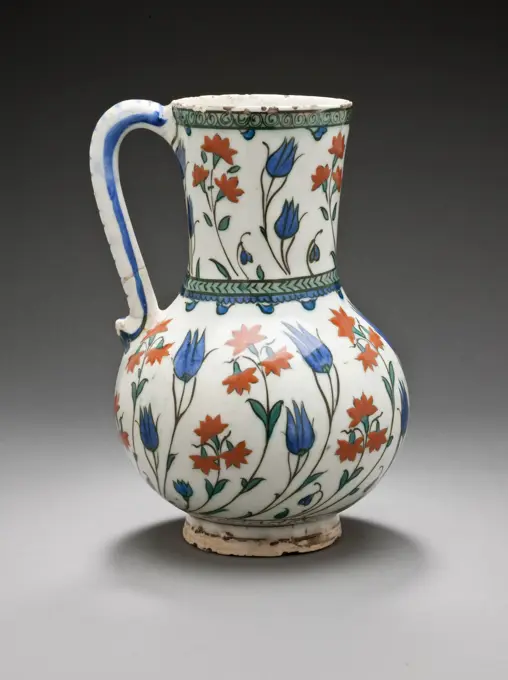
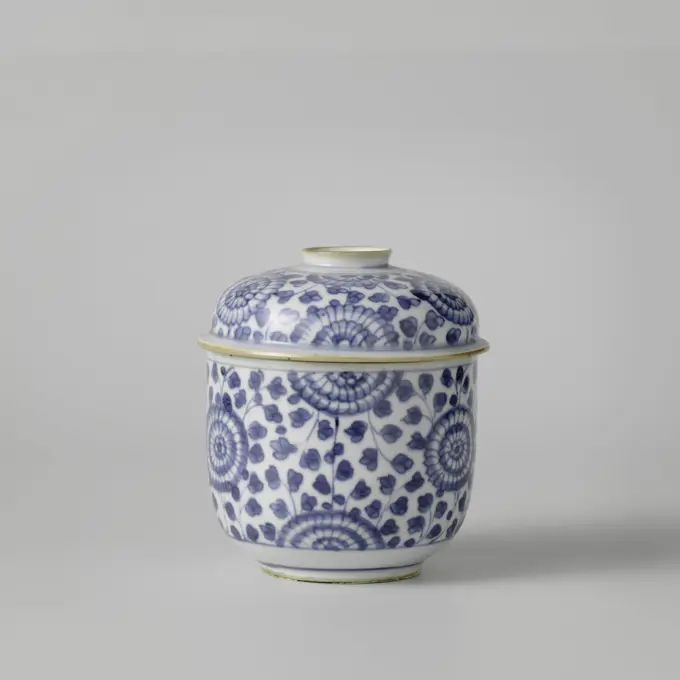
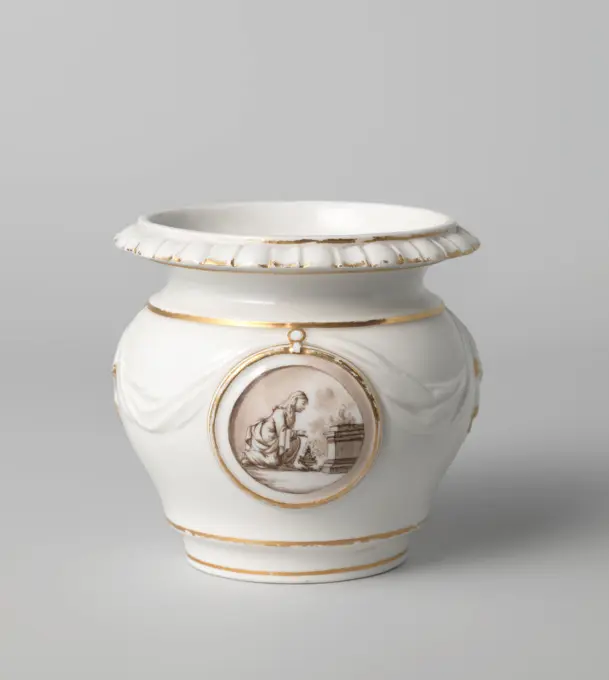
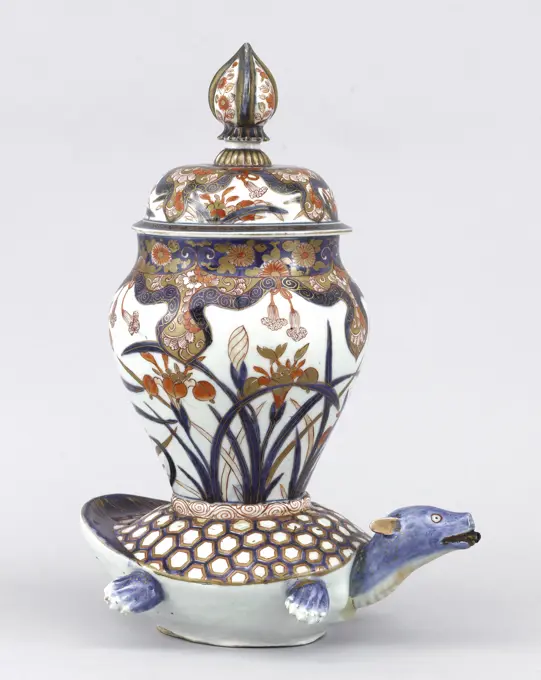
Decorative Porcelain Jars

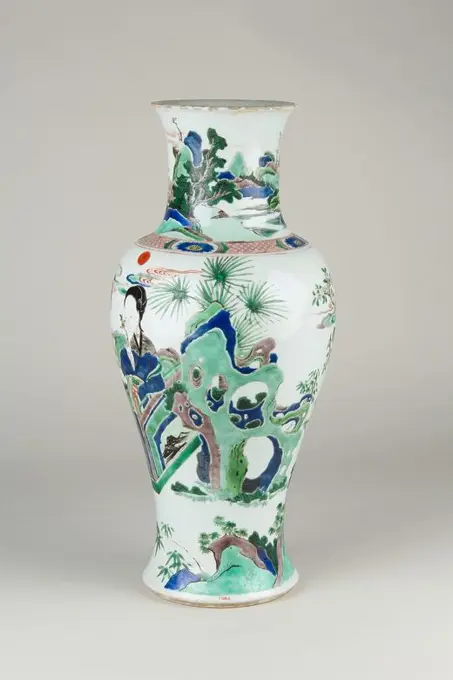
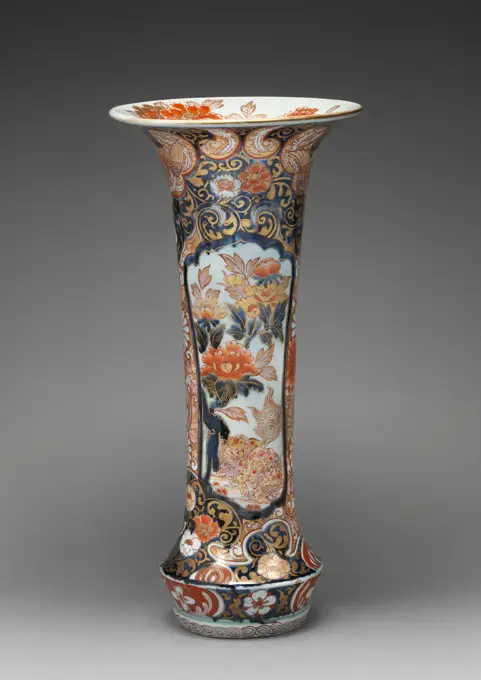
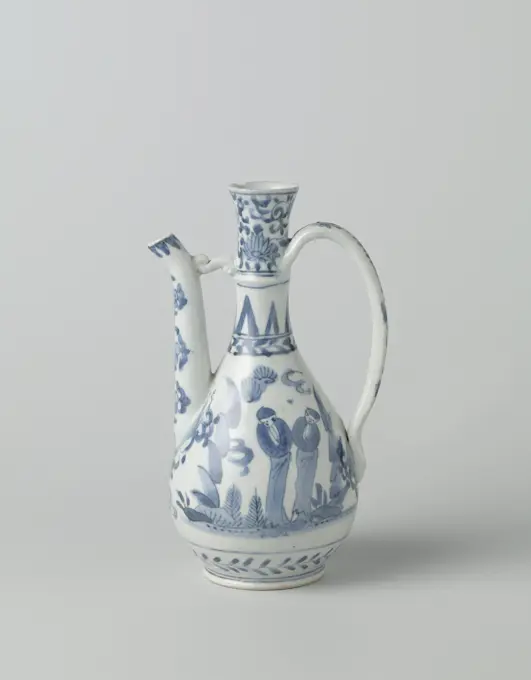
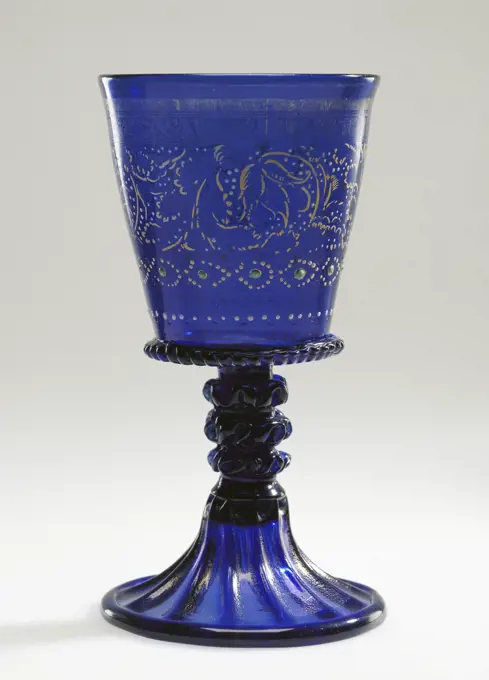
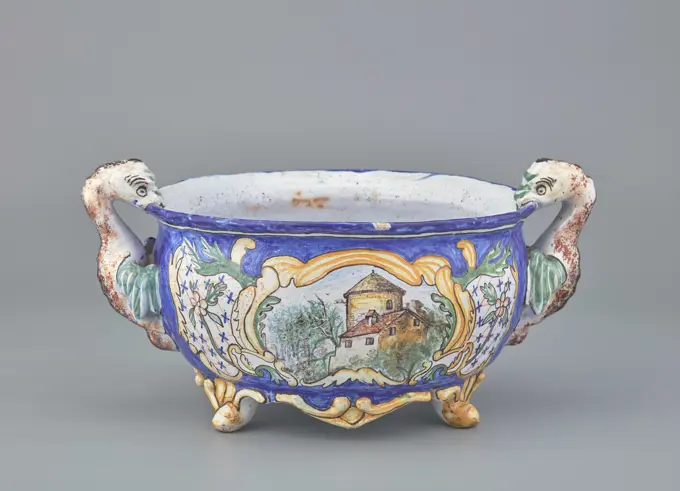
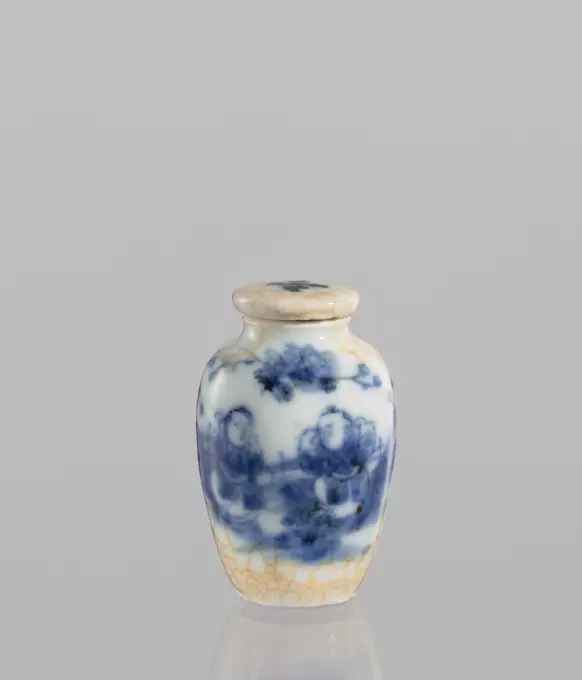
A selection of beautifully crafted porcelain jars, showcasing intricate patterns and vibrant colors from different eras.

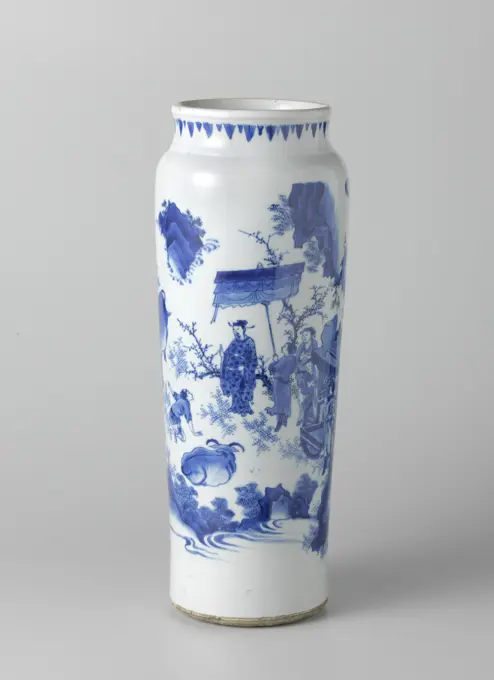
Pear-shaped covered jar with precious objects and flower sprays, anonymous, c. 1700 - c. 1724 Pear -shaped lid jar on the foot of porcelain with two ears, the top of which modeled in a monster head, painted in under -glaze blue. On the wall large lotus flowers and flower branches between which a lobed cartouche with rolls, books, artemisia leaf and two overlapping fan -shaped compartments, one with a man on a terrace with pavilion and flower branch; the foot with a zig-zag pattern; The edge with flower vines. Blue White. China porcelain. glaze. cobalt (mineral) painting / vitrification Pear -shaped lid jar on the foot of porcelain with two ears, the top of which modeled in a monster head, painted in under -glaze blue. On the wall large lotus flowers and flower branches between which a lobed cartouche with rolls, books, artemisia leaf and two overlapping fan -shaped compartments, one with a man on a terrace with pavilion and flower branch; the foot with a zig-zag pattern; The edge with
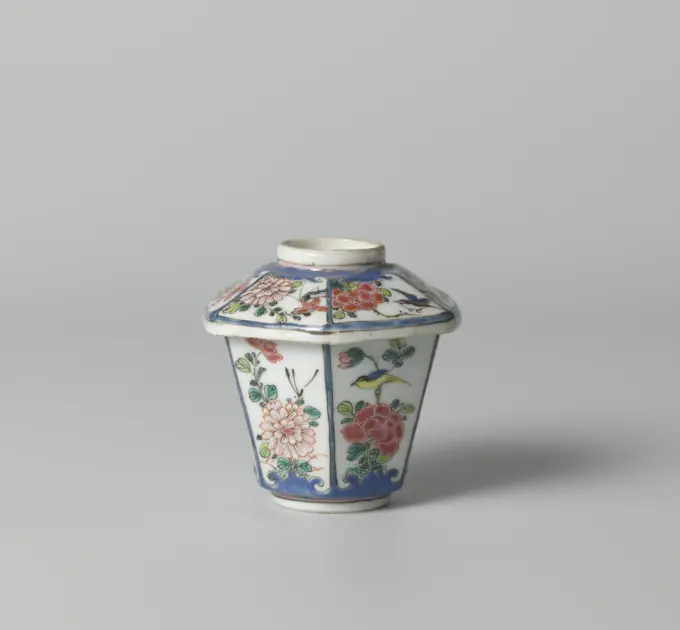
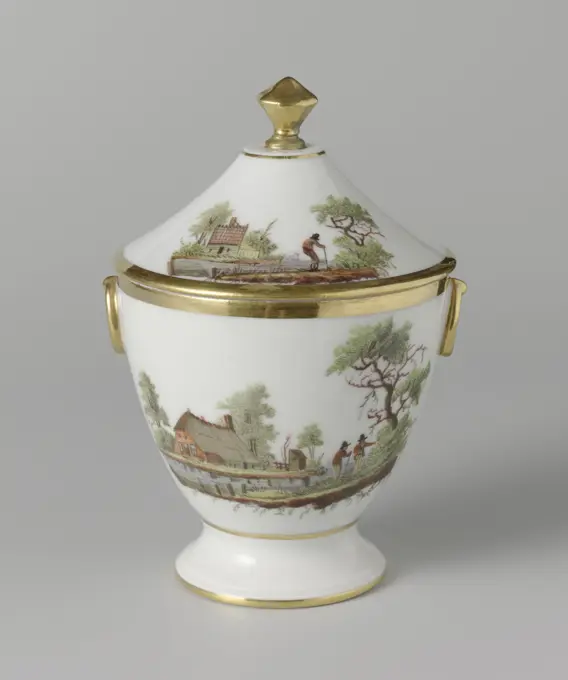
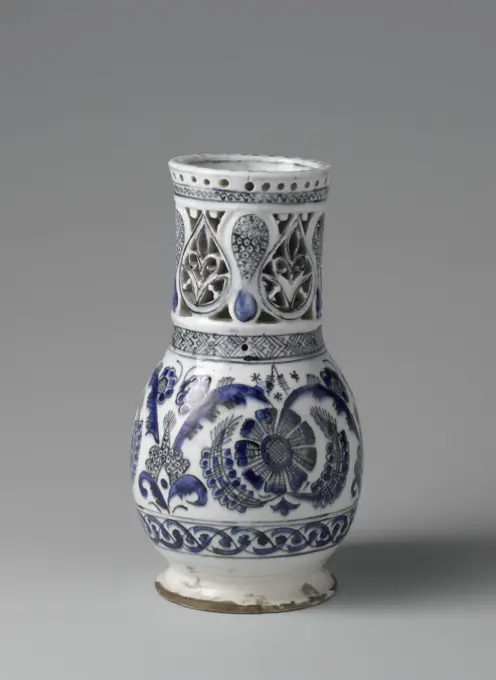
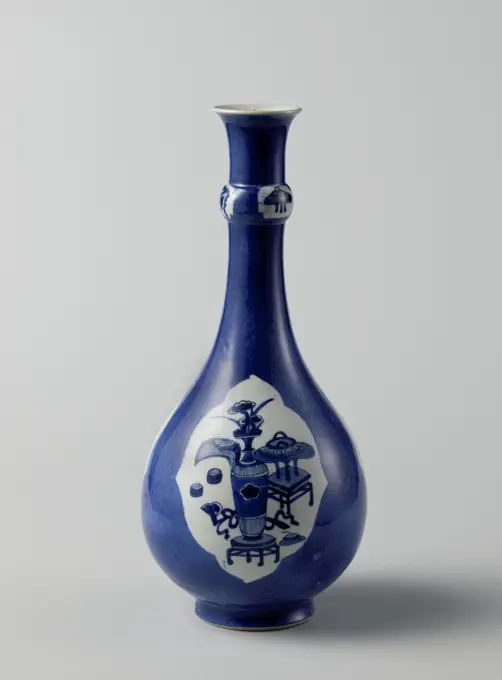
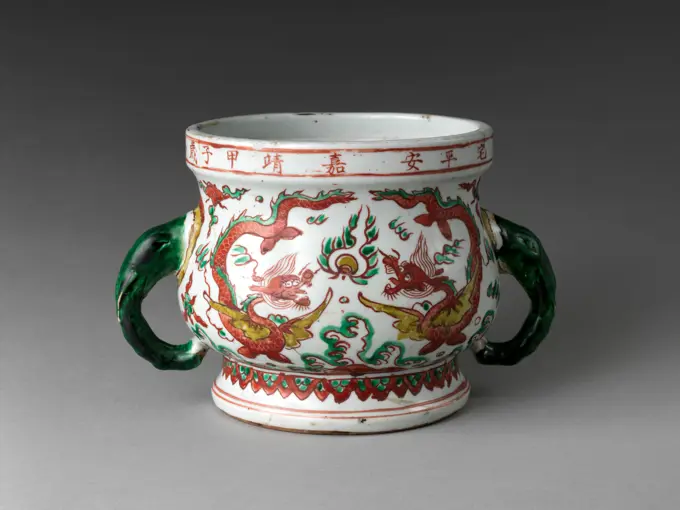
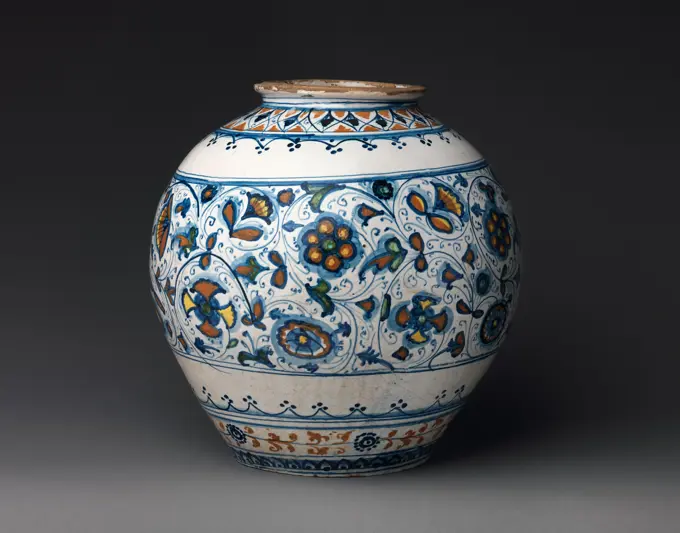
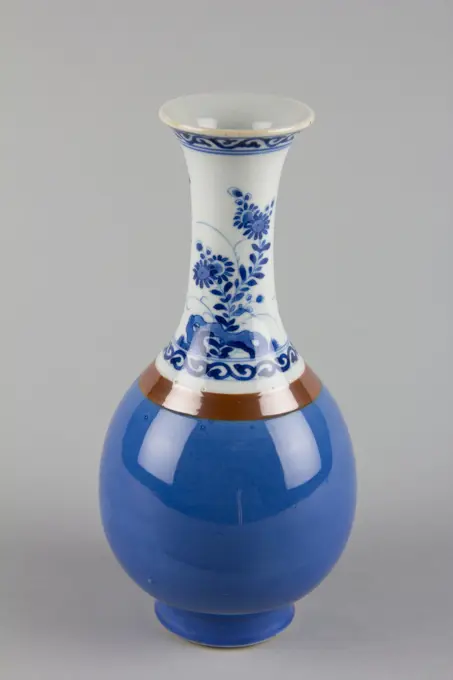
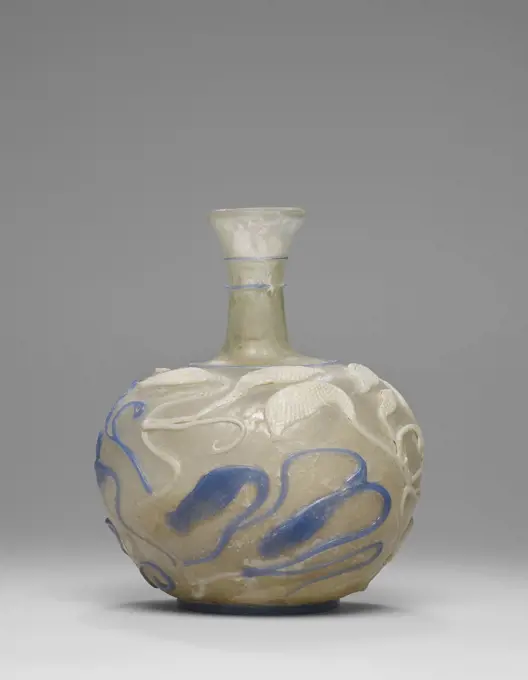
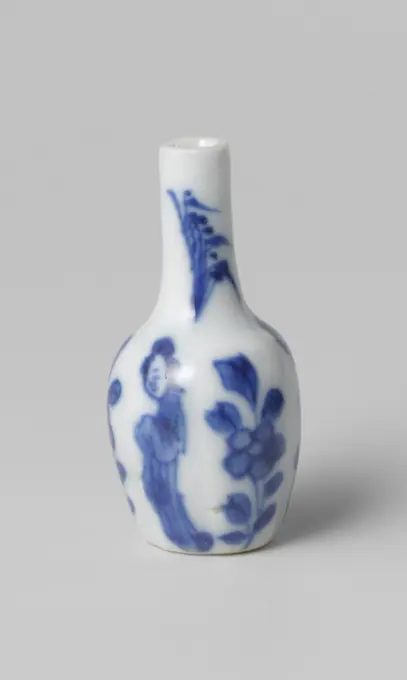
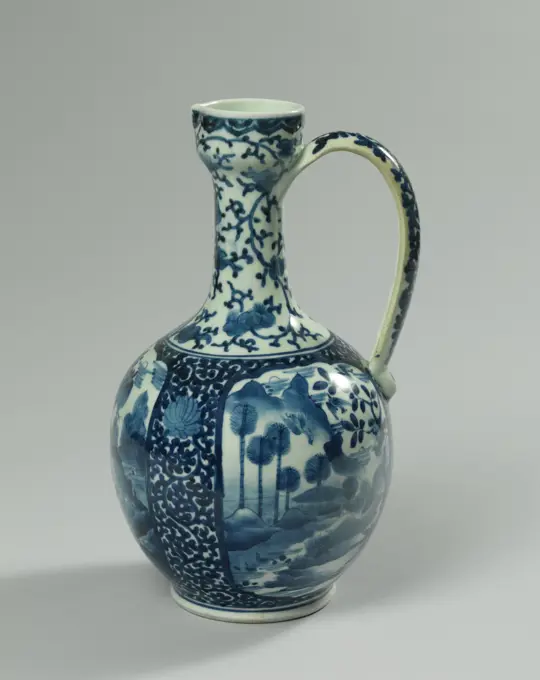
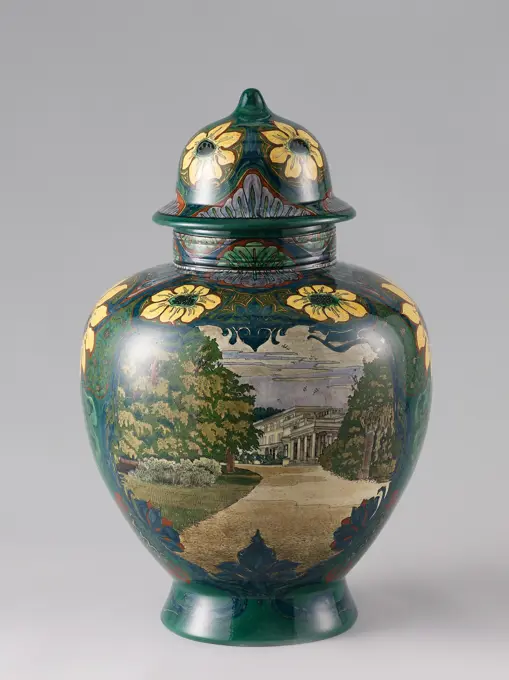
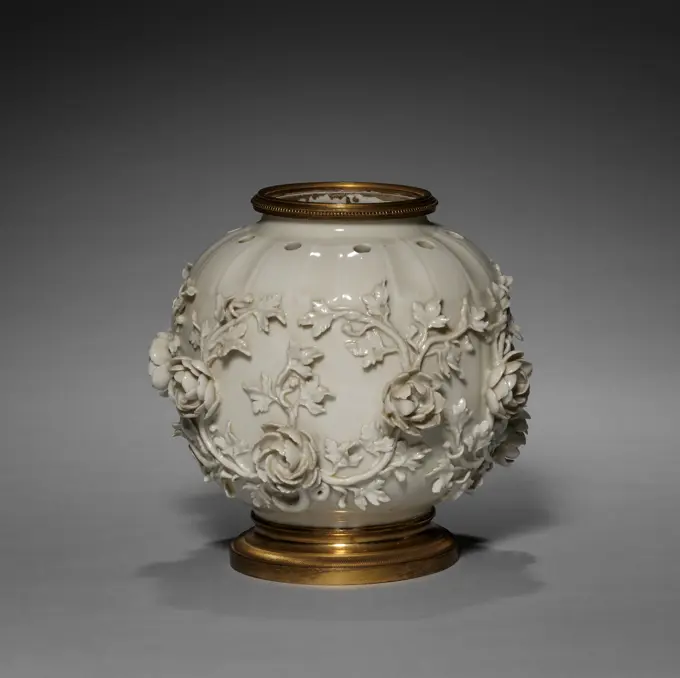
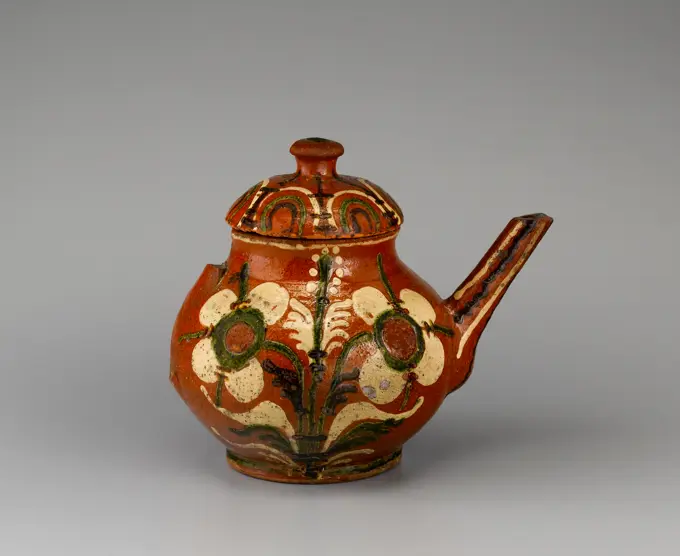
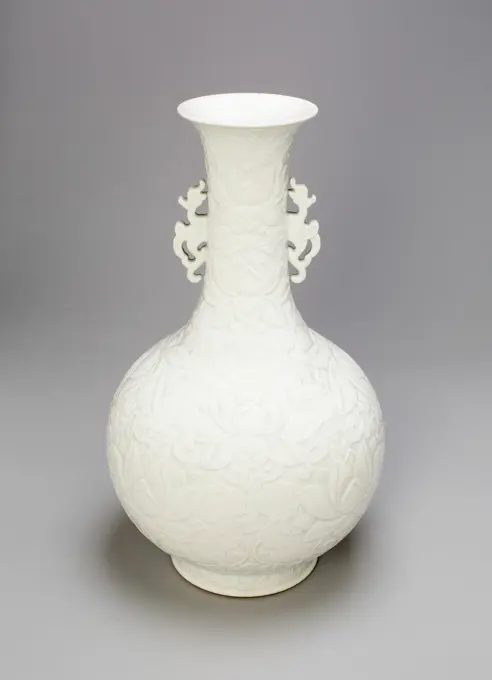
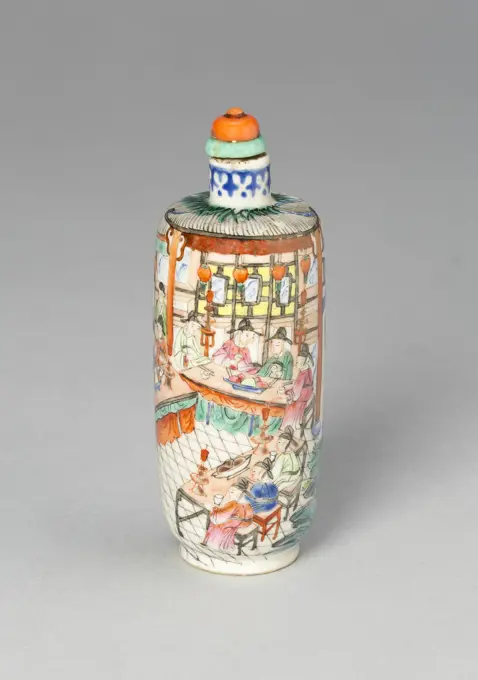
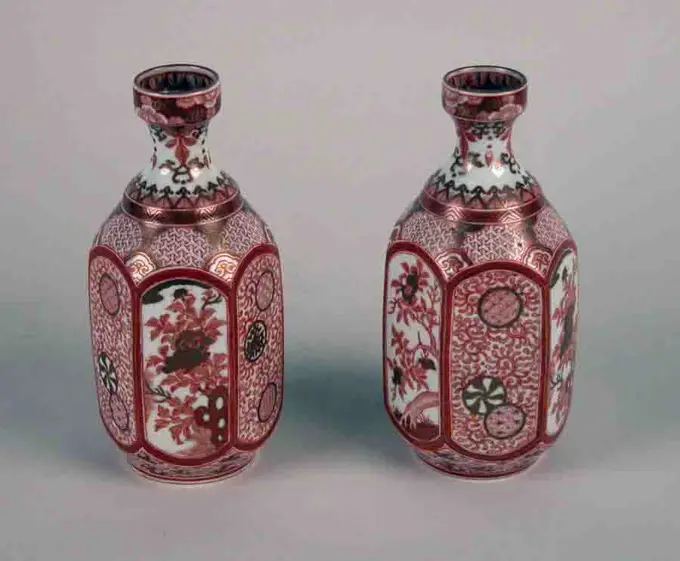
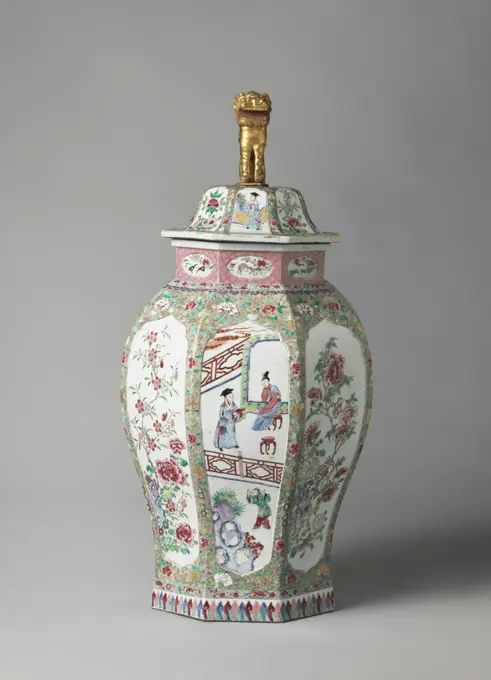
Garniture, anonymous, c. 1800 - c. 1899 Octagonal, egg -shaped lid jar of porcelain, painted on the glaze in blue, red, pink, green, purple, black and gold. The belly is covered with peon branches against a background of a spiral pattern. On each of the eight sides a saved, scalloped cartouche with alternating flower branches (peony, chrysanthemum, aster, prunus) in a rock or one or more people on a terrace or in a fenced garden with flowering plants and rocks. The neck with servetwork interspersed with lobed cartouches with deer or birds in a pair of pairing plant. A decorative band around the foot. The lid with the same decoration; The lid button is in the form of a shishi (lion dog). Lid button is not original. Coverpot is part of Cabinet AK-NM-11497. Famle Rose. China porcelain. glaze. gold (metal) painting / gilding / vitrification Octagonal, egg -shaped lid jar of porcelain, painted on the glaze in blue, red, pink, green, purple, black and gold. The belly is covered with peon braSmall vase. unknown, craftsmanVase with floral patterns 19th century China. Vase with floral patterns. China. 19th century. Porcelain painted in overglaze polychrome enamels (Jingdezhen ware). Qing dynasty (1644-1911). Ceramics. Vase, spherical, short outstanding mouth edge. Polychrome painted with paradise bird with long decorative over the flat laid tail and flowers.Vase ca. 1867 Christopher Dresser This vase is an example of Christopher Dressers Asian-inspired Minton "cloisonné" ware.. Vase. British, Stoke-on-Trent, Staffordshire. ca. 1867. Bone china. Ceramics-PorcelainJug with coats of arms beneath arches, anonymous, 1596 Jug of stoneware on a high foot with a cylindrical body, slightly narrower shoulder and wide neck. The C-shaped ear is attached to the neck and shoulder. Partly covered with cobalt blue. A few profiles on the foot and neck. On the belly in relief a printed and laid band of coats of arms under arches. The left most with the date '1596'. Below the inscription 'De Pesser and that can Hat Mich fulfill zv einem Ermen man who ich nit me and hafso mvs ich wassen off'. The lower part of the abdomen runs slanted to the foot and is divided into entered courses. The shoulder with decorative tires and compartments with core cut. On the neck, upside down, a bond in relief with portraits and profil under bows. Westerwald. Rae stoneware. glaze. cobalt (mineral) vitrification Jug of stoneware on a high foot with a cylindrical body, slightly narrower shoulder and wide neck. The C-shaped ear is attached to the neck and shoulder. Partly covered with Baluster vase with a hunting scene and borders with floral scrolls, anonymous, c. 1700 - c. 1724 Porcelain lid, painted in underly glaze blue and on the glaze gold. On the wall a hunting scene with hunters on horseback and on foot with weapons and dogs in a landscape with trees, mountains and rocks. Below a bond with Lotusranken. Lid button in the form of a shishi. Blue White. China porcelain. glaze. cobalt (mineral). gold (metal) painting / gilding / vitrification Porcelain lid, painted in underly glaze blue and on the glaze gold. On the wall a hunting scene with hunters on horseback and on foot with weapons and dogs in a landscape with trees, mountains and rocks. Below a bond with Lotusranken. Lid button in the form of a shishi. Blue White. China porcelain. glaze. cobalt (mineral). gold (metal) painting / gilding / vitrificationHexagonal Lantern. Dated: Kangxi period, 1662/1722. Dimensions: overall: 28.5 x 19 cm (11 1/4 x 7 1/2 in.). Medium: porcelain with overglaze famille verte enamels on the biscuit. Museum: National Gallery of Art, Washington DC. Author: Chinese Qing Dynasty.Stemcup with rocks, peony sprays and butterfly, anonymous, c. 1700 - c. 1724 Porcelain voting cup with foot and long handle, painted in undermglaze blue. The cup is covered with a layer of soft-paste. The foot is painted with a band Ruyi motifs and four valuables (window); The stem is twice a decorative tire above and below a ring -shaped thickening; Flowering plants with rocks and a butterfly on the cup; The inner edge with a tire servetwork. Cup has been broken. Blue White. China porcelain. soft-paste porcelain. glaze. cobalt (mineral) painting / vitrification Porcelain voting cup with foot and long handle, painted in undermglaze blue. The cup is covered with a layer of soft-paste. The foot is painted with a band Ruyi motifs and four valuables (window); The stem is twice a decorative tire above and below a ring -shaped thickening; Flowering plants with rocks and a butterfly on the cup; The inner edge with a tire servetwork. Cup has been broken. Blue White. China porcelain. soft-pasteSugar bowl with river face, Royal Porcelain Factory Dommer & Co., 1809 - 1814 Sugar bowl with lid decorated with a multi -colored landscape. Along the edges a leaf vank. Marked: Amstel. Nieuwer-Amstel porcelain Sugar bowl with lid decorated with a multi -colored landscape. Along the edges a leaf vank. Marked: Amstel. Nieuwer-Amstel porcelainVase with floral scrolls and pierced sides, anonymous, c. 1700 - c. 1799 Vase of quail fritry with lead, decorated with flower vines in blue and black on white engobe under transparent glaze. The neck is open. Kutahya earthenware. glaze. cobalt (mineral) painting / vitrification Vase of quail fritry with lead, decorated with flower vines in blue and black on white engobe under transparent glaze. The neck is open. Kutahya earthenware. glaze. cobalt (mineral) painting / vitrificationBottle China. Bottle 51055Covered jar with shishi, hoo-birds, flowering plants and floral scrolls, anonymous, c. 1775 - c. 1824 Cabinet of porcelain with three lid pots and two cups, painted in underlaze blue and on the glaze red, black and gold. On the wall three large cartouches with a shishi between a flowering pair of peoning plant; The cartouches are separated by tires of curls containing a lobed cartouche with a Hoo-Vogel surrounded by flower vines. Furthermore, a broad bond with chrysanthemums interrupted by lobed cartouches with a shishi near a plant and a bond with lotus drinks. A band with curl work on the foot. The lids with the same decoration; Lid button in the form of a shishi (lion dog) on a rock. Imari. Japan porcelain. glaze. cobalt (mineral). gold (metal) painting / gilding / vitrification Cabinet of porcelain with three lid pots and two cups, painted in underlaze blue and on the glaze red, black and gold. On the wall three large cartouches with a shishi between a flowering pair of peoning plaBottle vase with powder blue, antiquities and precious objects, anonymous, c. 1700 - c. 1724 Bottle -shaped vase of porcelain with a pear -shaped abdomen, ring -shaped thickening in the neck and flared edge, painted in under -glaze blue. The bottle is covered with bleu poudré (powder blue) with three scallops on the wall filled with antiques and valuables; Three -saved courses in the thickening on the neck filled with three different incense burners; A double circle on the bottom. A chip in the foot ring. Bleu Poudré with blue and white. China porcelain. glaze. cobalt (mineral) painting / vitrification Bottle -shaped vase of porcelain with a pear -shaped abdomen, ring -shaped thickening in the neck and flared edge, painted in under -glaze blue. The bottle is covered with bleu poudré (powder blue) with three scallops on the wall filled with antiques and valuables; Three -saved courses in the thickening on the neck filled with three different incense burners; A double circle on the bottoTIBOR CHINO S XVIII BAJO KIEN LONG. Location: PALACIO REAL-INTERIOR. LA GRANJA DE SAN ILDEFONSO. SEGOVIA. SPANIEN.Sugar bowl with river face, Royal Porcelain Factory Dommer & Co., 1809 - 1814 Sugar pot decorated with people in multi -colored river landscapes. Along the foot and upper edge a golden edge. On the outside two gold -colored ears in the form of oval rings. Marked: Amstel. Nieuwer-Amstel porcelain Sugar pot decorated with people in multi -colored river landscapes. Along the foot and upper edge a golden edge. On the outside two gold -colored ears in the form of oval rings. Marked: Amstel. Nieuwer-Amstel porcelainIncense Burner with Dragons Chasing Pearl dated 1564 China The inscription written on the outside of the lip indicates that the jar was offered by members of the Wu family to the Temple of the Lord of the Black Heaven in order to protect the peace of the family and the home in 1564. The Lord of the Black Heaven is one of the many quasi-historical immortals found in Daoist traditions.. Incense Burner with Dragons Chasing Pearl. China. dated 1564. Porcelain painted with colored enamels over transparent glaze (Jingdezhen ware). Ming dynasty (1368-1644), Jiajing period (1522-66). CeramicsApothecary Jar. Culture: Mexican. Dimensions: H. 9 1/4 in. (23.5 cm). Date: ca. 1750. Museum: Metropolitan Museum of Art, New York, USA.Storage jar ca. 1500-1525 Italian, possibly Venice Restrained yet vibrant, the decoration on these globe-shaped jars (see also 41.100.272) does not emphasize any one side, suggesting that they were designed to be seen in the round.. Storage jar. Italian, possibly Venice. ca. 1500-1525. Maiolica (tin-glazed earthenware). Ceramics-PotteryCovered jar with a bluish white glaze, anonymous, c. 1279 - c. 1368 Lid of pot made of stoneware with a spherical wall, covered with a cracked, transparent glaze with a blue -white tint. On the glaze irregular spots. Qingbai. China stoneware. glaze vitrification Lid of pot made of stoneware with a spherical wall, covered with a cracked, transparent glaze with a blue -white tint. On the glaze irregular spots. Qingbai. China stoneware. glaze vitrificationVase with flowers and rocks late 17th-early 18th century China. Vase with flowers and rocks 48280Snake-Thread Flask; Eastern Mediterranean; 3rd century; Glass; 14.2 cm (5 9,16 in.)Vase with a IId with cover  a red and yellow dragon on a blue background unknownMiniature bottle vase with flowering plants and women, anonymous, c. 1675 - c. 1724 Miniature ashesle, bottle -shaped vase of porcelain, painted in underlaze blue. Alternately a flowering plant and a woman (long Lijs) on the wall. Blue White. China porcelain. glaze. cobalt (mineral) painting Miniature ashesle, bottle -shaped vase of porcelain, painted in underlaze blue. Alternately a flowering plant and a woman (long Lijs) on the wall. Blue White. China porcelain. glaze. cobalt (mineral) paintingVase 1883-86 Greenwood Pottery Company American. Vase 14344Unknown, Balustrous Potiche vase, black family decor (attributed title), 1662. Porcelain, cookie, polychrome enamels. Petit Palais, Museum of Fine Arts of the City of Paris.Pitcher. Culture: American. Dimensions: 5 1/2 x 3 7/8 x 2 in. (14 x 9.8 x 5.1 cm). Maker: Ott and Brewer (1871-1893). Date: 1880-90. Museum: Metropolitan Museum of Art, New York, USA.Jar, porcelain, Ginger jar. Blue and white. Ovoid, the blue underglaze decoration in four bands, the widest through the body consisting of floral scrolls and chrysanthemum blossoms. Lotus petal border at the base. Chien Lung., China, 1736-95, ceramics, Decorative Arts, Jar. Stoneware lid pot with a spherical wall, covered with a crackled, transparent glaze with a blue-white tint. On the glaze irregular spots. Foot ring unglazed. Qingbai.Ewer with landscapes and flowers, c. 1660-1680, Unknown Japanese, 11 1/16 × 7 1/4 × 6 1/4 in. (28.1 × 18.42 × 15.88 cm), Imari ware; porcelain with underglaze cobalt blue, Japan, 17th century. Pottery vase lid, belonging to a couple of three polychrome painted with sunflowers and topographic representations. Four sunflowers are painted on the lid.Vase with painting of flowers, company Wed. N.S.A. Brantjes and Co., 1895 - 1904 Vase with painting of flowers in green, blue, yellow, brown and black on purple stock. Marked with: Klomp / Monogram / Faience de Purmerende Hollande 500 Dec: C. Monogram. E. Purmerend earthenware Vase with painting of flowers in green, blue, yellow, brown and black on purple stock. Marked with: Klomp / Monogram / Faience de Purmerende Hollande 500 Dec: C. Monogram. E. Purmerend earthenwareTwo flower pot holders (cache-pots), anonymous, c. 1730 - c. 1770 Faïence flower pot holder. With ears in the form of cobblestones. Blue painted with landscapes. Delft . Faïence flower pot holder. With ears in the form of cobblestones. Blue painted with landscapes. Delft .Snuff Bottle, 1644-1911. China, Qing dynasty (1644-1911). Glass; overall: 7 cm (2 3/4 in.).Potpourri Vase, 1860-1880. France. Blanc-de-chine porcelain; gilt bronze mount; overall: 20.2 x 21.3 cm (7 15/16 x 8 3/8 in.).Teapot 1756-71 Attributed to Gottfried Aust Although the style of slip-trailed decoration and the floral motifs relate to Southern examples, new research suggests that these pieces may have been made in Pennsylvania.. Teapot. American. 1756-71. Earthenware with slip decoration. Possibly made in Pennsylvania, United StatesJar with registers of plant ornament and animals 100-30 B.C. Ptolemaic Period This elaborately decorated vessel belongs to a later Ptolemaic type made outside Alexandria. On the neck of the vessel partially preserved panels with nude figures in marsh environments can be noted. Two registers at the top of the body of the vessel show vegetal motifs. These are followed by a register with birds, fish, fruits, and other vegetation, and then a register with groupings of animals including a hare, and a griffon. The bottom of the vessel is cupped by a lotus calyx.. Jar with registers of plant ornament and animals 551338Hexagonal, covered cup with flower sprays, birds and insects, anonymous, c. 1725 - c. 1749 Lid of high, hexagonal porcelain lid head, painted on the glaze in blue, red, pink, green, yellow, black and gold. A flower rosette in a medallion shown; around six courses with flowering plants (including Lotus, Chrysanthemum, peony) with bird or insect; The back with six times a flower branch. Famle Rose. China porcelain. glaze. gold (metal) painting / gilding / vitrification Lid of high, hexagonal porcelain lid head, painted on the glaze in blue, red, pink, green, yellow, black and gold. A flower rosette in a medallion shown; around six courses with flowering plants (including Lotus, Chrysanthemum, peony) with bird or insect; The back with six times a flower branch. Famle Rose. China porcelain. glaze. gold (metal) painting / gilding / vitrificationGinger Jar Jar; China; porcelain, vitreous enamelJug. Turkey, Iznik, last quarter of 16th century. Ceramics. Fritware, underglaze-paintedCovered jar with "Hundred Antique" pattern late 17th-early 18th century China. Covered jar with "Hundred Antique" pattern. China. late 17th-early 18th century. Porcelain painted in underglaze cobalt blue (Jingdezhen ware). Qing dynasty (1644-1911), Kangxi period (1662-1722). CeramicsPair of vases, anonymous, c. 1720 - c. 1750 Vase with two ears, light blue, double -used, flattened in shape, with bronze frame. Parismaker: China porcelain. glaze. bronze (metal). gilding (material) gilding Vase with two ears, light blue, double -used, flattened in shape, with bronze frame. Parismaker: China porcelain. glaze. bronze (metal). gilding (material) gildingWig Stand (France); tin-glazed earthenware; Bequest of Richard Cranch Greenleaf in memory of his mother, Adeline Emma Greenleaf; 1962-60-4Jug with medallions, anonymous, c. 1640 - c. 1670 Jug of stoneware on a high base with a spherical body and short, wide neck. The C-shaped ear is attached to the neck and shoulder. Profiles on the neck and foot. Partly covered with cobalt blue on the glaze. The jug is decorated with a relief decoration in which the abdomen is largely covered with printed, imposed medallions with a flower rosette against a blue background. Blue lines on the neck and foot. A pewter frame with lid is attached to the ear; On the inside a beaten brand of a tower with the letters 'CQ'. Westerwald. Westerwald Stoneware. Glaze. Cobalt (Mineral). frame: tin (metal) vitrification  Germany Jug of stoneware on a high base with a spherical body and short, wide neck. The C-shaped ear is attached to the neck and shoulder. Profiles on the neck and foot. Partly covered with cobalt blue on the glaze. The jug is decorated with a relief decoration in which the abdomen is largely covered with printed, imposed medallions wiCovered jar with flower sprays and stylised chrysanthemums, anonymous, c. 1740 - c. 1760 Porcelain lid jar, painted in under -glaze blue. The pot and the lid are covered with flower branches and stylized chrysanthemums. A crack in the lid; glued lid. Blue White. China porcelain. glaze. cobalt (mineral) painting / vitrification Porcelain lid jar, painted in under -glaze blue. The pot and the lid are covered with flower branches and stylized chrysanthemums. A crack in the lid; glued lid. Blue White. China porcelain. glaze. cobalt (mineral) painting / vitrificationBloempot, Manufactuur Oud -Loosdrecht (Possible), 1774 - 1784 Porcelain flowerpot. Decorated with a drapery in relief, and painted with two round medallions in Grisaille. The edges with gold dropped. Loosdrecht (Possible) porcelain Porcelain flowerpot. Decorated with a drapery in relief, and painted with two round medallions in Grisaille. The edges with gold dropped. Loosdrecht (Possible) porcelainApothecary jar. Beyerle de, Jean Louis (1709-1794), company owner, Niderviller (wytwórnia fajansu ; 1735-1793), factoryVaas lid with the Ter Horst house, N.V. Haagsche Plateel Factory Rozenburg, 1896 Cover of earthenware lid, belonging to a couple of three polychrome painted with sunflowers and topographical representations. Four sunflowers are painted on the lid. The Hague earthenware Cover of earthenware lid, belonging to a couple of three polychrome painted with sunflowers and topographical representations. Four sunflowers are painted on the lid. The Hague earthenwareEgg-Shaped Box 1750-1760 England. Metal and enamel .Decorative vase with cupids and birds;  18th century (1701-00-00-1800-00-00);One of a pair of famille-rose 'lotus' bottle vases 1736-1795 China. Porcelain painted in underglaze blue and overglaze enamels .Fountain vase, Japan. Porcelain, Imari decor, 18th century. Museum of Fine Arts of the City of Paris, Petit Palais. VASE FONTAINE Japanese art, Decor Floral, Decor Imari, Flower Decor, Fountain Vase, Imari, Japanese Art, Japan, Japan, Art, Porcelain, Porcelain, Porcelain, Tortoise, Turtoise, Vase Fontaine, Work of Art, Animal, ChinaLidded Bowl. UnknownVase 1886 Crown Derby The history of the Derby porcelain manufactory can generally be divided into two periods. The old Derby porcelain was produced from 1750 to 1848, and was foremost distinguished by the ownership of William Duesbury I and II. When the original factory closed in 1848, a number of former workers established a separate smaller factory at King Street, Derby, using Crown Derbys original molds and patterns and oftentimes incorporating the factory marks on its wares. Around 1876, a separate company established a factory at Osmaston Road under the name Derby Crown Porcelain Company (and eventually bought the King Street factory in 1935), although the firm did not being producing commercial pieces until two years later. In 1890, the factory was granted the privilege of using the title "Royal Crown Derby Porcelain Company." Although the new Crown Derby continued to produce the firms old eighteenth-century Japan patterns, it became known for making vessels lavishly decoratedSugar Bowl 1885 Union Porcelain Works Union Porcelain Works was one of the most important and inventive American porcelain manufacturers in the second-half of the nineteenth century. In addition to their imaginative works designed by the German-born artistic director, Karl H. L. Müller, the firms mainstay was the production of heavy porcelain hotel dinnerware. This extensive service was made by Thomas Carll Smith, head of the Union Porcelain Works, as a gift to his daughter, Pastora Forest Smith Chace. The neoclassical decoration of the gilt bellflower and basket motif is complimented by turquoise enamel. Unlike the firms more eccentric and lavish designs created for their display at the Philadelphia Centennial Exposition in 1876, the pottery favored a more restrained classical style for their dinner services. This service descended in the Chace family.. Sugar Bowl 2515Covered, baluster jar with panel decoration and gilt brass finial, anonymous, c. 1600 - c. 1900 Balus -shaped, square lid jar of porcelain with beveled corners and wide -spreading neck, painted on the glaze in blue, red, green, yellow, eggplant and black with a professional decoration. The wall is divided into two layers, the bottom layer with two compartments with peony or lottery branches with butterflies and two compartments with people in a river landscape, the corners with flower vines; the shoulder with alternating flower branches with butterflies and valuables, the corners with a flower branch; Above a band with flowers against a green speckled soil; the neck with flower branches; Circles with flour saved around the foot in a green 'frogs' soil. Flower branches and valuables alternately on the lid; Gold -in brass button in the form of a flower. Round, smooth hole in the bottom; Five chips in the lid; Chip in the foot ring. Lid glued. Famle Verte. China porcelain. glaze. gold (meVase with floral scrolls first half 19th century China. Vase with floral scrolls 48257Close-up of a vase, Florence, ItalyBrush holder with scene of Wang Qing crossing the river from The Water Margin (Shuihu zhuan) dated 1636 or 1696 China. Brush holder with scene of Wang Qing crossing the river from The Water Margin (Shuihu zhuan). China. dated 1636 or 1696. Porcelain painted in underglaze cobalt blue (Jingdezhen ware). Ming (1368-1644) or Qing (1644-1911) dynasty. CeramicsOvoid Covered Jar With Fluted Sides and Figures in Medallions. Flat lid of egg-shaped porcelain lid pot, painted in underglaze blue. On the edge of the lid with fruit branches (peach), the top with three playing boys (oceans) in a fenced garden. Blue White.Sleeve vase, anonymous, c. 1635 - c. 1650 Cylindrical vase (roller car) from porcelain with a wide, slightly spreading neck, painted in under -glaze blue. On the wall a continuous landscape with mountains, trees and rocks. In this a dignitaries and his entourage and a wheelchair. He meets an oxharder with his ox. The shepherd is on his knees for the dignitaries. Probably an imagination of the story of Bing Ji who cares for an ox. On the neck a band with hanging, pointed leaf motifs. Transitional porcelain in blue and white. China porcelain. glaze. cobalt (mineral) painting / vitrification Cylindrical vase (roller car) from porcelain with a wide, slightly spreading neck, painted in under -glaze blue. On the wall a continuous landscape with mountains, trees and rocks. In this a dignitaries and his entourage and a wheelchair. He meets an oxharder with his ox. The shepherd is on his knees for the dignitaries. Probably an imagination of the story of Bing Ji who cares for an ox. On the neck Faceted Jar with Roundels Containing Birds and Flowers. Korea, Joseon dynasty (1392-1910), 19th century. Furnishings; Serviceware. Wheel-thrown and cut porcelain with red painted decoration under clear glazePreuningkan, Paul Preuning, c. 1540 - c. 1560 High jug of lead glaze pottery, with a pewter folding lid. The jug is reversed egg -shaped and has a pewter of foot ring. The neck is short, concave cylindrical and has a pewter mouth ring. The ear is rectangular and turned. The belly has a blue stock and is decorated in relief with two series of niches separated one above the other. Within the lower niches the works of Hercules and an imperial weapon and within the top seven figures halfway. Nuremberg earthenware. lead glaze. tin (metal) High jug of lead glaze pottery, with a pewter folding lid. The jug is reversed egg -shaped and has a pewter of foot ring. The neck is short, concave cylindrical and has a pewter mouth ring. The ear is rectangular and turned. The belly has a blue stock and is decorated in relief with two series of niches separated one above the other. Within the lower niches the works of Hercules and an imperial weapon and within the top seven figures halfway. Nuremberg earMiniature Covered Jar with Stylized Chrysanthemums and Vines. China. Date: 1662-1722. Dimensions: H. 6.6 cm (2 5/8 in.); Diam. 5.3 cm (2 1/16 in.). Porcelain painted in underglaze blue. Origin: China. Museum: The Chicago Art Institute, Chicago, USA.Teapot and Heating stood, royal porcelain manufactory, c. 1750 - c. 1774 Porcelain boiler on Komfoor, painted on the glaze in blue, red, pink, green, purple, brown and gold. The kettle has a spherical abdomen, s-shaped spout and gilded bronze, raised lever with porcelain handle. The belly is divided into four subjects by modeled leaf vines. In every course a representation of figures in a landscape. The spout with modeled leaf vines. On the lid a similar decoration; Lid button in the shape of a flower. The square grocerum is open and stands on four curved legs. A modeled box with figures in a landscape on each side. The legs are decorated with leaf vines in relief and modeled flowers. Both marked on the bottom with the scepter, number 2 and the boiler with II. Berlin Porcelain. Glaze. Gold (Metal). frame: bronze (metal) gilding / vitrification Porcelain boiler on Komfoor, painted on the glaze in blue, red, pink, green, purple, brown and gold. The kettle has a spherical abdomen, s-shapeBottle-Shaped Vase with Dragon Handles and Lotus Flowers 1665-1799 China. Dehua ware (blanc de chine); porcelain with underglaze molded decoration .Snuff Bottle with a Scene from the Dream of the Red Chamber 1796-1820 China. Porcelain painted in overglaze enamels .Box. Saint-Cloud Porcelain Manufactory, manufacturer (French, active by 1693 - 1766) 1730-1740 The small box is imaginatively conceived to look like an object that has been wrapped by a piece of fabric gathered at the top and tied in a double knot. The ornament of stylized leafy blooming branches delicately colored in blue, green, yellow, and orange enamel is slightly raised echoing the effect of embroidery. It is the only known piece of this shape and is a particularly sophisticated example of polychrome ware made at Saint-Cloud. The floral pattern extending over the joint between the base and the lid is characteristic of continuous designs found on East Asian ceramics and lacquer. Indeed, the conceit recalls furoshiki, the Japanese craft of tying decorative pieces of cloth around gifts; additionally, in eighteenth-century Europe, tied scarfs or handkerchiefs were used to carry small objects or articles of food. Although this box could have been employed to hold any number of preciousUnknown (n. - d.), Vase (main title), 1662. Ceramic, hard porcelain, mitté enamels, bundle. Petit Palais, Museum of Fine Arts of the City of Paris.Wine bottle 1860 Japan. Wine bottle. Japan. 1860. White porcelain decorated in red enamel and gold (Hizen ware, Kutani type). Edo period (1615-1868). CeramicsBottle. Artist, possibly by: Murano Glass FactoryVase. Culture: China. Dimensions: H. 17 5/8 in. (44.8 cm); Diam. 8 in. (20.3 cm); Diam. of rim 5 1/16 in. (12.9 cm); Diam. of foot 5 1/2 in. (14 cm). Museum: Metropolitan Museum of Art, New York, USA.Vase, Tin-glazed and painted earthenware, Double-gourd shaped body with flared mouth; underglaze blue on white with dark outlines (trek), overall design of stylized floral pattern, lambrequins at top of lower body section, leaf border top, cross-hatching on short circular foot., Delft, Netherlands, 1875-1900, ceramics, Decorative Arts, VaseFaïence ink set of multicolored painted faïence. Pen holder of Faïence. Painted multi-colored.Figure of A Standing Man, One of the Taoist Immortals. Image of a standing man on a pedestal of porcelain, painted on the glaze in blue, red, pink, yellow and black. The man has a headdress on and a beard, a checkered robe and has an object in his left hand; A flower on the pedestal. Unidentified due to aborted attribute. Hand broken down. Family Rose.Beaker vase (part of an assembled garniture) ca. 1690-1720 Japanese, for export market (Hizen ware, Imari type) Japanese porcelain vases made for export were avidly sought by aristocratic and royal patrons to decorate their stately homes and palaces in the late seventeenth and early eighteenth centuries. While Chinese porcelains were exported to Europe and Britain in larger quantities during this period, Japanese porcelains were prized for their boldly patterned and richly colored decoration. The popularity of works such as these changed European taste for Asian porcelain, with a more vivid palette preferred over the blue and white decoration which once defined imported porcelains.. Beaker vase (part of an assembled garniture). Japanese, for export market (Hizen ware, Imari type). ca. 1690-1720. Hard-paste porcelain with underglaze blue and overglaze enamel and gilding. Ceramics-Porcelain-ExportThree Vases, Meissener Porcelain Manufaktur, c. 1730 - c. 1735 Hexagonal vase of painted porcelain. The vase has a high base on which a nodus -like part and the vase body floating upwards. The foot is decorated with alternating purple and red, the nodus with colorful Höroldt chinoiseries. The vase body is decorated with large-figures Höroldt chinoiseries on consoles of leaf and network in which saved four passes in which landscapes. The vase is marked. Float porcelain. gilding (material). paint (coating) Hexagonal vase of painted porcelain. The vase has a high base on which a nodus -like part and the vase body floating upwards. The foot is decorated with alternating purple and red, the nodus with colorful Höroldt chinoiseries. The vase body is decorated with large-figures Höroldt chinoiseries on consoles of leaf and network in which saved four passes in which landscapes. The vase is marked. Float porcelain. gilding (material). paint (coating)Ewer with figures in a landscape and floral scrolls, anonymous, c. 1655 - c. 1665 Porcelain pouring jug with pear-shaped body, spreading neck, C-shaped ear and straight spout that bends slightly and is attached to the neck at the top. Painted in underlazuus blue. On the belly two landscapes with one sitting and standing person, in the other two standing people. Around the foot and on the shoulder a band with a leaf vank, on the shoulder on this band pointed leaf motifs. The neck with lotus vrocks. The spout and the ear with flower vines. Arita, Blauw-Wit. Japan glaze. porcelain. cobalt (mineral) painting / vitrification Porcelain pouring jug with pear-shaped body, spreading neck, C-shaped ear and straight spout that bends slightly and is attached to the neck at the top. Painted in underlazuus blue. On the belly two landscapes with one sitting and standing person, in the other two standing people. Around the foot and on the shoulder a band with a leaf vank, on the shoulder on this band Vase China. Vase. China. Porcelain painted in underglaze blue. Qing dynasty (1644-1911), Kangxi period (1662-1722). CeramicsGoblet; Venice, Veneto, Italy; about 1500; Free- and mold-blown coblat-blue glass with gold leaf, enamel, and applied decoration; 17.9 x 9.7 cm (7 1,16 x 3 13,16 in.)Creamer ca. 1876 Designed by Karl L. H. Müller American Made as a prototype for a porcelain service exhibited at the 1876 Philadelphia Centennial Exhibition, this tea set depicts troubling imagery on the finials of the teapot and sugar bowl in the form of heads of an Asian and a Black man. While designer Karl Mullers intent was undoubtedly to present well-known iconography for tea and sugar—a goat is also depicted on the handle of the creamer—the representations reveal the pervasiveness of racist thought in 19th-century America. The Black head also underscores how the commodity of sugar was inextricably linked to the exploitation of enslaved labor, especially in the Atlantic World.. Creamer 2691Chinese, Pair of Bottles, porcelain.Bekervaas, part of a cupboard set, the 3 clocks (attributed to), c. 1820 - c. 1850 Vase of multicolored painted faïence. The vase is painted with four subjects. In two compartments, a vase with two S-shaped handles, standing on a three-legged pedestal and filled with flowers. In the other two compartments, a pot with lid is on a three -legged pedestal, above which a Fenix is painted. The vase is marked and is part of a couple. Delft earthenware. tin glaze. Vase of multicolored painted faïence. The vase is painted with four subjects. In two compartments, a vase with two S-shaped handles, standing on a three-legged pedestal and filled with flowers. In the other two compartments, a pot with lid is on a three -legged pedestal, above which a Fenix is painted. The vase is marked and is part of a couple. Delft earthenware. tin glaze.Ewer probably 18th-19th century. Ewer 443140Terrine, multi -colored painted with chinoiseries, Meissener Porzellan Manufaktur, c. 1730 - c. 1735 Terrine of painted porcelain. The Terrine has been awarded two volute -shaped ears by a women's head, with a gilded acanthus leaf in relief at the bottom. The lid ends in an artichoke. The terrine is decorated with two. The terrine is marked. Float porcelain Terrine of painted porcelain. The Terrine has been awarded two volute -shaped ears by a women's head, with a gilded acanthus leaf in relief at the bottom. The lid ends in an artichoke. The terrine is decorated with two. The terrine is marked. Float porcelainMilkjug with Vertical Borders, porcelain manufacturer Frankenthal, c. 1765 - c. 1770 Porcelain milk jug on three feet with a spherical body, wide neck with pouring and C-shaped ear, painted on the glaze in blue and gold. The belly is covered with vertical tires with alternating blue flower vines or garlands against a golden background and loose flowers and a golden leaf vank that winds around a gold and blue line. Scalloped edge. Marked on the underside with the crowned CT including a 7, H2. Frankenthal porcelain. glaze. gold (metal) painting / gilding / vitrification Porcelain milk jug on three feet with a spherical body, wide neck with pouring and C-shaped ear, painted on the glaze in blue and gold. The belly is covered with vertical tires with alternating blue flower vines or garlands against a golden background and loose flowers and a golden leaf vank that winds around a gold and blue line. Scalloped edge. Marked on the underside with the crowned CT including a 7, H2. Frankenthal pCovered Jar, c. 1775. Faubourg Saint-Denis (French). Porcelain; diameter: 9.6 cm (3 3/4 in.); overall: 14 cm (5 1/2 in.).Snuff Bottle, 1850-1925, 3 1/2 x 1 1/8in. (8.9 x 2.9cm), Porcelain, ChinaFragment of a bowl of white-baking earthenware, with a pressure decor with flowers in blue on the inside and outside, c. 1500 - c. 1899 fragment   earthenware. glazeCold-Water Jar with Landscapes, Chinese Lions, and Raised Monster Masks; Chinese Lion Knop. Japan, first half 19th century. Ceramics. Hirado Mikawachi ware; porcelain with underglaze blueBox with Flower Scrolls on a Black Ground. Lid of round box of porcelain, painted in underglaze blue and on the glaze blue, red, pink, green and black with flower rinks (chrysanthemum) against a black soil. Famille Noire with Famille Rose.Covered Box. Vietnam, 15th-16th century. Furnishings; Accessories. Stoneware with underglaze blue painted decorationBox with Diaper Pattern and Flowering Plants in a Panel Decoration. Box of stoneware, painted in underglaze blue and on the glaze red and green. On the wall of the box, continuous on the lid, scalloped cartouches with alternating napkin or a blooming plant. Decoration Following the Chinese squirrch porcelain.Tureen with Sphinx-Head Handles, Meissen Porcelain Manufactory, German, active from 1710 to the present, hard paste porcelain, vitreous enamel, gold, Tureen mounted on pedestal, being attached by brass bolt and nut. Pedestal with triangular foot and circular shaft; bowl of tureen decorated with two sphinx-head handles. Cover crowned with laurel leaves and seeds. Polychrome decoration of flowers and leaves., Germany, ca. 1810, ceramics, Decorative Arts, tureen, tureenBowl (crow cup) with flowering plants, insects and a bird on a rock, anonymous, c. 1600 - c. 1624 Come or crow head of porcelain with scalloped edge, painted in underlaze blue. The outer wall is divided into wide and narrow courses with plants flowering in the wide courses (peony, bamboo, lotus, daffodil) and insects (cricket, butterfly); The narrow compartments with bows. A bird on a rock on the bottom. The inner wall also with a professional decoration with asters and branches in the wide courses and dots in the narrow compartments. Crack porcelain in blue and white. China porcelain. glaze. cobalt (mineral) painting / vitrification Come or crow head of porcelain with scalloped edge, painted in underlaze blue. The outer wall is divided into wide and narrow courses with plants flowering in the wide courses (peony, bamboo, lotus, daffodil) and insects (cricket, butterfly); The narrow compartments with bows. A bird on a rock on the bottom. The inner wall also with a professional decoratiArdiniera with handles in the form of dragons; Manufaktura Majoliki in Nieborów (Nieborów; Wytwórnia; 1881-1899); 1881-1886 (1881-00-00-1886-00-00);Creamer Made 1755-1765 Staffordshire .Cup, 19thcentury, Glass, 2 × 2 1/2 in. (5.1 × 6.3cm), China, Chinese, Qing dynasty(1644-1911), Containers -GlassSnuff bottle with cork. unknown, craftsmanGinger vessel from the cover;  19th century () (1801-00-00-1900-00-00);