Decorative Porcelain Jars

A selection of beautifully crafted porcelain jars, showcasing intricate patterns and vibrant colors from different eras.

Pear-shaped covered jar with precious objects and flower sprays, anonymous, c. 1700 - c. 1724 Pear -shaped lid jar on the foot of porcelain with two ears, the top of which modeled in a monster head, painted in under -glaze blue. On the wall large lotus flowers and flower branches between which a lobed cartouche with rolls, books, artemisia leaf and two overlapping fan -shaped compartments, one with a man on a terrace with pavilion and flower branch; the foot with a zig-zag pattern; The edge with flower vines. Blue White. China porcelain. glaze. cobalt (mineral) painting / vitrification Pear -shaped lid jar on the foot of porcelain with two ears, the top of which modeled in a monster head, painted in under -glaze blue. On the wall large lotus flowers and flower branches between which a lobed cartouche with rolls, books, artemisia leaf and two overlapping fan -shaped compartments, one with a man on a terrace with pavilion and flower branch; the foot with a zig-zag pattern; The edge with
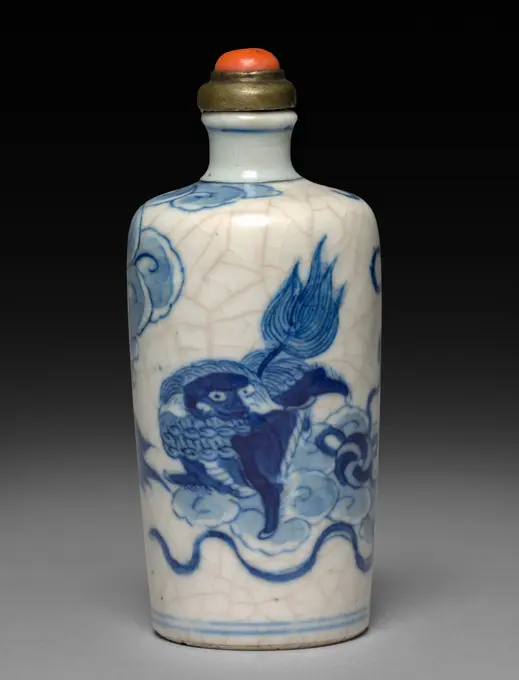
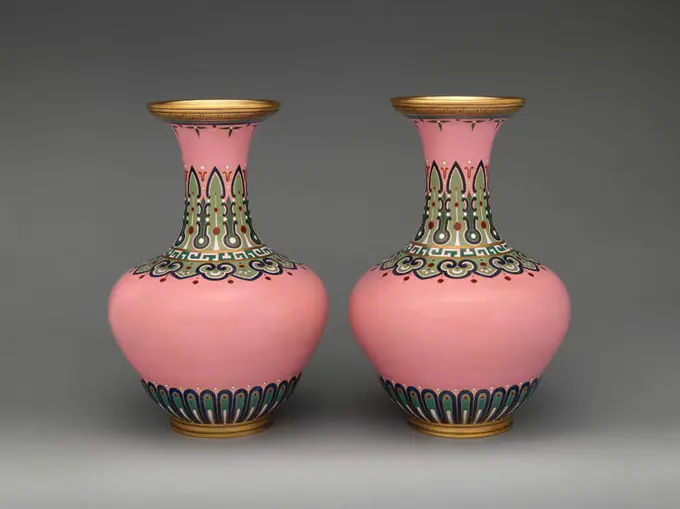
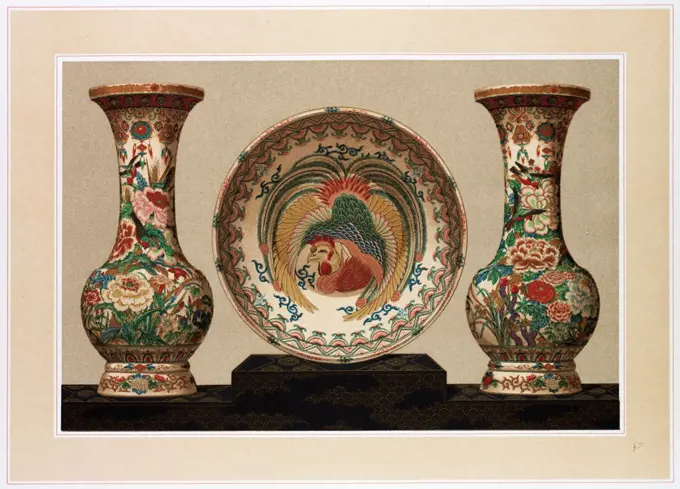
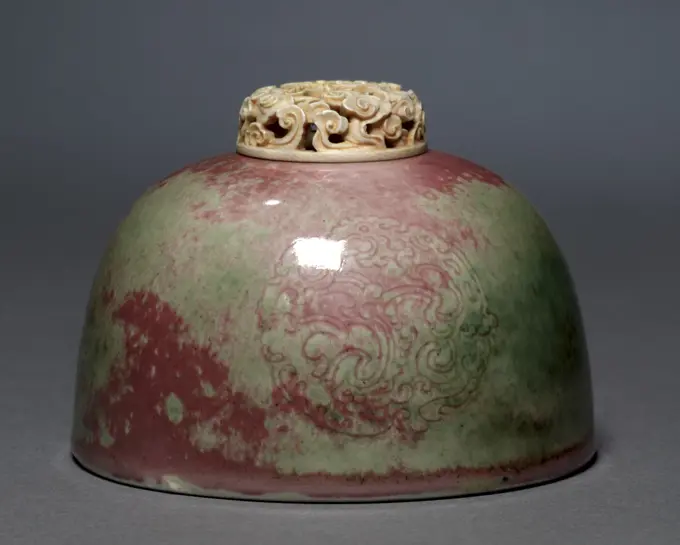
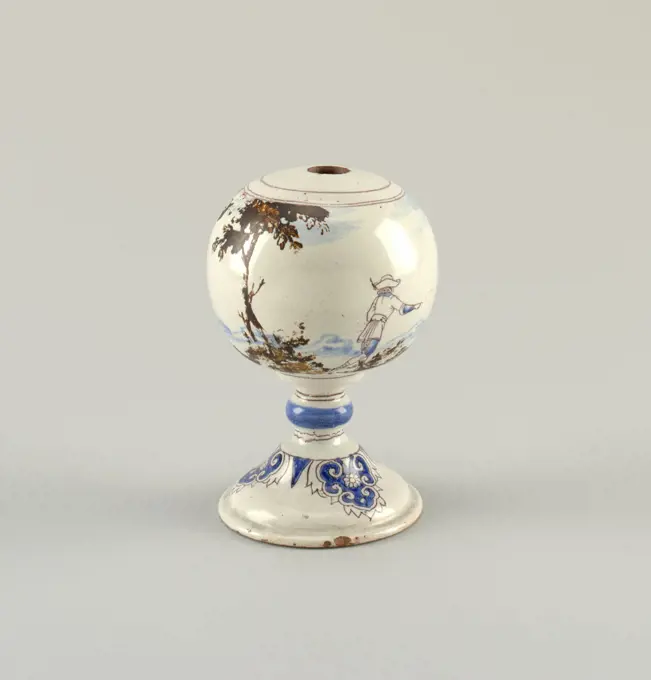
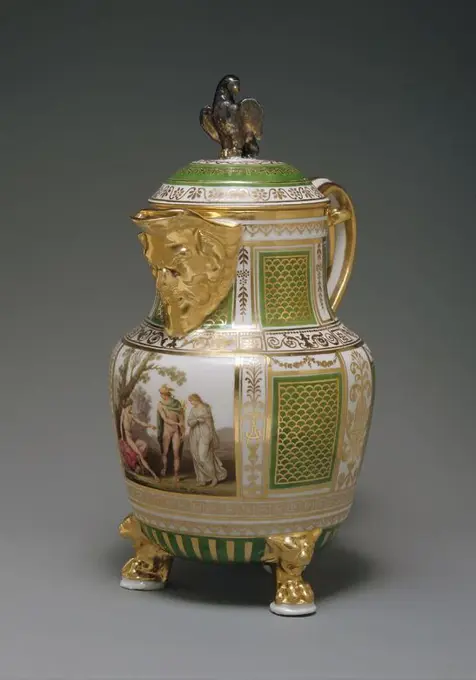
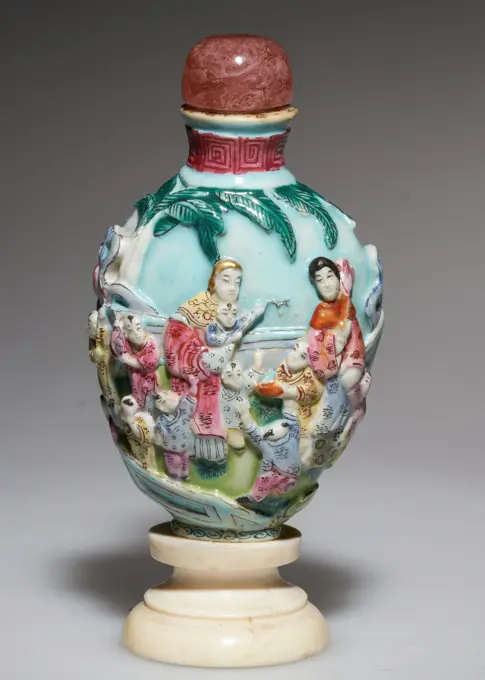
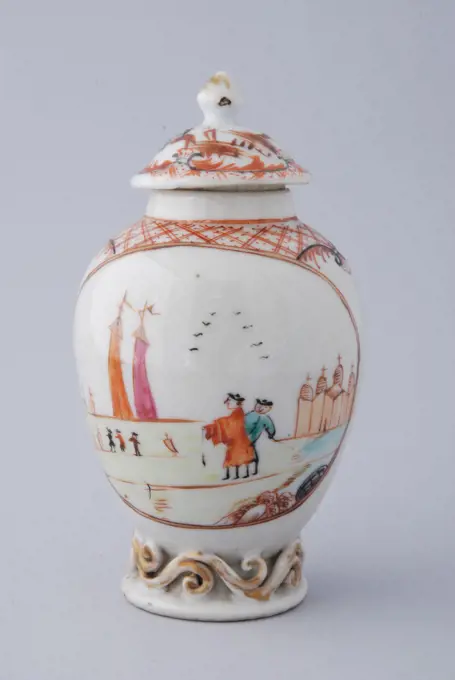
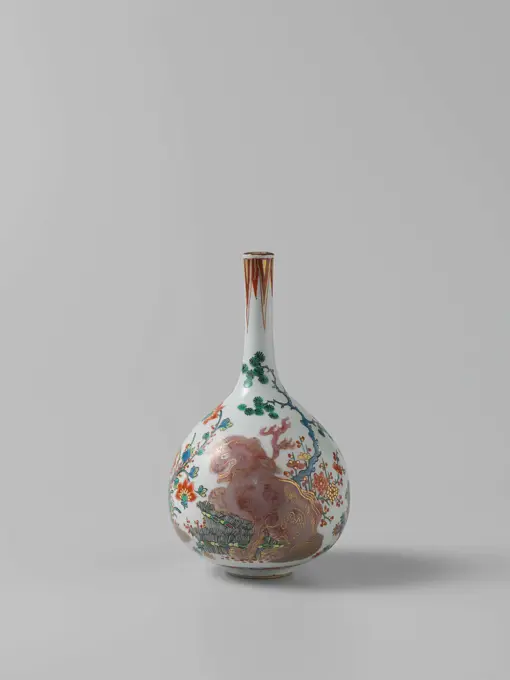
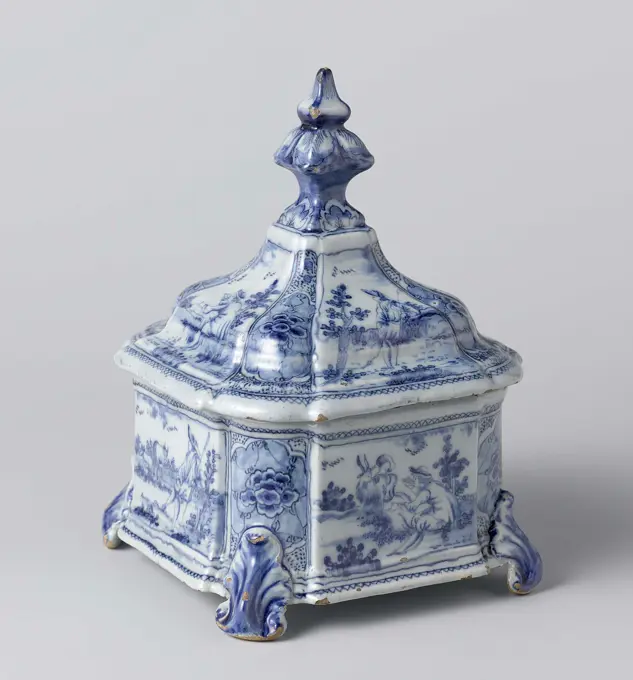
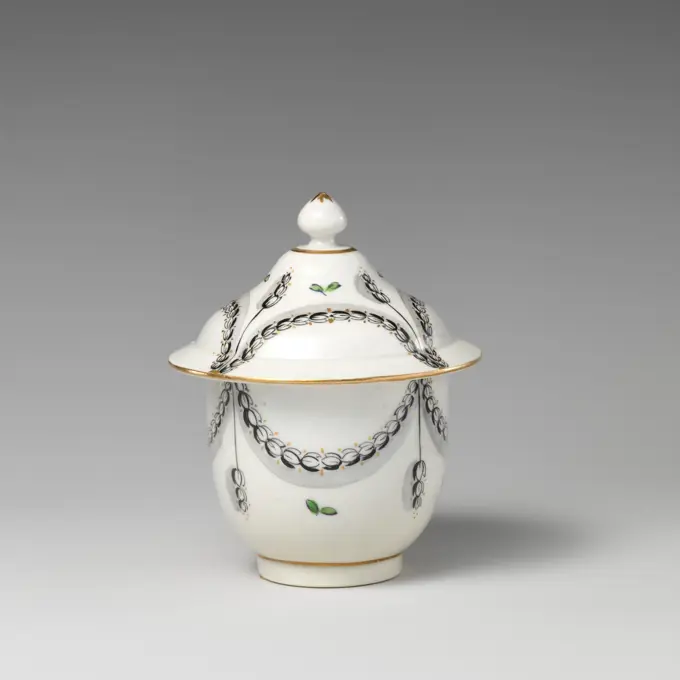
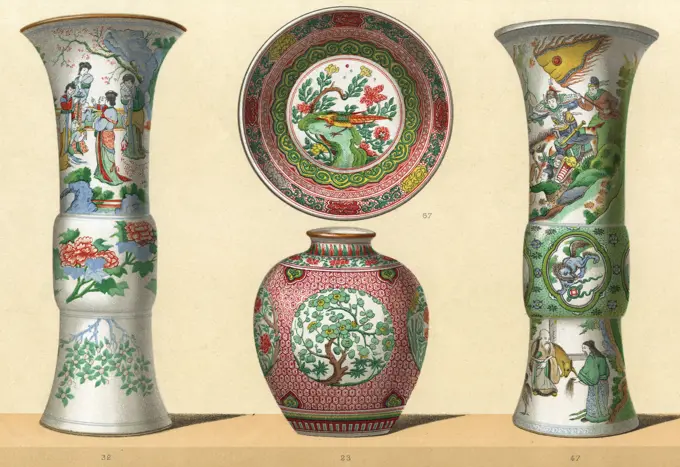
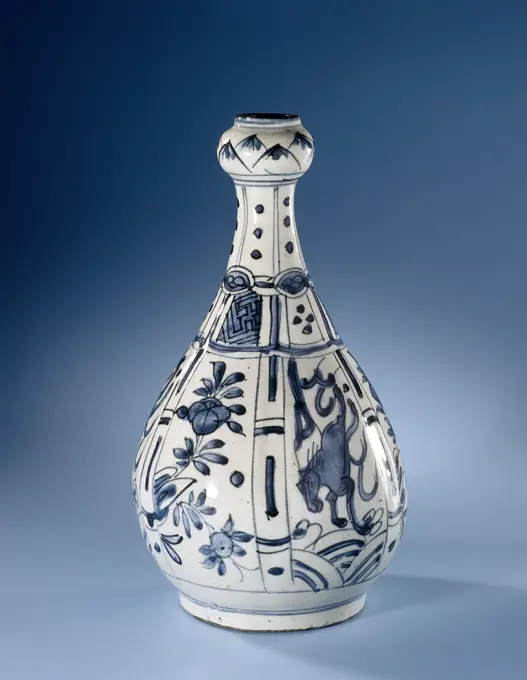
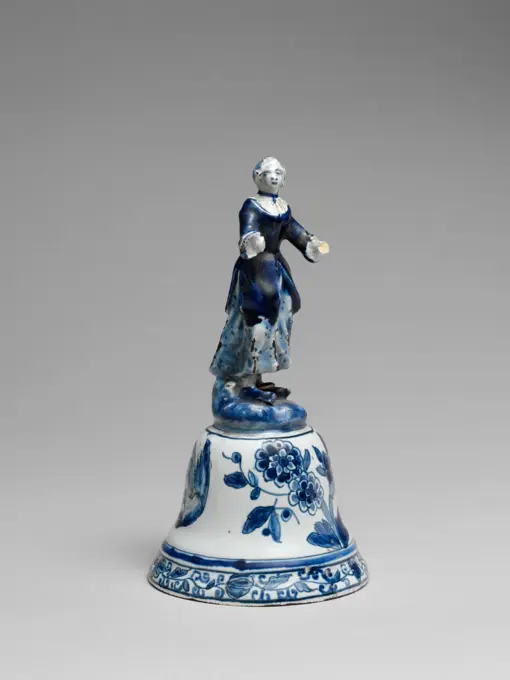
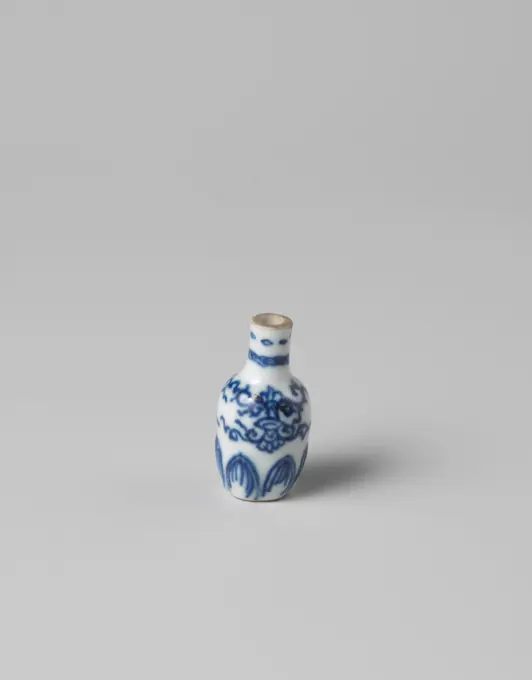
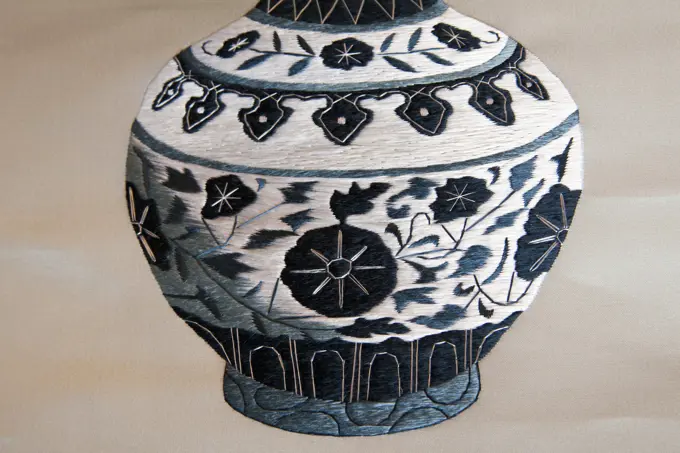
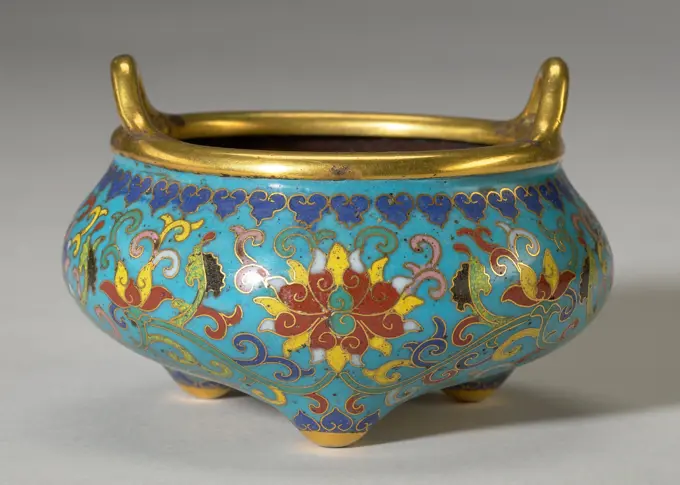
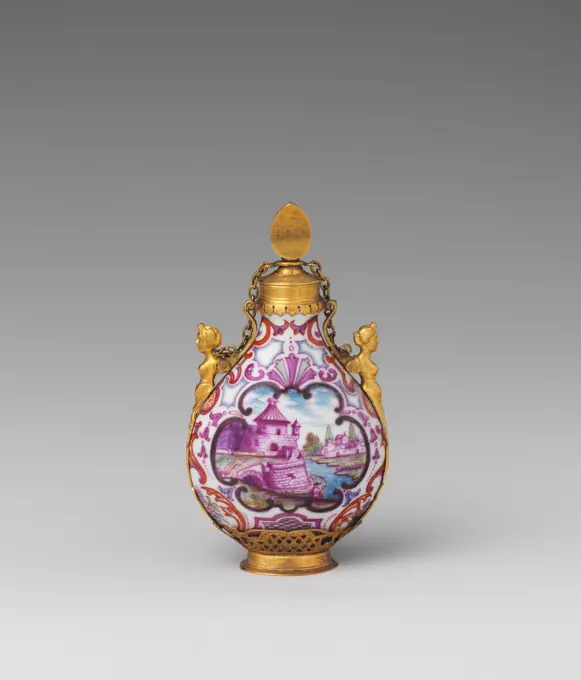
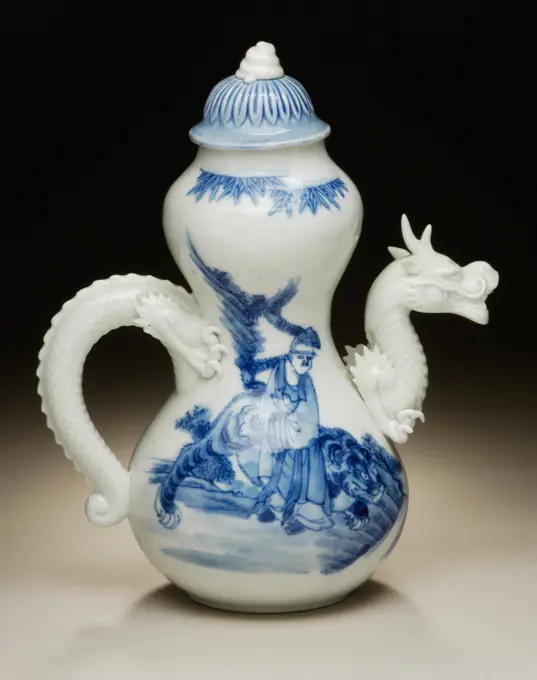
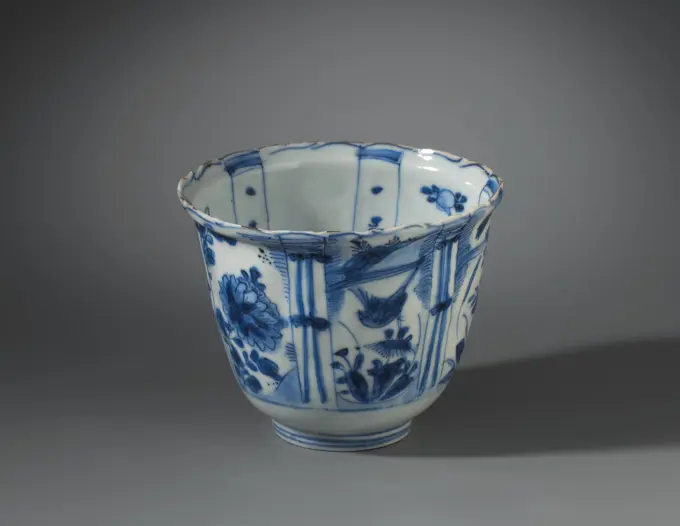
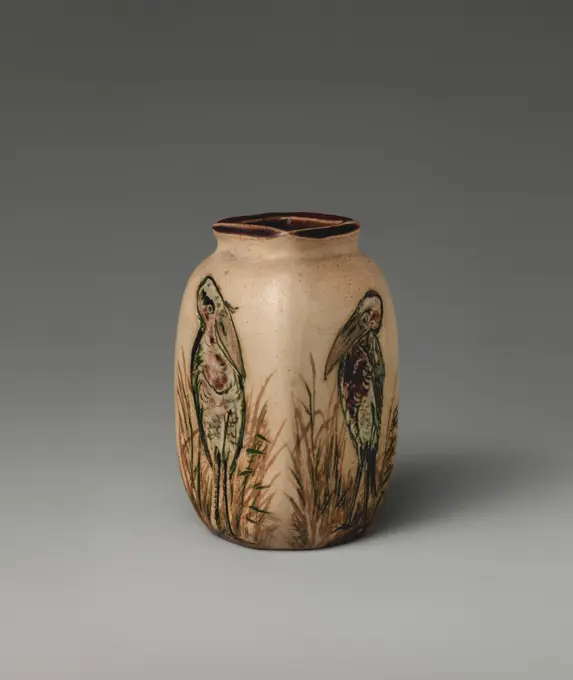
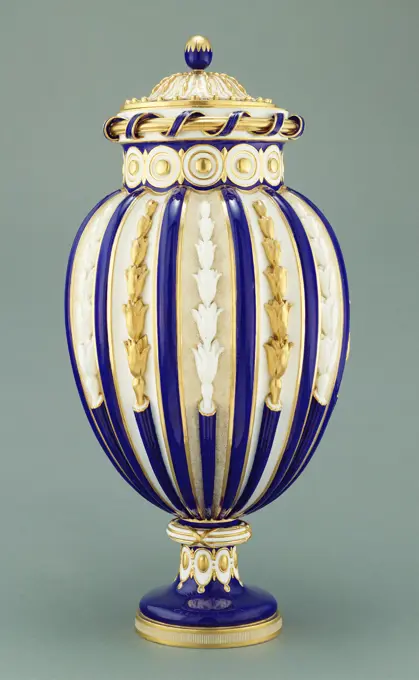
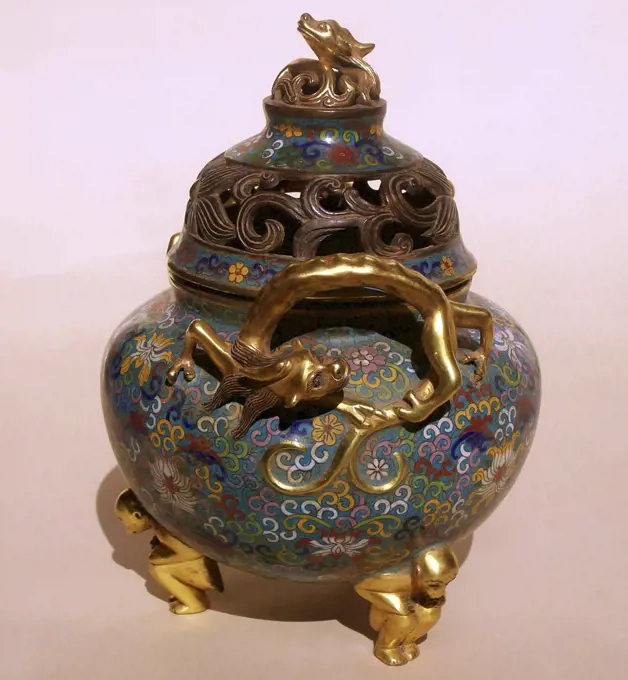
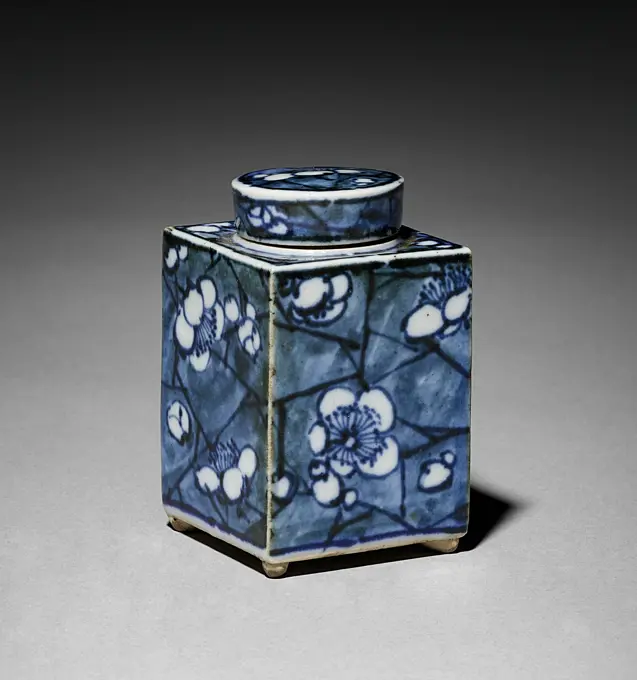
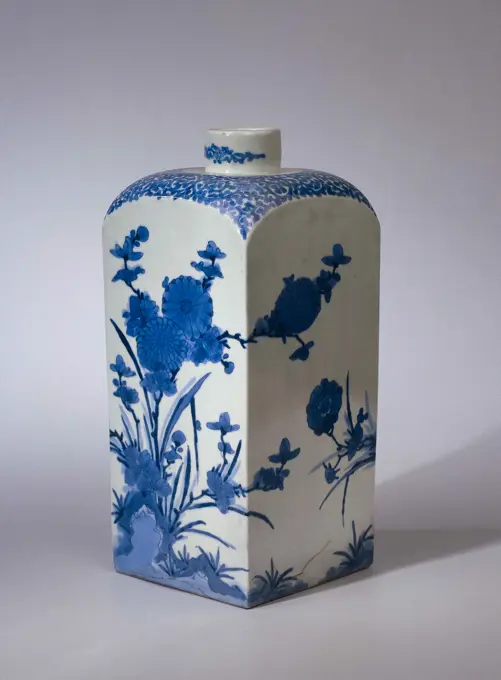
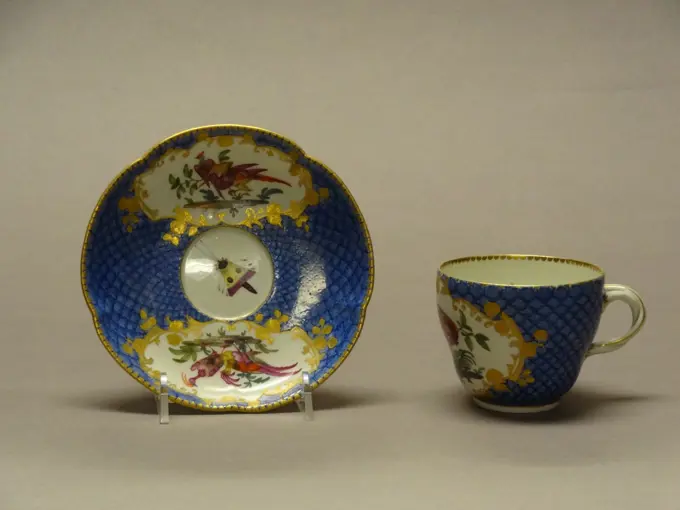
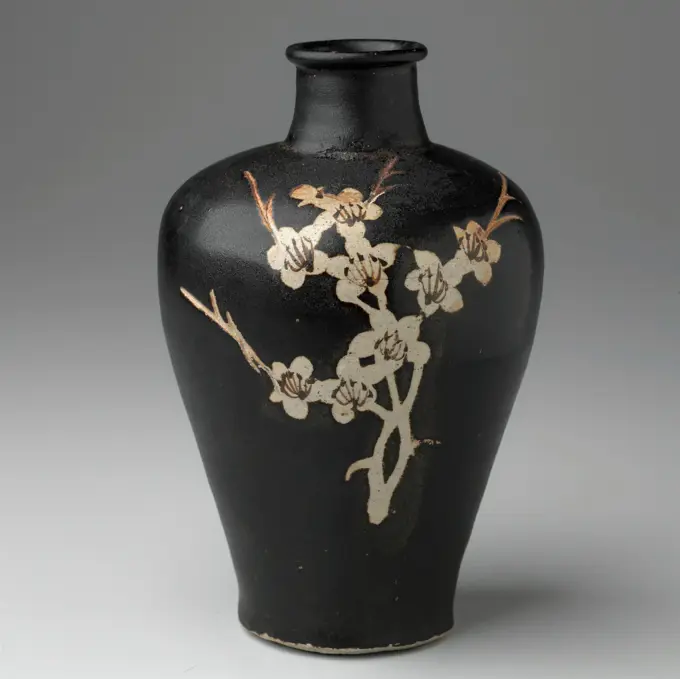
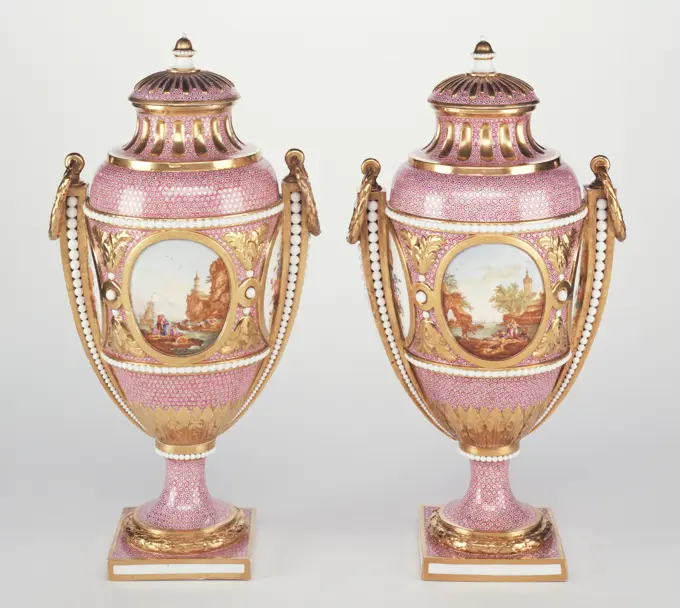
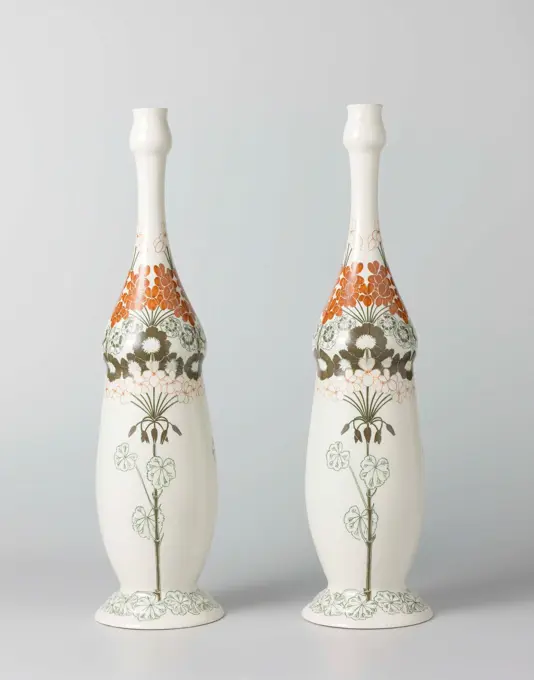
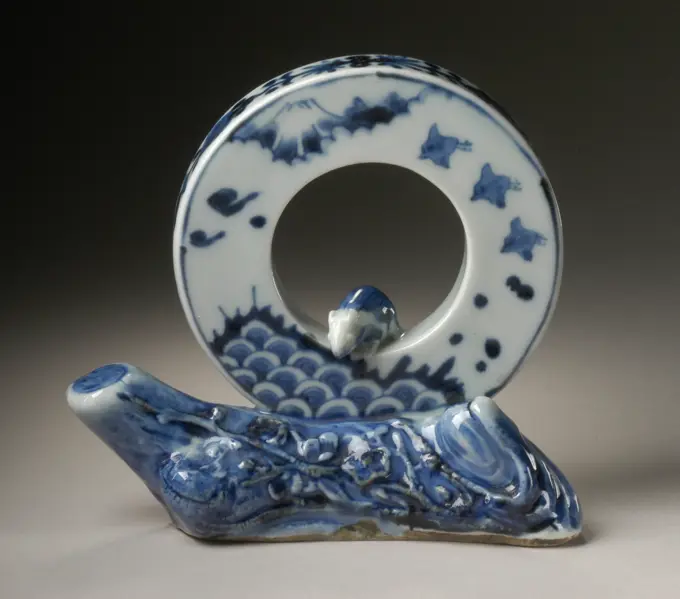
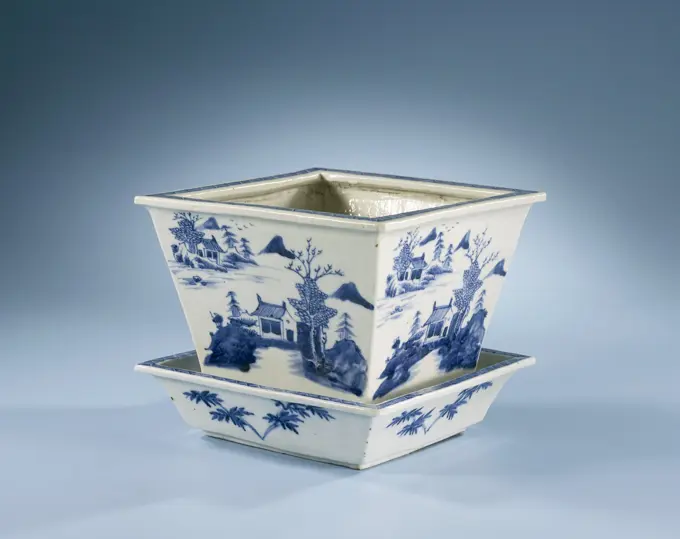
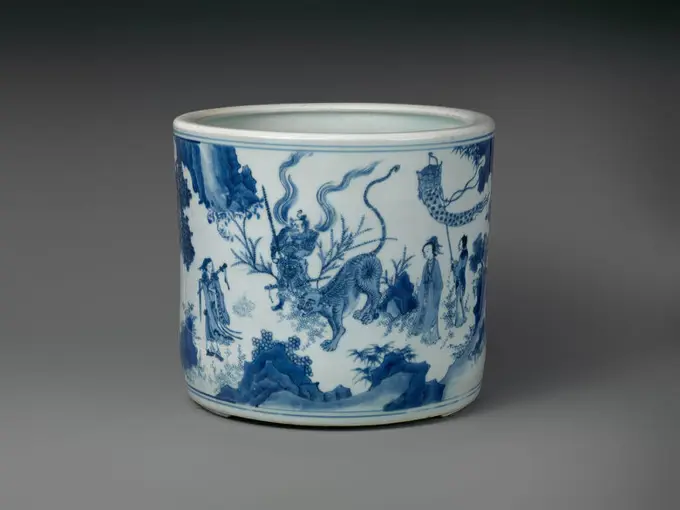
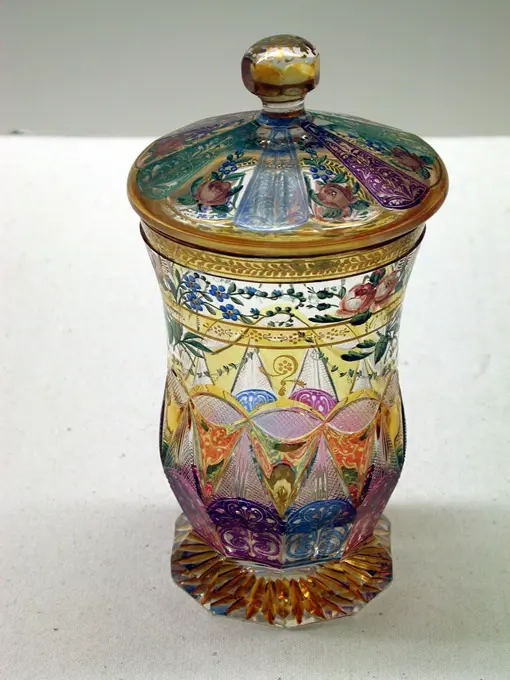
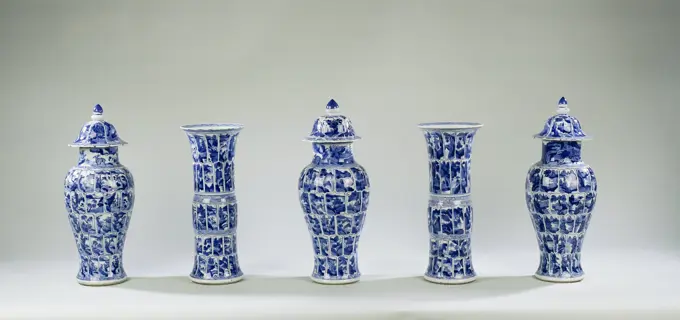
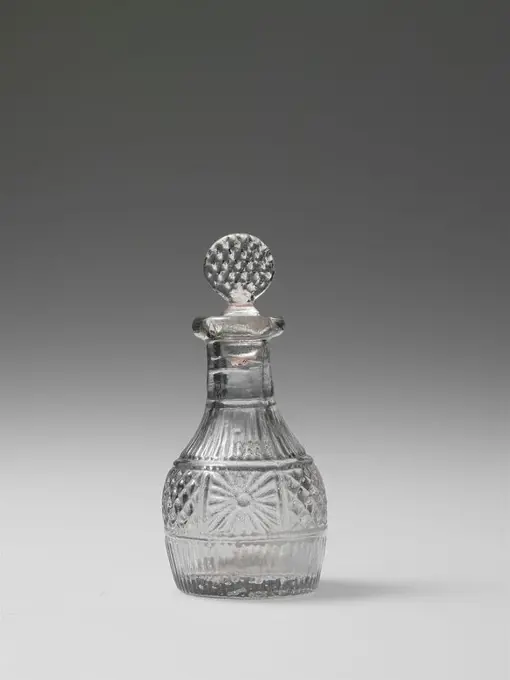
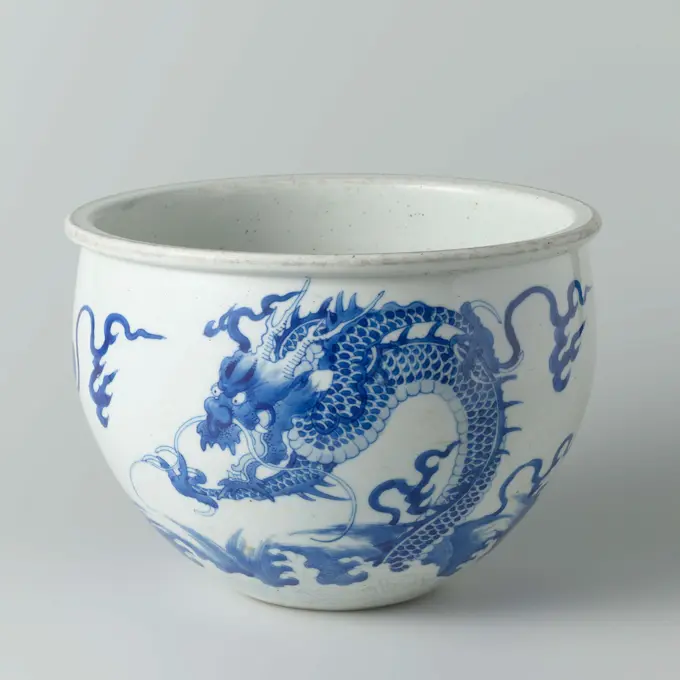
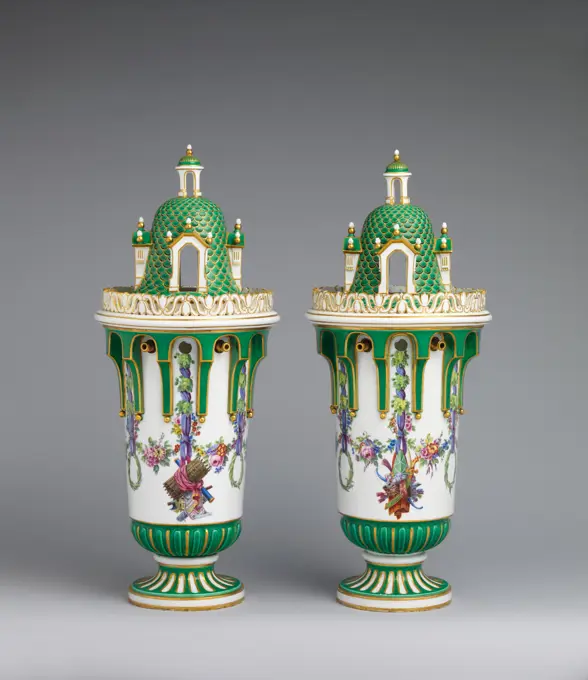
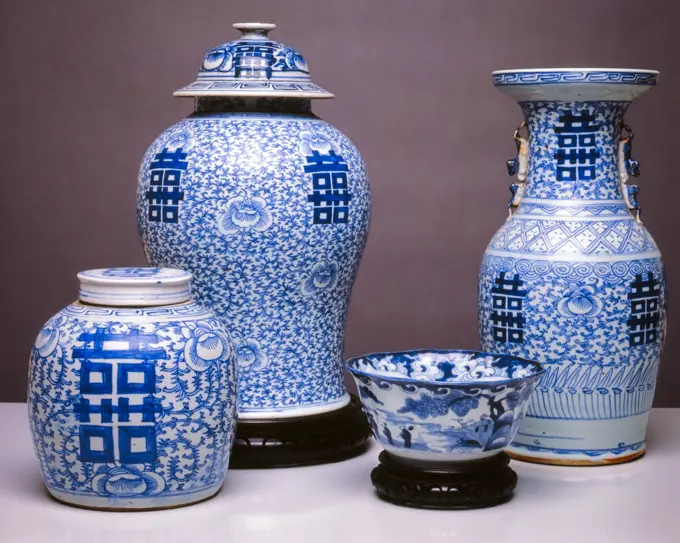
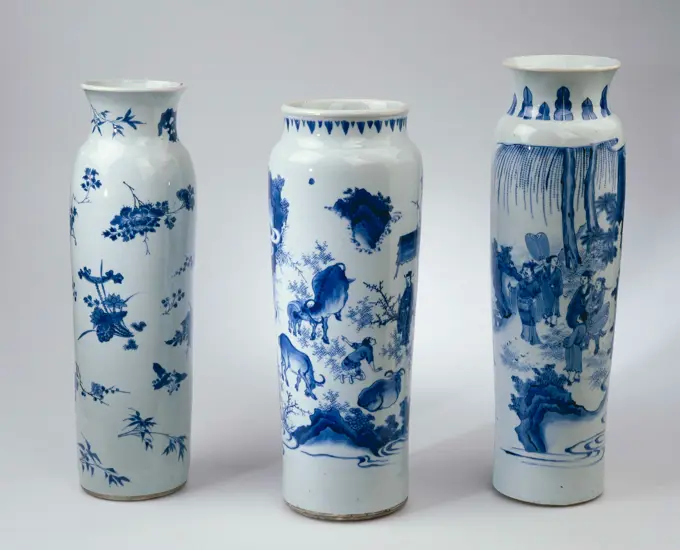
Vase with Flowers mid-18th century China. Vase with Flowers. China. mid-18th century. Porcelain painted with colored enamels over transparent glaze (Jingdezhen ware). Qing dynasty (1644-1911), Qianlong period (1736-95). CeramicsWater Pot with Ivory Lid, 1662-1722. China, Jiangxi province, Jingdezhen, Qing dynasty (1644-1911), Kangxi period (1662-1722). Porcelain with peach bloom glaze; ivory lid; overall: 7.4 cm (2 15/16 in.).Wig stand, Tin-glazed earthenware, underglaze and overglaze decoration, On pierced globe, a continuous landscape that includes figures and a tree, in cobalt blue and manganese purple. Brown overglaze partially scraped off. Tri-foil scroll design on pedestal., St. Jean-au-Desert, France, mid-18th century, ceramics, Decorative Arts, Wig standBlumentopf Blumentopf Copyright: xZoonar.com/angetax 6007541Coffeepot. Culture: Italian, Naples. Dimensions: Height: 9 3/4 in. (24.8 cm). Factory: Naples Royal Porcelain Manufactory (Ferdinand IV period, ca. 1771-ca. 1807). Date: ca. 1795-1800. Museum: Metropolitan Museum of Art, New York, USA.Jar with cover ca. 1725-30 probably Chinese, possibly Dehua. Jar with cover. probably Chinese, possibly Dehua. ca. 1725-30. Soft-paste porcelain (), silver gilt. Ceramics-PorcelainSnuff Bottle, 17th-19th century, 3 x 1 3/4in. (7.6 x 4.4cm), Porcelain, China, 17th-19th centuryAlte blaue chinesische Keramikvase mit Kopierraum isoliert auf weißem Hintergrund. Old blue chinese ceramic vase with copy space isolated on white background with clipping path. Copyright: xZoonar.com/VeeravongxxKomalamenax 22785465Spittoon. unknown, craftsmanCoffee Pot with a Landscape and Flower Sprays, royal porcelain manufactory, c. 1780 Porcelain coffee pot with a pear-shaped body, C-shaped ear and spout from the neck and edge. Painted in email colors and gold. On the abdomen twice a medallion of flower branches with a landscape in it. The ear and the spout are decorated in rocaillest style. The lid with a similar decoration; Lid button in the shape of a flower. Marked on the bottom with the scepter and I. Berlin porcelain. glaze. gold (metal) painting / gilding / vitrification Porcelain coffee pot with a pear-shaped body, C-shaped ear and spout from the neck and edge. Painted in email colors and gold. On the abdomen twice a medallion of flower branches with a landscape in it. The ear and the spout are decorated in rocaillest style. The lid with a similar decoration; Lid button in the shape of a flower. Marked on the bottom with the scepter and I. Berlin porcelain. glaze. gold (metal) painting / gilding / vitrificationDecorative flower vase without a lid. Wolff, Karol (fl. ca 1800), company owner, Bielino (manufaktura fajansu ; 1779-1800), factoryCenser. Artist: Hozan. Culture: Japan. Dimensions: H. 3 1/2 in. (8.9 cm); W. 5 1/2 in. (14 cm); Diam. of rim: 4 3/4 in. (12.1 cm). Date: 1800. Museum: Metropolitan Museum of Art, New York, USA.Tureen and Stand 1765-1775 Worcester. Soft-paste porcelain, underglaze blue, polychrome enamels and gilding . Worcester Royal Porcelain Company (Manufacturer)White tea caddy with wife, husband and child, five figures in landscape and on cover landscape, tea caddy holder tableware ceramic porcelain glaze h 10.5, baked glazed painted stove enamelled, baluster shaped body openwork (ajour) goldcolored rankenvoet, arched lid onion golden button tea drink chine de commande trade serving galanterieSnuff Bottle 19th century China. Snuff Bottle 41711Bottle Vase With Three Shishi, Flowering Plants and Brushwood Fencences. Bottle-shaped vase of porcelain with a spherical body and narrow, long neck, painted in underglaze red and on the glaze blue, red, green, yellow, black and gold. In China on the abdomen painted in underglaze red with three shishi (lion dog). In Europe therefrom painted in email colors with pine, prunus and other flowering plants in assembled hedges and insects. Pointy leaf motifs on the edge and neck. Around the foot a bond with flower drinks. Marked on the underside with four imitation Chinese characters. Memorated copper red in Europe decorated with email colors.Apothecary Jar. Culture: Mexican. Dimensions: H. 6 3/4 in. (17.1 cm). Date: ca. 1700. Museum: Metropolitan Museum of Art, New York, USA.. Box with lid of faïence.. Tobacco jar of faienceSugar bowl with cover (part of a service) ca. 1780-90 Caughley Factory Listen to experts illuminate this artwork's story Listen Play or pause #407. Teapots Supported by Bloomberg Philanthropies We're sorry, the transcript for this audio track is not available at this time. We are working to make it available as soon as possible.. Sugar bowl with cover (part of a service). British, Caughley. ca. 1780-90. Soft-paste porcelain with enamel decoration and gilding. Caughley Factory (British, ca. 1772-1799). Ceramics-Porcelain Chinese porcelain : Decors  famille verte of the 2nd,  3rd and 4th epochs.       Date: 18th century . Bottle (sakefles) of porcelain with a narrow, slightly spreading neck, painted on the glaze in blue, red, green, yellow and black. On the abdomen twice a peacock at a rock with a flowering plant. Leaves and red lines on the shoulder. Golden lacquer repair in the edge. Arita (Kakiemon-style).Pear-shaped bottle vase with running horses and flowering plants, anonymous, c. 1640 - c. 1650 Bottle -shaped vase of porcelain with a pear -shaped body and spherical thickening just below the edge of the neck, painted in under -glaze blue. The belly is slightly modeled in wide and narrow courses. In the wide courses alternately a galloping horse between flames and above waves or a flowering plant on a rock. The narrow compartments with stripes and dots. On the neck narrow, rectangular compartments with four dots or a swastikap pattern, separated in the middle by a band with Ruyi motifs. The thickening in the neck with pointed leaf motifs. Crack porcelain in blue and white. China porcelain. glaze. cobalt (mineral) painting / vitrification Bottle -shaped vase of porcelain with a pear -shaped body and spherical thickening just below the edge of the neck, painted in under -glaze blue. The belly is slightly modeled in wide and narrow courses. In the wide courses alternately a galloping horDeep round bowl with two handles (mascarons). unknown, craftsmanDecorative vase; Manufaktura Majoliki in Nieborów (Nieborów; label; 1881-1899), P Gowska, Aniela; 1881-1886 (1881-00-00-1886-00-00);Chestnut Basket. Leeds Pottery; English, founded 1756. Date: 1785-1795. Dimensions: H. 12.7 cm (5 in.). Lead-glazed earthenware (creamware). Origin: Yorkshire. Museum: The Chicago Art Institute, Chicago, USA.Carp -shaped verses. Ivory transparent and blue glaze sandstone. Cernuschi Museum, Asia Museum of Asia in the city of Paris.Vase 1882-85 Chesapeake Pottery. Vase 14510Jarlet, 1st century BCE - 1st century CE, 1 7/8 x 2 9/16 x 2 9/16 in. (4.76 x 6.51 x 6.51 cm), Glazed ceramic, polychrome painted ware, Vietnam, 1st century BCE - 1st century CECzarka;  19th century (1801-00-00-1900-00-00);Paderewski, Ignacy Jan (1860-1941), Paderewski, Ignacy Jan (1860-1941)-collection, Chinese (culture), Cloisonné, Czarki, Dar (provenance), flowers, butterflies, dishes, Chinese art. Bottle-shaped vase of porcelain with a pear-shaped body and spherical thickening just below the edge of the neck, painted in underglaze blue. The belly is slightly modeled in wide and narrow courses. In the wide boxes alternately a galloping horse between flames and above waves or a thriving plant on a rock. The narrow compartments with stripes and dots. On the neck narrow, rectangular courses with four dots or a swastikad pattern, separated in the middle by a ruyi motifs. The thickening in the neck with pointed leaf motifs. Cracking porcelain in blue and white.Bowl, One of Pair, 19th century, Dia.2-7/8 in., Porcelain, China, 19th centuryHeathen CheneePitcher. Modeler: Karl L. H. Mueller, American, born Germany, 1820-1887 Manufacturer: Union Porcelain Works, American, 1863-ca. 1922Handbell ca. 1770 Johannes Harlees Dutch. Handbell. Dutch. ca. 1770. Ceramic, wood. Delft, Netherlands. Idiophone-Struck-bell-clapper. Square bottle of porcelain with a gilt, bronze cap, painted on the glaze in red, green, yellow, purple, black and gold. On the walls twice pavilions on an island with rocks and flowering plants (bamboo), a bird on a branch, and twice a flying bird at a prunus branch and bamboo. On the shoulder a band with prunus branches and a leaf motif; Running around the neck. A meander pattern on the neck. The cap is in the form of a swan with spread wings on a flower rosette. The edge has been ground. A chip in the foot and a few cracks. Arita, decorated in Europe ? In the Japanese Kakiemon style.Miniature bottle vase with lotus scrolls, anonymous, c. 1675 - c. 1724 Miniature bottle -shaped vase made of porcelain with egg -shaped body, painted in underly glaze blue. On the belly twice lotus drinks; Around the foot a band with modeled leaf motifs; The neck with twice a decorative band. Blue White. China porcelain. glaze. cobalt (mineral) painting / vitrification Miniature bottle -shaped vase made of porcelain with egg -shaped body, painted in underly glaze blue. On the belly twice lotus drinks; Around the foot a band with modeled leaf motifs; The neck with twice a decorative band. Blue White. China porcelain. glaze. cobalt (mineral) painting / vitrificationBottle with a scale-motif, anonymous, c. 1575 - c. 1599 Bottle of quartz-fritry, painted in under-glaze blue, red, green and black. On the abdomen a scaly motif interrupted by stylized leaves. The neck with dots. Iznik. Iznik earthenware. glaze painting / vitrification Bottle of quartz-fritry, painted in under-glaze blue, red, green and black. On the abdomen a scaly motif interrupted by stylized leaves. The neck with dots. Iznik. Iznik earthenware. glaze painting / vitrificationSnuff Bottle with Stopper, 1723-35. China, Jiangxi province, Jingdezhen kilns, Qing dynasty (1644-1911), Yongzheng reign (1722-35). Porcelain; overall: 7.7 cm (3 1/16 in.).Chinese silk embroidery depicting a blue traditional vase, Baisha, Yunnan Province, China CAP/MEL Mel Longhurst/ China Copyright: xMelxLonghurst/CapitalxPicturesxIncense burner, 1736-1795, 2 7/8 x 4 3/8 x 4-3/8 in. (7.3 x 11.1 x 11.1 cm), Cloisonné enamel, China, 18th century, With its spherical body, three lobed legs, and large handles, this incense burner is a copy of a li, a type of archaic bronze vessel prevalent during the Shang and Zhou periods. But a new techniquecloisonné, a type of enamel decoration on metalis used here. In cloisonné, colored-glass paste is placed within compartments outlined by copper or bronze wires and then fired. Originating in Europe, cloisonné had spread to China by the 13th or 14th century and remained common throughout the Qing dynasty. The censer, its scrolling lotus design in red, yellow, green, black, mauve, and white enamels on a turquoise-blue ground, bears an inscription identifying it as having been made in the imperial workshop of the Qianlong period (r. 1736-95).Faïence ink set of multicolored painted faïence. Elongated ink set with container between two candle holders. The multicolored painting consists of lambrequins and flower branches.Scent bottle ca. 1730 Vienna The importance attached to small luxury objects is reflected in the sumptuous decoration of this bottle, which includes gold mounts designed to coordinate with the painted motifs. The concept of gallantry at the time encompassed the ownership of such objects (often known as galanteries), which reflected the owners good taste and position in society.. Scent bottle. Austrian, Vienna. ca. 1730. Hard-paste porcelain, gold. Ceramics-PorcelainVase (oil lamp column). unknown, craftsmanSake Ewer with Fenggan and Tiger Design, Dragon Handle and Spout. Japan, 19th century. Ceramics. Hirado Mikawachi ware, porcelain with underglaze blueCylindrical Vase With Chinese Ladies And Flower Pots. Small, cylindrical vase of porcelain with a straight shoulder and short, spreading neck with a flat edge, painted in underglaze blue. On the wall Chinese ladies (long lines) at flower pots on a stool. On the shoulder valuables (pearl, books). A tire with dots on the neck. Marked on the bottom with 'fú'. Blue White.Standing cup with cover 1840-50 Bohemian. Standing cup with cover 207900Alcohol pourse, 1870. Sandstone enhanced with relief enamels. Cernuschi Museum, Asia Museum of Asia in the city of Paris.Covered Oil Bottle with Flowering Lotus and Scrolling Leaves 1100-1199 North Korea. Cosmetic containers in celadon were widely used by ladies of the court and aristocratic households during the Goryeo dynasty (918ñ1392). Often beautifully adorned with floral motifs, these containers held face powder, blush, hair oil, or fragrance, and became prized possessions among elite women. This particular example features intricately carved peonies, a symbol of wealth and beauty. Compared to later oil bottles, which tend to have a flatter body, this bottle displays a more bulbous shape.. Stoneware with underglaze carved and incised decoration .Cupid as painter ca. 1765 Chelsea Porcelain Manufactory. Cupid as painter. British, Chelsea. ca. 1765. Soft-paste porcelain. Chelsea Porcelain Manufactory (British, 1745-1784, Gold Anchor Period, 1759-69). Ceramics-PorcelainBowl (crow cup) with flowering plants, flying birds and a bird on a rock, anonymous, c. 1600 - c. 1624 Come or crow head of porcelain with scalloped edge, painted in underlaze blue. The outer wall is divided into wide and narrow compartments with flowering plants (bamboo, peony) and flying birds; The narrow compartments with bows. A bird on a rock on the bottom. The inner wall also with a professional decoration with flower courses in the wide courses and dots in the narrow compartments. Crack porcelain in blue and white. China porcelain. glaze. cobalt (mineral) painting / vitrification Come or crow head of porcelain with scalloped edge, painted in underlaze blue. The outer wall is divided into wide and narrow compartments with flowering plants (bamboo, peony) and flying birds; The narrow compartments with bows. A bird on a rock on the bottom. The inner wall also with a professional decoration with flower courses in the wide courses and dots in the narrow compartments. Crack porcelain Small vase with birds 1905 R. W. Martin and Brothers British Determined that pottery vessels should be regarded as true works of art, avant-garde ceramicists in France in the last decades of the nineteenth century transformed their craft into an intellectual and emotional endeavor. The pioneers of this revival were Jean Carriès, Ernest Chaplet, Théodore Deck, and Auguste Delaherche. These revolutionary artist-potters embraced artisanal traditions while pursuing lost techniques through exhaustive experimentation. Reacting to what they viewed as an excessive and improper use of ornament, they celebrated the simplicity and sincerity of their medium, following the tenets of the Art Nouveau style taking place in Europe. Based on the principles of the British Arts and Crafts movement, Art Nouveau artists sought to reform the decorative arts by emphasizing uniqueness and a return to craftsmanship. Artist-potters found inspiration in Asian ceramics, particularly Japanese stoneware (a hard, denVase (vase à chaîne or vase à côte de melon).Vase with poppies. Concave, cut bottom. Firing up, batted body with a square mouth with raised sides. Colorless glass, orange red and colorless überfang with brush green scallops, free and etched freely and with the needle. Decor of red poppies with dark green leaves. Along the edge of the foot and mouth a gold-plated edge in Art Nouveau motifs. On the bottom the signature Indiana LCIE.Pair of vases French, Paris ca. 1895Jar with plum trees early 16th century China. Jar with plum trees 45844Covered Jar With Three Ladies in A Garden and Playing Boys. Porcelain lid pot, painted in underglaze blue. On the pot a continuous scene with two ladies at a 'go' table playing for a screen and a third standing with an object in her hand. Marked on the bottom with the four-character mark of Emperor Chenghua. Blue White.Mustard pot with cover 1760-70 British, South Staffordshire. Mustard pot with cover. British, South Staffordshire. 1760-70. Enamel on copper. Enamels-Painted. Vase with a lid of pottery, belonging to a set of three, polychrome painted with sunflowers, weapons and topographic representations. On one side, the alliance weapon is depicted by Willem Adolf Maximiliaan Carel, Vorst van Wied and his wife Princess Marie der Nederlanden, paralyzed 1871-1896, on the other hand, the interior of the Dutch Reformed Church of Wassenaar is depicted. The coat of arms of the municipality of Wassenaar are depicted on the pointed tapered lid. Sunflowers have been painted between and above the performances.Ancient China: Censer with two dragon handles, Ming Dynasty, Jingtai period, 1450 - 1456 AD. Gilt cloisonne enamel and bronze.Tea Container with Plum Blossom, early 1800s. Aoki Mokubei (Japanese, 1767-1833). Porcelain with underglaze blue; overall: 7.5 x 4.6 cm (2 15/16 x 1 13/16 in.). Aoki Mokubei, born into a family of restaurateurs, was a potter, calligrapher, painter, and scholar, and is considered one of the three masters of later Edo period Kyoto ceramics. He specialized in porcelains fashioned after Chinese prototypes, and created works for steeped tea (sencha) such as these matching tea caddies decorated in an underglaze blue called sometsukeliterally “with applied dye.” He signed them on their bottoms. They also have intricately patterned silk sleeves to both beautify and protect them. On the exterior of the lid of the outer wooden box that contains them, it is written that Mokubei inscribed and painted an image on the box. On the interior of the lid, the signature and seals of a former owner are written. Mokubei has signed the lid of the inner box, and a charming ink and light color composition of. Square bottle of porcelain, painted in underglaze blue. On the wall twice a flowering plant (chrysanthemum, camellia) at a rock. On the round shoulder 'Karakusa-Banken'. The neck with two flower drinks. Blue White.Ovoid ewer with a geometrical pattern, anonymous, c. 1175 - c. 1199 Egg-shaped can of quartz fritry decorated with block and stripe motif cut away from Engobe van Zwarte sludge under a turquoise alarm laze. Iran earthenware. glaze cutting / vitrification Egg-shaped can of quartz fritry decorated with block and stripe motif cut away from Engobe van Zwarte sludge under a turquoise alarm laze. Iran earthenware. glaze cutting / vitrificationMeissen Porcelain Manufactory or, Cup and Saucer, c. 1760 with later decoration, or 19th century, hard-paste porcelain.Vase with a lid Mi Nia (Meissen)Jar with Dragons. China. Date: 1662-1722. Dimensions: H. 30.5 cm (12 in.); diam. 28.4 cm (11 3/16 in.). Porcelain painted in overglaze enamel with gold repairs. Origin: China. Museum: The Chicago Art Institute, Chicago, USA.Meiping Bottle with Plum Branch Decor, 13th century, 8-3/8 x 5 x 5 in. (21.3 x 12.7 x 12.7 cm), Chi-chou ware Stoneware with decoration reserved in the bisquit against a dark-brown glaze, China, 13th century, Probably used for storing wine, vinegar, soy sauce and other liquids during the Song (960-1279) and Yuan (1280-1368) dynasties, mei ping bottles such as this came to be favored in later periods as vases for cut branches of flowering plum as the term, mei ping ('plum bottle' or 'plum vase') implies. In fact, the term mei-ping does not appear in pre-Qing (1644-1912) texts.Pair of Vases (vases Bolvry à perles or vases à cartels Bolvry).Sauceboat, 1735-56. Meissen Porcelain Factory (German). Porcelain; overall: 9.9 x 24.5 cm (3 7/8 x 9 5/8 in.).Spice Box, the Greek A, c. 1680 - c. 1685 Speijence spice jar with a chinoiserie decoration. The pot has a corresponding lid. Delft . Speijence spice jar with a chinoiserie decoration. The pot has a corresponding lid. Delft .Vase with flower decoration unknown. Vase of pottery, slim shape with long neck. Painted in green, black-gray and brown, with geraniums. Signature: Made in South Holland and factory brand with links "p / a." And right "c.j.v M. egroll Model no. 5012.Cut down bottle with underglaze from Iznik, Turkey. Dated 16th CenturyVasePossibly Boston and Sandwich Glass Works, Sugar Bowl and Cover, c. 1840-c. 1850, electric blue lead glass.. Pharmacist spot from faience. With ear and spout and blue painted label with inscription: S / Card.BenedSnuff Bottle, 1880-1935, 2 5/8 x 2in. (6.7 x 5.1cm), Porcelain, coral, glass, ChinaDisc-Shaped Okimono, or Desk Screen, with Rat, Fuji, Plovers, Waves, and Plum Design. Japan, 19th century. Ceramics. Hirado Mikawachi ware; porcelain with white and blue glazes, and blue underglazeSquare jardinière and stand with river landschapes, anonymous, c. 1775 - c. 1799 Square Jardinière and Subtotel of porcelain with spreading wall and flat edge, painted in under -glaze blue. On the walls of the pot river landscapes with houses, trees, mountains and a figure on the waterfront; On the wall of the dish bamboo branches; The edges with shaft work. The pot has been broken; Missing two corners from the foot. Blue White. China porcelain. glaze. cobalt (mineral) painting / vitrification Square Jardinière and Subtotel of porcelain with spreading wall and flat edge, painted in under -glaze blue. On the walls of the pot river landscapes with houses, trees, mountains and a figure on the waterfront; On the wall of the dish bamboo branches; The edges with shaft work. The pot has been broken; Missing two corners from the foot. Blue White. China porcelain. glaze. cobalt (mineral) painting / vitrificationCruet 17th century Spanish, Catalonia. Cruet 186398 Spanish, Catalonia, Cruet, 17th century, Glass, H. 9 1/8 in. (23.2 cm). The Metropolitan Museum of Art, New York. Gift of Henry G. Marquand, 1883 (83.7.126)Pitcher or ewer from Rouen, France, early 18th century. Decorated with holy figures in enamel and the names Anne-Marie Cassaigne et Nicolas Hautecoeur, 1733. Hand-finished chromolithograph from Ris Paquot's General History of Ancient French and Foreign Glazed Pottery, Chez l'Auteur, Paris, 1874.Vase. England, Yorkshire. Date: 1785-1795. Dimensions: 26 x 13 x 7.6 cm (10 1/4 x 5 1/8 x 3 in.). Lead-glazed earthenware (creamware). Origin: Yorkshire. Museum: The Chicago Art Institute, Chicago, USA.Vase with a lid. Wolff, Karol (fl. ca 1800), company owner, Bielino (manufaktura fajansu ; 1779-1800), factoryFour lobed tea pot with flowering plants, anonymous, c. 1875 - before 1899 Four times lobed porcelain teapot on four short feet, with curved spout and upright handle and gilded bronze frame, painted on the glaze in turquoise, green, yellow, eggplant and black. The wall is divided into four courses with a cartouche with flowering plants in a colored background. In the box around the spout a floral, yellow background with dots; Bamboo branches in the cartouche. In addition, a turquoise background with curl work with a grasshop on aster branches in the cartouche. The third course with a green background with pine and dots with peon branches. In the fourth aubergine background with asters and curl work, with a grasshopper on splendor in the cartouche in a rock. On the shoulder a band with leaf vines. The edge with a band curl. On the lid of flower vines. The spout with bamboo branches and the handle imitates a bamboo branch. Lid has been broken. Famle Verte. China Porcelain. Glaze. Gold (M. Soft-paste porcelainBrush pot with narrative scene. Culture: China. Dimensions: H. 8 1/2 in. (21.6 cm); Diam. 9 1/2 in. (24.1 cm). Date: ca. 1640. Museum: Metropolitan Museum of Art, New York, USA.Vase, De Witte Ster, After Dirck Witsenburg (I), After Dammas Hofdijck, after Jacobus de Lange, c. 1700 - c. 1710 Vase of earthenware, octagonal and bottle -shaped with ditto slender neck. Painted in blue on the white tinglaze: on the eight courses Christ, Peter, Mattheus, Lucas, John the Baptist, Bartholomeus, Thomas and Mary, all in half figure with their attributes; There under their names: Ecce Homo, S.Petrus, S.Matthaeus, S.Lucas, S.Iannis.ba., S.Bartolomaeus, S.Thomas, S.Maria. Under these inscriptions half rosettes with symmetrical leaf vines. Above the figures, one with ribbons wounded, on which angel heads with wings and a lilien motif stand on the head. Putti and angel's heads between clouds on the neck. A leaf edge along the foot edge. Marked in blue with an asterisk including the number 125 including another four round. Delft . Vase of earthenware, octagonal and bottle -shaped with ditto slender neck. Painted in blue on the white tinglaze: on the eight courses Christ, PeterBeaker with cover 1850-60 Bohemian. Beaker with cover 207899Tripod Incense Burner, 1644-1911. China, Qing dynasty (1644-1911). Jade; overall: 12.4 x 17.2 x 11.5 cm (4 7/8 x 6 3/4 x 4 1/2 in.).Five-piece garniture with landscapes in panels, c. 1700 Five -piece porcelain cabinet consisting of two jabs and three lid vases. Painted in underly glaze blue with landscapes in lotus -shaped cartouches. Blue White. China porcelain. glaze. cobalt (mineral) painting / vitrification Five -piece porcelain cabinet consisting of two jabs and three lid vases. Painted in underly glaze blue with landscapes in lotus -shaped cartouches. Blue White. China porcelain. glaze. cobalt (mineral) painting / vitrificationToy decanter. Culture: American. Dimensions: H. 2 15/16 in. (7.5 cm). Maker: Boston & Sandwich Glass Company (American, 1825-1888, Sandwich, Massachusetts). Date: 1825-40. Museum: Metropolitan Museum of Art, New York, USA.Scent bottle ca. 1750-55 Saint James's Factory. Scent bottle. British, London. ca. 1750-55. Soft-paste porcelain. Ceramics-Porcelain. Flower pot of porcelain with around body and flat edge, painted in underglaze blue. On the wall twice a pearl rooting dragon and two carp between waves; A double circle on the bottom. Blue White.Pharmacy canister, c. 1770, Ceramic (Rockery series, terracotta-colored earthenware, decorated with scroll motifs, garlands of flowers and leaves, white, cup-shaped, with lid), manufactured by Alcora (Castellón), Height: 24.5 cm. Museum: Museo Fundación Francisco Godia, Barcelona, Cataluña, España.Vase with cover (Vase en tour) (one of a pair) ca. 1763 Sèvres Manufactory French Because of the functional nature of services made for dining or for tea, the models of these useful wares changed infrequently at Sèvres. In addition, it was not feasible from an economic standpoint to constantly invent new forms for all of the components of these services. However, for decorative objects such as vases, usually made in pairs or to form a garniture (a set of three or five), the factory was able not only to respond quickly to changing fashions, but also to demonstrate its ability to push the boundaries of ceramic design.These remarkable vases are in the shape of a fortified tower, with buttresses encircling the top of the body. Small gilt-porcelain cannons extend from underneath the buttresses, the lids are formed as high domes with dormer windows, and a cupola serves as the finial. The body is painted with trophies of war, composed of various elements associated with military campaigns. Th1990s ANTIQUE CHINESE BLUE AND WHITE PORCELAIN VASES AND GINGER JARS WITH DOUBLE HAPPINESS DESIGN AND A BOWL Vase with lid, one of a five-piece garniture, 19th century, 9 3/4 x 3 5/8 in. (24.8 x 9.21 cm), Porcelain, England, 19th centuryPair of vases. Culture: British, Stoke-on-Trent, Staffordshire. Designer: Christopher Dresser (British, Glasgow, Scotland 1834-1904 Mulhouse). Dimensions: Overall (.1, confirmed): 12 9/16 × 8 7/16 × 8 7/16 in. (31.9 × 21.4 × 21.4 cm);Overall (.2, confirmed): 12 7/16 × 8 7/16 × 8 7/16 in. (31.6 × 21.4 × 21.4 cm). Manufactory: Minton(s) (British, Stoke-on-Trent, 1793-present). Date: ca. 1870.These vases reflect Christopher Dresser's work in its most overtly decorative vein. The primary aesthetic impact of the vases lies in the strong pink ground, and the 'cloisonné' decoration, applied in bands, is further removed from a true cloisonné appearance than is normally encountered in Dresser's work in this genre. There is a boldness to the simplicity of the decorative scheme, which relies on a strong color offset by two primary areas of dense pattern. These vases are unlike any other ceramic works designed by Dresser in the Museum's collection. Museum: Metropolitan Museum of Art, New York, USATSUMA FAIENCE, JAPAN. Set of two vases of pottery, slim pear-shaped, painted in blue, brown and black with stylized palmets and other ornaments. Signature: Amphora holland 210-1.c.j.vd.hoef; 210 Also reimburse.. Vase (wheel wagon) of porcelain with a cylindrical body and a spreading neck, painted in underglaze blue. Different loose flower branches on the wall (Prunus, Aster, Lotus, Peony, Camellia, Bamboo, Orchid, Pauwlonia). The neck with twice a rock and a bamboo branch. The bottom is unglazed. Two chips in the edge. Transition porcelain in blue and white.