Decorative Porcelain Jars

A variety of intricately painted porcelain jars showcasing traditional motifs and floral designs, highlighting craftsmanship and cultural heritage.

Baluster covered jar with flowering plants and auspicious symbols in panels, anonymous, c. 1680 - c. 1720 Balus -shaped porcelain lid jar with a wide neck, painted in underly glaze blue and on the glaze gold. The wall is divided into three rows with scalloped, rectangular compartments with a flowering plant in a rock and happiness symbols and antiques. On the neck a bond with lotus drinks saved in a blue background. The underside is unglazed. Blauw-Wit with Goudemail. China porcelain. glaze. cobalt (mineral). gold (metal) painting / gilding / vitrification Balus -shaped porcelain lid jar with a wide neck, painted in underly glaze blue and on the glaze gold. The wall is divided into three rows with scalloped, rectangular compartments with a flowering plant in a rock and happiness symbols and antiques. On the neck a bond with lotus drinks saved in a blue background. The underside is unglazed. Blauw-Wit with Goudemail. China porcelain. glaze. cobalt (mineral). gold (metal) painting / gild
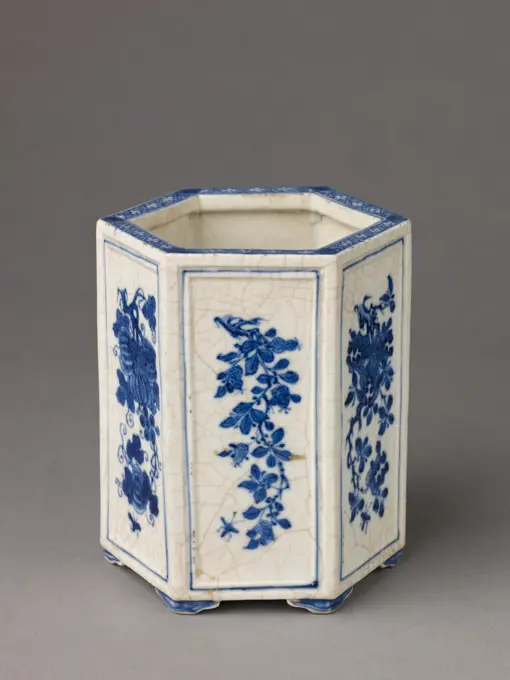
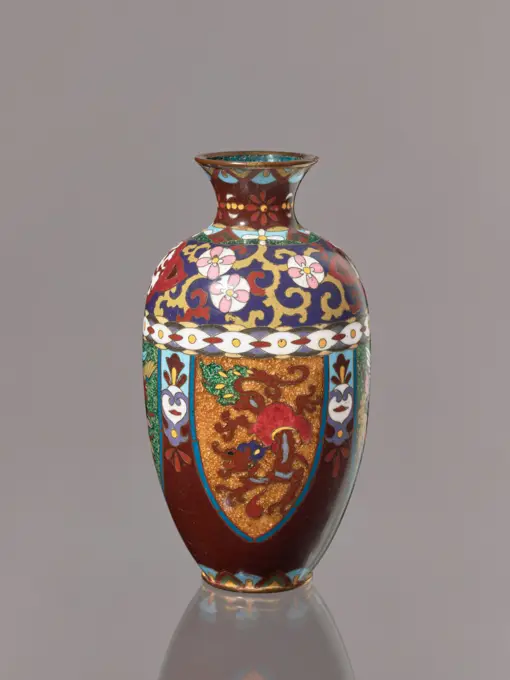
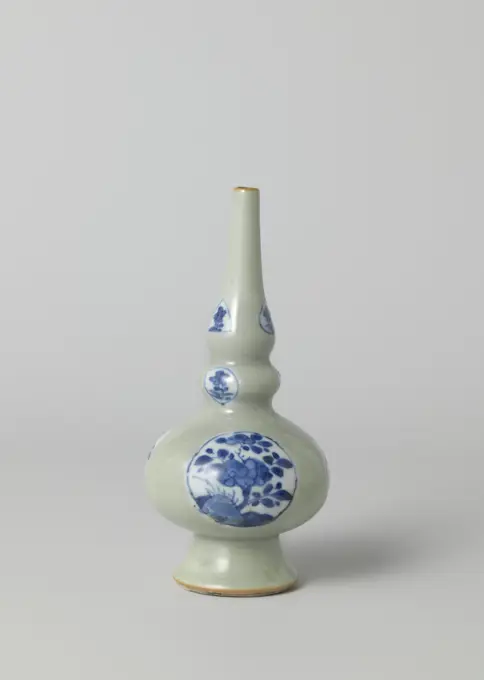
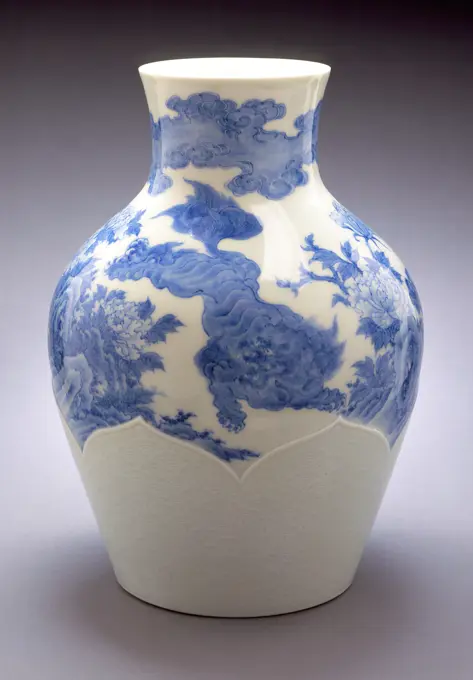
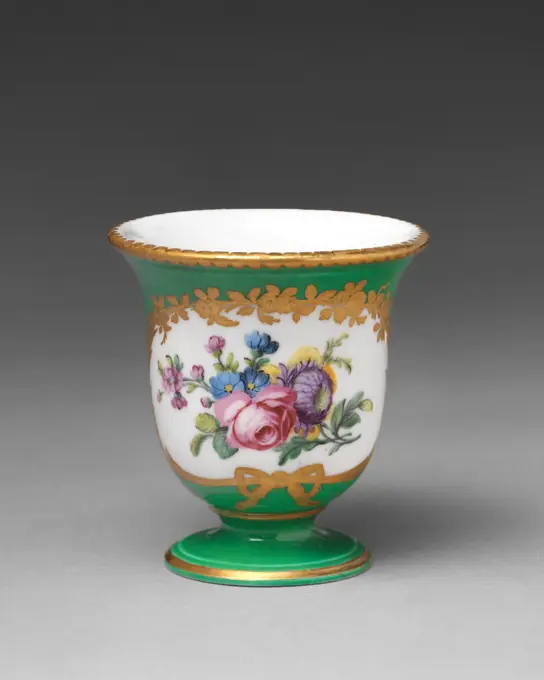
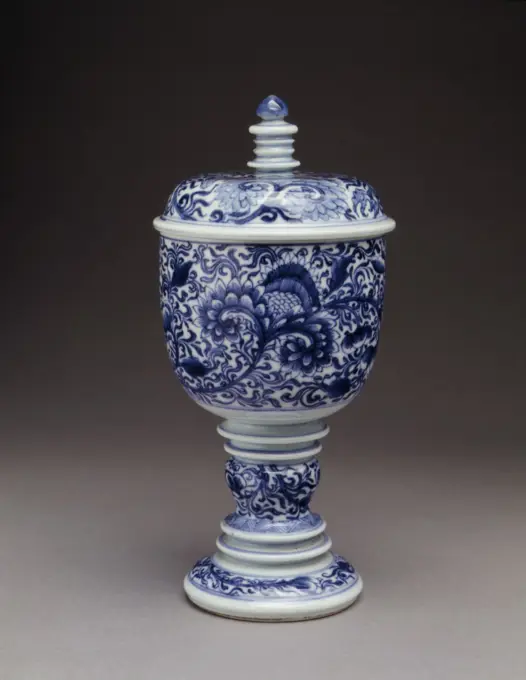
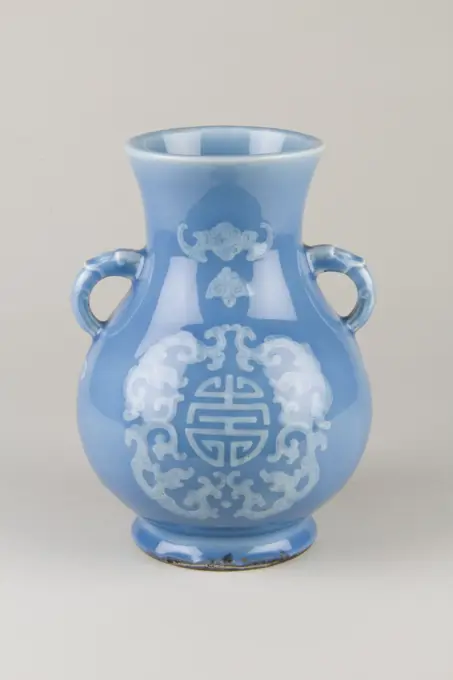
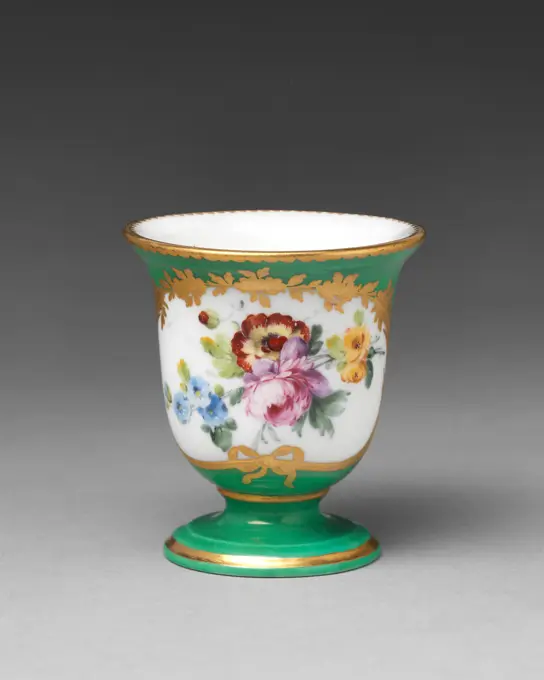
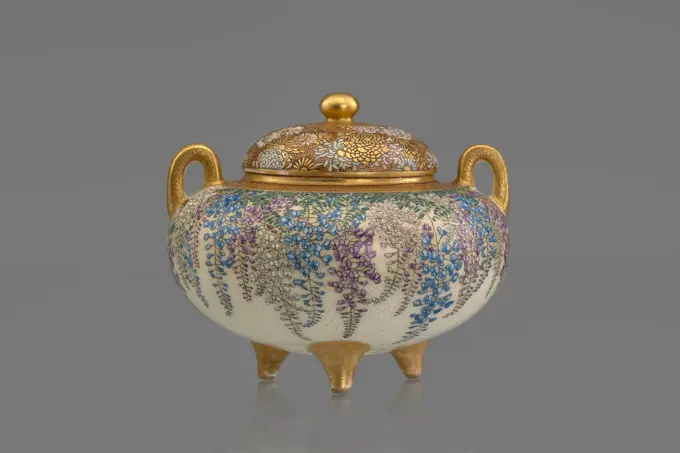
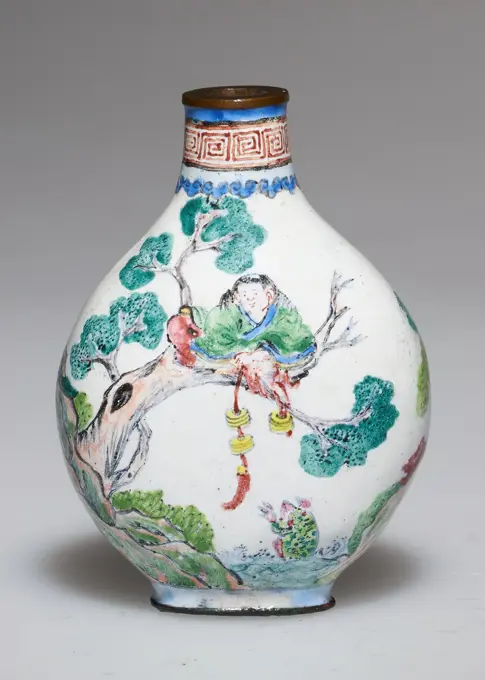
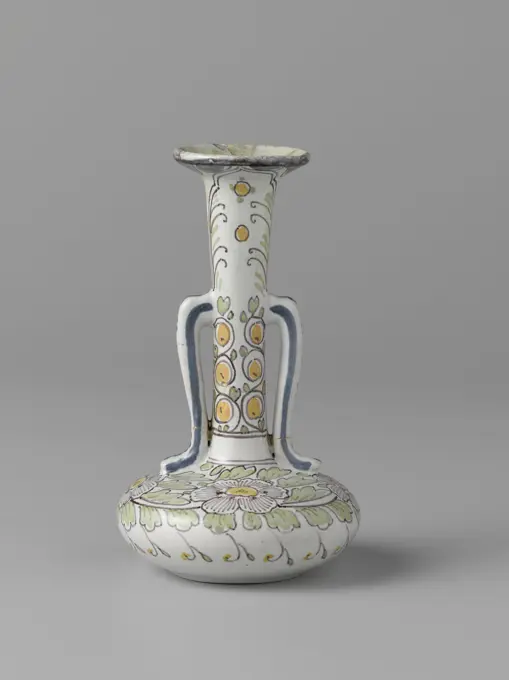
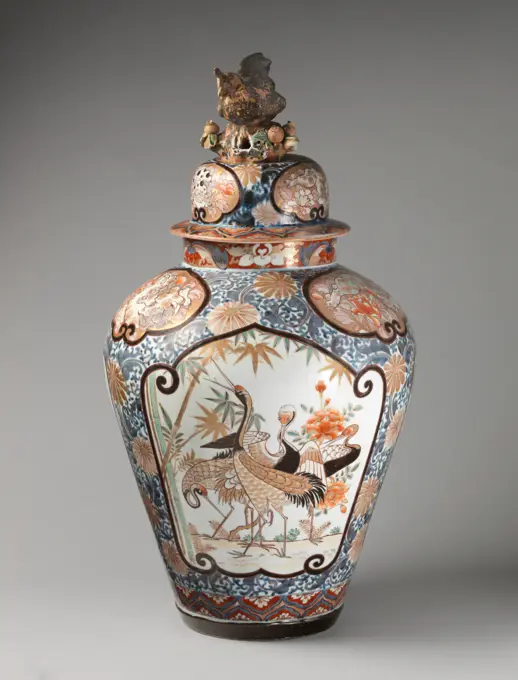
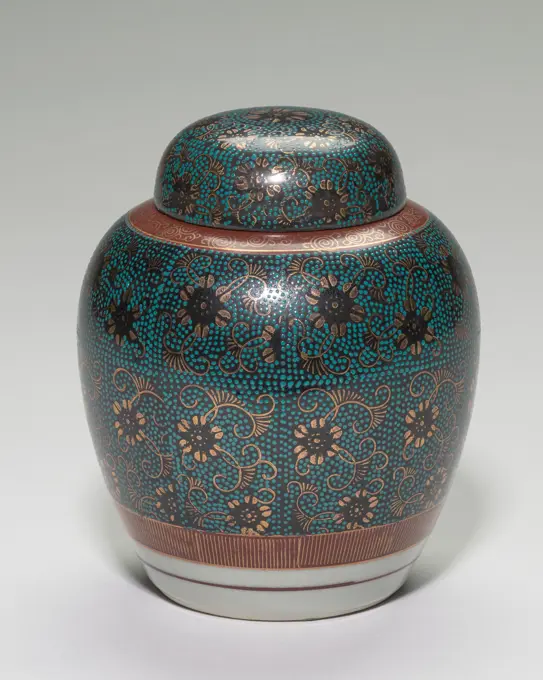
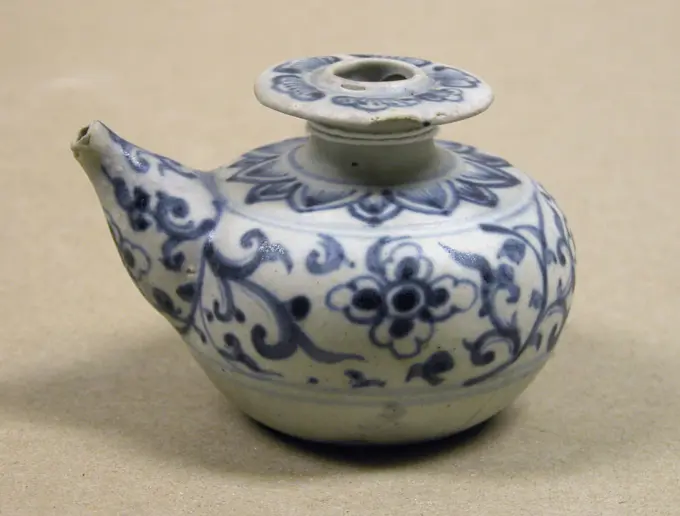
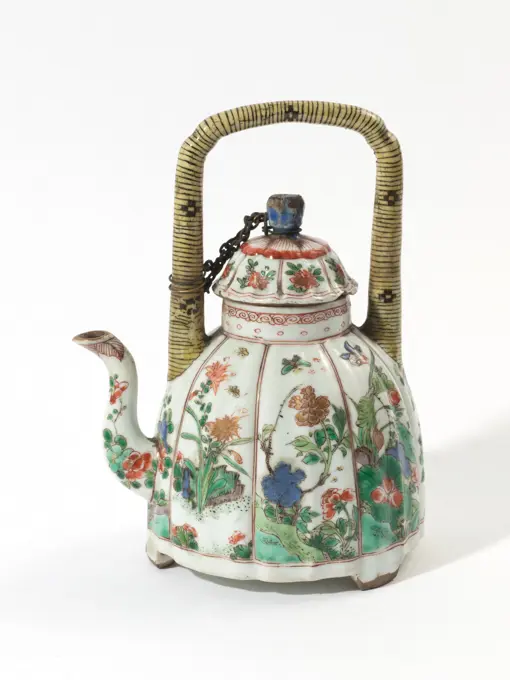
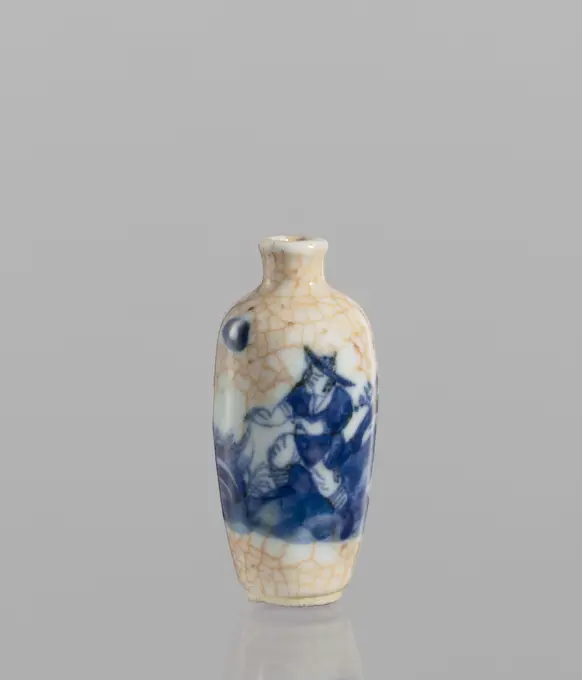
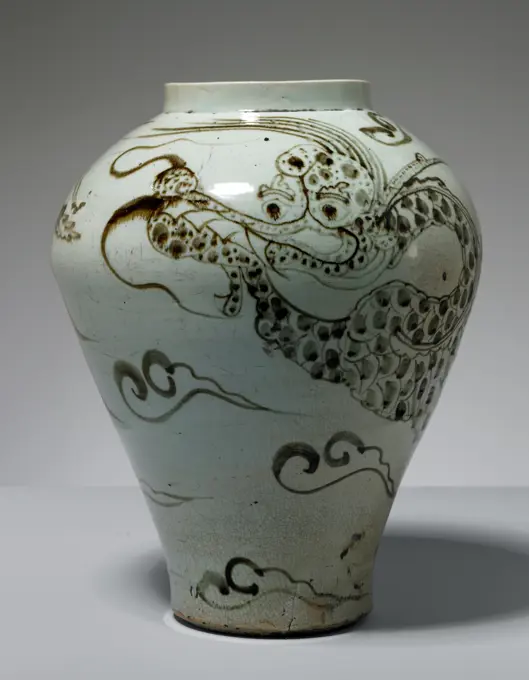
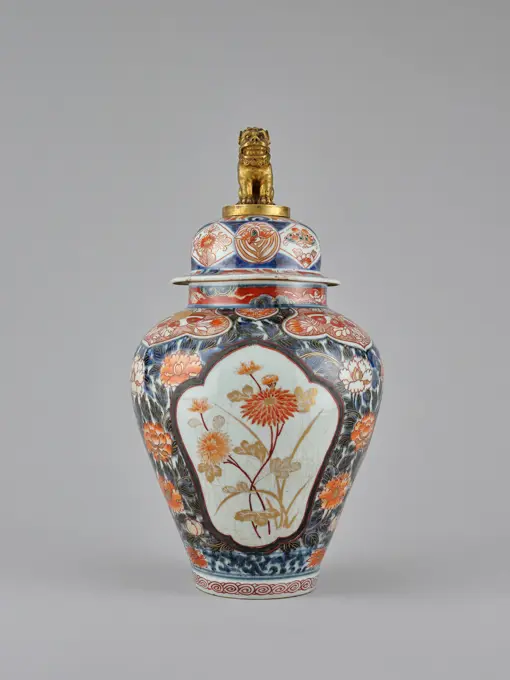
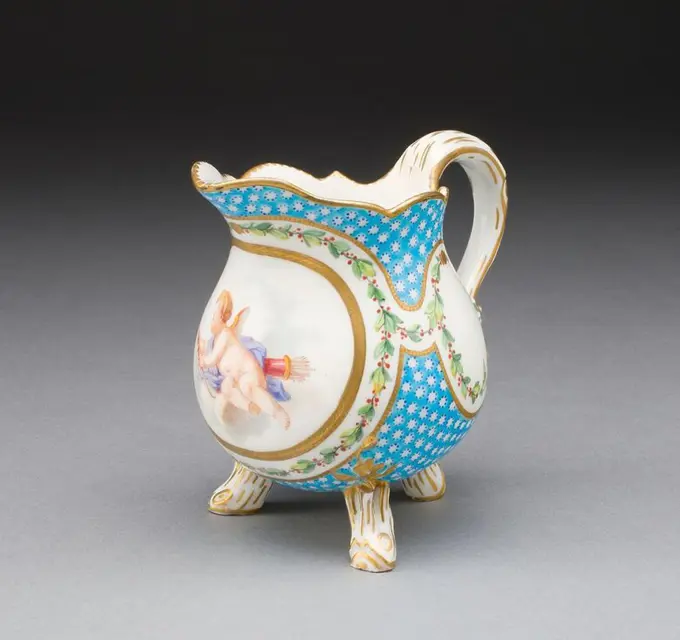
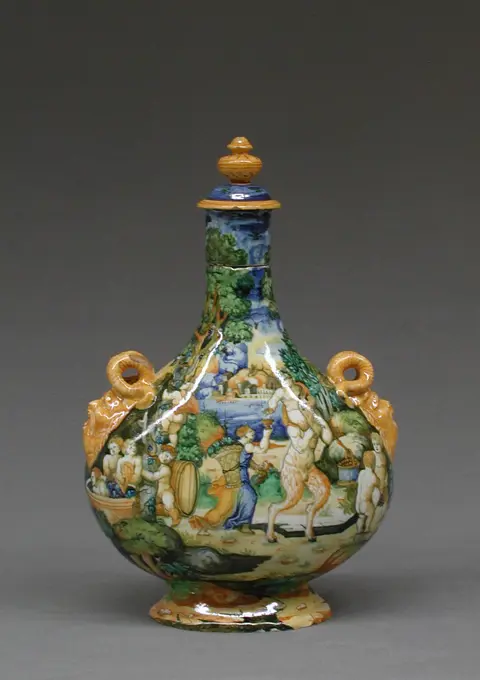
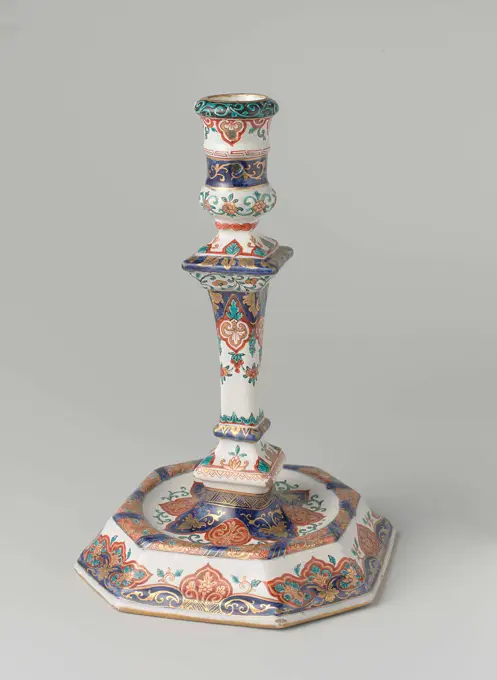
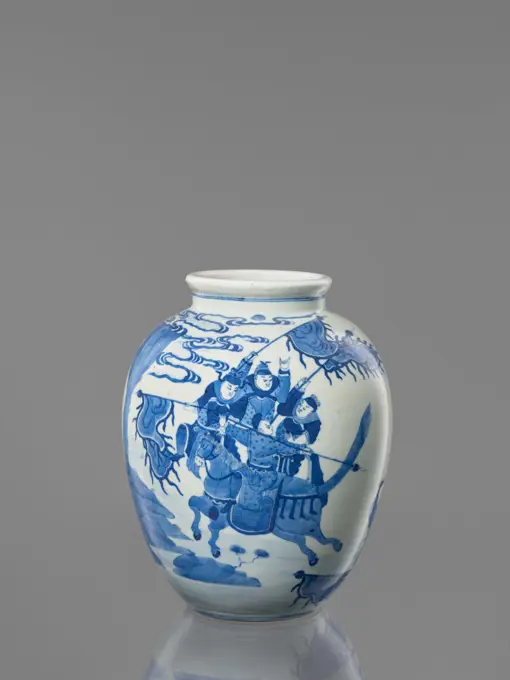
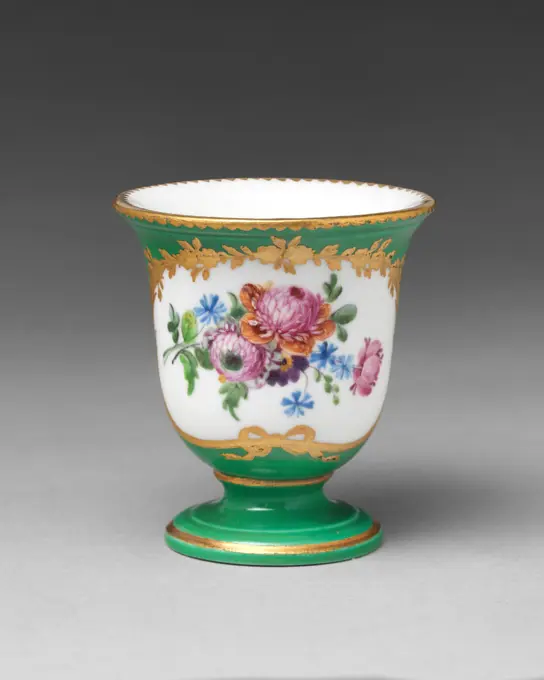
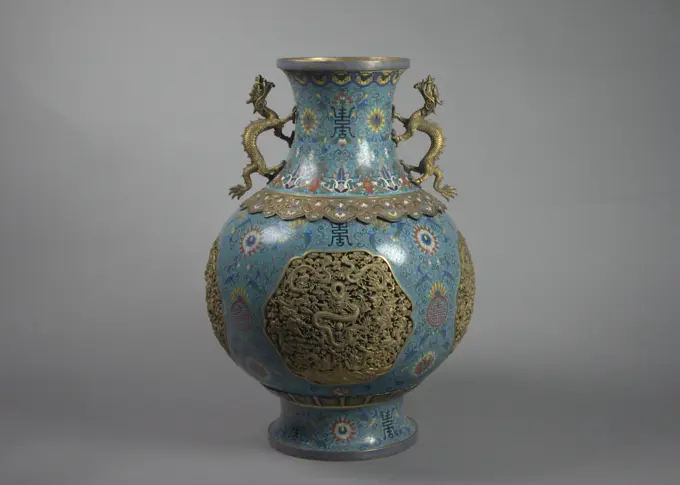
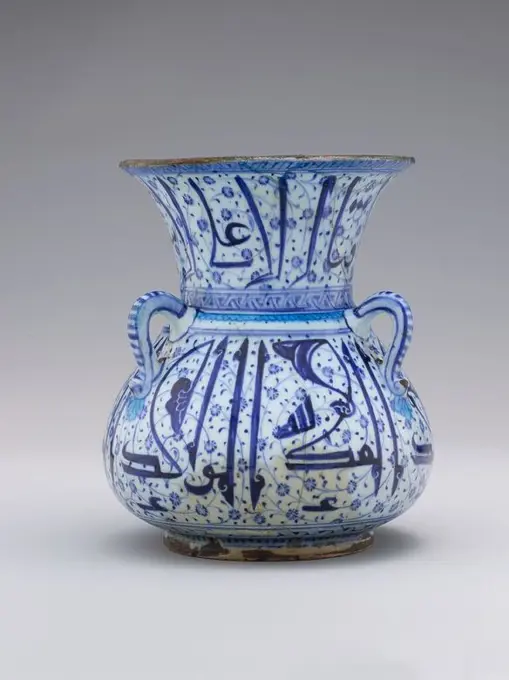
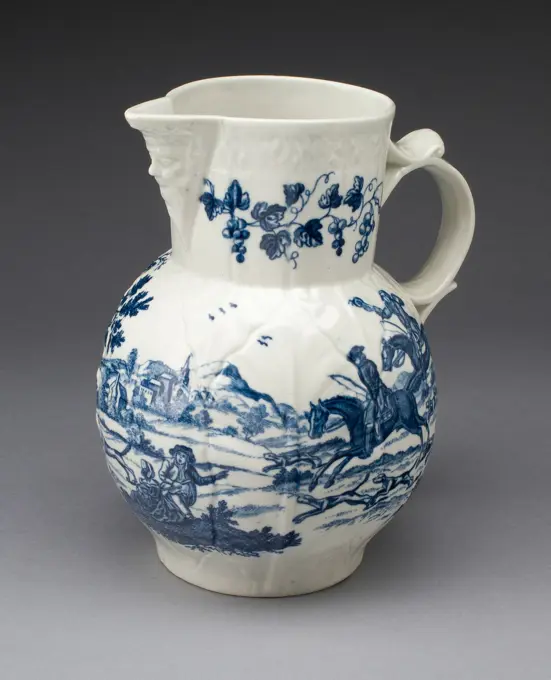
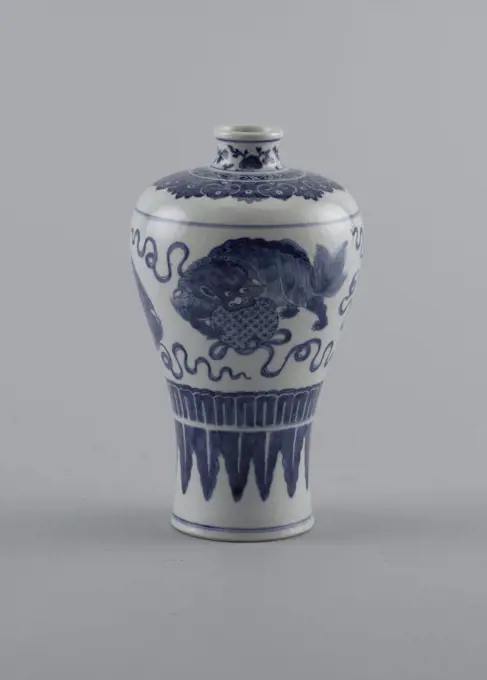
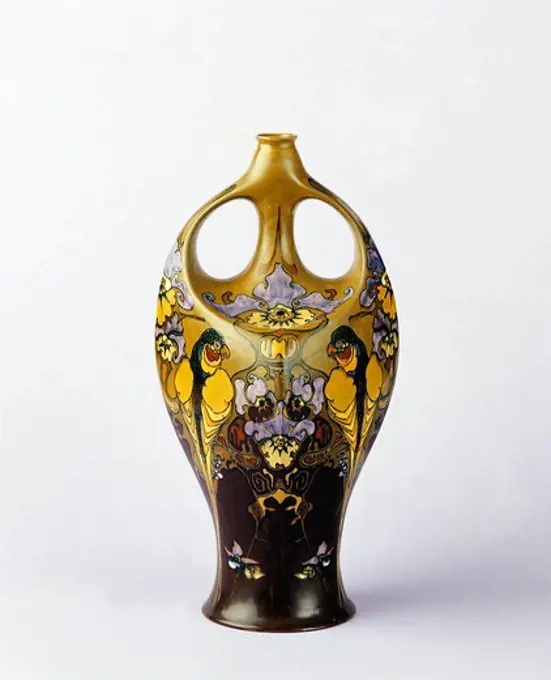
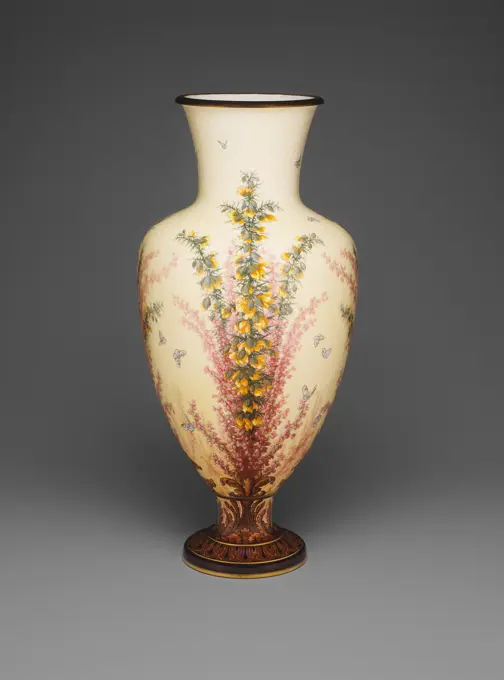
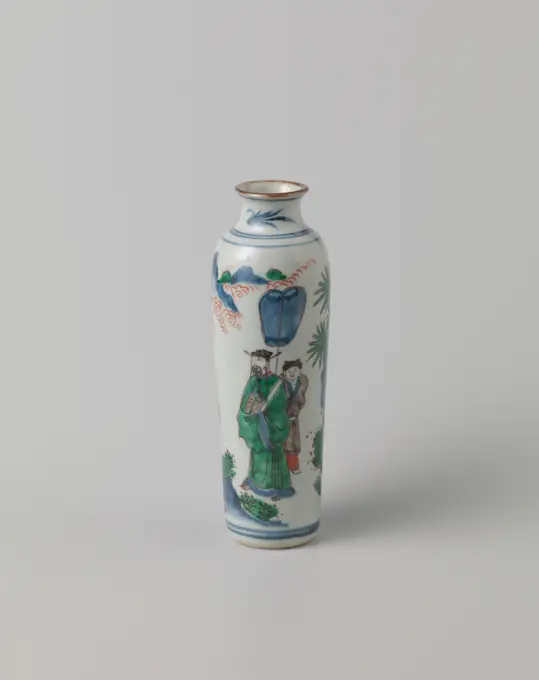
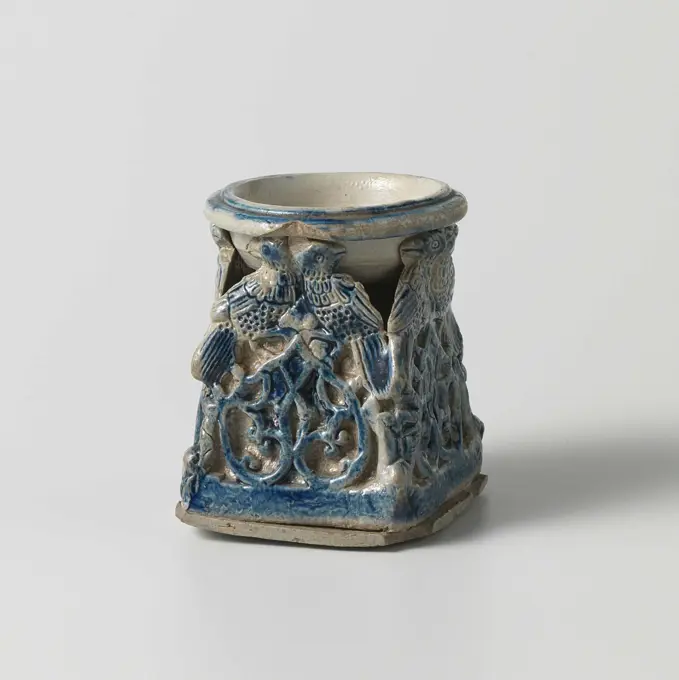
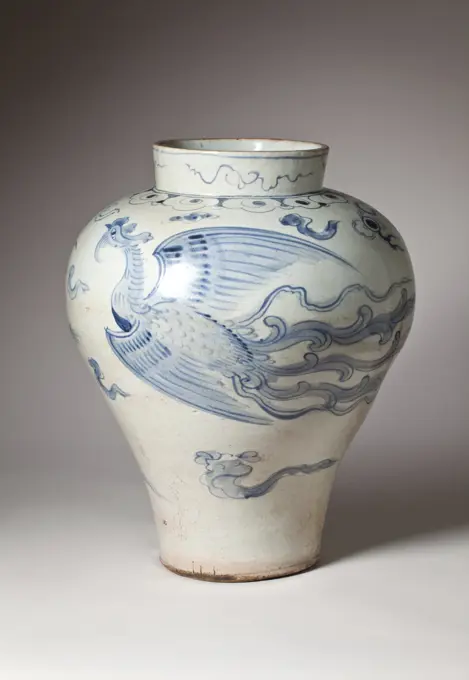
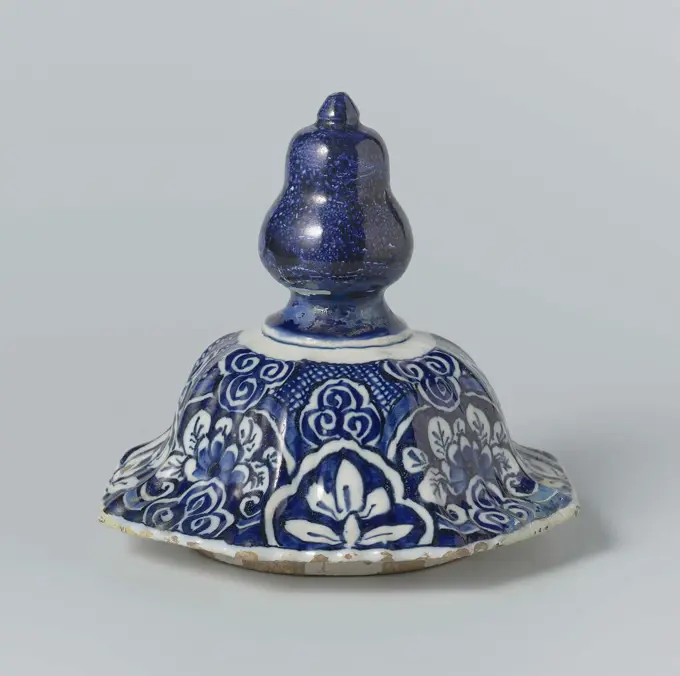
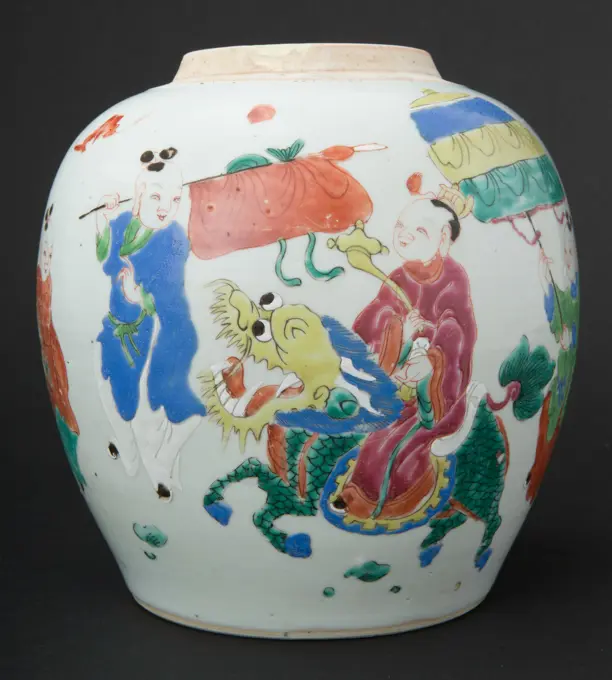
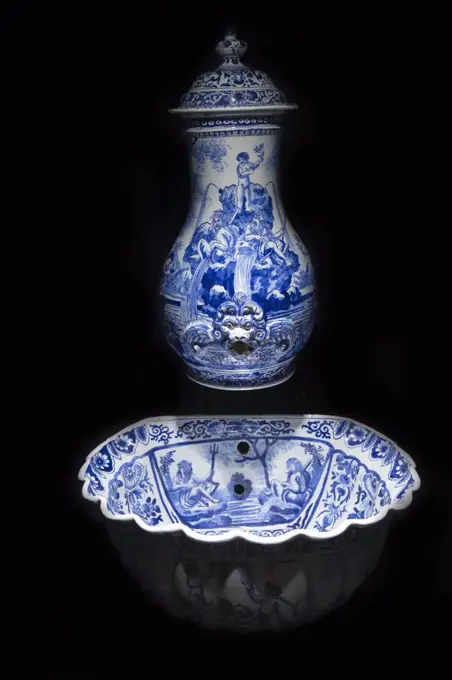
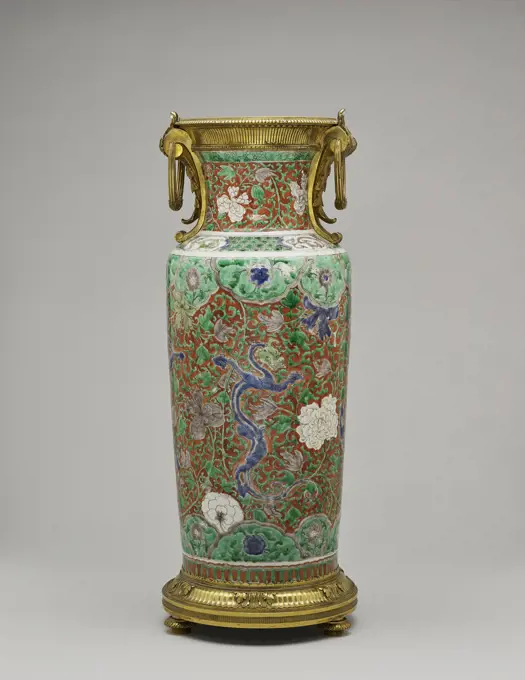
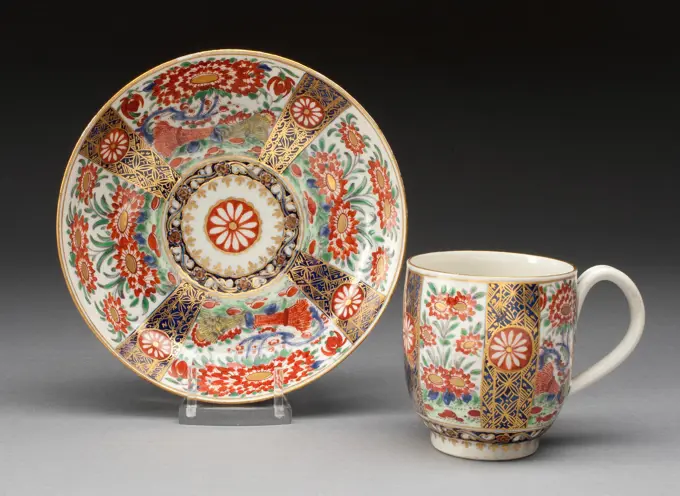
Bottle British ca. 1760Vase Vase; Manufactured by Rozenburg Pottery and Porcelain Factory (Netherlands); Painted by Samuel Schellink (1876 - 1958); Netherlands; porcelain, vitreous enamel; 17.5 x 11 cm (6 7/8 x 4 5/16 in.)Theebus of multicolored painted Faïence, De Greek A, After Pieter Adriaensz. Kocx, c. 1710 - c. 1725 Teabus from Faïence. With a lid. Multicolored painted with floral decorations. Delft . Teabus from Faïence. With a lid. Multicolored painted with floral decorations. Delft .Cover of TheBus, De Greek A, After Pieter Adriaensz. Kocx, c. 1710 - c. 1725 Lid of Teabus from Faïence. Multicolored painted with floral decorations. Delft . Lid of Teabus from Faïence. Multicolored painted with floral decorations. Delft .Hexagonal Jardinière probably 19th century Chinese. Hexagonal Jardinière 460680Lampetkan with a Chinese on a throne with servant and soldier, Peter Regout, c. 1801 - c. 1879 Lampet jug of earthenware with lilac transfer decor and moffel colors, heighted with gold. On the abdomen a Chinese gentleman on a throne, assisted by a servant, and a soldier. The ear is attached to the abdomen and ends on the inside of the upper edge in two leaves in relief. Maastricht earthenware Lampet jug of earthenware with lilac transfer decor and moffel colors, heighted with gold. On the abdomen a Chinese gentleman on a throne, assisted by a servant, and a soldier. The ear is attached to the abdomen and ends on the inside of the upper edge in two leaves in relief. Maastricht earthenwareVase;  18th century (1701-00-00-1800-00-00);Vase (England); Manufactured by James Macintyre & Co., Ltd.; earthenware, glaze, underglaze color, enamel, gold. Upper vase of flower holder from blue painted faience.Small covered wine pot or teapot 1662-1722 Chinese. Small covered wine pot or teapot 460671Vase;  19th/20th century (1891-00-00-1910-00-00);Rosewater sprinkler or bottle with celadon glaze and flower sprays, anonymous, c. 1700 - c. 1724 Rose water drops or point bottle on a high base of porcelain with spherical body and two thickenings in the long, narrow neck, covered with a celladongroen enamel and painted in underlaze blue. The bottle is covered with a Celadon green glaze containing nine reserves filled with flower branches in underly glaze blue. Monochrome Celadon Green with underly glaze blue. China porcelain. glaze. cobalt (mineral) painting / vitrification Rose water drops or point bottle on a high base of porcelain with spherical body and two thickenings in the long, narrow neck, covered with a celladongroen enamel and painted in underlaze blue. The bottle is covered with a Celadon green glaze containing nine reserves filled with flower branches in underly glaze blue. Monochrome Celadon Green with underly glaze blue. China porcelain. glaze. cobalt (mineral) painting / vitrificationCylindrical bottle vase with warriors, anonymous, c. 1800 - c. 1924 Wooden cap made of bottle -shaped vase of porcelain. A point stands out at the bottom. China wood (plant material) Wooden cap made of bottle -shaped vase of porcelain. A point stands out at the bottom. China wood (plant material)Jug with Lid. China; Chinese, made for the American market. Date: 1780-1790. Dimensions: 23.2 × 15.2 cm (9 1/8 × 6 in.). Porcelain and enamel. Origin: United States. Museum: The Chicago Art Institute, Chicago, USA.Baluster vase with powder blue and a prunus spray, anonymous, c. 1675 - c. 1699 Balus -shaped vase of porcelain, painted in underly glaze blue, red, white and brown. The belly is completely covered with powder blue with waves, rocks and three flower branches in the wall; Around the shoulder an edge with Ruyi motif; the base of the neck with a brown edge; A prunus branch and a bird on the neck. A double circle on the bottom. Underglaze blue with copper red. China porcelain. glaze. cobalt (mineral). copper (metal) painting / vitrification Balus -shaped vase of porcelain, painted in underly glaze blue, red, white and brown. The belly is completely covered with powder blue with waves, rocks and three flower branches in the wall; Around the shoulder an edge with Ruyi motif; the base of the neck with a brown edge; A prunus branch and a bird on the neck. A double circle on the bottom. Underglaze blue with copper red. China porcelain. glaze. cobalt (mineral). copper (metal) painting / vitrificVase with Chinese Lions, Peonies, and Waves. Japan, late 19th century. Ceramics. Hirado Mikawachi ware; porcelain with underglaze blueScent bottle ca. 1760-1800 British, Staffordshire. Scent bottle. British, Staffordshire. ca. 1760-1800. Enameled copper. Enamels-PaintedJug with a mask and medallions, anonymous, c. 1650 - c. 1720 Can be made of stoneware on high foot with an egg -shaped body and narrow neck with a pinched spout. The C-shaped ear is attached to the neck and shoulder. Profiles on the neck and foot. Partly covered with cobalt blue on the glaze. The KAN is decorated with a relief decoration in which the abdomen is largely covered with printed, imposed medallions with a flower rosette against a blue background. A modeled mask has been applied to the neck under the spout. Westerwald. Westerwald stoneware. glaze. cobalt (mineral) vitrification Can be made of stoneware on high foot with an egg -shaped body and narrow neck with a pinched spout. The C-shaped ear is attached to the neck and shoulder. Profiles on the neck and foot. Partly covered with cobalt blue on the glaze. The KAN is decorated with a relief decoration in which the abdomen is largely covered with printed, imposed medallions with a flower rosette against a blue background. A moLidded Vase. UnknownOctagonal, Pearshaped Beakervase With Narrow Panels With Flowering Plants. Octagonal, pear-shaped cup earrase made of porcelain, with trumpet-shaped neck. Painted in underglaze blue. The wall is divided into eight elongated compartments with flowering plants; To the courses a bond with leaf raft. Under the edge a band with square boxes with flowering plants on rocks. Around the foot, inner and outer edge a bond with leaf refines. Blue White.Vase. unknown, craftsmanOvoid covered jar with fluted sides and figures in medallions, anonymous, c. 1700 - c. 1724 Egg -shaped lid pot of porcelain with ribbed wall, painted in undermglaze blue. In the ribbed wall, four medallions have been saved with a woman (long lips) in a fenced garden for a pavilion with trees and rocks; Around the foot and shoulder a band with flower branches (splendidanjer, peony, camelia). Marked on the underside with the six-character brand of Keizer Chengua in a double circle. Blue White. China porcelain. glaze. cobalt (mineral) painting / vitrification Egg -shaped lid pot of porcelain with ribbed wall, painted in undermglaze blue. In the ribbed wall, four medallions have been saved with a woman (long lips) in a fenced garden for a pavilion with trees and rocks; Around the foot and shoulder a band with flower branches (splendidanjer, peony, camelia). Marked on the underside with the six-character brand of Keizer Chengua in a double circle. Blue White. China porcelain. glaze. cobaltIce cream cup (tasse à glace) (one of thirty-one) (part of a service) 1780 Sèvres Manufactory French. Ice cream cup (tasse à glace) (one of thirty-one) (part of a service). French, Sèvres. 1780. Soft-paste porcelain. Ceramics-PorcelainStanding cup with cover ca. 1690-1700 Chinese, for Dutch market. Standing cup with cover 185907Vase late 18th-first half of the 19th century China. Vase 47316Ice cream cup (Tasse à glace) (part of a service) 1771 Sèvres Manufactory French. Ice cream cup (Tasse à glace) (part of a service). French, Sèvres. 1771. Soft-paste porcelain. Ceramics-PorcelainKadzielniczka (Kôro) with a cover; Kinkôzan, Sôbei VII (1867-1927), Kinkôzan; 19th/20th century (1896-00-00-1905-00-00);Snuff Bottle, 19th century, 2 1/4 x 1 1/2in. (5.7 x 3.8cm), Enamel on copper, China, 19th centuryBottle-Shaped Vase with Figures in Garden 1627-1644 China. Porcelain painted in underglaze blue .PEBETERO - S XX. Location: ALFARERIA. SPAIN.Pitcher, c. 1780. Niderviller Factory (French). Hard-paste porcelain; overall: 21.6 x 14.3 cm (8 1/2 x 5 5/8 in.).Vase with long neck and two stretched S-shaped ears, the porcelaine bottle, c. 1880 - c. 1920 Vase of earthenware, with bulb body and long narrow neck with outstanding mouth edge. Two stretched s-shaped ears along the neck. Painted in blue, green, yellow and black with four flowers surrounded on the convex body by leaves, orange cones on the neck. Delft earthenware. glaze Vase of earthenware, with bulb body and long narrow neck with outstanding mouth edge. Two stretched s-shaped ears along the neck. Painted in blue, green, yellow and black with four flowers surrounded on the convex body by leaves, orange cones on the neck. Delft earthenware. glazeKettle on a burner stand, the ancient Moriaanshooft, c. 1765 - c. 1770 Ketel from Faience. The boiler is on a corresponding Komfoor (BK-1955-65-B). Delft . Ketel from Faience. The boiler is on a corresponding Komfoor (BK-1955-65-B). Delft .Baluster-shaped vase (part of an assembled garniture) ca. 1690-1720 Japanese, for export market (Hizen ware, Imari type) Japanese porcelain vases made for export were avidly sought by aristocratic and royal patrons to decorate their stately homes and palaces in the late seventeenth and early eighteenth centuries. While Chinese porcelains were exported to Europe and Britain in larger quantities during this period, Japanese porcelains were prized for their boldly patterned and richly colored decoration. The popularity of works such as these changed European taste for Asian porcelain, with a more vivid palette preferred over the blue and white decoration which once defined imported porcelains.. Baluster-shaped vase (part of an assembled garniture). Japanese, for export market (Hizen ware, Imari type). ca. 1690-1720. Porcelain. Ceramics-Porcelain-ExportCovered Jar 19th century China. Covered Jar. China. 19th century. Porcelain painted in overglaze polychrome enamels (Jingdezhen ware, famille noir). Qing dynasty (1644-1911). CeramicsCovered Ginger Jar, 20th century, Unknown Japanese, 6 1/2 x 5 1/4 in. (16.51 x 13.34 cm), Porcelain, glaze, Japan, 20th centuryKendi 15th-16th century Vietnam. Kendi 37546Small stemcup. Artist: Chinese , Qing Dynasty. Culture: Chinese. Dimensions: Height: 3 3/4 in. (9.5 cm.). Date: ca. second half of the 17th century. Museum: Metropolitan Museum of Art, New York, USA.Pot alcohol ". Porcelaine. Ere Kangxi (1662-1723). Paris, Muses Cernuschi. Floral decorTea-pot. Porcelain with "green family" enamels decor, Qing dynasty (1644-1912). Provenance: China. Paris, Cernuschi museum. 78836-1 Asian art, Chinese art, art of living, Ceramic Fine, Decor Emaille, Ching Dynasty, Qing dynasty, Tsing dynasty, porcelain, Emaillee porcelain, service to the, theiere, dishesCovered Box. Thailand, Sawankhalok, 16th century. Furnishings; Accessories. Stoneware with incised decoration and brown and white glazeCovered Jar. Thailand, Sawankhalok, 16th century. Furnishings; Serviceware. Stoneware with underglaze black painted decorationSnuff bottle. unknown, craftsmanVase with landscape late 18th century China. Vase with landscape 46869. Jug of quartz frying with a blue alkali acid on which tires and decorative tires in luster.ChinawareVase (one of a set of three) ca. 1761 Chelsea Porcelain Manufactory. Vase (one of a set of three). British, Chelsea. ca. 1761. Soft-paste porcelain. Chelsea Porcelain Manufactory (British, 1745-1784, Gold Anchor Period, 1759-69). Ceramics-PorcelainJar with Dragon and Clouds, 17th century, Unknown Korean, 16 1/4 in. (41.28 cm), White porcelain with underglaze iron-brown, Korea, 17th century, In addition to designs painted in cobalt blue, Korean potters between the 1600s and 1800s produced many porcelain objects decorated with underglaze iron brown-designs. Possibly because cobalt was an expensive material, blue-and-white vessels tend to be carefully painted. In contrast, Korean potters display a remarkable freedom in their iron-brown designs. Here, a dragon with a humorously long snout coils around the swelling sides of this robust jar.Arita (ceramic production center), covered pot with imari decor. Porcelain, polychrome enamels. Petit Palais, Museum of Fine Arts of the City of Paris.Creamer (from a tea service). Sèvres Porcelain Manufactory; French, founded 1740; Figures after François Boucher (French, 1703-1770); Painted by Jacques Fontaine (French, 1734/35-1807, active 1752-1800). Date: 1770. Dimensions: 9.5 x 11.1 cm (3 3/4 x 4 3/8 in.). Soft-paste porcelain, polychrome enamels, and gilding. Origin: Sèvres. Museum: The Chicago Art Institute, Chicago, USA.Jar with Landscape ca. 1620-40 Japan. Jar with Landscape 50332Pilgrim bottle ca. 1550 Workshop of Orazio Fontana Italian. Pilgrim bottle. Italian, Urbino. ca. 1550. Maiolica (tin-glazed earthenware). Ceramics-PotteryAlbarello with two cherted ears. Albarello from multi-colored painted majolica. The pot has a stenced foot, a sloping shoulder and a short neck. The two ears are twisted and C-shaped. Circles and windows are painted on the pot in which lines and leaf motifs have been painted.Can with pewter lid, with weapon with drinking man with helmet mark justice .. spherical jar of stoneware, with a pewter lid. The jug is on a foot, has a narrow, short neck and a C-shaped ear. The neck is in relief decorated with a lion's head. The belly is decorated with two twinning bands with lion heads, between which decorated circles. Within the middle circle is a sight in which a weapon in which a drinking man, his helmet has been awarded the image of justice with scales and sword.Round Box with a Wave Pattern and Blossoms. Round box of porcelain, painted in underglaze blue. The box is covered with a wave pattern, divided into four compartments separated by a saved tape. The lid with five prunus blossoms in cartouches. Lid has been broken. Transition porcelain in blue and white.Covered bottle with floral scrolls (one of a pair) 18th century China. Covered bottle with floral scrolls (one of a pair) 46592Chow Bowl, 1700s. Siam, 18th century. Porcelain; diameter: 21.6 cm (8 1/2 in.); overall: 14 cm (5 1/2 in.).Vase 1886-88 New England Glass Company. Vase 9363Ewer 1660-80 Japanese, for European, probably Dutch, market Orders for the European market greatly expanded the repertoire of Japanese porcelain forms. This Dutch-inspired jug is decorated with a Japanese interpretation of the quickly brushed figures, chrysanthemums, and scattered geometric motifs of the Chinese "Transitional" style, a mode of decoration that was the departure point for European chinoiserie.. Ewer 208245Ewer 17th century. Ewer 444898Pair of candlesticks. Delft, c. 1710-1725tin-glazed earthenware (faience)Vase. unknown, craftsmanIce cream cup (Tasse à glace) (part of a service) 1771 Sèvres Manufactory French. Ice cream cup (Tasse à glace) (part of a service). French, Sèvres. 1771. Soft-paste porcelain. Ceramics-PorcelainConical vase with cover, from a five-piece garniture set, c. 1764, Jacobus Halder Adriaesensz, Dutch, active 1760s, 16 1/4 x 6 5/16 x 5 3/4 in. (41.3 x 16 x 14.6 cm), Glazed porcelain, 18th centuryPot of blue painted faience, anonymous, c. 1750 - c. 1825 Pot (without lid), blue and white painted with flowers, framed with volutes and leaf work in relief. Netherlands earthenware. tin glaze. Pot (without lid), blue and white painted with flowers, framed with volutes and leaf work in relief. Netherlands earthenware. tin glaze.Lid. Lid of Pot of FaienceBeaker (part of a garniture) ca. 1765-70 Bow Porcelain Factory British. Beaker (part of a garniture). British, Bow, London. ca. 1765-70. Soft-paste porcelain. Bow Porcelain Factory (British, 1747-1776). Ceramics-Porcelain. attributed to De Klaauw (Lambertus Sanderus) Delft, c. 1760-1800tin-glazed earthenware (faience)The Landing of the Fathers at Plymouth, Glazed earthenware, transfer-printed decoration, Slightly tapered globular body with cylindrical collar and simple lip; shaped flat handle. Decorated on two sides with medallion showing THE LANDING OF THE FATHERS AT PLYMOUTH, and medallion with names of leading pilgrims with date of landing., Staffordshire, England, 1820, ceramics, Decorative Arts, Pitcher, PitcherCache-pot with a scene of breakfast in a park. Wąsowicz, Wacław (1891-1942), painterOne of a Pair of Vases with Dragon Handles 19th century China Cloisonné is a technique for creating designs on metal whereby enclosures made from copper or bronze wire that has been bent or hammered into a desired pattern are filled with colored glass paste. Known as cloisons (French for "partitions"), the enclosures are generally pasted or soldered onto the metal body. The glass paste, or enamel, is colored with metallic oxide and painted into the contained areas. The vessel is then fired, usually at a relatively low temperature, about 800 degrees centigrade. As enamels commonly shrink during firing, the process has to be repeated several times to fill the entire design. Once this process is completed, the surface of the vessel is burnished until the edges of the cloisons are visible.. One of a Pair of Vases with Dragon Handles 40705Ceramic Vessel in the Shape of a Mosque Lamp. Dimensions: H. 6 11/16 in. (17 cm)Max. diam. 5 13/16 in. (14.8 cm). Date: 1525-40.With its delicate spiraling stem design, this small vessel belongs to a group of ceramics formerly referred to as "Golden Horn" wares. Current scholarship, however, prefers the term tughrakes-, or "tughra-illuminator" style for such decoration, comparing its design to the fine swirling vines adorning tughra calligraphies. During this period, pottery shapes often imitated metalwork forms. This piece, however, emulates glass mosque lamps, which often displayed Arabic inscriptions. Museum: Metropolitan Museum of Art, New York, USA.Jug 1775-1780 WorcesterVase, porcelain, China, 1736-95, ceramics, Decorative Arts, VaseMajolica vaseVase d'Arezzo 1884-1885 Sèvres. Hard-paste porcelain, polychrome enamels, and gilding, with copper alloy mounts . Manufacture nationale de Sèvres (Manufacturer)Jar with Dragons Pursuing Flaming Jewels, 1522-66. China, Jiangxi province, Jingdezhen kilns, Ming dynasty (1368-1644), Jiajing mark and reign (1522-66). Procelain with wucai (five color) overglaze enamel decoration; diameter: 14.7 cm (5 13/16 in.); overall: 12.9 cm (5 1/16 in.).Team with lid, multi -colored painted with chinoiseries, Meissener Porzellan Manufaktur, c. 1725 - c. 1730 Egg -shaped tea leopard of painted porcelain, with a hexagonal wall with gilded ribs. The bus has a lid. The six courses are painted with Höroldt chinoiseries. The Teabus is part of a tea set (BK-17420-A to BK-17420-O) and is marked. The service is on a scaffold or chassis (BK-17017). Float porcelain Egg -shaped tea leopard of painted porcelain, with a hexagonal wall with gilded ribs. The bus has a lid. The six courses are painted with Höroldt chinoiseries. The Teabus is part of a tea set (BK-17420-A to BK-17420-O) and is marked. The service is on a scaffold or chassis (BK-17017). Float porcelainEwer, Lead-glazed earthenware, Footed ewer in the style of Bernard Palissy. Molded rosettes at foot. Bolded leaves and shells on body. Scrolling handle. Mottled blue and red ground with green leaves., France, probably 19th century, ceramics, Decorative Arts, EwerEwer with a group of figures in a landscape, anonymous, c. 1660 - c. 1680 Can be made of porcelain with a printed, pear-shaped body, ring-shaped thickening in the neck and c-shaped ear, painted in under-glaze blue. On the belly a continuous landscape with a group of people at trees, rocks and flowering plants. On the neck a second landscape with a sitting person at a rock. The ear is decorated and has a hole, probably intended for a lid. The shape of the jug is, according to the example of German earthenware jugs from Raeren and Westerwald. Arita, Blauw-Wit. Japan porcelain. glaze. cobalt (mineral) painting / vitrification Can be made of porcelain with a printed, pear-shaped body, ring-shaped thickening in the neck and c-shaped ear, painted in under-glaze blue. On the belly a continuous landscape with a group of people at trees, rocks and flowering plants. On the neck a second landscape with a sitting person at a rock. The ear is decorated and has a hole, probably intended for a lid. TVase (wheelchair) with a Scholar-Official and His Servants in a Landscape. Small cylindrical vase (trolley) of porcelain with a spreading neck, painted in underglaze blue and on the glaze red, green, yellow, eggplant and black. On the wall a dignity leaving in a landscape with plants, a banana plant, rocks and mountains. Behind him a servant with a range; A second servant is wearing a book. A plant twice on the neck. The bottom is unglazed. Transition porcelain with email colors.Lidded Bowl; China; porcelain about 1662 - 1722; mounts about 1722 - 1727; Hard-paste porcelain; enamel decoration and gilding; silver mounts; 20.3 x 25.1 cm (8 x 9 7,8 in.)Salt barrel. Salt barrel of stoneware. The dish is worn by 8 birds, 2 to 2 on one side. Blue decorated.Beaker Vase With Birds, Flowering Plants, Floral Scrolls and Antiques in panels. Bekvaas of porcelain, painted on the glaze in blue, red, green, yellow, eggplant and black. On the wall a wide band with elongated, scalloped cartouches with blooming plants (prunus, bamboo, peony, aster) and birds or antiques (flower vase, vase with peacock feathers and coral, books, image of a shishi). Below and a tire with standing or dependent leaf-shaped cartouches with flower vines or a flower branch. Above the foot a bond with prunus blossom on 'crackled ice'; The edge with a band napkin. Famille Verte.Jar with phoenix among clouds, late 18th - early 19th century, Unknown Korean, 16 1/16 × 12 3/4 × 13 in. (40.8 × 32.39 × 33.02 cm), Porcelain with cobalt-blue design under clear glaze, Korea, 18th century, The legendary phoenix in East Asia is one of the celestial animals of the four directions, associated with the southern quadrant of the heavens. It is said to make earthly appearance only in times of peace and contentment, and thus was only sighted in times of just and able rule. As a result, the phoenix was a symbol of royalty and its use as a decorative motif was restricted to wares intended for use by the imperial family during the first half of the Joseon dynasty.Covered Box. Thailand, Sawankhalok, 16th century. Furnishings; Accessories. Stoneware with incised decoration and brown and white glaze. Lid pot, octagonal, blue-white glazed with flower bouquets and lambrequinsJar, late 7th-8th Century. China, Tang dynasty (618-907). Glazed pinkish-buff earthenware; overall: 19.4 cm (7 5/8 in.).Waza with Famille Rose decoration  Children's procession unknownMelkkan, part of a tête-à-tête, painted with Lelies, N.V. Haagsche Plateel Factory Rozenburg, 1900 Milkkan of a porcelain tête-à-tête. Painted in yellow, reddish -brown and different shades of green with an ornamental decor, in which lilies. On all parts the monogram MVV (= Michiels van Verduynen) and the weapon of this family, in which the color blue also occurs. Marked Rozenburg. The Hague porcelain Milkkan of a porcelain tête-à-tête. Painted in yellow, reddish -brown and different shades of green with an ornamental decor, in which lilies. On all parts the monogram MVV (= Michiels van Verduynen) and the weapon of this family, in which the color blue also occurs. Marked Rozenburg. The Hague porcelain. Sugar bowl with lid, porcelain, multicolored painted with tires with flower bouquets respectively on a gold stamped background and a round each other wavy leaf garland and a pink ribbon on a gold and orange shaded background, separated by tires with golden flower branches on a white fond. Part of tea service.Wall Fountain and Basin, Delft China, Gemeentemuseum, The Hague, Netherlands, EuropeFooted teapot ca. 1760 British, Staffordshire Listen to experts illuminate this artwork's story Listen Play or pause #407. Teapots Supported by Bloomberg Philanthropies We're sorry, the transcript for this audio track is not available at this time. We are working to make it available as soon as possible.. Footed teapot. British, Staffordshire. ca. 1760. Salt-glazed stoneware with enamel decoration. Ceramics-PotteryChinese, Snuff Bottle, porcelain.Mounted Vase; China, Asia; porcelain about 1662 - 1722; mounts about 1870 - 1900; Hard-paste porcelain; gilt bronze mounts; 57.2 x 21 cm (22 1,2 x 8 1,4 in.)Pichet "Long live the nation". Earthenware. 1790-1791. Paris, Carnavalet museum. 76184-28 Old regime, branch, crown, revolutionary faience, lily flower, decorative motif, node, pitcher, French revolution, lively nationMiniature Double Gourd-Shaped Vase With Flower Sprays. Miniature baleub shaped porcelain vase, painted in underglaze blue. A flowering plant (Aster) and twigs on the abdomen. Two flower branches on the neck. Blue White.. Worcester Royal Porcelain Company (Manufacturer)Vase China. Vase. China. Porcelain with dark blue glaze, painted in gilt. Qing dynasty (1644-1911), Qianlong mark and period (1736-95). CeramicsVase with Bamboo, Auspicious Symbols, and Military and Civilian Figures in a Landscape 1662-1722 China. Porcelain painted in overglaze enamels .