Decorative Porcelain Plates

Intricately designed porcelain plates featuring floral, animal, and ornate patterns, emphasizing craftsmanship from various historical periods.

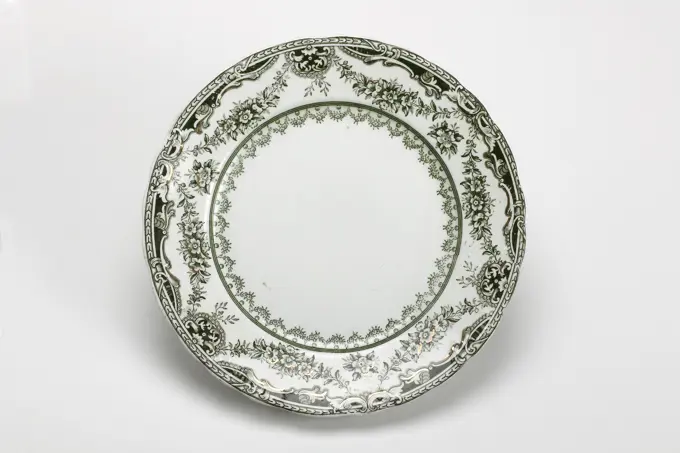
Plate, flat model, belonging to a service with a flung ribbon motif with leaf branches, flower bouquets and sprinkled flower branches, porcelain factory aan den Amstel, 1780 - in or before 1820 Plate, flat model, belonging to a porcelain service with a flung ribbon motif in purple and gold with green leaf branches, flower bouquets and sprinkled flower branches. Borders light golf with decoration in gold with purple leaf motif between which green crossed leaf motif. Marked: M.O.L. Or Amstel. Amsterdam porcelain Plate, flat model, belonging to a porcelain service with a flung ribbon motif in purple and gold with green leaf branches, flower bouquets and sprinkled flower branches. Borders light golf with decoration in gold with purple leaf motif between which green crossed leaf motif. Marked: M.O.L. Or Amstel. Amsterdam porcelain
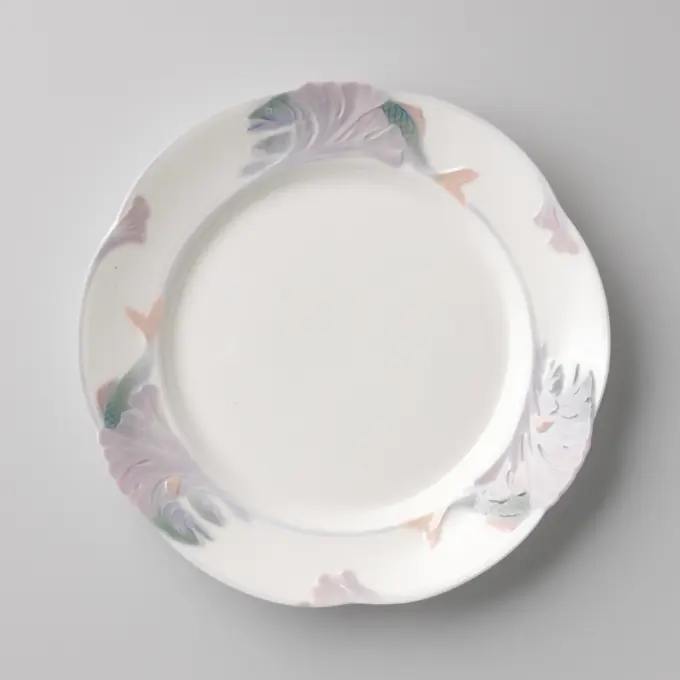
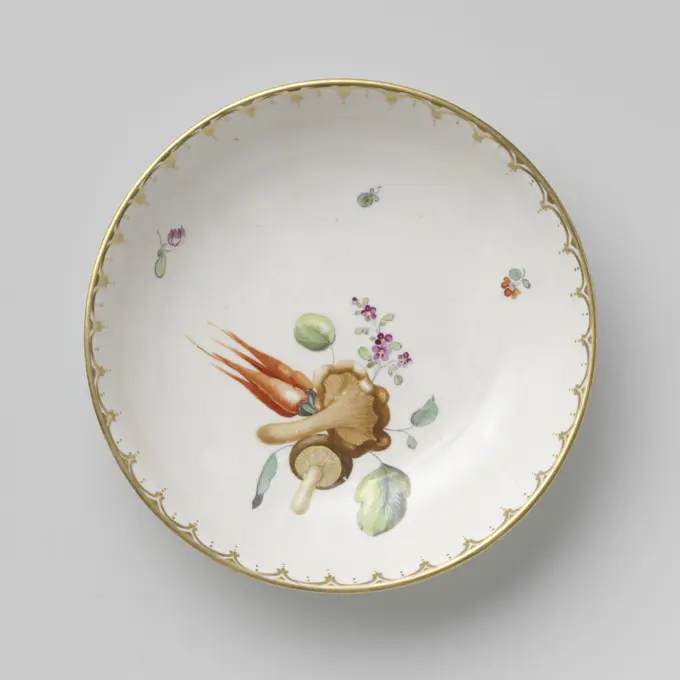
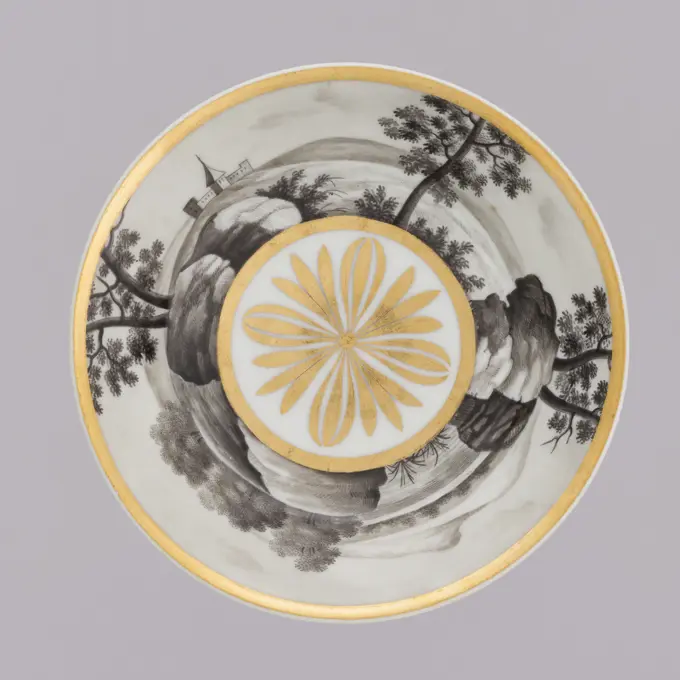
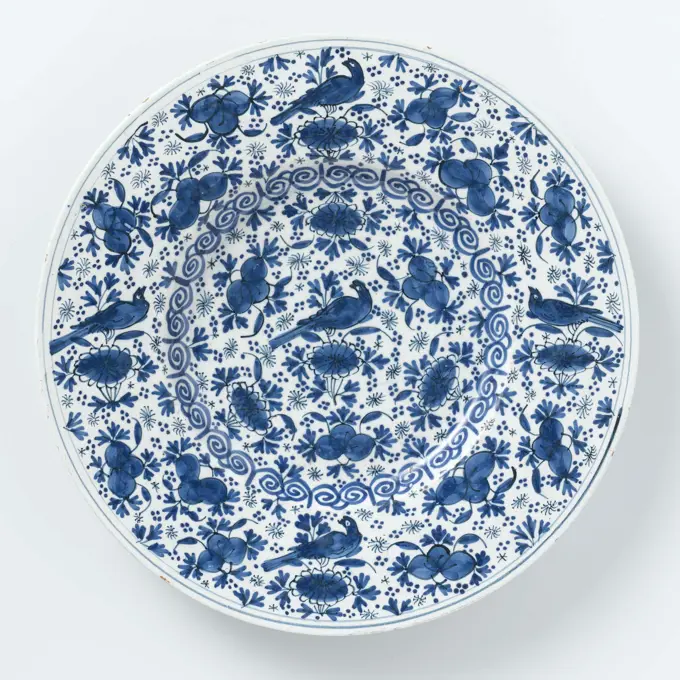
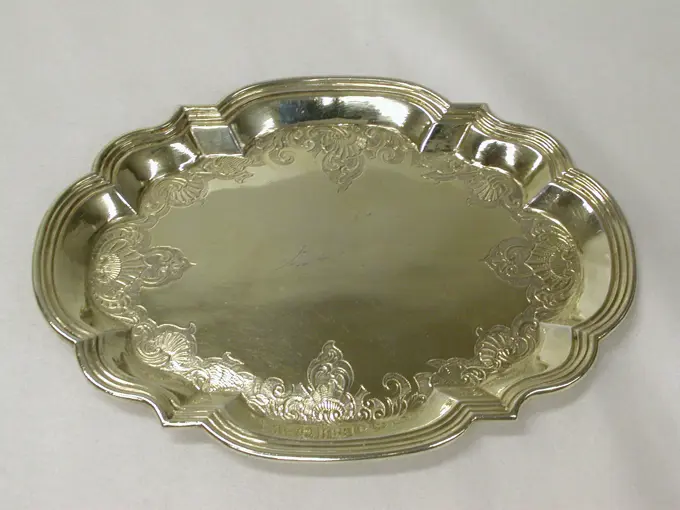
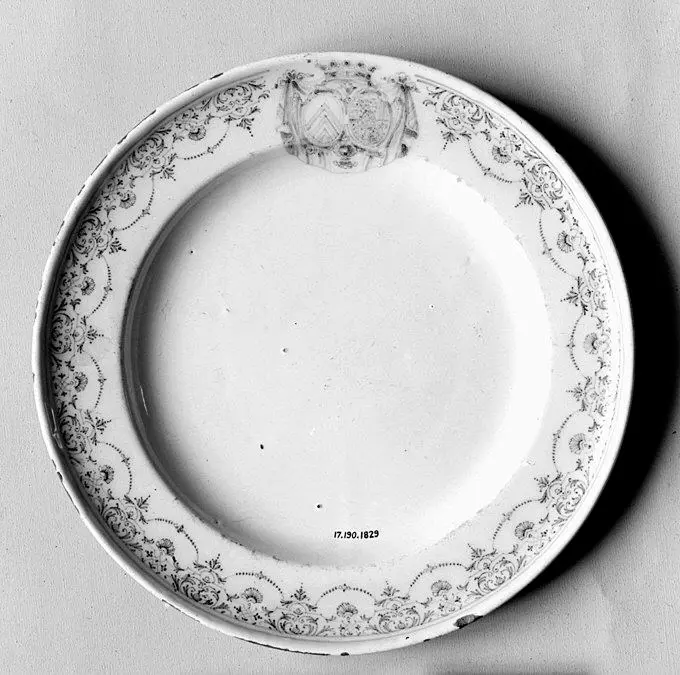
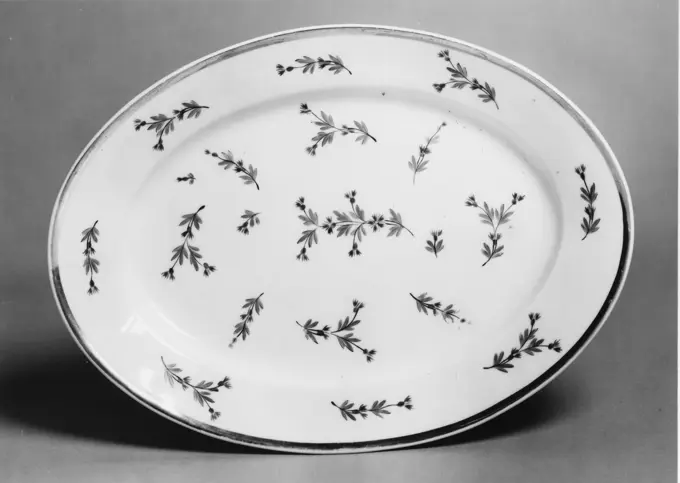
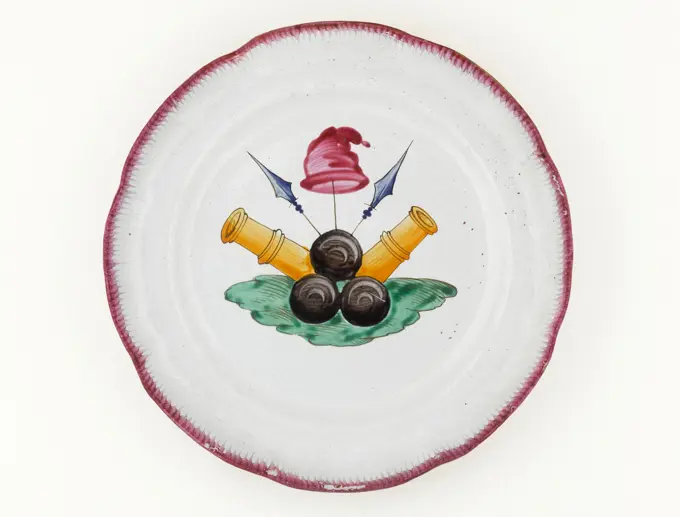
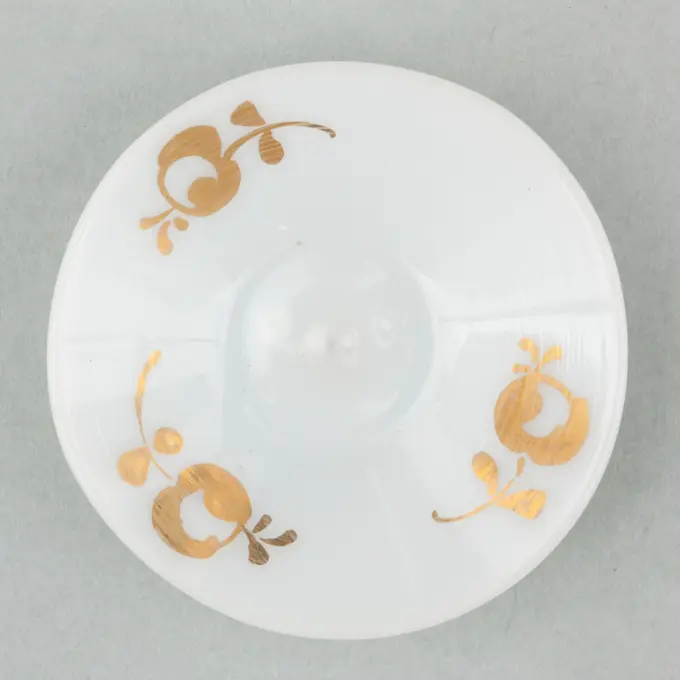
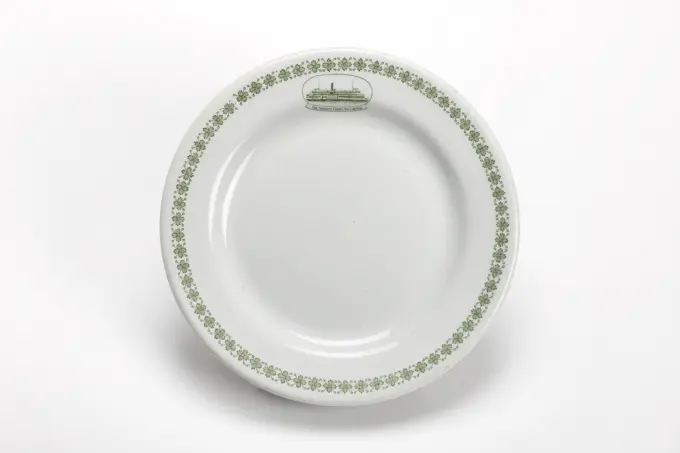
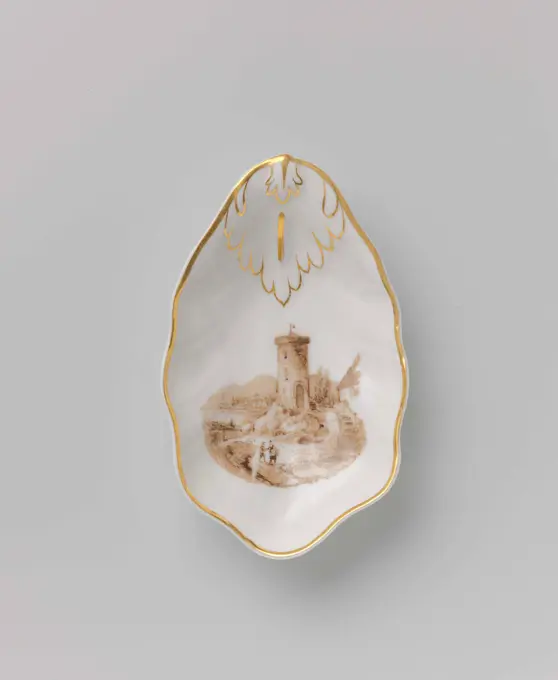
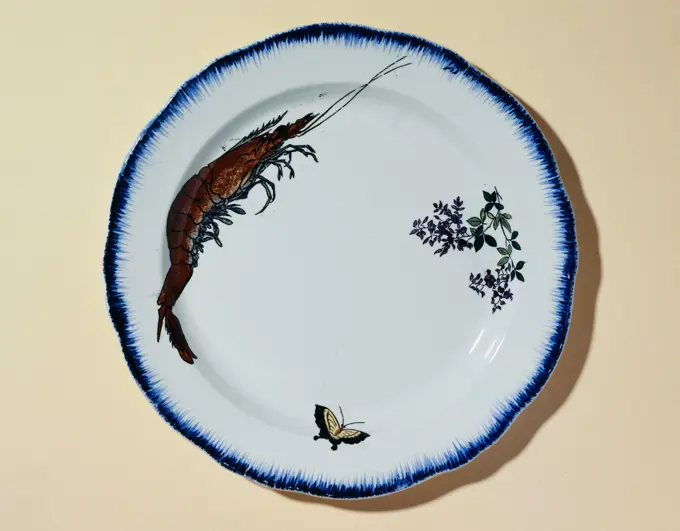
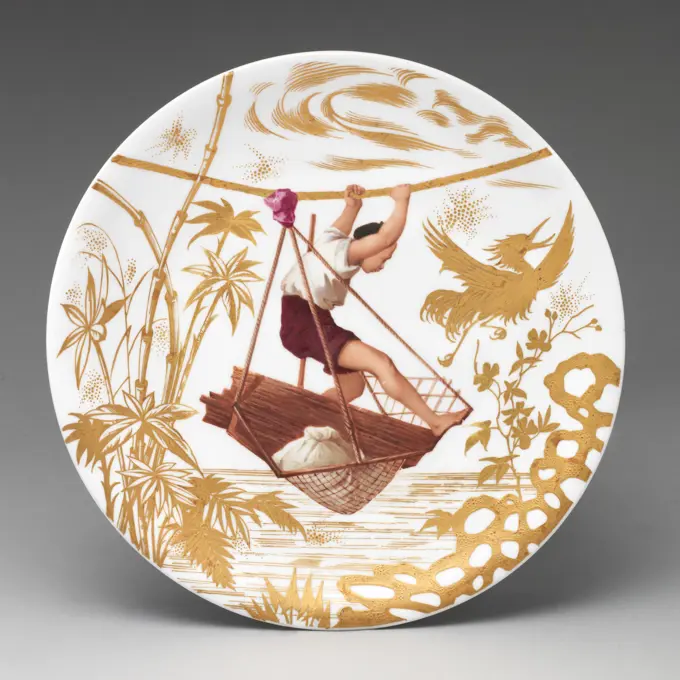
Dinner plate - King EdwardTable Mat; silk embroidery on linen foundationWine Bottle Cooler Stand 1845-1846 London. Silver on wooden support . Robert Garrard, IIPlate decorated with fish, rörstrand, c. 1900 Porcelain plate, the edge of which is decorated in Pâte-sur-Pâte technology with three times a large and a small fish, partly hidden behind a leaf, in green, light blue, pink and violet. Between these motifs a leaf on the edge in Violet. The edge is scalloped. Rörstrand porcelain Porcelain plate, the edge of which is decorated in Pâte-sur-Pâte technology with three times a large and a small fish, partly hidden behind a leaf, in green, light blue, pink and violet. Between these motifs a leaf on the edge in Violet. The edge is scalloped. Rörstrand porcelainDish, painted with vegetables and fruits surrounded by sprinkling flowers, porcelain factory The Hague, c. 1777 - c. 1790 Dish, multi -colored painted with a backdrop of vegetables and fruits surrounded by sprinkles. Marked with a stork in blue under the glaze. N.B. German porcelain painted in The Hague. The Hague porcelain Dish, multi -colored painted with a backdrop of vegetables and fruits surrounded by sprinkles. Marked with a stork in blue under the glaze. N.B. German porcelain painted in The Hague. The Hague porcelain'Hans Sloane' Plate, Chelsea Porcelain Manufactory, English, established ca. 1743/45, Georg Dionysius Ehret, German, 1708 - 1770, soft paste porcelain, vitreous enamel, A plate with a wavy, brown-edged rim painted with tulip tree (Liriodendron) flower and leaves, and various insects., England, 1753-1756, ceramics, Decorative Arts, plate, platePlate 1886-95 Challinor, Taylor and Company. Plate. American. 1886-95. Pressed opaque white glass. Made in Tarentum, Pennsylvania, United StatesPlate. unknown, craftsmanSquare Covered Box with Hundred Antiquities (lid), 1723-35. China, Jiangxi province, Jingdezhen kilns, Qing dynasty (1644-1911), Yongzheng mark and reign (1723-35). Porcelain with famille rose overglaze enamel decoration; overall: 4 x 7.5 cm (1 9/16 x 2 15/16 in.). The painted decoration in this box cover provides an interesting image of the antiquities and objects being collected in the Chinese scholars desk—all of which are emblems of taste, status, and affluence. Connoisseurship, art cataloguing, art historical study, and elegant social gatherings developed alongside art collecting as part of the Chinese literati culture.Dish, painted with the Krokus decor. Dish of painted porcelain. The dish is painted in green and brown. The dish has been marked.. Talam, sacrifice, bronze, in middle decorated with a bull including a border with different animals.Dish with golden leaf motifs. Dish of porcelain with blue border and gold leaf motifs.Saucer. Korzec (manufaktura porcelany ; 1790-1832)Anonymous. Imari decor plate. Porcelain. 1st half of the 18th century. Museum of Fine Arts of the City of Paris, Petit Palais. 122748-31. Blackboard, round, from faience, painted in blue with flowers and birds. Marked with monogram hp (= Pieter Comb).Dish, painted with the Krokus decor. Dish of painted porcelain. The dish is painted in green and brown. The dish has been marked.. Dish of porcelain, painted in underglaze blue and on the glaze red, black and gold. On the flat a flower-shaped cartouche containing a crowned monogram with 'J.W.'. The monogram is surrounded by a shell pattern and flower branches. On the wall lotus drinks in underglaze blue. The inner edge with a switch pattern. Some chips in the edge. European performance in blue and white and encre de chine.Dish, multi -colored painted with a water landscape in a saved four pass in an Oranjerode fond, Meissener Porzellan Manufaktur, c. 1735 Subtotel of painted porcelain. The dish is covered with an Oranjerode Fond, in which accolade -shaped four -passes are saved with (water) landscapes with European figures, sometimes with bales and ships. The dish is marked. Float porcelain Subtotel of painted porcelain. The dish is covered with an Oranjerode Fond, in which accolade -shaped four -passes are saved with (water) landscapes with European figures, sometimes with bales and ships. The dish is marked. Float porcelainLobed saucer late 18th century China. Lobed saucer. China. late 18th century. Porcelain with clear glaze (Jingdezhen ware). Qing dynasty (1644-1911), Qianlong period (1736-95). CeramicsTray (one of a pair) ca. 1743-45 Johann Conrad Lotter German. Tray (one of a pair) 231579Salver 1754-69 Daniel Christian Fueter American Salvers, or trays raised on a base or upon multiple feet, were a popular form in eighteenth-century silver. This large and vigorously shaped example, by the New York maker Daniel Christian Fueter, is particularly notable for the engraved arms in an elaborate Rococo shield. They belong to the Provost family, a prominent New York family of French Huguenot extraction.. Salver 7097Dish with flower and vines. Dish of porcelain, decorated with flower and vines in gold and blue. Signature in gold: B.S. Paris. With a corresponding head (A).Marriage bowl 1761 Bow Porcelain Factory British. Marriage bowl 203566. Subdecast of silver, oval with corrugated edge. Edge and ears decorated with leaf branches.Set of six small heart-shaped dishes, c. 1735 - c. 1755 Heart -shaped bowl multicolour painted with figures around a tree. Delft . Heart -shaped bowl multicolour painted with figures around a tree. Delft .Plate ca. 1734 Clérissy Manufactory Faience, or tin-glazed and enameled earthenware, first emerged in France during the sixteenth century, reaching widespread usage among elite patrons during the seventeenth and early eighteenth centuries, prior to the establishment of soft-paste porcelain factories. Although characterized as more provincial in style than porcelain, French faience was used at the court of Louis XIV as part of elaborate meals and displays, with large-scale vessels incorporated into the Baroque garden designs of Versailles. Earlier examples of French faience attest to the strong influence of maiolica artists from Italy. Later works demonstrate the ways in which cities such as Nevers, Rouen, Lyon, Moustiers, and Marseille developed innovative vessel shapes and decorative motifs prized among collectors throughout Europe. While faience can be created from a wide mixture of clays, it is foremost distinguished by the milky opaque white color achieved by the addition of tin oxPlatter 1815-30 French. Platter. French. 1815-30. Porcelain. Made in Paris, FranceAnonymous. Plate. Earthenware. Paris, Carnavalet museum. 71478-51 Attribute, phrygian cap, ball, cannon, emblem, revolutionary time, faience, spike, French revolution, dishes, plateSaucer with a bouquet, imperial porcelain factory, c. 1798  Porcelain dish with a straight wall, painted on the glaze in blue, red, pink, green, yellow, purple, black and gold. The inside of the dish is covered with gold, containing a bouquet of different flowers. The inner wall with a bond of flower ranks in Goudreliëf. Marked on the underside with the shield, XI  And twice the year number 98. Vienna porcelain. glaze. gold (metal) painting / gilding / vitrificationTable mat, Medium: silk embroidery on linen foundation Technique: embroidered using stem, satin, padded satin,and padded buttonhole stitches on plain weave, White linen tray or table mat of natural-colored linen, scalloped to a shape approximately oval, the edge buttonholed in white silk. multi-colored linen and silk embroidery of purple, yellow and red pansies with scrolls and dots., USA, late 19th century, embroidery & stitching, Table matScale in small size, painted in blue, c. 1680 - c. 1700 Schaal in small size, painted in blue Delft earthenware Schaal in small size, painted in blue Delft earthenwareSaucer. Leaf of faience, on three legs. Painted blue.Dish with women in a garden near a flowerpot, anonymous, c. 1680 - c. 1720 Deep porcelain dish with a scalloped edge, painted in underlaze blue. On the flat two women (long lips) in a garden, looking at a flowerpot on a low table. The wall and edge are divided into eight petals -shaped compartments with two women in a flowering plant each. A Swastika pattern between the courses. The outer wall is divided into eight courses by means of taken lines. On top of it three flower branches and a fruit branch (peach). Marked on the underside with the six-character brand of Kangxi in a double circle. Some chips in the edge. Blue White. China porcelain. glaze. cobalt (mineral) painting / vitrification Deep porcelain dish with a scalloped edge, painted in underlaze blue. On the flat two women (long lips) in a garden, looking at a flowerpot on a low table. The wall and edge are divided into eight petals -shaped compartments with two women in a flowering plant each. A Swastika pattern between the coDessert plate - The Toronto Ferry Co. Limited Wood & Sons, ca. 1907-1910 Wood & Sons, ca. 1907-1910Fruit Piece 1860 Saint Louis. Hannah Brown Skeele earned acclaim for her delicate still-life compositions both in her home state of Maine and in Saint Louis, where she worked and exhibited in the 1860s. In Fruit Piece, her earliest known painting, a dessert course communicates refinement both in terms of the rare edibles themselves and in their careful presentation. In the mid-19th century pineapples, lemons, oranges, and even bananas were imported specialties, shipped along the Mississippi River from New Orleans. These exotic fruits were available in limited quantities and served by families with means on special occasions such as holidays or dinner parties.. Oil on canvas . Hannah Brown SkeeleVector plate with abstract decorative berry ornament on the side and in the middle.. Vector plate with decorative berry ornamentA set of white and brown ceramic plate and cup on a white background. Set of white and brown ceramic plate and cup on a white backgroundkitchen utensils at cutting board on white backgroundScale, leaf shaped. Scale of porcelain, leaf-shaped scallops, on one side with an acanthus sheet embossed. Edge and leaf with golden trim. Part of a crockery, painted in sepia with landscapes or topographical faces.Félix Henri Bracquemond, Eugène Rousseau. "Flat plate". Ceramics, fine earthenware, printed decor and painted under cover. 1866-1875. Museum of Fine Arts of the City of Paris, Petit Palais. 74386-14 Flat plate, ceramic, shrimp, crustace, prints print, fine faience, flower, butterfly, painted, dishesPlate with portrait of Van Speijk, Dawson, in or after 1831 plate (dishes) On flat portrait of male (shoulder piece) in uniform with distinctive sign (Military William Order) and Epaulet in a laurel wreath in black / white transfer print. On the flat edge a wreath of leaves with seven medallions with flags and guns. Inscription; Plat: J.C.J. from Speyk. / Born January 31, 1802 / den Heldendood died / 5 February 1831. marked; Bottom flat: Dawson. England earthenware  historical persons BelgiumLe Bac Aerien ca. 1880 Worcester factory. Le Bac Aerien. British, Worcester. ca. 1880. Bone china. Worcester factory (British, 1751-2008). Ceramics-PorcelainBowl from Childs Dinner Set.  Designer Louis Comfort Tiffany, American, 1848-1933 Manufacturer: Tiffany and Company, American, founded 1837The puffin, Iceland's national bird, is a popular chinaware decoration, especially for tourists.