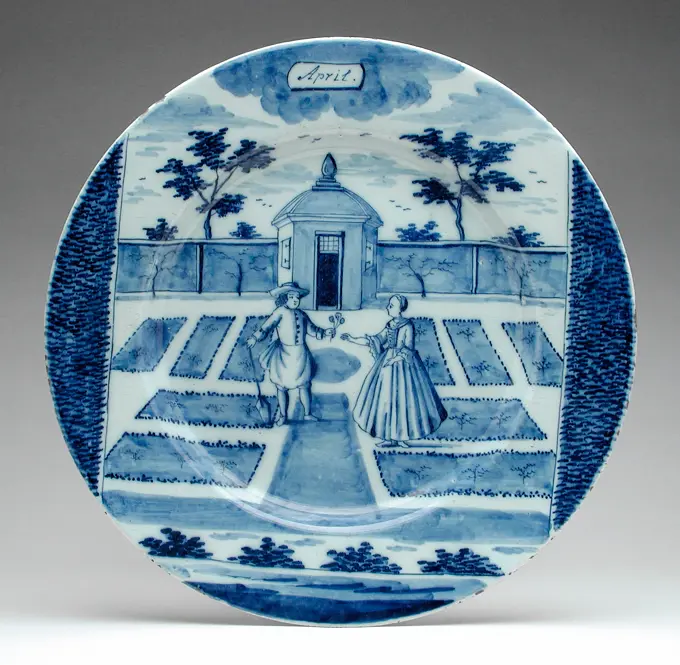
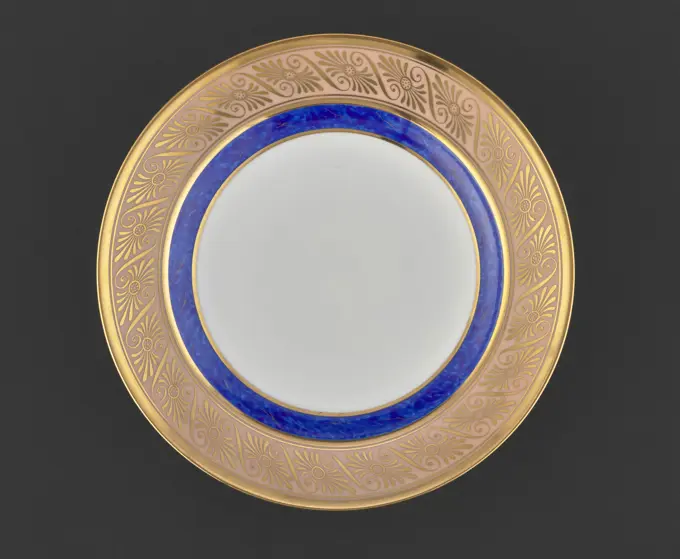
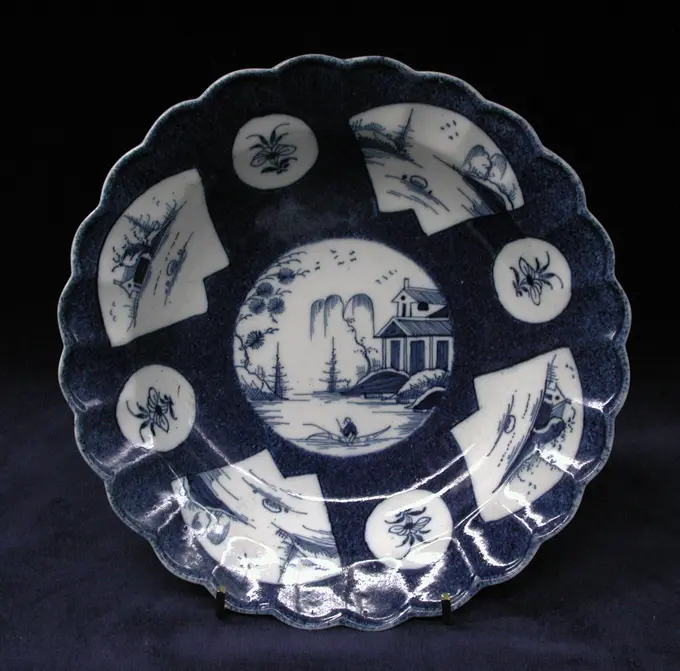
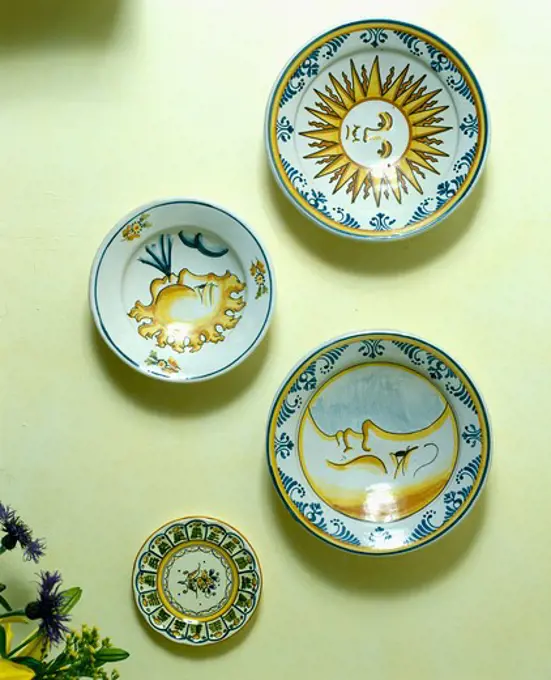
Decorative Porcelain Plates

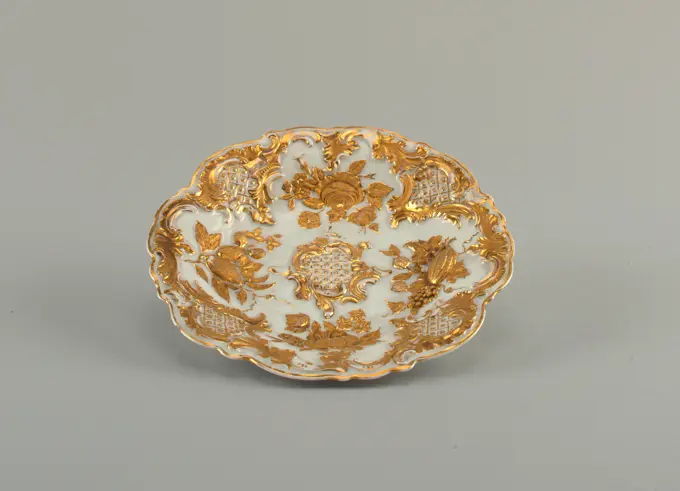
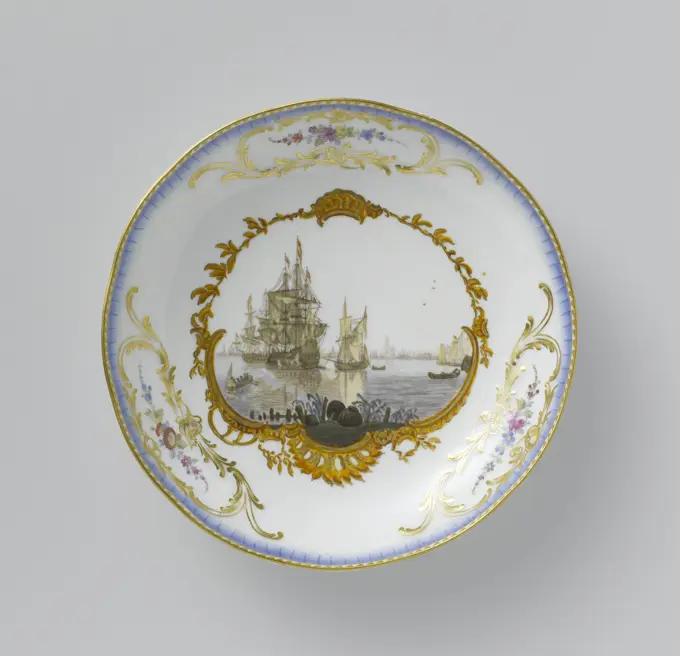
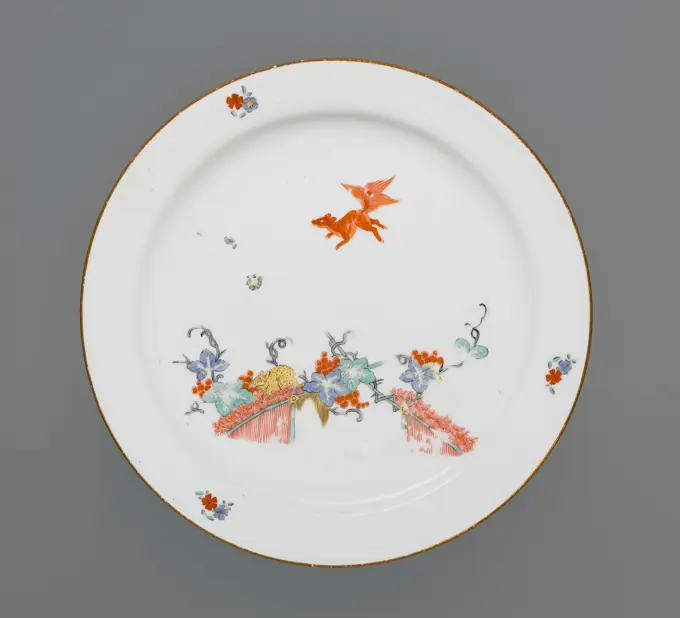
A series of beautifully painted porcelain plates featuring floral and animal motifs, showcasing fine craftsmanship from the Meissen porcelain factory.
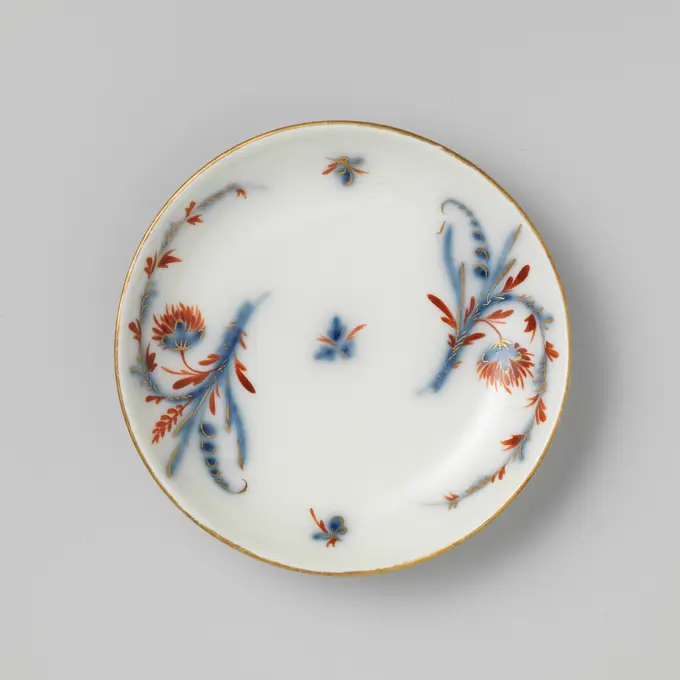
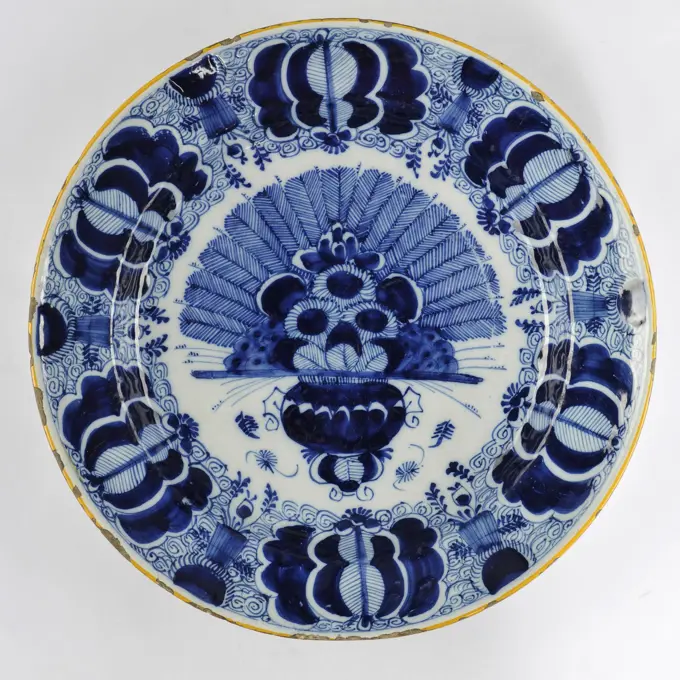
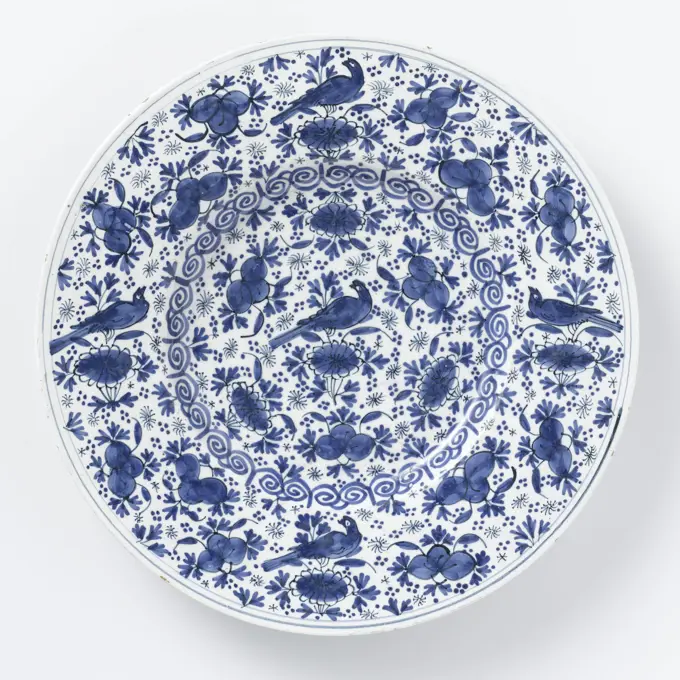
Dish, painted with flower branches. Dish of porcelain. Without ear. Painted in underglazing blue, red and gold with flower branches.
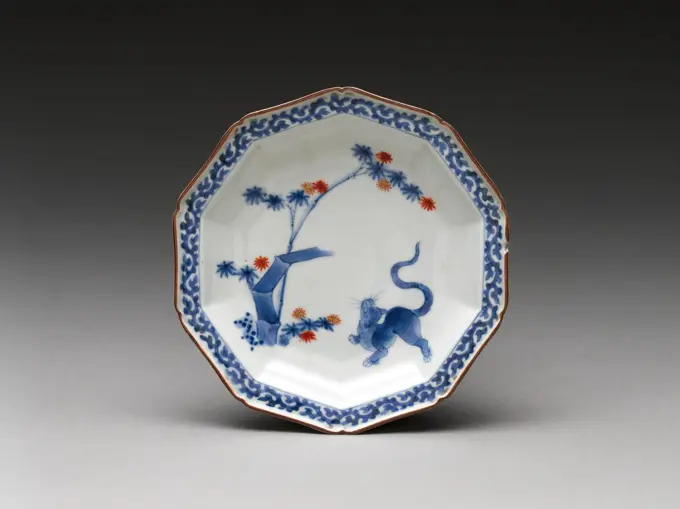
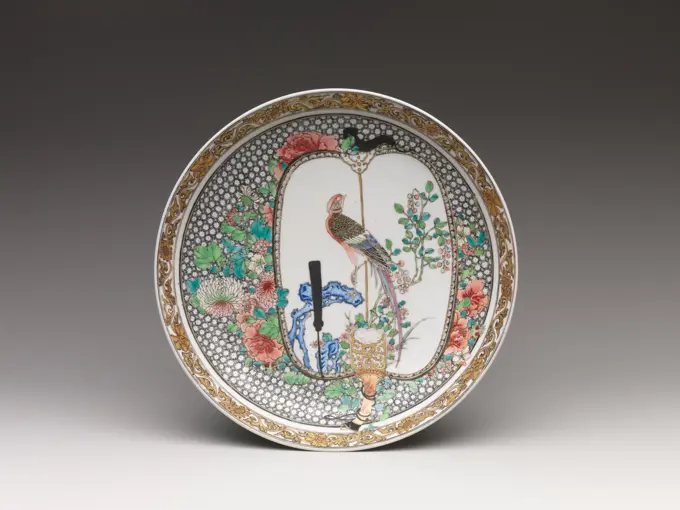
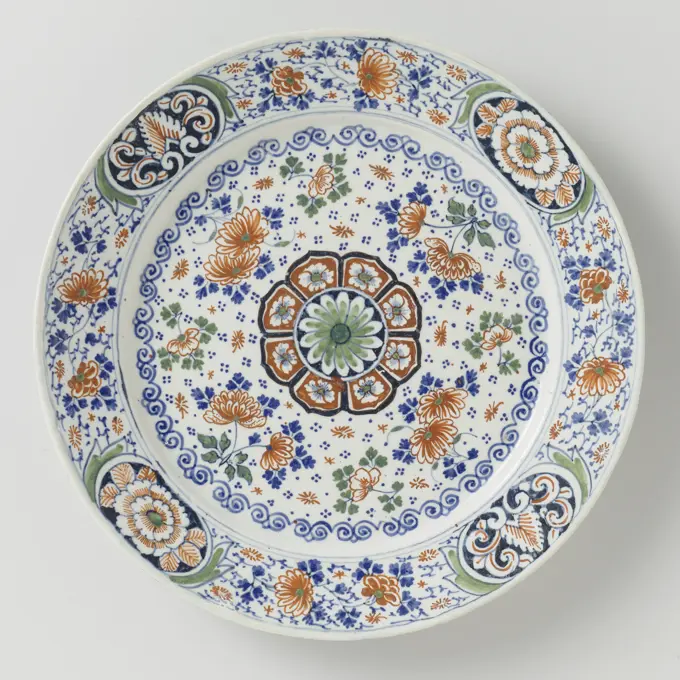
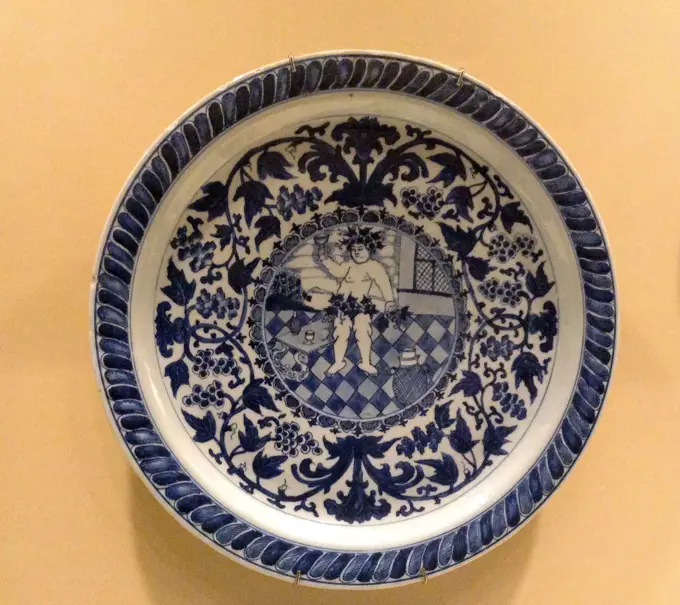
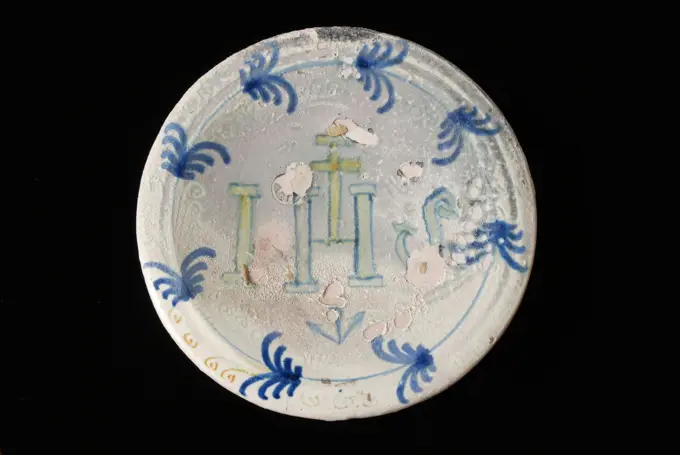
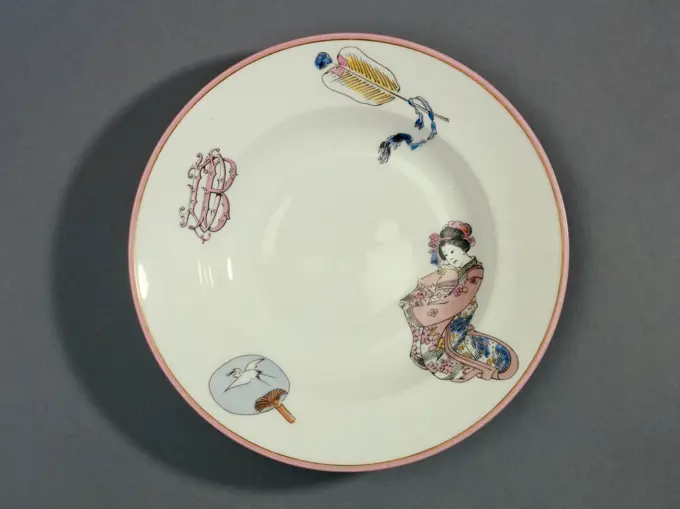
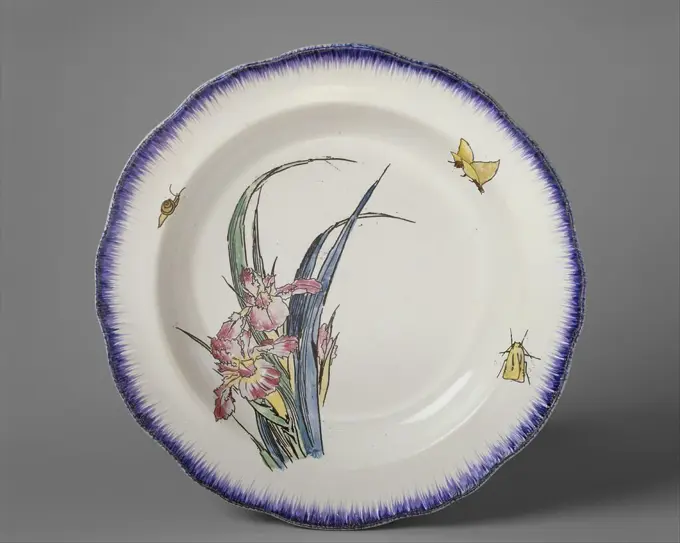
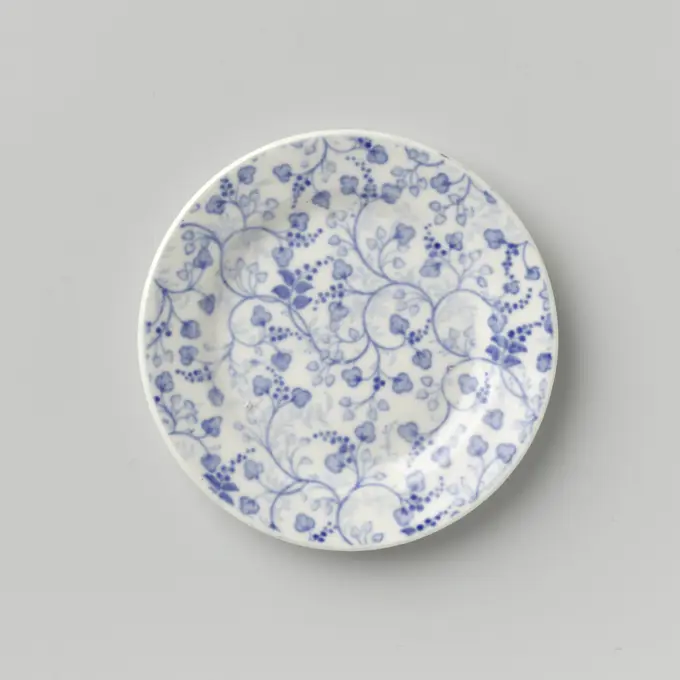
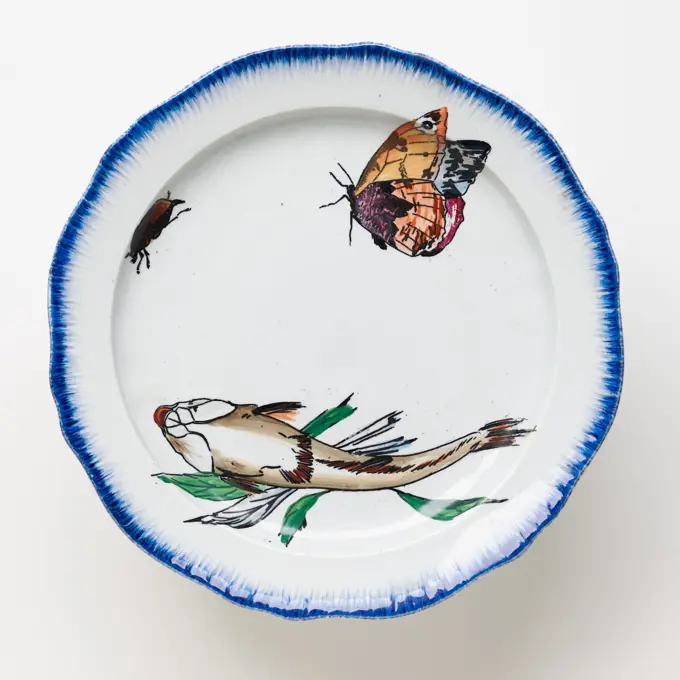
flower decorations, flower, vasesSaucer with flowering plants on a black ground, anonymous, c. 1700 - c. 1724 Porcelain saucer with round wall, painted in underly glaze blue, on biscuit blue, green, yellow, eggplant and black and on the glaze green, eggplant and black. The front of the dish is covered with a black enamel with a medallion saved in it with flowering plants in reserve (Lotus, Chrysanthemum, Prunus and Peony); The bottom with four flower branches, the eggplant email scraped off the flower. Marked on the underside in underlaze blue with an artemisia leaf in a double circle. Three chips in the edge. Possibly decorated in Europe. Email sur biscuit with family noire colors. China porcelain. glaze. cobalt (mineral) painting / vitrification Porcelain saucer with round wall, painted in underly glaze blue, on biscuit blue, green, yellow, eggplant and black and on the glaze green, eggplant and black. The front of the dish is covered with a black enamel with a medallion saved in it with flowering plants in reserve Dish with tiger and bamboo ca. 1720 Japanese, for European market The Chinese-inspired pairing of tiger and bamboo has a long history in the Japanese decorative arts. Connotations of strength and flexibility made it a particularly popular motif for large-scale paintings for sliding wall panels in the castles of powerful feudal lords during the sixteenth and seventeenth centuries.. Dish with tiger and bamboo. Japanese, for European market. ca. 1720. Hard-paste porcelain painted with cobalt blue under transparent glaze (Hizen ware; Kakiemon type). Ceramics-Porcelain-ExportDessert Dish Dish; Manufactured by Meissen Porcelain Manufactory (Germany); porcelain, vitreous enamel, goldSaucer-dish with the oxheerd and the weaver girl. Scale of porcelain with round wall, painted on the glaze in blue, red, pink, green, yellow, black and gold. On the front a river landscape with a shepherd, OS on a tree bound, and a weave in a pavilion, a second woman looks around the corner of the frame; The inner edge with lotus drinks. A crack in the soil. Family Rose."Bamiyan Ware" bowl 11th-12th century Pottery decorated with incised designs and splashed colored glazes was popular in most areas of the Islamic world. This plate belongs to a group of ceramics reportedly found at the site of Shahr-i Ghulghula at Bamiyan in Afghanistan. While these works are usually described as "Bamiyan," there is no archaeological evidence that they were produced there.. "Bamiyan Ware" bowl 453342Dish with Birds and Flowers on Fan ca. 1730-50 China The layering of designs on this dish illustrates the dense and precise decoration that typifies the art of the Qianlong period in China. A short-handled fan with a bird perched on a flowering branch fills the center of this small plate. The fan is painted above large flowers in pink and green that are, in turn, placed against a lush background of smaller blossoms in black (possibly silver) and white. The additional designs on the edges of the fan and the rim of the plate are also characteristic of the eighteenth century.. Dish with Birds and Flowers on Fan. China. ca. 1730-50. Porcelain painted in overglaze famille rose enamels and gold (and possibly silver). Qing dynasty (1644-1911). Ceramics. Bell-shaped head of porcelain, painted on the glaze in blue, red, pink, green, black and gold. On the wall the crowned monogram 'A.M.' Surrounded by curling work and leaf raft. To the monogram napkin work in cartouches, flower rinks and an unidentified, crowned monogram. A crack in the wall of the head. Weapon porcelain with email colors.Saucer Mi Nia (Meissen)Dessert plate - William Davenport & Company, 1835-1881 William Davenport & Company, 1835-1881. Octagonal soup plate made of porcelain with squeezed corners, painted on the glaze in blue, red, pink, green, purple, black and gold. On the Flat family Sayer coat of arms, with a white twill and three birds against a red background. The helmet sign is a lion. The weapon is surrounded by acanthus leaves and flower branches. On the edge loose flower branches and a Spearhead border. Weapon porcelain with email colors.Dessert plate - Wolfe's Monument. Monument de Wolfe, Quebec Views D'après Cochran & Fleming, 1896-1920Saucer with figures on a bridge in a water landscape with trees and houses, anonymous, c. 1700 Porcelain dish in the form of a four -pass with accolade -shaped border, painted in undermglaze blue. On the flat a river landscape with a rider and two walking people on a bridge. In the background houses, trees and clouds. The inner edge is with a blue band. Marked on the underside with the six-character brand of Keizer Chenghua. A proen on the bottom. Arita, Blauw-Wit. Japan porcelain. glaze. cobalt (mineral) painting / vitrification Porcelain dish in the form of a four -pass with accolade -shaped border, painted in undermglaze blue. On the flat a river landscape with a rider and two walking people on a bridge. In the background houses, trees and clouds. The inner edge is with a blue band. Marked on the underside with the six-character brand of Keizer Chenghua. A proen on the bottom. Arita, Blauw-Wit. Japan porcelain. glaze. cobalt (mineral) painting / vitrificationBell-shaped cup and saucer with European figures in a landscape, anonymous, c. 1740 - c. 1760 Bell -shaped head and dish of porcelain, painted on the glaze in blue, red, pink, yellow, brown, black and gold. On the flat of the dish a armed man and woman in a landscape with mountains and trees; A third person behind them; In the background a shepherd with three sheep. The head with the same decoration in a medallion, with in a second medallion a European woman with a child on a chair with a castle in the background. A few chips in the edge of the dish; A chip in the edge of the head. European performance in email colors. China porcelain. glaze. gold (metal) painting / gilding / vitrification Bell -shaped head and dish of porcelain, painted on the glaze in blue, red, pink, yellow, brown, black and gold. On the flat of the dish a armed man and woman in a landscape with mountains and trees; A third person behind them; In the background a shepherd with three sheep. The head with the same decDish 17th century. Dish 451064Plate with flower decorations and sprinkling flowers., Anonymous, c. 1700 - c. 1725 Plate of earthenware, front and back covered with white tinglaze. Multicolored painting on the front with a rosette in green, red, black and blue on the flat and sprinkling flowers in red, green and blue. The edge is decorated with four medallions in which a flower pattern in red, green and dark blue, with between lying scattering flowers. Delft . Plate of earthenware, front and back covered with white tinglaze. Multicolored painting on the front with a rosette in green, red, black and blue on the flat and sprinkling flowers in red, green and blue. The edge is decorated with four medallions in which a flower pattern in red, green and dark blue, with between lying scattering flowers. Delft .Bacchus' tray, c. 1700, 1 5/8 x 14 3/4 x 14 3/4 in. (4.13 x 37.47 x 37.47 cm), Porcelain, China, Chinese export, The shape of this tray and painted 'gadrooning' on its lip, resemble those of silver salvers used to hold wine goblets. The tiled floor depicted is particularly reminiscent of delftware (Chinese-inspired earthenware made in Delft, Holland) suggesting the dish was meant for the Dutch market. The scene most likely derives from an engraving, as yet unidentified.Dish (ôzara). unknown, craftsmanCzarka, Spodek; Koenigliche Porcellain Fabrique, Meissen (1710-1763), Augsburg (city); around 1715-1725 (1725-00-00-1725-00-00), around 1715-1720 (1720-00-00-1720-00-00);Flower pot console with embroidery in petit point of roses, rose buds and forget-me-staples. Flower pot console with embroidery in petit point on a grid, in wool and here and there. Pattern: a bouquet of four roses, some rose knobs and twigs forget-me-staples on the ground of unprocessed grid. Two of the roses are lilac, the buds of dark red.Dish of coffee cup, part of a coffee and tea set, painted with roses in baskets. Dish of coffee cup, part of a coffee and tea set, painted with roses in baskets.Dish;  18th century (1701-00-00-1800-00-00);Pottery majolica dish with IHS, misbaksel, dish crockery holder soil find ceramic earthenware glaze tin glaze lead glaze, hand-turned baked 2x majolica Majolica dish cream-colored shard polychrome prune prints backside lead glaze stand ring with hanging hole In the mirror: IHS (In Hoc Signo Vincit: In this sign overcomes He) archeology Rotterdam City Triangle Cool Coolsingel City Hall Stadhuis indigenous pottery serve serving food table pastry bakery craftsman Christ archaeological find in the soil: Raadhuis site at Coolsingel 1914Plate 1815-1825 Burslem. Porcelain with transfer-printed polychrome enamels and gilding . Wedgwood Manufactory (Manufacturer)Shallow Dish with Peony Scrolls, Chrysanthemum Spray, and Key-Fret Border; Lotus Petal under RimShallow Dish with Peony Scrolls, Chrysanthemum Spray, and Key-Fret Border; Lotus Petal under RimShallow Dish with Peony Scrolls, Chrysanthemum Spray, and Key-Fret Border; Lotus Petal under Rim. China. Date: 1368-1400. Dimensions: H. 8.6 cm (3 3/8 in.); diam. 47.0 cm (18 1/2 in.). Porcelain painted in underglaze red. Origin: China. Museum: The Chicago Art Institute, Chicago, USA.Félix Bracquemond (1833-1914). Service of "Japanese thirteen graces". Soup bowl. Porcelain. Museum of Fine Arts of the City of Paris, Petit Palais. Threatening art, hollow plate, woman, Japanese, porcelain, table service, service, thirteen Japanese grace, dishes, 19th 19th 19th 19th 19th century, plateSoup plate (part of a set of three). Culture: French, Creil. Designer: Félix Bracquemond (French, Paris 1833-1914 Sèvres). Dimensions: Diameter: 9 3/4 in. (24.8 cm). Maker: Produced by Eugêne Rousseau (1827-1891). Manufacturer: Lebeuf et Milliet. Date: 1866-75.The so-called "Rousseau" service played a pivotal role in the spread of japonisme in France in the second half of the 19th century. Conventional in its forms, it was startlingly novel in the asymmetrical disposition of the images which were largely Bracquemond's reworkings of Japanese prints by Hiroshige and Hokusai, as well as subjects of his own. Museum: Metropolitan Museum of Art, New York, USA.Plate, with Chinese buildings and flowering branches, Peter Regout, c. 1860 - c. 1890 Plate of earthenware with flow -blue transfer decor. On the flat some Chinese buildings and flowering branches spread loosely over the surface. The edge of the plate with six cartouches with flowers. Abstract motifs and leaf work between the cartouches. Maastricht . Plate of earthenware with flow -blue transfer decor. On the flat some Chinese buildings and flowering branches spread loosely over the surface. The edge of the plate with six cartouches with flowers. Abstract motifs and leaf work between the cartouches. Maastricht .A plate; Chamberlain & Co (England; Porcelain Factory; 1788-1852); 1811-40 (1835-00-00-1845-00-00);Ice Cream Plate from Mackay Service Tiffany & Co. 1878 This silver ice cream dish and accompanying plates are part of one of the most renowned and lavish dinner services ever created in America. Commissioned in 1877 by John W. (1831-1902) and Marie Louise Hungerford (1843-1928) Mackay, the dinner service for twenty-four consisted of over 1,250 pieces. A poor Irish immigrant with little education, John W. Mackay became one of the wealthiest men in America when he and three partners, James Fair, James Flood, and William OBrien, struck a silver deposit known as "The Big Bonanza" at Nevadas Comstock Lode in 1873. During a visit to the mine, Marie Louise asked her husband for a silver dinner service "made by the finest silversmith in the country." Her husband responded, "You shall have it. I like the notion of eating off silver brought straight from the Comstock." He proceeded to have a half ton of silver delivered from the mine to Tiffany & Co., where two hundred men worked for almost two Plate, with a boy and a dog on the flat. Pottery plate with black transfer decor, painted brown. On the flat a representation of a boy and a piping dog for a fence and a plate on which the text: notice. The edge is equipped with imitation braid.Manufacture of Joseph Fauchier, Marseille. Pattery decor plate. Great fire earthenware, polychrome enamels, pinkish earth, well -topped creamy white enamel. 3rd quarter of the 18th century. Museum of Fine Arts of the City of Paris, Petit Palais. Faience, table service, dishes, 18th 18th 18th 18th 18th 18th 18 century, plateDessert Dish, Meissen Porcelain Manufactory, German, active from 1710 to the present, hard paste porcelain, vitreous enamel, gold, Oval plate with scalloped edges, partially gilded with floral relief ornament., Germany, mid- 19th century, ceramics, Decorative Arts, dish, dishSalver with arms of Judith Jodrell 1738/39 Possibly by John Swift British The coat of arms on this salver, engraved in an exuberant rococo cartouche, is the sole decoration on the otherwise plain surface. The salver, used to hold a tea service, was commissioned as a memento by Judith Jodrell, who bought it using money bequeathed to her by two close friends. The monogram and inscriptions on the reverse commemorate these attachments.. Salver with arms of Judith Jodrell 198029Saucer-dish with powder blue and flower basket. Scale with round wall of porcelain, painted in underglaze blue and red. The front is covered with bleu poudré (powder blue) with a flower basket in this; Three floral drinks on the underside. Marked on the bottom with a shell in a double circle; Also a commission August the strong / Johanneum number: N = 484. Three chips in the edge. Middle blue with copper red.10th anniversary of the Special Voluntary Landstorm, August Falise (Copy After), 1928 plate (dishes) Delft blue plate with the presentation of a weak hat and clogs, rifle on the shoulder, two hands on a spade, left foot on the spade. He is in a field with crocuses and for a stylized sun surrounded by a banderole with the motto of the special voluntary land storm surrounded by flowers. Around this inscription. The edge of the plate decorated with plant motifs. Road side: inscriptions and brands and a yellow carrying roof. On the occasion of the 10th anniversary of the special Voluntary Landstorm on September 27, 1928. Delft earthenware. rope vitrification  NetherlandsPlate - Joseph Clementson, 1839-1864 Joseph Clementson, 1839-1864Bord, Petrus Regout, 1867 Plate of earthenware, with blue continuous flower decor, belonging to a children's service. Maastricht . Plate of earthenware, with blue continuous flower decor, belonging to a children's service. Maastricht .Bowl 1765-1775 Worcester . Worcester Royal Porcelain Company (Manufacturer)Bowl with graviata decoration with a floral motif on a turquoise background unknown. Plate of pottery, front and rear covered with white tin. Multicolored painting on the front with a rosette in green, red, black and blue and surrounded by thereabels in red, green and blue. The edge is decorated with four medallions in which a floral pattern in red, green and dark blue, with between lying spreader flowers.Burdette-Coutts Service (Soup Plate). Welsh, Swansea (England)William Billingsley (England, 1758-1828). England, circa 1815. Furnishings; Serviceware. PorcelainTray, Sèvres Porcelain Manufactory, French, established 1756 to the present, porcelain, vitreous enamel, gold, Oval dish with broadly scalloped edge. Wide rim painted with quatrefoil and lattice pattern. At center, a flying putto with laurel wreath and the gilded letter E., France, 1768, ceramics, Decorative Arts, tray, trayAnonymous. Salad bowl to the tree of freedom. Earthenware. 1792. Paris, Carnavalet museum. 72429-42 Tree, Phrygian hat, flag, faience, beam, freedom, revolutionary period, French revolution, salad bowlDinner plate - Inconnu / UnknownDish ca. 1752-56 Chelsea Porcelain Manufactory The image of a rhinoceros is derived from a woodcut of 1515 by Albrecht Dürer (1471-1528), re-issued and copied many times in the ensuing centuries. An Indian rhinoceros belonging to King Manuel I of Portugal was the inspiration for the Dürer work. It was used for the decoration of a large dish in a Meissen porcelain service given to Britain's envoy to the Dresden court in 1745-52, Sir Charles Hanbury Williams. He sent the service to England. The rhinoceros dish was borrowed by the Chelsea Factory, with other pieces from the service, to be copied.. Dish. British, Chelsea. ca. 1752-56. Soft-paste porcelain. Chelsea Porcelain Manufactory (British, 1745-1784, Red Anchor Period, ca. 1753-58). Ceramics-PorcelainBase from a vase;  Mielów (faience and porcelain factory; 1804-); 1840-1860 (1840-00-00-1860-00-00);Plate with arms of Pignatelli, c. 1745, 11 1/4 in. (28.58 cm), Porcelain, China, 18th centurySaucer with a Chinese junk and the arms of Amsterdam, anonymous, c. 1800 - c. 1899 Porcelain dish, painted on the glaze in blue, red, pink, green, yellow, black and gold. On the front of the dish a Chinese junction with a crew on the waves, above the weapon of Amsterdam. Weapon porcelain. China porcelain. glaze. gold (metal) painting / gilding / vitrification  Amsterdam. China Porcelain dish, painted on the glaze in blue, red, pink, green, yellow, black and gold. On the front of the dish a Chinese junction with a crew on the waves, above the weapon of Amsterdam. Weapon porcelain. China porcelain. glaze. gold (metal) painting / gilding / vitrification  Amsterdam. ChinaSèvres Porcelain Manufactory, Cup and Saucer, 1912, soft-paste porcelain.Dish with decor in gold, red and green. Dish of porcelain with decor in gold, red and green. Flat with two golden circles, further a green border, a white with Z.G. "running dog", a purple with stylized rank interrupted by rosettes and a solid golden edge. Note: Probably the head does not belong to the dish.Dish from V.O.C.-ship De 'Witte Leeuw', Anonymous, Before 1613  Dish from V.O.C. ship De 'Witte Leeuw', 95 present. Jingdezhen porcelain   Sint-HelenaDish, multi -colored painted with chinoiseries, Meissener Porzellan Manufaktur, c. 1725 Round dish of painted porcelain. The dish is painted on the back with three red concentric rings and on the front with a Höroldt chinoiserie within a four-pass with a golden edge. The edge is gilded. The dish is marked. Float porcelain Round dish of painted porcelain. The dish is painted on the back with three red concentric rings and on the front with a Höroldt chinoiserie within a four-pass with a golden edge. The edge is gilded. The dish is marked. Float porcelainDeep Dish with Chrysanthemum in a Stream, mid 17th century, Unknown Japanese, 3 1/4 × 11 7/8 × 11 3/4 in. (8.26 × 30.16 × 29.85 cm), Imari ware; Porcelain with celadon glaze and underglaze cobalt blue, Japan, 17th century, The center of this deep, fluted dish features a large white chrysanthemum partially submerged in a flowing stream with a pair of geese flying nearby. This simple designwhich was also a popular design for textiles of the timeis made using a variant of the porcelain technique sometsuke (designs painted in blue on white pottery) known as seiji (celadon) sometsuke. The artist first glazed the entire dish in blue-green celadon, scraped away the area that would become the stream and chrysanthemum to reveal the white beneath, painted the blue design with a brush, and then covered the entire dish with a final, clear glaze before firing.Bowl with an EquestrianProcessionTray. François-Thomas Germain (French, 1726 - 1791)Plate with river landscape and flower sprays, anonymous, c. 1740 - c. 1760 Plate of porcelain with round, short wall and wide, sloping edge, painted in underlaze blue. On the flat a river landscape with two people on a bridge, pavilions, trees and rocks, around it a band with geometric motif; A flower branch on the edge four times. A chip and a crack in the edge. Blue White. China porcelain. glaze. cobalt (mineral) painting / vitrification Plate of porcelain with round, short wall and wide, sloping edge, painted in underlaze blue. On the flat a river landscape with two people on a bridge, pavilions, trees and rocks, around it a band with geometric motif; A flower branch on the edge four times. A chip and a crack in the edge. Blue White. China porcelain. glaze. cobalt (mineral) painting / vitrificationPlate; Koenigliche Porzellan Manufaktur (KPM; Berlin; 1763-1918); 1870-82 (1823-00-00-1832-00-00);Tea Bowl and Saucer, Royal Worcester, English, established 1751, soft paste porcelain, vitreous enamel, Outcurving side with cylindrical foot, with curved side. Decoration of floral sprays and butterflies., England, ca. 1770, ceramics, Decorative Arts, tea bowl and saucer, tea bowl and saucerCloseup-Ansicht der alten blauen Muster chinesische Keramik Teller isoliert auf weißem Hintergrund. Closeup view of old blue pattern chinese ceramic plate isolated on white background with clipping path. Copyright: xZoonar.com/VeeravongxxKomalamenax 22822322175 parts of a service, multi-colored painted with a Kakiemon decor, Meissener Porzellan Manufaktur, c. 1740 - c. 1745 175 parts of a service, multi-colored painted with a kakiemon decor, consisting of 6 candlesticks, two salt vessels, 1 large oval terrine, 2 small oval terrines, 3 round terrines with handle, 43 scales (in six sizes), 26 soup plates and 92 plates. Float porcelain 175 parts of a service, multi-colored painted with a kakiemon decor, consisting of 6 candlesticks, two salt vessels, 1 large oval terrine, 2 small oval terrines, 3 round terrines with handle, 43 scales (in six sizes), 26 soup plates and 92 plates. Float porcelainServing plate - Chamberlain & Sons Chamberlain & SonsDinner plate - Arctic Scenery D'après. Cup and saucer decorated with a multicolored landscape. Along the edges a leaf rank. Signature: Amstel.Set: plate Glassworks J. Stolle NiemenVictor Hugo (1802-1885). Chinese decor from Juliette Drouet's house in Guernsey, West Wall. Green wooden record containing plates and dishes, composed of twenty-seven compartments (right side of the west wall). Painted wood. 1857-1864. Paris, house of Victor Hugo. 78171-18 Asian art, decorative arts, painted wood, green wood, Chinese cabinet, locker, chinoiserie, compartment, decor, faience, storage, Chinese living room, dishes, 19th XIX 19th 19th 19th 19th century, plate, dishSeven Plates from the Service of Stadtholder William V, Meissener Porzellan Manufaktur, c. 1772 - c. 1774 Round scale of painted porcelain. The edge is scalloped and has three cartouches in relief with gold, within which a multicolored flower garland. A blue, ribbed piping runs along the edge. The mirror is painted with a rocaille cartouche in which a topographical face; on the back described as "Amsterdam". The scale is marked. Float porcelain Round scale of painted porcelain. The edge is scalloped and has three cartouches in relief with gold, within which a multicolored flower garland. A blue, ribbed piping runs along the edge. The mirror is painted with a rocaille cartouche in which a topographical face; on the back described as "Amsterdam". The scale is marked. Float porcelainFoliate Dish with Bovine (Xiniu) Gazing at a Crescent Moon 1250-1299 China. Longquan ware; stoneware with underglaze molded decoration .Plate, one of a pair, 1723-1735, 1 3/16 x 6 in. (3 x 15.24 cm), Porcelain, overglaze enamel, underglaze blue, China, 18th centuryA plate with decoration in the type of kakiemon; Koenigliche Porcellain Fabrique, Meissen (1710-1763); around 1730 (1728-00-00-1730-00-00);Anonymous. Plate with the Bonnet de la Liberté. Earthenware. Paris, Carnavalet museum. 71683-21 Phrygian cap, decoration, faience, freedom, revolutionary period, French revolution, plateToy serving plate - Inconnu / UnknownDish (tondino). Culture: Italian, Montelupo. Dimensions: Diameter: 27cm (10 5/8 in.). Date: ca. 1570-80. Museum: Metropolitan Museum of Art, New York, USA.Plate ca. 1826-ca. 1846 Enoch Wood & Sons British. Plate. British (American market). ca. 1826-ca. 1846. Earthenware, transfer-printed. Made in Staffordshire, Stoke-on-Trent, EnglandPlates, from the Service des Officiers at Chteau de Bizy, Sèvres Porcelain Manufactory, French, established 1756 to the present, hard paste porcelain, vitreous enamel, gold, France, 1846, ceramics, Decorative Arts, plates, platesA plate; Copeland & Garret (England; Ceramics; 1833-1847); 1833-46 (1833-00-00-1846-00-00);Dinner plate -Dinner plate - L. Bernardaud & Company L. Bernardaud & CompanySauce Dish. China, export for French market (), Ch'ien-lung period, 1770-1785. Furnishings; Serviceware. PorcelainCake plate with fish, butterfly, and bug, 1866-1867, Félix Bracquemond; Manufacturer: Lebeuf, Milliet & Co., Creil; Retailer: Francois-Eugene Rousseau, French, 1833-1914, 3 × 8 3/4 in. (7.62 × 22.23 cm), Lead-glazed earthenware, transfer printing, France, 19th century, This platter and three footed plates come from a large table service commissioned by the French dealer and publisher Eugène Rousseau (1827-1890) and designed by the painter and print maker Felix Bracquemond. First exhibited in Paris at the Universal Exhibition in 1867 and considered to be the earliest example of French ceramics inspired by Japanese art, they sparked a genuine revolution in the history of style. The service was so popular it continued to be produced up to 1940.Plate decorated with Flowers and Birds, Pieter Gerritsz. Kam, c. 1700 - c. 1716 Plate, round, from Faience, painted in blue with flowers and birds. Marked with monogram pk (= Pieter Kam). Delft earthenware. tin glaze. Plate, round, from Faience, painted in blue with flowers and birds. Marked with monogram pk (= Pieter Kam). Delft earthenware. tin glaze.Tureen stand. Ćmielów (fabryka fajansu i porcelany ; 1804-), factoryHenry Chawner, Salver, 1788/89, silver.Cup Plate 1825-60. Cup Plate. 1825-60. Lacy pressed glassPlate - Church of Saint Andrew", Saint Andrews, N.B. Inconnu / UnknownPlate with view of Fine ArtsBridge.  Manufacturer: Wedgwood, British, 1759-1998Retailer: Jones, McDuffee and Stratton, American, 1810-ca. 1975Plate, painted with a horse -drawn sleigh, anonymous, 1754 Plate of Faïence, diamond -shaped, multi -colored painted with a horse -drawn sleigh in a hilly landscape. Delft . Plate of Faïence, diamond -shaped, multi -colored painted with a horse -drawn sleigh in a hilly landscape. Delft .Tile plate (Ferrara decoration) WedgwoodPlate from a Calendar Set. 'de Porceleijne Bijl' Shop (Holland, 1679-1803)Hugo or Justus Brouwer (Holland, 1739-1775). Holland, 1739-1775. Furnishings; Serviceware. Earthenware with tin glaze and enamel (Delft)Plate; Koenigliche Porzellan Manufaktur (KPM; Berlin; 1763-1918); 1870-82 (1823-00-00-1832-00-00);Plate, painted with a poem on Prince Willem V, Anonymous, 1788 Fustence board, multi -colored painted with a poem relating to Prince William V. The poem is: What are his/ God's work miracle/ who could have thought that/ that God comes to us again from such great need/ to us now/ who had who that for a year has been soaked/ who would not go to God now/ 'd Oranje Prince has sought us/ Orange is again upstairs/ 1788 Delft . Fustence board, multi -colored painted with a poem relating to Prince William V. The poem is: What are his/ God's work miracle/ who could have thought that/ that God comes to us again from such great need/ to us now/ who had who that for a year has been soaked/ who would not go to God now/ 'd Oranje Prince has sought us/ Orange is again upstairs/ 1788 Delft .Platter. James and Ralph Clews; English, active 1818-36; Made for the American market; West Midlands, Stoke-on-Trent, England. Date: 1821-1831. Dimensions: . Earthenware. Origin: Cobridge. Museum: The Chicago Art Institute, Chicago, USA.Tea Caddy (lid), c. 1735. Meissen Porcelain Factory (German). Porcelain; overall: 10.7 x 7.5 x 5.1 cm (4 3/16 x 2 15/16 x 2 in.).. Porcelain soup plate, painted on the glaze in blue, red, pink, green, black and gold. On the Flat the Alliance Weapon of the Families de Famars and Vriesen in Rococo style. The arm right from the family The Famars is divided into four parts: 1. and 4. On a black background Seven golden fleur-de-lis, 2. and 3. a black eagle. The weapon to the left of the Vriesen family has a black background and slant bar with three cow cups on it. A crown is shown above the weapons and the cover consists of shells and (leaf) tendrils. On the wall a Spearhead border and on the edge a meander pattern. A chip in the edge. Weapon porcelain with email colors.LEBRILLO PINTADO Y VIDRIADO. Location: ALFARERIA. ARROYO DE LA LUZ. CACERES. SPAIN.Dish ca. 1760-70 Worcester factory The gift of the Hans Syz Collection in 1995 endowed the Museum with nearly three hundred examples of European and Asian ceramics meticulously acquired by Swiss-born collector Dr. Syz (1894-1991) to chart the migration of models and patterns from East to West. Documenting a continuous process of influence and adaptation, these pieces provide a discriminating review of the nuances of stylistic change resulting from three centuries of trade.. Dish 208229Meissen Manufacture. Plate. Hard porcelain, polychrome enamels. 3rd quarter of the 18th century. Museum of Fine Arts of the City of Paris, Petit Palais. Faience, table service, dishes, 18th 18th 18th 18th 18th 18th 18 century, plateSaucer Mi Nia (Meissen)Collection of ceramic sun and moon patterned plates on the wallBowls