Decorative Porcelain Plates

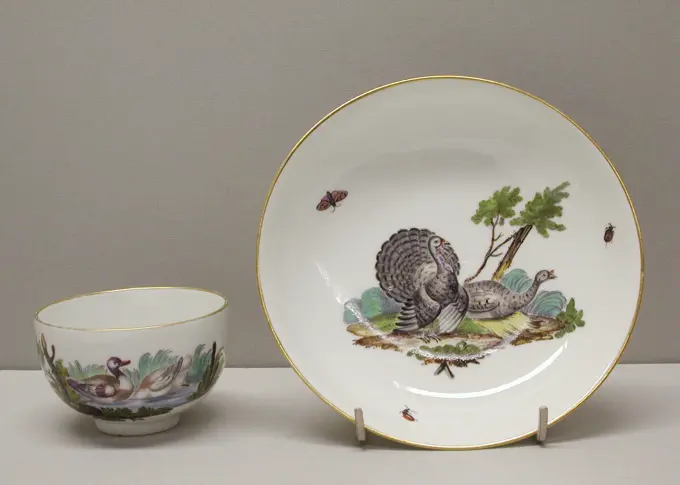
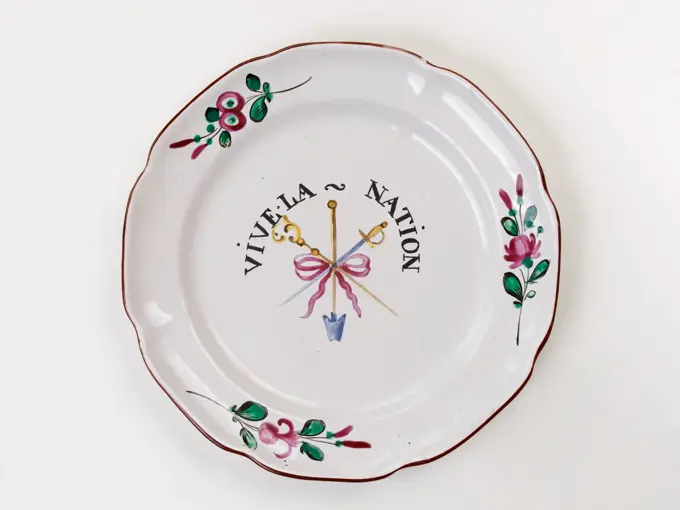
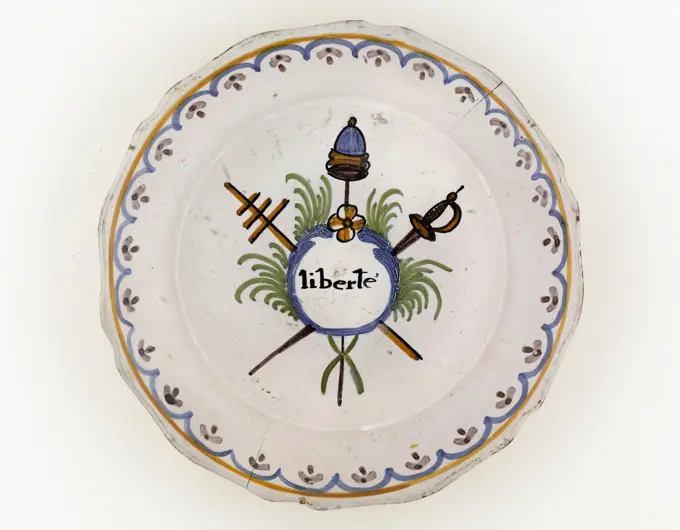
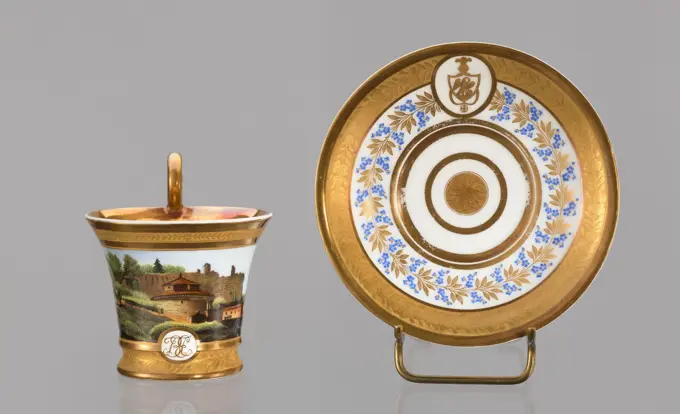
Collection of intricately painted porcelain plates featuring floral designs, birds, butterflies, and intricate patterns, highlighting craftsmanship from 18th-century Europe.

Plate with quails near flowering plants, Worcester, c. 1750 - c. 1774 Soft-Paste Porcelain plate (Pâte Tendre), painted on the glaze in blue, red, green, black and gold. On the flat two quail with flowering plants and two flying butterflies. The edge with flower branches, butterflies and a tire of flower vines. The board is in the style of Japanese Kakiemon porcelain. Worcester porcelain. soft-paste porcelain. glaze. gold (metal) painting / gilding / vitrification Soft-Paste Porcelain plate (Pâte Tendre), painted on the glaze in blue, red, green, black and gold. On the flat two quail with flowering plants and two flying butterflies. The edge with flower branches, butterflies and a tire of flower vines. The board is in the style of Japanese Kakiemon porcelain. Worcester porcelain. soft-paste porcelain. glaze. gold (metal) painting / gilding / vitrification
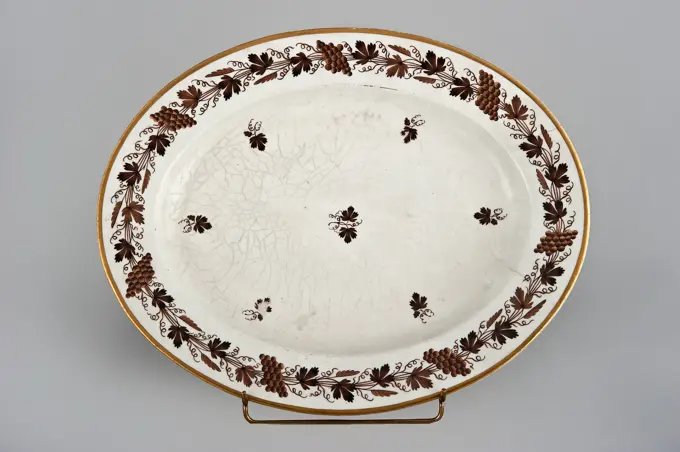
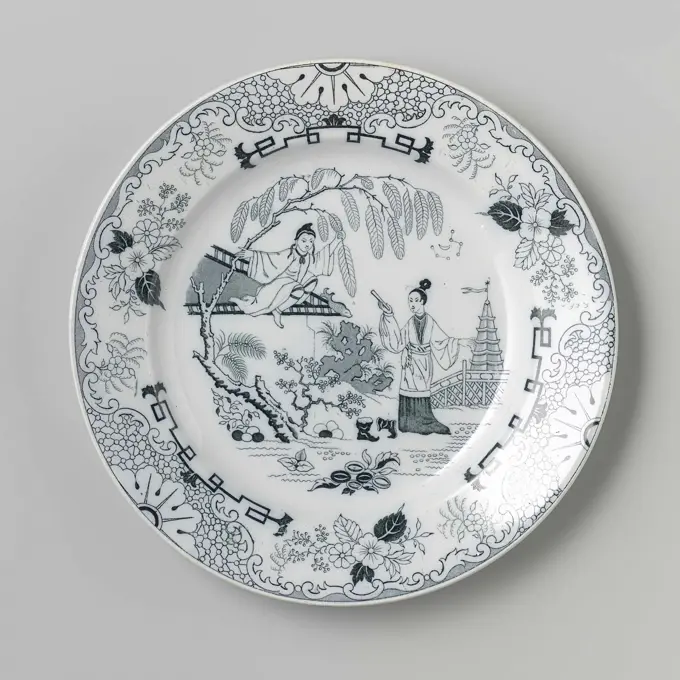
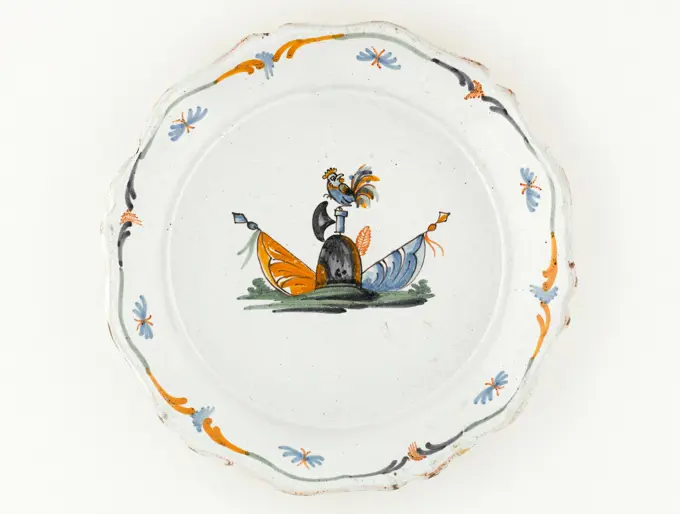
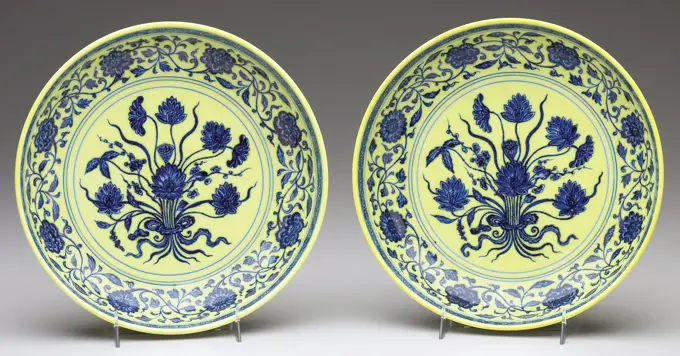
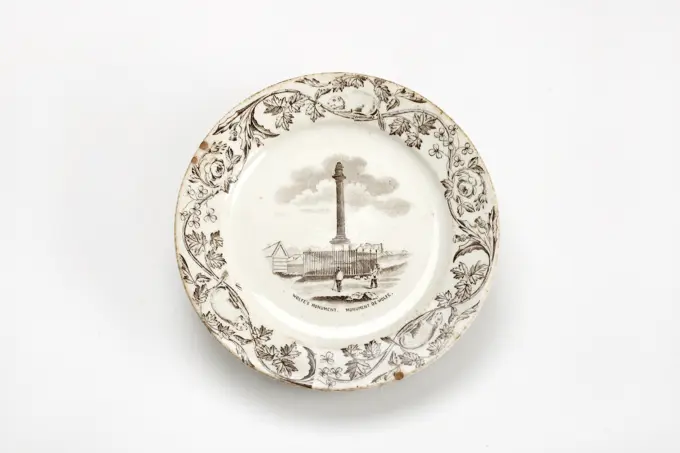
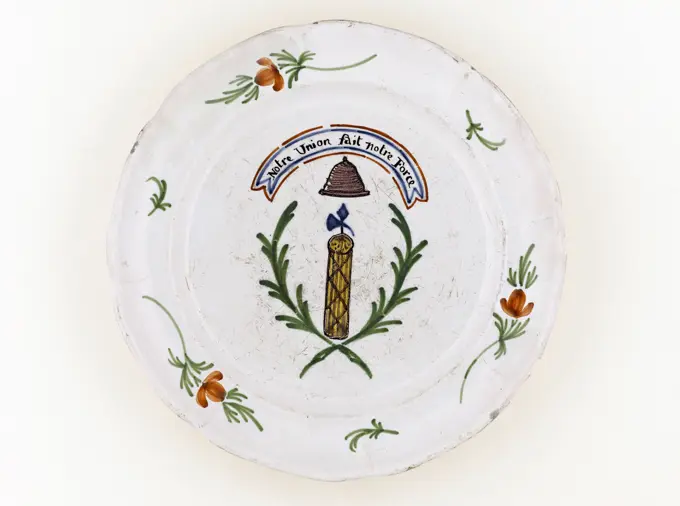
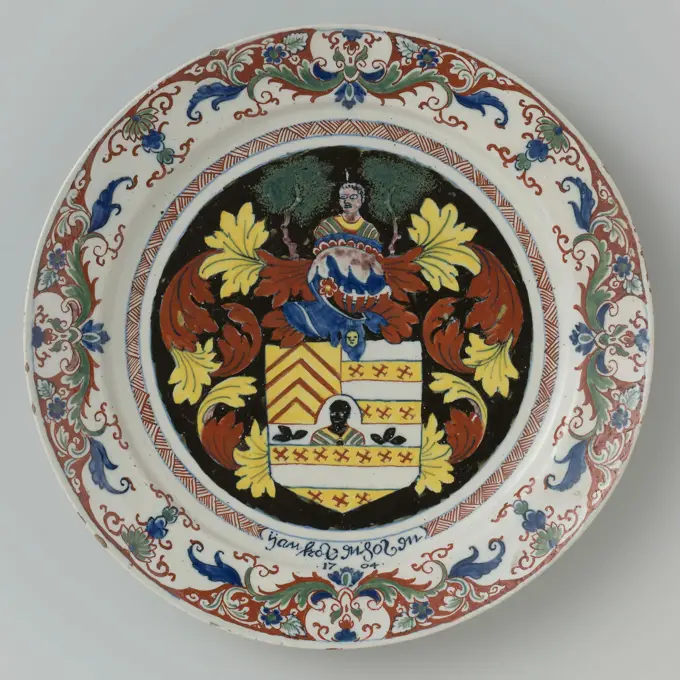
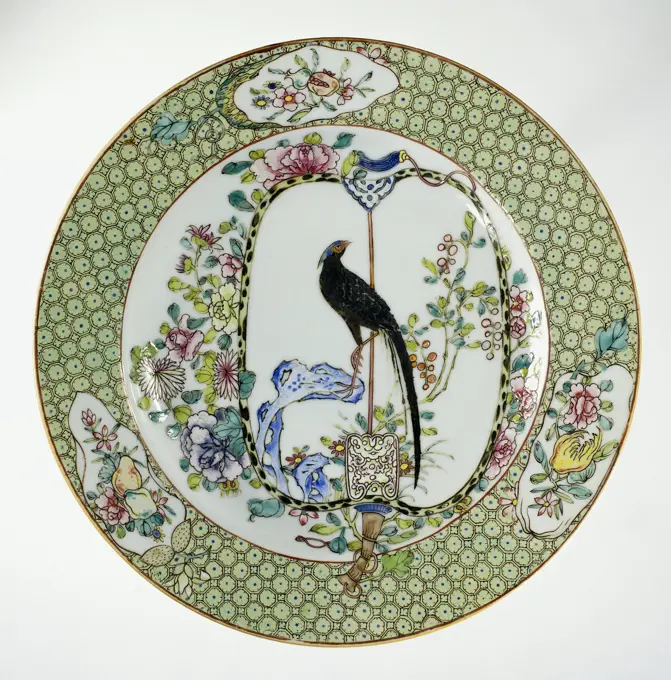
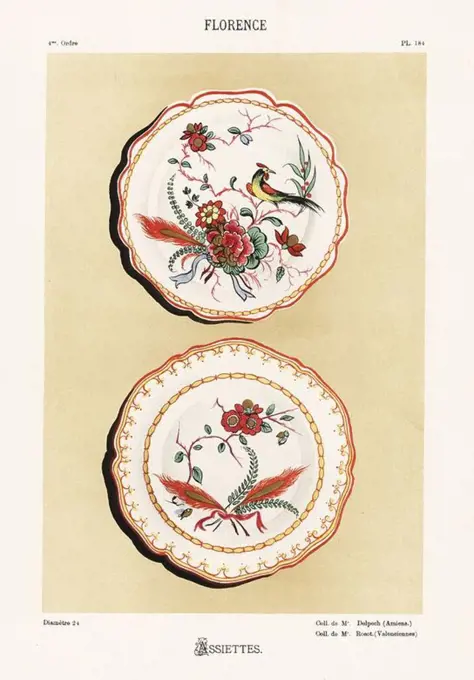
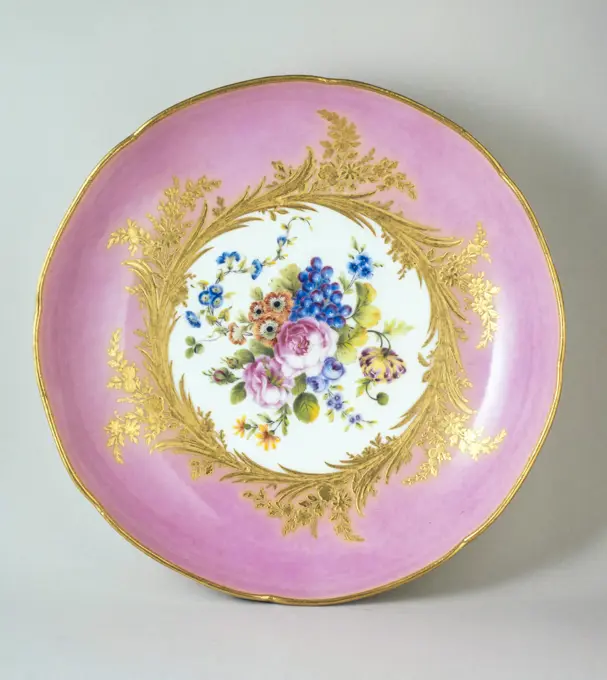
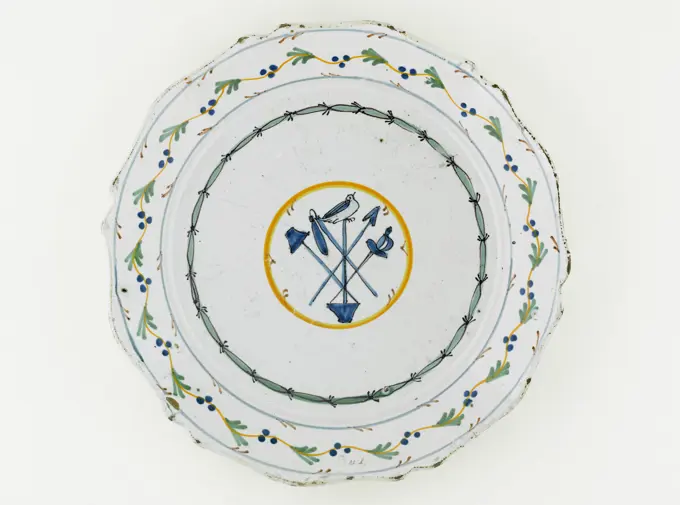
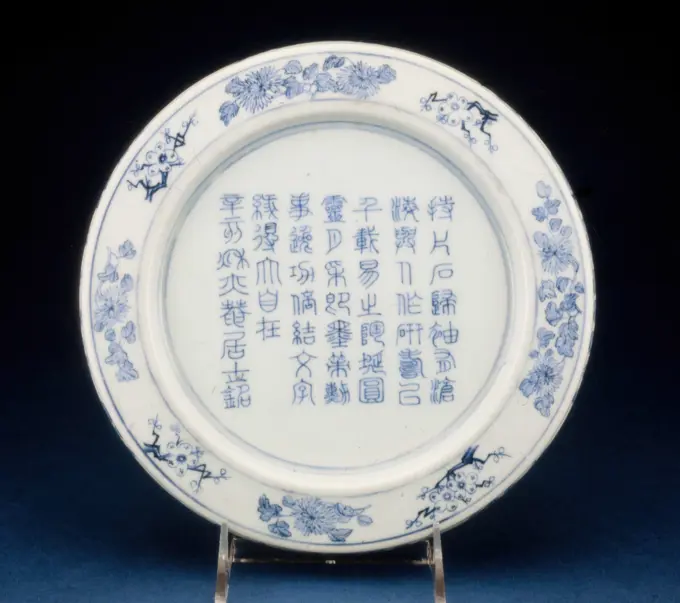
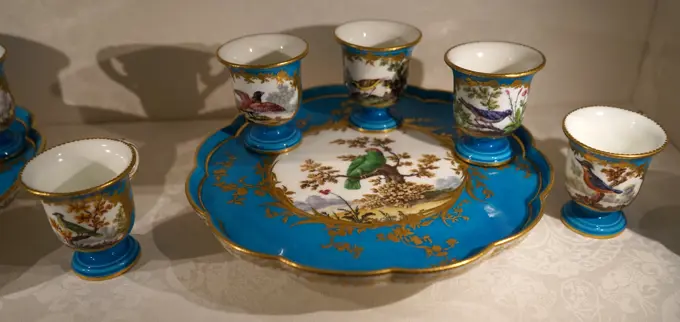
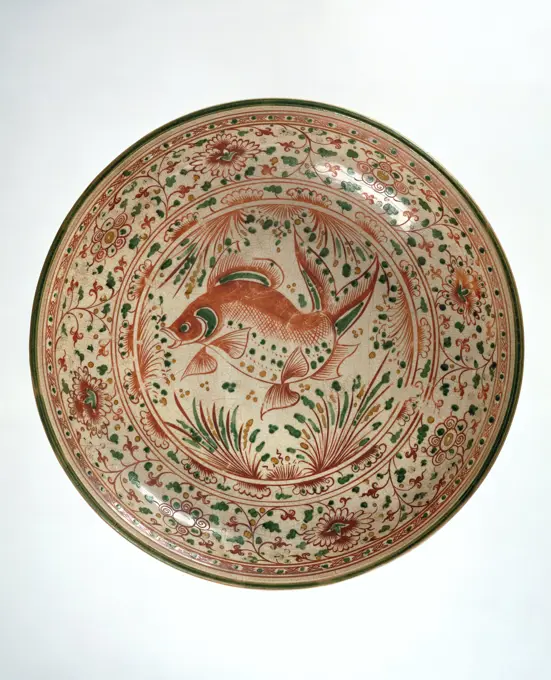
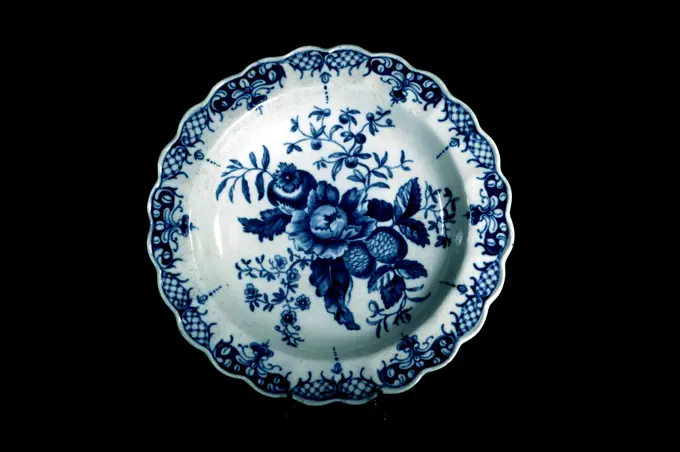
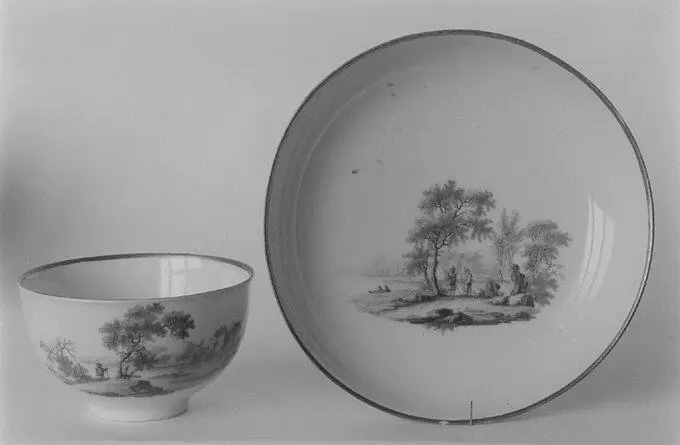
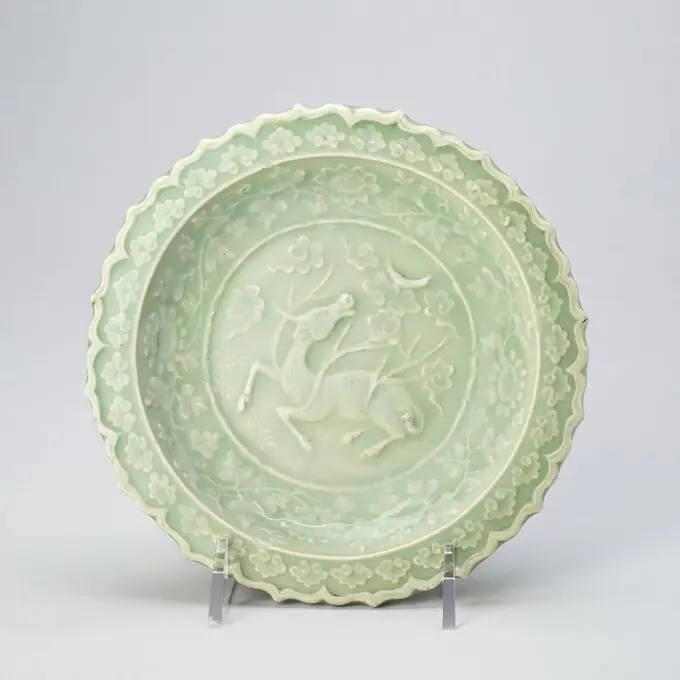
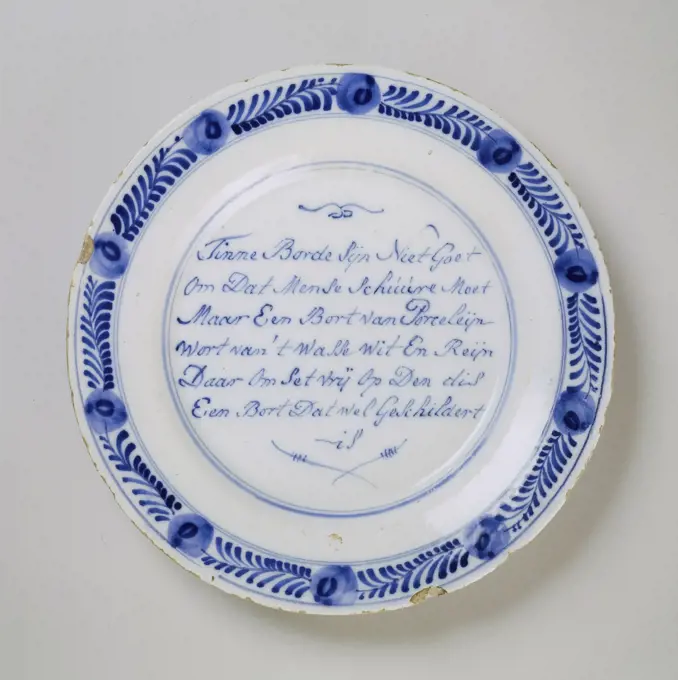
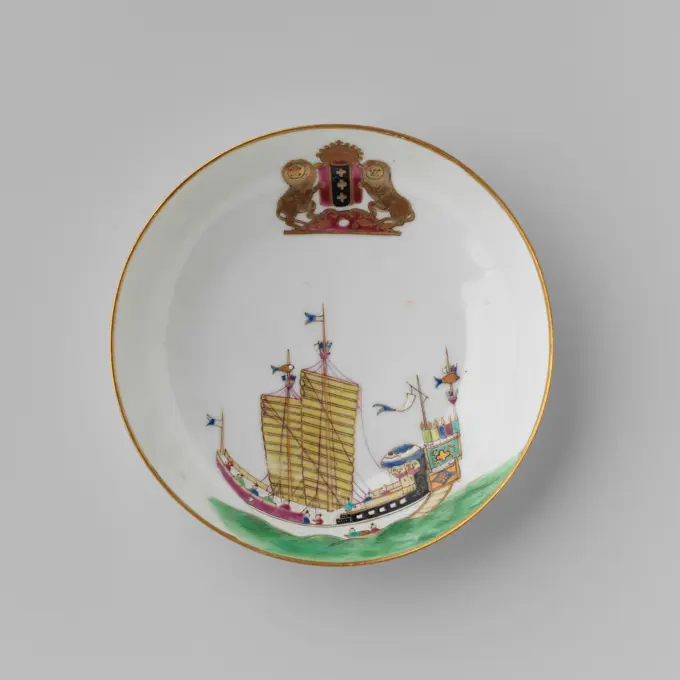
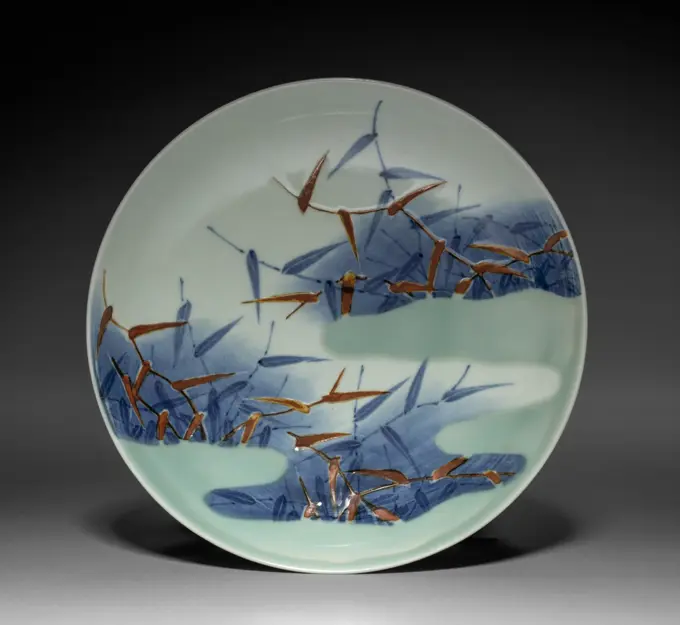
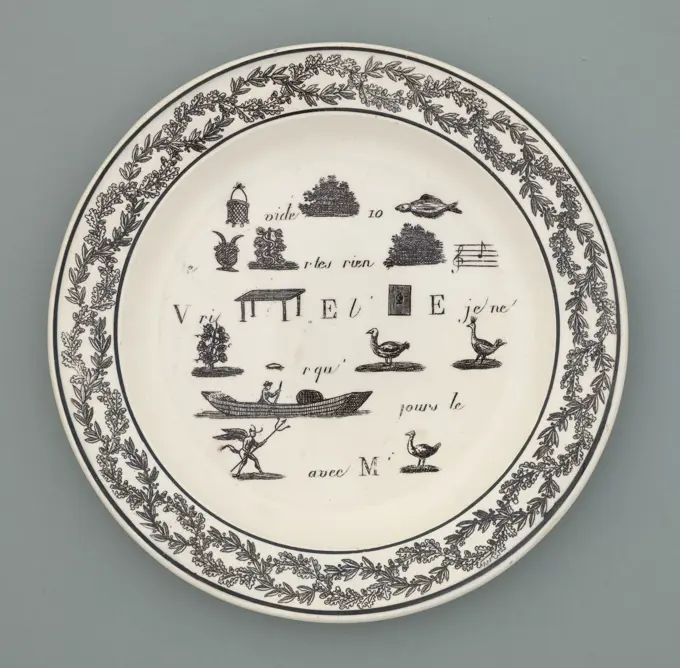
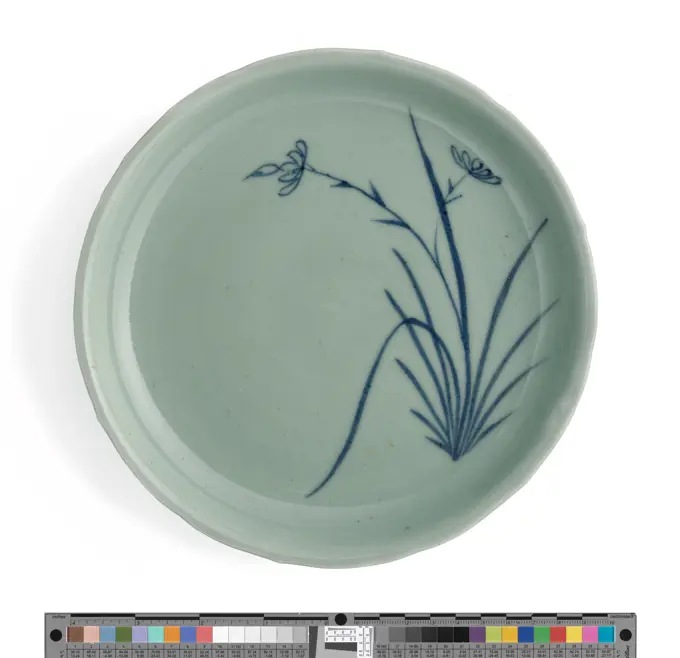
Memorial board Birth Princess Juliana, N.V. Plateelbakkerij Zuid-Holland, 1909 Reminder board decorated in orange and green, in memory of the birth of Princess Juliana; In the middle an Oranjeboom and the inscription: "D 'Oranjeboom blooms, April 30, 1909." Lobbed edge with orange apples. Gouda earthenware   Netherlands Reminder board decorated in orange and green, in memory of the birth of Princess Juliana; In the middle an Oranjeboom and the inscription: "D 'Oranjeboom blooms, April 30, 1909." Lobbed edge with orange apples. Gouda earthenware   NetherlandsToy dinner plate - Hampton Ridgways, 1879-1920 Ridgways, 1879-1920Plate with a landscape, anonymous, A.T. Vaillant, c. 1850 - c. 1860 Porcelain plate, painted on the glaze in sepia and gold. On the flat a landscape with a fisherman on a pier and in the background two villages connected through a bridge. Golden Rand. A proen on the bottom. Europe porcelain. glaze. gold (metal) painting / gilding / vitrification Porcelain plate, painted on the glaze in sepia and gold. On the flat a landscape with a fisherman on a pier and in the background two villages connected through a bridge. Golden Rand. A proen on the bottom. Europe porcelain. glaze. gold (metal) painting / gilding / vitrificationToy dinner plate - Inconnu / UnknownOval bowl; Korzec (Porcelain Manufaktura; 1790-1832); 1810-1820 (1810-00-00-1820-00-00);Krystall, Bronisław (1887-1983) - collection, gift (provenance), sepia, vinePlate Depicting the Soap Bubble Blower (La souffleuse de savon), c. 1760-70. Jean Daulle (French, 1703-1763), after François Boucher (French, 1703-1770). Salt-glazed, transfer-printed stoneware; diameter: 21 cm (8 1/4 in.).Dish with the arms of the Woodford and Lear families, anonymous, c. 1740 - c. 1760 Porcelain dish with round wall, painted on the glaze in blue, red, green, brown, black and gold. On the flat the weapon of the Woodford and Lear families. The weapon is divided into two subjects with Woodford on the left with a lion's head (wrong) in a French lily against a black background; Right Lear with three unicorns and a tilting band against a blue background. The helmet sign is a stylized flower flanked by two claws. The cover in brown with leaf vines with garlands on the bottom. To the weapon a Spearhead border. On the wall eight valuables and happiness symbols (music stone, shell, roles, umbrella, fan, book, horns); The inner edge with a band with curl. A decorative band on the outer edge and four flower branches on the wall. Old label on the bottom with 'Woodford'. Weapon porcelain with email colors. China porcelain. glaze. gold (metal) painting / gilding / vitrification Porcelain dish with ro. Manufacturing former loose ruderecht, c. 1774-1778 Tea Caddy: c. 1782Hard-suited porcelainSaucer wit figures, a go-bord and inscriptions, anonymous, c. 1800 - c. 1899 Porcelain dish with a stepped wall, painted on the glaze in blue, red, pink, green, yellow, black and gold. On the flat of the dish a medallion with a sitting man leaning on a stool, next to him three Chinese characters; To the medallion a standing woman and on the other hand a man with characters on either side; In between a cartouche with a meander band with a inscription in characters and a GO sign. The dish marked with the seal of Keizer Xianfeng (). Famle Rose. China porcelain. glaze. gold (metal) painting / gilding / vitrification Porcelain dish with a stepped wall, painted on the glaze in blue, red, pink, green, yellow, black and gold. On the flat of the dish a medallion with a sitting man leaning on a stool, next to him three Chinese characters; To the medallion a standing woman and on the other hand a man with characters on either side; In between a cartouche with a meander band with a inscription in England, Somerset, Bristol, Bristol Museum and Art Gallery, Exhibit of Bristol Pottery Dish depicting Bristol and The River AvonPlate. Ary van Rijsselberg; Dutch, 18th century. Date: 1718-1735. Dimensions: Diam. 22.9 cm (8 15/16 in.). Tin-glazed earthenware (Delftware). Origin: Delft. Museum: The Chicago Art Institute, Chicago, USA.Plate a Ur.; Korzec (Porcelain and faience manufacture; 1790-1832); around 1820 (1815-00-00-1820-00-00);Tarasowicz, Konstanty and Helena - collection, gift (provenance)Saucer-Dish With A Cock on a Rock Near Flowering Plants in a Leaf-Shaped Panel. Scale of porcelain, painted on the glaze in blue, red, pink, green, yellow, turquoise, black and gold. On the flat a leaf-shaped cartouche with a rooster on a rock in blooming plants, above an insect, brush and seal; to the cartouche flower branches against a ground of napkin; On the inner edge a bond with napkin. Family Rose.Fan, 19th century, Unknown French, 21 1/2 x 12 in. (54.61 x 30.5 cm) (framed, mounted), Paper, painted, ivory sticks, France, 19th centurySaucer-dish with powder blue and flower basket, anonymous, c. 1700 Scale with a round wall of porcelain, painted in underly glaze blue and red. The front is covered with bleu pouddré (powder blue) with a flower basket saved; Three flower vines on the bottom. Marked on the bottom with a shell in a double circle; Also an Ingrift Augustus the Strong/Johanneum number: N = 484. Three chips in the edge. Underglaze blue with copper red. China porcelain. glaze. cobalt (mineral). copper (metal) painting / vitrification Scale with a round wall of porcelain, painted in underly glaze blue and red. The front is covered with bleu pouddré (powder blue) with a flower basket saved; Three flower vines on the bottom. Marked on the bottom with a shell in a double circle; Also an Ingrift Augustus the Strong/Johanneum number: N = 484. Three chips in the edge. Underglaze blue with copper red. China porcelain. glaze. cobalt (mineral). copper (metal) painting / vitrificationBlackboard with a man on the roof of a house and a woman down on the ground. Pottery plate with black transfer decor. On the flat a representation of a man without shoes on the roof of a house. Legs on the ground is a woman next to his shoes. The moon and stars are on the sky. The edge of the board with flowers, volutes and abstract motifs.. Porcelain plate, painted on the glaze in blue, red, pink, green, yellow, purple, black and gold. On the flat alliance weapon of Prince Willem V, Stadholder of the Netherlands (1748-1806) and his wife Princess Wilhelmina van Pruisssen (1751-1820) on a purple cloud. The helmet sign is a crown. On the wall and edge decorative tires. Edge restored. Weapon porcelain with email colors.Anonymous. Plate. Earthenware. Paris, Carnavalet museum. 71680-2 Rooster, flag, revolutionary time, faience, ax, French revolution, dishes, plate, featherToy serving plate - Inconnu / UnknownDish with Dragon Pursuing Flaming Jewel in Relief: Longquan Ware, early 14th Century. China, Zhejiang province, Yuan dynasty (1271-1368). Glazed porcelain with molded decoration; diameter: 35.2 cm (13 7/8 in.); overall: 7.2 cm (2 13/16 in.).Dessert Service (Basin). Flight, Barr & Barr (England, Worcester, 1813-1840). England, 1813. Furnishings; Serviceware. PorcelainYellow Ground Dish, one of a pair, 18th century, 1-7/8 x 8-7/16 x 8-7/16 in. (4.8 x 21.4 x 21.4 cm), Porcelain with cobalt blue pigment under clear glaze with ground filled with yellow enamel over clear glaze, China, 18th century, In many respects, the porcelains of the Yung-cheng reign (1723-1735) represent a high point in Ch'ing ceramics. They are exquisitely refined, artistically and technically accomplished, but seldom mechanical or contrived. The combination of blue floral sprays against a yellow ground seen here evolved during the Ming dynasty (15th-16th century) and was revived during the Yung-cheng and Ch'ien-lung reigns (1736-95).Plate KorzecPlate - Wolfe's Monument. Monument de Wolfe D'après Robert Cochran & Company, 1846-1896. Plate of Faïence, multicolored painted with the weapon of Ijan Kovenhoven. Dated 1704.Cup and Saucer, c. 1795, 2 13/16in. (7.1cm), Porcelain, China, 18th-19th centuryPORCELANA DE MANISES. Location: MUSEO ARQUEOLOGICO NACIONAL-COLECCION. MADRID. SPAIN.Anonymous. Plate "Our union is our strength". Earthenware. Paris, Carnavalet museum. 71683-33 Phrygian cap, decoration, faience, harness, strength, laurel, revolutionary period, French revolution, union, plateSaucer. unknown, ceramistToy dinner plate - Georgeville D'après Francis Morley, 1845-1850Plate -Vase with a lid, with an ornament of daffodils. unknown, manufacturerBord, anonymous, c. 1680 - c. 1710 Round plate of blue painted faience, with four sailing ships on the flat. The board was loaned in 1967 to the Goltzius Museum in Venlo. The board includes three identical signs with the invnrs. BK-NM-11168-B, BK-NM-11168-C and BK-NM-11168-D. Delft earthenware. tin glaze. Round plate of blue painted faience, with four sailing ships on the flat. The board was loaned in 1967 to the Goltzius Museum in Venlo. The board includes three identical signs with the invnrs. BK-NM-11168-B, BK-NM-11168-C and BK-NM-11168-D. Delft earthenware. tin glaze.Dish, Manufactuur Oud-Loosdrecht, 1775 Porcelain dish. Part of a series of Twaafl pieces. Painted with figures in a landscape in beet red and gold piping. Loosdrecht porcelain Porcelain dish. Part of a series of Twaafl pieces. Painted with figures in a landscape in beet red and gold piping. Loosdrecht porcelain. Plate of Faïence, multicolored painted with the weapon of Ijan Kovenhoven. Dated 1704.Plate, oval, multi -colored painted with a farmer sitting inside lambrequin edge, anonymous, c. 1750 - c. 1775 Plate of Faïence. Multicolored painted with a farmer sitting inside a lambrequinrand, after a print by Cornelis Saftleven. Delft . Plate of Faïence. Multicolored painted with a farmer sitting inside a lambrequinrand, after a print by Cornelis Saftleven. Delft .Small shallow plate. Ćmielów (fabryka fajansu i porcelany ; 1804-), factoryCovered Vegetable Dish, c. 1865, Minton's Pottery and Porcelain Factory, British, Ceramic, England, 19th centuryPlate ca. 1838 Tucker and Hemphill. Plate 6252Plate with a fan decorated with a pheasant, anonymous, c. 1730 - c. 1745 Porcelain plate, painted on the glaze in blue, red, pink, green, yellow, black and silver. On the flat a fan whose handle runs on the wall and edge, on the fan a pheasant is depicted on a rock in flowering plants; For the fan peony and chrysanthemum branches; On the edge of servetwork interspersed with three cartouches in the form of fruits with fruit branches. Two cracks in the edge. Famle Rose. China porcelain. glaze. gold (metal) painting / gilding / vitrification Porcelain plate, painted on the glaze in blue, red, pink, green, yellow, black and silver. On the flat a fan whose handle runs on the wall and edge, on the fan a pheasant is depicted on a rock in flowering plants; For the fan peony and chrysanthemum branches; On the edge of servetwork interspersed with three cartouches in the form of fruits with fruit branches. Two cracks in the edge. Famle Rose. China porcelain. glaze. gold (metal) painting / gildingPlates or assiettes from Florence, Italy, decorated with flowers and birds, 18th century. Hand-finished chromolithograph from Ris Paquot's General History of Ancient French and Foreign Glazed Pottery, Chez l'Auteur, Paris, 1874.PlateGermany, Franconia, Rothenburg. Typical Meissen porcelain.Saucer (part of a set) ca. 1735-40 Meissen Manufactory German. Saucer (part of a set) 199173Plate. unknown, craftsman. Dish of porcelain, painted on the glaze in blue, red, green, black and gold. On the flat a representation of a girl in a landscape, with one hand she holds a bucket on her head while she lifts her skirts with her other hand. Her left foot rests on a wooden increase. On the wall a bond with leaf raft. European performance in email colors.Manufacture of Sèvres. "Soup bowl". Tender porcelain, polychrome enamels. 1775-1775. Museum of Fine Arts of the City of Paris, Petit Palais. 101893-8 Ceramic, pink color, decor, floral decor, vegetal decor, email, porcelain, dishes, 18th 18th 18th 18th 18th 18th 18 century, plateSaucer With Figures in a Landscape with Trees, Rocks and Pavilions. Scale of porcelain with braco-shaped wall and edge, painted in underglaze blue. On the flat a landscape with a rider and two running people between rocks and trees. In the background two pavilions and clouds. The inner edge is with a blue band. Marked on the bottom with the six character mark of Emperor Chenghua. Three preen on the bottom. Arita, blue-white.Bread plate - L. Bernardaud & Company L. Bernardaud & CompanyCup, 18th century, H.2 x Dia.3 in., Porcelain, China, 18th centuryAnonymous. Plate. Earthenware. Paris, Carnavalet museum. 71478-19 Attribut, beche, emblem, speech, revolutionary time, faience, massage, decorative motif, bird, peak, French revolution, dishes, plateInkstone, 1736-1795, 1 3/4 x 9 3/4 x 9 3/4 in. (4.45 x 24.77 x 24.77 cm), Porcelain with underglaze blue decor, China, 18th century, Although stone was the most suitable material for grinding ink, ceramic inkstones became popular beginning in the late Ming dynasty. The most common shape for porcelain inkstones was a flattened cylinder with its center left unglazed for grinding. This surface was surrounded by a groove, and the inkstone was typically decorated in underglaze blue and white. This one displays flowers and fruit of the fall and winter seasons, namely chrysanthemums and plums. On the bottom is a forty-nine character verse imitating, in archaic style, a Bronze-Age inscription.Object from a Dessert Service 'The Razumovsky Service', made from soft-paste porcelain. Dated 18th CenturyPlate, anonymous, c. 1400 - c. 1599 Dish of stoneware, painted on the glaze in red, green and gold. On the front a medallion with a fish (carp) between aquatic plants. To the medallion a band with flower motifs. The wall with a band with flower vines. The back with 'Base Chocolatée'. Vietnam stoneware. glaze. gold (metal) painting / vitrification Dish of stoneware, painted on the glaze in red, green and gold. On the front a medallion with a fish (carp) between aquatic plants. To the medallion a band with flower motifs. The wall with a band with flower vines. The back with 'Base Chocolatée'. Vietnam stoneware. glaze. gold (metal) painting / vitrificationBliżej Kultury ĆmielówPlate with the armd of the De Neufville family, anonymous, c. 1725 - c. 1749 Porcelain plate, painted on the glaze in blue, red, black and gold. On the flat the coat of arms of the De Neufville family. The weapon consists of four towers and a golden Sint Andreaskruis with an anchor in the middle. The shape of the shield is in Louis XIV style. Above the weapon is a helmet with a griffin depicted on it. The weapon is surrounded by a cover of leaf vines. On the wall a bond with lotus vrocks interrupted by four fields with chrysanthemums. On the edge four His biscus branches, lucky symbols (wheel) and a decorative band. Weapon porcelain with email colors. China porcelain. glaze. gold (metal) painting / gilding / vitrification Porcelain plate, painted on the glaze in blue, red, black and gold. On the flat the coat of arms of the De Neufville family. The weapon consists of four towers and a golden Sint Andreaskruis with an anchor in the middle. The shape of the shield is in Louis XIV style. Worcester Porcelain Manufactory, Dish, 1765-80, porcelain.Micro-mosaic, Gold sheet and wire, glass mosaics, A gold oval pendant outlined in blue with an inner image of Italian architecture. Pendant is part of a set., Rome, Italy, 1800-1825, jewelry, Decorative Arts, Pendant, PendantTeabowl and saucer ca. 1770 Zurich Pottery and Porcelain Factory. Teabowl and saucer 187777 Factory: Zurich Pottery and Porcelain Factory, Swiss, founded 1763, Teabowl and saucer, ca. 1770, Hard-paste porcelain, Height (Teabowl): 2 in. (5.1 cm); Diameter (Saucer): 5 1/4 in. (13.3 cm). The Metropolitan Museum of Art, New York. Gift of Henry G. Marquand, 1894 (94.4.160, .161)Foliate Dish with Bovine (Xiniu) Gazing at a Crescent Moon. China. Date: 1250-1299. Dimensions: H. 3.5 cm (1 3/8 in.); diam. 16.2 cm (6 in.). Longquan ware; stoneware with underglaze molded decoration. Origin: China. Museum: The Chicago Art Institute, Chicago, USA.Dish ca. 1760 British, Worcester. Dish. British, Worcester. ca. 1760. Soft-paste porcelain. Ceramics-PorcelainDish ca. 1730-50 China. Dish 42315Plate with view of Sterling MemorialLibrary.  Manufacturer: Wedgwood, British, 1759-1998Retailer: Jones, McDuffee and Stratton, American, 1810-ca. 1975Blue plate, 18th century.Cup and saucer ca. 1720-25, decorated ca. 1725-30 Meissen Manufactory German. Cup and saucer 199147Spoon TRAY WITH A CROWNED, illegible monogram surrounded by two Flower sprays. Rectangular, hexagonal pattipan of porcelain with ribbed wall, painted on the glaze in blue, red, pink, green, yellow, black and gold. On the flat a crowned, unreadable monogram surrounded by two flower branches; The wall with flower refines with four cartouches with a landscape and four medallions with plants. A chip in the edge. European performance in email colors.Plate, from the 'The Secret Village of Mice' Service, Pillivuyt & Cie, French, established ca. 1818, hard paste porcelain, vitreous enamel, gold, A white plate with a gold lip depicting a mouse sitting on a tree stump, playing the guitar with a mountain in the background., France, ca. 1867, ceramics, Decorative Arts, plate, plateDish, painted with figures in a landscape. Dish of porcelain, painted in sepia with figures in a landscape. Along the edges a winding ribbon in gold and brown, around which a green leaf branch winds. The back of the dish edge is decorated with two rows of staggered ribs. Golden piping along the satellure edge.Plate - Wolfe & Montcalm Monument. Monument de Wolfe & Montcalm, Quebec Views D'après Cochran & Fleming, 1896-1920Saucer 1785-90 Chinese, for American market This object belongs to a large dinner service (10.149.1-.248) bearing the Townley family coat-of-arms. The service, probably ordered by Justice Samuel Chase (1741-1811) of Annapolis, Maryland, displays the enamel-painted arms of Margaret Townley, Chase's aunt.. Saucer 7295Plate ca. 1750 French, Rouen Faience, or tin-glazed and enameled earthenware, first emerged in France during the sixteenth century, reaching widespread usage among elite patrons during the seventeenth and early eighteenth centuries, prior to the establishment of soft-paste porcelain factories. Although characterized as more provincial in style than porcelain, French faience was used at the court of Louis XIV as part of elaborate meals and displays, with large-scale vessels incorporated into the Baroque garden designs of Versailles. Earlier examples of French faience attest to the strong influence of maiolica artists from Italy. Later works demonstrate the ways in which cities such as Nevers, Rouen, Lyon, Moustiers, and Marseille developed innovative vessel shapes and decorative motifs prized among collectors throughout Europe. While faience can be created from a wide mixture of clays, it is foremost distinguished by the milky opaque white color achieved by the addition of tin oxide to Helmut Hiatt, Plate  Nahant Hotel, c 1936 Plate - Nahant Hotel. Round dish of painted porcelain. The dish is painted with Höroltt-chinoiseries and the weapon of the Venetian Morosini family. The dish has been marked.TabakierkaSaucer with a Chinese junk and the arms of Amsterdam, anonymous, c. 1800 - c. 1899 Porcelain dish, painted on the glaze in blue, red, pink, green, yellow, black and gold. On the front of the dish a Chinese junction with a crew on the waves, above the weapon of Amsterdam. A crack in the wall of the dish. Weapon porcelain. China porcelain. glaze. gold (metal) painting / gilding / vitrification Porcelain dish, painted on the glaze in blue, red, pink, green, yellow, black and gold. On the front of the dish a Chinese junction with a crew on the waves, above the weapon of Amsterdam. A crack in the wall of the dish. Weapon porcelain. China porcelain. glaze. gold (metal) painting / gilding / vitrificationWhite plate with in blue image Costerman uproar: figures that plunder and break down the house, plate crockery holder ceramic porcelain glaze h 3.0, baked painted glazed Round plate with slightly deepened flat sloping edge on stand bottom bottom: Cheng Hua brand (painted and baked) Tumult of Rotterdam Costerman Riot Jacob van Zuylen van Nyevelt mayor chine de commande Jan SmeltzingBord, de porceleyne was, 1750 - 1780 Fixence board, from the series the 12 months. Representing the month of June. Be shown: sheep shearers, with the text: Junij. Delft . Fixence board, from the series the 12 months. Representing the month of June. Be shown: sheep shearers, with the text: Junij. Delft .Anonymous. Litron cup and saucer. Porcelain, 1780. Paris, Cognacq-Jay museum. 79170-29 Angel, threatening art, cat, flute, playing, character motif, porcelain, saucer, litron cup, dishes, 18th 18th 18th 18th 18th 18th century, natureDessert plate - Wolfe & Montcalm Monument. Monument de Wolfe & Montcalm, Quebec Views D'après Cochran & Fleming, 1896-1920Faience plate with spell Pewter plate are not good to say that one has to shove porcine, plate crockery holder ceramic earthenware glaze, hand-turned baked glazed baked Delft earthenware or faience. Saying board Completely covered with tin glaze Blue decor over the edge wreath of floral branches double piping in the shoulder and spell in running script on the mirror. Flat mirror little upright edge. Shallow stand ring along the edge of the bottom. Cassette-baked, Tinne Borde Sijn Not Goet Om That One Se Schuure Must But Bort Porceleijn Wort of 't Wasse BRIT and Reijn Around Set Free On The Dis Bort That Is Painted Is advertising craft stewter baker's pottery food servingCup and Saucer 1810-1820 Burslem. Porcelain with polychrome enamels and gilding . Wedgwood Manufactory (Manufacturer)Ornate Thai wooden box on a white background. Scale of porcelain with a ribbed wall and lobed edge, painted on the glaze in blue, red, green, yellow, black and gold. On the flat a standing crane between pine shoots, looking at a minogame on the ground. A second crane in the air. Some chips in the edge. Arita, Kakiemon.Toy dessert plate - Inconnu / UnknownDish with Bird on Peach Branch, 1662-1722. China, Jiangxi province, Jingdezhen kilns, Qing dynasty (1644-1911), Kangxi mark and reign (1662-1722). Porcelain with famille-verte overglaze enamel decoration; diameter: 20.7 cm (8 1/8 in.). Porcelain decorators in the Qing dynasty broadened the palette of naturalistic colors available to their predecessors with the technique of overglaze painting. They carefully painted designs in low-fire, lead-based glazes on top of undecorated glazed porcelains that had already been fired to the required 1200 degrees Celsius. After the pieces were painted, they were fired a second time to set and fix the glazes to the surface. With sharp images in translucent colors on thin white bodies, porcelains such as these mark the final technical and aesthetic accomplishment of the Chinese ceramic tradition.Wooden Church Plate; Designed by Valentin Semyonovich Shcherbakov (1880); Manufactured by State Porcelain Factory (Russia); porcelain, enamel; Diameter: 23.8 cm (9 3/8 in.); The Henry and Ludmilla Shapiro Collection; Partial gift and partial purchase through the Decorative Arts Association Acquisition and Smithsonian Collections Acquisition Program Funds; 1989-41-2Teacup and saucer ca. 1775 Höchst Manufactory This partial tea and coffee service is distinguished by its relative completeness and its two components (the coffee pot and the hot milk jug) signed by the painters who decorated themJoseph Angele and Johann Heinrich Usinger, respectivelya rarity on 18th-century porcelain.[Jeffrey H. Munger, 2009. Teacup and saucer 234906Dish, "long live the nation". Faïence in the big fire, polychrome decor. Artois, Desvres, around 1790-1791. Paris, Carnavalet museum. Dish, long live the nation Artois, Clerge, Polychrome Decor, Epee, Faience to the Grand Fire, nobility, French Revolution, Symbol Three orders, Third Party, Crockery, Vive la Nation, dishDish, multicolor painted with the flat a dog surrounded by two other zigzagging and intersecting linesAnonymous. Plate with the Bonnet de la Liberté. Earthenware. Paris, Carnavalet museum. 71683-9 Phrygian cap, decoration, priest, faience, freedom, revolutionary period, French revolution, plateJosiah Austin, Salver, c. 1760, silver.Fili Empir from miniatures, Saucer with the Pelikan coat of arms, from a set with a branch; Baranówka (Porcelain Manufaktura; 1804-2012); 1827 (1827-00-00-1827-00-00);Ointments (pirating), anonymous, 1714 Pour piring in form of round plate with rim of Knerren. In the middle medallion with the presentation of the deceased lying lying with a book in hand on a box with weapon. We also see death, an angel on a cloud with an hourglass on the head and a girl with flower in her hand. Engraved text: "For the District of Cornelis Chastelein Ordinaris Council of Dutch India etc.". Three silver brands under the text. Outdoor care silver (metal)   Dutch East Indies, The Pour piring in form of round plate with rim of Knerren. In the middle medallion with the presentation of the deceased lying lying with a book in hand on a box with weapon. We also see death, an angel on a cloud with an hourglass on the head and a girl with flower in her hand. Engraved text: "For the District of Cornelis Chastelein Ordinaris Council of Dutch India etc.". Three silver brands under the text. Outdoor care silver (metal)   Dutch East Indies, TheSaucer with a Chinese junk and the arms or amsterdam. Dish of porcelain, painted on the glaze in blue, red, pink, green, yellow, black and gold. On the front of the dish a Chinese jonk with crew on the waves, above the arms of Amsterdam. A crack in the wall of the dish. Weapon porcelain.Dish with Reeds and Mist, c. 1700. Japan, Edo period (1615-1868). Porcelain with underglaze blue and overglaze color enamel (Hizen ware, Nabeshima type); diameter: 20.1 cm (7 15/16 in.); overall: 5.6 cm (2 3/16 in.). The interior of this dish features clusters of reeds emerging from mist. The gradation of blue wash in the background suggests that the scene is set by still waters, perhaps the banks of a river or edge of a marsh. The celadon, or pale green glaze, evocative of mist or fog, contrasts visually with the reeds and water.Saucer with a Chinese junk and the arms or amsterdam. Dish of porcelain, painted on the glaze in blue, red, pink, green, yellow, black and gold. On the front of the dish a Chinese jonk with crew on the waves, above the arms of Amsterdam. Weapon porcelain.Plate MontereauPlate, with a soldier on the flat with a bull, Peter Regout, c. 1860 - c. 1890 Plate of pottery with multicolored transfer decor. On the flat a soldier with a bull on a leash. A few soldiers are seated in front of a house and watch, busy, ready. The edge of the board is deposited with green piping. Maastricht . Plate of pottery with multicolored transfer decor. On the flat a soldier with a bull on a leash. A few soldiers are seated in front of a house and watch, busy, ready. The edge of the board is deposited with green piping. Maastricht .One from a Set of Dishes with Orchid Designs. Japan, Edo period (1615-1868), mid-18th century. Ceramics. Hizen ware, possibly Arita type; porcelain with celadon glaze and blue underglazeThe Bunch of Flowers by Pablo Picasso, painted ceramic, 1881-1973