Decorative Porcelain Plates

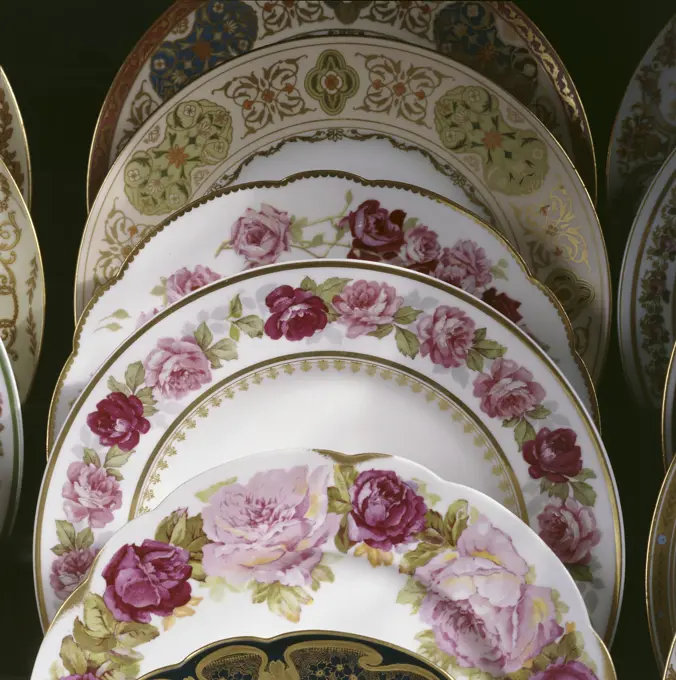
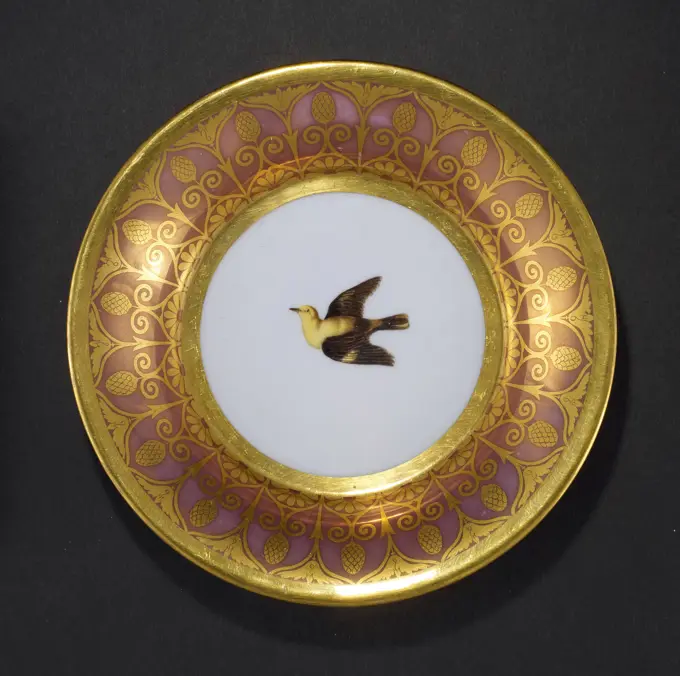
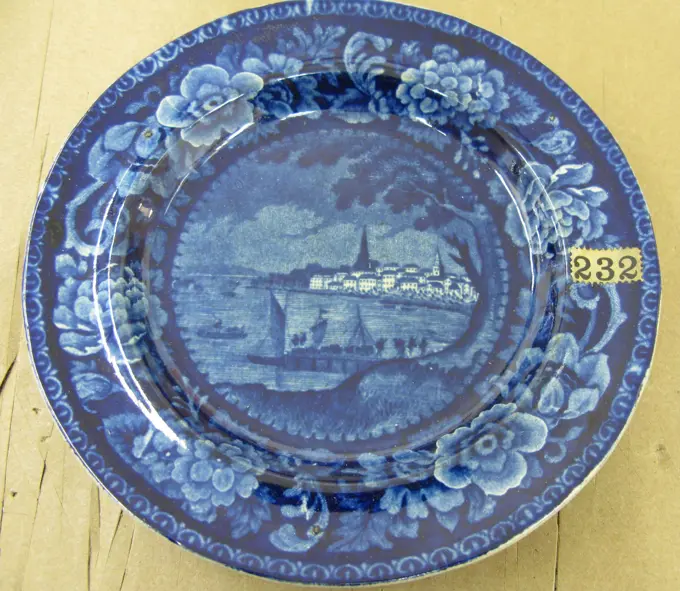
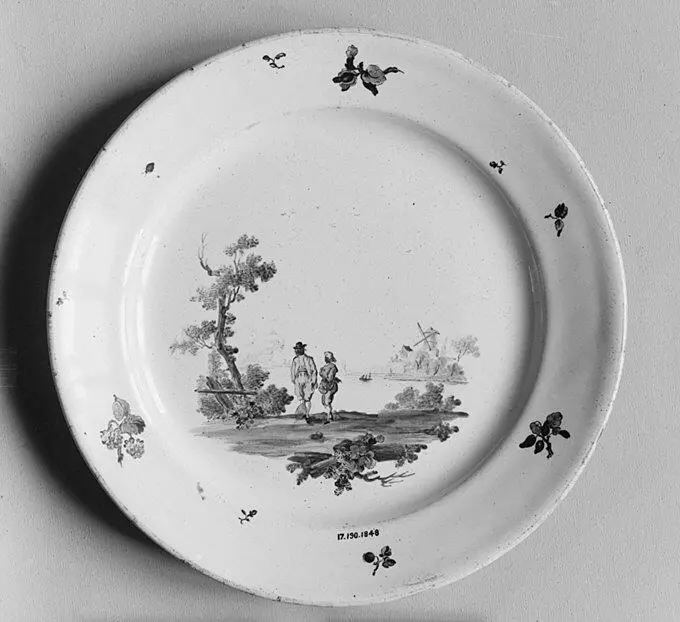
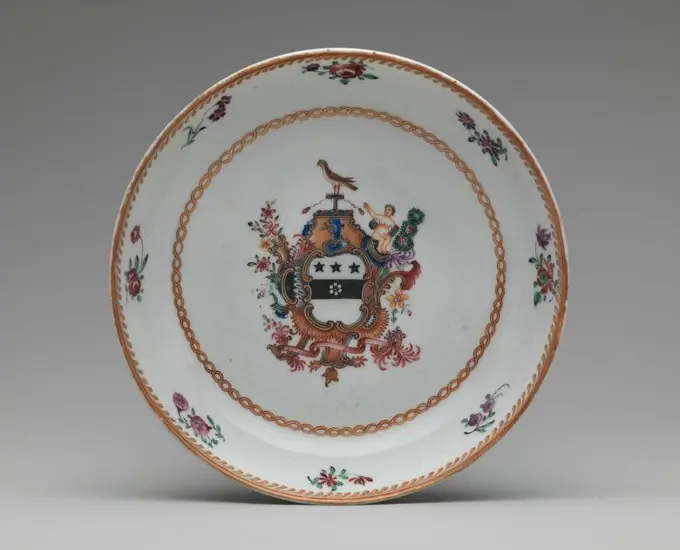
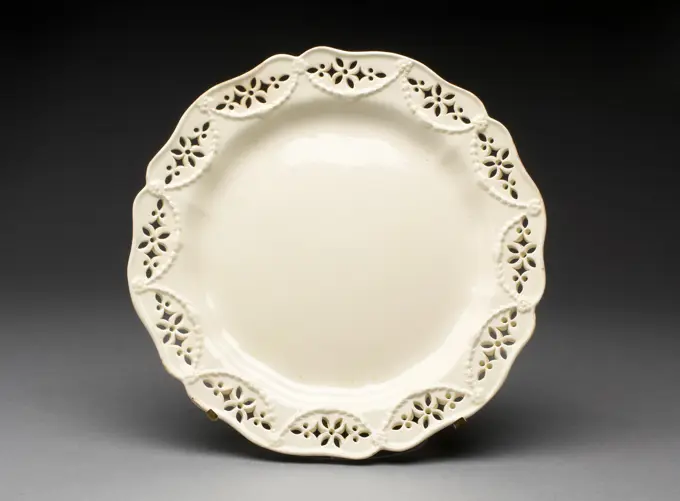
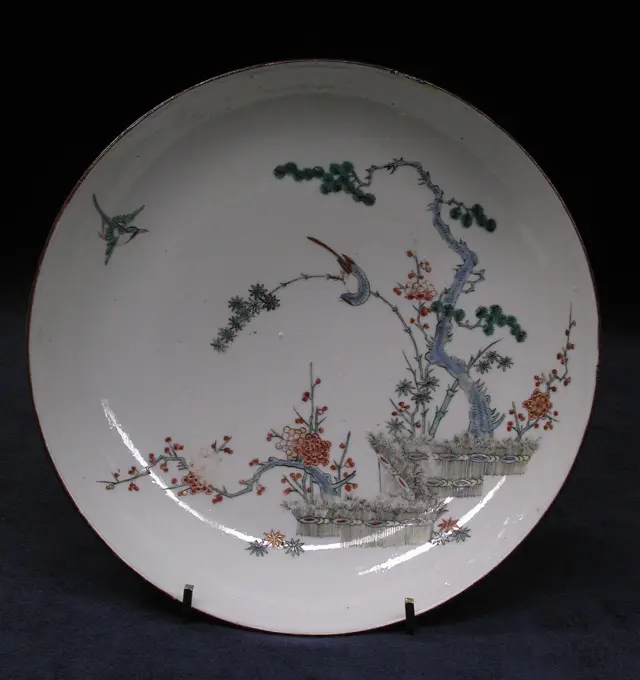
Collection of intricately painted porcelain plates featuring floral designs, birds, butterflies, and intricate patterns, highlighting craftsmanship from 18th-century Europe.

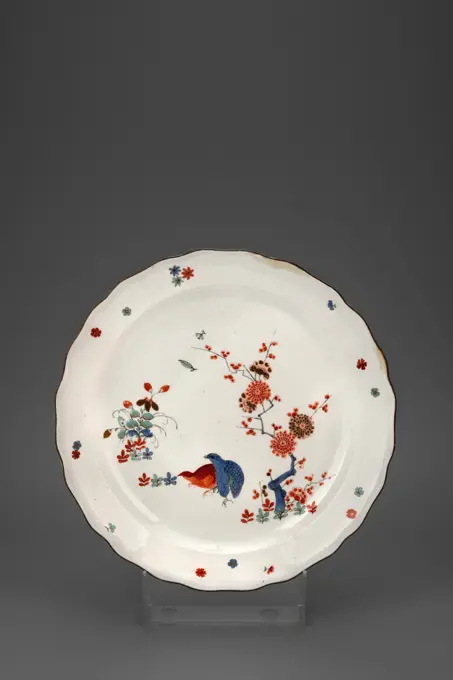
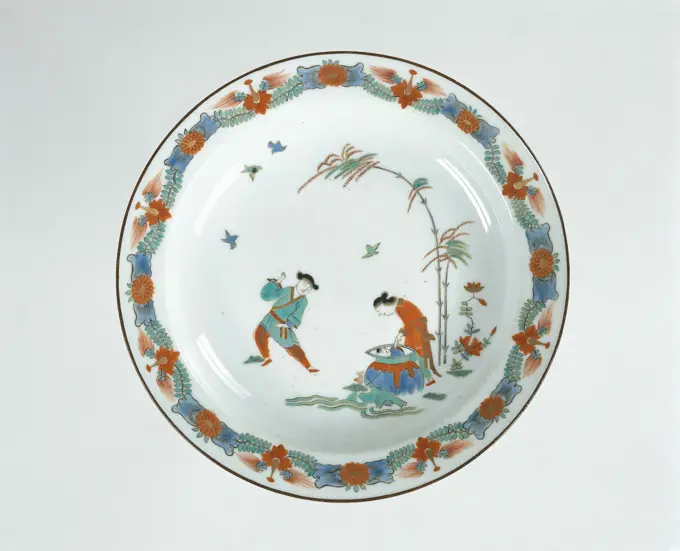
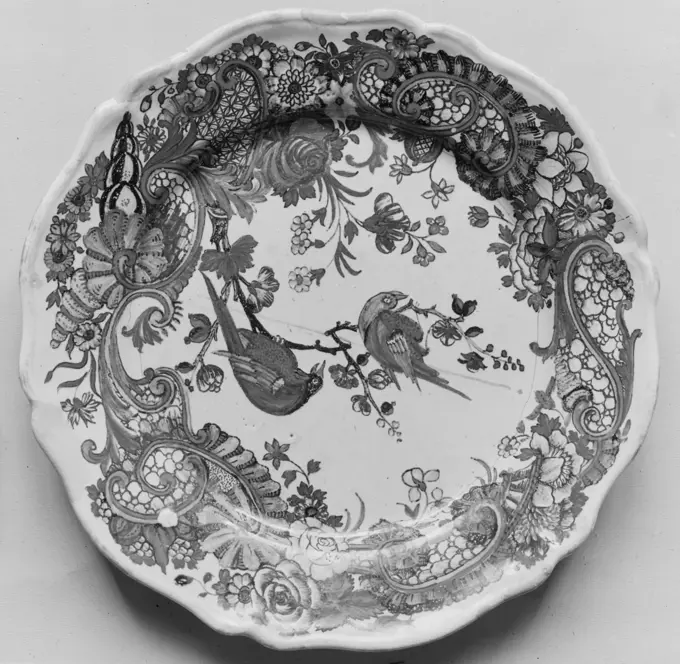
Plate with quails near flowering plants, Worcester, c. 1750 - c. 1774 Soft-Paste Porcelain plate (Pâte Tendre), painted on the glaze in blue, red, green, black and gold. On the flat two quail with flowering plants and two flying butterflies. The edge with flower branches, butterflies and a tire of flower vines. The board is in the style of Japanese Kakiemon porcelain. Worcester porcelain. soft-paste porcelain. glaze. gold (metal) painting / gilding / vitrification Soft-Paste Porcelain plate (Pâte Tendre), painted on the glaze in blue, red, green, black and gold. On the flat two quail with flowering plants and two flying butterflies. The edge with flower branches, butterflies and a tire of flower vines. The board is in the style of Japanese Kakiemon porcelain. Worcester porcelain. soft-paste porcelain. glaze. gold (metal) painting / gilding / vitrification
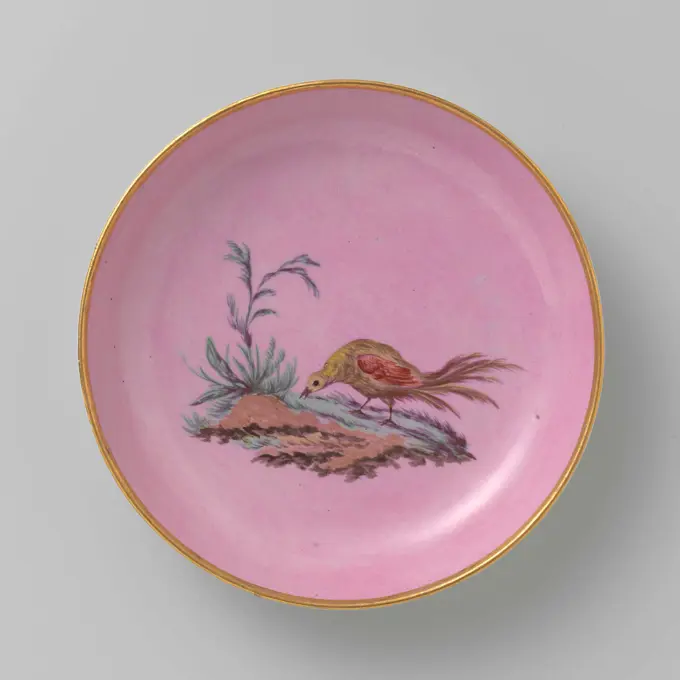
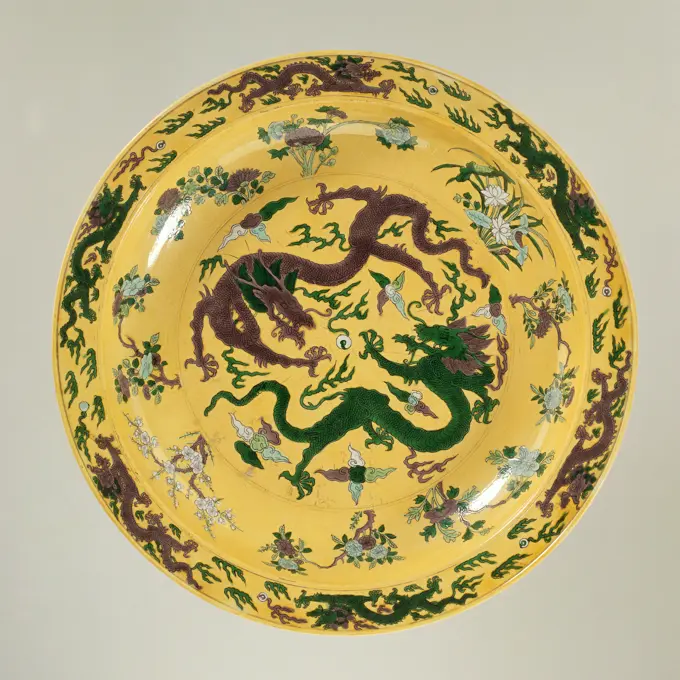
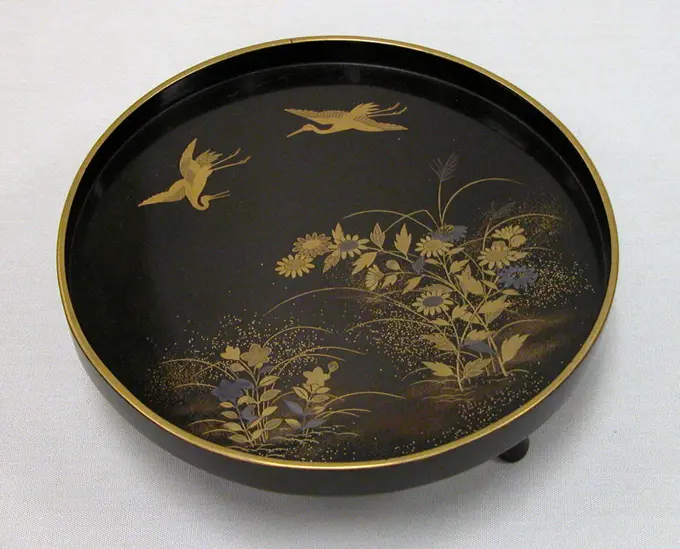
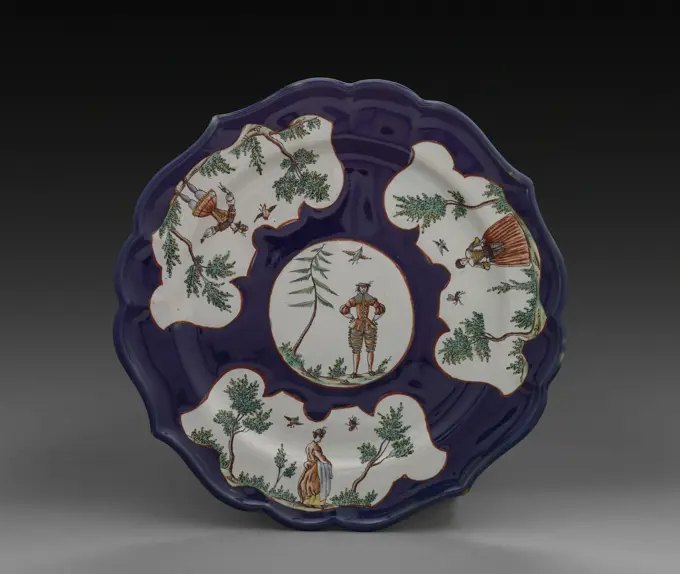
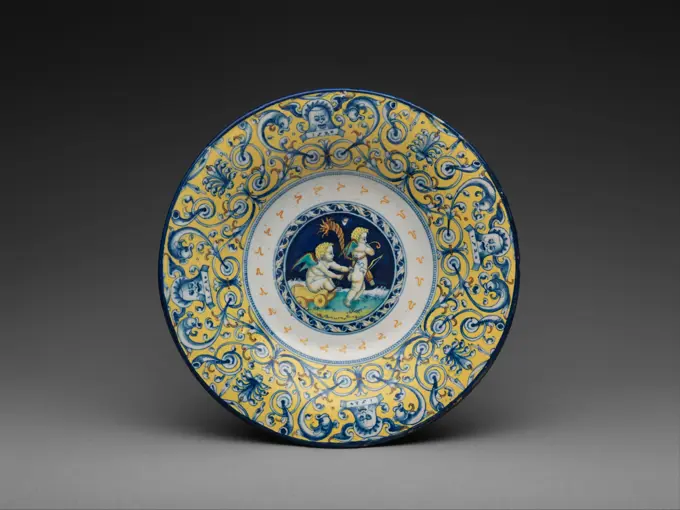
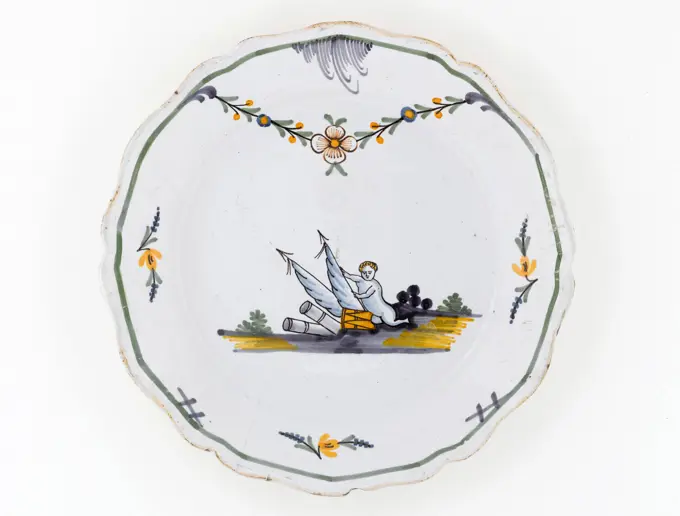
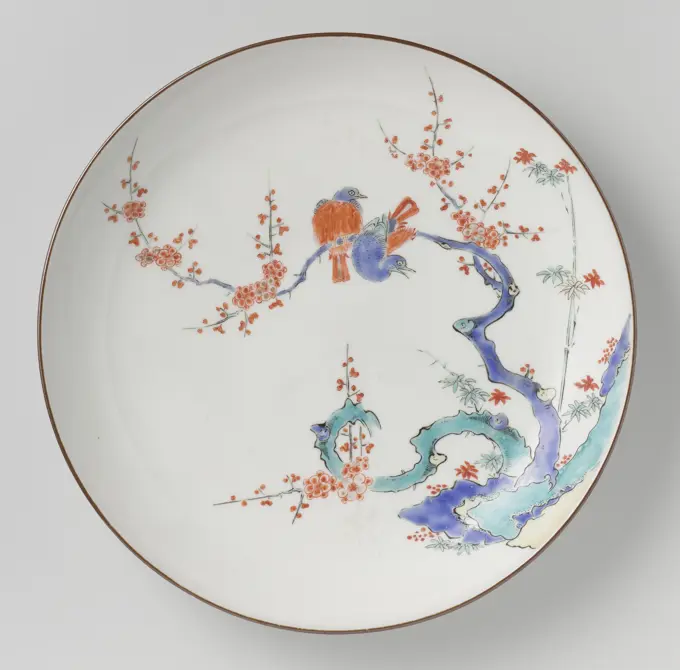
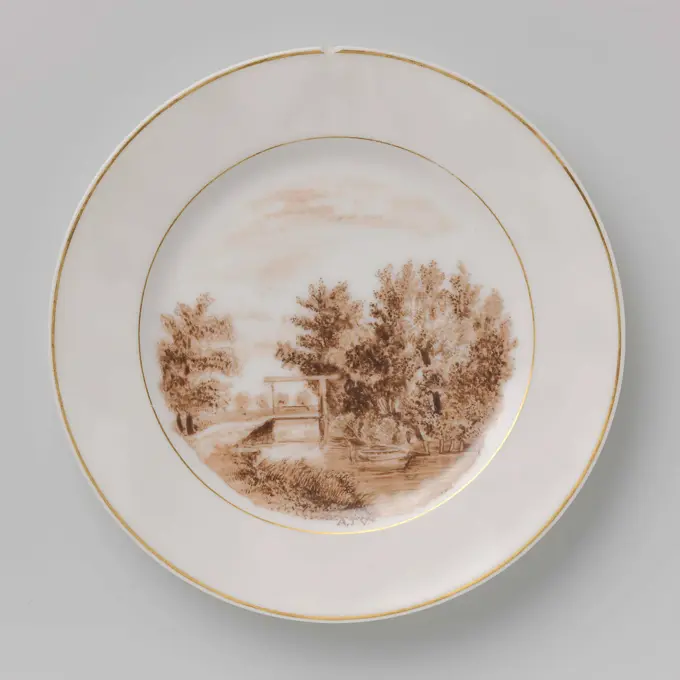
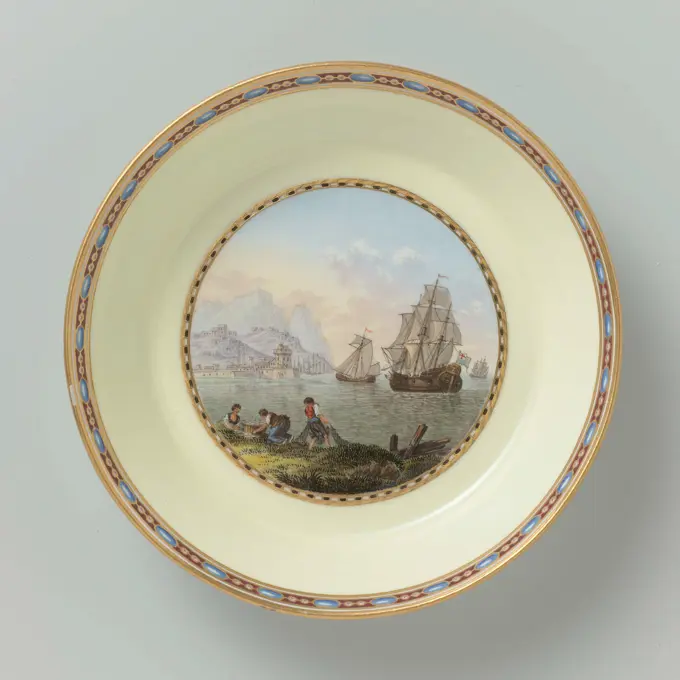
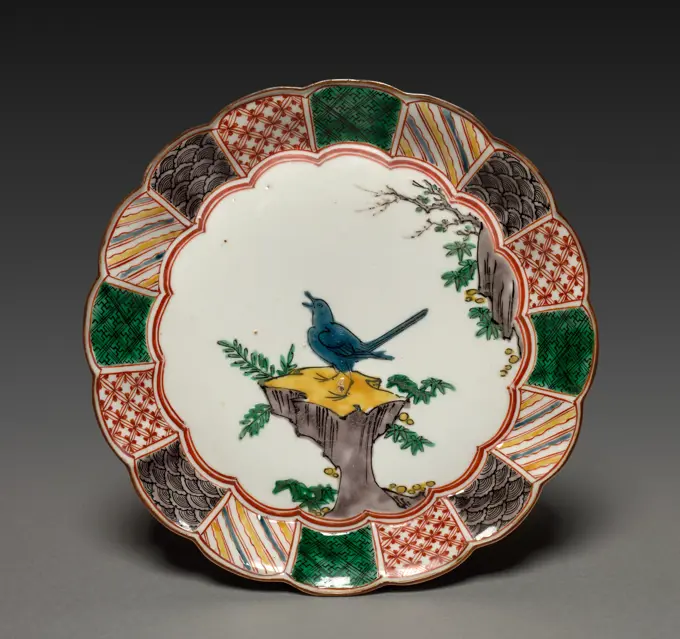
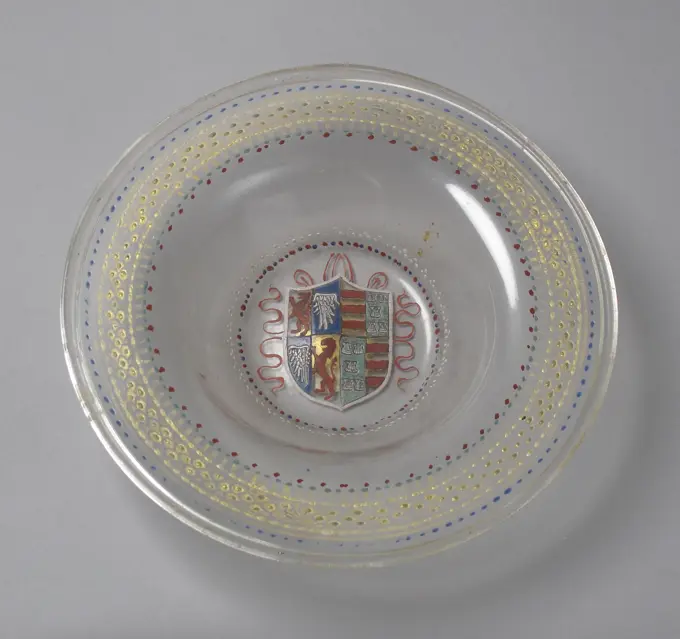
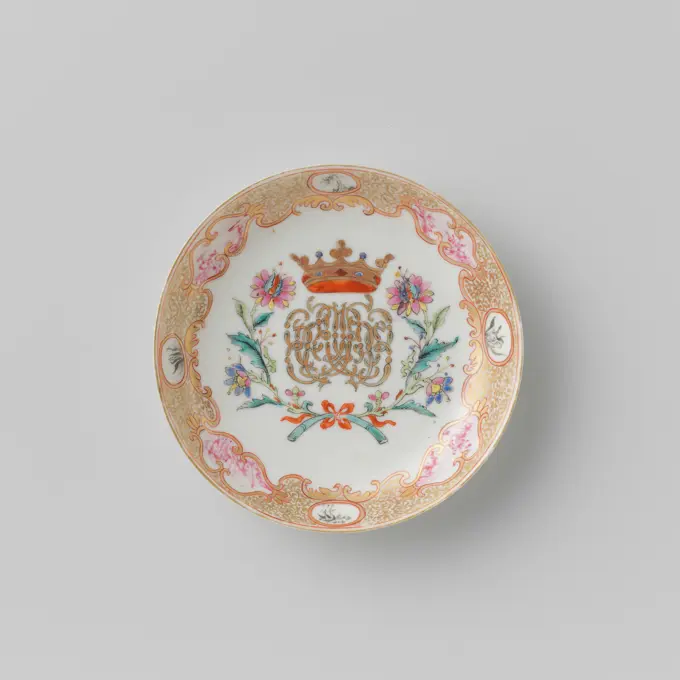
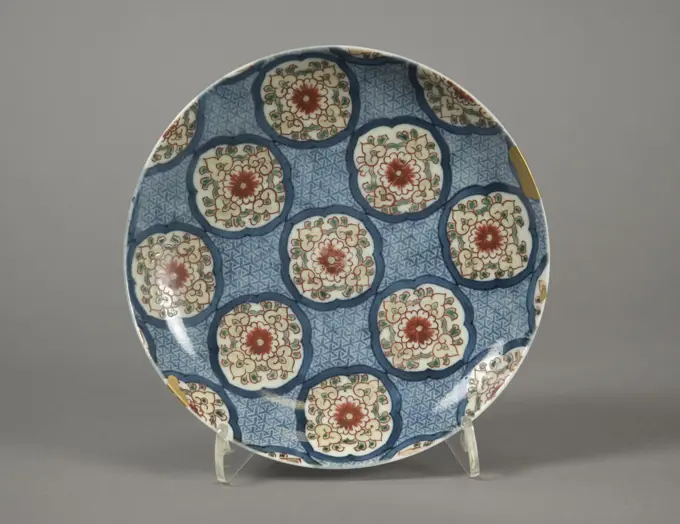
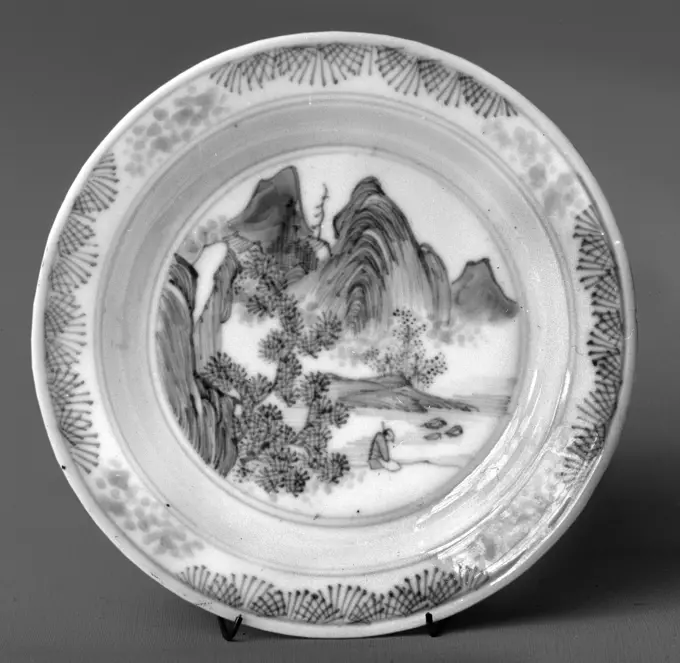
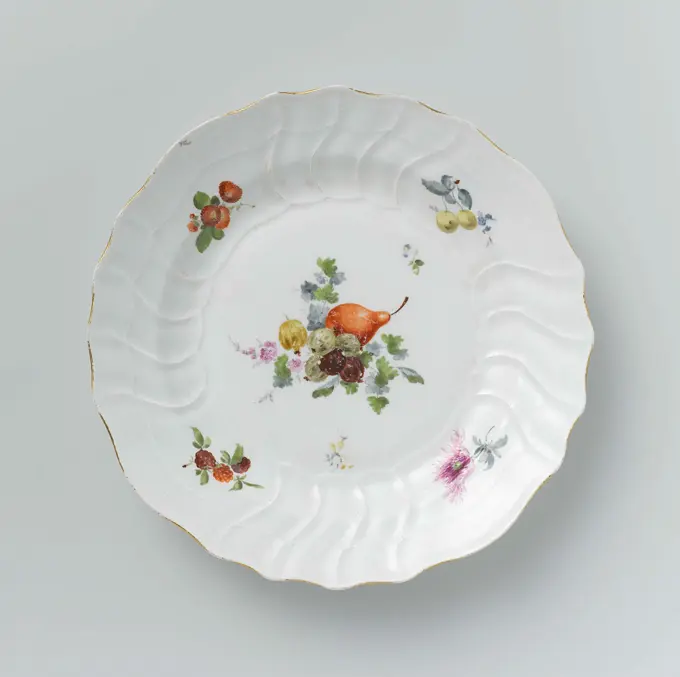
Saucer 15th century China. Saucer 44746Plate; tin-glazed earthenwareSaucer with flowering plants near a rock, anonymous, c. 1730 - c. 1770 Porcelain saucer, partially covered with a brown glaze, painted in underly glaze blue and on the glaze in red and gold. On the flat of the dish flowering plants in a rock; the edge with servetwork interspersed with a flower branch in a cartouche; The outside is covered with a brown glaze. A chip in the edge of the dish. Chinese imari with monochrome brown. China porcelain. glaze. cobalt (mineral). gold (metal) painting / gilding / vitrification Porcelain saucer, partially covered with a brown glaze, painted in underly glaze blue and on the glaze in red and gold. On the flat of the dish flowering plants in a rock; the edge with servetwork interspersed with a flower branch in a cartouche; The outside is covered with a brown glaze. A chip in the edge of the dish. Chinese imari with monochrome brown. China porcelain. glaze. cobalt (mineral). gold (metal) painting / gilding / vitrificationSaucer (France); Manufactured by Fauchier Factory; gilded tin-glazed earthenware, high-fire colorsDish 17th century. Dish 447238. Dish of porcelain, covered with a yellow glaze and painted in underglaze blue. The dish is, except inside the foot ring, covered with a yellow glaze with a flowering plant in a medallion in a blooming plant. the wall with four fruit branches; The outer wall with four lotus drinks. Marked on the underside with the six character mark of Emperor Zhengde in a double circle. Ming porcelain.Plate with Three Figures in a Landscape near A Village. Porcelain plate, painted in underglaze blue. On the flat a landscape with three people, trees and hills. In the background a village and a church tower. The inner edge with a wave pattern. The outer wall and edge with three flower branches. Four preen's in the foot ring. "Scheveningen sign". Arita, blue-white.Saucer With Flower Sprays in Panels on a Brown Glaze. Dish of porcelain, covered with a brown glaze and painted in blue, red, pink, green, yellow and black. The dish is covered on the front with a brown glaze with four leaf-shaped cartouches with flower branches. Dish has been broken. Famille Rose with monochrome brown.Dish 1755-1765 Chelsea. Soft-paste porcelain, polychrome enamels . Chelsea Porcelain FactoryDish. attributed to the Manufactuur Oud-LoosdrechtLoosdrecht, c. 1774-1778hard-paste porcelainServing plate - Death of General Wolfe D'après Jones & SonPlate ca. 1520 The Vulcan painter. Plate. Italian, Caffaggiolo. ca. 1520. Maiolica (tin-glazed earthenware). Ceramics-PotteryServing plate - Quebec Harbour & Levis. Havre du Quebec & Levis, Quebec Views D'après Robert Cochran & Company, 1846-1896Dish; Koenigliche Porcellain Fabrique, Meissen (1710-1763), Kaendler, Johann Joachim (1706-1775); 1737-1741 (1737-00-00-1740-00-00);Bruehl, Edmund (1888-1962)-collection, Henryk (1700-1763), Mętlewicz, swan service, gift (provenance), coats of armsDish, Manufactuur Oud-Loosdrecht (attributed to), c. 1774 - c. 1778 Porcelain saucer. Painted with a ground on which a picking pheasant, on a rose stock. A gilded piping along the edge. Porcelain Company: Loosdrecht -Porcelain Company: Weesp porcelain Porcelain saucer. Painted with a ground on which a picking pheasant, on a rose stock. A gilded piping along the edge. Porcelain Company: Loosdrecht -Porcelain Company: Weesp porcelainDessert plate ca. 1780 Royal Porcelain Manufactory, Berlin The gift of the Hans Syz Collection in 1995 endowed the Museum with nearly three hundred examples of European and Asian ceramics meticulously acquired by Swiss-born collector Dr. Syz (1894-1991) to chart the migration of models and patterns from East to West. Documenting a continuous process of influence and adaptation, these pieces provide a discriminating review of the nuances of stylistic change resulting from three centuries of trade.. Dessert plate 208425Friends in Nood, De Porceleijne Fles, 1918  Plate, blue painted with image of a kettle above fire, in front of an ax, a stack of cabbage and wood. With inscription. Back two blue edges and v.z.v. Two holes and iron wire to hang the plate. Marked. Delft earthenware. glaze vitrificationSèvres Porcelain Manufactory, Cup and Saucer, 1764, soft-paste porcelain.Plate, handy, with Lila landscape with fishing figures, Petrus Regout, c. 1850 - c. 1875 Plate of pottery with lilac transfer decor, handy, gdecored with a landscape with fishing figures. Six fish in the foreground. Maastricht . Plate of pottery with lilac transfer decor, handy, gdecored with a landscape with fishing figures. Six fish in the foreground. Maastricht .. Peacock tail dish from faience. Painted blue.Dish, Manufactuur Oud-Loosdrecht, c. 1774 - c. 1778 Porcelain dish. Painted in sepia with figures in a landscape. Along the edge a lilac fries between golden piping. Loosdrecht porcelain Porcelain dish. Painted in sepia with figures in a landscape. Along the edge a lilac fries between golden piping. Loosdrecht porcelainArmorial Service, Saldanha de Albuquerque (Platter). China, export for Portuguese market, Ch'ien-lung period, 18th century. Furnishings; Serviceware. PorcelainPlate of English hard baked earthenware, Boch faience fine., Boch, c. 1775 - c. 1810 Round plate of hard baked pottery. The board has a scalloped edge that is decorated with Tournai Godrons. The plate is painted in blue with flower branches and a blue trim on the edge. The board is marked. NEW arch (country) earthenware Round plate of hard baked pottery. The board has a scalloped edge that is decorated with Tournai Godrons. The plate is painted in blue with flower branches and a blue trim on the edge. The board is marked. NEW arch (country) earthenwareSchotel van faience.Round dish of blue painted faience. A landscape with two figures is painted on the flat. The edge is divided into four large compartments and four small compartments. In two large compartments, a standing figure is painted in a landscape and a seated figure in the other two courses. A stylized flower with four leaves is painted in the small compartments. The plate has been marked.. Plate of faience. Blue painted with a floral decoration.Saucer (part of a service) ca. 1770 Frankenthal Porcelain Manufactory. Saucer (part of a service) 196965Dish with pearl chasing dragons on a yellow ground, anonymous, c. 1850 - c. 1900 Porcelain saucer with deep wall and flat edge, painted in underly glaze blue and on the green, yellow, eggplant and black biscuit. On the flat in a grit medallion two pearls pursuing dragons between flames and clouds; Eight flower branches on the wall (including Lotus, Pion, Prunus, Chrysanthemum); the edge with dragons; the back of the edge with five flying cranes between clouds; The back of the wall with dragons. Marked on the underside with the six-character brand of Kangxi in a double circle. Email sur Biscuit. China porcelain. glaze. painting / vitrification Porcelain saucer with deep wall and flat edge, painted in underly glaze blue and on the green, yellow, eggplant and black biscuit. On the flat in a grit medallion two pearls pursuing dragons between flames and clouds; Eight flower branches on the wall (including Lotus, Pion, Prunus, Chrysanthemum); the edge with dragons; the back of the edge with Saucer with lotus scrolls and fungi, anonymous, c. 1700 - c. 1724 Dish with a round wall of porcelain, painted in under -glaze blue. On the flat a stylized lotus and peony drink in a medallion; To the medallion a connected pattern of lotus and peony drinks; the edge with a zigzag pattern; The rear with four times a mushroom (Lingzhi). Marked on the bottom with the character brand 'Yù', Jade, in a double circle. Blue White. China porcelain. glaze. cobalt (mineral) painting / vitrification Dish with a round wall of porcelain, painted in under -glaze blue. On the flat a stylized lotus and peony drink in a medallion; To the medallion a connected pattern of lotus and peony drinks; the edge with a zigzag pattern; The rear with four times a mushroom (Lingzhi). Marked on the bottom with the character brand 'Yù', Jade, in a double circle. Blue White. China porcelain. glaze. cobalt (mineral) painting / vitrificationTray mid-19th century Japan. Tray 57644Saucer-dish with figures in a Landscape with a Pavilion and trees. Scale of porcelain with ribbed wall and brace-shaped edge, painted in underglaze blue. On the flat a company in a landscape. Three people stand in addition to a banana plant between plants; Links two more people. In the background a pavilion with a banner between trees. The wall is divided into semicircular compartments filled with tendrils. The outer wall with a continuous lotus drink. Marked on the bottom with the six character mark of Emperor Chenghua. Three preen on the bottom. Arita, blue-white.Plaque, anonymous, c. 1725 - c. 1750 Plate, multi -colored painted with birds and flower branches. Delft . Plate, multi -colored painted with birds and flower branches. Delft .Plate 1796-1801 Imperial Porcelain Manufactory, St. Petersburg Russian. Plate. Russian, St. Petersburg. 1796-1801. Hard-paste porcelain. Ceramics-PorcelainSalad bowl; Chamberlain & Co (England; Porcelain Factory; 1788-1852); 1811-40 (1835-00-00-1845-00-00);Faience Plate, c. 1760. Felice Clerici (Italian). Faience; diameter: 23.8 cm (9 3/8 in.). The use of colored ground with the irregularly shaped reserve panels with figural decorations reflects the influence of other European ceramics, particularly Meissen porcelain. The decorations of this plate are charmingly naive and demonstrate the efforts of Italian ceramic makers to keep abreast of current fashions in the field.Dish, painted with cornflowers. Dish, decorated with cornflowers. Mounted amstel in blue under the glaze and engrade L1.Pattipan from the 'SwellenGrebel service' with a double crowned monogram and a border with floral scrolls. Hexagonal pattipan of porcelain with ribbed wall, painted on the glaze in blue, red, pink, green, yellow, black and gold. On the flat a crowned, double mirror monogram with 'mva' and 'hedd' surrounded by shell motifs, curlwork and flower branches; The wall with a bond with flower drinks. European performance in email colors.Dish dated 1520 Italian, Faenza. Dish 199742A platter with quail; Koenigliche Porcellain Fabrique, Meissen (1710-1763); around 1740 (1735-00-00-1745-00-00);Far Eastern decorations, kakiemon (style), message (provenance), quail, birds, platters, plumsBoard, with a castle and a ruin on the flat, and a few people along a river. Plate of pottery with multicolor transfer decor. On the flat a castle and a ruin, and a few people along a river. Under the show the text: "Lichtenberg". The edge of the board is decorated in blue with a band to which garlands and a ribbon hang.Plate with the coat of arms of Hendrik Peter Godfried Quack and Isabella Gertraud von Carnap, Etienne Blancheron, c. 1790 - c. 1800 Deep plate of porcelain, painted on the glaze with gold. On the flat the alliance weapon of Hendrik Peter Godfried Quack and Isabella Gertraud von Carnap. The edge with a flower drink and a golden band. Marked on the underside with N. porcelain company: Paris (possibly)Netherlands (possibly) porcelain. glaze. gold (metal) painting / gilding / vitrification Deep plate of porcelain, painted on the glaze with gold. On the flat the alliance weapon of Hendrik Peter Godfried Quack and Isabella Gertraud von Carnap. The edge with a flower drink and a golden band. Marked on the underside with N. porcelain company: Paris (possibly)Netherlands (possibly) porcelain. glaze. gold (metal) painting / gilding / vitrificationAnonymous. Plate. Earthenware. Paris, Carnavalet museum. 71478-52 On his knees, kneeling, attribute, ball, cannon, flag, emblem, revolutionary time, faience, man, French revolution, drum, hold, dishes, plateDish with rocks, bamboo, prunus and birds, anonymous, c. 1670 - c. 1700 Porcelain plate, painted on the glaze in blue, red, green, yellow, black and gold with rocks, bamboo branch and prunus with two birds on a prunus branch. Brown edge. Six prenes in the foot ring. Kakiemon style. Japan porcelain. glaze. gold (metal) painting / gilding / vitrification Porcelain plate, painted on the glaze in blue, red, green, yellow, black and gold with rocks, bamboo branch and prunus with two birds on a prunus branch. Brown edge. Six prenes in the foot ring. Kakiemon style. Japan porcelain. glaze. gold (metal) painting / gilding / vitrificationFruit Plate; Manufactured by Chelsea Porcelain Manufactory (United Kingdom); molded porcelain, overglaze decorationPlate - Ontario Lake Scenery Joseph Heath Joseph HeathPlate. Round plate of multicolored painted porcelain. Along the edge is a green wreath painted and pink roses on the flat and the edge. The plate has been marked.Blackboard with golden piping around edge and flat and painting in sepia. Porcelain plate, with golden piping around edge and flat. Part of a crockery in Sepia painted with landscapes or topographical faces. Signed in sepia in the painting: a.t.v .. Note: Edge damage.Small tureen and stand 1730-35 Vienna Although mostly used to ornament borders, Laub- und Bandelwerk designs could also be the principal decorative motif, as on this small tureen and stand, where the effect is almost that of cagework over the porcelain. Both gilding and silveringanother characteristic feature of Du Paquier porcelainwere employed to further enrich the object, and the cover is crowned with the figure of a Turk seated on a cushion and rug, a favorite motif of the manufactory.. Small tureen and stand 200739Plate ca. 1860-66 Chinese, for American market. Plate 6330Charger. Culture: Austrian, Vienna. Dimensions: Overall (confirmed): 3 x 16 1/4 in. (7.6 x 41.3 cm). Factory: Vienna. Factory director: Du Paquier period (1718-1744). Date: ca. 1735.Black monochrome decoration called Schwarzlot is a signature feature of Du Paquier porcelain. It reflects the Baroque fondness for austere, understated grandeur. On this charger, the Schwarzlot was subtly highlighted with gold, making it extraordinarily luxurious. The artist's use of a quill pen to draw fine lines and hatchings imitates copperplate engravings. The technique is associated with Jakob Helchis, a gifted employee of the manufactory. Museum: Metropolitan Museum of Art, New York, USA.. Dish of porcelain, painted with a harbor face inside a circle that is saved in a yellow fond. The dish has been marked.Plate with the Douw family crest on the flat, Anonymous, 1750 Plate multicolored painted with the weapon of the Zeeland family Douw. Under the weapon the inscription: IAC.Douw. And in the bow, left A and right 1750. The edge is painted with acanthus leaf, shell motifs, lambrequins and flower branches. (The label in the hall speaks of the Frisian Douw family). Delft . Plate multicolored painted with the weapon of the Zeeland family Douw. Under the weapon the inscription: IAC.Douw. And in the bow, left A and right 1750. The edge is painted with acanthus leaf, shell motifs, lambrequins and flower branches. (The label in the hall speaks of the Frisian Douw family). Delft .Dessert plate - Davenport DavenportSaucer (part of a service) 1750-60 Chinese, for British market. Saucer (part of a service) 201042Serving plate - Kingston, - Lake Ontario D'après Podmore, Walker & Company. Soup board of painted porcelain. The board is painted with the Shiba Onkô motif. The plate has been marked.Lid of butter fleet, anonymous, 1740 - 1765 Lid of butter fleet, multi -colored painted with the coat of arms of the Josselet family. There are two applianed dogs on the lid. Delft . Lid of butter fleet, multi -colored painted with the coat of arms of the Josselet family. There are two applianed dogs on the lid. Delft .Plate ca. 1750 French, Rouen Faience, or tin-glazed and enameled earthenware, first emerged in France during the sixteenth century, reaching widespread usage among elite patrons during the seventeenth and early eighteenth centuries, prior to the establishment of soft-paste porcelain factories. Although characterized as more provincial in style than porcelain, French faience was used at the court of Louis XIV as part of elaborate meals and displays, with large-scale vessels incorporated into the Baroque garden designs of Versailles. Earlier examples of French faience attest to the strong influence of maiolica artists from Italy. Later works demonstrate the ways in which cities such as Nevers, Rouen, Lyon, Moustiers, and Marseille developed innovative vessel shapes and decorative motifs prized among collectors throughout Europe. While faience can be created from a wide mixture of clays, it is foremost distinguished by the milky opaque white color achieved by the addition of tin oxide to Dish with Singing Bird on a Rock, 1700s. Japan, Edo period (1615-1868). Porcelain with underglaze blue and overglaze color enamel (Hizen ware, Ko-Kutani style); diameter: 20.8 cm (8 3/16 in.); overall: 3.3 cm (1 5/16 in.).. Bake of blue painted faience, with a lobed edge. The container is painted with leaf and flower branches and it is a soil find.Botanical Plate, 1832, Sèvres Porcelain Factory, Paris, 1756-present, 1 1/4 x 9 1/4 in. (3.18 x 23.5 cm), Porcelain, gilt, France, 19th centuryPlate ca. 1740 Meissen Manufactory German. Plate. German, Meissen. ca. 1740. Hard-paste porcelain. Ceramics-PorcelainFélix Henri Bracquemond, Haviland and Cie. "Dessert plate". Ceramics, earthenware. 1879. Museum of Fine Arts of the City of Paris, Petit Palais. 74385-27 Dessert plate, ceramic, faience, haviland and cie, bird, dishesDish, Manufactuur Oud-Loosdrecht, 1775 Porcelain dish. Part of a series of Twaafl pieces. Painted with figures in a landscape in beet red and gold piping. Loosdrecht porcelain Porcelain dish. Part of a series of Twaafl pieces. Painted with figures in a landscape in beet red and gold piping. Loosdrecht porcelainBowl early 16th century Italian, Venice (Murano) The coat of arms belonging to the Lanuza and Viano del Bollo families of Orense in Spain. The shape of this bowl, which is more typically Spanish than Italian, reflects the large export market enjoyed by the Venetian glass-making industry.. Bowl 201690Saucer with a Crowned, illegible monogram surrounded by two Flower sprays. Dish of porcelain, painted on the glaze in blue, red, pink, green, yellow, black and gold. On the flat a crowned, unreadable monogram surrounded by two flower branches; The wall with flower refines with four cartouches with a landscape and four medallions with plants. European performance in email colors.. Dish, Purple painted with winged putti floating on clouds. Along the edge a guilloches band with dependent flour glulands. Marked with a stork in blue under the glaze. N.B. German porcelain painted in The Hague.France, Limousin, Haute Vienne, Limoges, china plates. Round dish of painted porcelain. The dish is painted with landscapes in which figures and along the edge a wide strip of green braid. The dish has been marked.Plate; Koenigliche Porzellan Manufaktur (KPM; Berlin; 1763-1918); 1870-82 (1823-00-00-1832-00-00);Dish with Chinese-Style Flowers ca. 1680-90s Japan. Dish with Chinese-Style Flowers 52347Soup Tureen and Tray Tureen And Tray; Manufactured by Meissen Porcelain Manufactory (Germany); Germany; hard paste porcelain, vitreous enamelTuren With Stand With Figures on a Terrace near a Pavilion. Porcelain terrine lid with two braided ears, painted on the glaze in blue, red, pink, green, yellow, black and gold. Lid knob in the shape of a shishi (lion dog). Family Rose.Dessert plate. Churfuerstliche Porcellain Fabrique, Meissen (1763/74-1814), factoryTabakierkaDish of porcelain with blue decor of a flower bush in Chinese trant. Dish of porcelain with blue decor of a flower bush in Chinese trant. With a corresponding head (A). Marked on soil: Crossed swords between which three crosses.Plate with a landscape, anonymous, A.T. Vaillant, c. 1850 - c. 1860 Porcelain plate, painted on the glaze in sepia and gold. On the flat a landscape with a village by the sea, where boats were laid. In the foreground a few people. Possibly a performance of Scheveningen. Golden Rand. A proen on the bottom. Marked in the performance with A.T.V and on the underside with N I and III. Europe porcelain. glaze. gold (metal) painting / gilding / vitrification Porcelain plate, painted on the glaze in sepia and gold. On the flat a landscape with a village by the sea, where boats were laid. In the foreground a few people. Possibly a performance of Scheveningen. Golden Rand. A proen on the bottom. Marked in the performance with A.T.V and on the underside with N I and III. Europe porcelain. glaze. gold (metal) painting / gilding / vitrification. Scale of Faïence. Muchic painted with a rosette and spreader flowers. Signature with the monogram A R.Bell-shaped cup with European figures in a landscape, anonymous, c. 1740 - c. 1760 Bell -shaped head of porcelain, painted on the glaze in blue, red, pink, yellow, brown, black and gold. On the wall in a medallion a armed European man and woman in a landscape with mountains and trees; A third person behind them; In the background a shepherd with three sheep. In a second medallion a European woman with a child on a chair with a castle in the background. A chip in the edge of the head. European performance in email colors. China porcelain. glaze. gold (metal) painting / gilding / vitrification Bell -shaped head of porcelain, painted on the glaze in blue, red, pink, yellow, brown, black and gold. On the wall in a medallion a armed European man and woman in a landscape with mountains and trees; A third person behind them; In the background a shepherd with three sheep. In a second medallion a European woman with a child on a chair with a castle in the background. A chip in the edge of the hFate J. Niekiecki i ska, Kraków D BnikiDeep plate with a woman and two boys among precious objects, anonymous, c. 1725 - c. 1749 Deep plate of porcelain, covered with a pink glaze and painted on the glaze in blue, red, pink, green, yellow, purple, brown, black and gold. On the flat a woman surrounded by two boys and lucky objects (including Ruyi-Skeptter, flower vase, incense burner); the wall with a Swastika pattern interspersed with scalloped cartouches with tenders; On the Rand Servetwerk interspersed with three scalloped cartouches with a peon branch and three times a 'should' symbol. The back is covered with a pink glaze. Famle Rose with a Ruby Back. China porcelain. glaze. gold (metal) painting / gilding / vitrification Deep plate of porcelain, covered with a pink glaze and painted on the glaze in blue, red, pink, green, yellow, purple, brown, black and gold. On the flat a woman surrounded by two boys and lucky objects (including Ruyi-Skeptter, flower vase, incense burner); the wall with a Swastika pattern intersperseSaucer with landscape late 17th century China. Saucer with landscape. China. late 17th century. Porcelain painted in underglaze cobalt blue (Jingdezhen ware). Qing dynasty (1644-1911), Kangxi period (1662-1722). CeramicsDish 16th century China. Dish 50719Plate, painted multi-colored with Deutsche Blumen, insects and fruits. Round plate from painted porcelain. The plate is painted with Deutsche Blumen, insects and fruits. The edge is embossed with the Neuozier pattern. The sign has been marked and belongs to a service (BK-17474-1 to BK-17474-253).Saucer from a tea service for twelve, 1807-08, Christophe-Ferdinand Caron; Manufacturer: Sèvres Porcelain Factory, French (Sèvres), French, 1774-1831, 1 1/4 x 6 x 6 in. (3.18 x 15.24 x 15.24 cm), Hardpaste porcelain, gilt, France, 19th centurySaucer-dish with fenghuangs, Cranes and Floral scrolls. Large scale of porcelain, painted in underglaze blue. On the flat in a medallion two flying fenghuises between lotus drinks. The inner edge with a tire flower drinks. On the outside wall six cranes separated by flaming clouds. At the foot a bond with curling work. The bottom is unglazed. Ming porcelain in blue and white.Plate with a view of Philadelphia (Penns Treaty Tree)Plate 1753-95 French, Sceaux Faience, or tin-glazed and enameled earthenware, first emerged in France during the sixteenth century, reaching widespread usage among elite patrons during the seventeenth and early eighteenth centuries, prior to the establishment of soft-paste porcelain factories. Although characterized as more provincial in style than porcelain, French faience was used at the court of Louis XIV as part of elaborate meals and displays, with large-scale vessels incorporated into the Baroque garden designs of Versailles. Earlier examples of French faience attest to the strong influence of maiolica artists from Italy. Later works demonstrate the ways in which cities such as Nevers, Rouen, Lyon, Moustiers, and Marseille developed innovative vessel shapes and decorative motifs prized among collectors throughout Europe. While faience can be created from a wide mixture of clays, it is foremost distinguished by the milky opaque white color achieved by the addition of tin oxide to Cup and Saucer. Culture: Chinese, for American market. Dimensions: Diam. 5 1/2 in. (14 cm). Date: 1785-90.This object belongs to a large dinner service (10.149.1-.248) bearing the Townley family coat-of-arms. The service, probably ordered by Justice Samuel Chase (1741-1811) of Annapolis, Maryland, displays the enamel-painted arms of Margaret Townley, Chase's aunt. Museum: Metropolitan Museum of Art, New York, USA.Plate Made 1780-1790 Leeds. Lead-glazed earthenware (creamware) .Dish, multi -colored painted with birds, Meissener Porzellan Manufaktur, c. 1790  Round dish of painted porcelain. The dish has been painted with birds on a ground. A blue strip with gold stripes runs along the edge. The dish is marked. Float porcelainSoup plate - D'après George L. Ashworth & Brothers, 1862-1968Orleans, Cup and Saucer, 18th century, hard-paste porcelain.Plate. China, export for French market, Ch'ien-lung period, 1770-1785. Furnishings; Serviceware. PorcelainDish. Round dish of multicolored porcelain painted. In the middle of the flat is a medallion painted within which a flower. Guird builds are painted along the edge of the flat. On the edge is a tire painted with tendrils and medallions in which flowers. The dish is marked and belongs to a dish with Invnr. BK-NM-13965-A.Plate with a landscape, anonymous, A.T. Vaillant, c. 1850 - c. 1860 Porcelain plate, painted on the glaze in sepia and gold. On the flat a landscape with a village on a river. A boat sails on the water. On the right a viaduct, on which a train runs. Golden Rand. A proen on the bottom. Marked on the bottom with 14. Europe porcelain. glaze. gold (metal) painting / gilding / vitrification Porcelain plate, painted on the glaze in sepia and gold. On the flat a landscape with a village on a river. A boat sails on the water. On the right a viaduct, on which a train runs. Golden Rand. A proen on the bottom. Marked on the bottom with 14. Europe porcelain. glaze. gold (metal) painting / gilding / vitrificationDish ca. 1730 Chinese, for European market The gift of the Hans Syz Collection in 1995 endowed the Museum with nearly three hundred examples of European and Asian ceramics meticulously acquired by Swiss-born collector Dr. Syz (1894-1991) to chart the migration of models and patterns from East to West. Documenting a continuous process of influence and adaptation, these pieces provide a discriminating review of the nuances of stylistic change resulting from three centuries of trade.. Dish. Chinese, for European market. ca. 1730. Hard-paste porcelain. Ceramics-Porcelain-ExportDish with Scrolling Flowers and Breaking Waves. China. Date: 1403-1424. Dimensions: H. 8.0 cm (3 3/16 in.); diam. 41.0 cm (16 1/8 in.). Porcelain painted in underglaze blue. Origin: China. Museum: The Chicago Art Institute, Chicago, USA.Sèvres Porcelain Manufactory, Cup and Saucer, 1897, hard-paste porcelain.Czark with decoration Kakiemon, saucer with decoration Kakiemon; Koenigliche Porcellain Fabrique, Meissen (1710-1763); around 1735 (1730-00-00-1735-00-00);Plate decorated with a cobalt floral motif unknown