Decorative Porcelain Vases

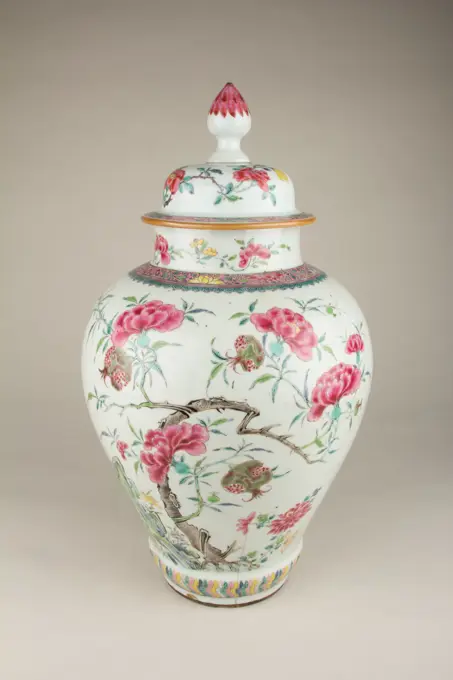
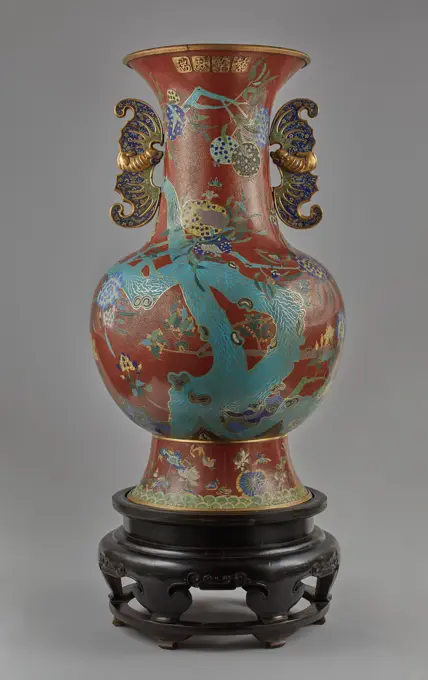
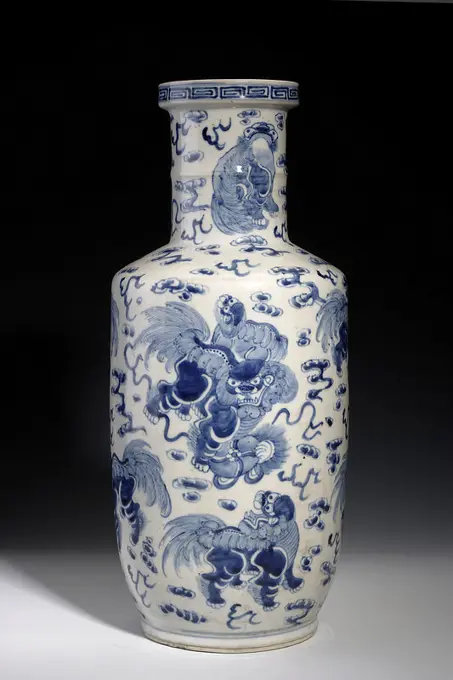
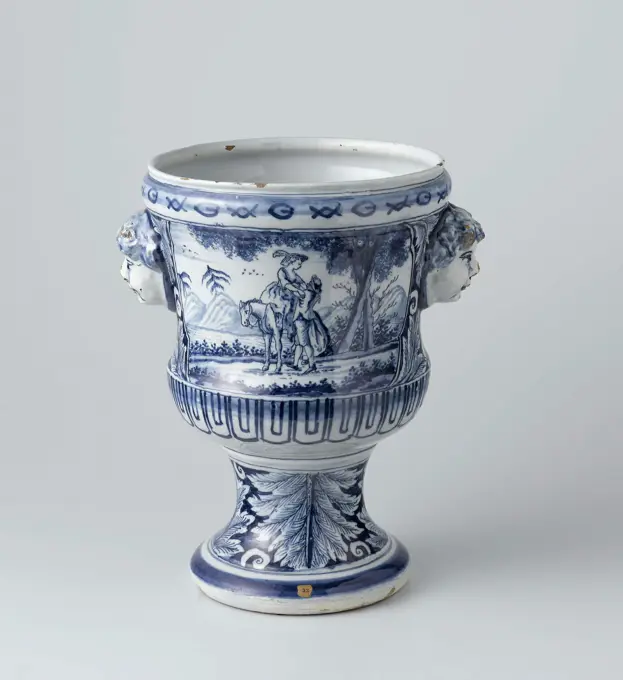
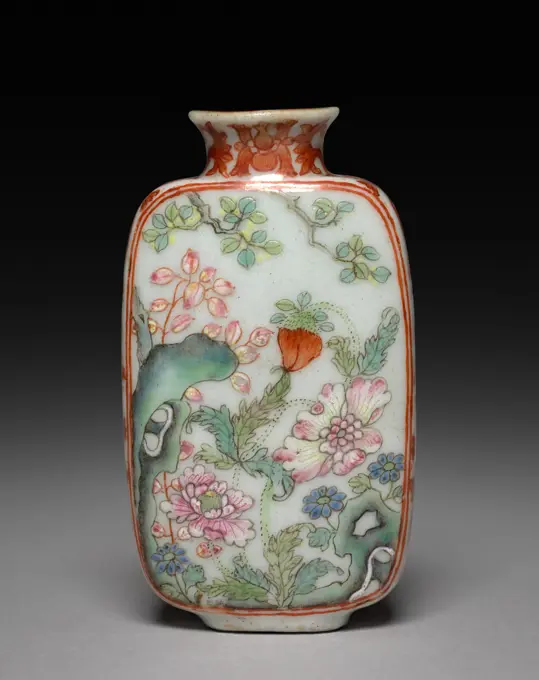
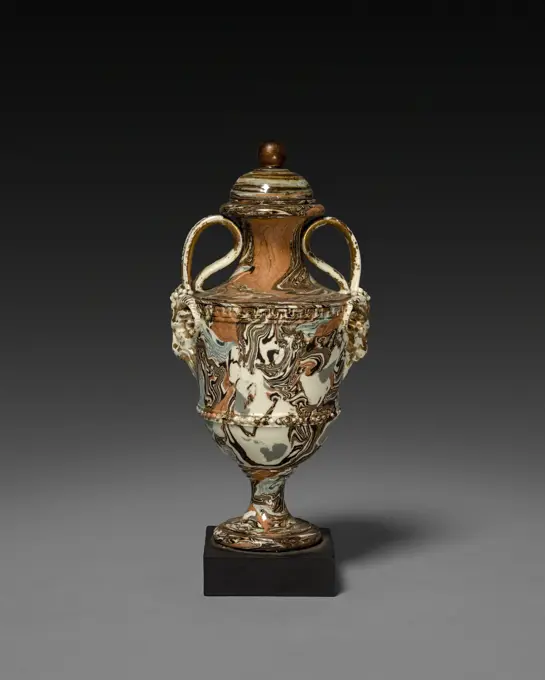
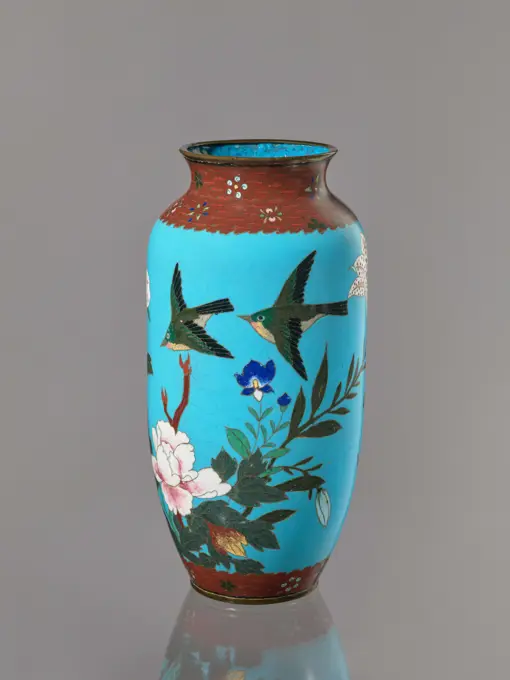
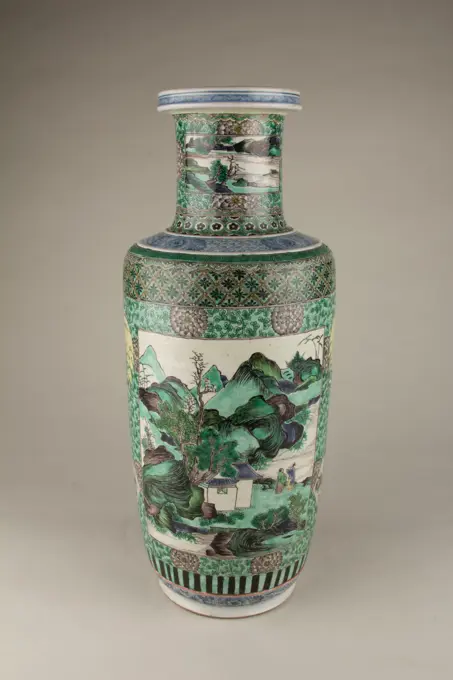
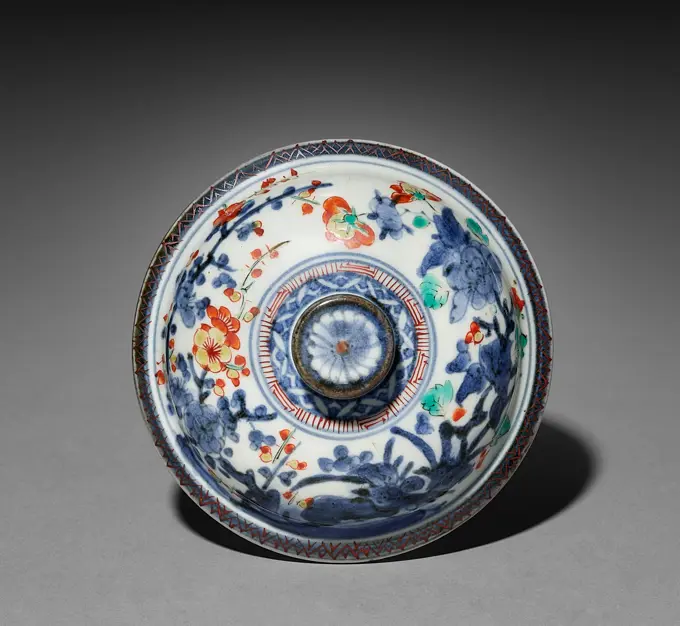
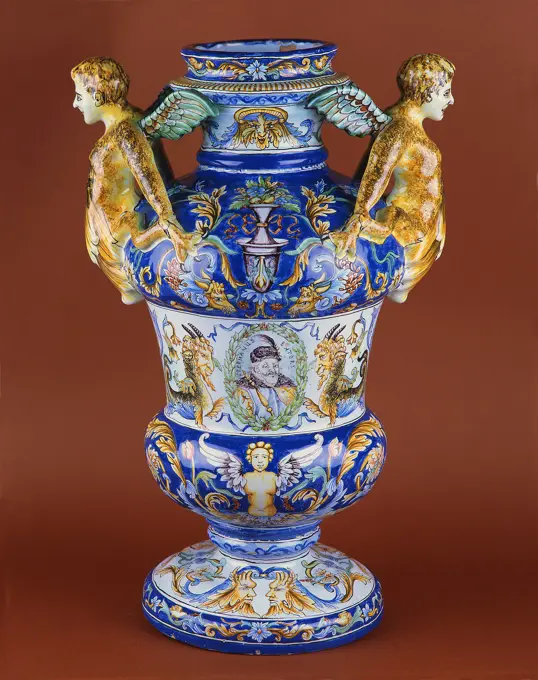
Elegant Chinese porcelain vases featuring intricate floral and wildlife designs, showcasing vibrant colors and historical artistry.
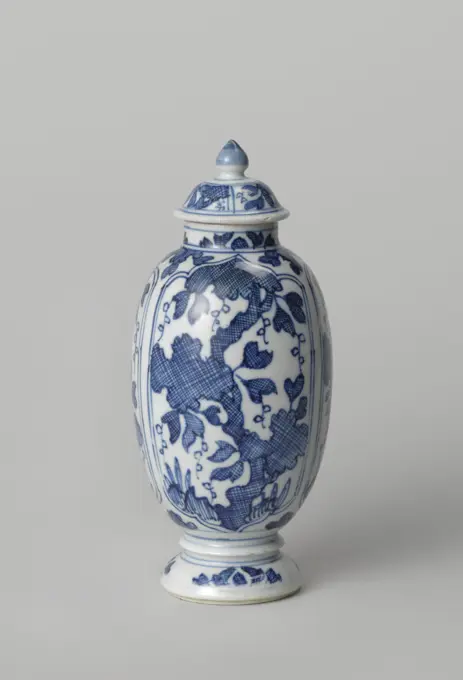
Covered jar with hatched plants in petal-shaped panels, anonymous, c. 1680 - c. 1720 Porcelain lid jar with a stretched, spherical body and a high, spreading base, painted in underlaze blue. On the wall elongated, petal comparts with flowering plants with shadowing in it; Half a flower between the courses along the edge and the foot. The edge and the foot with a stylized flower three times. The lid with the same decoration. Blue White. China porcelain. glaze. cobalt (mineral) painting / vitrification Porcelain lid jar with a stretched, spherical body and a high, spreading base, painted in underlaze blue. On the wall elongated, petal comparts with flowering plants with shadowing in it; Half a flower between the courses along the edge and the foot. The edge and the foot with a stylized flower three times. The lid with the same decoration. Blue White. China porcelain. glaze. cobalt (mineral) painting / vitrification
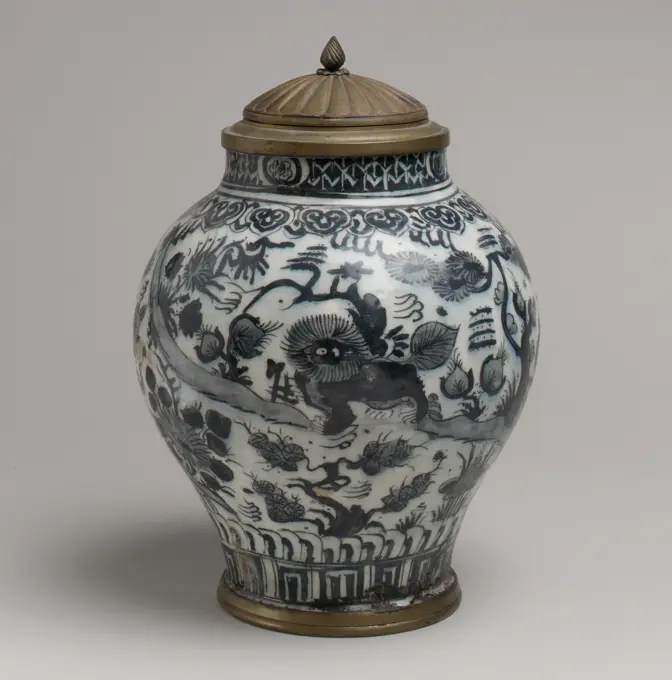
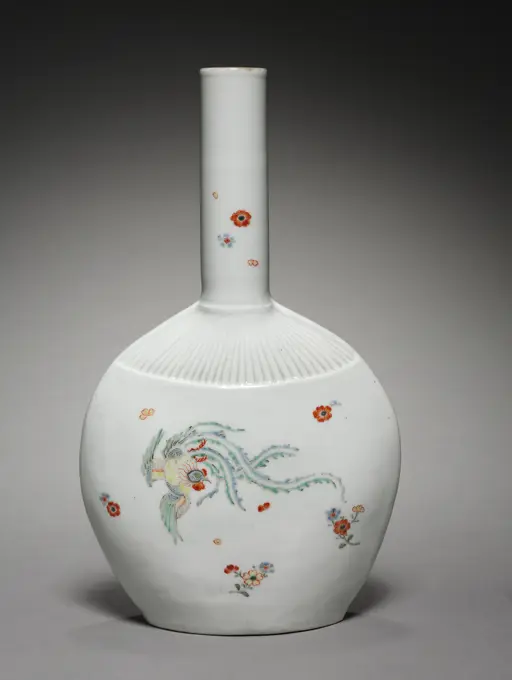
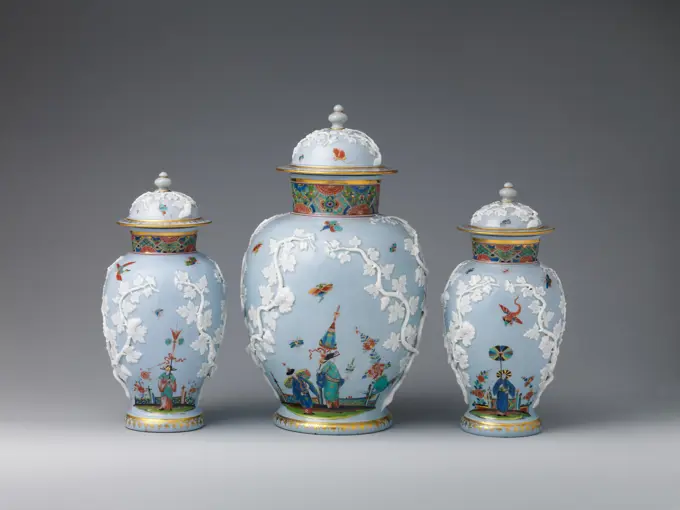
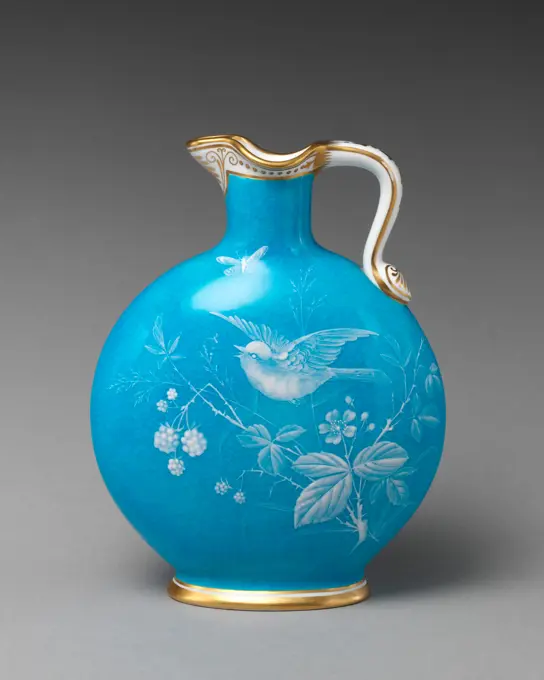
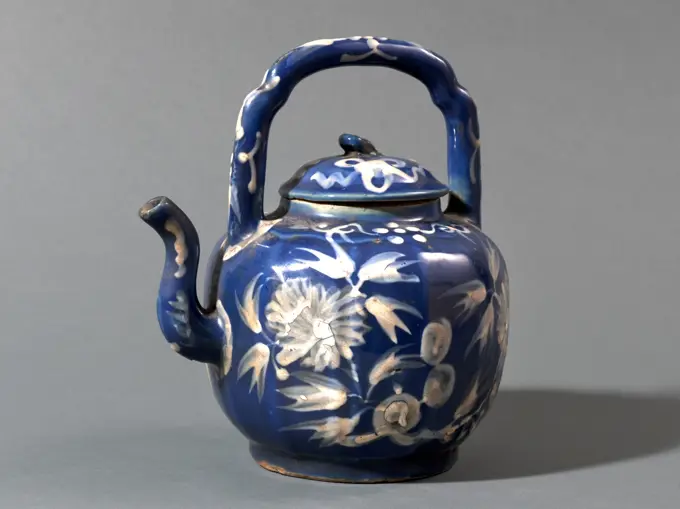
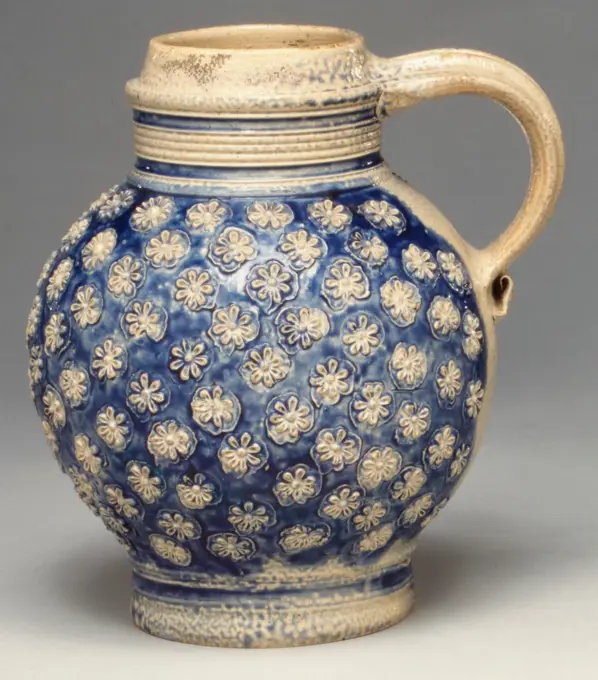
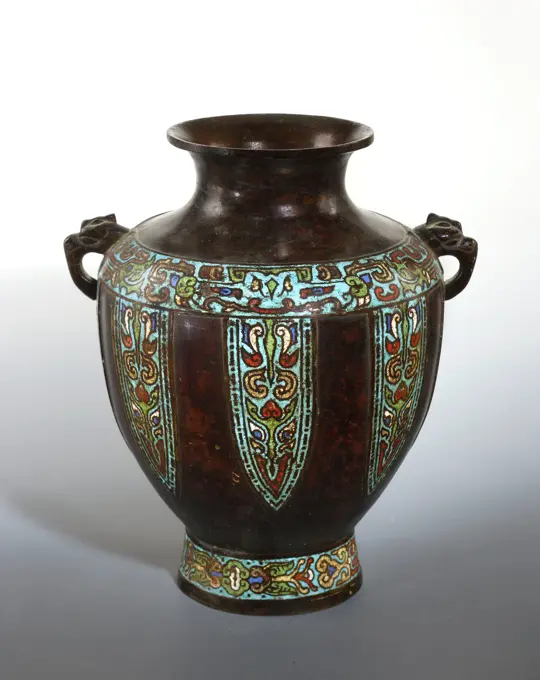
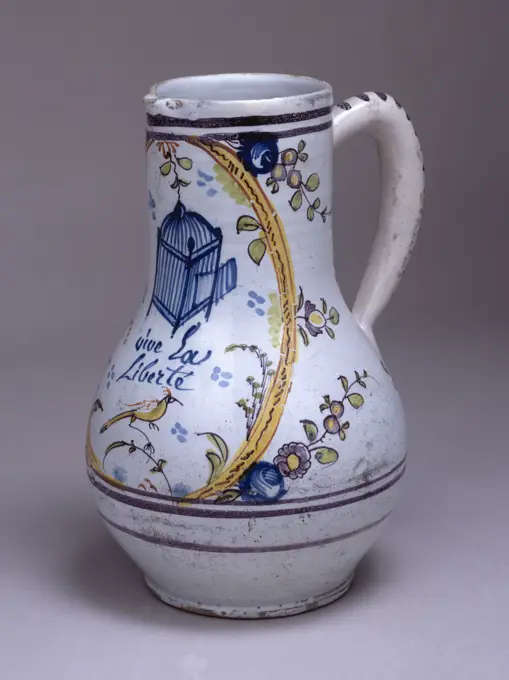
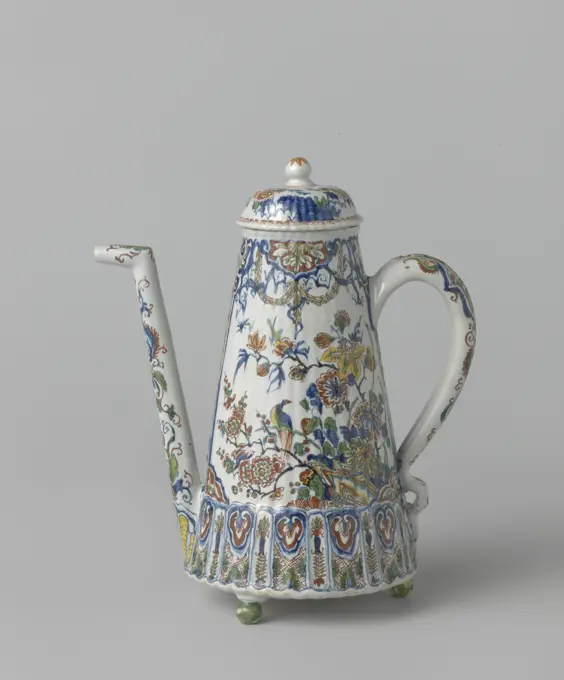
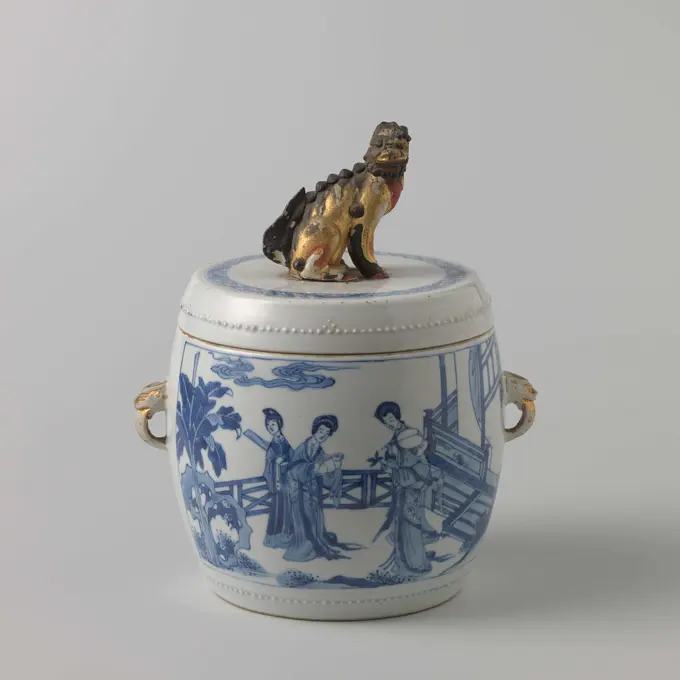
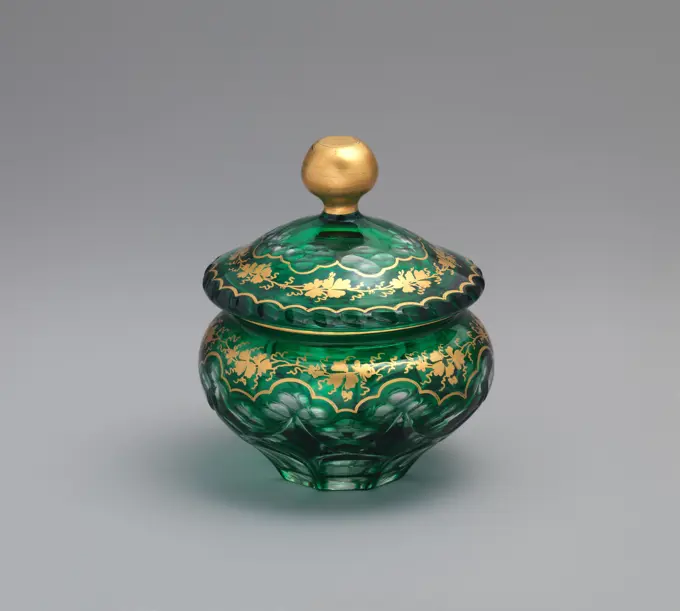
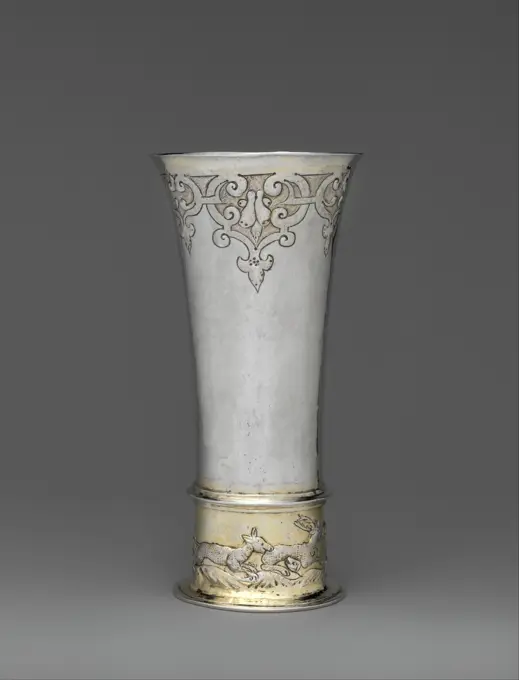
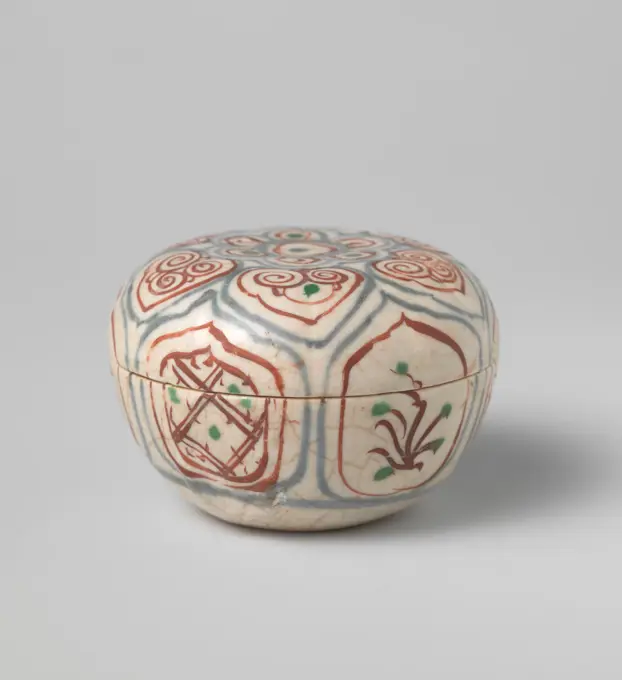
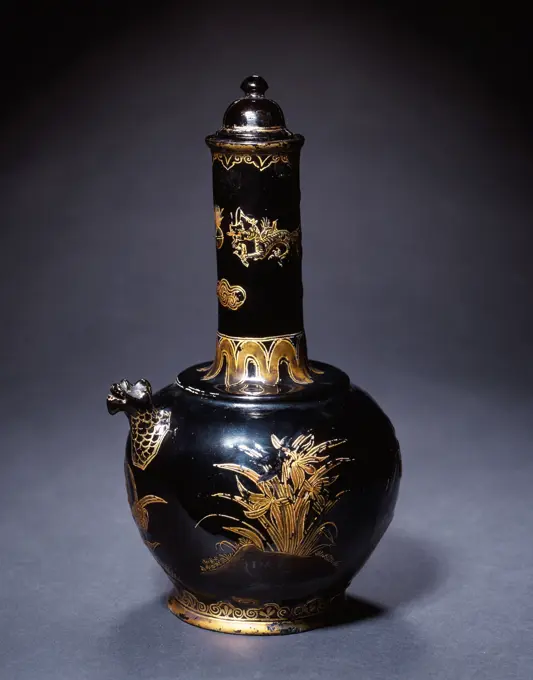
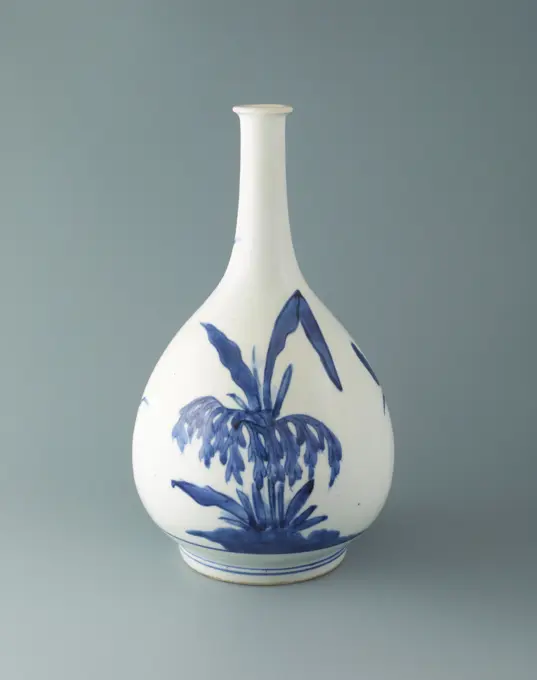
Bottle with cobalt floral decoration unknownVase. unknown, craftsmanCover of pot multicolored painted faïence, anonymous, c. 1730 - c. 1760 Faïence's lid. Multicolored painted with flower decorations. The pot is part of a cupboard set. Delft . Faïence's lid. Multicolored painted with flower decorations. The pot is part of a cupboard set. Delft .Octagonal, pearshaped beakervase with narrow panels with flowering plants, anonymous, c. 1680 - c. 1720 Octagonal, pear -shaped cup of porcelain, with trumpet -shaped neck. Painted in underlaze blue. The wall is divided into eight elongated compartments with flowering plants; Around the courses a band with leaf vines. Under the edge a band with square compartments with flowering plants on rocks. Around the foot, inner and outer edge a band with leaf vines. Blue White. China porcelain. glaze. cobalt (mineral) painting / vitrification Octagonal, pear -shaped cup of porcelain, with trumpet -shaped neck. Painted in underlaze blue. The wall is divided into eight elongated compartments with flowering plants; Around the courses a band with leaf vines. Under the edge a band with square compartments with flowering plants on rocks. Around the foot, inner and outer edge a band with leaf vines. Blue White. China porcelain. glaze. cobalt (mineral) painting / vitrificationJar with Lion and Landscape Elements first half 18th century The centuries-long popularity of Chinese ceramics in the Islamic world continued into the Safavid era in Iran, as attested by pieces like this which were inspired by the shapes and conventions of painting particular to China. Of course, the most popular types were copies of blue-and-white ware. The staid depiction of a flowering landscape in a black and gray wash on a white background is interrupted by the humorous figure of a dandelion-headed lion. The foot rim, mouth rim, and cover of this jar were made of brass or silvered copper.. Jar with Lion and Landscape Elements. first half 18th century. Stonepaste; painted under transparent glaze; brass. Made in Iran. CeramicsFlask in the Shape of a Fan, 1600s. Japan, Edo period (1615-1868). Imari ware porcelain, molded, carved, and glazed with overglaze enamel decoration; diameter: 19.4 cm (7 5/8 in.); overall: 33.3 cm (13 1/8 in.).Covered bottle with floral scrolls (one of a pair) China 18th centuryVase (from a garniture of three) ca. 1725-30 Meissen Manufactory German The elaborate coat of arms and monogram of Victor Amadeus II (1666-1732), king of Sardinia, serve as the primary decoration of this beaker and saucer (54.147.75, .76), which belong to a tea and chocolate service presented as a gift by August II (1670-1733), commonly known as Augustus the Strong, elector of Saxony, king of Poland, in 1725. The porcelain service was part of a much larger diplomatic gift sent to Victor Amadeus II by the Saxon court, and due to its artistic and diplomatic significance, it has been well documented.1 This beaker and saucer belong to one of nine tea, coffee, and chocolate services that Victor Amadeus II received, and the gift included two small services for dining, five garnitures of vases, and a variety of other pieces of Meissen porcelain, some of which were part of the Saxon royal collections but nevertheless were selected to be presented to the Sardinian king.2 As has been noted bTea caddy. Weesper porseleinfabriekpainted decoration: attributed to Louis Victor Gerverot (1747-1829)Weesp, c. 1769-1771hard-paste porcelainEwer with bird and berry motif ca. or after 1872 Minton(s) Minton was the most important ceramics factory during the Victorian period and began exhibiting products at the first Great Exhibition of 1851. Founded in 1793 by Thomas Minton at Stoke-on-Trent, the firm initially specialized in transferware pottery before expanding under the ownership of Thomass son Herbert Minton, beginning in 1836. Under the ownership of Colin Minton Campbell, who succeeded his uncle in 1858, the factory became recognized as a specialist producer of Aesthetics movement porcelain, which were inspired by a rich array of exotic and eclectic decorative motifs.. Ewer with bird and berry motif. British, Stoke-on-Trent, Staffordshire. ca. or after 1872. Bone china. Ceramics-PorcelainUrn, Coalport Porcelain Factory, English, active late 18th - 20th centuries, hard paste porcelain, vitreous enamel, gold, On a square pedestal, a footed pyriform urn, reeding on its lower portion and fluted on contracting neck. Body covered with garlands of applied flowers. Triple-scrolled handles, green and gold. Flowers are polychrome on a white body., England, ca. 1830, ceramics, Decorative Arts, urn, urnVase  red dragon on a black background unknownJar with Cover China. Jar with Cover. China. Porcelain. Qing dynasty (1644-1911), Qianlong period (1736-95). CeramicsPartitioned vase. Bronze. Cernuschi Museum, Asia Museum of Asia in the city of Paris.Bangchui-type vase. unknown, craftsmanJug with a stylized flowering plant, anonymous, c. 1680 - c. 1720 Jug of stoneware on high foot with a pear -shaped body and wide neck. The C-shaped ear is attached to the neck and shoulder. A profile on the neck and some entry lines on the foot. Partly covered with cobalt blue and mangangan purple. The front of the jug with a stylized flowering plant in relief, saved in a blue background. The leaf vines are grabbed and the flowers are printed, imposed and purple colored. Blue line on the foot. Attached to the ear a pewter frame with a beaten medallion on the top and a flower on the inside. Westerwald. Westerwald Stoneware. Glaze. Cobalt (Mineral). Manganese oxide. frame: tin (metal) vitrification Jug of stoneware on high foot with a pear -shaped body and wide neck. The C-shaped ear is attached to the neck and shoulder. A profile on the neck and some entry lines on the foot. Partly covered with cobalt blue and mangangan purple. The front of the jug with a stylized flowering plant in reBOTTLE WITH THE 'THREE FRIENDS OF WINTER'. Bottle of porcelain with a spherical body and a narrow neck, painted in underglaze blue and on the glaze red, green, black and gold. On the belly three scalloped cartouches with rocks and the 'three friends of the winter' (pine, bamboo, prunus); To curdle cartouches with bottom and above half floral. On the shoulder a band with meander pattern with standing, pointed leaf motifs on it. The edge with three times dependent tendrils. A decorative band around the foot. Imari.Covered jar with floral scrolls, anonymous, c. 1700 - c. 1799 Cover of stoneware, painted in under -glaze blue. On the wall a band with continuous flower vines. Below and above three horizontal lines. On the lid a strap with petal -shaped compartments with flowering plants. Hanging, pointed leaf motifs on the edge. The glaze is slightly gray. Blue White. Thailand stoneware. glaze. cobalt (mineral) painting / vitrification Cover of stoneware, painted in under -glaze blue. On the wall a band with continuous flower vines. Below and above three horizontal lines. On the lid a strap with petal -shaped compartments with flowering plants. Hanging, pointed leaf motifs on the edge. The glaze is slightly gray. Blue White. Thailand stoneware. glaze. cobalt (mineral) painting / vitrification. Delft, c. 1730-1770tin-glazed earthenware (faience)Ewer ca. 1570-1590 Austrian, Innsbruck. Ewer 193531Vase. Tashiro, trading company. Kendi from porcelain from v.O.c. ship the 'white lion', 100 percent present. Kendi with a printed bulb body, a large spout and a top-wider handle with a standing edge around the opening. Decorated in underglaze blue with a continuous representation of a bird on a rock between the plants on the abdomen, styled tendrils saved in white against a blue background on the shoulder and standing leaves on the neck. The spout with peach branches. The shard is glassy white and has little ingrained dirt. The bottom is glazed and the foot ring is straight and faceted. More than 20 granules of oven sand were found. Cracking porcelain in blue and white.Sand Shaker. Culture: Mexican. Dimensions: Diam. 3 3/4 in. (9.5 cm). Date: ca. 1750-80. Museum: Metropolitan Museum of Art, New York, USA.Tea-pot. Blue covered porcelain, white slip, Ming dynasty (1368-1644) or Qing dynasty (1644-1912). Provenance: China. Paris, Cernuschi museum. 78837-16 Asian art, Chinese art, art of living, fine ceramic, Ching dynasty, Qing dynasty, Tsing dynasty, porcelain, service to the, theiere, dishesVase.Vase. unknown, craftsmanLidded Jug, Meissener Porcelain Manufaktur, c. 1720 - c. 1725 Can with lid, made of multicolored, underlaze blue painted porcelain. A frame of gilded bronze to the lid runs from the ear. An enamelled button serves as a thumb grip. The KAN is painted with a chinoiserie on a ground. The image has a tree on both sides and consists of sitting and standing men and women with children. On the ear there are a rosette and two leaves painted and on the lid a bird and a plant. The jug is marked. Float porcelain. bronze (metal). gilding (material) gilding Can with lid, made of multicolored, underlaze blue painted porcelain. A frame of gilded bronze to the lid runs from the ear. An enamelled button serves as a thumb grip. The KAN is painted with a chinoiserie on a ground. The image has a tree on both sides and consists of sitting and standing men and women with children. On the ear there are a rosette and two leaves painted and on the lid a bird and a plant. The jug is marked. Float porcelain. broCreamer German 19th century View more. Creamer. German. 19th century. Hard-paste porcelain. Ceramics-PorcelainBowl with God of Longevity (Shoulao) and Eight Daoist Immortals 1573-1620 China. Porcelain painted in underglaze blue and overglaze polychrome enamels .Pot from V.O.C. ship De 'Witte Leeuw', Anonymous, Before 1613 pot Pot from V.O.C. ship the 'Witte Leeuw'. The pot has an almost straight wall and a slightly narrowed neck. The foot ring is low and unglazed and no oven sand has been found. The glaze is thick and irregularly crawling and has cracks and pinholes. The wall of the pot is decorated with leaves and peonies, the shoulder with smell heads and the lid with peaches and dots. The Pot belongs to the NG-1978-127-10010-W lid. Jingdezhen porcelain. glaze   Sint-HelenaTeapot with panel decoration with flowering plants, figures and silver mounts, anonymous, c. 1610 - c. 1630 Porcelain teapot with a ribbed, spherical body and s-shaped spout, painted in underlaze blue. The wall is divided into courses with alternating a flowering plant (chrysanthemum, peony) and a person sitting on a fenced terrace; The shoulder with a tire servetwork interspersed with a flower in a cartouche. Equipped with a 19th-century silver frame and handle by Arnoldi & Wielick, Amsterdam 1850. Kraakporcelain. Chinasilversmith: Amsterdam Porcelain. Glaze. Cobalt (Mineral). frame: Silver (Metal) painting / vitrification Porcelain teapot with a ribbed, spherical body and s-shaped spout, painted in underlaze blue. The wall is divided into courses with alternating a flowering plant (chrysanthemum, peony) and a person sitting on a fenced terrace; The shoulder with a tire servetwork interspersed with a flower in a cartouche. Equipped with a 19th-century silver frame and handle by ArnoldVase (China); enameled and glazed hard-paste porcelainBeaker Vase With Chinese Ladies And Flower Sprays. Bekvaase of porcelain with a ribbed annular thickening, painted in underglaze blue. On the thickening Three medallions with a Chinese lady (long tales) in a flowering peony in a fenced garden. Below a band with piping branches. Above the thickening twice two ladies with a leaf in hand, separated by a flowerpot. On the edge a Meander pattern. Marked on the bottom with the four-character mark of Emperor Chenghua. Blue White.Lid of vase with three ears, painted multi-colored with spitsovals. Lid of spherical vase of multi-colored painted majolica, at a high foot. Painted in yellow luster and in blue (circumference) on white.Vase with polychrome flowers on Crème Fond, N.V. Plateelbakkerij Zuid-Holland, c. 1910 Vase of earthenware, with a slender neck, polychrome painted in three shades of green, two shades of purple, yellow, red and brown with flowers, partly over a green -scaled part and a yellow spider web Gouda earthenware Vase of earthenware, with a slender neck, polychrome painted in three shades of green, two shades of purple, yellow, red and brown with flowers, partly over a green -scaled part and a yellow spider web Gouda earthenwareVase (one of a pair). Culture: Austrian, Vienna. Dimensions: Height: 5 in. (12.7 cm). Factory: Vienna. Factory director: Du Paquier period (1718-1744). Date: ca. 1730-40.The gift of the Hans Syz Collection in 1995 endowed the Museum with nearly three hundred examples of European and Asian ceramics meticulously acquired by Swiss-born collector Dr. Syz (1894-1991) to chart the migration of models and patterns from East to West. Documenting a continuous process of influence and adaptation, these pieces provide a discriminating review of the nuances of stylistic change resulting from three centuries of trade. Museum: Metropolitan Museum of Art, New York, USA.Vase with birds and flowers 19th century China. Vase with birds and flowers. China. 19th century. Porcelain painted in overglaze polychrome enamels (Jingdezhen ware), wooden lid. Qing dynasty (1644-1911). CeramicsPair of small vases. unknown, craftsmanTwo Lidded Vases, Meissener porcelain manufactory, c. 1730 - c. 1735 Hexagonal vase with lid, made of painted porcelain. The lid has a button in the shape of a mushroom. The shoulder and the foot are decorated with kaki monks with flowers. The six fields of the vase are decorated with great-figures Höroldt chinoiseries or Turkish figures (including two men, one with a sword, the other with a bow and arrow cooker and a Chinese with a sunscreen with two figures for themselves. The vase is noticed . Float porcelain Hexagonal vase with lid, made of painted porcelain. The lid has a button in the shape of a mushroom. The shoulder and the foot are decorated with kaki monks with flowers. The six fields of the vase are decorated with great-figures Höroldt chinoiseries or Turkish figures (including two men, one with a sword, the other with a bow and arrow cooker and a Chinese with a sunscreen with two figures for themselves. The vase is noticed . Float porcelainVase with three ears, multi-colored painted with pointed docks in which man's portraits, and flower and leaf vines, anonymous, c. 1510 - c. 1525 Spherical vase of multicolored painted majolica, on a high base. The vase has three ears. On the belly, three spits-ovals are painted within which a portrait of a man with long hair desired to left. Flower and leaf vines are painted between the ovals. The vase is painted in yellow luster and in blue (outlines) on white. Confuse earthenware. tin glaze. lead glaze majolica Spherical vase of multicolored painted majolica, on a high base. The vase has three ears. On the belly, three spits-ovals are painted within which a portrait of a man with long hair desired to left. Flower and leaf vines are painted between the ovals. The vase is painted in yellow luster and in blue (outlines) on white. Confuse earthenware. tin glaze. lead glaze majolicaVase;  around 1912-1926 (1912-00-00-1926-00-00);Dish 1765-1775 WorcesterJug 1680-1700 German. Jug. German. 1680-1700. Stoneware. Made in GermanyOinochoe pitcher; unpredictable Lona Manufaktura; 18th century (1701-00-00-1800-00-00);Earthenware salt barrel on stand, decor in blue and white, salt barrel tableware holder soil find ceramic earthenware glaze tin glaze, hand turned decorated glazed baked earthenware salt on foot Fully glazed. Blue and white deconstructed white long distance with Chinese show archeology Rotterdam railroad tunnel in blue indigenous pottery serving room table China Soil discovery: railway tunnel or construction site Rotterdam.Miniature six-lobby, bottle-shaped vase of porcelain with a pear-shaped body, painted in underglaze blue. The wall is divided into six compartments with flowering plants at a rock. On the neck flower branches and twigs. Blue White.Vase. Sèvres Porcelain Manufactory; French, founded 1740; Painted by: Louis-Jean Thévenet; French, active 1741/45-1777. Date: 1761. Dimensions: 19 x 19.6 x 14.4 cm (7 1/2 x 7 11/16 x 5 11/16 in.). Soft-paste porcelain, polychrome enamels and gilding. Origin: Sèvres. Museum: The Chicago Art Institute, Chicago, USA.Vase with peaches, pomegranates, and fingered citrons early 18th century China. Vase with peaches, pomegranates, and fingered citrons 46553Baluster Vase with Women Performing the Four Accomplishments and Children in a Garden 1662-1722 China. Porcelain with overglaze enamel decoration .Close-up of an Apothecary jar, Urbania, ItalyMounted Lidded Bowl; Arita, Japan; porcelain about 1700; mounts about 1717 - 1722; Hard-paste porcelain underglaze blue, polychrome enamel decoration, and gilding; silver mounts; 27.9 x 34 x 27.6 cm (11 x 13 3,8 x 10 7,8 in.)Covered Jar 18th century Japan. Covered Jar 46575Lid pot with saucer, painted with flowers in pink and gold. Round pot on a spreading foot and immediately high, slightly spreading neck; A bottom dish and a convex lid with round lid knob. Painted with flower branches in pink and gold and with tires with geometric patterns.Chinese, Snuff Bottle, porcelain.Knobbelfles, Bleu Poudré with fields in Famle Verte (Oranje Leeuw walks to the right), Anonymous, c. 1690 - c. 1710 Bottle on a high, spreading base, a bulb body and a long flared neck with two bulbs and a sharply panted edge just above the body. The bottle is covered with powder blue on which decorative tires in gold. On the body, four times alternately, a round and elongated field with an orange lion that runs to the right in a landscape, painted in family verte colors. Bleu Pudré with Famle Verte. China porcelain. cobalt (mineral). glaze. gilding (material) vitrification / gilding Bottle on a high, spreading base, a bulb body and a long flared neck with two bulbs and a sharply panted edge just above the body. The bottle is covered with powder blue on which decorative tires in gold. On the body, four times alternately, a round and elongated field with an orange lion that runs to the right in a landscape, painted in family verte colors. Bleu Pudré with Famle Verte. China porcelain. coGlass hexagonal bottle 1st half of 1st century A.D. Roman Translucent cobalt blue.Rim folded out, round, and in; cylindrical neck, expanding at base to join convex curving shoulder; hexagonal body with sides expanding downwards, then cup-shaped below; low oval base with protruding rounded edge and uneven, slightly indented bottom. Mold seams run from shoulder, down sides, and meet off-center on bottom.Decoration in three registers: on shoulder, six pointed arches, each containing an unidentified, large dome-shaped object; on body, six rectangular panels, each framed at sides with columns, complete with capital and base; in the panels in high relief, six vessels, each of different shape and function; above the base, fillets suspended from below the center of each panel, enclosing alternating larger and smaller fruit with knobbly surfaces, each hanging below a column.Intact; bubbles and blowing striations; patches of thick creamy brown weathering and brilliant iridescence.The panels are Flattened Ovoid Snuff Bottle with Stopper, 1796-1820. China, Qing dynasty (1644-1911), Jiaqing reign (1796-1820). Porcelain; overall: 8.4 cm (3 5/16 in.).Vase With Jugglers. Bottle-shaped vase of porcelain with egg-shaped body and a long, narrow neck that spreads slightly at the top. Painted on the glaze in blue, red, green, yellow, purple, black and gold. Three japanese artists on the belly: a man with an instrument on his back and a stick in his hand, a lady with a person on her back and a toll in her hand and a man running a plate on a bamboo stick that is on his head Is placed while he plays a flute. The stick with the board continues on the neck. A chip in the edge and in the foot. Porcelain with email colors.Sugar bowl KorzecCovered Box. Thailand, Sawankhalok, 16th century. Furnishings; Accessories. Stoneware with underglaze brown decoration and clear glazeVase (wheelchair) With a Warrior Waiting on His Horse. Vase (wheelchair) of porcelain with a cylindrical body and spreading neck, painted in underglaze blue. On the wall in a landscape a warrior for his tent surrounded by his consequence. A servant leads his horse towards him. Rocks and banana trees in the landscape. On the neck a band with dependent, pointed leaf motifs. The shoulder with a band with ingrangled tendrils; Around the foot a bond with urging arrival. The bottom is unglazed. Some chips in the edge; A baking tear in the bottom. Transition porcelain in blue and white.Vase with two handles;  19th century (1801-00-00-1900-00-00);Paderewski, Ignacy Jan (1860-1941), Paderewski, Ignacy Jan (1860-1941)-collection, qing (style), champleve, Chinese (culture), cloisonné, cicadas, gift (provenance), dragons (iconogra.), Art ChineseSnuff Bottle with Stopper, 1736-95. China, Qing Dynasty (1644-1911), Qianlong reign (1736-95). Porcelain; overall: 7.2 cm (2 13/16 in.).Octagonal bottle with flowering plants and floral scrolls, anonymous, c. 1675 - c. 1724 Octagonal bottle of porcelain, painted on the glaze in blue, red, turquoise, black and gold. On the abdomen twice a flowering plant (queen's herb, chrysanthemum) with a butterfly. On the neck elongated, scalloped courses with flower vines. Arita, Kakiemon style. Japan porcelain. glaze. gold (metal) painting / gilding / vitrification Octagonal bottle of porcelain, painted on the glaze in blue, red, turquoise, black and gold. On the abdomen twice a flowering plant (queen's herb, chrysanthemum) with a butterfly. On the neck elongated, scalloped courses with flower vines. Arita, Kakiemon style. Japan porcelain. glaze. gold (metal) painting / gilding / vitrificationBowl;  2. PO. 19th century (1851-00-00-1900-00-00);Urn, late 1700s - 1800s. England, late 18th or 19th century. Earthenware; overall: 20.7 cm (8 1/8 in.).Inkwell ca. 1750 Mexican. Inkwell 4424Pear-shaped milk jug with women and boys, silver mounts, anonymous, c. 1675 - c. 1699 Pear -shaped milk jug of porcelain with ear, curved spout and silver frame, painted in underly glaze blue. Twice on the wall two women (long lips) in a fenced garden, including twice a rock with flowers; The lid with two dancing boys (fools) with two rocks. Marked on the underside with an artimisia leaf. Cracks in the wall of the jug, Tuit has been broken. Blue White. China porcelain. glaze. cobalt (mineral). silver (metal) painting / vitrification / casting Pear -shaped milk jug of porcelain with ear, curved spout and silver frame, painted in underly glaze blue. Twice on the wall two women (long lips) in a fenced garden, including twice a rock with flowers; The lid with two dancing boys (fools) with two rocks. Marked on the underside with an artimisia leaf. Cracks in the wall of the jug, Tuit has been broken. Blue White. China porcelain. glaze. cobalt (mineral). silver (metal) painting / vitrificatioSmall stem cup China. Small stem cup. China. Porcelain decorated with cobalt blue under transparent glaze (Jingdezhen ware). Ming dynasty (1368-1644), Xuande mark and period (1426-35). CeramicsEarthenware pot: cage, bird and motto, "Long live freedom", 18th century, ceramics. Paris, Carnavalet museum. 35703-6 Cage, ceramic, motto, faience, bird, pot, French revolution, longBowl 1440-1460 Spanish. Bowl 468521Vase. unknown, craftsmanCoffee Pot, De Metaale Pot, c. 1695 - c. 1715 Coffee Can with Faïence lid. Conically ribbed and multi -colored painted with chinoiserie decorations. Delft . Coffee Can with Faïence lid. Conically ribbed and multi -colored painted with chinoiserie decorations. Delft .Covered Jar With Chinese Ladies on a Terrace. Drum shaped porcelain lid pot with handles in the form of sample heads, painted in underglaze blue and on the glaze red, black and gold. On the wall of the pot two scenes: two Chinese ladies (long likes) with two servants in a fenced garden at a pavilion, one has a rabbit in her arms, the other a range; The other side is with four musicing ladies in a fenced garden. Around the foot a bond with balls in relief). Blue White.Vase. The decorations on this vase refer to the sea. Both sides feature fish, inspired by Japanese prints. The handles are infants, and around them seaweed and shells. The coloured decoration was produced using an experimental technique in which randomly produced patterns were embellished in the glaze. Edouard Dammouse, a key painter at Ernest Chaplets workplace applied the decoration.Hen and chickens in a group. Culture: British, Chelsea. Dimensions: Overall: 3 × 2 1/8 in. (7.6 × 5.4 cm). Factory: Chelsea Porcelain Manufactory (British, 1745-1784, Red Anchor Period, ca. 1753-58). Date: ca. 1755. Museum: Metropolitan Museum of Art, New York, USA.Ceabus with imposed Acanthusblad, Jacques Chevalier (Attributed to), 1695 Silver tea, with hexagonal baluster-shaped body. The bus is decorated on the top and bottom with Acanthusblad imposed in Cut Card technology. The round lid fits over the cylindrical neck. The Hague silver (metal) casting Silver tea, with hexagonal baluster-shaped body. The bus is decorated on the top and bottom with Acanthusblad imposed in Cut Card technology. The round lid fits over the cylindrical neck. The Hague silver (metal) castingTwo beaker vases and a vase, part of a garniture, De Klaauw, c. 1760 - c. 1800 Vase of Faience. Blue painted with floral decorations. Delft . Vase of Faience. Blue painted with floral decorations. Delft .Teapot ca. 1755 British, Staffordshire Listen to experts illuminate this artwork's story Listen Play or pause #407. Teapots Supported by Bloomberg Philanthropies We're sorry, the transcript for this audio track is not available at this time. We are working to make it available as soon as possible.. Teapot. British, Staffordshire. ca. 1755. Salt-glazed stoneware with enamel decoration. Ceramics-PotteryCovered Jar With Ruyi-Heads And Flowers. Porcelain pot lid, painted on the glaze in blue, red, green, yellow, eggplant and black with flowers and styled tendrils. The lid is unforded. Famille Verte.Pharmacy Jar second half 15th century Spanish. Pharmacy Jar. Spanish. second half 15th century. Tin-glazed earthenware. Made in Manises, Valencia, Spain. CeramicsBottle for Sweets. Artist: Eiraku Hozen (1795-1854). Culture: Japan. Dimensions: H. 5 3/4 in. (14.6 cm); Diam. 4 in. (10.2 cm); Diam. of rim 1 1/4 in. (3.2 cm); Diam. of base 2 1/2 in. (6.4 cm). Date: 1790. Museum: Metropolitan Museum of Art, New York, USA.Vase with landscape scenes late 17th-early 18th century China. Vase with landscape scenes. China. late 17th-early 18th century. Porcelain painted in underglaze cobalt blue and overglaze polychrome enamels (Jingdezhen ware). Qing dynasty (1644-1911), Kangxi period (1662-1722). CeramicsVase with covers; Bielino (Manufaktura Fajansu; 1779-1800), Wolff, Karol (fl. Ca 1800); k. XVIII (1780-00-00-1800-00-00);Decorative vase; Manufaktura Majoliki in Nieborów (Nieborów; Wytwórnia; 1881-1899); 1885 (1883-00-00-1885-00-00);Wine Bottle 1730 Hozan. Wine Bottle. Hozan. Japan. 1730. Clay, outside blackened and decorated with colored enamels which do not touch (Kyoto ware). Edo period (1615-1868). CeramicsPowder box 1866-70 New England Glass Company. Powder box. American. 1866-70. Green cased over colorless lead glass; blown, cut and gilded. Made in Cambridge, Massachusetts, United StatesCovered Jar with Chrysanthemums, Peonies, and Plum (lid), late 1600s. Japan, Edo period (1615-1868). Porcelain with underglaze blue and overglaze color enamel (Hizen ware, Kakiemon type); diameter: 17.8 cm (7 in.); overall: 25.1 cm (9 7/8 in.).Scallop-Shaped Covered Bowl with a Leaf-Shaped Stand with Dragon. Cover bowl of porcelain, covered with a monochrome turquoise, blue glaze. The bowl is on three legs, has a large ear in the form of a shell. Monochromes.Flower vase. Nieborów (manufaktura majoliki ; 1881-1899), factoryFlower Holder, De Metale Pot, c. 1690 - c. 1720  Flower holder from Faience with fifteen streams and two Griffioenkoppen. Blue painted in enamel. Delft .  flowers ~ ornament. griffin (lion/eagle); 'Griffo' (Ripa)Covered jar with hoo-birds in panels on a ground of lotus and floral scrolls, anonymous, c. 1720 - c. 1770 Porcelain lid jar, painted in underly glaze blue and on the glaze red, black and gold. On the outer wall flower vines with a lotus vendal and a cartouche with a Hoo-Vogel alternately. Around the foot a band with pointed leaf motifs. Imari. Japan porcelain. glaze. cobalt (mineral). gold (metal) painting / gilding / vitrification Porcelain lid jar, painted in underly glaze blue and on the glaze red, black and gold. On the outer wall flower vines with a lotus vendal and a cartouche with a Hoo-Vogel alternately. Around the foot a band with pointed leaf motifs. Imari. Japan porcelain. glaze. cobalt (mineral). gold (metal) painting / gilding / vitrification. attributed to De Klaauw (Lambertus Sanderus) Delft, c. 1760-1800tin-glazed earthenware (faience)Saltcellar ca. 1760-1800 British, Staffordshire. Saltcellar. British, Staffordshire. ca. 1760-1800. Enamel on copper. EnamelsEwer with Floral Design last quarter 16th century. Ewer with Floral Design 453457Footed beaker mid-17th century Possibly by Thomas Trepches II The proximity of Hungary to the Ottoman Empire may explain why Hungarian craftsmen and patrons often favored Oriental-inspired patterns, like the stylized arabesque scrollwork below the lip on this beaker, which had been out of fashion in Western Europe for almost two generations. The hunting scene at the base refers to the exclusive right of the local nobility to hunt certain game animals.LiteratureTihamér Gyárfás. A brassai ötvösség története. Brassó, 1912, p. 107, no. 179.Judit H. Kolba. Hungarian Silver: The Nicolas M. Salgo Collection. London, 1996, p. 66, no. 44.ReferencesA beaker with a similar foot was sold at auction by Dr. Fischer Kunstauktionen in Heilbronn.Elemér Kőszeghy. Magyarországi ötvösjegyek a középkortól 1867-ig / Merkzeichen der Goldschmiede Ungarns vom Mittelalter bis 1867. Budapest, 1936, possibly no. 203 maker’s mark.Wolfram Koeppe 2015. Footed beaker 237011Box with Diaper Pattern and Flowering Plants in a Panel Decoration. Box with lid of stoneware, painted in underglaze blue and on the glaze red and green. On the wall of the box, continuous on the lid, scalloped cartouches with alternating napkin or a blooming plant. The top of the lid with a flower rosette surrounded by a band with a kind of ruyi motifs. Decoration Following the Chinese squirrch porcelain.Footed beaker. Culture: Hungarian, Brass. Dimensions: Overall: 7 3/16 x 3 9/16 in. (18.3 x 9 cm). Maker: Possibly by Thomas Trepches II (master 1632, died 1676). Date: mid-17th century.The proximity of Hungary to the Ottoman Empire may explain why Hungarian craftsmen and patrons often favored Oriental-inspired patterns, like the stylized arabesque scrollwork below the lip on this beaker, which had been out of fashion in Western Europe for almost two generations. The hunting scene at the base refers to the exclusive right of the local nobility to hunt certain game animals.LiteratureTihamr Gyrfs. A brassai tvssg trtnete. Brass, 1912, p. 107, no. 179.Judit H. Kolba. Hungarian Silver: The Nicolas M. Salgo Collection. London, 1996, p. 66, no. 44.ReferencesA beaker with a similar foot was sold at auction by Dr. Fischer Kunstauktionen in Heilbronn.Elemr Koszeghy. Magyarorszgi tvsjegyek a kzpkortl 1867-ig / Merkzeichen der Goldschmiede Ungarns vom MitteWine Ewer and Cover. Johann Friedrich Böttger (Germany, 1682-1719)Meissen Porcelain Manufactory (Germany, Meissen, founded 1710). Germany, Saxony, Meissen, circa 1712-1715. Furnishings; Serviceware. Red stoneware, glaze, gildingBamboo-shaped sake bottle with birds, bamboo and flowers, anonymous, c. 1670 - c. 1690 Bamboo -shaped sake bottle of porcelain with a short, narrow neck, painted on the glaze in blue, red, green, yellow and black. On the wall a bird on a bamboo branch. The shoulder with sprinkling flowers and around the neck a modeled chrysanthemum. Arita, Kakiemon style. Japan porcelain. glaze. painting / vitrification Bamboo -shaped sake bottle of porcelain with a short, narrow neck, painted on the glaze in blue, red, green, yellow and black. On the wall a bird on a bamboo branch. The shoulder with sprinkling flowers and around the neck a modeled chrysanthemum. Arita, Kakiemon style. Japan porcelain. glaze. painting / vitrification