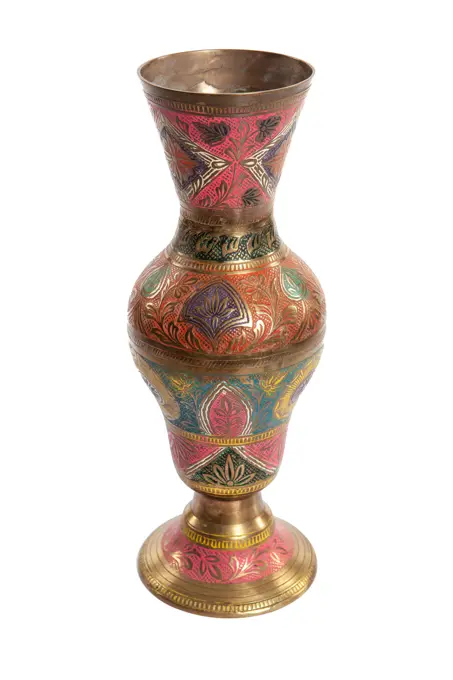
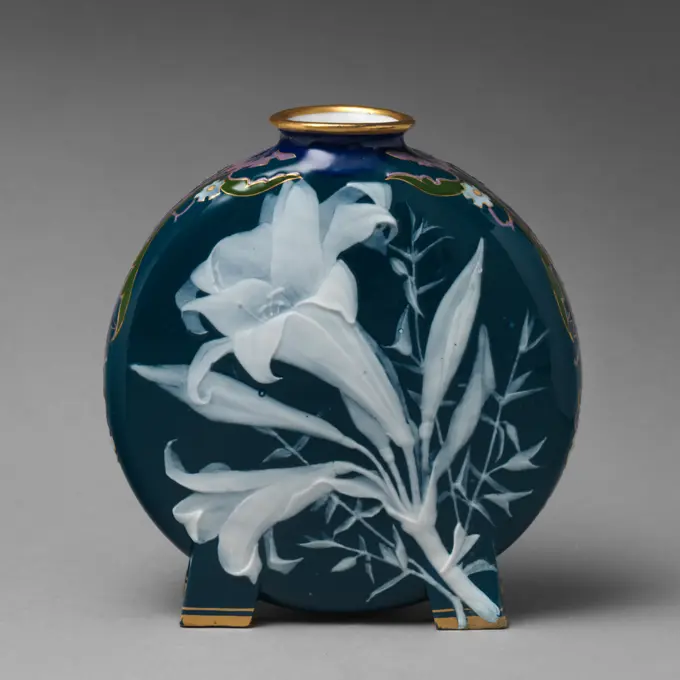
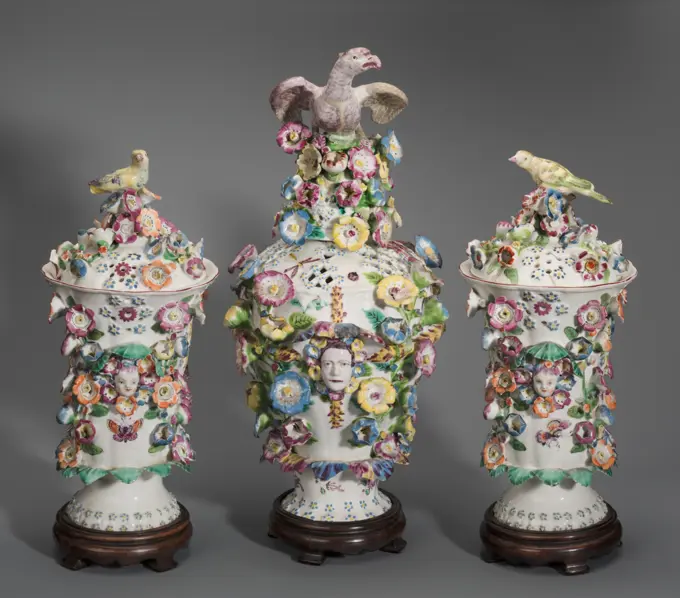
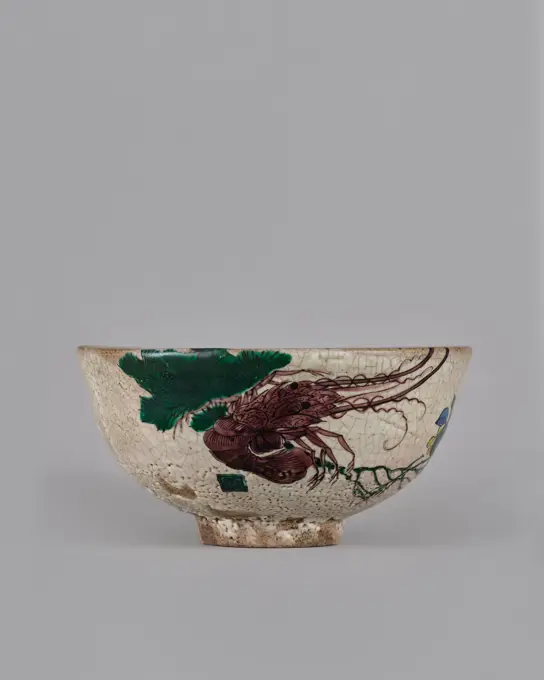
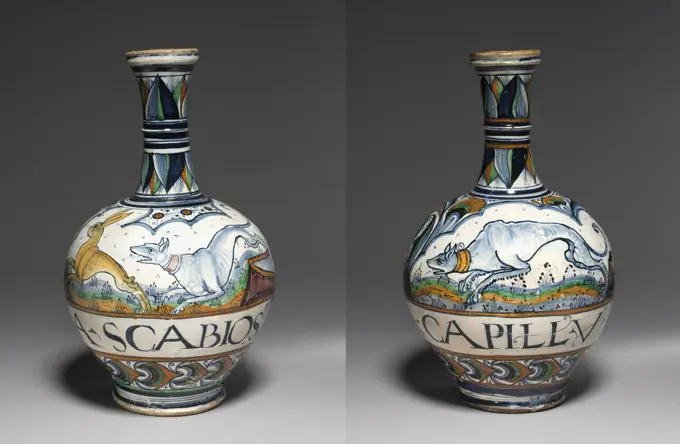
Decorative Porcelain Vases

Elegant Chinese porcelain vases featuring intricate floral and wildlife designs, showcasing vibrant colors and historical artistry.
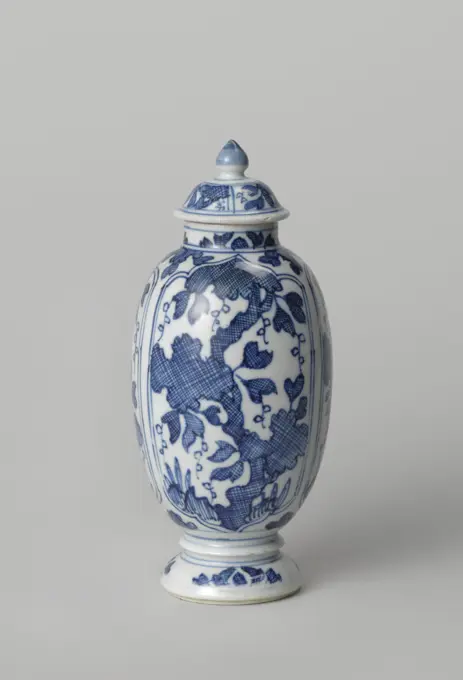
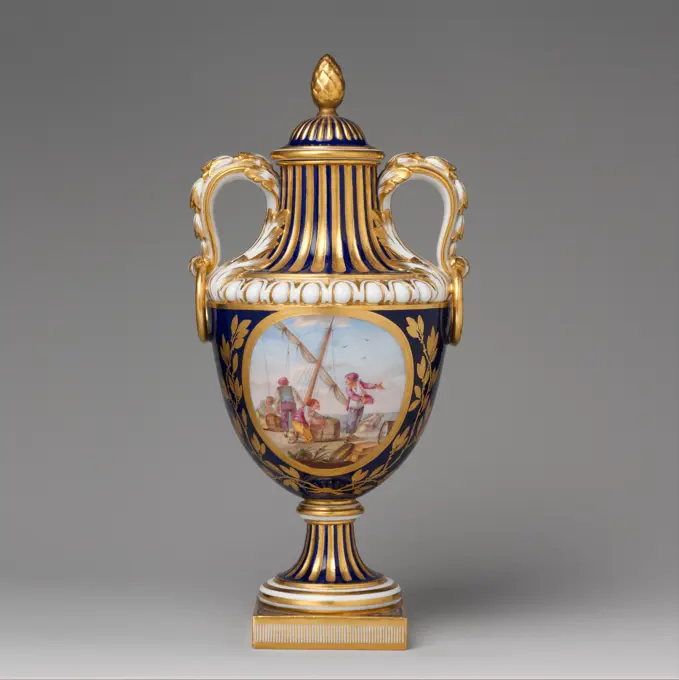
Covered jar with hatched plants in petal-shaped panels, anonymous, c. 1680 - c. 1720 Porcelain lid jar with a stretched, spherical body and a high, spreading base, painted in underlaze blue. On the wall elongated, petal comparts with flowering plants with shadowing in it; Half a flower between the courses along the edge and the foot. The edge and the foot with a stylized flower three times. The lid with the same decoration. Blue White. China porcelain. glaze. cobalt (mineral) painting / vitrification Porcelain lid jar with a stretched, spherical body and a high, spreading base, painted in underlaze blue. On the wall elongated, petal comparts with flowering plants with shadowing in it; Half a flower between the courses along the edge and the foot. The edge and the foot with a stylized flower three times. The lid with the same decoration. Blue White. China porcelain. glaze. cobalt (mineral) painting / vitrification
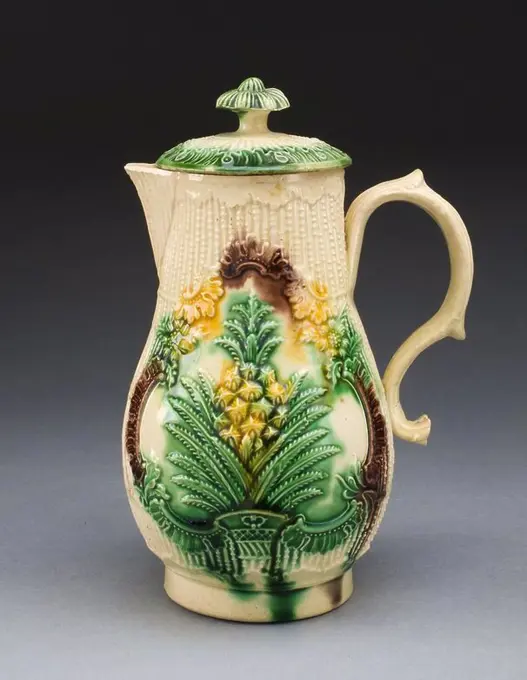
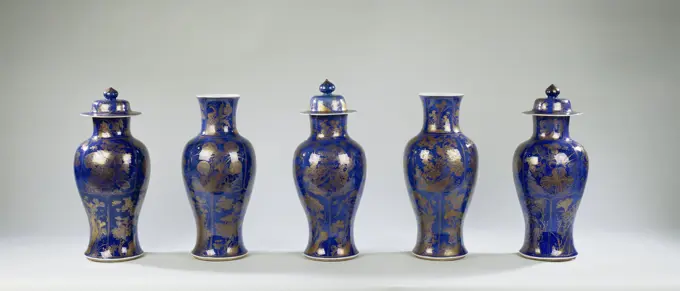
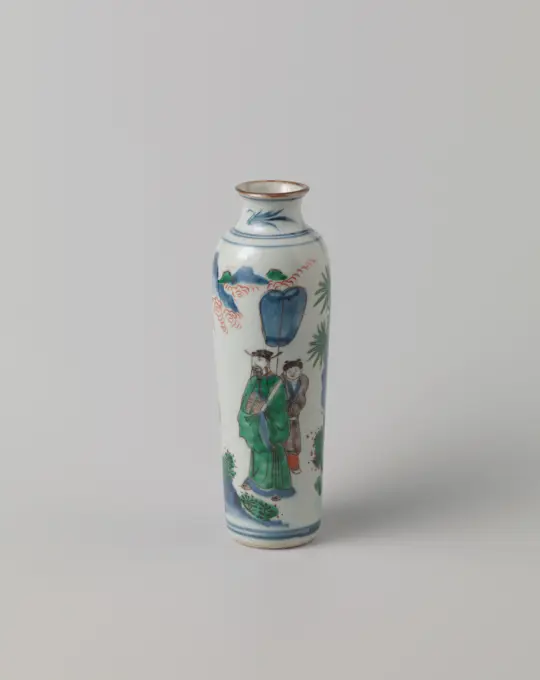
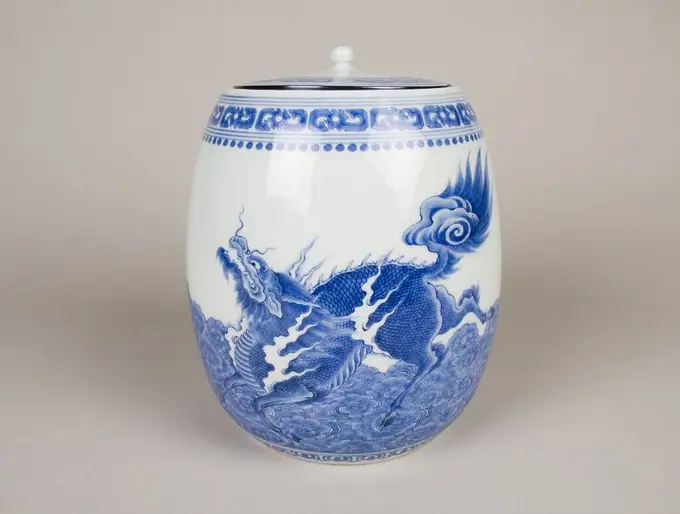
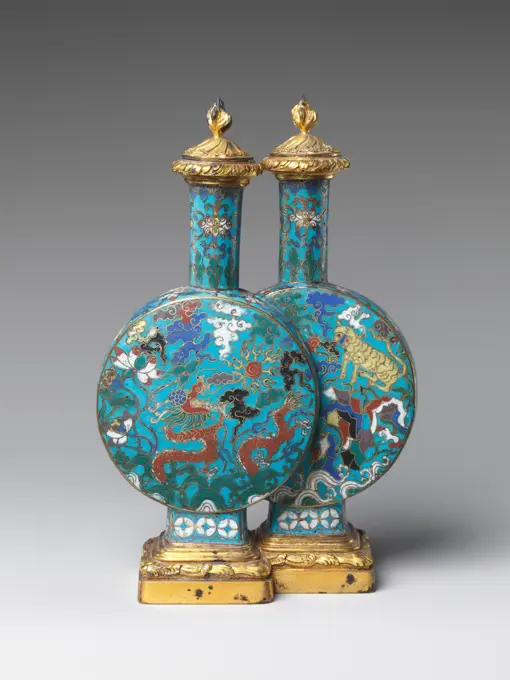
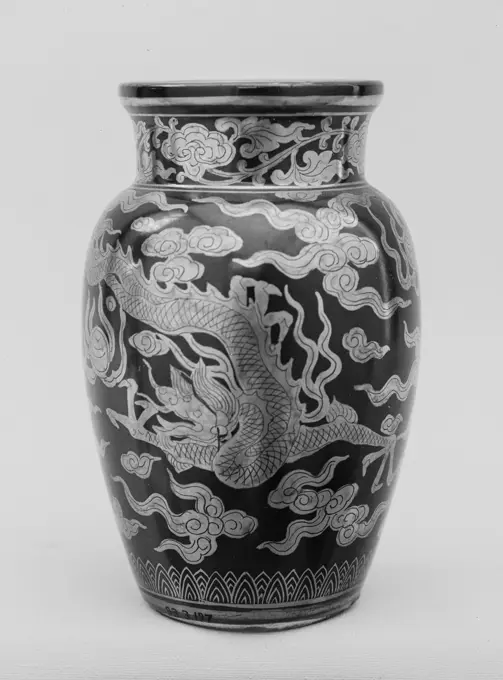
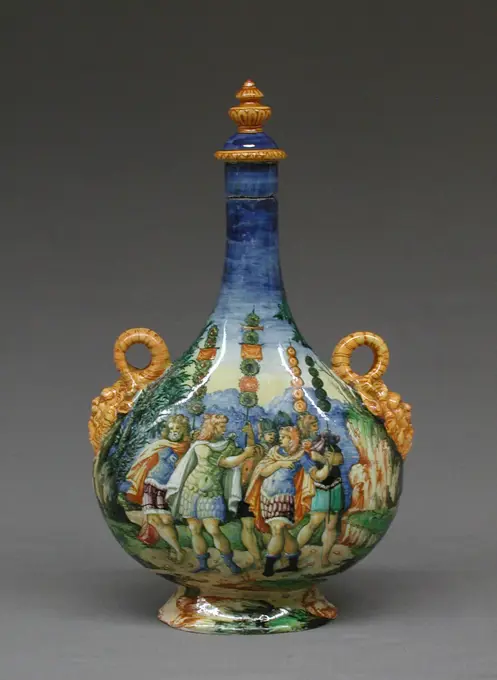
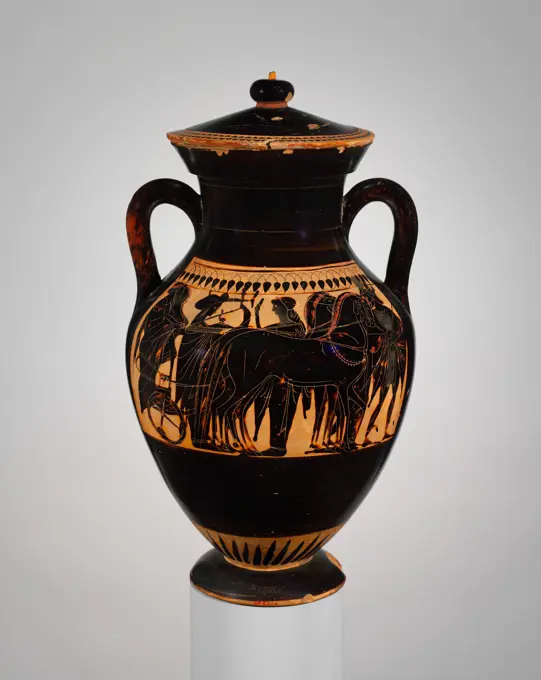
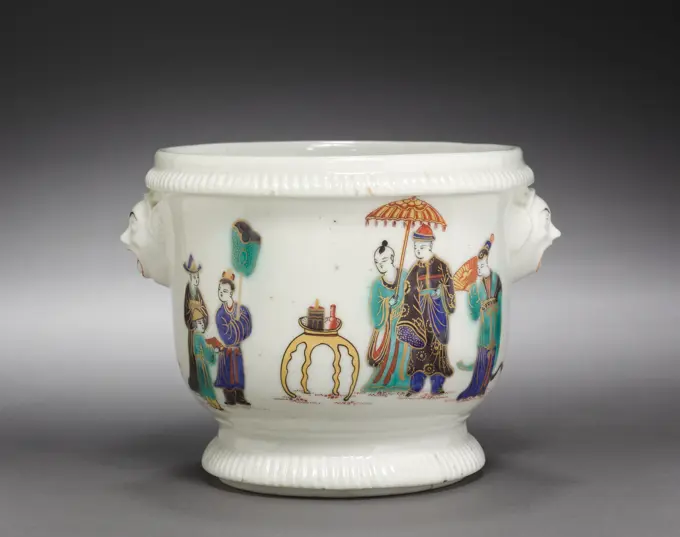
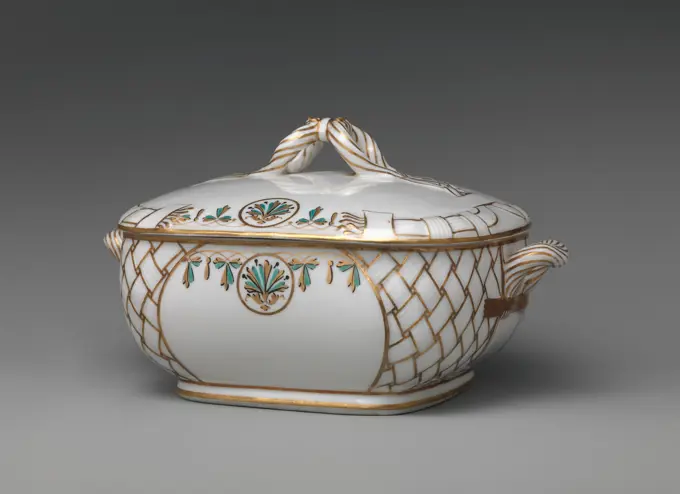
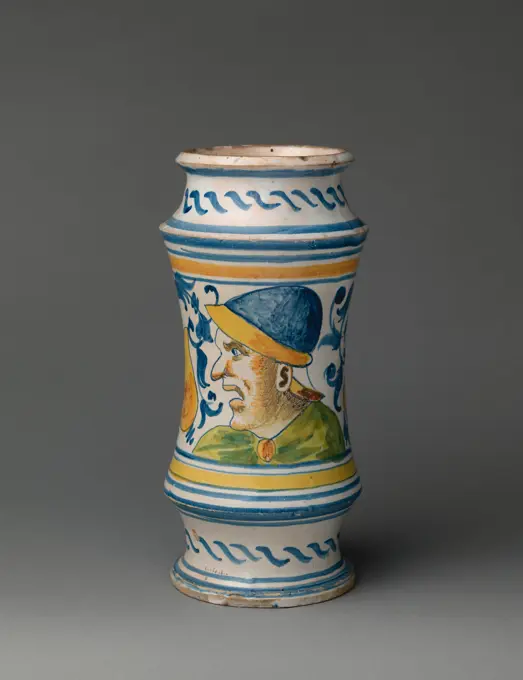
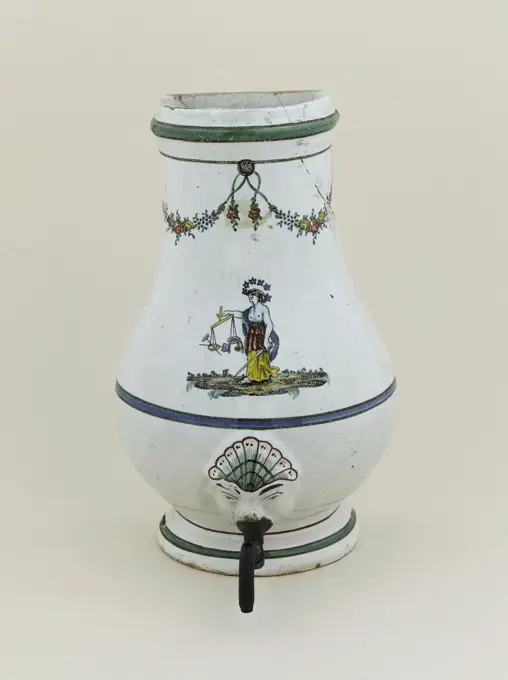
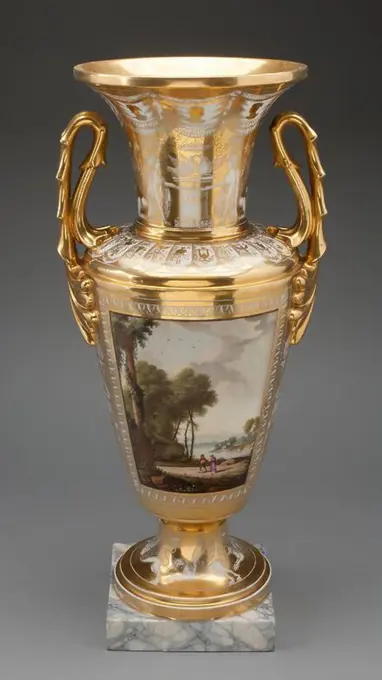
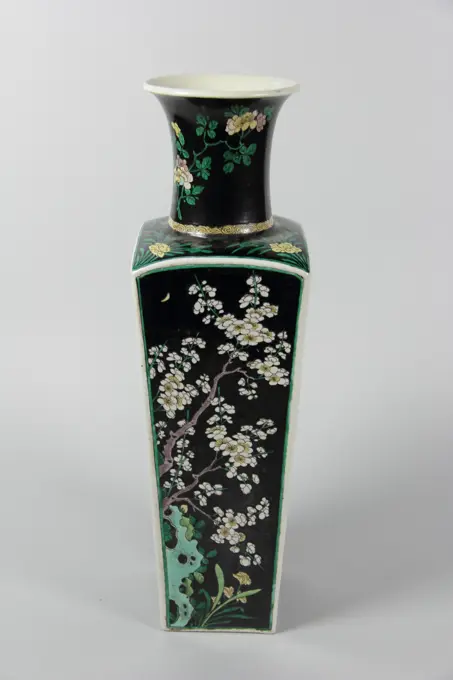
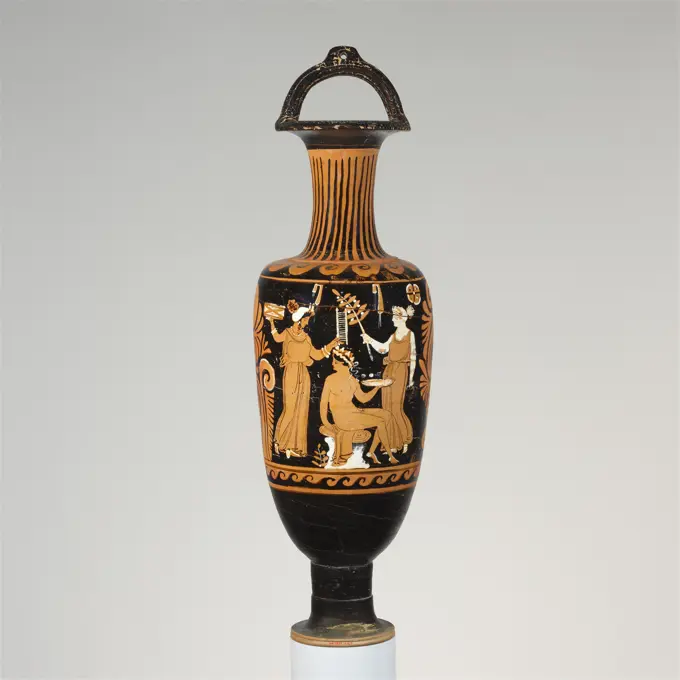
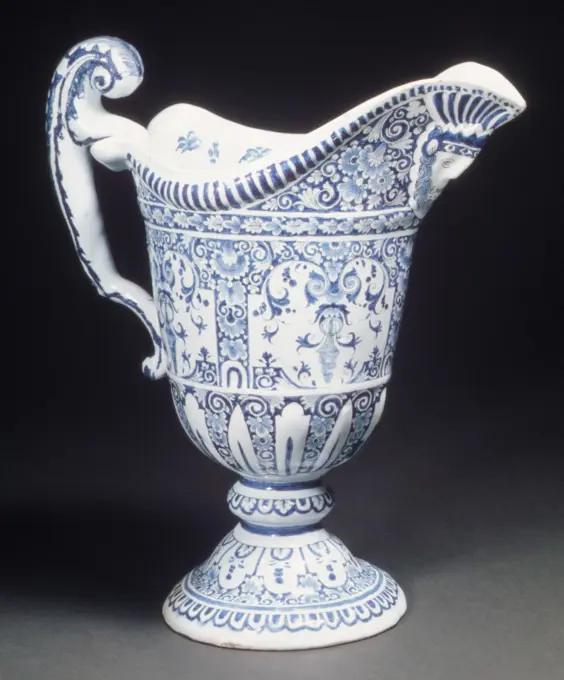
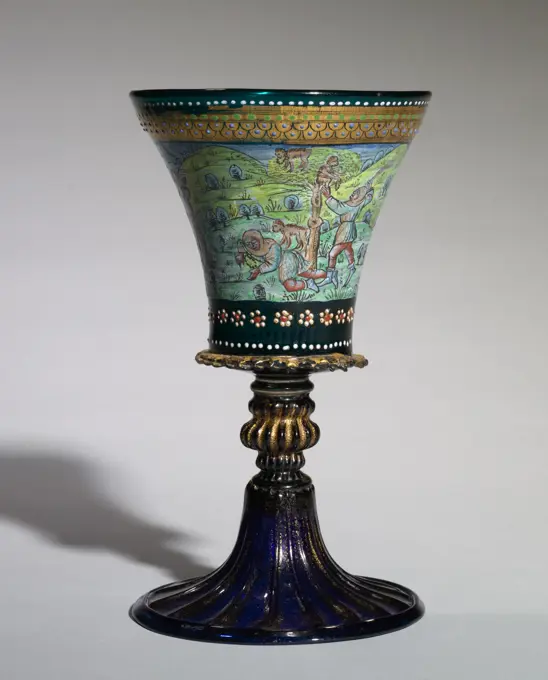
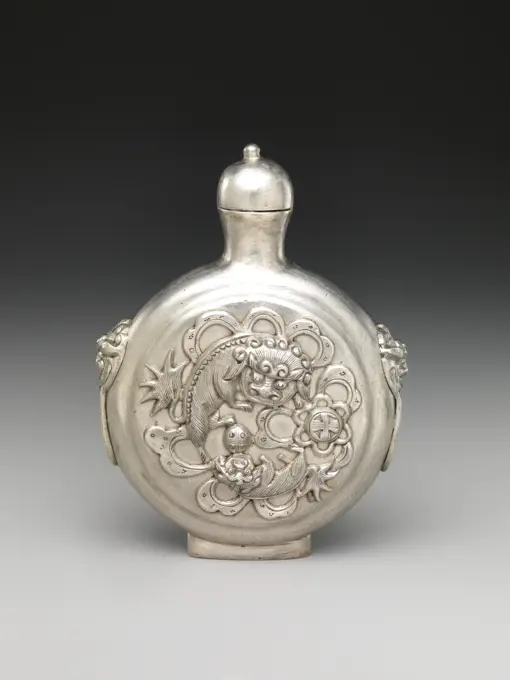
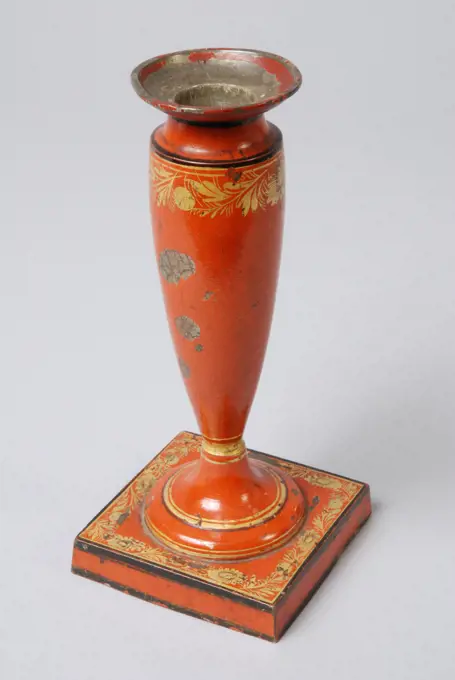
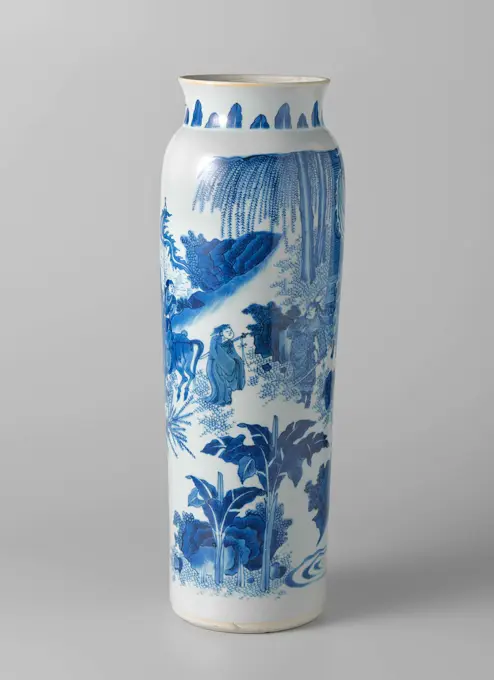
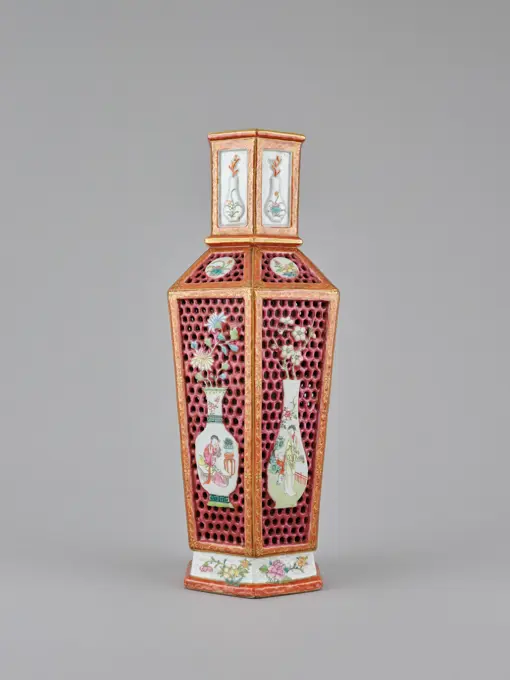
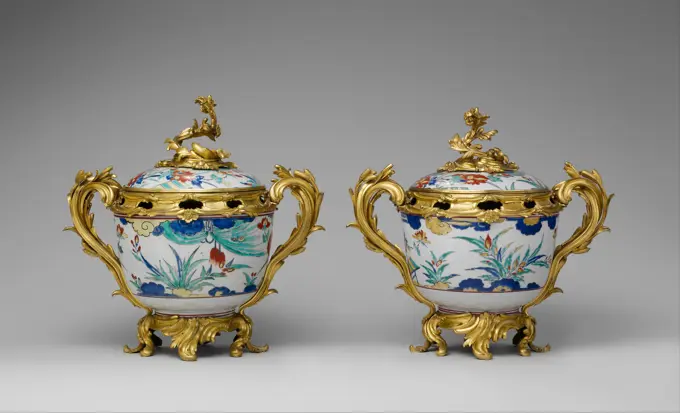
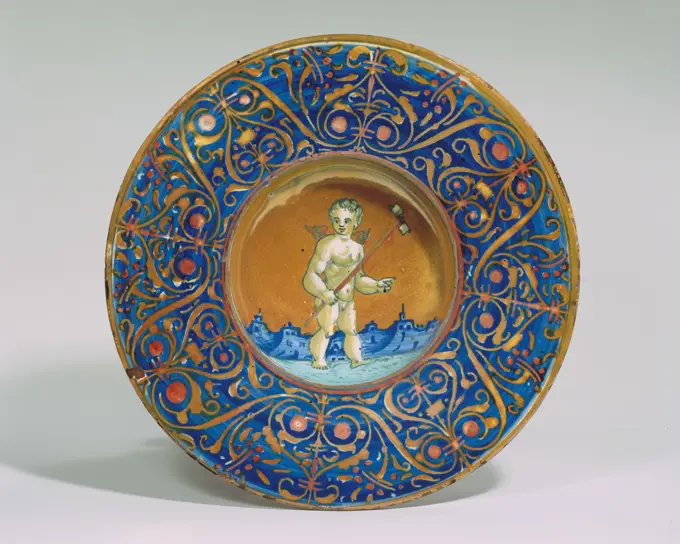
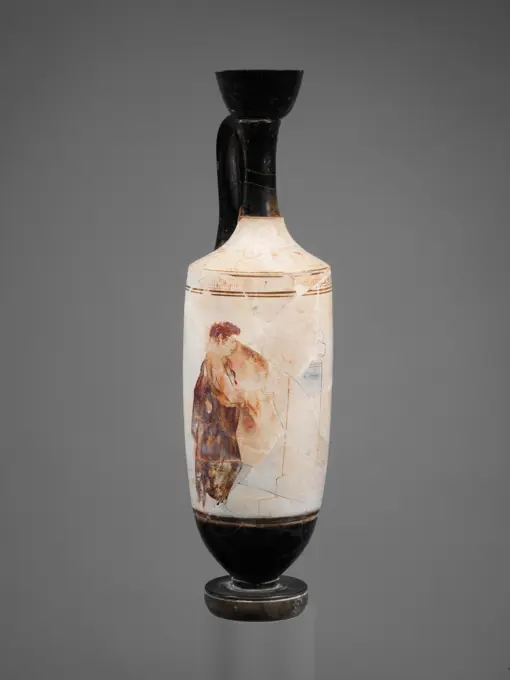
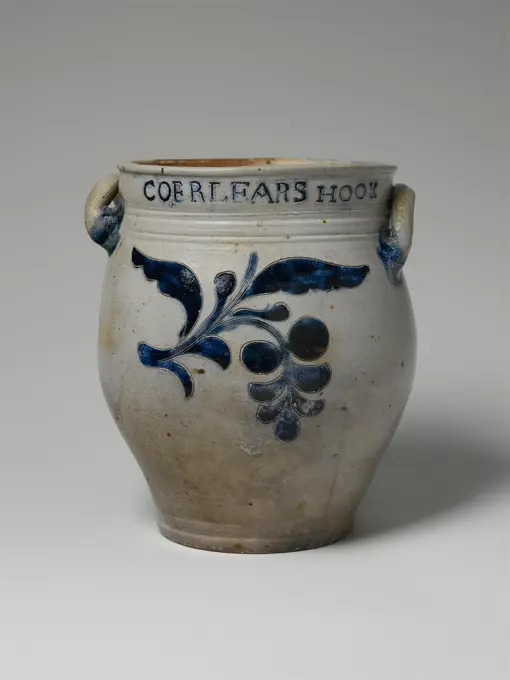
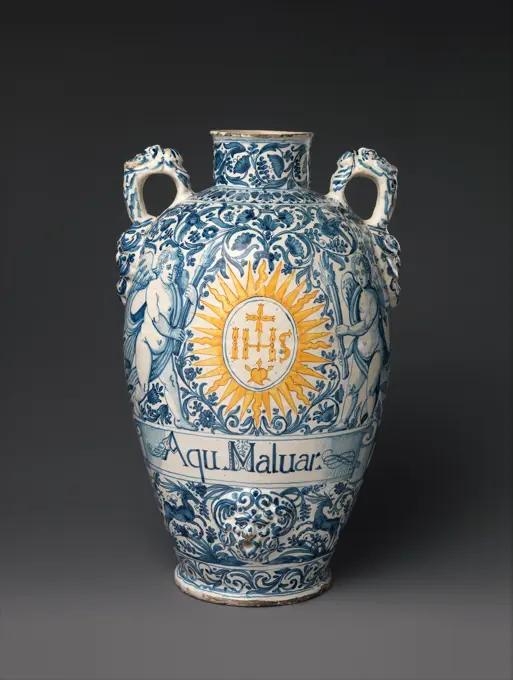
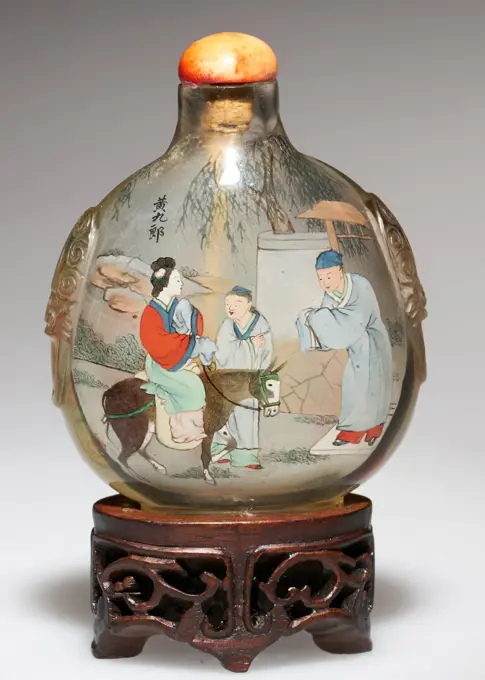
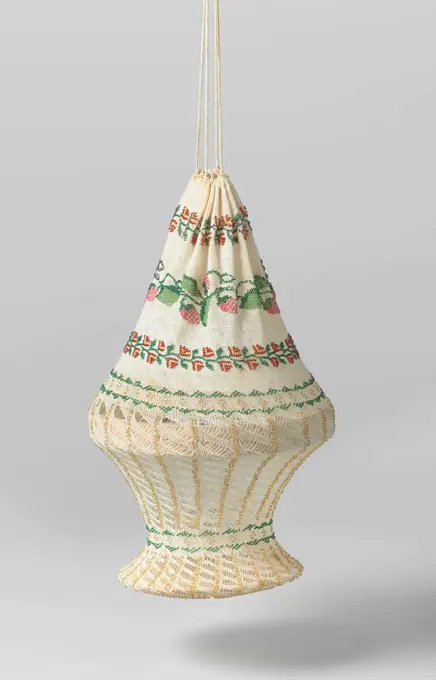
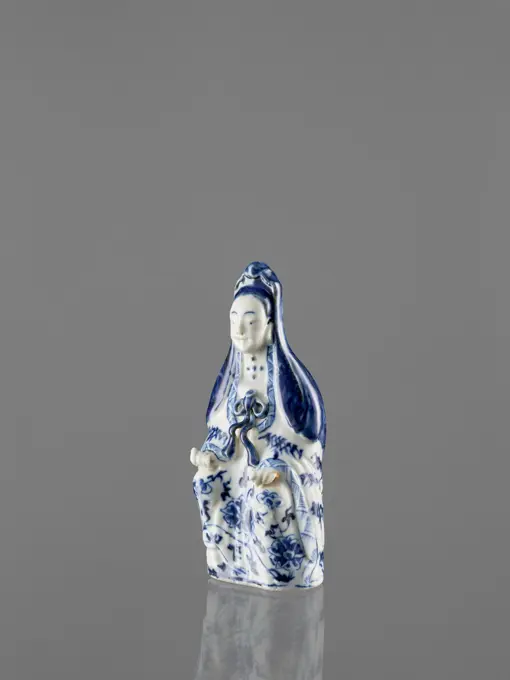
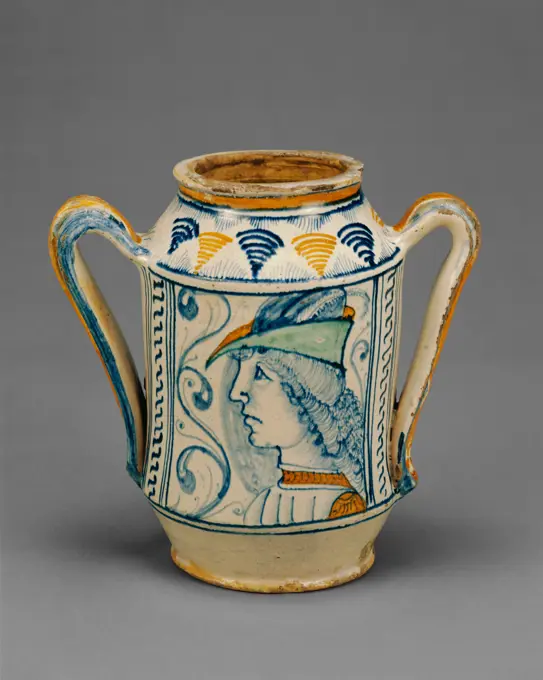
Jar with the Profile of a Young Man. UnknownMilk Jug. Staffordshire, England. Date: 1760-1769. Dimensions: 16.5 x 11.4 x 8.9 cm (6 1/2 x 4 1/2 x 3 1/2 in.). Lead-glazed earthenware (creamware). Origin: Staffordshire. Museum: The Chicago Art Institute, Chicago, USA.Vase with arrow herb, water lilies and butterflies, company Wed. N.S.A. Brantjes and Co., 1895 - 1904 Vase with two ears, flattened spherical with cylindrical neck with lobed outstanding mouth edge. Polychrome painting of arrow herb, water lilies and butterflies on blue (water) and light purple stock. Shoulders and ears green, ears with yellow end. Neck in yellow with black dots. Inside vase light purple. Marked, above each other: Klomp, Monogram NB, Faience de Purmerende, Hollande; left 1011; Recht Dec: C, monogram, and d, everything in brown. Intempt: R. Purmerend earthenware Vase with two ears, flattened spherical with cylindrical neck with lobed outstanding mouth edge. Polychrome painting of arrow herb, water lilies and butterflies on blue (water) and light purple stock. Shoulders and ears green, ears with yellow end. Neck in yellow with black dots. Inside vase light purple. Marked, above each other: Klomp, Monogram NB, Faience de Purmerende, Hollande; left 1011; Recht Dec: C, mono. Square bottle of porcelain with a short, narrow, spreading neck, painted on the glaze in blue, red, green, black and gold. On two sides a peony and prunus at a rock with a hay-bird; On the other two sides a blooming plant and two birds. On the shoulder flower branches and a chrysanthemy. The neck with two flower branches. Kakiemon style.Teapot. Culture: American. Designer: Designed by Karl L. H. Müller (ca. 1820-1887). Dimensions: 7 x 6 in. (17.8 x 15.2 cm). Manufacturer: Manufactured by Union Porcelain Works (1863-ca. 1922). Date: ca. 1876.The figural finials--a Chinese man on the teapot and an African sugarcane picker on the sugar bowl--allude to the presumed contents of the vessels in this eccentric Rococo Revival tea set (69.194.7-.14). Museum: Metropolitan Museum of Art, New York, USA.Baluster vase with powder blue and flowering plants and animals in panel decoration, anonymous, c. 1700 - c. 1724 Balus -shaped vase with long, spreading neck, painted in underlaze blue and gold on the glaze. The vase is covered with bleu poudré (powder blue) and decorated with three rows of compartments: the bottom row has a different flowering plant or tree in each section with a rock with insects; The second row is also with four different flowering plants (Lotus, chrysanthemum, prunus, peony) with birds and/or butterflies. Around the neck four compartments with different flower areas and butterflies; A double circle on the bottom. Bleu Poudré with gold. China porcelain. glaze. gold (metal) painting / gilding / vitrification Balus -shaped vase with long, spreading neck, painted in underlaze blue and gold on the glaze. The vase is covered with bleu poudré (powder blue) and decorated with three rows of compartments: the bottom row has a different flowering plant or tree in each sectioVase (rolwagen) with a scholar-official and his servants in a landscape, anonymous, c. 1645 - c. 1660 Small cylindrical vase (roller wagon) of porcelain with a spreading neck, painted in underly glaze blue and on the glaze red, green, yellow, eggplant and black. On the wall a dignitaries in a landscape with plants, a banana plant, rocks and mountains. Behind him a servant with a fan; A second operator wears a packaged object (book). A plant twice on the neck. The underside is unglazed. Transition porcelain with email colors. China porcelain. glaze. cobalt (mineral) painting / vitrification Small cylindrical vase (roller wagon) of porcelain with a spreading neck, painted in underly glaze blue and on the glaze red, green, yellow, eggplant and black. On the wall a dignitaries in a landscape with plants, a banana plant, rocks and mountains. Behind him a servant with a fan; A second operator wears a packaged object (book). A plant twice on the neck. The underside is unglazed. Transition porPILA BAUTISMAL O SOPERA VIDRIADA Y DECORADA EN AZUL - AL MODO MORISCO. Location: ALFARERIA RUBIO. SPAIN.Vase with Dutchman and Servant. Japan, 19th century. Ceramics. Hirado Mikawachi ware; porcelain with underglaze blueGlass gold-band mosaic scyphus (drinking cup) late 1st century B.C.-early 1st century A.D. Roman Translucent cobalt blue, deep honey brown, turquoise green, opaque white, and colorless enclosing gold leaf.Applied vertical coil rim, with slightly rounded top edge; convex curving side tapering downward; applied splayed base ring with flat bottom edge; slightly convex bottom; two ring handles, applied in carved back rectangular pads on upper side and below rim, with flat thumb-rests above rings and projecting wings above and below.Gold-band mosaic pattern formed from polygonal sections of serpentine layered canes in combinations of blue with white central line, brown with white central line, colorless with gold leaf, and green; the length is wound three times round body, being fused together across bottom; a blue network cane wound spirally with a white thread is attached as a rim.Reassembled from over 250 fragments, with many remaining holes; pitting, weathering, and patches of iridescen. In the mid-17th century the Dutch East India Company took great pains to buy vases painted in clear blue tints with scenes full of trees and rocks alternating with Chinese figures. This ware is known as Transitional porcelain’, since it was made in the period of transition from the Ming dynasty (1368-1644) to the Qing dynasty (1644-1911).Covered Water Jar with Kirin (Mythical Chimera). Culture: Japan. Dimensions: H. 7 1/2 in. (19.1 cm); Diam. 6 1/2 in. (16.5 cm). Date: first half of the 18th century. Museum: Metropolitan Museum of Art, New York, USA.Crown Milano Covered Ewer ca. 1892-93 Mount Washington Glass Company The second half of the nineteenth century witnessed a proliferation of highly ornamental decorative arts in nearly every medium. Glassmakers during this period were experimenting with new techniques, introducing bold color effects, and embracing exotic influences. Many new lines of art glass imitated other materials. The Mount Washington Glass Company was one of the leading producers of art glass, with such exotic lines as "Rose Amber," "Burmese," and "Peach Blow." They developed their Crown Milano line in the early 1890s, a line largely inspired by Persian or Moorish design, a manifestation of the Aesthetic Movement in the United States. This ewer is one of the most elaborate and largest examples of the firms Crown Milano line. It features that embracing of a multiplicity of styles--Asian (in the roundels and meandering stylized chrysanthemum flowers and stems), Islamic (in the shape of the ewer, cover, and handle),Double Bottle (One of a Pair) China. Double Bottle (One of a Pair) 40711Vase 1820 Eiraku Hozen. Vase 45917Vase. Culture: China. Dimensions: H. 7 7/8 in. (20 cm); Diam. 3 1/2 in. (8.9 cm). Museum: Metropolitan Museum of Art, New York, USA.BUIRE. "Blue and white" porcelain, Ming. Provenance: China. Paris, Cernuschi museum. 78838-17 Asian art, Chinese art, art of living, bun, fine ceramic, jug, ching dynasty, Qing dynasty, tsing dynasty, fine porcelain, container, dishesVase 1877-82 Crown Derby The history of the Derby porcelain manufactory can generally be divided into two periods. The old Derby porcelain was produced from 1750 to 1848, and was foremost distinguished by the ownership of William Duesbury I and II. When the original factory closed in 1848, a number of former workers established a separate smaller factory at King Street, Derby, using Crown Derbys original molds and patterns and oftentimes incorporating the factory marks on its wares. Around 1876, a separate company established a factory at Osmaston Road under the name Derby Crown Porcelain Company (and eventually bought the King Street factory in 1935), although the firm did not being producing commercial pieces until two years later. In 1890, the factory was granted the privilege of using the title "Royal Crown Derby Porcelain Company." Although the new Crown Derby continued to produce the firms old eighteenth-century Japan patterns, it became known for making vessels lavishly decoraTwo tulip vases with the Spichtig (Spindly) pattern, N.V. Plateelbakkerij Ram, 1925 Tulip vase of earthenware, chalice -shaped on round base, polychrome painted in the colors yellow -brown, black and brown with the decor "spindly". The Binnenswondrand has a wide yellow piping between black lines. Marked with factory stamp in circular shape, including "Spichtig", 7/D, painting brand of Jo Blom (all in black); Ingrift 4. Arnhem earthenware Tulip vase of earthenware, chalice -shaped on round base, polychrome painted in the colors yellow -brown, black and brown with the decor "spindly". The Binnenswondrand has a wide yellow piping between black lines. Marked with factory stamp in circular shape, including "Spichtig", 7/D, painting brand of Jo Blom (all in black); Ingrift 4. Arnhem earthenwareTrolley, blue painted on white tinglaze. Trolley, blue painted with in Chinese trant with birds, flowers and and branches. At the top and top a decorative border, also in Chinese trantVase late 17th-early 18th century China. Vase 49346Jug with foliate ornaments and medallions, anonymous, c. 1650 - c. 1724 Can (Fopkan) of stoneware on high foot with a spherical belly and openwork neck with just below the edge a short spout. The C-shaped ear is attached to the neck and shoulder. At the bottom of the jug there is a hole on the inside, so that the liquid can flow out through the spout through a tube in the wall, ear and edge. Partly covered with cobalt blue. On the abdomen, leaf motifs and small printed and imposed, diamond -shaped medallions with flowers in relief against a blue background. On the neck in relief pillars and windows. The spout is caught in a pewter frame. Westerwald. Westerwald Stoneware. Glaze. Cobalt (Mineral). frame: tin (metal) vitrification Can (Fopkan) of stoneware on high foot with a spherical belly and openwork neck with just below the edge a short spout. The C-shaped ear is attached to the neck and shoulder. At the bottom of the jug there is a hole on the inside, so that the liquid can flow outVase with Flowers from Batenin Factory in St. Petersburg, Antique Decorative Arts, Russia, Moscow, State Historical Museum. Tea bus with faience screw lid with a chinoiserie decoration and with the coat of arms of the Austrian family ZinendorfVase 1883-87 Eureka Pottery Co.. Vase 20739Box with dragons and pierced cover, anonymous, c. 1675 - c. 1699 Large box of thick porcelain, with a shallow body on a foot ring, spherical lid with four round, open worked medallions and flat button, painted in underly glaze Bleu Poudré (powder blue) and red. Four -saved costly objects in underly glaze red on the body of the box of the box; On the lid two -saved dragons that chase a flaming gem in underlaze red. The white button is painted with a flower. The inside is divided into six compartments around a circular center. Burst into the lid; Twice copper batter on a circular center. On the bottom the six-character brand of Keizer Chenghua in a double circle. Underglaze blue with copper red. China porcelain. glaze. cobalt (mineral). copper (metal) painting / vitrification Large box of thick porcelain, with a shallow body on a foot ring, spherical lid with four round, open worked medallions and flat button, painted in underly glaze Bleu Poudré (powder blue) and red. Four -saved costlyPilgrim bottle ca. 1550 Workshop of Orazio Fontana Italian. Pilgrim bottle. Italian, Urbino. ca. 1550. Maiolica (tin-glazed earthenware). Ceramics-PotteryIncense Burner, late 1800s. Japan, Meiji period (1868-1912). Porcelain with gilt bronze cover; diameter of mouth: 14.6 cm (5 3/4 in.); overall: 12.4 cm (4 7/8 in.). This incense burner emulates Chinese porcelain in its glaze and form. A number of prominent Meiji-period ceramicists explored classical Chinese forms and glazes even as they also produced stoneware with Japanese-style glazes.Teapot. Culture: German, Meissen with German, Augsburg decoration. Dimensions: Height: 6 1/8 in. (15.6 cm). Factory: Meissen Manufactory (German, 1710-present). Date: ca. 1725. Museum: Metropolitan Museum of Art, New York, USA.Snuff Bottle 19th century China. Snuff Bottle 41249Terracotta amphora (jar) with lid last quarter of 6th century B.C. Greek, Attic Obverse, chariot with godsReverse, warrior armingIt is rare for a lid to be preserved with the vase for which it was made. This is such a case, illustrating the original appearance of the amphora.. Terracotta amphora (jar) with lid 246721Bottle Cooler, c. 1725- 1735. Saint Cloud Porcelain Factory (French). Soft-paste porcelain with enamel decoration; diameter: 11 x 11.5 cm (4 5/16 x 4 1/2 in.).Tankard dated 1636 Portuguese, Lisbon. Tankard 205824. Meissener Porzellan ManufakturMeissen, c. 1725painted decoration: Seuter family workshop, Augsburg, c. 1730-1735hard-paste porcelainCovered Vegetable Dish 1885 Union Porcelain Works Union Porcelain Works was one of the most important and inventive American porcelain manufacturers in the second-half of the nineteenth century. In addition to their imaginative works designed by the German-born artistic director, Karl H. L. Müller, the firms mainstay was the production of heavy porcelain hotel dinnerware. This extensive service was made by Thomas Carll Smith, head of the Union Porcelain Works, as a gift to his daughter, Pastora Forest Smith Chace. The neoclassical decoration of the gilt bellflower and basket motif is complimented by turquoise enamel. Unlike the firms more eccentric and lavish designs created for their display at the Philadelphia Centennial Exposition in 1876, the pottery favored a more restrained classical style for their dinner services. This service descended in the Chace family.. Covered Vegetable Dish 2575Small vase. Tomiki, Shôbei (act. c. late 19th-early 20th c.), craftsmanLidded vase.The scenes on this vase are derived from decorations on Japanese porcelain, so-called Kakiemon ware.Pharmacy jar (albarello) ca. 1545 Workshop of Masséot Abaquesne Featuring tulips and a grotesque head in profile, this jar was designed to store herbs, powders, and other dry medicines that would have been protected from spoilage by a piece of parchment secured around the opening. The container was probably part of an order for 4,152 vessels placed by an apothecary in 1545 with Masséot Abaquesne, who ran a large workshop with his son, Laurent.. Pharmacy jar (albarello). French, Rouen. ca. 1545. Tin-glazed earthenware. Ceramics-PotteryAnonymous. Fountain basin at the allegory of justice. Earthenware. 1790. Paris, Carnavalet museum. 72437-49 Allegorie, balance, basin, painted decor, enpee, revolutionary faience, female figure, fountain, justice, object, revolution 1789, French revolution, 18th 18th 18th 18th centuryVase. Around 1700 porcelain vases of this size were extremely rare and prestigious. This vase also comes from the collection of Elector Augustus the Strong in Dresden. A number of duplicates from that collection were sold in the early 20th century, and this example found its way to the Rijksmuseum. Several identical vases can still be found in the museum in Dresden (the Staatliche Kunstsammlungen).Ewer 19th century Josiah Wedgwood British. Ewer 199384Coal container 18th century School of Ogata Kōrin Japanese. Coal container 58328Egg glass; Koenigliche Porzellan Manufaktur (KPM; Berlin; 1763-1918); 1780-1800 (1832-00-00-1850-00-00);GUI censer; Li, daguan (fl. End of the 16th-Plach century of the 17th century); XVIII/19th century (1601-00-00-1700-00-00);Vase. Neppel Porcelain Factory; French, 1800-1818. Date: 1805-1815. Dimensions: 47.6 x 21 x 16.5 cm (18 3/4 x 8 1/4 x 6 1/2 in.). Hard-paste porcelain with polychrome enamels and gilding. Origin: Paris. Museum: The Chicago Art Institute, Chicago, USA.Square vase with flowers of four seasons late 17th-early 18th century China. Square vase with flowers of four seasons. China. late 17th-early 18th century. Porcelain painted in polychrome enamels over black ground (Jingdezhen ware, famille noire). Qing dynasty (1644-1911), Kangxi period (1662-1722). CeramicsVase with cover (vase de coté de Paris) (one of a pair) ca. 1775 Sèvres Manufactory French. Vase with cover (vase de coté de Paris) (one of a pair) 202181Terracotta bail-amphora (jar) ca. 330-320 B.C. Attributed to the APZ Painter Obverse, youth seated between two womenReverse, two youthsA: Two women ofeering gifts to a seated youth. The woman on the left holds a box and offers him a small ladder-like object which some scholars have identified as a xylophone. The other woman holds out a branch. B: two youths.. Terracotta bail-amphora (jar). Greek, South Italian, Campanian. ca. 330-320 B.C.. Terracotta; red-figure. Hellenistic. VasesFlower vase with stand (vase hollandais nouveau) (one of a pair) 1761 Sèvres Manufactory French. Flower vase with stand (vase hollandais nouveau) (one of a pair). French, Sèvres. 1761. Soft-paste porcelain. Ceramics-PorcelainEwer ca. 1700-1720 French, Rouen Faience, or tin-glazed and enameled earthenware, first emerged in France during the sixteenth century, reaching widespread usage among elite patrons during the seventeenth and early eighteenth centuries, prior to the establishment of soft-paste porcelain factories. Although characterized as more provincial in style than porcelain, French faience was used at the court of Louis XIV as part of elaborate meals and displays, with large-scale vessels incorporated into the Baroque garden designs of Versailles. Earlier examples of French faience attest to the strong influence of maiolica artists from Italy. Later works demonstrate the ways in which cities such as Nevers, Rouen, Lyon, Moustiers, and Marseille developed innovative vessel shapes and decorative motifs prized among collectors throughout Europe. While faience can be created from a wide mixture of clays, it is foremost distinguished by the milky opaque white color achieved by the addition of tin oxideTeapot. Culture: British (American market). Dimensions: H. 7 1/4 in. (18.4 cm). Maker: John Rogers & Son (active ca. 1815-42). Date: ca. 1823-ca. 1842. Museum: Metropolitan Museum of Art, New York, USA.Czarka;  19th century (1801-00-00-1900-00-00);Bottle, anonymous, c. 1680 - c. 1700 Square bottle of porcelain with rounded shoulders, painted in underlaze blue. On the walls, elongated cartouches with a flowering plant each (Prunus, Lotus, Chrysanthemum) on a rock or in a pond with a flying bird; To the cartouches a band with servetwork interrupted by a flower branch in a cartouche. The shoulder with a flower branch on each corner; Around the neck a band with Ruyi motif. The lid with a river landscape and two lottery branches. Lid is not matching. A crack in the lid; A few chips in the neck of the bottle. Blue White. China porcelain. glaze. cobalt (mineral) painting / vitrification Square bottle of porcelain with rounded shoulders, painted in underlaze blue. On the walls, elongated cartouches with a flowering plant each (Prunus, Lotus, Chrysanthemum) on a rock or in a pond with a flying bird; To the cartouches a band with servetwork interrupted by a flower branch in a cartouche. The shoulder with a flower branch on each corner; ArMortar. Sri Lanka or Indonesia (), 19th century. Tools and Equipment; mortars. IvoryVase - a dish for triants;  XVII/18th century (1690-00-00-1710-00-00);Two beakers with the Hol (Hollow) pattern, N.V. Plateelbakkerij Ram, 1923 Vase, cup -shaped, with decor "hollow" in black and yellow. Marked with: factory stamp in circular shape, 278/ap ./ "Hol" and B. (all in black); Ingrift: 39. Arnhem earthenware Vase, cup -shaped, with decor "hollow" in black and yellow. Marked with: factory stamp in circular shape, 278/ap ./ "Hol" and B. (all in black); Ingrift: 39. Arnhem earthenwareVase with lid. unknown, craftsmanPunch goblet, 1867, Cristalleries de Baccarat, Baccarat, France, est. 1764, 4 3/4 x 2 7/16 in. (12.07 x 6.19 cm), Cased lead glass, France, 19th centuryThe Peddler Goblet, 1800s. Italy, Venice (Murano), 19th century. Green and blue glass, enameled and gilded; diameter of mouth: 21.5 x 11.4 cm (8 7/16 x 4 1/2 in.); diameter of base: 12 cm (4 3/4 in.). In the decoration of this goblet, the peddler, fast asleep under a tree, is robbed by monkeys. The same subject appears on the famous "Monkey Cup" in The Cloisters of The Metropolitan Museum of Art. It was obviously appealing because peddlers were traditionally believed to have many of the same vices as monkeys. Another part of the decoration includes a scene of Venus emerging from the sea, and the Three Graces.Famille Rose Porcelain Covered Vases & Green Glazed Figures of Falcons Chinese Art Cover with rocks, flowering plants and a finial moulded in the shape of a tea-drinking company, anonymous, c. 1700 - c. 1799 Porcelain lid, painted in underly glaze blue and on the glaze red, black and gold. On the lid flowering peony and chrysanthemum plants in rocks. The lid button consists of a modeled, tea drinking company. Imari. Japan porcelain. glaze. cobalt (mineral). gold (metal) painting / gilding / vitrification Porcelain lid, painted in underly glaze blue and on the glaze red, black and gold. On the lid flowering peony and chrysanthemum plants in rocks. The lid button consists of a modeled, tea drinking company. Imari. Japan porcelain. glaze. cobalt (mineral). gold (metal) painting / gilding / vitrificationBasket of cherries. Culture: British, Chelsea. Dimensions: 3 3/4 × 1 3/4 in. (9.5 × 4.4 cm). Factory: Chelsea Porcelain Manufactory (British, 1745-1784, Red Anchor Period, ca. 1753-58). Date: ca. 1755. Museum: Metropolitan Museum of Art, New York, USA.Old Eastern Vase Old metal eastern vase on an isolated studio background Copyright: xZoonar.com/AndreyxSkatx 12308981Moon flask with lily or floral motif (one of a pair) 1872 Minton(s) Minton was the most important ceramics factory during the Victorian period and began exhibiting products at the first Great Exhibition of 1851. Founded in 1793 by Thomas Minton at Stoke-on-Trent, the firm initially specialized in transferware pottery before expanding under the ownership of Thomass son Herbert Minton, beginning in 1836. Under the ownership of Colin Minton Campbell, who succeeded his uncle in 1858, the factory became recognized as a specialist producer of Aesthetics movement porcelain, which were inspired by a rich array of exotic and eclectic decorative motifs.. Moon flask with lily or floral motif (one of a pair). British, Stoke-on-Trent, Staffordshire. 1872. Bone china decorated with pte-sur-pte, enamel, and gilding. Ceramics-PorcelainVase 1859-1860 Sèvres. Hard-paste porcelain, polychrome enamels, and gilding; gilt bronze mounts . Manufacture nationale de Sèvres (Manufacturer)Bow Porcelain Manufactory, Frill-Vase and Cover, c. 1760-65, soft-paste porcelain.Unknown, vase cover (common name). Ceramics, porcelain, moufle fire enamels. Petit Palais, Museum of Fine Arts of the City of Paris.. Meissen porcelain manufactory Meissen, c. 1725 Hard Paste PorcelainBowl (common name). Enameled covered sandstone. Cernuschi Museum, Asia Museum of Asia in the city of Paris.Snuff Bottle with Lions 19th century China. Snuff Bottle with Lions 41574Vase (rolwagen) with a scholar-official and his servant in a landscape, c. 1645 - c. 1660 Small cylindrical vase (roller wagon) of porcelain with a spreading neck, painted in underly glaze blue and on the glaze red, green, yellow, eggplant and black. On the wall a dignitaries and are operated in a landscape with plants, a banana plant, rocks and mountains. There is a crane next to the two men. A plant twice on the neck. The underside is unglazed. Transition porcelain with email colors. China porcelain. glaze. cobalt (mineral) painting / vitrification Small cylindrical vase (roller wagon) of porcelain with a spreading neck, painted in underly glaze blue and on the glaze red, green, yellow, eggplant and black. On the wall a dignitaries and are operated in a landscape with plants, a banana plant, rocks and mountains. There is a crane next to the two men. A plant twice on the neck. The underside is unglazed. Transition porcelain with email colors. China porcelain. glaze. cobalt (mineral) pGlass goblet 4th century A.D. or later Roman Translucent pale green.Rounded, uneven vertical rim, slightly everted and thickened; side of body straight but tapering downwards, then curving in sharply at base; globular, hollow stem; hollow conical foot, with tubular edge made by folding and small pontil mark at center.Intact; pinprick and few larger bubbles, and blowing striations; severe pitting on most of surfaces, slight brownish weathering, and faint iridescence.The painted decoration is not ancient.. Glass goblet 252565 Roman, Glass goblet, 4th century A.D. or later, Glass, H.: 3 3/8 in. (8.5 cm). The Metropolitan Museum of Art, New York. Funds from various donors, 1926 (26.82.2)Red and gold lacquered candlestick with baluster-shaped trunk and loose bobèche, candlestick candleholder lighting agent tin lacquer, molded lacquered, square hollow foot baluster shaped stem lighting lacquer illuminate evening nightStem of lotiform goblet with palm fronds in relief Third Intermediate Period or earlier ca. 1070-664 B.C. View more. Stem of lotiform goblet with palm fronds in relief. ca. 1070-664 B.C.. Faience. Third Intermediate Period or earlier. From Egypt. Dynasty 21-25Cilindrical vase with women and flower pots, anonymous, c. 1680 - c. 1720 Small, cylindrical vase of porcelain with a straight shoulder and short, spreading neck with a flat edge, painted in under -glaze blue. On the wall women (long lips) at flower pots on a pedestal. On the shoulder valuables (pearl, books). On the neck a band with dots. Marked on the bottom with 'fú'. Blue White. China porcelain. glaze. cobalt (mineral) painting / vitrification Small, cylindrical vase of porcelain with a straight shoulder and short, spreading neck with a flat edge, painted in under -glaze blue. On the wall women (long lips) at flower pots on a pedestal. On the shoulder valuables (pearl, books). On the neck a band with dots. Marked on the bottom with 'fú'. Blue White. China porcelain. glaze. cobalt (mineral) painting / vitrificationSleeve vase.Milk jug 1770-75 Ludwigsburg Porcelain Manufactory. Milk jug 199285Unknown (n. - d.), Covered vase (main title). Ceramics, porcelain, moufle fire enamels (small lights). Petit Palais, Museum of Fine Arts of the City of Paris.Pricket Candlestick 1700-1899 China. Porcelain painted in underglaze blue .Potpourri bowl with cover (one of a pair) porcelain late 17th century, mounts ca. 1745-50 Japanese with French mounts Japanese porcelains with French mounts from the mid-eighteenth century are less common than mounted Chinese porcelains of the same period. Porcelains from Japan were sometimes chosen for mounting in silver in the first part of the century, but it seems that within several decades Chinese porcelains embellished with gilt bronze became the preferred choice of European collectors. Not only are surviving examples of mounted Chinese porcelains more numerous than their Japanese counterparts but the former appear with greater frequency in eighteenthcentury auction catalogues and inventories.These covered porcelain bowls were produced at Arita, in southwestern Japan, in the late seventeenth century. Their decoration displaying highly stylized vegetation and rock work is in the Kakiemon style, named after a family of potters working in Arita whose wares were commonly painted in CERAMICA DE LA GRANJA CON LA IMAGEN DEL LORD WELLINGTON - SIGLO XIX. Location: PRIVATE COLLECTION. MADRID. SPAIN. DUQUE DE CIUDAD RODRIGO. Arthur Wellesley (1769-1852). ARTHUR COLLEY (1769-1852) DQ DE WELLINGTON. DUQUE DE WELLINGTON (1769-1852).18th century, Mughal Powder bowl from Kashmir, India.Dish (tondino) ca. 1530 Italian This small lustered bowl is typical of ceramics made in Gubbio in the 1520s and 1530s. The meaning of the boy playing with a pinwheel is uncertain, but it relates to imagery found on birth trays.. Dish (tondino). Italian , Gubbio, early 16th century. Italian, Gubbio. ca. 1530. Maiolica (tin-glazed earthenware). Ceramics-PotteryDish in Shape of Mount Fuji with Horses and Deer. Culture: China. Dimensions: H. 2 1/16 in. (5.3 cm); W. 9 7/8 in. (25.1 cm); L. 11 1/4 in. (28.5 cm). Date: ca. 1625.The shape of the dish, which alludes to the famed Mount Fuji, indicates that it was commissioned by a Japanese patron, most likely for a meal that accompanied the tea ceremony. The inscription, which discusses roaming with deer and horses in a landscape, is an allusion to a similar phrase in the writings of the Chinese philosopher Mencius (ca. 327-289 B.C.). Museum: Metropolitan Museum of Art, New York, USA.Pair of Lidded Vases; porcelain about 1650 - 1680; mounts about 1715 - 1720; Hard-paste porcelain; gilt bronze mounts;Jug on the leg; Manufaktura Majoliki in Nieborów (Nieborów; Wytwórnia; 1881-1899); 1881-1886 (1881-00-00-1886-00-00);Terracotta lekythos (oil flask) ca. 420 B.C. Attributed to the manner of the Bird Painter Youth and woman at a tomb.. Terracotta lekythos (oil flask). Greek, Attic. ca. 420 B.C.. Terracotta; white-ground. Classical. Vaseschinese antique vase on the white backgroundJar 1796-1819 Thomas W. Commeraw This vessel was made by Thomas W. Commeraw, a free African American potter working in Manhattan's Lower East Side during the late eighteenth and early nineteenth centuries. Commeraw operated a kiln in Corlears Hook, the area along the shoreline of the East River now between the Manhattan and Williamsburg Bridge. Like most stoneware of the period, Commeraw's vessels were largely utilitarian and embellished with incised decoration accented with a cobalt glaze. The distinctive foliate design found on both sides of this jar are typical of Commeraw's wares and distinguish his vessels from those of other New York City potters of the early 19th century. Commeraw's is the largest body of work by a free Black potter during the antebellum period.. Jar. American. 1796-1819. Stoneware. Made in New York, New York, United StatesDrug vase (one of a pair) ca. 1620-80 Italian Storage vessels were among the most frequently produced maiolica wares in late medieval and Renaissance Italy. Made in fairly standard shapes, they were designed to fit with dozens of others on a shelf, often in a pharmacy or shop. Their handles therefore tend to fit within the vessels profile, and the cylindrical albarello type is generally narrower at the middle than at the top or bottom, making it easy to grip. Other common features include inscriptions indicating contents and flanged lips to help secure cloth or paper seals. The decoration, usually more elaborate on one side than the other, can sometimes link pieces to a known dispensary or specific workshop or artist.. Drug vase (one of a pair) 188558 Italian, Drug vase (one of a pair), ca. 1620?80, Maiolica (tin-glazed earthenware), Overall: 23 5/8 ? 14 1/2 ? 13 1/2 in. (60 ? 36.8 ? 34.3 cm). The Metropolitan Museum of Art, New York. Gift of W. B. Osgood Field, 1902 (02.5.100)Teapot, c. 1765, Worcester Porcelain Works (a.k.a. Royal Worcester Porcelain Company), Worcester, England, est. 1751, 6 1/2 x 6 5/8 x 3 5/8 in. (16.51 x 16.83 x 9.21 cm), Porcelain with underglaze blue and enamel decoration, England, 18th century, During the 18th century, English ceramic factories imitated Chinese ceramics in an effort to compete with the lucrative porcelain market. This teapot, inspired by a Chinese model, is decorated with Chinese-style court ladies.Snuff box of gold, in the shape of a tub. Golden box in the shape of a tub. Ten round and oval in grisaille enameled fields with amornets. Green vines in between.Snuff Bottle, 2 1/2 x 2in. (6.4 x 5.1cm), Crystal, coral, ChinaVisitation, blue and white ceramicRetricule, in a round basket form, of ecru-colored cotton with knocked multicolored beads in a pattern of floral drinks and stripes. Reticule, in a round basket shape, from ecru-colored cotton with knocked multicolored beads. The pattern at the top consists of four horizontal courses, of which two red flower drinks, between which a border of green leaves and strawberries (or raspberries) and against the middle a job of two green rows of beads, within which yellow dots. The center of the reticule is reinforced with a hard, round hoop. The knit work has been partially worked up diagonally between horizontal stripes of yellow beads, which switch to the bottom in a eight-pointed star, and once interrupted by a web of two green rows of beads, including yellow dots. Along the top edge, two twisted ecru-colored cords have been launched to close the reticle. The bag is unlined.Sintra, Portugal. Tile detail of corn.Figurine of seated woman. unknown, craftsmanLidded pharmacy jar with the personification of Fortuna. Culture: Italian, probably Pesaro. Dimensions: Overall (confirmed): 16 1/16 × 9 3/4 × 9 3/4 in. (40.8 × 24.8 × 24.8 cm). Date: 1579-80.The goddess Fortuna is depicted standing astride a sea-monster on each of these five jars (see 41.190.343a, b-.345a, b and 53.225.83, .84). She is likely a symbol identifying the pharmacy to which the objects belonged. It is clear from subtle differences in the decoration that a number of artists were involved in making this set. On the three lidded jars, the roundel creates an illusion of a window opening onto a deep pictorial space. The painters have achieved an ambitious perspectival view--more impressive still on the two vessels with convex surfaces. On one, there is an amusing modification to the representation of Fortuna, who puckers her lips to blow wind into her own sail. The three lids are original, a rare survival. Museum: Metropolitan Museum of Art, New York, USA.Flask, Glass, Opaque white glass with light blue cast. Painted decoration with central bird on one side of bottle and crest on other side of bottle., Switzerland, 18th century, glasswares, Decorative Arts, FlaskPair of Pharmacy Bottles, c. 1500-1510. Italy, Papal States, Faenza. Tin-glazed earthenware (maiolica); overall: 38.8 cm (15 1/4 in.). The inscriptions on these two pharmacy bottles suggest that they held medicinal and domestic remedies. One bottle reads SCABIOS, or scabious water,” which may refer to a teasel root compound that was used to clean and decontaminate velvet. Inscribed on the other bottle is the word CAPILLV, which was a liquid extracted from a fern-like plant commonly referred to as maiden’s hair water.”