Decorative Porcelain Vases

A series of ornate porcelain vases with floral patterns, demonstrating traditional craftsmanship and intricate designs in vibrant colors.

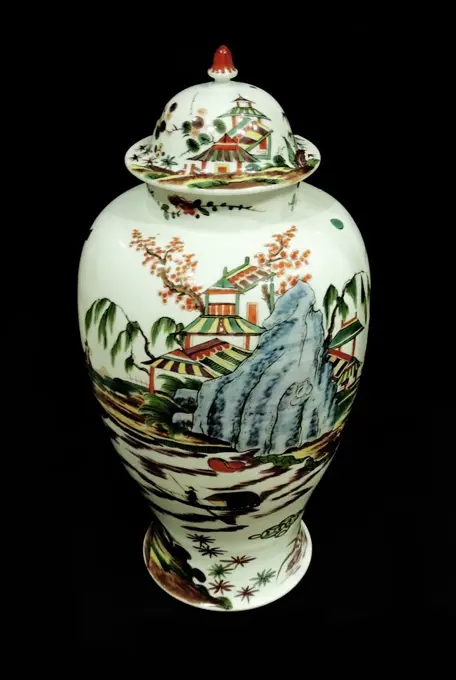
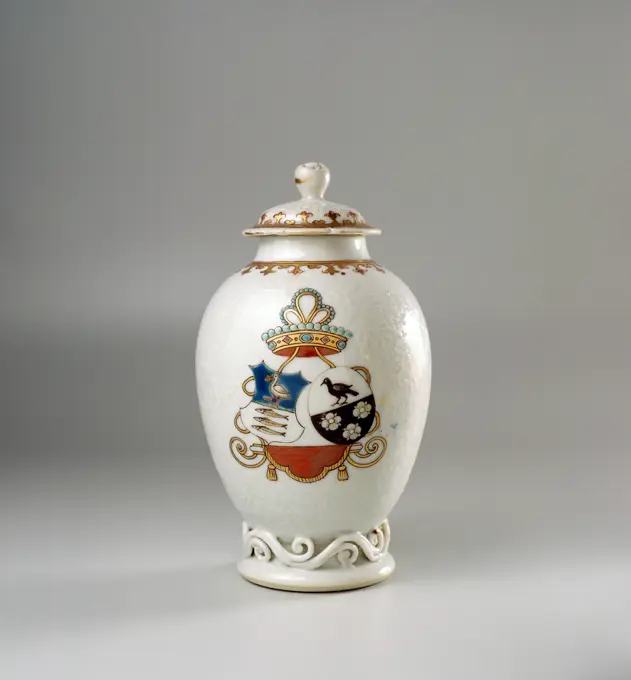
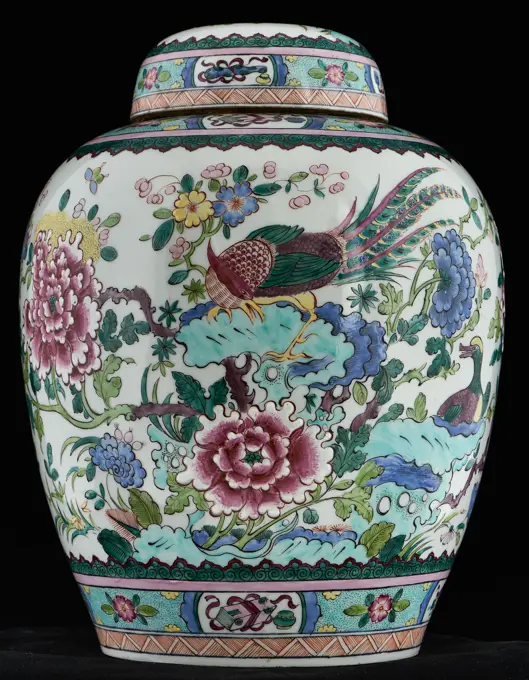
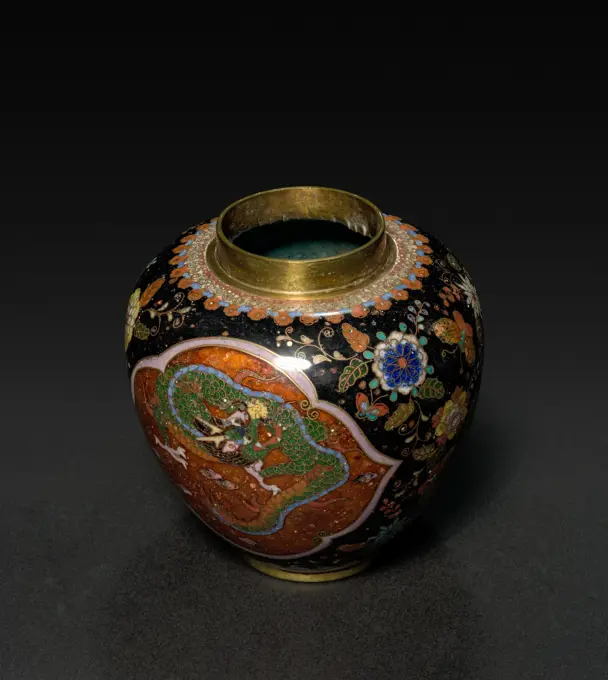
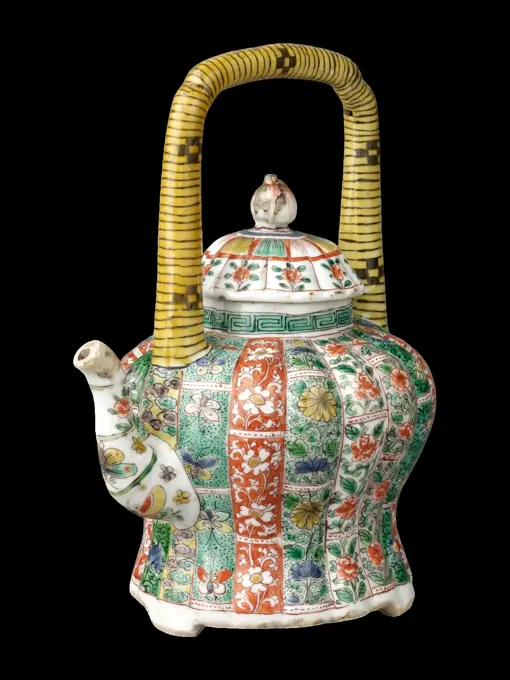
Covered jar with ruyi-heads and flowers, anonymous, c. 1700 - c. 1724 Egg -shaped pot with lid of porcelain, painted on the glaze in blue, red, green, yellow, eggplant and black. The pot is decorated with three courses in the form of a lobed window with a peony surrounded by stylized tiflets; Between the three courses a Ruyi motif and flower branches. Around the foot an ornamental band; Around the shoulder a band with Ruyi motifs. On the lid a stylized peony with branches and sprinkling flowers. A crack in the lid. Famle Verte. China porcelain. glaze. painting / vitrification Egg -shaped pot with lid of porcelain, painted on the glaze in blue, red, green, yellow, eggplant and black. The pot is decorated with three courses in the form of a lobed window with a peony surrounded by stylized tiflets; Between the three courses a Ruyi motif and flower branches. Around the foot an ornamental band; Around the shoulder a band with Ruyi motifs. On the lid a stylized peony with branches and sprink
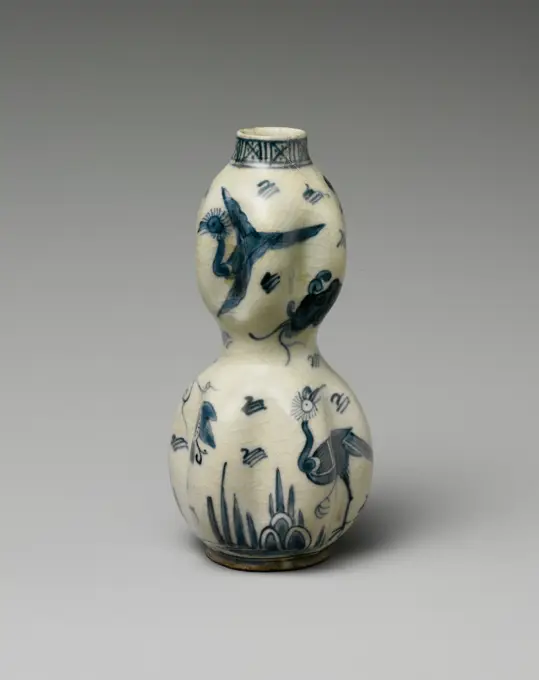
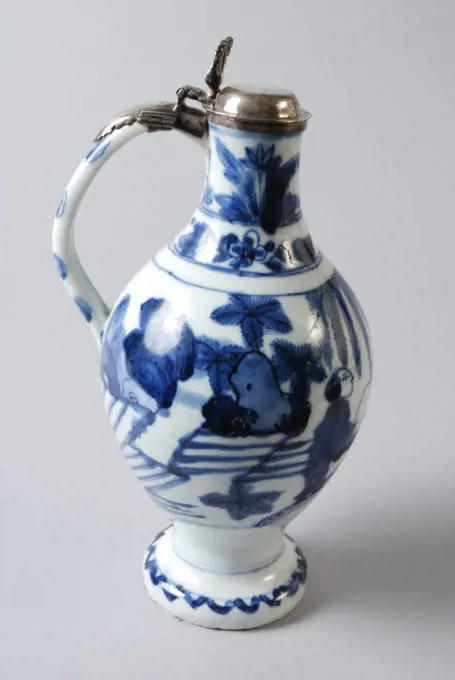
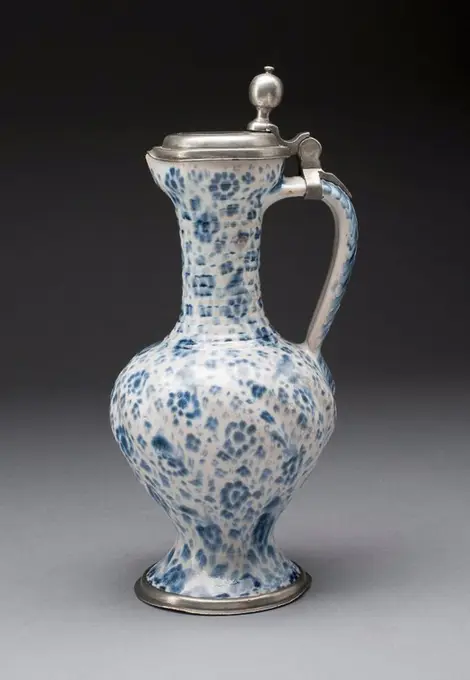
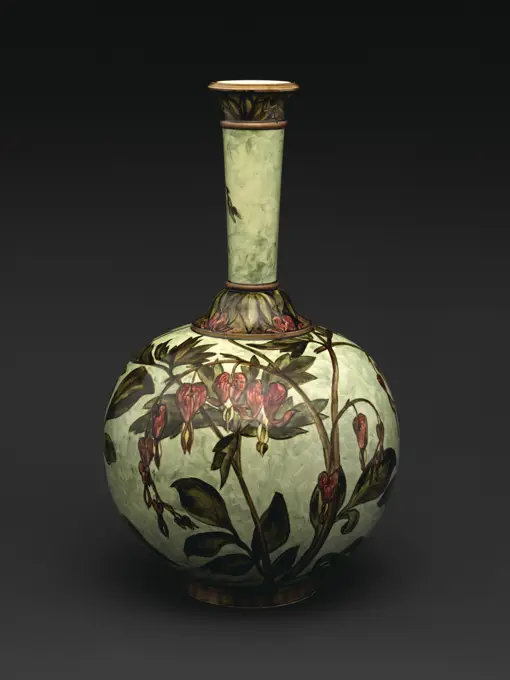
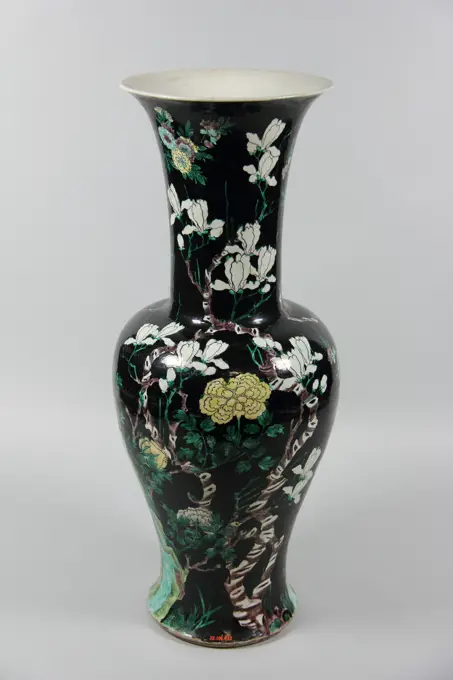
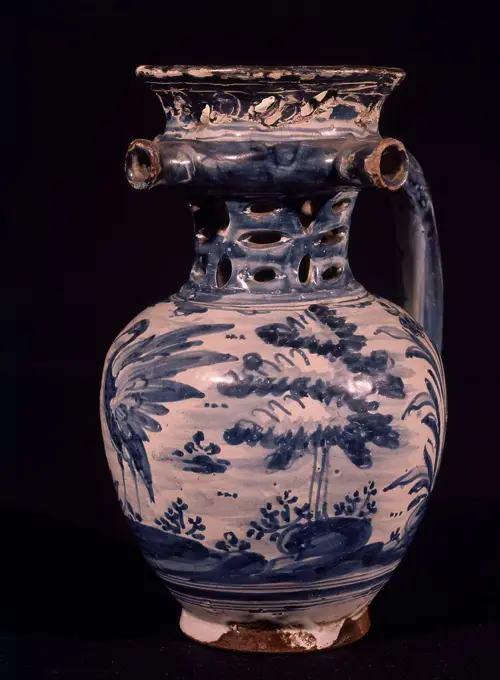
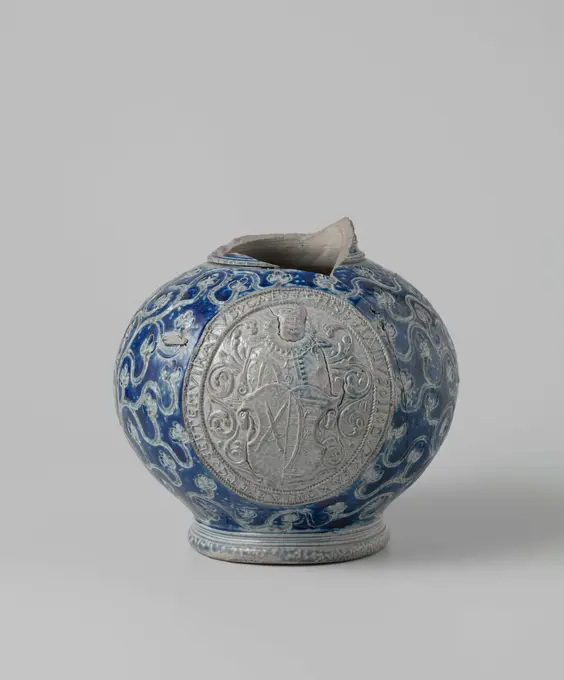
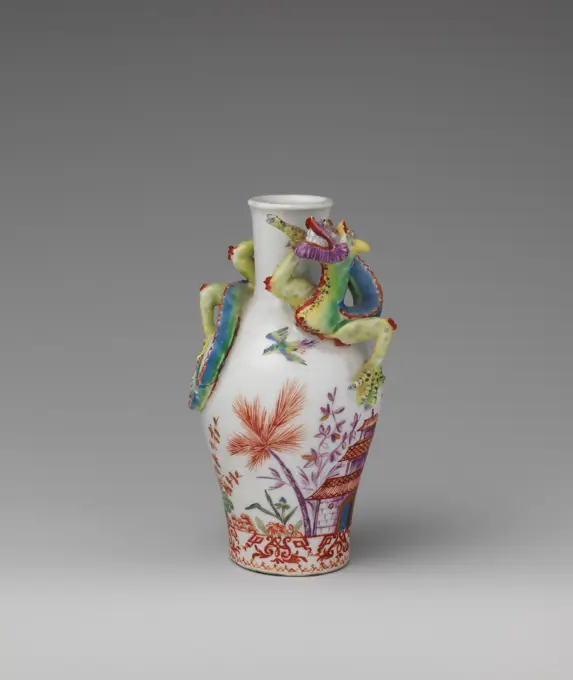
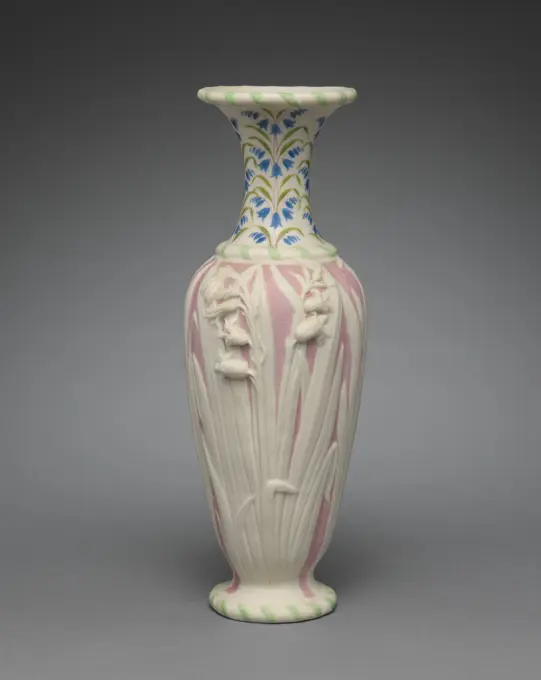
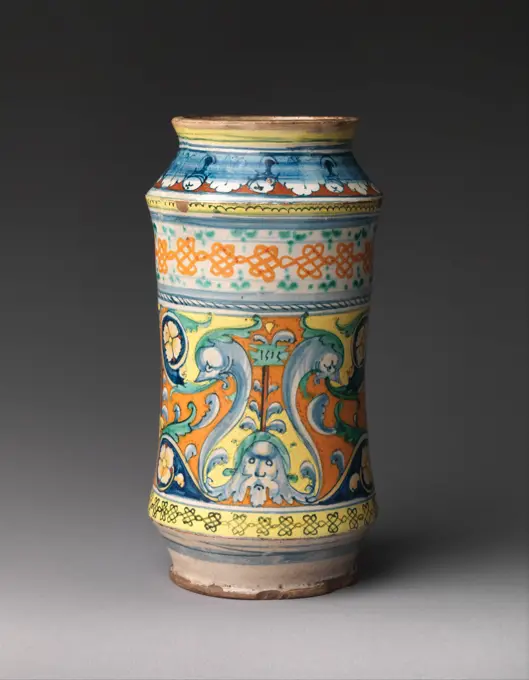
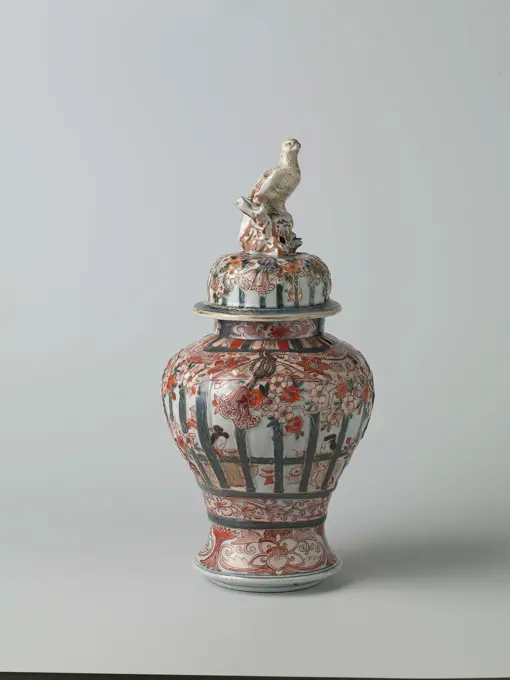
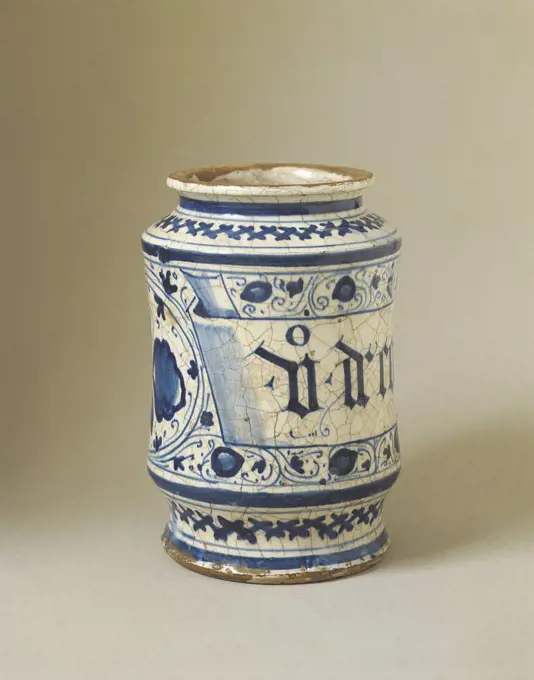
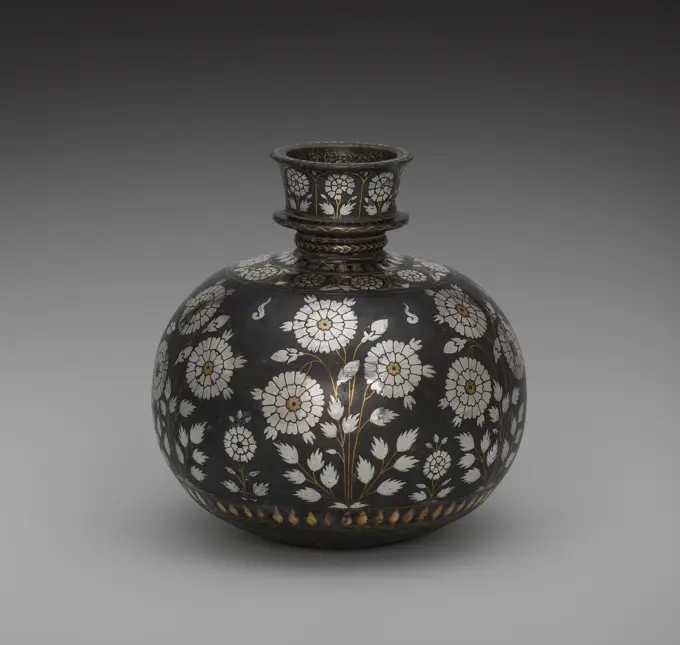
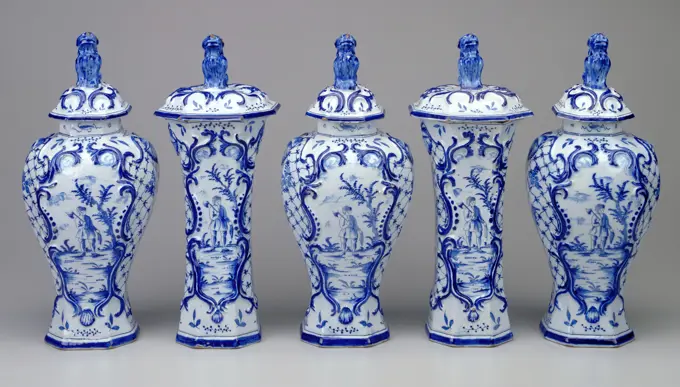
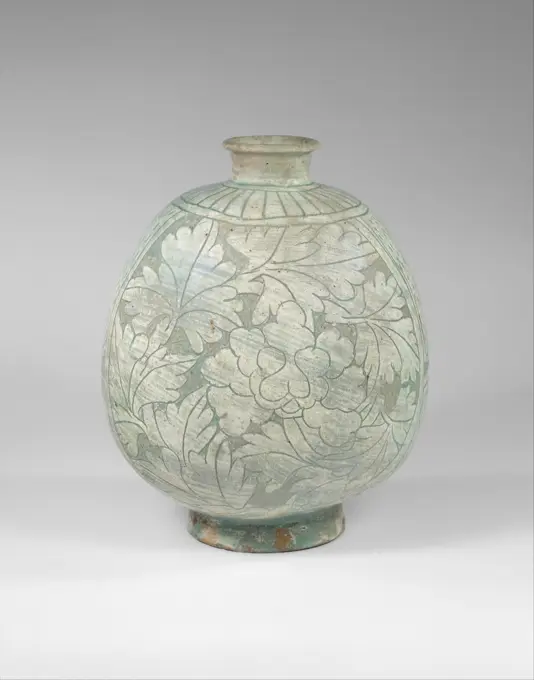
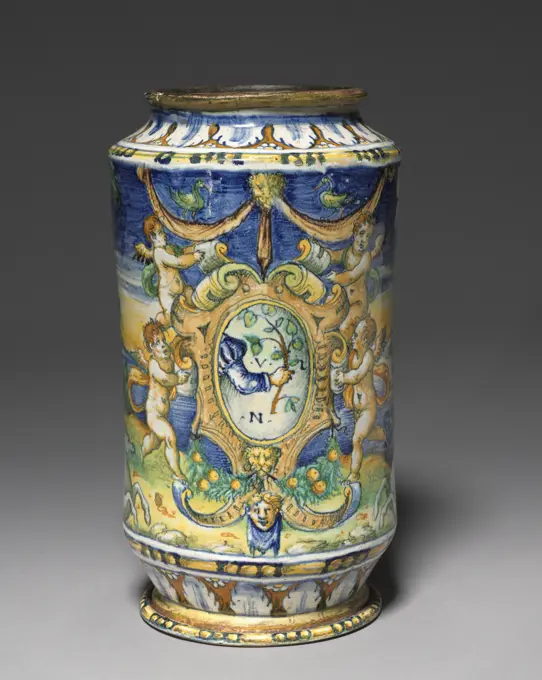
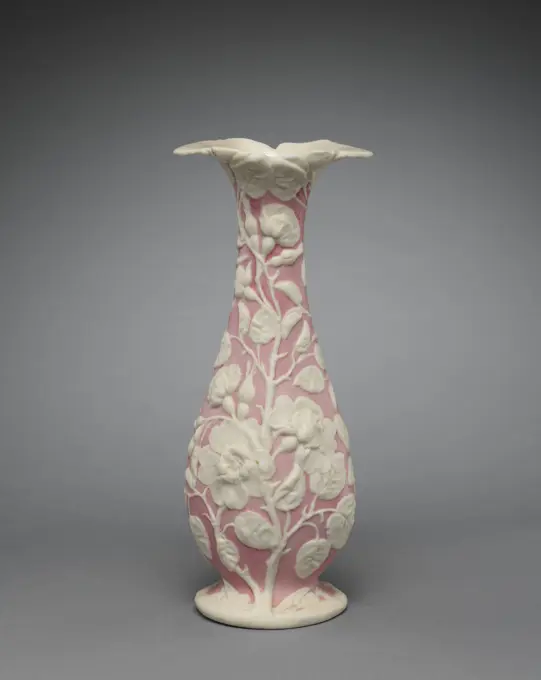
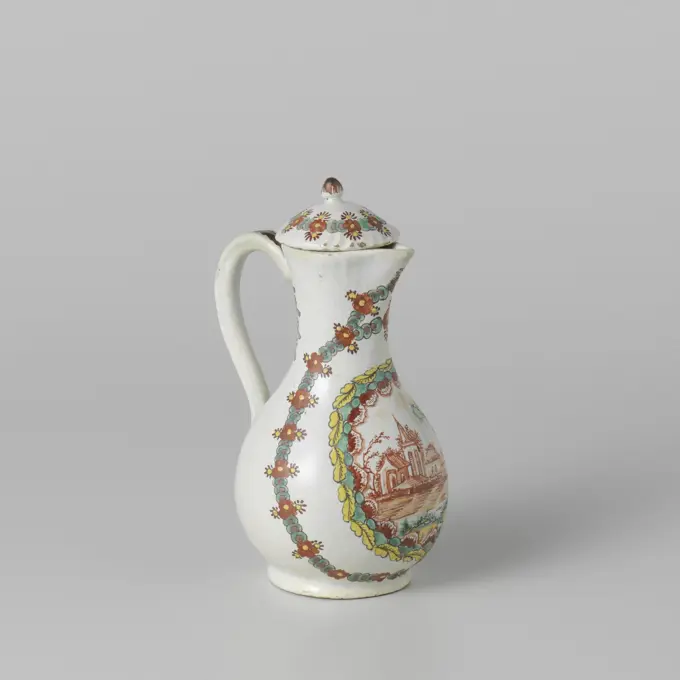
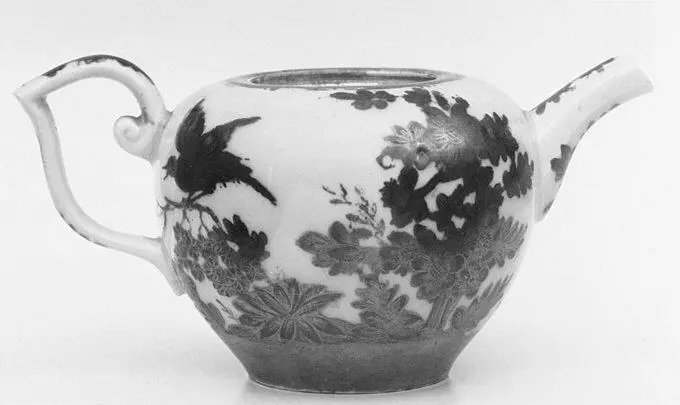
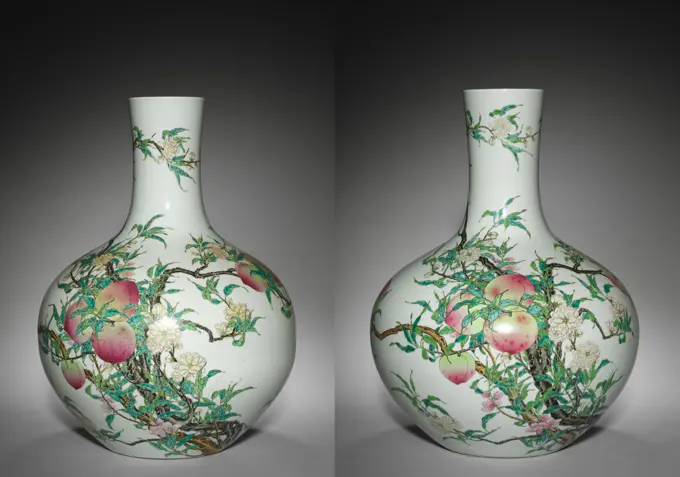
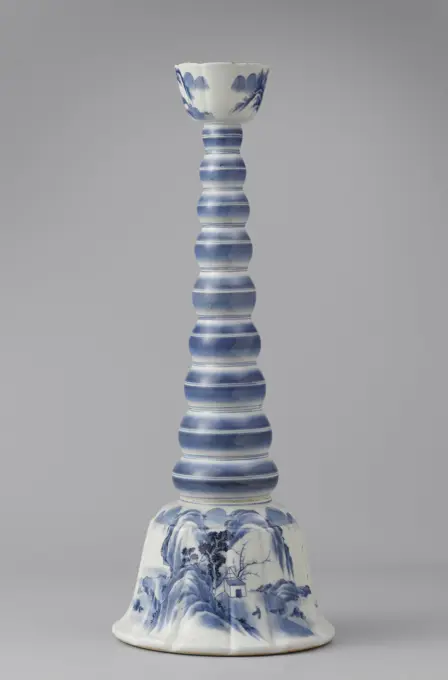
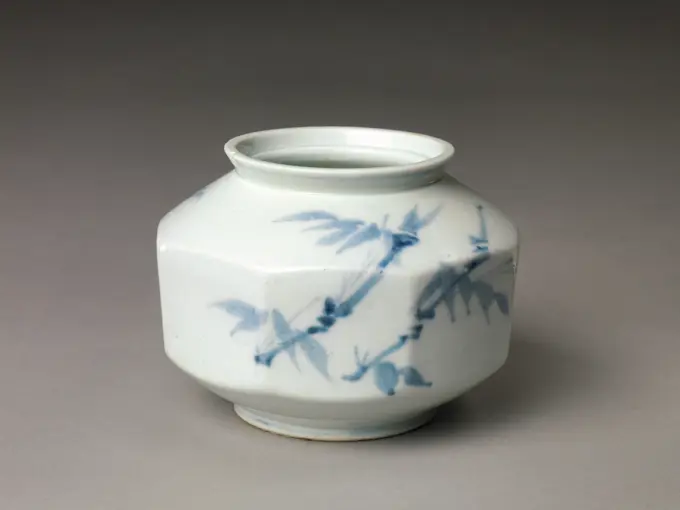
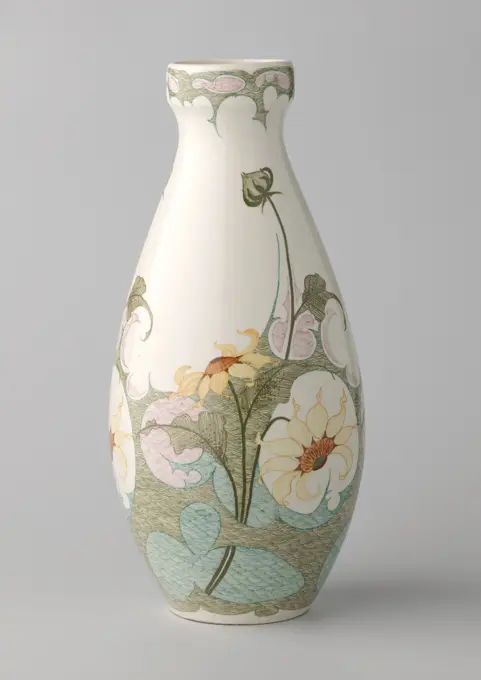
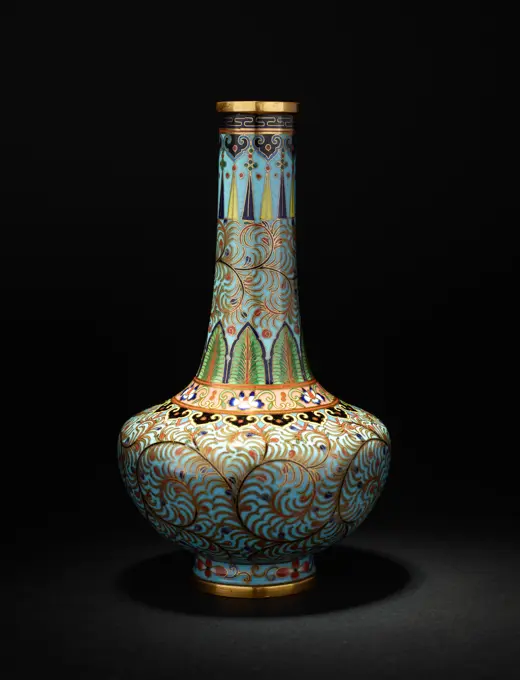
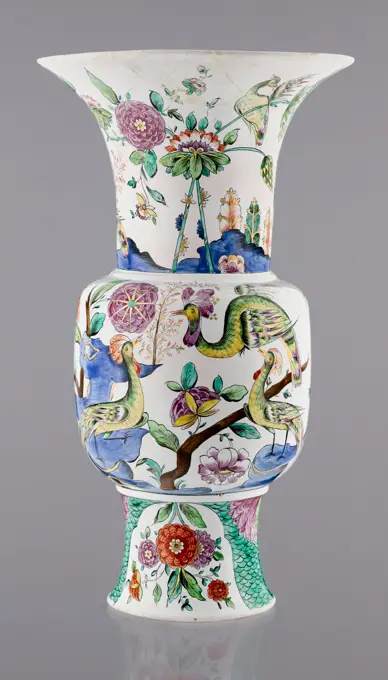
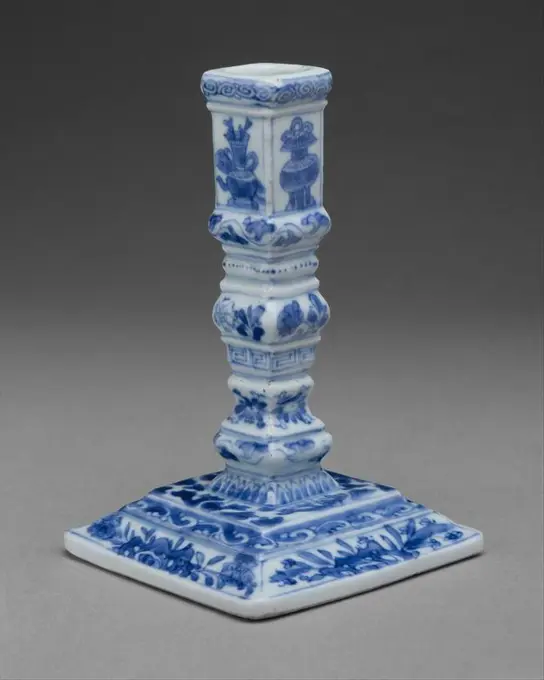
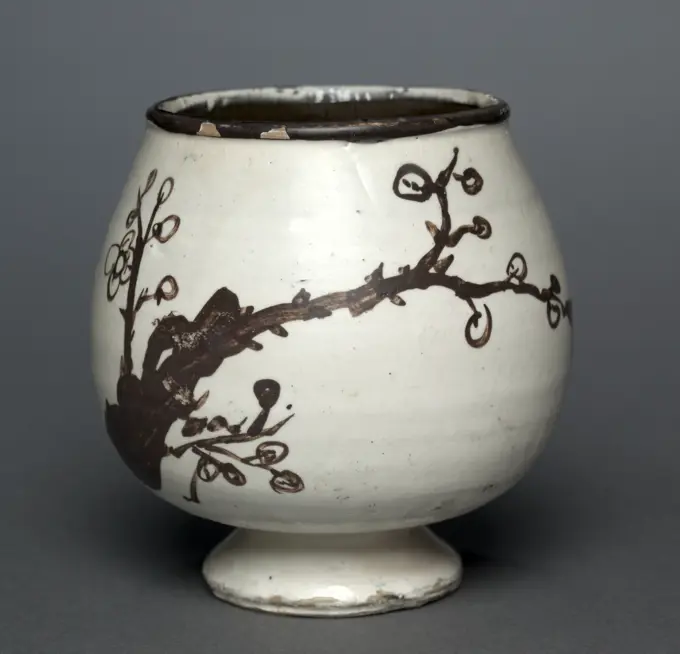
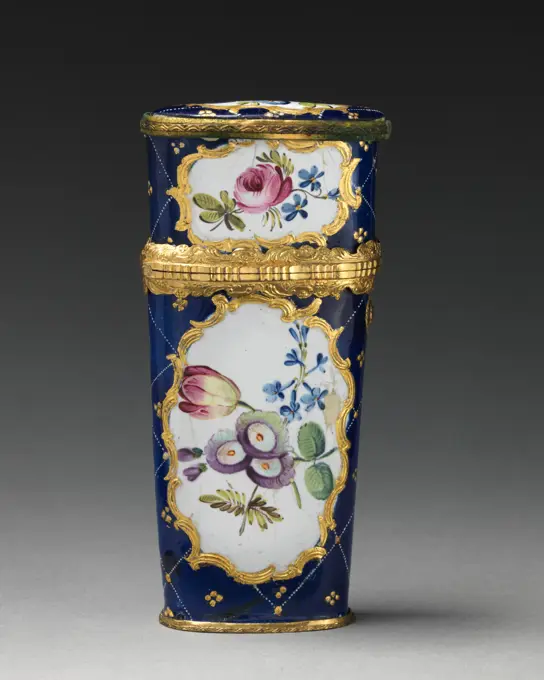
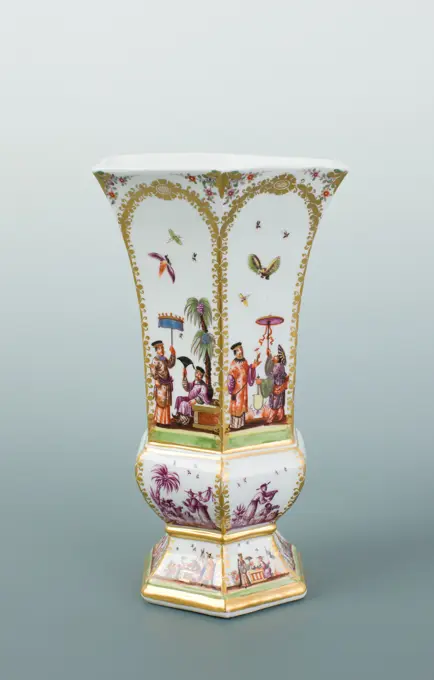
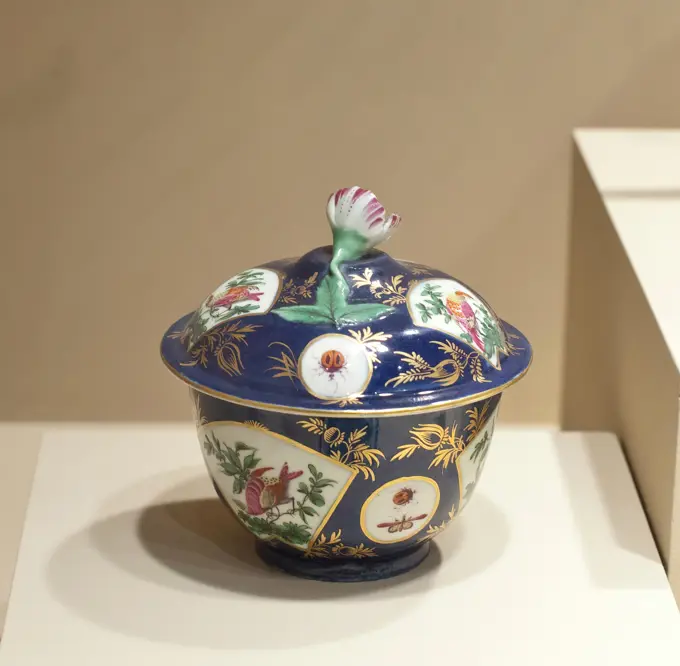
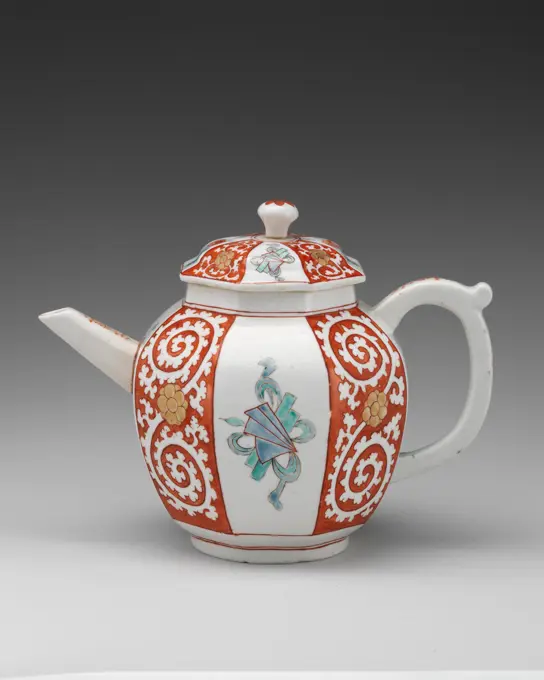
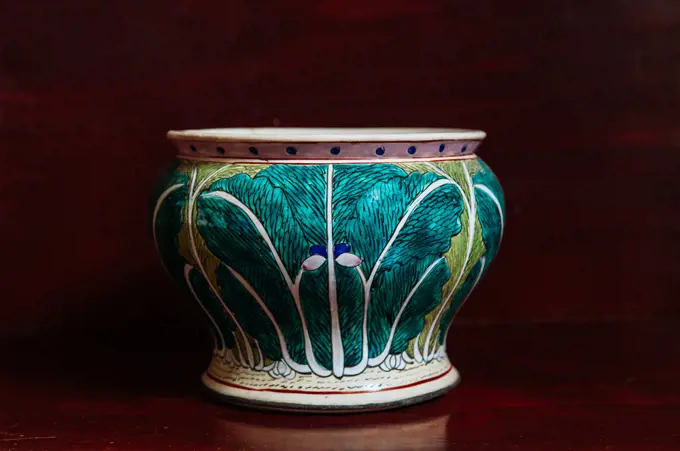
Pear-shaped bottle vase with continuous lotus scrolls and ornamental borders, anonymous, c. 1500 - c. 1599 Bottle -shaped vase made of porcelain, with pear -shaped body and trumpet -shaped neck, painted in underlaze blue. On the body two wide ties with lotus vines separated by a decorative band; Around the foot a tire with curl work in compartments; On the neck a band with meander motif with a band with pointed leaf motifs above it. Marked on the underside with a four-character Ming brand in a double circle. Neck has been demolished, restored with four staples; A crack and a chip in the edge. Ming porcelain in blue and white. China porcelain. glaze. cobalt (mineral) painting / vitrification Bottle -shaped vase made of porcelain, with pear -shaped body and trumpet -shaped neck, painted in underlaze blue. On the body two wide ties with lotus vines separated by a decorative band; Around the foot a tire with curl work in compartments; On the neck a band with meander motif with a band with Apothecary Jar ca. 1750 Mexican. Apothecary Jar 3463Vase in the Form of a Double Gourd 17th century. Vase in the Form of a Double Gourd. 17th century. Stonepaste; painted under transparent glaze. Attributed to Iran. CeramicsOctagonal Cover With Flowering Plants And Figures in a Fenced Garden in panels. Octagonal lid of porcelain, painted on the glaze in blue, red, pink, green, purple, black and gold. Covered with piping branches against a background of a spiral pattern. On each of the eight sides a saved, scalloped cartouche with varied flower branches (peony, chrysanthemum, aster, prunus) at a rock or one or more people on a terrace or in a fenced garden in blooming plants and rocks. The edge with eight compartments with flowering plants against a background of blue frog. Lid knob is in the shape of a shishi (lion dog). Lid knob is not original. Lid is part of cabinet set AK-NM-11497. Family Rose.SVD, Porcelain arita jug with silver lid, jug crockery holder ceramic porcelain glaze silver, baked painted glazed Porcelain arita jug on round arched foot spherical body flared in short narrow neck arched ear flat silver lid with hinge and elongated cover attached to the ear Thumb rest in the shape of lid lid bottom (knocked in) serve JapanPitcher; Manufaktura Majoliki in Nieborów (Nieborów; Wytwórnia; 1881-1899); 1881-1886 (1881-00-00-1886-00-00);Lidded Pots, anonymous, c. 1720 - c. 1770 Porcelain lid jar, painted in underly glaze blue and on the glaze red, black and gold. On the outer wall flower vines with a lotus vendal and a cartouche with a Hoo-Vogel alternately. Around the foot a band with pointed leaf motifs. The lid with the same decoration; Lid button in the form of a rooster on a rock. Imari. Japan porcelain. glaze. cobalt (mineral). gold (metal) painting / gilding / vitrification Porcelain lid jar, painted in underly glaze blue and on the glaze red, black and gold. On the outer wall flower vines with a lotus vendal and a cartouche with a Hoo-Vogel alternately. Around the foot a band with pointed leaf motifs. The lid with the same decoration; Lid button in the form of a rooster on a rock. Imari. Japan porcelain. glaze. cobalt (mineral). gold (metal) painting / gilding / vitrificationJug. Probably Germany, Hanau. Date: 1715-1725. Dimensions: 26.7 x 12.7 cm (10 1/2 x 5 in.). Tin-glazed earthenware (faience) and pewter. Origin: Hanau. Museum: The Chicago Art Institute, Chicago, USA.Four vas suit;  around 1690-1730 (1751-00-00-1800-00-00);Japanese (culture), Japanese artBekervaas, part of a cupboard set, the 3 clocks (attributed to), c. 1820 - c. 1850 Vase of multicolored painted faïence. The vase is painted with four subjects. In two compartments, a vase with two S-shaped handles, standing on a three-legged pedestal and filled with flowers, in the other two compartments there is a pot of lid on a three-legged pedestal, above which a phoenix is painted. The vase is part of a couple and is marked. Delft earthenware. tin glaze. Vase of multicolored painted faïence. The vase is painted with four subjects. In two compartments, a vase with two S-shaped handles, standing on a three-legged pedestal and filled with flowers, in the other two compartments there is a pot of lid on a three-legged pedestal, above which a phoenix is painted. The vase is part of a couple and is marked. Delft earthenware. tin glaze.Vase with bleeding hearts ca. 1877-8 John Bennett John Bennett had headed the division of Lambeth Faience at the Doulton Pottery in England before immigrating to the United States in 1877 and setting up his own workshops in New York City. His work is dominated by floral decoration in a highly decorative mode, harking back to his days at Doulton, with the use of colored oxides. Here, the artist has painted bleeding heart, a flowering plant that many artists of the period favored. The main part of the vase features bleeding heart in a naturalistic mode; the collar at the base of the neck and the band at the rim feature the same plant, but interpreted in a highly decorative, conventionalized mode. The vase bears a cypher belonging to an unidentified decorator working in Bennetts studio. The vase is marked with the address 101 Lexington Avenue, the location of Bennetts first workrooms in New York City, before he moved to 312 East 24th Street some time in 1878.. Vase with bleeding hearts.Vases of Meissen porcelain. Meissen/painted hard-paste porcelain. In the 1720s Meissen began producing colourfully decorated vases on a large scale. While the shapes and decoration of the vases were often inspired by models from China, they were hardly ever literal copies of them. Johann Gregorius Horoldt, who headed the painting workshop at the factory from 1720 onwards, specialized in fanciful scenes with Chinese figures, which were painted on many of the vases.Exhibits at the Shanghai Museum, Shanghai, China.Ewer. Manufacturer: Greenwood Pottery, 1861-1933Miniature Coffee Pot 1755-1765 Staffordshire. Salt-glazed stoneware, polychrome enamels .Vase with flowers 18th century China. Vase with flowers. China. 18th century. Porcelain painted in overglaze polychrome enamels (Jingdezhen ware, famille noir). Qing dynasty (1644-1911). CeramicsFlower vase with a lid. De Porceleyne Schotel (wytwórnia fajansu ; 1612-1800), factoryDonato Massa. Vase: man and woman in a country landscape, Italian majolica of Naples, 1730 (view of the man and woman). Museum of Fine Arts of the City of Paris, Petit Palais. 27014-17 Blue white, countryside, ceramic, chateau, woman, man, Italy, majolica of Naples, champetre landscape, Italian renaissance, dishes, vaseScent bottle ca. 1750-55 British, London. Scent bottle. British, London. ca. 1750-55. Enamel on copper. Enamels-PaintedJARRA DE TRAMPA O BURLADERA VIDRIADA Y DECORADA EN AZUL-S XX. Location: ALFARERIA. TALAVERA DE LA REINA. Toledo. SPAIN.Jar with in medallion portrait of Christiaan II, Keurvorst van Saxen. Jug of stoneware with spherical belly. Decorated with snake-shaped cloverflows in dark blue email. From the front a large medallion with the portrait of the Keurvorst van Saxen, Christiaan II.Vase (one of a pair) ca. 1730-40 Vienna The gift of the Hans Syz Collection in 1995 endowed the Museum with nearly three hundred examples of European and Asian ceramics meticulously acquired by Swiss-born collector Dr. Syz (1894-1991) to chart the migration of models and patterns from East to West. Documenting a continuous process of influence and adaptation, these pieces provide a discriminating review of the nuances of stylistic change resulting from three centuries of trade.. Vase (one of a pair). Austrian, Vienna. ca. 1730-40. Hard-paste porcelain. Ceramics-PorcelainJarlet. Vietnam, 15th-16th century. Furnishings; Serviceware. Stoneware with cream slip and underglaze blue painted decorationVase 1830-70 American. Vase. American. 1830-70. Parian porcelain. Probably made in Bennington, Vermont, United StatesVase;  19th century (1801-00-00-1900-00-00);Jug 1770-1780 Worcester. Soft-paste porcelain, transfer-printed decoration . Worcester Royal Porcelain Company (Manufacturer)Sand Shaker ca. 1750 Mexican. Sand Shaker 7108Albarello 1515 Italian, Siena Storage vessels were among the most frequently produced maiolica wares in late medieval and Renaissance Italy. Made in fairly standard shapes, they were designed to fit with dozens of others on a shelf, often in a pharmacy or shop. Their handles therefore tend to fit within the vessels profile, and the cylindrical albarello type is generally narrower at the middle than at the top or bottom, making it easy to grip. Other common features include inscriptions indicating contents and flanged lips to help secure cloth or paper seals. The decoration, usually more elaborate on one side than the other, can sometimes link pieces to a known dispensary or specific workshop or artist.. Albarello. Italian, Siena. 1515. Maiolica (tin-glazed earthenware). Ceramics-PotteryVase. unknown, craftsmanCovered Baluster Jar With Figures in An Interior Behind Framework, Prunus Trees and Floral scrolls. Baluster-shaped lid pot of porcelain with a spreading foot, painted in underglaze blue and on the glaze red, black and gold. On the wall twice two people sitting in an interior behind landscaped and painted railing. This railing is decorated with landscaped and decorated prunus trees and tires with floral drinks. Among the railing a bond with flower drinks. A relationship with lotus drinks around the foot. Three cartouches with lotus drinks on the neck. The lid with the same decoration; Cover knob in the shape of a bird on a stump. Imari.Close-up of an Albarello jar, Faenza, ItalyBidri Hookah Bowl with Roses, c. 1650s. Southwestern India, Deccan, Karnataka, Bidar. Zinc alloy with silver and brass inlay; diameter: 16.5 cm (6 1/2 in.); height: 18.5 cm (7 5/16 in.). Hookah bowls were used for the enjoyment of tobacco or any other smoked substance during moments of relaxation. They were also aesthetic objects to be admired in elite gatherings of connoisseurs. The flowering rose bushes on this fine early example, made shortly after the introduction of tobacco-smoking in India, would have called to mind celebrated poetical works, such as the Gulistan (Rose Garden) of Sa'di (Persian, 1210-1291 or 1292).Can, spherical, with squeezed spout and wide, flat ear, anonymous, 1514 Spherical can of multicolored painted majolica, on a stand ring. The jug has a squeezed spout and a wide, flat ear. At the front (on and under the spout) a coat of arms is painted within a wreath. The weapon is a diagonally celebrated and the upper and bottom 15 minutes contain a star, the other quarters a diamond pattern. The wreath consists of leaves in which four medallions. The year 1514 is painted on the KAN. Montelupo (Possibly) Deruta (Possibly) earthenware. tin glaze. lead glaze majolica Spherical can of multicolored painted majolica, on a stand ring. The jug has a squeezed spout and a wide, flat ear. At the front (on and under the spout) a coat of arms is painted within a wreath. The weapon is a diagonally celebrated and the upper and bottom 15 minutes contain a star, the other quarters a diamond pattern. The wreath consists of leaves in which four medallions. The year 1514 is painted on the KAN. MontelupoVase with Flowers and Scholars Implements early 18th century China. Vase with Flowers and Scholars Implements. China. early 18th century. Porcelain covered with powdered blue glaze and painted with cobalt blue under transparent glaze (Jingdezhen ware). Qing dynasty (1644-1911), Kangxi period (1662-1722). CeramicsPichet: Three orders ". Paris, Carnavalet museum. 35750-1 Allegory, ceramic, clergy, general states, nobility, French revolution, third state, three orders, dishesConical vase with cover, from five-piece garniture set, c. 1764, Jacobus Halder Adriaesensz, Dutch, active 1760s, 15 13/16 x 6 3/16 x 5 11/16 in. (40.2 x 15.7 x 14.4 cm), Glazed porcelain, 18th centuryFlask-shaped bottle decorated with peonies late 15th century Korea The technique used to create the peony design hereincising outlines and carving away the white slip to create the backgroundis characteristic of buncheong ware produced in Jeolla Province.. Flask-shaped bottle decorated with peonies 42308Lentoid Aryballos (Container for Oil). Eastern Mediterranean or Italian. Date: 400 BC-201 BC. Dimensions: 4.4 × 4 × 2.3 cm (1 3/4 × 1 5/8 × 7/8 in.). Glass, core-formed technique. Origin: Eastern Mediterranean Region. Museum: The Chicago Art Institute, Chicago, USA. Author: Ancient Eastern Mediterranean.Two Lidded Vases. Meissen porcelain manufactory, Meissen, c. 1725-1730, Hard Paste PorcelainPharmacy Jar (Albarello), c. 1550-70. Circle of Domenego da Venezia (Italian). Tin-glazed earthenware (maiolica); overall: 28.9 x 16.5 cm (11 3/8 x 6 1/2 in.).Vase 1830-70 American. Vase. American. 1830-70. Parian porcelain. Probably made in Bennington, Vermont, United StatesMilk jug with lid of multicolored painted faïence with the backdrop of a landscape, anonymous, c. 1760 - c. 1790 Milk jug with lid of multicolored painted Faïence with a backdrop of a landscape within a wreath. Delft earthenware. Milk jug with lid of multicolored painted Faïence with a backdrop of a landscape within a wreath. Delft earthenware.Bottle Vase. Thailand, Sawankhalok, 16th century. Furnishings; Accessories. Stoneware with underglaze brown painted decorationVase, two copies Necel, Franciszek (1868 1935)Teapot ca. 1740-50 Meissen Manufactory German. Teapot 188721 Manufactory: Meissen Manufactory, German, 1710present, Decorator: Gold decoration in the style of F. J. Ferner, Teapot, ca. 174050, Hard-paste porcelain, Height: 3 3/8 in. (8.6 cm). The Metropolitan Museum of Art, New York. Gift of Alfred Duane Pell, 1902 (02.6.219)Vase. unknown, craftsmanCovered Nai Lam Thong bowl, dating from the early 19th century, a type of Bencharong, Rattanakosin, Prasat Museum, Bangkok, Thailand, Southeast Asia, .... Porcelain tea bus with egg-shaped body, painted on the glaze in blue, red, black and gold. On the belly The arms of the families of Schoonhoven and Geraerds. The weapon to the left of the Van Schoonhoven family consists of two fields: above a stork on blue background and under three pike. The arm right from the Geraerds family consists of two fields: above a pigeon and under three roses or flower buds on a black background. The helmet mark is a crown with pearls with a diadem above above. The weapons are on a pedestal in red and gold. The wall is further covered with flower drinks in Bianco Sopra Bianco. Around the foot curling work in relief; around the shoulder a Spearhead border. Weapon porcelain with email colors.. High jug of lead glazing pottery, with a pewter hinged lid. The jug is reversed egg-shaped and has a pewter foot ring. The neck is short, concave cylindrical and has a tin mouth ring. The ear is rectangular and rotated. The abdomen has a blue fond and is in relief decorated with two niches separated by Pilasters. Within the lower niches the works of Hercules and an imperial coat of arms and in the top seven figures in half.Century Vase. Culture: American. Designer: Designed by Karl L. H. Müller (ca. 1820-1887). Dimensions: H. 12 3/4 in. (32.4 cm). Manufacturer: Manufactured by Union Porcelain Works (1863-ca. 1922). Date: ca. 1876.Nationalistic motifs embellish this pair (see 69.194.2) of vases designed by sculptor Karl Müller in honor of America's 1876 Centennial. Native American plants decorate the body and North American bison heads serve as handles. A profile portrait of George Washington embellishes each side, and the six biscuit relief panels around the base each depict scenes from American history - among them a minuteman with his cannon, William Penn signing a treaty with Native Americans, and the Boston Tea Party. Museum: Metropolitan Museum of Art, New York, USA.Pharmacy Jar. Culture: Spanish. Dimensions: Overall: 11 11/16 x 5 9/16 in. (29.7 x 14.2 cm). Date: 15th century. Museum: Metropolitan Museum of Art, New York, USA.Lota: Covered Jar on Narrow Foot, c. 1700. India, Jaipur, late 17th-early 18th Century. Cloisonne enamel on gold; overall: 14.4 x 10.2 cm (5 11/16 x 4 in.).Tureen with phoenixes in landscape. Culture: Austrian, Vienna. Dimensions: Overall (confirmed): 8 1/4 x 12 3/8 x 10 9/16 in. (21 x 31.4 x 26.8 cm). Factory: Vienna. Factory director: Du Paquier period (1718-1744). Date: 1725-30.The size of this tureen and the high quality of its painted decoration make it as an exceptional example from the manufactory's middle period. It is painted in the colors and style of Chinese famille verte porcelains, in which green and red predominate; the phoenix and fence motifs derive from Chinese examples. The distinctive handles in the form of turned wood knobs, which are echoed in the shape of the finial, were a Du Paquier invention. Museum: Metropolitan Museum of Art, New York, USA.Pair of Vases, 1736-95. China, Jiangxi province, Jingdezhen, Qing dynasty (1644-1911), Qianlong mark and period (1736-1795). Porcelain with famille rose overglaze enamel decoration; overall: 51.4 cm (20 1/4 in.). This spectacular vase, one of a pair in the collection, depicts flowering and fruiting peach trees to convey an auspicious message of affluence and long life. Developments in enamel technology led to new possibilities in polychrome decoration of Qing imperial porcelains. Pinks appeared, lending their name to the new palette of overglaze colors (famille rose), and the addition of opaque white allowed painters to vary the value of pigments, enhancing the painterly quality of porcelain decoration.Jug (pilgrim flask) with King William III, anonymous, c. 1700 Jug (pilgrim bottle) of stoneware with a spherical body, from side view oval, and narrow neck with profiles. Partly covered with cobalt blue. The bottle is decorated with entered flower vines with a printed and imposed medallion with King William III on horseback in the center. As a border script 'Wilhemvs III d G Mag Brit Franc et Hib Rex' and under the Horse Ingrift 'Kig'. Four small, C-shaped ears on the sides of the abdomen. Westerwald. Westerwald stoneware. glaze. cobalt (mineral) vitrification Jug (pilgrim bottle) of stoneware with a spherical body, from side view oval, and narrow neck with profiles. Partly covered with cobalt blue. The bottle is decorated with entered flower vines with a printed and imposed medallion with King William III on horseback in the center. As a border script 'Wilhemvs III d G Mag Brit Franc et Hib Rex' and under the Horse Ingrift 'Kig'. Four small, C-shaped ears on the sides of the abdomen. Jar with Scholars in Garden. China. Date: 1500-1599. Dimensions: H. 35.1 cm (13 13/16 in.); diam. 30.5 cm (12 in.). Fahua ware; stoneware with biscuit outlines and underglaze molded decoration. Origin: China. Museum: The Chicago Art Institute, Chicago, USA.Water bottle with strainer inside the neck. unknown, craftsmanAnonymous. Fountain at the Tree of Liberty. Earthenware. Around 1792. Paris, Carnavalet museum. 72787-1 Tree Liberte, Phrygian Bonnet, Painted Decor, Revolutionary Faience, Fontaine, Object, Revolution 1789, French Revolution, 18th 18th 18th 18th centuryVase with millefleurs decoration 1920s to 40s China. Vase with millefleurs decoration 48842Jar 664-30 B.C. Late Period-Ptolemaic Period. Jar 552077Pitcher; Creil (ceramic family; 1600-); 2 19th century (1850-00-00-1875-00-00);This tea set with orchids has a side-handled pot called a kysu, used for steeping, straining, and serving tea. Seif Yohei III’s painting teacher, Tanomura Chokuny (1814-1907), made a visual record of famous sencha events that shows how these kinds of porcelains fit with objects such as a stove and kettle to form a complete set of utensils for tea preparation, and with ensembles of decorative objects meant to inspire creativity. Teapot from Tea Set with Orchids, c. 1893-1914. Seifū Yohei III (Japanese, 1851-1914). Porcelain with underglaze blue;Vase (vase le boitteux) ca. 1752-53 Vincennes Manufactory French. Vase (vase le boitteux) 200873Flakonik-Tabacierka;  1. PO. 19th century (1800-00-00-1850-00-00);Paderewski, Ignacy Jan (1860-1941), Paderewski, Ignacy Jan (1860-1941)-collection, qing (style), ceramics, Chinese (culture), gift (provenance), color porcelain, figural scenes, Chinese artPilgrim Flask; Venice, Veneto, Italy; about 1500 - 1520; Free-blown colorless glass with gold leaf, enamel, and applied decoration; 31.3 x 17.5 cm (12 5,16 x 6 7,8 in.)Bottle China. Bottle. China. Porcelain. Qing dynasty (1644-1911), Yongzheng period (1723-35). CeramicsJar 301 CE-500 CE Syria. Glass, blown technique . Ancient LevantineLidded vase in the form of ginger jar. unknown, craftsmanCandlestick with a conical bulb stem and candleholder and base with a water landscape, anonymous, c. 1775 - c. 1799 Porcelain candlestick with conical steel with nine ring -shaped thickening, bell -shaped base with a ribbed wall and a head -shaped candle holder with a ribbed wall and lobed edge. Painted in underlaze blue. The ring -shaped nodules with blue tires. The foot and head with a continuous river landscape with pavilions, trees, rocks and boats on the water. At the top of the foot, a fled circle on which the upper part of the candlestick is placed. Foot and stem are glued together. Blue White. Japan porcelain. glaze. cobalt (mineral) painting / vitrification Porcelain candlestick with conical steel with nine ring -shaped thickening, bell -shaped base with a ribbed wall and a head -shaped candle holder with a ribbed wall and lobed edge. Painted in underlaze blue. The ring -shaped nodules with blue tires. The foot and head with a continuous river landscape with pavilions, trees, Faceted jar decorated with plum blossoms and bamboo end of the 18th-early 19th century Korea Exemplary of late Joseon blue-and-white porcelain produced at the court kilns (Bunwon), this faceted jar features delicately painted plum blossoms on one side and bamboo on the othermotifs associated with winter and summer respectively that also (with the chrysanthemum and orchid) symbolize the virtuous Confucian scholar.. Faceted jar decorated with plum blossoms and bamboo 72737Vase with pattern of flowers and scales, N.V. Plateelbakkerij Zuid-Holland, c. 1910 Vase of earthenware, rejuvenating upstairs and with slightly wider straight mouth opening. Polychrome painted on yellow stock with a pattern of flowers and fields of scaly. Along the mouth edge a Frisian of green scaly with rose fields. Gouda earthenware Vase of earthenware, rejuvenating upstairs and with slightly wider straight mouth opening. Polychrome painted on yellow stock with a pattern of flowers and fields of scaly. Along the mouth edge a Frisian of green scaly with rose fields. Gouda earthenwareBottle with a motif of plant flagellum on a turquoise background unknownGinger Jar with Phoenix and Dragon (base), early 1900s. Japan, Meiji period (1868-1912) to Taishō period (1912-26). Cloisonne enamel; diameter of mouth: 4.1 cm (1 5/8 in.); overall: 10.5 cm (4 1/8 in.).Art Nouveau vase; Care, Grzegorz (1863-1939), "Care, Brothers (Warsaw; Wytwórnia Z Otnicza; 1884-1944), Nagalski and Psyk (Warsaw; Sreber label; 1884-1917); 1897-1898 (1897-00-00-1898-00-00);Covered jar with baskets of flowers 18th century China. Covered jar with baskets of flowers 50143TSUN type vase; Bielino (Manufaktura Fajansu; 1779-1800), Wolff, Karol (fl. Ca 1800); 1780-1795 (1780-00-00-1795-00-00);Owl (body), 1540. Southern Germany, 16th century. Faience; diameter: 9.9 cm (3 7/8 in.); overall: 25.9 x 10.2 cm (10 3/16 x 4 in.); part 1: 22.9 cm (9 in.).Taperstick. Culture: Chinese, for Dutch or English market. Dimensions: Height: 5 1/4 in. (13.3 cm). Date: ca. 1700-1710.As the European market for Chinese porcelain grew, so, too, did the desire for specifically Western forms. In response, Chinese potters looked to European examples in other materials for inspiration. The stepped square-sectioned shape of this porcelain taperstick, for instance, is derived from European metalwork. Museum: Metropolitan Museum of Art, New York, USA.Jar (copy of Chinese Yuan dynasty 14th century made in Thailand in 1984). Culture: Thailand. Dimensions: H. 2 3/4 in. (7 cm). Date: ca. 1984. Museum: Metropolitan Museum of Art, New York, USA.Cup, 1200s-1300s. Northern China, Jin dynasty (1115-1234) or Yuan dynasty (1271-1368). Stoneware with underglaze painted decoration, Cizhou ware; overall: 12.1 cm (4 3/4 in.).Vase (one of a pair) ca. 1760 Chelsea Porcelain Manufactory. Vase (one of a pair). British, Chelsea. ca. 1760. Soft-paste porcelain. Chelsea Porcelain Manufactory (British, 1745-1784, Gold Anchor Period, 1759-69). Ceramics-PorcelainNécessaire ca. 1760-1800 British, Staffordshire. Nécessaire. British, Staffordshire. ca. 1760-1800. Enameled copper. EnamelsCovered jar with women and boys in a fenced garden, anonymous, c. 1680 - c. 1720 Porcelain lid jar, painted in under -glaze blue. On the wall two women (long lines) and two boys (sons), one of which dancing, in a fenced garden with a banana plant and a willow. The lid with two dancing boys separated by rocks. Blue White. China porcelain. glaze. cobalt (mineral) painting / vitrification Porcelain lid jar, painted in under -glaze blue. On the wall two women (long lines) and two boys (sons), one of which dancing, in a fenced garden with a banana plant and a willow. The lid with two dancing boys separated by rocks. Blue White. China porcelain. glaze. cobalt (mineral) painting / vitrificationSwatow vase from v.O.c.-ship the 'white lion'. Fully preserved vase from v.O.c.-ship the 'white lion'. The glaze is pearly-green and has pinholes and small frying tears. The bottom is unglazed. The vase has a short neck and the lip edge is uncluded.Worcester Porcelain Manufactory, Pair of Vases and Covers, c. 1770-c. 1775, soft-paste porcelain.CERAMICA DE GRANADA - DECORACION EN AZUL. Location: MUSEO DEL PUEBLO ESPAÑOL. MADRID. SPAIN.Vase Höroldt, Johann Gregorius, Mi Nia (Meissen)Covered Sugar Bowl, from a Tea Service, 1765-70, Worcester Porcelain Works (a.k.a. Royal Worcester Porcelain Company), Worcester, England, est. 1751, 4 5/8 x 4 5/8 in. (11.7 x 11.75 cm), Porcelain, England, 18th centuryRectangular Vessel with Truncated Neck 1368-1644 China. Kirande-type ware; porcelain painted in overglaze enamels and gilded detail; metal rim .Verzierte chinesische Teekanne mit Deckel - Porzellan der Qing-Dynastie - Dekoratives Objekt Elaborately decorated antique Chinese covered teapot from the Qing Dynasty. Features intricate floral and figural designs in vibrant green, red, and white on porcelain. LicenseRF Copyright: xZoonar.com/GallóxGusztávx 23406751Teapot ca. 1752-55 Chelsea Porcelain Manufactory This Chelsea teapot is decorated in the style of Japanese Kakiemon porcelain, in which red often dominated the palette of enamel colors. Kakiemon was widely imitated in Europe, notably by the Meissen factory in Germany, Chantilly in France, and Chelsea in England. While the British versions of Kakiemon were once thought to be based on German adaptations, it now appears that some examples were copied directly from Japanese originals. Listen to experts illuminate this artwork's story Listen Play or pause #407. Teapots Supported by Bloomberg Philanthropies We're sorry, the transcript for this audio track is not available at this time. We are working to make it available as soon as possible.. Teapot. British, Chelsea. ca. 1752-55. Soft-paste porcelain with enamel decoration. Chelsea Porcelain Manufactory (British, 1744-1784). Ceramics-PorcelainJar. Culture: Mexican. Dimensions: H. 8 7/8 in. (22.5 cm). Date: ca. 1865. Museum: Metropolitan Museum of Art, New York, USA.Covered vessel, 1st century BCE - 1st century CE, 1 11/16 x 2 9/16 x 2 9/16 in. (4.29 x 6.51 x 6.51 cm), Glazed ceramic, Vietnam, 1st century BCE - 1st century CEColourful cabbage pattern painted China ware, Old vintage Chinese porcelain vaseScent Bottle 1835-1855 Bohemia. Glass; cut and colored with metal mounts .Square bottle with narrative scenes of warriors in a landschape, anonymous, c. 1675 - c. 1699 Square bottle of porcelain, painted in under -glaze blue. On the walls, elongated cartouches with squeezed corners squeezed at the top with various battle scenes: warriors in a landscape in fighting a horse, or warriors standing on a terrace in front of a table with magistrates behind. They are different scenes from <novels about the generals from the Yang> family (<Yangjia Jiang Yanyi>), a collection of Chinese folklore and theater pieces. To the cartouches a bond with architecture. On the shoulder a band with a Swastika pattern and a flowering plant on the neck four times. Marked on the underside with an artemisia leaf. Blue White. China porcelain. glaze. cobalt (mineral) painting / vitrification Square bottle of porcelain, painted in under -glaze blue. On the walls, elongated cartouches with squeezed corners squeezed at the top with various battle scenes: warriors in a landscape in fightingWaza with a cover with lamebon decoration; Koenigliche Porcellain Fabrique, Meissen (1710-1763); around 1730 (1728-00-00-1730-00-00);Ryszard, Stanisław Ryszard (1871-1955) - collection, Far Eastern decorations, iMari (style), lambrequin, purchase (provenance)Vase from the Sung DynastyCup. unknown, authorCutlery holder. Korzec (manufaktura porcelany ; 1790-1832), factory