Decorative Porcelain Vases

A series of ornate porcelain vases with floral patterns, demonstrating traditional craftsmanship and intricate designs in vibrant colors.

Covered jar with ruyi-heads and flowers, anonymous, c. 1700 - c. 1724 Egg -shaped pot with lid of porcelain, painted on the glaze in blue, red, green, yellow, eggplant and black. The pot is decorated with three courses in the form of a lobed window with a peony surrounded by stylized tiflets; Between the three courses a Ruyi motif and flower branches. Around the foot an ornamental band; Around the shoulder a band with Ruyi motifs. On the lid a stylized peony with branches and sprinkling flowers. A crack in the lid. Famle Verte. China porcelain. glaze. painting / vitrification Egg -shaped pot with lid of porcelain, painted on the glaze in blue, red, green, yellow, eggplant and black. The pot is decorated with three courses in the form of a lobed window with a peony surrounded by stylized tiflets; Between the three courses a Ruyi motif and flower branches. Around the foot an ornamental band; Around the shoulder a band with Ruyi motifs. On the lid a stylized peony with branches and sprink
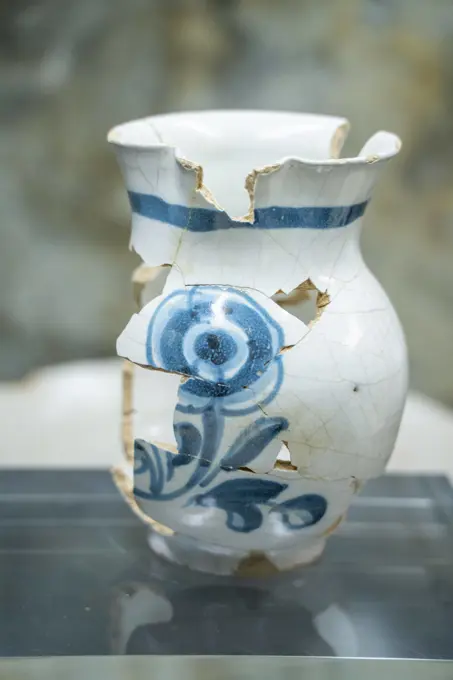
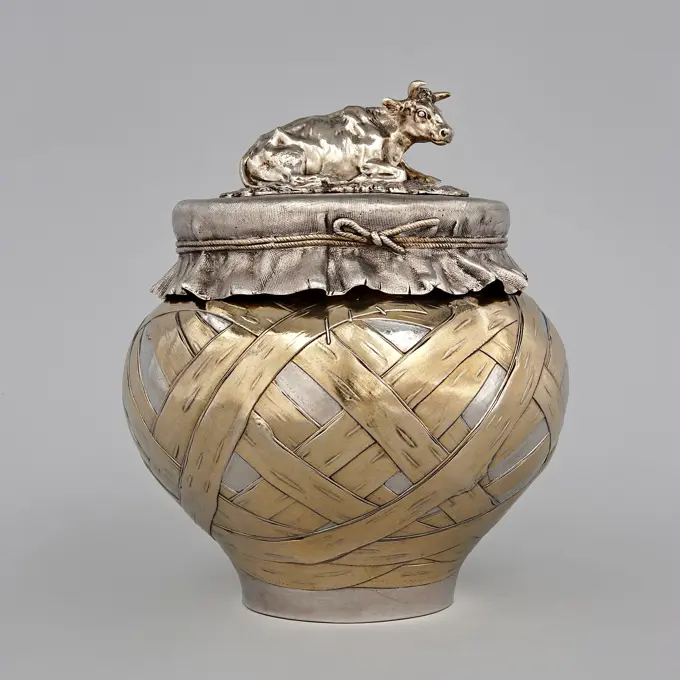
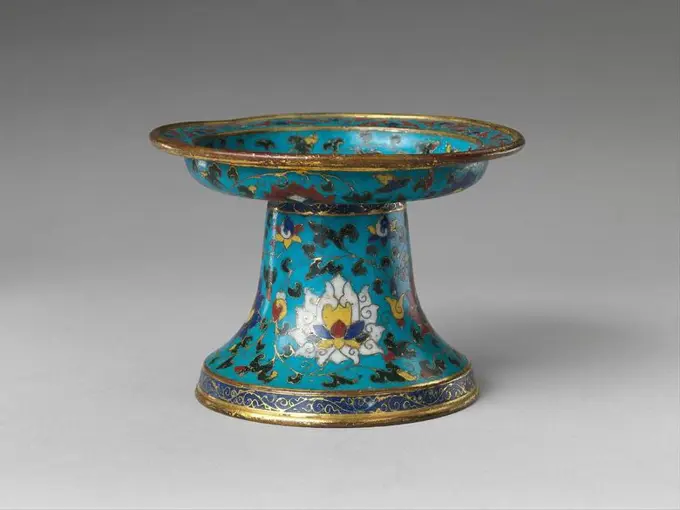
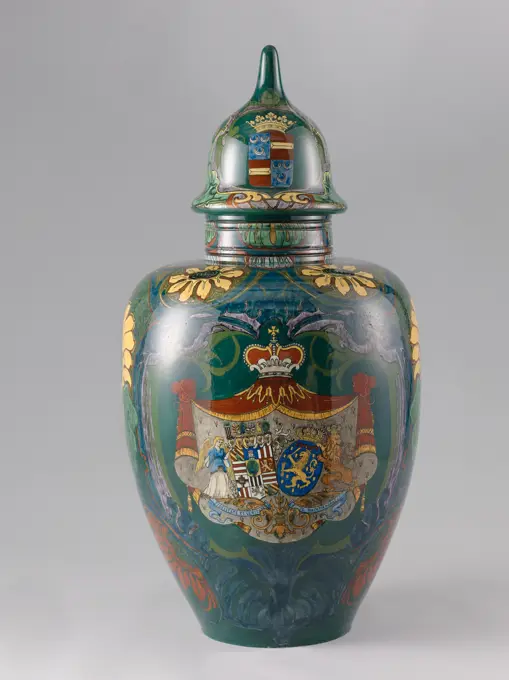
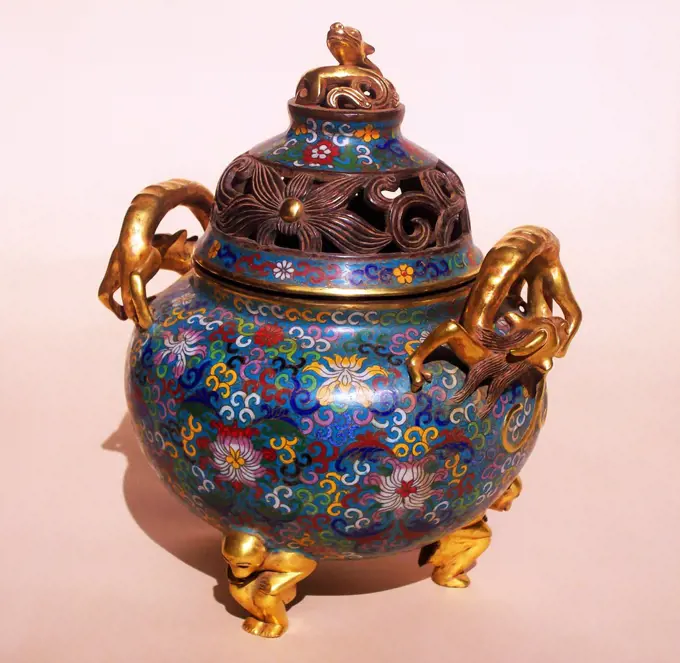
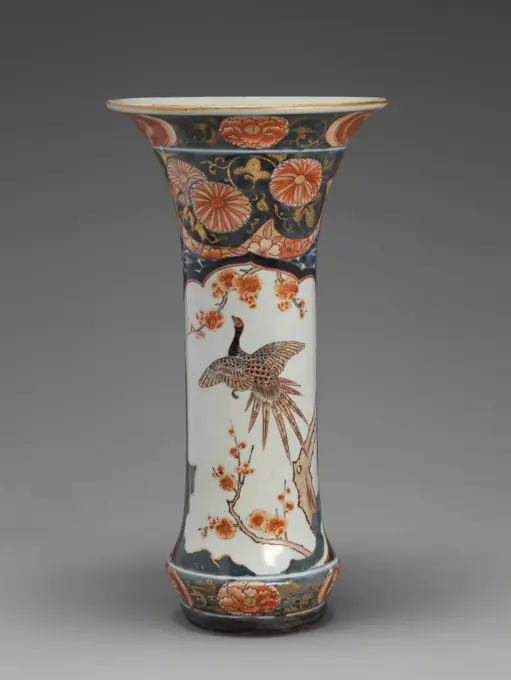
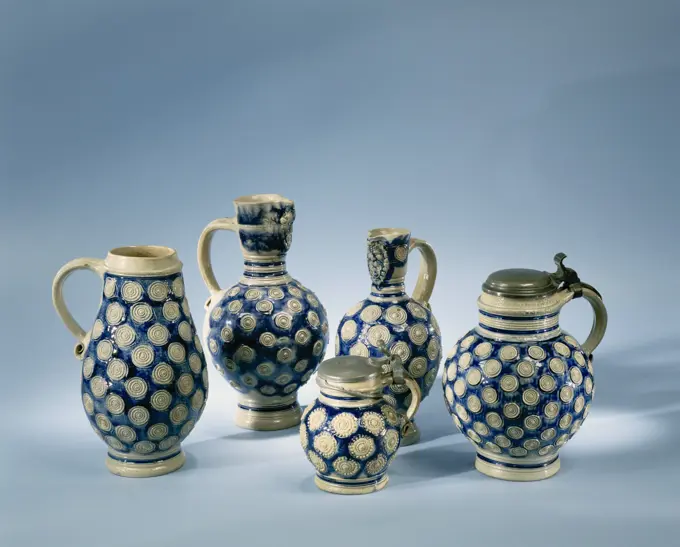
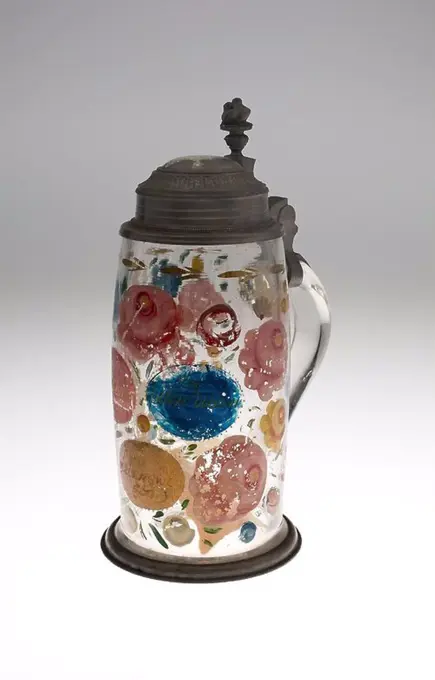
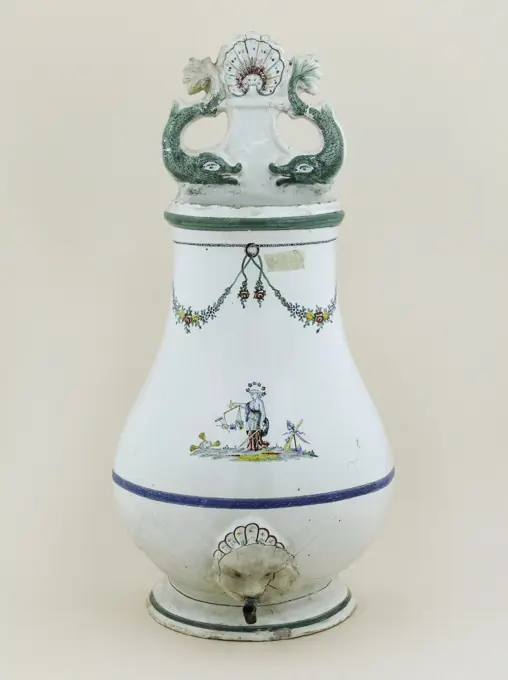
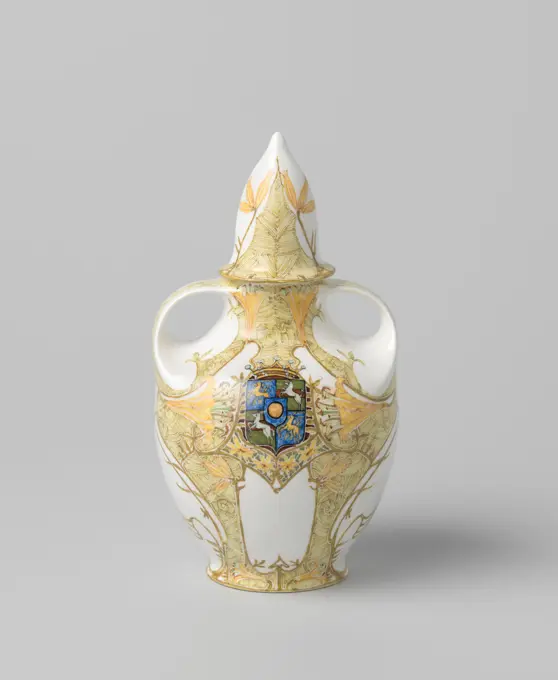
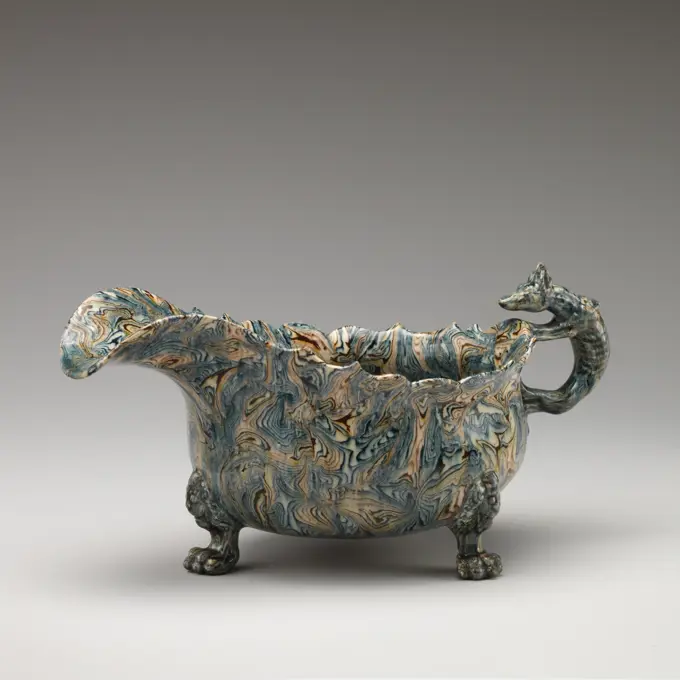
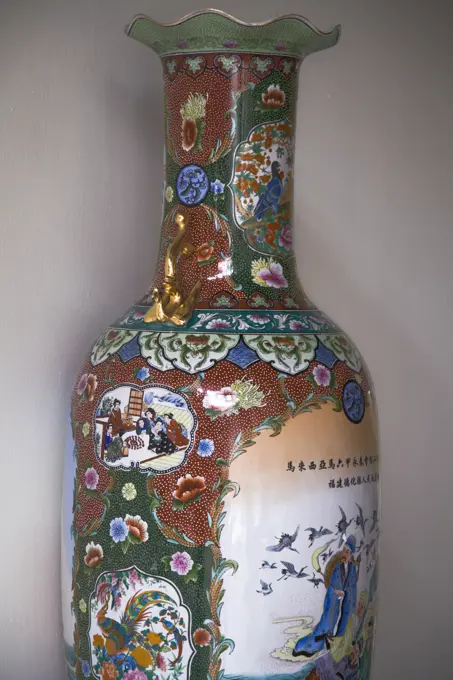
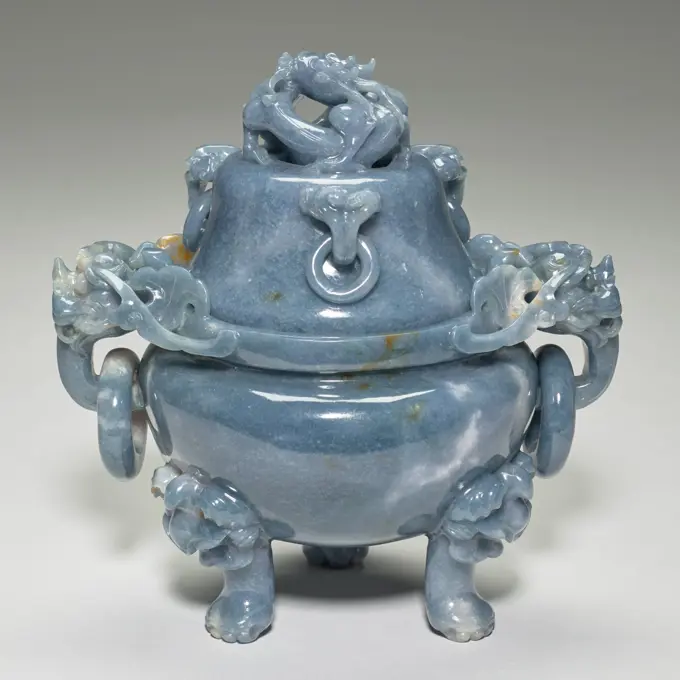
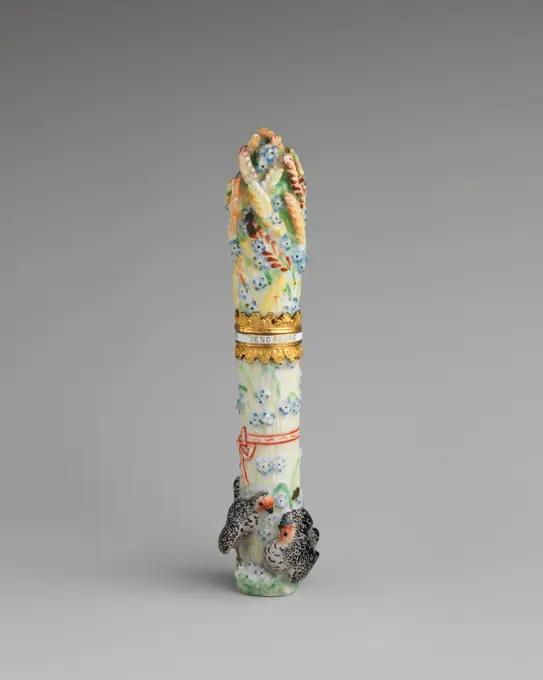
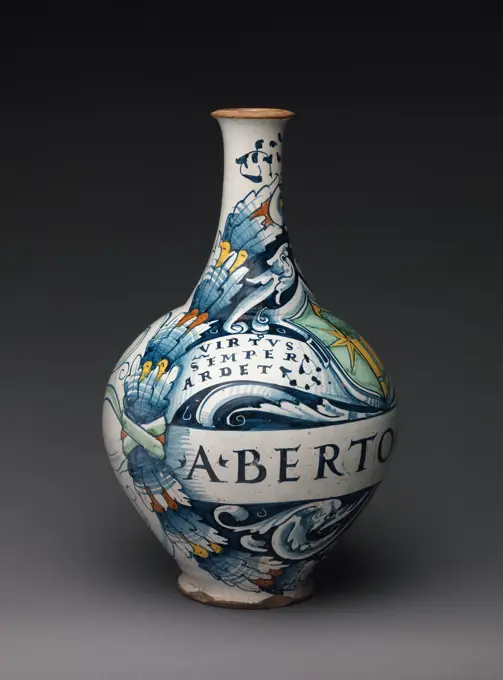
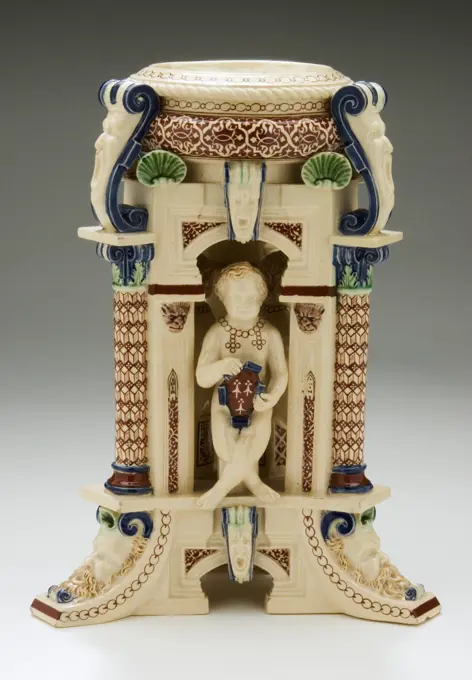
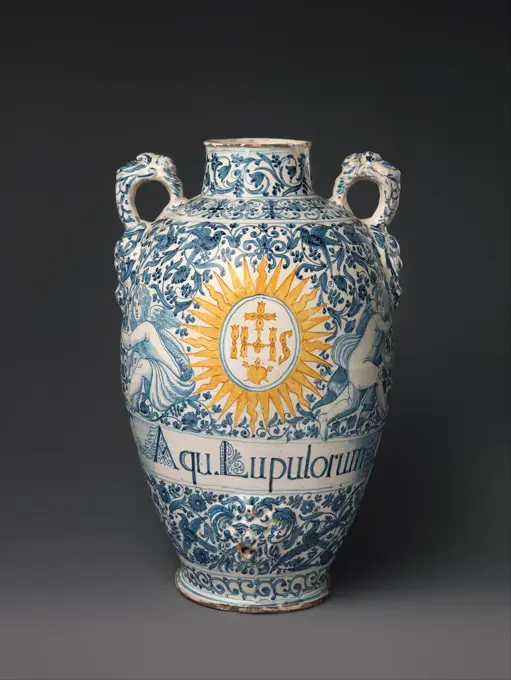
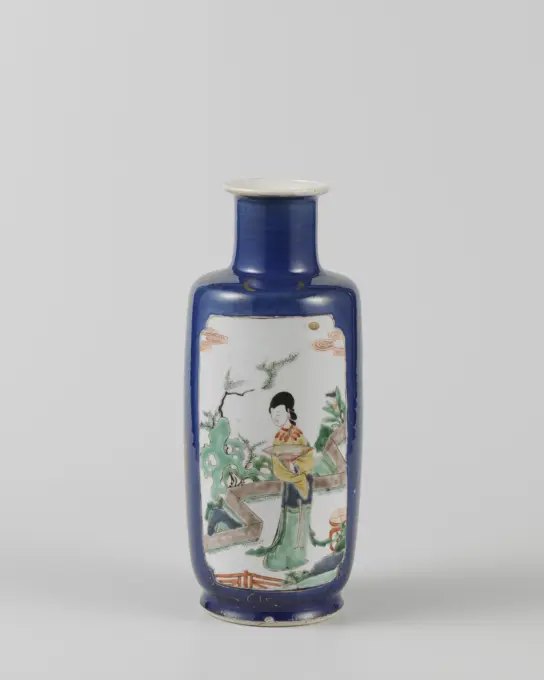
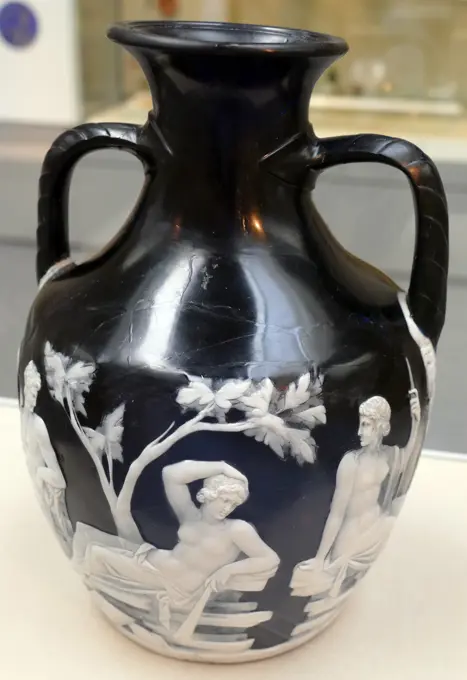
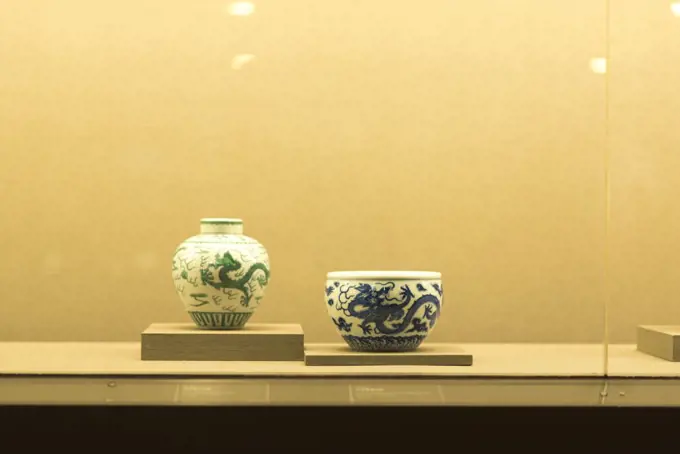
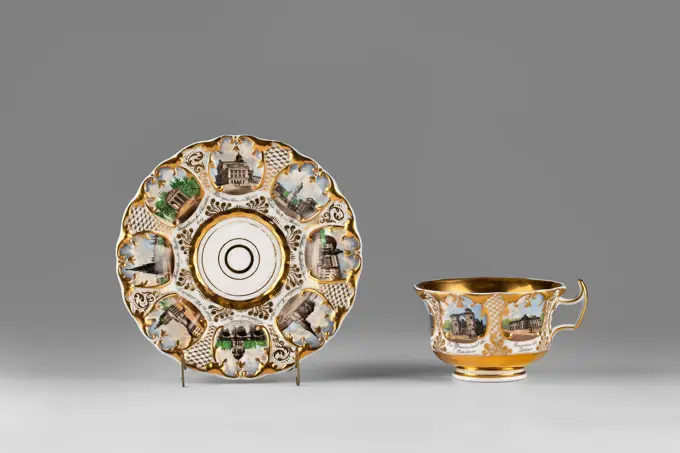
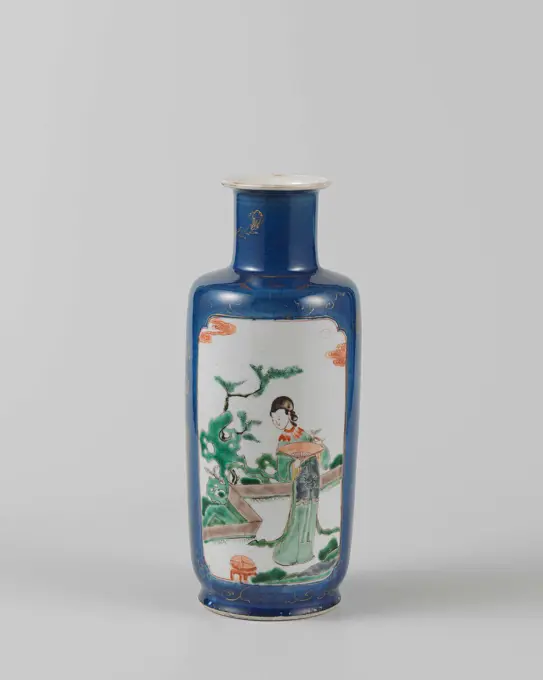
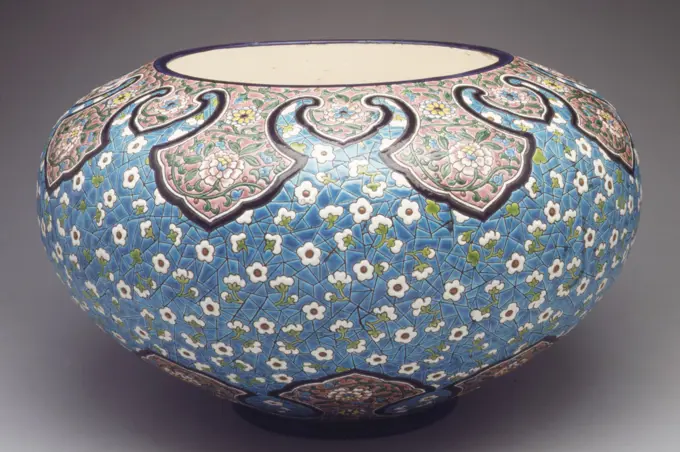
Jardinière ca. 1873-80 Longwy Manufactory. Jardinière 207961Cup Stand. Culture: China. Dimensions: H. 4 1/4 in. (10.8 cm); Diam.of rim 5 3/4 in. (14.6 cm); Diam. of base 4 1/2 in. (11.4 cm). Date: early 15th century. Museum: Metropolitan Museum of Art, New York, USA.. Large cover bowl of porcelain, painted in underglaze blue. The outer wall with a continuous landscape with pavilions, mountains and trees. Below a decorative band. The lid with the same decoration; Lid knob in the shape of a shishi (lion dog). A preen on the bottom. Arita, blue-white.. Pottery vase lid, belonging to a couple of three polychrome painted with sunflowers, weapons and topographic representations. On the pointed tapered lid, the weapon of the municipality of Wassenaar is depicted and a sunflowers has been painted.Ancient China: Censer with two dragon handles, Ming Dynasty, Jingtai period, 1450 - 1456 AD. Gilt cloisonne enamel and bronze.Octagonal ribbed pot of multicolored painted faïence. Octagonal, ribbed pot of multicolored painted faïence, with a lid. The pot is painted with flowers, rocks, birds and a bird in a tree. The pot is part of a couple, the other parts are: two to these pot of equal pots and two identical vases. The parts are marked.Beaker vase (part of a five-piece garniture) ca. 1690-1720 Japanese, for export market (Hizen ware, Imari type) Japanese porcelain vases made for export were avidly sought by aristocratic and royal patrons to decorate their stately homes and palaces in the late seventeenth and early eighteenth centuries. While Chinese porcelains were exported to Europe and Britain in larger quantities during this period, Japanese porcelains were prized for their boldly patterned and richly-colored decoration. The popularity of works such as these changed European taste for Asian porcelain, with a more vivid palette preferred over the blue and white decoration which once defined imported porcelains.. Beaker vase (part of a five-piece garniture). Japanese, for export market (Hizen ware, Imari type). ca. 1690-1720. Hard-paste porcelain with underglaze blue and overglaze enamel and gilding. Ceramics-Porcelain-ExportJug with a lion's head and medallions, anonymous, c. 1650 - c. 1724 Can be made of stoneware on high foot with a narrow neck, egg -shaped body and a pinched spout in the edge. The C-shaped ear is attached to the neck and shoulder. Partly covered with cobalt blue on the glaze. On the foot and the neck some entry lines. The KAN is decorated with a relief decoration in which the abdomen is largely covered with printed, imposed medallions with a flower rosette against a blue background. A modeled lion's head has been applied to the neck under the spout, flanked by a rosette. Westerwald. Westerwald stoneware. glaze. cobalt (mineral) vitrification Can be made of stoneware on high foot with a narrow neck, egg -shaped body and a pinched spout in the edge. The C-shaped ear is attached to the neck and shoulder. Partly covered with cobalt blue on the glaze. On the foot and the neck some entry lines. The KAN is decorated with a relief decoration in which the abdomen is largely covered with printedPair of Vases (New form Dutch vase), Manufacture de Sèvres, 1763 Vase of multicolored painted porcelain. The top is funnel -shaped and is placed in an oval pedestal on four low legs. The vase has a blue distance with saved courses in which chinoiseries. In a compartment in the upper part, two women are painted by a tree that admires a painting ceased by a child. In a box in the pedestal, a departure is painted within which two children at two tables. The vase is marked. Sèvres porcelain. gilding (material). Vase of multicolored painted porcelain. The top is funnel -shaped and is placed in an oval pedestal on four low legs. The vase has a blue distance with saved courses in which chinoiseries. In a compartment in the upper part, two women are painted by a tree that admires a painting ceased by a child. In a box in the pedestal, a departure is painted within which two children at two tables. The vase is marked. Sèvres porcelain. gilding (material).Exhibition Arita Porcelain from now. .Sake Pourers with Bamboo and Bellflowers, c. 1844-57. Attributed to Seifū Yohei I (Japanese, 1801-1861). Pair of sake pourers; stoneware with white slip, underglaze blue and gold repair (kintsugi) (Kyoto ware); height (each): 13 cm (5 1/8 in.); diameter (each): 5.5 cm (2 3/16 in.).Vase, cup-shaped, with decor in black and yellow, N.V. Plateelbakkerij Ram, Theo Colenbrander, Albert Peters, 1923Tankard. Germany. Date: 1800. Dimensions: 25.1 x 8.7 cm (9 7/8 x 3 7/16 in.). Glass with metal mounts. Origin: Germany. Museum: The Chicago Art Institute, Chicago, USA.Covered Jar with Medallions. China. Date: 618 AD-906 AD. Dimensions: H. 19.4 cm (7 5/8 in.); diam. 18.7 cm (7 3/8 in.). Slip-coated earthenware with three-color (sancai) lead glazes. Origin: China. Museum: The Chicago Art Institute, Chicago, USA.Beaker with Cover (Humpen) with Hunting Scenes 1550-1600 Bohemia. Colorless glass and enamel .Vessel with lid. unknown, craftsmanAnonymous. Fountain at the allegory of justice. Earthenware. 1790. Paris, Carnavalet museum. 72437-51 Allegorie, balance, dolphin, painted decor, sword, revolutionary faience, female figure, fountain, justice, object, revolution 1789, French revolution, 18th 18th 18th 18th 18th centuryOrnate chinese ceramic or porcelain vase, with decorative flower patterns, isolated against a white background.Baluster vase with portraits of Queen Victoria, c. 1897, 9 3/4 x 5 1/16 x 5 1/16 in. (24.77 x 12.86 x 12.86 cm), Porcelain, China, Chinese exportPilgrim flask. UnknownMilk with characters and fauna with a jug; Manufaktura Majoliki in Nieborów (Nieborów; Wytwórnia; 1881-1899); 1881-1886 (1881-00-00-1886-00-00);Cylindrical Vase With Chinese Ladies And Flower Pots. Small, cylindrical vase of porcelain with a straight shoulder and short, spreading neck with a flat edge, painted in underglaze blue. On the wall Chinese ladies (long lines) at flower pots on a stool. On the shoulder valuables (pearl, books). A tire with dots on the neck. Marked on the bottom with 'fú'. Blue White.Cover of sugar bowl, part of a tête-à-tête, painted with Lelies, N.V. Haagsche Plateel Factory Rozenburg, 1900 Lid of sugar bowl of a porcelain tête-à-tête. Painted in yellow, reddish -brown and different shades of green with an ornamental decor, in which lilies. On all parts the monogram MVV (= Michiels van Verduynen) and the weapon of this family, in which the color blue also occurs. The Hague porcelain Lid of sugar bowl of a porcelain tête-à-tête. Painted in yellow, reddish -brown and different shades of green with an ornamental decor, in which lilies. On all parts the monogram MVV (= Michiels van Verduynen) and the weapon of this family, in which the color blue also occurs. The Hague porcelainVase 18th century China. Vase 44180Sauceboat ca. 1750-70 Style of Whieldon type. Sauceboat. probably British, Staffordshire. ca. 1750-70. Solid agateware, glazed. Ceramics-PotteryCovered multicolour painted with flower motifs, N.V. Haagsche Plateel Factory Rozenburg, 1886 Cover of earthenware, belonging to a vase (a), painted in green, yellow, brown and dark blue with stylized floral motifs. The Hague earthenware Cover of earthenware, belonging to a vase (a), painted in green, yellow, brown and dark blue with stylized floral motifs. The Hague earthenwareMalaysia, Melak, Malacca, Baba House, chinese vasePunch goblet, 1867, Cristalleries de Baccarat, Baccarat, France, est. 1764, 4 3/4 x 2 7/16 in. (12.07 x 6.19 cm), Cased lead glass, France, 19th centuryCylindrical bottle vase with dragons.Cylindrical bottle-shaped vase of porcelain with flat shoulder, painted in underglaze blue and red. Two dragons with clouds above stylized waves on the wall. A double circle on the bottom. Middle blue with copper red.Hexagonal bottle (kruke) with the planets and a coat of arms, anonymous, 1689 Hexagonal bottle (stool) of stoneware on spreading foot and with an egg -shaped body and narrow, short neck. Profiles closely. Covered with a brown Engobe and painted with email colors in blue, red, green, yellow, black and white. In each subject a printed and imposed decoration in the relief of a personification of the planets (Satvrnvs, Jupiter, Mars, Soll, Venus, Mercury) and a weapon worn by an angel. In the courses of Saturn and Jupiter the date '1689'. On the shoulder flowers in relief. The weapon is a modified version of that of the Nuremberg Neudörffer family. Creusen. Creusen stoneware. glaze. engobe. vitrification Hexagonal bottle (stool) of stoneware on spreading foot and with an egg -shaped body and narrow, short neck. Profiles closely. Covered with a brown Engobe and painted with email colors in blue, red, green, yellow, black and white. In each subject a printed and imposed decoration in the relIncense burner, 19th century, 7 1/2 × 7 × 5 in. (19.05 × 17.78 × 12.7 cm), Blue jadeite, China, 19th century, The intricate design and extravagant treatment of this incense burner, in archaic ding-cauldron form, demonstrates the fashion for archaic artworks prevalent during the 1700s and the virtuosity of mid-Qing workmanship. The domed lid is embellished with three movable rings; its openwork knob is in the shape of a dragon. Two 'ears' connected at the rim and shoulder and upper side of the burner are carved as animal masks, each holding a ring in its C-shaped body. The main body of the censer is supported on three animal feet, each modeled at the top with an animal head. Exceptional by virtue of its extremely rare blue color, this tripod censer reflects the trend toward brighter hues of jade during the 19th century. The importation of Burmese jadeite beginning in the late 17th century afforded Chinese craftsmen a far greater range of pure, bright colors than had previously been avaiFlower vase with a cover. Wolff, Karol (fl. ca 1800), company owner, Bielino (manufaktura fajansu ; 1779-1800), factoryPartridges in wheatsheaf ca. 1755 Chelsea Porcelain Manufactory. Partridges in wheatsheaf. British, Chelsea. ca. 1755. Soft-paste porcelain. Chelsea Porcelain Manufactory (British, 1745-1784, Red Anchor Period, ca. 1753-58). Ceramics-PorcelainORZA DE BOTICA DECORADA DE TALAVERA S XVII. Location: INSTITUTO VALENCIA DE DON JUAN-COLECCION. MADRID. SPAIN.Porcelain trumpet vase with floral decorationOld ceramic monastery harness Old ceramic monastery harnessPottery. Manual work of the Ukrainian handicraftsmenCrack vessel with cover; Sazikow (Moscow and St. Petersburg; the company Z Otnicz; 1793-1887); 1862 (1862-00-00-1862-00-00);Foundation Jakub Ksawery Count. Potocki (1934-) - collections, Potocki, Jakub Ksawery (1863-1934) - collection, gift (provenance), cows, testamentary record of Jakub Ksawery PotockiThe pres, the lampsetk, 1740 -1000 lid FaiMence lid jar. Blue painted with floral decorations. Part of cupboard set, consisting of three lid pots and two roller cars. Delft .Fragment of a jug with roundels and stylized foliate ornaments, anonymous, c. 1600 - c. 1699 Fragment of a jug of stoneware on a high base with a spherical body and narrow neck. Part of the neck and the ear are missing. Profiles on the neck and foot. Partly covered with cobalt blue. A printed and imposed circle of rosettes on the belly in relief. In the center a rosette, surrounded by stamped circles and stylized leaf motifs. The side with a vertical tire rosettes with triangular leaf motifs on either side. Westerwald. Westerwald stoneware. glaze. cobalt (mineral) vitrification Fragment of a jug of stoneware on a high base with a spherical body and narrow neck. Part of the neck and the ear are missing. Profiles on the neck and foot. Partly covered with cobalt blue. A printed and imposed circle of rosettes on the belly in relief. In the center a rosette, surrounded by stamped circles and stylized leaf motifs. The side with a vertical tire rosettes with triangular leaf motifs on either sVase, Meissener porcelain manufactory, c. 1725 - c. 1730 Vase with lid, made of multicolored painted porcelain. Vase and lid are almost completely covered with a gray stock, in which two high-racked accolade-shaped four-passes are saved in which Höroldt chinoiseries in a garden on one side and a branch with Indianic blums on the other. The lid also has two four passes. On the shoulder an ornament band with browse and rosettes runs in gold, four times interrupted by oval with Indianic blums. The vase is marked. Float porcelain Vase with lid, made of multicolored painted porcelain. Vase and lid are almost completely covered with a gray stock, in which two high-racked accolade-shaped four-passes are saved in which Höroldt chinoiseries in a garden on one side and a branch with Indianic blums on the other. The lid also has two four passes. On the shoulder an ornament band with browse and rosettes runs in gold, four times interrupted by oval with Indianic blums. The vase is marked. Float porPharmacy bottle (one of a pair) ca. 1500-1510 Italian, Deruta The Latin mottos "Virtue always burns" and "Virtue has no value if one has no faith" may relate to the bottles owner, whose coat of arms appears between the inscriptions. Prominent labels indicate that the vessels (see also 02.5.59) once held extracts of wood bettony and maidenhair fern.. Pharmacy bottle (one of a pair) 188554 Italian, Deruta, Pharmacy bottle (one of a pair), ca. 1500?1510, Maiolica (tin-glazed earthenware), Overall (confirmed): 17 3/8 ? 10 1/2 ? 10 1/2 in. (44.1 ? 26.7 ? 26.7 cm). The Metropolitan Museum of Art, New York. Gift of W. B. Osgood Field, 1902 (02.5.58)Tea caddy with cover with armorial decoration (part of a service) 1750-60 Chinese, for British market. Tea caddy with cover with armorial decoration (part of a service). Chinese, for British market. 1750-60. Hard-paste porcelain with enamel decoration and gilding. Ceramics-Porcelain-ExportFoo Dog, anonymous, c. 1700 - c. 1724 Image of porcelain on a high, rectangular pedestal, painted on the biscuit with blue, green, yellow, eggplant and black. On the pedestal a shishi (lion dog) with a leg on an openwork ball. The pedestal is covered with servetwork and open on two sides, in the form of a scalloped cartouche and a peach branch. Email sur Biscuit in Famle Verte. China porcelain. painting Image of porcelain on a high, rectangular pedestal, painted on the biscuit with blue, green, yellow, eggplant and black. On the pedestal a shishi (lion dog) with a leg on an openwork ball. The pedestal is covered with servetwork and open on two sides, in the form of a scalloped cartouche and a peach branch. Email sur Biscuit in Famle Verte. China porcelain. paintingVase;  2nd half 19th century (1846-00-00-1875-00-00);Flower vase. unknown, factory'Henri II Ware' Salt. Charles Toft, Sr. (England, circa 1828-1890)Mintons Ltd. (England, Staffordshire, Stoke-on-Trent, founded 1793). England, 1876. Furnishings; Serviceware. Earthenware, inlaid, painted, and glazedIncense Burner in the Form of a Duck. China. Date: 1100-1200. Dimensions: H. 19.1 (7 1/2 in.); diam. 15.1 cm (6 in.). Qingbai ware; porcelain with underglaze molded and carved decoration. Origin: China. Museum: The Chicago Art Institute, Chicago, USA.Drug vase (one of a pair) ca. 1620-80 Italian Storage vessels were among the most frequently produced maiolica wares in late medieval and Renaissance Italy. Made in fairly standard shapes, they were designed to fit with dozens of others on a shelf, often in a pharmacy or shop. Their handles therefore tend to fit within the vessels profile, and the cylindrical albarello type is generally narrower at the middle than at the top or bottom, making it easy to grip. Other common features include inscriptions indicating contents and flanged lips to help secure cloth or paper seals. The decoration, usually more elaborate on one side than the other, can sometimes link pieces to a known dispensary or specific workshop or artist.. Drug vase (one of a pair) 237749Container in the Form of a Creature. Thailand, Sawankhalok, circa 16th century. Furnishings; Accessories. Wheel-thrown stoneware with cream slip, underglaze brown painted decoration, and pale blue glazeCovered Spice Bowl, c. 1775-80. France, Montpellier, 18th century. Faience; overall: 8.9 x 12.7 x 8.3 cm (3 1/2 x 5 x 3 1/4 in.).Cylindrical vase with powder blue and a woman on a terrace, anonymous, c. 1700 - c. 1720 Porcelain roller wagon with flat shoulder, straight neck and flat edge, painted in underly glaze blue and on the glaze blue, red, green, yellow, eggplant, black and gold. The wall is covered with bleu poudré (powder blue) with two rectangular fields with squeezed corners, filled with a woman with a fan or cloth next to a stool on a terrace with rocks and plants; Around the compartments a decoration in gold, between the compartments a flower vase, around the foot curry, on the shoulder a swastika pattern interspersed with compartments filled with antiques, on the neck flower areas. Bleu Poudré with Famle Verte. China porcelain. glaze. cobalt (mineral). gold (metal) painting / vitrification / vitrification Porcelain roller wagon with flat shoulder, straight neck and flat edge, painted in underly glaze blue and on the glaze blue, red, green, yellow, eggplant, black and gold. The wall is covered with bSnuff Bottle, 1924, 3 x 2 1/4in. (7.6 x 5.7cm), Glass, rose quartz, China, Qing dynasty16th Century Mosque lamp from Turkey, associated with the Mausoleum of Bayezid II. Dated 16th CenturyBottle 1725-30 Vienna. Bottle 203192The Portland Vase, a Roman cameo glass vase, which is dated to between AD 1 and AD 25, served as an inspiration to many glass and porcelain makers from about the beginning of the 18th century onwards. It is first recorded in Rome in 1600-1601, and since 1810 has been in the British Museum in London.Snuff Bottle, 1780-1850, 3 3/8 x 2 3/8in. (8.6 x 6cm), Cinnabar lacquer, glass, ChinaGlass. Czechy, creatorChinese, Snuff Bottle, porcelain.Decorative ceramic, Glass vase isolated on whiteTAIPEI, TAIWAN - November 24 : Antiques are displayed in Taipei’s National Palace Museum on November 24, 2016 in Taipei, Taiwan, Asia.Pharmacist's spot with inscription S,/ fumar, comp ,, anonymous, c. 1750 - c. 1800 Pharmacist's pharmacy. Ear and spout and blue painted label with inscription: S,/ fumar, comp,. Delft . Pharmacist's pharmacy. Ear and spout and blue painted label with inscription: S,/ fumar, comp,. Delft .Teacup and saucer. unknown, painter, Koenigliche Porzellan Manufaktur - KPM (Berlin ; 1763-1918), factoryVase with cover. Culture: British, Longton Hall, Staffordshire. Dimensions: Overall (wt. confirmed): 16 7/16 × 19 × 6 15/16 in., 11 lb. vase (a) 6 lb., cover (b) 5 lb. (41.8 × 48.3 × 17.6 cm, 5 kg). Factory: Longton Hall (British, Staffordshire, ca. 1749-1760). Date: ca. 1755. Museum: Metropolitan Museum of Art, New York, USA.Jug ca. 1800 Mexican. Jug. Mexican. ca. 1800. Tin-glazed earthenware. Made in MexicoCylindrical vase with powder blue and a chinese lady on a terrace. Trolley vase of porcelain with flat shoulder, straight neck and flat edge, painted in underglaze blue and on the glaze blue, red, green, yellow, eggplant, black and gold. The wall is covered with bleu poudré (powder blue) with two rectangular fields with squeezed corners, the one filled with a Chinese lady with a spriggle and a stool on a terrace with rocks and plants, the other with a Chinese lady with a sprig next to a table in a fenced garden with rocks, plants and a tree; To the courses a decoration in gold, between the boxes a flower vase, around the foot curling, on the shoulder a Swastika pattern interspersed with boxes filled with antiques, on the neck flower branches. Bleu poudré with famille verte.Snuff bottle with theatrical scene. Culture: China. Dimensions: 3 3/4 x 1 3/8 in. (9.5 x 3.5 cm). Date: late 19th century. Museum: Metropolitan Museum of Art, New York, USA.Tea Caddy. Meissen Porcelain Manufactory; German, founded 1710. Date: 1735-1745. Dimensions: 12.7 x 6.7 x 4.5 cm (5 x 2 5/8 x 1 3/4 in.). Hard-paste porcelain, polychrome enamels, and gilding. Origin: Meissen. Museum: The Chicago Art Institute, Chicago, USA.Porcelain Vase, Downtown Santa Barbara, California, USAVase. Culture: China. Dimensions: H. 18 5/8 in. (47.3 cm); W. 5 3/4 in. (14.6 cm); D. 5 3/4 in. (14.6 cm); Diam. of rim 4 1/2 in. (11.4 cm). Museum: Metropolitan Museum of Art, New York, USA.