Decorative Porcelain Vases

Elegant porcelain vases featuring intricate floral patterns and historical significance, highlighting fine craftsmanship from various cultures.

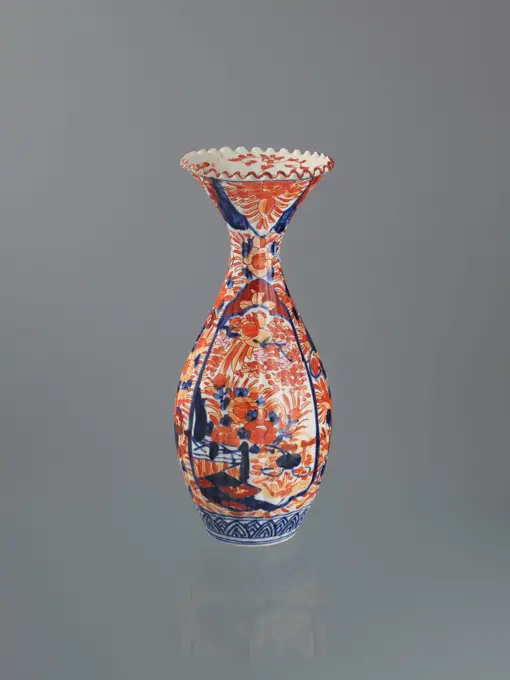
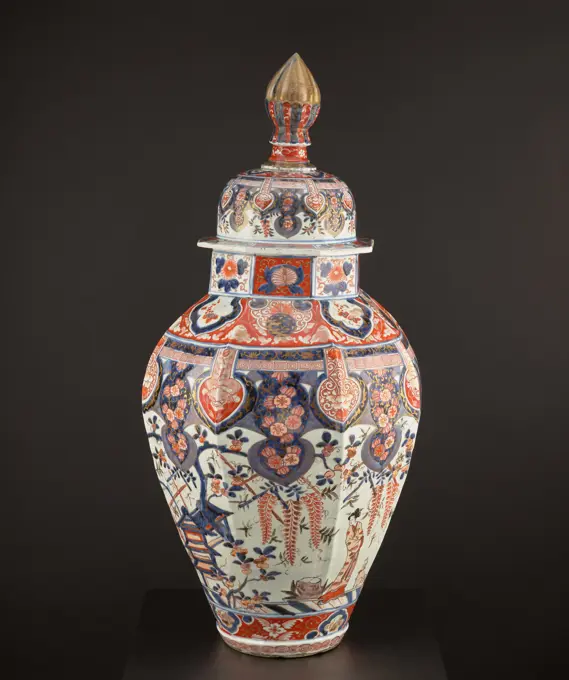
Covered baluster jar with large flower sprays, anonymous, c. 1720 - c. 1740 Balus -shaped porcelain lid jar, painted in underly glaze blue and on the glaze red and gold. On the wall large, flowering plants (peony, lotus), with a hanging lambrequin tire at the top with servetwork on which flower rosettes and happiness symbols (books, shell) and at the bottom a raised lambrequin band with flower vines against a blue ground; The same band around the neck; Around the foot a thickening with a tire of flower vines and a tire servetwork interspersed with cartouches with flower branches. Imari. Japan porcelain. glaze. cobalt (mineral). gold (metal) painting / gilding / vitrification Balus -shaped porcelain lid jar, painted in underly glaze blue and on the glaze red and gold. On the wall large, flowering plants (peony, lotus), with a hanging lambrequin tire at the top with servetwork on which flower rosettes and happiness symbols (books, shell) and at the bottom a raised lambrequin band with fl
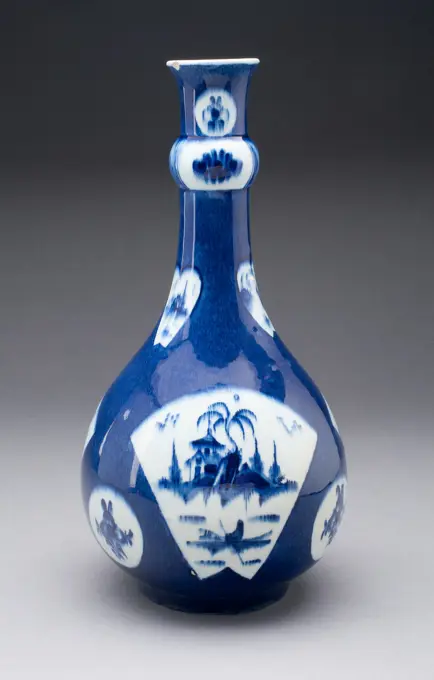
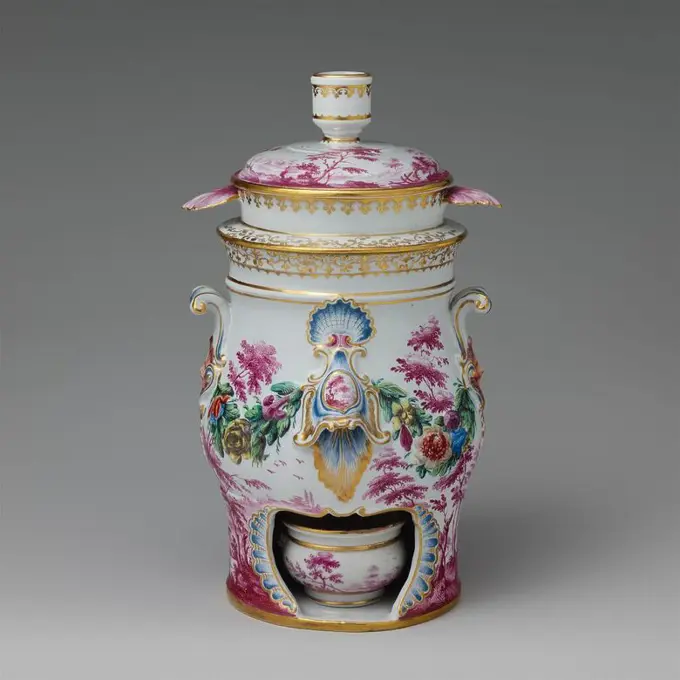
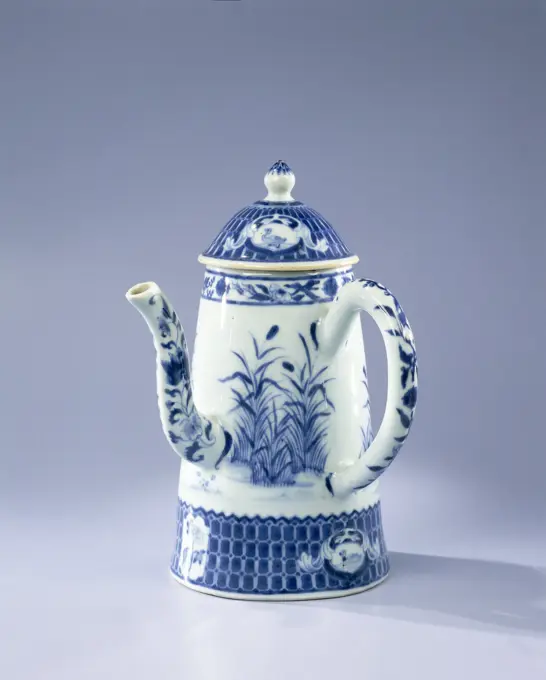
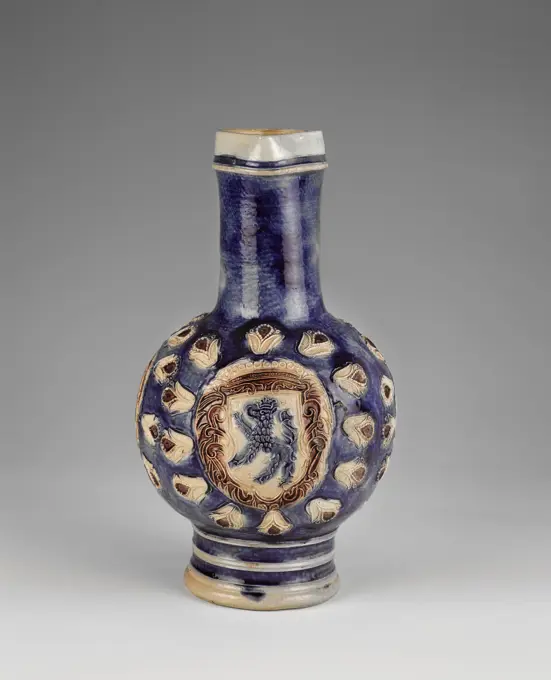
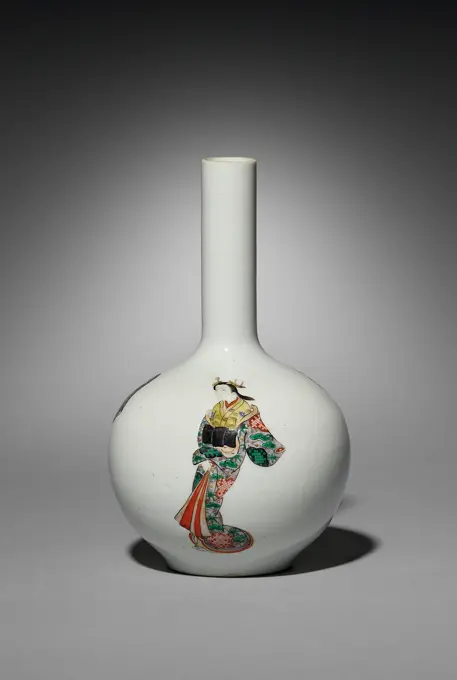
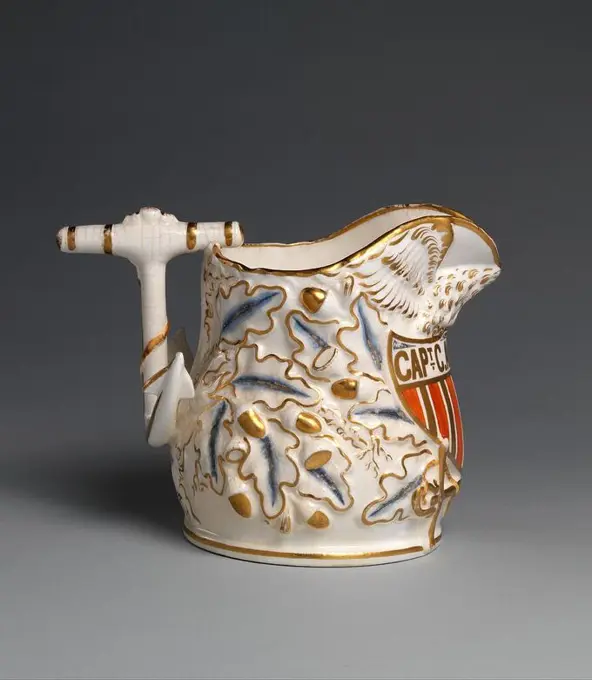
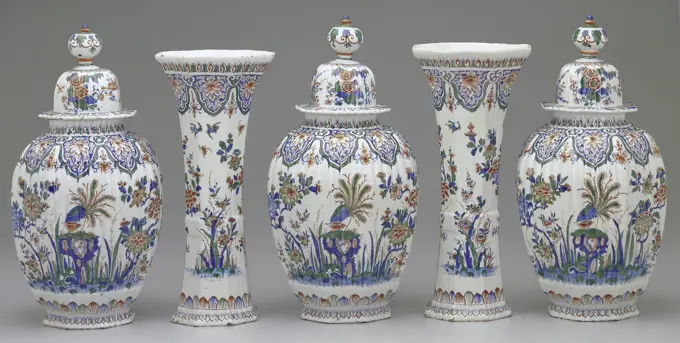
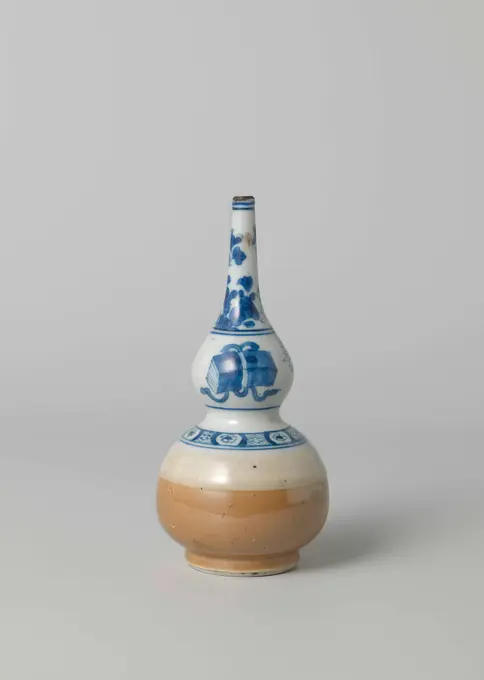
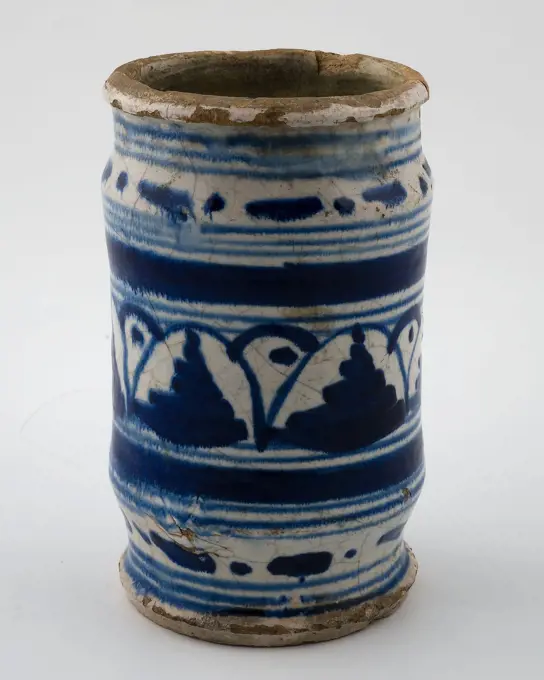
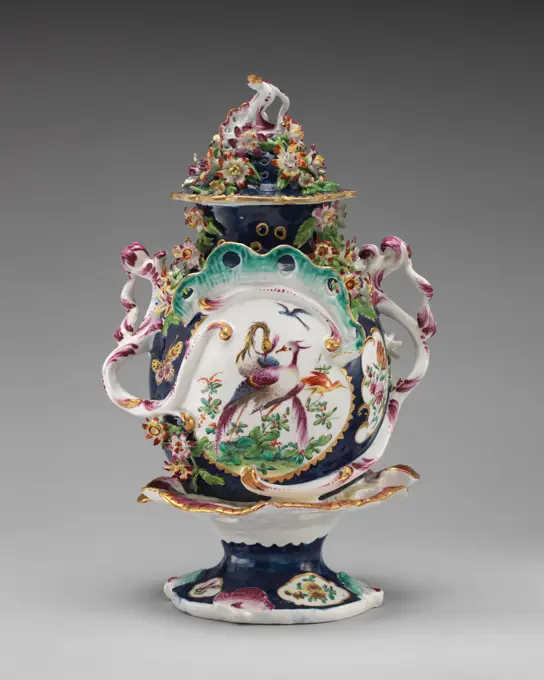
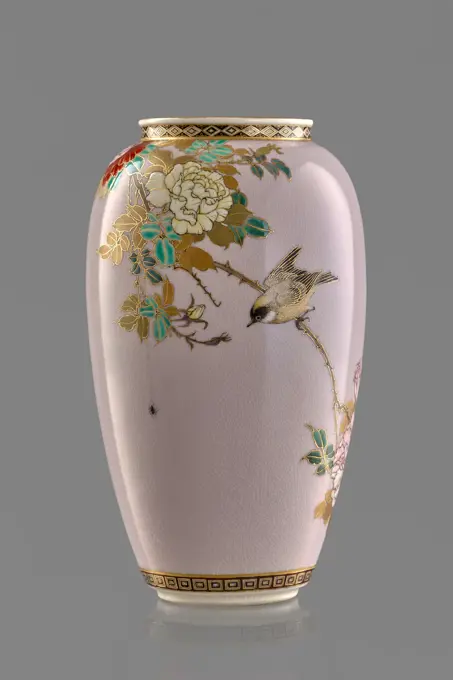
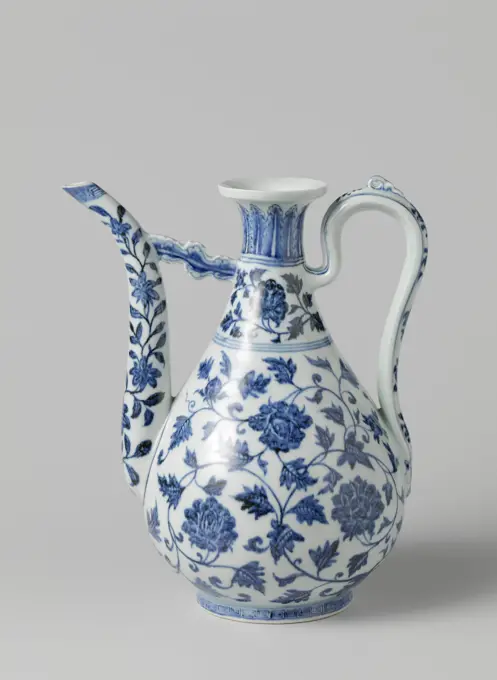
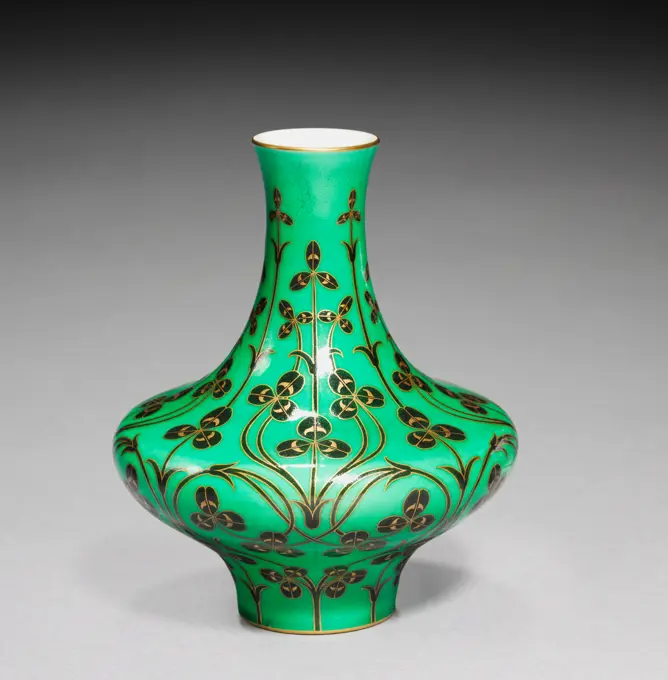
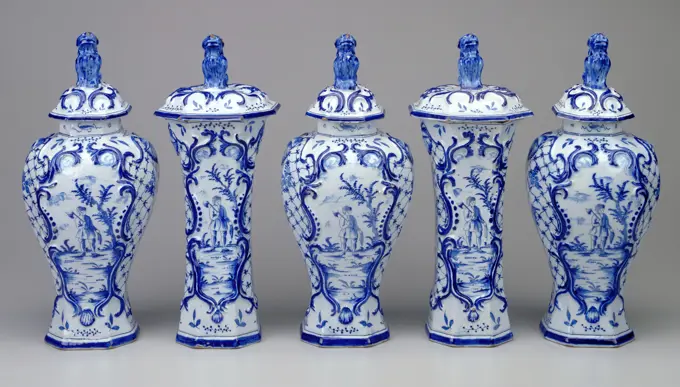
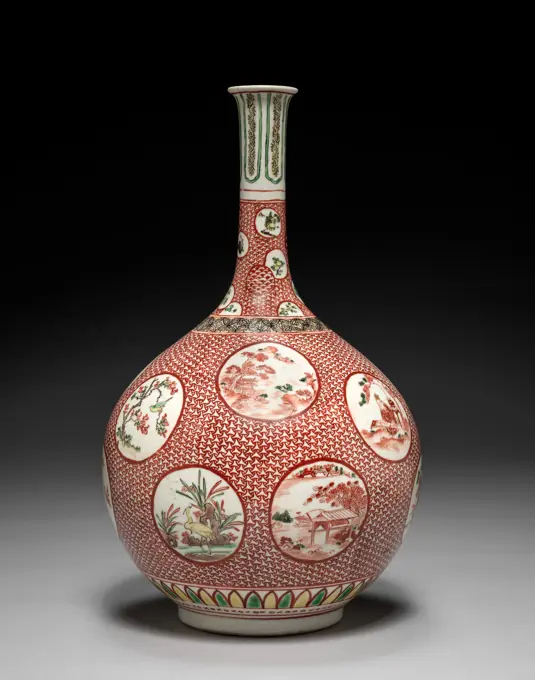
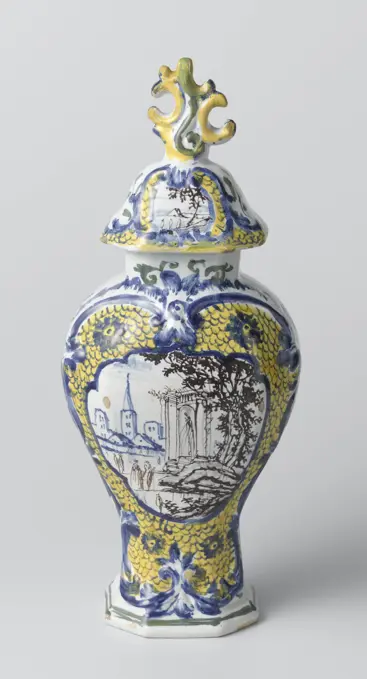
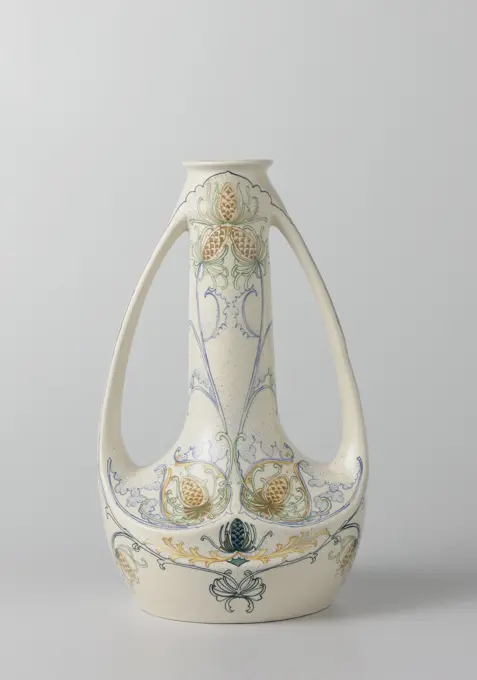
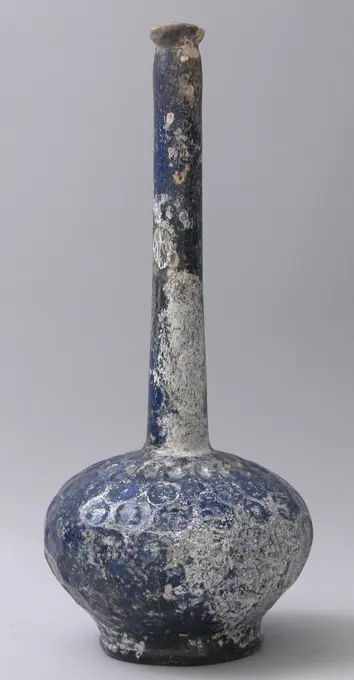
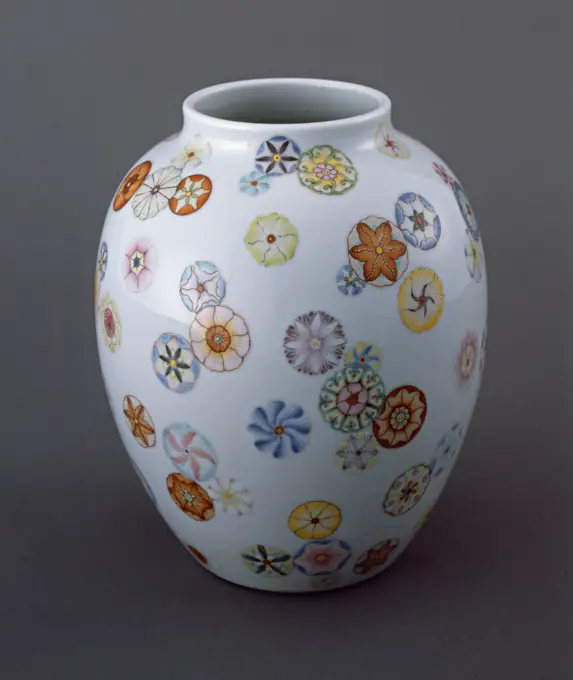
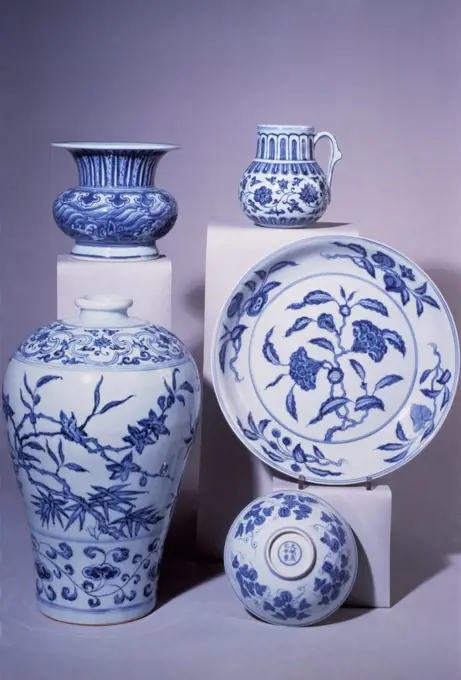
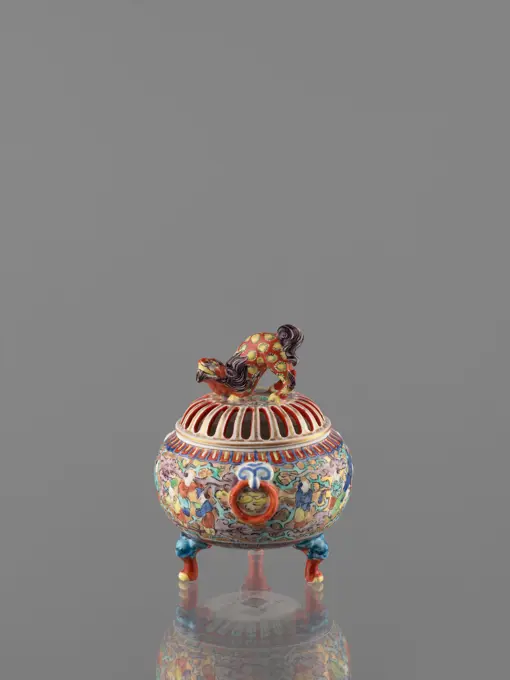
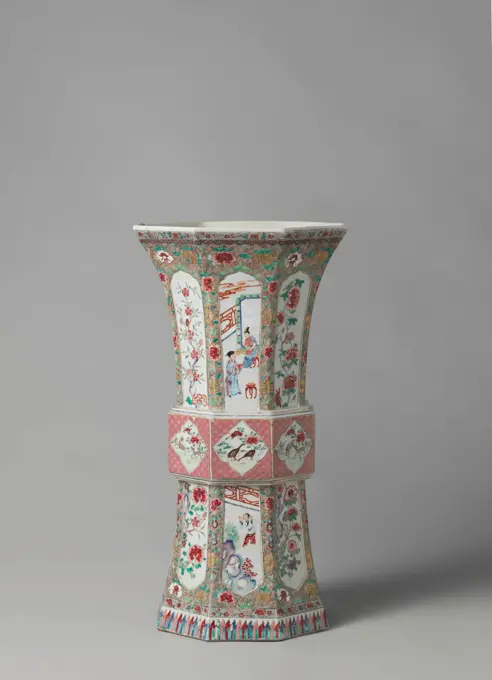
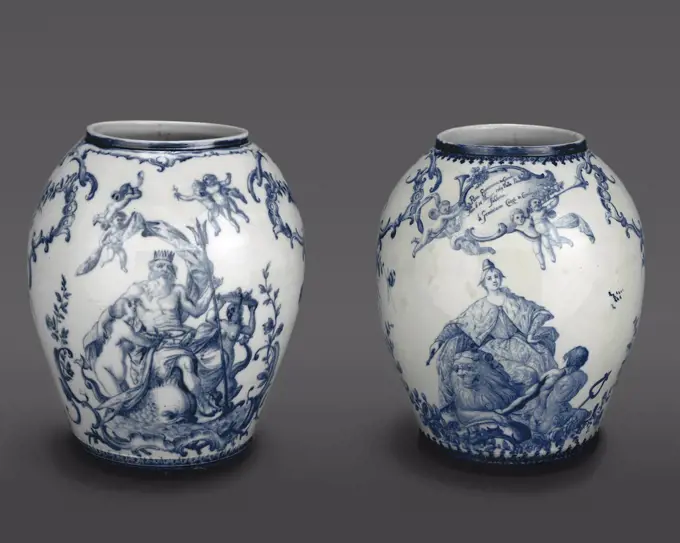
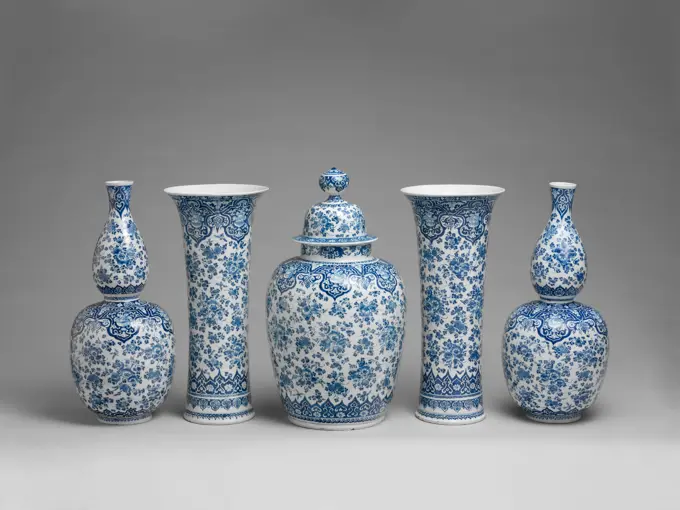
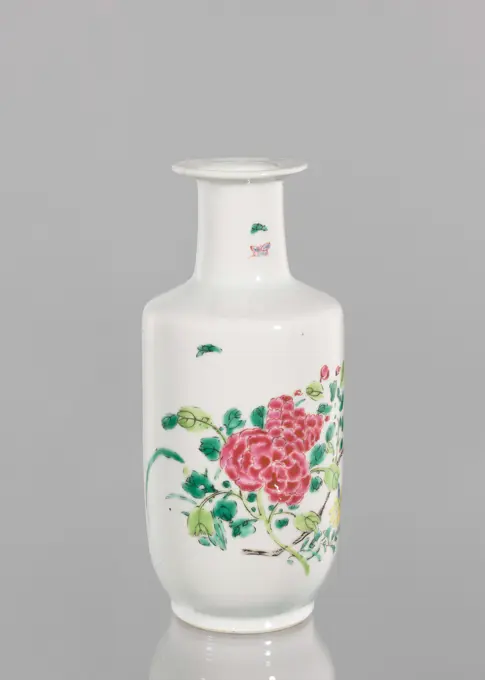
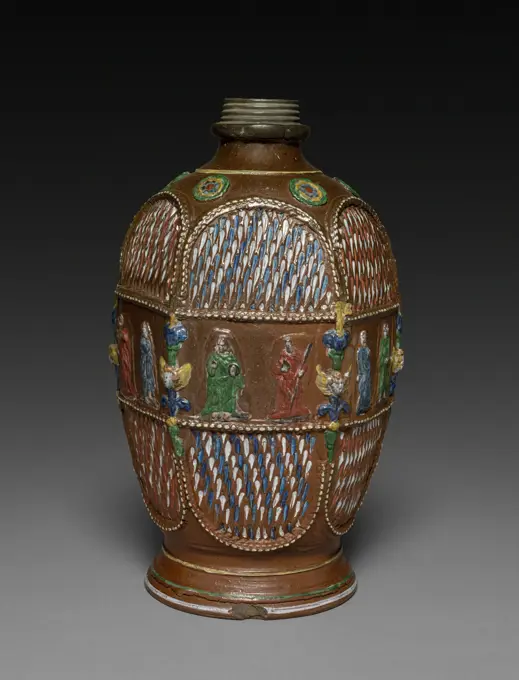
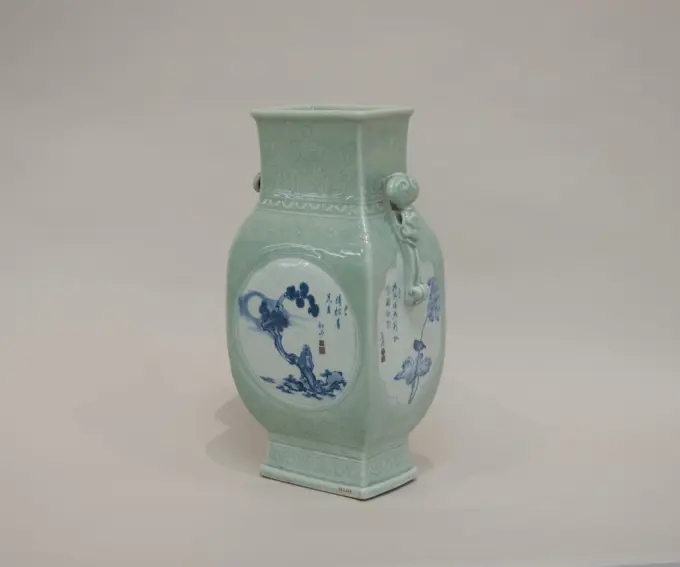
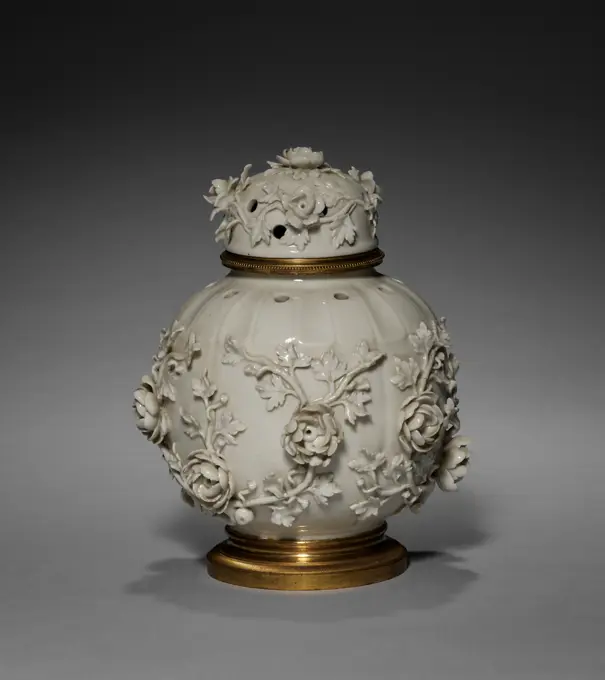
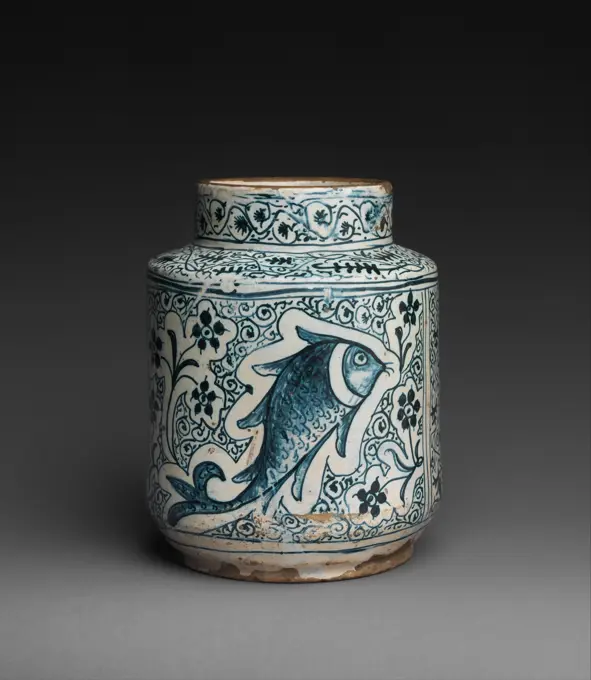
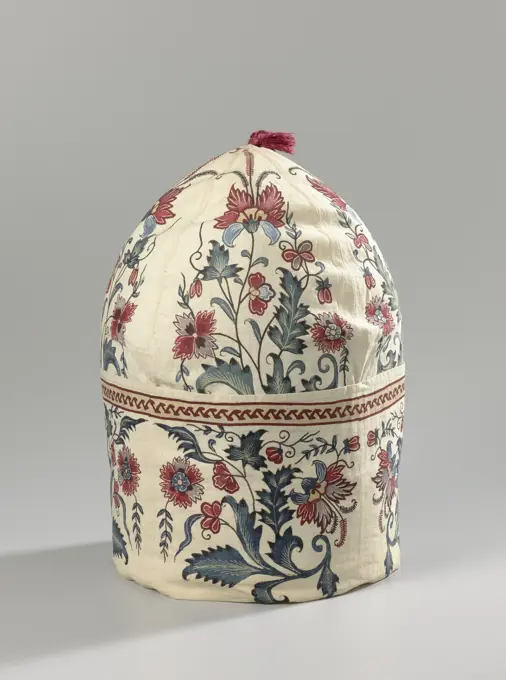
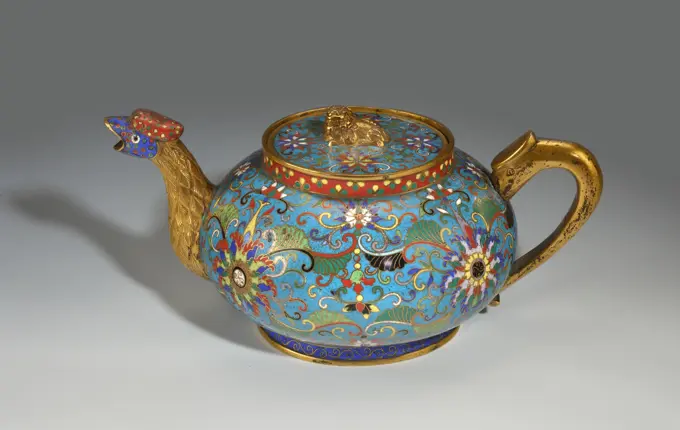
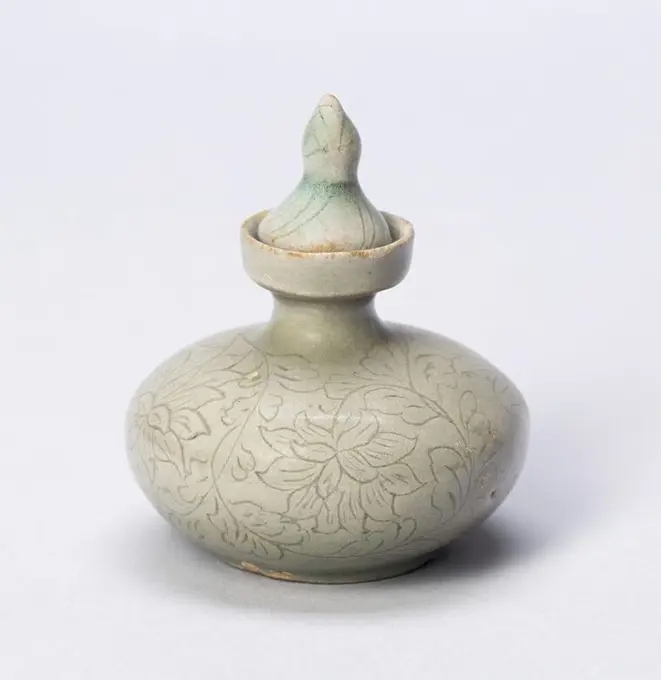
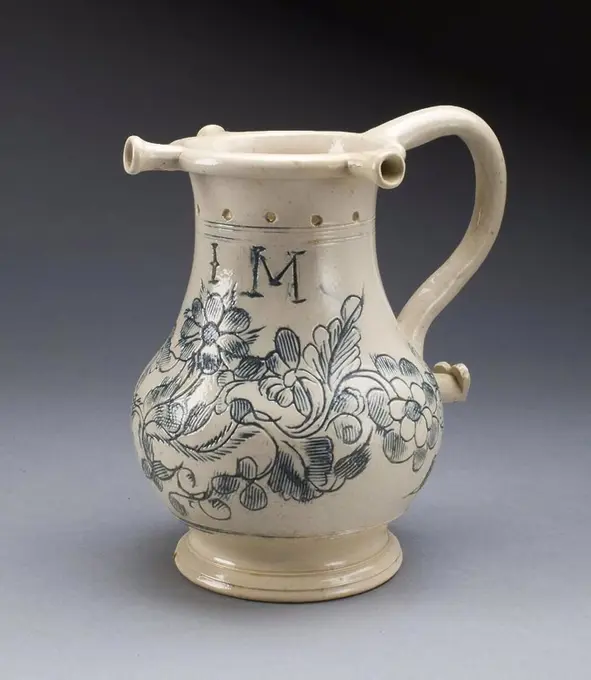
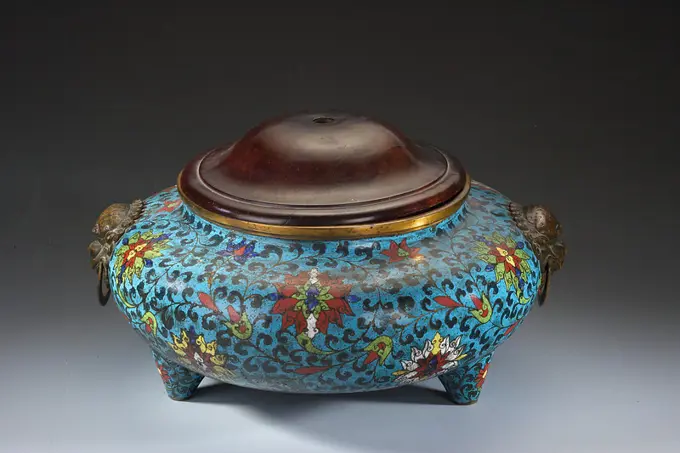
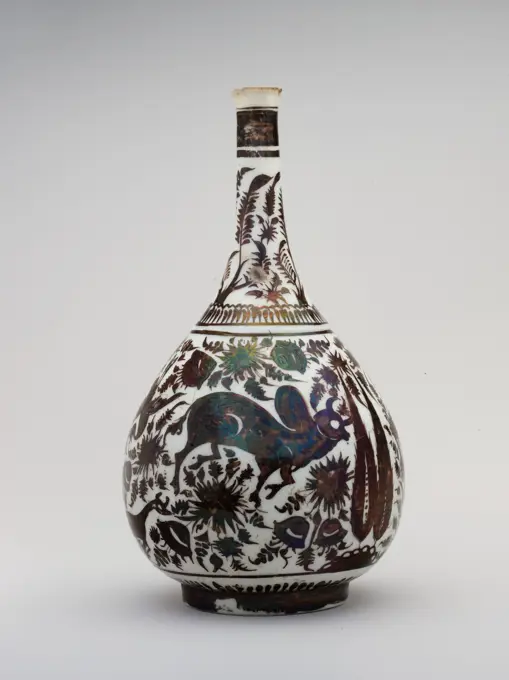
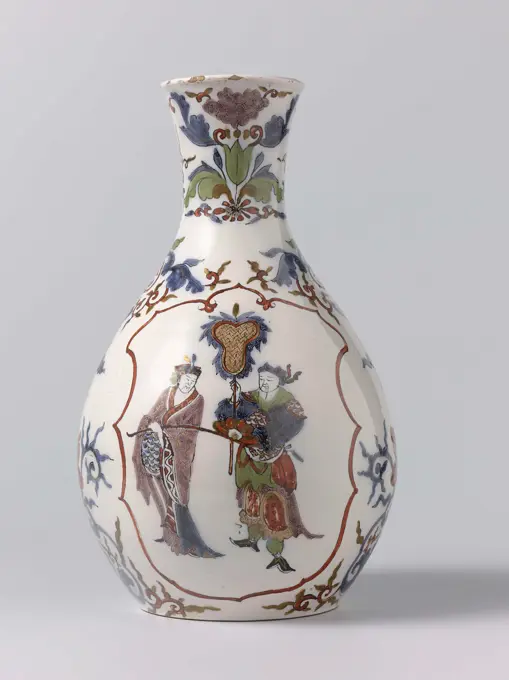
. Vase of faience, without bottom. Painted multi-colored.Covered cylindrical beaker with leaf-motif, anonymous, c. 1680 - c. 1720 Cylindrical cup lid with lid of porcelain, painted in underlaze blue. Decorated with a revolving, curly leaf motif interspersed with flower rosettes (tiger lily motif). Non -associated lid with lotus vines. A chip in the lid. Blue White. China porcelain. glaze. cobalt (mineral) painting / vitrification Cylindrical cup lid with lid of porcelain, painted in underlaze blue. Decorated with a revolving, curly leaf motif interspersed with flower rosettes (tiger lily motif). Non -associated lid with lotus vines. A chip in the lid. Blue White. China porcelain. glaze. cobalt (mineral) painting / vitrificationBarrel-shaped réchaud. Culture: Italian, Florence. Dimensions: Height: 10 1/2 in. (26.7 cm). Factory: Doccia Porcelain Manufactory (Italian, 1737-1896). Date: ca. 1760. Museum: Metropolitan Museum of Art, New York, USA.Barrel-shaped covered jar with flower scrolls and geometric patterns, anonymous, c. 1700 - c. 1724 Ton -shaped pot with lid with a button made of porcelain made up of three concave layers above each other, painted on the glaze in red, green, yellow, eggplant and black with flower vines and geometric motifs. Each layer has a different decoration: the lower one is filled with lotus vines, the middle one with geometric motifs interrupted by cartouches with a flower branch, the upper with flower vines saved in a red soil; Curling is applied around the foot. The lid also has a concave wall and forms the fourth layer. The same decoration on the wall and top as the middle and top layer of the pot respectively. Famle Verte. China porcelain. glaze. painting / vitrification Ton -shaped pot with lid with a button made of porcelain made up of three concave layers above each other, painted on the glaze in red, green, yellow, eggplant and black with flower vines and geometric motifs. Each layer has Conical coffeepot with an image of The Parasol Lady, anonymous, c. 1736 - c. 1740 Porcelain Coffee Can with the C-shaped ear and the S-shaped spout perpendicular to each other, painted in under-glaze blue. On the wall a woman by a pond with reeds, forth to three birds in front of her on the land, next to the woman a servant who holds a richly decorated umbrella over her head. On the edge of flower branches interspersed with a medallion. The underside of the wall with a honeycomb motif interrupted by two cartouches with a peon branch and two medallions with a swimming duck. The ear and the spout with flower vines. On the lid a honeycomb motif interrupted by two medallions with swimming birds. The performance is designed by Cornelis Pronk (1691-1754). European performance in Blauw-Wit. China porcelain. glaze. cobalt (mineral) painting Porcelain Coffee Can with the C-shaped ear and the S-shaped spout perpendicular to each other, painted in under-glaze blue. On the wall a woman by a pond wPitcher; Westerwald (ceramic family; Ca 1400-); XVII/18th century; around 1679 (1690-00-00-1710-00-00);Louis XIV (King of France - 1638-1715), decoration with overlays, lion, bustSake Bottle with Three Figures, late 1700s. Japan, Edo period (1615-1868). Porcelain with overglaze enamel and gold decoration (Hizen ware, Arita type); diameter: 14.3 cm (5 5/8 in.); with cover: 27.2 cm (10 11/16 in.); without cover: 24.2 cm (9 1/2 in.). The bottle features three elegantly drawn figures: a beautiful woman, a young man, and a priest. The artist used a fine-haired brush to draw these figures in colored enamel onto the porcelain bottle, which had already been given a clear glaze. A final firing fused the enamel to the form. The name derives from the port of Imari from where Japanese porcelains were shipped to other cities in Japan, China, and Europe.Covered cup and saucer with flower baskets and floral scolls, anonymous, c. 1750 - c. 1774 Square lid head with porcelain dish with beveled corners, painted on the glaze in blue, red, pink, green, yellow, and black. On the flat three flower branches and three twigs; A flower vase on the wall; On the corners against a flower drink on a black soil. Head and lid with the same decoration; Lid with a ring -shaped button. A crack in the head. Famle Rose. China porcelain. glaze. painting / vitrification Square lid head with porcelain dish with beveled corners, painted on the glaze in blue, red, pink, green, yellow, and black. On the flat three flower branches and three twigs; A flower vase on the wall; On the corners against a flower drink on a black soil. Head and lid with the same decoration; Lid with a ring -shaped button. A crack in the head. Famle Rose. China porcelain. glaze. painting / vitrificationPitcher. Culture: American. Dimensions: 8 1/2 in. (21.6 cm). Maker: Charles Cartlidge and Company (1848-1856). Date: 1848-56.The mid-nineteenth century porcelain manufactory of Charles Cartlidge and Company in Greenpoint, Brooklyn produced a variety of slip-cast wares for the middle class market. The firm offered a wide array of forms which included tablewares and pitchers, along with mundane, everyday objects (inkstands, paper weights, spittoons, etc.) to highly specialized items. Among the company's favorite designs are the relief-molded pitchers of either corn and cornstalks or oak leaves and acorns. The most significant Cartlidge pitchers are those with shields and inscribed with names, often made for tradesmen or saloon keepers. Inscribed "CAPT. C. A. WOOLSEY" in the shield, this presentation pitcher was made for Captain Charles Augustus Woolsey (1809-1877), Superintendent of the ferries of the Pennsylvania Railway Company, and perhaps given to him to mark a milestone in his careCovered jar with women and flower pots, anonymous, c. 1680 - c. 1720 Porcelain lid jar, painted in under -glaze blue. On the wall twice a flower pot with a woman (long lijs) on either side with a twig in hand. The lid with the same decoration. Blue White. China porcelain. glaze. cobalt (mineral) painting / vitrification Porcelain lid jar, painted in under -glaze blue. On the wall twice a flower pot with a woman (long lijs) on either side with a twig in hand. The lid with the same decoration. Blue White. China porcelain. glaze. cobalt (mineral) painting / vitrificationJar China. Jar. China. Porcelain. Qing dynasty (1644-1911), Qianlong mark and period (1736-95). CeramicsTrumpet-shaped beakervase with flower baskets and auspicious symbols, anonymous, c. 1850 - c. 1899 Trumpet -shaped cup vessel of porcelain, painted in underly glaze blue and on the glaze in blue, red, pink, green, black and gold. On the wall an openwork handle basket with a chilong (polled dragon) in a scalloped cartouche. The basket is filled with flower and fruit branches (peony, chrysanthemum, prunus, fingercitroen, magnolia). The other side with a flower vase on a low table. On the vase the head of a shishi (lion dog) with a ring in his mouth. The vase is surrounded by happiness objects (table with rolls, ruyi-shed, fan, qin, incense burner, bowl with mushrooms (lingzhi) and rolls). On the outer edge, an irregular bond with peony drinks on 'frogs', leaf vines, chrysanthnums, flower stoves and peach blossom 'Crackled ICE'. Around the foot a bond with chrysanthnums. A crack in the edge. Bekervaas is part of Kaststel AK-RBK-15919. Famle Rose. China porcelain. glaze. cobalt (mineral) pSnuff Bottle with Stopper, 1736-95. China, Qing Dynasty (1644-1911), Qianlong reign (1736-95). Porcelain; overall: 7.2 cm (2 13/16 in.).Sugar bowl with children playing. Sugar bowl of pottery with red transfer decor. The outside is decorated with firefighting children and children playing with a boat. Two ears in the form of lion's heads with rings in the mouth.. Octagonal coffee pot of porcelain on three spherical feet, taps on running body with straight walls and C-shaped ear, painted in underglaze blue. The long spout is bent out at the end and connected to the body at the top with an S-shaped element. The wall is divided into two parts. The underside with a continuous representation of a hunting corporation in a landscape. The top consists of a wide, decorative bond with curlwork, shell motifs, napkin work, flower drinks and two cartouches containing the mythological representation of Europe and the bull. The spout and the ear with decorative tires; The top of the ear with a hole for a frame. The underside of the can with a worn, painted (European) Decoration of flower drinks and medallions. European form and show in blue and white.Censer with Dragons amid Stylized Clouds. China. Date: 1522-1566. Dimensions: H. 16.4 cm (6 7/16 in.); diam. 21.6 cm (8 1/2 in.). Porcelain with underglaze blue and reserve decoration. Origin: China. Museum: The Chicago Art Institute, Chicago, USA.Covered Vase, from a five-piece garniture set, c. 1710, 17 1/4 x 7 15/16 x 8 1/2 in. (43.8 x 20.2 x 21.6 cm), delftware with polychrome glazing, Netherlands, 18th centuryBottleRoseWater Sprinkler Or Bottle Vase With Light Brown And Antiques. Rose water dropper or porcelain spot bottle with spherical body and pear-shaped neck, covered with a café-au-lait glaze and painted in underglaze blue. The lower part of the body is covered with a light brown glaze above which a tire with a thick cream-colored glaze; The shoulder in underglaze blue with napkin interspersed with a flower in a cartouche; The neck also in blue with antiques (tripod, scepter, books), above two flower branches. Edge damaged. Monochrome brown with blue and white.Can with Judith and Holofernes. Gray jug of stoneware, with irregular cobalt blue color. The belly is egg-shaped with a stage-walled center piece and a bell-shoulder. The straight-walled center has been decorated with 9 performances from the history of Judith and Holofernes.Three vases, part of a garniture, A, Jacobus Adriaens HalderHigh majolica albarello on stand with flown blue decor, albarello holder soil find ceramic earthenware glaze lead glaze tin glaze h 15.0 hand turned baked glazed painted fried High albarello on stand surface Two constrictions above the stand and under the top edge Blue decor on white fond light flowed through too high baking temperature. Decor consists of blue bands frieze with arches in which thick lines stacked in steps. Internally covered with lead glaze archeology health pottery ointment care pharmacy packing craftSquare bottle with figures in a landscape, a flower vase and a flowering plant near a rock, anonymous, c. 1660 - c. 1680 Square bottle of porcelain, painted in under -glaze blue. Four different representations on the wall: one with two women with a fan in a landscape for a large tree with two birds, a flower vase with a woman with a fan, a flowering chrysanthemum in rocks and a water carrier at a house and a large tree With a bird. The shoulder with flower vines. The lid with three branches is not matching. A chip in the edge of the bottle and the lid. Arita, Blauw-Wit. Japan porcelain. glaze. cobalt (mineral) painting / vitrification Square bottle of porcelain, painted in under -glaze blue. Four different representations on the wall: one with two women with a fan in a landscape for a large tree with two birds, a flower vase with a woman with a fan, a flowering chrysanthemum in rocks and a water carrier at a house and a large tree With a bird. The shoulder with flower vines. The lid wiVase with cover (part of a garniture) ca. 1765-70 Bow Porcelain Factory British. Vase with cover (part of a garniture). British, Bow, London. ca. 1765-70. Soft-paste porcelain. Bow Porcelain Factory (British, 1747-1776). Ceramics-PorcelainCoffee Pot 1765-1775 Ansbach. Hard-paste porcelain, polychrome enamels, and gilding . Ansbach Pottery and Porcelain FactoryCovered Jar, 1500s-1600s. Vietnam, 16th-17th century. Stoneware with blue and white decoration; diameter: 21.8 cm (8 9/16 in.); with cover: 23 cm (9 1/16 in.).Ewer probably 18th-19th century. Ewer 443141Jug with monkey heads and achorns, anonymous, c. 1630 - c. 1660 Can (Fopkan) of stoneware on high foot with a spherical belly and openwork neck with just below the edge a short spout. The C-shaped ear is attached to the neck and shoulder. At the bottom of the jug there is a hole on the inside, so that the liquid can flow out through the spout through a tube in the wall, ear and edge. Partly covered with cobalt blue. On the belly three medallions with pointed leaf motifs; A monkey head in the center. Between the medallions twice a jerk. Westerwald. Westerwald stoneware. glaze. cobalt (mineral) vitrification Can (Fopkan) of stoneware on high foot with a spherical belly and openwork neck with just below the edge a short spout. The C-shaped ear is attached to the neck and shoulder. At the bottom of the jug there is a hole on the inside, so that the liquid can flow out through the spout through a tube in the wall, ear and edge. Partly covered with cobalt blue. On the belly three medallions Tea caddy with a crowned, illegible monogram surrounded by two flower sprays, anonymous, c. 1750 - c. 1774 Porcelain tea lobe with four times lobed wall and edge and four short feet, painted on the glaze in blue, red, pink, green, yellow, black and gold. On the outer wall a crowned, unreadable monogram surrounded by two flower branches; Between the monograms of flower vines with a cartouche with a landscape and four medallions with plants. On the shoulder a band with flower vines. A baking tear in the edge. European performance in email colors. China porcelain. glaze. gold (metal) painting / gilding / vitrification Porcelain tea lobe with four times lobed wall and edge and four short feet, painted on the glaze in blue, red, pink, green, yellow, black and gold. On the outer wall a crowned, unreadable monogram surrounded by two flower branches; Between the monograms of flower vines with a cartouche with a landscape and four medallions with plants. On the shoulder a band with flower vinesVase;  19th/20th century (1890-00-00-1910-00-00);Small vase. Yabu, Meizan (1853-1934), craftsmanEwer with two women in a landscape and floral scrolls, anonymous, c. 1655 - c. 1680 Porcelain pouring jug with egg-shaped body, C-shaped ear and small, triangular spout in the edge. Painted in underlaze blue. On the belly a continuous landscape with two women with a window or kite in flowering plants and rocks. On the shoulder a band with stylized flower vines. The neck with a flower pattern twice. A slender on the ear. Arita, Blauw-Wit. Japan porcelain. glaze. cobalt (mineral) painting / vitrification Porcelain pouring jug with egg-shaped body, C-shaped ear and small, triangular spout in the edge. Painted in underlaze blue. On the belly a continuous landscape with two women with a window or kite in flowering plants and rocks. On the shoulder a band with stylized flower vines. The neck with a flower pattern twice. A slender on the ear. Arita, Blauw-Wit. Japan porcelain. glaze. cobalt (mineral) painting / vitrificationPitcher Made 1810-1820 Staffordshire. Lead-glazed earthenware with lustre decoration .Ewer with long curving spout, anonymous, c. 1400 - c. 1424 Pear -shaped can of porcelain, with a curved ear with a modeled curl on top and a long, curved spout, connected to a bridge on the Kan. The body with a continuous peony drink; above that a band with two flower vines; the neck with raised leaf motifs; On the spout a flower drink, the edge with a meander pattern; the ear with loose flower branches; Around the foot a band with meander pattern. Tuit restored. Ming porcelain in blue and white. China porcelain. glaze. cobalt (mineral) painting / vitrification Pear -shaped can of porcelain, with a curved ear with a modeled curl on top and a long, curved spout, connected to a bridge on the Kan. The body with a continuous peony drink; above that a band with two flower vines; the neck with raised leaf motifs; On the spout a flower drink, the edge with a meander pattern; the ear with loose flower branches; Around the foot a band with meander pattern. Tuit restored. Ming porcelain in blue Ovoid vase with the Eight Immortals seated in a landscape, anonymous, c. 1750 - c. 1774 Egg -shaped vase of porcelain with a short, slightly tissue neck, painted on the glaze in blue, red, pink, brown, green, yellow, black and gold. On the wall in a continuous, rocky landscape with trees eight sitting and lying persons, the eight immortals with their attributes; The edge is gold. Old label on the bottom with 'Huth 355 19/5/05. Famle Rose. China porcelain. glaze. gold (metal) painting / gilding / vitrification Egg -shaped vase of porcelain with a short, slightly tissue neck, painted on the glaze in blue, red, pink, brown, green, yellow, black and gold. On the wall in a continuous, rocky landscape with trees eight sitting and lying persons, the eight immortals with their attributes; The edge is gold. Old label on the bottom with 'Huth 355 19/5/05. Famle Rose. China porcelain. glaze. gold (metal) painting / gilding / vitrification. Can of faience. Blue painted with the weapon of Delft.Vase Necel, Franciszek (1868 1935)Juglet 1755-1765 Bow. Soft-paste porcelain, underglaze blue decoration . Bow Porcelain FactoryCovered ewer with powder blue and panels in reserve with Flower sprays and birds. Porcelain porcelain lid, painted in underglaze blue and on the glaze red, green, yellow, eggplant, black and gold. Covered with bleu poudré (powder blue) and four decorative tires in gold. Bleu poudré with famille verte.Vase, 1897. Henri-Louis-Laurent Ulrich (French), Sèvres Porcelain Factory (French, est. 1756). Porcelain; diameter: 10 cm (3 15/16 in.); overall: 12 cm (4 3/4 in.).Covered jar with birds and flowers late 17th-early 18th century China. Covered jar with birds and flowers. China. late 17th-early 18th century. Porcelain painted in underglaze cobalt blue (Jingdezhen ware). Qing dynasty (1644-1911), Kangxi period (1662-1722). CeramicsTwo beaker vases and a lidded jar, part of a garniture, De Drie Posteleyne Astonne, c. 1700 Vase of Faïence. Blue painted. The vase is part of a cupboard set. Delft . Vase of Faïence. Blue painted. The vase is part of a cupboard set. Delft .Pear-shaped vase with cover, from a five-piece garniture, c. 1764, Jacobus Halder Adriaesensz; Manufacturer: De Griekse A (The Greek A) factory, Dutch, active 1760s, 16 1/4 x 6 3/4 x 6 in. (41.3 x 17.1 x 15.2 cm), Tin glazed earthenware with underglaze blue decoration, 18th century, The term 'garniture' is used to describe a set of ceramic vessels for display on a cabinet, table, or on a chimneypiece mantel, the latter being specified as garniture de cheminée. Garnitures are traditionally made up of several beakers or vases, of alternating baluster and cylindrical shapes. This blue and white garniture is known as a 'mirror set' and contains five pieces, the largest number featured in a traditional garniture. It contains three inverted pear-shaped and two cylindrical vases, each with a lid. All of them are decorated with Rococo relief cartouches, each featuring a landscape and a lone woodcutter. The garniture was manufactured by the Greek A factory, one of the most prominent factories iVase, late 1600s-early 1700s. Japan, Edo period (1615-1868). Porcelain with decoration in colored enamels; diameter of mouth: 4.7 cm (1 7/8 in.); overall: 36 x 21.6 cm (14 3/16 x 8 1/2 in.).Lid, the gilt blompot, 1780 - 1820  Lid Delft .. Vaan van Faience, painted in blue and manganese with a decoration to the Chinese porcelain from the transition period. On the pear-shaped belly a standing and a sitting figure in a landscape with scattered trees; On the slim neck a figure and profil standing for trees; On the foot two ovals with landscapes, between which four leaves and a flower as a center.. Meissen porcelain Manufakturpainted Decoration: Attributed to Johann Christoph Horn (1692-1760) Meissen, c. 1720-1725Hard paste Porcelain, bronze appliesJar with Lotus and Peony Scrolls and Lion-Mask Handles. China. Date: 1437. Dimensions: H. 43.0 cm (16 15/16 in.); diam. 41.6 cm (16 3/8 in.). Porcelain painted in underglaze blue. Origin: China. Museum: The Chicago Art Institute, Chicago, USA.Vase with earthenware ears, decorated with stylized flower motifs, Arnhemsche Fayencefabriek, c. 1910 - c. 1920 Vase with earthenware ears, decorated in yellow, green and blue with stylized floral motifs. The vase has a wide oval body, a long cylindrical neck and two ears that connect body and mouth edge. Arnhem earthenware Vase with earthenware ears, decorated in yellow, green and blue with stylized floral motifs. The vase has a wide oval body, a long cylindrical neck and two ears that connect body and mouth edge. Arnhem earthenwareÁnfora de cerámica, siglo XVII. Múseo de la cerámica, Barcelona.Tall-Necked Bottle 12th-13th century Bottles with a globular body and a long tapered neck, possibly derived from Seljuq metalwork, were common in glass production. A number of bottles similar to this example were found at the site of Gurgan, on the shores of the Caspian Sea, though it is not clear if they were produced there. The honeycomb pattern - frequent in wheel-cut glass decoration - has a long tradition in the area, going back to the Sasanian period.. Tall-Necked Bottle 451910Ginger Jar Jar; China; porcelain, porcelain enamelHead, multi -colored painted with chinoiseries, Meissener Porzellan Manufaktur, c. 1725 - c. 1730 Cup of painted porcelain. Along the inside of the mouth rim runs a lace ornament in gold. The head is decorated with a Höroldt chinoiserie within a accolade-shaped four-pass with golden edges and surrounded by pearl tubes fields and tire and leaf work in gold. A figure in a garden is presented. The head is marked. Float porcelain Cup of painted porcelain. Along the inside of the mouth rim runs a lace ornament in gold. The head is decorated with a Höroldt chinoiserie within a accolade-shaped four-pass with golden edges and surrounded by pearl tubes fields and tire and leaf work in gold. A figure in a garden is presented. The head is marked. Float porcelainJug (one of a pair) ca. 1680-90 Fehr. Jug (one of a pair). German, Frankfurt. ca. 1680-90. Tin-glazed earthenware; gilt-brass mount. Ceramics-PotteryChinese Qing Dynasty, Vase, Qianlong period, 1736 1795 Chinese Qing Dynasty, Vase, , Qianlong period, 1736/1795, porcelain with overglaze famille rose enamels, Harry G. Steele Collection, Gift of Grace C. SteeleMing Vase, Bowl, Plate and Two Small Vases Chinese Art Christie's  LondonCenser with lid. Kutani, manufactureOctagonal, 'Gu'-Shaped Beakerase With Flowering Plants and Figures in a Fenced Garden in panels. Octagonal, 'gu'-shaped cup earridge made of porcelain, painted on the glaze in blue, red, pink, green, purple, black and gold. The wall is covered with piping branches against a background of a spiral pattern. On each of the eight sides a saved, scalloped cartouche with varied flower branches (peony, chrysanthemum, aster, prunus) at a rock or one or more people on a terrace or in a fenced garden in blooming plants and rocks. In the middle of the body a thickened ring with napkin interspersed with lobed cartouches with deer or birds at a peony plant. On the edge a band with flower branches on blue frog. A decorative band around the foot. Bekervaas is part of cabinet set AK-NM-11497. Family Rose.Pot with lid. Pot with faience lid. Painted multi-colored.Vase lid. unknown, craftsman. Vase with a lid of pottery, belonging to a couple of three polychrhouses painted with sunflowers and topographic representations. On one side, the house in Horst is painted at Voorschoten, on the other hand a pavilion in the garden of Huis de Paauw. Sunflowers have been painted between and above the performances.Glass alabastron (perfume bottle) 4th-3rd century B.C. Eastern Mediterranean or Italian Translucent cobalt blue, with handles in same color; trails in opaque yellow, opaque white, and opaque turquoise blue.Broad, slightly slanting and uneven horizontal rim-disk; tall cylindrical neck; narrow rounded shoulder; straight-sided cylindrical body, with slight upward taper; shallow convex bottom; below shoulder, two small lug handles applied over trail pattern, not placed directly opposite each other but both rather to one side.A fine yellow trail attached at edge of rim-disk; on body, bands of white, turquoise blue, and yellow trails, tooled from shoulder to undercurve at bottom into a close-set feather pattern in eight vertical patterns with alternating upward and downward strokes, with some of loops extending onto bottom.Broken and repaired around lower body, and one chip in rim-disk; slight pitting, dulling on bottom, and patches of iridescent weathering.With yellow lip, opaque blue, yellSugar Bowl. Culture: American. Dimensions: 7 x 4 in. (17.8 x 10.2 cm). Maker: Union Porcelain Works (1863-ca. 1922). Date: 1885.Union Porcelain Works was one of the most important and inventive American porcelain manufacturers in the second-half of the nineteenth century. In addition to their imaginative works designed by the German-born artistic director, Karl H. L. Müller, the firm's mainstay was the production of heavy porcelain hotel dinnerware. This extensive service was made by Thomas Carll Smith, head of the Union Porcelain Works, as a gift to his daughter, Pastora Forest Smith Chace. The neoclassical decoration of the gilt bellflower and basket motif is complimented by turquoise enamel. Unlike the firm's more eccentric and lavish designs created for their display at the Philadelphia Centennial Exposition in 1876, the pottery favored a more restrained classical style for their dinner services. This service descended in the Chace family. Museum: Metropolitan Museum of Art, New YFlowerpot with Flowering Plants and Birds. Flowerpot of porcelain with slightly flared wall and flat edge, painted on the glaze in blue, red, green, yellow, eggplant and black. On the wall Two flying birds and a pheasant on a rock in a flowering peony; On the edge a geometric pattern with flowers. Broke pot; Hole in the bottom with two cracks. Famille Verte.Salt cellar with birds and scrolls, anonymous, c. 1750 - c. 1799 Salt barrel of stoneware with a square body and a round bowl. Decorated in cobalt blue. On each side a printed relief decoration of two birds standing on an inverted heart shape with curl. The bowl rests on the heads of the birds. Westerwald. Westerwald stoneware. glaze. cobalt (mineral) vitrification Salt barrel of stoneware with a square body and a round bowl. Decorated in cobalt blue. On each side a printed relief decoration of two birds standing on an inverted heart shape with curl. The bowl rests on the heads of the birds. Westerwald. Westerwald stoneware. glaze. cobalt (mineral) vitrificationVase 1730 Japan. Vase. Japan. 1730. Clay covered with a transparent crackled glaze, decorated with colored enamels and gold (Awata ware). Edo period (1615-1868). CeramicsVase with Neptune and Vase with an Allegory of Venice; Factory of Geminiano Cozzi, Italian (Venetian), active 1764 - 1812; Venice, Italy, Europe; 1769; Hybrid soft-paste porcelain; Various, see extensionsVase with cover (part of a garniture) ca. 1690 Lambertus van Eenhoorn Dutch Garnitures consisting of three, five, or seven vases were made for decorative purposes to be placed on top of cabinets and mantelpieces, and a garniture of large vases might even have stood in front of the fireplace during the summer months. This five-piece group is composed of a covered vase, two double gourd vases, and two beakers. The middle section on all five is painted in blue on a white ground with scattered clusters of spring flowers that seem random but are in fact carefully placed to form different diaper patterns. The borders at the bases of the vases are decorated with scrollwork and floral and leaf ornament reserved on a dark blue ground. Under the lip of the beakers and at the shoulders of the vases, similarly painted in reserve, are lambrequin motifs enclosing fruit bowls. As one would expect from De Metaale Pot, one of the leading factories in Delft, both the potting and the quality of the glazePainted bottle by Russian master, Glass painted, Mid of the 18th century, Russia, Moscow, State History Museum,Pear-shaped Milk Jug with Chinese Ladies and Boys, Silver Mounts. Porcelain pear-shaped milk jug with ear, curved spout and silver frame, painted in underglaze blue. Two Chinese ladies (long tales) twice on the wall in a fenced garden, including twice a rock with flowers; The lid with two dancing boys (fools) with two rocks. Marked on the bottom with an artimisia leaf. Crack in the wall of the can, spout has been broken. Blue White.Snuffer  19th century (1800-00-00-1900-00-00);Pilgrim Flask. UnknownSmall vase. unknown, craftsmanJarra policromada, siglo XVII. Museu d'Història de Catalunya.Bottle (Schraubflasche), c. 1660-80. Germany, Bavaria, Kreussen. Salt-glazed stoneware, applied and impressed decoration; overall: 34.3 cm (13 1/2 in.). Bottles or jars (kruken) of this type of six-sided form are most often associated with the ceramic tradition found in Kreussen (now Creussen) in the Bavarian region of Germany during the mid to late 1600s. With a threaded neck fitted with a pewter screw top and ring, they were ideal vessels for medicinal liquids as they could be easily connected to a belt for transport to the patient. Applied decoration depicting the twelve apostles, as on this example, allude to the spiritual nature of healing.Vase with poetric scenes late 18th century China. Vase with poetric scenes. China. late 18th century. Porcelain painted in underglaze cobalt blue and copper red, and low-relief decoration under celadon glaze (Jingdezhen ware). Qing dynasty (1644-1911), Qianlong period (1736-95). CeramicsVase ca. 1765-70 Chelsea Porcelain Manufactory. Vase. British, Chelsea. ca. 1765-70. Soft-paste porcelain. Chelsea Porcelain Manufactory (British, 1744-1784). Ceramics-PorcelainCovered Jar. Culture: China. Dimensions: H. w/ cover: 18 1/8 in. (46 cm). Museum: Metropolitan Museum of Art, New York, USA.Black -painted fowence lid jar with the presentation of two board players and rocks, Anonymous, 1860 - 1895 FaiMence lid jar. Blue painted with 2 figures playing a board game and rocks. Delft . FaiMence lid jar. Blue painted with 2 figures playing a board game and rocks. Delft .Worcester Porcelain Manufactory, Pair of Bough Pots, c. 1770, soft-paste porcelain.Cabinet painted in Imari style, Petrus Regout & Co., 1886 Three -piece cabinet set, consisting of two vases and a lid pot of earthenware, with black and flow blue transfer decoration, painted with email colors and Okluster, with gold. The vases and pot of two cartouches with birds and branches, and two cartouches with a landscape. Maastricht earthenware. luster glaze vitrification Three -piece cabinet set, consisting of two vases and a lid pot of earthenware, with black and flow blue transfer decoration, painted with email colors and Okluster, with gold. The vases and pot of two cartouches with birds and branches, and two cartouches with a landscape. Maastricht earthenware. luster glaze vitrificationVase with Lily Decoration, N.V. Haagsche Plateel Factory Rozenburg, 1900 Vase with lid (b) of porcelain, on square ground surface. The multi -colored painting, in green, yellow and red, consists of lilies, which cover a large part of the vase in an ornamental ranking. Marked with: green stamp Rozenburg, Ooievaar, The Hague (above each other); Left: a bee (= 1900); Right: work order number 568; At the bottom right: Sam Schellink's monogram (everything in black). The Hague porcelain Vase with lid (b) of porcelain, on square ground surface. The multi -colored painting, in green, yellow and red, consists of lilies, which cover a large part of the vase in an ornamental ranking. Marked with: green stamp Rozenburg, Ooievaar, The Hague (above each other); Left: a bee (= 1900); Right: work order number 568; At the bottom right: Sam Schellink's monogram (everything in black). The Hague porcelainPotpourri Vase with Cover, c. 1860-80. France. Blanc-de-chine porcelain; gilt bronze mount; overall: 25.4 x 20.3 cm (10 x 8 in.). These vases were likely made by the celebrated Parisian ceramics firm of Edmé Samson (1810-91). To cater to the resurgence in taste for 18th-century designs, the Samson firm specialized in making reproductions of rare 18th-century European porcelains, especially those from firms that had already copied Chinese porcelains. In this case, these vases are designs taken from models produced by the St. Cloud factory in the 1750s after earlier Qing dynasty Chinese ceramics. However, the telltale sign that these vases are made by Samson and not St. Cloud is that the originals would have been made from a soft-paste porcelain (fired at a lower temperature), while these examples are made of hard-paste porcelain (fired at the highest temperature).Vase China. Vase 44749Pharmacy Jar 1400s Italian Maiolica storage jars for Italian pharmacies were highly decorative and frequently combined animal and floral motifs, as demonstrated by this particularly fine pair.. Pharmacy Jar 468159Mans Cap, anonymous, c. 1750 House hat of very finely woven, natural cotton, on which a multi-colored, stylized floral motif has been applied and painted by means of a beit and recess technique. With a border and pointed sphere with a brush on top of red silk. The hat is cut from one piece of cotton, whereby the decoration of the four -part ball is applied to the front of the fabric and the decoration for the receding edge at the back of the fabric. This model hat was unknown in India and will therefore probably have been made for a European example. Maker: Netherlands Indiapaininter: Northwest India hat: Cotton (textile). Brush: Silk painting  Amsterdam House hat of very finely woven, natural cotton, on which a multi-colored, stylized floral motif has been applied and painted by means of a beit and recess technique. With a border and pointed sphere with a brush on top of red silk. The hat is cut from one piece of cotton, whereby the decoration of the four -part ball is applied to the A bottle in the shape of a cylinder with the decoration of stylized lotus and leaves unknown. Square bottle of porcelain with a short, narrow, spreading neck, painted on the glaze in blue, red, green, black and gold. On two sides a peony and prunus at a rock with a hay-bird; On the other two sides a blooming plant and two birds. On the shoulder flower branches and a chrysanthemy. The neck with two flower branches. Arita, Kakiemon style.Pot with lid, part of a cupboard set, anonymous, c. 1770 - c. 1810 Pottle of Faience lid. Blue painted with a Dutch water landscape. Delft . Pottle of Faience lid. Blue painted with a Dutch water landscape. Delft .Candlestick, multi -colored painted with Indianian blums, Meissener Porzellan Manufaktur, c. 1730 - c. 1735 Candlestick of multicolored and underlaze blue painted porcelain. The candlestick is octagonal, has a vaulted foot and a baluster -shaped, profiled trunk. The trunk is decorated at the bottom in relief with strands of chalices inside courses and at the top with gilded acanthus leaves. The foot and part of the trunk are painted with Indianic blums and an insect. A frieze of leaf vines and flowers is painted around the candle holder. The candlestick is marked. Float porcelain Candlestick of multicolored and underlaze blue painted porcelain. The candlestick is octagonal, has a vaulted foot and a baluster -shaped, profiled trunk. The trunk is decorated at the bottom in relief with strands of chalices inside courses and at the top with gilded acanthus leaves. The foot and part of the trunk are painted with Indianic blums and an insect. A frieze of leaf vines and flowers is painted aroKettle;  18th century (1701-00-00-1800-00-00);Paderewski, Ignacy Jan (1860-1941) - collection, Chinese art, MNW collection, cloisonné, kettles, a gift for museum, lotus, vegetableCutlery holder. Korzec (manufaktura porcelany ; 1790-1832), factoryKuan vase, with cover; Bielino (Manufaktura Fajansu; 1779-1800), Wolff, Karol (fl. Ca 1800); End of the 18th century (1791-00-00-1800-00-00);Vase with floral patterns late 17th-early 18th century China. Vase with floral patterns. China. late 17th-early 18th century. Porcelain painted in underglaze cobalt blue (Jingdezhen ware). Qing dynasty (1644-1911), Kangxi period (1662-1722). CeramicsCovered Oil Bottle with Peony Sprays. Korean. Date: 1100-1199. Dimensions: H. 6.3 cm (2 1/2 in.); diam. 5.4 cm (2 1/8 in.). Stoneware with underglaze incised decoration. Origin: Korean Peninsula. Museum: The Chicago Art Institute, Chicago, USA.Puzzle Jug. Staffordshire, England. Date: 1760-1770. Dimensions: 15.4 x 14 x 10.5 cm (6 1/16 x 5 1/2 x 4 1/8 in.). Salt-glazed stoneware. Origin: Staffordshire. Museum: The Chicago Art Institute, Chicago, USA.Bowl And Lid (Switzerland); earthenwareLi-type censer on three legs with lid and two handles in the form of lion's heads. unknown, craftsmanCzarka with the Cave;  19th century (1790-00-00-1810-00-00);Pear-Shaped Bottle with a Bullock Design second half 17th century Very few pieces of Iranian lusterware survive from the fifteenth and sixteenth centuries, but this technique was revived in the seventeenth century. During this period, lusterware was produced in a relatively limited range of shapes, including elegant bottles, such as the one here, as well as dishes, bowls, cups, ewers and sand-shakers. This bottle would have been made toward the end of the reign of Shah Abbas II (1642-1666), a period of heightened artistic activity in which new ideas from Europe and India found favor. Thus, the eclectic confluence of the Indian zebu bull, the Persian peacock, and the Chinese deer on one bottle would have been admired as much as the elegant shape and lustrous glaze.. Pear-Shaped Bottle with a Bullock Design. second half 17th century. Stonepaste; luster-painted on opaque white glaze. Made in Iran. Ceramics