Decorative Porcelain Vases

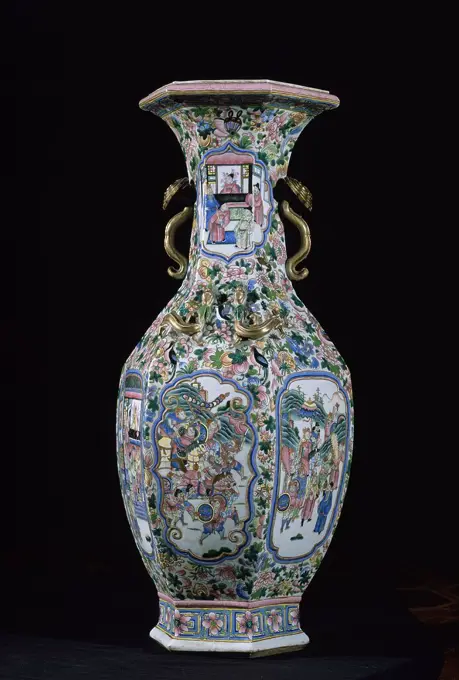
Elegant porcelain vases featuring intricate floral patterns and historical significance, highlighting fine craftsmanship from various cultures.

Covered baluster jar with large flower sprays, anonymous, c. 1720 - c. 1740 Balus -shaped porcelain lid jar, painted in underly glaze blue and on the glaze red and gold. On the wall large, flowering plants (peony, lotus), with a hanging lambrequin tire at the top with servetwork on which flower rosettes and happiness symbols (books, shell) and at the bottom a raised lambrequin band with flower vines against a blue ground; The same band around the neck; Around the foot a thickening with a tire of flower vines and a tire servetwork interspersed with cartouches with flower branches. Imari. Japan porcelain. glaze. cobalt (mineral). gold (metal) painting / gilding / vitrification Balus -shaped porcelain lid jar, painted in underly glaze blue and on the glaze red and gold. On the wall large, flowering plants (peony, lotus), with a hanging lambrequin tire at the top with servetwork on which flower rosettes and happiness symbols (books, shell) and at the bottom a raised lambrequin band with fl
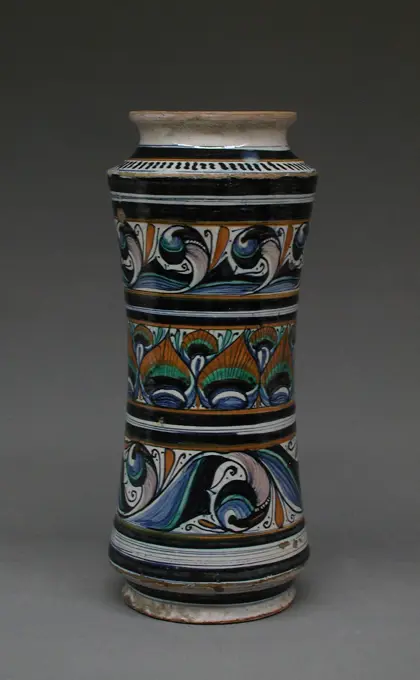
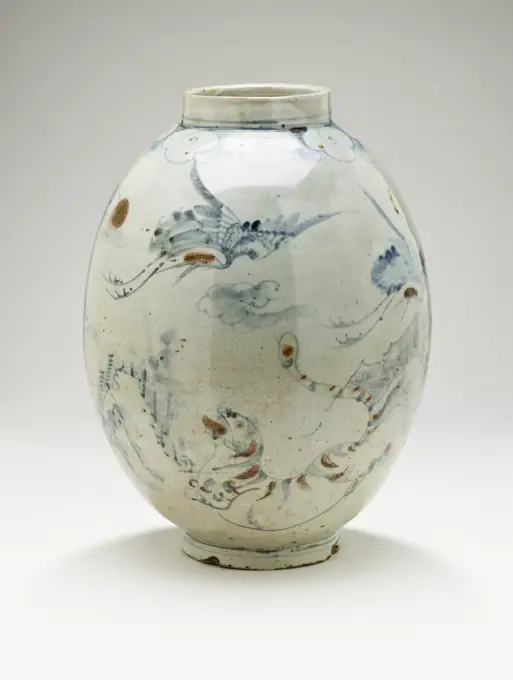
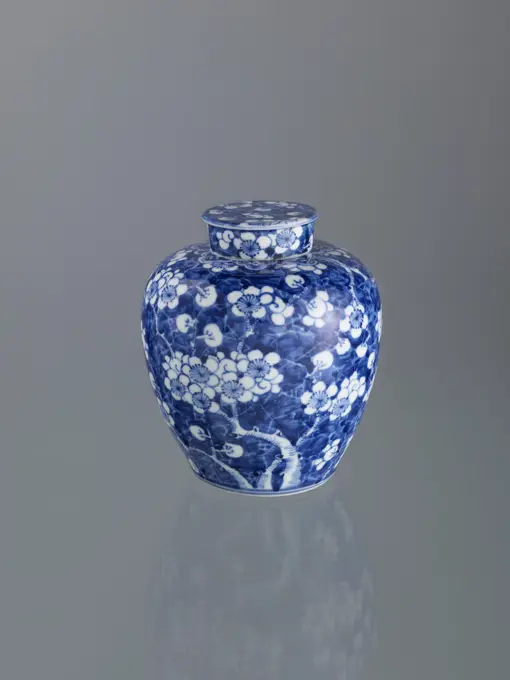
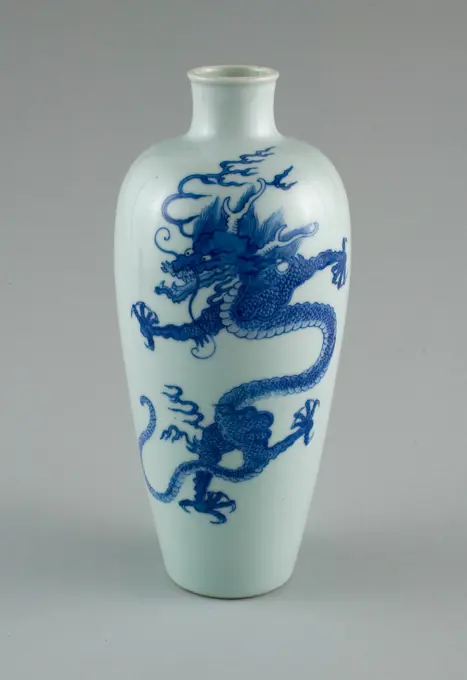
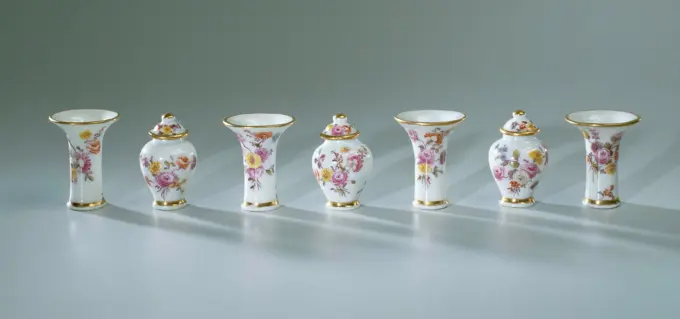
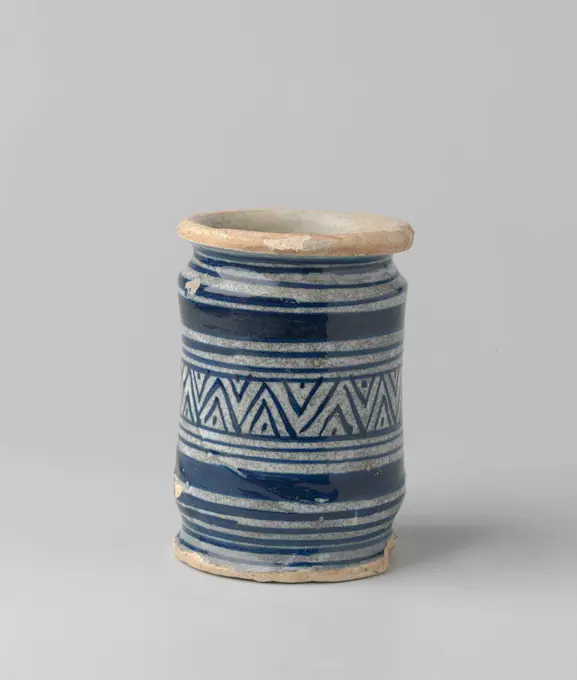
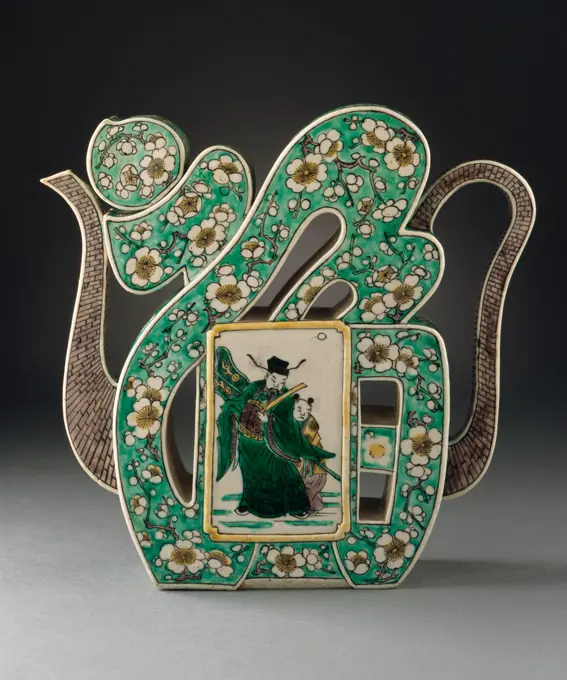
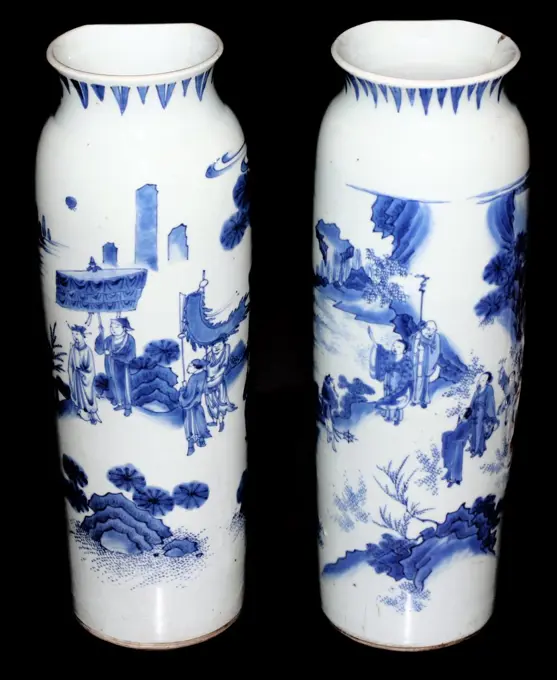
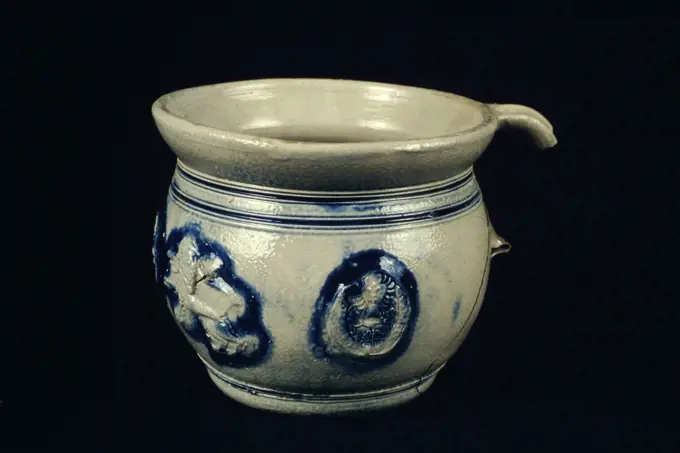
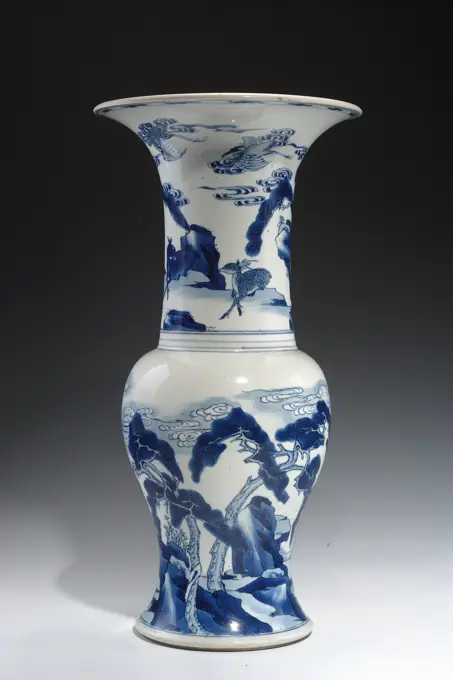
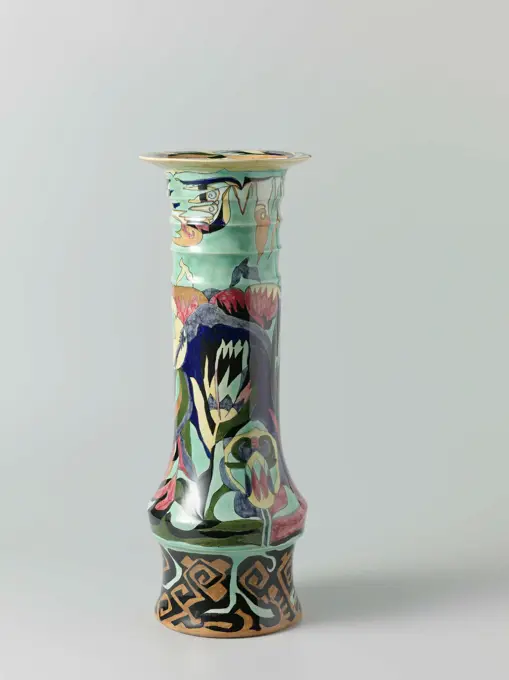
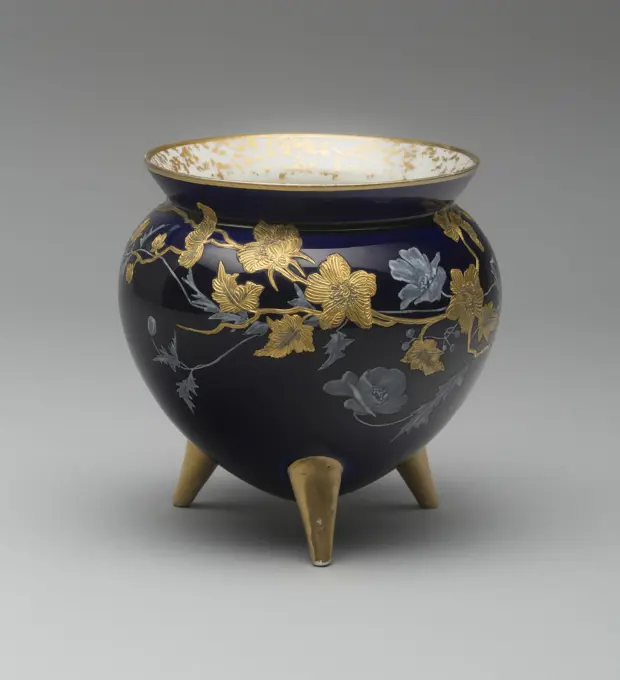
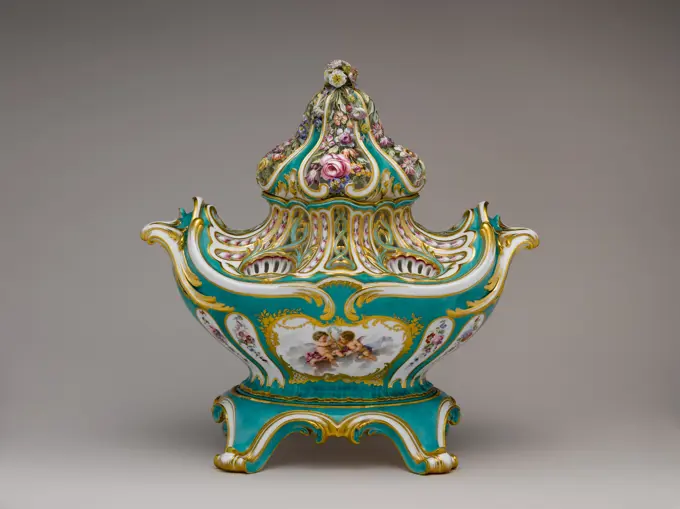
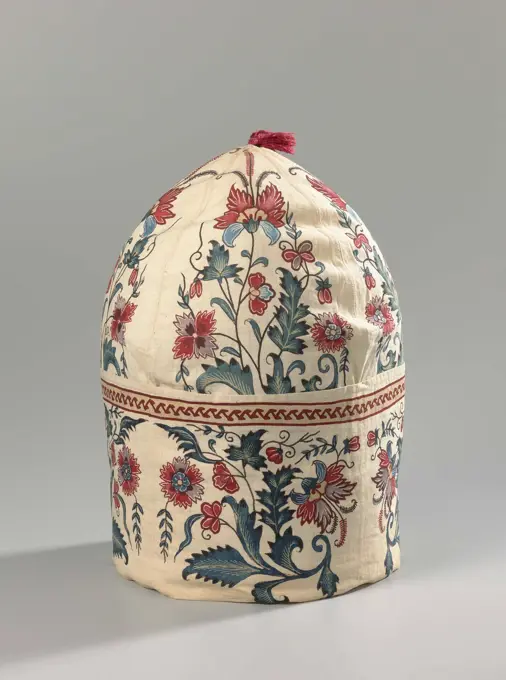
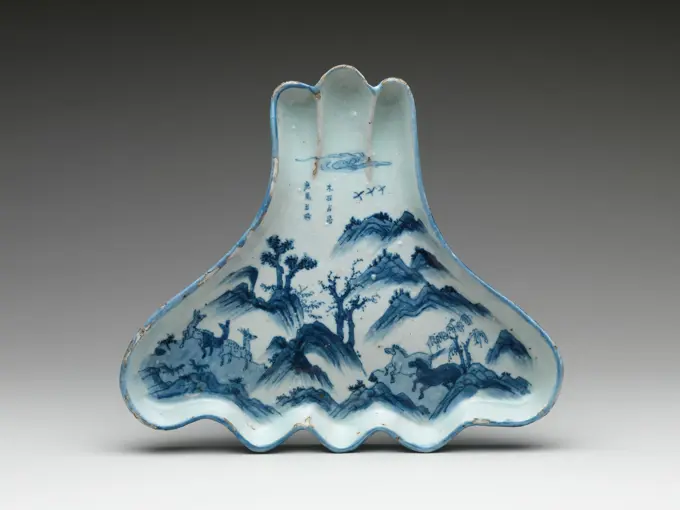
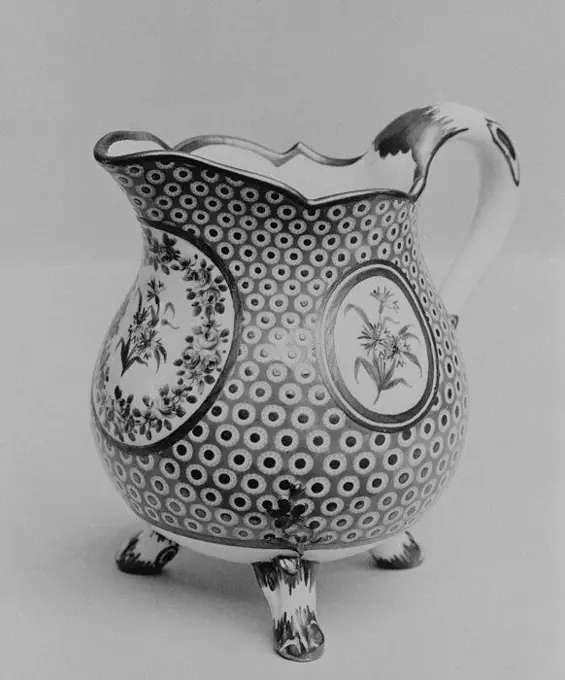
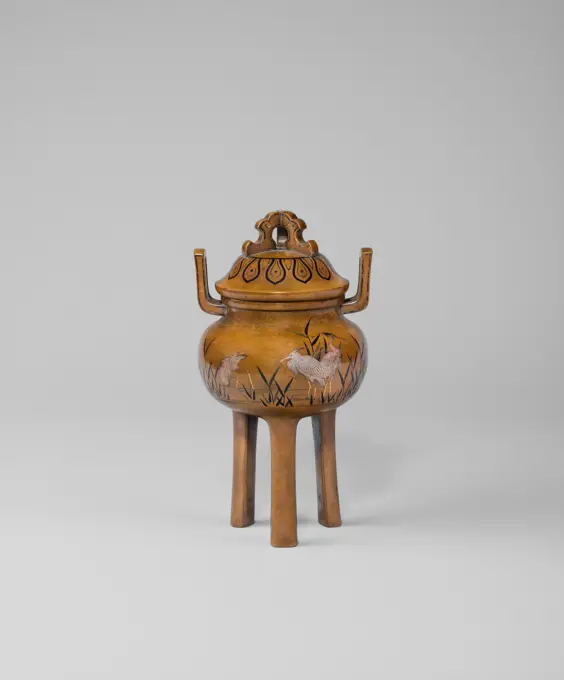
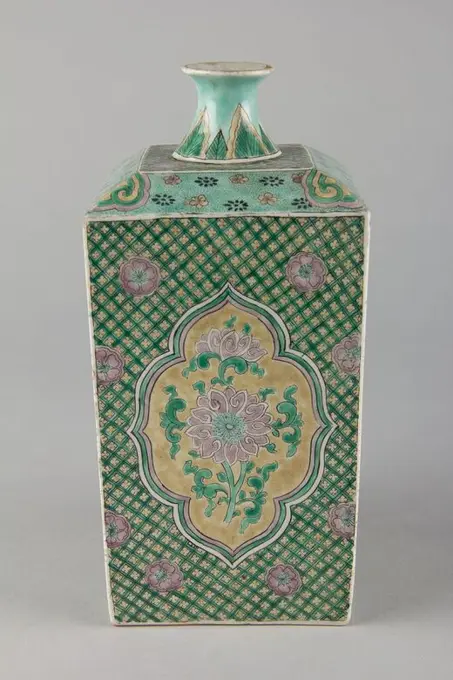
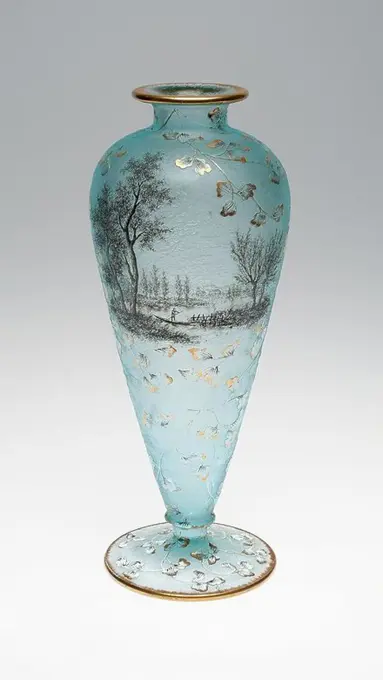
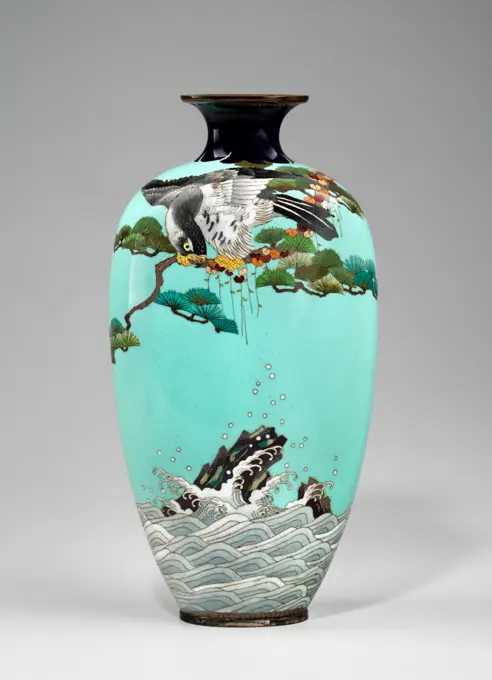
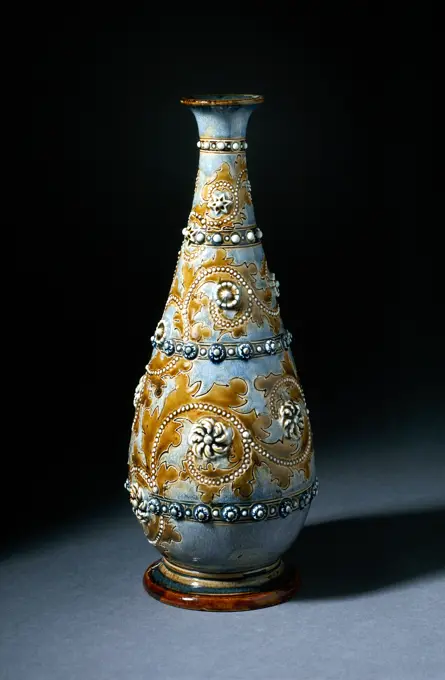
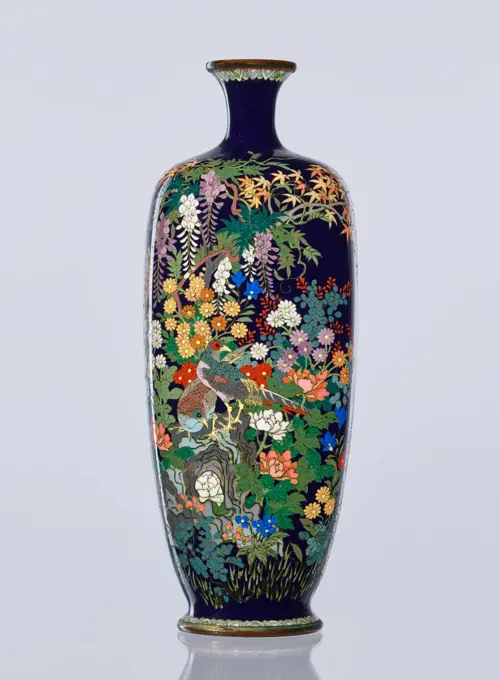
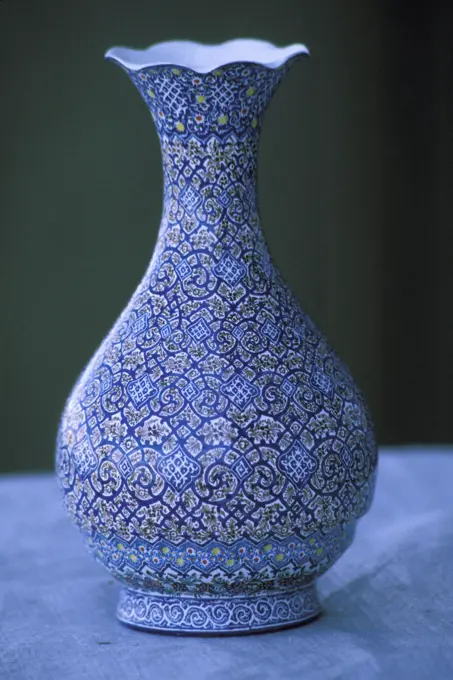
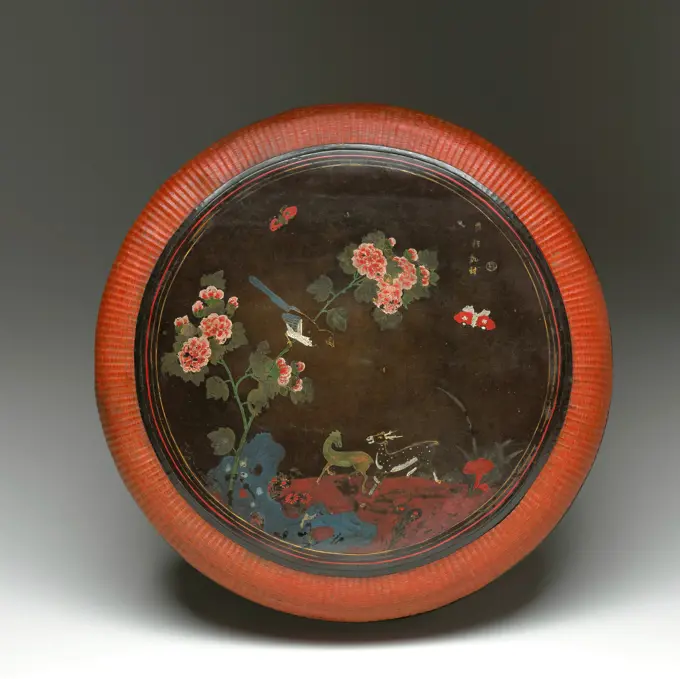
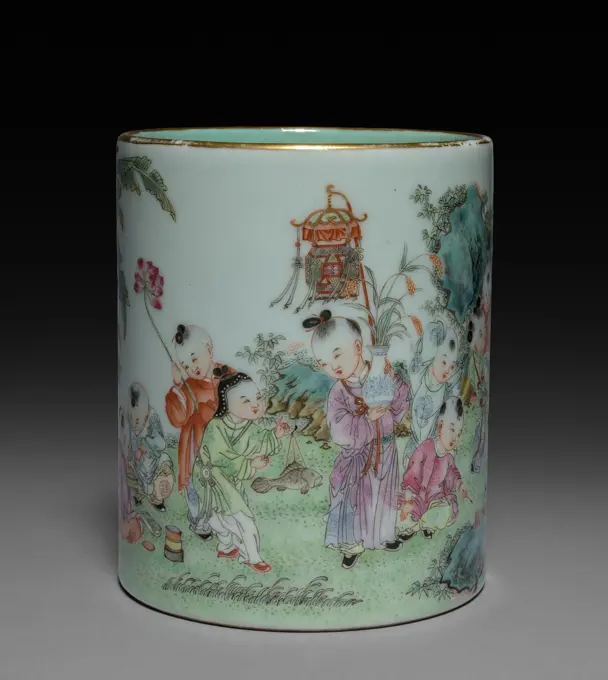
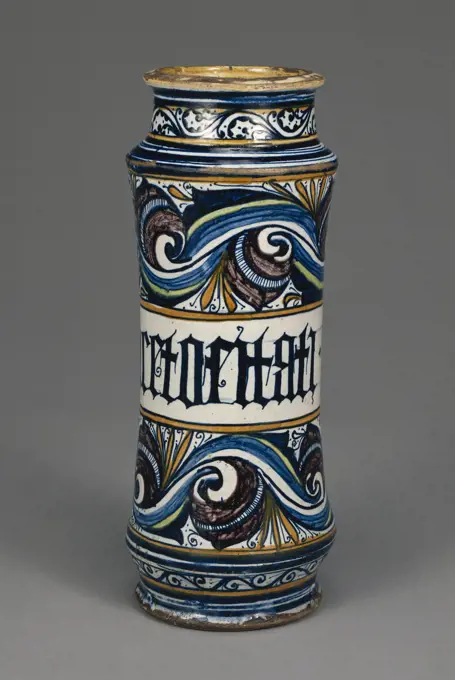
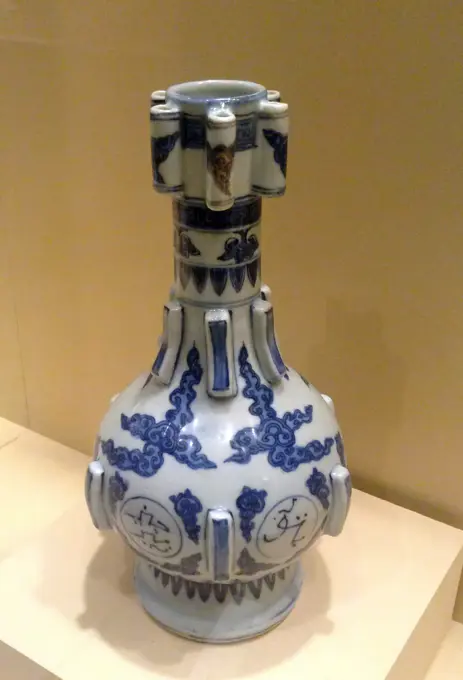
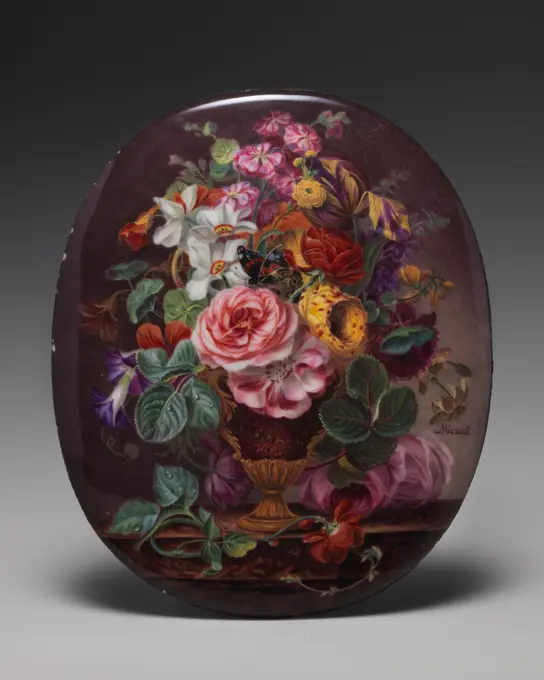
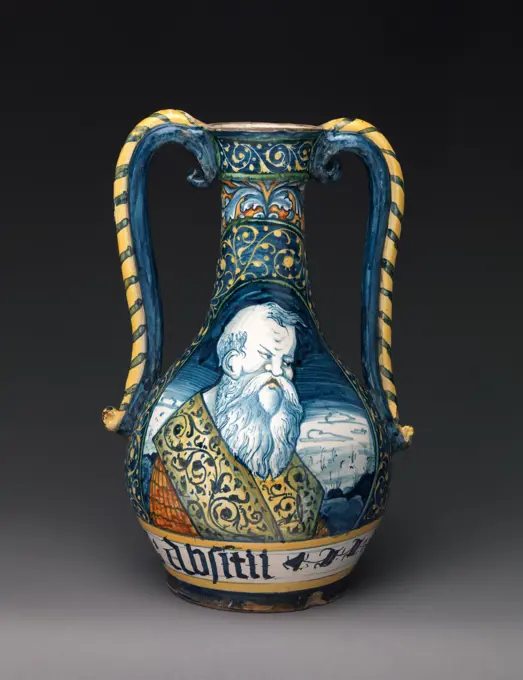
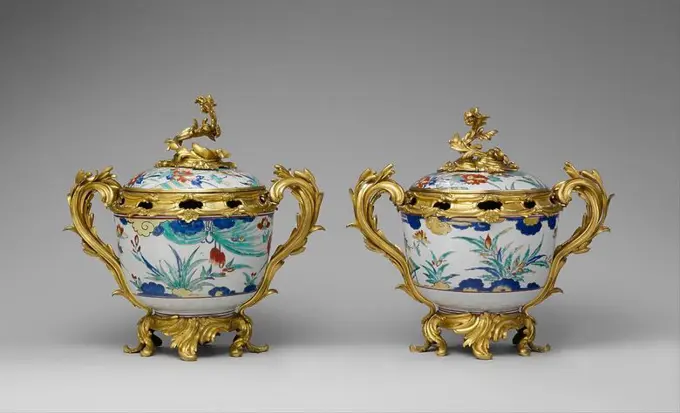
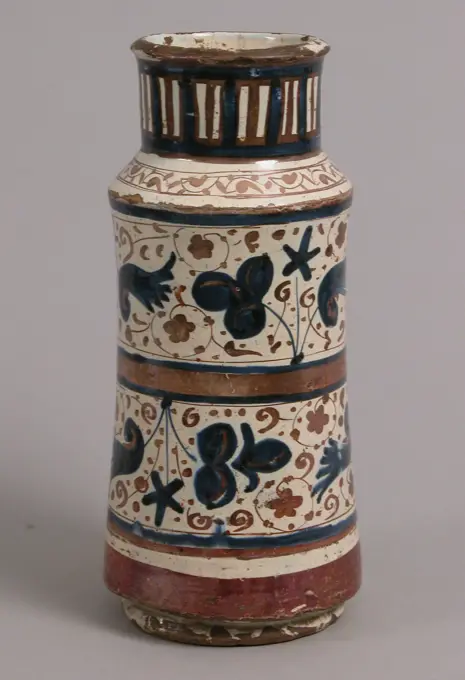
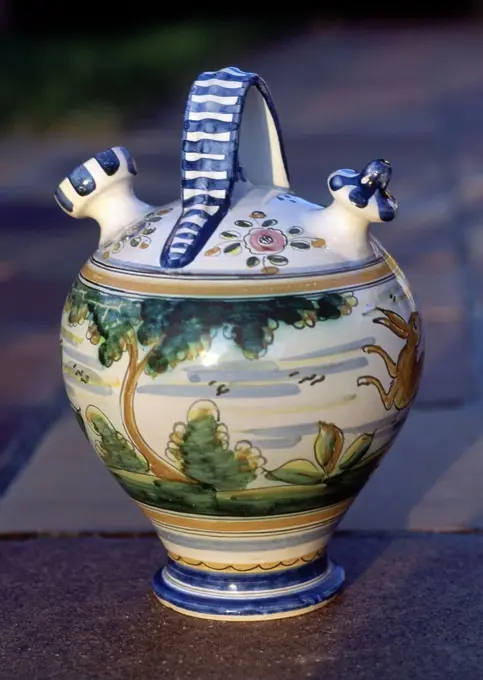
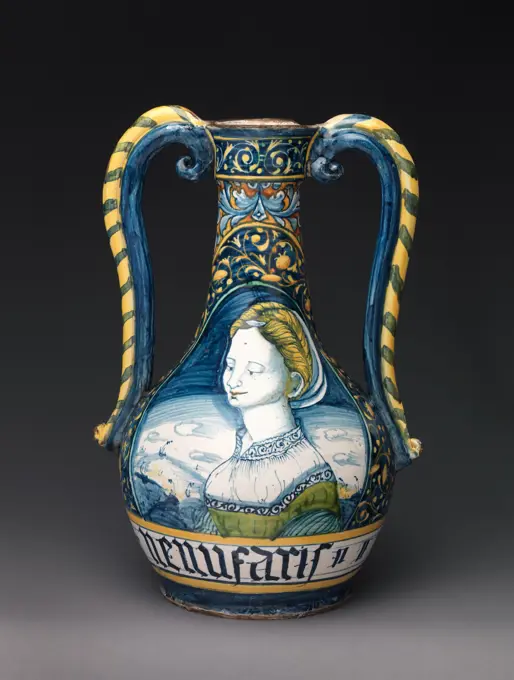
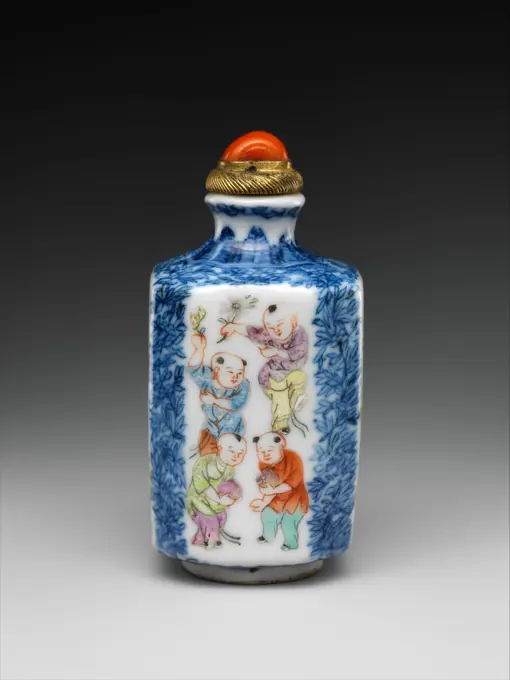
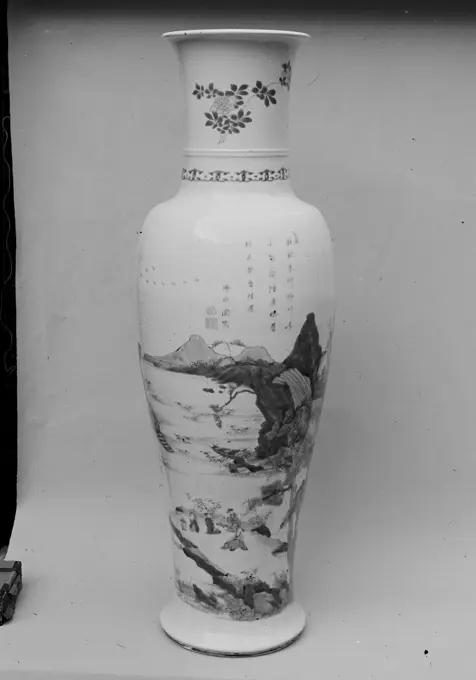
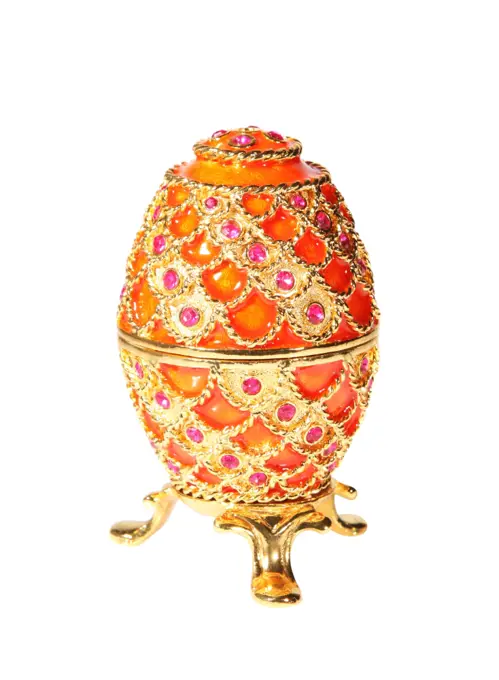
Vase;  around 1900 (1896-00-00-1905-00-00);Albarello ca. 1460-80 Italian, Faenza Storage vessels were among the most frequently produced maiolica wares in late medieval and Renaissance Italy. Made in fairly standard shapes, they were designed to fit with dozens of others on a shelf, often in a pharmacy or shop. Their handles therefore tend to fit within the vessels profile, and the cylindrical albarello type is generally narrower at the middle than at the top or bottom, making it easy to grip. Other common features include inscriptions indicating contents and flanged lips to help secure cloth or paper seals. The decoration, usually more elaborate on one side than the other, can sometimes link pieces to a known dispensary or specific workshop or artist.. Albarello. Italian, Faenza. ca. 1460-80. Maiolica (tin-glazed earthenware). Ceramics-PotteryHelmet-shaped ewer with a face, animals and flower sprays, anonymous, c. 1700 - c. 1724 Helmet -shaped can on the foot of porcelain, berchilded on the glaze in blue, red, green, yellow, eggplant, black and gold. On the wall a wide band with flowering plants with a bird and two butterflies, below and above a decorative band; Around the foot a band with lotus leaves between which flower branches against a green speckled soil; Chrysanthemas branches on either side of the spout; The edge with a colored band and one with flower branches against a speckled soil. On the spout a face with headgear in relief; The ear with flower drink and cloud motif. Multiple chips in the edge and the ear. Famle Verte. China porcelain. glaze. gold (metal) painting / gilding / vitrification Helmet -shaped can on the foot of porcelain, berchilded on the glaze in blue, red, green, yellow, eggplant, black and gold. On the wall a wide band with flowering plants with a bird and two butterflies, below and above a decTea canister, anonymous, c. 1735 - c. 1745 Rectangular tea lot multicolored (blue, purple, green and yellow) painted with Chinese scenes. Along the edges a zigzag motif. Amsterdam . Rectangular tea lot multicolored (blue, purple, green and yellow) painted with Chinese scenes. Along the edges a zigzag motif. Amsterdam .Bottle with Clouds Crane and Pinetree Design in Cinnabar Underglazed Cobalt-blue. Korea, Korean, Joseon dynasty (1392-1910), 19th century. Furnishings; Serviceware. Wheel-thrown stoneware with white slip and blue and red painted decoration under clear glazeGinger vessel from the cover;  19th century (1801-00-00-1900-00-00);. Fless from painted porcelain. The bottle has a long square neck and is painted with chrysanthemums, alternately on the four sides behind two bound hedges and behind rocks. The bottle has been marked.Salt cellar with birds and scrolls, anonymous, c. 1750 - c. 1799 Salt barrel of stoneware with a square body and a round bowl. Decorated in cobalt blue. On each side a printed relief decoration of two birds standing on an inverted heart shape with curl. The bowl rests on the heads of the birds. Westerwald. Westerwald stoneware. glaze. cobalt (mineral) vitrification Salt barrel of stoneware with a square body and a round bowl. Decorated in cobalt blue. On each side a printed relief decoration of two birds standing on an inverted heart shape with curl. The bowl rests on the heads of the birds. Westerwald. Westerwald stoneware. glaze. cobalt (mineral) vitrificationEwer ca. 1710-60 Dutch, Delft. Ewer 187701 Dutch, Delft, Ewer, ca. 171060, Tin-glazed earthenware, Height: 9 1/4 in. (23.5 cm). The Metropolitan Museum of Art, New York. Gift of Henry G. Marquand, 1894 (94.4.61)Vase with Dragons 1662-1722 China. Porcelain painted in underglaze blue .Vase with lid with the house Ter Horst, N.V. Haagsche Plateel Factory Rozenburg, 1896 Vase with pottery lid, belonging to a couple of three polychrome painted with sunflowers and topographical representations. On one side the Ter Horst house near Voorschoten is painted, on the other side a pavilion in the garden of Huis de Paauw. Sunflowers are painted between and above the performances. The Hague earthenware Vase with pottery lid, belonging to a couple of three polychrome painted with sunflowers and topographical representations. On one side the Ter Horst house near Voorschoten is painted, on the other side a pavilion in the garden of Huis de Paauw. Sunflowers are painted between and above the performances. The Hague earthenware. Vase with lid of painted porcelain. The vase is pear-shaped, has an outstanding foot. The painting consists of multicolored flower bouquets. Vase is part of a seven-part cabinet set.Vase. This vase was probably given by Elector Augustus the Strong of Saxony to the Russian court in 1728.Pot, blue-white. Pot, blue and white, part of a party Noord-Nederlandsche Majolica and other pottery, found in the excavation for the expansion of the shipping house on the whore island.Lidded Ewer (Zhihu) in the Form of Happiness (Fu) Character with Deities of Prosperity (Lu) and Longevity (Shou). China, Jiangxi Province, Jingdezhen, Chinese, Qing dynasty, Kangxi period, 1662-1722. Furnishings; Serviceware. Molded porcelain with clear glaze and overglaze painted enamel decoration (susancai)Sleeve vase. China, c 1635-1650, hard-paste porcelain. In the mid-17th century the Dutch East India Company took great pains to buy vases painted in clear blue tints with scenes full of trees and rocks alternating with Chinese figures. This ware is known as Transitional porcelain, since it was made in the period of transition from the Ming dynasty (1368-1644) to the Qing dynasty (1644-1911).Snuff Bottle, 1644-1911. China, Qing dynasty (1644-1911). Glass; overall: 6.4 cm (2 1/2 in.).Bowl with Peony Flowers. China. Date: 1200-1234. Dimensions: H. 13.2 cm (5 3/16 in.); diam. 14.7 cm (5 13/16 in.). Cizhou ware; stoneware with white slip and iron brown glaze. Origin: China. Museum: The Chicago Art Institute, Chicago, USA.Stoneware ease of use or chamber pot with ear, belly with three weapon medallions and two lions, pot holder sanitary soil find ceramic stoneware glaze salt glaze, hand rotated stamped glazed glazed baked stoneware room pot gray shard with salt glaze profiled bandor edge writing round medallions: ADRIAEN BOXEL archeology heraldry import pottery drains night sleeping room hygieneVase. unknown, craftsmanVase. Dimensions: H. 10.5 × w. 2.9 cm (4 1/8 × 1 1/8 in.). Date: Late 4th-3rd century B.C.. Museum: Metropolitan Museum of Art, New York, USA.A can with a coverCandlestick with a conical bulb voice and candleholder and base with a water landscape. Candlestick of porcelain with conical stem with nine annular thickenings, bell-shaped base with a ribbed wall and a cup-shaped candle holder with ribbed wall and lobed edge. Painted in underglaze blue. The annular nodules with blue tires. The foot and cup with a continuous river landscape with pavilions, trees, rocks and boats on the water. On the top of the foot a deepened circle where the upper part of the candlestick is placed. The handle has been broken. Blue White.BALLACK Vase of ZUN;  XVII/18th century (1662-00-00-1772-00-00);Kangxi (style), Paderewski, Ignacy Jan (1860-1941), Paderewski, Ignacy Jan (1860-1941)-collection, qing (style), ceramics, gift (provenance), deer, porcelain, white and blue porcelain, rocks, pine trees, Chinese art, vases, cranes (iconogr.)chinese antique vase on the plain back ground. Theo Colenbrander was the artistic mastermind of the Rozenburg earthenware factory in The Hague. His designs exhibit great freedom in both form and decoration. The slender, ribbed shape of these vases recalls bamboo. The ornamentation is modern: abstractly rendered floral and plant motifs in bright colours. Their shapes, however, are quite old-fashioned. It is a garniture (set) of five vases for display atop a cabinet.Cachepot c 1883-1886 Trenton. Porcelain . Greenwood Pottery CompanyDecorative vase without a cover; Bielino (Manufaktura Fajansu; 1779-1800), Wolff, Karol (fl. Ca 1800); 1780-1790 (1780-00-00-1790-00-00);Bronisław Krystall. Testament (Warsaw - Exhibition - 2015/2016), Chinese, Krystall, Bronisław (1887-1983) - collection, chinoiserie, Far Eastern motifs, genre scenesPotpourri vase (pot-pourri gondole) 1757 Sèvres Manufactory This model of potpourri vase, known as a pot-pourri gondole, was designed in 1756, the same year in which the Vincennes factory moved to larger and superior quarters at Sèvres, located to the southwest of Paris on the road to Versailles. The success of the Vincennes factory had made it apparent as early as 1753 that it required more and better space, and the increasing patronage of the French court, King Louis XVs (1710-1774) financial involvement, and a series of loans made it feasible to build a much more modern and suitable factory in 1756.[1 The new enterprise at Sèvres was a continuation in artistic terms of the operation established at Vincennes, but the ownership structure evolved with Louis XVs increasing financial support of the factory, culminating in his purchase of the entire establishment in October 1759.[2 The complexity and sophistication of this potpourri vase reflect how far the Vincennes factory had advanVase. unknown, craftsmanCovered wine pot or teapot. Artist: Chinese , Qing Dynasty, Kangxi period. Culture: Chinese. Dimensions: Height: 6 3/4 in. (17.2 cm.). Date: 1662-1722. Museum: Metropolitan Museum of Art, New York, USA.. In the 18th century men wore wigs, which were customarily taken off at home. As protection from the cold they would then wear an - often finely ornamented - cap indoors. This is the only preserved example of one made of chintz: a handpainted cotton fabric with a glazed finish. The Dutch East India Company (VOC) imported Chintz from India.Vase, cup-shaped, with decor in black and yellow, N.V. Plateelbakkerij Ram, Theo Colenbrander, Albert Peters, 1923Dish in Shape of Mount Fuji with Horses and Deer ca. 1625 China The shape of the dish, which alludes to the famed Mount Fuji, indicates that it was commissioned by a Japanese patron, most likely for a meal that accompanied the tea ceremony. The inscription, which discusses roaming with deer and horses in a landscape, is an allusion to a similar phrase in the writings of the Chinese philosopher Mencius (ca. 327-289 B.C.).. Dish in Shape of Mount Fuji with Horses and Deer 75822Vase with a motif of birds and flowers unknownLady with basket. Culture: British, London. Dimensions: 3 1/4 × 1 3/4 in. (8.3 × 4.4 cm). Maker: Saint James's Factory (British, ca. 1748/49-1760). Date: ca. 1750-55. Museum: Metropolitan Museum of Art, New York, USA.Khokhloma colorfull russian khokhloma isolated on a white background Copyright: xZoonar.com/VladxPodkhlebnikx 479614TIBOR DE PORCELANA CHINA - PERIODO QIAN LONG (1736-1795). Location: MINISTERIO DE HACIENDA-COLECCION. MADRID. SPAIN.Milk jug (pot à lait à pieds) 1779 Sèvres Manufactory French. Milk jug (pot à lait à pieds) 195302Fire Extinguisher. Dated: c. 1940. Dimensions: overall: 35.7 x 24.6 cm (14 1/16 x 9 11/16 in.). Medium: watercolor, colored pencil, and graphite on paperboard. Museum: National Gallery of Art, Washington DC. Author: Loraine Makimson.Tea box. Prószków Śląski (fabryka fajansu ;1763-1853)Small censer (kôro) with lid. unknown, craftsman, Nogawa, workshopVase. Culture: China. Dimensions: H. 7 3/4 in. (19.7 cm); W. 3 3/8 in. (8.6 cm). Museum: Metropolitan Museum of Art, New York, USA.Garniture of five vases, Theo Colenbrander, 1886 Vase from a series of five pieces, design Colenbrander. Marked: WG with an F with extra cross line, hedge and the letter B (= 1886) in between. The Hague earthenware Vase from a series of five pieces, design Colenbrander. Marked: WG with an F with extra cross line, hedge and the letter B (= 1886) in between. The Hague earthenwareVase. Daum Frères; Nancy, France, founded 1875. Date: 1890-1900. Dimensions: 29.2 x 10.3 cm (11 1/2 x 4 1/16 in.). Glass; blown, cut, acid finished. Origin: Nancy. Museum: The Chicago Art Institute, Chicago, USA.Vaas painted with a pheasant, N.V. Haagsche Plateel Factory Rozenburg, 1900 Vase of porcelain, multi -colored painted with a pheasant between plants on light green stock. The Hague porcelain Vase of porcelain, multi -colored painted with a pheasant between plants on light green stock. The Hague porcelain. Porcelain vase, painted with chrysanthemums in green, purple, red and yellow. Rozenburg vase; Painting Amphora. Signature: WG; Amphora / Holland / S / W50 / M121.Vase (wheelchair) with a Scholar-Official and His Servant in a Landscape. Small cylindrical vase (trolley) of porcelain with a spreading neck, painted in underglaze blue and on the glaze red, green, yellow, eggplant and black. On the wall a dignity and his servant in a landscape with plants, a banana plant, rocks and mountains. In addition to the two men, a turkey is ?. A plant twice on the neck. The bottom is unglazed. Transition porcelain with email colors.Chinese, Snuff Bottle, porcelain.Vase;  19th/20th century (1891-00-00-1910-00-00);Glezmer, Stanisław (1853-1916) - collection, cloisonné, gift (provenance), Japanese (culture), eagle (iconogr.), Pine, Japanese art, vasesFlask. UnknownPainted ceramic vases at the Thai Son pottery factory near Ha Long, Vietnam.Vase with Slender Neck. George Tinworth (England, active 1866-1913)Doulton & Co. (England, London, Lambeth, founded 1815-1956 and Straffordshire, Burslem, 1877-present). England, 1876. Furnishings; Accessories. Salt-glazed stonewareCovered Flask, c. 1720-1723. Meissen Porcelain Factory (German). Porcelain with gilt metal mounts; overall: 14.2 x 7.7 cm (5 9/16 x 3 1/16 in.).Tea Container with Plum Blossoms, early 1800s. Aoki Mokubei (Japanese, 1767-1833). Porcelain with underglaze blue; overall: 7.5 x 4.6 cm (2 15/16 x 1 13/16 in.). Aoki Mokubei, born into a family of restaurateurs, was a potter, calligrapher, painter, and scholar, and is considered one of the three masters of later Edo period Kyoto ceramics. He specialized in porcelains fashioned after Chinese prototypes, and created works for steeped tea (sencha) such as these matching tea caddies decorated in an underglaze blue called sometsukeliterally “with applied dye.” He signed them on their bottoms. They also have intricately patterned silk sleeves to both beautify and protect them. On the exterior of the lid of the outer wooden box that contains them, it is written that Mokubei inscribed and painted an image on the box. On the interior of the lid, the signature and seals of a former owner are written. Mokubei has signed the lid of the inner box, and a charming ink and light color composition oVase;  around 1890-1910 (1801-00-00-1910-00-00);Block, Julius Henry (1858-1934) - collection, pheasants, cloisonné, gift (provenance), Japanese (culture), flowers, Japanese art, vasesAsia, Iran, Isfahan. Porcelain vase.Dragon and Phoenix Vase, Kangxi reign (1662-1722), Qing dynasty. Phoenixes and dragons represented female and male, yin and yang. They were also symbols for empresses and emperors. A bride at a traditional Chinese wedding might have phoenixes embroidered on her gown to show that she was 'empress for a day'.Basketwork Box, 1688, 5-1/4 x 16-1/2 x 16-1/2 in. (13.3 x 41.9 x 41.9 cm), Bamboo cane, wood, and painted lacquer, China, 17th century, Remains of Chinese baskets have been found in neolithic sites (5,000-3,000 BCE), and it is likely that, with the introduction of lacquer during the same period, some baskets were coated with lacquer for preservation. Lacquered basketry was especially popular in South China during the late Ming dynasty (seventeenth century), but it was never produced in the official workshops of the imperial court.Cylindrical Brushholder, 1736-95 or later, mid-1800s. China, Qing Dynasty (1644-1911), Qianlong reign (1736-95). Porcelain; diameter: 9.3 cm (3 11/16 in.); overall: 11.5 cm (4 1/2 in.).Cylindrical Drug Jar (Albarello); Naples or Sciacca, Probably Pesaro or Possibly Kingdom of Naples, Italy; about 1480; Tin-glazed earthenware; 31.4 × 11.1 × 12.4 cm (12 3,8 × 4 3,8 × 4 7,8 in.)Lidded Vase, Meissener porcelain manufactory, c. 1725 - c. 1730 Vase with lid, made of multicolored painted porcelain. The vase is covered with a violet stock in which three high four-passes have been saved on the vase, in which Höroldt chinoiseries. The flattened lid is on the flat shoulder and covers the neck completely. On the side of the lid there are three four -passes in which chinoiseries are saved and on the top a circular lobed reserve within which a chinoiserie consisting of three figures in a garden. The vase is marked. Float porcelain Vase with lid, made of multicolored painted porcelain. The vase is covered with a violet stock in which three high four-passes have been saved on the vase, in which Höroldt chinoiseries. The flattened lid is on the flat shoulder and covers the neck completely. On the side of the lid there are three four -passes in which chinoiseries are saved and on the top a circular lobed reserve within which a chinoiserie consisting of three figures in a gaArrow vase for the Islamic market, 19th century, 10 1/8 x 5 5/16 x 4 3/4 in. (25.72 x 13.49 x 12.07 cm), Porcelain, China, Chinese exportVase. unknown, craftsmanSpirit Keg in the Shape of a Japanese Woman on a Chariot. DOP in the form of a head for gin jar of porcelain, painted in underglaze blue and on the glaze red, green, black and gold. Imari.Barrel still bank, 20th century, 3 3/4 x 3 1/2 x 3 1/2 in. (9.53 x 8.89 x 8.89 cm), Ceramic, United States, 20th centuryPlaque (one of two) second half 18th century Micault. Plaque (one of two). French. second half 18th century. Enamel on copper. Enamels-PaintedEwer in the Form of a Long-Tailed Turtle; Clam Knop. Japan, 19th century. Ceramics. Hirado Mikawachi ware; porcelain with underglaze blueWater Jar with Poetry Gathering at the Orchid Pavilion late 18th century Japan. Water Jar with Poetry Gathering at the Orchid Pavilion. Japan. late 18th century. Porcelain with underglaze blue (Hirado ware). Edo period (1615-1868). CeramicsPharmacy bottle (one of a pair) ca. 1550 Workshop of Orazio Pompei Storage vessels were among the most frequently produced maiolica wares in late medieval and Renaissance Italy. Made in fairly standard shapes, they were designed to fit with dozens of others on a shelf, often in a pharmacy or shop. Their handles therefore tend to fit within the vessels profile, and the cylindrical albarello type is generally narrower at the middle than at the top or bottom, making it easy to grip. Other common features include inscriptions indicating contents and flanged lips to help secure cloth or paper seals. The decoration, usually more elaborate on one side than the other, can sometimes link pieces to a known dispensary or specific workshop or artist.. Pharmacy bottle (one of a pair). Italian, Castelli. ca. 1550. Maiolica (tin-glazed earthenware). Ceramics-PotteryPotpourri bowl with cover (one of a pair). Culture: Japanese with French mounts. Dimensions: H. 15 1/8 x W. 16 1/4 x D. 10 1/4 in. (38.4 x 41.3 x 26.0 cm). Date: porcelain late 17th century, mounts ca. 1745-50.Japanese porcelains with French mounts from the mid-eighteenth century are less common than mounted Chinese porcelains of the same period. Porcelains from Japan were sometimes chosen for mounting in silver in the first part of the century, but it seems that within several decades Chinese porcelains embellished with gilt bronze became the preferred choice of European collectors. Not only are surviving examples of mounted Chinese porcelains more numerous than their Japanese counterparts but the former appear with greater frequency in eighteenthcentury auction catalogues and inventories.These covered porcelain bowls were produced at Arita, in southwestern Japan, in the late seventeenth century. Their decoration displaying highly stylized vegetation and rock work is in the KakiemonPharmacy Jar second half 15th century Spanish. Pharmacy Jar 467946BOTIJO VIDRIADO Y POLICROMADO-ARTE POPULAR S XX. Location: ALFARERIA. Toledo. SPAIN.Snuff Bottle 19th century China. Snuff Bottle 41715Vase. Culture: China. Dimensions: H. 6 1/2 in. (16.5 cm). Date: late 18th century. Museum: Metropolitan Museum of Art, New York, USA.Pharmacy bottle (one of a pair) ca. 1550 Workshop of Orazio Pompei Storage vessels were among the most frequently produced maiolica wares in late medieval and Renaissance Italy. Made in fairly standard shapes, they were designed to fit with dozens of others on a shelf, often in a pharmacy or shop. Their handles therefore tend to fit within the vessels profile, and the cylindrical albarello type is generally narrower at the middle than at the top or bottom, making it easy to grip. Other common features include inscriptions indicating contents and flanged lips to help secure cloth or paper seals. The decoration, usually more elaborate on one side than the other, can sometimes link pieces to a known dispensary or specific workshop or artist.. Pharmacy bottle (one of a pair) 237454Cup c 1750-1770 China. Porcelain .Milk Jug, from a Breakfast Service (Pot à Lait; Déjeuner Mosaïque Florentine), Sèvres Porcelain Manufactory, French, established 1756 to the present, hard paste porcelain, vitreous enamel, gold, Vase-shaped jug with broad everted lip and tall loop handle. Decorated en suite with set: five large roundels with birds, four with butterflies. Lip, handle and foot gilded. Shell motif painted below lip., France, 1813, ceramics, Decorative Arts, milk jug, milk jug. Tea bus with maternity visit, a threaded neck along the neck. The cap was added later.Snuff bottle with boys at play China. Snuff bottle with boys at play 41321Octagonal Sake Bottle with Landscape Design late 18th century Japan. Octagonal Sake Bottle with Landscape Design 49425Vase with landscape and poem late 17th-early 18th century China. Vase with landscape and poem. China. late 17th-early 18th century. Porcelain painted in underglaze cobalt blue (Jingdezhen ware). Qing dynasty (1644-1911), Kangxi period (1662-1722). CeramicsChinese, Pair of Vases, porcelain.Funerary vase, 19th century, Albert-Ernest Carrier-Belleuse; Designer: Louis Carrier-Belleuse, French, 1824-1887, 20 1/2 x 8 1/2 x 6 3/8 in. (52.07 x 21.59 x 16.19 cm), Lead-glazed earthenware, France, 19th centuryVase, bottle-shaped, with inscription "Pimpinelle". Bottle-shaped vase of multi-colored painted majolica. Along the bottom edge of the vase, a banderole has been painted with inscription "Pimpinelle". Above the banderol is a man (David) painted in a landscape with a sword in his right hand and in his left hand (head of Goliath). The vase includes a second vase with Invnr. BK-NM-14387-A.Albarello with the inscription on a banderole: ET A FRO ROF (). Cylindrical pot of multi-colored painted majolica. A banderole is painted between flowers on the pot. On the banderole, the inscription is: ET A (or the) FRO ROF ().'Vase of Carved Red Lacquer on Olive Green Ground with Stand of Flat Lacquer', 1928. Artist: Unknown.Beaker 1845-1855 Germany. Glass; colorless, blown, stained and gilded .tagine or tajine to make food moroccan tagine or tajine to make food Copyright: xZoonar.com/chrisxwilllemsenx 6660541Albarello with inscription: "Every Haris t". Cylindrical albarello with squeezed neck and foot, blue painted majolica. On the Albarello, the inscription is: every Haris t painted and fine flower vines. A second copy with Invnr is part of the Albarello. BK-16103-a.Bottle. Hungary. Date: 1663. Dimensions: 31.1 x 13.7 cm (12 1/4 x 5 3/8 in.). Tin-glazed earthenware (Habaner ware) and pewter. Origin: Hungary. Museum: The Chicago Art Institute, Chicago, USA.Metal egg with crystals on the white background (souvenir)Old bottle filled with Sour orange in a pharmacyClose-up of lot potClose-up of a decorative urn, Fabrica La Aurora, San Miguel de Allende, Guanajuato, MexicoFloral motif painted Easter egg over white background, vector illustrationTrailing Arbutus brand cosmetics from CPC, 1927. Cans of talcum powder, sachet perfume, can of bath powder, and box of talc. Chromolithograph by an unknown artist from the California Perfume Company (later Avon) product catalog, New York, Kansas, Montreal, 1927.