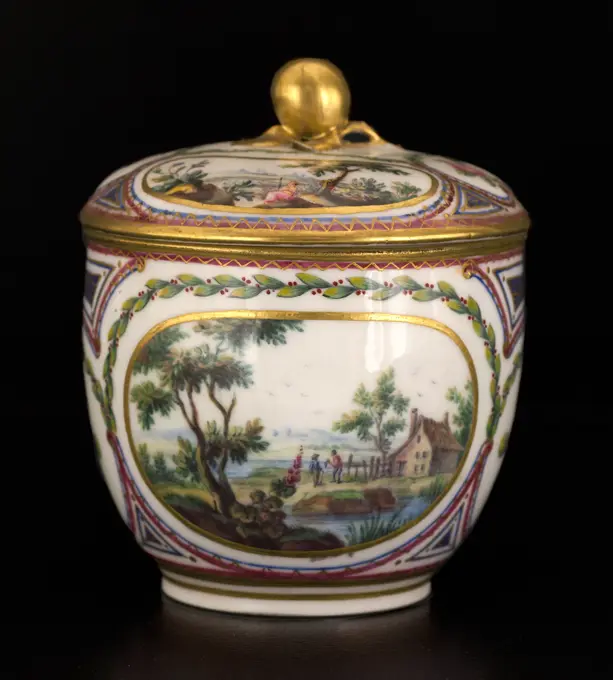
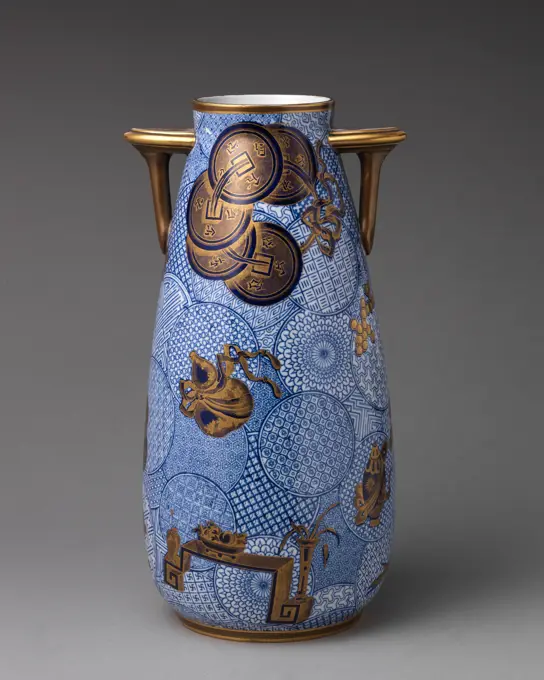
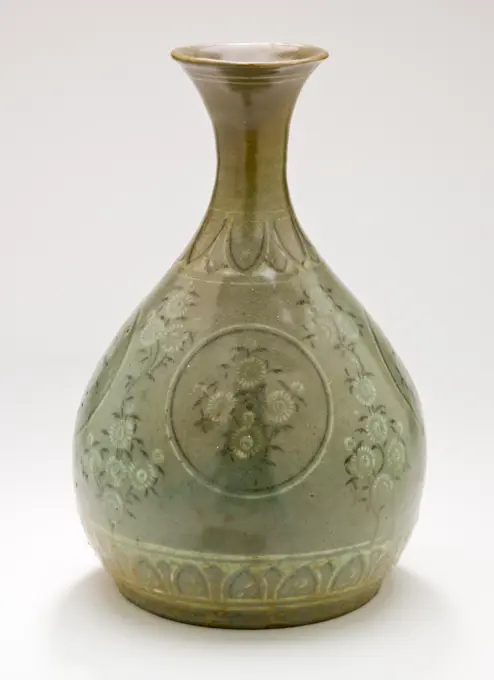
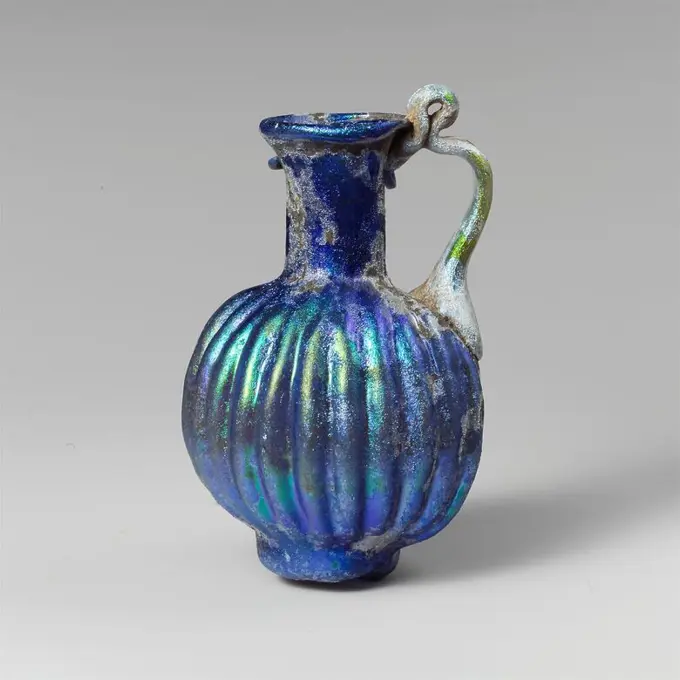
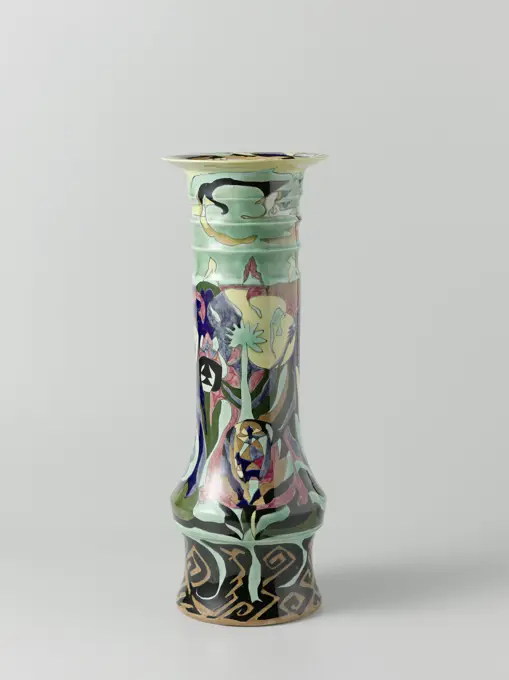
Decorative Porcelain Vases

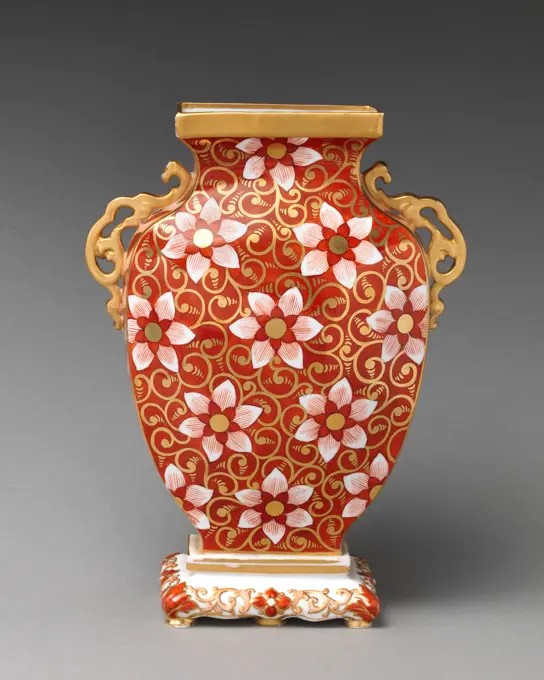
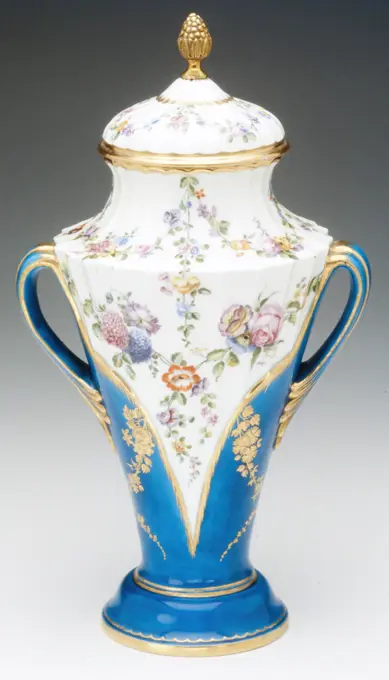
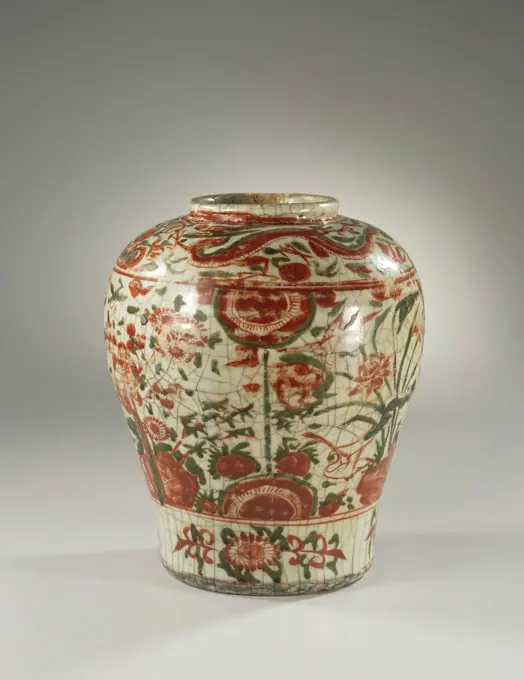
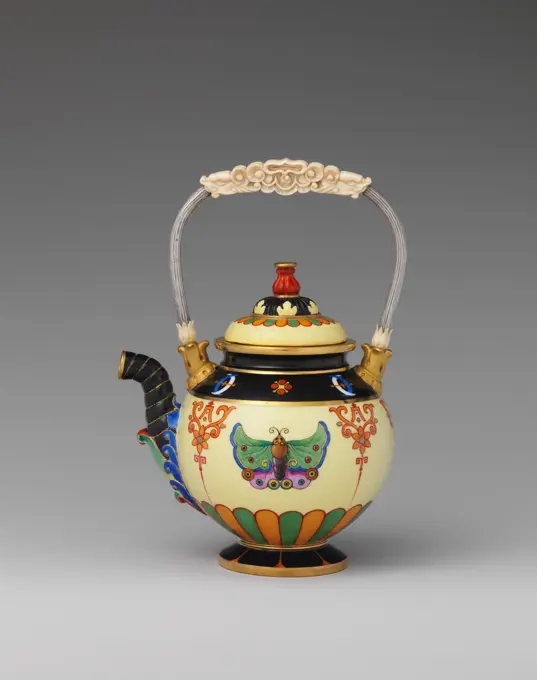
Collection of artistic porcelain vases featuring intricate floral designs, blue and white patterns, and colorful accents. Each vase showcases unique shapes and styles.
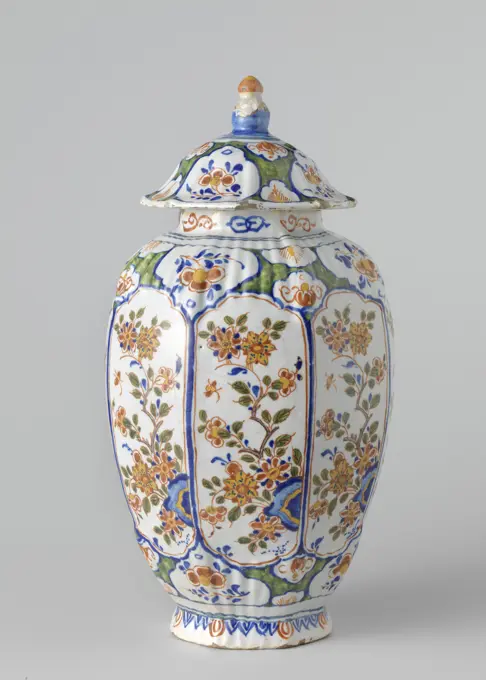
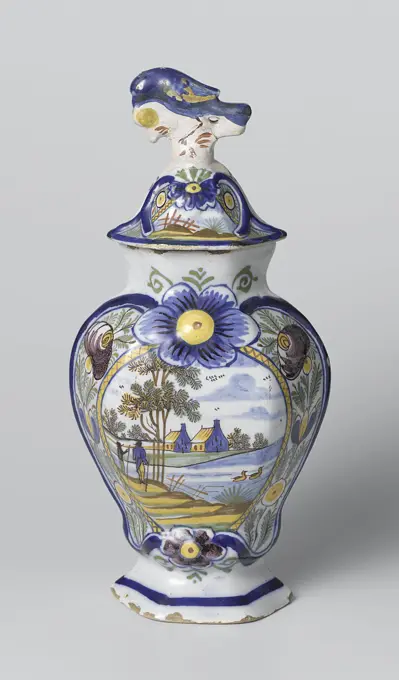
Lid, octagonal vaulted, with button; Polychrome decorated with flower branches within cartouches, the two Scheepjes, after Jan Gaal, after widow Gaal -van der Plank, 1707 - 1727  Delft earthenware  Delft earthenware
Lid, octagonal vaulted, with button; Polychrome decorated with flower branches within cartouches, the two Scheepjes, after Jan Gaal, after widow Gaal -van der Plank, 1707 - 1727 Delft earthenware Delft earthenware
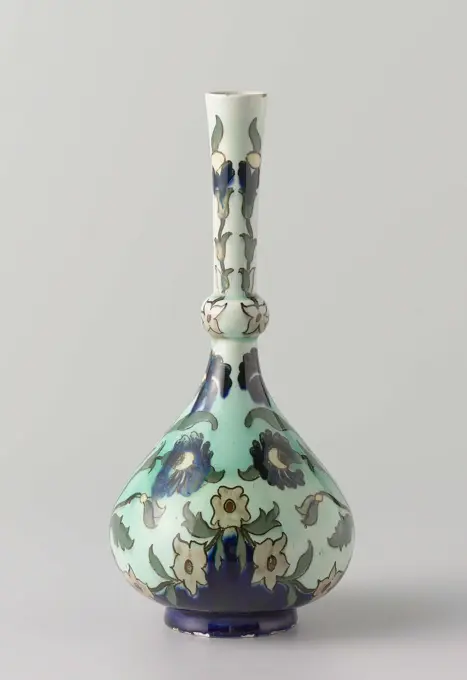
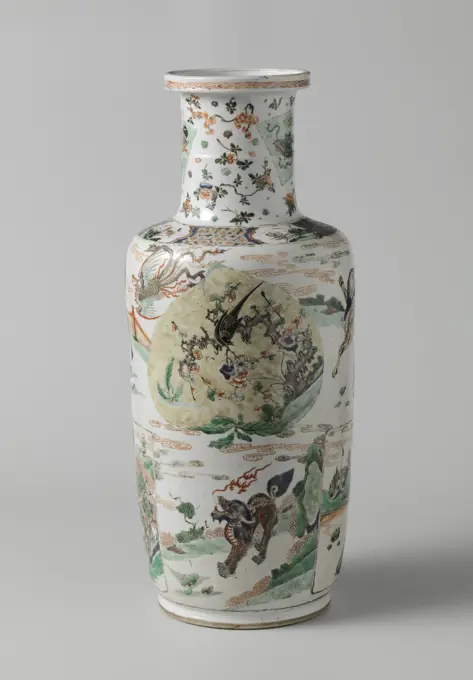
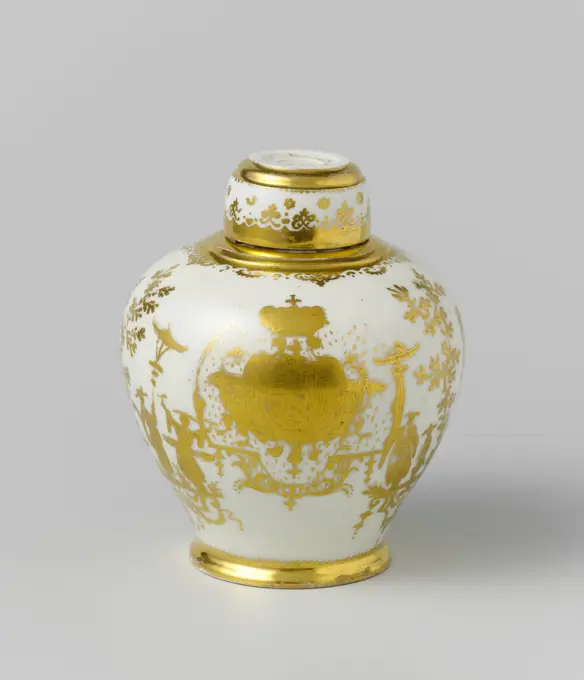
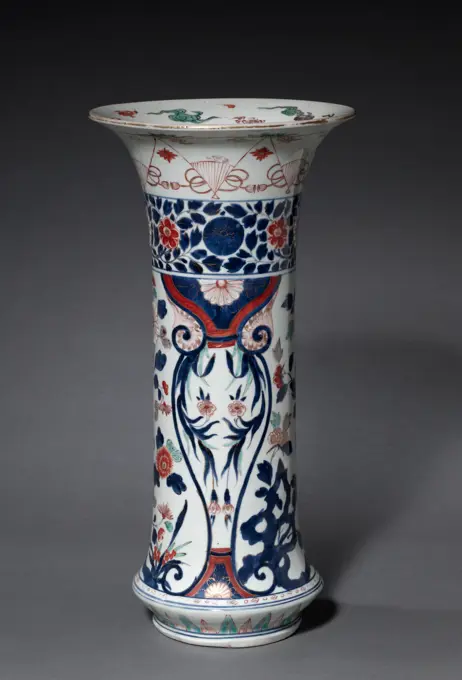
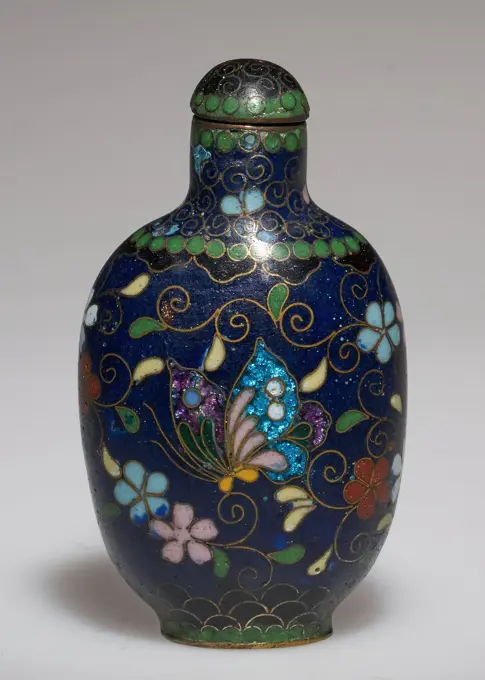
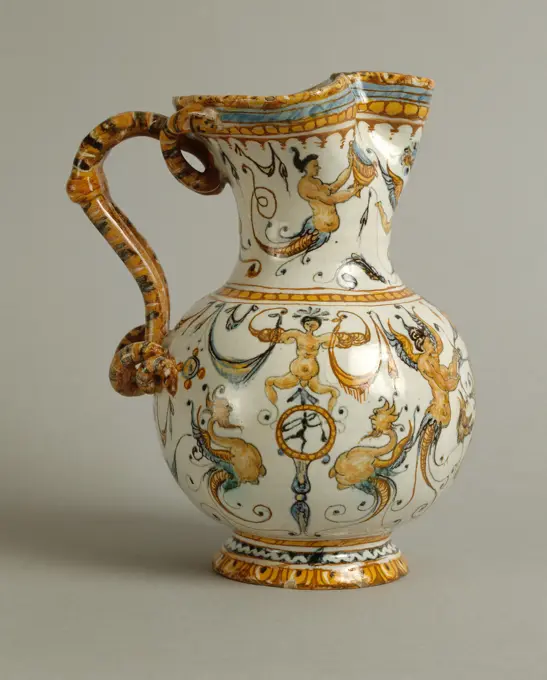
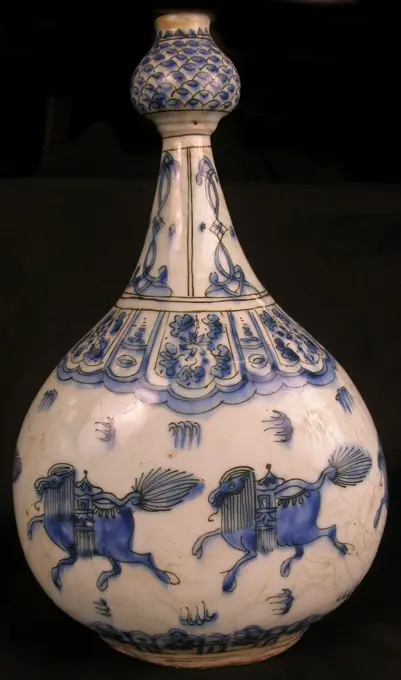
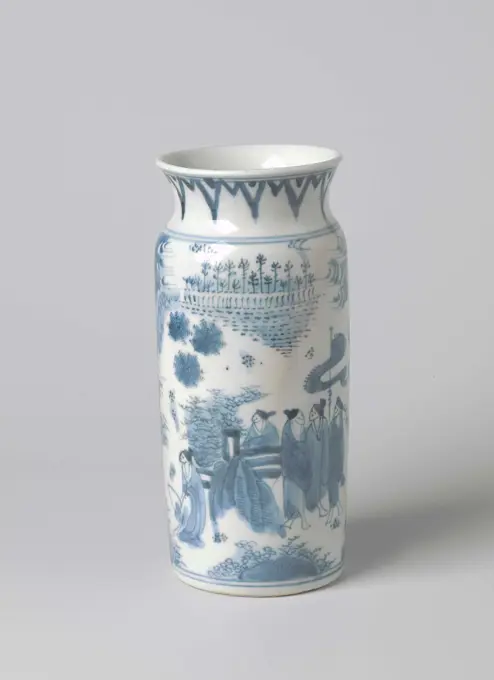
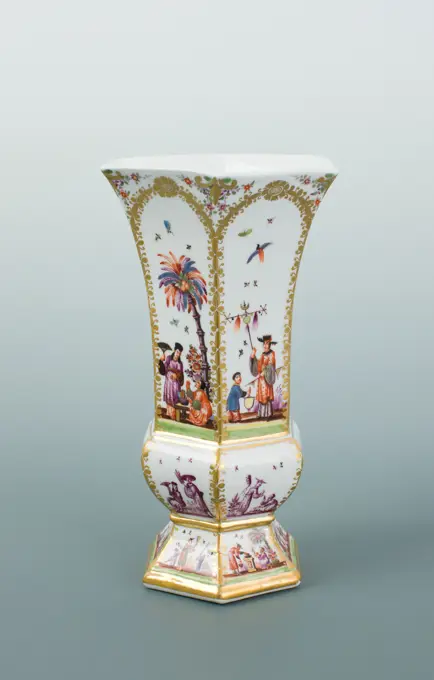
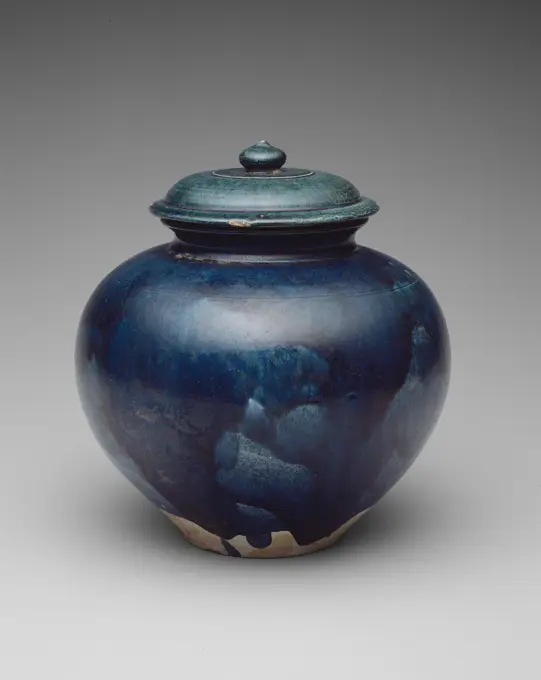
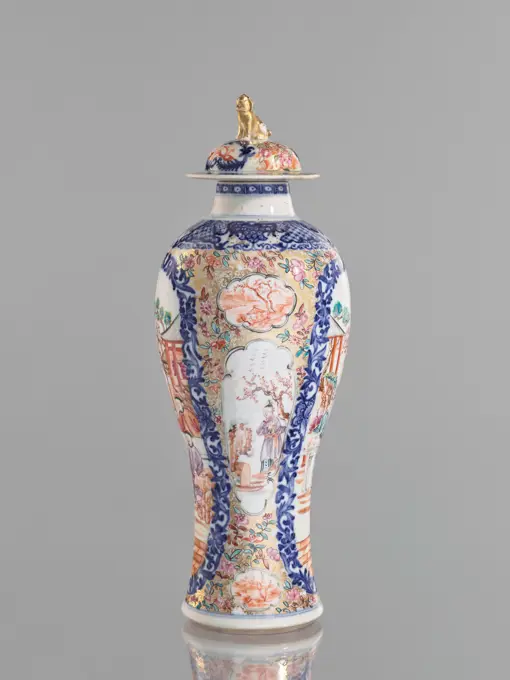
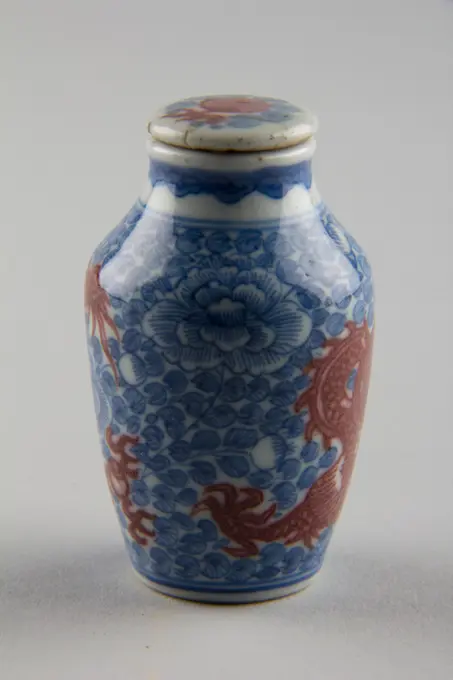
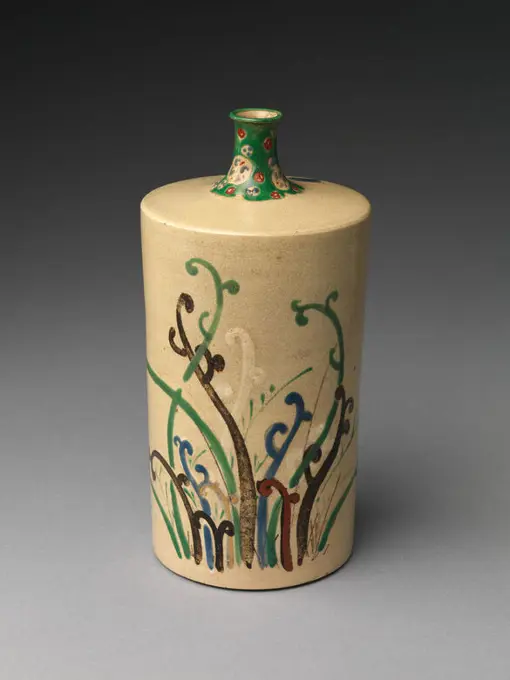
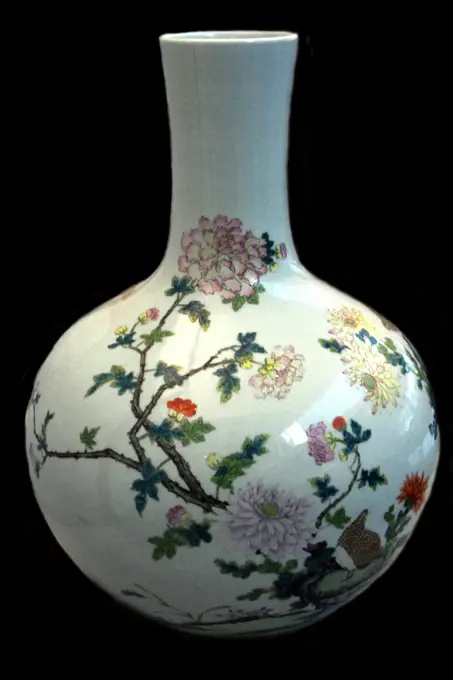
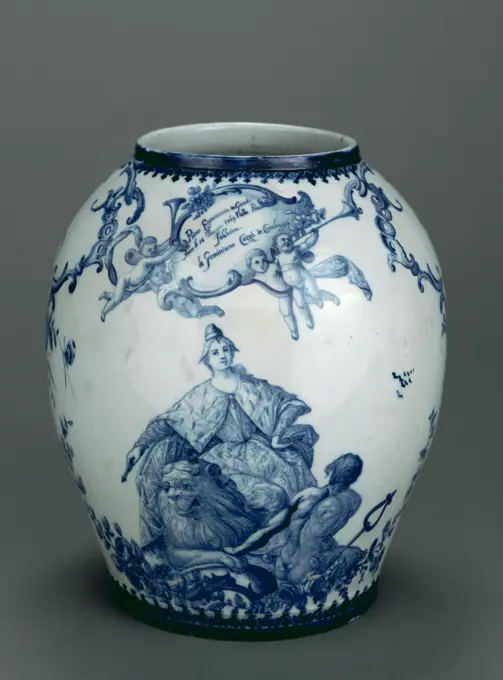
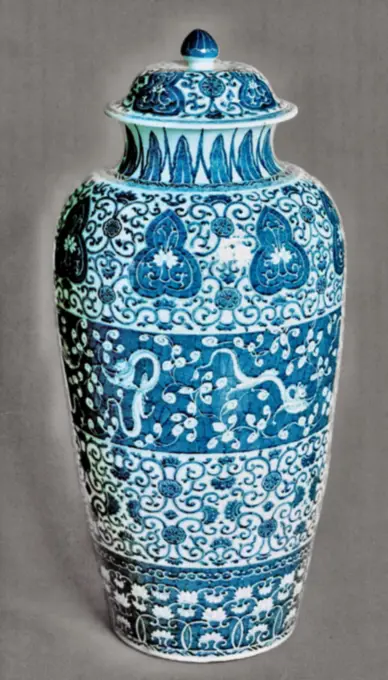
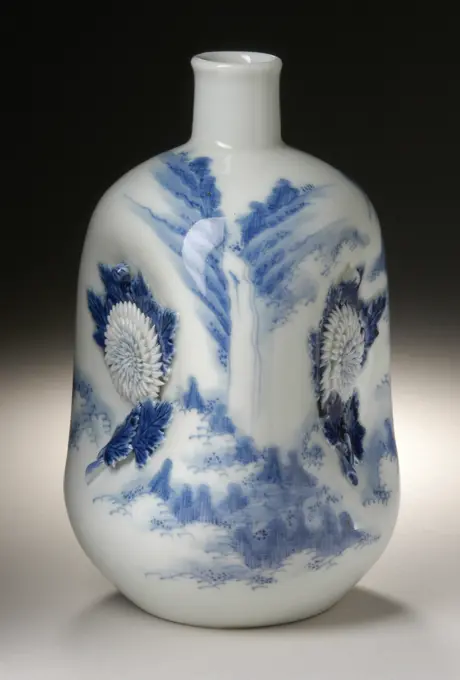
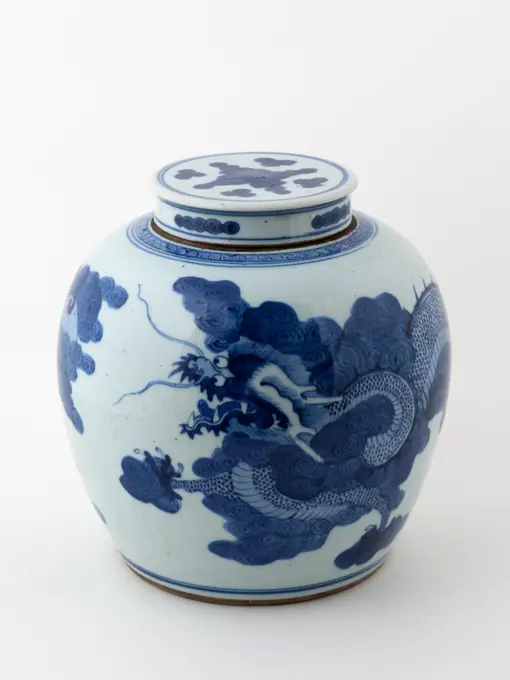
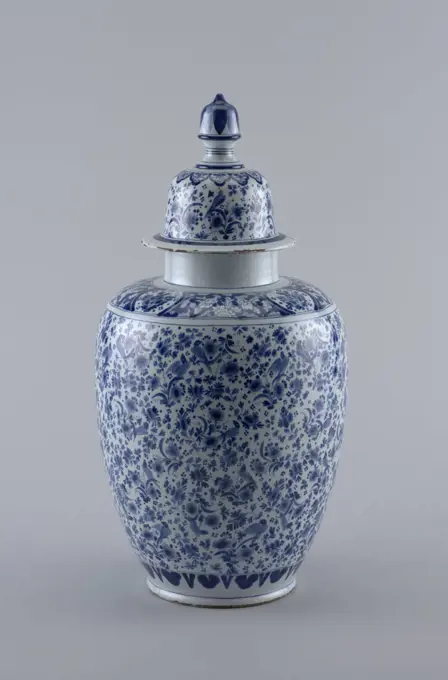
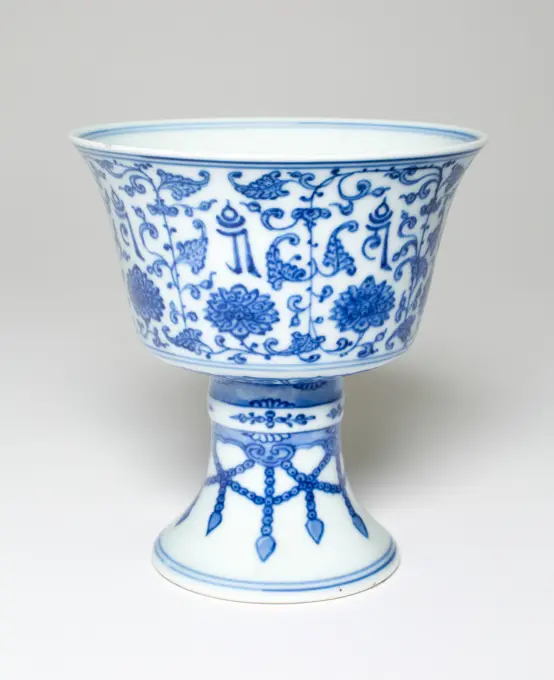
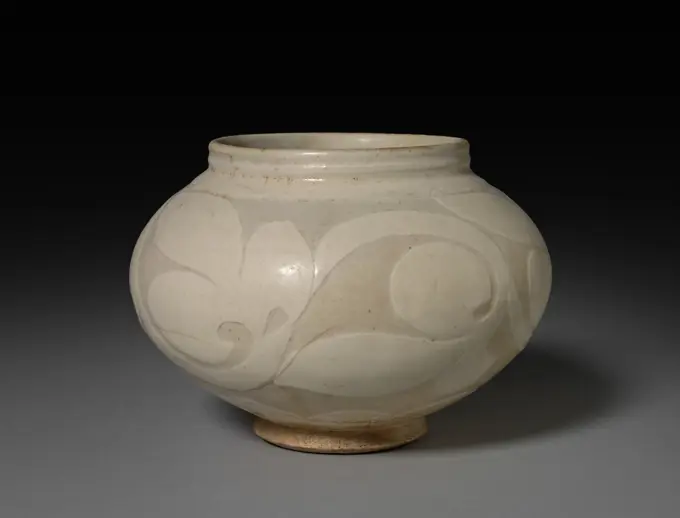
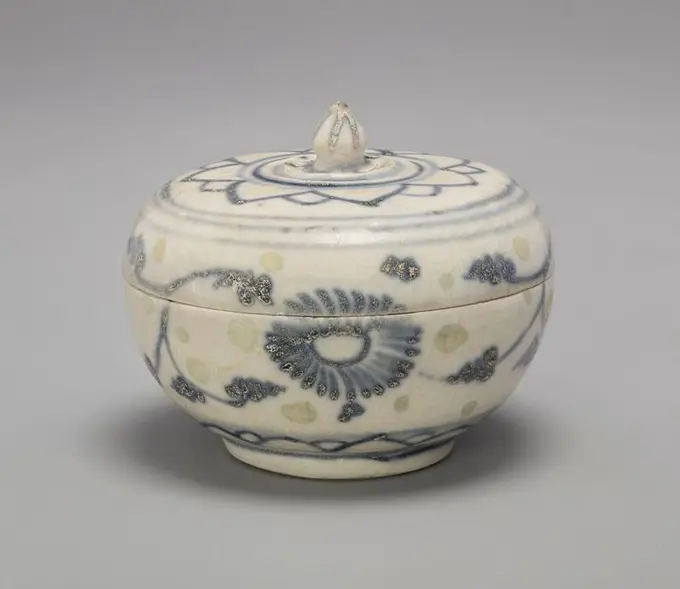
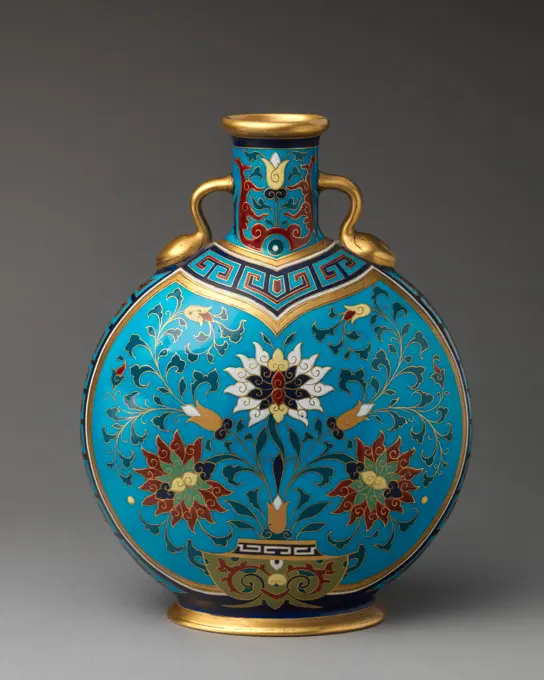
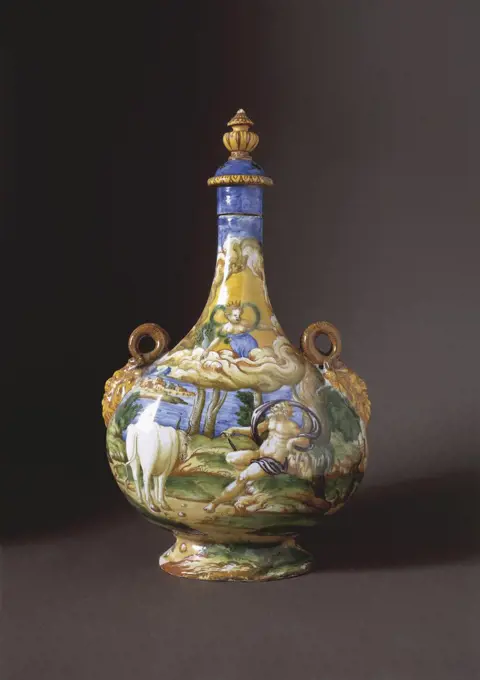
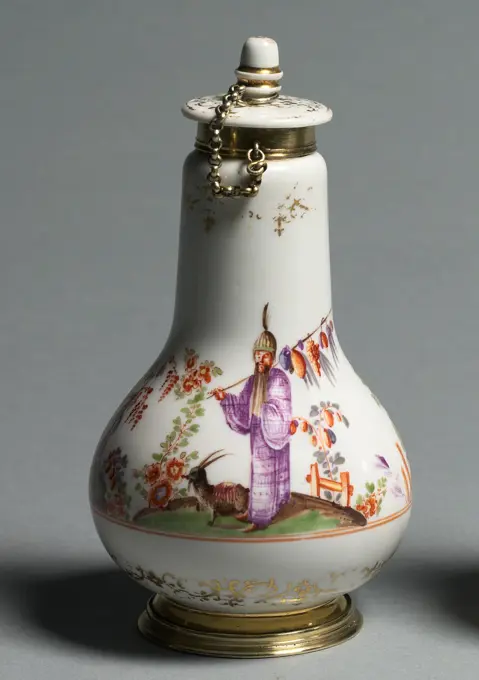
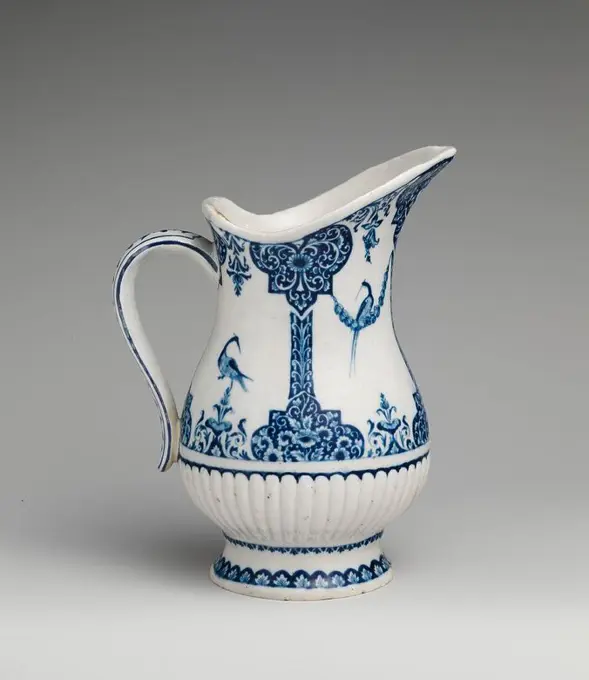
Gu-shaped vase with figures in a Landscape and Flower Sprays. Gu-shaped porcelain vase with a round thickening in the middle, painted in underglaze blue. The decoration is threefold: around the foot two sitting scholars in a landscape with a servant; on the thickening flower branches; On the neck four people in a landscape with a horse, one of them offers the other a sword. Worps on the bottom with a leaf in a double circle. Blue White.. Vase of pottery, pear-shaped body with long neck with nodus. Painted in green, yellow, blue, brown red and light brown with symmetrical blooming plants on a partly greenish spotted fond. The bottom of the body and the foot are dark blue. Iznik style.Bottle ca. 1760 British. Bottle 617Sleeve Vase Decorated with Birds and Flowering Branches, anonymous, c. 1675 - c. 1699 Cylindrical vase of porcelain with a wide neck and raised edge, painted on the glaze in blue, red, green, yellow, eggplant, black and gold. On the wall a landscape with (mythological) animals (Feng Huang, Shishi, Dragon, Qilin, Tiger), interrupted by two cartouches with river landscapes with pine and pavilions and two peach -shaped cartouches with a bird on a flower branch (Prunus, Magnolia). On the shoulder a tire servetwork interrupted by flowering plants in cartouches. The neck with loose flower branches and two fan-shaped cartouches with antiques (books, roll, Ruyi-SCEPTER, Qin, objects of a scholar, go-board, artemisia leaf). The outer edge with a band curl. Famle Verte. China porcelain. glaze. gold (metal) painting / gilding / vitrification Cylindrical vase of porcelain with a wide neck and raised edge, painted on the glaze in blue, red, green, yellow, eggplant, black and gold. On the wall a lanMiniature bottle-shaped vase of porcelain with a spherical body and long, narrow neck with slightly spreading mouth, painted in underglaze blue. On the belly lotus drinks. The shoulder with a band with a zigzag pattern and leaf motifs. The edge with a zigag pattern. Blue White.Tea caddy with the arms of the Dukes of Lorraine, Meissener Porzellan Manufaktur, before 1737 Tea lid with porcelain lid, painted in gold with three scenes with Chinese style figures on consoles and with the weapon of the Dukes of Lorraine. The tea business is not marked. porcelain company: MeissenAugsburg porcelain Tea lid with porcelain lid, painted in gold with three scenes with Chinese style figures on consoles and with the weapon of the Dukes of Lorraine. The tea business is not marked. porcelain company: MeissenAugsburg porcelainCider Jug. France, Rouen. Date: 1755-1765. Dimensions: H. 26.7 cm (10 1/2 in.). Tin-glazed earthenware (faience) and metal mount. Origin: Rouen. Museum: The Chicago Art Institute, Chicago, USA.Bottle 19th century, imitation of 17th century. Bottle 444873Vase, 1600s. Japan, Edo period (1615-1868). Porcelain with decoration in underglaze blue and colored enamels (Hizen ware, Arita type, Imari style); overall: 55.3 cm (21 3/4 in.).Bottle, painted multily with a kakiemon decor. Bottle of painted porcelain. The bottle is painted on one side with bound hedges with a pine, a prunus and a bird in the sky, on the other side with bamboo stalks with a bird. The bottle has been marked.Cover of pot multicolored painted faïence of multicolored painted faïence, anonymous, c. 1730 - c. 1760 Lid of pot of multi -colored painted faïence. Multicolored painted with flower decorations. The pot is part of a cupboard set. Delft . Lid of pot of multi -colored painted faïence. Multicolored painted with flower decorations. The pot is part of a cupboard set. Delft .. Vase of painted porcelain. The vase is almost entirely covered with a yellow part in which saved two large and two small four small fours within which Höroltt chinoiseries. Flower branches and insects are painted between the saved fields. Three figures and a child are painted at a fence within a large four-pass. The vase has been marked.Snuff Bottle, 1850-1925, 2 3/4 x 1 1/2in. (7 x 3.8cm), Cloisonne, China, Qing dynastyVase Vase; Manufactured by Rozenburg Pottery and Porcelain Factory (Netherlands); Painted by Samuel Schellink (1876 - 1958); Netherlands; earthenware; 28.5 x 12.5 cm (11 1/4 x 4 15/16 in.)Barrel-shaped covered jar with flower scrolls and geometric patterns, anonymous, c. 1700 - c. 1724 Ton -shaped pot of porcelain made up of three concave layers on top of each other, painted on the glaze in red, green, yellow, eggplant and black with flower vines and geometric motifs. Each layer has a different decoration: the lower one is filled with lotus vines, the middle one with geometric motifs interrupted by cartouches with a flower branch, the upper with flower vines saved in a red soil; Curling is applied around the foot. Famle Verte. China porcelain. glaze. painting / vitrification Ton -shaped pot of porcelain made up of three concave layers on top of each other, painted on the glaze in red, green, yellow, eggplant and black with flower vines and geometric motifs. Each layer has a different decoration: the lower one is filled with lotus vines, the middle one with geometric motifs interrupted by cartouches with a flower branch, the upper with flower vines saved in a red soil; CScent Bottle, 1700s. Staffordshire Factory (British). Enamel on copper with metal mounts; overall: 10.5 x 4.5 cm (4 1/8 x 1 3/4 in.).Potpourri Vase with Lovers' Scene Potpourri Vase; Manufactured by Royal Porcelain Manufactory, Berlin (Germany); Germany; hard paste porcelain, vitreous enamel, goldPatanazzi (workshop of). Cruche with chimera decor, Italian majolica of Urbino, between 1580 and 1600 (hand view on the left). Museum of Fine Arts of the City of Paris, Petit Palais. 27014-4 Ceramic, chiimere, jug, decor, Italy, Urbino majolica, Italian renaissance, dishesPorcelain vase, China. Chinese Civilisation, Ching Dynasty, late 17th-early 18th century.Covered Jar With Figures, Flower Sprays And Auspicious Symbols in Shaped Panels on a Multi-Colored Ground. Porcelain lid pot with baluster-shaped body and ribbed wall, painted on the glaze in blue, red, pink, green, yellow, purple, black and gold. On the wall cartouches against a common background of vertical tires (harlequin pattern); Two cartouches in the shape of open rolls with a lady (long lijs) with boy (ocean) in a fenced garden with flowering plants, including two leaf-shaped cartouches with ponda branch and butterfly, on either side of the large courses a smaller pomegranate and finger lemon-shaped box with lucky symbols; On the neck a bond with flower drinks. Belonging to a five-part cabinet set. Family Rose.Bottle with Running Quadrupeds 17th century Like so many ceramics produced in Iran during the Safavid period, the style and decoration of this dish was an attempt to emulate the highly-regarded Chinese porcelain wares. This is illustrated by the blue and white color scheme, as well as fish-scale pattern at the tip, and scalloped border at the shoulder. The flatness of the sides of the bottle, however, is akin to the shape of a pilgrim flask, a traditional Persian form.. Bottle with Running Quadrupeds 452084Arita-Ware Apothecary Bottle 1670-1680 Japan. Porcelain with underglaze blue decoration .Baluster Beaker Vase With Flower Scrolls and Precious Objects. Baluster-shaped cup spring from porcelain with wide neck, painted in underglaze blue. The belly and neck are covered with stylized chrysanthropics in which the 'shou' character has been processed; Between the ranges eight lobby cartouches with valuables (diamond, pearl, music stone, books) and antiques (vase with peacock feathers, books, incense burner, objects of a scholar). Blue White.Vase Made 1745-1755 Staffordshire. Lead-glazed earthenware (creamware)Lid of lid pot in the form of a lion with ball, anonymous, c. 1770 - c. 1800 lid Lid of lid jar in the form of a lion with ball Delft earthenware. tin glaze.Arita-Ware Covered Jar 1601-1800 Japan. Porcelain with underglaze blue decoration .Cylindrical vase with a continuous image with figures in a landscape. Cylindrical vase or trolley of porcelain, with a short shoulder and flared neck, painted in underglaze blue. On the wall, a continuous representation of a landscape with three standing people with a banner surrounded by three sitting people. Rocks, trees and plants in the landscape. A tire with dependent points on the neck. Arita, blue-white.Covered jar with hoo-birds in panels on a ground of lotus and floral scrolls, anonymous, c. 1720 - c. 1770 Porcelain lid of lid pot, painted in underly glaze blue and on the glaze red, black and gold. On the outer wall flower vines with a lotus vendal and a cartouche with a Hoo-Vogel alternately. Around the button a band with pointed leaf motifs. Lid button in the form of a rooster on a rock. Imari. Japan porcelain. glaze. cobalt (mineral). gold (metal) painting / gilding / vitrification Porcelain lid of lid pot, painted in underly glaze blue and on the glaze red, black and gold. On the outer wall flower vines with a lotus vendal and a cartouche with a Hoo-Vogel alternately. Around the button a band with pointed leaf motifs. Lid button in the form of a rooster on a rock. Imari. Japan porcelain. glaze. cobalt (mineral). gold (metal) painting / gilding / vitrificationApothecary jar -. Plated spherical bottle of porcelain, the neck runs down and upstairs, painted in underglaze blue. The entire bottle is decorated with a continuous pattern of flower and leaf raft (Lotus). The edge has been restored. Ming porcelain in blue and white.Vase Höroldt, Johann Gregorius, Mi Nia (Meissen)Vase c 1894-1896 Trenton. Porcelain with overglaze material . Ceramic Art CompanyJar with Cover 700 CE-750 CE China. In China, the use of finely ground cobalt blue ore as a colorant for lead glaze originated in the Tang dynasty. Perhaps intending to emulate vibrant blue glass imported from the Middle East, Chinese potters applied this glaze to off-white earthenwares and low-fired stonewares that were intended primarily for burial. The source of Tang cobalt has been subject to ongoing debate. For many years, most scholars assumed that Chinese potters imported cobalt ore from the Middle East. Recent analyses of Tang blue glazes, however, show these to be chemically distinct from those of Middle Eastern ceramics and may indicate a domestic Chinese source for this colorant.. Earthenware with blue lead glaze .Minature bottle with flowers 18th century China. Minature bottle with flowers. China. 18th century. Porcelain painted in underglaze cobalt blue and overglaze red enamel and gilding (Jingdezhen ware). Qing dynasty (1644-1911), Kangxi period (1662-1722). CeramicsSquare bottle with figures in a landscape, a flower vase and a flowering plant near a rock, anonymous, c. 1670 - c. 1690 Square bottle of porcelain, painted in under -glaze blue. Four different representations on the wall: one with two women with a fan in a landscape for a large tree with two birds, a flower vase, a flowering chrysanthemum in rocks and a water carrier near a house and a large tree with a bird. The shoulder with flower vines. A crack in the wall. Blue White. Japan porcelain. glaze. cobalt (mineral) painting / vitrification Square bottle of porcelain, painted in under -glaze blue. Four different representations on the wall: one with two women with a fan in a landscape for a large tree with two birds, a flower vase, a flowering chrysanthemum in rocks and a water carrier near a house and a large tree with a bird. The shoulder with flower vines. A crack in the wall. Blue White. Japan porcelain. glaze. cobalt (mineral) painting / vitrificationVase, one of a five-piece garniture, 19th century, H.6 x Di.3-7/8 in., Porcelain, England, 19th centuryVase with lid. unknown, craftsmanVase with Horse and Kirin on Geometric Sayagata (key fret) Pattern (one of a pair) late 19th century Style of Makuzu Kzan I (Miyagawa Toranosuke) Japanese. Vase with Horse and Kirin on Geometric Sayagata (key fret) Pattern (one of a pair). Style of Makuzu Kzan I (Miyagawa Toranosuke) (Japanese, 1842-1916). Japan. late 19th century. Porcelain with incised design and underglaze red. Meiji period (1868-1912). CeramicsSnuff Bottle China. Snuff Bottle 50516Vase;  19th century (1801-00-00-1900-00-00);Vase. Netherlands, Delft. Date: 1695-1705. Dimensions: H. 18.7 cm (7 3/8 in.). Tin-glazed earthenware (Delft). Origin: Delft. Museum: The Chicago Art Institute, Chicago, USA.Vase. unknown, craftsmanSake bottle. Culture: Japan. Dimensions: H. 8 1/4 in. (21 cm); Diam. 3 5/8 in. (9.2 cm). Date: 18th century. Museum: Metropolitan Museum of Art, New York, USA.Bottle Vase called a Tianqiuping. Chinese (Jiangzhi), Qing Dynasty porcelain. 1736-1795Glass flask decorated with intersecting circles. Culture: Roman. Dimensions: H.: 4 5/16 in. (11 cm). Date: 2nd-3rd century A.D..Translucent blue green.Unworked, knocked-off rim; short cylindrical neck, expanding downwards; sloping shoulder, above tall concave collar; spherical body; projecting rounded edge to base with flat bottom; no pontil mark. Body blown into a four-part mold of three vertical sections, extending to bottom of collar, joined to a shallow, disk-shaped base section.On body, sunken relief design of nine interlocking circles with a dot at the center of each circle, bordered above and below by a double row of smaller dots; on bottom, two raised circles, the outer one faint and thinner, around a small central knob.Intact, except for chips around rim; some bubbles; patchy weathering and iridescence. Museum: Metropolitan Museum of Art, New York, USA.Anonymous. Wedgwood Manufacture. "Large vase in handles", 19th century. Wedgwood fine earthenware. Paris, Museum of Romantic Life. EARTHENWARESake bottle 18th century Japan. Sake bottle. Japan. 18th century. Stoneware (Ko-Kiyomizu ware). Edo period (1615-1868). CeramicsVase with bird of paradise, company Wed. N.S.A. Brantjes and Co., 1895 - 1904 Vase, spherical, short out of mouth edge. Polychrome painted with bird of paradise with long decorative tail and flowers laid over the surface. Purmerend earthenware Vase, spherical, short out of mouth edge. Polychrome painted with bird of paradise with long decorative tail and flowers laid over the surface. Purmerend earthenwareGinger jar. unknown, craftsman. Basket of faïence, with three ears and open edge. Painted in blue with lambrequins and Chinese motifs.Vase with Personification of Venice. Factory of Geminiano Cozzi (Italian (Venetian), active 1764 - 1812)Chinese, K'ang Hsi period. Monumental vase. (Dragoon vase) blue and white porcelain.Miniature bottle vase with flowering plants, anonymous, c. 1675 - c. 1724 Miniature ashesle, bottle -shaped vase of porcelain, painted in underlaze blue. A flowering plant on the wall six times. The neck with twigs. Blue White. China porcelain. glaze. cobalt (mineral) painting Miniature ashesle, bottle -shaped vase of porcelain, painted in underlaze blue. A flowering plant on the wall six times. The neck with twigs. Blue White. China porcelain. glaze. cobalt (mineral) paintingVase with covers; De Porceleyne Schotel (Fiansu Factory; 1612-1800); after 1760 (1760-00-00-1785-00-00);Bronisław Krystall. Testament (Warsaw - exhibition - 2015/2016), Krystall, Bronisław (1887-1983) - collection, flowers, rocaille (ornament), purchase (provenance), animals. Teapot of porcelain with a ribbed, spherical body and S-shaped spout, painted in underglaze blue. The wall is divided into courses with alternating a thriving plant (chrysanthemum, peony) and a person sitting on a fenced terrace; The shoulder with a tire napkin interspersed with a flower in a cartouche; The lid with a tire napkin interspersed with a flower in a cartouche. Equipped with a 19th-century silver frame and handle by Arnoldi & Wielick, Amsterdam 1850. Kraakporkein.Vase (one of a pair) ca. 1891-1900 Copeland. Vase (one of a pair). British, Stoke-on-Trent. ca. 1891-1900. Bone china with enamel decoration and gilding. Ceramics-PorcelainVase à corset, with cover, c. 1755, Vincennes Porcelain Factory, France, c. 1740-1758, 13 3/8 in. (33.97 cm), Porcelain with enamel and gilded decoration, France, 18th century. Swatow is a type of stoneware made in the South Chinese province of Fujian. It features fluidly painted, expressive decoration and was widely distributed to Indonesia, the Philippines, Japan, and mainland Southeast Asia. This jar is decorated with birds, flowers, and dragons in overglaze iron-red and green enamels. Vessels of this type were generally used as containers for a range of foodstuffs.Tureen. Enoch Wood & Sons; English, active 1818-1846; Made for the American market; Staffordshire. Date: 1825-1830. Dimensions: 24.5 × 22.5 cm (9 5/8 × 8 7/8 in.). Earthenware. Origin: Staffordshire. Museum: The Chicago Art Institute, Chicago, USA.Vase first half of the 19th century China. Vase 51210Cylinder - pitcher;  2. PO. 18th century (1601-00-00-1650-00-00);Paderewski, Ignacy Jan (1860-1941), Paderewski, Ignacy Jan (1860-1941)-collection, Qing (style), Chinese (culture), Cloisonné, Dar (provenance), Chinese art, Lotos (ornament)Teapot (Théière chinoise) 1832-34 Sèvres Manufactory French The fascination with Chinese and Japanese works of art and with an imagined notion of a distant and exotic Asia was an important stylistic impetus in Europe throughout the eighteenth century, and the taste for chinoiserie, as this artistic category came to be known, survived into the early years of the nineteenth century, albeit to a lesser degree. At the Sèvres factory, a resurgent interest in Asian art and in chinoiserie decoration appeared in the 1820s through the 1840s. The factory produced both forms and decoration that mixed Chinese- and Japanese- inspired motifs, often misunderstood, with European ones, while also displaying a more serious interest in genuine Asian sources.The interest in both models and types of decoration evoking a fanciful Far East was present at Sèvres in the first two decades of the nineteenth century, but it flourished beginning in the 1820s and lasted another approximately twenty years. AlexandreStoneware jug be used with cable edge around the belly and the stamp decor of flowers on the shoulder, ear, jug crockery holder soil find ceramic stoneware glaze salt glaze, hand turned stamped glazed glazed baked carved Stoneware jug dark gray shard with salt glaze curled tail profile rings and cord bands around neck and foot archeology import pottery serve serve drink beer wineCan with lid, imarari -delft pottery, anonymous, 1720 - 1740 Can with fowence lid. Multicolored painted. Imari-Delft. Marked k no.7. Delft . Can with fowence lid. Multicolored painted. Imari-Delft. Marked k no.7. Delft .Sake Bottle with Landscape and Raised Chrysanthemums. Japan, late 19th century. Ceramics. Hirado Mikawachi ware; porcelain with underglaze blue and appliqueJar with a double cover. "Blue and white" porcelain. Paris, Cernuschi museum. 78839-26 Asian art, Chinese art, jar, porcelain, containerSprinkler in the form of double gourd late 17th-early 18th century China. Sprinkler in the form of double gourd. China. late 17th-early 18th century. Porcelain painted in underglaze cobalt blue (Jingdezhen ware), metal mounts. Qing dynasty (1644-1911), Kangxi period (1662-1722). CeramicsSnuff Bottle with Prunus, Bamboo, and Pine. China. Date: 1820-1850. Dimensions: 5.8 × 4.9 × 3.2 cm (2 1/4 × 1 15/16 × 1 1/4 in.). Porcelain painted in overglaze enamels. Origin: China. Museum: The Chicago Art Institute, Chicago, USA.Jar and lid, De Drie Posteleyne Astonne (The Three Porcelain Ash-Barrels), Gerrit Pietersz Kam, De Paauw (Peacock) Factory, Dutch, active 1651 - 1774, Tin-glazed earthenware, Large ovoid jar, tall straight-sided neck, slightly flattened foot; painted in underglaze blue on white with overall floral and bird pattern with leaf band bottom and floral reserve band at shoulder; high domed cover with wide flat base, acorn finial, decorated with floral and bird pattern., Delft, Netherlands, 1673-1700, ceramics, Decorative Arts, Jar and lidlid jar, the gilded blompot, c. 1810 - c. 1840  Pot of multi -colored painted faience. On the pot is a cartouche with two houses inside a landscape in the colors blue, yellow, green, brown and purple painted. The button of the lid is a bird picking into a fruit. The pot belongs to an identical legs a cup. Delft earthenware. tin glaze.Stem Cup with Peony Flowers, Stylized Vines, and Characters in Manchu Script 1736-1795 China. Porcelain painted in underglaze blue .Covered ewer probably 19th century Chinese. Covered ewer 461338Jar: Cizhou ware, 12th-13th Century. China, Northern Song dynasty (960-1127) - Jin dynasty (1115-1234). Glazed light gray stoneware; diameter: 15.3 cm (6 in.); overall: 11.1 cm (4 3/8 in.).Pomade Jar (Pot à Pommade or Pot à Fard), Saint-Cloud Porcelain Manufactory, French, active by 1693 - 1766, soft paste porcelain, vitreous enamel, Cylindrical form featuring arabesque or lambrequin motifs wrapped around entire circumference of pot on both upper and lower edges, all in underglaze blue; similar motif wrapped around edge of lid; knob on top of lid features single fower motif; all on white ground., France, ca. 1730, ceramics, Decorative Arts, jar, jarCovered Vase, c. 1728-30. Meissen Porcelain Factory (German). Porcelain; overall: 37.5 x 23.8 cm (14 3/4 x 9 3/8 in.).Jug and cover. unknown, glass worksTsun vase. Wolff, Karol (fl. ca 1800), company owner, Bielino (manufaktura fajansu ; 1779-1800), factoryCovered Box with Lotus Bud Knob and Lotus Flower Motif on Lid. Vietnam. Date: 1401-1500. Dimensions: 6.8 × 8.2 × 8.2 cm (2 11/16 × 3 3/16 × 3 3/16 in.). Glazed stoneware with cobalt-blue underglaze. Origin: Vietnam. Museum: The Chicago Art Institute, Chicago, USA.Moon flask with stylized floral decoration 1870-80 Minton(s) Minton was the most important ceramics factory during the Victorian period and began exhibiting products at the first Great Exhibition of 1851. Founded in 1793 by Thomas Minton at Stoke-on-Trent, the firm initially specialized in transferware pottery before expanding under the ownership of Thomass son Herbert Minton, beginning in 1836. Under the ownership of Colin Minton Campbell, who succeeded his uncle in 1858, the factory became recognized as a specialist producer of Aesthetics movement porcelain, which were inspired by a rich array of exotic and eclectic decorative motifs. Listen to experts illuminate this artwork's story Listen Play or pause #418. Christopher Dresser and the Birth of Industrial Design Supported by Bloomberg Philanthropies We're sorry, the transcript for this audio track is not available at this time. We are working to make it available as soon as possible.. Moon flask with stylized floral decoration. BrCovered Bowl. Thailand, Sawankhalok, 16th century. Furnishings; Serviceware. Stoneware with underglaze brown painted decoration and partial brown glazeClose-up of a Pilgrim bottle, Urbino, ItalyCovered Flask, c. 1720-1723. Meissen Porcelain Factory (German). Porcelain with gilt metal mounts; overall: 14.2 x 7.7 cm (5 9/16 x 3 1/16 in.).One pair of lidded and mounted bowls. Mounts attributed to Wolfgang Howzer (Swiss, active 1660 - about 1688)Ewer. Culture: French, Paris. Dimensions: Overall (confirmed): 7 7/8 × 6 3/16 × 4 3/8 in. (20 × 15.7 × 11.1 cm). Maker: Antoine Pavie (active 1703-27). Date: ca. 1720. Museum: Metropolitan Museum of Art, New York, USA.André-Vincent Vielliard. Bouret sugar pot. Porcelain, 1780. Paris, Cognacq-Jay museum. 79170-27 Art Menager, lake, landscape, character, porcelain, sugar pot bouret, sugar room, dishes, 18th 18th 18th 18th 18th 18th 18 century, houseVase, the Greek A, c. 1680 - c. 1685 Octagonal vase of blue painted faience. The belly is canopic and the neck is slim and long and has a sphere under the outstanding mouth edge. The vase is painted in the style of the Chinese transition porcelain. On the abdomen a company (Chinese) is painted in a landscape and above the foot ovals in which figures (Chinese) in a landscape. The vase is marked and the vase includes an identical vase with invnr. BK-1984-160-A. Delft earthenware. tin glaze. Octagonal vase of blue painted faience. The belly is canopic and the neck is slim and long and has a sphere under the outstanding mouth edge. The vase is painted in the style of the Chinese transition porcelain. On the abdomen a company (Chinese) is painted in a landscape and above the foot ovals in which figures (Chinese) in a landscape. The vase is marked and the vase includes an identical vase with invnr. BK-1984-160-A. Delft earthenware. tin glaze.Vase van Faience, De Klaauw, 1810 - 1840 vase Multicolored painted. Delft .Bottle-shaped vase. unknown, craftsmanCarafe with a medallion with a woman portrait. Matt glass carafe with small gold-plated medallion in which a bust portrait of a girl. A golden rosette on the opposite side. The stop ends in a point. Along the four-part lobed spout and along the basic gold edges.Baluster Covered Jar With Three Figures in a Fenced Garden. Baluster-shaped lid pot made of porcelain, painted in underglaze blue. On the wall a scene of a civil servant with two servers in a fenced garden with a building, clouds, rocks and trees; A servant has a range in hand, the other holds an object and points to his other hand. Marked on the bottom with an artemisia leaf. A chip in the edge; Lid is missing. Blue White.Vase fragment. Bielino (manufaktura fajansu ; 1779-1800), factoryCoffee Can of Dark Brown Glazed Pottery, Anonymous, 1815 Cover of a coffee pan of dark brown glazed pottery. The lid button is in the shape of a flower bud. Netherlands earthenware vitrification Cover of a coffee pan of dark brown glazed pottery. The lid button is in the shape of a flower bud. Netherlands earthenware vitrificationVase (one of a pair) 1879 Worcester factory After the end of the Flight, Barr & Barr ownership of the Worcester factory in 1840, the firm went through a succession of owners and mergers before falling under the ownership of Kerr & Binns in 1852. During the partnership, the factory sought to rebuild its former eighteenth-century reputation in porcelain and known for Renaissance-inspired designs. With the establishment of the Royal Worcester Porcelain Company in 1862, the company gradually gained recognition for its Japanese-inspired designs, which formed part of Japonisme, a collective fascination with Japan that took place in Europe and the United States following the opening of Japanese markets to the West by Commodore Perry in 1853. Listen to experts illuminate this artwork's story Listen Play or pause #418. Christopher Dresser and the Birth of Industrial Design Supported by Bloomberg Philanthropies We're sorry, the transcript for this audio track is not available at this time. We arBottle with Inlaid Chrysanthemum Design. Korea, Goryeo dynasty (918-1392), 12th century. Furnishings; Accessories. Wheel-thrown stoneware with incised and slip-filled decoration and green glazeGlass juglet with vertical ribbing. Culture: Roman. Dimensions: 3 3/16 x 2 x 1 3/4 in. (8.1 x 5.1 x 4.4 cm). Date: 2nd half of 1st century A.D..Translucent cobalt blue, with colorless handle.Everted rim, folded over and in; uneven cylindrical neck; globular but slightly lentoid body; circular low base with rounded edge; uneven, flat bottom; rod handle attached in a large claw pad to top of body, drawn up and out, turned in and trailed onto top of neck and underside of rim, with vertical loop above rim. One continuous mold seam around body, but misaligned causing one side of bottom to be higher than the other.On body, twenty-two vertical rounded ribs.Intact; pinprick bubbles; pitting, patches of weathering, and brilliant iridescence."Melon-shaped" bottles form a relatively rare type of early mold-blown glass, probably made in Syria. Several examples are recorded from ancient cemetery sites in Armenia, Georgia, and the Crimea, whereas the type is not known in the western half of theOvoid Vase With Four Ladies and Two Children at A Table and An Inscription. Egg-shaped vase of porcelain with wide, short neck, painted on the glaze in blue, red, pink, green, yellow, purple, black and gold. On the wall a scene of two 'go' playing ladies at a table with four spectators, two ladies and two children, beside the spectators a flower vase, behind the children playing a table with antiques (vase with peacock feathers, coral, scepter, music stone, Incense burner), next to the table two large vases. On the other side an inscription 'image of a' go 'game, painted on the day of flowers in the year Jiachen in a beautiful house on the Zujiang river in Lingnan'; And a seal with 'The Golden Tang Hall'. Family Rose.vase of faience. Painted multi-colored.Basket with ajour edge and with lid, painted in blue with medallions in which sitting female figures, anonymous, c. 1700 - c. 1730 Basket with ajour edge and with Faïence lid, painted in blue with medallions in which sitting women's figures. The lid has a button in the form of a sitting lion. The object is false. Delft (possibly) . Basket with ajour edge and with Faïence lid, painted in blue with medallions in which sitting women's figures. The lid has a button in the form of a sitting lion. The object is false. Delft (possibly) .Sake bottle with pine, bamboo and plum mid-17th century Japan. Sake bottle with pine, bamboo and plum. Japan. mid-17th century. Stoneware (Mizoro ware). Edo period (1615-1868). CeramicsGarniture of five vases, Theo Colenbrander, 1886 Vase from a series of five pieces, design Colenbrander. Marked: WG with an F with extra cross line, hedge and the letter B (= 1886) in between. The Hague earthenware Vase from a series of five pieces, design Colenbrander. Marked: WG with an F with extra cross line, hedge and the letter B (= 1886) in between. The Hague earthenware