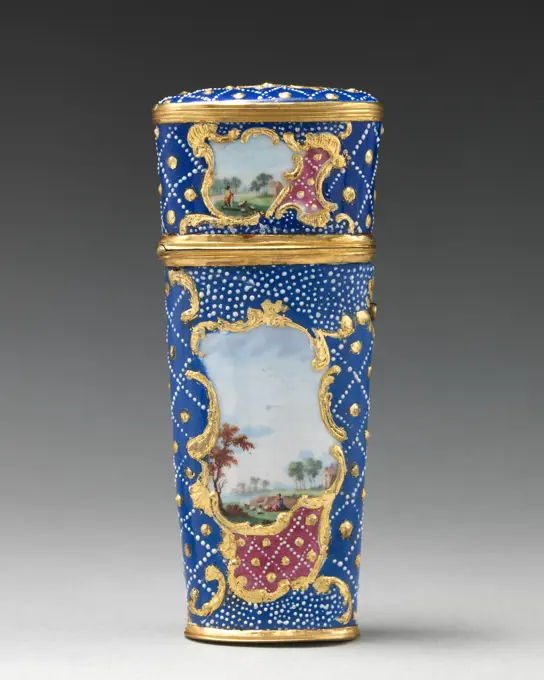
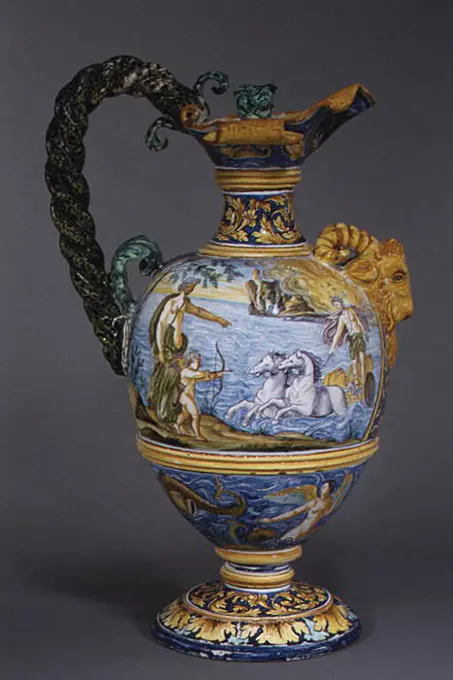
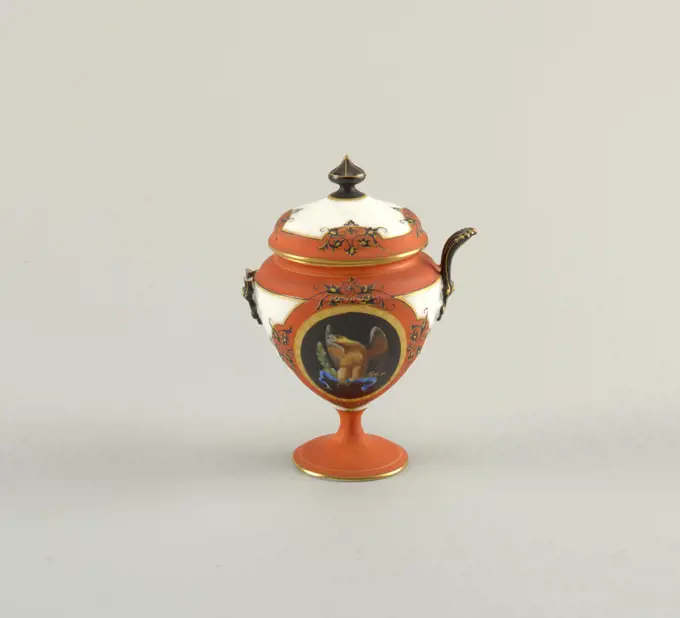
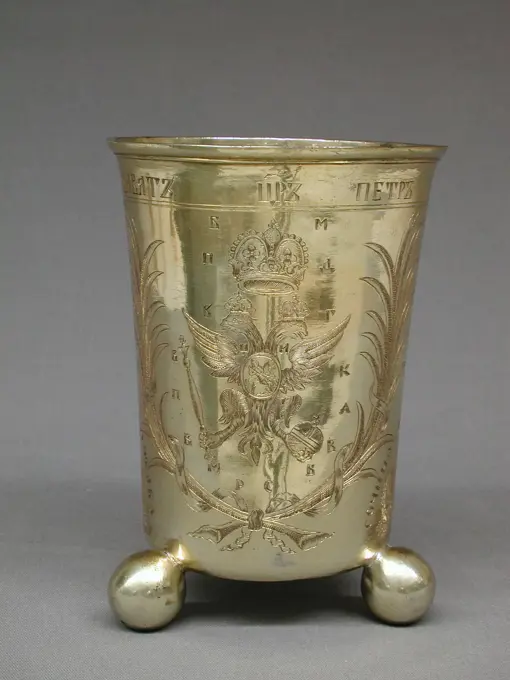
Decorative Porcelain Vases

A selection of ornate porcelain vases featuring intricate designs and landscapes, showcasing craftsmanship from historical pottery factories.

Covered baluster jar with figures in an interior behind framework, prunus trees and floral scrolls, anonymous, c. 1650 - c. 1699 Porcelain cover -shaped lid -shaped lid jar, painted in underly glaze blue and on the glaze red, black and gold. Traly work painted on the wall, decorated with modeled and decorated prunus trees and tires with flower vines. Under the grille work a band with flower vines. Around the foot a bond with lotus drinks. Lid button in the shape of a bird on a stump. Imari. Japan porcelain. glaze. cobalt (mineral). gold (metal) painting / gilding / vitrification Porcelain cover -shaped lid -shaped lid jar, painted in underly glaze blue and on the glaze red, black and gold. Traly work painted on the wall, decorated with modeled and decorated prunus trees and tires with flower vines. Under the grille work a band with flower vines. Around the foot a bond with lotus drinks. Lid button in the shape of a bird on a stump. Imari. Japan porcelain. glaze. cobalt (mineral). gold
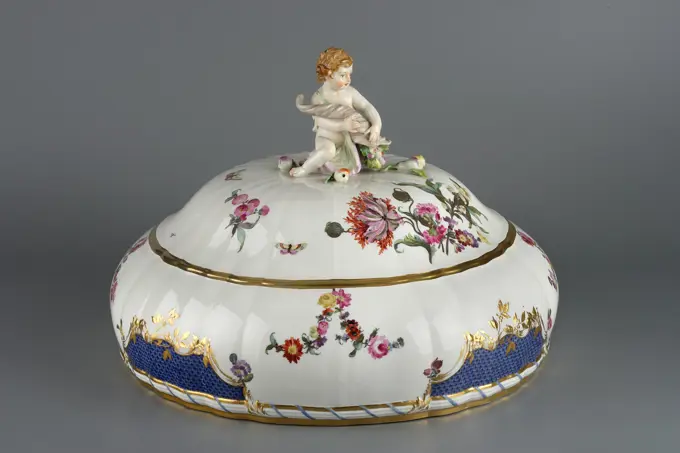
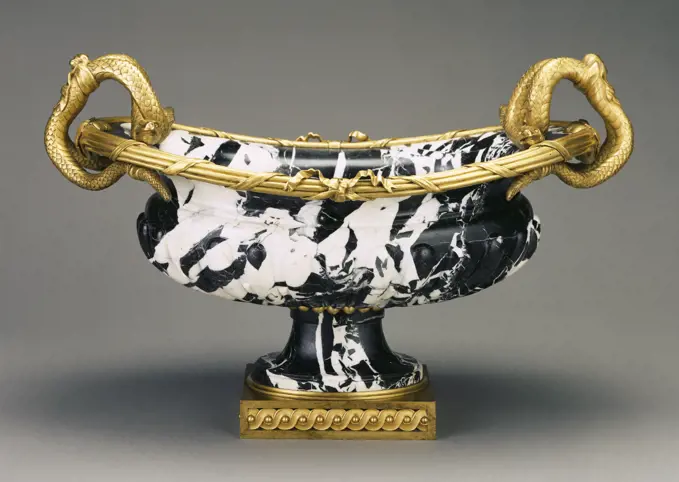
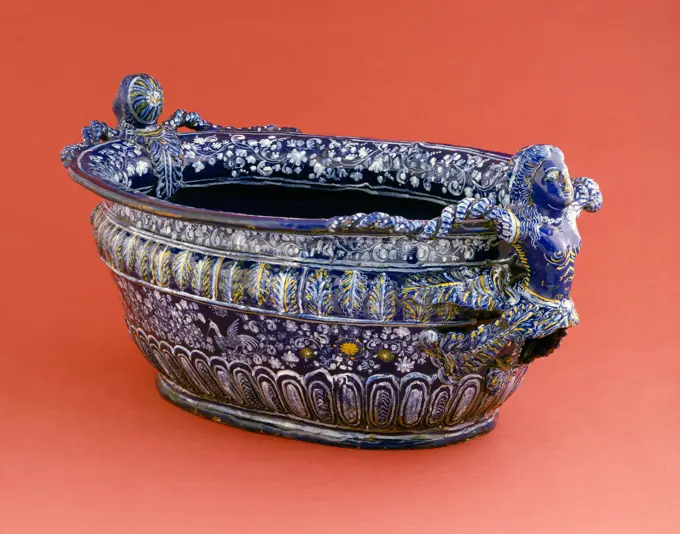
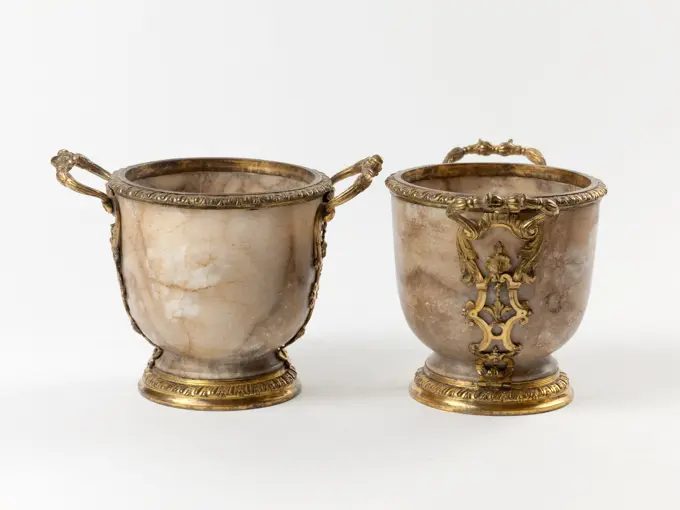
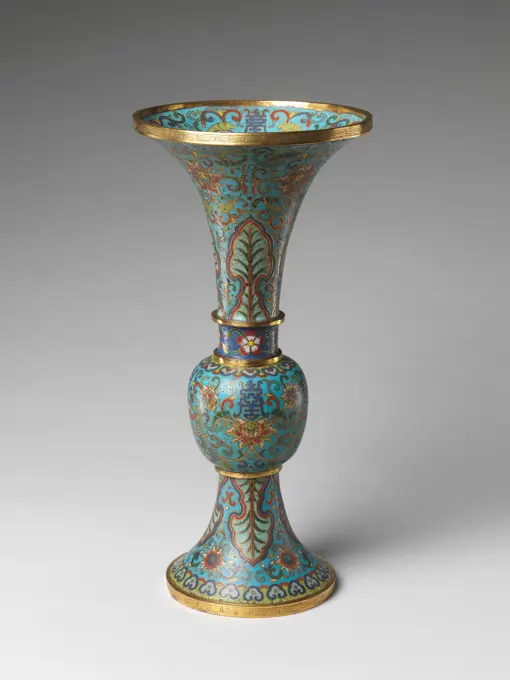
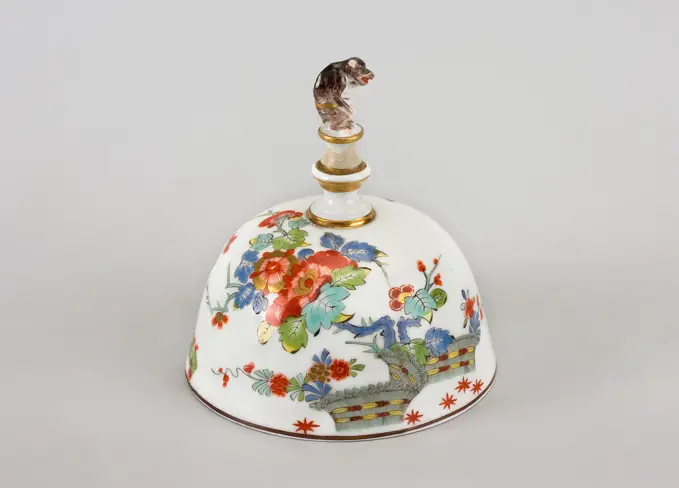
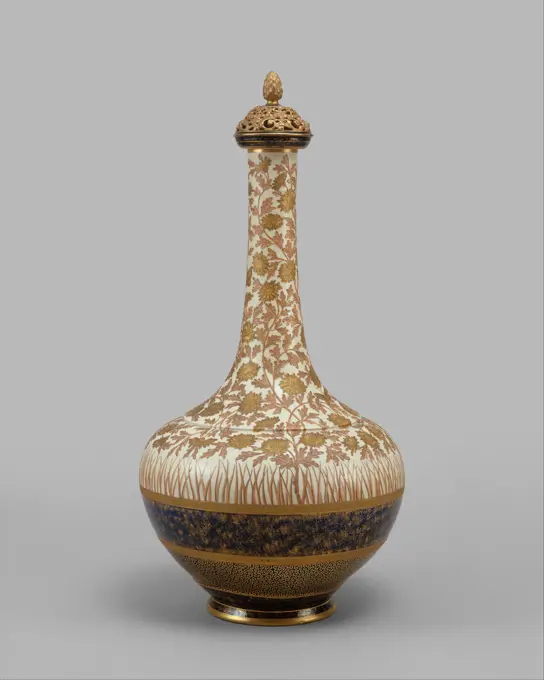
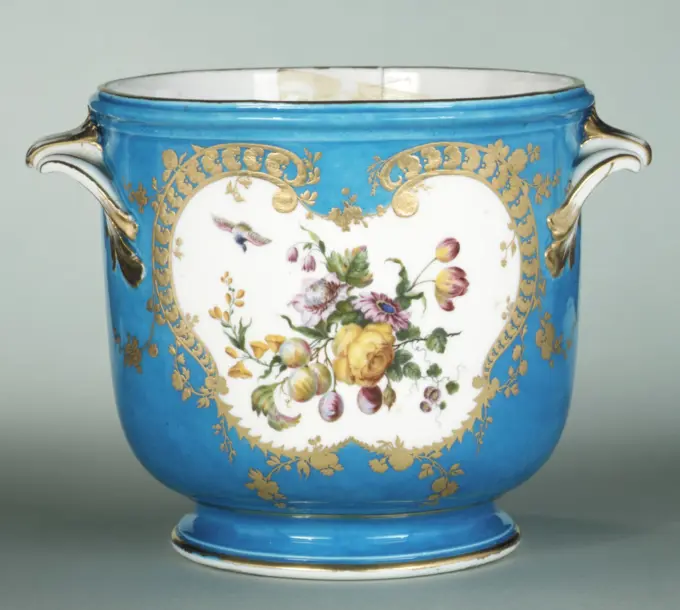
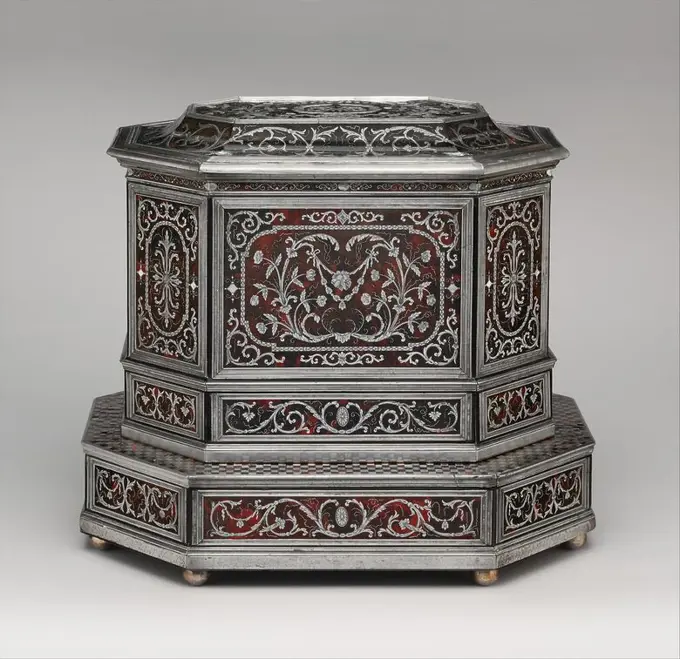
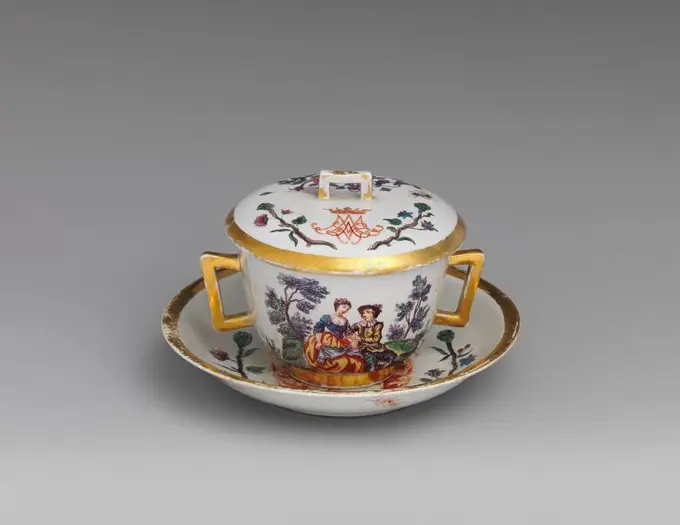
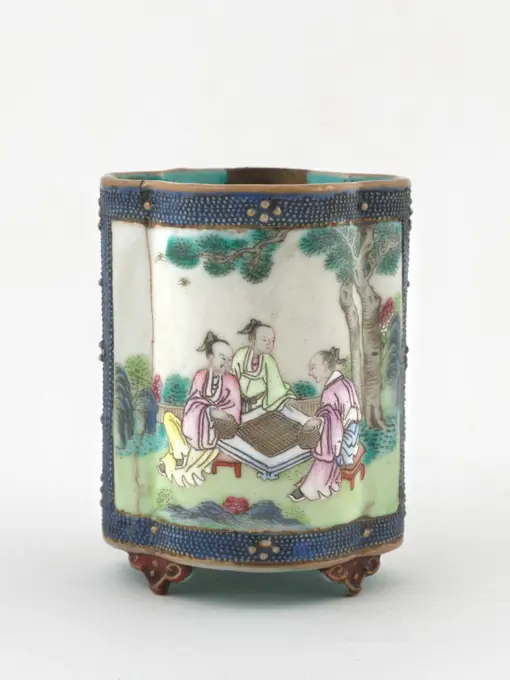
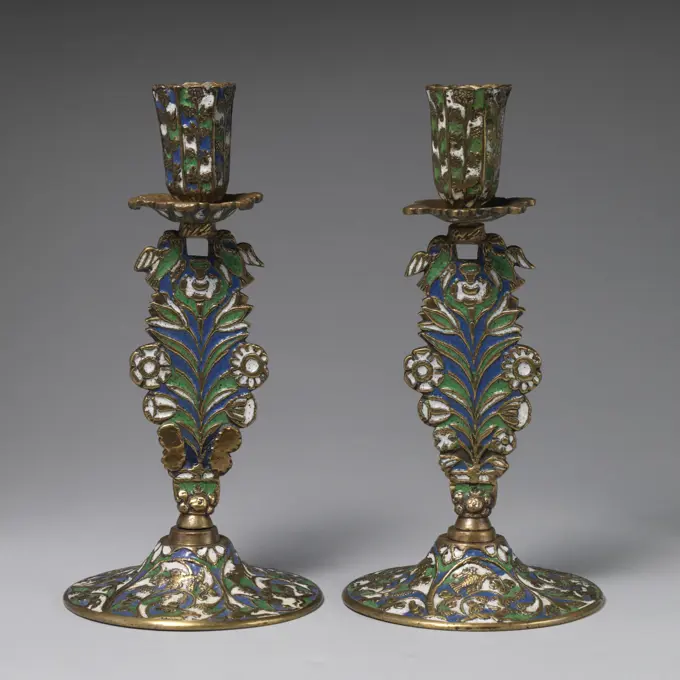
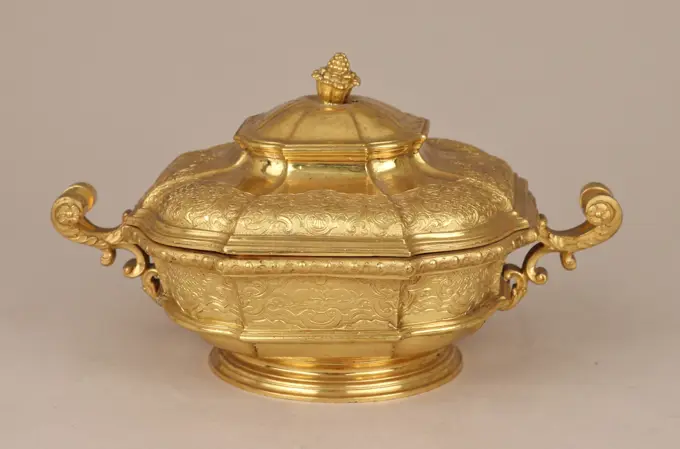
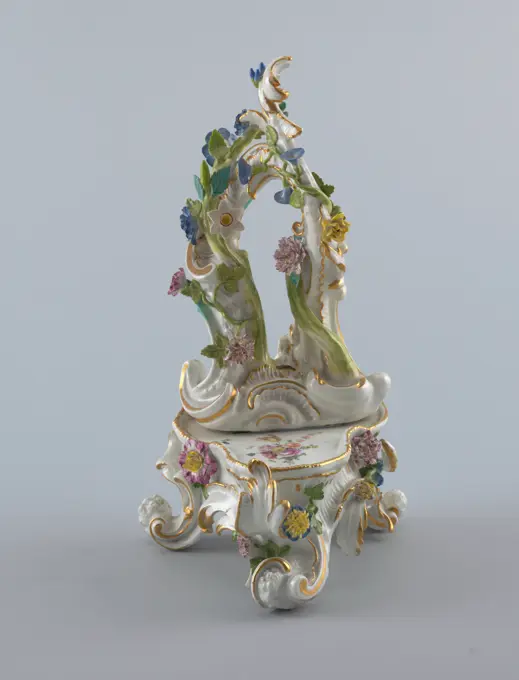
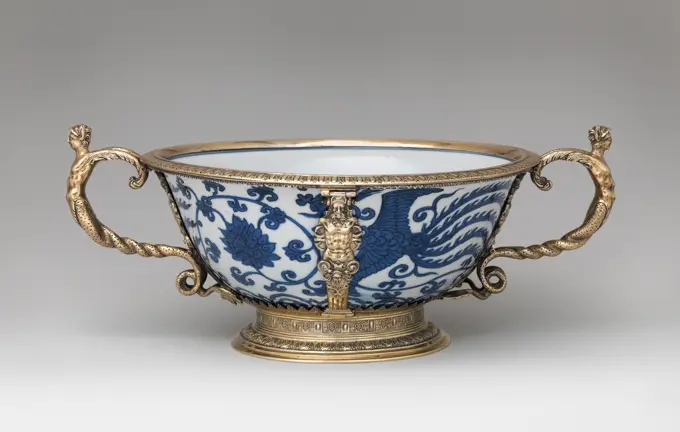
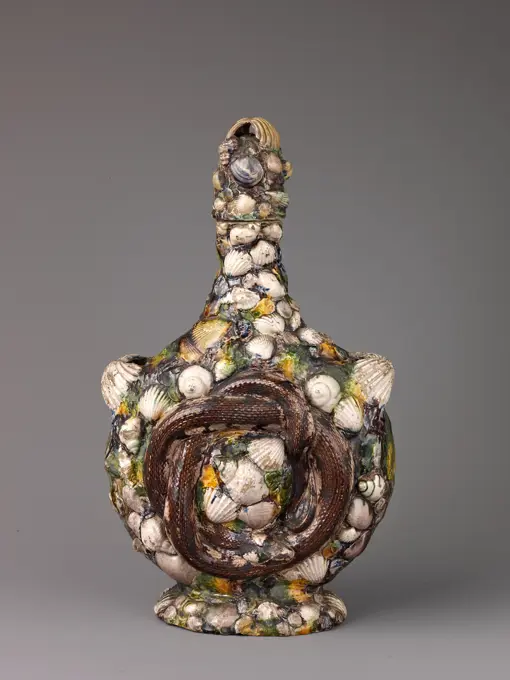
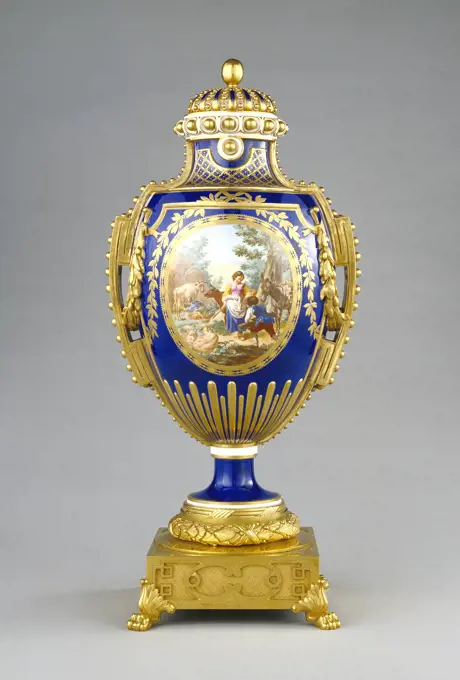
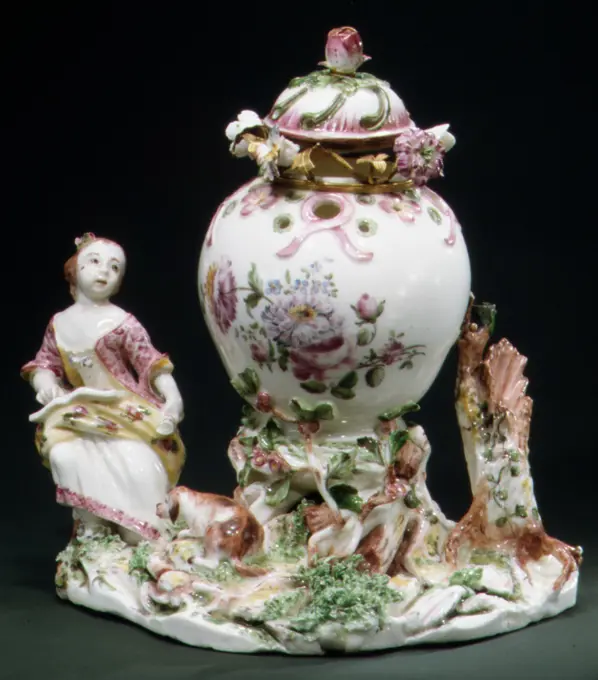
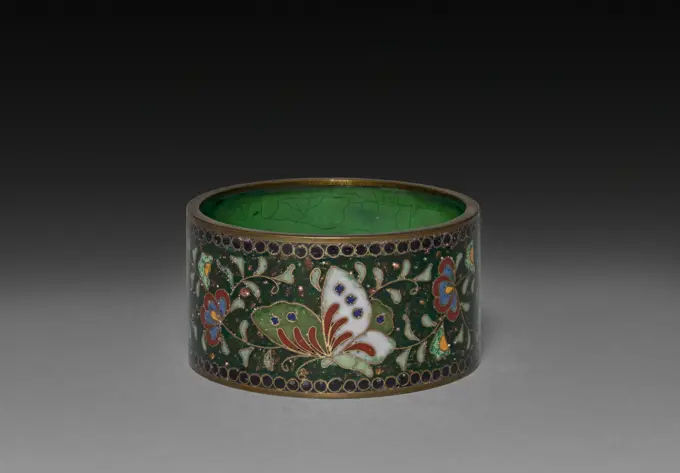
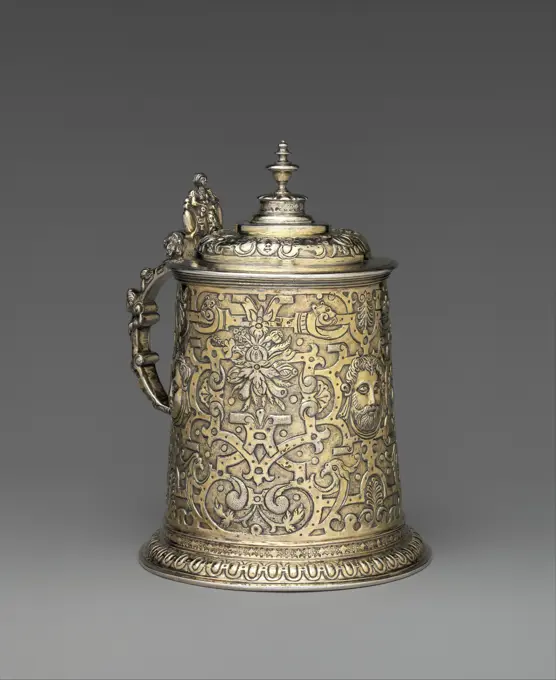
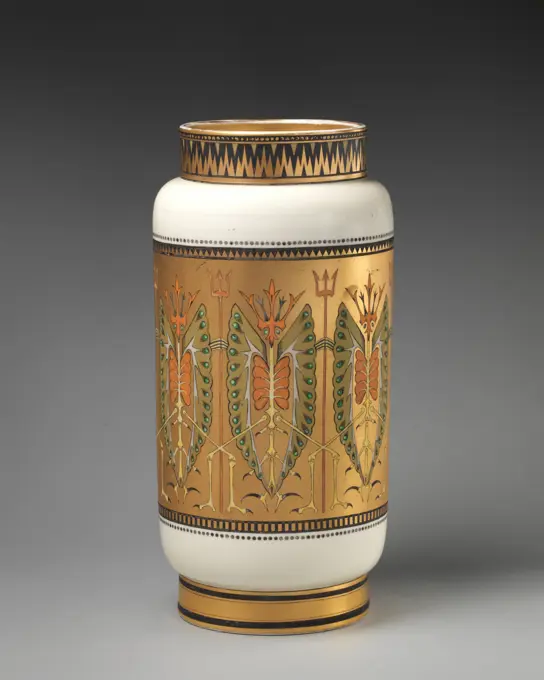
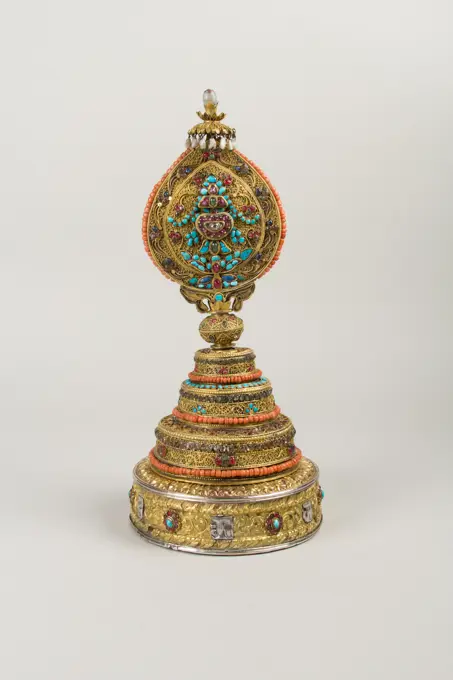
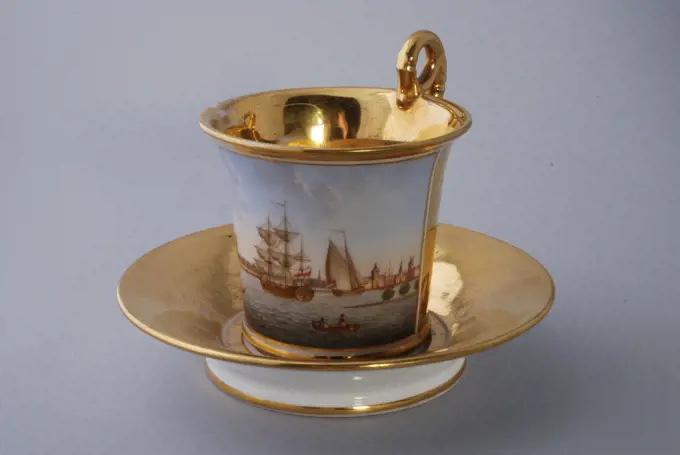
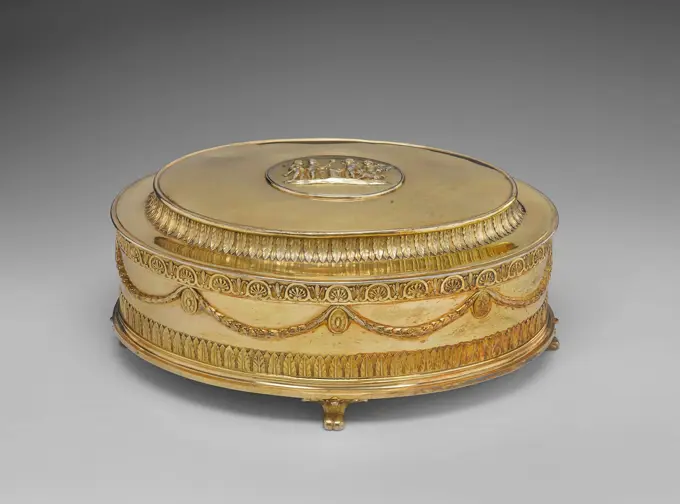
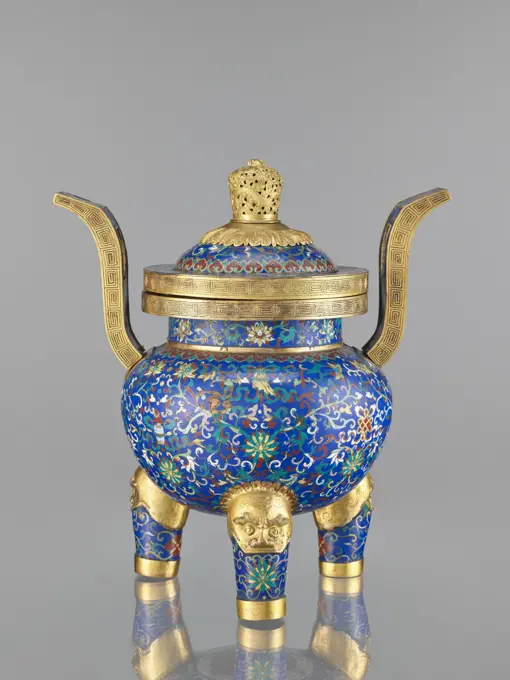
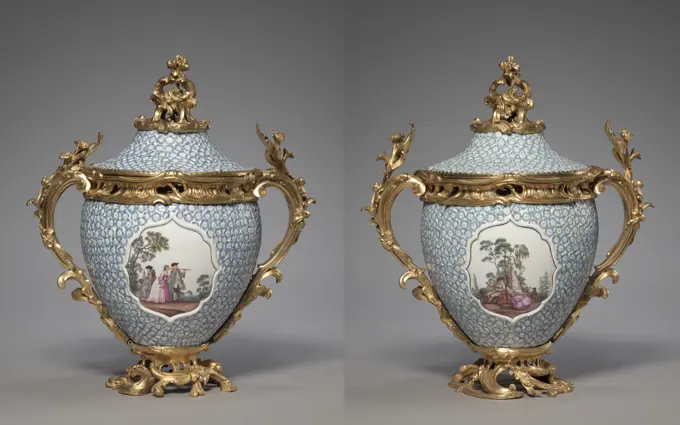
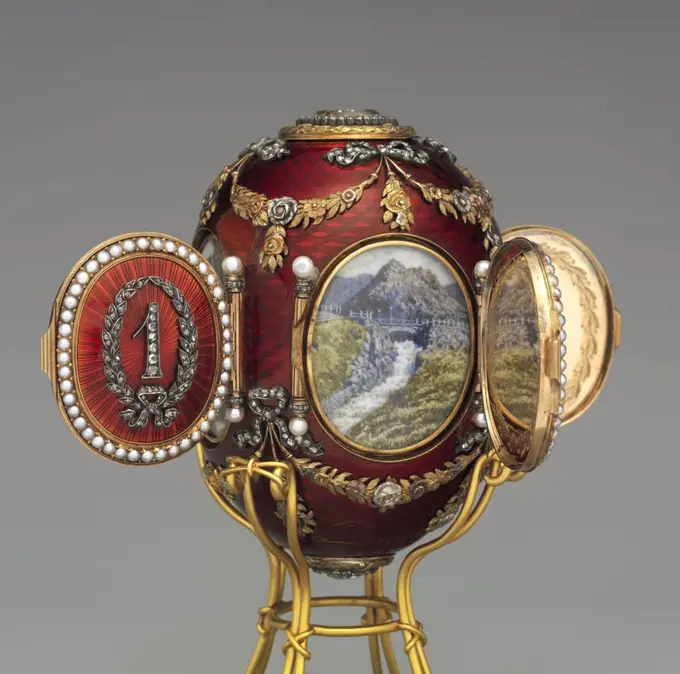
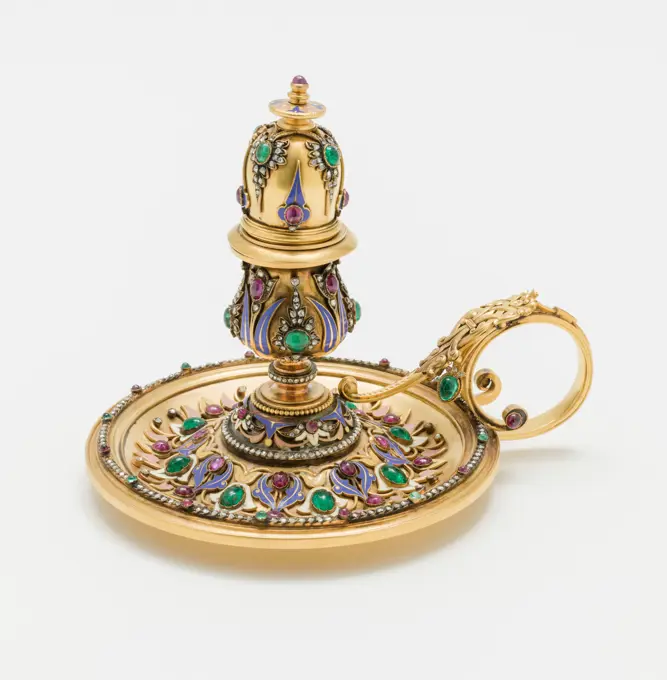
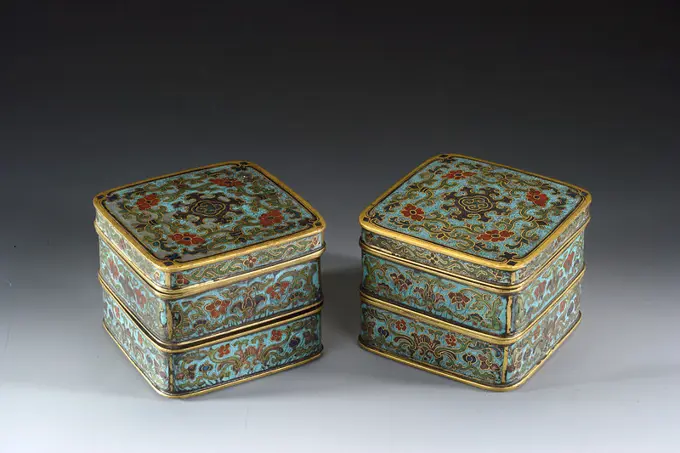
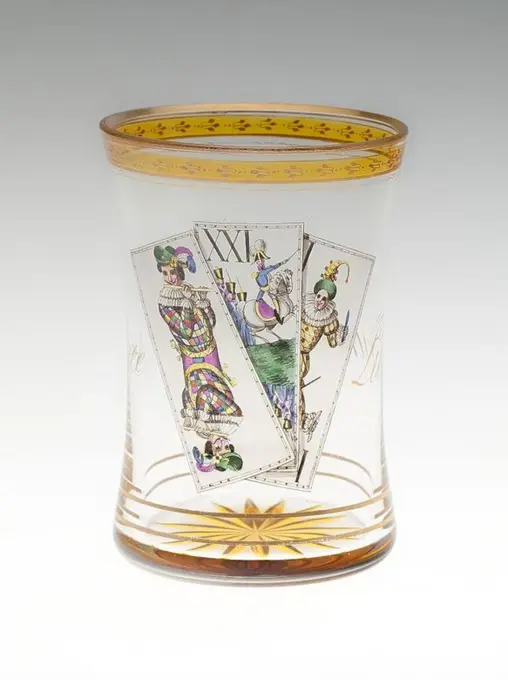
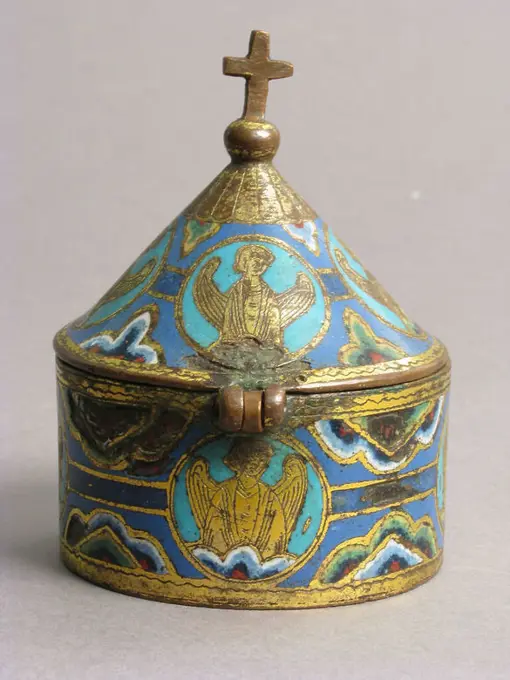
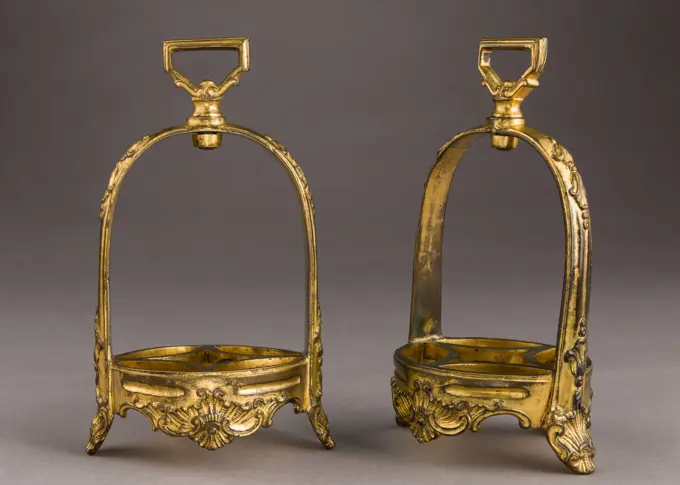
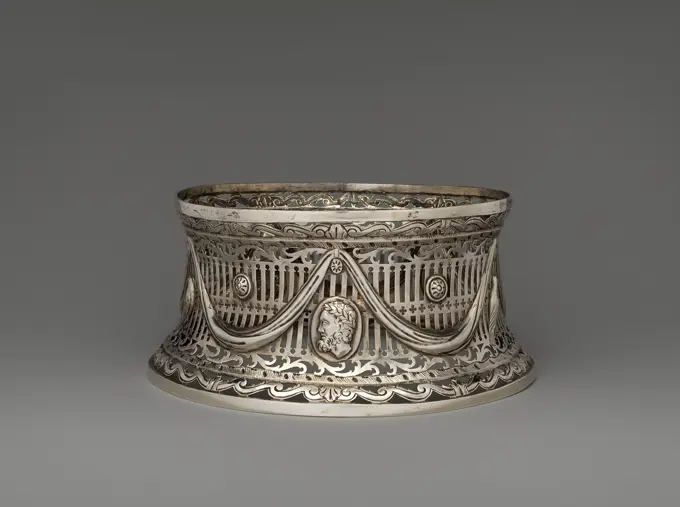
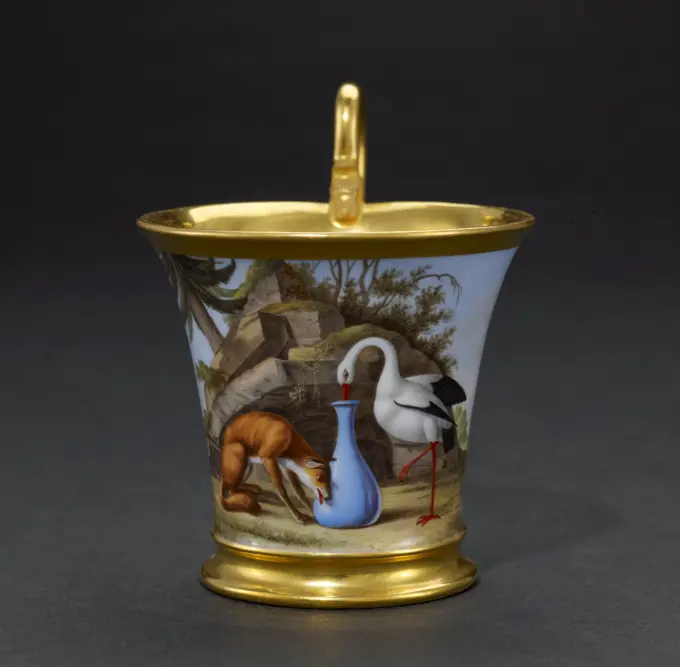
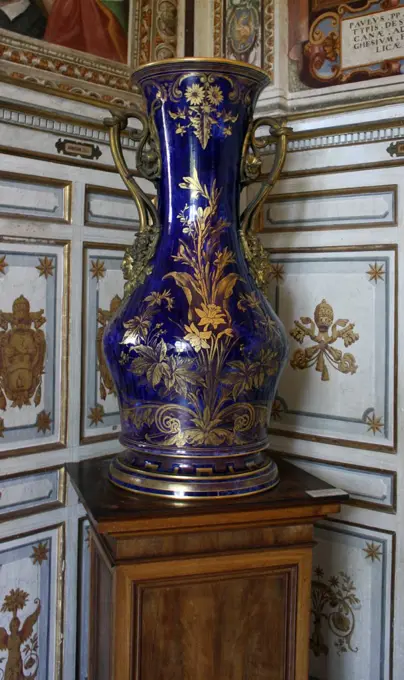
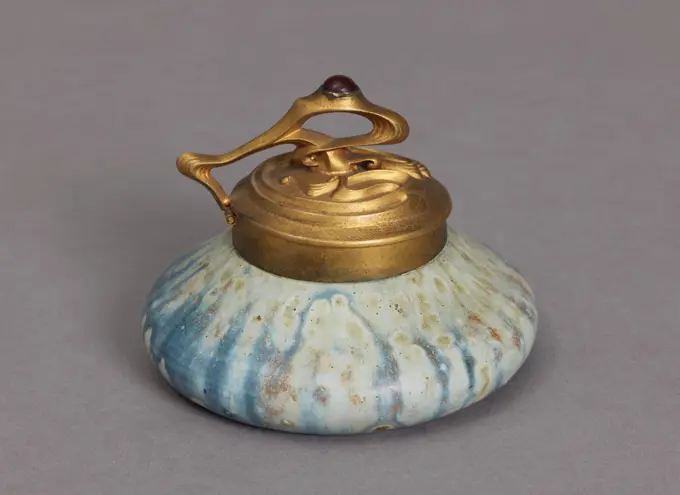
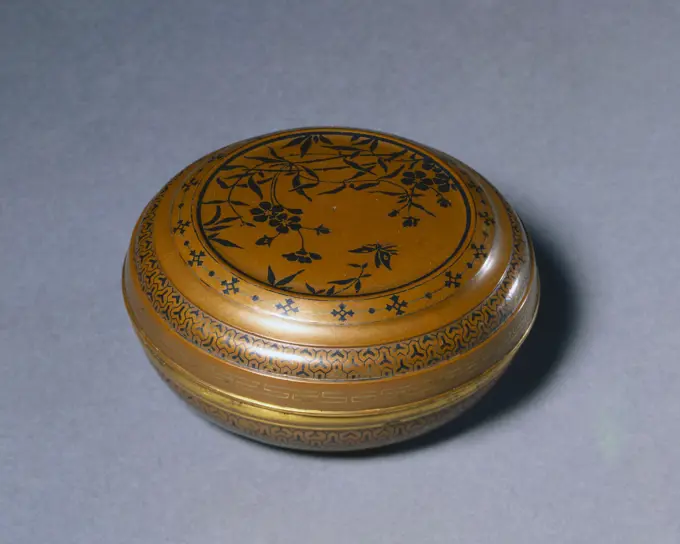
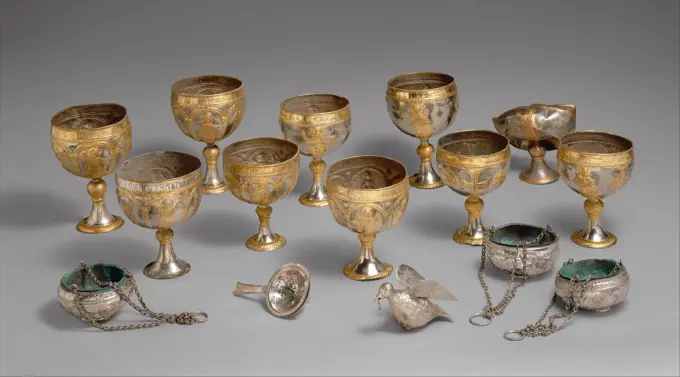
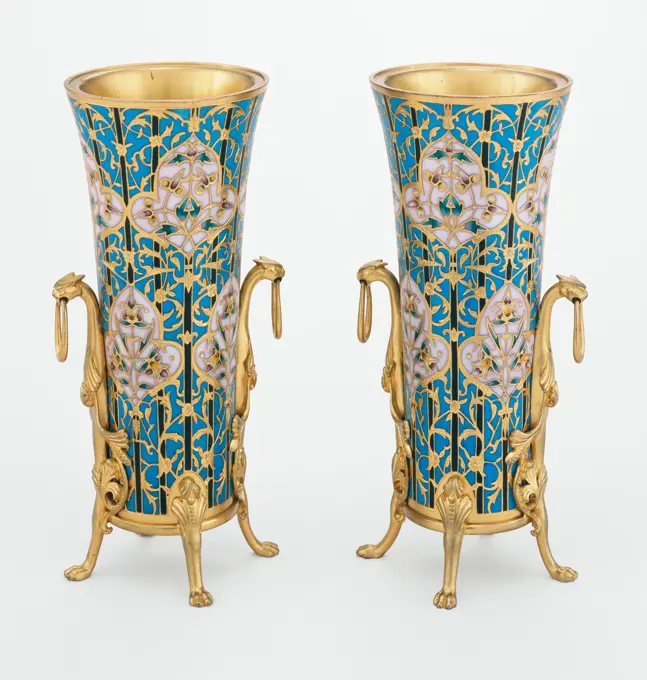
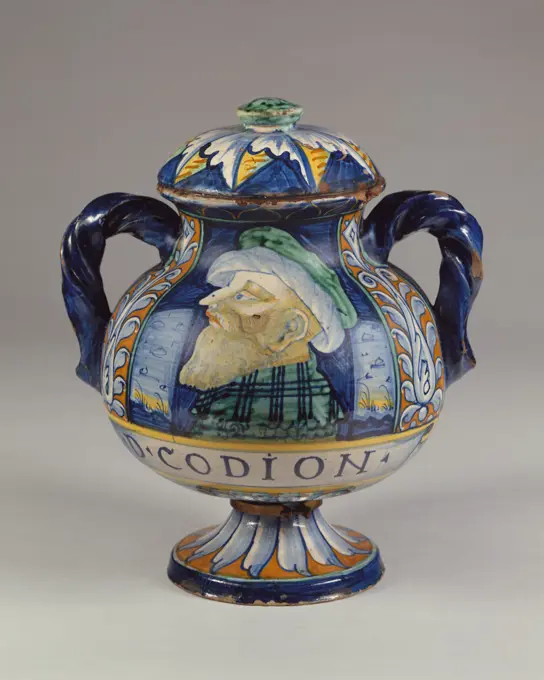
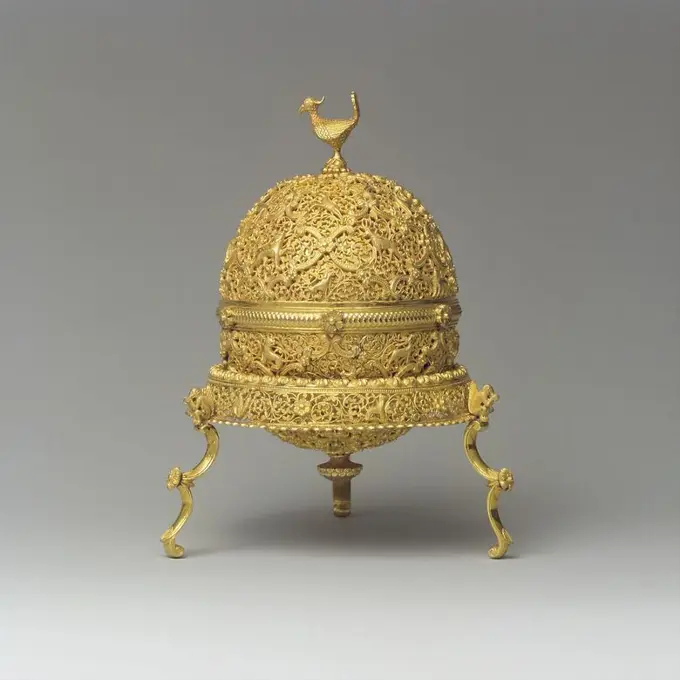
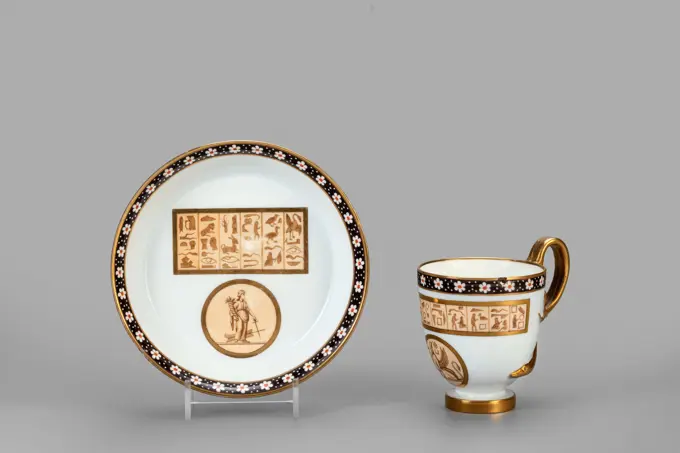
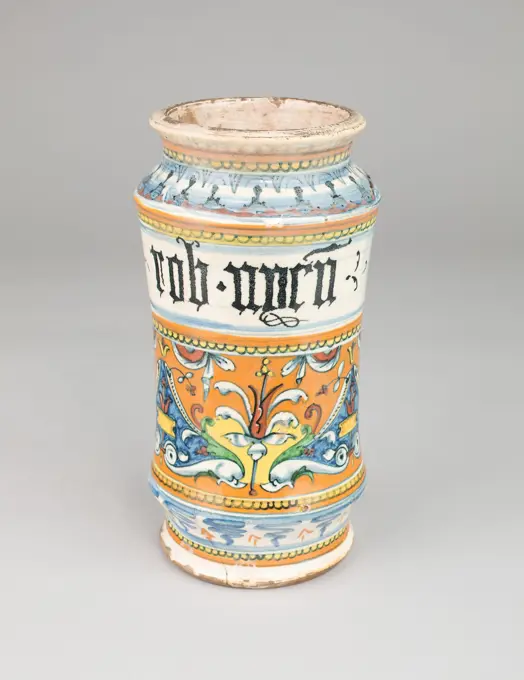
Saltcellar. Culture: French. Dimensions: H. 5 1/2 in. (14 cm); Diam. of foot: 3 1/8 in. (7.9 cm). Date: mid-13th century.Refined design, exquisite craftsmanship, and costly materials make this a rare and unusually precious object. The rock crystal, cut in the shape of a boat, may have served as a container for salt. Such table objects are described in several French royal inventories. The attribution is supported by the similarity of design to other mid-thirteenth century objects ascribed to Paris, a preeminent center of goldsmithing and carved crystal work. Museum: Metropolitan Museum of Art, New York, USA.Pyxis (Container for Personal Objects). Greek; Athens. Date: 430 BC-420 BC. Dimensions: H. 13.3 cm (5 1/4 in.); diam. 10.5 cm (4 1/8 in.). Terra-cotta, decorated in the red-figure technique. Origin: Athens. Museum: The Chicago Art Institute, FLORENCIA, USA. Author: ANCIENT GREEK.A lampshade for a half -bowl with relief Antikzierat and flowers; Koenigliche Porzellan Manufaktur (KPM; Berlin; 1763-1918), Meyer, Friedrich Elias (1723-1786); 1767-1769 (1767-00-00-1769-00-00);Fryderyk II the Great (King of Prussia - 1712-1786), flowers, "German" flowers, relief Antikzierat, Fryderyk II servicesMounted Bowl; Pyrénéesee (but stone possibly worked in Italy), France; about 1760; Bianco e nero antico marble; gilt bronze mounts; 31.7 x 50.2 x 28.3 cm (12 1,2 x 19 3,4 x 11 1,8 in.)Wine cistern, late 17th century-early 18th century, 12 3/4 x 29 1/2 x 18 3/4 in. (32.39 x 74.93 x 47.63 cm), Tin-glazed earthenware (faience) with enamel decoration, France, 17th-18th century, Similar to the large silver cistern at the end of this corridor, this object was originally made to hold cold water for chilling bottles of wine. It is decorated with classic winged caraytids and palmettes, as well as Asian-inspired designs of birds and flowers. The cistern is composed of faience, the French term for tin-glazed earthenware, which was introduced to Europe from the East during the Middle Ages and was produced in France by the late-16th century. The faience industry thrived during the 17th and 18th centuries in several French cities, such as Strasbourg and Nevers, and provided a less expensive though highly decorative alternative to fine porcelain.Anonymous. CHAP. Alabaster, chiseled and gilded bronze, 1601. Paris, Carnavalet museum. 77642-21 Albatre, handle, bronze, coupler, halt, gold, gilding, Louis XIII time, Louis XIII style, XVIIth centuryAnonymous. "Box covered with pacelaine -shaped shape". Porcelain. 1776-1800. Paris, Carnavalet museum. 101429-31Vase from a Set of Five-Piece Altar Set (Wugong) 18th century China Cloisonné is the technique of creating designs on metal vessels with colored glass paste placed within enclosures made of copper or bronze wires, which have been bent or hammered into the desired patterns. Known as cloisons (French for "partitions"), the enclosures are generally either glued or soldered onto the metal body. The glass paste, or enamelwhich gets its color from metallic oxidesis painted into the contained areas of the design. The vessel is usually fired at a relatively low temperature, about 800 degrees Celsius. Enamels tend to shrink during firing, and the process is repeated several times to fill in the design. Once this process is completed, the surface of the vessel is rubbed until the edges of the cloisons are visible.. Vase from a Set of Five-Piece Altar Set (Wugong) 40727Arita (Ceramic Production Center), pot of pot with imari decor (common name). Porcelain, polychrome enamels. Petit Palais, Museum of Fine Arts of the City of Paris.Incense Burner China. Incense Burner. China. Bronze, inlaid gold, wood. Ming dynasty (1368-1644), Xuande period (1426-35). MetalworkStem Cup with Florets 618 CE-906 CE China. Stoneware with yellow glaze and underglaze mold-impressed decoration .Table Bell.Teapot, part of a tête-à-tête, painted with Lelies, N.V. Haagsche Plateel Factory Rozenburg, 1900 Teapotvan a tête-à-tête of porcelain. Painted in yellow, reddish -brown and different shades of green with an ornamental decor, in which lilies. On all parts the monogram MVV (= Michiels van Verduynen) and the weapon of this family, in which the color blue also occurs. Marked Rozenburg. The Hague porcelain Teapotvan a tête-à-tête of porcelain. Painted in yellow, reddish -brown and different shades of green with an ornamental decor, in which lilies. On all parts the monogram MVV (= Michiels van Verduynen) and the weapon of this family, in which the color blue also occurs. Marked Rozenburg. The Hague porcelainBell; Koenigliche Porcellain Fabrique, Meissen (1710-1763); around 1735 (1731-00-00-1739-00-00);Ryszard, Stanisław Ryszard (1871-1955) - collection, Far Eastern decorations, bells, kakiemon (style), purchase (provenance)Jar (lid), 19th century. Siam, 19th century. Porcelain; overall: 22.3 cm (8 3/4 in.).Covered Vase 1886-90 Probably designed by Edward Lycett Because of its massive size, this Near Eastern-inspired bottle-form vase is one of the most important examples of the Faience Manufacturing Company's work. It may have belonged to the eminent ceramic historian Dr. Edwin AtLee Barber, who acquired a vase of the same size, shape, and decoration at auction in 1910. On the lower body, broad bands of Mazarine blue, a difficult-to-achieve glaze for which the firm was renowned, are painted with powdered gold and gilt vermiculation. On the upper body and neck, raised gold-paste butterflies flutter among chrysanthemums of Far Eastern derivation on an ivory-glazed ground.. Covered Vase 2564Large Vase ca. 1700 Japan. Large Vase 48755Sugar bowl and teapot, Doccia manufacture, by Unknown, 18th Century, Unknow. Italy, Campania, Naples, Duca Martina Museum. Whole artwork. Teapot sugar bowl flower decorations rinceaux volutes blue red bands flowers.Censer;  18th century (1701-00-00-1800-00-00);Bottle cooler from the Louis XV service (seau à bouteille) ca. 1753 Vincennes Manufactory French One of the most influential and renowned porcelain dinner services made during the eighteenth century was the first produced for Louis XV (1710-1774), king of France, by the Vincennes factory in France. Commissioned in 1751 to include both dinner and dessert wares, the service was sufficiently extensive in scale and challenging to produce that it necessitated delivery in three major installments over a three-year period, which began in 1753.1 Because it was the first service of significant scale produced at Vincennes, it required the development of many new models, and it was the first to employ the turquoise ground color, known as bleu céleste, that the factory had just developed.2 The goldsmith Jean-Claude Duplessis (Italian, ca. 1695-1774), known as Duplessis père to distinguish him from his son Jean-Claude- Thomas Duplessis (French, ca. 1730-1783), was the artistic director at VinceWine Cup, 2nd century BCE, 2 1/8 x 6 3/4 x 5 1/4 in. (5.4 x 17.15 x 13.34 cm), Lacquer on wood core, China, 2nd century BCE, By the middle of the Warring States period (475-221 b.c.), the finest eating utensils made for elegant dining were being made of lacquer. Thinly carved, wooden objects were protected with several coats of lacquer creating a light, durable vessel. Decorated, with geometric and curvilinear designs in black on orange lacquer, this rare cup has survived intact with its quatrefoil-shaped cup stand made of gilt bronze. Known in China as 'ear cups', this type of vessel was typically used for drinking wine.Wig cabinet (cabinet de coiffure). Culture: German, Künzelzau. Dimensions: 16 × 18 × 13 1/2 in. (40.6 × 45.7 × 34.3 cm). Maker: Johann Daniel Sommer II (German, 1643-1698). Date: ca. 1685.This wig cabinet is one of the most elaborate examples of its kind, a work of great refinement and supreme craftsmanship.[1 The exterior is decorated with extremely fine boulle marquetry, which retains many of the original engraved details.[2 Furthermore, it is an early example of the migration of this type of metal-and-tortoiseshell (or horn) marquetry and the High Baroque style in French furniture to the German-speaking cultural areas (see the catalogue entries for acc. nos. 1986.38.1, 1986.365.3). It is obvious that the creator of this cabinet, Johann Daniel Sommer II, occupies a key position in the history of European furniture-making. Unfortunately, the most important facts about his career remain obscure. He was born in 1643 into a dynasty of craftsmen. His grandfather was a carpenter, and hSmall tureen and stand. Culture: Austrian, Vienna. Decorator: Johann Karl Wendelin Anreiter von Zirnfeld (1702-1747, active 1724/5-46/7). Dimensions: Cup with cover (.85ab): H. 3-7/16 in. (8.7 cm.); W. 4-11/16 in. (11.9 cm.)Saucer (.86): H. 1-1/8 in. (2.9 cm.); Diam. 6-1/16 in. (15.4 cm.). Factory: Vienna. Factory director: Du Paquier period (1718-1744). Date: ca. 1730-35.Only a handful of Du Paquier artists can be identified from the few signed pieces, even though the hands of many can be distinguished and the names of others are known from church records. This cup is signed Carl Wendelin Anreiter vz: in Wien: feci. and bears the family coat of arms. Anreiter (1702-1747) worked at Du Paquier before leaving to help establish the Doccia factory near Florence in 1737. Museum: Metropolitan Museum of Art, New York, USA.Covered jar with women on a terrace and finial in the shape of a shishi, anonymous, c. 1700 Drum -shaped lid jar of porcelain with handles in the shape of monster heads, painted in underly glaze blue and on the glaze red, black and gold. Two scenes on the wall of the pot: two women (long lips) with two servants in a fenced garden at a pavilion. One has a rabbit in her arms, the other a fan. The other side is with three women in a fenced garden for a job screen and a table. The women wear a fan, a rabbit or a twig. A servant provides an object on a scale. Around the foot and the edge of the lid a band with balls in relief; the lid with an edge of servetwork; The button in the form of a shishi (lion dog), later polychrome painted in Europe. Blue White. China porcelain. glaze. cobalt (mineral). gold (metal) painting / gilding / vitrification Drum -shaped lid jar of porcelain with handles in the shape of monster heads, painted in underly glaze blue and on the glaze red, black and gold. TwoVase. Porcelain decorated with "pink family" enamels. Paris, Cernuschi museum. 78837-31 Asian art, Chinese art, porcelain, container, vaseCircular casket with lid. unknown, craftsman. Oval terrine on four to the outside bent legs. The two handles are each formed by a flower. The lid button is formed by a sprig of flowers. The top of the lid is decorated with driven flowers (Louis XV). The terrine is marked: Mt. = Feet 924 and twice a landscape s (foot page 42). The terrine is on a non-associated dish (BK-NM-11177-245-A).Vase, c. 1862. Firm of Ferdinand Barbedienne (French, 1810-1892), Louis-Constant Sévin (French, 1821-1888). Gilt bronze with enamel decoration; overall: 78.7 x 27.3 cm (31 x 10 3/4 in.).Candlestick (one of a pair) ca. 1660-80 Stephen Pilcherd British Although popularly known as Surrey enamel, this variety of champleve enameling was probably made in London.. Candlestick (one of a pair). British, London. ca. 1660-80. Brass, partly enameled. Metalwork-BrassToilet box with cover 19th century, after 1730-40 original After an original by Johann Ludwig Biller This electrotype is after an eighteenth-century original (1730-40) at the Winter Palace, St. Petersburg, at the time of reproduction. It belongs to a toilet service made for and presented to the Empress Anna Ivanovna.. Toilet box with cover 186515Square bottle with flowering plants, birds, flower vases and insects, anonymous, anonymous, c. 1700 - c. 1724 Square bottle of porcelain, painted on the glaze in blue, red, green, yellow, eggplant, black and gold. On the wall a flower vase on a stool with two flower baskets and insects next to it; A bird on a flower branch at a rock and a fence; a flower vase on a stool with a second vase, lid jar with handle, bird and insects; A Hoo-Vogel on a thriving chrysanthemum in a rock, bound hedges and an insect. On the shoulder a band with servetwork with flowers interrupted by four cartouches with a quail. The underside is unglazed. Two cracks in the edge. Arita, decorated in the Japanese Kakiemon style in Europe. Japanpainter: Europe porcelain. glaze. gold (metal) painting / gilding / vitrification Square bottle of porcelain, painted on the glaze in blue, red, green, yellow, eggplant, black and gold. On the wall a flower vase on a stool with two flower baskets and insects next to it; A birdStand with Floral Arch Stand; Manufactured by Meissen Porcelain Manufactory (Germany); porcelain, vitreous enamel, goldSugar Bowl, c. 1750-70. Meissen Porcelain Factory (German). Porcelain; overall: 14 x 38 x 14 cm (5 1/2 x 14 15/16 x 5 1/2 in.).Bowl, c. 1520. Italy, 16th century. Tin-glazed earthenware (maiolica); diameter: 18.8 x 31.8 cm (7 3/8 x 12 1/2 in.).Two-handled bowl from Burghley House, Lincolnshire Chinese porcelain 1573- ca. 1585, British mounts ca. 1585 British, London mounts and Chinese porcelain The sinuous painting on this fine blue-and-white bowl is in keeping with porcelain made for the domestic market in China and is unlike the coarser wares that later were made specifically for export. The gilt-silver mounts, which show the influence of Antwerp design, have finely stamped and cast motifs that refer to the ornament of classical architecture.. Two-handled bowl from Burghley House, Lincolnshire. British, London mounts and Chinese porcelain. Chinese porcelain 1573- ca. 1585, British mounts ca. 1585. Hard-paste porcelain, gilded silver. Metalwork-Silver In CombinationTankard with cover 19th century, after 1651 original Franchi and Son This electrotype is after a late seventeenth-century original (1651), made in Augsburg by Bernhard Straus with silver mounts by Andreas Wickert, at the time of reproduction in the Victoria and Albert Museum, London.. Tankard with cover 185845Pilgrim Flask probably 1556-67 Bernard Palissy French Bernard Palissy was a French scientist, writer, garden designer, glassblower, painter, and ceramist. A devout and outspoken Huguenot, he was imprisoned for his religious beliefs and for his role in the Protestant riots of the first of the Wars of Religion. Catherine de'Medici, the French queen, who acted as his protector, commissioned Palissy to build a private grotto for her at the garden of the Tuileries palace. This pilgrim flask belongs to the small group of ceramics, the so-called rustic ceramics, attributed with certainty to Bernard Palissy and his workshop. The pilgrim flask is decorated with the characteristic shells and snakes associated with Palissys rustic vessels. Clay or plaster molds were taken of snakes and shells, and then a positive clay model was made from the molds. The pilgrim flask is an unusual form for Palissy, better known for his basins, pitchers, and dishes. Like Palissys other rustic works, the pilgrim fLidded Vase (Vàse a Panneaux); Sèvres Manufactory (French, 1756 - present); Sèvres, France; about 1766 - 1770; Soft-paste porcelain, colored enamels, and gilding; 47.6 x 26 x 20.5 cm (18 3,4 x 10 1,4 x 8 1,16 in.)Seven custard cups 1796-1825 Imperial Porcelain Manufactory, St. Petersburg Russian. Seven custard cups 208564Nast Porcelain Manufactory, Two-Handled Cup and Saucer, c. 1820-30, hard-paste porcelain.Potpourri Vase with Girl and Dog ca. 1750-60 Mennecy. Potpourri Vase with Girl and Dog. French, Mennecy. ca. 1750-60. Soft-paste porcelain. Mennecy. Ceramics-PorcelainCup with image of Van Speijk, Anonymous, in or after 1831  One of two almost identical cups of printed pottery, printed in black on the inside and outside; Soil inside: Bustel of a man (J.C.J. van Speijk), Binnen edge four weapons (van Utrecht, Friesland, Gelderland and the Generality) between which image of exploded ship in kind of cartouche; On the outside idem, this time weapons of Zeeland, Holland, Overijssel and Groningen. The prints are not entirely equal. Note: see NG-1069-B. Netherlands (possibly) earthenware printing / vitrification  BelgiumNapkin Ring with Butterflies, early 1900s. Japan, Meiji period (1868-1912) or Taishō period (1912-26). Cloisonne enamel; diameter: 2.5 x 4.8 cm (1 x 1 7/8 in.).Bandbox (USA); block-printed on handmade paper, pasteboard support; 30 x 30 x 40 cm (11 13/16 x 11 13/16 x 15 3/4 in.)Cover for an Ice Pail (1 of 2), c. 1792-1804. Flight & Barr (British). Porcelain; diameter of mouth: 16.1 cm (6 5/16 in.); overall: 28.6 cm (11 1/4 in.).Pair of Corner Cupboards. .Tankard late 16th century Gregorius Gunesch The tapering cylindrical body of this tankard is embossed with female and male masks and a very dense pattern of strap- and scrollwork and festoons. Only the gadrooned foot rim, undecorated frame of the lid, and plain finial offer a moment of classical restraint.LiteratureEuropean Silver. Sale cat., Sothebys, Geneva, May 13, 1986, p. 32, no. 85.Judit H. Kolba. Hungarian Silver: The Nicolas M. Salgo Collection. London, 1996, p. 30, no. 8.ReferencesTankards with similar handles were sold by Dr. Fischer Kunstauktionen in Heilbronn, sale no. 181, no. 4, and sale no. 182, no. 288.Elemér Kőszeghy. Magyarországi ötvösjegyek a középkortól 1867-ig / Merkzeichen der Goldschmiede Ungarns vom Mittelalter bis 1867. Budapest, 1936, no. 1342 [makers mark.[Wolfram Koeppe 2015. Tankard 236988Beaker. Culture: British. Dimensions: H. 8 in. (20.3 cm). Date: ca. 1765. Museum: Metropolitan Museum of Art, New York, USA.Vanity case ca. 1760-1800 British, Staffordshire. Vanity case. British, Staffordshire. ca. 1760-1800. Enameled copper. EnamelsWine jug (one of a pair) ca. 1680 French, Nevers This jug and its mate (1985.181.2) are decorated with scenes from classical mythology. Here, Europa, a princess of Phoenicia, is carried off to Crete by Zeus, disguised as a very tame and beautiful bull. This event was thought to explain the origins of the name "Europe" for the landmass west of Crete.. Wine jug (one of a pair) 207521Tripod Cylindrical Jar (Lian or Zun) with Equestrians and Creatures, Bear-Shaped Feet 25 CE-220 CE China. Earthenware with lead green glaze .Cup and cover, Porcelain, Overglaze and underglaze decoration in colors of American flag, eagels, head of Liberty with decorative borders of orange, gold, and black., USA, 19th century, ceramics, Decorative Arts, Cup and coverAnonymous, funeral jar (usual name), 1200. Cernuschi museum, Asia Museum of Asia in the city of Paris. Cover surmounted by a bird. Upper part decorated with a row of small moving characters. On the collar presence of a tiger, a lunar disc, a red bird. - Form a pair with MC 09810.Beaker (Stopa) ca. 1714 Russian, Moscow. Beaker (Stopa). Russian, Moscow. ca. 1714. Silver gilt. Metalwork-SilverUrn, c. 1800. Wedgwood Factory (British). Jasper ware with relief decoration; overall: 19.7 cm (7 3/4 in.).Vase with "Old Bogey Man" pattern ca. 1867 Christopher Dresser This vase shows Christopher Dressers prolific work on behalf of Minton, the largest industrial manufacturer of ceramics in Victorian England. This design was shown at the 1867 Exposition Universelle in Paris. In his 1873 publication, The Principles of Decorative Design, Dresser described the strange horned and winged creature on this vase as "Old Bogey," which may allude to the fascination with the Occult that swept through Victorian England at the time. Indeed, "Old Bogey" was used as a term to refer to Satan, and could be found in the illustration of Eliphas Lévis book, Dogme et Rituel de la Haute Magie (1855). Listen to experts illuminate this artwork's story Listen Play or pause #418. Christopher Dresser and the Birth of Industrial Design Supported by Bloomberg Philanthropies We're sorry, the transcript for this audio track is not available at this time. We are working to make it available as soon as possible.. Vase wMiniature urn with cover. Culture: probably British, London. Dimensions: Overall: 2 1/8 × 3 5/16 in. (5.4 × 8.4 cm). Maker: A. L. & W. L.. Date: ca. 1780.The production of miniature silver furniture and tea, coffee, and chocolate equipment was a specialty of goldsmiths known as "toy men." The miniatures were probably intended for dollhouses. From the mid-eighteenth century in England until the present, porcelain and fine earthenware miniatures have been made as well. Museum: Metropolitan Museum of Art, New York, USA.Candlestick -Sacrificial Container 17th-19th century Tibet The stacked sections of the base of this container contained rice and other offerings for a deity. Conceptually organized around the axis of the universe, the various levels reference different planes of existence, moving, ultimately, to the realm of celestial beings at top.. Sacrificial Container. Tibet. 17th-19th century. Gilt silver, sapphires, rubies, beryl, quartz, lapis lazuli, coral, shell, and turquoise. SculptureTazza with a trunk with three dolphins, anonymous, c. 1800 - c. 1900 Flat. Stam made up of three twisted threads. On each wire a dolphin of blue glass with gilt; Eyes of green and black glass. Scale -shaped chalice with wide bent edge. Venice glass. gilding (material) glassblowing / gilding Flat. Stam made up of three twisted threads. On each wire a dolphin of blue glass with gilt; Eyes of green and black glass. Scale -shaped chalice with wide bent edge. Venice glass. gilding (material) glassblowing / gildingWine Cooler (one of a pair). Tiffany and Company; American, founded 1837; Chasing by Eugene J. Soligny; American, c. 1833-1901; New York, New York. Date: 1873. Dimensions: H. 35 cm (13 3/8 in.). Silver. Origin: New York City. Museum: The Chicago Art Institute, Chicago, USA. Author: Tiffany and Company.Chamber candlestick or taperstick 1809-10 Rebecca Emes. Chamber candlestick or taperstick. British, London. 1809-10. Silver. Metalwork-SilverCup and saucer, part of coffee and tea service with cityscapes, cup and saucer coffee service tea set tableware ceramics porcelain glaze, baked glazed painted stove enamelled Cup and saucer Free deep saucer on wide stand ring. Gilded at the top except the middle. Auger shaped head with protruding upper edge. Curled ear with loop resting on the edge of the head. At the front with window in which cityscape is the corresponding caption is located at the bottom of the cup Rotterdam topography coffee coffee drink tea tea drink serve serve RotterdamToilet cassette. Pitts, Thomas I (fl. 1755-ca 1793), goldsmithDing ceiling from the cover;  19th century (1800-00-00-1900-00-00);Cup and saucer with a monogram in a crest in a medallion, anonymous, c. 1725 - c. 1749 Porcelain's head and saucer. The dish with a short, straight, ribbed wall and accolade -shaped edge. The wall of the head divided into two sections, the top of which with ribbed wall, and with a accolade -shaped edge. Painted on the glaze in blue, red, pink, green, yellow, black and gold. On the flat of the dish the monogram 'JM' in a crowned medallion with a shell motif, servetwork and flower branches; Around the medallion and on the wall servetwork with four small and four large cartouches with flower branches. The head with the same decoration. Underside of the dish unggestive. A crack and two chips in the wall of the dish; Two cracks in the wall of the head. European performance in email colors. China porcelain. glaze. gold (metal) painting / gilding / vitrification Porcelain's head and saucer. The dish with a short, straight, ribbed wall and accolade -shaped edge. The wall of the head divided inTazza 1700-1725 Castelli. Tin-glazed earthenware .Box, c. 1740-1750. Chantilly Porcelain Factory (French). Tin-glazed soft paste porcelain with enamel decoration; gilded metal; overall: 6.2 x 8.6 x 8.2 cm (2 7/16 x 3 3/8 x 3 1/4 in.).Pair of Covered Vases, 1749. Meissen Porcelain Factory (German). Porcelain mounted in gilt bronze; overall: 37.4 x 32.7 x 21 cm (14 3/4 x 12 7/8 x 8 1/4 in.). One of these vases is dated 1749. They were perhaps part of a set of four covered vases that we know from documents were acquired by Mme. de Pompadour, mistress of Louis XV in 1752.The Imperial Caucasus Egg, Kryzhitsky, Konstantin Yakovlevich (1858-1911). Snuff box of gold, oval. With six enamelled performances. Pictures of Cisellated Louis XVI ornament.Pair of Jugs/Ewers, 1762 c-1775 c. Bluejohn (fluorspar), with ormolu.. Makers: Boulton & Fothergill.. Boulton & Fothergill created a number of products at the Soho Manufactory but they were best known for their ormolu mounts... Boulton received patronage from many members of the nobility including the Royal family. Boulton's diary records that in 1772 Sir Harbord Harbord wanted '1 pair of ures such as are proper for the gods to drink necter'.Candlestick. Turkey, 19th century. Metal. Gold, inlaid with precious stonesJardiniere; silverplate; 1970-40-1-a,bPair of two-segment caskets. unknown, craftsmanBeaker with Tarot Cards. Anton Kothgasser; Austrian, 1769-1851; Vienna, Austria. Date: 1815-1825. Dimensions: 10.5 x 7.1 cm (4 1/8 x 2 13/16 in.). Glass; colorless, blown, cut, transparent enamels and gilding. Origin: Vienna. Museum: The Chicago Art Institute, Chicago, USA.Pyx. Culture: French. Dimensions: Overall: 3 3/4 x 2 9/16 in. (9.5 x 6.5 cm). Date: ca. 1225-50. Museum: Metropolitan Museum of Art, New York, USA.Cistern. Culture: French. Dimensions: Overall: 13 3/8 x 22 1/4 in. (34 x 56.5 cm). Date: 13th century.Similar lead cisterns have been found in churches in the region of Toulouse, where they were placed on stone columns and used as fonts for the water used in baptism. The two bands of decoration are filled with lions, accompanied by fantastic creatures: griffins, centaurs, and dragons. Museum: Metropolitan Museum of Art, New York, USA.Pair of Stirrups 18th century Spanish or Argentinian This gilded pair of stirrups, decorated with rococo designs, is an early form of the typical 'bell stirrups' (estribos campana), a type that would become particularly popular in Argentina from the 19th century onwards. Such stirrups were introduced in South America through Jesuit missions in the 18th century.. Pair of Stirrups. Spanish or Argentinian. 18th century. Copper alloy, gold. Equestrian Equipment-StirrupsDish ring 1777 Unidentified Dublin maker W. H. This dish ring is a refined example of an emblematic Irish form. Such rings were used on the dining table as a base for a larger bowl or plate that was laden with beautifully arranged food; as a seventeenth-century writer explained to make the feast look full and noble.” A series of rings of different heights made for a prosperous but not necessarily an aristocratic table, it does not have engraved eighteenth century armorials; the initials AR were likely engraved in the 19th century. Nonetheless, the piece beautifully represents Ireland’s embrace of the Neoclassical architectural vocabulary and the austerity and simplicity with which it was expressed in silver.[Ellenor M. Alcorn, 2014. Dish ring. Irish. 1777. Silver. Metalwork-SilverCup from a tea service for twelve, 1807-08, Christophe-Ferdinand Caron; Manufacturer: Sèvres Porcelain Factory, French (Sèvres), French, 1774-1831, 4 5/16 x 3 3/8 in. (10.95 x 8.57 cm), Hardpaste porcelain, gilt, France, 19th centuryDetail from the Vatican Museums, an immense collection of classical, renaissance masterpieces etc. Founded in the early 16th century by Pope Julius II they are considered to be some of the world's greatest museums. This image shows a highly decorative vase.Inkwell Inkwell; Designed by Alexandre Bigot (1862 - 1927), Edward Colonna (German, 1862-1948); France; stoneware, bronze, gold, glassCircular Box, c. 1880. Paul Christofle (French, 1838-1907). Metal (brass) with inlays of niello and gold; overall: 3.9 x 8.9 cm (1 9/16 x 3 1/2 in.).Top Story of a Tower (Tomb Model) 25 CE-220 CE China. As burial practices filtered down from the Han aristocracy to officials and landowners, tomb models related to farming, an honored occupation, became increasingly popular. These models provide rough but lively impressions of rural compounds. The granary, used to store millet, barley, and wheat, was depicted either as a jar or as a small building. This building combines realistic and imaginative details angular brackets support a tiled roof with ridgepoles and roundels and crowned with an oversize bird and floral roof ends.. Earthenware with green lead glaze .Coin Bank; silverCzarka;  19th/20th century (1880-00-00-1910-00-00);The Attarouthi Treasure 500-650 Byzantine When acquired by the Museum, the objects were in a good state of preservation. The surfaces, with their decoration worked in relief (repoussé) and engraved detail, had not been altered by overcleaning, and only two of the chalices (1986.3.2 and 1986.3.3) showed signs of having been partially reshaped. Some calcareous deposits and products of corrosionevidence of their burialremained on the exterior and had to be removed, but the vessels have not been polished further, and the original burnishing marks are still visible.These well-wrought liturgical objectschalices, censers, a strainer, and a representation of the dove of the Holy Spiritwere among the possessions of a Christian church in the affluent merchant town of Attarouthi in Syria, then one of the richest lands of the Byzantine Empire. The chalices, censers, and strainer were used for the Divine Liturgy, or Eucharist, in which Christians take consecrated wine and bread in commemorationPair of Vases. Maison Ferdinand Barbedienne (France, Paris, 1834-1954)Louis-Constant Sévin (France, Versailles, 1821-1888). France, circa 1865. Furnishings; Accessories. Enamel, gilt-bronzeJug decorated with gold, ruby & turquoises. 16th cent. Suleyman the Magnificent Ottoman Treasure from the Topkapi palace, Istanbul. TURKEY.Apothecary vase (vaso da farmacia) ca. 1530-40 Italian, Castelli. Apothecary vase (vaso da farmacia). Italian, Castelli. ca. 1530-40. Maiolica (tin-glazed earthenware). Ceramics-PotteryGoa Stone and Gold Case. Dimensions: Goa stone: Diam. 1 3/16 in. (3 cm)container: H. 2 5/8 in. (6.7 cm)Diam. 5 11/16 in. (14.4 cm). Date: late 17th-early 18th century.Goa stones, named for the place where they were manufactured by Jesuits in the late seventeenth century, were manmade versions of bezoars (gallstones from ruminants). Both types were used for their medicinal and talismanic powers. These treasured objects were encased in elaborate containers made of gold and silver and often exported to Europe. Surviving examples are recorded in European treasuries, including one made for the duke of Alba in the late sixteenth century (Kunsthistorisches Museum, Vienna). The stone was usually a compound of organic and inorganic materials, including bezoar, shell, amber, musk, resin, and crushed precious gems, which would be scraped and ingested with tea or water.The egg-shaped gold container enclosing this stone consists of hemispherical halves, each covered with a layer of pierced, chaChild's Hat, late 20th century, 3 x 7 3/4 in. (7.6 x 19.7 cm), Cotton, satin, China, 20th centuryTibet: Zodiac drum.Cup and saucer. Kaiserliche Porzellanmanufaktur in Wien (1744-1864), factoryDagger Hilt. India, Mughal empire, circa 1850. Arms and Armor; hilts. White nephrite jade inlaid with rubies, emeralds, pearls, coral, spinels, sapphires, and glass set in goldVases, 1840-1860. Bohemia (), 19th century. Glass with enamel and gilt decoration; diameter: 31.5 x 9 cm (12 3/8 x 3 9/16 in.).Hunt Goblet. UnknownSnuff Bottle, 19th century, 3 1/4 x 1 7/8in. (8.3 x 4.8cm), Ivory, China, 19th centuryApothecary Jar (Albarello) 1505-1525 Siena. Tin-glazed earthenware (maiolica) .