Decorative Porcelain Vases

A selection of ornate porcelain vases featuring intricate designs and landscapes, showcasing craftsmanship from historical pottery factories.

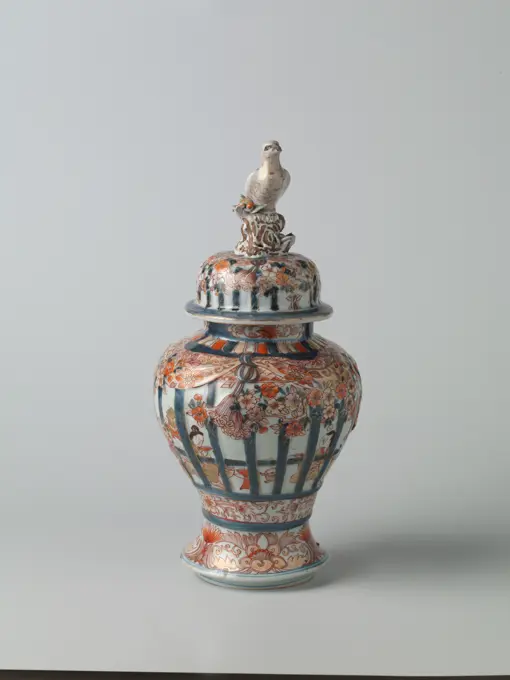
Covered baluster jar with figures in an interior behind framework, prunus trees and floral scrolls, anonymous, c. 1650 - c. 1699 Porcelain cover -shaped lid -shaped lid jar, painted in underly glaze blue and on the glaze red, black and gold. Traly work painted on the wall, decorated with modeled and decorated prunus trees and tires with flower vines. Under the grille work a band with flower vines. Around the foot a bond with lotus drinks. Lid button in the shape of a bird on a stump. Imari. Japan porcelain. glaze. cobalt (mineral). gold (metal) painting / gilding / vitrification Porcelain cover -shaped lid -shaped lid jar, painted in underly glaze blue and on the glaze red, black and gold. Traly work painted on the wall, decorated with modeled and decorated prunus trees and tires with flower vines. Under the grille work a band with flower vines. Around the foot a bond with lotus drinks. Lid button in the shape of a bird on a stump. Imari. Japan porcelain. glaze. cobalt (mineral). gold
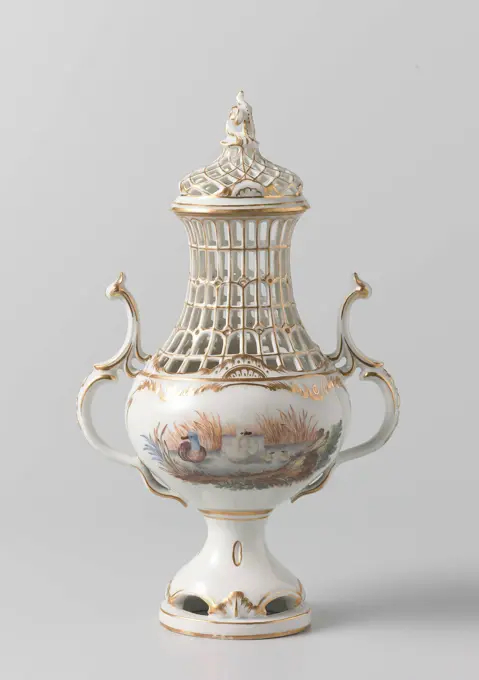
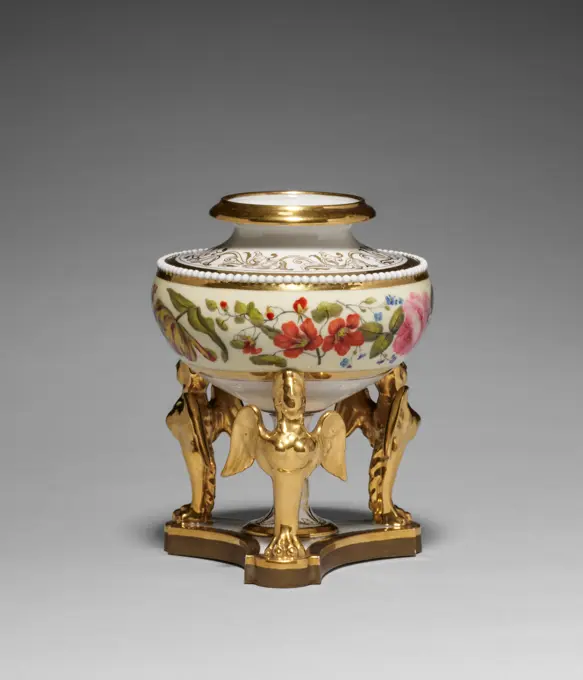
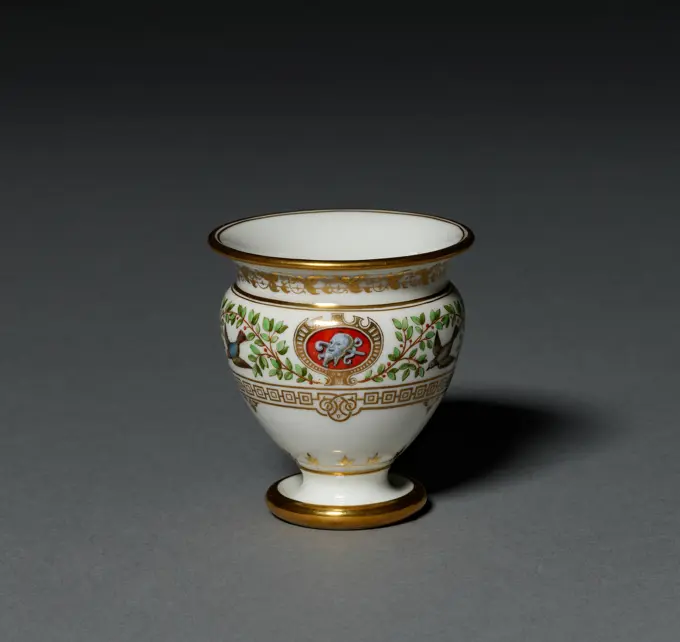
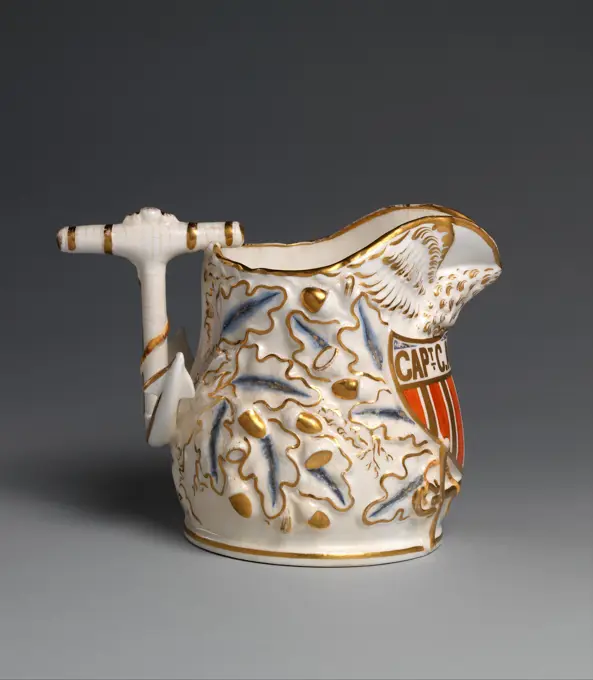
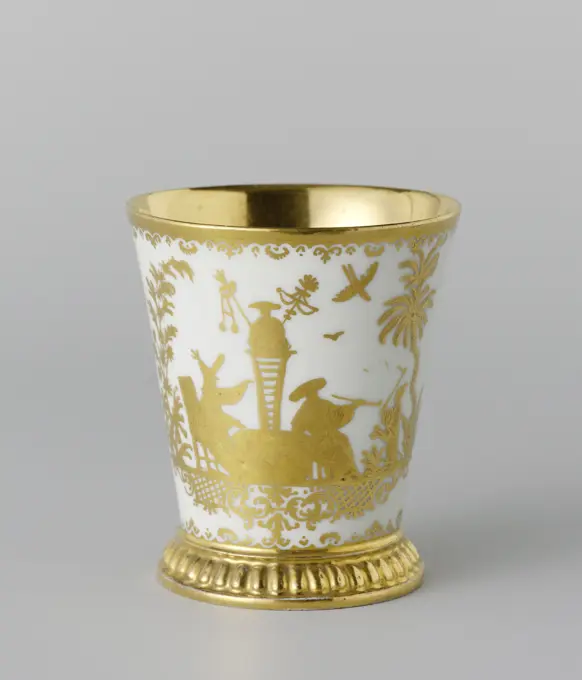
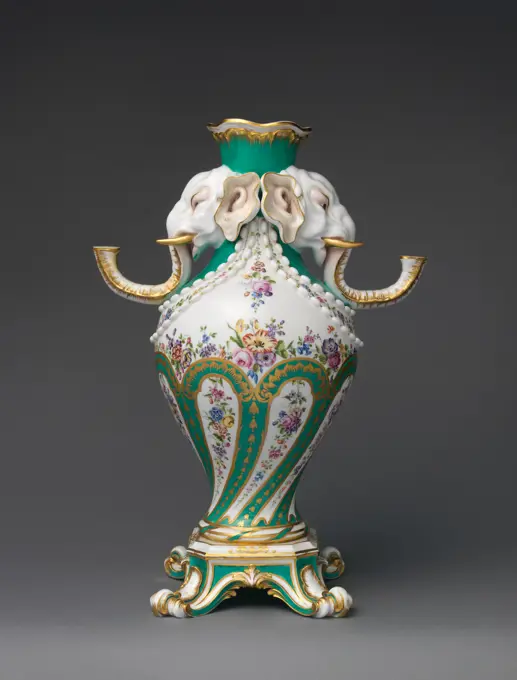
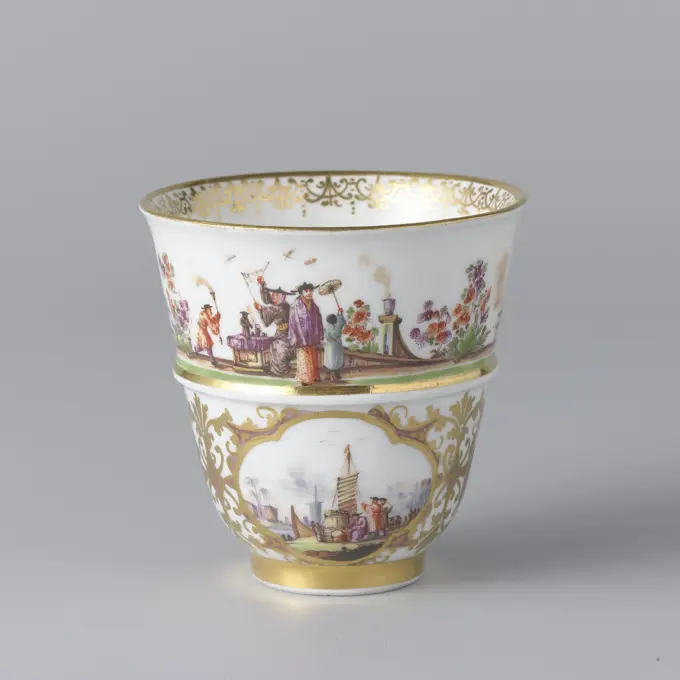
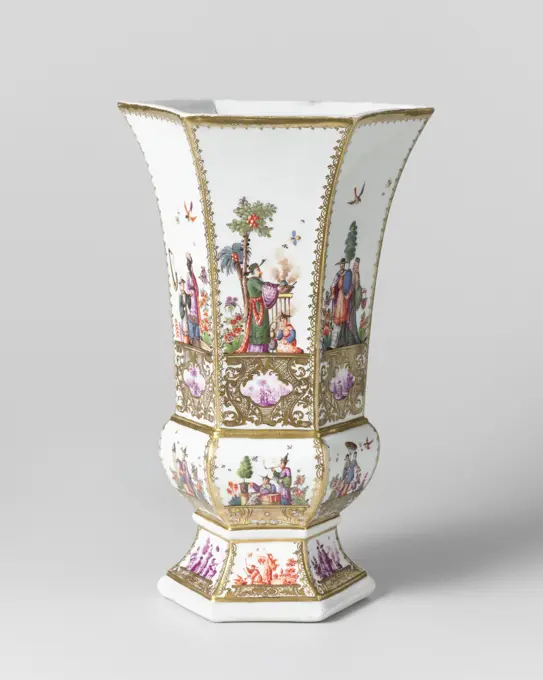
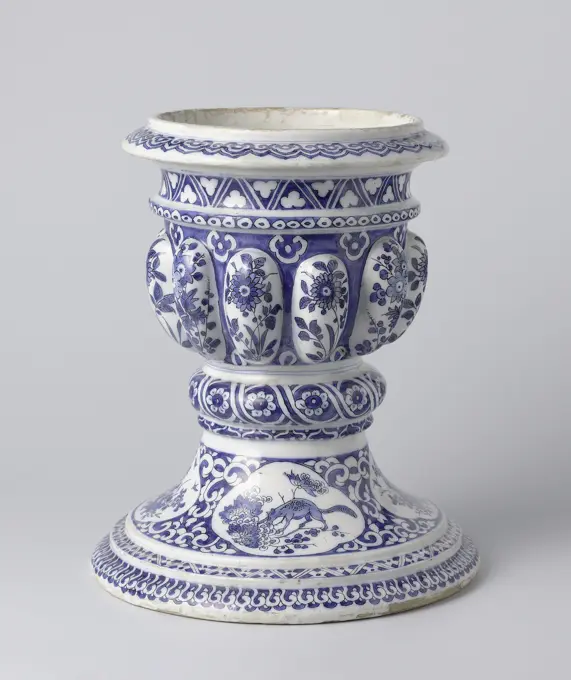
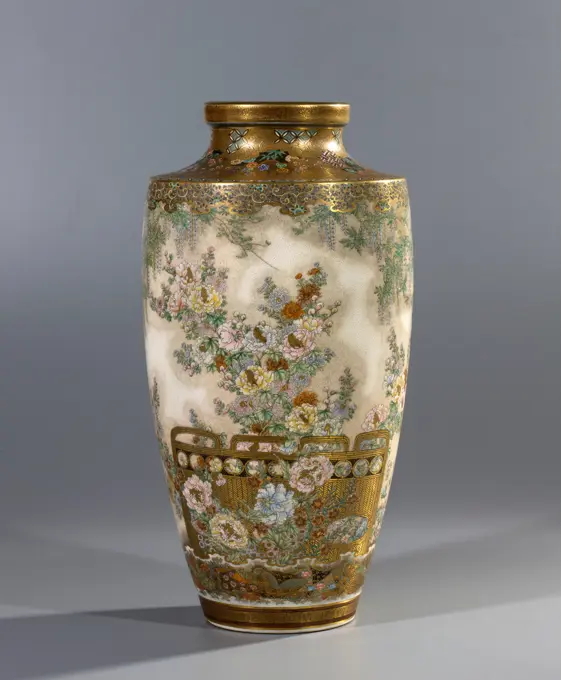
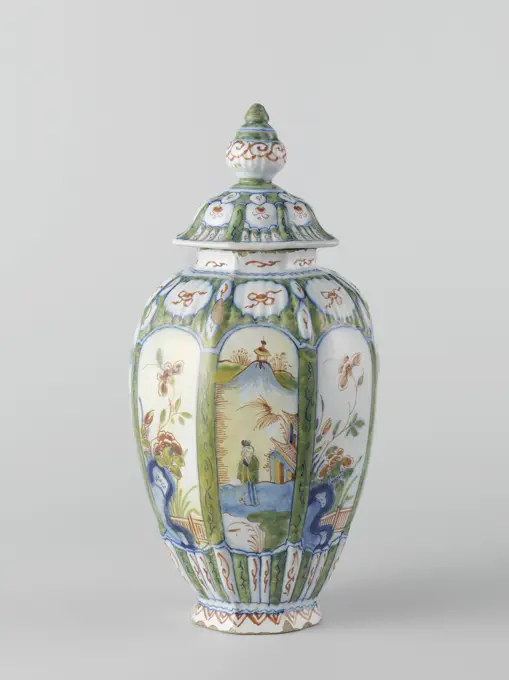
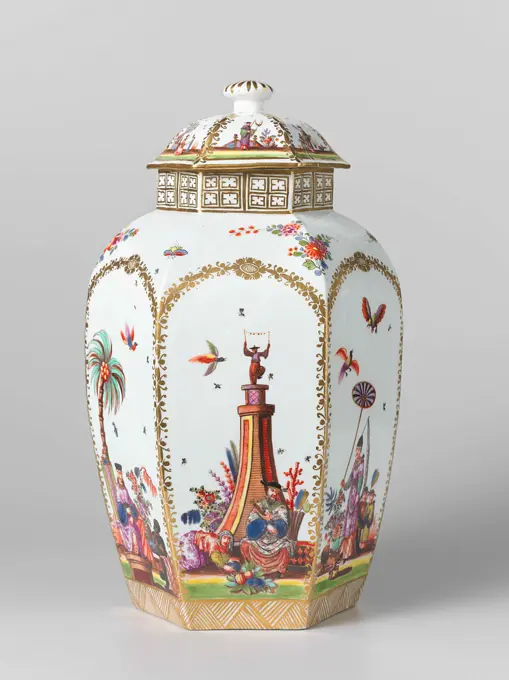
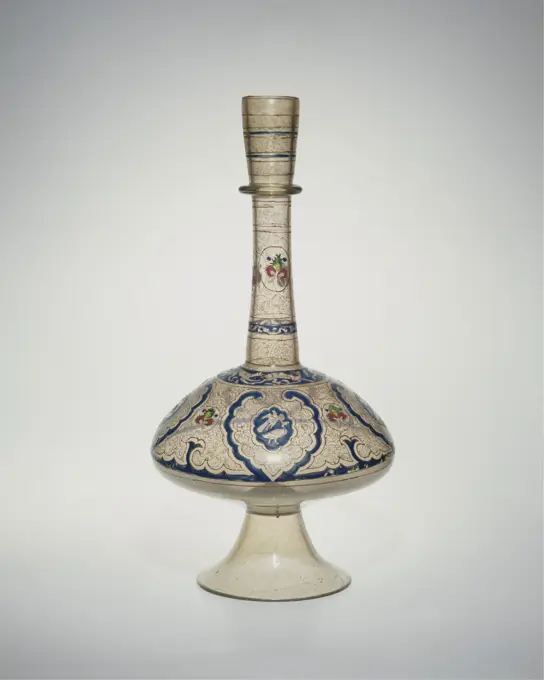
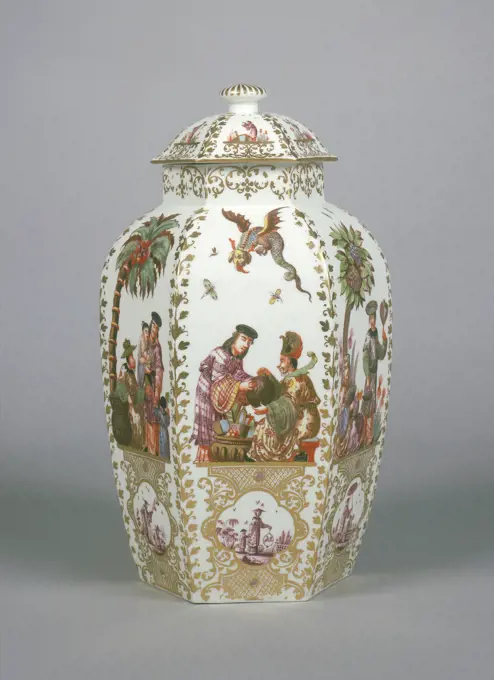
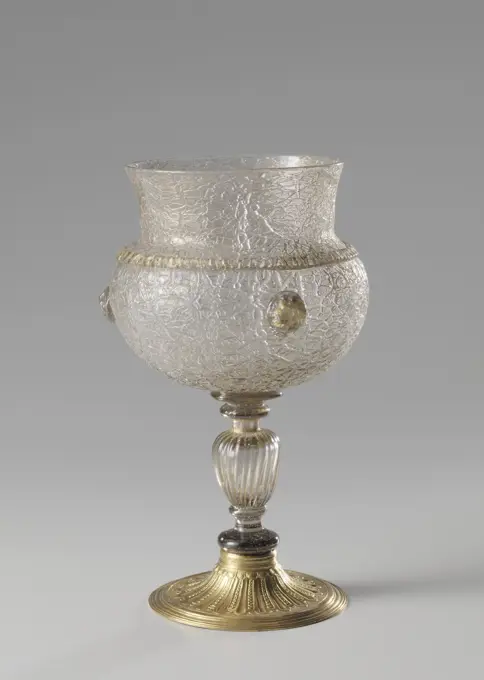
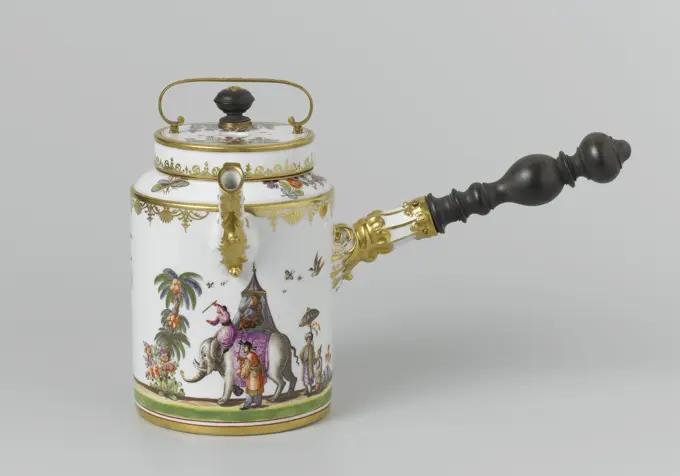
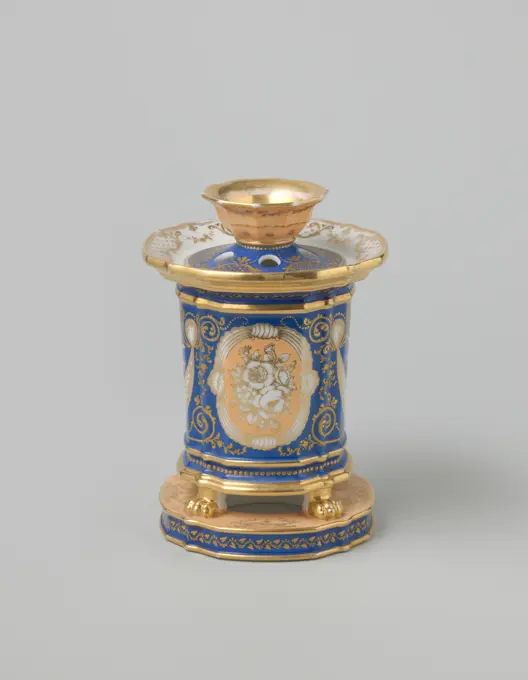
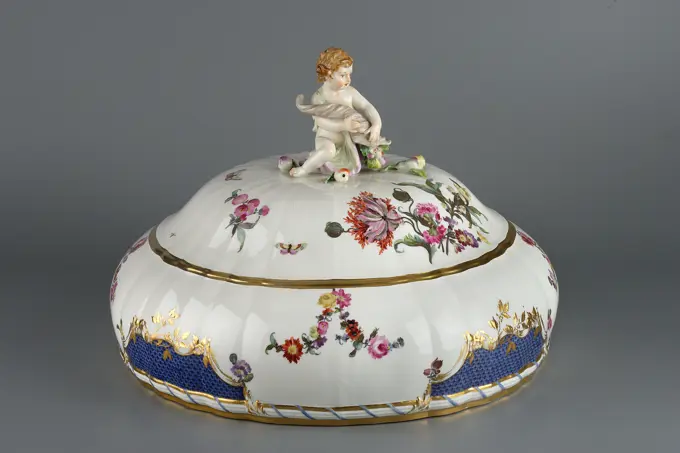
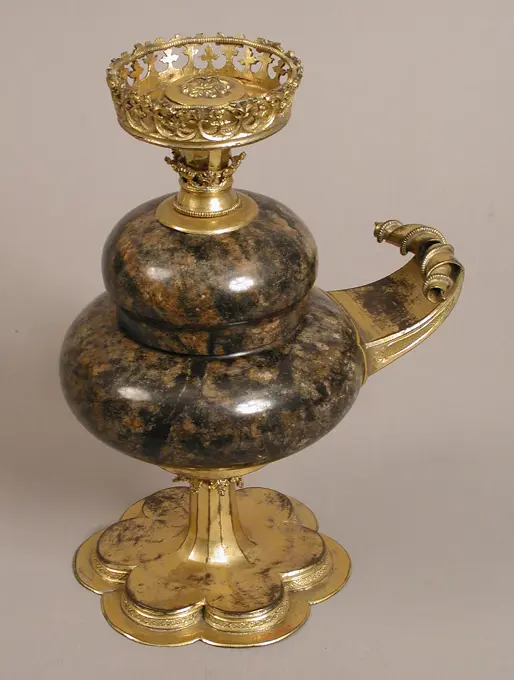
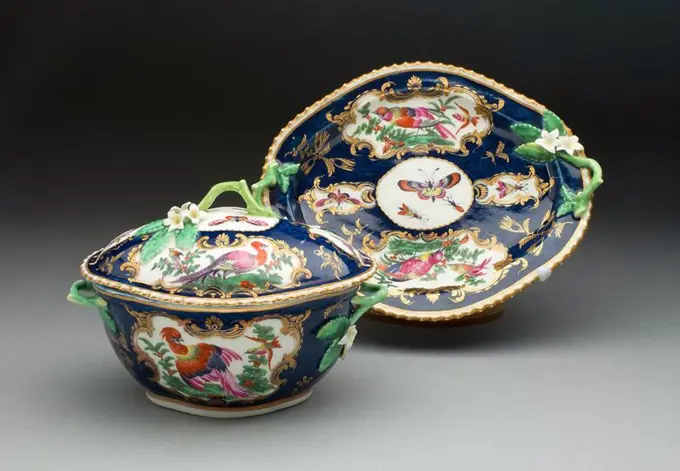
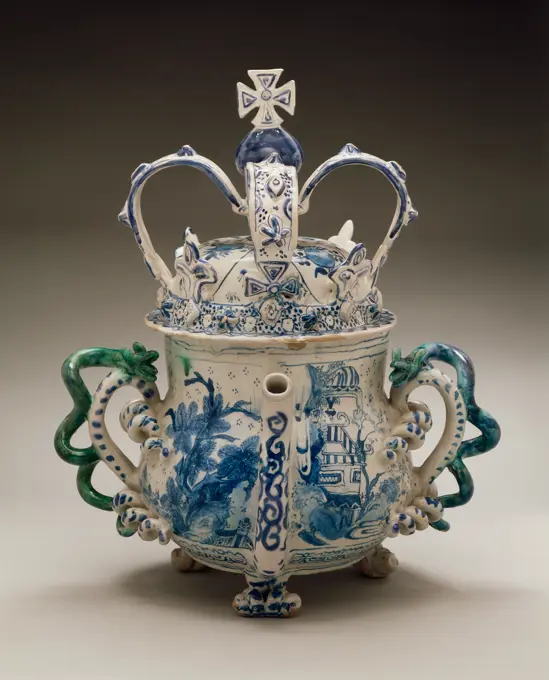
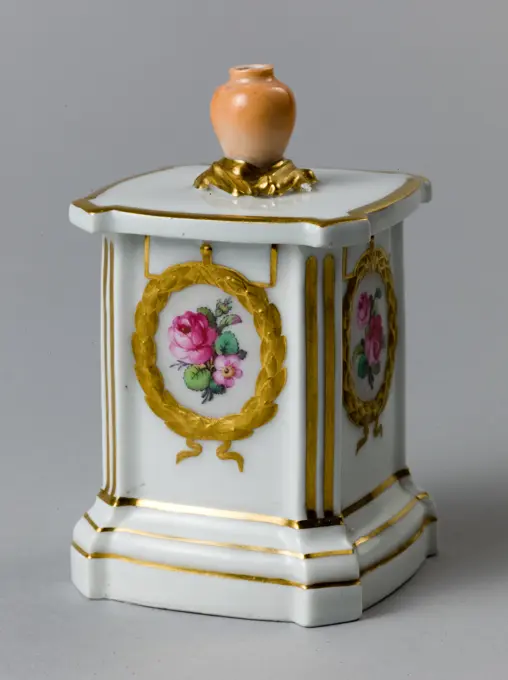
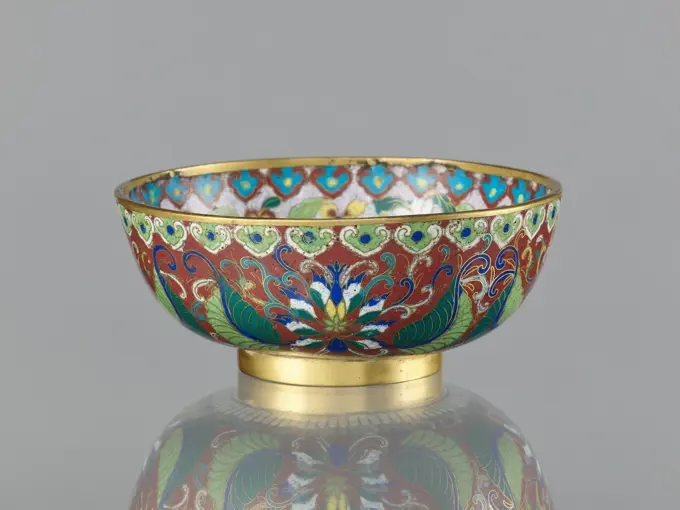
Sugar vas, painted with a landscape with cattle, Royal Porcelain Factory Dommer & Co., c. 1809 - c. 1814 Sugar vas, painted with landscape with cattle with farmer and farmer's wife. Sprinkling flowers and golden edges. Marked: Amstel in blue. Nieuwer-Amstel porcelain Sugar vas, painted with landscape with cattle with farmer and farmer's wife. Sprinkling flowers and golden edges. Marked: Amstel in blue. Nieuwer-Amstel porcelain. Two of the vases in this group bear the mark of the Porceleinfabriek aan den Amstel, the successor of the Loosdrecht porcelain factory. Just as the factory at Loosdrecht had earlier bought up the stock and moulds of its predecessor in Weesp, so did the factory in Ouderkerk aan de Amstel take over the inventory of Loosdrecht.Vase 1761 Sèvres. Soft-paste porcelain, polychrome enamels and gilding . Manufacture nationale de Sèvres (Manufacturer)Urn, c. 1815. Flight, Barr and Barr (British). Artificial porcelain; overall: 19.2 x 11.5 cm (7 9/16 x 4 1/2 in.).Cup, 1839. Sèvres Porcelain Factory (French, est. 1756). Hard-paste porcelain; overall: 7 x 9 cm (2 3/4 x 3 9/16 in.).Covered baluster jar with figures in an interior behind framework, prunus trees and floral scrolls, anonymous, c. 1650 - c. 1699 Porcelain cover -shaped lid -shaped lid jar, painted in underly glaze blue and on the glaze red, black and gold. Traly work painted on the wall, decorated with modeled and decorated prunus trees and tires with flower vines. Under the grille work a band with flower vines. Around the foot a bond with lotus drinks. Lid button in the shape of a bird on a stump. Imari. Japan porcelain. glaze. cobalt (mineral). gold (metal) painting / gilding / vitrification Porcelain cover -shaped lid -shaped lid jar, painted in underly glaze blue and on the glaze red, black and gold. Traly work painted on the wall, decorated with modeled and decorated prunus trees and tires with flower vines. Under the grille work a band with flower vines. Around the foot a bond with lotus drinks. Lid button in the shape of a bird on a stump. Imari. Japan porcelain. glaze. cobalt (mineral). gold Covered baluster jar with figures in an interior behind framework, prunus trees and floral scrolls, anonymous, c. 1650 - c. 1699 Porcelain cover -shaped lid -shaped lid jar, painted in underly glaze blue and on the glaze red, black and gold. Traly work painted on the wall, decorated with modeled and decorated prunus trees and tires with flower vines. Under the grille work a band with flower vines. Around the foot a bond with lotus drinks. Lid button in the shape of a bird on a stump. Imari. Japan porcelain. glaze. cobalt (mineral). gold (metal) painting / gilding / vitrification Porcelain cover -shaped lid -shaped lid jar, painted in underly glaze blue and on the glaze red, black and gold. Traly work painted on the wall, decorated with modeled and decorated prunus trees and tires with flower vines. Under the grille work a band with flower vines. Around the foot a bond with lotus drinks. Lid button in the shape of a bird on a stump. Imari. Japan porcelain. glaze. cobalt (mineral). gold Pitcher 1848-56 Charles Cartlidge and Company The mid-nineteenth century porcelain manufactory of Charles Cartlidge and Company in Greenpoint, Brooklyn produced a variety of slip-cast wares for the middle class market. The firm offered a wide array of forms which included tablewares and pitchers, along with mundane, everyday objects (inkstands, paper weights, spittoons, etc.) to highly specialized items. Among the companys favorite designs are the relief-molded pitchers of either corn and cornstalks or oak leaves and acorns. The most significant Cartlidge pitchers are those with shields and inscribed with names, often made for tradesmen or saloon keepers. Inscribed "CAPT. C. A. WOOLSEY" in the shield, this presentation pitcher was made for Captain Charles Augustus Woolsey (1809-1877), Superintendent of the ferries of the Pennsylvania Railway Company, and perhaps given to him to mark a milestone in his career or to celebrate some other achievement. This example appears to be unique witBeaker, Meissener porcelain manufactory, c. 1730 - c. 1735 Cup of painted porcelain. The cup is painted on both sides in gold with a scene with Chinese style figures on a console. The cup is not marked. porcelain company: MeissenAugsburg porcelain Cup of painted porcelain. The cup is painted on both sides in gold with a scene with Chinese style figures on a console. The cup is not marked. porcelain company: MeissenAugsburg porcelainSugar both, with landscape in which a hunter on a bank, Peter Regout, c. 1860 - c. 1890 Sugar bowl of earthenware with lilac transfer decor. The ears in the form of lion heads with a ring in the mouth. On the belly a performance of a hunter on a couch, on the left is a boy, on the right is a woman with a child and a dog. The flared foot is unadorned. Limburg (Dutch province) . Sugar bowl of earthenware with lilac transfer decor. The ears in the form of lion heads with a ring in the mouth. On the belly a performance of a hunter on a couch, on the left is a boy, on the right is a woman with a child and a dog. The flared foot is unadorned. Limburg (Dutch province) .Bell-shaped cup with a coat of arms, lotus scrolls and spearhead-border, anonymous, c. 1740 - c. 1760 Bell -shaped head of porcelain, painted on the glaze in red, pink, green, black and gold. On the outer wall an unidentified weapon divided into four courses with in 1. and 4. Three flowers on a red background; 2. And 3. A ship on a white background. The helmet sign is a tree includes a saw on a crown. The cover consists of acanthus leaves in white and red. Below and above the weapon a banderol with 'success in trade' and 'through'. The other side of the outside wall with a lotus drink. The inner edge with a Spearhead border. Head has been broken. Weapon porcelain with email colors. China porcelain. glaze. gold (metal) painting / gilding / vitrification Bell -shaped head of porcelain, painted on the glaze in red, pink, green, black and gold. On the outer wall an unidentified weapon divided into four courses with in 1. and 4. Three flowers on a red background; 2. And 3. A ship on a whitePot-Pourri vase with covers; Magdeburg (ceramic family; 1756-1786); 18th century (1701-00-00-1800-00-00);Elephant-head vase (vase à tête d'éléphant) ca. 1757 Sèvres Manufactory French This model of vase, with elephant heads terminating in candle sockets (now missing from most surviving examples) has been called the most extravagant vase form created at Sèvres. While it has been suggested that the model may have been inspired by Chinese or Meissen porcelain vases, Duplessis's design nevertheless is one of striking originality. The elephant-head vases were usually sold in pairs and often formed part of a garniture, a grouping of three or five vases.. Elephant-head vase (vase à tête d'éléphant). French, Sèvres. ca. 1757. Soft-paste porcelain decorated in polychrome enamels, gold. Ceramics-PorcelainChocolate head, multi -colored painted with chinoiseries, Meissener Porzellan Manufaktur, c. 1740 Chocolate head of painted porcelain. The head is painted with Höroldt-Chinoiseries and Harbor Faces. The head is marked. Float porcelain Chocolate head of painted porcelain. The head is painted with Höroldt-Chinoiseries and Harbor Faces. The head is marked. Float porcelainThree Vases, Meissener Porcelain Manufaktur, c. 1730 - c. 1735 Hexagonal vase of painted porcelain. The vase has a high base on which a nodus -like part and the vase body floating upwards. The foot is decorated with alternating purple and red, the nodus with colorful Höroldt chinoiseries. The vase body is decorated with large-figures Höroldt chinoiseries on consoles of leaf and network in which saved four passes in which landscapes. The vase is marked. Float porcelain. gilding (material). paint (coating) Hexagonal vase of painted porcelain. The vase has a high base on which a nodus -like part and the vase body floating upwards. The foot is decorated with alternating purple and red, the nodus with colorful Höroldt chinoiseries. The vase body is decorated with large-figures Höroldt chinoiseries on consoles of leaf and network in which saved four passes in which landscapes. The vase is marked. Float porcelain. gilding (material). paint (coating)Tureen and Stand, Meissener porcelain manufactory, c. 1730 - c. 1735 Oval terrine with lid of painted porcelain. The Terrine has two ears in the form of a women's head on a laminar with golden edges, above which a gilded palmet and a bundle of springs. The terrine and the lid are painted with two Höroldt chinoiseries. The lid has a profiled button with hanging gilded acanthus leaves. The terrine is marked. Float porcelain Oval terrine with lid of painted porcelain. The Terrine has two ears in the form of a women's head on a laminar with golden edges, above which a gilded palmet and a bundle of springs. The terrine and the lid are painted with two Höroldt chinoiseries. The lid has a profiled button with hanging gilded acanthus leaves. The terrine is marked. Float porcelainVase 19th century Spanish. Vase. Spanish. 19th century. Glass. GlassCovered Jar With Monster Heads and Gilded Bands with Ruyi Motif. Porcelain lid pot, the body upward slightly and with a round shoulder, covered with a monochrome cracked gray glaze and on biscuit gold. On either side of the pot a sample head with ring; Around the foot, shoulder and neck a band with Ruyi motif, decoration in gold-plated biscuit. The lid with the same decoration; Lid knob in the shape of a gold-plated shishi (lion dog). Flaging flakes. Monochromes.Jardiniere; painted tôle, brassFlower Pot, the Greek A, c. 1690 - c. 1700 Foot of a large flower holder from Faience. Blue painted. Delft . Foot of a large flower holder from Faience. Blue painted. Delft .Covered Baluster Jar With Figures in An Interior Behind Framework, Prunus Trees and Floral scrolls. Baluster-shaped lid pot of porcelain with a spreading foot, painted in underglaze blue and on the glaze red, black and gold. On the wall twice two people sitting in an interior behind landscaped and painted railing. This railing is decorated with landscaped and decorated prunus trees and tires with floral drinks. Among the railing a bond with flower drinks. A relationship with lotus drinks around the foot. Three cartouches with lotus drinks on the neck. The lid with the same decoration; Cover knob in the shape of a bird on a stump. Imari.Group of Vases, Manufactuur Oud-Loosdrecht, c. 1774 - c. 1784 Vase of porcelain. The convex barrel is on a high foot. The top that spreads upwards is open. Multicolored painted. Loosdrecht porcelain Vase of porcelain. The convex barrel is on a high foot. The top that spreads upwards is open. Multicolored painted. Loosdrecht porcelain. In 1782, when this tobacco box was made, Neoclassicism had long set the tone. Some clients, however, evidently still preferred the less severe hybrid style with Rococo elements.Vase; Kinkôzan, Sôbei VII (1867-1927); End of the 19th century (1891-00-00-1900-00-00);Block, Julius Henry (1858-1934) - collection, ceramics, chrysanthemums, gift (provenance), glycine, Japanese (culture), brocade ornament, satsuma, Japanese artLid of sugar box, painted multi-colored with chinoiseries. The lid has an octagonal knob and is painted with landscapes in which a chinese on one side is a chinese and on the other hand a seated piping Chinese.Double snuffbox ca. 1745-50 Meissen Manufactory German. Double snuffbox 207218Multiculously painted lid of Faïence, Anonymous, c. 1700 - c. 1735 Faïence lid. Multicolored painted with flower decoration. Delft . Faïence lid. Multicolored painted with flower decoration. Delft .Savings pot, anonymous, c. 1725 - c. 1740 Money box from Faïence. Multicolored painted with floral motifs and birds. Delft . Money box from Faïence. Multicolored painted with floral motifs and birds. Delft .Coverpot, Anonymous, 1750 - 1800  FaiMence lid jar. Multicolored painted with chinoiserie decoration. Delft .Covered Vessel.Flower vase with perforating cover (potpourri); Popow, Aleksander (Porcelain Factory; 1806-1872); around 1850 (1846-00-00-1855-00-00);Two-handled cup with cover. Culture: British, London. Dimensions: Height: 9 in. (22.9 cm). Maker: Francis Leake (active 1655-83). Date: 1669-70. Museum: Metropolitan Museum of Art, New York, USA.Two Lidded Vases, Meissener porcelain manufactory, c. 1730 - c. 1735 Hexagonal vase with lid, made of painted porcelain. The lid has a button in the shape of a mushroom. The shoulder and the foot are decorated with kaki monks with flowers. The six fields of the vase are decorated with great-figures Höroldt chinoiseries or Turkish figures (including Visir Azem with left hand leaned on his staff, a Chinese and Vendeur de Balets Turc). The vase is marked. Float porcelain Hexagonal vase with lid, made of painted porcelain. The lid has a button in the shape of a mushroom. The shoulder and the foot are decorated with kaki monks with flowers. The six fields of the vase are decorated with great-figures Höroldt chinoiseries or Turkish figures (including Visir Azem with left hand leaned on his staff, a Chinese and Vendeur de Balets Turc). The vase is marked. Float porcelainSugar Bowl And Cover; gilded and enameled porcelainTerracotta tripod pyxis (box) ca. 620-590 B.C. Greek, Corinthian On each leg, woman between sphinxesOn the lid, woman among animalsThe tripod pyxis is known in Corinth, Attica, and Boeotia where it seems particularly at home. This example has been singled out as one of the best surviving examples from Corinth.. Terracotta tripod pyxis (box). Greek, Corinthian. ca. 620-590 B.C.. Terracotta. Early Corinthian. VasesLidded vase. Meissen porcelain manufactory ice cream, c. 1730-1735Hard paste porcelainTea Caddy With a Crowned, illegible monogram surrounded by two Flower sprays. Porcelain tea bus with four times lobed wall and edge and four short feet, painted on the glaze in blue, red, pink, green, yellow, black and gold. On the outside wall a crowned, unreadable monogram surrounded by two flower branches; Between the monograms Flower drinks with a cartouche in it with a landscape and four medallions with plants. On the shoulder a bond with flower drinks. A baking tear in the edge. European performance in email colors.Sugar bowl painted with garlands and flowers. Porcelain sugar bowl. Along the foot a relief with gold, above a sheet list, painted in purple and gold; On the body Multicolored flower guide sandes between a partially gold-plated pearl table and a sheet list, decorated in purple and gold, along the mouth edge a fries of vertical dashes in gold, which repeats itself on the lid edge. On the lid, multicolored spreading gangs are painted within a strong winding gold ribbon. Around the lid knob a rosette in relief, painted in blue, purple and gold, around which multicolored flowerguirlands. The button itself is painted in blue, purple and gold.Pitcher. Shuzan (ok. 1880-1920), ceramist, Yasuda Kyoto Tokiji Goshigaisha, company. High lid pot on dish of porcelain, painted in underglaze blue and on the glaze blue, red, green, yellow, black and gold. The pot has two S-shaped ears. On the wall of the pot, continuous on the lid, twice a flowering plant on a rock (peony, prunus) interrupted by two tires with floral drinks (chrysanthemum). The lid knob is modeled in the shape of a squirrel on a leaf with a mountain grapes (chestnuts). The lid with the same decoration; The outer wall with twice a prunus branch and twice a ponda branch. Seven preen on the bottom. Imari.Footed beaker with cover. Culture: Hungarian, Brassó. Dimensions: Overall: 15 3/4 x 6 11/16 in. (40 x 17 cm). Maker: Johannes (Hans) Mautner (master 1670, died 1694). Date: 1682.This monumental beaker is the one of the largest known of its type. It has a hollow base and an undulating ring that marks the actual bottom of the vessel on the outside. Both of these features are characteristic of Hungarian and Transylvanian production. The inscribed coat of arms at left indicates that it belonged to a member of a princely Transylvanian family, Count Mikes, who came from one of the most ancient dynasties of the Székely people. Together with the Saxons, the Székely were crucial for the defense of Hungary's eastern border against the Ottomans. The number "XX" may indicate that the beaker was the largest in an assembled set from which two smaller beakers are now preserved in the Hungarian National Museum in Budapest. The lute-playing angel garbed in peasant costume is very close to a similar fiVase with cobalt blue überfang with cut decoration. Square, gold-plated bronze foot and trunk in neolaissance style with gray damaged marble spacer. Trumpet-shaped chalice of bright colorless glass with a cobalt blue überfang, cut away in windows, fish blowing and circles. Scalloped upper edge.Silversmith's Art, 19th century. Silver tureen with snake-shaped handles, pheasant-shaped cover and head of Medusa-shaped decorations.. High porcelain lid pot, painted in underglaze blue and on the glaze blue, red, green, yellow, black and gold. The pot has two S-shaped ears. On the wall of the pot, continuous on the lid, twice a flowering plant on a rock (peony, prunus) interrupted by two tires with floral drinks (chrysanthemum). Imari.Covered Bowl. Du Paquier Porcelain Manufactory; Austrian, 1718-1744. Date: 1730-1740. Dimensions: 12.7 × 21 cm (5 × 8 1/4 in.). Hard-paste porcelain, polychrome enamels, and gilding. Origin: Vienna. Museum: The Chicago Art Institute, Chicago, USA.Cloches (dish covers), coolers, soup tureens, sauceboats, salt cellars, pepper and mustard pots, Jean Baptiste Claude Odiot, c. 1819 Empire sauce bowl of gilded silver. With a high handle, formed from a boy's figure with a horn of abundance. The whole rests on a rectangular base that is supported by 4 female semi -figures on lion's claw. Engraved with the weapon of Potemkin. Paris silver (metal). gilding (material) gilding Empire sauce bowl of gilded silver. With a high handle, formed from a boy's figure with a horn of abundance. The whole rests on a rectangular base that is supported by 4 female semi -figures on lion's claw. Engraved with the weapon of Potemkin. Paris silver (metal). gilding (material) gildingStem Cup, 1600s-1700s.. India, Jaipur, 17th-18th century. Enamel on copper, gold and silver leaf; diameter: 8.6 cm (3 3/8 in.); overall: 6.4 cm (2 1/2 in.); diameter of foot: 6.4 cm (2 1/2 in.).Kan and scale, Thomas Chancellier, 1765 Oval pelvis made of gilded silver. The deep pelvis with Godronrand rests on a low foot and is surrounded by Garlandes, hurled for a profile at half height. Women's masks at the two ends. Paris silver (metal). gilding (material) gilding Oval pelvis made of gilded silver. The deep pelvis with Godronrand rests on a low foot and is surrounded by Garlandes, hurled for a profile at half height. Women's masks at the two ends. Paris silver (metal). gilding (material) gildingUrn. Frankenthal Porcelain Factory; German, founded 1755. Date: 1776-1777. Dimensions: 23.2 × 15.2 × 10.2 cm (9 1/8 × 6 × 4 in.). Hard-paste porcelain, black monochrome, and gilding. Origin: Frankenthal. Museum: The Chicago Art Institute, Chicago, USA.Candlestick Bachmi Ski, Alexander (1820 1882)Long-necked Bottle first half 14th century Especially after the MongolMamluk peace of 1323, the Chinese motifs popular in contemporary Ilkhanid art began to appear in the art and architecture of the Mamluks. Here, a Chinese cloudcollar design provides the framework of four medallions, each decorated with a bird of prey attacking a goose, surrounded by a floral ground of Chineseinspired lotus and peony blossoms. Bottles of this shape served as wine decanters, and are depicted as such in banqueting scenes in a variety of media.. Long-necked Bottle. first half 14th century. Glass, colorless with green tinge; blown, blown applied foot, applied decoration, enameled and gilded. Attributed to Egypt or Syria. GlassJARRON DE PORCELANA Y BRONCE DE SEVRES-1852 - REGALO DE NAPOLEON III Y E. MONTIJO A ISABEL II 1865. Author: SEHILT. Location: MUSEE D'ARTS DECORATIFS. MADRID. SPAIN.Flower Holder. Derby Porcelain Manufactory; England, 1750-1848. Date: 1785-1795. Dimensions: 11.7 × 21.6 × 12.7 cm (4 5/8 × 8 1/2 × 5 in.). Soft-paste porcelain, polychrome enamels and gilding. Origin: Derby. Museum: The Chicago Art Institute, Chicago, USA.Candlestick Base. Dimensions: H. 6 9/16 in. (16.7 cm)Diam. 11 1/2 in. (29.2 cm)Wt. 35.7 oz. (1012.2 g). Date: late 13th-14th century. Museum: Metropolitan Museum of Art, New York, USA.Lidded Vase of a Garniture of Five Vases; Decoration attributed to Johann Gregor Höroldt (German, 1696 - 1775), Meissen Porcelain Manufactory (German, active 1710 - present); Dresden, Germany; about 1730; Hard-paste porcelain, polychrome enamel decoration and gilding; 32.2 x 19.4 cm (12 11,16 x 7 5,8 in.)Vase (one of a pair) late 18th century Humphrey Palmer. Vase (one of a pair). British, Hanley, Staffordshire. late 18th century. Pottery. Ceramics-PotteryVase; Kinkôzan, Sôbei VII (1867-1927); 19th/20th century (1891-00-00-1910-00-00);Vase Made 1810-1820 Swansea. Soft-paste porcelain with polychrome enamels and gilding . Swansea Potteries & Porcelain FactoryBokaal of ice glass, anonymous, c. 1550 - c. 1610 Ice glass jar, on the foot of gilded metal. Hollow, ribbed baluster -shaped tribe. Flatten spherical body and somewhat bent neck. Three blackberry cuts have been applied to the body, a ribbed thread on the shoulder. Remains of gilding on the trunk, the studs and the wire around the shoulder. The gilded metal foot was added in the 19th century. Venice Glass. Foot: Metal glassblowing / gilding Ice glass jar, on the foot of gilded metal. Hollow, ribbed baluster -shaped tribe. Flatten spherical body and somewhat bent neck. Three blackberry cuts have been applied to the body, a ribbed thread on the shoulder. Remains of gilding on the trunk, the studs and the wire around the shoulder. The gilded metal foot was added in the 19th century. Venice Glass. Foot: Metal glassblowing / gildingPot, the gilt Blompot, 1780 - 1820  Powence pot. Multicolored painted. Delft .Brandewijnkom, Laurens Thomas, 1642 Brandewijnskom of silver. The high cuppa is decorated with engraving work. The horizontal, flat ears represent lilies supported by angel heads. Leeuwarden silver (metal) Brandewijnskom of silver. The high cuppa is decorated with engraving work. The horizontal, flat ears represent lilies supported by angel heads. Leeuwarden silver (metal)Chocolate Pot, Meissener Porcelain Manufaktur, c. 1735 - c. 1740 Chocolate tan with lid, made of painted porcelain. The KAN has an ebony handle and is decorated all around with a Höroldt chinoiserie. The lid has a gilded silver handle and a rotating ebony button on a gilded silver plate. The jug is marked. Float porcelain. ebony (wood). silver (metal) gilding Chocolate tan with lid, made of painted porcelain. The KAN has an ebony handle and is decorated all around with a Höroldt chinoiserie. The lid has a gilded silver handle and a rotating ebony button on a gilded silver plate. The jug is marked. Float porcelain. ebony (wood). silver (metal) gildingVase (one of a pair). Culture: British, Chelsea. Dimensions: Height: 9 1/4 in. (23.5 cm). Factory: Chelsea Porcelain Manufactory (British, 1745-1784). Date: ca. 1765-70. Museum: Metropolitan Museum of Art, New York, USA.Miniature cruet with cover. Culture: Dutch, Amsterdam. Dimensions: Height: 2 1/8 in. (5.4 cm). Maker: S. A. , possibly. Date: 1738. Museum: Metropolitan Museum of Art, New York, USA.Box, c. 1400 - c. 1950 Colorful painted round box with lid, on 3 legs. Inscription: "That happiness is full of your days".  wood (plant material). paint (coating) Colorful painted round box with lid, on 3 legs. Inscription: "That happiness is full of your days".  wood (plant material). paint (coating)Cilidrical covered box in the shape of a cricket's cage, anonymous, c. 1675 - c. 1699 Cylindrical porcelain box on three legs and held together in the form of a cricket cage by three modeled cords, ending in a raised knot as a lid button. Painted in underly glaze blue and on the glaze red, green, yellow and black. The lower half of the box with waves, birds and flower branches; The upper half is modeled in grille work with a flower drink in each box. On the lid of grater work with loose flowers. Imari. Japan porcelain. glaze. cobalt (mineral) painting / vitrification Cylindrical porcelain box on three legs and held together in the form of a cricket cage by three modeled cords, ending in a raised knot as a lid button. Painted in underly glaze blue and on the glaze red, green, yellow and black. The lower half of the box with waves, birds and flower branches; The upper half is modeled in grille work with a flower drink in each box. On the lid of grater work with loose flowers. Imari. JapaLantern;  19th century (1801-00-00-1900-00-00);Vase decorated with flowers and pigeons. Porcelain vase consisting of a four-side barrel that rests on four claw legs on a four-sided basement. The dominating colors are blue, gold and salmon. The blue colored barrel has a medallion with three flowers on two sides, the two other sides are decorated with a pigeon over a garland suspended from two heads. Golden tendrils and edges make the further decoration. The blue legs are completely plated. The pedestal has a "Jeu de Fond" on each side ornament in gold on salmon-colored ground; A corresponding decoration occurs four times on the edge of the barrel in gold on white fond.Inner box of blue glass, Nathanael Teuter, 1805 Inner box of blue glass. Amsterdam glass Inner box of blue glass. Amsterdam glassTwo Vases, Meissener porcelain manufactory, c. 1735 Vase of painted porcelain. The baluster -shaped vase is decorated above and below with two richly decorated accolade -shaped four passes, in which water landscapes with European merchants near bales and ships. On the baluster, a water landscape with merchants on the banks at Balen and Ships is painted around. The merchants are sometimes accompanied by their ladies. The vase is marked. Float porcelain Vase of painted porcelain. The baluster -shaped vase is decorated above and below with two richly decorated accolade -shaped four passes, in which water landscapes with European merchants near bales and ships. On the baluster, a water landscape with merchants on the banks at Balen and Ships is painted around. The merchants are sometimes accompanied by their ladies. The vase is marked. Float porcelainPlatter cover with an Antikzierat relief and flowers. Meyer, Friedrich Elias (1723-1786), sculptor, Koenigliche Porzellan Manufaktur - KPM (Berlin ; 1763-1918), factoryChamber Pot ca. 1865 Mexican. Chamber Pot. Mexican. ca. 1865. Tin-glazed earthenware. Made in MexicoClose-up of a Cachepot, Paris, FranceInk Stand, Porcelain Factory The Hague (Possible), c. 1777 - c. 1790 Porcelain ink set, painted on the glaze in blue, red, pink, green, yellow, black and gold. The couple consists of a rectangular plateau with sloping corners, a pyramid, two candlesticks, a ink jar, a salt spreader and a table bell. All decorated with flower branches, flower vines, garlands and tires with raised leaf motifs. The pyramid has a modeled head of a ram halfway between three times. The holders of the ink jar and the salt spreader are attached to the plateau on three claw legs and have a modeled saterk on the wall. The candlesticks with a modeled band of leaf vines under the candle holder. The Hail Hate Company: Ansbach porcelain. glaze. gold (metal) painting / gilding / vitrification Porcelain ink set, painted on the glaze in blue, red, pink, green, yellow, black and gold. The couple consists of a rectangular plateau with sloping corners, a pyramid, two candlesticks, a ink jar, a salt spreader and a table beRimmonim (Torah finial) (one of a pair), 19th century, 14 3/8 x 6 1/4 x 4 7/8 in. (36.51 x 15.88 x 12.38 cm), Silver, Austria, 19th centuryCovered Cup ca. 1500-1550 German. Covered Cup 464344Galvanoplastic reproduction of a cup with lid with a Bacchanal, FA. Elkington & Co., 1881 Galvanoplastic reproduction of a cup with a lid with driven representation of a bacchanal and armorini; The lid is crowned by a bust of Floris V. gilt. London copper (metal). silver (metal) Galvanoplastic reproduction of a cup with a lid with driven representation of a bacchanal and armorini; The lid is crowned by a bust of Floris V. gilt. London copper (metal). silver (metal)Pair of Garden Vases, De Metaale Pot, c. 1691 - c. 1724 Garden vase of earthwork. The vase stands on a low -cut foot and has two ears with volutes. The vase is rounded on the underside and provided with grunts. On the body large green acanthus leaves in relief, hanging down from the top edge. Along the foot and mouth edge, on a border above the grunts and leaves hanging on the ears in relief on blue stock. Vases with flowers are painted between the Acanthus leaves; on the grunts; A continuous flower rank on the foot; Everything in red, green and blue. Flower motifs have been saved between the groans in a green stock. Roads on the ears saved in a green stock. Delft . Garden vase of earthwork. The vase stands on a low -cut foot and has two ears with volutes. The vase is rounded on the underside and provided with grunts. On the body large green acanthus leaves in relief, hanging down from the top edge. Along the foot and mouth edge, on a border above the grunts and leaves hanging on the eHand bell. Manufacturing former loose ruderecht, c. 1778-1782Hard-Paste PorcelainInk set, painted with a landscape with figures at tents. Porcelain ink set. Oval with ear on one side. In the portion closed at the top Two large round openings for an inkwell and a sand spreader and four holes for pens. A braided ribbon motif in relief along the top and bottom edge. Painted to the front with a landscape with figures at tents in sepia in a rectangular field, which interrupts a fries from light blue grille. In this railing, three cartouches are saved on the sides, the middle of a medallion with scrunch men's head in sepia, contain the other two peak and a multicolored flower branch. At the rear, an oval with spreading gangs is saved, in the middle of which the earring of the ear is located. On wall golden piping.Tureen and Stand. Worcester Porcelain Factory; Worcester, England, founded 1751. Date: 1765-1775. Dimensions: 12.7 × 21 × 16.5 cm (5 × 8 1/4 × 6 1/2 in.). Soft-paste porcelain, underglaze blue, polychrome enamels and gilding. Origin: Worcester. Museum: The Chicago Art Institute, Chicago, USA. Author: Worcester Royal Porcelain Company.Flower vase. Korzec (manufaktura porcelany ; 1790-1832), factoryTankard with cover 19th century, after 16th century original Elkington & Co. British This electrotype is after a sixteenth-century original in the Chéréméteff collection, St. Petersburg at the time of reproduction.. Tankard with cover 186519Vase. England, Yorkshire. Date: 1785-1795. Dimensions: 26 x 13 x 7.6 cm (10 1/4 x 5 1/8 x 3 in.). Lead-glazed earthenware (pearlware). Origin: Yorkshire. Museum: The Chicago Art Institute, Chicago, USA.Gothic chalice. unknown, authorJARRON DE PORCELANA DEL BUEN RETIRO - SIGLO XVIII-XIX. Location: PALACIO REAL-CERAMICA. MADRID. SPAIN.Sauce bowl of multicolored painted faïence. Sauskom with corrugated edge and stenced foot multicolored painted with a seated man at a ruin. Marked from. The Saskom is in a lower part.Goldsmith's art, Italy, 17th century. Cosimo Merlini (1580-1641),  rock crystal glass mounted in enamelled gold, supported by two silver figures of angels. Height 31.9 cm. Detail.Louis-Jacques Berger. "Cup". Money. 1809-1819. Museum of Fine Arts of the City of Paris, Petit Palais. 74382-15 Money, silverware, gobletPosset Pot with Crown Cover. England, Lambeth, circa 1685. Furnishings; Cookware. Earthenware with tin glaze and enamel (Delftware)Plate: shield with the weapons of the Di Bate family, Italian Majolic of Castel Durante, around 1530 (face). Museum of Fine Arts of the City of Paris, Petit Palais. 27012-18 Weapon family di bate, coat of arms, ceramic, abundance horn, dragon, ecu, ecusson, Italy, majolica of Castel Durante, puti, Italian renaissance, dishes, plateJug with men beneath arches, anonymous, c. 1570 - c. 1600 Jug of stoneware on high foot with a cylindrical body with round shoulder and long neck. Both ears are missing. Profiles on the neck and foot. Covered with a brown Engobe. On the belly in relief, a printed and laid band of men in 16th century clothing (warriors) opposite bows. The basis of the ears is in the form of a lion's head. The lower part of the abdomen runs slanted to the foot and is divided into courses with entry lines. A decorative band on the shoulder and neck. Raeren. Rae stoneware. glaze. engobe vitrification Jug of stoneware on high foot with a cylindrical body with round shoulder and long neck. Both ears are missing. Profiles on the neck and foot. Covered with a brown Engobe. On the belly in relief, a printed and laid band of men in 16th century clothing (warriors) opposite bows. The basis of the ears is in the form of a lion's head. The lower part of the abdomen runs slanted to the foot and is divided into coursDing-style censer with lid with Fo Lion and two handles. unknown, craftsmanMarble-top table. Culture: Italian, Florence. Designer: Theophil Hansen (Danish, Copenhagen 1813-1891 Vienna). Dimensions: Height (stand): 30 1/2 in. (77.5 cm); Diameter (table top): 51 in. (129.5 cm). Founder: Cast by Hagenmeyer. Maker: Stand executed by Heinrich Dübell (active ca. 1853-80). Manufactory: Top executed at Opificio delle Pietre Dure, Florence, Italy. Modeler: Bronze sculptures modeled by Josef Dollischek (active 1865-72). Date: ca. 1855-60.When this table arrived at the Metropolitan, it was thought to have been made in Florence about 1880; however, Museum curator James Parker pointed out that the "stand for the table top, which does not resemble 1880s Italian work, was probably made at about the same time in Vienna, where both table top and stand were in the early years of the twentieth century."1Recent research has focused on the stand; the quality of its design and the subtle execution point to Theophil (Theophilus Edvard) Hansen, one of the most important architAnonymous. "Small box in the shape of a column surmounted by a vase with lid". Porcelain. Paris, Museum of Romantic Life. PORCELAINEpergne, 19th century, 10 1/8 x 7 1/2 x 7 1/2 in. (25.72 x 19.05 x 19.05 cm) (epergne), Silver plate, England, 19th centuryChalice. Culture: American. Dimensions: Bowl: H. 6 13/16 in. (17.3 cm); Diam. 6 1/8 in. (15.6 cm)Foot: Diam. 4 1/4 in. (10.8 cm). Maker: Quezal Art Glass and Decorating Company (1901-ca. 1924). Date: ca. 1901-20. Museum: Metropolitan Museum of Art, New York, USA.Urn with Grotesque Masks. Dated: 16th century. Dimensions: overall (including cover): 52.8 x 87.9 x 42 cm (20 13/16 x 34 5/8 x 16 9/16 in.). Medium: porphyry. Museum: National Gallery of Art, Washington DC. Author: Florentine 16th Century.Vase, one of a pair, 1740-1756, Vincennes Porcelain Factory, France, c. 1740-1758, 10 3/8 x 7 5/8 x 7 1/2 in. (26.35 x 19.37 x 19.05 cm), Porcelain, gilt bronze, France, 18th centuryBowl;  19th century (1801-00-00-1900-00-00);