Decorative Silverware

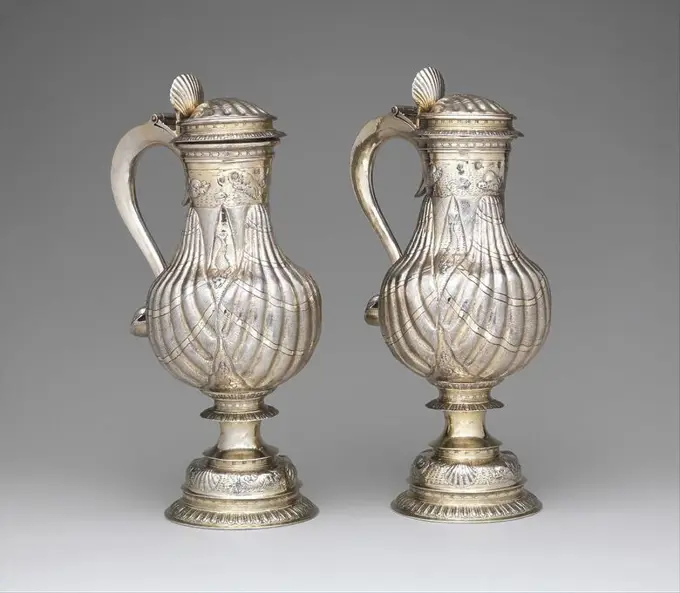
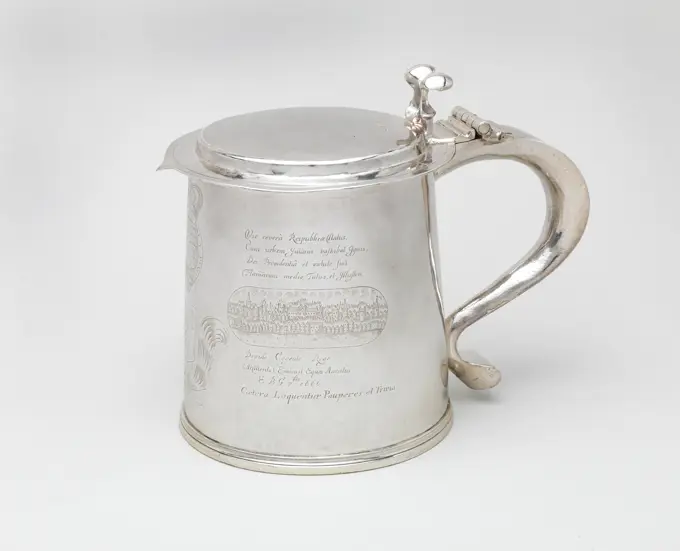
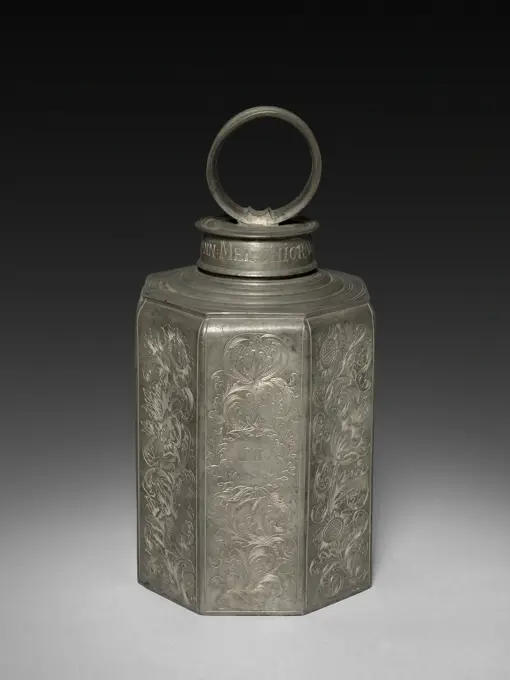
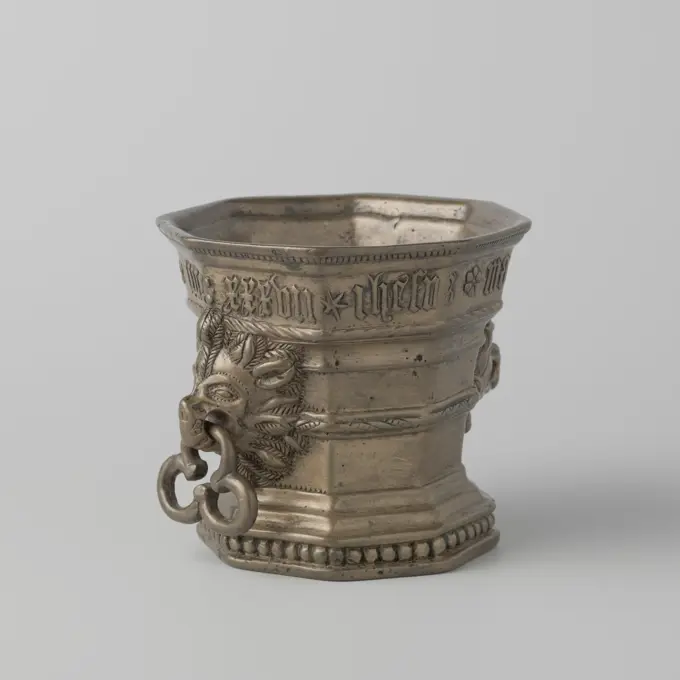
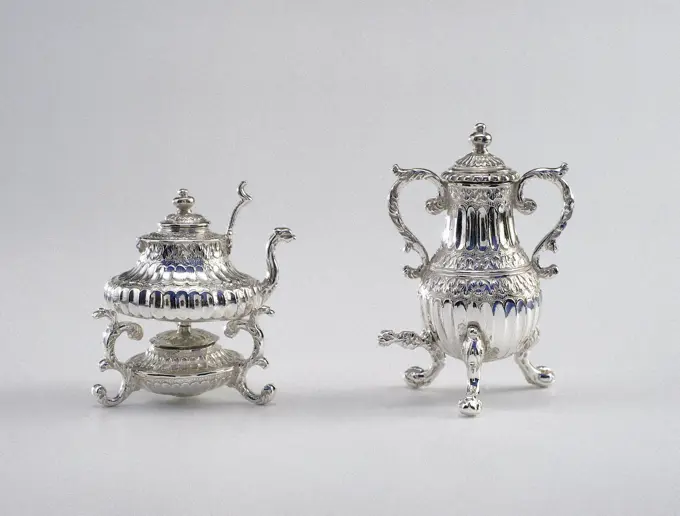
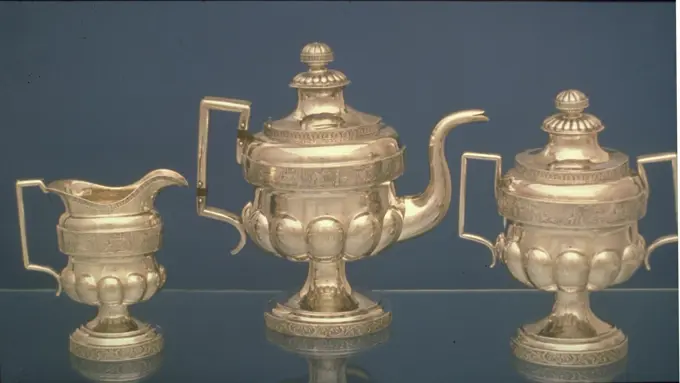
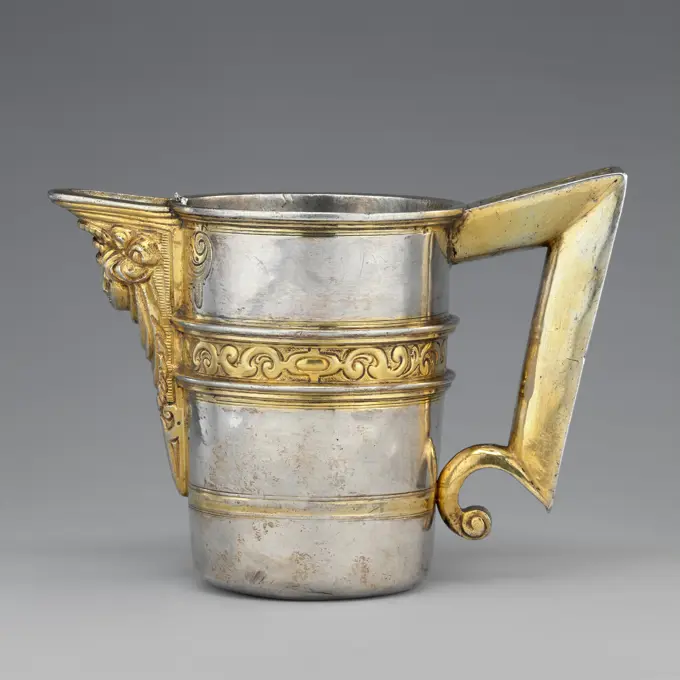
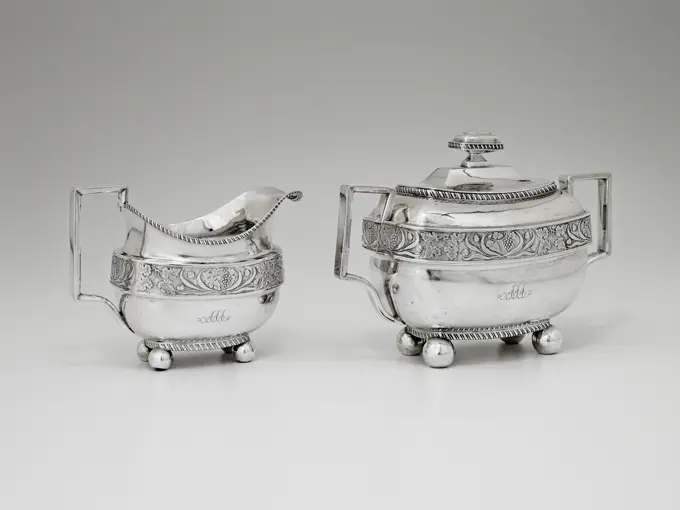
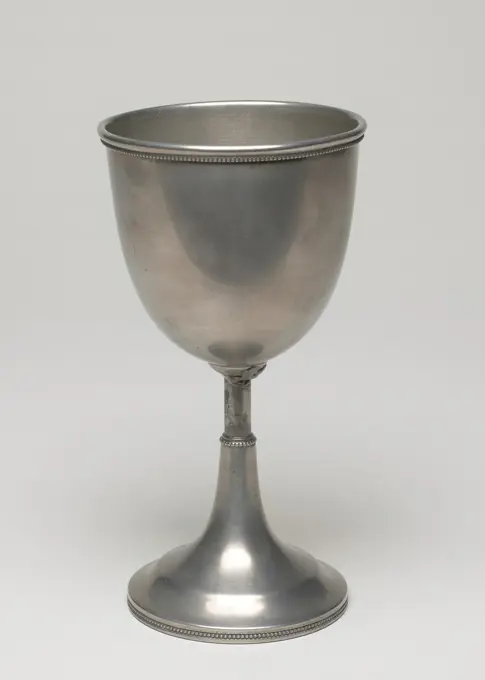
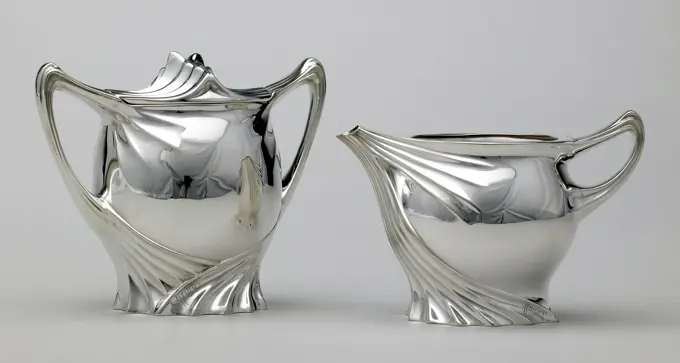
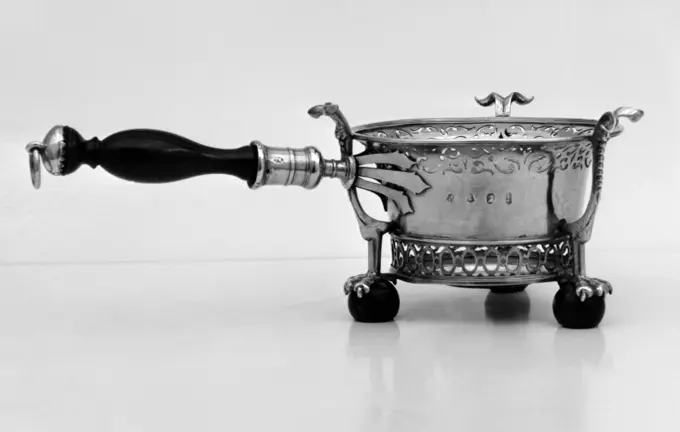
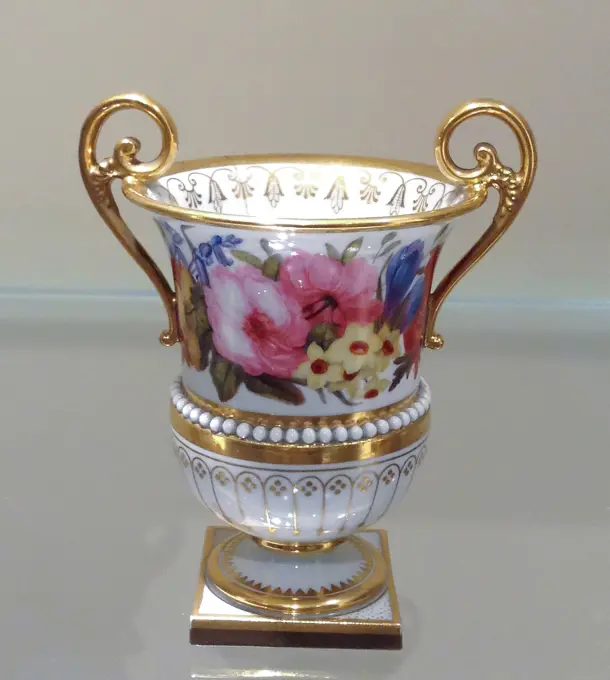
Display of exquisite silverware pieces, including samovars and jugs, highlighting craftsmanship from various historical periods.
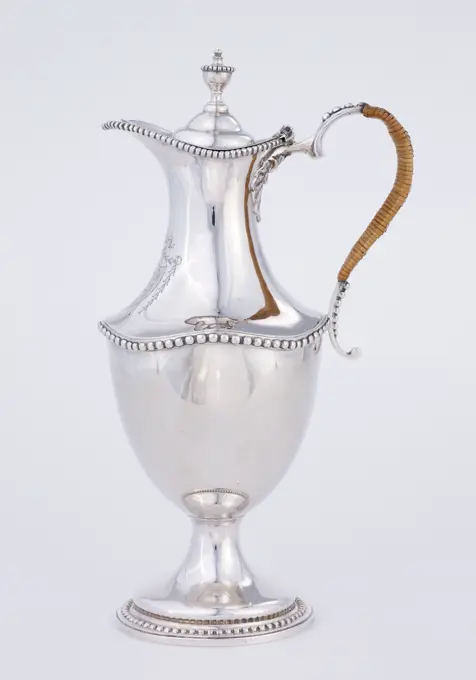
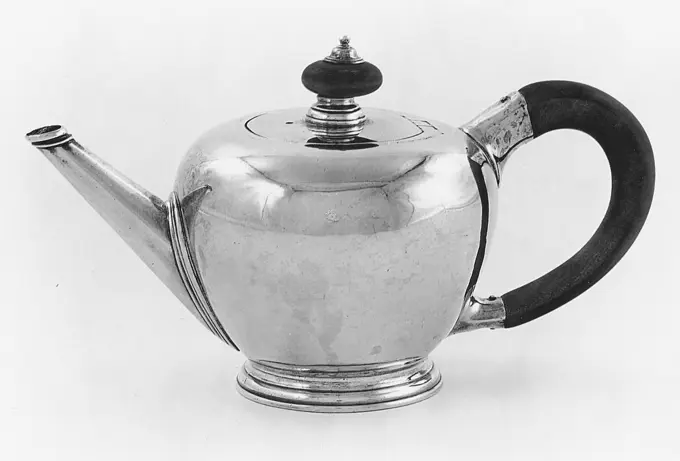
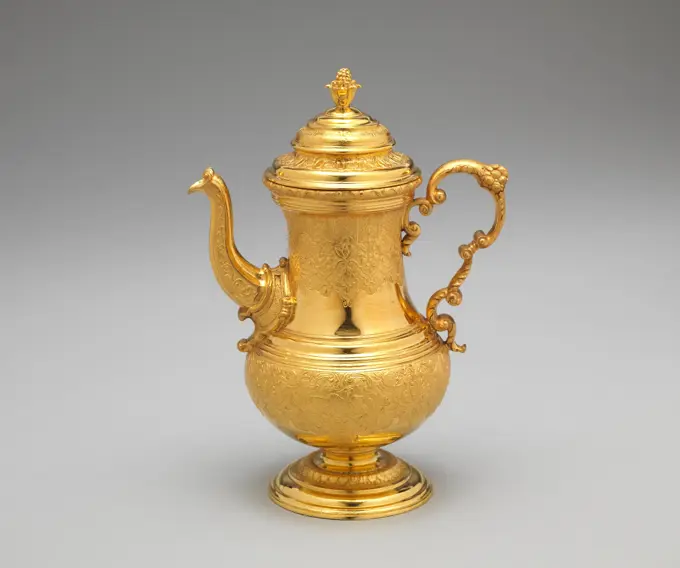
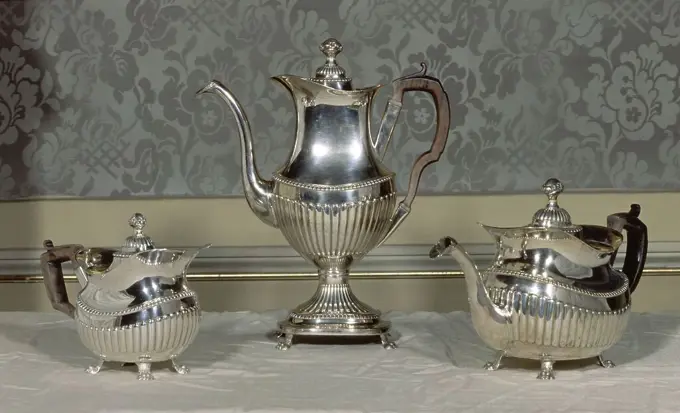
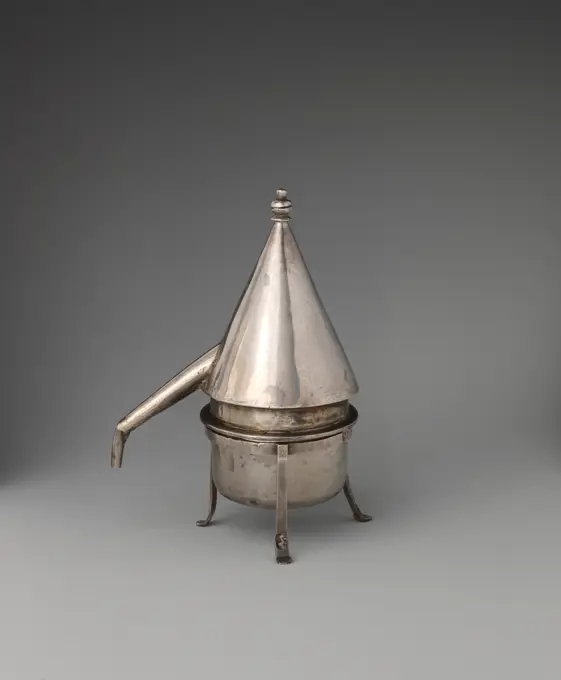
Covered jug, 1773-1774, Charles Wright, British, English, active c. 1754-1790, 12 x 7 x 5in. (30.5 x 17.8 x 12.7cm), Silver, rattan (replaced), England, 18th century
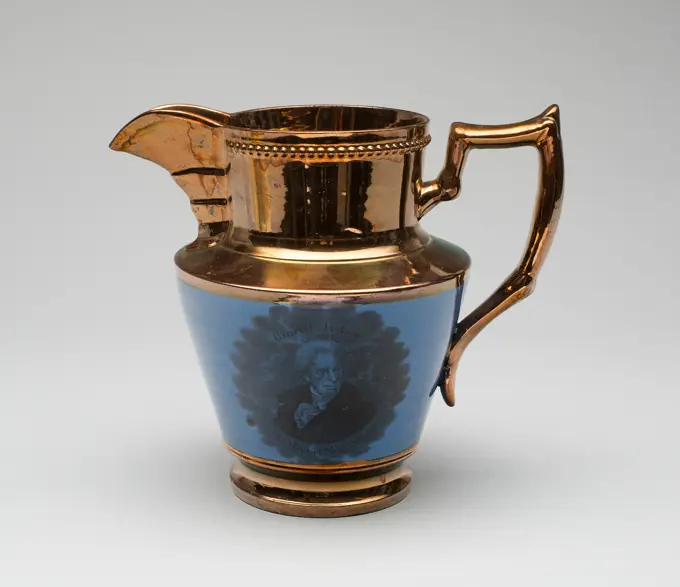
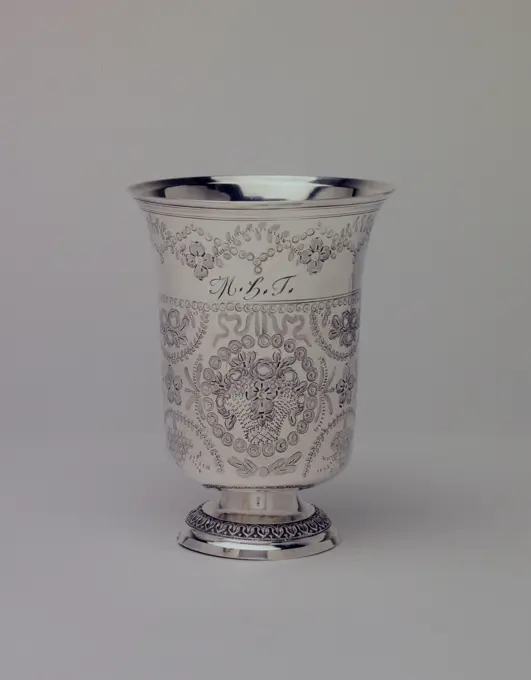
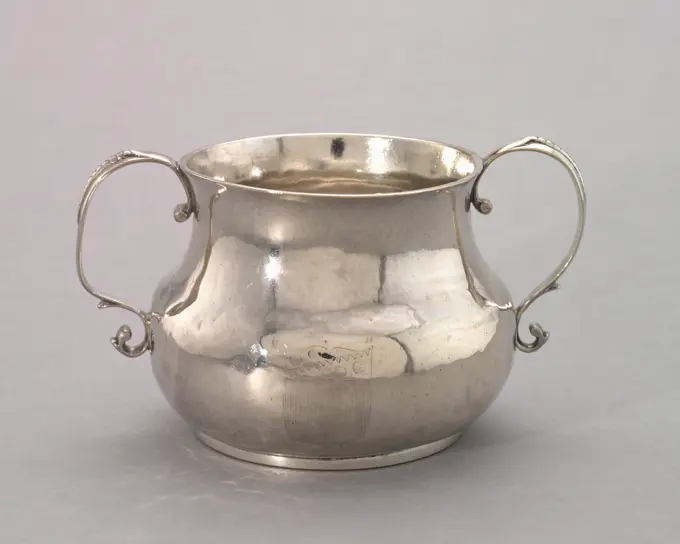
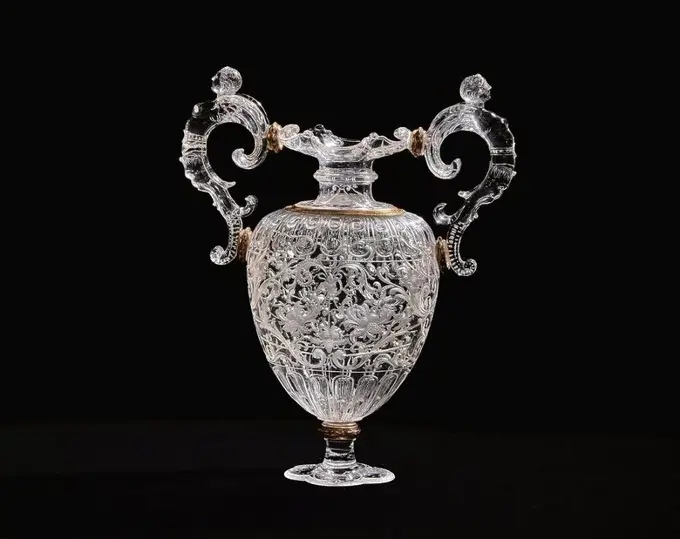
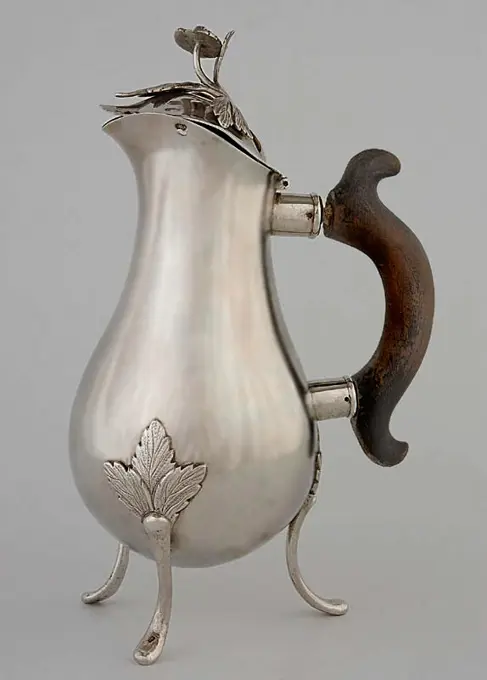
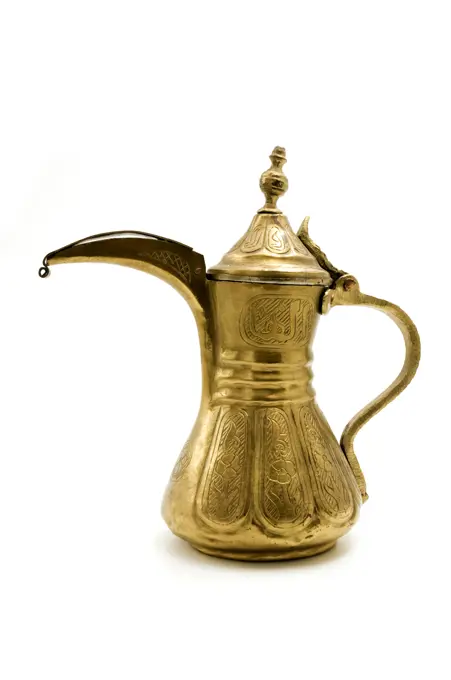
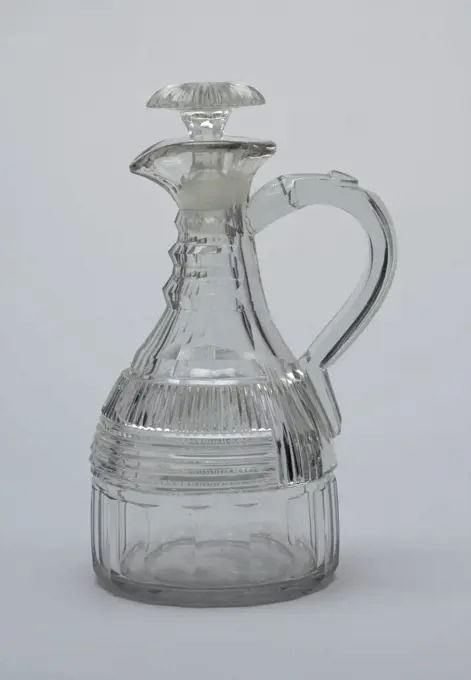
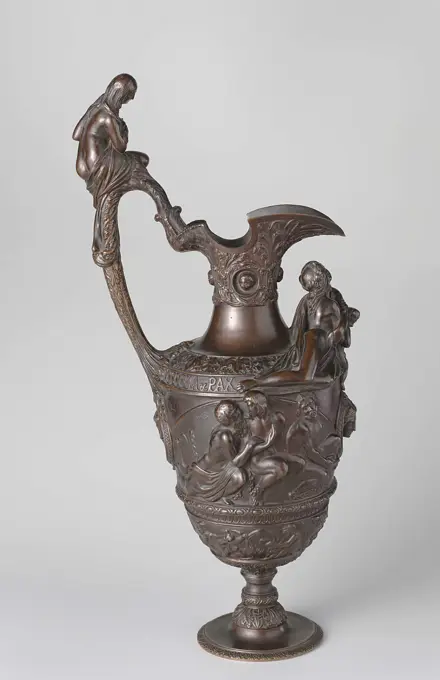
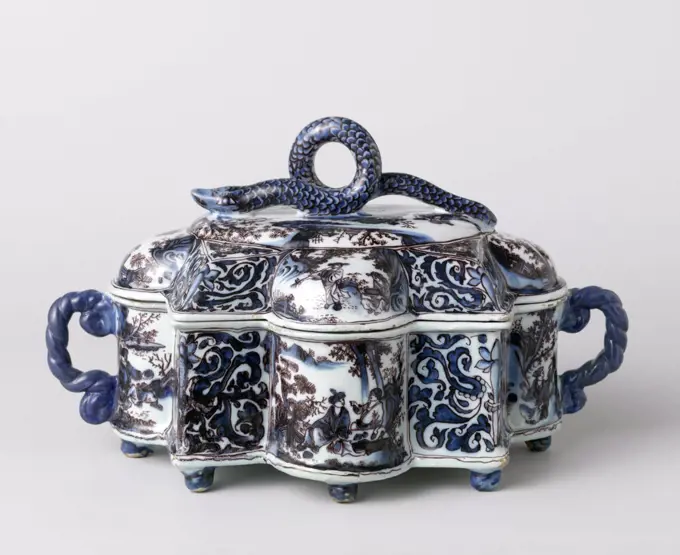
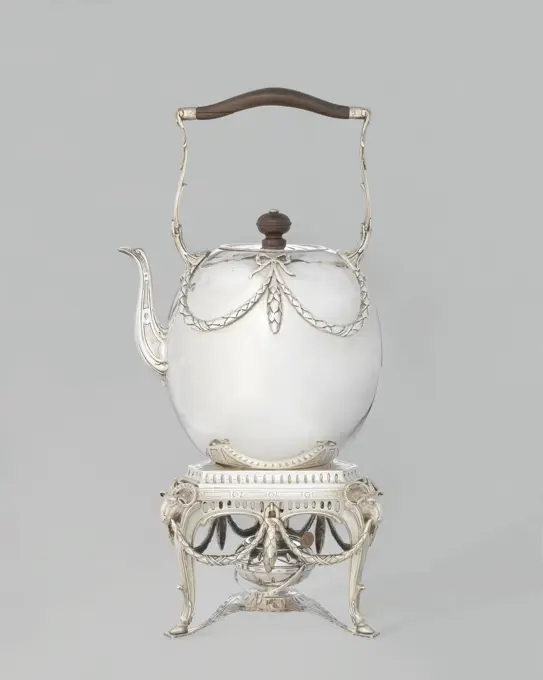
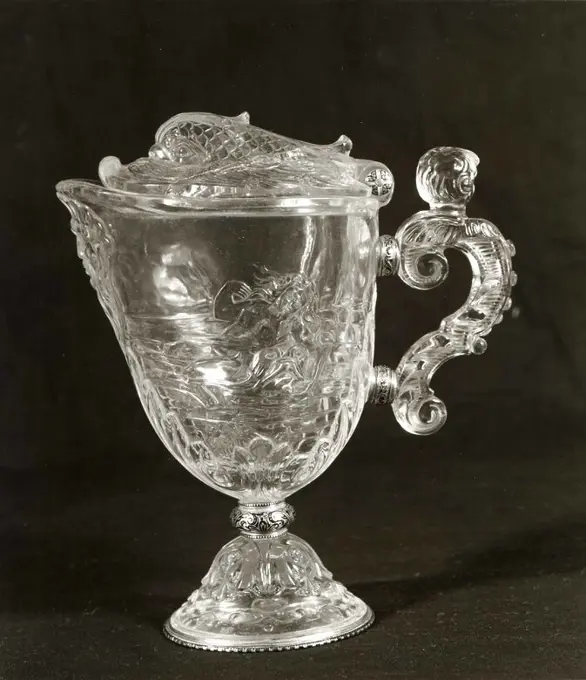
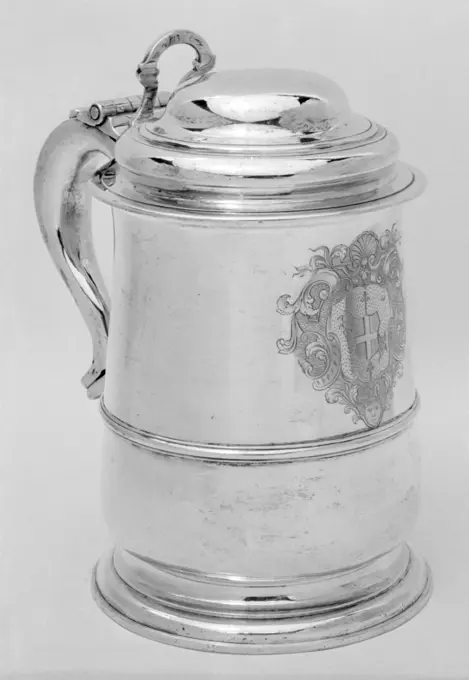
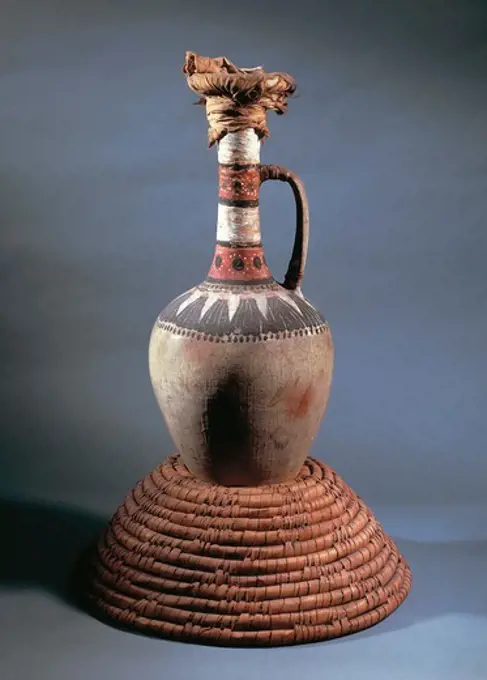
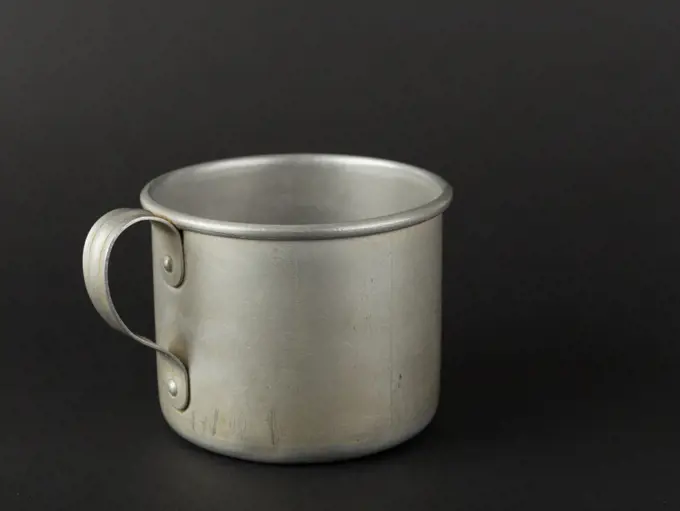
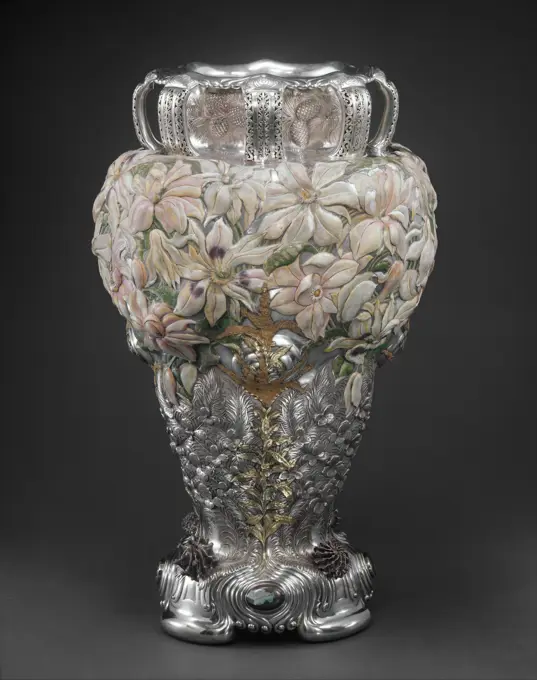
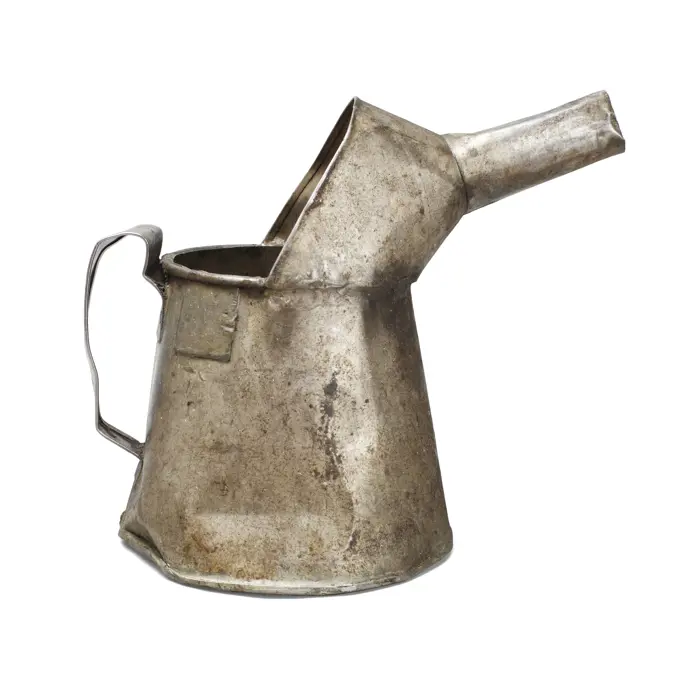
Tankard (schnelle) with the coat of arms of Denmark, Judith and Christ, Monogrammist LW, 1576 Jug (schnelle) of stoneware with cylindrical, tapered body and C-shaped ear. Profiles under the edge and above the foot. On the body in relief three times a printed and imposed, elongated box with the chief of Kapernaum with Christ in the middle. Below a inscription supported by two human figures with 'Evangeli VM Ioanni IIII Capitel'. On the left a performance by Judith with the severed head of Holofernes and the inscription 'IVDIT Slog De Vlofervs Kop'. Above that God the Father and under Judith the fall. On the right the crowned weapon of Denmark with the date '1576' and the brand 'L.W.'. The jug is caught in a pewter frame with lid. Siegburg. Siegburg Stoneware. Glaze. frame: tin (metal) vitrification Jug (schnelle) of stoneware with cylindrical, tapered body and C-shaped ear. Profiles under the edge and above the foot. On the body in relief three times a printed and imposed, elongated boxPitcher c 1830-1850 Staffordshire. Earthenware .AJLC Berger. "Cup". Money. 1811-1819. Museum of Fine Arts of the City of Paris, Petit Palais. 74382-28 Money, silverware, gobletTankard ca. 1690 Thomas Savage Sr.. Tankard 8222Two-Handled Cup, c. 1720. George Hanners (American, c. 1696-1740). Silver; with handle: 10 x 17.4 cm (3 15/16 x 6 7/8 in.).Pitcher 1820-40 American. Pitcher 5686CoffeepotBeer mug (stein) with cover. Ditloff, Nathaniel (fl. 1690-1696), goldsmithWorkshop of the Miseroni () / 'Rock crystal vase with handles in the form of fantastical creatures'. 1590 - 1610. Rock crystal / Hyaline quartz, Enamel, Gold. Museum: Museo del Prado, Madrid, España. Author: TALLER DE LOS MISERONI.Teapot, c. 1791-1794, Willliam Grigg, American, active 1765- died 1797, 6 7/8 x 13 x 4 1/2 in. (17.46 x 33.02 x 11.43 cm), Silver and wood, United States, 18th centurySimon Pantin, the younger, Teapot, 1730/31, silver.Two-handled cup with cover 1664-65 British, London. Two-handled cup with cover 205062Rococo coffee jug. Lekszycki, Walenty (fl. 1776-1791), goldsmithCup with cover 19th century Franchi and Son This electrotype is after a seventeenth-century original (1676), at time of reproduction in the Victoria and Albert Museum, London.. Cup with cover 185839Urquhart Bullet Teapot,  c. 1725Antique arab teapot on a white backgroundJug and stopper, Glass, Round body tapering to tall neck with evented lip and pouring spout, loop handle; band of wide flute cut around bottom of sides, above, a row of horizontal and vertical narrow fluting, wide flutings continue up to lip through 3 neck rings; handle cut with notches and thumb piece, mushroom shaped stopper with radial flutes cut on top, facets on stem., Ireland, ca. 1820, glasswares, Decorative Arts, Jug and stopperPot (2 of 2), 1817-18. England, 19th century. Cut glass;Ewer (Aiguière de l'Espérance, de la Patience, de la Paix et de la Justice). Can on flat round foot with short baluster-shaped nodus and ovoid body, beak-shaped spout and high bent ear. In Bas-Relief, the Old Testament History of Joseph can be seen in Bas-Relief: On one side Josef in prison with the Hofschenker and the Broodmaster (as a sentence of the patience), on the downside Jozef as a dream embellishment of the pharaoh (emblem of the hope). Under the spout there are personnifications of justice and peace that embrace each other. Another half-naked woman rewards the ear. The can be further decorated with a Frisians of Putti (under-area of the body), acanthus leaves, maskons and a text band.The Dutch East India Company, or VOC, was a chartered company granted a monopoly by the Dutch government to carry out colonial activities in Asia. It was the first multinational corporation in the world and the first company to issue stock. It was also arguably the world's first megacorporation, possessing quasi-governmental powers, including the ability to wage war, imprison and execute convicts, negotiate treaties, coin money and establish colonies. The VOC was set up in 1602 to gain a foothold in the East Indies (Indonesia) for the Dutch in the lucrative spice trade, which until that point was dominated by the Portuguese. Between 1602 and 1796, the VOC sent almost a million Europeans to work in the Asia trade on 4,785 ships, and netted more than 2.5 million tons of Asian trade goods.Dragonfly; Zimmerman, A. & J. (Birmingham; company z 1905/06 (1905-00-00-1906-00-00);Water kettle on burner, Martinus Logerath, 1772 Bouilloire with silver bowl. The spherical vessel with short, curved spout is decorated with appliqued leaf guirandes. The grain is triangular and decorated with rams heads and garlands. Amsterdam silver (metal). purpleheart (wood) Bouilloire with silver bowl. The spherical vessel with short, curved spout is decorated with appliqued leaf guirandes. The grain is triangular and decorated with rams heads and garlands. Amsterdam silver (metal). purpleheart (wood)Tankard (schnelle) with Judith, Esther and Lucretia, anonymous, 1566 Jug (schnelle) of stoneware with cylindrical, tapered body and C-shaped ear. Profiles under the edge and above the foot. Covered with a brown Engobe. On the wall three times an elongated, printed and imposed course containing Judith, Esther or Lucretia. They are in an arc with the inscriptions 'IVDIT', 'Esther.hat Fictoria', 'Lvcrecia' and the date '1566' on a banderol. Cologne. Cologne stoneware. glaze. engobe vitrification Jug (schnelle) of stoneware with cylindrical, tapered body and C-shaped ear. Profiles under the edge and above the foot. Covered with a brown Engobe. On the wall three times an elongated, printed and imposed course containing Judith, Esther or Lucretia. They are in an arc with the inscriptions 'IVDIT', 'Esther.hat Fictoria', 'Lvcrecia' and the date '1566' on a banderol. Cologne. Cologne stoneware. glaze. engobe vitrificationEwer: Neptune and Amphitrite. Culture: probably German (Aachen) or French (Paris). Dimensions: H. 18 cm, w. 16.5 cm, w. of foot 7.4 cm.. Date: ca. 1859-1907. Museum: Metropolitan Museum of Art, New York, USA.Peter Guille, Ltd., New York, Jug and Cover, 1951/52, silver.Flagon (one of a pair). Culture: British, London. Dimensions: Overall (confirmed): 12 3/8 x 6 1/2 x 4 3/4 in., 36 oz. (31.4 x 16.5 x 12.1 cm, 1.12kg). Date: 1597-98.The decoration on these ewers, which shows dolphins frolicking in the waves, was done by a great master who was at ease with his tools, capable of improvising and animating his subject. Used for wine, the ewers are believed to have been part of the famous Paston Treasure, a collection of exotica recorded in a still life in the 1660s. Museum: Metropolitan Museum of Art, New York, USA.John Swift, Teapot, 1735/36, silver and wood.Pitcher 1850-70 American. Pitcher. American. 1850-70. Pressed glass. Made in United StatesTankard engraved with scenes of the Great Plague and the Great Fire of London 1675/76 I N British The scenes engraved on these tankards depict the traumatic events of the Fire of London (1666) and the Great Plague (1665). The tankards were commissioned as gifts to the friends of Sir Edmund Berry Godfrey, who was granted a knighthood in recognition of his services to the city. He was later murdered, perhaps by parties wishing to overthrow Charles II and re-establish Catholic rule.. Tankard engraved with scenes of the Great Plague and the Great Fire of London. British, London. 1675/76. Silver. Metalwork-SilverElongated amphora shaped vase in pastel shades 1880s Minton(s) Minton was the most important ceramics factory during the Victorian period and began exhibiting products at the first Great Exhibition of 1851. Founded in 1793 by Thomas Minton at Stoke-on-Trent, the firm initially specialized in transferware pottery before expanding under the ownership of Thomass son Herbert Minton, beginning in 1836. Under the ownership of Colin Minton Campbell, who succeeded his uncle in 1858, the factory became recognized as a specialist producer of Aesthetics movement porcelain, which were inspired by a rich array of exotic and eclectic decorative motifs.. Elongated amphora shaped vase in pastel shades. British, Stoke-on-Trent, Staffordshire. 1880s. Porcelain, decorated with pte-sur-pte technique. Ceramics-PorcelainInhaler late 18th century possibly British. Inhaler. possibly British. late 18th century. Pewter. Metalwork-PewterTwo-Handled CoveredCup.   Maker: Edward Winslow, American, 1669-1753Cannister, 1715. Johann Melchoir Warner (German). Pewter; overall: 33 cm (13 in.).Vijzel met Opschrift: jhesus.maria.anno.domini.m.cccc.xxxvii, Albert Hachmann (attributed to), 1537 The cast octagonal auger extends upwards, has a high protruding profiled edge and a flared profiled foot. On the edge, which has a pearl edge at the top and at the bottom of a wounded cord edge, the inscription 'jhesus.Maria.anno.domini.M.Ccc.xxxvii.' With punctures consisting of six -leaf rosettes (six times) and a six -point star. Around the center of the wall a profiled rib decorated with injured pearl and cord edge. At the bottom of the foot a pearl edge. The two lion heads that were not very true on a little longer have an eye to confirm the ring in the form of a three -pass. Cleves bronze (metal) casting The cast octagonal auger extends upwards, has a high protruding profiled edge and a flared profiled foot. On the edge, which has a pearl edge at the top and at the bottom of a wounded cord edge, the inscription 'jhesus.Maria.anno.domini.M.Ccc.xxxvii.' With punctures consisting of sWaza for soup with cover Classicist; Stanecki, Szymon (1746-1813); 1788 (1788-00-00-1788-00-00);Coffeepot 19th century, after 1730-40 original After an original by Johann Ludwig Biller This electrotype is after an eighteenth-century original (1730-40) at the Winter Palace, St. Petersburg, at the time of reproduction. It belongs to a toilet service made for and presented to the Empress Anna Ivanovna.. Coffeepot. British, Birmingham, after German, Augsburg original. 19th century, after 1730-40 original. Gold on base metal. Metalwork-ElectrotypeDouble cup (Doppelscheuer). Culture: Façon de venise, Germany or Silesia (possibly Petersdorf). Dimensions: H. 15.5 cm; h. without cover 11.6 cm; diam. of cup 8.1 cm; diam. of cover 6.7 cm. Date: late 19th century. Museum: Metropolitan Museum of Art, New York, USA.Teapot 1800-1850 Possibly Eben Smith. Teapot. 1800-1850. PewterSilversmith: Johannes Verlooven, Silver pipe bowl, stainless steel pipe cookware silver wood, sawn cast Round chafing dish with progressive grooves pivoting upper edge three volute shaped legs resting on wooden ball knob baluster shaped wooden handle bottom underside (smashed) smoking lightingBANDEJA Y JARRA DE PLATA DORADA - SIGLO XIX. Location: PRIVATE COLLECTION. MADRID. SPAIN.. A large (A) and two small (B and C) oval terrines in Louis XVI style decorated with driven cannelures, garlands wrapped with ribbons, appliqued festans and pearl edges. Each terrine has a lid with button and stands on four legs. All terrines labeled under soil: Middelburg; annual letter K - 1773; Mt. P above prie = philippus prié; Crowned o = release sign; Bijl = tax fee. Terrine BK-1995-14-C is engraved by N: 2 on the inside. NOTE: All Terrines have an inner binTankard 1735-36 Edward Pocock. Tankard 197392Covered Butter Dish 1870-90 Adams and Company. Covered Butter Dish. American. 1870-90. Pressed yellow glass. Made in Pittsburgh, Pennsylvania, United StatesBearded manner with pewter lid with two medallions with weapons of the city of Cologne and the Duke of Gulik, stick and mountain. Small spherical beard manner, with pewter lid. On the belly 2 large medallions with weapons of the city of Cologne and the Duke of Gulik, Kleef and Berg. On the neck a beard man, between the long beard a second bearded mask.Top view of a metallic mug and Turkish crystal glasses on a metallic circular flag with black backgroundCup with gold borders on a red ground, anonymous, c. 1800 - c. 1824 Porcelain head on spreading foot and with a high, curled ear, covered on the glaze with red and gold. The outer wall is covered with red and the foot, edge, ear and part of the inner wall with gold. On the outer edge a flower vank in one of the golden tires. Empire. France porcelain. glaze. gold (metal) painting / gilding / vitrification Porcelain head on spreading foot and with a high, curled ear, covered on the glaze with red and gold. The outer wall is covered with red and the foot, edge, ear and part of the inner wall with gold. On the outer edge a flower vank in one of the golden tires. Empire. France porcelain. glaze. gold (metal) painting / gilding / vitrificationPitcher withcover.   Maker: Eoff and Phyfe, American, active ca. 1844-49Teapot mid-18th century I.M.P.. Teapot 201912Unknown, Pitcher, c. 1830-c. 1860, light yellow-green glass.Jug. Bohemia was home to various centres that produced rock-crystal objects after Italian models. They are characterized by the thickness of the material, and their surface decoration. For instance, the foliate scroll on this jug is bolder and livelier than that found on Italian examples.Dinner set soup tureenwith a lid and with a base. Kaiserliche Porzellanmanufaktur in Wien (1744-1864), factoryCup and Saucer, c. 1880-1900. France, 19th century. Silver, enamel; overall: 6.5 x 8.5 x 6.5 cm (2 9/16 x 3 3/8 x 2 9/16 in.).Porringer 1760-75 Zachariah Brigden. Porringer 6665Covered Urn, c. 1800. Wedgwood Factory (British). Jasper ware with relief decoration; overall: 19.7 cm (7 3/4 in.).Water boiler, decorated with knots and leaf motifs, Christiaan Warenberg (attributed to), c. 1700 - c. 1710 Silver water boiler, wide from below, decorated with cracks and leaf motifs, spout with bird head, originally two curved uprights for handle, loose lid with button. Amsterdam silver (metal) Silver water boiler, wide from below, decorated with cracks and leaf motifs, spout with bird head, originally two curved uprights for handle, loose lid with button. Amsterdam silver (metal)Vase, part of funerary equipment of Tomb of Kha, from Deir el-Medina, EgyptOld aluminum mug on a black backgroundWooden ring of chestnut cheese decorated with griffins, porcelain factory aan den Amstel, c. 1810  Wooden ring chestnut cheese between bin and cuppa, gold painted. Netherlands wood (plant material)Beaker (Poland); parcel-gilt silverPepper Box 1720-35 Moody Russell. Pepper Box 1475Teaset.   Maker: William B. Heyer, 1776-1828Water tincture decorated with a mask women's;  XVII century (1601-00-00-1700-00-00);Series (ornament), women's mask, volutes (ornament), purchase (provenance)Standing Cup And Cover (England); Made by Gilbert Marks (English, 1861 - 1905); silver, opal, goldWood water lining around. The object consists of two parts: the bucket (cast, turned, and insofar as it concerns the legs and handle tips, it is screwed to, the handle (cast). The round bucket, which goes upwards a little conical, stands on three legs in the form of dog cups. The wall is deposited top and bottomed by two ribs each time, the center is marked by three ribs, the middle wider of which is. Narrathen () Heads are scilated in the stake. They include the ends of the handle, which is decorated outside with a cord. The wall is torn and restored here and there. On one side, the extreme rib is missing along the edge and a piece is used.Water jug of the guild of cloth weavers from Lubin. Grünewalt, I.G. (fl. ca 1689), pewtererLluís Masriera / Servicio de plata para café o té, 1906. Colección privada. Author: LLUÍS MASRIERA I ROSÉS.Kookpot, Michiel Maenbeeck (attributed to), c. 1662 - c. 1666 Round pot on three legs and with a handle. The pot has a wide, hollow border with zig-zag lines engraved on the outside. The pot is marked: Mt. = Michiel Maanbeeck, a letter V and an ax. Amsterdam silver (metal) Round pot on three legs and with a handle. The pot has a wide, hollow border with zig-zag lines engraved on the outside. The pot is marked: Mt. = Michiel Maanbeeck, a letter V and an ax. Amsterdam silver (metal)Pepperbox.   Maker: Johannes Roseboom, active ca. 1765Sugar bowl with cover and creamerset.   Maker: Garret Forbes, American, 1785-1851Goblet, 7 3/8 x 3875 x 3 7/8in. (18.7 x 9842.5 x 9.8cm), Pewter, EnglandCaster 1720-50 British, London. Caster 195554JUEGO DE CAFE O TE DE PLATA - SIGLO XIX. Location: MUSEO DEL ROMANTICISMO-OBJETOS VARIOS. MADRID. SPAIN.Miniature ewer 1690-1710 German, probably Augsburg. Miniature ewer 202771Glass; Non -like Lona Huta; 2. W. 19th century (1825-00-00-1850-00-00);Fuglewicz, Joanna (1909-2008), Dar (provenance), monograms, landscapesPaper Weight. Dated: c. 1936. Dimensions: overall: 30.5 x 22.8 cm (12 x 9 in.). Medium: watercolor, goauche, and graphite on paper. Museum: National Gallery of Art, Washington DC. Author: Robert Stewart.Daniel van Voorhis, Creampot, c. 1790, silver.Beaker ca. 1805 Benjamin Halsted. Beaker 19091Tankard.   Maker: John Potwine, American, 1699-1792Miniature whiskey still 1685-86 Possibly George Manjoy. Miniature whiskey still. British, London. 1685-86. Silver. Metalwork-Silver-MiniatureThe Magnolia Vase ca. 1893 Manufactured by Tiffany & Co. The Magnolia Vase was the centerpiece of Tiffany & Co.s display at the 1893 Worlds Columbian Exposition in Chicago—a display Godeys Magazine described as “the greatest exhibit in point of artistic beauty and intrinsic value, that any individual firm has ever shown.” The design of the vase was a self-conscious expression of national pride. Pueblo pottery inspired the form, while Toltec motifs embellish the handles. The vegetal ornament refers to various regions of the United States: pinecones and needles symbolize the North and East; magnolias, the South and West; and cacti, the Southwest. Representing the country as a whole is the ubiquitous goldenrod, fashioned from gold mined in the United States. The exceptional craftsmanship and innovative techniques manifested in the vase—particularly the naturalism of the enameled magnolias—were much discussed in the contemporary press. Indeed, the work was heralded by the editor of the Two-handledcup.   Maker: Samuel Vernon, American, 1683-1737Shakspeare's Jug, 1844. An 'accredited relic' of Shakespeare. 'The accompanying details are from a handbill, printed by Mr, Bennett, of Tewkesbury: "This Jug is of cream-coloured earthenware, about nine inches in height, and sixteen round in the largest part, and somewhat in the shape of a modern coffee-pot. It is divided longitudinally into eight compartments, each horizontally subdivided; and within these the principal deities of the Grecian Mythology are represented in rather bold relief. Jupiter and Juno, Bacchus, Diana, Mercury, Apollo, Mars, &c.. are, all plainly distinguishableStop from carafe with stonemas, Gerard Muller (attributed to), c. 1900 - c. 1925 Sop with mushroom -shaped button, sharpened in a star. designer: Amsterdamglassblower: Europe glass glassblowing / grinding Sop with mushroom -shaped button, sharpened in a star. designer: Amsterdamglassblower: Europe glass glassblowing / grindingMug 1763-1807 Nathaniel Austin. Mug. American. 1763-1807. Pewter. Made in Charlestown, Massachusetts, United StatesVase 1869 Tiffany & Co.. Vase. American. 1869. Silver, silver-gilt, and glass or stone. Made in New York, New York, United StatesBasket; Holke, Marcin (Fl. Ca 1765-Ca 1792); 1790-1795 (1790-00-00-1795-00-00);Covered sugar bowl, from a five-piece coffee and tea service, c. 1904, Paul Follot, French, 1877-1941, 5 3/16 x 6 1/16 x 3 11/16 in. (13.18 x 15.4 x 9.37 cm), Silver-plated brass, France, 19th-20th centuryKettle with lid made of yixing clay. unknown, craftsmanStew, cylindrical, with hinged door and lid with holes, anonymous, c. 1700 - c. 1799 Blik stove; cylindrical, with loose lid with holes and a copper button on it; At the front a hinged door, also with holes and a copper button. Inside a loose grid with holes on three legs. Copper handle. Amsterdam brass (alloy) Blik stove; cylindrical, with loose lid with holes and a copper button on it; At the front a hinged door, also with holes and a copper button. Inside a loose grid with holes on three legs. Copper handle. Amsterdam brass (alloy)Bowl with Beaded Rim. Culture: Byzantine. Dimensions: Overall: 2 9/16 x 5 13/16 in. (6.5 x 14.7 cm). Date: 4th-5th century.Bowls like this with beaded rims that show they were used for eating, not drinking, have been excavated throughout the Byzantine world. Museum: Metropolitan Museum of Art, New York, USA.Walter Brind, Pair of Sauce Boats, 1783/84, silver.PitcherChafing dish 1700-1701 Thomas Jenkins. Chafing dish 198840James Wintle, Tea Service (Teapot, Sugar Bowl, Cream Jug), 1812/13, silver.Denmark, Silver cups from Hoby's tombFrench illustration depicting an early electric kettle. 1906Ölkanne Old, dirty and dented metallic oil can on white Copyright: xZoonar.com/J.xSandvikx 1263443Two-handled cup, 5 x 4 1/8 x 3 1/4 in. (12.7 x 10.48 x 8.26 cm), CeramicCreamer 1870-90 Probably Challinor, Taylor and Company. Creamer. American. 1870-90. Pressed purple marble glass. Made in Tarentum, Pennsylvania, United StatesCrystal bowl with spout, from the Louvre, Charles Thurston Thompson, c. 1866 - c. 1890.