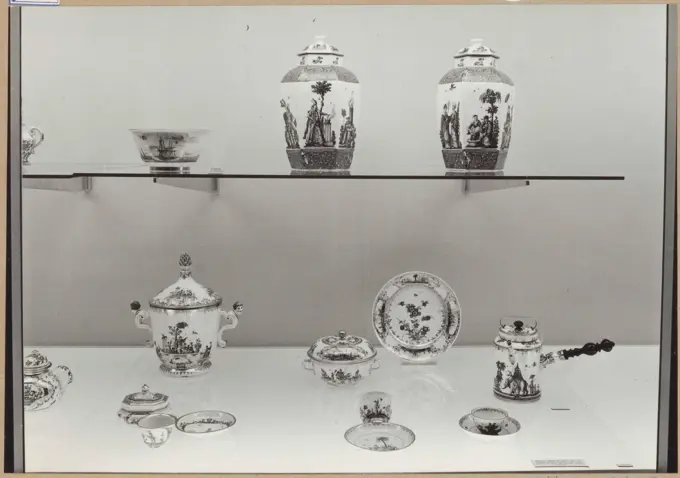
Decorative Silverware Collection

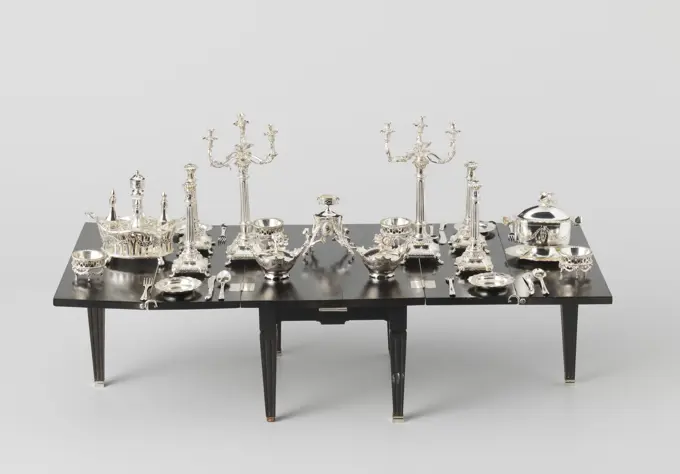
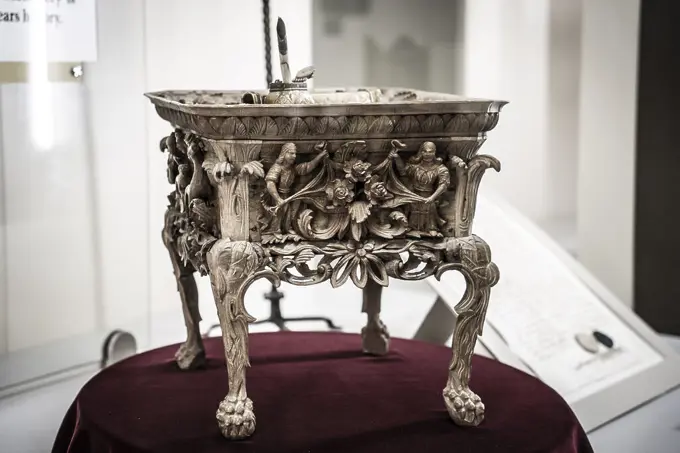
Intricately designed silverware, including a sauce bowl, candelabras, and a candlestick, highlighting craftsmanship and ornate details.
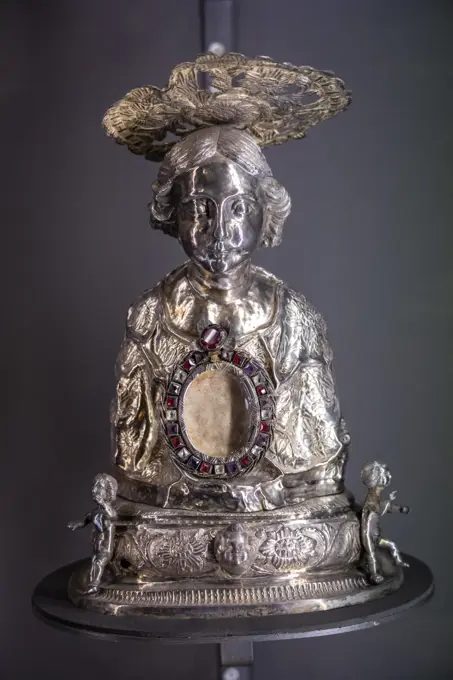
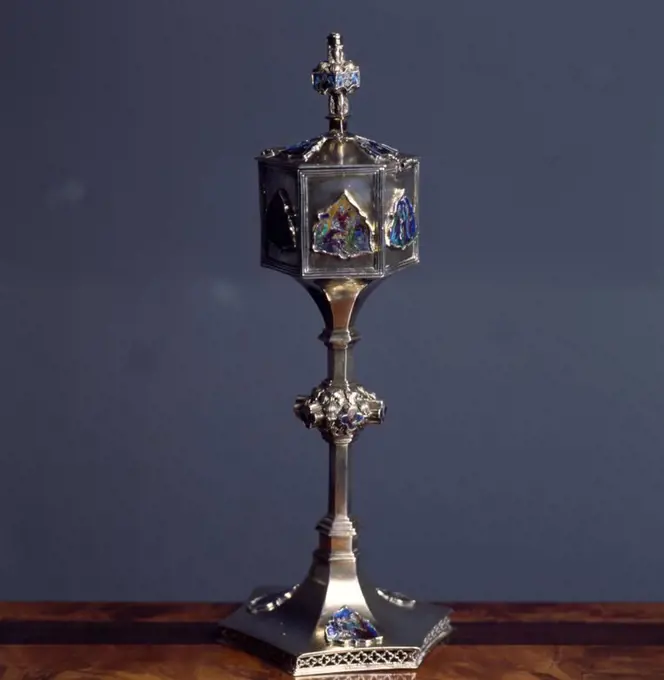
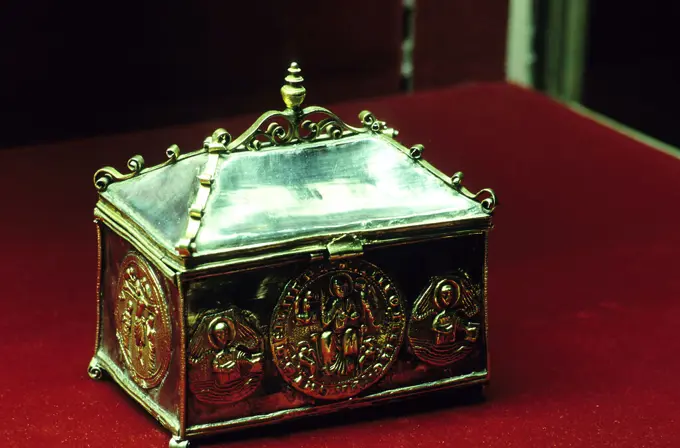
Silberner Reliquienschrein Silver reliquary, 17th century, Episcopal Palace of Girona, Girona art museum, Girona, Catalonia, Spain Copyright: xZoonar.com/Tolox 22282970
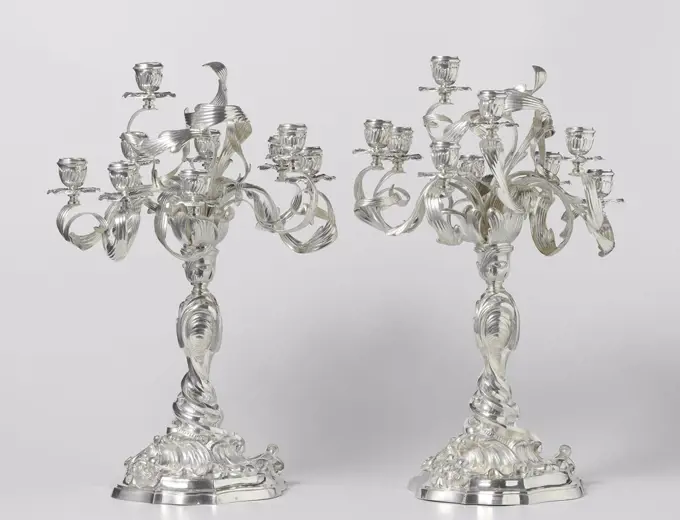
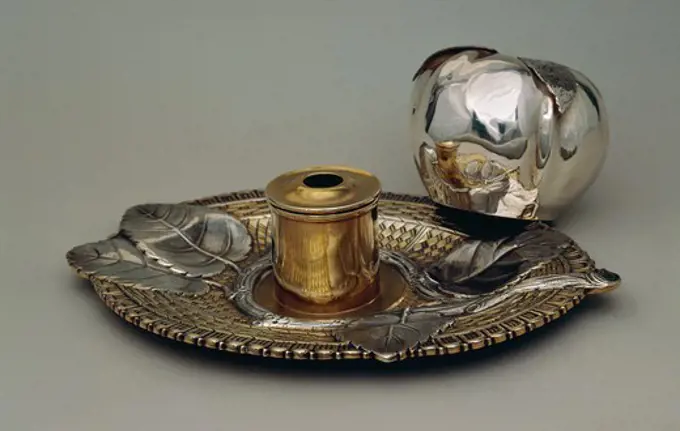
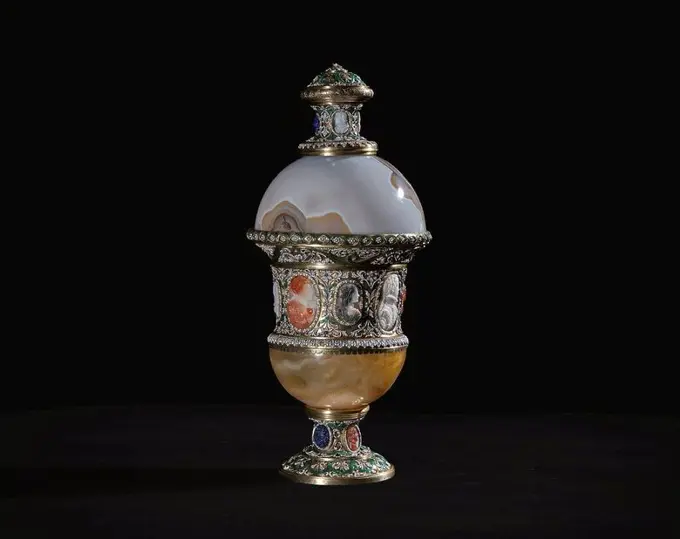
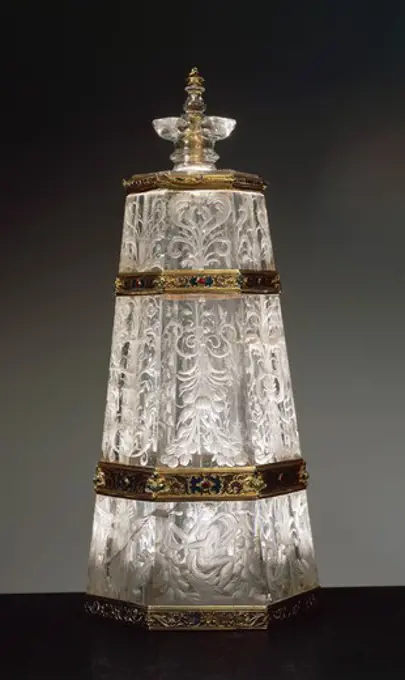
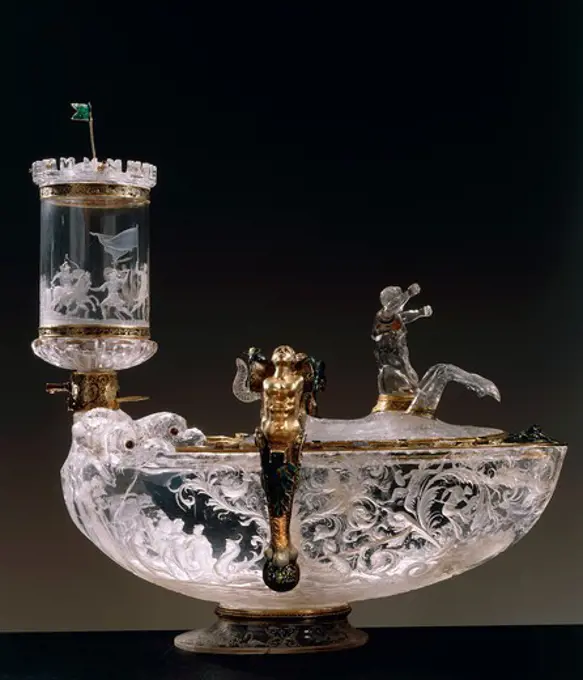
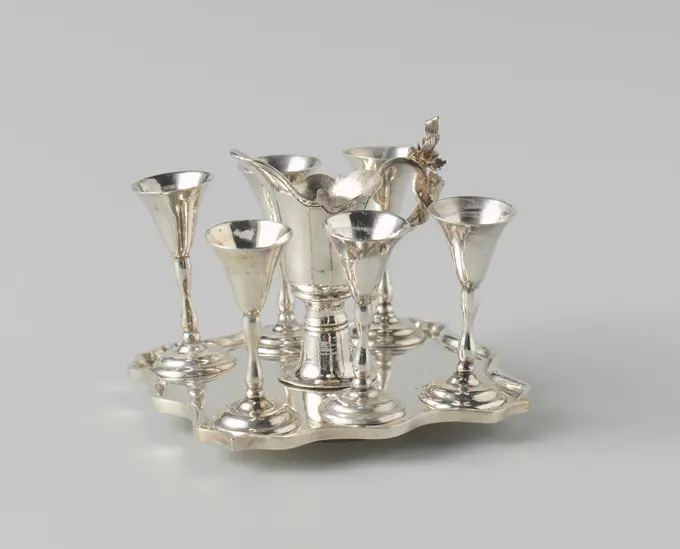
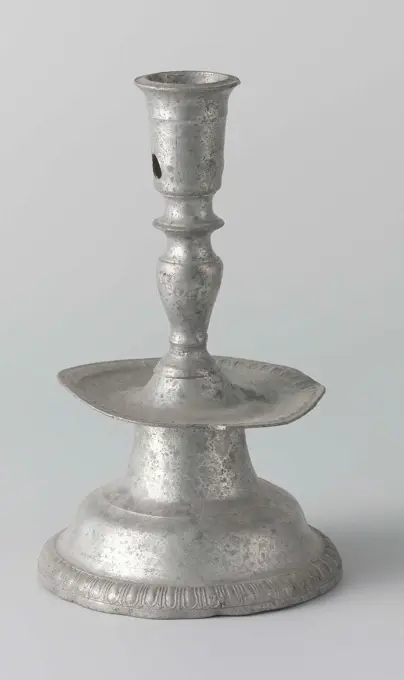
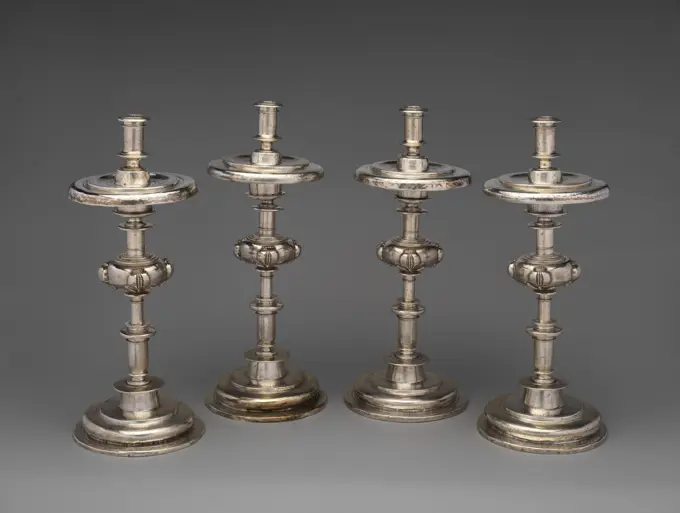
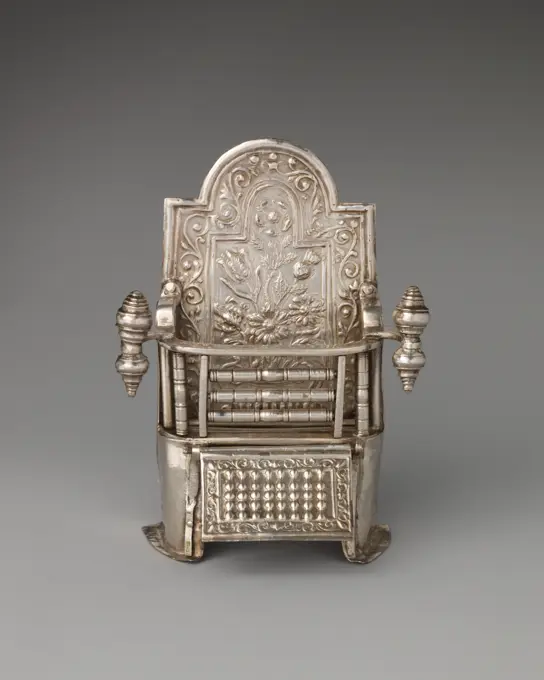
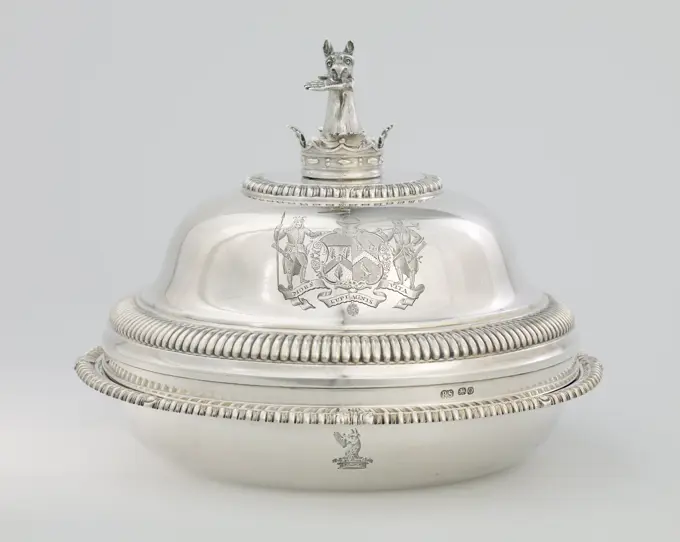
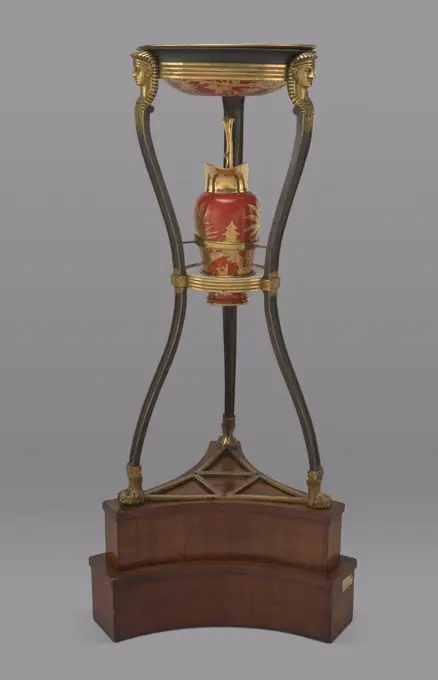
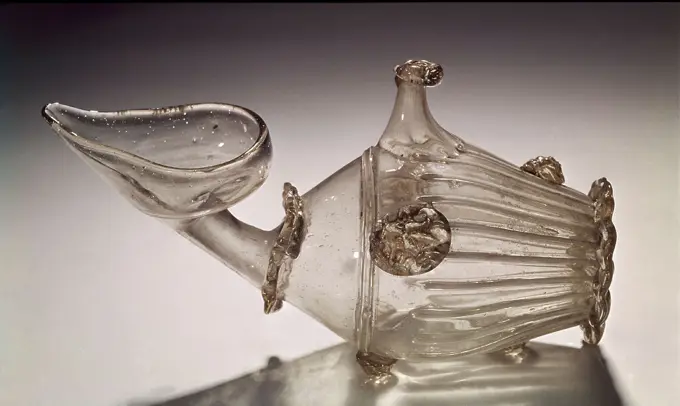
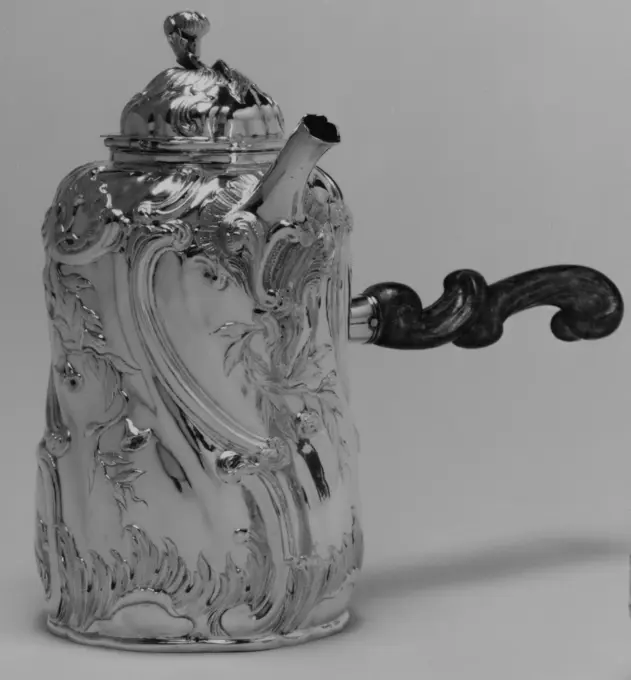
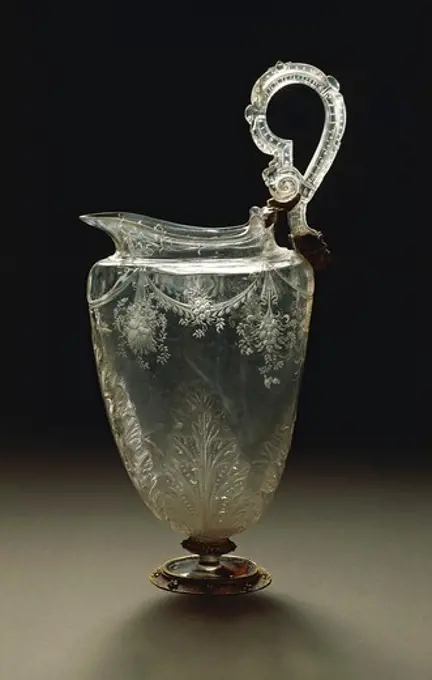
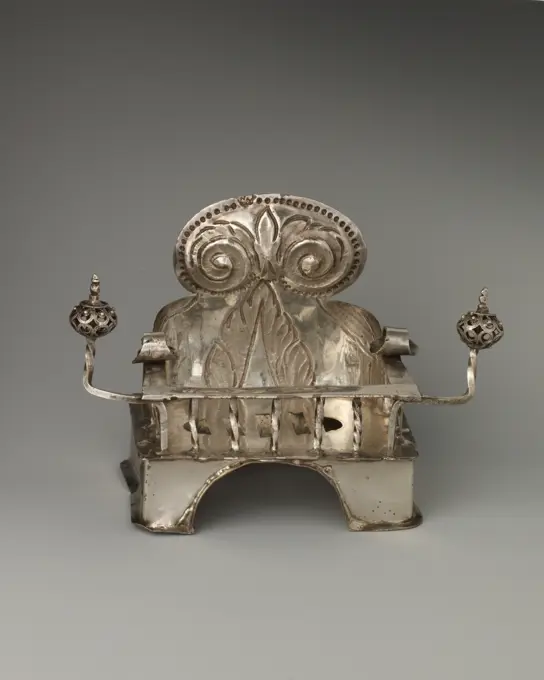
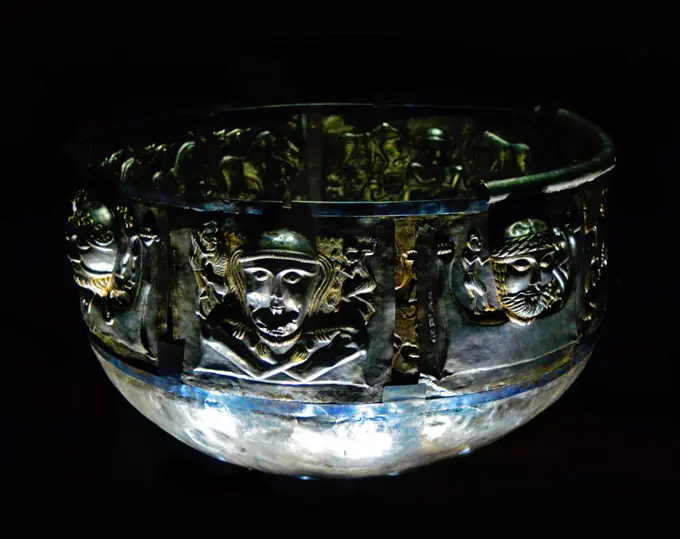
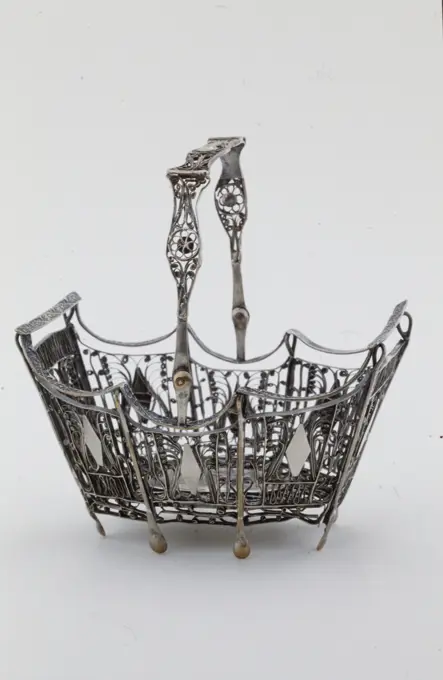
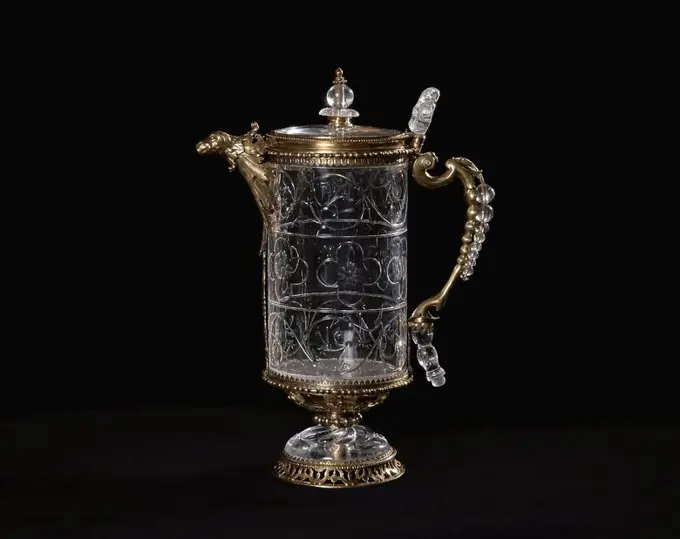
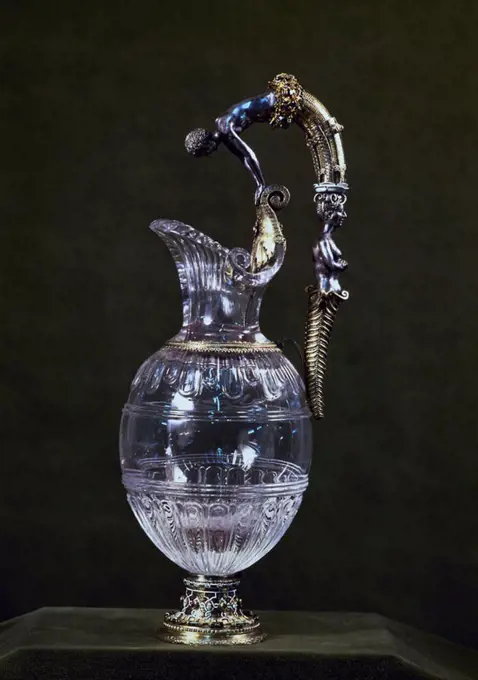
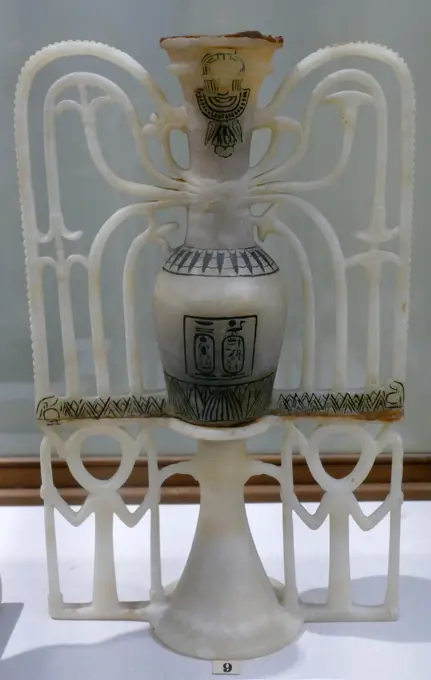
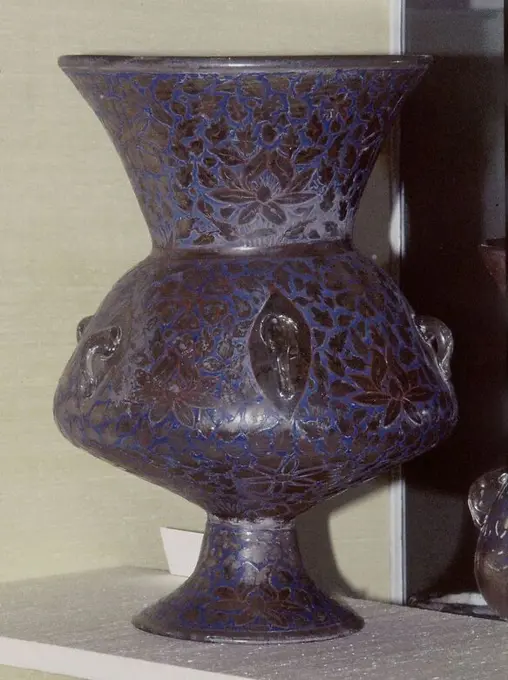
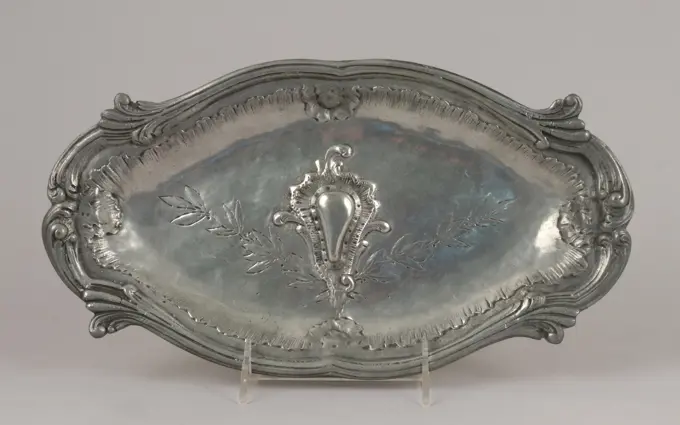
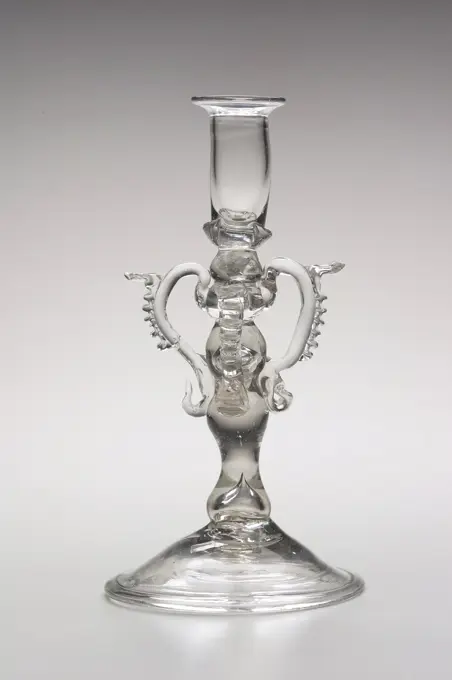
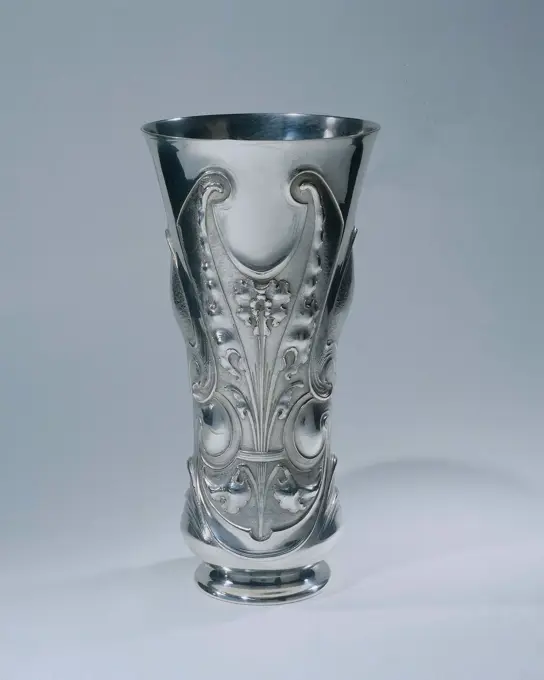
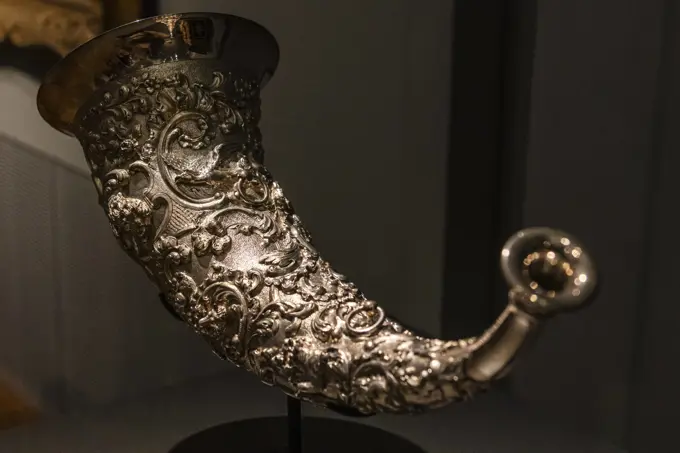
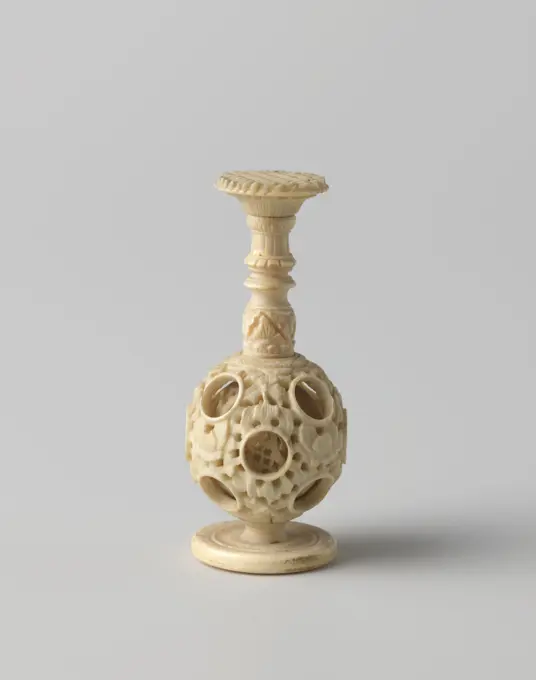
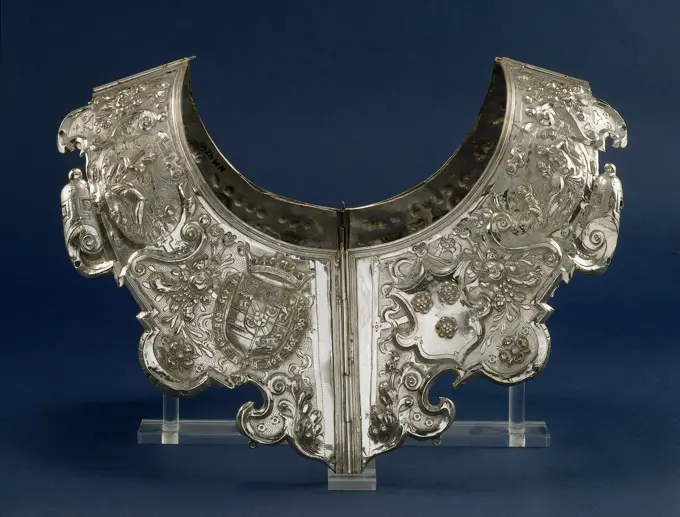
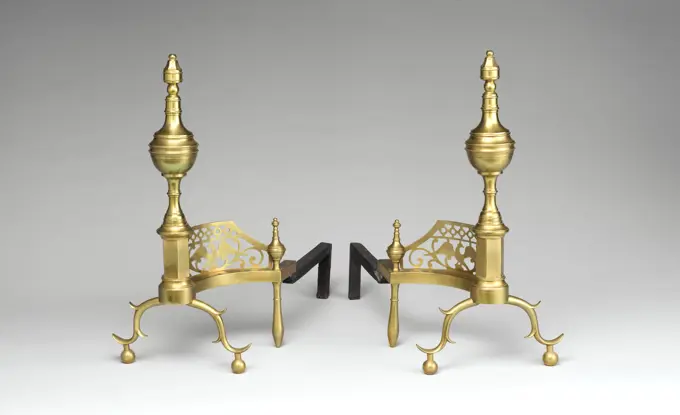
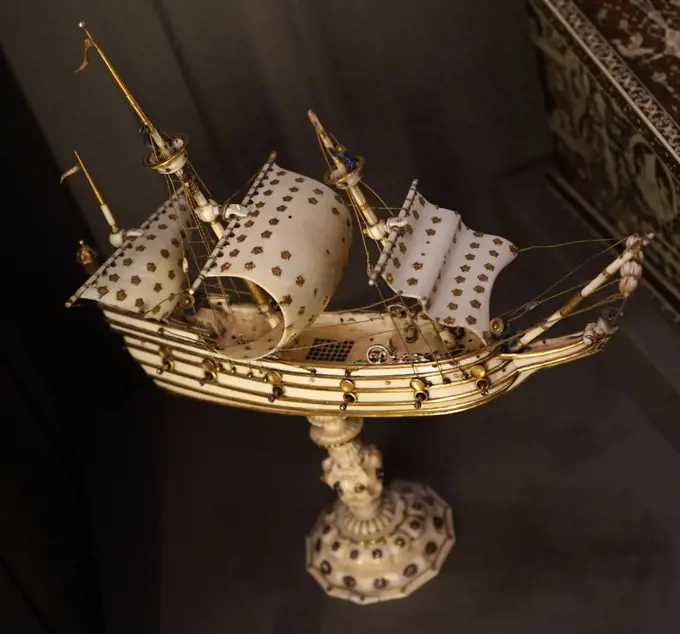
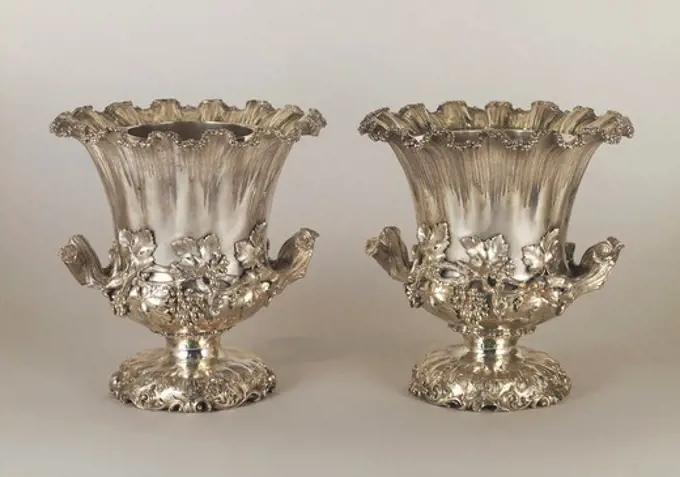
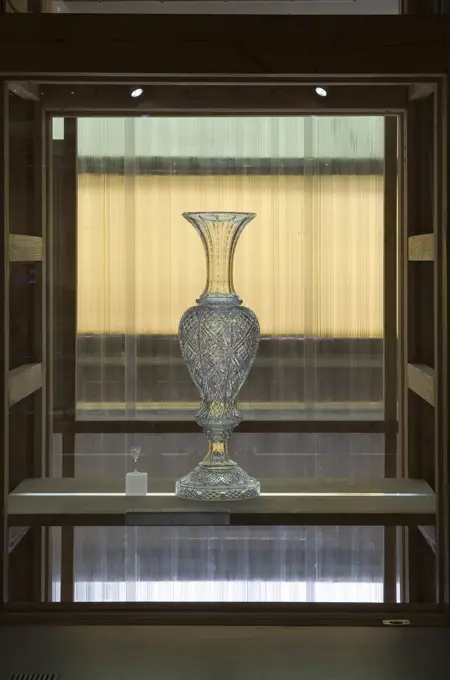
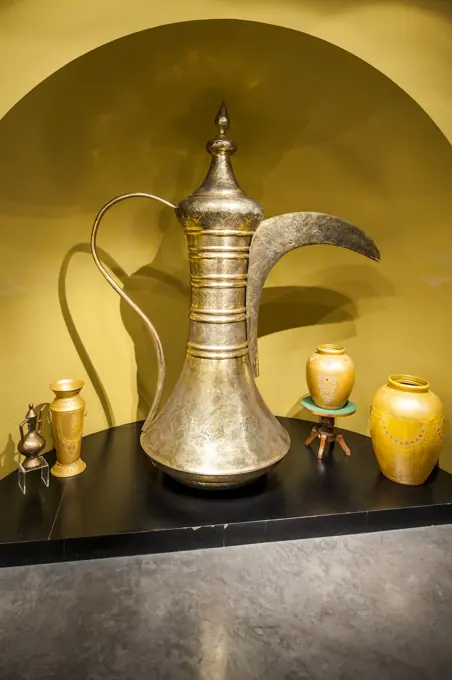
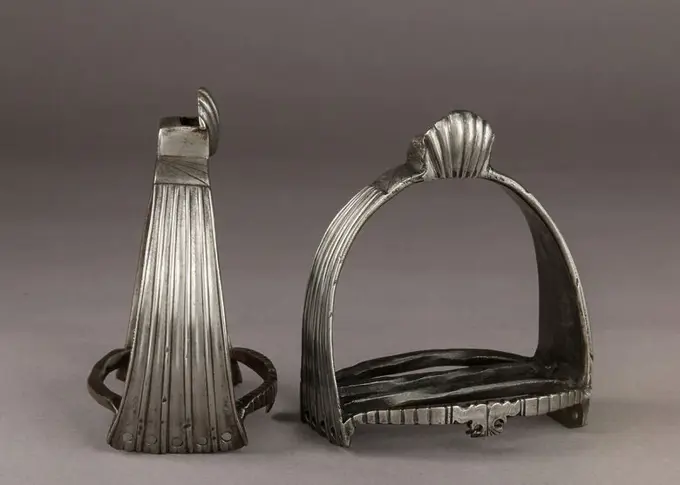
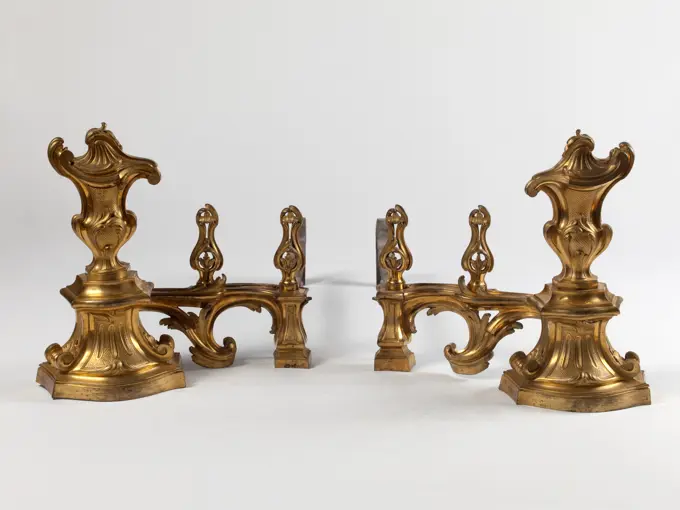
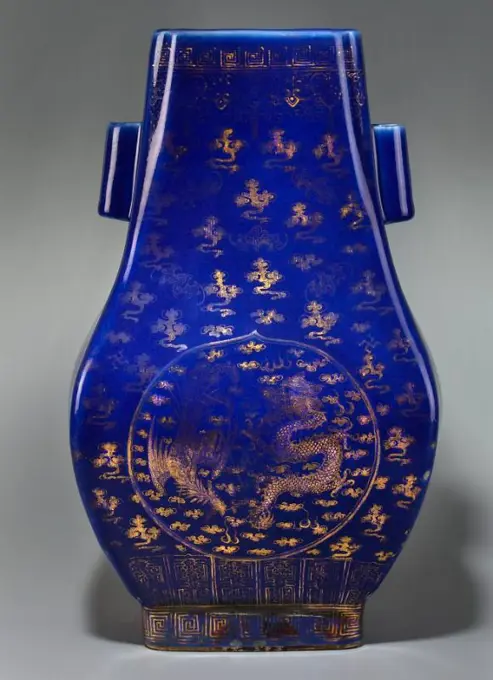
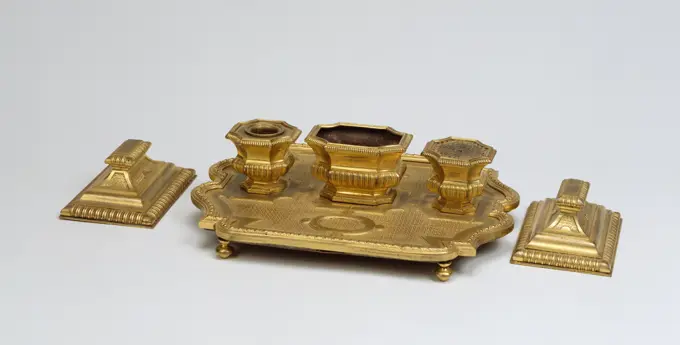
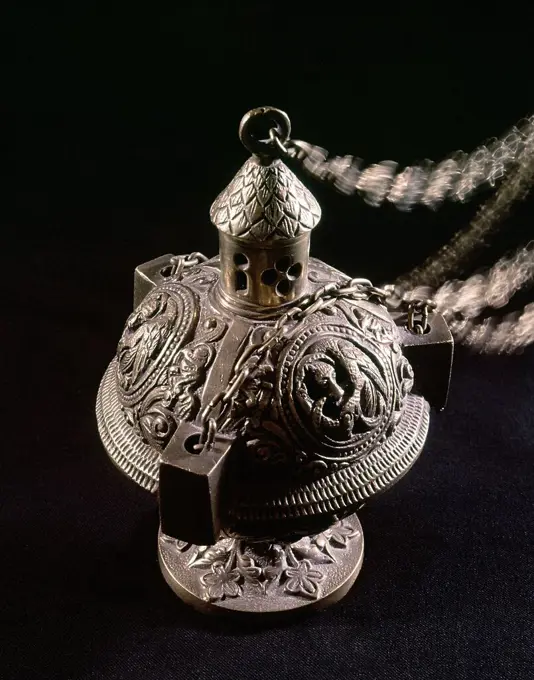
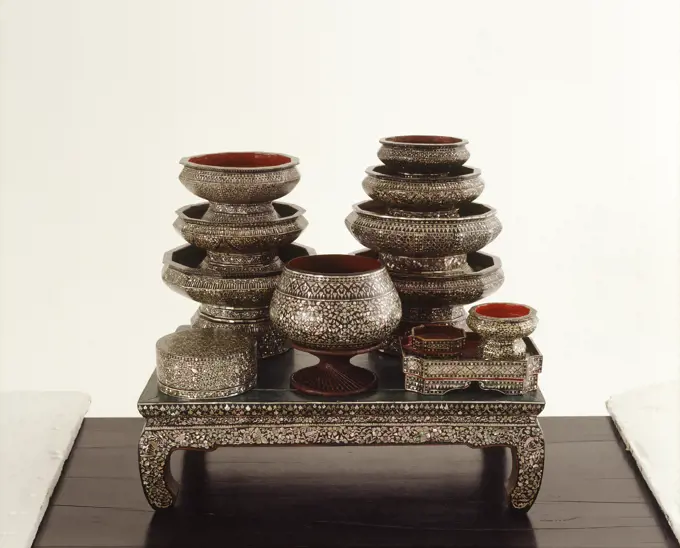
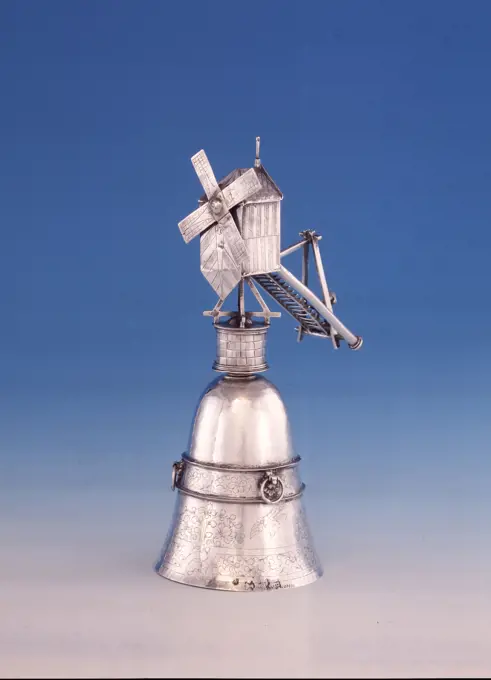
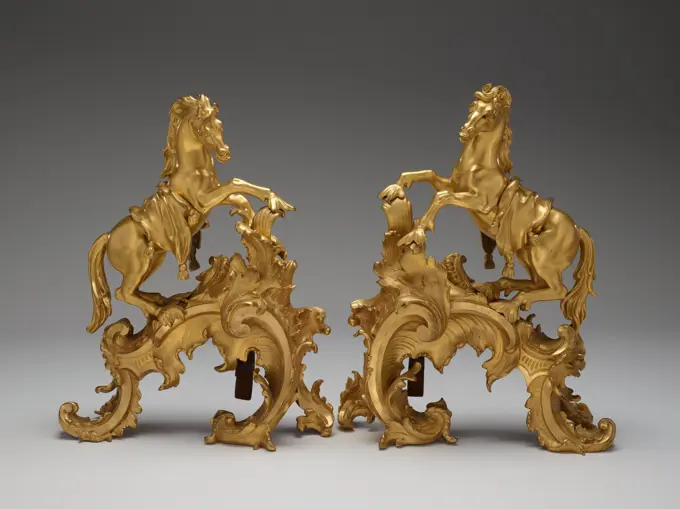
Sauce bowl with children's figures on the short side, the arms of which form handles, Robert Joseph Auguste, c. 1768 - c. 1769 Silver sauce bowl, on four feet. Children's figures have been installed on the center of the long side, the arms of which form a handle. Under the De Schenzuiten, the coat of arms of Count Ivan Grigorjevich Tsjernichov is engraved. Paris silver (metal) Silver sauce bowl, on four feet. Children's figures have been installed on the center of the long side, the arms of which form a handle. Under the De Schenzuiten, the coat of arms of Count Ivan Grigorjevich Tsjernichov is engraved. Paris silver (metal)Two candelabra, Koninklijke Utrechtsche Fabriek van Zilverwerken van C.J. Begeer, M.J. Lens, 1888 - 1890Near East. Islam. Iran. Candlestick. Bronze; casting, forging, engraving. First half of the 17th century. The State Hermitage Museum. Saint Petersburg. Russia.Candlestick; Silver Products Factory K.F. Malcza (Warsaw; Sreber label; 1828-1864), Malcz, Karol (1797-1867); 1852 (1859-00-00-1859-00-00);Silversmith's Art, Great Britain 19th century. Silver inkpot in the form of an apple. Open.Double-handled vase, Glazed earthenware, Thrown, thin-walled body of attenuated ovoid form with double neck rising from shoulder; double mouth with ruffled and crumpled edges; two applied double-loop handles on left and right; low, spreading circular foot; the whole covered in dark blue glaze, portions mottled in shades of purple and green silver metallic blotches in slight relief., Biloxi, Mississippi, USA, ca. 1893-1909, ceramics, Decorative Arts, Double-handled vaseHanukkah lamp 1845 Austrian, Vienna. Hanukkah lamp. Austrian, Vienna. 1845. Silver. Metalwork-SilverSilberner Reliquienschrein Silver reliquary, 17th century, Episcopal Palace of Girona, Girona art museum, Girona, Catalonia, Spain Copyright: xZoonar.com/Tolox 22282970Pierre Ladoireau / 'Agate vessel with three bands of cameos'. 1687 - 1689. Agate, Chalcedony, Cowry, Enamel, Lapis lazuli, Gold, Silver-gilt. Museum: Museo del Prado, Madrid, España.Jarra neoclásica del siglo XVIII. Iglesia Prioral de Reus.Spherical bully; Malcz, Karol (1797-1867); 1940s (1840-00-00-1849-00-00);Goldsmith's art, Italy, 16th century. Hexagonal rock crystal flask with enamelled gold and gilded silver bands. Height cm. 26.3Goldsmith's art, Italy, 16th century. Rock crystal and enamelled gold table fountain, set with cameos, emeralds, rubies, gilded bronze, 38.5 x40x33 cm. Saracchi Workshop manufacture.Tray. Square tray with swiveling, raised edge. The tray stands on a stand ring. The tray has been marked: STK. = Amsterdam, JRL. = S (1752) and MT. = Arnoldus van Geffen. The tray stands on a folding table (BK-NM-11177-181-A), on the tray is a pouring jet (BK-NM-11177-181-B-II) and six drinking glasses (BK-NM-11177-181-B -III T / M BK-NM-11177-181-B-VIII).Arm with candle holder of candle crown of two heights with six arms each, c. 1475 - c. 1500 Candle arm belonging to a candle crown of two heights with maria figure at the top. The arm is bent twice and is decorated with two grape bunches and two vine leaves. The round fat catcher has openwork, serrated vertically placed edges at the bottom, to mask the confirmation on the arm. This is done by a round iron pin, which is screwed into the end of the arm. This is the fifth arm of the upper ring, numbered with 5 vertical notches. The fat catcher is unnumbered. Southern Netherlands brass (alloy). kaarsenpin: iron (metal) casting / forging Candle arm belonging to a candle crown of two heights with maria figure at the top. The arm is bent twice and is decorated with two grape bunches and two vine leaves. The round fat catcher has openwork, serrated vertically placed edges at the bottom, to mask the confirmation on the arm. This is done by a round iron pin, which is screwed into the end of the Merchandise.Barentsz and his crew were en route to China, and therefore brought along goods they could use to conduct trade there. They obviously expected these pewter candlesticks to be in demand in Asia.Set of four candlesticks 1662 Peruvian These candlesticks originally belonged to a set of six that illuminated an altar dedicated to Our Lady of the Pomegranate, a miracle-working sculpture venerated in the town of Llerena in southwestern Spain. The candlesticks and a matching chalice were sent from Peru by a Spanish devotee of the Virgin. Their austere purist” style, current in both Spain and Spanish America, is visually offset by prominent knops displaying pomegranates that reference the church’s titular Virgin.. Set of four candlesticks. Peruvian. 1662. Silver, chased, engraved. Metalwork-SilverPyx with enamel plates, 15th century.Miniature fireback (part of a set) late 17th-early 18th century David Clayton British. Miniature fireback (part of a set). British, London. late 17th-early 18th century. Silver. Metalwork-Silver-MiniatureSauce Boat, one of a pair, c. 1770, Philip Syng, Jr., American (born Ireland), American (born Ireland), 1703 - 1789, 4 1/2 x 8 1/2 x 4 1/4in. (11.4 x 21.6 x 10.8cm), Silver, United States, 18th centuryCovered Entrée Dish, one of a pair, 1809-1810, Paul Storr; Manufacturer: Rundell, Bridge & Rundell, English (London), English, 1771-1844, 8 1/4 x 10 1/8 x 10 1/8 in. (20.96 x 25.72 x 25.72 cm), Silver, England, George IIIAthenne -type tripod; Koenigliche Porzellan Manufaktur (KPM; Berlin; 1763-1918),  1. W. 19th century (1801-00-00-1825-00-00);Collar of brass, Anonymous, c. 1650 - c. 1700 The candlestick is cast and turned in four parts: the foot, the lower part of the trunk, the collar, the upper part of the trunk with the holder. On the round -profiled foot, the bottom of the tribal area follows with a rib top and under a convex with a profiled rib decorated baluster. The collar is provided with rings on both sides. The upper part of the trunk has the same shape as the lower one. The cylindrian profiled fat catcher has an excellent edge at the top and has two round holes in the middle of the wall. The upper part of the trunk is equipped with a pin, which is stabbed by the lower part and sounded at the bottom of the foot. A candlestick of this type is called collar or disc candlestick. Northern Netherlands (possibly) brass (alloy) casting The candlestick is cast and turned in four parts: the foot, the lower part of the trunk, the collar, the upper part of the trunk with the holder. On the round -profiled foot, the bottom ofCUÑA DE CRISTAL DECORADO-MANUFACTURA CATALANA S XVI. Location: MUSEU NACIONAL D'ART CATALUNYA. Barcelona. SPANIEN.Coffeepot ca. 1765-70 Ernst Gottlob Borns This coffeepot and its mate (1997.412.2) bear the maker's mark EGB, which recent research identifies as belonging to the goldsmith Ernst Gottlob Borns of Bautzen, a city east of Dresden in Saxony. For both pots Borns took the standard eighteenth-century waisted-barrel body form and enlivened it with a playful variety of surface modeling that emphasizes both the malleability and light-reflective qualities of the silver. The superb technique and the flamboyance of the design make these pieces exemplary documents of the distinctive Saxon interpretation of German Rococo. Remarkable details are the rocailles of flamelike appearance surrounding the base, thus teasingly evoking the flames of a burner, and the carved wooden handles echoing the embossed elongated C-scrolls of the silver bodies. Also characteristic is the tension between polished plain surface areas and articulating rocaille and floral relief elements. This style was developed and dominaGirandoles. William F. Shaw; American, 1820-1900. Date: 1849. Dimensions: Center: 42.2 × 36.8 cm (16 5/8 × 14 1/2 in.); side pieces: 35.9 × 15.9 cm (14 1/8 × 6 1/4 in.). Gilt brass, glass, and marble. Origin: United States. Museum: The Chicago Art Institute, Chicago, USA.Silversmith's art, Italy, 18th century. Cruet set on a quadrilobate silver stand. Made in Venice.MUSEO NAVETA HECHA CON UN NAUTILUS ENGARZADO. Location: CATEDRAL MUSEO DIOCESANO. Orense. SPAIN.Silversmith's Art, Belgium 19th century. Silver sauce boat with silver lining, 1820.Oil and vinegar with two bottles and a stray bus in Spitsovale holder, Fa. Diemont, 1803 The striker oval holder of the oil and vinegar set has a vaulted wall on the sides. He rests on four, rejuvenating, bent, ribbed legs. There are traffic jams above these legs and along the top of the holder. The wall is opened with a pattern of (partially damaged) lying bars between two smooth tires, above which a pattern of pointed arches. Rounded triangular ears have been saved in the short sides. In the holder there is an oval insert with a vaulted wall on the short sides. This is open with a pattern of standing bars. There are two large and four small round openings in the top. In the large openings, two equal bottles of colorless glass, intended for oil and vinegar, fits in various grinding work. The upper part of each bottle is contained in a silver frame that is decorated with a pearl edge between profile edges. At the bottom, the frame at the front and rear ends in a point, at the top frontGoldsmith's art, Italy, 16th century. Rock crystal and gilded silver pitcher. Height 32.5 cm.Two-handled porringer, London. Silver-gilt, 1669-70. A Porringer is a shallow bowlLaid table. Silver table services were an unprecedented luxury in the Netherlands during the 18th century. The design of this miniature service, complete apart from the sauce bowls, is exceptionally fashionable. The candelabra are fully Neoclassical in style, with their foliate motifs, swags and decorative friezes derived from Classical architecture. The same motifs recur on other parts of the service.Maker Unknown, Castor Set and Stand, c. 1820-40, colorless lead glass, tin, and paint.Cántaro de bautizo, siglo XVIII. Museu Català de les Arts i Tradicions Populars.Miniature fireback (part of a set) 1690-91 Probably George Manjoy British. Miniature fireback (part of a set). British, London. 1690-91. Silver. Metalwork-Silver-MiniatureVAJILLA ITALIANA (CORNETO-TARQUINA) IMITANDO LA CERAMICA GRIEGA - PRIMER CUARTO DEL SIGLO XX. Author: S SCAPPINI (S XX). Location: BANCO EXTERIOR-COLECCION. MADRID. SPAIN.The Lomellini Ewer, 1618-20. Made in ItalyThe Gundestrup cauldron is a richly decorated silver vessel; thought to date between 200 BC and 300 AD; placing it within the late La Tène period or early Roman Iron Age. The cauldron is the largest known example of European Iron Age silver work. It was found in 1891 in a peat bog near the hamlet of Gundestrup in the Aars parish of Himmerland; DenmarkBasket, 1790-1800, 4 1/2 x 6 1/2 x 4 1/4in. (11.4 x 16.5 x 10.8cm), Silver, Russia, 18th-19th centuryAnonymous; François I Roberday / 'Cylindrical crystal jar with lid'. 1600 - 1650. Rock crystal / Hyaline quartz, Silver-gilt. Museum: Museo del Prado, Madrid, España.Bord, anonymous, 1782 Round eating plate with scalloped edge. Shiringes are engraved on the edge. A flower is engraved in the middle of the plate. The board is marked: stk. = Amsterdam, JRL. = X (1782) and Mt. = Foot 430. The board is a copy from a set consisting of 36 identical plates (BK-NM-111177-189 to BK- NM-11177-224). Amsterdam silver (metal) Round eating plate with scalloped edge. Shiringes are engraved on the edge. A flower is engraved in the middle of the plate. The board is marked: stk. = Amsterdam, JRL. = X (1782) and Mt. = Foot 430. The board is a copy from a set consisting of 36 identical plates (BK-NM-111177-189 to BK- NM-11177-224). Amsterdam silver (metal)TESORO DEL DELFIN - NP O00077 - JARRO DE CRISTAL CON NARCISO Y UNA SIRENA EN EL ASA - HACIA 1555 - 41 cm - ESCUELA FRANCESA. Author: TOUTAIN RICHARD. Location: MUSEO DEL PRADO-ARTES DECORATIVAS. MADRID. SPAIN.Ornamental unguent vase made from alabaster. From the tomb of King Tutankhamen. 1323 BC. 18th dynasty, New KingdomLAMPARA DE MEZQUITA MAMELUCA-EGIPTO O SIRIA-SIGLO XIV. Location: VICTORIA AND ALBERT MUSEUM. LONDON. ENGLAND.Fruit dish (one of a pair) French late 19th century in 18th century style View more. Fruit dish (one of a pair). French. late 19th century in 18th century style. Pewter. Metalwork-PewterCandlestick, c. 1790, John Frederick Amelung; Manufacturer: New Bremen Glassmanufactory, American (born Germany), American (born Germany), 1741-1798, active in America 1785-1795, 7-3/4 x 3-15/16 x 3-15/16 in. (19.7 x 10.0 x 10.0 cm), Blown glass, United States, 18th century, Glass made at John Frederick Amelung's manufactory ranged from the more common tumblers and goblets to elaborate sugar bowls and candlesticks, of which this example is the only candlestick with handles known to exist. The whimsical bird-like terminals of the stem were formed through the skillful shaping of glass. Amelung was the first American glass manufacturer of refined tablewares and his designs were unparalleled in the United States. He became a shrewd businessman by offering his glass to American dignitaries, such as President George Washington, in the hope of gaining financial and political support for his business.Saucer. Blerzy et Sauvage (Paryż ; malarnia ; ca 1812-1830)Showcase with objects of ceramics; Halls of crafts July 1962..Stoel, anonymous, c. 1700 - c. 1799 Filigrein chair on four turned legs. The backrest of the chair is bent out. The chair is marked: Zwijnskop. The chair is part of an ameblement consisting of: 1 Table (BK-NM-11177-88), 1 Bank (BK-NM-11177-89), 2 footbanks (BK-NM-111177-90 and BK-NM- 11177-91) and 5 more seats (BK-NM-1177-92, BK-NM-11177-93, BK-NM-11177-94, BK-NM-11177-95, BK-NM-11177-96). Netherlands (possibly) silver (metal) filigree Filigrein chair on four turned legs. The backrest of the chair is bent out. The chair is marked: Zwijnskop. The chair is part of an ameblement consisting of: 1 Table (BK-NM-11177-88), 1 Bank (BK-NM-11177-89), 2 footbanks (BK-NM-111177-90 and BK-NM- 11177-91) and 5 more seats (BK-NM-1177-92, BK-NM-11177-93, BK-NM-11177-94, BK-NM-11177-95, BK-NM-11177-96). Netherlands (possibly) silver (metal) filigreeTable joint whose bin is worn by two clovenied putted putti on oval pedestal. Porcelain table piece, consisting of an oval ground surface on four gold-plated claw legs. This ground surface contains two winged putti winged to each other, who carry an oval spiny tapered basket on their flattened heads. The ground surface is blue on the top, the sides are gold-plated and decorated with white ornament (rosette with an embossed one in a palm with escaped stem). The putti are from biscuit and supports hands on a wrench. To the naked body a sash, around the head a wreath. Sash, wreath and front of the arrow kokers gilt. The basket has a broken wall, is largely plated on the outside and is equipped with a large white acanthus sheet on the short sides. To the foot long spitse leaves on either side of a rosette in white relief on golden soil. Not noticed. NOTE: Basket on one side restored. Wreath at the head of one of the putti damaged.. Round eating sign with scalloped edge. Guird builds are engraved on the edge. A flower is engraved in the middle of the board. The sign has been labeled: stk. = Amsterdam, jrl. = X (1782) and mt. = Foot 430. The plate is a copy from a set consisting of 36 identical plates (BK-NM-11177-189 up to / m. NM-11177-224).. Round eating sign with scalloped edge. Guird builds are engraved on the edge. A flower is engraved in the middle of the board. The sign has been labeled: stk. = Amsterdam, jrl. = X (1782) and mt. = Foot 430. The plate is a copy from a set consisting of 36 identical plates (BK-NM-11177-189 up to / m. NM-11177-224).SPAIN - Valles Pirenaicos (district) - NAVARRA. Roncesvalles, Museo de, cofrecillo Pixis, s.XII, Camino de SantiagoFles, Hendrik Duller, 1784 Bottle belonging to an oil and vinegar (BK-NM-11177-122). The bottle is octagonal and has a long, narrow neck. The bottle has a pour and a button -shaped lid. The bottle is together with three identical bottles (BK-NM-1177-122-C, BK-NM-1177-122-E, BK-NM-1177-122-F) on a plateau (BK-NM-11177-122 -B) in a basket (BK-NM-11177-122-A). Amsterdam silver (metal) Bottle belonging to an oil and vinegar (BK-NM-11177-122). The bottle is octagonal and has a long, narrow neck. The bottle has a pour and a button -shaped lid. The bottle is together with three identical bottles (BK-NM-1177-122-C, BK-NM-1177-122-E, BK-NM-1177-122-F) on a plateau (BK-NM-11177-122 -B) in a basket (BK-NM-11177-122-A). Amsterdam silver (metal)Terrine, Hendrik Duller, 1809 Straight, oval terrine on a foot. The lid is half spherical. The two handles of the Terrine and the button of the lid each shaped by a flower vend. The edge of the lid is sold. Shiringes are engraved in the wall of the Terrine. The Terrine is marked: stk. = Amsterdam, Jrl. = B (1809), Mt. = H. Duller, The Sign & and the number 10 (re -check). The terrine is on an oval dish (BK-NM-11177-151-B). Amsterdam silver (metal) Straight, oval terrine on a foot. The lid is half spherical. The two handles of the Terrine and the button of the lid each shaped by a flower vend. The edge of the lid is sold. Shiringes are engraved in the wall of the Terrine. The Terrine is marked: stk. = Amsterdam, Jrl. = B (1809), Mt. = H. Duller, The Sign & and the number 10 (re -check). The terrine is on an oval dish (BK-NM-11177-151-B). Amsterdam silver (metal)Candlestick, Anonymous, 1782 Candlestick on square foot. The foot has beveled corners and stands on four claw legs. The trunk has the shape of a scanning column with a capital. The candlestick is marked: stk. = Amsterdam, Jrl. = X (1782) and an unknown Mastert sign. Amsterdam silver (metal) Candlestick on square foot. The foot has beveled corners and stands on four claw legs. The trunk has the shape of a scanning column with a capital. The candlestick is marked: stk. = Amsterdam, Jrl. = X (1782) and an unknown Mastert sign. Amsterdam silver (metal)Candlestick, Anonymous, 1782 Candlestick on square foot. The foot has beveled corners and stands on four claw legs. The trunk has the shape of a scanning column with a capital. The candlestick is marked: stk. = Amsterdam, Jrl. = X (1782) and an unknown Mastert sign. The foot and trunk are the same as those of the candlesticks with invnrs. BK-NM-11177-183 and BK-NM-11177-184. . Amsterdam silver (metal) Candlestick on square foot. The foot has beveled corners and stands on four claw legs. The trunk has the shape of a scanning column with a capital. The candlestick is marked: stk. = Amsterdam, Jrl. = X (1782) and an unknown Mastert sign. The foot and trunk are the same as those of the candlesticks with invnrs. BK-NM-11177-183 and BK-NM-11177-184. . Amsterdam silver (metal)Spoon with double praise, anonymous, c. 1790 - c. 1800  Netherlands silver (metal)  Netherlands silver (metal)BRASERO DE COBRE - TRIPODE CON CABEZAS DE CABALLO EN SUS EXTREMOS - 1076-1125 - ALMORAVIDE. Location: ALHAMBRA-MUSEO-METALISTERIA. GRANADA. SPAIN.Coronet” Coffee Urn No. 17088.  Designer Walter Von Nessen, American, born Germany, 1889-1943 Manufacturer: Chase Brass and Copper Company, American, founded 1876. Vase of silver, round, driven with stylized ornaments derived from nature. Brands: Level brand: 800 in rectangle; Master's sign: three stars in triangle = Wolfers Frères; Shopping trade mark: as. Bonebakker & son in rectangle; Reterper: Wild boar in triangle; Reterper: illegible.Decorative kowsz; Chlebnikow (Moscow and St. Petersburg; Wytwórnia Z Otnicz; 1840-1918); 1908-1917 (1908-00-00-1917-00-00);Partage Plus, Starorossian (style), purchase (provenance)Showcase with objects of ceramics including a timepiece worn by an elephant; Halls of crafts July 1962..Pomander. Culture: British, London. Dimensions: Height: 2 1/2 in. (6.4 cm). Maker: S. B.. Date: ca. 1580.The segments have little compartments with sliding covers to contain minuscule amounts of strongly aromatic ground spices. Museum: Metropolitan Museum of Art, New York, USA.Hunting Horn Hunting Horn, Johannes Matheus van Kenpen, 1849, Amsterdam, Netherlands Copyright: xZoonar.com/BartomeuxBalaguerxRotgerx 21697125Earthenware. Claimed by Hugh Owen to have been made at the Easton Porcelain WorksIvory cachet or decorative piece with an openwork ball, anonymous, c. 1800 - c. 1850 Vase -shaped decorative piece, perhaps intended as a cachet. On a flat base is a sphere body in the form of an openwork ball with three inner balls, decorated with branches in relief. A long, wide -spreading neck with different thickening and tifles. Sharp studs on the top, a flower in low relief on the bottom. China ivory cutting Vase -shaped decorative piece, perhaps intended as a cachet. On a flat base is a sphere body in the form of an openwork ball with three inner balls, decorated with branches in relief. A long, wide -spreading neck with different thickening and tifles. Sharp studs on the top, a flower in low relief on the bottom. China ivory cuttingBu Uarek; Silver Products Factory K.F. Malcza (Warsaw; Sreber label; 1828-1864), Malcz, Karol (1797-1867); 1852 (1852-00-00-1852-00-00);Gorget of the St Sebastian Civic Guard in Roosendaal, anonymous, 1613 - 1614 Collar of the St. Sebastian Guild in Roosendaal (Noord-Brabant). The passionate collar consists of four somewhat cartouch -shaped, hinged, wide pieces, on which the weapons of Oranje and Roosendaal, as well as two trophies of arches and arrow dockers. Between festons of flowers and fruits four oval cartouches, in which female figures, faith, hope, love and justice represent. On the inside is engraved: "Arnoldus Adriaensen Hooftma (n). Dekens Sebastiaen Melsens and Jacop Cornelissen. Jan Aertsen Ouderman, Christoffel Adriaensen Cril 1611" and: "Wakt 53 Onsen 15 and". Antwerp silver (metal)   Roosendaal Collar of the St. Sebastian Guild in Roosendaal (Noord-Brabant). The passionate collar consists of four somewhat cartouch -shaped, hinged, wide pieces, on which the weapons of Oranje and Roosendaal, as well as two trophies of arches and arrow dockers. Between festons of flowers and fruits four oval cartouches, insword gift from the city of Vitoria to General Alava, Álava Armory Museum, Vitoria, Basque Country, Spain.Jug in the shape of a war elephant, Wolff Christof Ritter, c. 1615 Table piece of gilded silver in the form of a war solifant. On the back the animal wears a round defense tower with four warriors, who also serves as a lid. On the neck of the elephant, the driver armed with spear and shield is sitting. The animal is hung with cast Renaissance ornaments of Rolwerk and Maskarons. Nuremberg silver (metal). gilding (material) casting / gilding Table piece of gilded silver in the form of a war solifant. On the back the animal wears a round defense tower with four warriors, who also serves as a lid. On the neck of the elephant, the driver armed with spear and shield is sitting. The animal is hung with cast Renaissance ornaments of Rolwerk and Maskarons. Nuremberg silver (metal). gilding (material) casting / gildingGoldsmith's art, Italy, 15th century. Mass chalice. Roman manufacture.Parts of a surtout de table. Dated 19th CenturyHead-and-dish, anonymous, 1775 Fun -shaped tea head on a dish. The dish has a raised edge, is unadorned and marked: Mt. = Foot 430. The tea cup is engraved along the top edge and is not marked. The head and saucer are kept as part of a tea set (BK-NM-11177-142). The tea set has a total of twelve cups and saucers that are the same as this specimen. Amsterdam silver (metal) Fun -shaped tea head on a dish. The dish has a raised edge, is unadorned and marked: Mt. = Foot 430. The tea cup is engraved along the top edge and is not marked. The head and saucer are kept as part of a tea set (BK-NM-11177-142). The tea set has a total of twelve cups and saucers that are the same as this specimen. Amsterdam silver (metal)Andiron 1795-1815 American. Andiron. American. 1795-1815. Brass, iron. Made in New York, New York, United States17th Century Model Ship. Dated 17th CenturySilversmith's Art, Great Britain 19th century. Pair of silver wine-coolers, George IV style.MUSEE DU CRISTAL CRISTAL VASE EXHIBITFoedraal belonging to golden cup, Anonymous, 1849 With purple leather, hooded from wood (B). The Netherlands, Amsterdam, 1849. For the cup of gold, decorated with blue and white Émail. Amsterdam wood (plant material). leather With purple leather, hooded from wood (B). The Netherlands, Amsterdam, 1849. For the cup of gold, decorated with blue and white Émail. Amsterdam wood (plant material). leatherShowcase with silver objects; Exhibition English silver 1660-1820. .Gangbank van Notenhout, Anonymous, 1700 Gang bank of nuthout resting on, extended above the session, cheeks that show acanthus vines with horns of abundance in relief. The armrest with lying leaves, relies on a women's head and ends in a volute with Acanthus leaf. The symmetrically constructed, open -worked sculpted back shows a shield with initials held by Putti in the raised middle part. Furthermore flower, leaf, fruits and animal motifs. Under the seat with a bay leaf edge a flower and fruit festival with two putti. Northern Netherlands wood (plant material). walnut (hardwood) Gang bank of nuthout resting on, extended above the session, cheeks that show acanthus vines with horns of abundance in relief. The armrest with lying leaves, relies on a women's head and ends in a volute with Acanthus leaf. The symmetrically constructed, open -worked sculpted back shows a shield with initials held by Putti in the raised middle part. Furthermore flower, leaf, fruits and animal motifs. Under thPair of Firedogs. UnknownCrystal Ball on Stand in Shape of a Wave, early 1900s. Japan, Meiji period (1868-1912). Silver, bronze, and crystal; overall: 35.6 cm (14 in.); stand: 18 x 26 x 19 cm (7 1/16 x 10 1/4 x 7 1/2 in.); diameter: 20 cm (7 7/8 in.); diameter: 4.5 cm (1 3/4 in.); diameter: 3 cm (1 3/16 in.); diameter: 1.5 cm (9/16 in.).Coffee urn at Miraj Islamic Art Centre, Dubai, United Arab Emirates.Saddle with Stirrups. Culture: German. Dimensions: Stirrup (b); H. 6 in. (15.2 cm); W. 4 3/4 in. (12.1 cm); D. 3 1/4 in. (8.3 cm); Wt. 14.1 oz. (399.7 g); stirrup (c); H. 5 3/4 in. (14.6 cm); W. 4 3/4 in. (12.1 cm); D. 3 1/2 in. (8.9 cm); Wt. 1 lb. (453.6 g). Date: 16th century. Museum: Metropolitan Museum of Art, New York, USA.A carved table made by Debar masters, eighteenth century, Rila Monastery, founded in the 10th century, Rilski River valley, Republic of Bulgaria, Europe.Bu Uarek with a church; Mayerhofer, Stephan (1772-1852); 19th century (1810-00-00-1890-00-00);Cordial glass, from a cordial set, c. 1870, 3 x 1 9/16 x 1 9/16 in. (7.62 x 3.97 x 3.97 cm), Glass, England, 19th centuryFire. Chiseled and gilded bronze in Mati and Bruni gold, 1715. Paris, Carnavalet museum. 77640-14 Accessory, bronze, bruni, cheminee, chenet, chisel, gilding, mati, gold, gold style, 18th century, fire, fireHu-type four-sided vase. unknown, craftsmanInkstand and Paperweights. UnknownINCIENSARIO.Mother of pearl ceremonial containers and trays Thailand.Silver mill beaker, millbeaker cup drinking utensils tableware holder silver, engraved cast hammered On slightly downward widening cuppa round connector above square mill house on stellage From the mill house staircase where male next to the ladder straight blow pipe second male in window on the side. At the front four bricks on the back of the dial were smashed: snake drinking Purchased with support of the Rembrandt Association and the Family Foundation Nolst Trenité.Dagger (Katar) with Sheath and Blade 18th century South Indian. Dagger (Katar) with Sheath and Blade 32952Silver teapots in metalworking shop, Fes, MoroccoVase. Jean-Désiré Ringel d'Illzach (French, 1847 - 1916)Vase with a lid. Wolff, Karol (fl. ca 1800), company owner, Bielino (manufaktura fajansu ; 1779-1800), factoryChevaux Marin' (seahorse) chenet, one of a pair, c. 1745-1750, 17 5/16 x 5 5/8 x 13 in. (43.97 x 14.29 x 33.02 cm), Gilt bronze, iron, France, 18th century