Decorative Storage Boxes

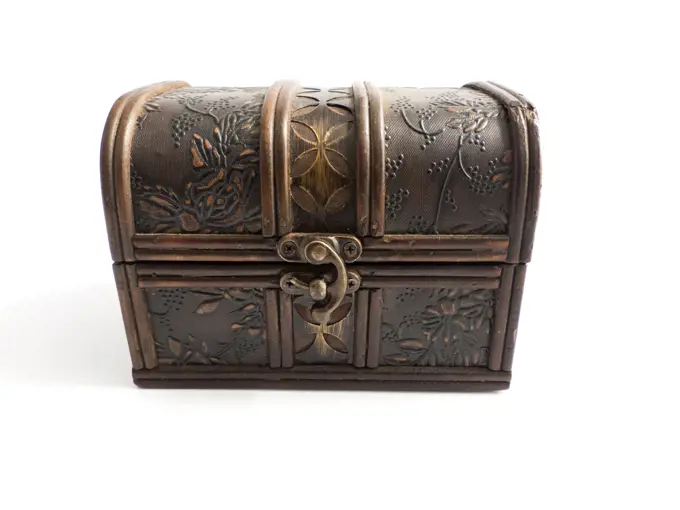
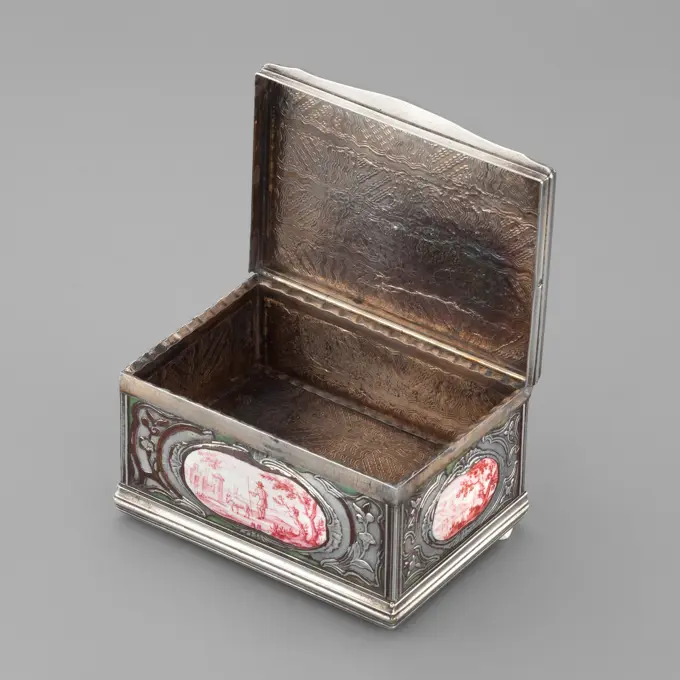
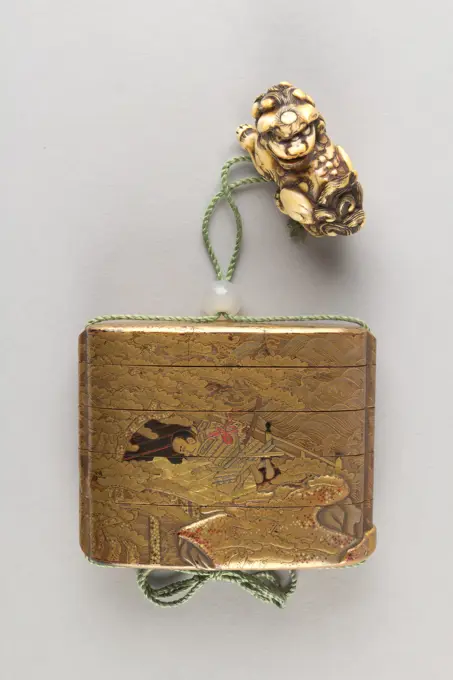
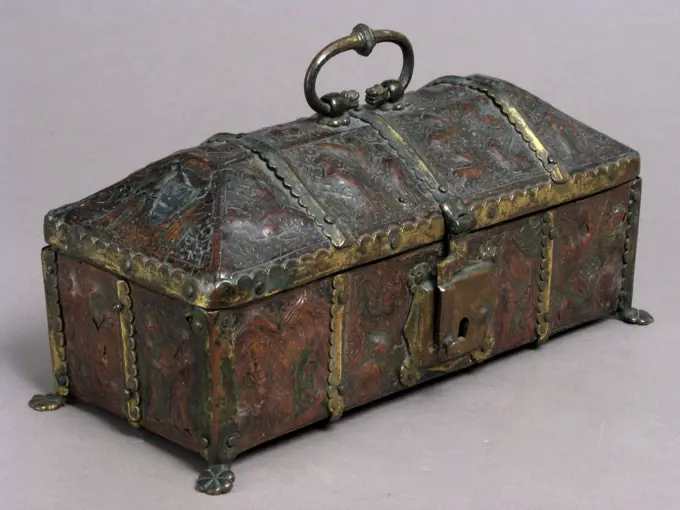
An assortment of ornate wooden boxes from different cultures and periods, showcasing intricate designs and textures suitable for storage.

Orchestral Horn Case, anonymous, c. 1860 Horn box of oak for storing a horn. Germany oak (wood) Horn box of oak for storing a horn. Germany oak (wood)
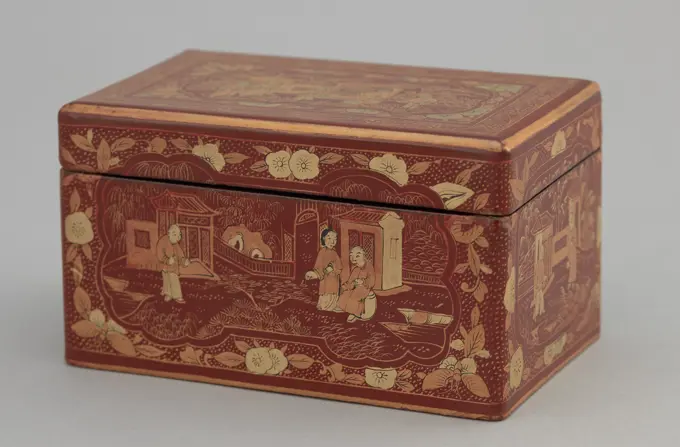
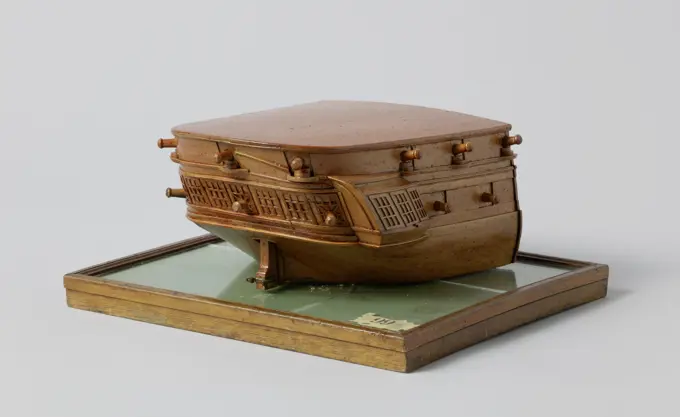
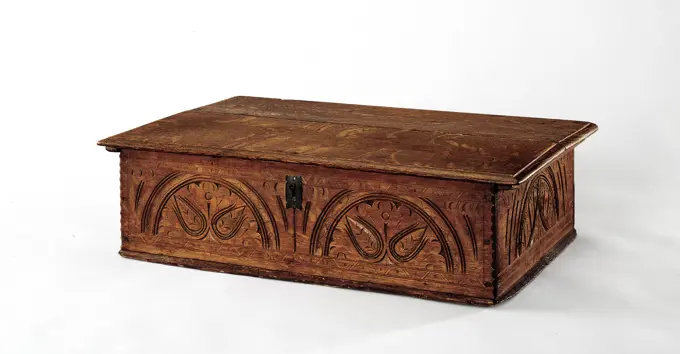
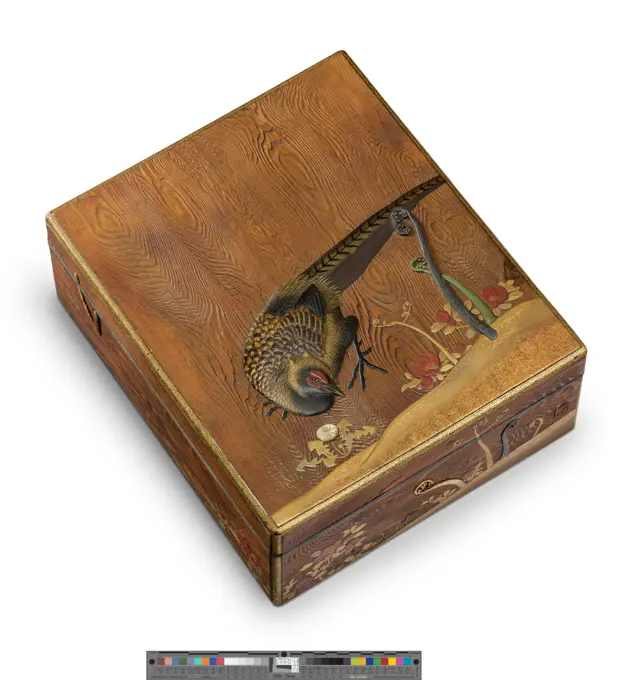
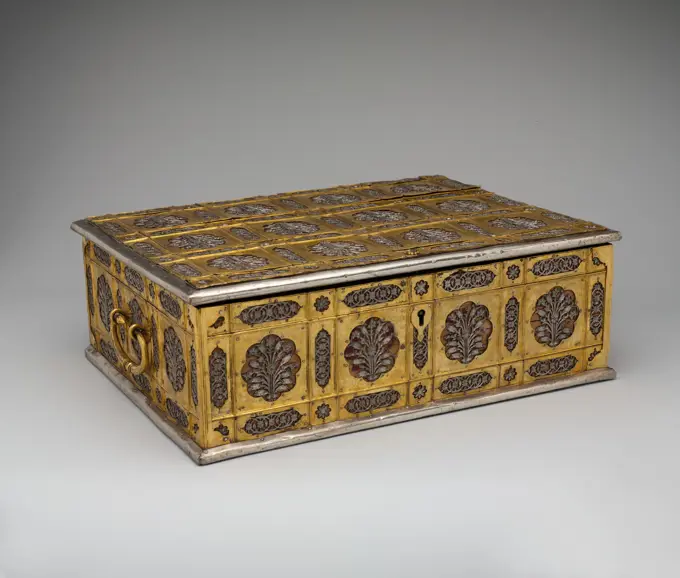
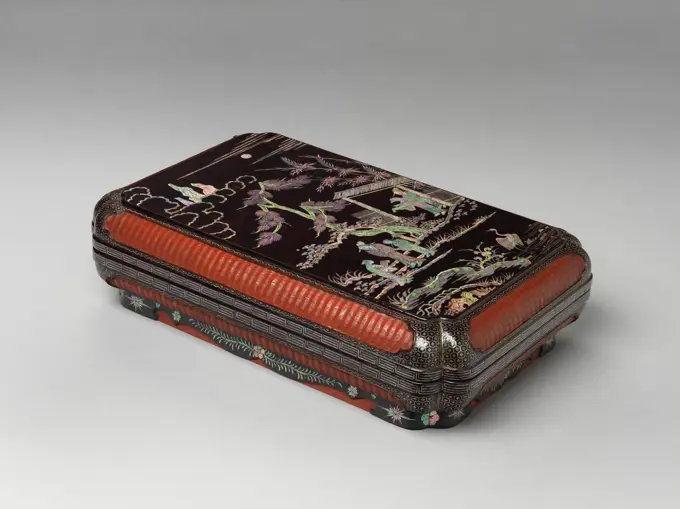
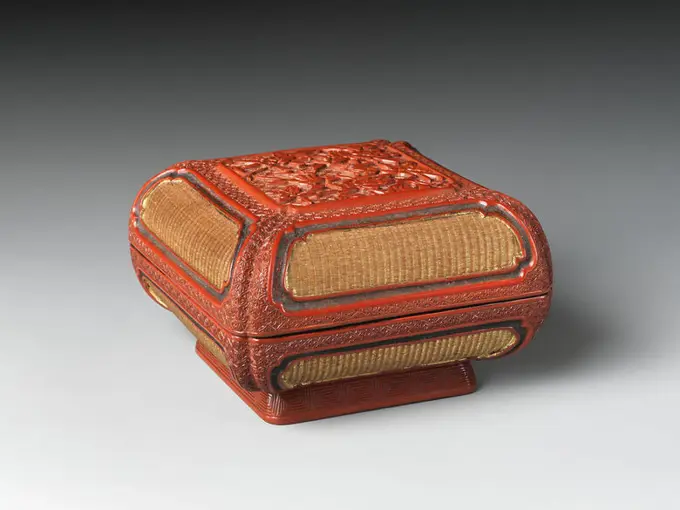
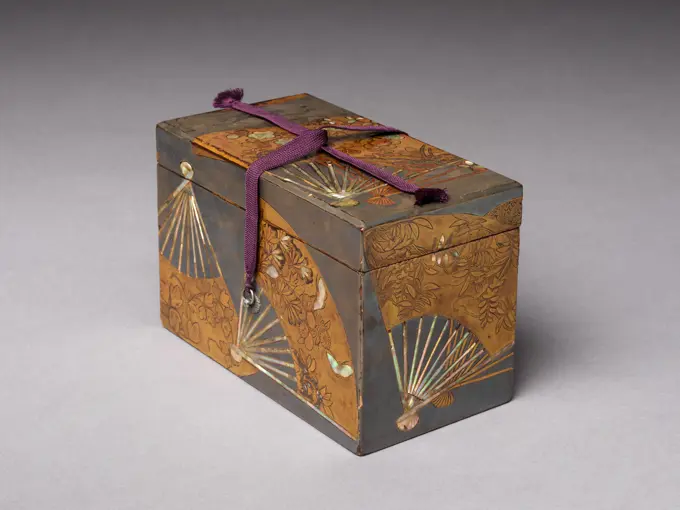
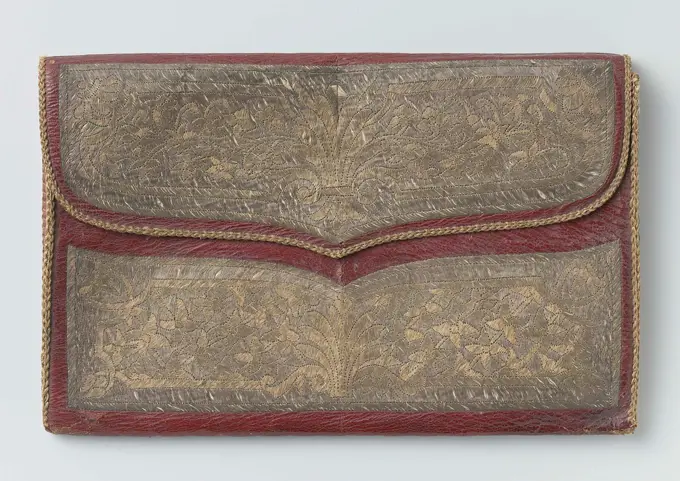
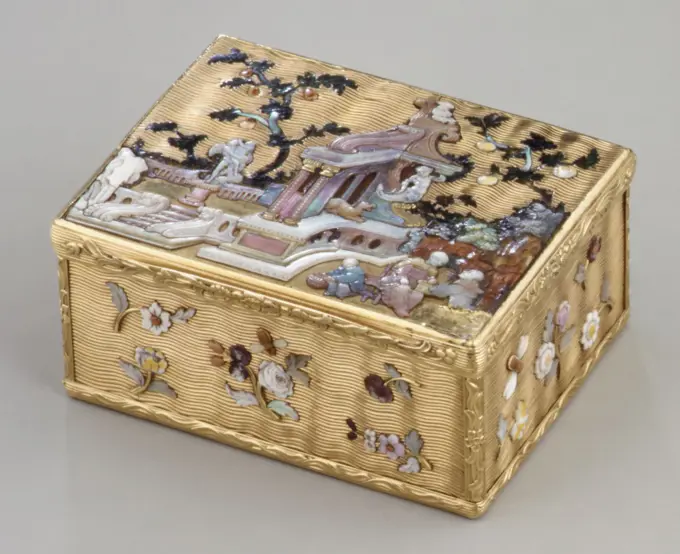
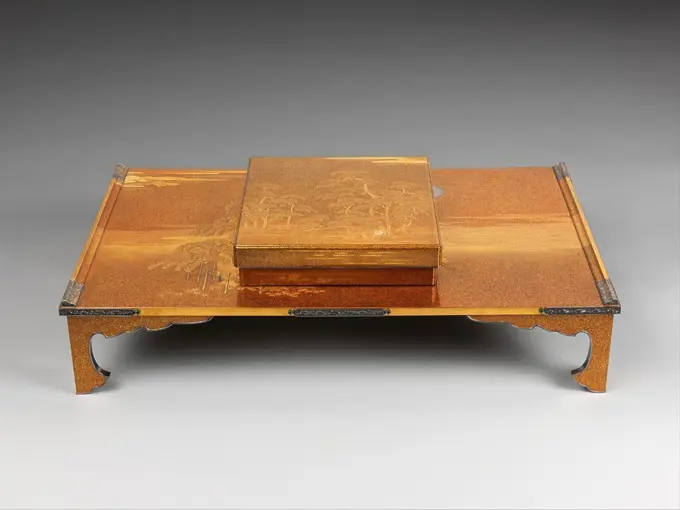
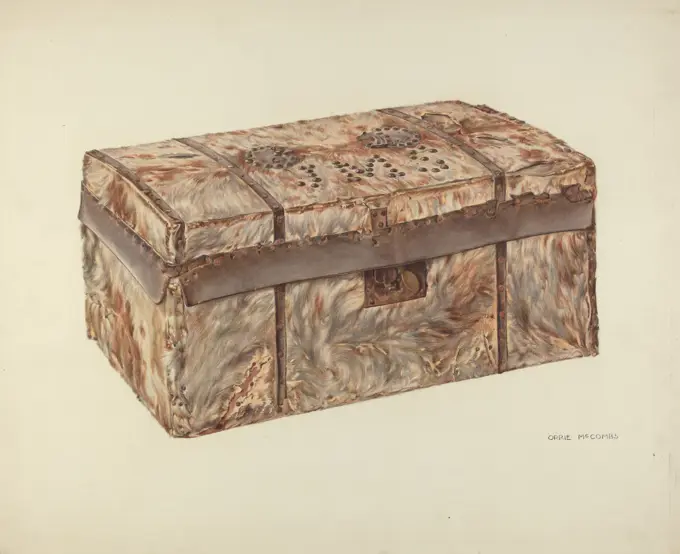
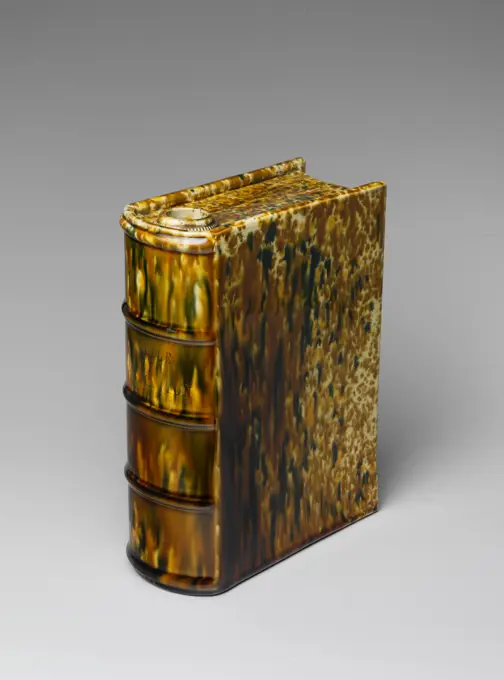
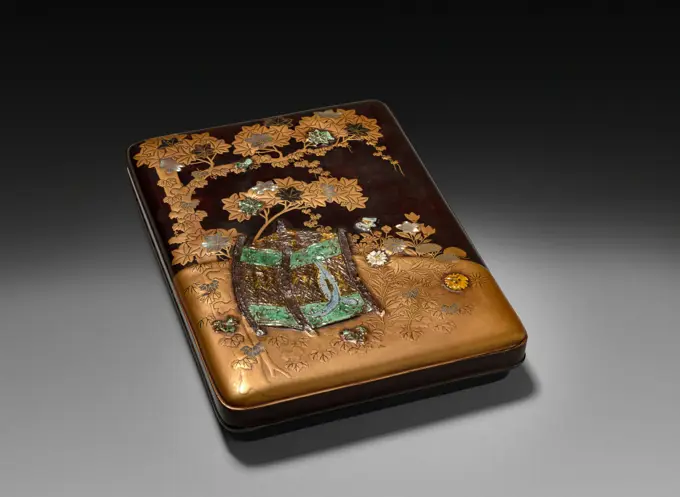
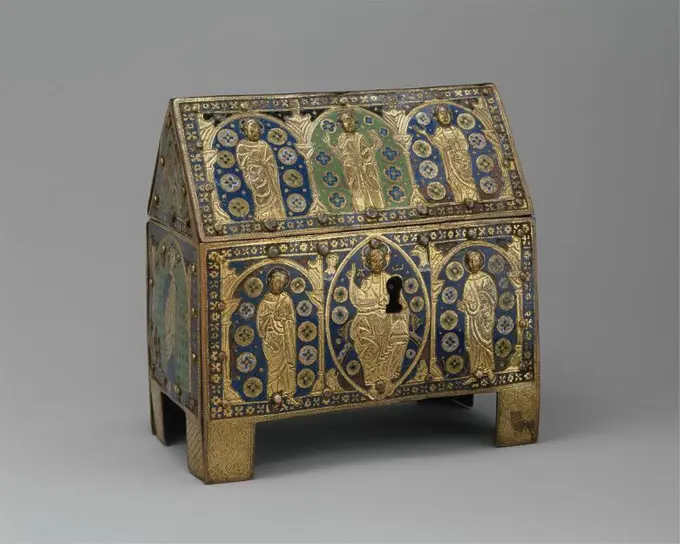
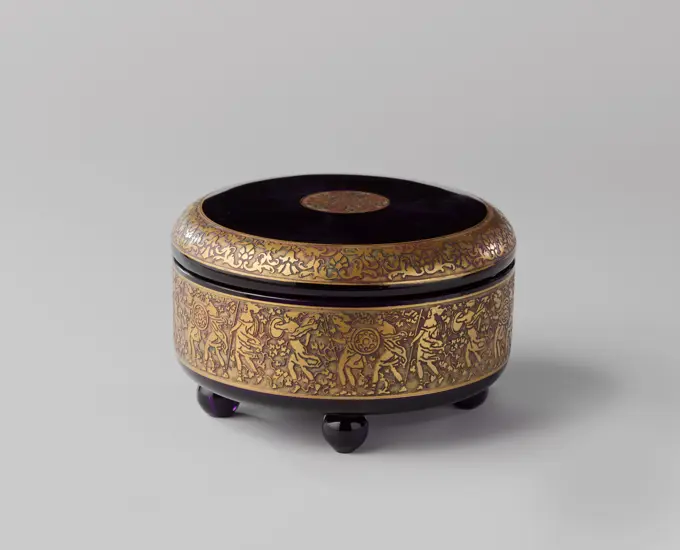
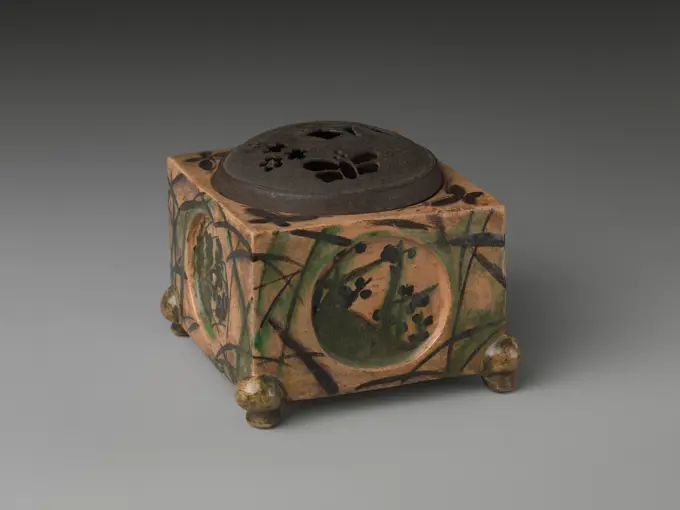
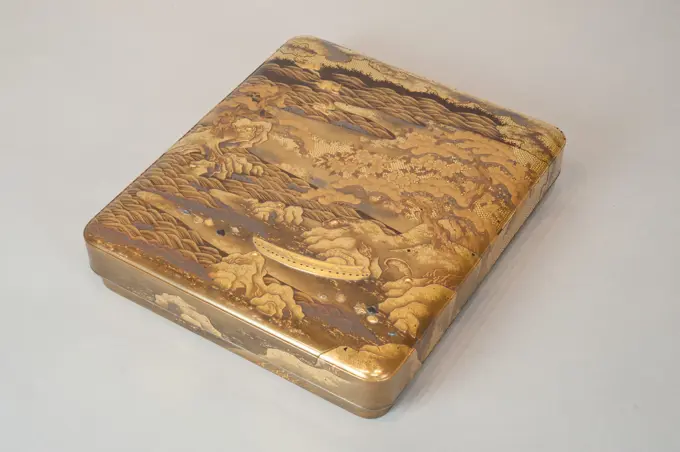
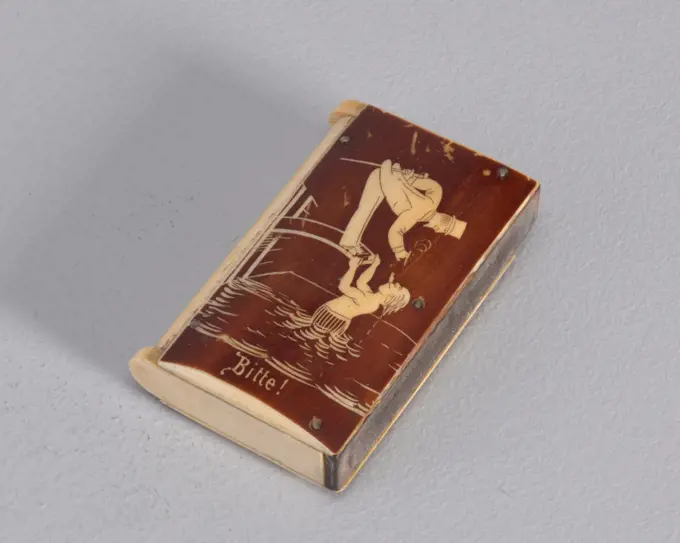
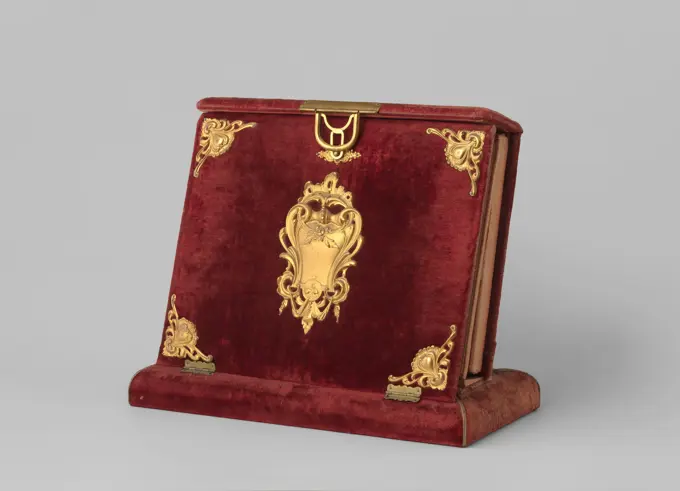
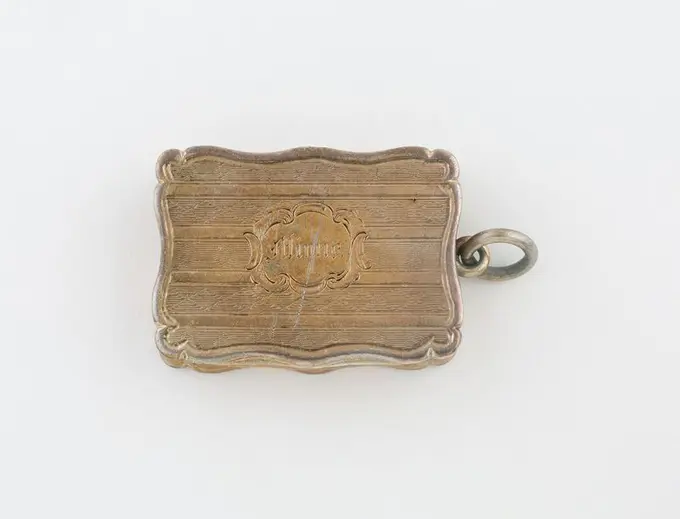
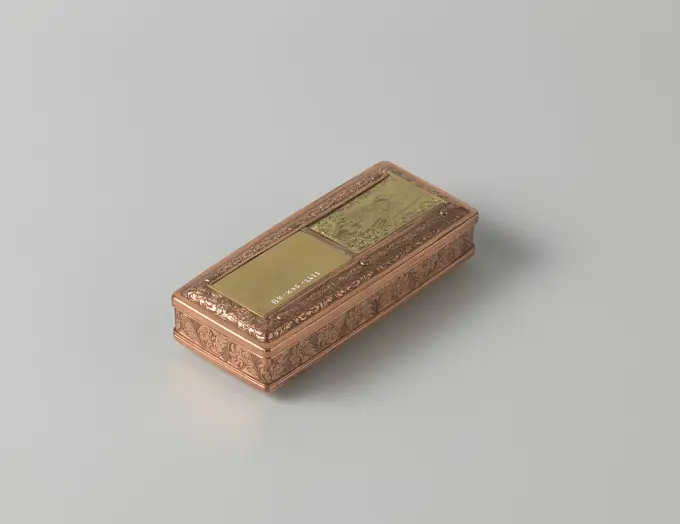
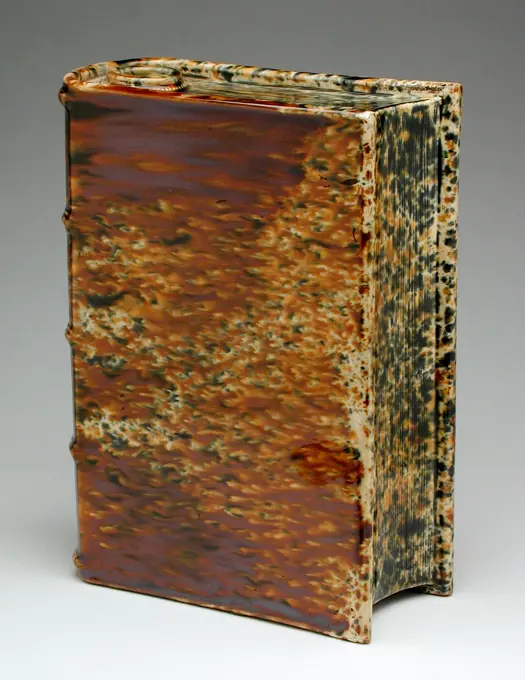
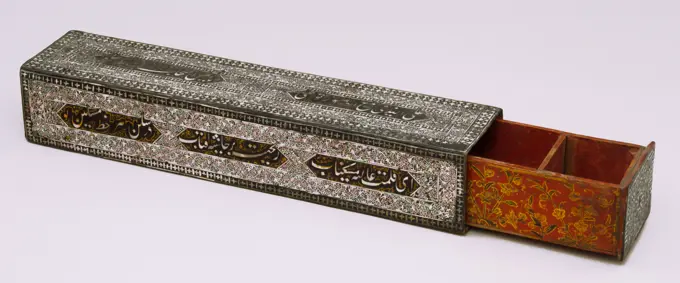
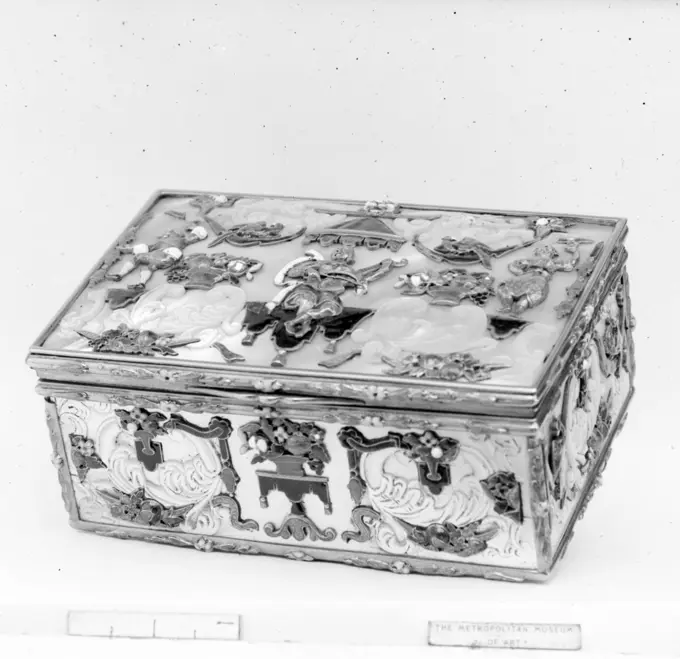
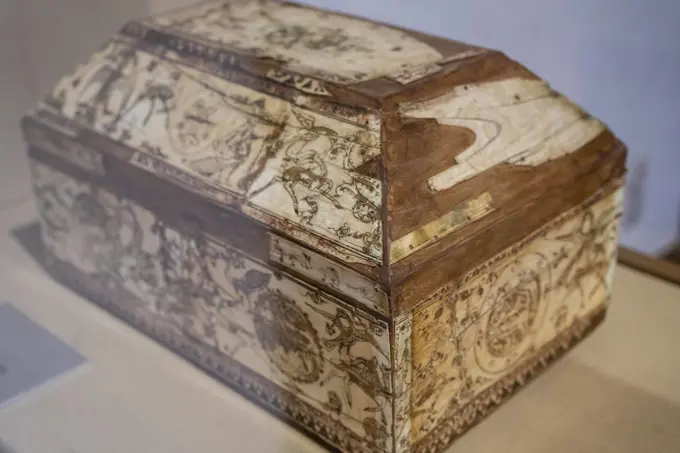
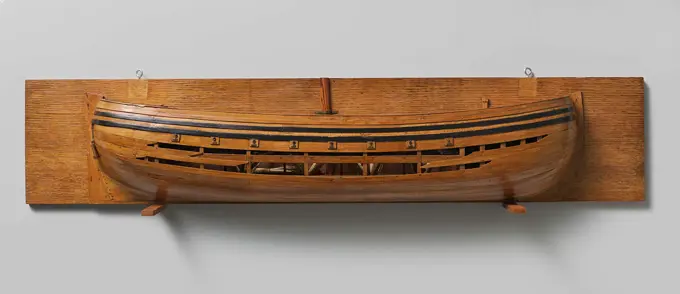
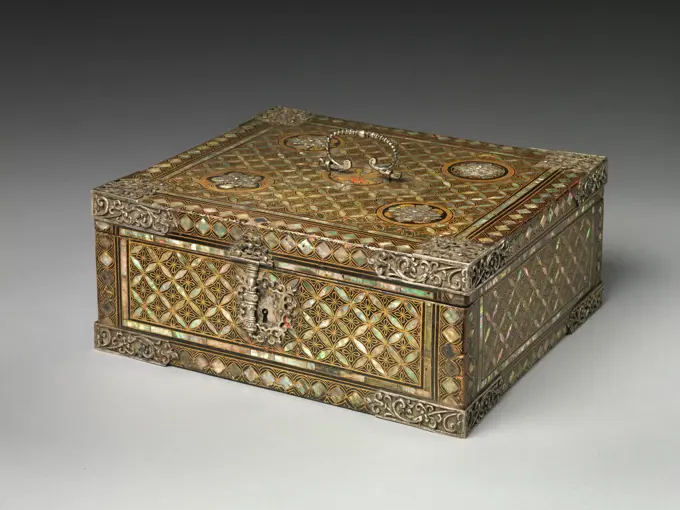
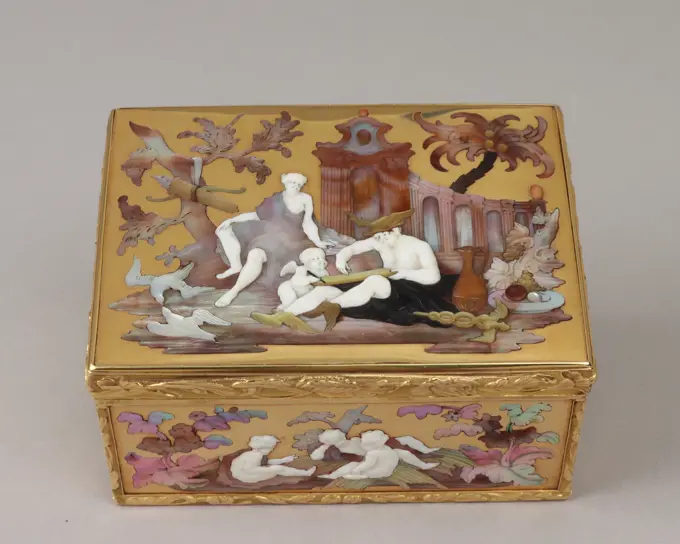
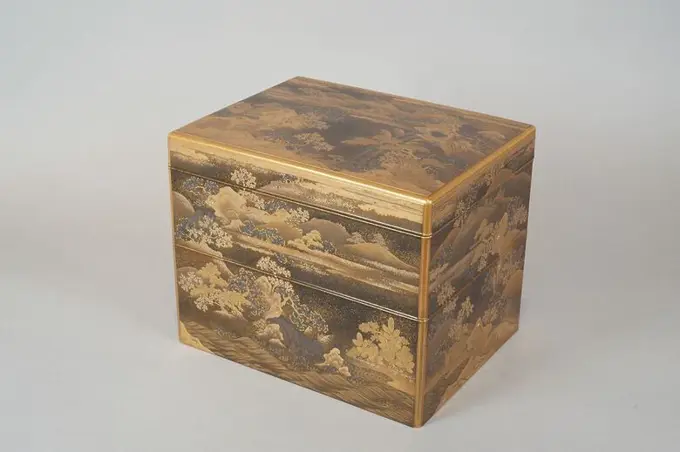
Box for Incense Utensils with Cherry Blossoms in a Landscape. Culture: Japan. Dimensions: H. 9 3/4 in. (24.8 cm); W. 10 3/4 in. (27.3 cm); D. 8 1/4 in. (21 cm). Date: 19th century.This box with two compartments and an interior tray would have contained incense and the implements used in the traditional game of discriminating different fragrances of incense. Its landscape decoration of rolling hills covered with flowering cherry trees and a swift-flowing stream are motifs associated with the Yoshino mountains south of Nara, long celebrated in Japanese art and poetry. Museum: Metropolitan Museum of Art, New York, USA.Chest; woodBox containing documents concerning the lodestone of Tsar Peter the Great of Russia, Anonymous, 1700 - 1800Box belonging to Prayer Noot, Anonymous, 1700 - 1799 An 18th century, red-covered box. Low Countries oak (wood). leather An 18th century, red-covered box. Low Countries oak (wood). leatherOrchestral Horn Case, anonymous, c. 1860 Horn box of oak for storing a horn. Germany oak (wood) Horn box of oak for storing a horn. Germany oak (wood)Przeszo Przyszoci unknownModel of the Sterns of Two Different Frigates, anonymous, 1831 demonstration model Block model and waterline model of a stern, on starboard according to the Figat IJssel, on port according to the Figat Waal. Elliptical fence of one floor with a side gallery on starboard; Straight with square roser king in triangular hennegat. The Zeeg runs slightly back, a sunken barkhout. The model is placed on a ground board with green painted paper and glass, simulating water. Netherlands wood (plant material). brass (alloy). paper. glassBox 1660-1700 American The most common small storage unit in the seventeenth century was the rectangular box with a hinged lid. Boxes provided a place to keep valuables, documents, writing implements, books, and small articles of apparel. Except for one rare example decorated with applied moldings, these boxes are carved utilizing a vocabulary of stylized plant forms and simple geometric shapes. The boxes are all of simple five-board nailed construction and have a deep association with Americas so-called "Pilgrim Century." They were avidly sought after by the earliest collectors of seventeenth-century American oak furniture, hence their acquisition by the museum in 1910 as part of the foundation for the museums collection of early American furniture.. Box 910Stationery Box with Pheasant Design. Mochizuki Hanzan (Japan, circa 1743-circa 1790). Japan, circa 1780. Lacquer. Cedar or male mulberry wood with lacquer and various inlays, including pottery, mother-of-pearl, horn, pewter, and stag antlerBox 18th century Ogawa Haritsu (Ritsu) Japanese. Box. Ogawa Haritsu (Ritsu) (Japanese, 1663-1747). Japan. 18th century. Lacquer. Edo period (1615-1868). LacquerCasket, covered with turtle, with batter of silver. Coffin of turtle, rich with silver fittings. Signature: Batavia; tree; Master sign HR.Writing Box with Lattice and Flower Design mid-17th century The gilded copper sheets and silver plaques covering the exterior of this box are fashioned in a classic "lattice and flower" variant of the flower style. Because of the technique of fastening the metal over the wood, the box has been attributed to Burhanpur, a city in the northern Deccan, where similar work is found in architecture.. Writing Box with Lattice and Flower Design. mid-17th century. Wood; overlaid with dyed wool, stamped silver and gilt-copper plaques. Attributed to India, Deccan, possibly Burhanpur. MetalAnonymous / 'Semiprecious-stone box'. 1650 - 1700. Ebony, Hardstone, precious. Museum: Museo del Prado, Madrid, España.Snuffbox ca. 1750 Meissen Manufactory German. Snuffbox. German, Meissen. ca. 1750. Hard-paste porcelain, gold, mother-of-pearl. Ceramics-PorcelainPresentation box with figures in a landscape Japan (Ryky Islands) 17th-18th century View more. Presentation box with figures in a landscape. Japan (Ryky Islands). 17th-18th century. Black lacquer with mother-of-pearl inlay and red-lacquered basketry panels. LacquerBox with plum blossoms and birds early 17th century China The lid of this box has carved plum blossoms and a pair of magpies. As opposed to its association with ill fortune in the West, the magpie is one of the most auspicious birds in Chinese culture because its name is pronounced the same as the word for happiness” (xi).. Box with plum blossoms and birds. China. early 17th century. Carved red lacquer; gilded basketry panels. Ming dynasty (1368-1644). LacquerService with figures in A Landscape, Imperial Porcelain Manufaktur, c. 1765 - c. 1770 Porcelain crockery, painted on the glowing in email colors, silver  And gold. The parts are partially covered with blue on which a pattern of circles has been applied in gold. In it saved a rocaille cartouche with people in a landscape. Marked on the underside with the shield and different letters and numbers. A corresponding travel suitcase at the service. Vienna porcelain. glaze. gold (metal). silver (metal). koffer: leather painting / gilding / vitrification Porcelain crockery, painted on the glowing in email colors, silver  And gold. The parts are partially covered with blue on which a pattern of circles has been applied in gold. In it saved a rocaille cartouche with people in a landscape. Marked on the underside with the shield and different letters and numbers. A corresponding travel suitcase at the service. Vienna porcelain. glaze. gold (metal). silver (metal). koffer: leather painting / gildinBox with plum blossoms and birds. Culture: China. Dimensions: H. 3 5/8 in. (9.2 cm); W. 5 3/4 in. (14.6 cm); D. 5 3/4 in. (14.6 cm). Date: early 17th century.The lid of this box has carved plum blossoms and a pair of magpies. As opposed to its association with ill fortune in the West, the magpie is one of the most auspicious birds in Chinese culture because its name is pronounced the same as the word for "happiness" (xi). Museum: Metropolitan Museum of Art, New York, USA.Model of A Lifeboat Release, Rijkswerf Vlissingen (Possible), 1857 - c. 1858 demonstration model Model of a part of a ship's wall with a sloop on two nail dravits. The model demonstrates the sloop trap in the sloop. The hoist, which runs from a roasting spindle under the middle doft over a number of discs, is incomplete and the effect remains unclear. The sloop is a slippery double -belt sloop with flat mirror, peaked around and seam to both ends ascending; He has seven dids. model maker: Flushingafter design by: United Kingdom wood (plant material). brass (alloy). ropeWooden box as a Cut.. Wooden box as a CutLIDADA LIDDADA in a cassette Leebourse, noel Jean (1761 1840)Tanker on both sides; Cadeau, Etienne-Jean ( -1759); 1758-59 (1758-00-00-1759-00-00);Ministry of Finance (Warsaw - 1950-) - message, National Bank of Poland (Warsaw - 1945-), architecture, landscape, landscapes, ports, transmission (provenance), rococo (style), relay, WedutyBox -Dish with Design of Landscape with Blossoming Trees 1699-1712 Japan. Glazed stoneware . Ogata KenzanIron jewelry, decorated with medallions and rankwork, anonymous, 1570 - 1600 A forged iron box on four spherical legs. All sides are polished and etched, decorated with medallions with a men's and a women's portrait in the midst of rankwork in frames with araboses. On the front, upper and back two medallions, a medallion on the two short sides. The edges are also decorated with arabesks. On top of an elongated, C-shaped handle with a small nodus in the middle. Below that a loose band that can be shifted, including the keyhole. Germany wrought iron (iron alloy). iron (metal) forging / etching / polishing A forged iron box on four spherical legs. All sides are polished and etched, decorated with medallions with a men's and a women's portrait in the midst of rankwork in frames with araboses. On the front, upper and back two medallions, a medallion on the two short sides. The edges are also decorated with arabesks. On top of an elongated, C-shaped handle with a small nodus in the middle. BBox with Design of Pine, Bamboo, and Cherry Blossom 19th century Japan. Box with Design of Pine, Bamboo, and Cherry Blossom 57887Case (Inr) with Design of Samurai Kneeling on Bridge among Pines and Waves 17th-18th century Japan. Case (Inr) with Design of Samurai Kneeling on Bridge among Pines and Waves. Japan. 17th-18th century. Lacquer, nashiji, silver, red, black and gold hiramakie, takamakie and gold foil; Interior: nashiji and fundame. Edo (1615-1868) or Meiji period (1868-1912). InrBox (England); enamel, metal (gilded); Overall: 5.8 x 4.4 x 1.1 cm (2 5/16 x 1 3/4 x 7/16 in.)Kist, anonymous, 1840 - 1860 Theekist of Chinese paintwork, in which two lead buses, resting on four gilded wooden claws. Decor of flower branches in two colors of gold lacquer. On the front with keyhole, a sitting Chinese man and a woman are applied between the branches. China lacquer (coating). wood (plant material). gilding (material). lead (metal) engraving / gilding Theekist of Chinese paintwork, in which two lead buses, resting on four gilded wooden claws. Decor of flower branches in two colors of gold lacquer. On the front with keyhole, a sitting Chinese man and a woman are applied between the branches. China lacquer (coating). wood (plant material). gilding (material). lead (metal) engraving / gildingChest, anonymous, c. 1450 - c. 1499 Case of painted poplar wood, resting on the scumed corner pieces of the sill. The front is quarter -round, alternately painted with, heraldic figures placed inside squares, broken left and right by a leaf wreath with flowers, within which a coat of arms with ladder and awarded by four lilies. The sides also show heraldic figures and wear iron handles. Italy wood (plant material). poplar (wood). iron (metal). paint (coating) Case of painted poplar wood, resting on the scumed corner pieces of the sill. The front is quarter -round, alternately painted with, heraldic figures placed inside squares, broken left and right by a leaf wreath with flowers, within which a coat of arms with ladder and awarded by four lilies. The sides also show heraldic figures and wear iron handles. Italy wood (plant material). poplar (wood). iron (metal). paint (coating)Medical instrument - Phlebotomy Outfit, 1750-1850. Possibly made in France. Pinto Collection - Purchased from Edward H Pinto, 1965.. Phlebotomy, or blood-letting, has a long history and was a remedy for many illnesses, its height of popularity being the 18th century. This phlebotomy outfit contains a brass scarifier made by Savigny, and four remaining cupping glasses, each with adjustable valves. .Coffret late 14th century French (). Coffret 466442Painting cassetteBöttger Stoneware Tankard Tankard; Manufactured by Meissen Porcelain Manufactory (Germany); Germany; stoneware, silver, goldBox consisting of three stacked loose trays, Anonymous, 1800 - 1900 Box consisting of three loose trays stacked on top of each other, on which a lid. Ayuthhyast style. Thailand wood (plant material). dye. Box consisting of three loose trays stacked on top of each other, on which a lid. Ayuthhyast style. Thailand wood (plant material). dye.Rectangular box with decoration of scattered fans Japan. Rectangular box with decoration of scattered fans. Japan. Gold and silver makie with mother-of-pearl inlay. Edo period (1615-1868). LacquerLetter bag from Constantinople from red (Moroccine) leather, on which front and back and on the flip embroidery of gold and silver thread. Letter bag of red (Moroccine) leather, on which front and back and the valve embroidery of gold and silver thread, attached to parchment. For: decoration in the form of a palm with lush tendrils sprouting with flowers. Valve: Accoladened with same decoration as a front on the front. Rear: Rectangular list within which in the leather embroidered name of the owner behind which twig. Lined inside with silk and divided into three compartments. Inscription: Pieter de Leeuw / Constantinopoolen / 1767Snuffbox ca. 1750 German Like most German boxes, this one is unmarked; its exotic decoration applied in fragments of tinted mother-of-pearl is thought to be Berlin work.. Snuffbox 206158Pudeczko (Kobako) with the cover (kabusebut);  19th century (1801-00-00-1868-00-00);Thrify Tower' mechanical bank, 20th century, 8 1/4 x 8 7/8 x 5 1/4 in. (20.96 x 22.54 x 13.34 cm), Wood, pigment, England, 20th centuryWriting Box (Suzuribako) and Writing Table (Bundai) with Pines at Takasago and Sumiyoshi. Artist: Yukio Yukio II (Japanese, 1860-1929). Culture: Japan. Dimensions: Writing box: H. 2 in.; W. 9 in.; L. 9 3/4 in. Table: H. 4 7/8 in.; W.14 1/2 in.; L. 24 in.. Date: early 20th century.In the Noh play Takasago, the Takasago and Sumiyoshi pine spirits are personified as an elderly couple, wearing humble dress. With its well-known symbol of matrimonial happiness, this writing set was likely made as a wedding gift. The Tokyo-based maki-e master Yukio Yukio II was awarded a gold medal for his lacquer work at the 1900 Paris World Exposition. Museum: Metropolitan Museum of Art, New York, USA.Orrie McCombs, Trunk, 1940 TrunkFlask ca. 1853-58 Probably United States Pottery Company. Flask 553Casket 1727-28 Charles Frederich Kandler. Casket. British, London. 1727-28. Silver. Metalwork-SilverCoffer stamped with the arms of Marie Thérèse of Savoy as the Countess of Artois ca. 1773 French Leather boxes and trunks served in 18th century France for the storage and protection of personal belongings when the court moved from one residence to the next. The coat of arms struck on the lid of this coffer indicates that it was intended for Marie Thérèse of Savoy as Countess of Artois. It is possible that the coffer was made on the occasion of her 1773 marriage to the younger brother of Louis XVI.. Coffer stamped with the arms of Marie Thérèse of Savoy as the Countess of Artois. French. ca. 1773. Wood, red morocco gilt-tooled leather, brass metal handle and clasps; silk liningPowder Chest, anonymous, 1859 chest Rectangular copper powder box with two handles and one round lid. The lid is equipped with a vertebra closure, consisting of a brass rod that revolves around a bolt in the middle of the lid and clamps under two cams on the outer edge of the opening; He is then tightened with the bolt. Netherlands copper (metal). brass (alloy)Inkstone Case and Lid, 1800s. Japan, Edo period (1615-1868). Lacquer on wood inlaid with mother-of-pearl, applied carved metal, and glazed ceramic; overall: 3.5 x 21.6 x 16 cm (1 3/8 x 8 1/2 x 6 5/16 in.).Sugar bowl. Czechy, creatorOld objects Tihe. Plant model from a ship door with double keel, placed in the rebates of a dry dock. On one side the ship door is completely finished, open the other side. Parts of the three decks, which are connected by stages, can be removed; within a layout in compartments. Two small covers at the bottom of the closed side; Their ministry is unclear, but seems to be done with wedge-shaped valves. Only a pump on each side. The opening of the dry dock has three reins so that the ship door can be put in two places.Furniture, Anonymous, 1770 Oak stew with the letters m.t.l.-n.t.v. And with the year 1770. Northern Netherlands (possibly)Netherlands (possibly) wood (plant material). oak (wood) Oak stew with the letters m.t.l.-n.t.v. And with the year 1770. Northern Netherlands (possibly)Netherlands (possibly) wood (plant material). oak (wood)Box belonging to a bronze medal, Bart van Hove, 1898 box Leather square box and red velvet inside, in golden letters' royal utr. Fabr. v. Zilverd. van C.J. Begeer Roflevenrancier v. The late Z.M. the King H.M. de Koningin widow and H.K.N. The Grand Duchess v. Saksen-Weimar Utrecht. UtrechtUtrecht Paris leather. velvet (fabric weave). copper (metal)   NetherlandsThe casket under;  around 1850 (1850-00-00-1870-00-00);Dar (provenance), Indian (culture), South Asian (culture), Indian artClose-up of a gold brickCasket late 16th century probably Northern Italian. Casket. probably Northern Italian. late 16th century. Iron, gold. Metalwork-IronChasse with Christ in Majesty and Apostles. Culture: French. Dimensions: Overall: 6 9/16 x 6 5/16 x 3 11/16 in. (16.7 x 16 x 9.4 cm). Date: ca. 1190-1200. Museum: Metropolitan Museum of Art, New York, USA.Wooden boxbrWooden box Wooden box box isolated with clipping path included Wooden box box isolated with clipping path included Copyright: xZoonar.com/Baloncicix 7162044Box with a Frisian with Amazons, Ludwig Moser & Söhne, c. 1925 Four ball -shaped legs, flat bottom, low cylindrical body, lid with curved edge. On the body, in oroplastic, a Frisian with Amazons. Moser Karlsbad marked on the bottom, on one of the legs the figure 14. Carlsbad glass etching / gilding / glassblowing Four ball -shaped legs, flat bottom, low cylindrical body, lid with curved edge. On the body, in oroplastic, a Frisian with Amazons. Moser Karlsbad marked on the bottom, on one of the legs the figure 14. Carlsbad glass etching / gilding / glassblowingBox 1801-1900 Nepal. Silver, nephrite jade, caboshon rubies, and aventurine green .RELICARIO DE HUESO. VISIGODO. (DEPOSITO: MUSEO ARQUEOLOGICO NACIONAL).Incense Burner (kōro) with Design of Grasses, Cherry Blossoms and Butterflies 17th century Hon'ami Kōetsu Japanese. Incense Burner (kōro) with Design of Grasses, Cherry Blossoms and Butterflies 63316Retro chest isolated Decorative antique chest isolated with clipping path included Copyright: xZoonar.com/Baloncicix 14195711Gilded armlet of priest, Pedi-amun-pa-sheri Roman Period A.D. 1st century View more. Gilded armlet of priest, Pedi-amun-pa-sheri. A.D. 1st century. Wood, plaster, gold leaf. Roman Period. From EgyptKasetkaMedallion (reverse). Marie Alexandre Lucien Coudray (French, 1864-1932). Bronze; overall: 6.7 x 5.1 cm (2 5/8 x 2 in.).Cigar holder in caseWriting Box with a Scene from the Butterflies” Chapter of The Tale of Genji 20th century Japan This writing box forms a pair with document box 1981.243.1a-f.. The decoration on the lid continues the story of the sunny spring day depicted on the document box: cranes fly over the blossoming cherry and pine trees, while a boat on the shore waits for its passengers. The insides of both boxes are embellished with autumn grasses by a river. It refers to one of the poems Lady Murasaki composed during the boat party.. Writing Box with a Scene from the Butterflies” Chapter of The Tale of Genji 58413Bible illustrations, c. 1550 - c. 1699    wood (plant material)Gentleman and Swimmer, Ivory, Rectangular, in book form, featuring incised decoration with brown wash of a gentleman in Top hat standing on diving board requesting a light from a swimmer, who hangs from board's edge while in water below, inscribed 'Bitte!' at bottom. Reverse features same gentleman, having received his light, as he is flipped into air after swimmer has released board's edge, inscribed below 'Danke!'. Two lids at top and bottom, hinged on metal pins. Striker on flat side., probably Germany, late 19th century, containers, Decorative Arts, Matchsafe, MatchsafeShip's Medicine Chest from an Aberdeen Trawler Wrecked on Hoy,  early 20th CenturyPhoto album (empty), Anonymous, 1860 - 1900 musical box Insert album with a play box. The album is vertically on a base plate in which a play box mechanism is attached. The album folds open in front. Two magazines are attached to the vertically standing backplat with passe-partouts for cabinet photos, which fold to the left and to the right. To the part of the album that folds forward, three magazines are attached with Passe-Partouts for Cartes-de Visite, which fold open, right and left. In total there is room in the album for 10 cabinet photos and 21 Cartes-de Visite.  cardboard. paper. plush. silk. metalPanel 14th-15th century. Panel 445083Chest. Dated: 1935/1942. Dimensions: overall: 26.8 x 35.6 cm (10 9/16 x 14 in.). Medium: watercolor and graphite on paper. Museum: National Gallery of Art, Washington DC. Author: Robert W. R. Taylor.. Sewing marnituur in rectangular pearl box, with a gouache behind the glass lid with a cityscape with caption: Weilburg bey baths, inside, among other things, a bobbin, a scissors and a thimble of mother-of-pearl. The box is rectangular and flat without feet, topped with diamond pearls on the sides. On the lid a copper Empire list around the glass, the lock plate is plated. Painting in gouache. In the box a scissors, a bobbin for washing, a yarn winder, a needle cooker, a mirror, a prime and a thimble in a white moiré pad and a mirror in the lid. There four keys to a ring.Inkstand, anonymous, c. 1730 - c. 1770 Ink set, rectangular with rounded corners multicolored painted with shepherds in a landscape. Delft . Ink set, rectangular with rounded corners multicolored painted with shepherds in a landscape. Delft .Vinaigrette. Marked RT; Birmingham, England. Date: 1865-1876. Dimensions: 3.8 × 2.9 cm (1 1/2 × 1 1/8 in.). Silver and silver gilt. Origin: Birmingham. Museum: The Chicago Art Institute, Chicago, USA.13th century Arabic casket, collegiate church of Sant Feliu de Girona, Girona art museum, Catalonia, Spain.Tobacco box with scenes from the life of Christ. A red-headed tobacco box, with two red copper on top and bottom, covering a religious show. One has an engraved representation of a colombine. The other is unprocessed. The sliders at the bottom of the box are from yellow copper with ditto performances of a dancing man (Comedia Dell 'Arte). The religious representations on excavated, engraved, silver-plated copper plates are: the worship of the kings, the worship of the shepherds (top cover), the proclamation and the visitation (inside lid), the flight to Egypt and baptism in the Jordaan (bottom box ). The object is further decorated with engraved rank ornament. The lid is no longer attached to the hinge of the box.Trunk. Dated: c. 1937. Dimensions: overall: 38.2 x 49.8 cm (15 1/16 x 19 5/8 in.) Original IAD Object: 11" high; 22 1/2" long; 13 1/2" wide. Medium: watercolor, pen and ink, and graphite on paperboard. Museum: National Gallery of Art, Washington DC. Author: William Bos.Book Decanter, "Departed Spirits". Lyman, Fenton and Company (attributed to) (United States, Vermont, Bennington, 1849-1853). United States, 1849-1858. Books. Earthenware (Bennington Ware)Chest, anonymous, c. 1680 - c. 1700  Jewelry case with convex lid, silver hinges, lock and, on either side, handles. The briefcase is completely decorated with symmetrically incised floral motifs. The hinges and the lock are also decorated with floral motifs. Southeast India ivory. silver (metal) cutting / engraving flowers ~ ornament Sri LankaModel of Anchor Release, Rijkswerf Amsterdam, 1836 demonstration model Half -model and block model of a fore ship above the waterline, on which an anchor trap is demonstrated. Anker and anchor rope are missing. The anchor must be hung in two chains, which are beaten back on a fall mechanism on the side of the ship; If this is detached, the chains will fall open and let it anchor. model maker: Amsterdamafter design by: Karlberg Palace wood (plant material). brass (alloy)unknown labelIron coffin with wooden covering. Square iron box with slightly curved lid and Ogival lock cover. Inner with wooden covering. The key is missing.Old treasure box Old antique wooden treasure box Copyright: xZoonar.com/IvonnexWierinkx 7547187Satchel mid-19th century American. Satchel. American. mid-19th century. leatherTable Clock 1570-1630 Germany. Gilt bronze and iron .Cup from Oliver Wolcott, Jr. Tea Service (2 of 6), 1785-1805. Chinese Export porcelain, late 18th-early 19th century. Porcelain, sepia enamel, gold leaf; overall: 7 x 9 x 6 cm (2 3/4 x 3 9/16 x 2 3/8 in.).Pen Box (Qalamdan). India, Gujarat, Ahmedabad region, circa 1575-1625. Furnishings; Accessories. Wood overlaid with mother-of-pearl in lac; Drawer: wood with red, gold, and black paintSnuffbox late 17th-early 18th century possibly Italian. Snuffbox. possibly Italian. late 17th-early 18th century. Gold, mother-of-pearl, enamel. Metalwork-Gold and PlatinumGeorges-Arthur Jacquin (1851-1932). "Box". Iron plate mounted on a wooden soul, silver decor and golden silver, partially enamelled, glass cabochons at the corners. 1900. Museum of Fine Arts of the City of Paris, Petit Palais. 123542-24Snuffbox. Snuff box of gold, oval, with a love couple in email on the lid. Around the wall in blue email, golden reliefs with trophies and birds.Arabische Schatulle aus dem 13. 13th century Arabic casket, collegiate church of Sant Feliu de Girona, Girona art museum, Catalonia, Spain Copyright: xZoonar.com/Tolox 22282776Half Model of a Fireship.Completely blanked of a brant model (starboard) of a one-mast flat bottom. The skin has been released to show the interior. Four levels: very low covered with combustible material; slightly higher a walk along the board and a gutter with combustible material to the bottom; semi-deck and baking deck supported by deck struts, a chimney on the baking deck; Top campanje. Disclains are over the pit. A small gate in the fore ship, a large gate in the round stern; Eight rowing species. The seam runs forward and behind, triple bark wood. Running with flat bottom.Vintage handbag made of leather Brown retro schoolbag with on white background Copyright: xZoonar.com/JFsxPicxFactory xThielemannx 10782401Portrait of El Von Rossmüller,  18th century (1701-00-00-1800-00-00);jewels, pendant, portraits, female portraits, dressesPortable Nanban Box late 16th century Japan In the second half of the sixteenth century, Japanese lacquer made for Western markets was known as nanban (Southern Barbarian), a reference to the epithet given to foreigners from Spain, Portugal, and the Netherlands. Many of these export lacquers were made in Kyoto. The maki-e (sprinkled picture”) and rich mother-of-pearl decoration on this box consists of continuous interlinked circles (shipp?) with stylized flowers in the intersections and five flower roundels on the lid.. Portable Nanban Box. Japan. late 16th century. Lacquered wood with gold, silver hiramaki-e, and mother-of-pearl inlay; silver fittings. Momoyama period (1573-1615). LacquerBox early 19th century Japan. Box 57769Bible illustrations, c. 1550 - c. 1699    wood (plant material)Snuffbox 1749-50 Michel de Lassus In eighteenth-century Europe, Paris led the production of high-quality luxury goods. Parisian goldsmiths made a wide range of small, personal articles such as snuffboxes; étuis to hold sealing wax, tweezers, or utensils for sewing; souvenirs, which contained thin ivory tablets for note taking; and shuttles for knotting lace. Gold snuffboxes and boxes decorated with portrait miniatures were prized and frequently given as royal gifts, often to ambassadors or members of the court in lieu of cash payments for their services. Coveted and admired, these boxes were produced from a variety of materials. The best were skillfully made of gold and embellished with diamonds, enameled decoration, lacquer, and other luxurious materials. By the middle of the century, the taking of snuff had become an entrenched social ritual, and the snuffbox, too, had become an important social prop. Snuffboxes were considered highly fashionable accessories, with some merchants adve