Decorative Storage Chests

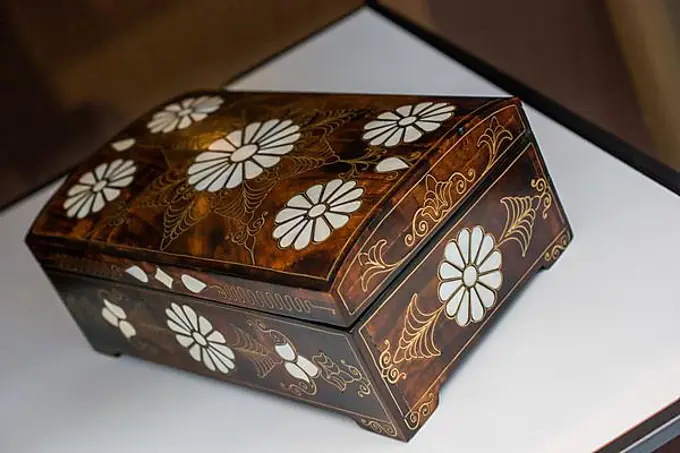
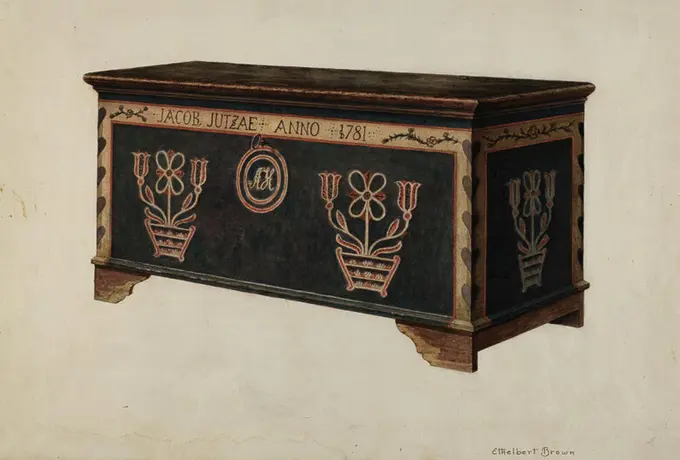
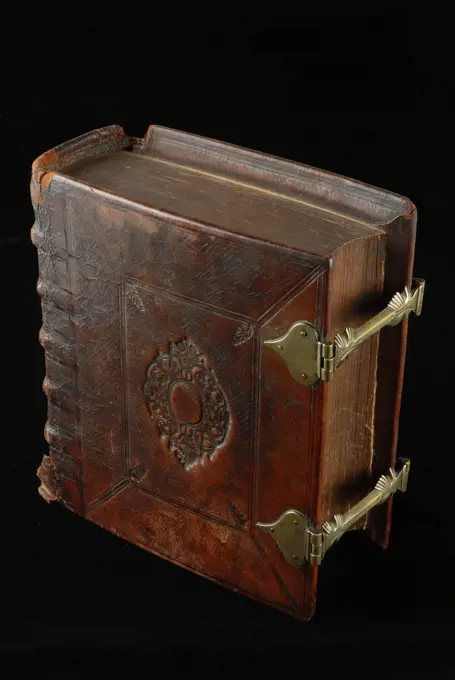
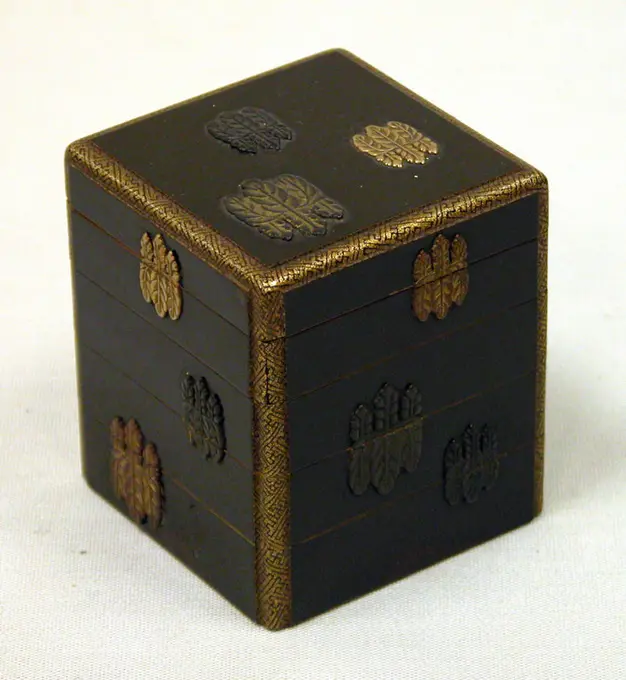
A selection of ornate chests and boxes made from mahogany and other materials, showcasing craftsmanship from the 17th to 20th century with decorative elements.

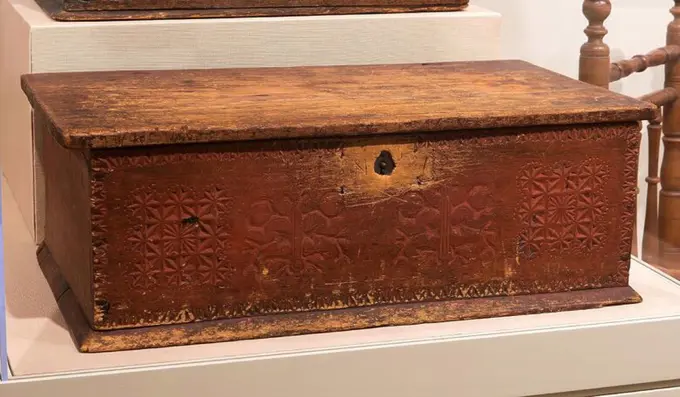
Bible box, 18th century, 7 x 11 1/8 x 21 1/2in. (17.8 x 28.3 x 54.6cm), Pine, United States, 18th century
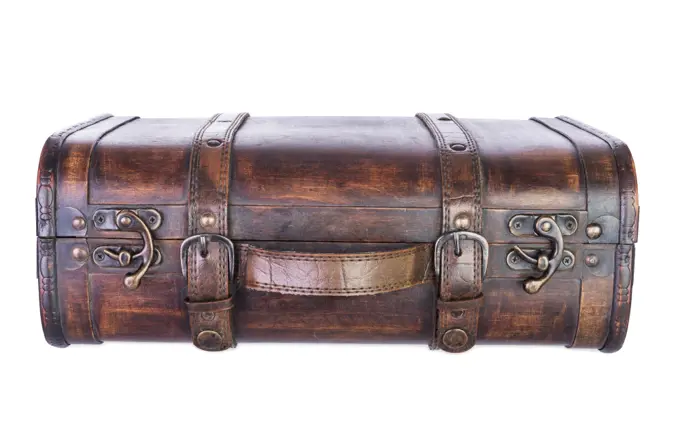
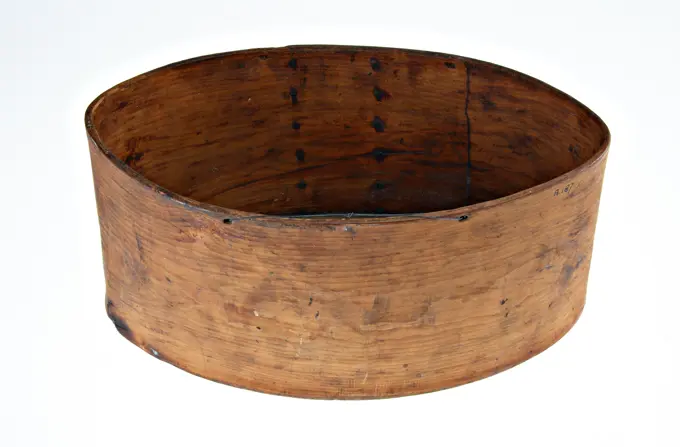
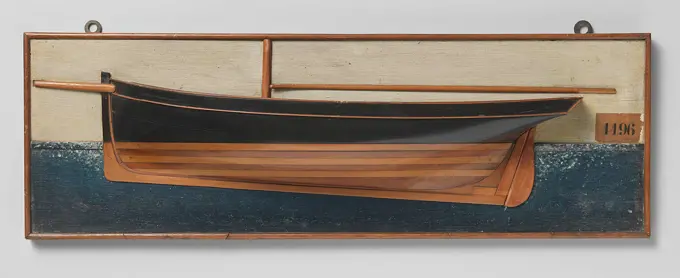
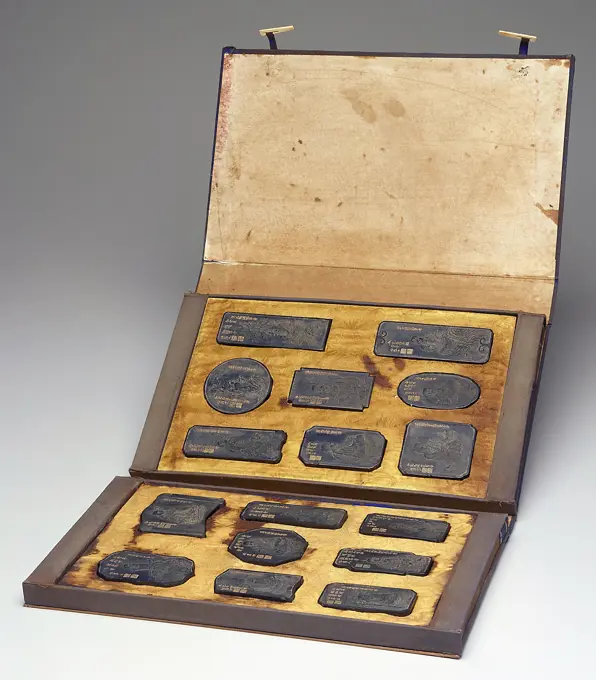
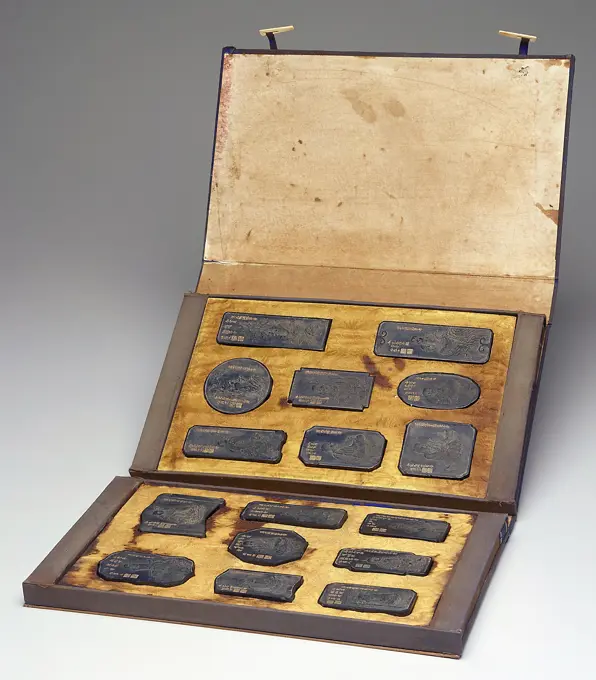
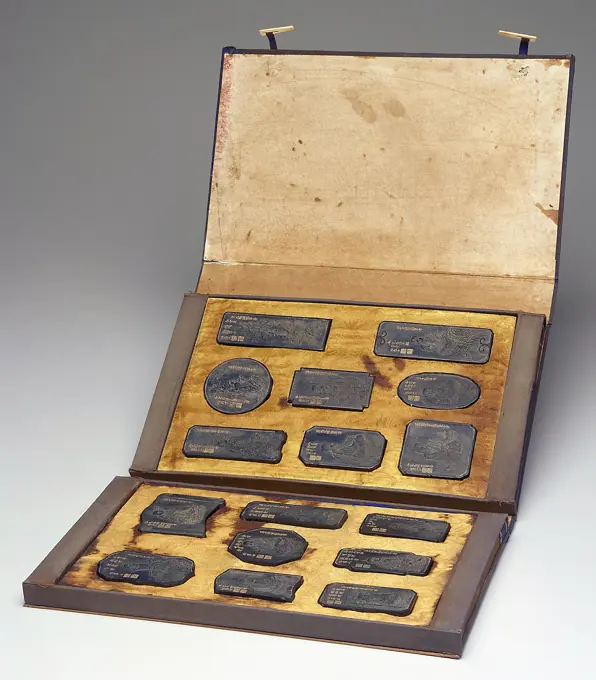
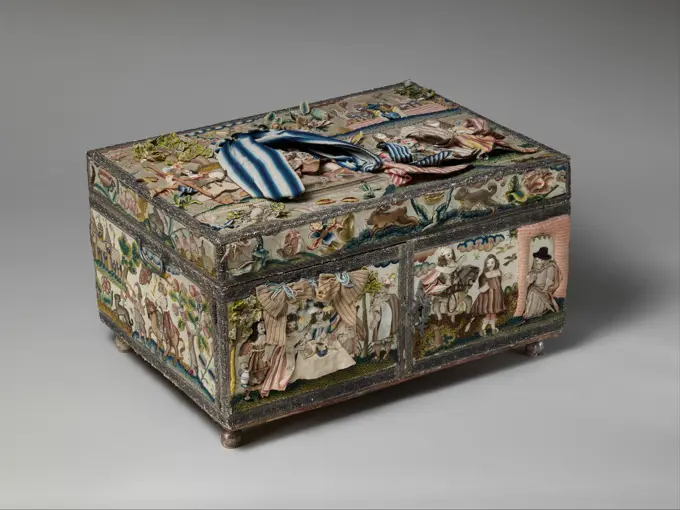
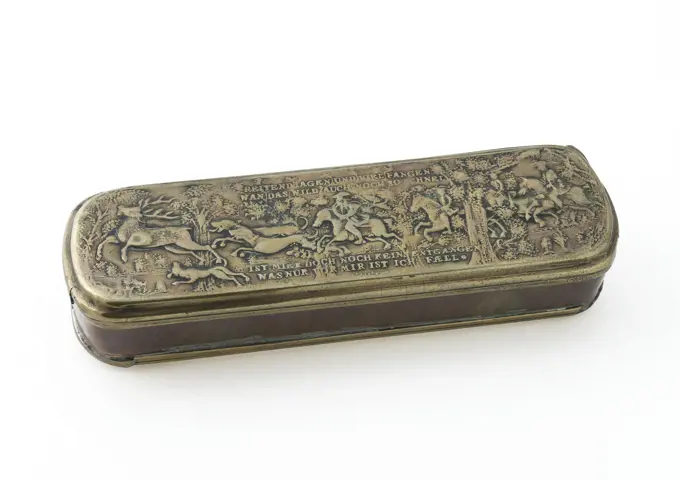
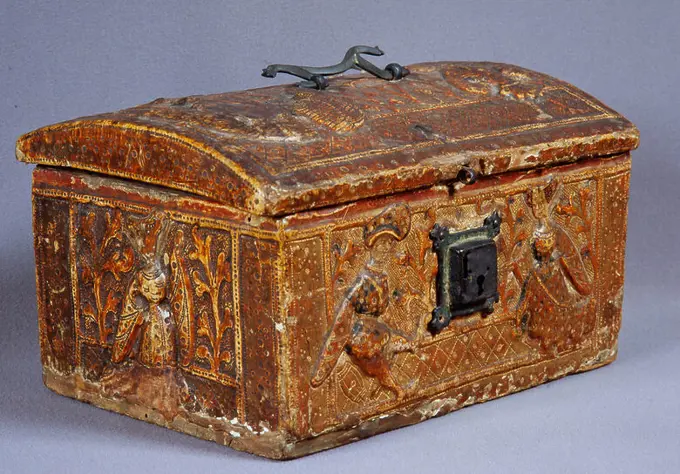
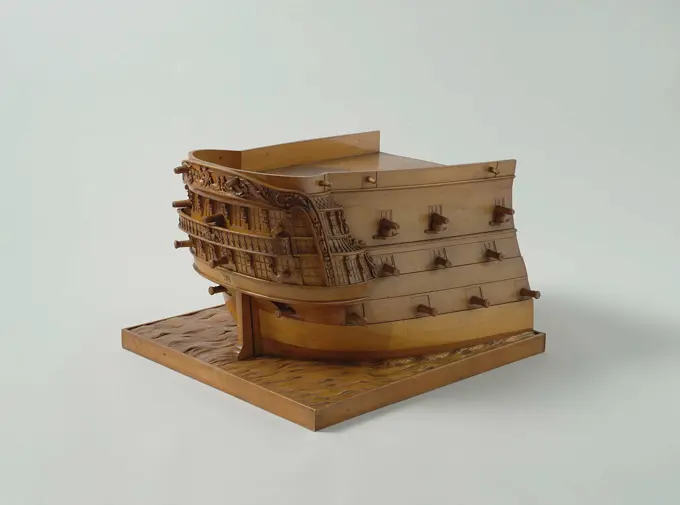
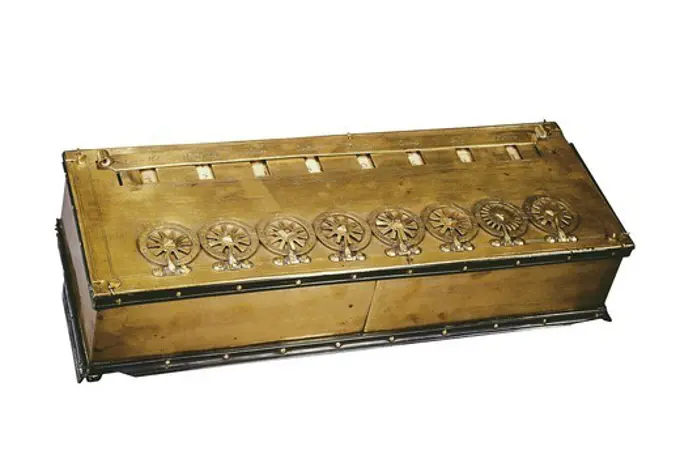
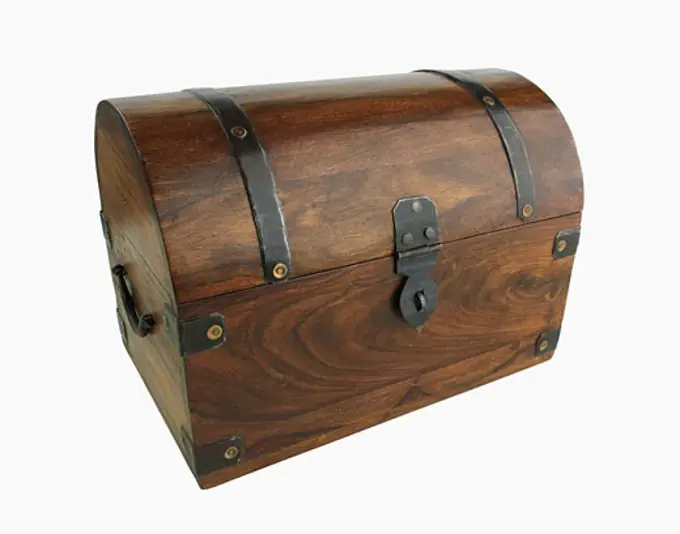
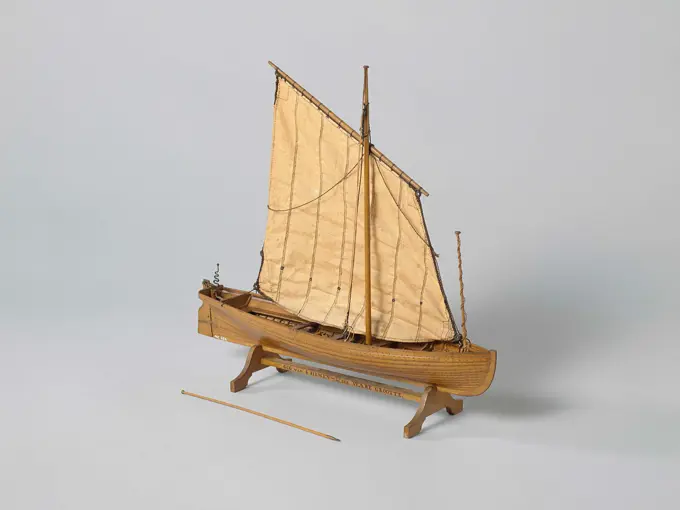
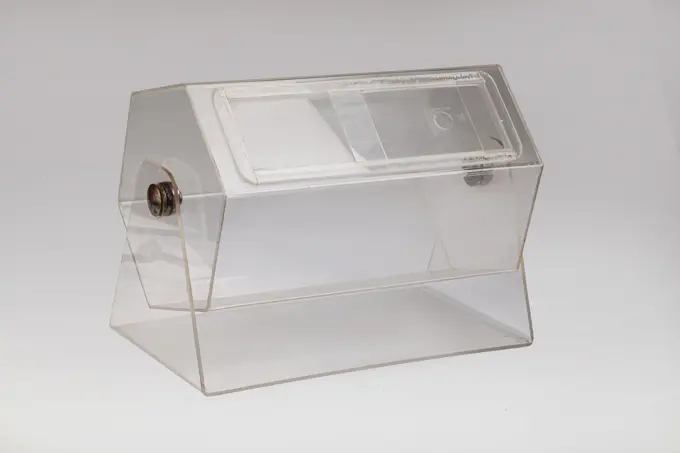
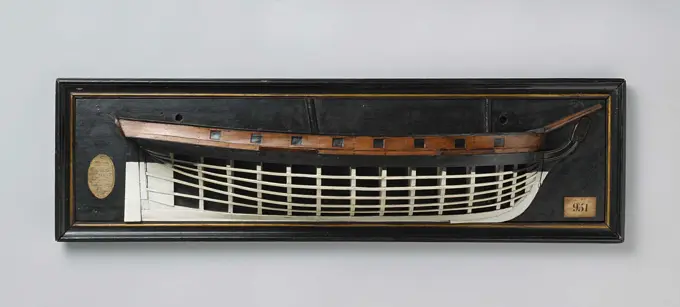
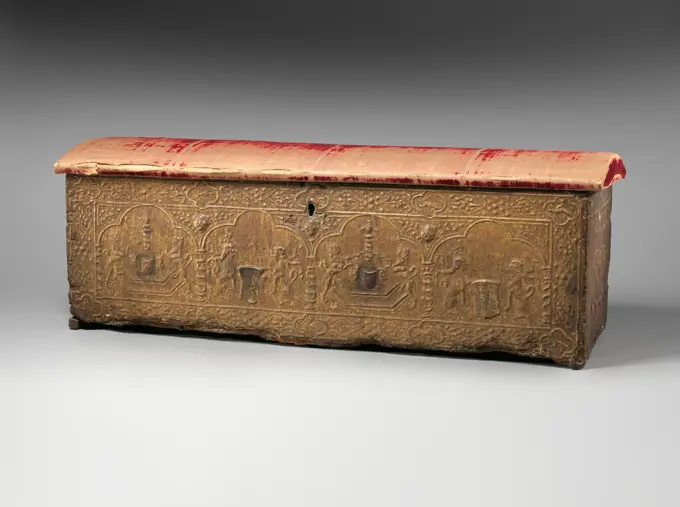
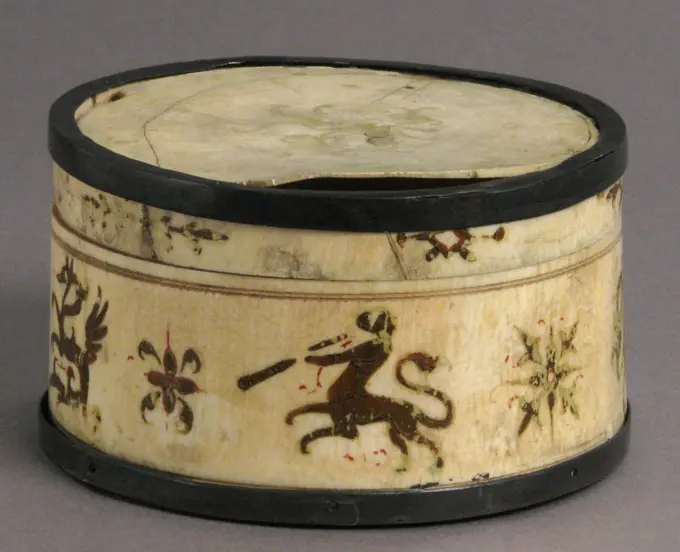
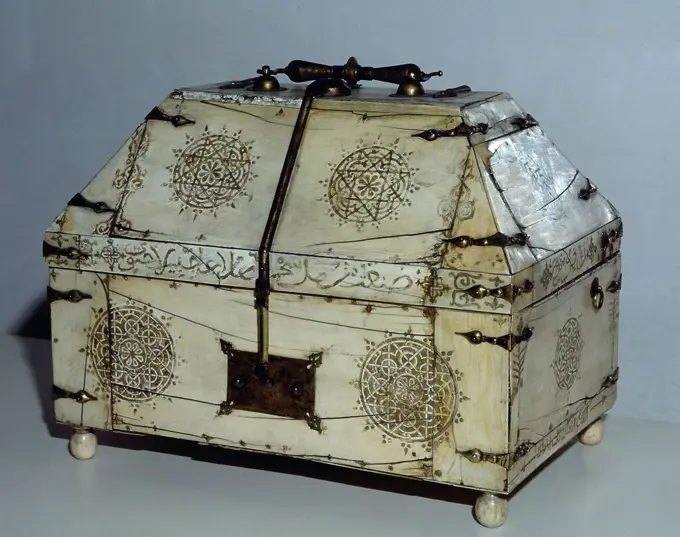
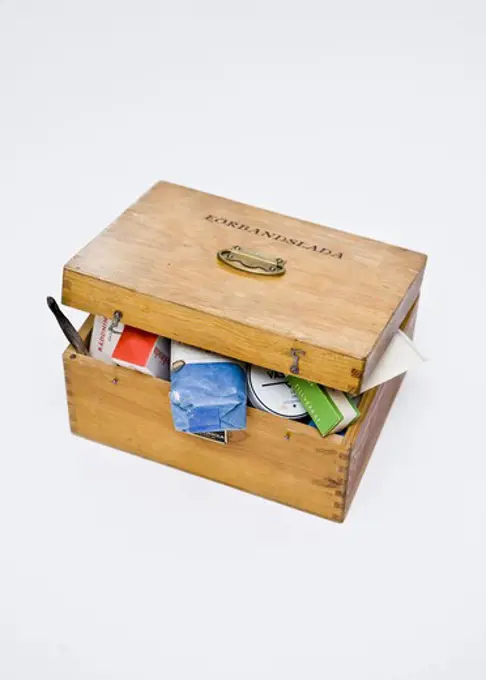
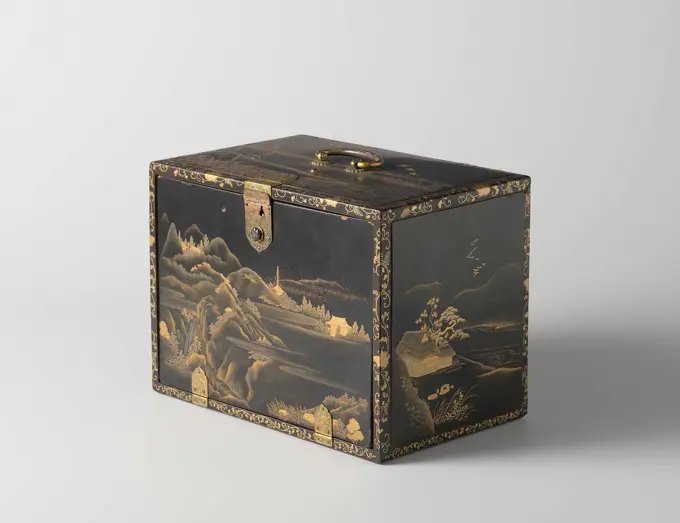
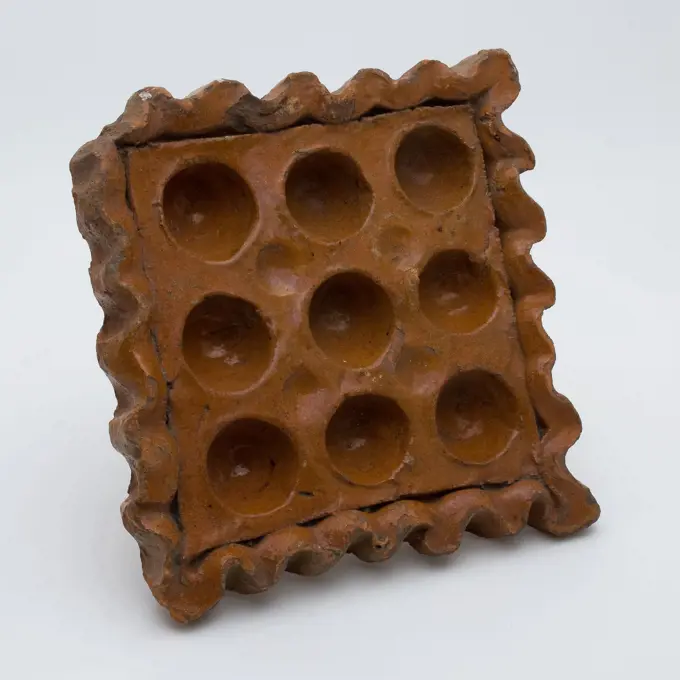
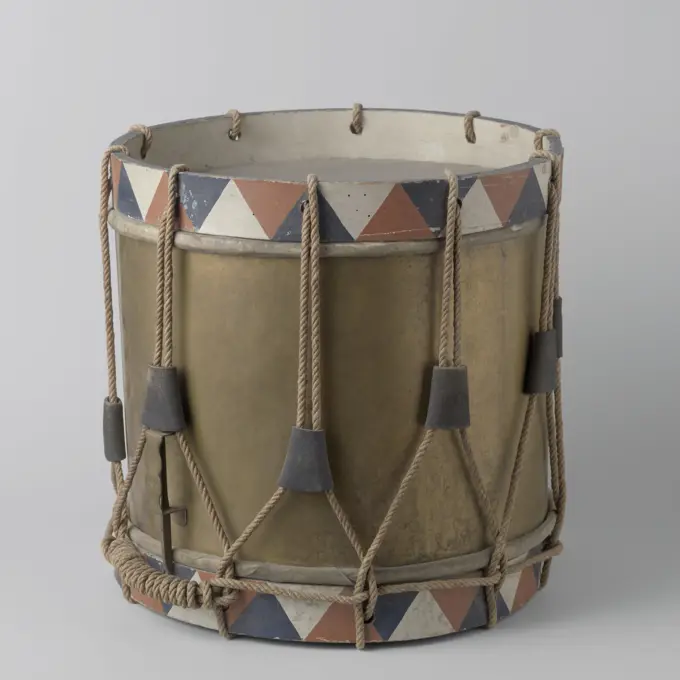
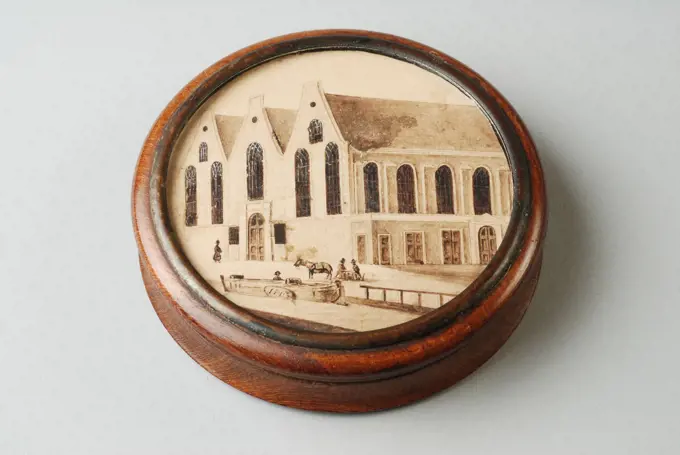
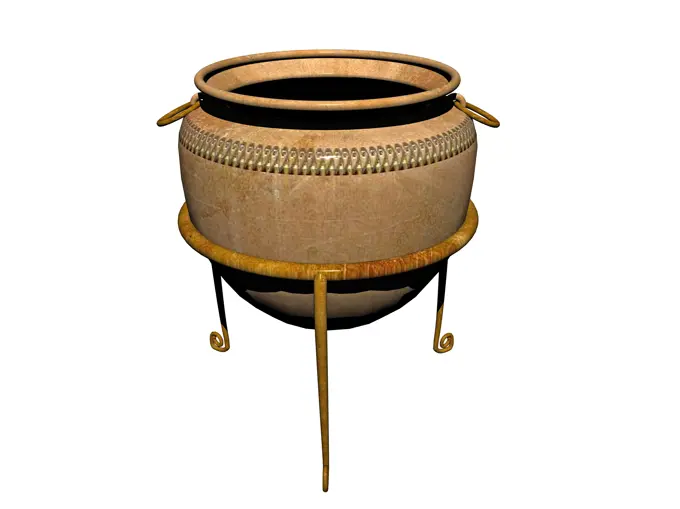
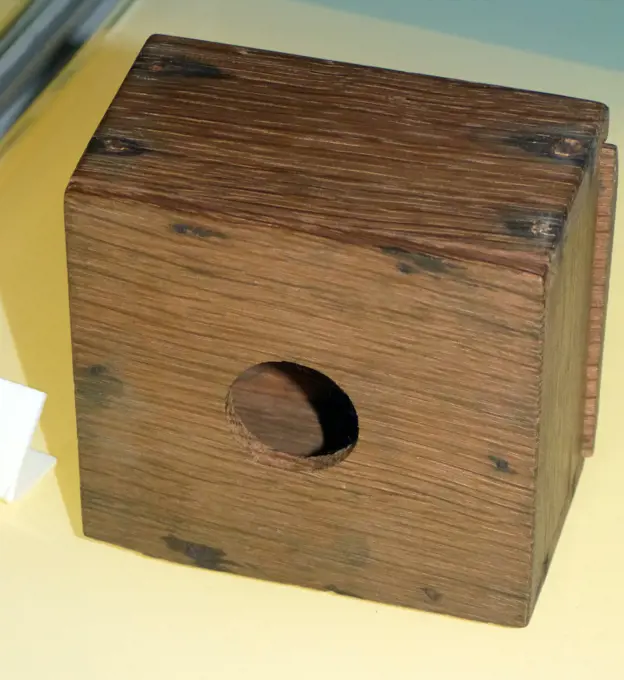
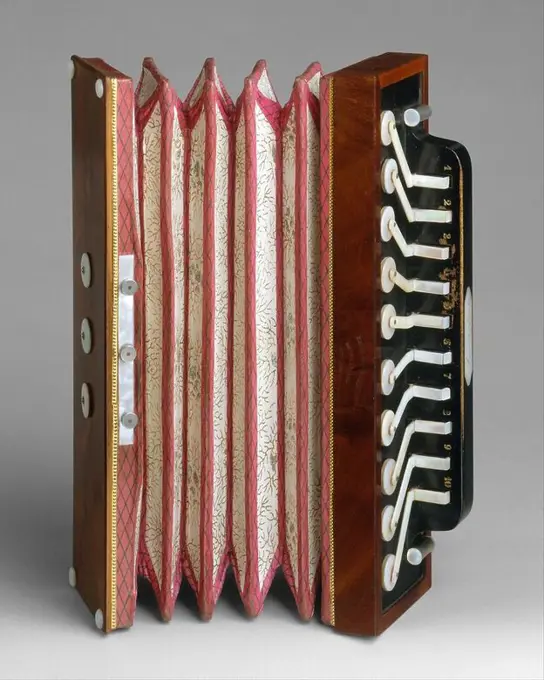
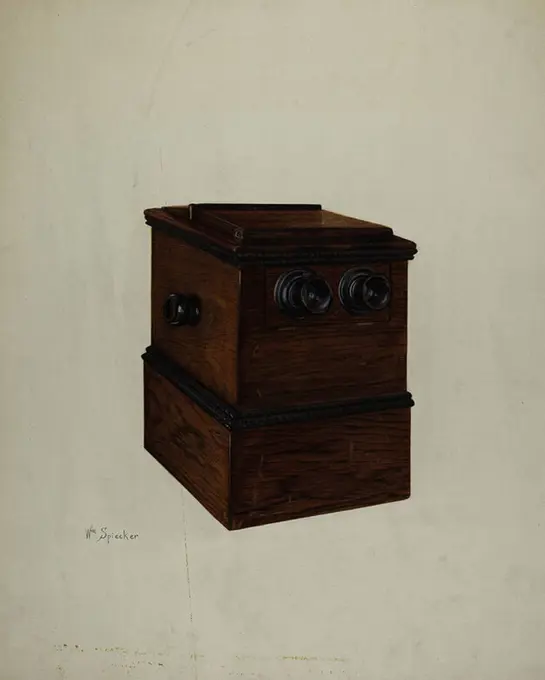
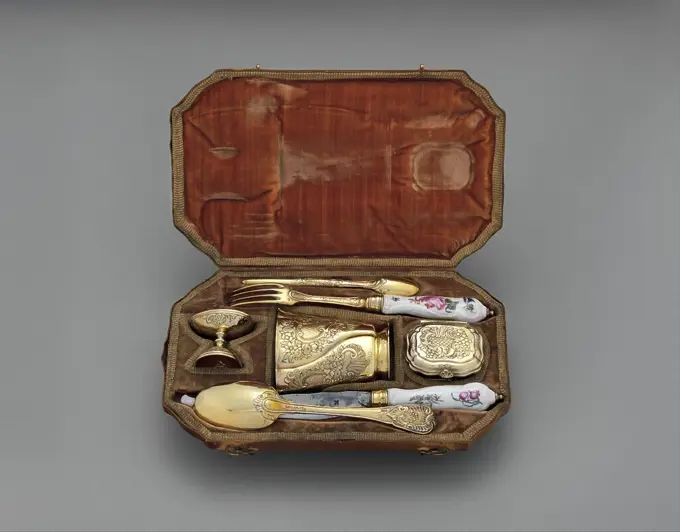
Share lambrizing from the house of Dentz van Schaick, Carel Adolph Lion Cachet, c. 1900 - c. 1905 Scot, part of the paneling made for the house of Mr Th.G. Dentz van Schaick on Frederiksplein in Amsterdam 50-52. This shot consists of eight vertical and four horizontal panels and is made of rosewood and walnut. With blue chalk: 2. Amsterdam rosewood (wood). walnut (hardwood) Scot, part of the paneling made for the house of Mr Th.G. Dentz van Schaick on Frederiksplein in Amsterdam 50-52. This shot consists of eight vertical and four horizontal panels and is made of rosewood and walnut. With blue chalk: 2. Amsterdam rosewood (wood). walnut (hardwood)Book Storage box., Anonymous, c. 1475 - c. 1500 Book Storage box, wood with pressed leather covered with iron tires, lock and key, hanging on a yellow band.  wood (plant material). leather. iron (metal) Book Storage box, wood with pressed leather covered with iron tires, lock and key, hanging on a yellow band.  wood (plant material). leather. iron (metal)retro wooden suitcase isolated on white background Model of a Javanese Marketplace, c. 1830 - c. 1860  Model of a Javanese market stable, in the original housing. The scene is set around two elongated market buildings, built from pillars (pendopos, typical of Javanese architecture, but these are equipped with Dutch tile roofs). At the rear of the two buildings is the building of the Chinese market master. In and around the pendopos there are 153 figures: Chinese, Malabars, Javanese, and other residents from the archipelago. There are countless venters, on the floor, saleswomen, musicians of gamelanorkests, and individual figures who visit the market. On the left a parade of Javanese court officials, including a regent (bupati), wedono and mantri, dancers precede them. On the right we see a Dutch couple. Java wood (plant material). glass. figuren:. paint (coating). metal  market JavaSewing Box (Costurero). Unidentified artist. Mexico, Pátzcuaro, circa 1810. Furnishings; Accessories. Wood and lacquer with painted decorationColumbia Bank' still bank, c. 1897, Columbia Grey Iron Company, Columbia, Pennsylvania, 3 1/2 x 2 5/8 x 2 3/8 in. (8.89 x 6.67 x 6.03 cm), Iron, pigment, 19th-20th centuryBowl -1/4 Boisseeau from Delft. Chasing seats dry goods with block of 1/4 boisseeau, v.zv. Brand and labels.Half Model of a Pilot Cutter.Stack model (port) of a mast cutter. Vertical defit. Overhanging fence with small, flat gateboard; Stir with square roofing station and rounded stir sheet. The Zeeg opens forward, a Reehout. V-shaped underwater ship. The bowsprit is next to the presence; The boom is indicated on the model. Scale 1:40 (according to Obeen).Security Box' still bank, early 20th century, 2 1/4 x 5 1/16 x 3 1/4 in. (5.72 x 12.86 x 8.26 cm), Tin, pigment, England, 20th centuryInk, one of a set of 16, c. 1757, 2 3/4 x 1 5/16 x 7/16 in. (6.99 x 3.33 x 1.11 cm), Pine soot and animal adhesive, China, 18th centuryInk, one of a set of 16, c. 1757, 2 1/4 x 7/16 in. (5.72 x 1.11 cm), Pine soot and animal adhesive, China, 18th centuryInk, one of a set of 16, c. 1757, 2 15/16 x 1 11/16 x 7/16 in. (7.46 x 4.29 x 1.11 cm), Pine soot and animal adhesive, China, 18th century, Boxed sets of ink sticks were often commissioned to commemorate historic events and special occasions. One of these sticks bears an inscription recounting the emperor Qianlong's (r.1736-95) visit to West Lake in Zhejiang province in 1757. While there, he inspected and renumbered a set of sixteen lohan paintins that had survived since Tang times. Upon his return to Beijing, he commissioned the court painter Ting Kuang-peng to create a set of sixteen lohan paintings based on the earlier model. Each of these ink sticks bears an image of a lohan based directly on one of Ting's paintings. Each stick also bears an inscription enumerating the numerical order of each lohan existent from Tang times and the new numbering system imposed by the emperor. Each ink stick also includes two seals of the Qianlong emperor and a poem in the emperor's writing style.Game Box 15th-16th century French. Game Box 468458Cabinet with scenes from the Story of Esther after 1665 British During the seventeenth century biblical stories featuring heroines such as Esther, who courageously interceded on behalf of her people with her husband, the Persian king Ahasuerus (depicted on the lid), were popular as instructive examples for young women. Enclosing a mirror, the lid of this cabinet opens to reveal a tray with writing implements. The central compartment is lined with a landscape drawing, which is reflected in tiny mirrors placed at an angle, offering perspective views not unlike the interior of contemporary collectors cabinets. The front panels give access to tiny drawers.. Cabinet with scenes from the Story of Esther 229034. Black lacquered writing necessaire with pearly flowers, birds etc. Silver frame.Half Model of a 44-Gun Frigate.Polychromed mold model (starboard) of a three-master. Two and twenty gunposes divided over gun cover and semi-deck. Wrinkled mirror, hollow wulf, no details of fence or side gallery; Stir straight with square roofing. Scroll a little ascending, one mountain wood and one Reehout at both ends. Peaked round trip.Model of the Spiral Staircase of a Lighthouse, Petrus van der Loo, 1834 demonstration model Model of a part of a lighthouse of Haamstede, showing the spiral staircase inside, incomplete. The lighthouse is round, the stairs follows the outer wall and leaves a hole in the middle free. Scale 1:10 (according to Obreen). Netherlands wood (plant material). brass (alloy)PouchModel of a Launch, anonymous, c. 1865 - c. 1880 ship model. demonstration model Polychromed truss model on a standard. Smooth bodder double -belt barkas, around with almost flat siege and flat mirror; A foreclock, six dids and five railway sticks, an extra loose doft in the bow, and an open cabin with side rods and another loose doft. Easy stir with a curved brass tile stick to be able to go around the drizzle. Scale 1:10 (derived). Netherlands wood (plant material). brass (alloy)Patrontas from the wreck of the East India Hollandia. CARTRIDGE CASE; ID. NG 1979-276H, with Fragm or Leather Cover.Copper tobacco box with face on Rotterdam and REITEND TAGEN UND VIEL FANGEN ..., tobacco box holder metal copper brass, stamping technique inserted Narrow box with flat hinged lid round corners raised sides of red copper top: heraldry cityscape topography Rotterdam Maas trade negotiation Erasmus tobacco smoking store snuffboxAncient style wooden treasure chest with mother of pearl inlayPart of a lits-jumeaux., Piet L. Kramer, c. 1920 Lits-jumeaux made of oak and pine and black tinted without. Design P. Kramer. Ca. 1920. Ligbelbel. Netherlands oak (wood). pine (wood). beech (wood) Lits-jumeaux made of oak and pine and black tinted without. Design P. Kramer. Ca. 1920. Ligbelbel. Netherlands oak (wood). pine (wood). beech (wood)birdcage, Silver, Four-footed scrolled tray supports barred cage between four finialed corner posts. Hinged false door. Scrolled cresting around top to which is fixed a ring handle. Contains parrot in ring perch. Dutch standard mark on base and door. Export mark on door., Amsterdam, Netherlands, 19th century, metalwork, Decorative Arts, Miniature, MiniatureModel of An Armed Longboat, Rijkswerf Vlissingen, 1853 ship model. instruction model Excited block model on a standard. Smooth bodder double -belt barkas, around with a little seam and flat mirror; A foreclock, five dids and an open cabin with side rods, not a rudder. Two brass tubes have been installed under the middle doft, leading heavy ropes through the hull; These ropes are operated with two roasting pills that are applied to the same doft. Two cannon treads on sleden were hung on these ropes against the bottom of the barkas; They are also worn by heavy ropes along the front and stern and light ropes over the sides. Scale 1:20 (Obreen). model maker: Flushingafter design by: United Kingdom wood (plant material). brass (alloy). ropeChest. Dated: 1935/1942. Dimensions: overall: 34.4 x 49.3 cm (13 9/16 x 19 7/16 in.) Original IAD Object: 23 1/2" high; 51" long; 24" wide. Medium: watercolor and graphite on paper. Museum: National Gallery of Art, Washington DC. Author: Ethelbert Brown.CAJA DE USHEBTIS DE JABEJENT, SERVIDOR EN LA ESTANCIA DE LA VERDAD - 1295-1186 AC - DINASTIA XIX - MADERA PINTADA - ARTE EGIPCIO. Location: MUSEO ARQUEOLOGICO NACIONAL-COLECCION. MADRID. SPANIEN. HORUS DIOS EGIPCIO.Grain size of ½ decaliter. Wooden grain size of ½ decaliter with label.Korean Traditional ToolPutte, I. van der, Biblia, that is the ganth H. Scripture, bible oud_druk book information form paper cardboard leather copper, printed Biblia that is the gantsche H. Schrifture varvattende all the Canonijcke boecken des Ouden and the New Testaments By charge of the High Mog. Heeren Staten Generael der Vereenighde Nederlanden and according to the testimony of the Synod Nationael held to Dordrecht in the years 1618 and 1619. Uyt the original languages in our Dutch loyal fairy kick overgeset. With consent from the Ed. Gr. Achtb. Heeren Burgermeesteren in Amsterdam. In Amsterdam by I. van der Putte Wed. I. van Hekeren H. Burgers P. Verschueren C. Oterlyk Ph. Losel I. Spanseerder 328 124 148p Rotterdam states translation bag carrier tin grain scale grain meter guild Originates from the Rotterdam Zakkendragers.M Rosenshield von Paulin, Dough Trough, c 1940 Dough TroughBox of Four Trays with Design of Paulownia Crest 18th century Japan. Box of Four Trays with Design of Paulownia Crest 58241Trunk;  XVII/18th century (1680-00-00-1720-00-00);Mokicz, Leonard (1912-1980), Mokicz, Leonard (1912-1980)-collections, geometric ornament, plant decoration, purchase (provenance)Half model of an Admiralty of Amsterdam war frigate.This is the oldest half model in the Navy Models Gallery. It is signed by Charles Bentam, an English shipbuilder hired by the Admiralty of Amsterdam in 1728 to modernize Dutch naval shipbuilding. It is highly unusual for a half model to be signed by its maker.Half Model of a Gaff-Rigged Gunboat.Polychromed mold model (starboard) of a single master. The skin above the bark wood is closed and detailed with a sword and three puttings; One gunpost on the bow. The deck is closed. Round stern, broad stir. Flat bottom. The seam goes forward and back, one bark wood.Frame Drum 19th century Native American (Dakota) Several techniques are employed to secure the stretched, Native-tanned leather drumhead to the bent wooden frame of this drum. The hand-carved wooden spikes are inserted through the sidewall of the frame, as well as the stretched edges of the hide. Additionally, leather strips are laced through slits cut near the edges of the stretched skin on the underside of the drum, with reinforced leather radii in six places. The drumhead painting depicts a buffalo, an integral aspect of life on the Great Plains. Oral traditions link the life and survival of the Plains people to the buffalo. For this reason, much generational trauma exists as a direct result of the booming European fur trade of the late eighteenth and nineteenth centuries. The attached drum beater has a stuffed leather head with red-dyed quill pattern evoking the four cardinal directions.. Frame Drum. Native American (Dakota). 19th century. wood, various materials. United States. MeArqueta, siglo XV. Fundación Juan March.Model of the Stern of An 84-gun ship of the Line. Waterline model of the stern of a 1-piece line ship. Waterline model of the outer shape of a stern on a base shelf in which waves are crazy. Round stern with two-storey wull and fence, detailed with trophies, mythological figures and prainmesh, and with side galleries. The Westergang on the top floor is decorated with the national arms and is supported full-length knees. Above the fence a Neptune surrounded by Tritons. Triangular Hennegat in Wulf. Four decks are indicated by gates with fires. Two Barkhouten and a Reehout. Scale 1:40 (derived).PASCAL, Blaise (1623-1662). French mathematican, physicist and philosopher. Calculating machine with six numbers, designed by Pascal between 1642 and 1652. FRANCE. LE-DE-FRANCE. Paris. Conservatoire National des Arts et M_tiers (National Conservatory of Arts and Trades).Studio shot of wooden chestSnuff box made from the wood of Van Speijk ship. Turned wooden round box with red and black edge and from inside red / black / brown turtle (). Snuff box made from the wood of Van Speijk ship (red & black edge).Small Letter Box (Ko-fubako) with Decoration of Clematis Vine early 17th century Japan. Small Letter Box (Ko-fubako) with Decoration of Clematis Vine 45325Spanish Treasure Chest or money coffer, 15th cent. SPAIN.Model of the Stern of a Ship in Frames, anonymous, c. 1797 - c. 1807 instruction model Spant model with sentences of a stern. Get mirror with three throws and horizontal filling pieces in between. Hol Wulf, framework of the fence, side galleries not indicated. The model shows four trusses of founding (the rear two are mights) and the ration wood; Nine -part trusses. The Zeeg runs backwards. Amsterdam wood (plant material). brass (alloy)Cover of an ink well, anonymous, c. 1750 - c. 1799 Lid of stoneware, the ink pot is missing. Covered with cobalt blue. Westerwald. Westerwald stoneware. glaze. cobalt (mineral) vitrification Lid of stoneware, the ink pot is missing. Covered with cobalt blue. Westerwald. Westerwald stoneware. glaze. cobalt (mineral) vitrificationCassette, paintwork, decorated with landscapes and mountains, anonymous, 1750 - 1800 Rectangular box (Ryoshibako) With an inner box and with a somewhat convex lid; Engraved copper hinges and lock. Decorated in gold hiramakia on a black soil with a landscape on the lid and the sides with a temple near a lake. Inside and and inner box Nashiji. The coffin is probably a writing set together with AK-NM-6104. Japan whole: Wood (plant material). whole: Lacquer (coating). whole: Gold (metal). Copper (Metal) lacquering Rectangular box (Ryoshibako) With an inner box and with a somewhat convex lid; Engraved copper hinges and lock. Decorated in gold hiramakia on a black soil with a landscape on the lid and the sides with a temple near a lake. Inside and and inner box Nashiji. The coffin is probably a writing set together with AK-NM-6104. Japan whole: Wood (plant material). whole: Lacquer (coating). whole: Gold (metal). Copper (Metal) lacqueringModel or a gig. Witnessed pant model on a standard. Overnight ankle belt boom, rudging with flat mirror; A prior to four docks and tracks, open cabin with satofits and a hennegat. Easy stir with a curled brass lump. The model has one mast with emmer sailing, a flagpole on the presped. Only the walkway has been preserved. Scale 1:20 (Scale by model).Model of a storage box 1st-2nd century China. Model of a storage box 46135Lottery Drum Transparent lottery drum on an isolated studio background Copyright: xZoonar.com/AndreyxSkatx 14714125Cabinet ca. 1640-50 Attributed to Herman Doomer The sophisticated ripple moldings on the cabinets exterior playfully bring out the lustrous quality of the severe black ebony. Other tropical veneers as well as inlays of mother-of-pearl and green-stained horn enliven the cabinets interior which encloses multiple drawers as well as a compartment with a mirror-lined "stage" for the display of a treasured artwork. This cabinet is attributed to Herman Doomer, one of the few cabinetmakers working with ebony and mother-of-pearl in Amsterdam, the foremost European market for such exotic materials. Doomer gained fame through the portrait Rembrandt painted of him, also in the Museum's collection (see 29.100.1).. Cabinet. Figures on interior of doors after designs by Pieter Jansz. Quast (Dutch, Amsterdam (?) 1605/6-1647 Amsterdam). Dutch, Amsterdam. ca. 1640-50. Oak veneered with ebony, snakewood, rosewood, kingwood, cedar and other woods; mother-of-pearl, ivory, green stained bone. Woodwork-FurStew with two glass medallions, one of which is painted with three female figures on a meal, anonymous, c. 1400 - c. 1950 Oak stew on legs, with a copper handle and decorated with copper knots. In two of the side walls, glasses are placed in the medallions, one glass of which is painted with three female figures, seated on a meal (this glass is cracked in four pieces). Northern Netherlands (possibly) wood (plant material). oak (wood). glass. copper (metal) Oak stew on legs, with a copper handle and decorated with copper knots. In two of the side walls, glasses are placed in the medallions, one glass of which is painted with three female figures, seated on a meal (this glass is cracked in four pieces). Northern Netherlands (possibly) wood (plant material). oak (wood). glass. copper (metal)Ivory overlaid on wooden chest. Sri-Lankan (Ceylonese) circa 1700. Traded by Dutch east India tradesmenHalf model of an Admiralty of Amsterdam war frigate, Charles Bentam, c. 1740 ship model. half model Polychromed block model (starboard) of a three -mast, very detailed, mounted on a ground board covered with painted paper, which is provided with a decorated frame. Twelve gun ports indicated on one deck, one gate in the Wulf and one on the lower deck. Crowned lion as a shit, cutting work between the slooiknies. Gewlen mirror, cave wulf, fence and side gallery of one floor, completely decorated with carving; On the flat stretch between Hek and Wulf painted weapon trophies. Straight with square Roer King, Kiel with Hieling. The model is equipped with all the rest with Juffer blocks. Seeping to both ends ascending, two barkhouts and one reehout. Peaked around. Scale approx. 1:48 (scale on model). Amsterdam wood (plant material)   AmsterdamA hundred shooting clock; Krügner, Salomon (fl. Ante 1691-1745); 1. PO. 18th century (1720-00-00-1745-00-00);Akant (ornament), baroque (style), flowers, purchase (provenance)"Miniature wooden camera measuring 4 x 4 cm, produced by Anton Tischler around 1886, including lens, body, folding mechanism, and viewfinder for compact photography."Half Model of a 16-Gun Brig.Framed mold model (starboard) of a tweemaster, incomplete. The skin above the bark wood is closed, eight gunpaints on a deck. The sheek image is missing, the remaining silhouette betrays a standing figure. Wrecked mirror, hollow wulf, fence with three and half lights and scalloped edge; Stir straight with square roofing. The seam runs to both ends, a bark wood. The underwater ship is a sharp V shape. Resting the large and fokkemast (the latter is missing). Scale 1:55 (derived).Base of the caritas Base of marble from the Caritas.  marble (rock) Base of marble from the Caritas.  marble (rock)Closed Wooden chest, isolated on a white background.Cassone early 15th century Italian. Cassone. Italian. early 15th century. Wood, gesso, gold leaf, velvet. Woodwork-FurnitureMandwieg, anonymous, 1685 - 1700 Mandwieg. The cradle is covered with a blue damask cradle rug, hanging on a front lambal. The deck is decorated with band and cord solution and frills, in white. The cradle is half fell. NOTE: The rocking rug consists of two parts, both attached to the lambler. Northern Netherlands . Mandwieg. The cradle is covered with a blue damask cradle rug, hanging on a front lambal. The deck is decorated with band and cord solution and frills, in white. The cradle is half fell. NOTE: The rocking rug consists of two parts, both attached to the lambler. Northern Netherlands .Box probably 13th century A dragon, a centaur playing a horn, a lion, and a dog enliven the surface of this tiny box.. Box. probably 13th century. Ivory, painted; silver mounts. Made in Italy, Sicily. Ivories and BoneModel of AN 84-Gun Ship of the Line (Starboard Side). Towlock model (starboard side), cut lengthwise. The model is provided with complete shelling and extremely detailed. Seventy-seven canons and carrangles have been preserved; The model has divided sixennial guns over three decks. Five levels: cow bridge with local lower levels, bottles, intercourse, closed bowl and semi-deck with covered pit, top campanje with two oval roasts, all shot with doors, stairs, cupboards, cages etc. The shoeboard is a crowned man (Neptune), The galleon is decorated with sea attributes and has eight conveniences, the crane beams are decorated and have lion masks. The ship has a round storm with wull with two gates and fence of two floors with carving of tendrils, corner figures and the national arms; Side galleries of two floors. Straight stir with square rhythm and a brass stir-pin with a locker, no luiver trolley, gutters through which the control frame is led to the steering wheel on the semi-deck. The mSize of an eighth Mud of Enhuizen.spanen size from an eighth Mud with block on the inside, equipped with brands, 2 labels and label to ribbon.ARQUETA - SIGLO XII - MARFIL MADERA Y COBRE - 41x38 CM - PERIODO ALMOHADE. Location: INSTITUTO VALENCIA DE DON JUAN-COLECCION. MADRID. SPAIN.Pass bowl with sawn -out handles, green -rejected, anonymous, c. 1700 - c. 1799 Grandtop of Groen -Verfd Hout with sawn handles in the short side. Amsterdam (possibly) wood (plant material) Grandtop of Groen -Verfd Hout with sawn handles in the short side. Amsterdam (possibly) wood (plant material)Thread Or Yarn Winder With Base (possibly England); mahogany, metalLuther D Wenrich, Pa German Chest, 1935 1942 Pa. German ChestHand Bag. Dated: 1935/1942. Dimensions: overall: 39.7 x 50.4 cm (15 5/8 x 19 13/16 in.). Medium: watercolor and graphite on paperboard. Museum: National Gallery of Art, Washington DC. Author: Albert Allen.Lazio Frosinone Veroli S. Andrea Apostolo, Cathedral17. Hutzel, Max 1960-1990 Views of metalwork objects housed in Treasury of S. Andrea Apostolo, including busts, reliquaries, crosses, polittico, boxes. Antiquities: relief sculpture; busts General Notes: Museum, which contains Treasury, is located in the last chapel of the right nave. Thirteen views of (non-metalwork) sculpture from Museum have been assigned numbers at end of Treasury sequence, but there are no negatives corresponding to these prints, nor is there authoritative evidence that these objects are housed in the Cathedral Museum. German-born photographer and scholar Max Hutzel (1911-1988) photographed in Italy from the early 1960s until his death. The result of this project, referred to by Hutzel as Foto Arte Minore, is thorough documentation of art historical development in Italy up to the 18th century, including objects of the Etruscans and the Romans, as well as early Medieval, Romanesque, Gothic, Renaissance and BaroqueOld chest isolated on the white backgroundWooden medicine box against white backgroundBamboo, Chiang Ting, 1832 Passepartout for painting Bamboo representation. Note: see AK-MAK-97-B. China ink. paper Passepartout for painting Bamboo representation. Note: see AK-MAK-97-B. China ink. paperHouse still bank, early to mid 20th century, 4 3/4 x 4 x 3 in. (12.07 x 10.16 x 7.62 cm), Wood, pigment, Germany, 20th centuryDrum, 1800 - before 1865 musical instrument. percussion instrument. drum Trom of the militia. The brass kettle is equipped with a veal sheet on both sides, held by a hoop and tense by means of a tension with tractors and screws. Both hoops are decorated with a motif of triangles in the colors red, white and blue. With engraved numbers: 1843-16. Netherlands Kettle: Brass (Alloy). Hoop: Wood (Plant Material). Team resort: RopeARQUETA RELICARIO S XIV. Location: CATEDRAL VIEJA / MUSEO. Lerida. SPAIN.Model of a Marker Waterschip, anonymous, c. 1800 - c. 1850 ship model. fully rigged model. show model  Netherlands wood (plant material). textile materials. rope. copper (metal). paint (coating)  ship-model (+ propulsion of vehicle, ship, etc. by wind) ZuiderzeeSugar Pail with Cover. Dated: 1939. Dimensions: overall: 28 x 35.6 cm (11 x 14 in.) Original IAD Object: 7" high; 12" in diameter. Medium: watercolor and graphite on paperboard. Museum: National Gallery of Art, Washington DC. Author: Erwin Stenzel.Bronze mounted wooden bucket, from tomb at Stjaer, surroundings of ArhusCajonera de cuero, gótica. Siglo XV. Colección privada.. Japanese applied arts often play with expectations, surprising their users. The exterior of this casket is decorated with neat, ordered landscapes. However, the interior is very different, for the flap opens to reveal that the knobs of the drawers are butterflies, whose wings can even move.Square chicken drinking trough or chick stone, delineated by wavy rim, trough holder ceramic earthenware glaze lead glaze, in form made hand-formed glazed baked Chick stone with nine bowl-shaped holes. Red shard Deep notch on the outside edge Corrugated line on sides. Top covered with lead glaze Four small holes around center hole indigenous pottery drinking poultry chicken chick farmer farmFireplace with open worked naturalistic motifs, Theo Nieuwenhuis, c. 1900 - c. 1915 Fine -rose divided into five sections that are separated from each other by a pearl edge. The two narrow parts on the sides contain a grid. The two intermediate parts are slightly wider and contain openwork circles and floral motifs. The wide middle part consists of a fireplace with a cove. There is a valve under the cove. Both the valve, the cove and edge above are opened in stylized naturalistic motifs. Behind the middle part is a container. The fireplace was purchased by W. Pont Jr. for his Villa Theobroma in Hilversum. Amsterdam iron (metal). brass (alloy) Fine -rose divided into five sections that are separated from each other by a pearl edge. The two narrow parts on the sides contain a grid. The two intermediate parts are slightly wider and contain openwork circles and floral motifs. The wide middle part consists of a fireplace with a cove. There is a valve under the cove. Both the valve, the coveDrum, before c. 1837 musical instrument. percussion instrument. drum Trom of the militia. The brass kettle is equipped with a veal sheet on both sides, held by a hoop and tense by means of a tension with tractors and screws. Both hoops are decorated with a motif of triangles in the colors red, white and blue. With engraved numbers: 1837-17. Netherlands Kettle: Brass (Alloy). Hoop: Wood (Plant Material). Team resort: RopeH-Comb, 1500-1600. Made in France or England. Pinto Collection - Purchased from Edward H Pinto, 1965.. Richly carved boxwood combs were given as expensive love tokens in medieval times. The carver chose boxwood because it was the only wood with a sufficiently straight and dense grain to allow him to carve such fine teeth without splitting. He cut the teeth using a double-bladed saw called a stadda. A skilled craftsman with a steady hand could usually cut up to fifty teeth per inch.Antique wooden box, Jodhpur, Rajasthan, India Copyright: xSafatxAli/DinodiaxPhotoxWooden snuff box with Prinsenkerk statue behind glass, snuffbox holder wood glass paper ink, twisted Wooden snuffbox Disc-shaped model. Constricted sidewall. Dark tropical hardwood On the lid watercolor With image of the Prinsenkerk in Rotterdam in the foreground barge and horse for towing vehicle Glass plate in round copper setting Rotterdam City Triangle Gedempte Botersloot Prinsenstraat personal attribute personal equipment smokers snuff tobacco sniffing tobacco preservation tobacco box Prinsenkerk Made for CH Schippers koster of the Prinsenkerk until 1866.Model of A Heating Furnace, Rijkswerf Rotterdam (Possibly), c. 1820 - c. 1850 demonstration model Model of a glow, completely white painted, consisting of the oven section and the chimney, incomplete. The oven section is fitted with slat on the outside and can be taken into two halves to show the corridor system inside. On one side is the fireplace, with a grid and a small access; On the other side, a larger opening gives access to the oven where the objects to be heated are laid; The doors are missing. Fair and oven form one room, only separated by a level difference; The hot air and smoke come into the oven directly from the fire and are dredged back on the other side via two descending corridors to a corridor that they drain through the room to the chimney. Rotterdam (possibly) wood (plant material). brass (alloy)   RotterdamBox. American; New Hampshire. Date: 1674-1700. Dimensions: 24.1 × 67.4 × 38.7 cm (9 1/2 × 26 1/2 × 15 1/4 in.). White pine. Origin: New Hampshire. Museum: The Chicago Art Institute, Chicago, USA.Antique kettle in a metallic bracket of ancient boiler in a metallic bracketTalbot's Camera c 1836 William Henry Fox Talbot developed the firstAccordion. Culture: British. Dimensions: Overall: 33 x 7.6 x 9.2cm (13 x 3 x 3 5/8in.). Date: ca. 1835. Museum: Metropolitan Museum of Art, New York, USA.Mini size little colorful model boat in viewBox with Design of Pine, Bamboo, and Cherry Blossom. Culture: Japan. Dimensions: H. 4 3/8 in. (11.1 cm); W. 4 3/4 in. (12.1 cm); L. 5 1/2 in. (14 cm). Date: 19th century.This box for storing incense wood includes an inner tray and six small incense containers as well as wrapping papers for the aloe incense wood. The small boxes are decorated with patterns referring to chapters of the Tale of Genji. The decoration is executed in a variety of maki-e (decoration of gold and/or silver sprinkled powder) techniques including relief, gradation-sprinkling, line drawing, needle drawing, applied gold and silver foil, geometric gold foil cuttings, carving with gold or silver foil application, and silver inlay.Incense boxes such as this were part of a provincial lord's (daimyô) wedding trousseau, which was taken as part of the dowry to the groom's estate. This incense box belongs to a maki-e decorated daimyô wedding trousseau, consisting of thirty-one pieces depicting auspicious symbols represenModel of Anchor Buoy, Rijkswerf Willemsoord, 1833 demonstration model Excited block model of an anchor buoy for Katankers. It has a onion-shaped body with the tip down and a flat top; It is held together by hoops, about which the trusses run on the outside. Two main trusses continue over the flat top, where they form a cross. A harp closure is applied both above and below. A manhole can view the inside, in which two decks are applied. Scale 1:10 (derived). den Helder wood (plant material). brass (alloy)Modern concept of relaxing on the beach in suitcase 3D render on gray background with shadow Modern concept of relaxing on the beach in suitcase 3D render on gray background with shadow Copyright: xZoonar.com/OlegxLivinskyix 15850558Cricket Cage (Italy); brass, metal wire, painted woodStereooptician. Dated: c. 1937. Dimensions: overall: 44.9 x 36.7 cm (17 11/16 x 14 7/16 in.) Original IAD Object: 14 3/4" high; 10 3/4" deep; 9 1/4" wide. Medium: watercolor, graphite, gouache, and pen and ink on paperboard. Museum: National Gallery of Art, Washington DC. Author: William Spiecker.Model of An Armed Longboat, Rijkswerf Rotterdam, c. 1819 ship model. instruction model Spant model with round wood on a standard. Smooth bodder double -belt barkas, around with flat seam and flat mirror; A foreclock, five dids and railway sticks and an open cabin with side rods. The Voorsteven is copied and has a disk. Three -part trusses. Easy stir with a tie that fits over the roson king. The rig consists of a large mast with RA for a bucket sail and a drizzle with paaaiist sock and blade. The Barkas is armed with a carronade on a loose sledge that rises from front to stern, and is provided with loading utensils. There are also a hand pump, a boat hook and twelve rowing stirs on loose parts. Scale 1:20 (derived). Rotterdam wood (plant material). brass (alloy). bronze (metal)Traveling set in leather case. Culture: German, Augsburg. Dimensions: Length (Fork a): 8 13/16 in. (22.4 cm);Length (Knife b): 10 1/16 in. (25.6 cm);Length (Spoon c): 7 5/8 in. (19.4 cm);Length (Marrow spoon d): 5 7/8 in. (14.9 cm);Overall (Spice box e): 1 × 2 3/8 × 2 1/8 in. (2.5 × 6 × 5.4 cm);Overall (Egg cup f): 1 3/4 × 2 1/16 × 1 1/4 in. (4.4 × 5.2 × 3.2 cm);Height (Beaker g): 3 3/8 in. (8.6 cm);Overall (Case h): 2 7/8 × 10 13/16 × 6 3/8 in. (7.3 × 27.5 × 16.2 cm). Maker: Johann Ludwig Laminit (German, 1696-1752); Johann Jakob Bruglocher II (German, active 1710-52); Johann Mittnacht III (1706-1758, master 1735). Date: ca. 1745-50.Often found in local inventories, the German terms Mundzeug and Besteck originally referred to a case or sheath for holding a personal set of cutlery. These sets contained essential utensils--a knife, fork, and spoon--and other implements, and they reflect the aristocratic ceremony of dining in the eighteenth century. A spice box with two containers, a mar