Decorative Teapots

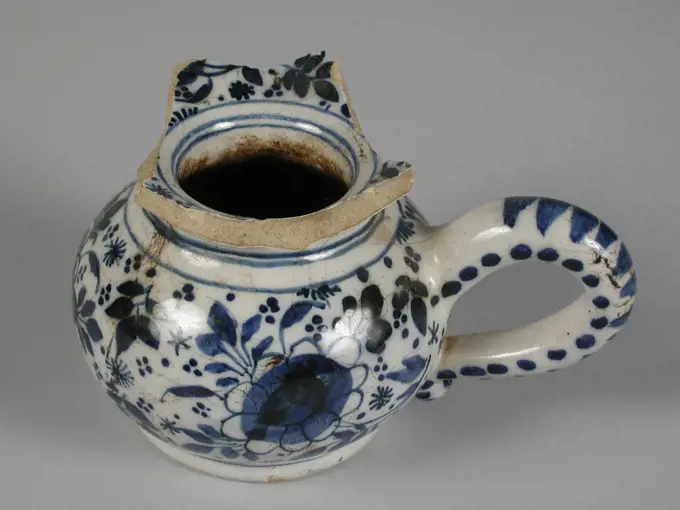
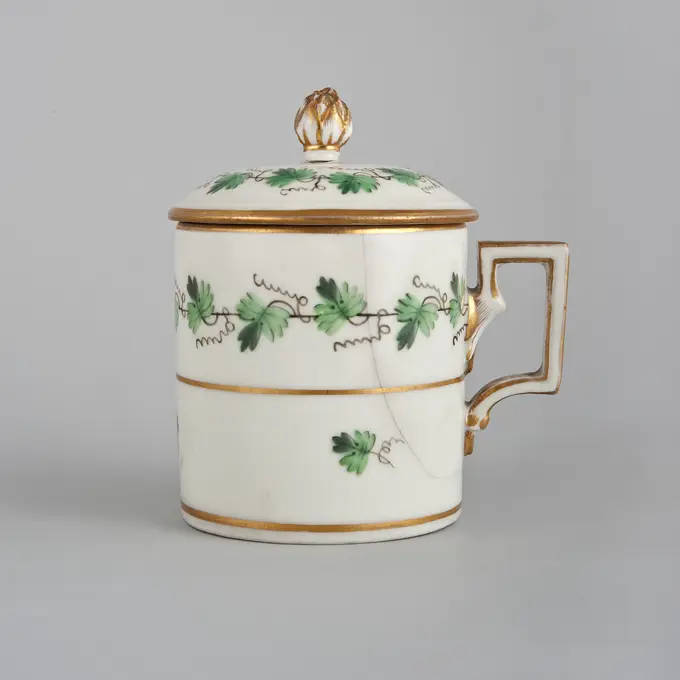
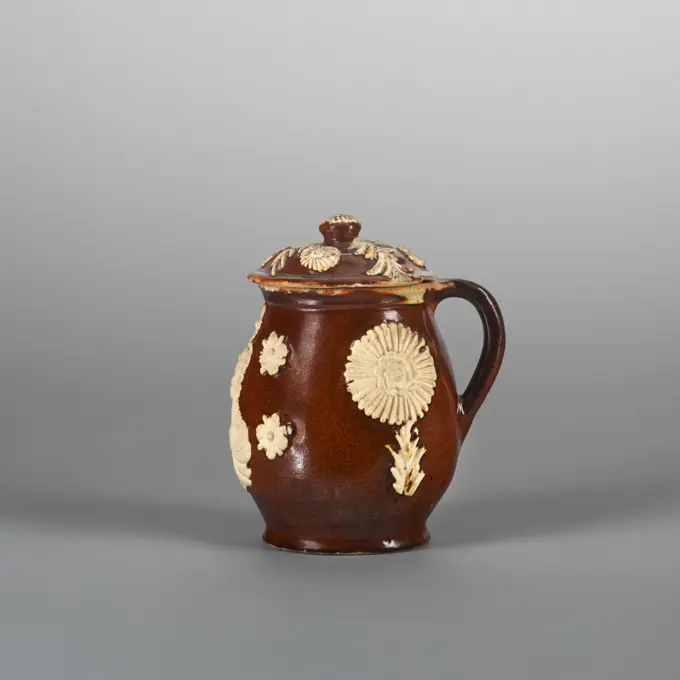
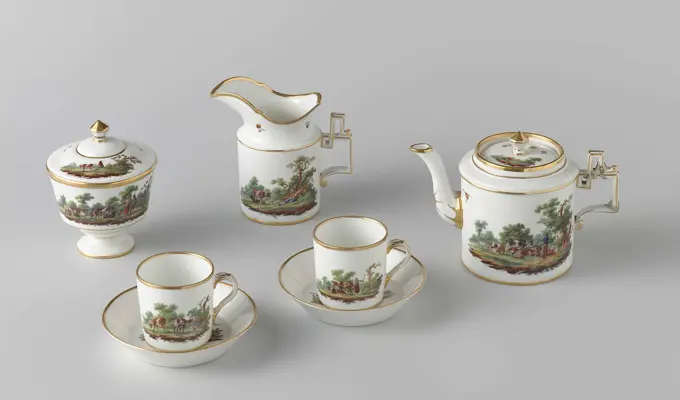
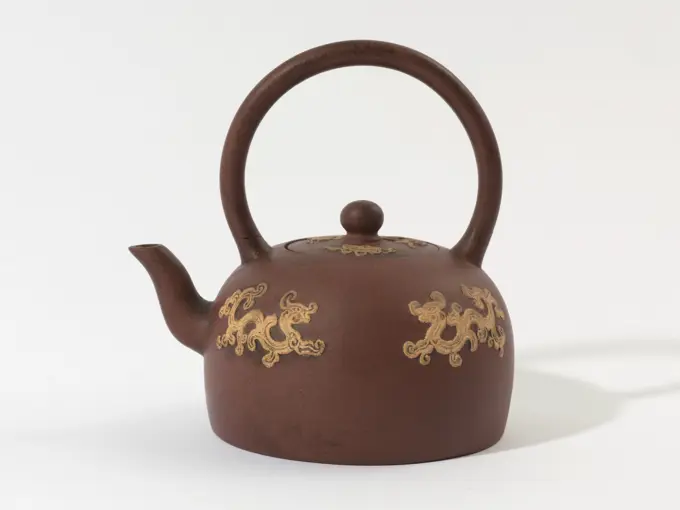
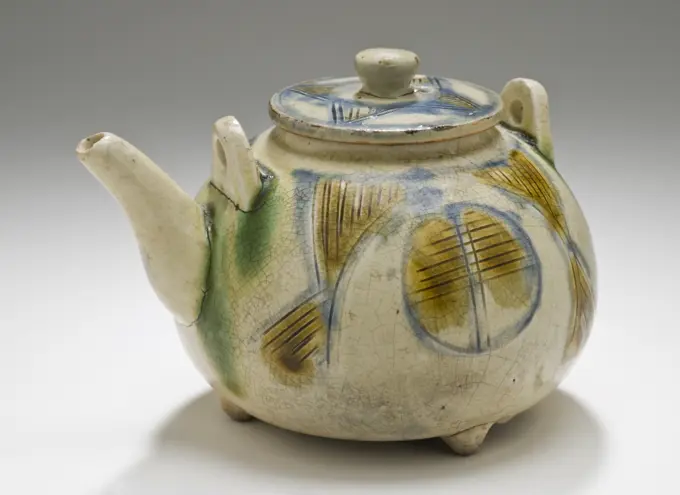
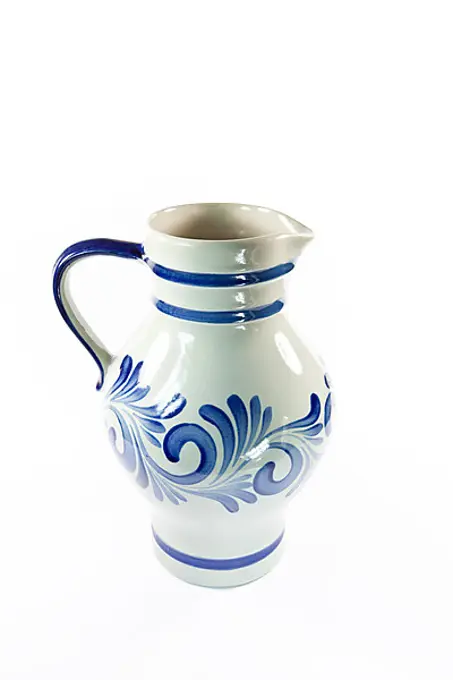
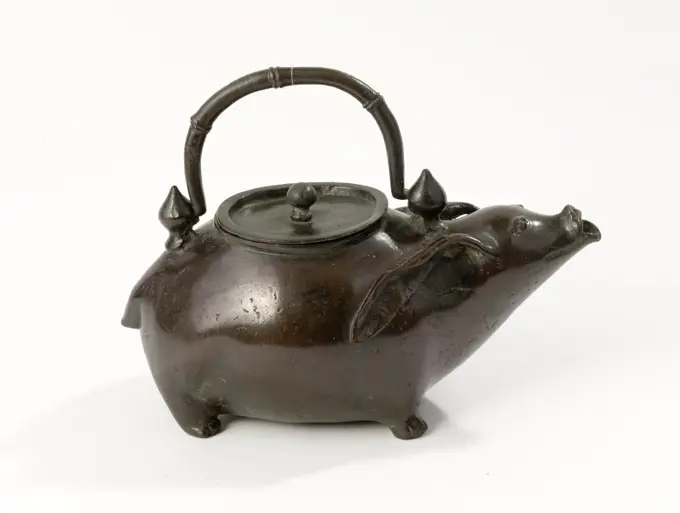
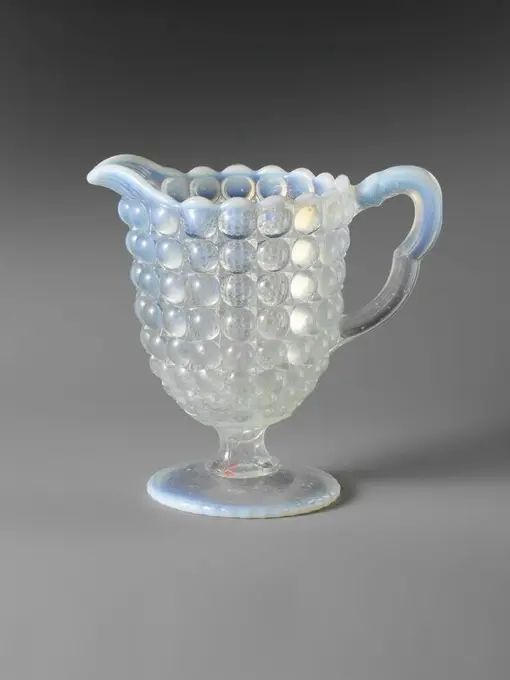
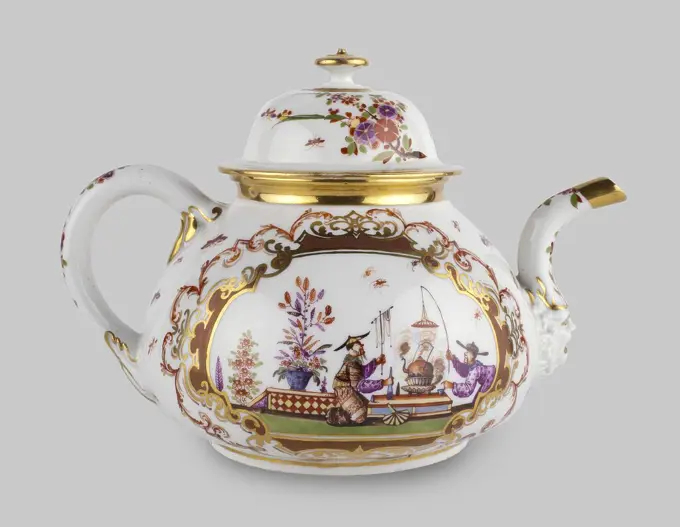
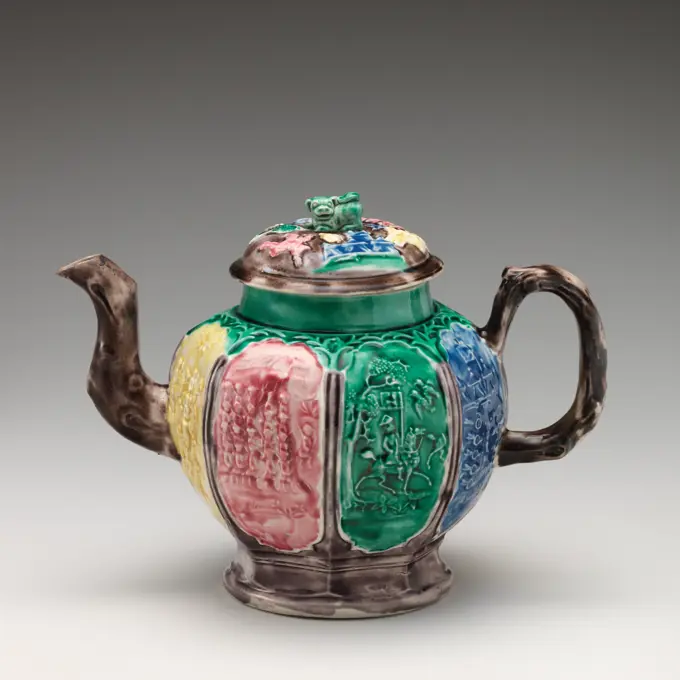
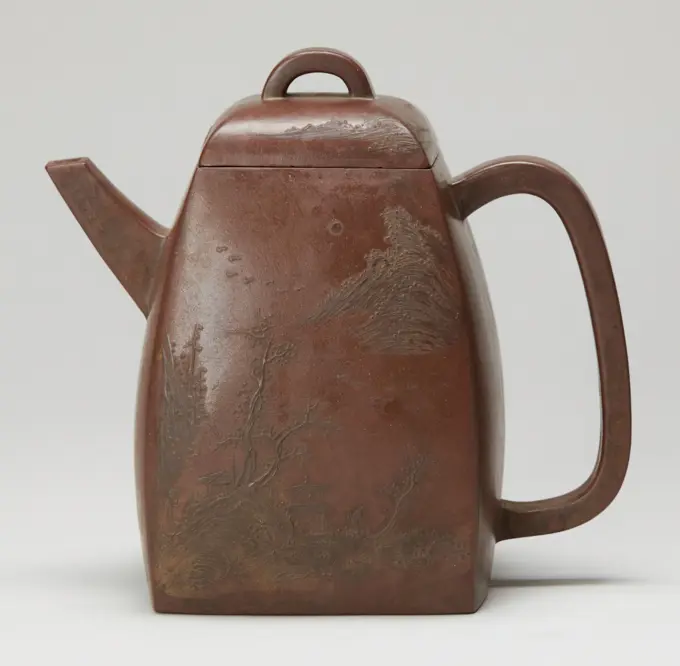
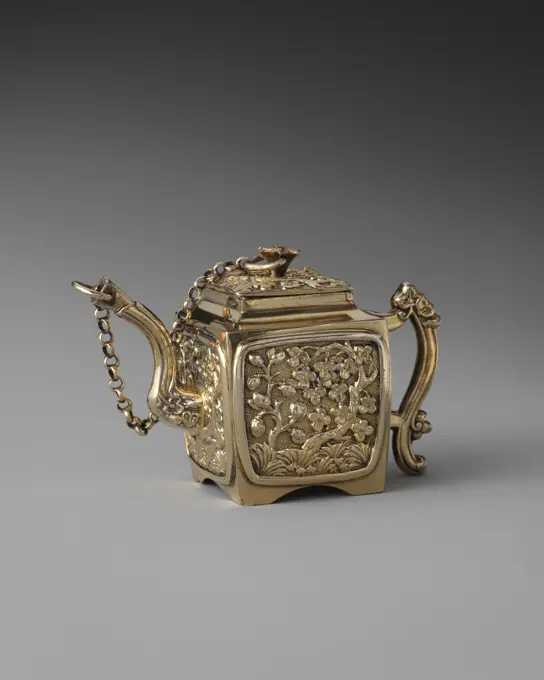
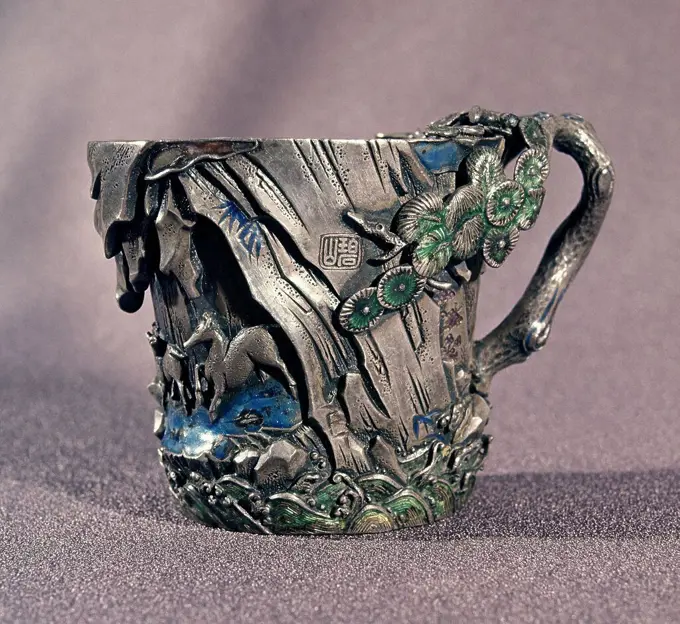
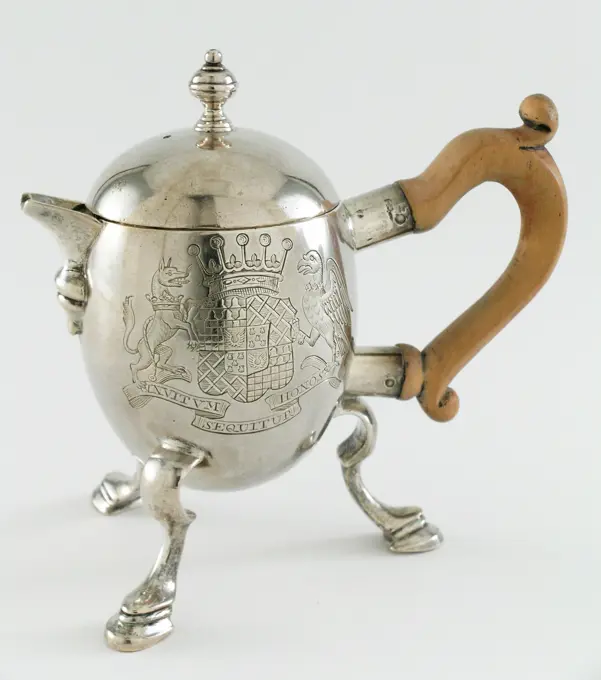
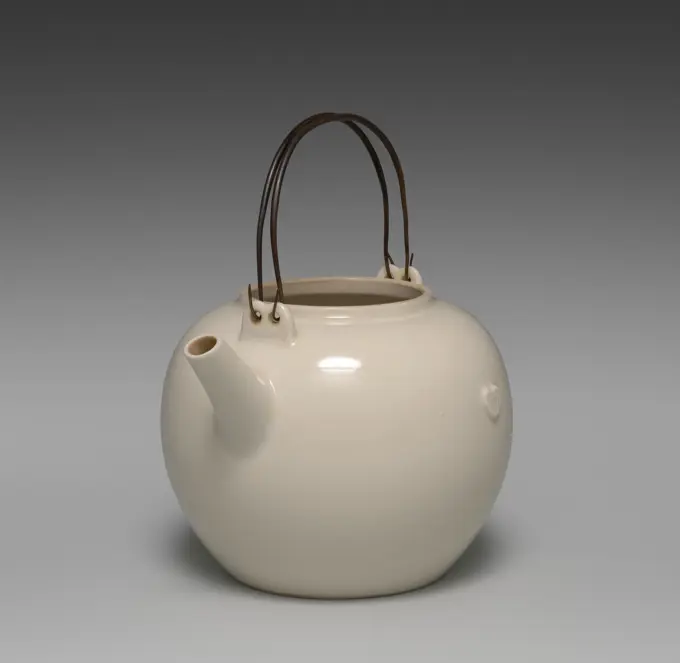
Various decorative teapots and jugs, featuring intricate designs in porcelain and earthenware with floral and colorful details.

Cover with flowering plants in email on insiced flower sprays, anonymous, c. 1700 - c. 1724 Lid belonging to a pear -shaped milk jug of porcelain, painted on the glaze blue, red, green, yellow, black and gold. Decorated in China with flower branches. In Europe with email colors on it decorated with the 'three friends of winter' (bamboo, prunus, pine). On the edge a tire with flower vines against a black -stuck, green background, interrupted by flower vines in a cartouche. Lid has been broken. Decorated in Europe in the Chinese Famle Vert style. Chinapainter: Europe porcelain. glaze. cobalt (mineral). gold (metal) painting / gilding / vitrification Lid belonging to a pear -shaped milk jug of porcelain, painted on the glaze blue, red, green, yellow, black and gold. Decorated in China with flower branches. In Europe with email colors on it decorated with the 'three friends of winter' (bamboo, prunus, pine). On the edge a tire with flower vines against a black -stuck, green background, int
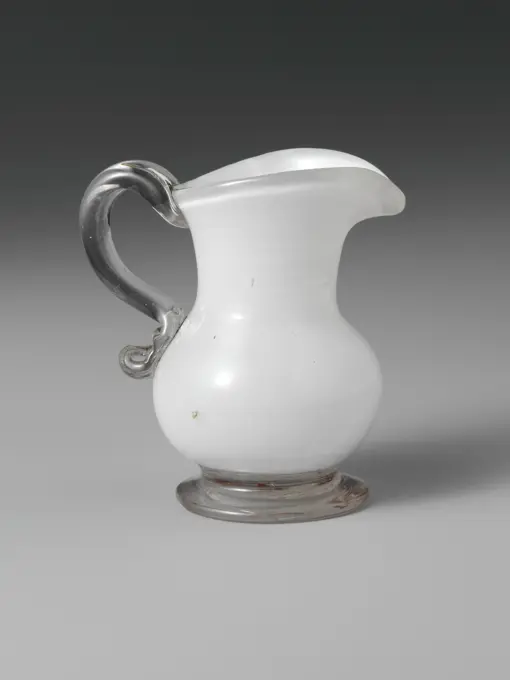
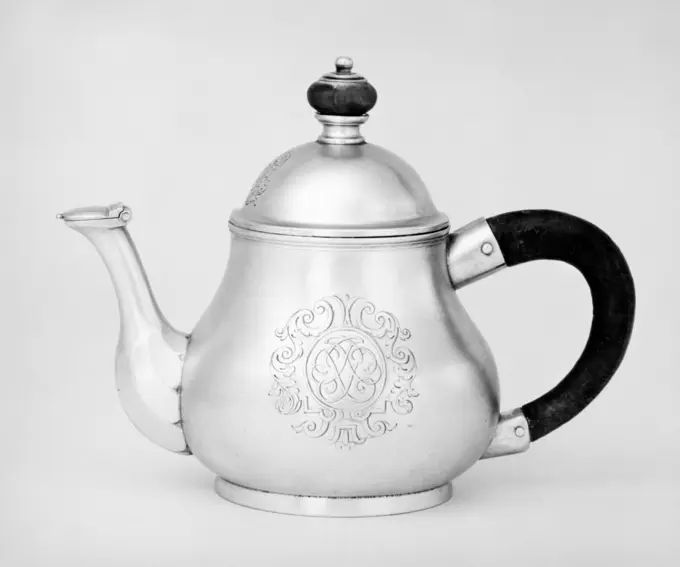
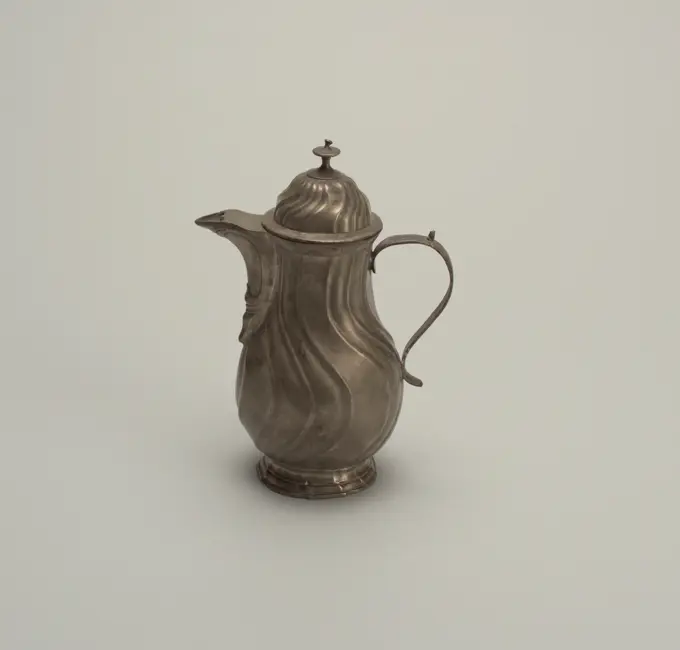
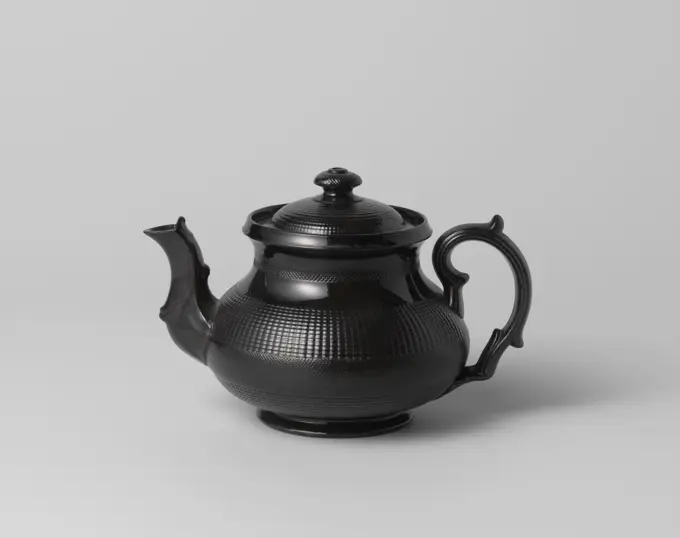
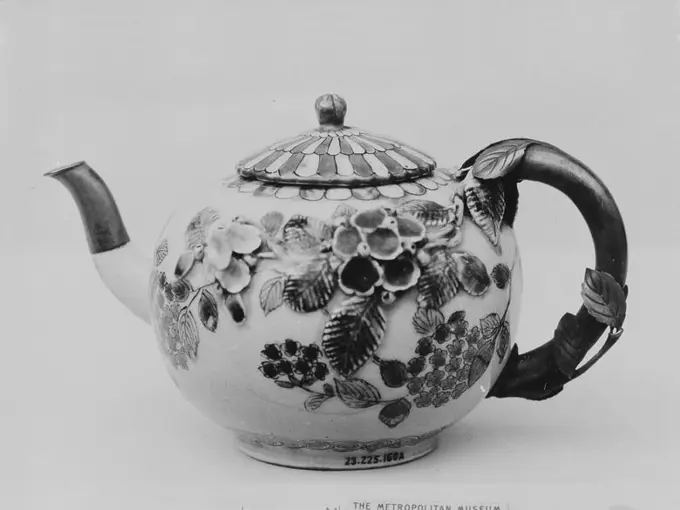
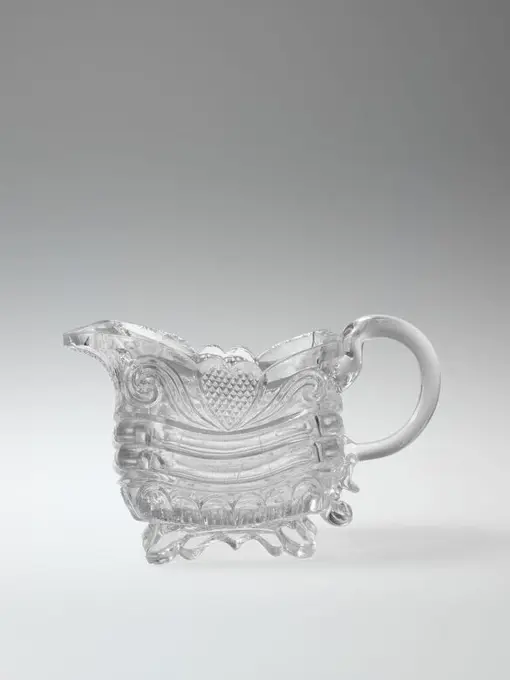
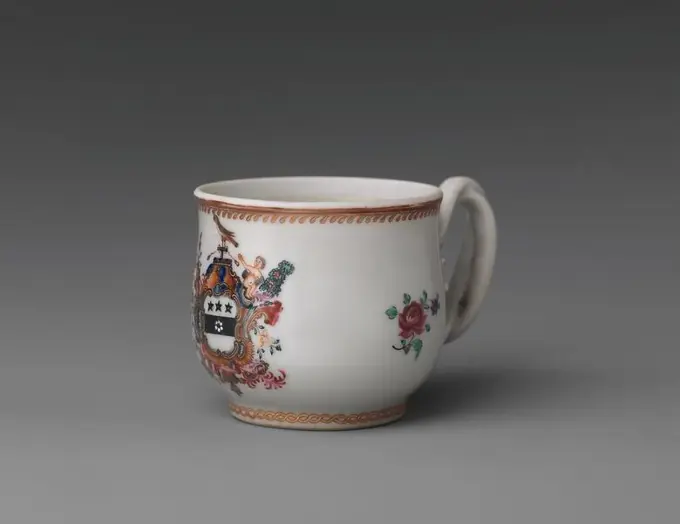
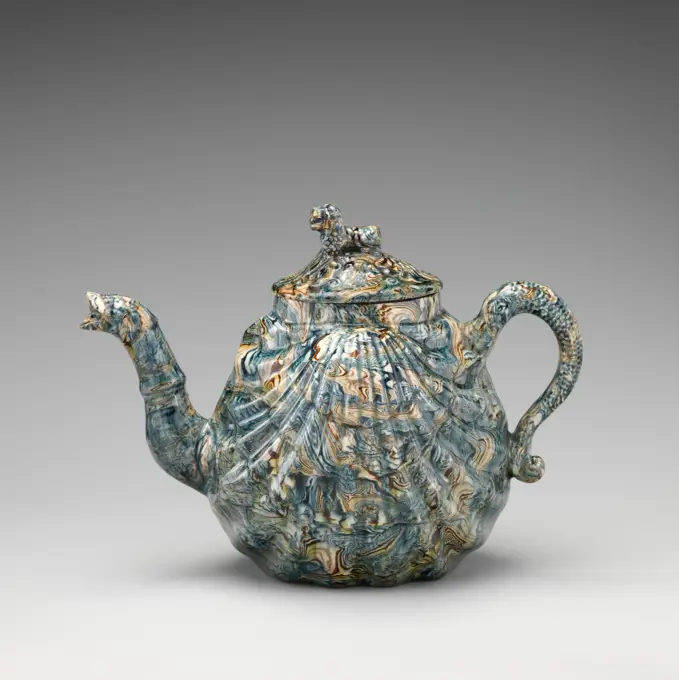
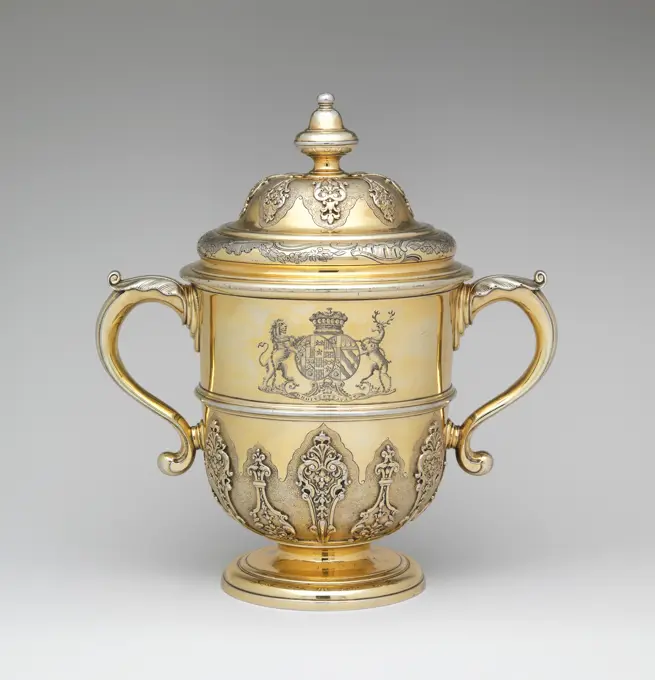
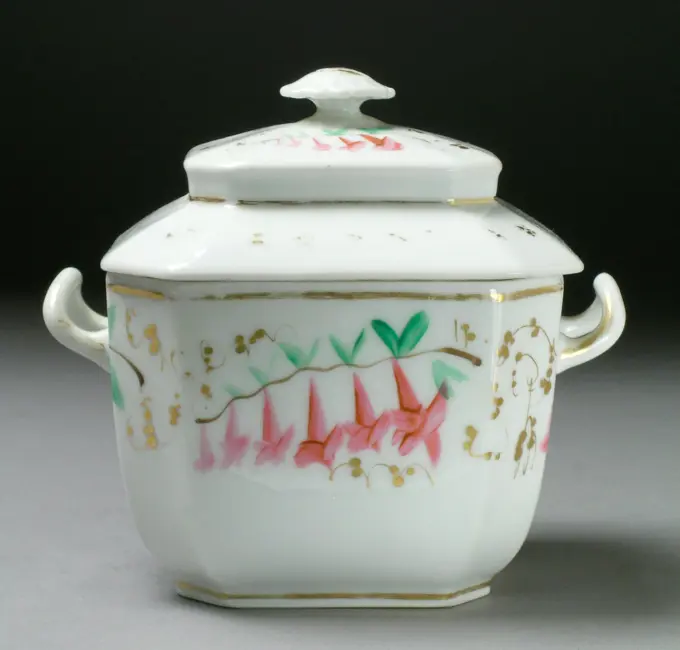
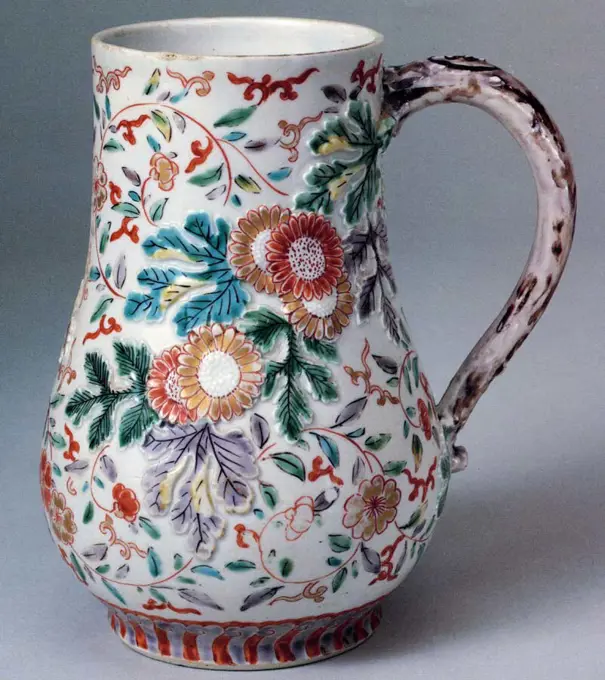
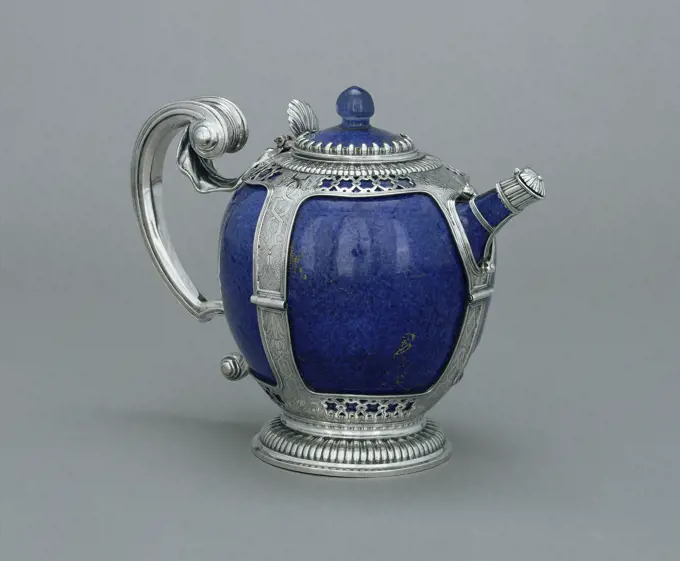
Teapot with sprays in relief, a garland and flowering plants, anonymous, c. 1675 - c. 1724 Porcelain teapot in the form of a pomegranate with C-shaped ear and straight spout, covered with a translucent white glaze and painted on the glaze in blue, red, pink, green, yellow, eggplant, black and gold. Decorated in China with two branches in relief and star -shaped foot. Decorated with email colors in Germany. On the wall a garland with flowers, fruit and insects and a forest with flowering plants; On the ear a mask and a flower branch; The spout with a flower branch. Decorated in Europe. China porcelain. glaze. gold (metal) painting / gilding / vitrification Porcelain teapot in the form of a pomegranate with C-shaped ear and straight spout, covered with a translucent white glaze and painted on the glaze in blue, red, pink, green, yellow, eggplant, black and gold. Decorated in China with two branches in relief and star -shaped foot. Decorated with email colors in Germany. On the wall a garTureen with Lid andPlatterFaience spittoon with ear, blue on white, Chinese decor, kwispedoor keeper soil finds ceramics pottery glaze tin glaze, archeology Rotterdam underground pit indigenous pottery tobacco drains prunes China Soil discovery Rotterdam found at the construction of the metro.Wine pot in the shape of a peach (cadogan type). Culture: German, Meissen. Dimensions: Overall (confirmed): 5 1/2 x 7 x 3 1/2 in. (14 x 17.8 x 8.9 cm). Factory: Meissen Manufactory (German, 1710-present). Date: ca. 1725.This unusual teapot is modeled in the form of a flattened peach; the spout and handle are joined to the body by means of short branches with leaves. With no opening at the top, the teapot was filled from a hole in the base that was plugged with a cork. The Meissen potters copied Chinese porcelain wine pots for the shape of the teapot, but the painted decoration is entirely European in concept, despite its seemingly Asian subject matter.One side of the teapot is decorated with figures in exotic dress in front of a palm tree; the other depicts three figures in similar dress preparing tea. This type of scene is known by the term chinoiserie, which refers to the fanciful depictions of life in an imagined and exotic Far East. These vignettes of life in Asia reflect the EurTeapot ca. 1780 Loosdrecht Dutch. Teapot 188995 Factory: Loosdrecht, Teapot, ca. 1780, Hard-paste porcelain, Height: 5 in. (12.7 cm). The Metropolitan Museum of Art, New York. Rogers Fund, 1906 (06.353a, b)Jug with cover ca. 1725, decorated ca. 1730-40 Meissen Manufactory German. Jug with cover 199195Fili Anka with lid, Wine L; Kaiserliche Porzellanmanufaktur in Wien (1744-1864); 1803 (1803-00-00-1803-00-00);Bronisław Krystall. Testament (Warsaw - exhibition - 2015/2016), Krystall, Bronisław (1887-1983) - collection, litron, legacy (provenance), vitaminCoffee Pot 1800-1825 Vienna. Hard-paste porcelain with grisaille and gilding . Vienna State Porcelain Manufactory (Manufacturer)Vincennes Porcelain Manufactory, Milk Jug and Cover, 1753, soft-paste porcelain.CarafePot with lid; Boles End of the 18th century (1780-00-00-1800-00-00);Bolesławiec Kamionka, overlay decoration, bustTea set, painted with landscape with cattle. Tea set, painted with landscape with cattle. Signature: Amstel in blue.Lid of red hard-baked pottery, children's toys .. The lid with a fruit as a button.Communion Flagon 1830-70 American. Communion Flagon 2183Teapot 1704-5 Pierre Platel. Teapot 205067Soup turbine, oval, cream -colored, Peter Regout, c. 1860 - c. 1890 Pottery soup tough, cream -colored glazed. The convex, oval body in itself widening down, oval foot. Two handles in the form of stylized leaves on the body. Maastricht . vitrification Pottery soup tough, cream -colored glazed. The convex, oval body in itself widening down, oval foot. Two handles in the form of stylized leaves on the body. Maastricht . vitrificationLid, round, with green edge and golden Greek band, Petrus Regout, c. 1865 Cover of earthenware, round, scalloped, with green edge and golden Greek band. Button in the form of two -growing tifles. Maastricht earthenware Cover of earthenware, round, scalloped, with green edge and golden Greek band. Button in the form of two -growing tifles. Maastricht earthenwarePitcher 1847-48 Fenton's Works. Pitcher 5795Coffee Pot (Western Germany); pewterTeapot with lid, black, decorated with rib edges, Petrus Regout, c. 1860 - c. 1880 Teapot with lid made of black stone. The body with ribbed edges close together. The S-shaped spout with volutes in relief. The C-shaped handle ends at the bottom in a stylized leaf. The lid is decorated with concentric rib edges close together, and has a round button with air hole. Maastricht . Teapot with lid made of black stone. The body with ribbed edges close together. The S-shaped spout with volutes in relief. The C-shaped handle ends at the bottom in a stylized leaf. The lid is decorated with concentric rib edges close together, and has a round button with air hole. Maastricht .Teapot and cover. Culture: Japan. Dimensions: H. (with cover) 3 7/8 in. (9.8 cm); L. 6 1/2 in. (16.5 cm). Date: 1780. Museum: Metropolitan Museum of Art, New York, USA.Creamer, Wedgwood, English, established 1759, jasperware, salt glaze, Low footed octagonal pitcher in gray-tan with white classical figures applied to each facet. All over Gothic-style pattern decorating body., England, early 19th century, ceramics, Decorative ArtsCream pitcher. Culture: American. Dimensions: H. 3 5/8 in. (9.2 cm). Maker: Probably New England Glass Company (American, East Cambridge, Massachusetts, 1818-1888). Date: 1827-35. Museum: Metropolitan Museum of Art, New York, USA.Abolition Teapot and Cover, 1760-80. Manufacturer: Josiah Wedgwood & Sons .Custard Cup. Culture: Chinese, for American market. Dimensions: Diam. 3 1/2 in. (8.9 cm). Date: 1785-90.This object belongs to a large dinner service (10.149.1-.248) bearing the Townley family coat-of-arms. The service, probably ordered by Justice Samuel Chase (1741-1811) of Annapolis, Maryland, displays the enamel-painted arms of Margaret Townley, Chase's aunt. Museum: Metropolitan Museum of Art, New York, USA.Covered Jar c 1780-1820 Pennsylvania. Earthenware . Artist unknownJug British 19th centurySaucer 1848-56 Attributed to Charles Cartlidge and Company. Saucer. American. 1848-56. Porcelain. Made in Brooklyn, New York, New York, United StatesPuzzle Jug 1760-1770 Staffordshire. Salt-glazed stoneware .Pitcher ca. 1850 Jersey City Pottery. Pitcher 5815Coffeepot - Lorette Falls. Chûtes de Lorette D'après Cochran & Fleming, 1896-1920Charles Frederick Kandler I, Coffeepot, c. 1730, silver and wood.Fili Anka with the coat of arms Pogo; Korzec (Porcelain and faience manufacture; 1790-1832); 1829 (1829-00-00-1829-00-00);JugTeapot 1750-65 Style of Whieldon type Listen to experts illuminate this artwork's story Listen Play or pause #407. Teapots Supported by Bloomberg Philanthropies We're sorry, the transcript for this audio track is not available at this time. We are working to make it available as soon as possible.. Teapot. probably British, Staffordshire. 1750-65. Agateware (glazed earthenware). Ceramics-PotteryDekschal, round, with green edge and golden Greek band. Cover dish of pottery, round, scalloped, with green edge and golden Greek band.Coffeepot ca. 1760-65 Worcester factory. Coffeepot. British, Worcester. ca. 1760-65. Soft-paste porcelain. Worcester factory (British, 1751-2008). Ceramics-PorcelainCan with five Chinese with a dog and a bird, Petrus Regout, 1879 Can of earthenware with black transfer decor, painted with Okluster. On the outside a representation of five Chinese with a dog and a bird in a garden. Abstract motifs and geometric figures on the ear and along the top edge from the inside and outside. Maastricht earthenware. luster glaze vitrification Can of earthenware with black transfer decor, painted with Okluster. On the outside a representation of five Chinese with a dog and a bird in a garden. Abstract motifs and geometric figures on the ear and along the top edge from the inside and outside. Maastricht earthenware. luster glaze vitrificationBoiler. Round, smooth boiler with handle and lid. The boiler is marked: stk. = Amsterdam, jrl. = You (1754), mt. = Jan embroidery and the letter V.CreamPitcher. Manufacturer attributed to: American Flint Glass Manufactory, American, 1764-1774Proprietor: Henry William Stiegel, American, 1729-1785Ewer 1605-1615 China. This splendid ewer is an outstanding example of cross-cultural inspiration. Made of Chinese blue and white porcelain, it was originally a type of drinking vessel called a kendi. Such vessels took a variety a variety of forms throughout Asia in this case, the rounded shapes indicate it was made for export to Indonesia, where kendis were associated with fertility. The Indonesian form is combined with Chinese decorative motifs like flowering plum branches and fruit clusters.This kendi was then shipped to the Near East, possibly to Persia (modern day Iran), where such vessels were often adapted for use as water pipes. By the early 1600s, it had made its way to England, most likely imported by one of the East India trading companies. Additions to the piece testify to the artistry of English silversmiths an eagle-headed spout was added to the bulbous mouth of the porcelain jug and connected by a set of hinged straps to the waist and base of the vessel. A scroll handle lAskos z dzióbkiem i sitkiem. warsztat attycki, workshopTwo-handled cup with cover 1732 Thomas Farren British. Two-handled cup with cover 204933. Stoneware (jasperware)Creamer. Wedgwood Manufactory; England, founded 1759. Date: 1815-1825. Dimensions: 9.2 × 16 × 9.4 cm (3 9/16 × 6 5/16 × 3 11/16 in.). Porcelain and gilding. Origin: Burslem. Museum: The Chicago Art Institute, Chicago, USA.Sugarbox. William Ellis Tucker (United States, active 1826-1832)William Ellis Tucker Factory (United States, Pennsylvania, Philadelphia, 1826-1838). United States, circa 1828-1834. Furnishings; Accessories. Porcelain, paintedTea pot. White ceramic teapot for teaTankard in the Shape of a Pear late 17th century Japan. Tankard in the Shape of a Pear 49333Mug with an ear; Holland, Aldwinckle & Slater (London; company z 1908/09 (1908-00-00-1909-00-00);Teapot with prunus sprays, birds and a butterfly, anonymous, c. 1700 - c. 1799 Teapot of red stoneware with a cylindrical body, modeled in the form of a slice of a thick piece of bamboo, curved spout and C-shaped ear. Prunus branches, birds and a butterfly on the wall. The flat lid with prunus branches. Tuit, ear and lid button in the shape of knotty branches. Yixing. China stoneware Teapot of red stoneware with a cylindrical body, modeled in the form of a slice of a thick piece of bamboo, curved spout and C-shaped ear. Prunus branches, birds and a butterfly on the wall. The flat lid with prunus branches. Tuit, ear and lid button in the shape of knotty branches. Yixing. China stonewareCreamer 1850-70 American With the development of new formulas and techniques, glass-pressing technology had improved markedly by the late 1840s. By this time, pressed tablewares were being produced in large matching sets and innumerable forms. During the mid-1850s, colorless glass and simple geometric patterns dominated. Catering to the demand for moderately-priced dining wares, the glass industry in the United States expanded widely, and numerous factories supplied less expensive pressed glassware to the growing market. At the Exhibition of the Industry of All Nations at New Yorks Crystal Palace in 1853, for example, the New England Glass Company exhibited 130 pieces of one design, "consisting of bowls, tumblers, champagnes, wines, and jelly glasses." This object belongs to one such service. Although the glass manufactory is not known, the glassware is very typical of the large services that were very popular with Americas middle class in the nineteenth century.. Creamer. American. Cup and Saucer, c. 1800-1810. France, 19th century. Porcelain; overall: 5.8 x 8.3 cm (2 5/16 x 3 1/4 in.).Spouted Cup and Cooling Saucer, Meissener Porcelain Manufaktur, c. 1730 Head with spout made of painted porcelain. The head is covered with a yellow stock in which saved two four-steps with golden edges, in which a Höroldt chinoiserie consisting of two figures in a garden. The head has an ear, painted with flowers in red and a pointed tuit that decorated with a symmetrical flower and leaf ornament in pearl gluster and gold. The head is marked. Float porcelain Head with spout made of painted porcelain. The head is covered with a yellow stock in which saved two four-steps with golden edges, in which a Höroldt chinoiserie consisting of two figures in a garden. The head has an ear, painted with flowers in red and a pointed tuit that decorated with a symmetrical flower and leaf ornament in pearl gluster and gold. The head is marked. Float porcelainCovered Cup, porcelain, gold, China, late 18th century, ceramics, Decorative Arts, cup, cup, Covered Cup, porcelain, gold, China, late 18th century, ceramics, Decorative Arts, cup, cupSugar bowl with relief decoration of Lisdodden, Peter Regout, c. 1870 - c. 1890 Sugar bowl of earthenware, celladon -colored. The walls in relief decorated with dods, which partly go over the two S-shaped ears. Maastricht . Sugar bowl of earthenware, celladon -colored. The walls in relief decorated with dods, which partly go over the two S-shaped ears. Maastricht .Miniature cream jug (part of a set) late 17th-early 18th century David Clayton British. Miniature cream jug (part of a set). British, London. late 17th-early 18th century. Silver. Metalwork-Silver-MiniatureSugar bowl with stylized floral motifs, Parthénon (possibly), c. 1900 - c. 1905 Porcelain sugar bowl with two ears, painted on the glaze in green and red. Stylized flower branches on the outer wall, continuously on the ears. The lid with the same decoration. Designed by Maurice Dufrêne, manufactured for La Maison Moderne, possibly by Le Parthénon, Paris. Paris porcelain. glaze. painting / vitrification Porcelain sugar bowl with two ears, painted on the glaze in green and red. Stylized flower branches on the outer wall, continuously on the ears. The lid with the same decoration. Designed by Maurice Dufrêne, manufactured for La Maison Moderne, possibly by Le Parthénon, Paris. Paris porcelain. glaze. painting / vitrificationTeapot 1790-1800 Daniel Van Voorhis. Teapot 8430Terrine with lid, at a fixed underfacy, with a green edge and golden Greek band. Terrine of pottery, with lid and at solid understaffe, round, scalloped, with green edge and golden Greek band.Jug (England); Manufactured by S. Hughes & Co.; glazed stonewareSCHFORE FOR BOUilloire, spherical, with appliqued Garlandes, belonging to Komfoor, Martinus Logerath, 1772 Silvery Komfoor. Amsterdam silver (metal). purpleheart (wood) Silvery Komfoor. Amsterdam silver (metal). purpleheart (wood)Tea-pot. Sandstone enhanced with gilding, Qing dynasty (1644-1912). Provenance: China. Paris, Cernuschi museum. 78836-9 Asian art, Chinese art, living art, ceramic, Ching dynasty, Qing dynasty, Tsing, GRES dynasty, service to the, theiere, dishesPitcher (England); Manufactured by W. Ridgway & Company (United Kingdom); molded and glazed stoneware, nickel (mount)Turnen, Weesper Porceleinfabriek, c. 1759 - c. 1771 Terrine on four legs with vaulted sections and relief decor. A lemon button of the lid. The decoration consists of multicolored landscapes and sprinkling flowers. Weesp porcelain Terrine on four legs with vaulted sections and relief decor. A lemon button of the lid. The decoration consists of multicolored landscapes and sprinkling flowers. Weesp porcelainA cup with a saucer KorzecSpouted Sake Decanter with Abstract Designs. Japan, Meiji period (1868-1912), 19th century. Ceramics. Tsuboya ware; stoneware incised and with white slip and amber, green and clear glazesCider, Hessian specialty, cider jugSmall milk pot with cover ca. 1723-25 German, Meissen The pieces of this service (1974.356.424-.430) come from one of the most richly decorated Meissen tea and coffee services. The gold background was added after the enamel was fired, either at the factory or in Augsburg, where the gilt-silver mounts were applied. This model was the most commonly produced at Meissen in the 1720s and 1730s. The design of the low octagonal sugar box dates to the earliest years of the factory; this example can be assigned to 1726-27 based on stylistic grounds as well as the factory mark KPM on the base.. Small milk pot with cover 205979Zoomorphic theater. Bronze. Japan. XVIII-XIXth century. Paris, Cernuschi museum. Animalier, Anse, Japanese art, bronze, pig, theiere, 19th 19th XIX 19th 19th 19th 19 century, 18th 18th 18th 18th 18th 18th 18th century, Zoomorph, animal, animalCreamer. Culture: American. Dimensions: H. 6 in. (15.2 cm). Maker: Richards and Hartley Flint Glass Co. (ca. 1870-1890). Date: ca. 1888. Museum: Metropolitan Museum of Art, New York, USA.Teapot. Meissen Porcelain Manufactory (German, founded 1710); Painted in the style of Johann Gregorius Höroldt (German, 1696-1775); Germany, Meissen. Date: 1723-1724. Dimensions: 12.5 × 11 cm (4 9/10 × 4 3/10 in.). Hard-paste porcelain with polychrome enamels and gilding. Origin: Meissen. Museum: The Chicago Art Institute, USA.Sèvres Porcelain Manufactory, Hot Milk Jug, 1774, hard-paste porcelain.Coffee urn, 't Fortuyn, c. 1760 - c. 1770 Faaience tap Delft . Faaience tap Delft .Teapot ca. 1750-55 British, Staffordshire Listen to experts illuminate this artwork's story Listen Play or pause #407. Teapots Supported by Bloomberg Philanthropies We're sorry, the transcript for this audio track is not available at this time. We are working to make it available as soon as possible.. Teapot. British, Staffordshire. ca. 1750-55. Salt-glazed stoneware with enamel decoration. Ceramics-PotteryI-hsing ware, c. 1800, Hsu Shun-fang, 7-3/16 x 7-3/4 x 4-1/2 in. (18.3 x 19.7 x 11.4 cm), I-hsing stoneware with slip-painted décor, China, 18th-19th century, The shape of this elegant teapot is unique to I-hsing pottery and is likely inspired by the square fang hu storage vessels of the Han dynasty (206 b.c.-a.d. 220). The teapot is decorated with a solitary fisherman standing on rocks from which trees grow next to a pavilion. There are mountains in the far distance. This pictorial scene of nature, undoubtedly inspired by ink landscape paintings, would have appealed directly to scholars who became the chief patrons of I-hsing ware during the early Ch'ing period. The recessed base bears an impressed six-character seal-script mark which reads 'Made by Hsu Shun-fang of Ching-ch'i.' Ching-ch'i is the old name for I-hsing, the famous kiln site in Kiangsu province that specialized in scholar's taste ceramics.TeaSet.   Maker: William Garret Forbes, American, 1751-1840Coffeepot 18th century Chinese, for American market. Coffeepot 202472Miniature teapot 1829-30 Joseph Willmore The production of miniature silver furniture and tea, coffee, and chocolate equipment was a specialty of goldsmiths known as "toy men." The miniatures were probably intended for dollhouses. From the mid-eighteenth century in England until the present, porcelain and fine earthenware miniatures have been made as well.. Miniature teapot. British, Birmingham. 1829-30. Silver gilt. Metalwork-Silver-MiniatureVASO DE PLATA DE LA DINASTIA YUANG-ALTURA 65 MM-Nº 2466-. Location: MUSEO REAL ARTE CHINO. STOCKHOLM.Teaset.  Maker: Ephraim Brasher, 1744-1810Cream Jug. United States, New England, 1830-1840. Furnishings; Serviceware. Pressed glassPitcher 1850-70 American. Pitcher 5725This sake pourer with purple thistles and orange peonies shows off Seif Yohei III’s technique of enamels painted over the glaze. Sake Pourer with Flowers, 1893-1914. Seifū Yohei III (Japanese, 1851-1914). Porcelain with molded design, overglaze color enamel, and metal handles; diameter: 10.1 cm (4 in.); width with spout: 13.1 cm (5 3/16 in.); with handle: 14.4 cm (5 11/16 in.).Covered Cup, porcelain, gold, China, late 18th century, ceramics, Decorative Arts, cup, cupTankard ca. 1720-35 Samuel Vernon. Tankard 8235Teaservice.   Maker: Ebenezer K. Lakeman, American, 1799-1857A Souvenir of Józef Czapski  JugTea service ". White Sèvres porcelain with gold nets. Paris, museum of romantic life. Art of the table, white, net, gold, porcelain of sevres, service a the, saucer, cup, carafe. Jug of stoneware. The lid, the foot and two tires of tin. Decorated with printed ornaments.Hot Milk Jug with Arms of Donegall. Bowles Nash (England, London, active beginning 1720). England, London, circa 1725. Furnishings; Serviceware. Silver, pearwoodTankard (schnelle) with a coat of arms among floral scrolls, anonymous, c. 1570 - c. 1600 Small jug (schnelle) of stoneware with cylindrical, tapered body and C-shaped ear. Profiles under the edge and above the foot. The front of the abdomen with three times in relief a vertical band with a weapon between flower vines. Attached to the ear a pewter frame whose lid is missing. Siegburg. Siegburg Stoneware. Glaze. frame: tin (metal) vitrification Small jug (schnelle) of stoneware with cylindrical, tapered body and C-shaped ear. Profiles under the edge and above the foot. The front of the abdomen with three times in relief a vertical band with a weapon between flower vines. Attached to the ear a pewter frame whose lid is missing. Siegburg. Siegburg Stoneware. Glaze. frame: tin (metal) vitrificationWaste bowl, 1883, Gorham Manufacturing Company, Providence, Rhode Island, 1865-1967, 2 1/2 x 5 1/8 x 4 3/16in. (6.4 x 13 x 10.6cm), Silver, United States, 19th centuryTeapot with Ruyi Motifs, c. 1893-1914. Seifū Yohei III (Japanese, 1851-1914). Porcelain with molded design and iron handles;Creamer, from a children's tea service, c. 1875, James Tuff, 2 3/8 x 2 7/16 x 1 3/4 in. (6.03 x 6.19 x 4.45 cm), Silver plated pewter, United States, 19th centuryMounted Teapot; porcelain about 1662 - 1690; mounts about 1700 - 1710; Hard-paste porcelain, blue ground color, gilding; silver mounts; 14.8 × 20.2 × 11.8 cm (5 13,16 × 7 15,16 × 4 5,8 in.)Tankard 1720-21 John Elston. Tankard. British, Exeter. 1720-21. Silver. Metalwork-SilverBourdalou, part of a toilet garnituur.Bourdalou, part of a toilet garnish of pottery. Decorated with red piping and Arenberg Duke arm with crown in red and yellow.Cup and Saucer (part of a Coffee Service) 1765-1775 Vienna . Vienna State Porcelain Manufactory (Manufacturer)Pitcher. England, Staffordshire. Date: 1810-1820. Dimensions: H. 15.2 cm (6 in.). Lead-glazed earthenware with lustre decoration. Origin: Staffordshire. Museum: The Chicago Art Institute, Chicago, USA.Pitcher 1830-70 American. Pitcher. American. 1830-70. Parian porcelain. Probably made in Bennington, Vermont, United States