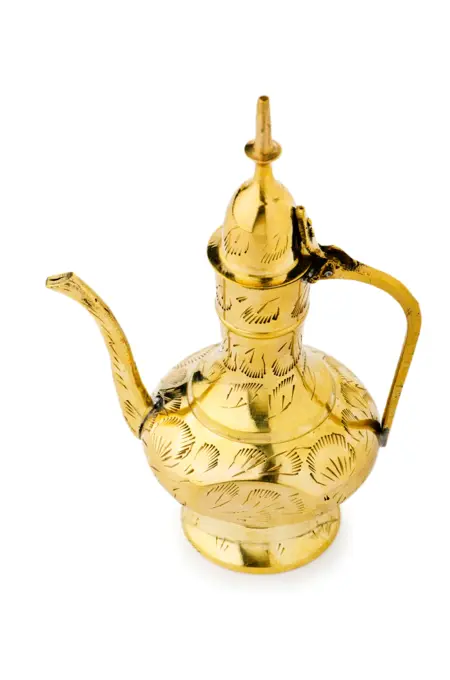
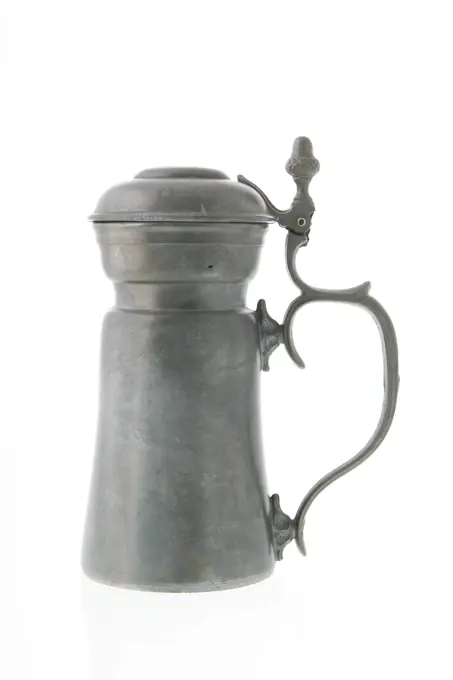
Decorative Teapots and Jugs

Artisan teapots and jugs made from different materials including porcelain and silver, featuring unique designs and embellishments from various cultures.
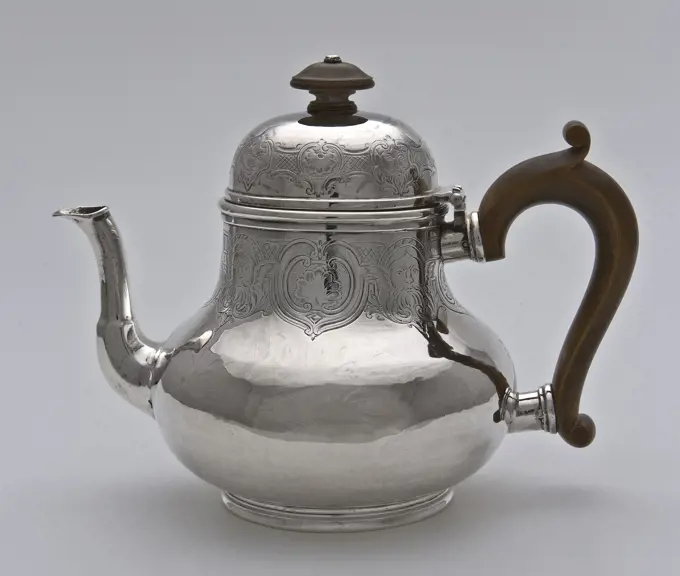
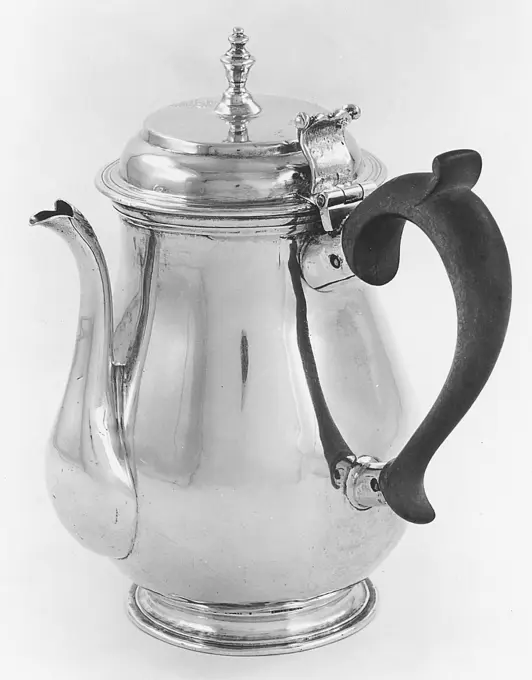
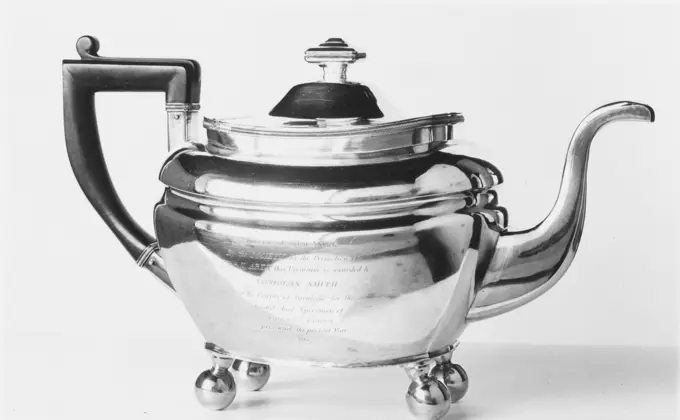
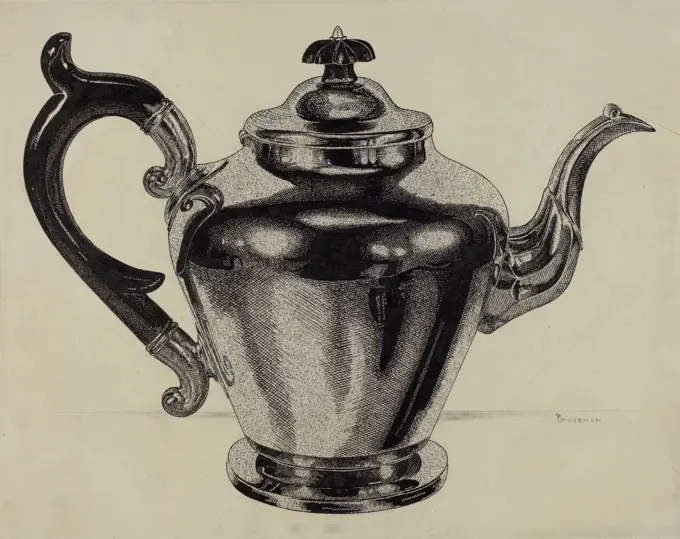
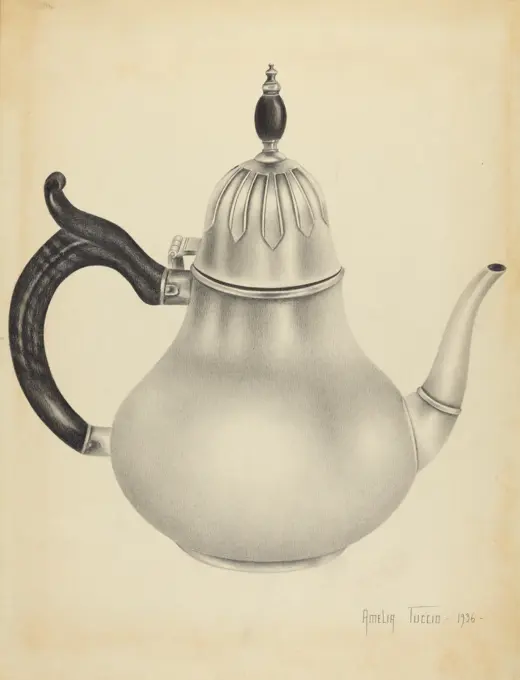
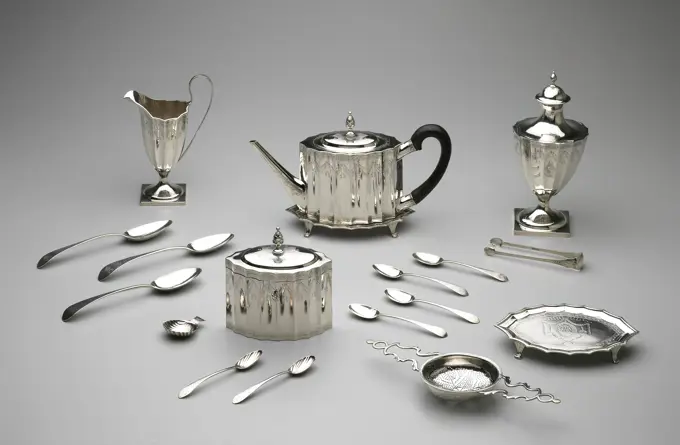
Silver teapot with brown wooden handle in bud on lid, teapot tableware holder silver wood, engraved pear shaped body on constricted stand ring high arched lid with hinge spout wooden thorned ear wooden buttoned button bottom bottom (smashed) serve serve tea drink drink tea set
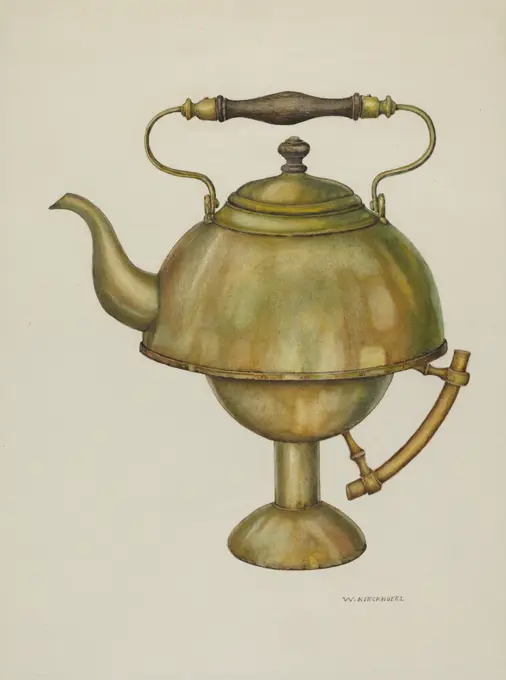
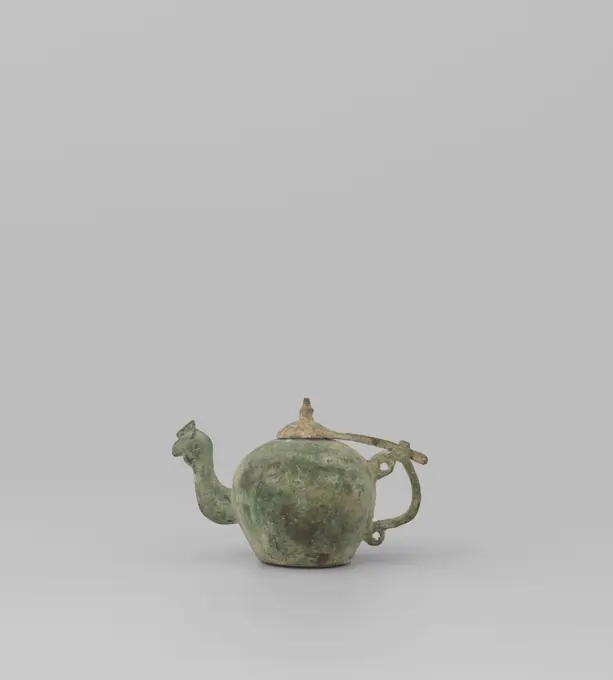
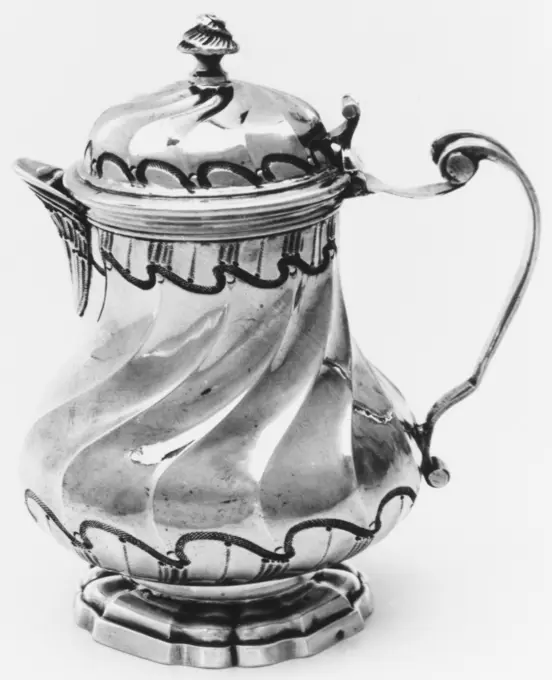
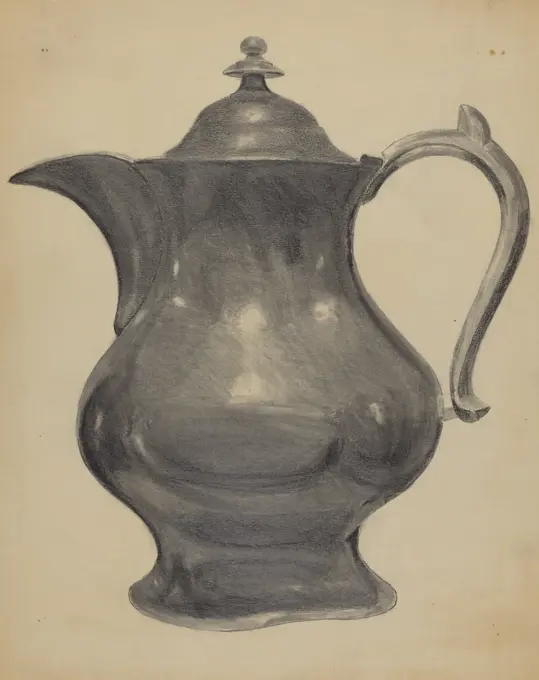
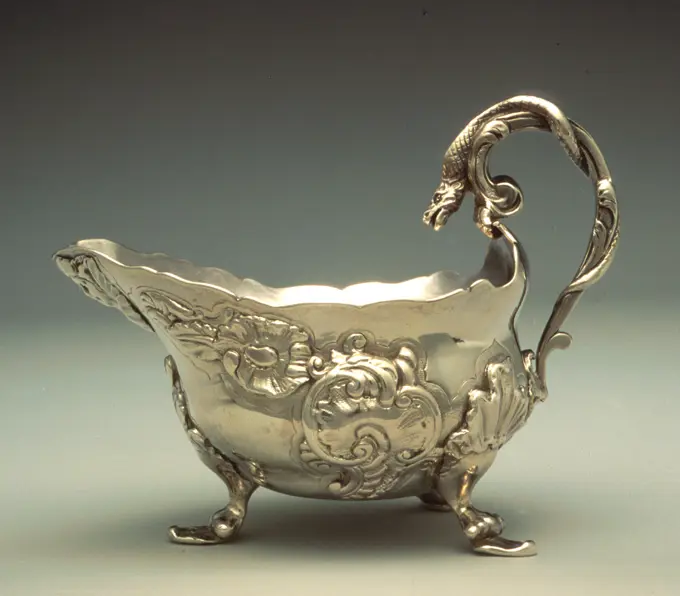
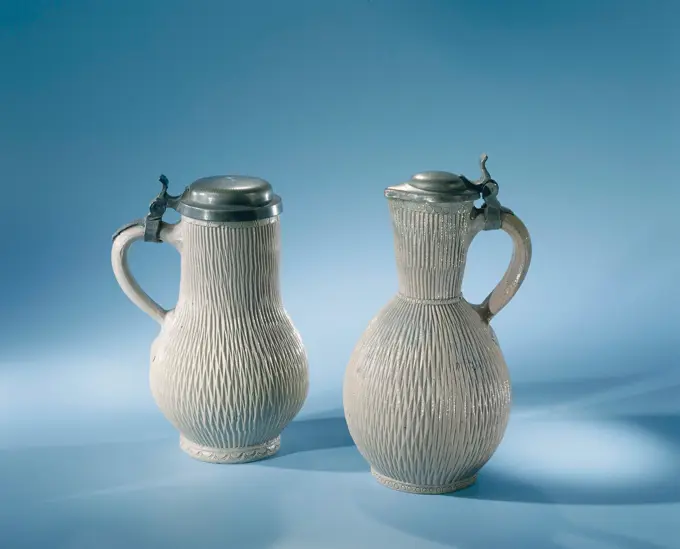
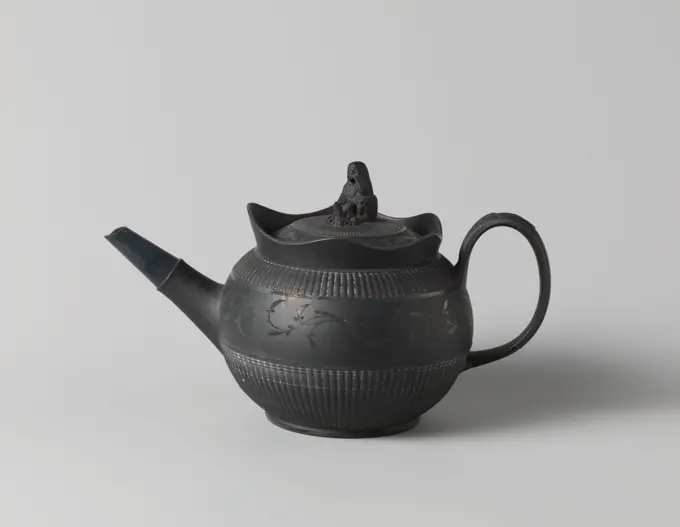
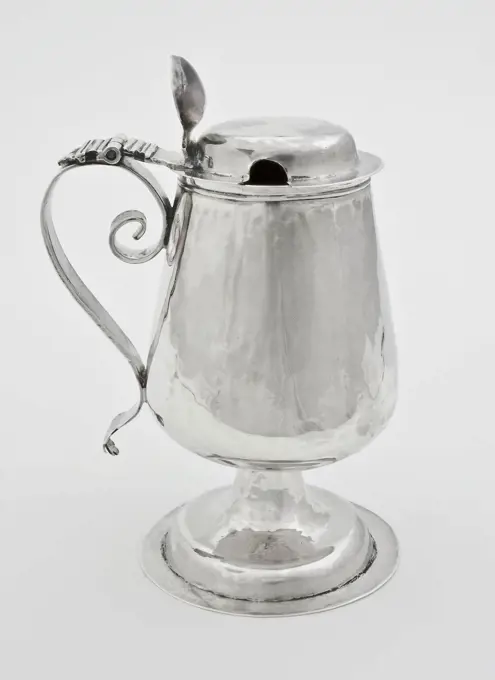
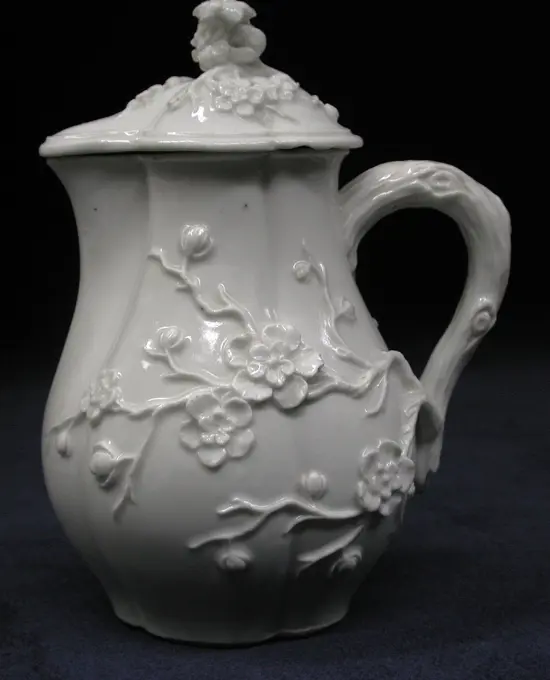
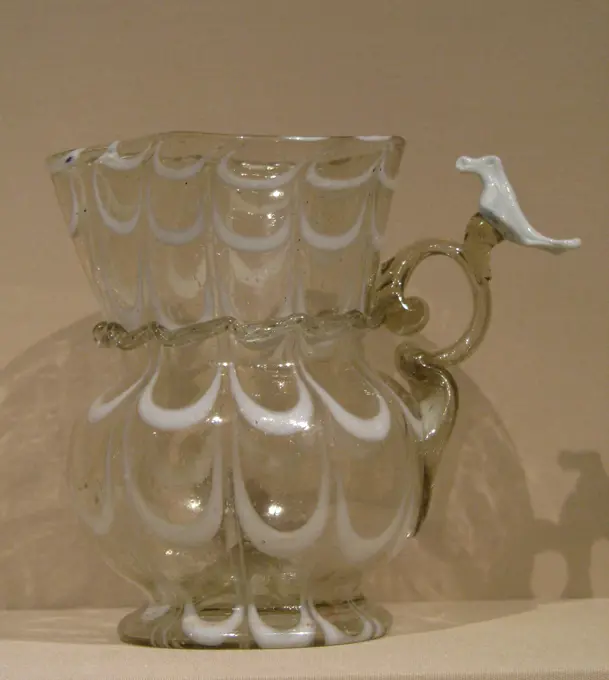
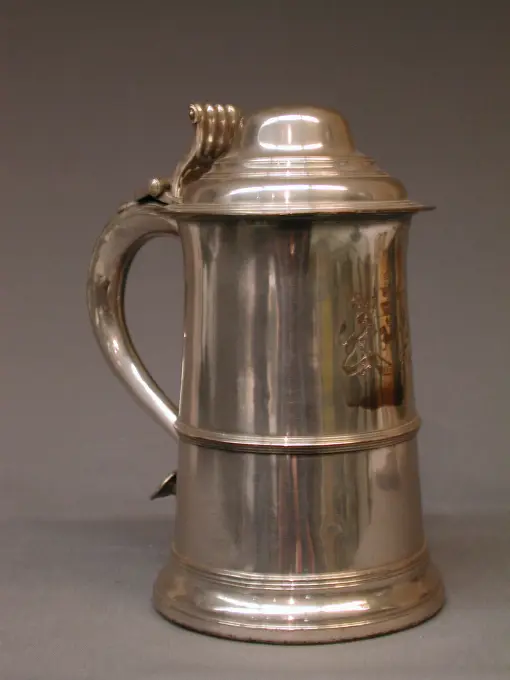
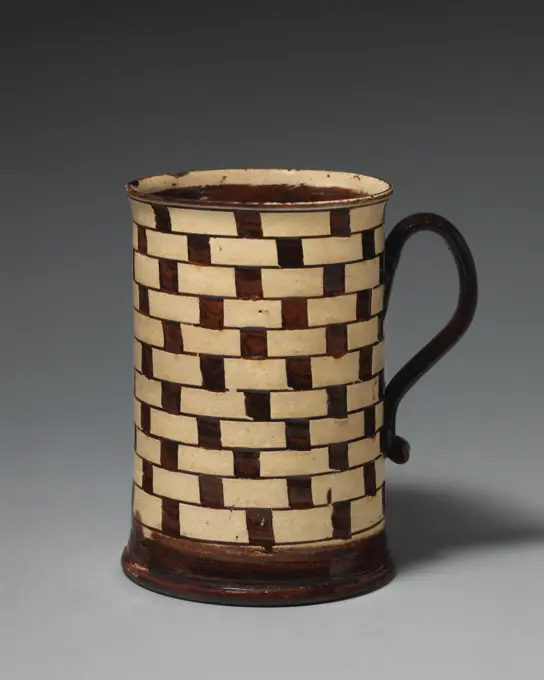
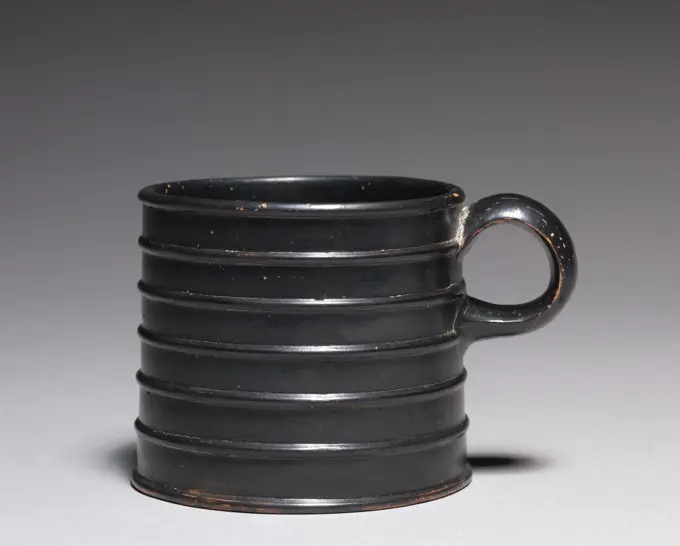
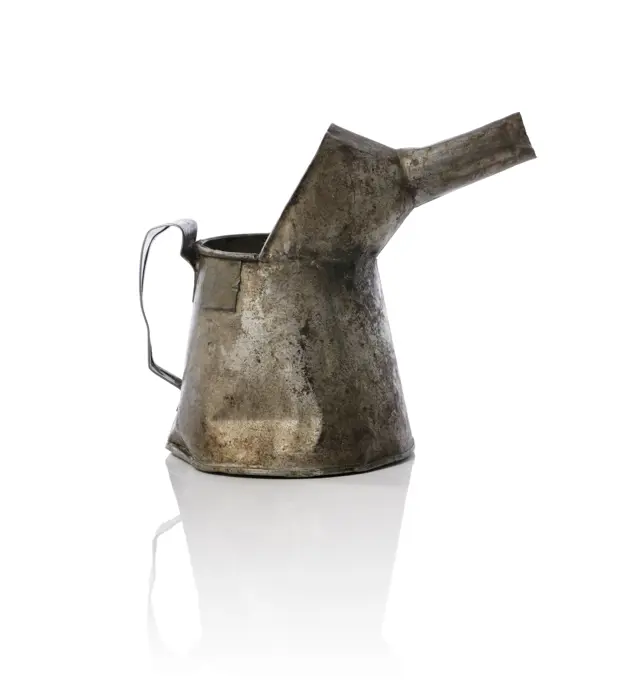
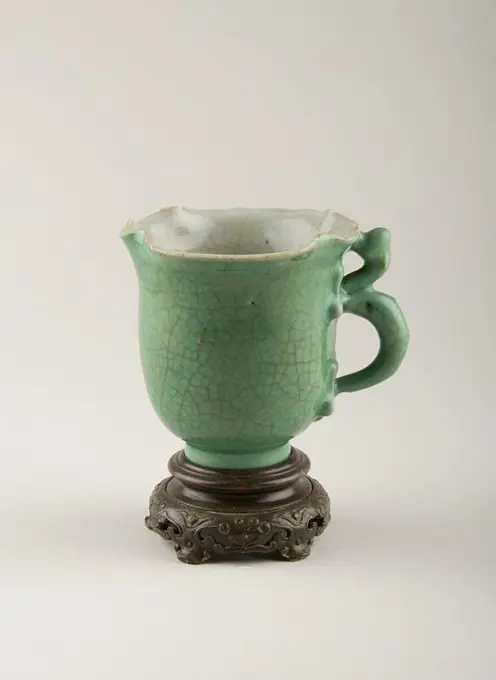
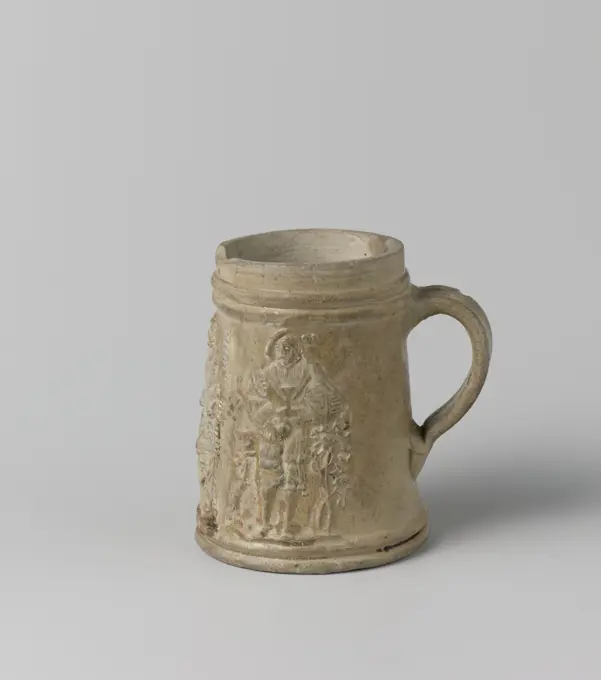
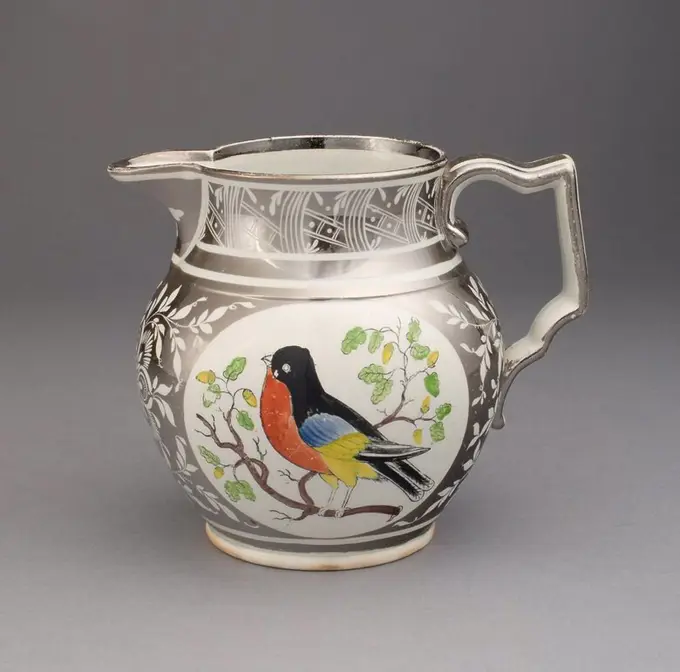
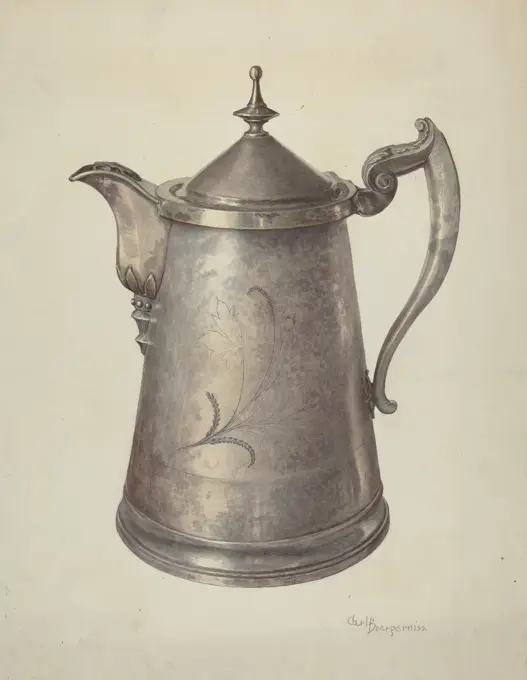
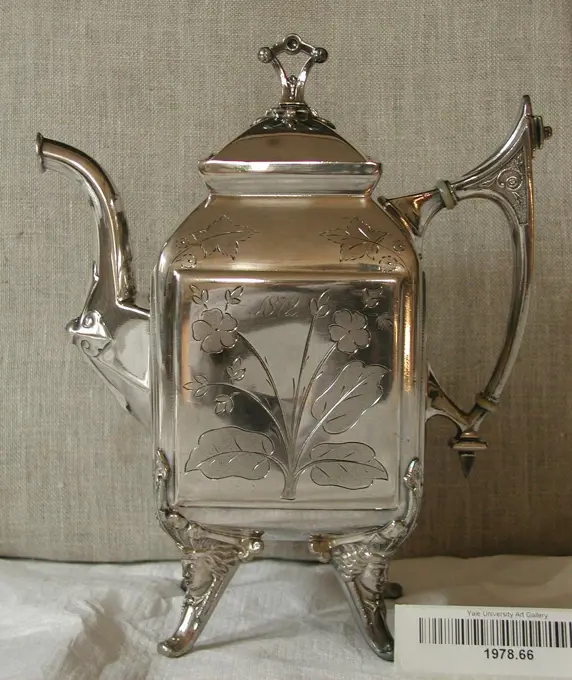
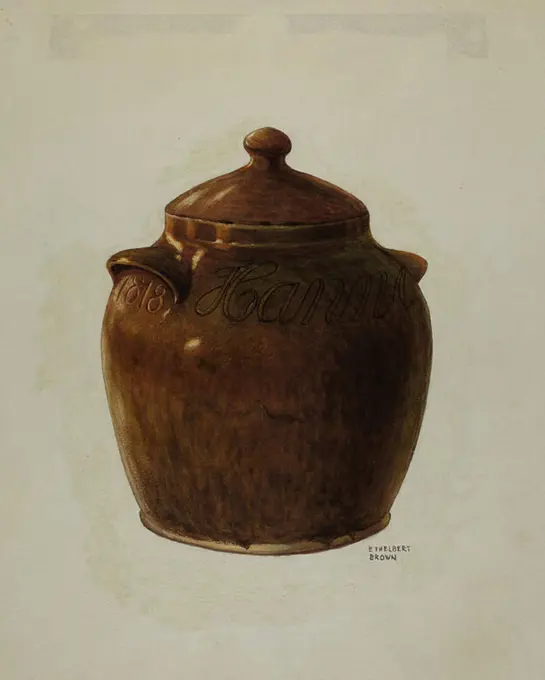
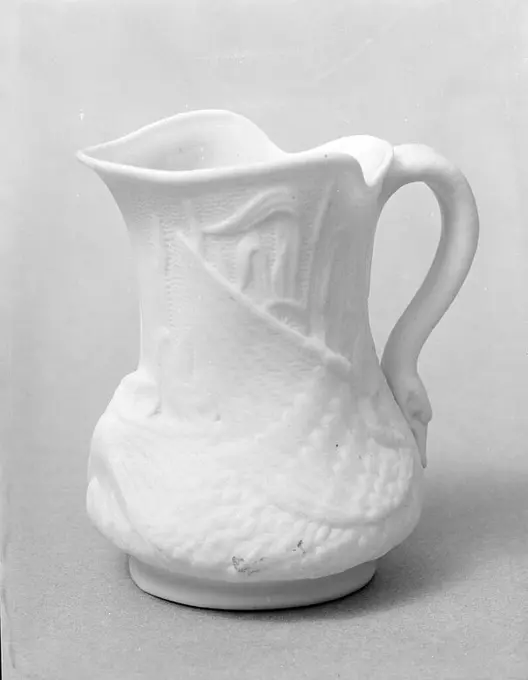
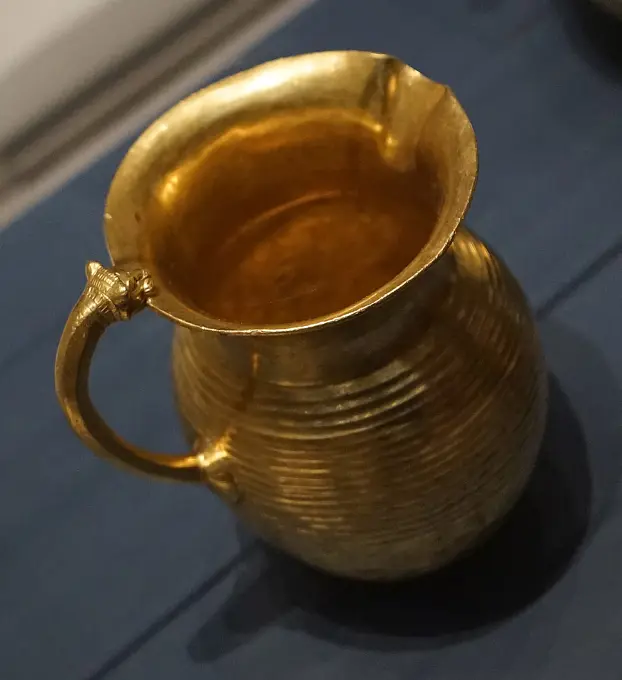
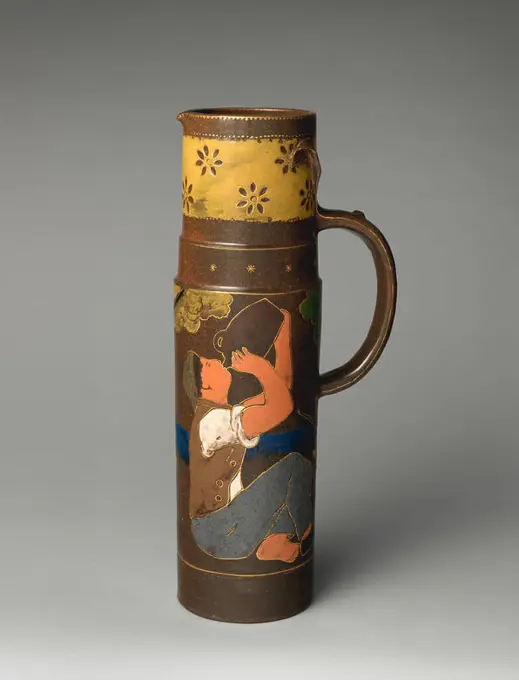
Sauceboat and Stand (one of a pair) 1794-1797 Paris. This sauceboat and stand is part of a vast service made for Emperor Napoleon Bonaparteís sister Pauline on the occasion of her marriage to the Roman nobleman Camillo Borghese, Sixth Prince of Sulmona.In the years after the French Revolution, architects and designers adopted the visual language of ancient Greece and Rome to express the new imperial order. Napoleon, hoping to promote Parisís luxury trades, commissioned several silver dinner services as gifts to be sent abroad. The slender outlines and smooth surfaces of the vessels in the Borghese service contrast with the rich decoration.. Silver gilt . Martin-Guillaume BiennaisWine glass, 18th-19th century, 6 1/4 x 2 3/4 x 2 3/4 in. (15.88 x 6.99 x 6.99 cm), Glass, United States or England (), 18th-19th century. Trekpot, four-sided, with swamped corners, with ear and lid knob of ebony. The jar of rests on a low rejuvenating foot. The body first warrants to rejuvenate to the low straight neck. The sides are somewhat sphere. The S-shaped curved spout has a corrugated, foam-like starter. The ear is bent. The vaulted lid is crowned by a four-sided stage with swaned corners, on which the round wooden vase-shaped button that is crowned by a profiled silver cap. On the underside of the soil the engraved inscription: Sara Maria van Loon Nat: 6. Jan.s 1761.Pitcher c 1850 England. Earthenware .William Kieckhofel, Tea Kettle, c 1940 Tea KettleHexagonal ewer 19th century China. Hexagonal ewer. China. 19th century. Porcelain painted in overglaze polychrome enamels (Jingdezhen ware). Qing dynasty (1644-1911). CeramicsTeapot 1880-89 Possibly Griffen, Smith and Hill. Teapot. American. 1880-89. Earthenware. Made in Phoenixville, Pennsylvania, United StatesThomas Chawner, Tea Kettle, Stand, and Lamp, 1783, silver.Jug; glazed earthenware; 21.5 x 16 x 12 cm (8 7/16 x 6 5/16 x 4 3/4 in.). Coffee pan with lid of painted porcelain. The can have a quadruped shape and is almost entirely covered with a violet fond. On the body of the can be two large four passes and a smaller, in which a Chinese figure is always painted in a garden in the body. Four four-casses have been saved with flowers in the cover of the lid. The can be noticed.Teapot. Designer Frederick Carder, American, born England, 1863-1963 Manufacturer: Corning Glass Works, American, 1878-1990Chicken-head pitcher, anonymous The jug has a spherical body, a curved spout that ends in a chicken head and an ear -shaped handle with an eye on it, through which the long handle of the lid can slide back and forth.  bronze (metal) casting The jug has a spherical body, a curved spout that ends in a chicken head and an ear -shaped handle with an eye on it, through which the long handle of the lid can slide back and forth.  bronze (metal) castingMustard pot 1768-69 Alexis Micalef. Mustard pot 200163Kraantjeskan with komfoor, round, conical, with two curved ears. The round, conical can rejuvenate up and is folded slightly at the bottom. The can have a loose, bell-shaped lid that consists of a hollow and a sphere portion and that is awarded by a pineal-shaped ebony knob on a straight basis. The can have two high-rising, curved ears of ebony with silver dats and a round, narrow tap in which a rotatable closing piece states, which is crowned by a flat, mushroom-shaped ebony handle. The lower part of the can be opened with a pattern of pointed arches, leaves and dots. A filter edge runs under the openwork section. Just under the tap and on the lower edge of the lid, pearl lists run. The extendable rear side is screwed to a copper line with a conical knob that acts as a komfoor.Jug. Spode Pottery & Porcelain Factory; English, founded 1767. Date: 1810-1820. Dimensions: 16 x 17.8 cm (6 5/16 x 7 in.). Lead-glazed earthenware with lustre decoration. Origin: Stoke on Trent. Museum: The Chicago Art Institute, Chicago, USA. Author: Spode Limited.Anonymous, teapot (usual name), 1800. Covered egg from Rouge-Gorge. Cernuschi Museum, Asia Museum of Asia in the city of Paris.Come from glass, anonymous, c. 1700 Come on a slippery stand ring. Oval body with a constricted neck and protruding edge, optically blown with vertical ribs. Two S-shaped ears, set with a pinched comb. Venice glass glassblowing Come on a slippery stand ring. Oval body with a constricted neck and protruding edge, optically blown with vertical ribs. Two S-shaped ears, set with a pinched comb. Venice glass glassblowingCharles Cullen, Pewter Pitcher, c 1936 Pewter PitcherCream Jug 1780-1820 American or British. Cream Jug 2596Mortar 16th century French. Mortar 464481 French, Mortar, 16th century, Copper alloy, Overall: 8 15/16 x 7 9/16 x 7 in. (22.7 x 19.2 x 17.8 cm). The Metropolitan Museum of Art, New York. Gift of J. Pierpont Morgan, 1917 (17.190.512)Christian Hillan, Cream Boat or Sauceboat, c. 1736-39, silver.Teapot, c. 1740, 5 5/8 x 7 x 3in. (14.3 x 17.8 x 7.6cm), Stoneware, England, 18th century, This teapot is in the form of a Georgian-style mansion with a mythological dolphin-shaped handle and a Chinoiserie or Asian-inspired dragon spout and lion finial. The object is composed of stoneware that, while in a slip or liquid consistency, was poured into an alabaster or plaster mold in the shape of the teapot.Probably Seth Lofthouse, Pot with Spout, 1699/1700, silver.. Gray can of stoneware with pewter lid. The egg-shaped body overlooks a descending neck. Small pointed spout. Belly and neck are decorated with insurgent network.Tankard 1710 Attributed to Thomas Byles Pewter was a less expensive alternative to silver. This Rhode Island tankard has direct parallels with contemporary English silver.. Tankard 19021Teapot with cover. Culture: probably British, Staffordshire. Dimensions: Overall: 5 1/4 × 7 in. (13.3 × 17.8 cm). Maker: Style of Whieldon type. Date: mid-18th century. Museum: Metropolitan Museum of Art, New York, USA.Tankard. Culture: Hungarian, Brass. Dimensions: Overall: 8 1/8 x 4 1/2 in. (20.6 x 11.5 cm). Maker: Valentinius (Felten) Urbiger (master in 1641, died 1657). Date: ca. 1650.The harmonious proportions, the careful distinction between matte and polished areas, and the powerful lid with its sculptural finial give this great tankard a particular elegance. The little recumbent stag, a symbol of hunting, rests on the lid framed by thin branches of so-called Krauswerk, or silver scroll-sheet foliage, that defines the space. Various tankards and covered cups with a similar stag cast are known. The decorative finials were prefabricated and bought from specialists. Its model was very popular (see Istvn Heller. Ungarische und siebenbrgische Goldschmiedearbeiten: Vom Ende des 16. Jahrhunderts bis zum Ende des 19. Jahrhunderts. Munich, 2000, nos. 1 and 2, pp. 66-68 and Erdly rgi muvszeti emlkeinek killtsa az Iparmuvszeti mzeumban / Ausstellung alten Kunstgewerbes aus SiebenbPierre Platel, Teapot, 1718/19, silver.Teapot ca. 1875 Rogers, Smith and Company. Teapot 8385TeaService.  Maker: Potter Studio, American, 1899-1928Vintage copper teapot . Presented on a white background. The old copper teapot is presented on a white background. Copyright: xZoonar.com/GalinaxxTolochkox 13339479Vessel for ritual ablutions (quarter)Creampot 1750-70 Samuel Casey American. Creampot 2659Coverage of earthenware, Neale & Palmer (Hanley), c. 1790 - c. 1825 A lid with a button in the shape of a mourning woman and a band with a silver -colored leaf vank. Hanley earthenware A lid with a button in the shape of a mourning woman and a band with a silver -colored leaf vank. Hanley earthenwareSilversmith: Cornelis de Haan, Silver mustard pot, model brandy glass, mustard pot pot crockery holder silver gold, hammered gold plated Model cognac glass with profiled top edge flat curved round base with flat outer edge flat arched lid with flat outer edge and profiled hinge round hollow thumb rest ear in the shape of question mark with at the end double pied the biche Inside lid and body gilt lid bottom (debossed) serveTeapot 1733-34 Kenneth McKenzie Although politically united, England and Scotland had distinctive social customs, a fact reflected in their silver works. Scottish silver and gold design remained independent of London styles and fashions until the mid-eighteenth century. The completely spherical "bullet" teapot, along with matching milk jug (see 1983.224) and sugar bowl, was an especially Scottish, particularly Edinburgh preference. These three objects, made by three Edinburgh goldsmiths within a few years of each other, exemplify the broad demand for this shape. Characteristic also is the restrained narrow band of engraved ornament on all three pieces.. Teapot. Scottish, Edinburgh. 1733-34. Silver, wood. Metalwork-SilverMilk jug with cover ca. 1780 Sèvres Manufactory French The gift of the Hans Syz Collection in 1995 endowed the Museum with nearly three hundred examples of European and Asian ceramics meticulously acquired by Swiss-born collector Dr. Syz (1894-1991) to chart the migration of models and patterns from East to West. Documenting a continuous process of influence and adaptation, these pieces provide a discriminating review of the nuances of stylistic change resulting from three centuries of trade.. Milk jug with cover 208409Jug 17th century Spanish, Catalonia The technique of glassblowing was practically forgotten after the retreat of the Romans, who had introduced it, but was resumed in the caliphate of Córdoba in Andalusia. Andalusian glass is characterized by a folksy quality and is always tinted tans to the presence of metal oxides, such as copper and iron, in the raw material. The abundant relief ornament takes the form of coxcomb crests, shells, berrylike prunts, pinched, denticulated bands, and ring handles.In the mid-sixteenth century, Venetian glassmakers brought the secrets of the refined Murano technique to Catalonia, where they founded several factories. Their most significant innovations were the production of a clear typed of glass and the use of manganese to aid in the discharge of impurities, but they introduced other Murano techniques as well, which account for the Venetian air displayed by many traditional Catalan vessels, with their delicate white striping, ribs, and gold prunts.. Jug. Tankard ca. 1790 British, Sheffield. Tankard. British, Sheffield. ca. 1790. Sheffield plate. Metalwork-SilverplateMeasuring Cup. Dimensions: H. 2 15/16 in. (7.5 cm)W. 2 3/8 in. (6 cm)D. 1 11/16 in. (4.3 cm)Wt. 2.5 oz. (70.9 g). Date: 8th-9th century.This little cup is marked with a seal that indicates it has a capacity of a full qist, a measure of volume that seems to have varied. This cup holds approximately 50cc, and was probably used for pharmaceutical purposes. Museum: Metropolitan Museum of Art, New York, USA.Beverly Chichester, Pitcher, 1935 1942 PitcherSize of approx. 0.843 liters, Anonymous, c. 1800  Size of approx. 0.843 liters with handle. 2 recesses in the upper edge (overflow). Marked. Netherlands tin plate   NetherlandsMug ca. 1760 British, Staffordshire. Mug. British, Staffordshire. ca. 1760. Slipware. Ceramics-PotteryMug ca. 1695 David Elers British The Elers brothers, John Philip and older brother David, were Dutch born silversmiths who came to London in the 1680s. They produced pottery at Bradwell Wood, in Staffordshire, for a brief period between ca. 1690 and 1698, creating high quality unglazed red stoneware. The Elers brothers were pioneers in the rise of the salt-glazed stoneware industry in Staffordshire. The mug demonstrates the high quality and elegant design characteristic of the Elers stoneware production. The fine color is indicative of the native clay deposits in Staffordshire, the reason the Elers and many others established pottery works in the region. The unglazed red stoneware is inspired in part by Chinese Yixing wares, imported by the Dutch East India Company and widely imitated by Dutch and English potters.[Elizabeth Sullivan, 2014. Mug. British, Staffordshire. ca. 1695. Red earthenware. Ceramics-PotteryQuickly with pewter lid, decorated with three strips with weapons including that of the king of Sweden. Jaartal 1590 .. Fast from stoneware with pewter lid. The cylindrical body narrowed upwards. The fast is decorated with 3 high strips on which the arm of the king of Sweden, the arm of the Balsgrav AM Rein and the weapon of the Duke of Saxen. Above every weapon the year 1590.Can with spout in the shape of a lion with coat of arms. The can be composed of the following parts: the hull (with the foot), the lid (cast and turned), the spout (molded and recanged), the handle, the thumb trust, the lid button (cast). The round hull stands on a high round base that widens at the bottom to a flat stand ring. The hull (with the middle part in the bottom) has a flat stomach with the same diameter as the stand ring and a high narrow conical spotted neck. The lid is bol-flat and has a bird as a button. The edges of the neck and lid are sloped inwards. The spout has the shape of a lion with a coat of arms. The tail of the animal forms the connection to the neck of the can. The handle that goes down to the outside and then swapping something inside has a one-case hinge, in which the thumb trust is attached to the lid. Hull and base are decorated with clearly profiled shivering.Black-Gloss Mug, late 400s-300s BC. South Italian. Ceramic; diameter: 7.6 cm (3 in.); overall: 6.9 cm (2 11/16 in.); diameter of foot: 8 cm (3 1/8 in.).Teapot 1813 Isaac Hutton American. Teapot. American. 1813. Silver. Made in Albany, New York, United StatesKan, part of a toilet garnish, Villeroy & Boch Ceramic Werke K.G., after 1874 Can with rejuvenating body, part of a toilet garnish of earthenware. Decorated with red piping and the weapon of the Duke of Arenberg with crown in red and yellow. Wallerfangen earthenware Can with rejuvenating body, part of a toilet garnish of earthenware. Decorated with red piping and the weapon of the Duke of Arenberg with crown in red and yellow. Wallerfangen earthenwareOld oil can Old worn and dirty metallic oil can Copyright: xZoonar.com/J.xSandvikx 1440135Harry Goodman, Pewter Teapot, c 1937 Pewter TeapotClose-up of a Tuscan jar, Tuscany, ItalyDeaf pot. Deaf pot on three legs, with a handle and a lid. The lid has a button and engraved lines. The deaf pot has been marked: STK. = Amsterdam, Mt. = Willem van Serbant.Cup. Culture: China. Dimensions: H. with stand: 4 3/8 in. (11.1 cm): D. with handle: 3 7/8 in. (9.8 cm). Date: 18th or 19th century. Museum: Metropolitan Museum of Art, New York, USA.Tankard with three men in relief, anonymous, c. 1540 - c. 1560 Beer mug of stoneware with a cylindrical, slightly tapered body, C-shaped ear and profiles on the edge and above the foot. On the Pul in Relief three courses with a printed and imposed decoration of a man in each feet, dressed in 16th century clothing (warriors). Frechen/Cologne. Cologne (possibly) stoneware. glaze vitrification Beer mug of stoneware with a cylindrical, slightly tapered body, C-shaped ear and profiles on the edge and above the foot. On the Pul in Relief three courses with a printed and imposed decoration of a man in each feet, dressed in 16th century clothing (warriors). Frechen/Cologne. Cologne (possibly) stoneware. glaze vitrificationAncient lamp isolated on the whiteAmelia Tuccio, Silver Teapot, 1936 Silver TeapotPitcher. England, Staffordshire. Date: 1810-1820. Dimensions: H. 12.7 cm (5 in.). Lead-glazed earthenware with lustre decoration. Origin: Staffordshire. Museum: The Chicago Art Institute, Chicago, USA.Beulah Bradleigh, Pewter Coffee Pot, c 1936 Pewter Coffee PotTankard 1705-1715 Meissen. Bˆttger stoneware, silver mounts . Meissen Porcelain Manufactory (Manufacturer)Miniature mug ca. 1720-30 David Clayton British. Miniature mug. David Clayton (British, active 1689). British, London. ca. 1720-30. Silver. Metalwork-Silver-MiniaturePewter tankard Pewter tankard from tin isolated over white background Copyright: xZoonar.com/IvonnexWierinkx 8064091Carl Buergerniss, Ice Water Pitcher, 1940 Ice Water PitcherCoffeepot with stylized floral motifs, Parthénon (possibly), c. 1900 - c. 1905 Coffee pan of porcelain with half a spherical body, flat shoulder and long, narrowing neck. Light bent spout and high ear from the edge. Painted on the glaze in green and red. Stylized flower branches on the outer wall, continuously on the spout and from the ear to the neck. The lid with the same decoration. Signed on the base of the ear with 'M. Dufrene '. Marked on the underside with '82 .R. des Petits Champs/ MML/ La Maison Moderne '. Designed by Maurice Dufrêne, manufactured for La Maison Moderne, possibly by Le Parthénon, Paris. The lid is a plastic replacement for the original. Paris porcelain. glaze. painting / vitrification Coffee pan of porcelain with half a spherical body, flat shoulder and long, narrowing neck. Light bent spout and high ear from the edge. Painted on the glaze in green and red. Stylized flower branches on the outer wall, continuously on the spout and from the ear to the neck. The lTeapot.  Designer William Parkin, American, 1854-1872  Maker: Reed and Barton, American, founded 1840Retailer: Starr and Marcus, American, 1864-1877Peter and Ann Bateman, Teapot and Stand, 1792/93, silver.Close-up of textured yellow Thirties jugFili Anka with a saucer; Dixon, James & Sons (sheffield; company z Otnicz; Fl. 1806-); 1891/92 (1891-00-00-1892-00-00);Pa. German Jar with Lid. Dated: c. 1941. Dimensions: overall: 37.9 x 30.4 cm (14 15/16 x 11 15/16 in.) Original IAD Object: 12" high; 12" wide. Medium: watercolor and graphite on paper. Museum: National Gallery of Art, Washington DC. Author: Ethelbert Brown.Can with lid with hinge from tin, undecorated, anonymous, c. 1670 - c. 1700 Can from Faience. White glazed. A pewter hinge on the lid. Delft tin (metal) Can from Faience. White glazed. A pewter hinge on the lid. Delft tin (metal)Tankard (Fixier-Krug) with hinged cover ca. 1563 German, Regensburg. Tankard (Fixier-Krug) with hinged cover 206257Jug (England); Designed by Christopher Dresser (Scottish, 1834 - 1904); Manufactured by Watcombe; terracottaSquare teapot with shishi in relief, anonymous, c. 1775 - c. 1799 Square teapot of red stoneware with a curved spout and C-shaped ear, partially covered with a white sludge. On the wall twice a shishi (lion dog) with a wheel in between (chakra) . Yixing. China stoneware Square teapot of red stoneware with a curved spout and C-shaped ear, partially covered with a white sludge. On the wall twice a shishi (lion dog) with a wheel in between (chakra) . Yixing. China stonewareCup andsaucer.   Maker: William Forbes, American, 1799-1864Retailer: Ball, Tompkins and Black, active ca. 1839 - 1851Pitcher. Culture: American. Dimensions: 3 5/8 x 3 5/8 x 2 7/8 in. (9.2 x 9.2 x 7.3 cm). Date: 1830-70. Museum: Metropolitan Museum of Art, New York, USA.Candlestick. Designer: Christopher Dresser (British, Glasgow, Scotland 1834-1904 Mulhouse). Dimensions: H. 5-3/4, W. 7-3/4 in. (14.6 x 11.3 cm.). Manufacturer: Perry Son & Co.. Date: 1883. Museum: Metropolitan Museum of Art, New York, USA.Robert Stewart, Sugar Bowl, c 1937 Sugar Bowl. Can with ear of pottery, decorated in taber / sgrafitto technique with an owl, blue on black ground.Teapot painted with a landscape with trees, Wilkinson Ltd, c. 1930 - c. 1940 Teapot of earthenware painted with a landscape with trees in red, orange, yellow, light brown, gray and black. A lid belongs to the teapot. Burslemdesigner: England earthenware Teapot of earthenware painted with a landscape with trees in red, orange, yellow, light brown, gray and black. A lid belongs to the teapot. Burslemdesigner: England earthenwareWater boiler with lid, anonymous, c. 1700 - c. 1799 Ivory water boiler, hollow with loose lid with twisted profile edges and button; With solid sawn spout. Handen of copper wire. Germany (possibly) ivory. copper (metal) Ivory water boiler, hollow with loose lid with twisted profile edges and button; With solid sawn spout. Handen of copper wire. Germany (possibly) ivory. copper (metal)Clay mug isolated white background clipping path. Clay mug isolated white background clipping path. Copyright: xZoonar.com/BorysxShevchukx 2079223Tea cups and tea potLAVAMANOS TOLEDO 1819. Location: CONVENTO DE SAN CLEMENTE-MUSEO. Toledo. SPAIN.JARRA PINTADA CON RAYAS DE COLORES Y VIDRIADA. Location: ALFARERIA. ALHABIA. Almería. SPAIN.Zachariah Brigden, Pair of Sauceboats, c. 1760, silver.Tea scoop, from a tea service, 1792, Paul Revere, Jr., American, 1734-1818, 2 1/2 x 1 3/4 in. (6.35 x 4.45 cm), Silver and wood, United States, Federal, The most complete Revere service known, this set was made for a Boston merchant and his wife, John and Mehitable Templeman. It includes one of only two tea caddies made by Revere. The locked boxes held loose tea, an expensive and fashionable commodity. The shell-shaped spoon was used for measuring tea and the sieve was used for straining punch, a beverage often served along with tea. The second stand may have been used as a tray for spoons no longer in use. The accompanying teaspoons and tablespoons have only recently been reunited with this service.Chamber candlestick 1810-20 John McDonald. Chamber candlestick 232357Ewer, Paris, c 1755-1760. Vase, China, c. 1725-1740, hard paste porcelain, gilt bronze. A Paris craftsman transformed this Chinese vase into an ewer. It is an example of European chinoiserie, in which an oriental object acquires a new character through the addition of Western elements. The grey-glazed porcelain gives the impression of having tiny cracks all over it. This type of porcelain - called craze or crackle glazed - was greatly admired in Paris in the mid-18th century.bowl of glass on a wood table in a dark ambientUsensile. "Fer. China, Dynastie Dynhe. Paris Museum Cernuschi. 72359-4 Han, iron, utensil dynastyPainting titled 'Still Life' by Francisco de Zurbarán (1598-1664) a Spanish painter. Dated 17th CenturyBrass kettle blowing hot air kept on a tableVillage shopping at Samovodska Charshia for handcrafts.Artistic pen and ink drawing illustration of antique brass jug or can for plants watering.. Artistic Illustration or Drawing of Antique Brass Watering Jug or CanHenri-Nicolas Debrie. "Cup". Money. 1765-1766. Museum of Fine Arts of the City of Paris, Petit Palais. 74383-10 Money, silverware, gobletPitcher, Holdcroft, Molded and glazed earthenware, Tall picture with oval section. Molded exterior to resemble tree trunk with prunus branch and blossoms. Glazed pale blue interior and exterior. Handle in the form of a gnarled branch., ca. 1870-80, ceramics, Decorative Arts, PitcherTankard ca. 1780 Imperial Porcelain Manufactory, St. Petersburg Russian. Tankard 207073Milk jug, black, decorated with corrugated edges. Milk jug of black stone. The body with close-up ribbed edges. The C-shaped ear ends at the bottom in a stylized sheet.Gold Jug. Achaemenid metal work; from the Oxus Treasure, Persia; (Iran). 5th-4th century BCTankard with man drinking from jug. Culture: French, Paris. Dimensions: Overall (confirmed): 13 1/4 × 5 7/8 × 3 7/8 in., 3.9 lb. (33.7 × 14.9 × 9.8 cm, 1.7 kg). Factory director: Under the technical direction of Ernest Chaplet (French, Sèvres 1835-1909 Choisy-le-Roi). Manufactory: Haviland & Co. (American and French, 1864-1931). Date: ca. 1885.This vessel recalls sixteenth-century German salt-glazed stoneware tankards and flagons. However, the flat style of the decoration and the unmodulated use of color, particularly for the boy's skin, are novel to the nineteenth century. Museum: Metropolitan Museum of Art, New York, USA.