Decorative Teapots and Jugs

Artisan teapots and jugs made from different materials including porcelain and silver, featuring unique designs and embellishments from various cultures.
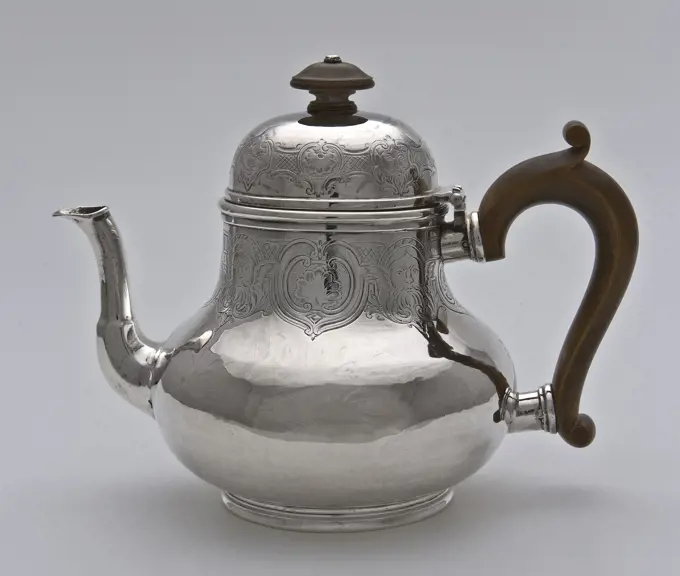
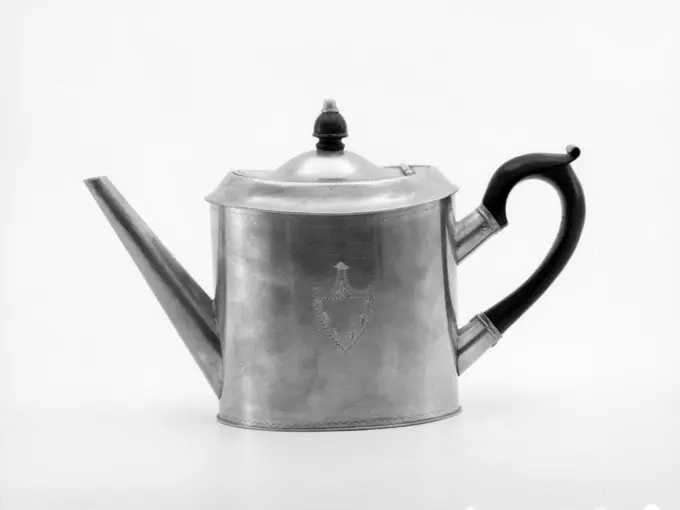
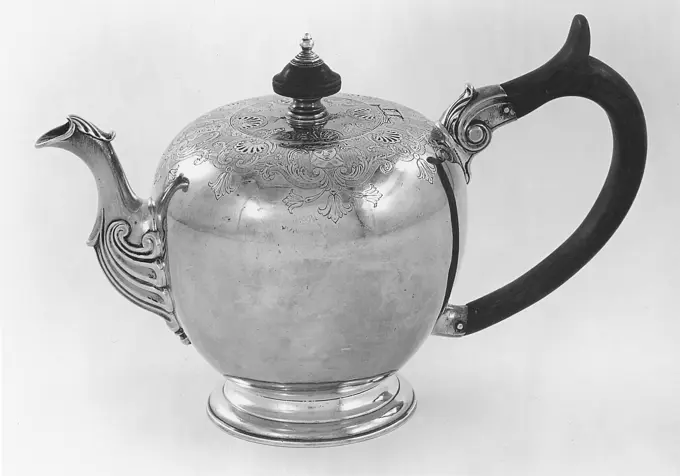
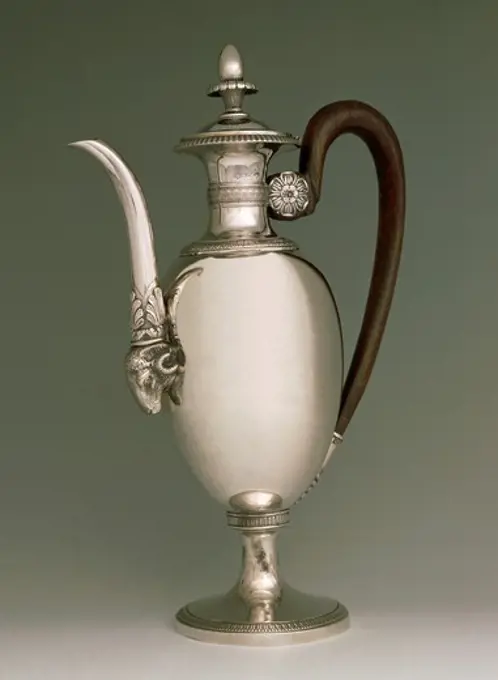
Silver teapot with brown wooden handle in bud on lid, teapot tableware holder silver wood, engraved pear shaped body on constricted stand ring high arched lid with hinge spout wooden thorned ear wooden buttoned button bottom bottom (smashed) serve serve tea drink drink tea set
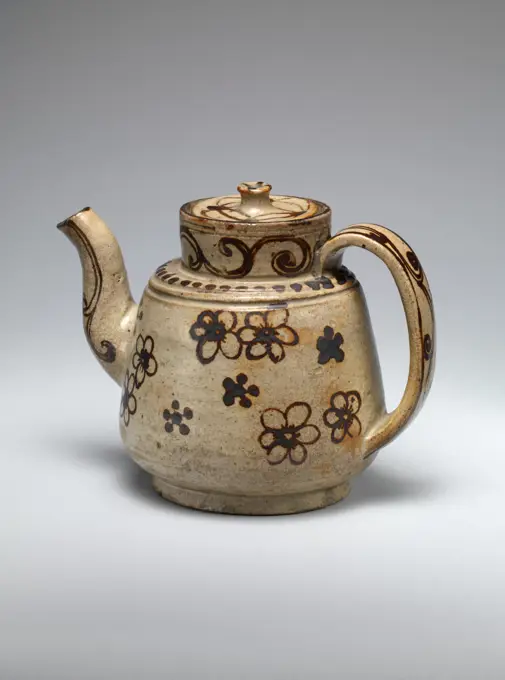
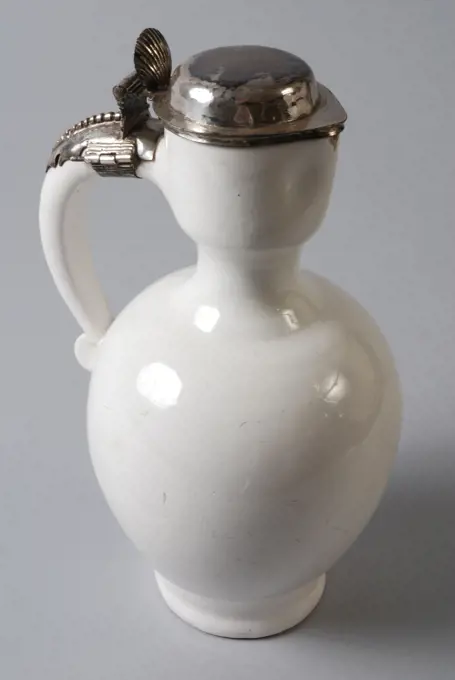
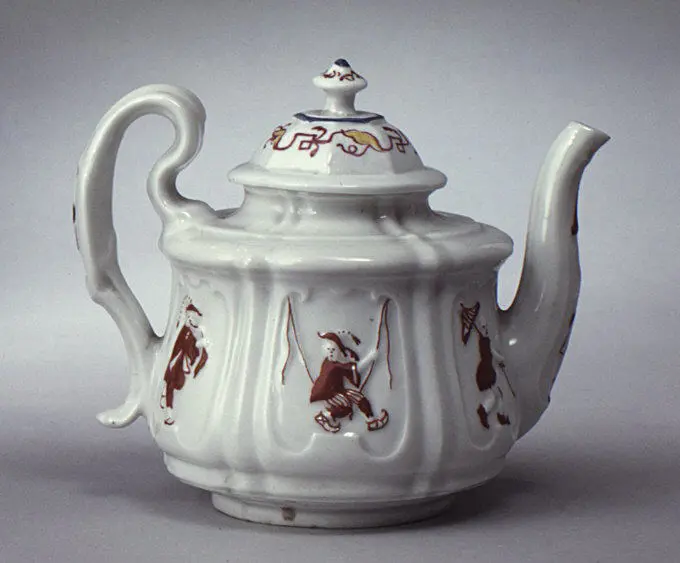
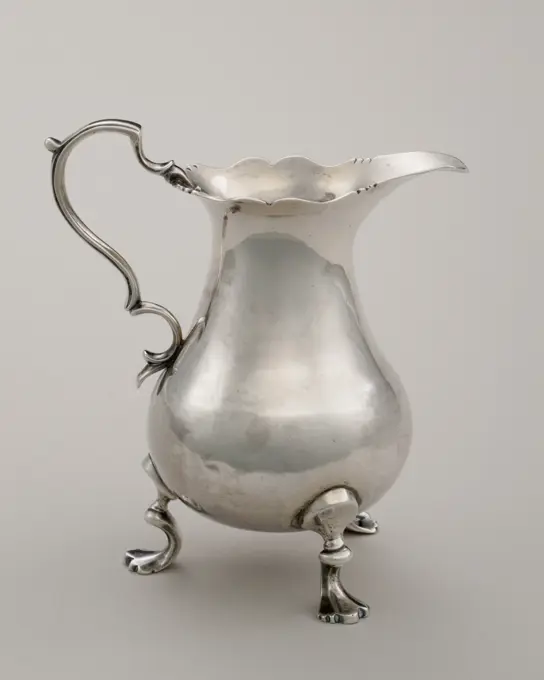
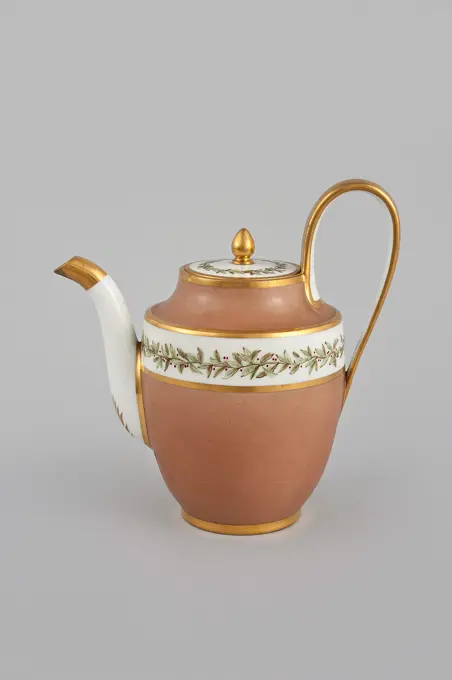
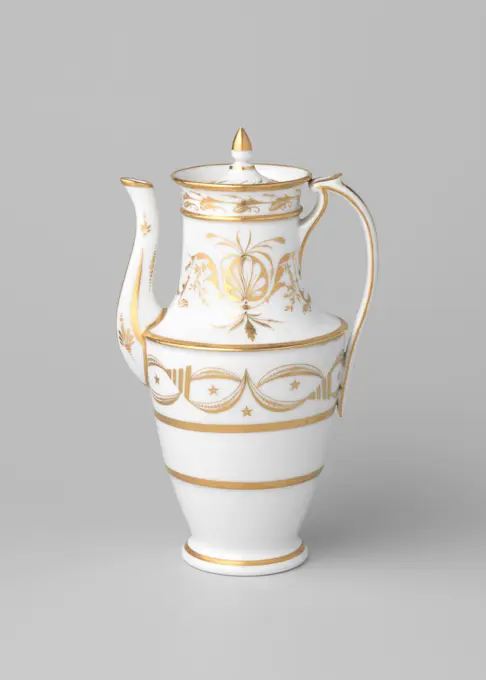
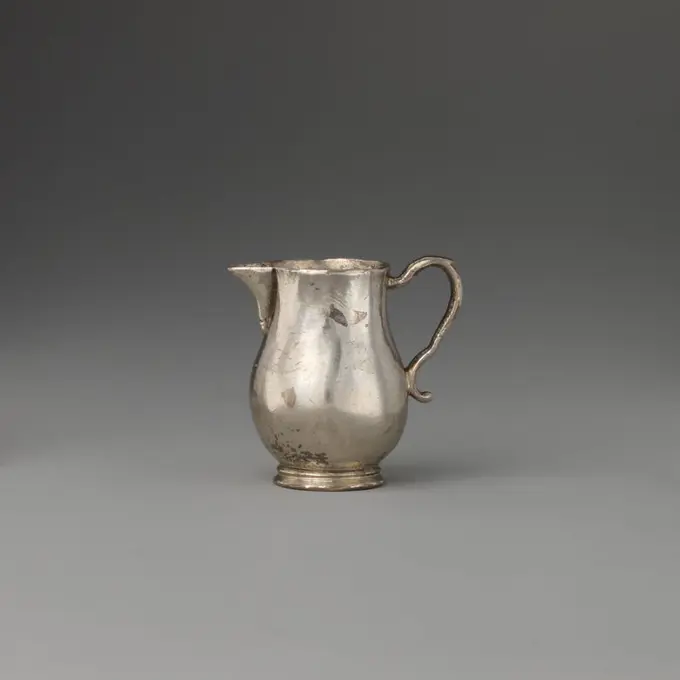
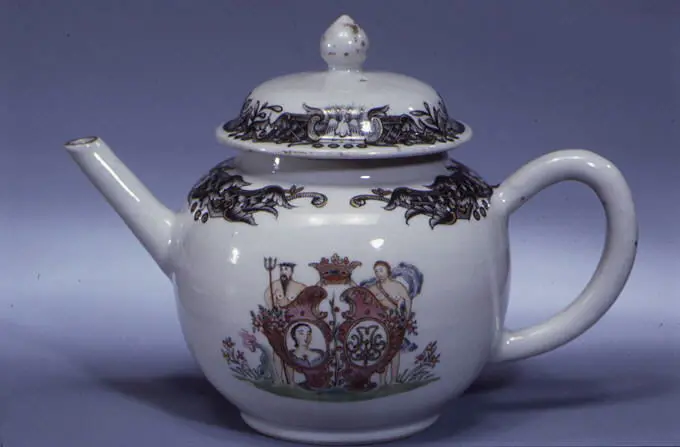
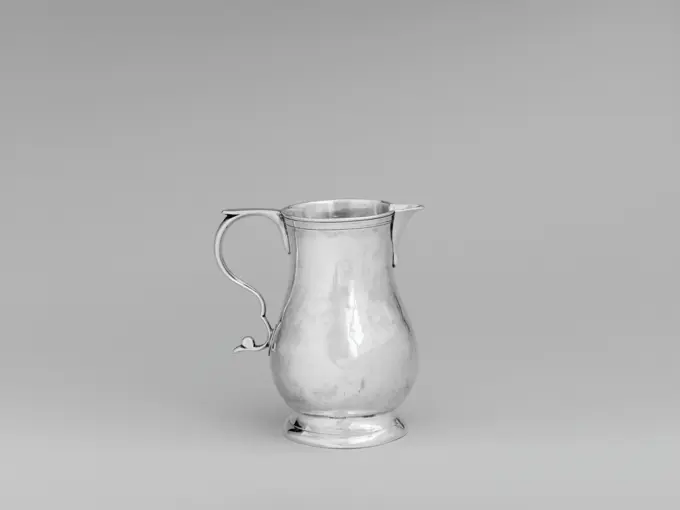
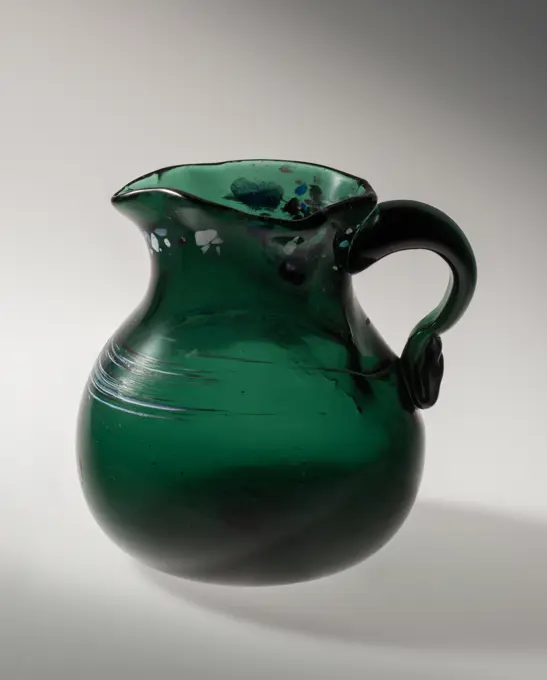
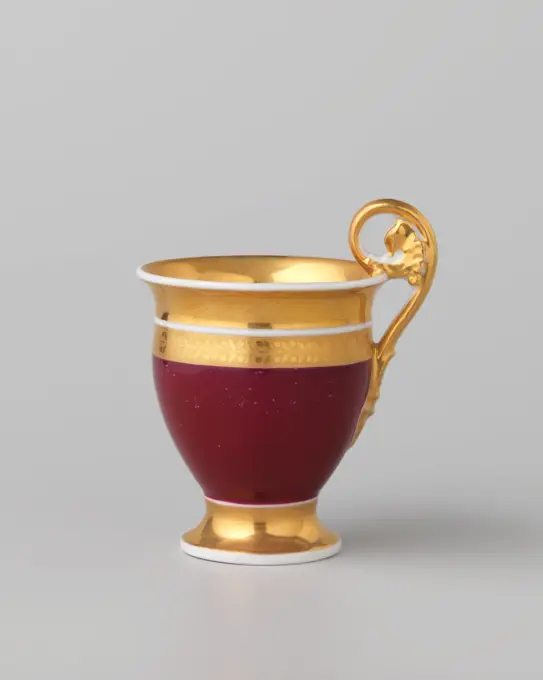
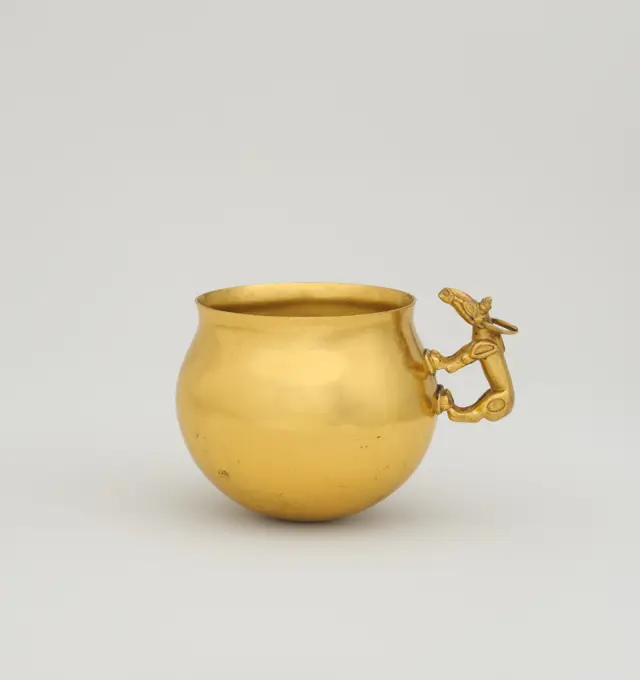
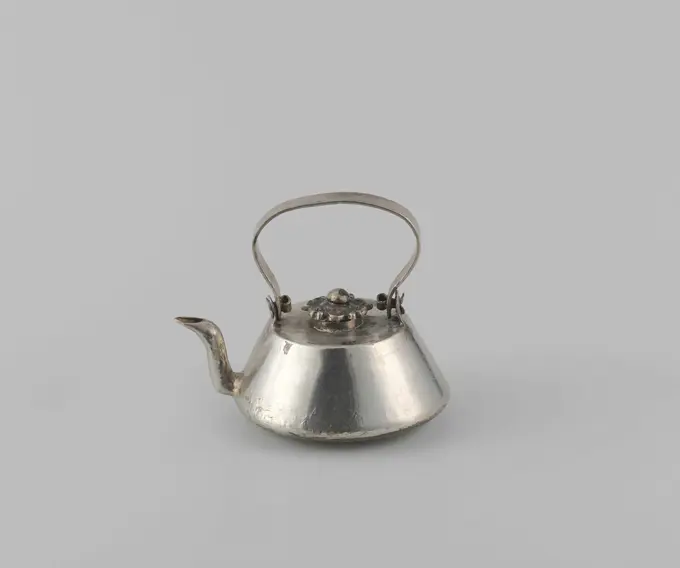
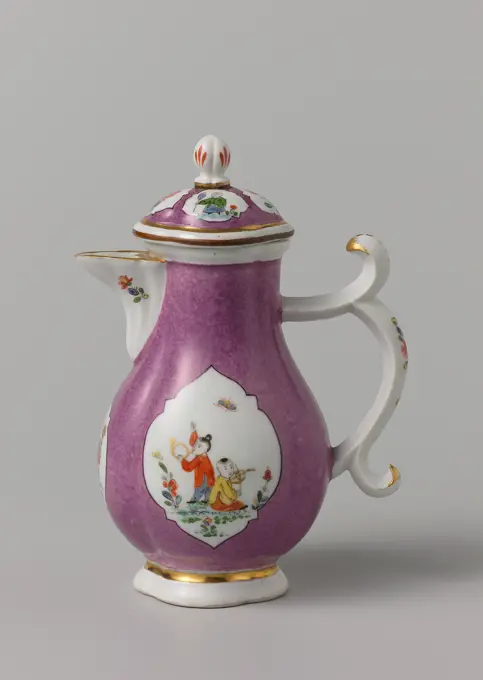
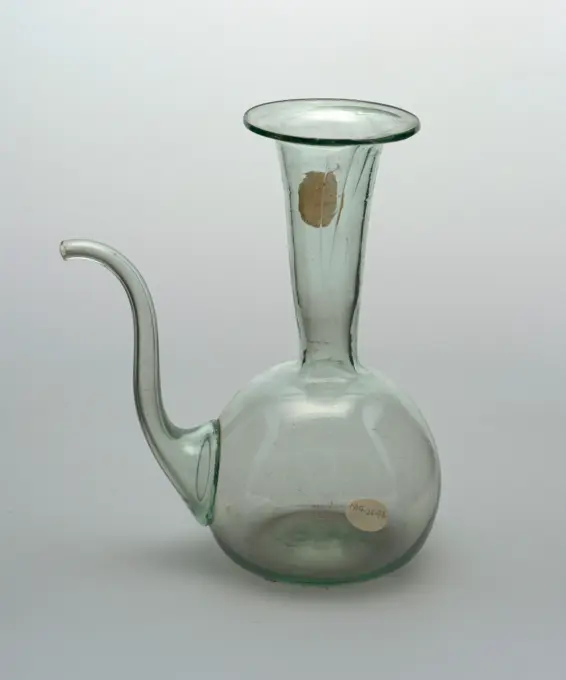
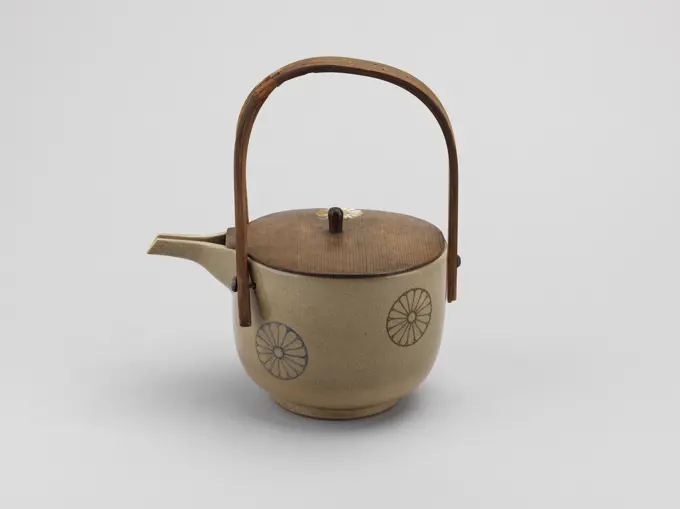
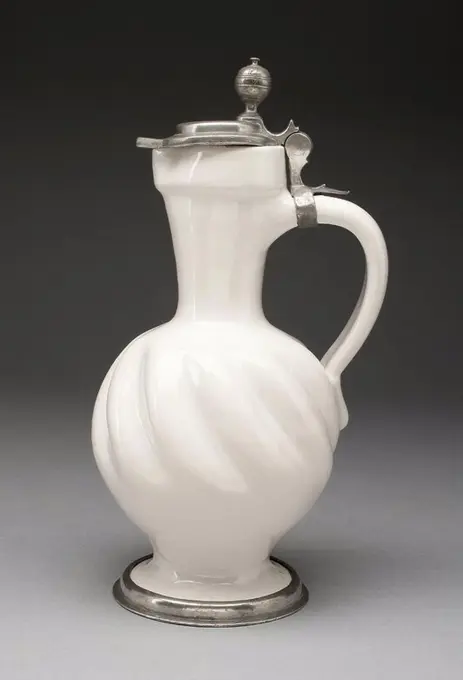
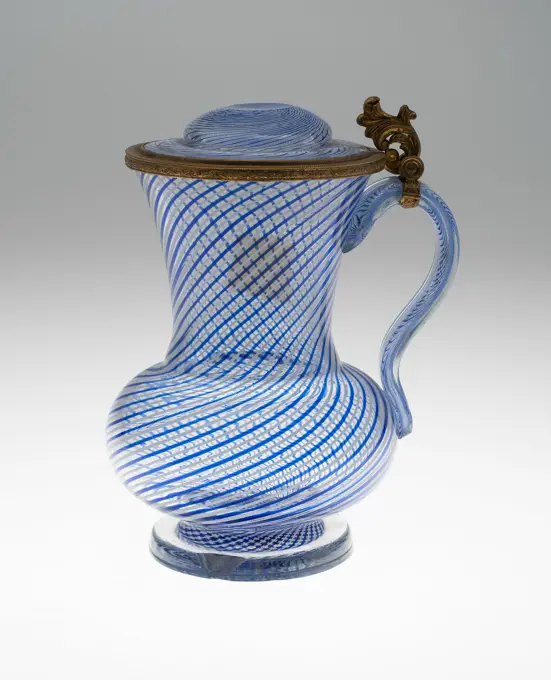
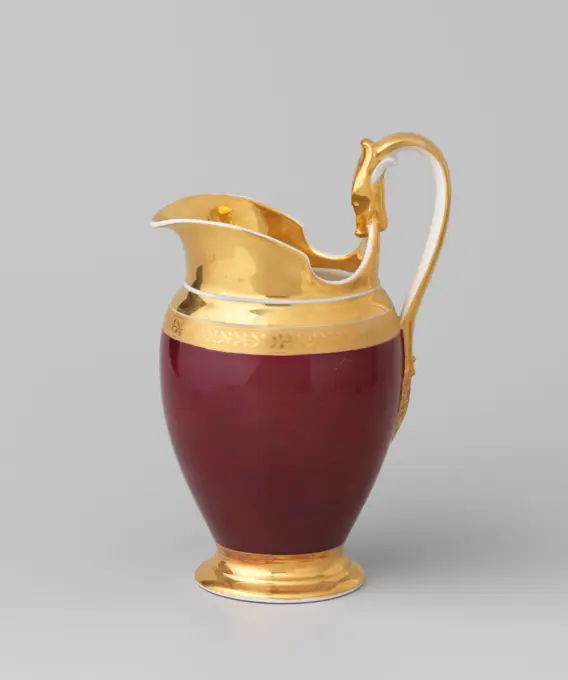
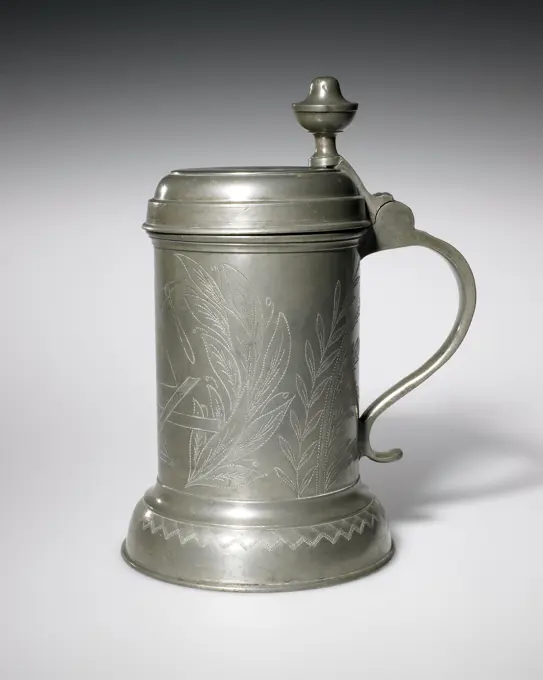
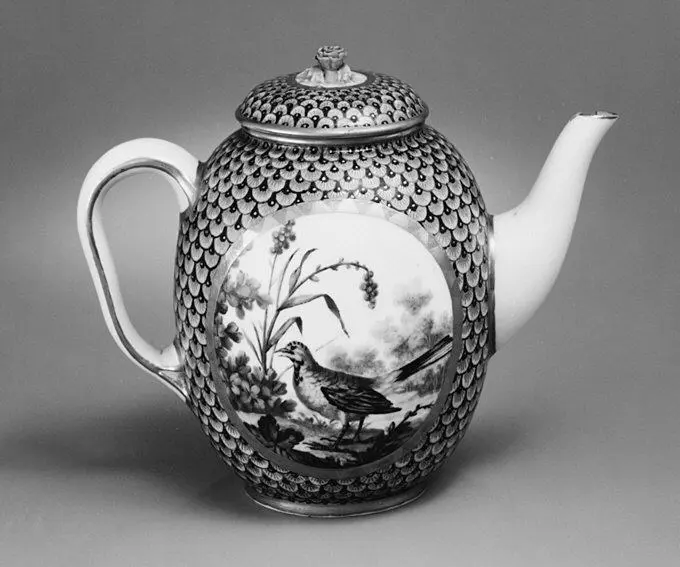
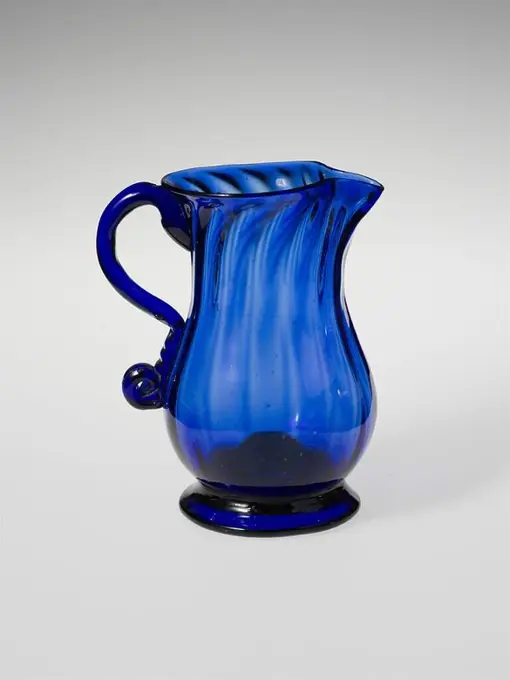
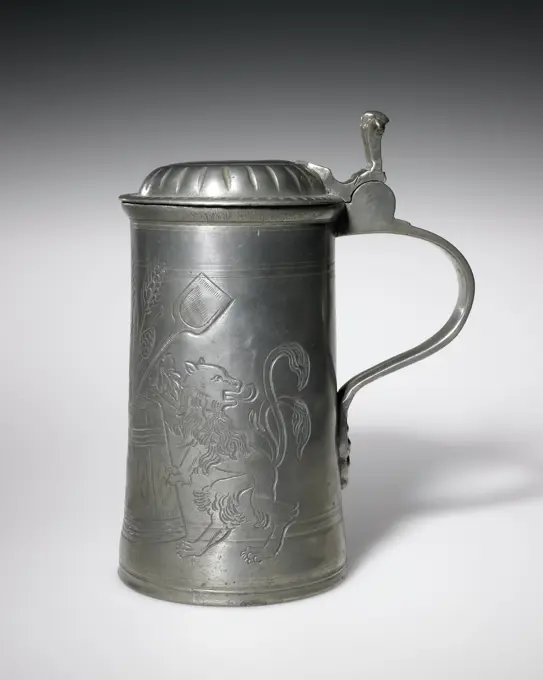
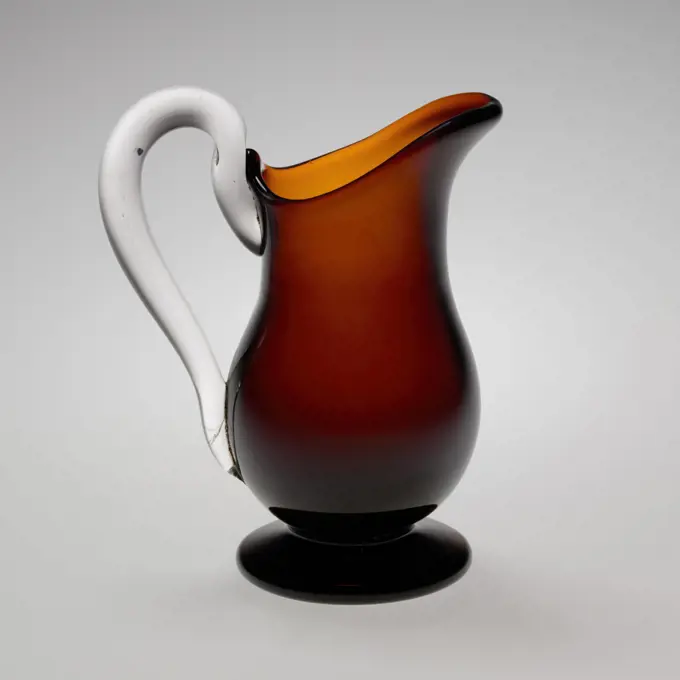
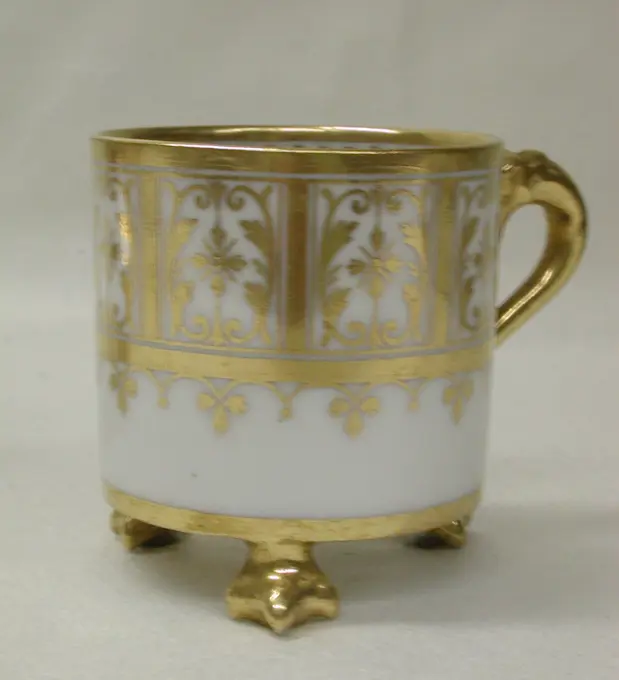
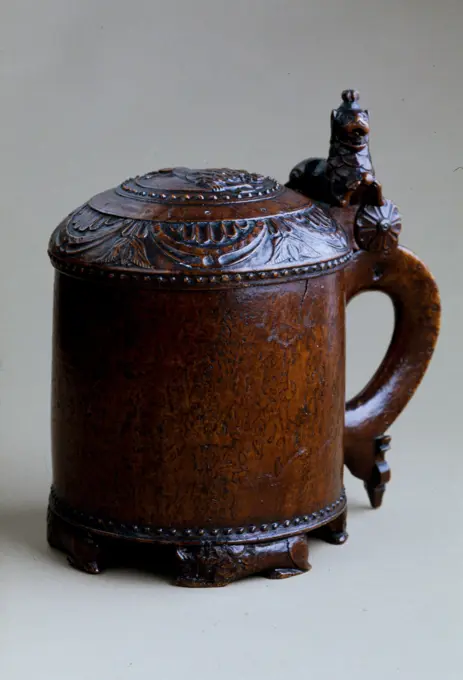
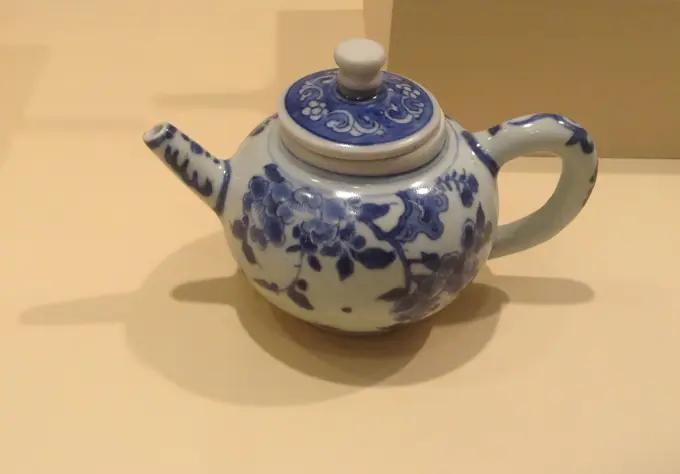
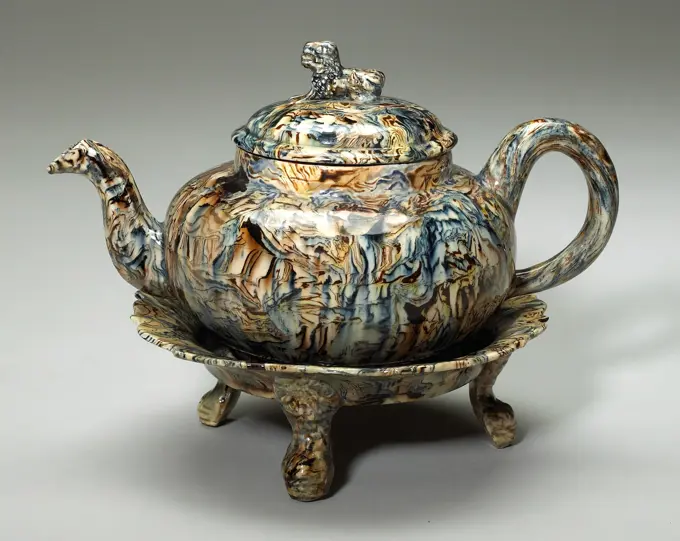
Cover of milk jug with onderglaze relief decoration with flowers, anonymous, c. 1700 - c. 1724 Lid with a button of porcelain milk can, painted on the glaze in red, green, yellow, eggplant, black and gold. The lid with relief decoration, around it a decorative band with flowers alternately in cartouches and against a green surface with black dots. Six chips in the lid. Famle Verte. China porcelain. glaze. gold (metal) painting / vitrification Lid with a button of porcelain milk can, painted on the glaze in red, green, yellow, eggplant, black and gold. The lid with relief decoration, around it a decorative band with flowers alternately in cartouches and against a green surface with black dots. Six chips in the lid. Famle Verte. China porcelain. glaze. gold (metal) painting / vitrificationKettle; Malcz, Karol (1797-1867); 1930s (1830-00-00-1839-00-00);Teapot. Lilpop, Karol Jerzy (fl. 1820-1833), goldsmithEwer with willow and plum blossoms, early 17th century, Unknown Japanese, 6 5/8 × 8 5/16 × 5 1/2 in. (16.83 × 21.11 × 13.97 cm), Mino ware, Oribe type; stoneware with iron oxide, Japan, 17th century, Oribe ceramics, which were made from the late 1600s to early 1700s at kilns in the area of Mino Province in central Japan, often feature colorful, sometimes abstract designs and take whimsical, asymmetrical forms. Oribe ware takes its name from Furuta Oribe (1544-1615), a famous master of the Japanese tea ceremony whose particular aesthetic taste is said to have influenced the development of these ceramics. Although the exact function of Oribe ewers remains unclear, they may have been used during the tea ceremony to replenish larger basins of water.Teapot with lid, blue-white marbled, Jacobus de Caluwe (Possible), c. 1720 - c. 1780 Teapot of lead glaze pottery, with a lid. The teapot is marbled blue and white and three rosettes have been applied to relief on the lid. Delft earthenware. lead glaze Teapot of lead glaze pottery, with a lid. The teapot is marbled blue and white and three rosettes have been applied to relief on the lid. Delft earthenware. lead glazeMiniature teapot with cover. Culture: Dutch, Amsterdam. Dimensions: 1 × 2 in. (2.5 × 5.1 cm). Maker: Probably by Johannes van Geffen (active 1769-88). Date: 1780. Museum: Metropolitan Museum of Art, New York, USA.Cream Pot And Cover; Manufactured by Royal Worcester (England, GB, United Kingdom); glazed porcelain; 12.8 x 9.5 cm (5 1/16 x 3 3/4 in.)Coffee pot; Lilpop, Karol Jerzy (Fl. 1820-1833); 1920s (0-00-00-0-00-00);Ewer in the Form of a Bamboo Shoot. Korea. Date: 1135-1165. Dimensions: H. 23.1 cm (9 1/10 in); diam.(including spout) 22.1 cm (8 5/7 in.); Lid: H. 6.9 cm; diam. 6.9 cm; H.(without lid) 19.8 cm; diam. 14.6 cm. Celadon-glazed stoneware with underglaze molded decoration. Origin: Korea. Museum: The Chicago Art Institute, Chicago, USA.Silver teapot with brown wooden handle in bud on lid, teapot tableware holder silver wood, engraved pear shaped body on constricted stand ring high arched lid with hinge spout wooden thorned ear wooden buttoned button bottom bottom (smashed) serve serve tea drink drink tea setMiniature teapot with cover. Culture: British, London. Dimensions: Height: 1 3/4 in. (4.4 cm). Maker: Possibly by George Manjoy (British, active 1685-ca. 1720). Date: 1703. Museum: Metropolitan Museum of Art, New York, USA.Delft-white jug with silver lid, jug drinkware holder silver ceramics earthenware glaze tin glaze metal, hammered driven delft white White body ear thumb rest lid two hinges With on the hinge young Bacchus served on tonne serving Purchase at Antiekbeurs Delft.Tea teapot; Malcz, Karol (1797-1867); 1930s (1830-00-00-1839-00-00);Teapot 1720-27 Vezzi Factory The third factory in Europe to produce hard-paste porcelain was founded in Venice in 1720 by Francesco Vezzi (1651-1740). The previous year, Vezzi had visited Vienna, where it is likely he became aware of Claudius Du Paquier's new porcelain factory. Presumably, it was during this visit that Vezzi met Christoph Conrad Hunger, who in 1720 left du Paquier's employ and moved to Venice. In the following year, Hunger was recorded as a partner of the Vezzi enterprise, and it must have been Hunger who provided the technical expertise to the factory.The Vezzi factory produced porcelain for only a seven-year period, and it is thought that less than 200 pieces of Vezzi porcelain have survived. A significant percentage of the surviving objects are teapots, and many of these are executed in a bold, sculptural style particular to Vezzi's factory. Vezzi porcelain is frequently decorated with chinoiserie scenes, and the playful character of the Chinese figures on this teapTeapot of earthenware with black -covering glaze, anonymous, c. 1740 - c. 1770 Spherical teapot made of earthenware with black -covering glaze. The pot has a C-shaped ear and an S-shaped spout. Jackfield earthenware Spherical teapot made of earthenware with black -covering glaze. The pot has a C-shaped ear and an S-shaped spout. Jackfield earthenwareJohn Bayly, Creampot, c. 1760, silver.Drinking jar of tin with the Ave Maria on the bottom. Drinking jar of tin. The stand ring wear a wide, baluster-shaped body that is decorated with a profiled tire. The lip edge runs straight up and is also decorated with a profiled tire. The slightly vaulted lid is decorated with two circular grooves. The thumbs of thumbs is formed by two bird heads and runs over in the handle via a one-case hinge. On the inside a medallion has been applied to the bottom with a cross and the Ave Maria.Teapot with a lid. Sevres, Manufacture nationale de porcelaine de Sevres (1756-), factoryTea teapot; Holland, Thomas II (Fl. 1798-1809); 1808/09 (1808-00-00-1809-00-00);Teapot, Gorham Manufacturing Company, Providence, Rhode Island, USA, founded 1818, Silver, ivory, Circular body decorated in flowers and other vegetation; squared, textured lid with conical knop., 1881, metalwork, Decorative Arts, TeapotCoffeepot with stylized flower sprays and ornamental borders, anonymous, c. 1800 - c. 1824 Coffee pan of porcelain, painted on the glaze in gold. The jug has a vase-shaped body, s-shaped spout and a high ear, the top of which is connected to the edge. The belly is with golden lines divided into three wide tires with a pendulum of stars in the top one, half moon shapes with dots and triangles. On the neck twice a stylized flower branch and on the edge of flower vines. The spout with golden lines and stylized flowers. The lid with a tire flower vines. Empire. France porcelain. glaze. gold (metal) painting / gilding / vitrification Coffee pan of porcelain, painted on the glaze in gold. The jug has a vase-shaped body, s-shaped spout and a high ear, the top of which is connected to the edge. The belly is with golden lines divided into three wide tires with a pendulum of stars in the top one, half moon shapes with dots and triangles. On the neck twice a stylized flower branch and on the edgeSilversmith: Johannes van Vorst, Silver teapot with flower as bud, teapot tableware holder silver, cast driven Rectangular model; strongly pressed spherical body (pincushion-shaped) lobed with protruding narrow body on constricted foot c-shaped anewed ear with small c-volute on the bottom short wide spout, smooth and flatly arched lid with small closing lip by means of screw-fastened rosette button bottom underside (beaten) serve before tea drink drink teaMiniature cream jug (part of a set). Culture: British, London. Dimensions: Height: 7/8 in. (2.2 cm). Maker: David Clayton (British, active 1689). Date: late 17th-early 18th century. Museum: Metropolitan Museum of Art, New York, USA.Coffeepot -Jug (Pot à l'eau tourné). Sèvres Porcelain Manufactory; French, founded 1740; Painted by Louis-Jean Thévenet (French, active 1741/45-1777). Date: 1763. Dimensions: 19.4 x 28.6 cm (7 5/8 x 11 1/4 in.). Soft-paste porcelain, polychrome enamels, gilding, and gilt-metal mounts. Origin: Sèvres. Museum: The Chicago Art Institute, Chicago, USA.Joseph Richardson, Jr. and Nathaniel Richardson, Teapot, c. 1780, silver and wood.Teapot (part of a set) 1760-70 Chinese, for Danish market. Teapot (part of a set) 201304Jug with a horse and scrolls, anonymous, c. 1700 - c. 1799 Can be made of stoneware on high foot with a spherical belly and long, narrow neck with a pinched spout. The C-shaped ear is attached to the neck and shoulder. A few profiles and lines in the foot and neck. Partly covered with cobalt blue. On the neck, saved in blue, an entry decoration of a prancing horse between ranks (bang band ornament). The same decoration without a horse in a wide strap on the abdomen, surrounded by two tires with pressed zigzag lines (knibis). Blue lines on the foot and neck. Attached to the neck a pewter frame with the inscription 'FSC 80' on the inside of the lid. Lahntal, Westerwald. Lahntal Stoneware. Glaze. Cobalt (Mineral). frame: tin (metal) vitrification Can be made of stoneware on high foot with a spherical belly and long, narrow neck with a pinched spout. The C-shaped ear is attached to the neck and shoulder. A few profiles and lines in the foot and neck. Partly covered with cobalt blue. On theSilversmith's Art, Italy 19th century. Silver jug with the mark of the goldsmith Mattia Codursi. Neaples, 1845.Jar and cover, glass, Round body with vertical fluted rim at top; loop handle; high domed lid with button finial and notch cut out for spoon; body and lid cut with double band of printies, a row of narrow flutes at base of body., Ireland, ca. 1800, glasswares, Decorative Arts, Jar and coverPitcherCreampot 1735-45 Jacob Hurd American. Creampot 2683. Brunette bronze colored beer mug with portrait medallions and other relief ornament in Renaissance style.Cover of a Teapot with Foliate Scrolls and Torches, Imperial Porcelain Manufaktur, 1821 Cover of a porcelain teapot, painted in underlaze blue and gold. Decorated with a band of leaf vines and a golden edge. Golden lid button with a rosette of leaves around the base. Vienna porcelain. glaze. cobalt (mineral). gold (metal) painting / gilding / vitrification Cover of a porcelain teapot, painted in underlaze blue and gold. Decorated with a band of leaf vines and a golden edge. Golden lid button with a rosette of leaves around the base. Vienna porcelain. glaze. cobalt (mineral). gold (metal) painting / gilding / vitrificationCoffeepot with gold borders on a red ground, anonymous, c. 1800 - c. 1824 Coffee pan of porcelain, covered on the glaze with red and gold. The jug has an egg -shaped body on a spreading foot and a wide, spreading neck. The S-shaped spout is modeled in the form of a bird head and the high ear has a shell motif and a palmet at the base. The belly is covered with red and the foot, shoulder, neck, spout and the ear with gold. On the shoulder a flower vank in one of the gold tires. The lid with the same decoration. Marked on the underside with E  And X. Empire. France (possibly) porcelain. glaze. gold (metal) painting / gilding / vitrification Coffee pan of porcelain, covered on the glaze with red and gold. The jug has an egg -shaped body on a spreading foot and a wide, spreading neck. The S-shaped spout is modeled in the form of a bird head and the high ear has a shell motif and a palmet at the base. The belly is covered with red and the foot, shoulder, neck, spout and the ear with gold. OMilk; Malcz, Karol (1797-1867); 1852 (1852-00-00-1852-00-00);Tankard British silver ca. 1620, stone late 19th century This is among the earliest English examples of serpentine mounted in silver. The only other sixteenth-century example we are aware of is the also unmarked tankard at Clare College, Cambridge. View more. Tankard. British. silver ca. 1620, stone late 19th century. Serpentine, silver. Metalwork-Silver In Combinationprobably Congressville Glass Works, Congress and Empire Spring Company, Congressville, New York, Pitcher, c. 1865-80, dark green glass with added chips.Cup with gold borders on a red ground, anonymous, c. 1800 - c. 1824 Porcelain head on spreading foot and with a high, curled ear, covered on the glaze with red and gold. The outer wall is covered with red and the foot, edge, ear and part of the inner wall with gold. On the outer edge a flower vank in one of the golden tires. Empire. France (possibly) porcelain. glaze. gold (metal) painting / gilding / vitrification Porcelain head on spreading foot and with a high, curled ear, covered on the glaze with red and gold. The outer wall is covered with red and the foot, edge, ear and part of the inner wall with gold. On the outer edge a flower vank in one of the golden tires. Empire. France (possibly) porcelain. glaze. gold (metal) painting / gilding / vitrificationCovered CaudleCup.  Maker: John Coney, American, 1655-1722Jug Eichstädt, ChristoffTeapot ca. 1813-56 Israel Trask. Teapot. American. ca. 1813-56. Pewter, wood. Made in Beverly, Massachusetts, United StatesMaker Unknown, Pitcher, c. 1820-40, cobalt blue glass.Teapot early 19th century British, Staffordshire. Teapot. British, Staffordshire. early 19th century. Pottery. Ceramics-PotteryMate. Silver. 19th century. Argentina. Museum of the Americas. Madrid, Spain. Miniature coffeepot (part of a set). Artist: Henry Flavelle. Culture: Irish, Dublin. Dimensions: 2 9/16 × 2 in. (6.5 × 5.1 cm). Date: 1827 and 1829.The production of miniature silver furniture and tea, coffee, and chocolate equipment was a specialty of goldsmiths known as "toy men." The miniatures were probably intended for dollhouses. From the mid-eighteenth century in England until the present, porcelain and fine earthenware miniatures have been made as well. Museum: Metropolitan Museum of Art, New York, USA.Teapot.   Maker: Vincent Laforme and Brother, active ca. 1850 - 1853Retailer: Jones, Ball and Poor, active ca. 1847 - 1851Aceitera. Museu Català de les Arts i Tradicions Populars.Argyle, Copper, silver, wicker, Capstan-shaped body, reeded molding middle; stepped domed lid with ball finial; long narrow s-curved spout; s-curved handle covered with wicker; wedge-shaped spout with hinged lid opposide other spout (to fill lower compartment with hot water)., Sheffield, England, 1775-1800, metalwork, Decorative Arts, ArgyleSpittoon. Kwispoor with wide flat edge and standing on a foot. The ear is voluntally. The quis pedal is marked with a tree (foot 443).Pitcher British 19th century View more. Pitcher. British. 19th century. Lustreware. Ceramics-PotteryUnknown, Teapot, c. 1740, silver.Coffeepot ca. 1760 Ansbach Pottery and Porcelain Manufactory The gift of the Hans Syz Collection in 1995 endowed the Museum with nearly three hundred examples of European and Asian ceramics meticulously acquired by Swiss-born collector Dr. Syz (1894-1991) to chart the migration of models and patterns from East to West. Documenting a continuous process of influence and adaptation, these pieces provide a discriminating review of the nuances of stylistic change resulting from three centuries of trade.. Coffeepot. German, Ansbach. ca. 1760. Hard-paste porcelain. Ceramics-PorcelainReproduction of a Sarmatian cup with animal handle 19th century, after 1st century original Electrotyping is a chemical process used historically to make high quality reproductions of works of art. During the Victorian era, one of the main producers was Elkington & Co. of Birmingham. They were licensed by the South Kensington Museum of London (now the Victoria & Albert Museum) to produce replicas of objects from royal treasuries and museums across Europe. The electrotypes approved by the Department of Science and Art, a British governmental agency, carry Messrs. Elkingtons mark in the form of an official stamp in metal. This modern electrotype is a copy of a gold cup in the Hermitage Museum, St. Petersburg. The original was found in 1864 in the Khokhlach kurgan (burial mound) in the vicinity of Novocherkassk, one of the largest cities of the Don region. It was part of a group of precious objects - a crown, collars, ornaments, flacons or perfume-boxes - known as the “Treasure of NovochBoiler. Boiler with a wide basis and upwards sloping. The boiler has a lid with floral pattern and a handle. The boiler is marked with a boar cup.Jug, W. Ridgway & Company, Hanley and Shelton, Staffordshire, England, active ca. 1830 - 1854, Glazed stoneware, A highly decorative blue jug with detail on the body, spout and handle. The center depicts a knight riding a horse in an outdoor scene., Hanley, England, 1840, ceramics, Decorative Arts, JugLid of milk jug, multi-colored painted with chinoiseries in crafted fours in a violet fond. Lid of painted porcelain.Pitcher (Iran); clear and greensih glassBizan Manufacture (Kyoto), alcohol pot (Choshi) (usual name), around 1870. Sandstone, painted in iron brown. Cernuschi Museum, Asia Museum of Asia in the city of Paris. Stylized chrysanthemums.Coffee Pot. Designed by Charles Robert Ashbee; English, 1863-1942; Made by the Guild of Handicraft Ltd.; England, 1888-1908; London, England. Date: 1900-1901. Dimensions: 17.3 x 18 x 12.7 cm (6 3/16 x 7 1/16 x 5 in.). Silver, ivory, and chrysoprase. Origin: London. Museum: The Chicago Art Institute, USA.Teapot 1848-51 Ball, Tompkins and Black. Teapot 8412Jug. Germany, Hanau. Date: 1695-1710. Dimensions: 25.7 x 14.3 cm (10 1/8 x 5 5/8 in.). Tin-glazed earthenware (faience) and pewter. Origin: Hanau. Museum: The Chicago Art Institute, Chicago, USA.Maker: Peter Van Dyck, American, 1684-1751, Teapot, ca.1720-35, Silver, 7 1/8 × 9 in. (18.1 × 22.9 cm), Octagonal teapots were popular in both Dutch and English silver, but no other example by an American craftsman has survived. The faceted, eight-sided form creates forceful rhythms and underscores the bold contrast between the broad body and the slender cover. Other New York silversmiths active in the Queen Anne period made such objects; a 1727 newspaper advertisement for a lottery listed as the prize an Eight Square Tea-Pot by SimeonSoumain. , Made in New York, New York, American, 18thcentury, Containers -MetalsPhilippe Le Vavasseur, dit Durell, Teapot, c. 1740, silver.Coffee pot. Pear-shaped coffee pot on three outs of bent legs ending in a sphere. The spout is curved and the handle is S-shaped. The top edge of the pot is serrated. The lid is arched in the middle and has a pointed button. The pot is labeled: STK. = Amsterdam, JRL. = N (1772), Mt. = Attributed Frederik Sleuman and an ax.Jug with chip carving, anonymous, c. 1580 - c. 1600 Jug of stoneware on a high base with a spherical body and wide neck. The C-shaped ear is attached to the neck and belly. Profiles on the neck and the foot. Both the abdomen and the neck are decorated with notch cut, with a printed and imposed lion's head in relief on the neck. Siegburg. Siegburg stoneware. glaze vitrification Jug of stoneware on a high base with a spherical body and wide neck. The C-shaped ear is attached to the neck and belly. Profiles on the neck and the foot. Both the abdomen and the neck are decorated with notch cut, with a printed and imposed lion's head in relief on the neck. Siegburg. Siegburg stoneware. glaze vitrificationCover cream. Pottery lid, creamware, acorn-shaped button.Teapot, c. 1790. John David (American, 1736-1793). Silver; with handle: 16.2 x 25.8 cm (6 3/8 x 10 3/16 in.). This teapot may have belonged to Dr. Enoch F. Edwards, George Washingtons personal physician.Coffee Pot on Stand. John Bridge (England, London, 1755-1834)Rundell, Bridge & Rundell (England, London, active 1789-1843). England, London, 1823. Furnishings; Serviceware. SilverTeapot And Lid (China); silver, ivoryTeapot, blue, with scalloped wall, interrupted by a smooth horizontal band. Teapot of pottery, bluestone. The scalloped wall is interrupted by a smooth horizontal tire. The S-shaped spout is decorated with full-shaped relief. The C-shaped ear ends at the bottom in a stylized sheet.Cann 1750-1800 Daniel Dupuy. Cann 5331Coffee pot, pear-shaped, with rocailles and C and S-Voluten, fa. A.D. Verschuur, 1863 The coffee pot has a loose clock -shaped lid, crowned by a volute -shaped button, a curved spout and a voluted ear, which is decorated in high relief at the top with flowers, and in which two ivory rings are absorbed. The pear -shaped body rests on a vaulted position ring with four claw -like legs. At the front and rear of the body is an empty cartouche, surrounded by symmetrically applied rocailles, foamy motifs and C and S-Voluten. These motifs are also applied to the lid. The base of the spout is decorated with flowers, the foot with C-Voluten. Amsterdam silver (metal). ivory engraving The coffee pot has a loose clock -shaped lid, crowned by a volute -shaped button, a curved spout and a voluted ear, which is decorated in high relief at the top with flowers, and in which two ivory rings are absorbed. The pear -shaped body rests on a vaulted position ring with four claw -like legs. At the front and rCovered Mug 1800-1825 Bohemia. Glass .Milkus, purple red with golden edges, ear and spout. Porcelain milk jug, part of a coffee set, body purple red, with golden edges, ear and spout. On top of a wide golden trim in which an engraved leaf drink. Brands: C, X, 11.3 (reimbursement).. The can have a slightly broofed body above which one is low, straight portion. Just above the bottom of the pot and along the top and top of the straight section, vertically ribbed edges, flanked by narrow profiles, are arranged. The pot has a S-shaped curved spout and an ebony ear with silver views; It is rounded to the top and decorated on either side with a rosette. The vaulted neck of the pot rejuvenates itself to a large opening, in which it fits itself a slightly widening lower part of the cylindrical attachment. The attachment has a bottom with a large number of very small holes. It is equipped with a separate filter consisting of a soil with larger holes, surrounded by a straight-up wall and provided with a conical handle that is awarded by a smooth spherical button. The wall of the attachment is clay in the same way as that of the pot. The bland vaulted lid is crowned by a knob in the form of a rolled hose on a rosette.Silversmith's Art, Italy 19th century. Emanuele Caber, Silver coffeepot, Imperial style. Milan, approximately 1812.Cup (part of a service) late 18th century Royal Porcelain Manufactory, Naples. Cup (part of a service) 187764 Factory: Naples Royal Porcelain Manufactory, Ferdinand IV period, ca. 1771ca.1807, Cup (part of a service), late 18th century, Soft-paste porcelain, Height: 2 1/2 in. (6.4 cm). The Metropolitan Museum of Art, New York. Gift of Henry G. Marquand, 1894 (94.4.145)Lid with relief decoration of lisdodden. The vaulted lid is embossed with a wreath of lisdodden, and is crowned by an onion-shaped button, on which embossed French lilies.DIJZEL MET ACCOUNT: ENDEX ENDDORBERS 'GOS mich 1538, Alexander Endrorder, 1538 The cast round mortar extends a little upwards, has a protruding edge and a slightly flared foot. It is precisely above that one at the top closed by three ribs with the inscription in Latin Majuskels Allex enndorfer der Gos Mich 1538 with five punctuations consisting of a stylized clover leaf. The handle has the shape of a dolphin. Innsbruck bronze (metal) casting The cast round mortar extends a little upwards, has a protruding edge and a slightly flared foot. It is precisely above that one at the top closed by three ribs with the inscription in Latin Majuskels Allex enndorfer der Gos Mich 1538 with five punctuations consisting of a stylized clover leaf. The handle has the shape of a dolphin. Innsbruck bronze (metal) castingTankard, 1865, 9 x 6 1/2 x 5 1/4in. (22.9 x 16.5 x 13.3cm), Pewter, 19th centuryTeapot (théière calabre) (part of a service) 1767 Sèvres Manufactory French Birds were depicted on Vincennes and then Sèvres porcelain from the earliest years of production at Vincennes, but they were painted as fanciful creations and employed as decorative elements with no concern for fidelity to actual birds. Most of these early painted creatures had little delineation and their coloring was entirely arbitrary. It was not until the late 1760s that the painters at Sèvres began depicting birds that were accurate representations of those found in nature, rendered with specificity and accurate coloration. The impetus for this change was the availability of hand-colored etchings of birds published in George Edwardss (British, 1694-1773) A Natural History of Birds (1743-51) and his Gleanings of Natural History, issued in a series of volumes between 1747 and 1764.[1 The first pieces of Sèvres porcelain decorated with birds copied from Edwardss prints were produced for Charles Lennox (173Creamer. Culture: American or British. Dimensions: H. 4 3/8 in. (11.1 cm). Date: 1780-1820. Museum: Metropolitan Museum of Art, New York, USA.Jar and cover, Bronze, inlaid metal, Jar (a) with lid (b). Footed round jar, the body cast in two parts. The joint covered by an encircling banding. Short, wide, straight neck. Two small horseshoe-shaped handles hinged at shoulder. Lid overhanging the neck, stepped up to onion-shaped finial. Topmost element of finial missing--decorated with concentric bands of triangles and rectangles., Philippines, possibly 19th century, metalwork, Decorative Arts, Jar and coverTankard, 18th century, 8 3/4 x 7 x 4 3/8in. (22.2 x 17.8 x 11.1cm), Leaded pewter, Netherlands, 18th century. Lead-glazed earthenware (agateware) .Pitcher, Body: amber blown glass. Handle: colorless lead glass, 5 1/8 × 4 1/4 × 2 3/4 in. (13.02 × 10.8 × 6.99cm), Made in New Jersey, American, 19thcentury, Containers -GlassSerpentine stone and tin, anonymous, c. 1575 - c. 1625 Serpentine stone beer mug or box, which is worn by a pewter ring on three lion's legs. The upper edge is surrounded by a pewter strap and is closed by a convex, tin lid. There is a lion or dog on the lid. The ball -shaped thumb rest passes into the handle through a one -cash hinge, which bends slightly to the bottom. Low Countries serpentine (mineral). tin (metal) casting Serpentine stone beer mug or box, which is worn by a pewter ring on three lion's legs. The upper edge is surrounded by a pewter strap and is closed by a convex, tin lid. There is a lion or dog on the lid. The ball -shaped thumb rest passes into the handle through a one -cash hinge, which bends slightly to the bottom. Low Countries serpentine (mineral). tin (metal) castingCup (part of a service) late 18th century Royal Porcelain Manufactory, Naples. Cup (part of a service) 187766 Factory: Naples Royal Porcelain Manufactory, Ferdinand IV period, ca. 1771ca.1807, Cup (part of a service), late 18th century, Soft-paste porcelain, Height: 2 1/2 in. (6.4 cm). The Metropolitan Museum of Art, New York. Gift of Henry G. Marquand, 1894 (94.4.149)Part of a coffee and tea service, manufacture Oud-Loosdrecht, c. 1774 - c. 1778 Milkkan of porcelain. Painted in beet red on light pink with figures in a river landscape with buildings and ruins. Beetrode Rocailles around spout and on ear, gold piping along mouth and lid edge and on ear. On the lid a glans as a button. Loosdrecht porcelain Milkkan of porcelain. Painted in beet red on light pink with figures in a river landscape with buildings and ruins. Beetrode Rocailles around spout and on ear, gold piping along mouth and lid edge and on ear. On the lid a glans as a button. Loosdrecht porcelainTankard, early 19th century, 8 1/2 x 5 1/2 x 8 1/2 in. (21.59 x 13.97 x 21.59 cm), Burled maple, Norway, 19th centuryJugTeapot, c. 1643, 4 x 5 7/8 x 3 3/4 in. (10.2 x 14.9 x 9.5 cm), Porcelain, China, 17th centuryTeapot with cover and stand, c. 1745, 4 7/8in. (12.4cm), Glazed earthenware (agateware), England, 18th century, The marblized composition of this teapot and stand imitates agate, a quartz that forms in mutliple layers and colors in rocks. During the 18th century, agateware was often created through combining clays of different colors into a kneaded mass that was then used to form objects.PUCHERO Y ANAFRE CON DECORACION "ENCHINADA" - ARTE POPULAR. Location: ALFARERIA. SPAIN.Antique copper cattle Old antique copper cattle isolated over white background Copyright: xZoonar.com/IvonnexWierinkx 7406984Cream Pitcher. Boston and Sandwich Glass Factory (United States, Massachusetts, Sandwich, 1825-1888). United States, circa 1820-1830. Furnishings; Serviceware. GlassKettle 1783-1784 Sèvres. This kettle, made at the SËvres porcelain manufactory outside Paris, illustrates a story recounted by the ancient Roman historian Titus Livius, known in English as Livy. In 390 B.C., when Rome was under siege, a plebeian (commoner) named Albinius was fleeing the city, transporting his family in a cart. He encountered the vestal virgins, the guardian priestesses of the sacred flame of Rome, who were escaping on foot carrying their ritual vessels. Albinius offered his cart to the priestesses, thus performing a noble deed exhibiting both piety andgravitas, or seriousness of purpose.The kettle is hard-paste porcelain, made from a mixture of kaolin (white clay made from broken down feldspathic rock) and petuntse (chinastone) that is glazed with powdered feldspar and fired at high temperatures (about 2372∞ F, or 1300∞ C). The porcelain is covered with a deep brown glaze, calledfond laque(literally ìlacquer glazeî) for its resemblance to lacquer. The painters at SËTankard 1705-1715 Southern Germany. Ruby glass with silver-gilt mounts .Cooking pot with copper handle. Cooking pot, turned from black painted wood, on three legs and with a brass wire handle.