Decorative Textile and Paper Patterns

A collection of intricate textile and paper fragments featuring historical designs. Includes floral motifs, geometric shapes, and rich textures from various centuries.

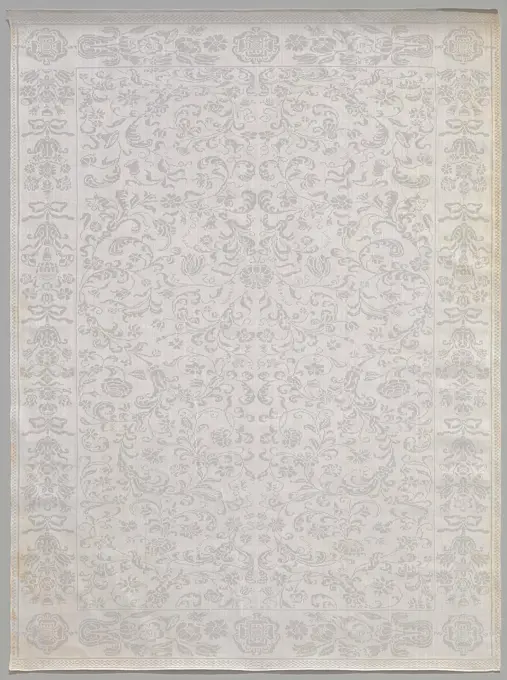
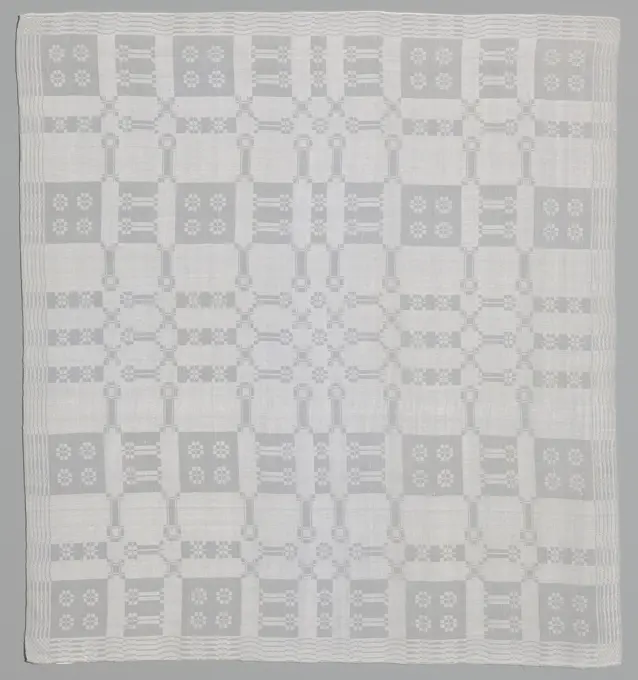
Napkin with pattern of thrown flowers and fruits, anonymous, 1665 - 1675 Napkin from white Linnamast with pattern of stripped flowers and fruits. The running edges with flower patterns. Flanders (Possible) linen (material) damask Napkin from white Linnamast with pattern of stripped flowers and fruits. The running edges with flower patterns. Flanders (Possible) linen (material) damask
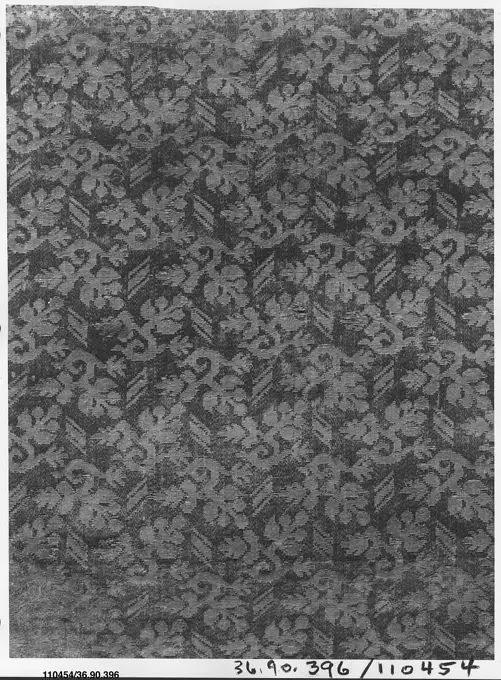
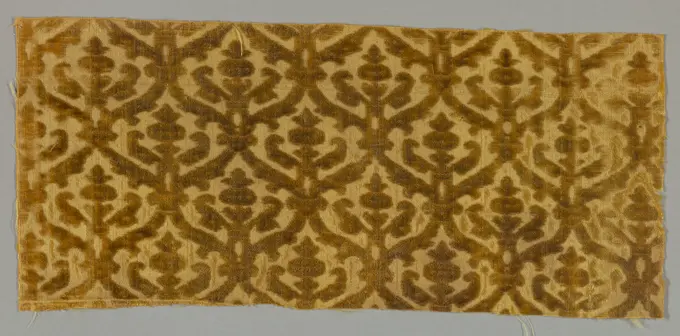
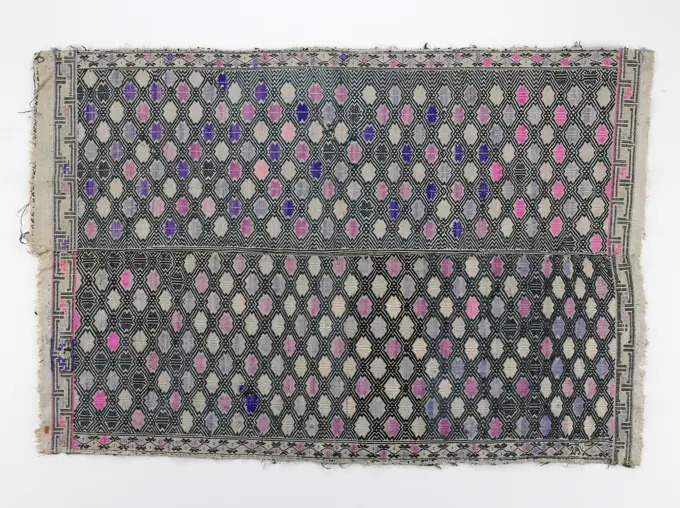
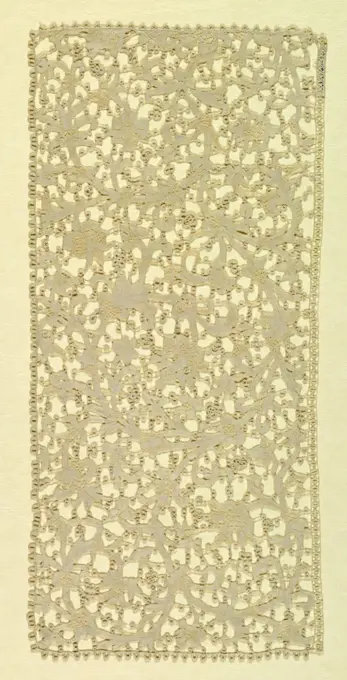
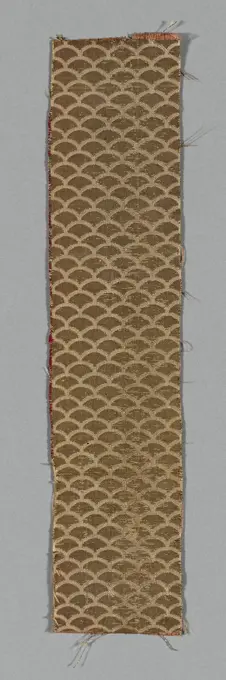
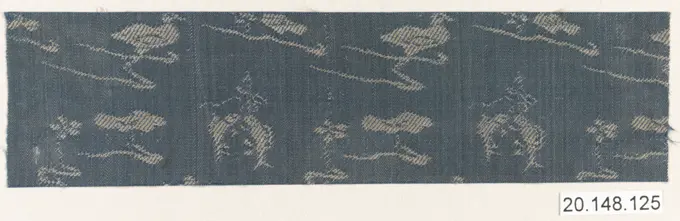
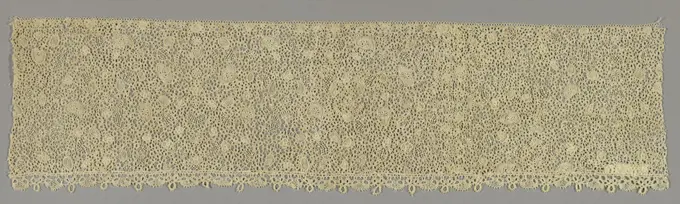
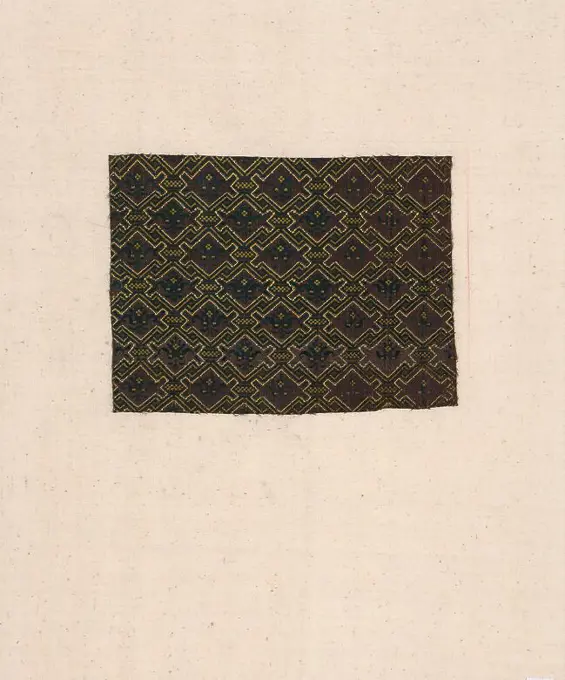
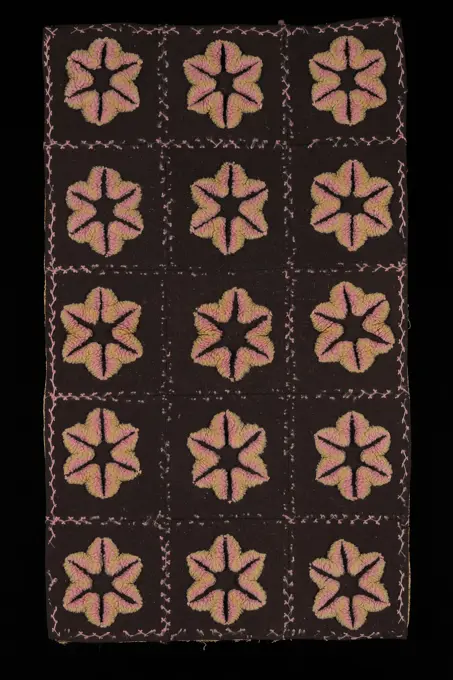
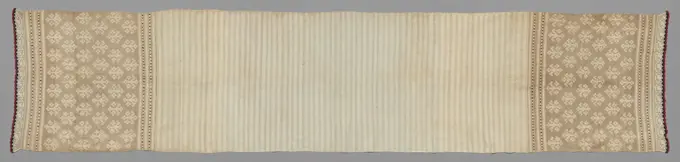
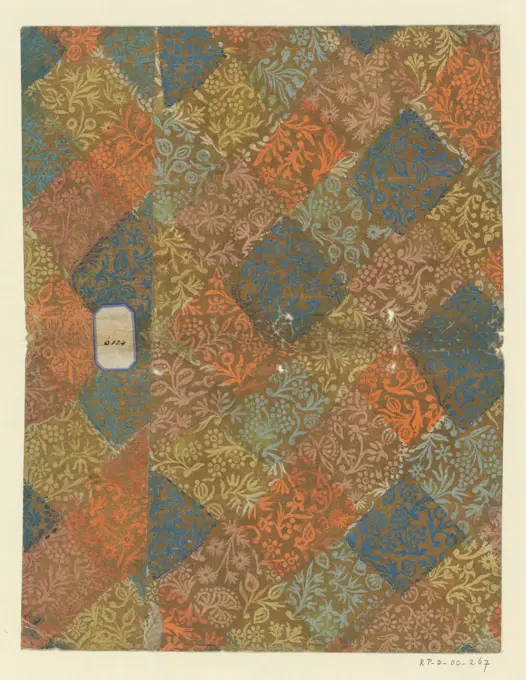
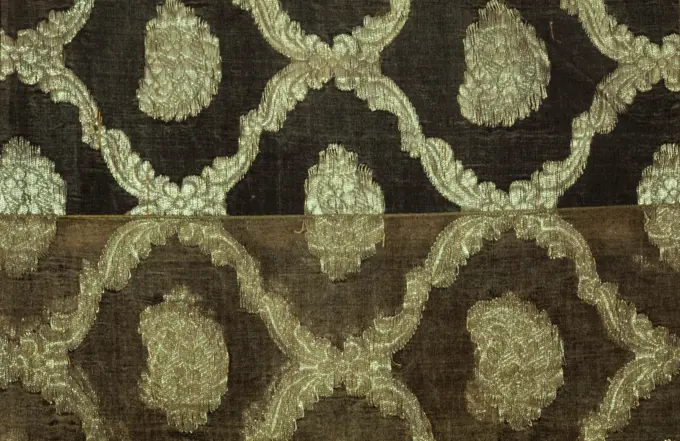
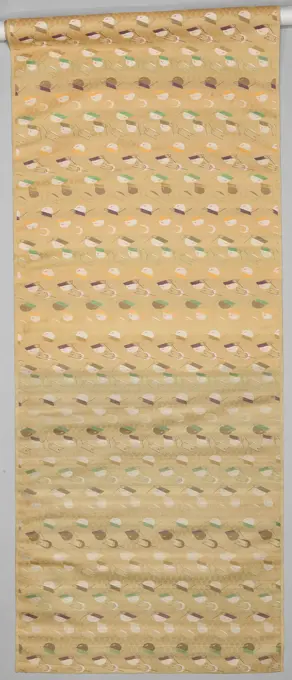
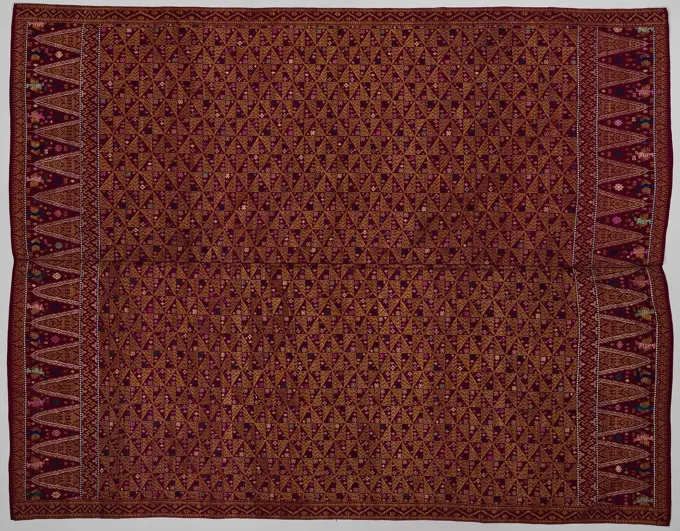
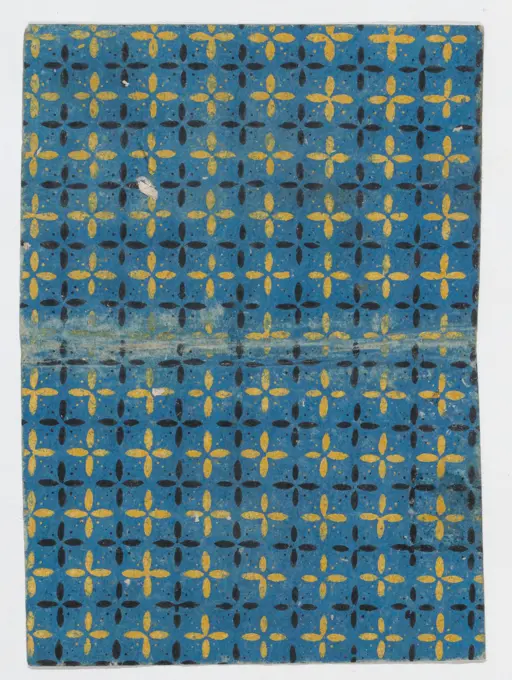
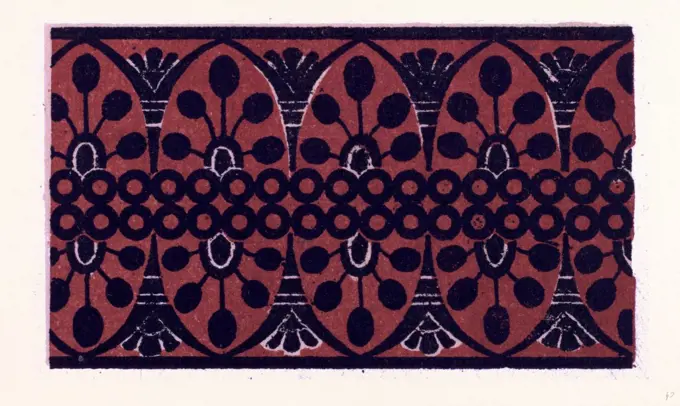
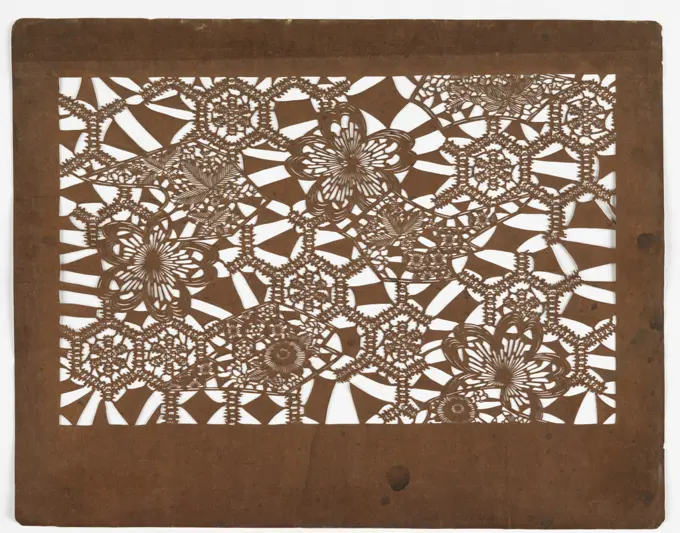
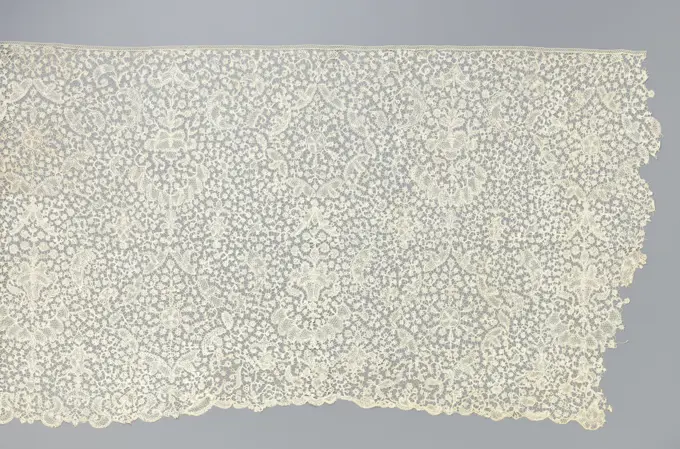
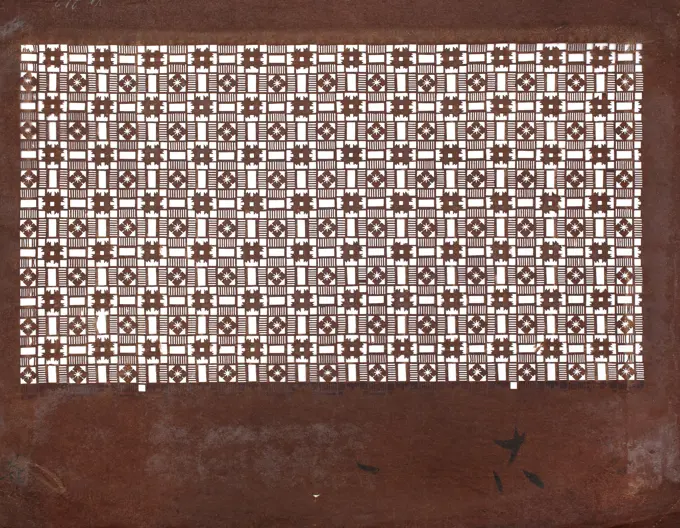
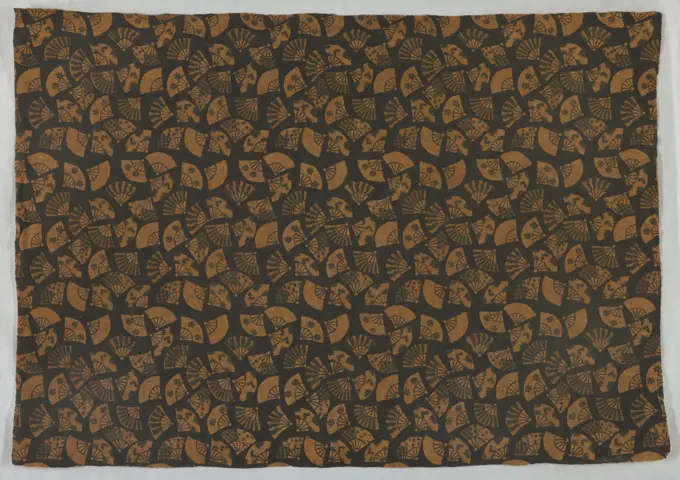
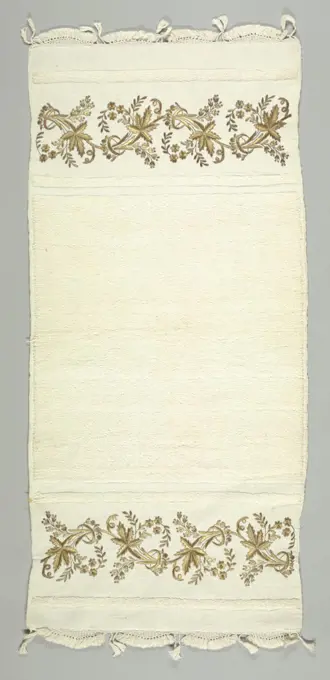
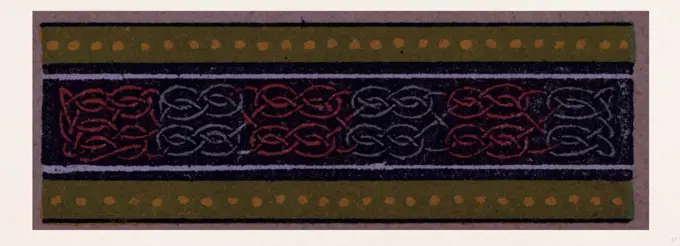
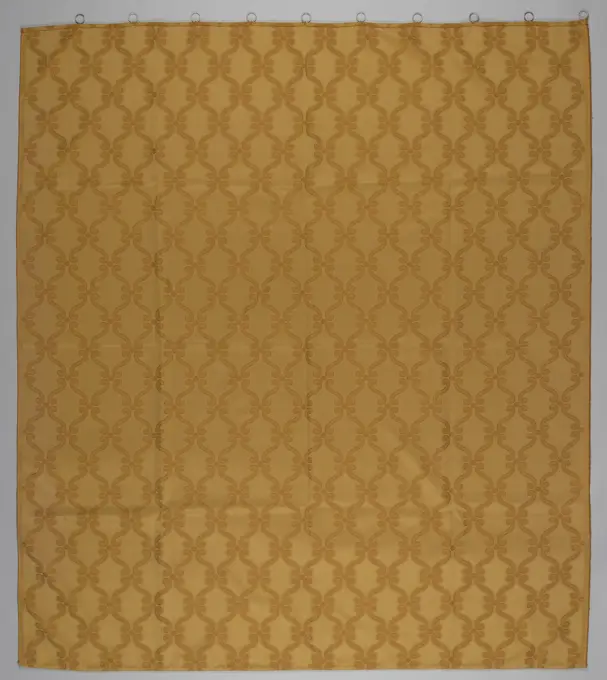
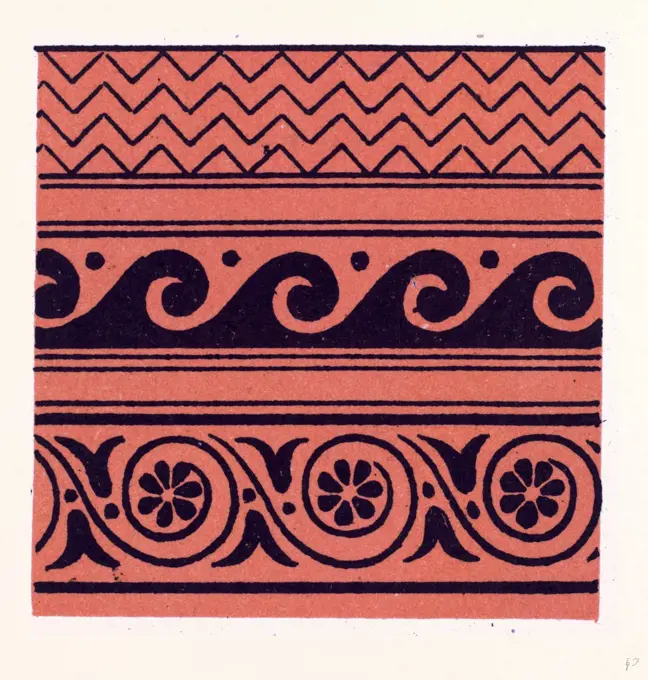
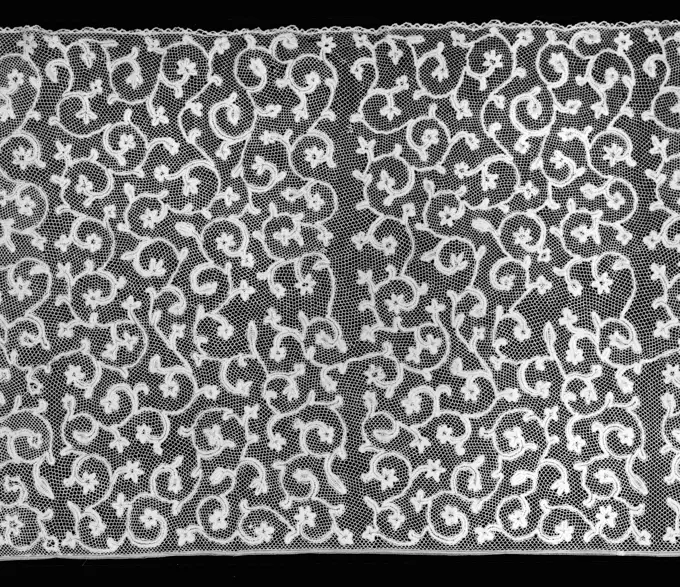
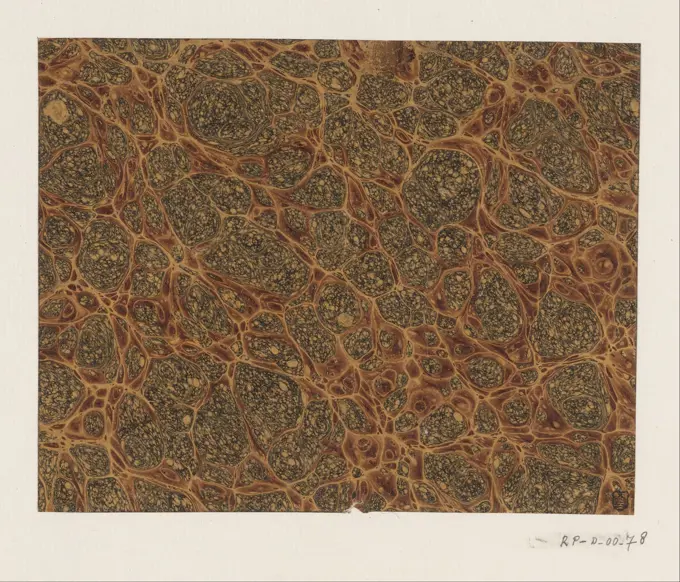
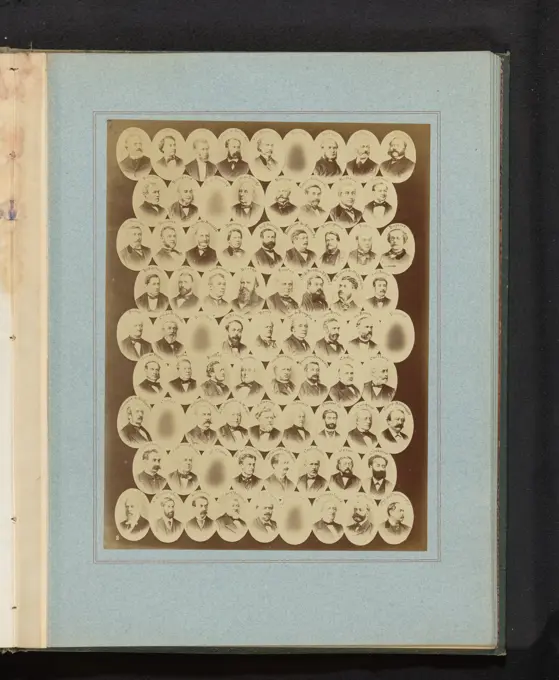
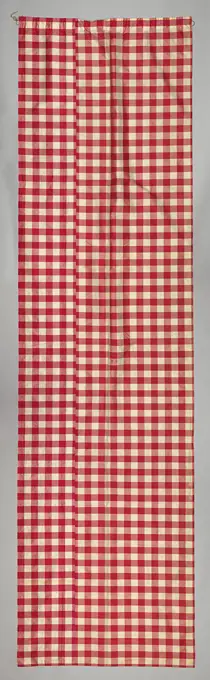
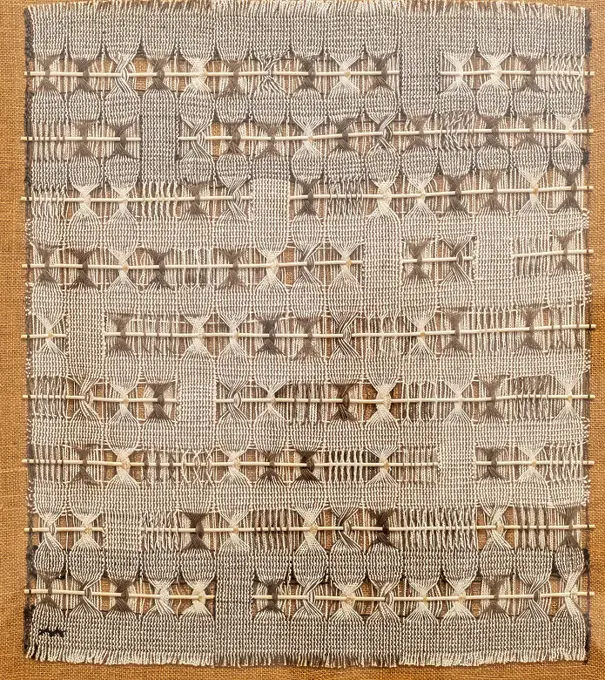
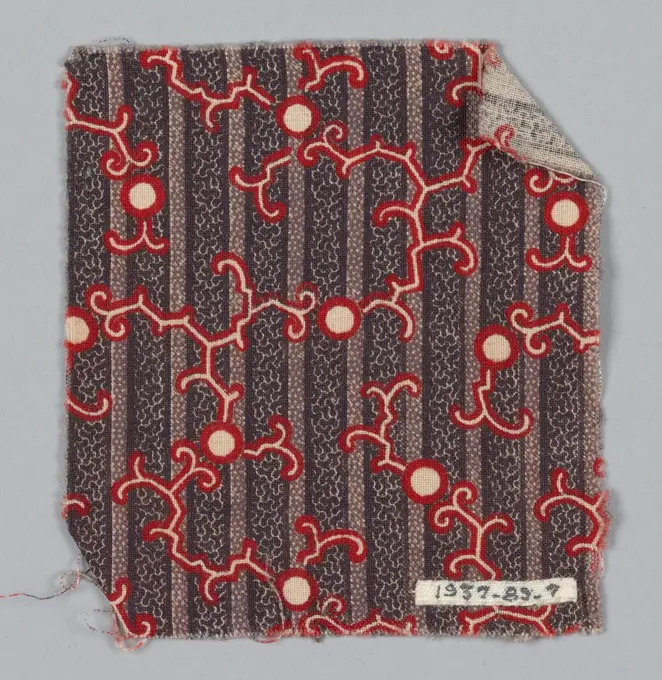
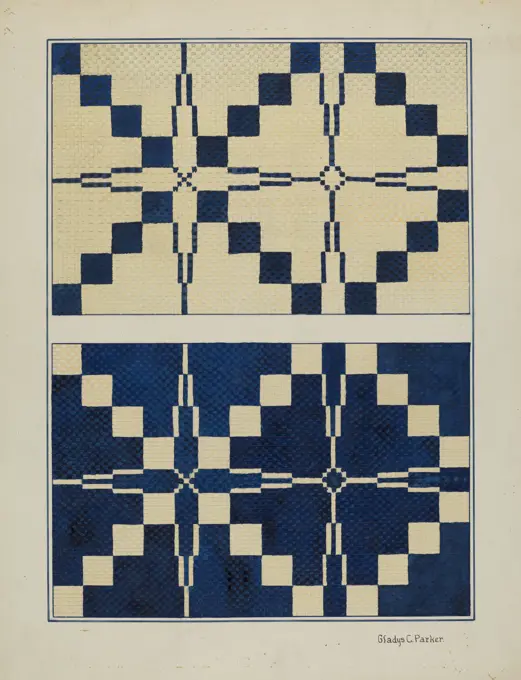
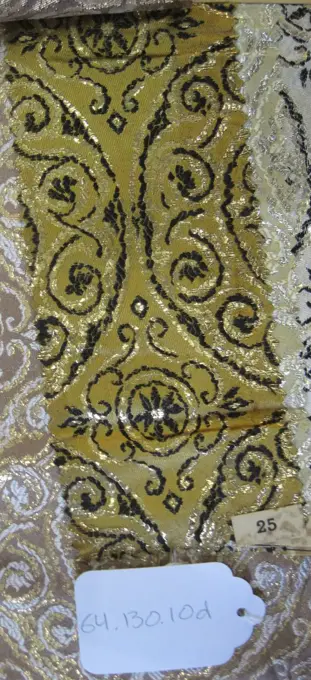
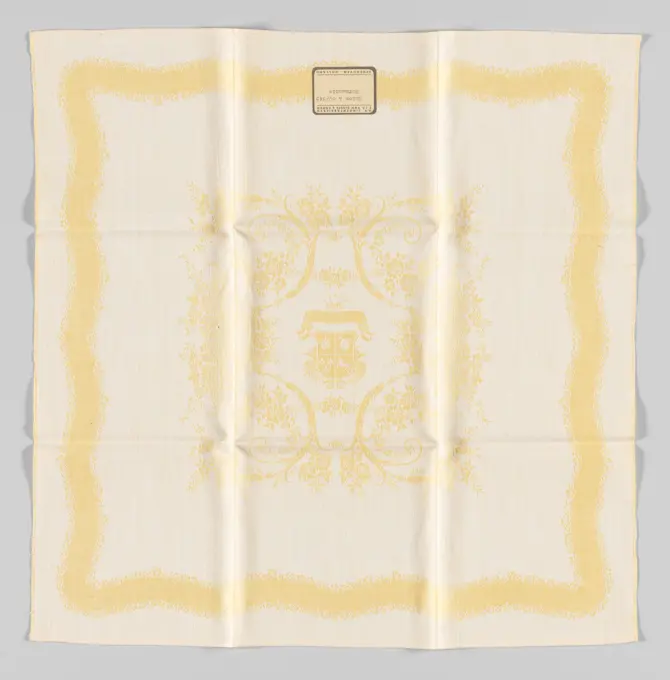
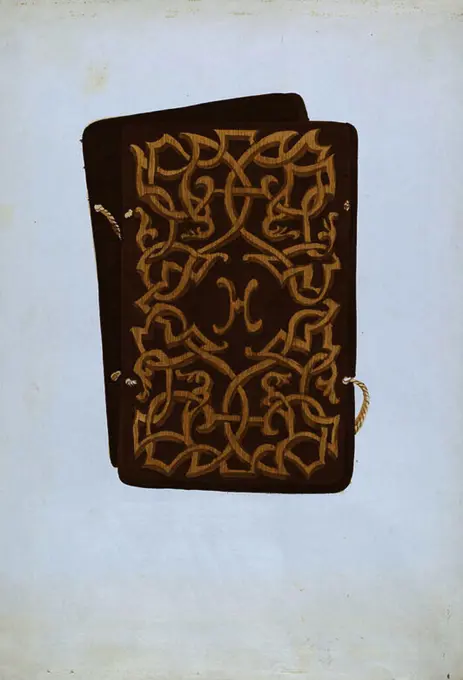
Fragment Made 1575-1600 Italy. Silk, plain weave with supplementary patterning wefts bound by main warps in plain interlacings .Leaf with pattern of connected rings in which a saved rosette, anonymous, 1750 - 1900    paper. block printing (relief printing process) ornament derived from plant formsNapkin of Linnendamast with a flower pattern. Napkin of Linnendamast. The field has a mirror pattern from Ijle Volute-shaped flower rinks. The ongoing and lying edges have stylized flowers, rosettes and bows. The napkin has been marked: Crown GS 12 WH.Piece 18th century Italian. Piece 224544Book cover with overall circular pattern 18th century Anonymous. Book cover with overall circular pattern. Anonymous , Italian, 18th century. 18th century. Relief print (wood or metal). PrintsBed valance 18th century Greek Islands, Dodecanese, Kos. Bed valance 219711Piece 16th-17th century Italian. Piece 223498Loincloth Panel. Chancay; Peru, Central coast. Date: 1000-1476. Dimensions: 127 x 33 cm (50 x 13 in.). Origin: Peru. Museum: The Chicago Art Institute, Chicago, USA.Napkin with pattern of thrown flowers and fruits, anonymous, 1665 - 1675 Napkin from white Linnamast with pattern of stripped flowers and fruits. The running edges with flower patterns. Flanders (Possible) linen (material) damask Napkin from white Linnamast with pattern of stripped flowers and fruits. The running edges with flower patterns. Flanders (Possible) linen (material) damaskFragment (Italy); silk; Bequest of Richard Cranch Greenleaf in memory of his mother, Adeline Emma Greenleaf; 1962-56-104-aBlanket, 47 1/2 x 32 1/2 in. (120.65 x 82.55 cm), Cotton, ChinaFragment, Medium: silk Technique: velvet, Maroon velvet in repeated small scale floral pattern against ecru ground., Italy, 16th-17th century, woven textiles, FragmentBand, Medium: linen Technique: needle lace, Pattern of scrolling leaves and flowers worked in a number of flat needlepoint stitches and decorated with picots. Finished on three sides with picots., Italy, 17th century, lace, BandFragment Made 1801-1900 France. silk, plain compound cloth .Textile, Medium: silk Technique: double cloth, Fragment of red and white striped floral pattern is arranged diagonally., Iran, 17th century, woven textiles, TextilePiece 17th century Japan. Piece 71119Piece 18th century Japan. Piece 71168Fragment (India); silk, metallicFragment, Medium: metal wrapped on silk thread Technique: bobbin lace, Fragment has a design of crossing lines with solidly worked lozenges and two scalloped edges in gold and silver color thread., Milan, Italy, 17th century, lace, FragmentCushion cover ,, c. 1800 - c. 1950 Tikes pillow cover of linen, white and blue blocked and checked. Netherlands linen (material) Tikes pillow cover of linen, white and blue blocked and checked. Netherlands linen (material)Band, Medium: linen Technique: bobbin made continuous tape with net added, Dense small scale flowers., Belgium, late 17th century, lace, BandFragment. Spain. Date: 1575-1600. Dimensions: 20.3 x 27.2 cm (8 x 10 3/4 in.)Repeat: 5.3 x 5.7 cm (2 1/8 x 2 1/4 in.). Silk, plain weave with paired warp and with two-color supplementary pile warps forming warp floats and uncut voided velvet. Origin: Spain. Museum: The Chicago Art Institute, Chicago, USA.Tabletop Blanket, c. 1850-1860, 38 7/8 x 23 3/16 in. (98.74 x 58.9 cm), Wool; needlework, United States, 19th centuryHanddwaal of white linen ,, 1780 White linen handdwaal, peel in crosskeper, marked HW 1. Northern Netherlands linen (material) White linen handdwaal, peel in crosskeper, marked HW 1. Northern Netherlands linen (material)Ten frameworks with flower ornaments, Reinier Willem Petrus de Vries (1874-1953), 1884 - 1952 print Possibly intended for an album.  paper  flowers ~ ornamentTextile Sample from Sample Book 19th century Japan. Textile Sample from Sample Book 67981Towel, early 20th century. Spain , early 20th century. Embroidered linen; average: 103.9 x 46.4 cm (40 7/8 x 18 1/4 in.).Leaf with tendrils with flowers and fruits, with label, anonymous, 1730 - 1780 brocade paper Leaf with tendrils with flowers and fruits, with label. Used as a cover. Germany paper. paint (coating) relief printingLength ca. 1750-60 British, London, Spitalfields. Length 229752Overskirt (Urku) Made 1850-1900 Bolivia. Wool, stripes of plain weave and three-color complementary warp weave; joined with darning stitches; edges overcast and interlaced in plain weave . AymaraTextile Sample from Sample Book 19th century Japan. Textile Sample from Sample Book 68118Sari, 19th century, L.176 x W.40 in., silk, metal thread, India, 19th centuryPiece 18th-19th century Japan. Piece 67411Banknote motif: band of lathe work ornament ca. 1824-42 Associated with Cyrus Durand American. Banknote motif: band of lathe work ornament 393954Printed Cotton Swatches. Dated: 1935/1942. Dimensions: overall: 29.5 x 23.1 cm (11 5/8 x 9 1/8 in.). Medium: watercolor and graphite on paper. Museum: National Gallery of Art, Washington DC. Author: Edward D. Williams.Loan silkedamast with a design of switched grid work and lantern ornament ornament. Loan silkedamast with a dessess of switched grid work in golden yellow on golden yellow fond "on which" courses with an ornament of lanterns in green, brown, orange and purple with silver white and red accent. Oriental textile.Fragment (Japan)Hip cloth; Kain Songket, Saput. Hip cloth with mill wiek motif and bird figures.Piece 18th-19th century Japan. Piece 66275Piece 18th century Japan. Piece 72057Book cover with blue and yellow cross pattern 19th century Anonymous. Book cover with blue and yellow cross pattern. Anonymous , 19th century. 19th century. Relief print (wood or metal). PrintsPiece 17th century Japan. Piece 71222Greek Ornament and Etruscan OrnamentKatagami, Blossoms; Japan; cut mulberry paper treated with persimmon tannin and silk threadKloskant Albesto smoke with diamond -shaped cartouches and canopies, anonymous, c. 1690 - c. 1709 Albound smoke of natural -colored bobbin: Flemish Guipure. The symmetrical ornament consists of two staggered rows of diamond -shaped cartouches interspersed with a palm shape surrounded by garlands and covered by canopy on a surface of flakes. On the scalloped lower edge palmets and C-shapes. Flanders (Possible) linen (material) bobbin lace / Flemish guipure lace Albound smoke of natural -colored bobbin: Flemish Guipure. The symmetrical ornament consists of two staggered rows of diamond -shaped cartouches interspersed with a palm shape surrounded by garlands and covered by canopy on a surface of flakes. On the scalloped lower edge palmets and C-shapes. Flanders (Possible) linen (material) bobbin lace / Flemish guipure laceCeremonial Baby Carrier, 26 1/2 x 25 in. (67.31 x 63.5 cm), Cotton, silk; needlework, ChinaPiece 18th century Japan. Piece 71224Priest's Robe (Shichijō) 15th century Japan. Priest's Robe (Shichijō) 68321Dying template katagami; Dese from the most ornamental squares and belts;  19th/20th century (1868-00-00-1912-00-00);Drabik, Cezary (Fl. Ca 1960 - 1980) - collection, geometric motifs, katags, templates, Japanese art, purchase (provenance)Paper tag labelPiece. Culture: Spanish or Italian. Dimensions: Overall: 15 x 9 3/4 in. (38.1 x 24.8 cm). Date: ca. 1660. Museum: Metropolitan Museum of Art, New York, USA.Fragment, Medium: Technique: printed, 19th century, printed, dyed & painted textiles, FragmentPiece 18th-19th century Japan. Piece. Japan. 18th-19th century. Silk. Edo period (1615-1868). Textiles-WovenBook cover with overall purple stripe pattern 19th century Anonymous. Book cover with overall purple stripe pattern. Anonymous , 19th century. 19th century. Relief print (wood or metal). PrintsSidewall, Fiber composition, tung oil, Imitation leather. Closely spaced small fans turned in different directions. They are decorated with flowers, stripes and lattice designs. Fans are the color of the ground: brownish-yellow; and the apparent ground of dark brown is actually a choke., Japan, ca. 1885, Wallcoverings, SidewallPiece 19th century Japan. Piece. Japan. 19th century. Silk. Textiles-WovenTowel, Medium: cotton, metallic thread Technique: plain weave with supplementary weft looping; embroidered, White solid looped uncut towel except at the ends, where on a border of plain weave is embroidered, in gold, a serpentine stem with five-pointed leaves and small flowers. Scalloped fringe on ends., Turkey, 19th century, embroidery & stitching, TowelFragments; wool, linenPiece 17th century Japan. Piece 71736Sleeve Band (China); wool on cottonLength of Textile, 1774-1793. France, 18th century, period of Louis XVI (1774-1793). Plain cloth, warp brocade; overall: 82.1 x 38.8 cm (32 5/16 x 15 1/4 in.).Celtic ornamentSouvenir of Józef Czapski  Curtain to the WindowFragment late 16th century Italian. Fragment 230236Greek Ornament and Etruscan OrnamentFragment 15th century Italian. Fragment. Italian. 15th century. Silk. Textiles-WovenFlounce Made 1701-1750 Italy. Linen, bobbin part lace; continuous clothwork tapes .Granite -Ring Roiebelmarmer in Gray, Brown and Yellow, Anonymous, 1700 - 1850 marbled paper   paper. paint (coating) shell marbled paperCompiled group portrait of members of the Assembée Nationale of 1873, François Marie Louis Franck, c. 1868 - in Or Before 1873 photograph  France photographic support albumen print anonymous historical persons portrayed in a group, in a group-portrait. politician, e.g. party leader. Lower House, Parliament, ChamberRood-wit geblokt gordijn.Curtain of red-white checkered silk with a straight top. At the rear at the top a coarse linen edge with copper rings. A string is attached to a curtain ring at the end.Variations on a Theme, 1958, Anni Albers,rayon, linen, cotton, plastic, Bauhaus.Fragment; cottonLarge cover or Hanging late 18th century Spanish, possibly Valencia or Talavera. Large cover or Hanging 461416Piece 16th-17th century Italian. Piece 223513Fragment (China); silk; vegetable fiberFragment Swedish, Dalarna 19th centuryBaptismal veil of application side with lining. Babies veil of natural colored application side of Batist applicated on machining tulle, Carrickmacross side. Pattern of thin curly flower and leaf stamps. Scalloped edge of Rococo cartouches with different filling patterns in goal stitches. The veil is lined with a cream-colored silk.Chinese ornamentTextile Sample from Sample Book 19th century Japan. Textile Sample from Sample Book 68170Gladys C Parker, Woven Bedspread, c 1936 Woven BedspreadTextile Swatch , 1950s to 1960s. Silk, 22 x 15 in. (55.9 x 38.1 cm).    1950s to 1960sTextile; cotton, silk, metallic threadSteel bobbin with Mechelen soil, anonymous, c. 1875 - c. 1899 Steel or short piece of a strip of natural -colored bobbin side: Mechelen bastard. Coming from a lifted side school in Turnhout. Turnwood cotton (textile) bobbin lace / Mechlin (lace) Steel or short piece of a strip of natural -colored bobbin side: Mechelen bastard. Coming from a lifted side school in Turnhout. Turnwood cotton (textile) bobbin lace / Mechlin (lace)Cap crown, Medium: linen Technique: lace of early premade tape with needle work fillings, edged on three sides with bobbin lace, Design of cap crown with premade tape forming loops and filled in with needle work stitches. The tape loops are held together with needle stitches and the cap crown is edged on three sides with bobbin lace., Burano, Italy, 18th century, lace, Cap crownShawl (France); woolFragment, Medium: linen Technique: bobbin lace (early Valencienne ground), Straight-edged fragment with a Valenciennes ground in a large, solidly massed floral design., Netherlands, late 17th century, lace, FragmentSample 1883-1900 American. Sample 14026Lines Damast servet met the initial "sth" chris lebeau (passibly), c. 1920 Linen Damas napkin with the initials "STH" (hunting lock St Hubertus). Eindhoven linen (material) damask  Jachthuis Sint-Hubertus Linen Damas napkin with the initials "STH" (hunting lock St Hubertus). Eindhoven linen (material) damask  Jachthuis Sint-HubertusAnonymous, bartender brooch (main title), 1927. Graphite, ink and gouache on Gray Carton A. Petit Palais, Museum of Fine Arts of the City of Paris.Cravat 17th century Italian or Flemish. Cravat 222769Fragment (Italy); silkTextile Swatches Onondaga Silk Company, Inc. (1925-1981). Textile Swatches, 1948-1959. 72 silk; 28 metal, a-h: 11 x 3 1/2 in. (27.9 x 8.9 cm).    1948-1959Napkin of cotton damask with coat of arms Hotel Normandie (), E.J.F. van Dissel & Zonen, c. 1871 - c. 1971 Napkin of yellow cotton damask with the weapon of Hotel Normandie (). Towing yellow, chain white. Eindhoven cotton (textile) damask Napkin of yellow cotton damask with the weapon of Hotel Normandie (). Towing yellow, chain white. Eindhoven cotton (textile) damaskLeaf with job pattern of round motif with cross between cubes, anonymous, 1750 - 1900  Leaf with job pattern from round motif with cross between blocks with point stock.  paper. lacquer (coating) block printing (relief printing process) ornament ~ round and curved formsTextile Swatches Onondaga Silk Company, Inc. (1925-1981). Textile Swatches, 1948-1959. 42 polyamide; 31 Rayon; 19 acetate; 8 metal, (a) - (e): 9 x 5 in. (22.9 x 12.7 cm).    1948-1959Part of a QuiltedPetticoat. Maker, possibly by: Mary Fish Silliman, American, 1736-1818Textile Swatches Onondaga Silk Company, Inc. (1925-1981). Textile Swatches, 1948-1959. 46 Nylon; 25 Acetate; 16 Rayon, 13 metal, (a) - (e): 9 x 5 in. (22.9 x 12.7 cm).    1948-1959Fragment, 1100s-1300s. India. Cotton: plain cloth, resist dyed; overall: 17.8 x 26.1 cm (7 x 10 1/4 in.).Carved Wood Book Cover. Dated: c. 1936. Dimensions: overall: 35.5 x 24.6 cm (14 x 9 11/16 in.) Original IAD Object: 4 5/8" wide; 7 3/16" long. Medium: watercolor and gouache on paper. Museum: National Gallery of Art, Washington DC. Author: Natalie Simon.Woman's wedding veil (Abochhini), 19th century, Cotton, silk, embroidery, Pakistan, 19th century, Abochhini (womens wedding shawl) embroideries were created by women of all faiths (Muslim, Hindu, and Sikh) in the northern Punjab and Sindh regions of the subcontinent, now divided by India and Pakistan. Treasured heirlooms and a source of a womans personal wealth, abochhinis were often given along maternal lines at rites of passage, such as marriage and birth.