Decorative Textile Fragments

Historical fabric fragments and wallpapers featuring intricate patterns and textures, showcasing textile artistry from different eras.

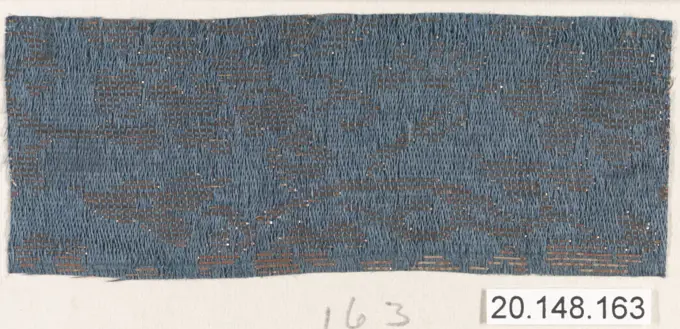
Fragment, Medium: silk, metallic thread Technique: woven, Stripes comprised of flower and leaf-like shapes on a dark blue background., India, 17th century, woven textiles, Fragment
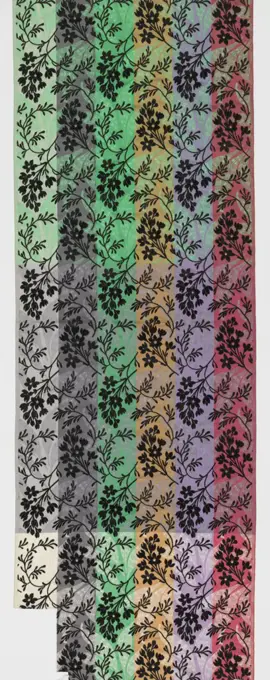
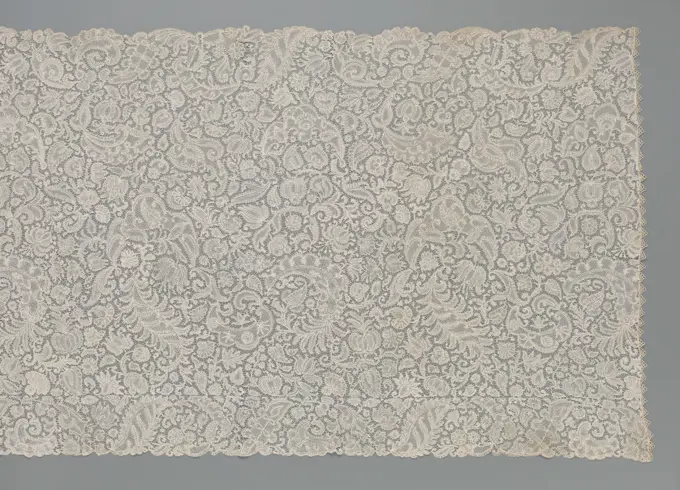
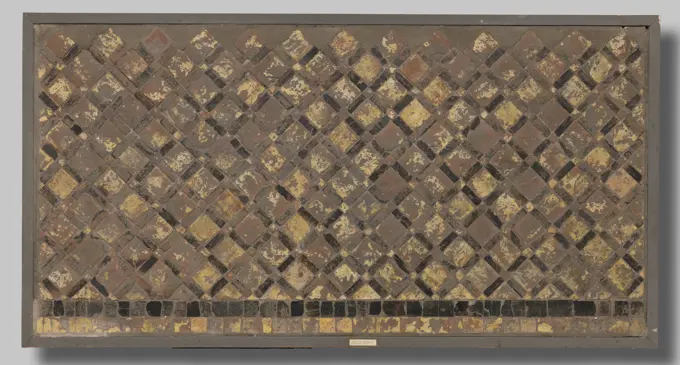
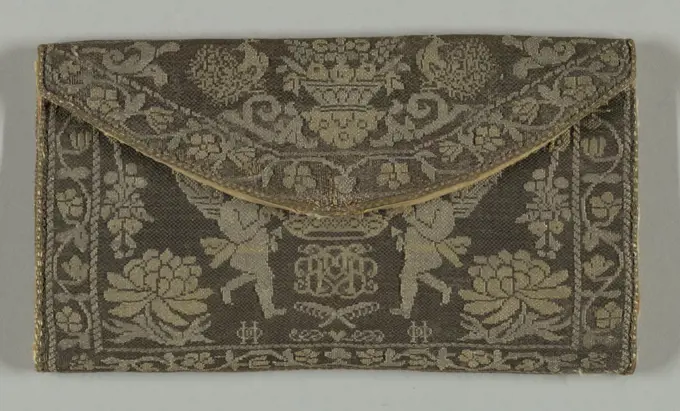
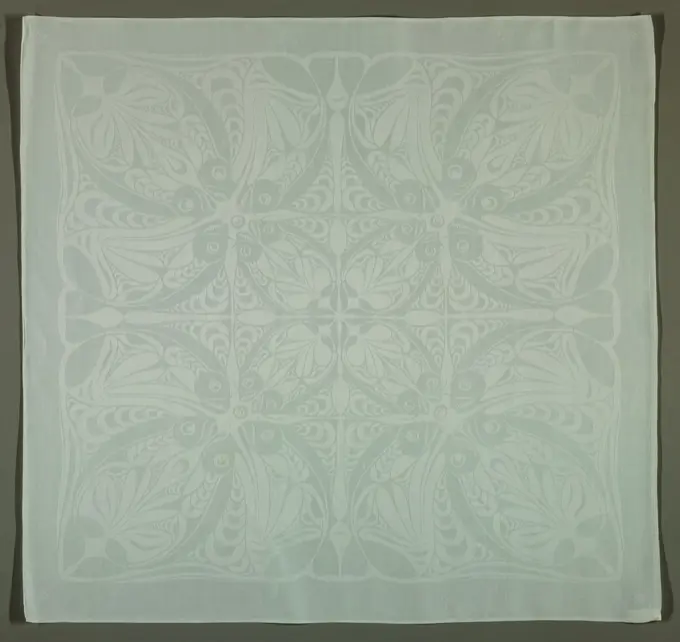
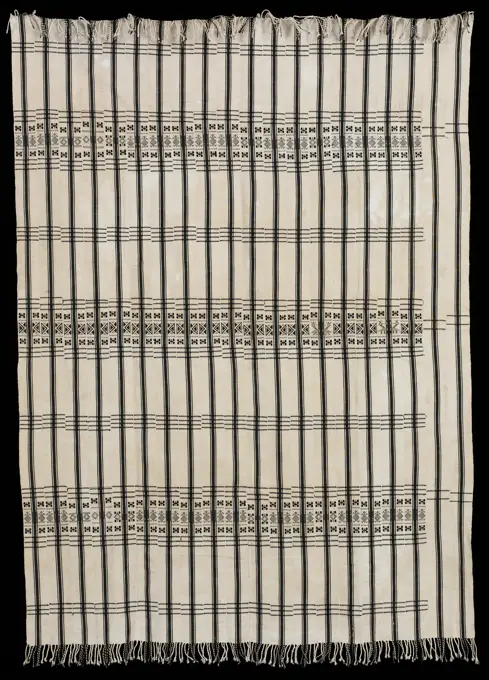
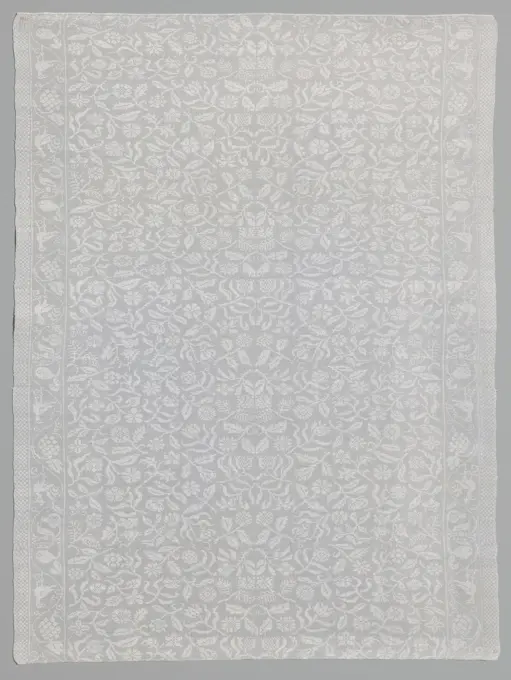
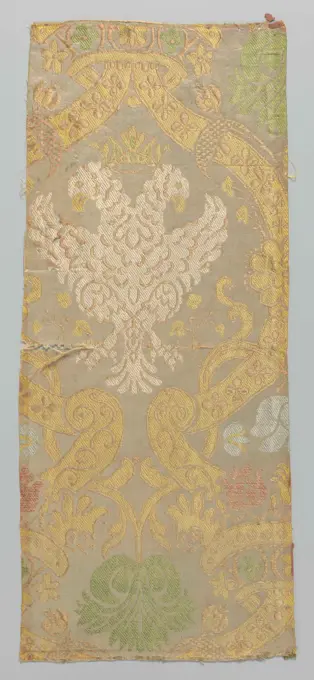
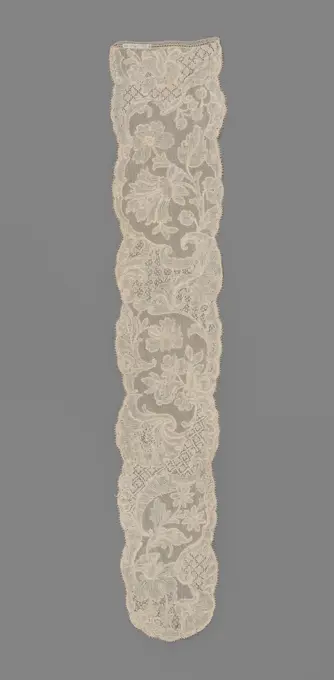
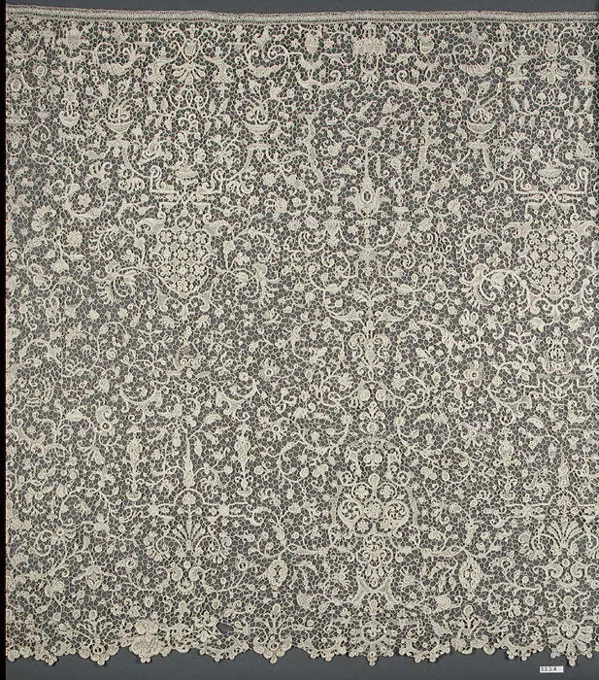
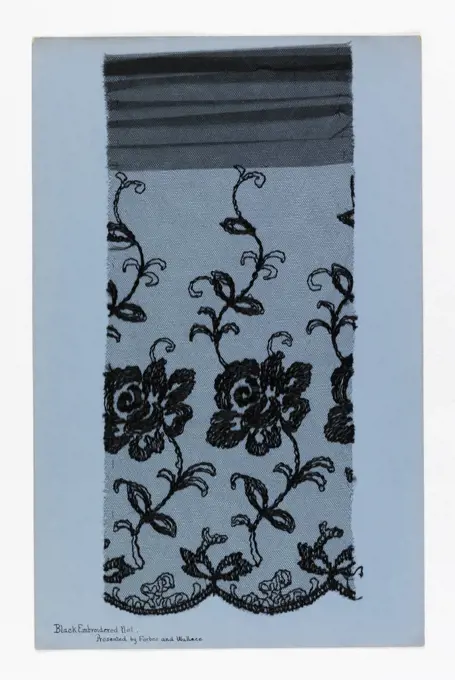
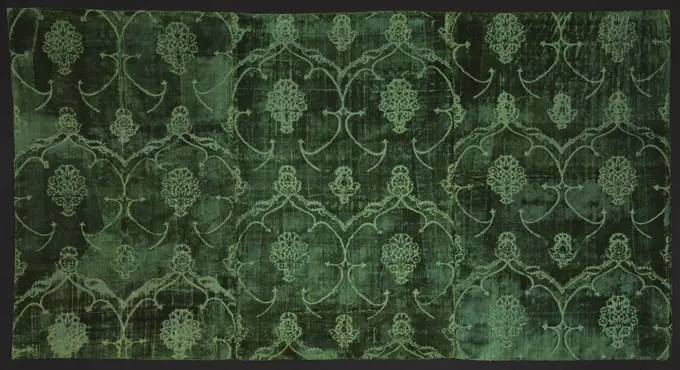
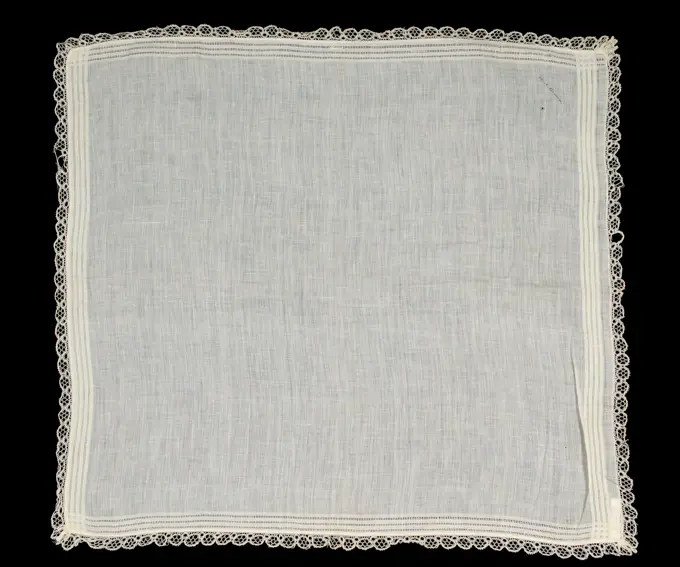
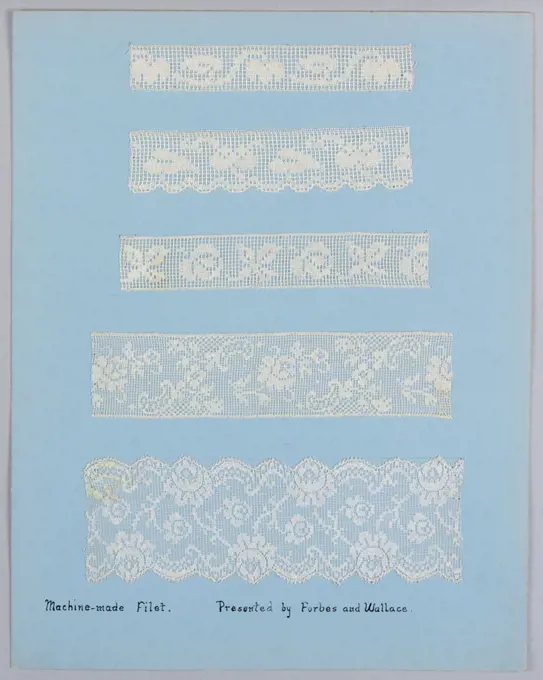
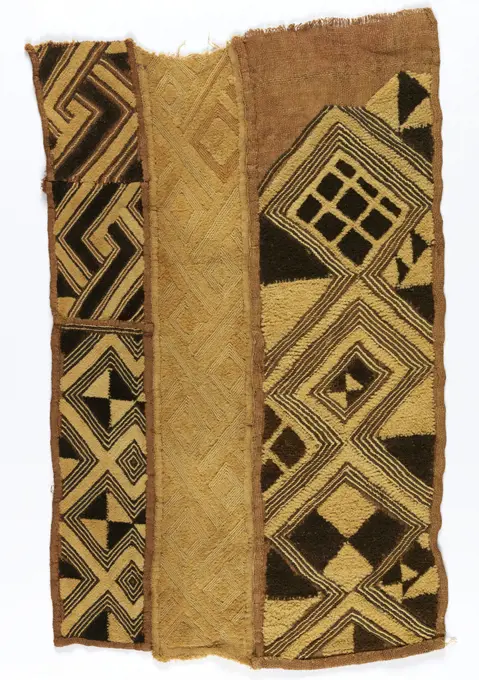
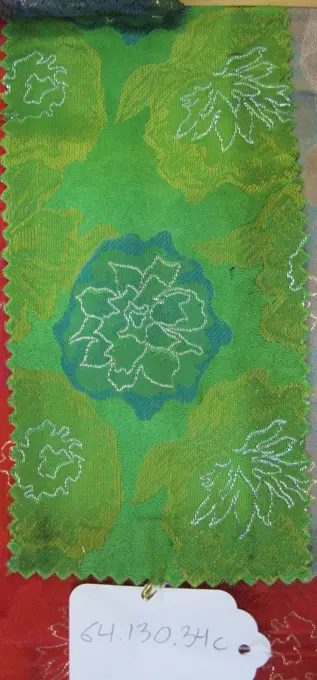
Velvet fragment, Anonymous, 1845 - 1855 Fragment velor, printed with varnish colors. Netherlands (possibly) wool. linen (material). velvet (fabric weave) printing Fragment velor, printed with varnish colors. Netherlands (possibly) wool. linen (material). velvet (fabric weave) printingShawl fragment, Medium: silk, cotton Technique: plain compound twill, Tan ground of fine cotton twill with design of continuous scrolling sprays of sunflower-like flowers and toothed leaves in green and white silk cloth binding. Guard strips at bottom with small scrolling flower sprays in mauve and yellow-green. Bud and pencil stripe guard borders. Selvage is plain in border, twilled in field, Europe, 1800-1850, woven textiles, Shawl fragmentSilk Fragment, 18th century. Spain, 18th century. Fancy satin, brocaded: silk and metal threads; average: 97.8 x 55.9 cm (38 1/2 x 22 in.).Textile (France); silkKesa Made 1775-1825 Japan. Silk, warp ikat, warp-float faced 2 1 'Z' twill weave with supplementary brocading wefts; patches silk, gold-leaf-over-lacquered-paper strip, warp-float faced 2 1 'Z' twill weave with weft-float faced 1 2 'Z' twill interlacings of secondary binding warp and supplementary patterning wefts; lined in 4 1 satin damask weave .Textile Fragment 17th-18th century. Textile Fragment 454593Strip of dick edge with all kinds of flowers and c-volutes between feathered leaves. Straw Brussels climbing side with close pattern of flowers, spring-like leaves and bizarre ornaments, derived from the patterns of silk tissues from the same period. A broad strip is a narrower strip sewn, which suggests that the object was originally intended as a decorative strip with a volant for a haircut tablecloth.Textile Swatches Onondaga Silk Company, Inc. (1925-1981). Textile Swatches, 1948-1959. silk; metal, (a): 4 1/2 x 3 1/2 in. (11.4 x 8.9 cm).    1948-1959Fragment, Medium: linen Technique: Brussels style bobbin lace, Fragment with a design of a seated maiden flanked on either side by curving tree trunks., Belgium, 1700-1750, lace, FragmentTextile (USA); cottonNapkin with the conquest of Landau by the French troops, Anonymous, 1704 Linnamast napkin with the conquest of Landau by the French troops in 1703. The symmetrically doubled pattern shows the following scenes from bottom to the top: 1 the year 1704. 2 Fight of foot people with peaks and swords; an officer in the middle; Raised banners of France and Spain, with Fleurs de-Lys and the Burgundian branch cross, respectively, the ground on the Allied flag with bundled arrows; In the foreground plant growth. 3 OffiCier with stick. 4 gun with two guns, one of which he fires; Bullets, powder vessels and Schans basket. 5 gunnier who shot a mortar; Two guns. 6 cityscape. 7 The crowned Burgundian branch and sandy; Between the legs (above) a crown, (bottom) the golden fleece, (aside) the crowned name figure (above) p (bottom) V, for Philip V of Spain. 8 woven countryauw. 9 two crossed palm branches. 10 The weapon of the Elector of Bavaria. 11 The crowned weapons of France and Spain, with heart shieNapkin van Wit Linnamast, Rath (firm) brothers, 1852 - 1889 White linen Damas napkin with oak branches and the weapon of the Baron Baud. Marked BVH. Veghel linen (material) damask White linen Damas napkin with oak branches and the weapon of the Baron Baud. Marked BVH. Veghel linen (material) damaskPiece 19th century Japan. Piece. Japan. 19th century. Silk / Compound weave. Textiles-WovenPiece 18th-19th century Japan. Piece 67344Piece first half 15th century Italian. Piece 216247Piece 18th-19th century Japan. Piece 66472Piece 18th century China. Piece 72046Piece 18th century Japan. Piece 72086Textile Swatches Onondaga Silk Company, Inc. (1925-1981). Textile Swatches, 1948-1959. silk; metal, (a) - (e): 8 1/2 x 4 1/2 in. (21.6 x 11.4 cm).    1948-1959Fragment 15th-16th century Italian, Venice. Fragment. Italian, Venice. 15th-16th century. Silk. Textiles-VelvetsTextile Sample from Sample Book 19th century Japan. Textile Sample from Sample Book 68169Textile (France); silk, metallic thread; Anonymous bequest in memory of Albert and Rebecca Elsberg; 1938-82-126-gSquare (Egypt); warp: s-spun linen; wefts: s-spun linen, s-spun woolPiece 18th-19th century Japan. Piece 67253Piece 18th century Japan. Piece 71670Fragment of velvet 16th century Italian. Fragment of velvet 230554Piece 18th-19th century Japan. Piece 66248Panel with the five poisonous creatures. Culture: China. Dimensions: 19 × 22 in. (48.3 × 55.9 cm)Mount dimension with the plexi bonnet: 24 3/8 × 27 1/4 × 1 1/2 in. (61.9 × 69.2 × 3.8 cm).Gauze weaving is one of the oldest and most developed textile techniques in China. The pieces feature subtle patterns produced in a monochrome palette. This panel was woven with a pattern featuring the five poisonous creatures: snake, centipede, scorpion, toad, and spider. Their protective qualities are called upon during the festival of Duanwu, also known as the Dragon Boat Festival, which occurs on the fifth day of the fifth lunar month. The Chinese believe wearing clothes or using an object with representations of these creatures during the festival can ward off evil. Museum: Metropolitan Museum of Art, New York, USA.Fragment of a tiled floor from the Prosdij of St. Jan in Utrecht, Anonymous, c. 1378 Fragment of a tiled floor from the Proosdij of St. Jan in Utrecht. Netherlands earthenware. lead glaze Fragment of a tiled floor from the Proosdij of St. Jan in Utrecht. Netherlands earthenware. lead glazeFragments, Medium: silk Technique: 4&1 satin patterned by plain weave (lampas), Affronted birds perching on pomegranites within cartouches in red, white, yellow and blue on green., Spain, 15th century, woven textiles, FragmentsSquare Fragment with Animal and Botanical Decoration Coptic. Square Fragment with Animal and Botanical Decoration, 5th-7th century C.E. Wool, 3 1/2 x 4 in. (8.9 x 10.2 cm).   Egyptian, Classical, Ancient Near Eastern Art 5th-7th century C.E.Sample (USA); Manufactured by Orinoka Mills (United States); 1989-80-54Textile Swatches Onondaga Silk Company, Inc. (1925-1981). Textile Swatches, 1948-1959. 81 silk; 19 metal, (a) - (c): 8 1/2 x 4 1/4 in. (21.6 x 10.8 cm).    1948-1959Purse, Medium: gold-wrapped silk, horsehair Technique: plain weave with discontinuous wefts (tapestry), Pocketbook woven with tete-de-nègre horsehair and gold and silver-wrapped thread. Areas of pink, yellow, and green silk. On one side, a crowned coat of arms flanked by lions and garlands of fruit and flowers. On other side, a crown supported by cupids, flowers and garlands., France, 1640-1700, costume & accessories, PurseNapkin, Fish: Design no. 561; Designed by Chris Lebeau (Dutch, 1875 - 1945); Manufactured by E.F.J. Van Dissel and Son; NetherlandsFragments, Medium: silk Technique: embossed velvet, Red cut silk velvet with a stamped pattern of scrolling forms that frame palmettes., Italy, 16th-early 17th century, woven textiles, FragmentsLeaf with spreading pattern of saved twig, anonymous, 1750 - 1900  Leaf with spreading pattern of saved twig with leaf. With label with inscription: 'A.F.E. Lelièvre ... Romanon '. Half of a label.  paper. block printing (relief printing process) ornament derived from plant formsWoman's wrapper, 20th century, 61 1/2 x 45 1/4 in. (156.21 x 114.94 cm) (without fringe), Cotton, Mali, 20th centuryMirrored flower pattern. Rand: winding flower sorch with birds and block edge., Anonymous, c. 1650 Linnamast napkin with a flower pattern. Midfield: The symmetrical pattern shows loose branches with roses or tulips, and lapwing or rosette-shaped flowers. Standing edges: symmetrical drawing of winding flower vines and birds; Outside of that: blocking edge. Netherlands linen (material) damask Linnamast napkin with a flower pattern. Midfield: The symmetrical pattern shows loose branches with roses or tulips, and lapwing or rosette-shaped flowers. Standing edges: symmetrical drawing of winding flower vines and birds; Outside of that: blocking edge. Netherlands linen (material) damaskFragment, Medium: silk Technique: fancy compound weave, Fragment with an archway and tower under an oversized tree with large-scale flowers and fruit in white on a green foundation. Green ground has wide horizontal ribs woven with supplementary green warp., France, 18th century, woven textiles, FragmentPiece 18th century Japan. Piece 71509Fragment lampas met dubbele adelaar en bloemen.Fragment Lampas with band voltages between which double-headed eagle and flowers, furthermore, a green rosette.Textile, Medium: cotton Technique: printed by engraved roller on plain weave, Shaped fragment, probably from a dress, showing a wavy stripe of rose and light brown, edged with yellow and blue stripes. Small flower clusters interrupt stripe., England, late 19th century, printed, dyed & painted textiles, TextileFragment, A .G. Jennings & Sons, American, Medium: silk Technique: machine made lace, Lace fragment made in imitation of Spanish-style lace with a net ground and a border of leaves and flowers., USA, ca. 1884, lace, FragmentPiece 19th century China or Japan. Piece 72214Textile Swatches Onondaga Silk Company, Inc. (1925-1981). , 1948-1959. Silk, 46 3/4 x 17 3/4 in. (118.7 x 45.1 cm).    1948-1959Ceiling paper, Maxwell & Co., S.A., Chicago, Illinois, USA, Machine-printed paper, liquid mica, Wreaths form of purple and gray flowers on stems, encircled by a larger foliate wreath. At the intersection of these circles is a quatrefoil shape composed of more purple flowers and foliage. Printed on an off-white ground., USA, 1905-1915, Wallcoverings, Ceiling paperFabric fragment. unknown, authorFragment, Medium: silk Technique: woven velvet with cut and uncut pile., Sprig pattern on black on black velvet, Spain, 17th century, woven textiles, FragmentFrench family album with eighteen photos, anonymous, various manufacturers, 1880 - 1930  Photo album with eight stuck together, folding cardboard sheets with passe-partouts filled with ten cabinet photos and eight cartes-de-visiting. The passe-partouts are framed with golden lines or decorated lists. Portrayed are portraits of unknown men, women and children and two photo productions of paintings by French painters. The photos were taken by various French photographers. The photographer is anonymous of three of the photos. France (possibly) cardboard. paper. photographic support. leather. metal albumen print / gelatin silver print / printing block historical persons. historical persons - BB - woman. anonymous historical persons portrayed in a group, in a group-portrait. picture, paintingHats slip (barbe) from Mechelse side, Anonymous, c. 1750 Barbe of Mechelen side with a flower and wave pattern. The barbe has a scalloped edge, which is trimmed with picots. West-Europa . Mechlin (lace) Barbe of Mechelen side with a flower and wave pattern. The barbe has a scalloped edge, which is trimmed with picots. West-Europa . Mechlin (lace)Flounce early 18th century French. Flounce 227608Fragment (France); silkMachine-made openwork samples, Medium: cardboard, linen, silk, metallic Technique: linen embroidery with ground cloth dissolved Examples of embroidery on net produced by the Schiffli machine Metallic embroidery on net Machine-made openwork in imitation of hand-embroidered net Mostly floral and a few geometric patterns, some designs described as 'Spanish' Imitation hand-made filet Machine filet Imitation filet crochet Ploven (burnt-out lace) Fancy curtain lace made on the Levers machines Real filet (handmade) next to Machine-made filet Spotted curtain nets, made chiefly at Nottingham, England and Caudry, France., Samples of machine-made openwork and several examples of hand made lace mounted on boards. They imitate hand-embroidered net, crochet, or needlepoint. All are floral patterns plus a few of early 1920's geometric style., 'Embroidered net' produced by the Schiffli Machine., USA, ca. 1910, lace, Machine-made openwork samplesMedieval ornamentFragments (France); silk; 1978-168-13-a,bPiece 18th-19th century Japan. Piece 67106Altar Frontal Made 1450-1500 Italy. Silk, warp-float faced 4 1 satin weave with supplementary pile warps forming cut, voided velvet .Embroidery Silks Case; leather, paper; American Textile History Museum Collection, gift of Paul Tringoson; 2016-35-105Fragment, Medium: silk, metallic Technique: supplementary warp forming cut and uncut raised pile in plain weave foundation with supplementary wefts, Detached forms including plant shapes and an orb in green velvet in tan faced with metallic gold., 16th-17th century, woven textiles, FragmentAnonymous, shrub brooch (main title), 1930. Graphite and gouache on Gray Carton A. Petit Palais, Museum of Fine Arts of the City of Paris.Conciliate belt; Giani I. (19th century); 1861 (1861-00-00-1861-00-00);Piece 16th century China. Piece 71380Handkerchief 1840-60 American. Handkerchief 168622Pair of Rank Badges (Hyungbae) with Mythical Animal (Girin). Korea, Joseon dynasty (1392-1910), 1864-1892. Jewelry and Adornments; badges. Silk damask with metallic-thread embroideryTextile (France), ca. 1855; cottonPiece 18th century Japan. Piece. Japan. 18th century. Silk / Compound weave. Edo period (1615-1868). Textiles-WovenTextile (Peru); cotton, woolSilk Textile, 1600s. Italy, 17th century. Silk; overall: 45.1 x 30.2 cm (17 3/4 x 11 7/8 in.).Printing block, Medium: wood Technique: wood carved in relief, Block for printing textiles with a dense design of curving stems and flowers. Contemporary picture hangers attached., India, 19th century, appliances & tools, Printing blockTextile (USA); cottonFrame engraved Wooden picture empty frame hand made engraved Copyright: xZoonar.com/Baloncicix 7816917Textile Sample from Sample Book 19th century Japan. Textile Sample from Sample Book 68132Leather (Holland); leather, stamped, silvered, paintedPiece 17th century Japan. Piece 71386Sector of a parasold deck of soft green cotton, with a batist edge embroidered with wold wire, c. 1885 - c. 1900 Sector of a parasold deck of soft green cotton, with a batist embroidered with wold wire. Nijmegenfrance parasoldek: cotton (textile). cotton (textile). draad: wool embroidering Sector of a parasold deck of soft green cotton, with a batist embroidered with wold wire. Nijmegenfrance parasoldek: cotton (textile). cotton (textile). draad: wool embroideringSilk Fragment, 17th century. Spain, 17th century. Damask: silk; average: 95.4 x 22.9 cm (37 9/16 x 9 in.).Table Cover (Spain); linen, silkMachine-made openwork samples, Medium: cardboard, linen, silk, metallic Technique: linen embroidery with ground cloth dissolved Examples of embroidery on net produced by the Schiffli machine Metallic embroidery on net Machine-made openwork in imitation of hand-embroidered net Mostly floral and a few geometric patterns, some designs described as 'Spanish' Imitation hand-made filet Machine filet Imitation filet crochet Ploven (burnt-out lace) Fancy curtain lace made on the Levers machines Real filet (handmade) next to Machine-made filet Spotted curtain nets, made chiefly at Nottingham, England and Caudry, France., Samples of machine-made openwork and several examples of hand made lace mounted on boards. They imitate hand-embroidered net, crochet, or needlepoint. All are floral patterns plus a few of early 1920's geometric style., 'Embroidered net' produced by the Schiffli Machine., USA, ca. 1910, lace, Machine-made openwork samplesFragment 16th century Italian, Florence. Fragment 230095Status cloth, Medium: raffia Technique: plain weave, pieced and embroidered with buttonhole and pile stitches Label: Raffia plain weave, pieced and embroidered with buttonhole and pile stitches, Four pieces of woven raffia seamed together down the long sides with buttonhole stitch to form a rectangular panel. Each piece is patterned with irregular geometric forms in tan and dark brown raffia pile with reddish-brown outlining stitch., Democratic Republic of the Congo, late 19th century, embroidery & stitching, Status clothfloral frameCuff mid-19th century Hungarian. Cuff 213233Textile Swatches Onondaga Silk Company, Inc. (1925-1981). Textile Swatches, 1948-1959. 72 silk; 28 metal, (a) - (d): 8 x 4 in. (20.3 x 10.2 cm).    1948-1959Border 17th century Italian, Venice. Border 222736Textile Swatch , 1950-1960. Silk, 21 1/2 x 10 in. (54.6 x 25.4 cm).    1950-1960Piece 17th century Japan. Piece 71151Linen rug with a strip of reticella, anonymous, c. 1900 - c. 1949 Linen rug with a strip of needle side - reticella - with a geometric motif. Square model. South Africa linen (material) Linen rug with a strip of needle side - reticella - with a geometric motif. Square model. South Africa linen (material)Openwork Headband 12th-15th century Chancay. Openwork Headband 315776Piece 18th century Japan. Piece 71844Tahiti, Fiji, & Ceylon,1891. Artist: John La Farge, American, 1835-1910, M.A. (HON.) 1896Scrapbook; silk; Closed book: 31 x 25.5 x 7 cm (12 3/16 x 10 1/16 x 2 3/4 in. ); Bequest of Benjamin E. Marks; 1967-54-1Front doubleur. Dante Alighieri (1265-1321). bindings (gathered matter components), Book covers. 1907. Spencer Collection. BookbindingTablecloth of fillet cross, with flower vase and flower branches. Tablecloth of fillet cross, with flower vase and flower branches.Leaf with alternating straw pattern made of flower and dots, anonymous, 1750 - 1900  Leaf with alternating straw pattern made of flower and saved dots.  paper. lacquer (coating) block printing (relief printing process) ornament derived from plant formsGigerl-Tarock, Karo Fragment, Medium: silk Technique: supplementary warps forming raised pile in plain weave foundation (velvewt), Quadrangular mosaic pattern in green., 17th century, woven textiles, FragmentFragment (Peru); cottonSample early 19th century French. Sample 224754Piece French 19th century