Decorative Textiles and Carpets

A range of historical textiles including flower rugs, tapestries, and fabrics with intricate patterns and designs, showcasing artistic craftsmanship from different eras.

Tapestry; Artur Potocki studio (Buczacz; Tkacka Studio; 1913-1939); 1. PO. 20th century (1901-00-00-1950-00-00);Buczackie tapestry, geometric ornaments, plant ornaments, decorative fabrics, interior equipment, purchase (provenance)
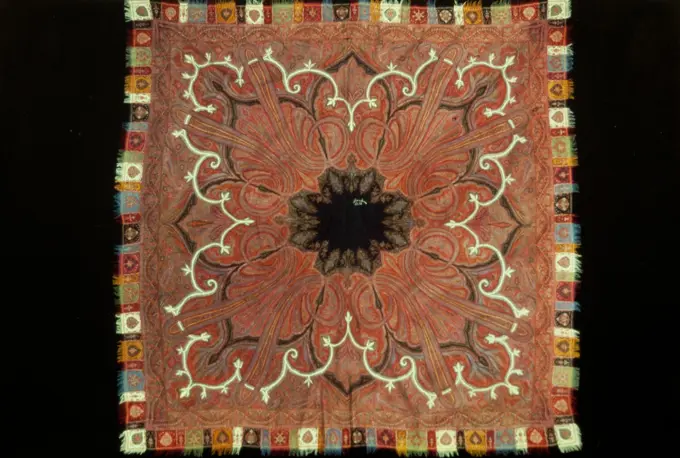
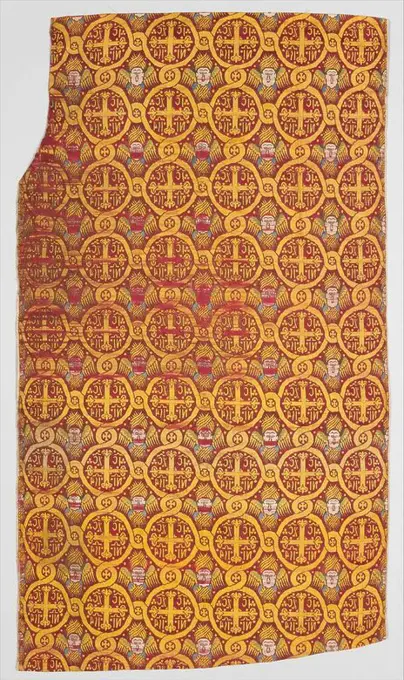
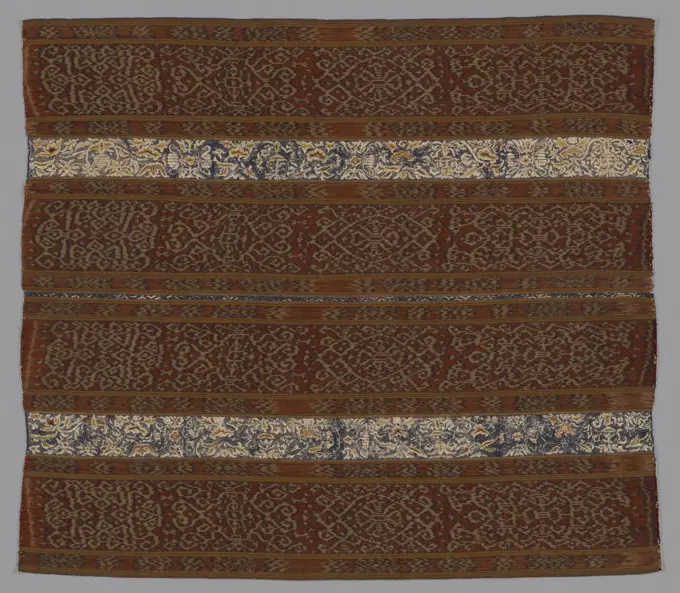
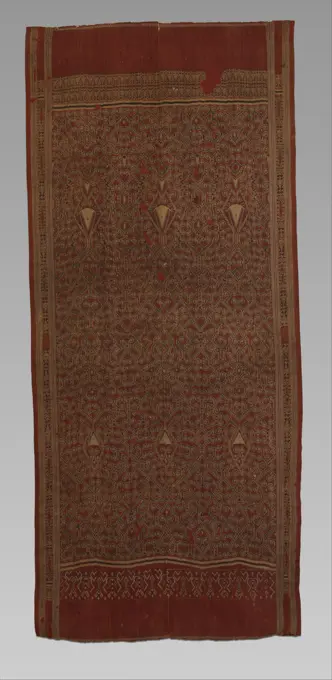
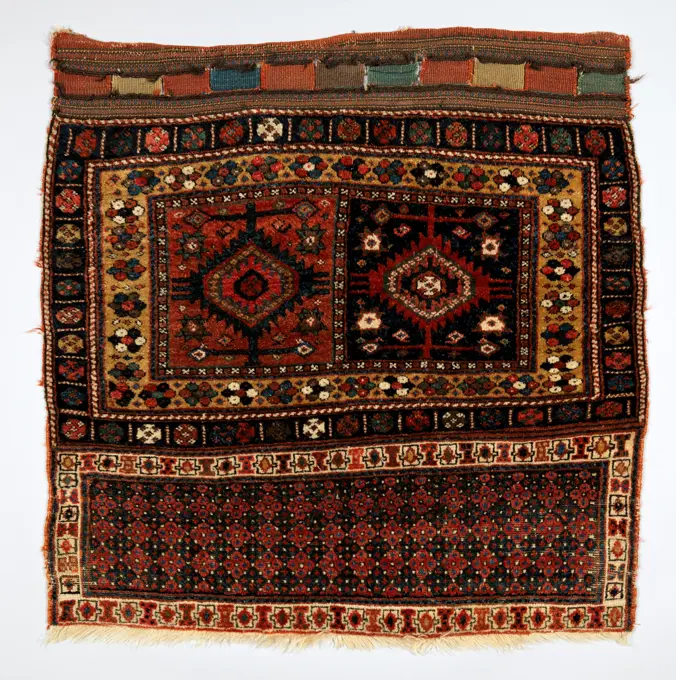
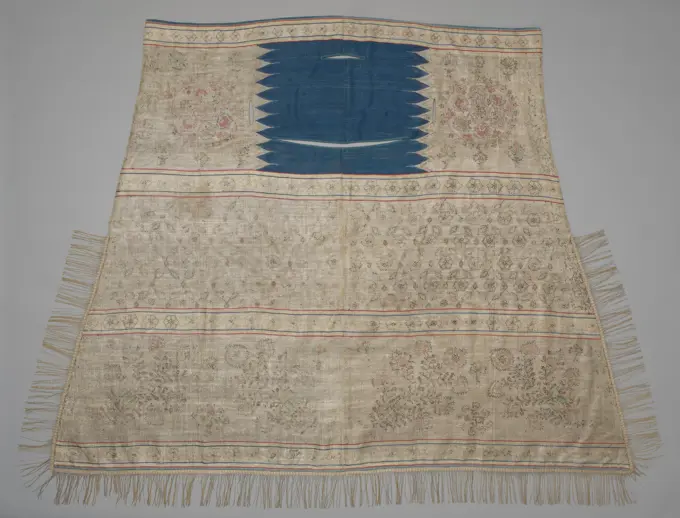
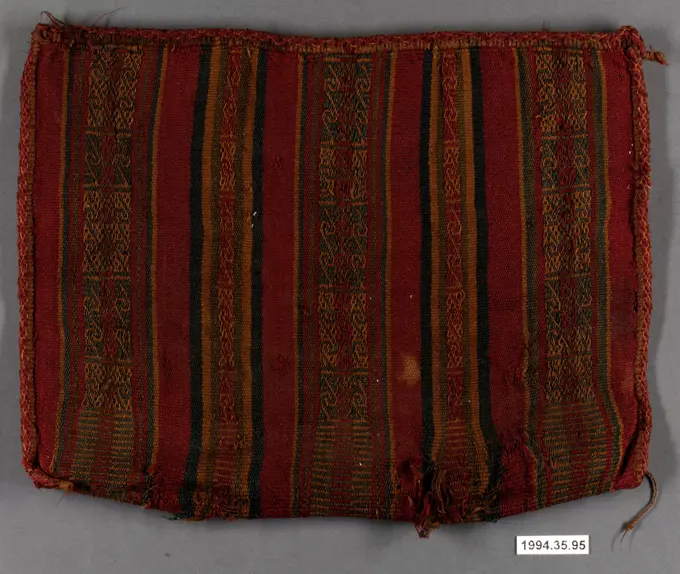
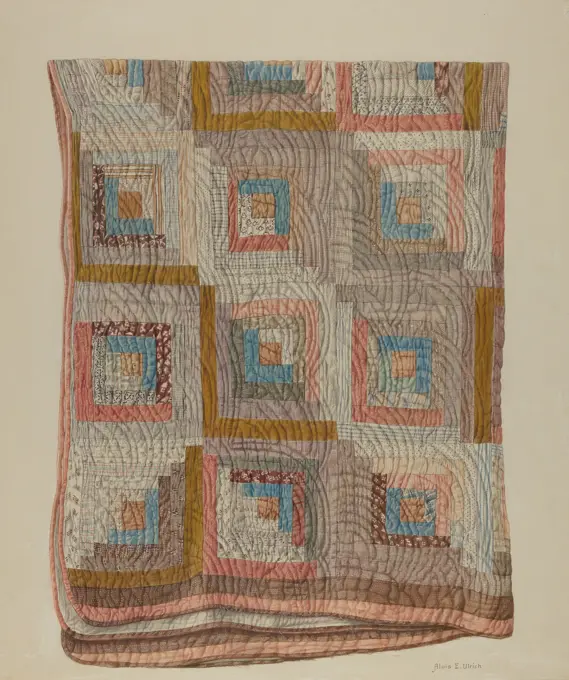
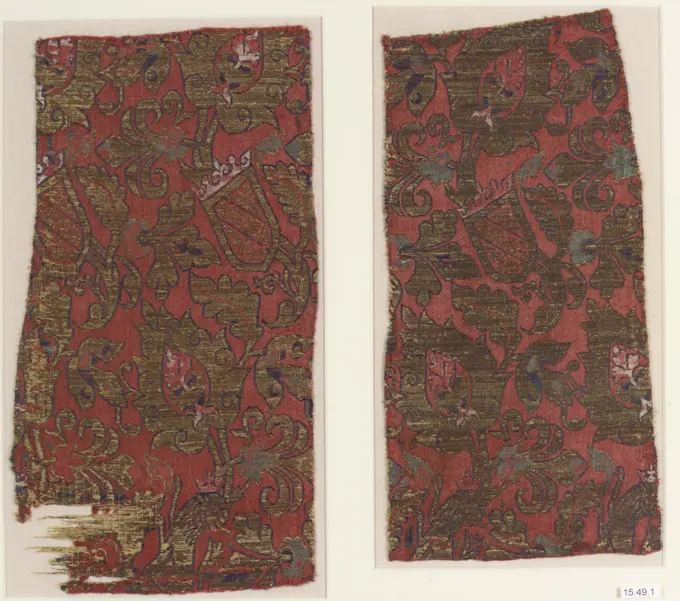
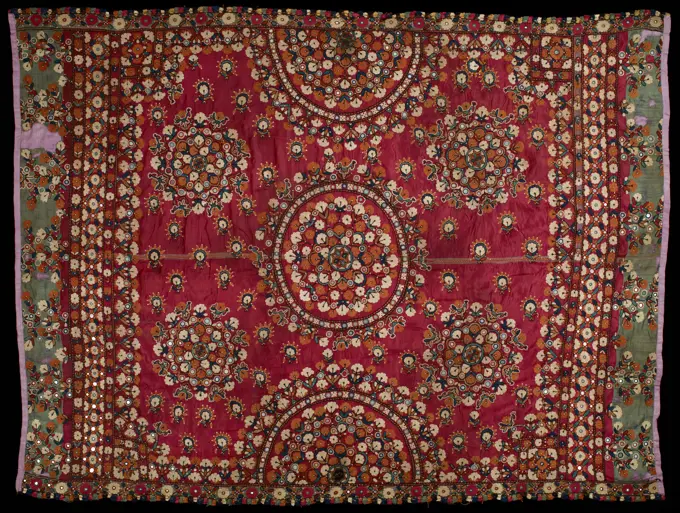
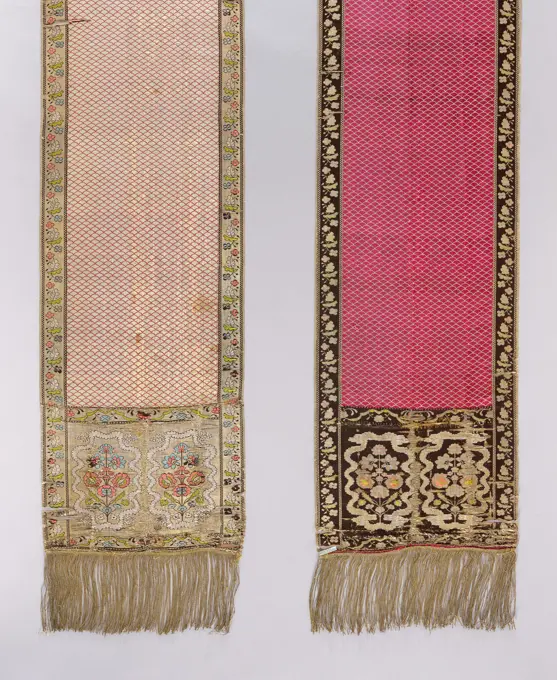
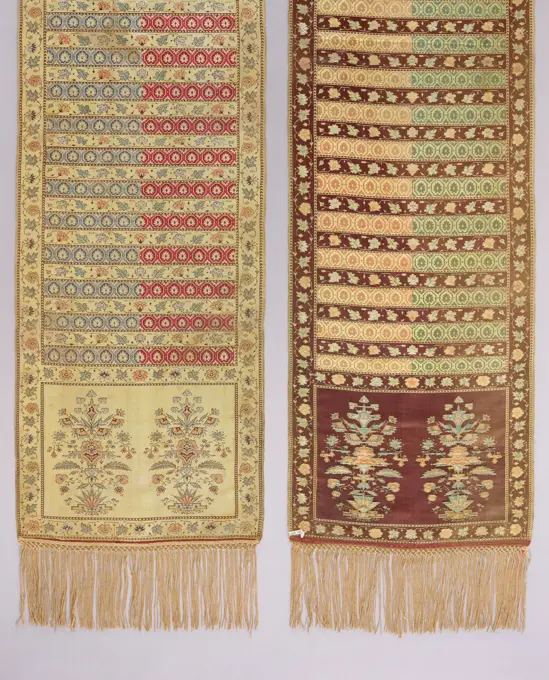
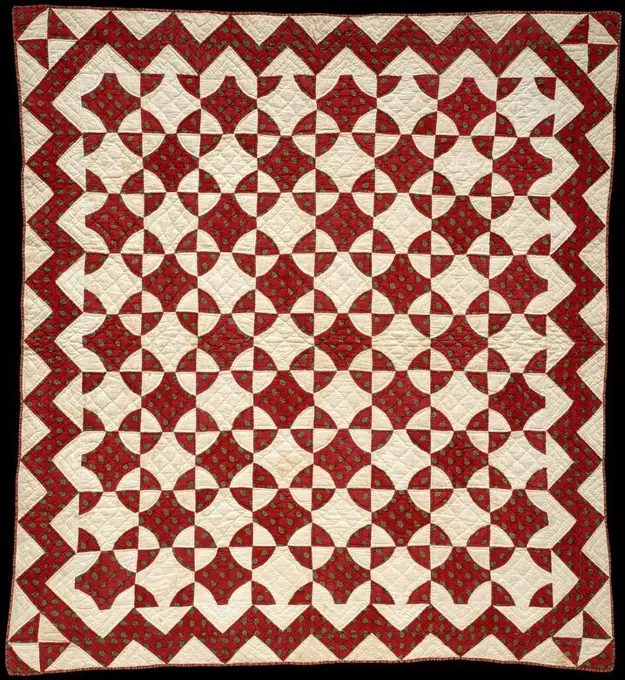
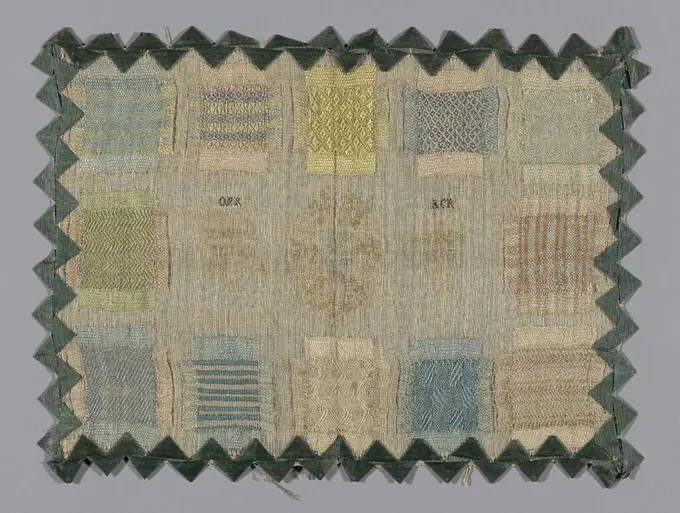
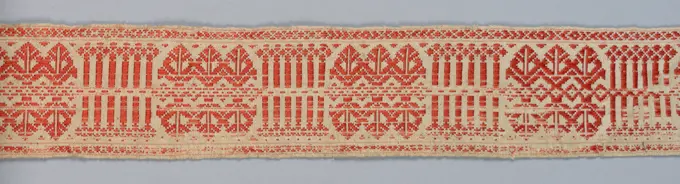
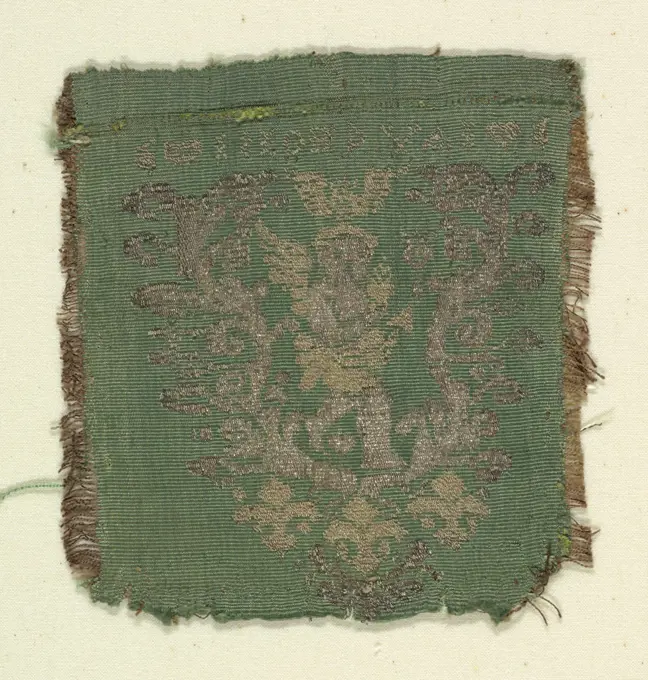
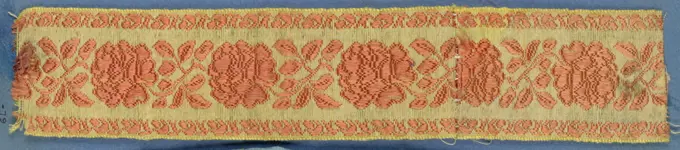
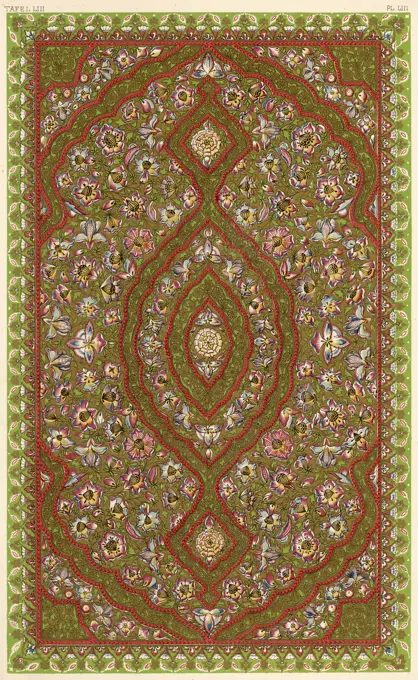
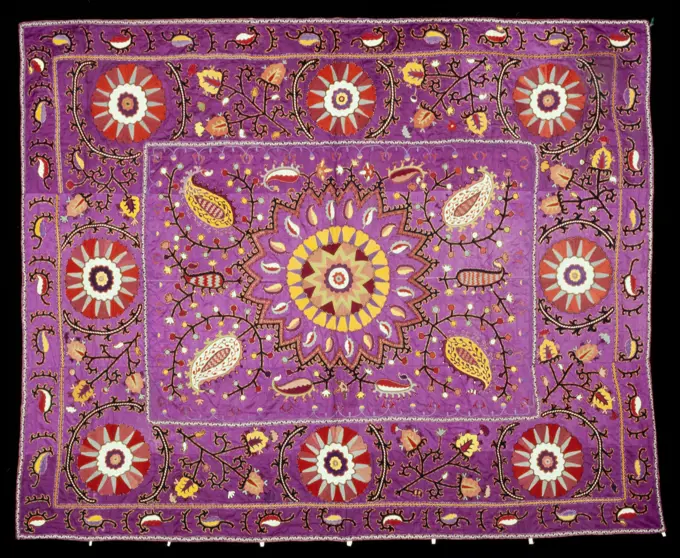
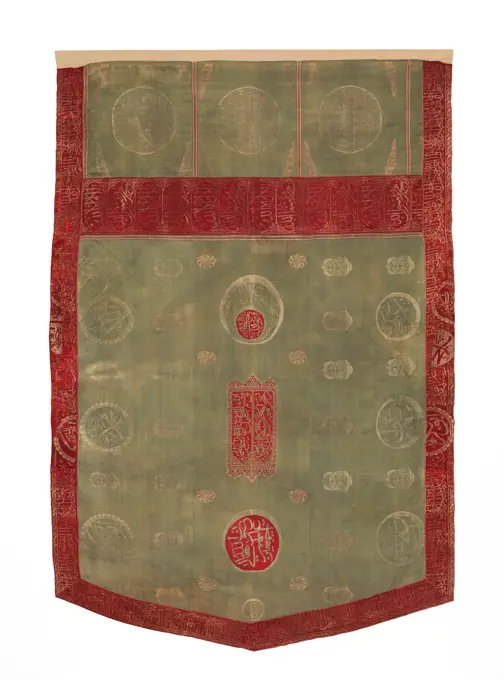
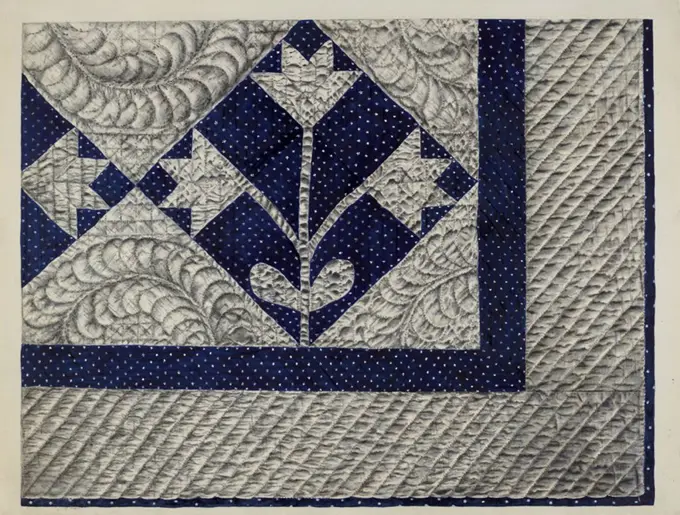
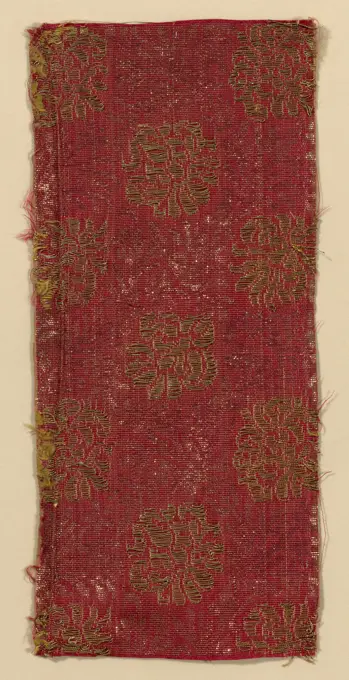
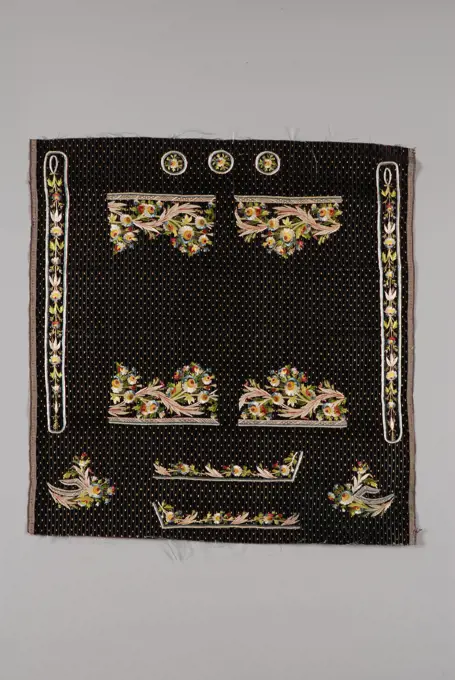
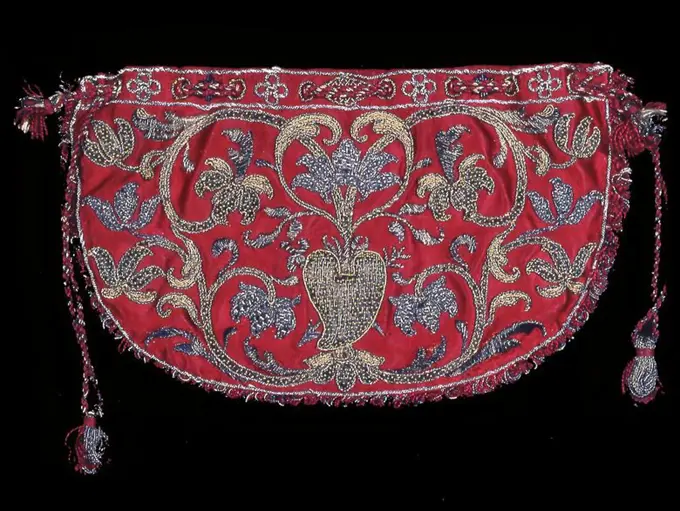
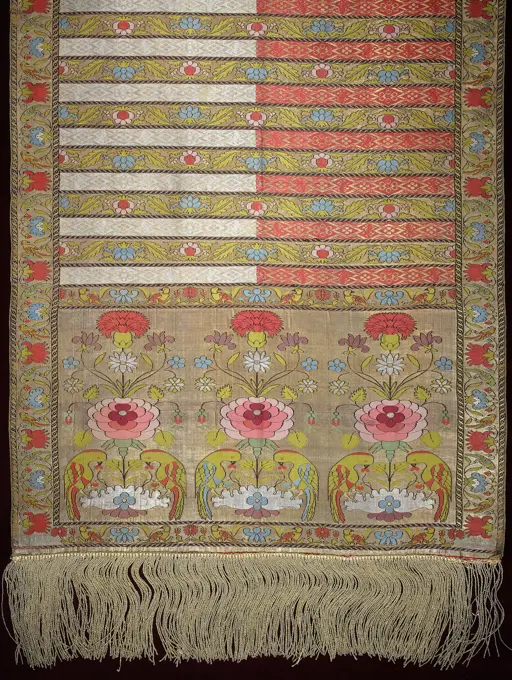
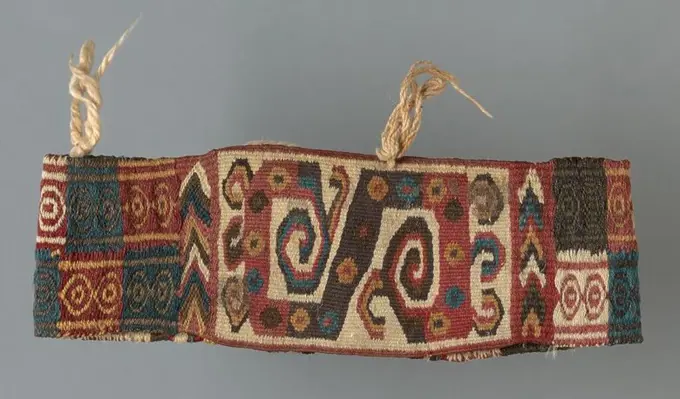
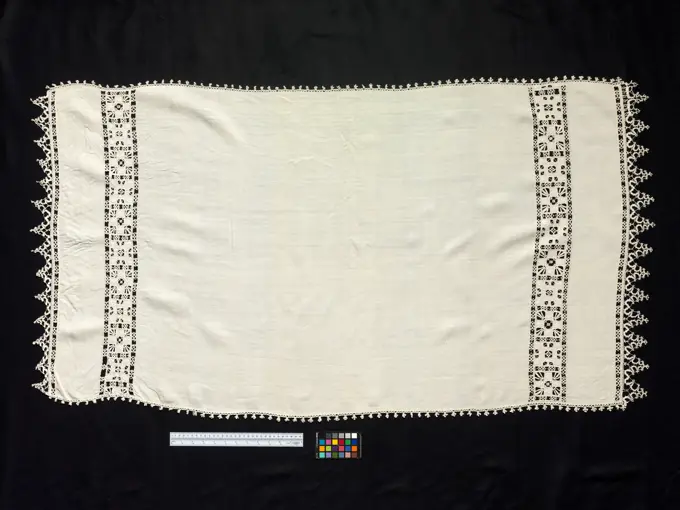
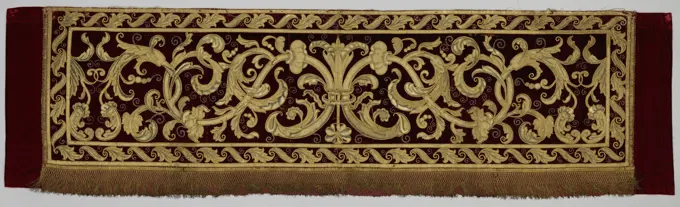
Cloth; Not until. Cloth with geometric motifs.Tiraz tapestry fragment, Medium: linen, silk Technique: tapestry weave, Tiraz tapestry fragment showing three bands of guilloche pattern in yellow on red and green. At the center of each circle is a stylized acorn or abstracted animal icon., Egypt, 1000-1200, woven textiles, Tiraz tapestry fragmentShawl, 19th century, 33 x 32 1/2 in. (83.82 x 82.6 cm), Wool, India, 19th centuryTextile Used as a Bed Valance Textile Used as a Bed Valance, 1644-1912. Rough undyed cotton, 15 3/8 x 66 5/16 in. (39 x 168.5 cm).   Asian Art 1644-1912Textile (India); silk, gold foil on silk coreCover, Medium: linen, silk, leather, metallic thread Technique: embroidered, Silk and metallic embroidery on silk backed by linen. On both sides a floral vine encloses a monstrance. The inside is lined with leather and the edges are trimmed with metallic braid., Spain, 17th century, embroidery & stitching, CoverRug;  1940s (1840-00-00-1849-00-00);State Art Collections (Warsaw - 1922-1939) - collections, flowers, Poland (culture), birds, decorative fabrics, house and home equipmentSilk textile with Seraphim and Crosses. Culture: Ottoman. Dimensions: 43 × 22 1/2 in. (109.2 × 57.2 cm). Date: 17th century.This textile may be compared with another textile in the Museum's collection (17.22.2a-d) with a very similar pattern, but incorporating metal-wrapped threads. The all-silk version would have been less expensive to manufacture, and could possibly have been a provincial imitation of textiles produced in Constantinople and Bursa. Note that the Greek letters of the inscriptions have been reversed. The size and shape of the piece suggest that it formed part of a phelonion, or chasuble. Museum: Metropolitan Museum of Art, New York, USA.Panel Fragment 10th-15th century Peru; central coast (). Panel Fragment 307949Shawl, Anonymous, 1900 - 1949 Shawl with floral motifs. Save cotton (textile) Shawl with floral motifs. Save cotton (textile)Double-Ended Bellini-Design Kazak Carpet dated A.H. 1212/ A.D. 1797. Double-Ended Bellini-Design Kazak Carpet 452315Dworski Kilim;  1834 (1834-00-00-1834-00-00);rugPillow or bag with grid divided into windows and cross flowers with hooks. Back side flat woven in wide stripes .. cushion, original bag, Jaffi Kurdistan-Mosul. The midfield is divided into windows and cruises with hooks through a grid. The back is of flat tissue and shows wide stripes.Piece 18th-19th century Japan. Piece 67032Womans Ceremonial Skirt (Tapis)Ceremonial Textile (Pua Kumbu) probably 18th century Iban people. Ceremonial Textile (Pua Kumbu) 317626Towel (Italy); linen, silkTrimming, Medium: silk Technique: cut supplementary warp pile (velvet), Red and white trimming fragment decorated with a white cord (gimp) that forms a pattern of interlocking compartments., France, 19th century, trimmings, TrimmingFragment (Egypt); warp; s-spun linen. wefts; s-spun linen, s-spun woolTrade Textile (Tapih Sarasa). India, Coromandel Coast for South Sumatran market, 1750-1800. Textiles. Mordant- and wax resist-dyed cottonFace from a Large Bag (Chuval) ca. 1860-70. Face from a Large Bag (Chuval). ca. 1860-70. Wool (warp, weft, and pile); asymmetrically knotted pile, tapestry weave. From probably Western Iran. Textiles-WovenBorder; silk, metal-wrapped silk threads; Warp x Weft: 224 x 14 cm (7 ft. 4 3/16 in. x 5 1/2 in.) Repeat H: 8 cm (3 1/8 in.)Fragment of silk fabric  golden, symmetrical and axial pattern unknownShawl Made 1867-1877 India. Wool, patchwork of double interlocking 2 2 'S' twill tapestry weaves; outer border and Harlequin tabs of patchwork in 2 2 'S' twill weaves; embroidered in fly, satin, and stem stitches; laid work and couching; main warp fringe .Przeszo Przyszoci unknownBag 16th century () Quechua. Bag. Quechua. 16th century (). Camelid hair. Peru. Textiles-WovenFragment Made 1201-1400 Egypt. Linen, plain weave; embroidered with silk floss in back and running (pattern darning) stitches . IslamicBed cover, ChinaAlois E Ulrich, Patchwork Quilt, 1935 1942 Patchwork QuiltPiece 16th-17th century Italian. Piece 216940Hanging (France); silk; Warp x Weft: 370 x 162.5 cm (12 ft. 1 11/16 in. x 5 ft. 4 in.); Museum Purchase from Smithsonian Institution Collections Acquisition Program Fund; 1997-45-1Textile Fragments 15th century These rectangular red silk textile fragments, which may have once been joined, are decorated with floral patterns, leaves, heraldic shields, and crowned lions, and embellished with gold-colored thread. Mudejar craftsmen delighted in the pomegranate, palmette and lotus motifs and used them often in combination with animals or birds. Long horizontal lines of flowers bend in one direction and another, giving the illusion of blossoms swaying in a breeze. Other decorative elements in these fragments include rows of crowned lions as well as coroneted shields which move in alternating rhythm. These are likely iconographic references to the blazon of Castille-Leon, and may have been produced for patrons from this region of northern Spain.. Textile Fragments 446681Piece 19th century Japan. Piece 71398Coverlet and two matching bolster covers probably British 1890-99Embroidery Sample, 21 3/8 x 16 5/8 in. (54.29 x 42.23 cm), Cotton, silk, yellow metal bands, sequins; needlework, ChinaHeadcover, 19th century, 82 x 60in. (208.3 x 152.4cm), Silk; needlework, India, 19th centuryConciliate belt; Manufaktura Aleksander Unruga (Koby Koby; Pasów label; 1781-1787); 1781-1784 (1781-00-00-1784-00-00);Plant ornaments, belts, four -sided belts, Lite belts, Polish belts, Poland (culture), Polish clothingKontusz sash/belt. unknown, authorTextile; silk, metallic yarnsBand (Italy); linen, silkTowel End; silk, metallic threadChalice Cover or Portion of a Burse Made 1675-1725 Italy. Silk, plain weave; embroidered in silk floss and gilt strips wound around a silk fibre core in satin stitches, French knots; attached metal pailllettes; lining silk, plain weave; backing linen, plain weave; paper cor e in braid; bound edges .Fragment of a Tunic. Dimensions: 16.5 in. high 13.50 in. wide (41.91 cm high 34.29 cm wide). Date: 4th century. Museum: Metropolitan Museum of Art, New York, USA.Piece 18th-19th century China. Piece 66413Pillowcase 18th century Greek Islands, Crete. Pillowcase 221732Textile Sample from Sample Book 19th century Japan. Textile Sample from Sample Book 68155Band early 19th century. Band 447969Conciliate belt; Manufaktura Paschalis Jakubowicz (Warsaw; label Pasów; 1788-1794); 1791-1794 (1791-00-00-1794-00-00);Sampler (Netherlands); Embroidered by Geertruida H. Bontkes; silk embroidery on cotton foundationKontusz sash/belt. unknown, authorConciliate belt;  2nd half 18th century (1751-00-00-1800-00-00);Crib Quilt, Mill Wheel pattern. Culture: American. Dimensions: 44 x 40 3/4 in. (111.8 x 103.5 cm). Date: ca. 1840.The front of this crib quilt is pieced of printed red cotton with a green figure and plain white cotton fabric. The edge binding is a different red printed cotton. The backing fabric is the same white cotton that was used for piecing the front. The quilt is entirely hand stitched and is quilted following the pieced pattern. Museum: Metropolitan Museum of Art, New York, USA.Sampler, Medium: silk embroidery on linen foundation Technique: embroidered in button hole, chain, double running, and back stitches on plain weave foundation Label: linen embroidered with silk in button hole, chain, double running, and back stitches, Small sampler with eight rectangular button holes in blue, green, yellow and pink, and eight eyelets in red. In the center, a monogram with a crown above. Green zigzag border. On off-white linen., Scandinavia, early 19th century, embroidery & stitching, SamplerSampler. Denmark, Copenhagen. Date: 1801. Dimensions: 27.3 × 36.2 cm (10 3/4 × 14 1/4 in.). Linen, plain weave; embroidered with two-ply twisted silk in cross, tent, linen darning, "chain" darning (resembling knitting), folded ribbon border and hem stitching. Origin: Denmark. Museum: The Chicago Art Institute, Chicago, USA.BandOrphrey Fragment (Depicting the Presentation of Jesus at the Temple) Made 1450-1500 Florence. Silk and gilt-animal-substrate-wrapped linen, warp-float faced 4 1 satin weave with weft-float faced 1 2 'S' twill interlacings of secondary binding warps and supplementary patterning and brocading wefts .Textile, Medium: silk, metal wrapped silk thread Technique: plain weft faced weave (tapestry) with discontinuous supplementary weft (brocade), Piece from a pocket or pouch with cupid surrounded by arabesque ornament and three fleur-de-lys. Letters above, written in reverse. Brocaded in gold and silver on a green ground., France, late 18th-early 19th century, woven textiles, TextileWoman's Overskirt 1900 () Kuba peoples. Woman's Overskirt. Kuba peoples. 1900 (). Raffia palm fiber. Democratic Republic of the Congo, Sankuru River region. Textiles-WovenTextile (France); silk, metal wrapped silk thread; Warp x Weft: 10.2 x 10.8 cm (4 in. x 4 1/4 in.); 1943-52-4Cortina de algodón estampada, siglo XVIII. Museu de l'Estampació de Premià de Mar.Trimming, Medium: silk Technique: woven, Trimming fragment in a design of light brown roses and leaves on a yellow ground., France, early 19th century, trimmings, TrimmingPiece 18th century Japan. Piece 71578A specimen of painted lacquer  work from the Collection at  the India House        Date: 1868Tissue fragment with orbiculus. Natural linen tissue fragment with sewn orbiculus. Centrally on a red surface a figure, with around it, on a dark green soil, four of the sunny lions in yellow and red with difficult to describe motifs with, among other things, half circles and toothed edge in light green, yellow, natural color and red. The whole surrounded by a circle in red and an edge with natural-colored soil with a concatenation of motifs in red, yellow, green and dark blue and around a block edge in the same colors on a dark blue soil.Dalmatic Made 1475-1500 Italy. Silk, warp-float faced 4 1 satin weave with supplementary pile warps forming cut voided velvet; apparels silk, warp-float faced 7 1 satin weave; appliquÈd with warp-float faced 7 1 satin weave; painted; embroidered and appliquÈd with silk in laid work and couching; fringe silk, warp faced plain weave with extended ground weft fringe; lining cotton, warp-float faced 4 1 satin weave; underlining hemp .Fragment; linenFragment. Italy. Date: 1601-1700. Dimensions: 25 × 26 cm (9 7/8 × 10 1/4 in.). Silk, cut, uncut, voided velvet against plain weave foundation. Origin: Italy. Museum: The Chicago Art Institute, Chicago, USA.Suzani, 1900-1910, H.72-1/2 x W.88-1/2 in., Silk; needlework, Uzbekistan, 20th centurySutra Cover Made 1590-1599 China. Silk, plain weave double cloth with bands of 3 1 Z twill weave .Band; silk on linen; trimmed with linen laceBanner (Sanjak). Turkey, probably Istanbul, early 19th century. Textiles; banners. Silk and metallic thread plain weave with silk- and metallic- thread discontinuous supplementary-weft patterning (brocade) and silk plain weave with metallic thread supplementary-weft patterningShawl 19th century French. Shawl 102657Sampler (Spain); Embroidered by Catalina de Aranaga; linen, cottonEnd of a scarf 17th century Italian. End of a scarf 219409Hanging Made 1675-1725 Portugal. Face and backing Cotton, plain weave; embroidered through both thicknesses with cotton, in chain stitch; French Knots; fringe border silk, plain weave with weft fringe .Cotton Quilt. Dated: 1935/1942. Dimensions: overall: 26.7 x 35.5 cm (10 1/2 x 14 in.) Original IAD Object: 79" square. Medium: watercolor, graphite, and pen and ink on paper. Museum: National Gallery of Art, Washington DC. Author: Katherine Hastings.Band (Italy); silk on linenEurope, Turkey, Ephesus. Ruins of ancient Ephesus. Newly excavated Terrace Houses, once owned by the wealthiest residents. Original mosaic floor.Fragment Made 1601-1700 Italy. Silk, plain compound cloth; brocaded .Fragment, with a Segmentum, from a Tunic, 400s - 600s. Egypt, Byzantine period, 5th - 7th century. Tabby weave with interwoven tapestry ornament, linen and wool; overall: 9.6 x 9.6 cm (3 3/4 x 3 3/4 in.).Piece French 19th centuryUncut jacket of aubergine velvet embroidered with floral motifs: embroidered on velvet velvet in five parts and not yet processed into jacket, jacket outerwear men's clothing clothing velvet silk, textile embroided Uncut men's jacket made of aubergine velvet embroided with floral motifs: embroided on velvet velvet in five parts and not yet processed into jacket Aubergine velvet fabric with vertical blue-green line and small yellow rectangles with two selvedges. Various embroideries of flowers for buttons pockets or sleeves and edges embroider manSample (USA); Manufactured by Cheney Brothers (United States); silkALFOMBRA PERSA. Location: PRIVATE COLLECTION. MADRID. SPAIN.Bag. England. Date: 1601-1700. Dimensions: 10.3 × 17.7 cm (4 1/8 × 7 in.)E×tended width (with tassels and drawstrings): 37.4 cm (14 3/4 in.). Silk, weft-float faced satin weave; embroidered in silk threads and gilt strip wound around a silk fiber core in couching and padded couching stitches; looped fringe attached in seams; draw-strings: silk, braid, terminating in tassels, interlaced through holes cut along upper edge; lining; silk, plain weave. Origin: England. Museum: The Chicago Art Institute, Chicago, USA.Cut-out Decorative Foil (India); Designed by Lockwood de Forest (American, 1850-1932); pierced and cut-out sheet brass foil; L x W: 35.6 × 25.4 cm (14 × 10 in.)Borders (England); cotton; Warp x Weft (a): 101.5 × 26 cm (39 15/16 × 10 1/4 in.) Warp x Weft (b): 24.5 × 25.5 cm (9 5/8 × 10 1/16 in.); Bequest of Elinor Merrell; 1995-50-251-a,bTable Cover (England); woolSampler, Medium: silk embroidery on linen foundation Technique: embroidered on plain weave, Ornamented with a great variety of detached motifs., Hanover, Germany, 1828, embroidery & stitching, SamplerBand 16th-17th century Italian. Band 216484Kontusz belt. Manufaktura Szczepana Filsjeana (Kobyłka ; wytwórnia pasów ; 1787-1794), manufactureShawl ca. 1850 American. Shawl 123196Conciliate belt; Manufaktura Szczepan Filsjean (Koby Ka; Pasów label; 1787-1794); 1787-1794 (1787-00-00-1794-00-00);Plant ornaments, parrots, belts, four -sided belts, Lite belts, Polish belts, Poland (culture), birds, Polish clothingHeadband. Wari; Probably central or south coast, Peru. Date: 600 AD-900 AD. Dimensions: 13.0 x 23.7 cm (5 1/8 x 9 3/8 in.). Cotton and wool (camelid), bands of single interlocking tapestry weave, plain weave, and two-color complementary weft weave; attached cotton tassels. Origin: Peru. Museum: The Chicago Art Institute, Chicago, USA.Bed curtain border. Culture: Russian. Dimensions: 68 x 13 in. (172.7 x 33 cm). Date: first half 19th century.This object is from the collection of Natalia de Shabelsky (1841-1905), a Russian noblewoman compelled to preserve what she perceived as the vanishing folk art traditions of her native country. Traveling extensively throughout Great Russia, she collected many fine examples of textile art of the wealthy peasant class. From the 1870s until moving to France in 1902, Shabelsky amassed a large collection of intricately embroidered hand-woven household textiles and opulent festival garments with rich decoration and elaborate motifs. The Brooklyn Museum holdings include many fine examples including the majority of the garments. Portions of Shabelsky's collection are also housed at the Museum of Fine Arts, Boston, the Cleveland Art Museum, and the Russian Museum of Ethnography in St. Petersburg.Russian bed curtains and towels were not only used for decorative purposes, but also providBorder Made 1801-1900 England. Cotton, plain weave; block printed .Needlepoint (Cutwork) and Bobbin Lace Cloth, late 16th century. Italy, Venice, late 16th century. Lace, needlepoint and bobbin: linen; average: 143.6 x 75.6 cm (56 9/16 x 29 3/4 in.).Handmade traditonal rugs in close-upLambal or strip of application embroidery, anonymous, c. 1500 - c. 1600 Lambal or strip of application registration on a wine red velvet stock. The pattern has symmetrical s-ranks, tied together in the middle with a lily and a rose. The richly branched rank is occupied with leaf rosettes and ends in volutes of acanthus leaves and silver sutures. The strip is finished with gold consideration and gold frills along the bottom. The strip is part of three strips. Italy (possibly) velvet (fabric weave). silk. embroidering Lambal or strip of application registration on a wine red velvet stock. The pattern has symmetrical s-ranks, tied together in the middle with a lily and a rose. The richly branched rank is occupied with leaf rosettes and ends in volutes of acanthus leaves and silver sutures. The strip is finished with gold consideration and gold frills along the bottom. The strip is part of three strips. Italy (possibly) velvet (fabric weave). silk. embroideringMedallion, Medium: Warp; S-spun, Z-twist linen. Weft: S-spun wools Technique; slit tapestry with supplementary wrapping, Linear design within a deep border frame., Egypt, 5th-8th century, woven textiles, Medallion