Decorative Textiles and Carpets

A range of historical textiles including flower rugs, tapestries, and fabrics with intricate patterns and designs, showcasing artistic craftsmanship from different eras.

Tapestry; Artur Potocki studio (Buczacz; Tkacka Studio; 1913-1939); 1. PO. 20th century (1901-00-00-1950-00-00);Buczackie tapestry, geometric ornaments, plant ornaments, decorative fabrics, interior equipment, purchase (provenance)
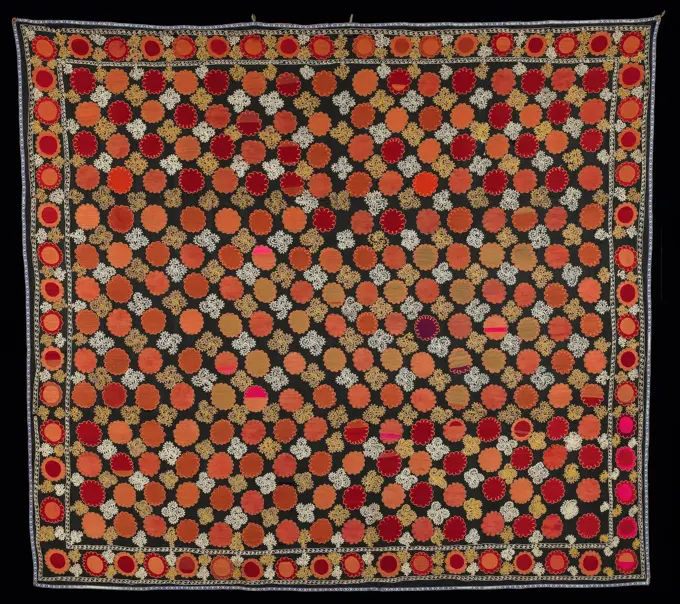
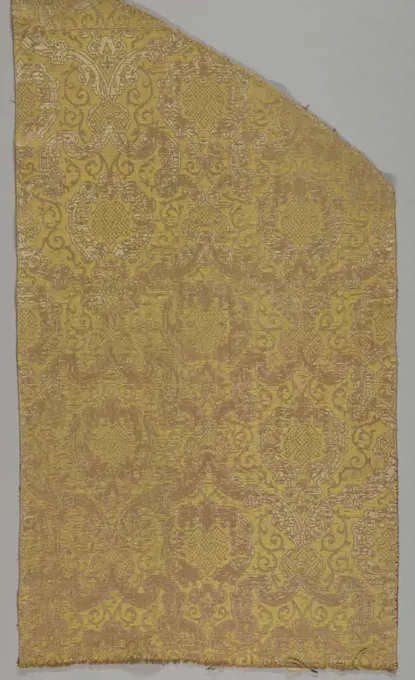
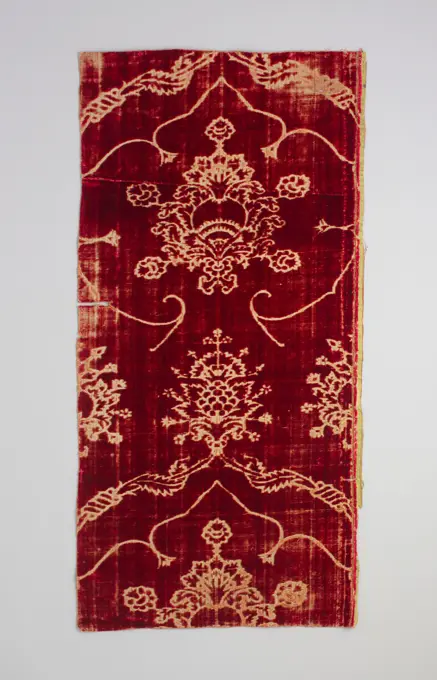
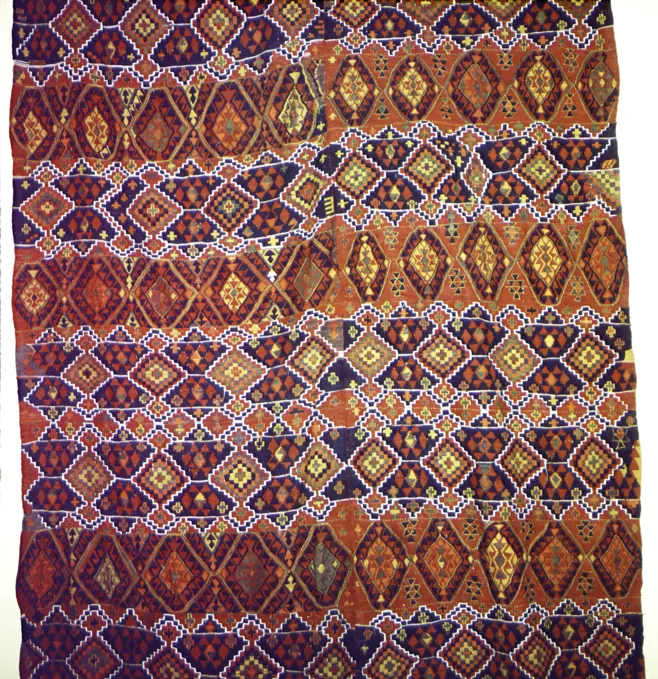
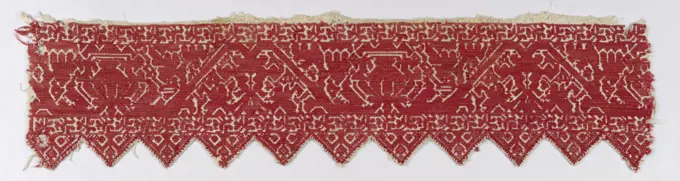
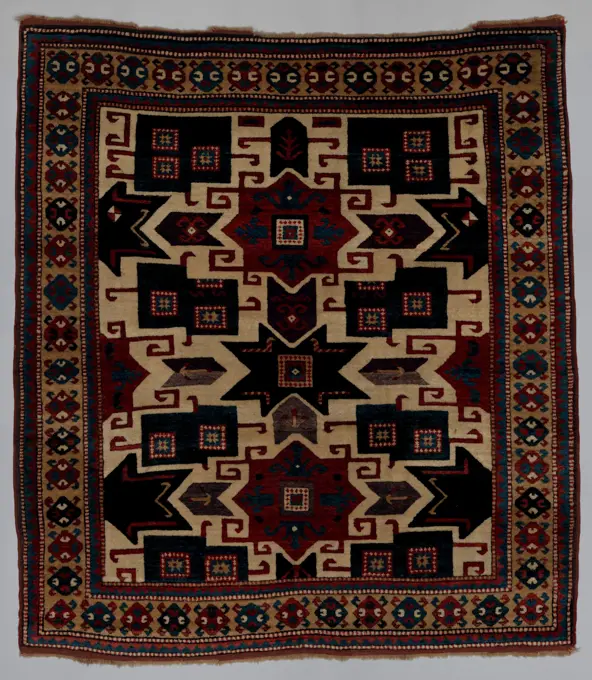
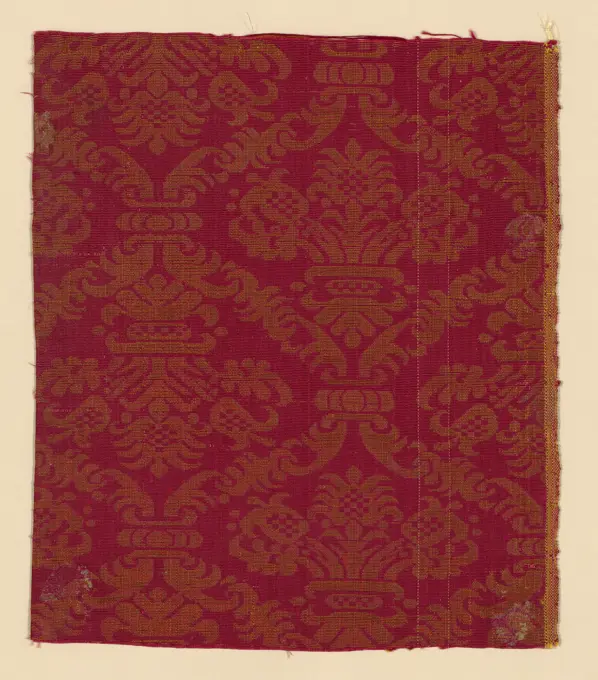
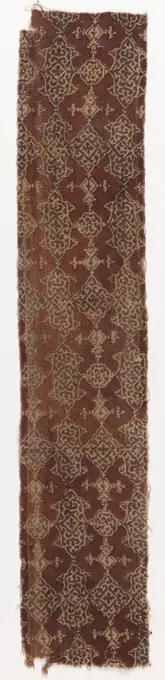
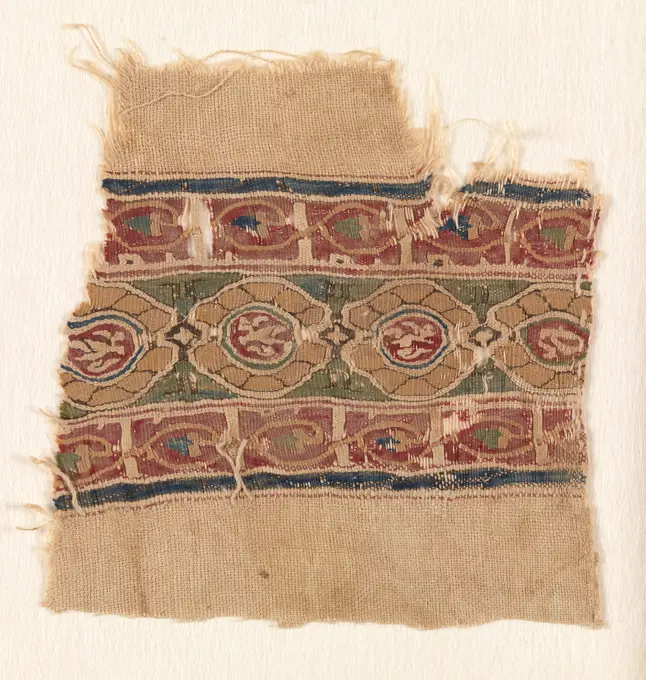
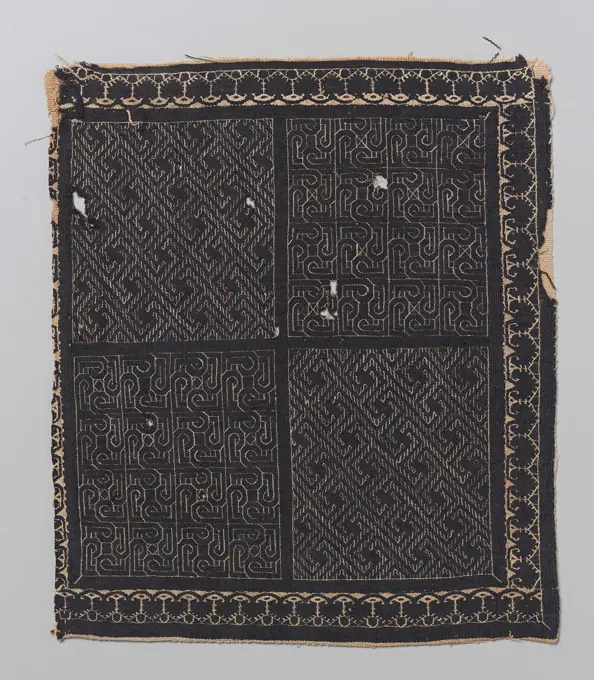
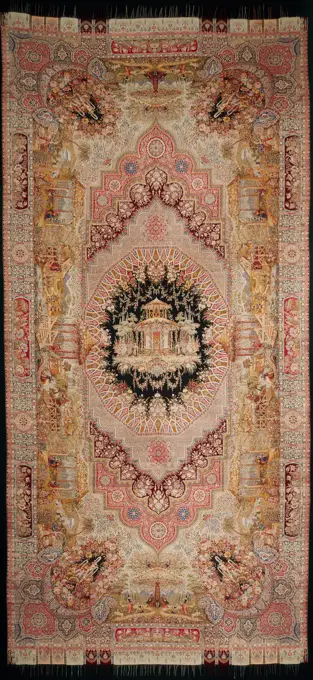
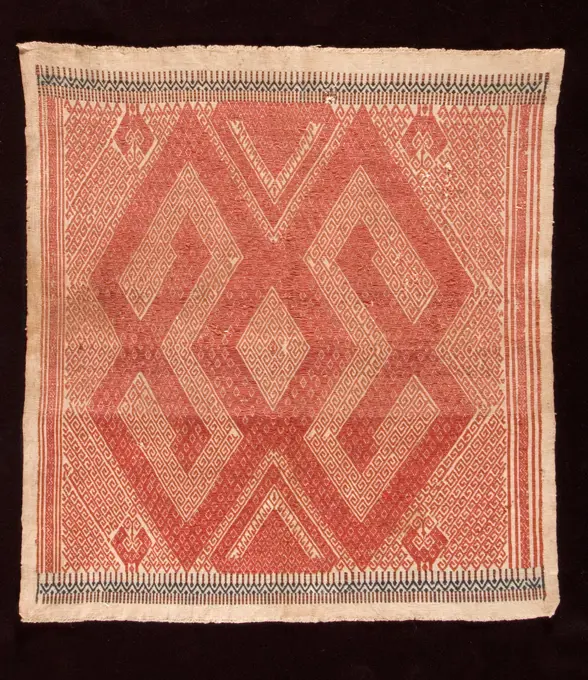
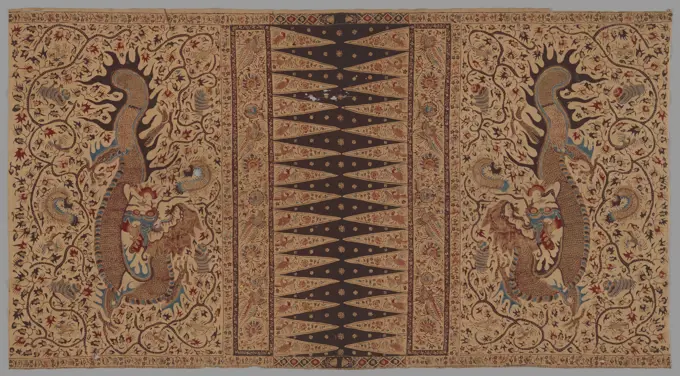
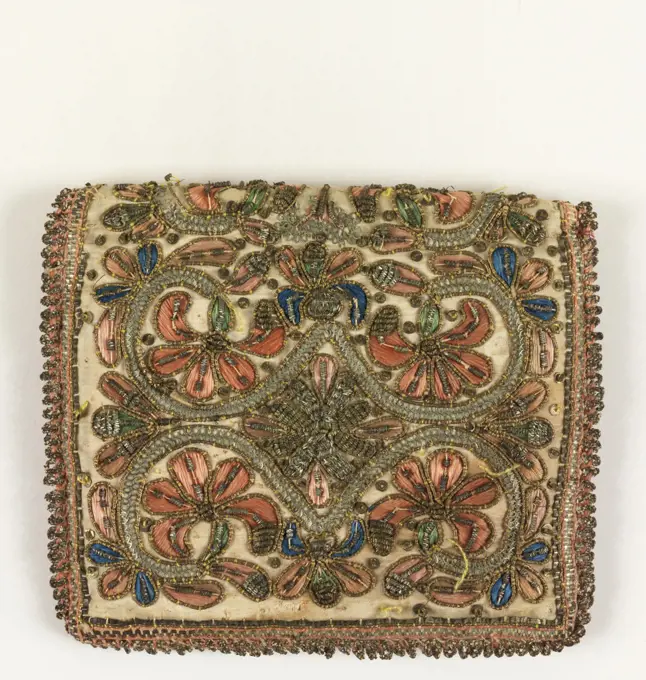
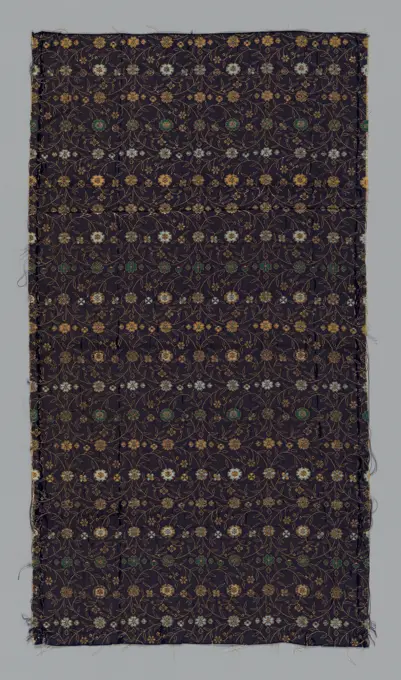
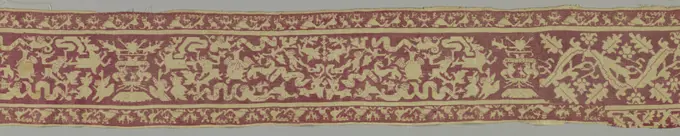
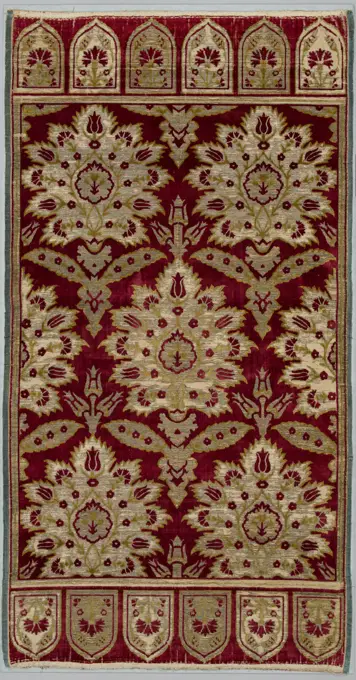
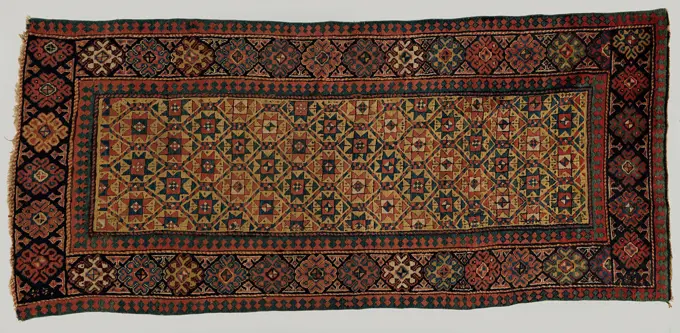
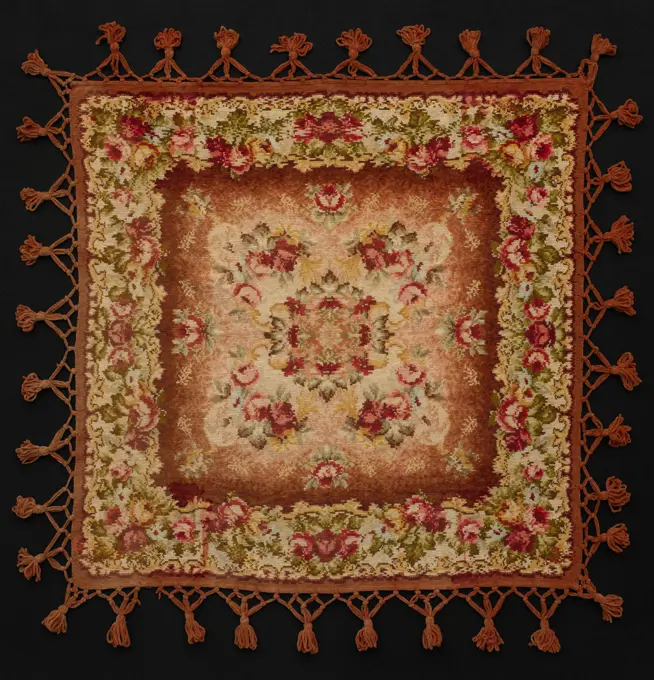
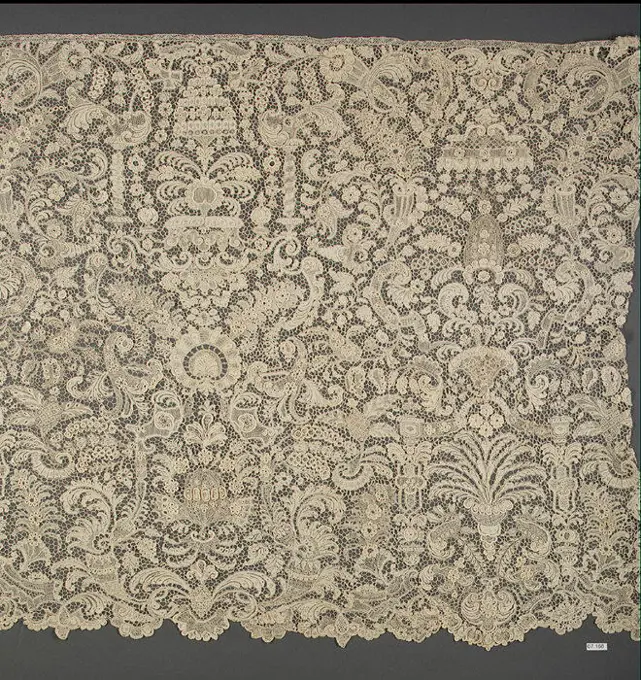
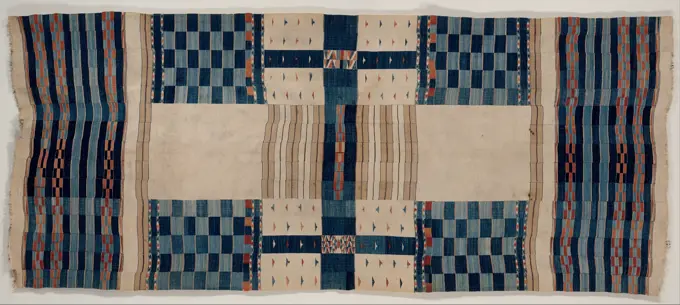
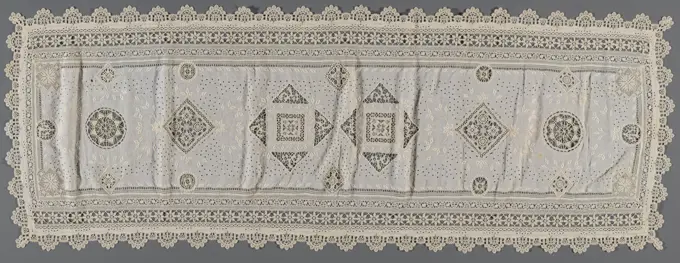
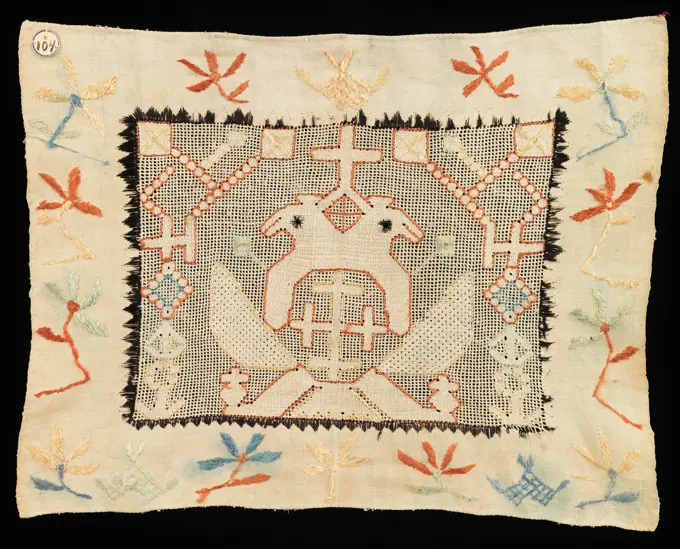
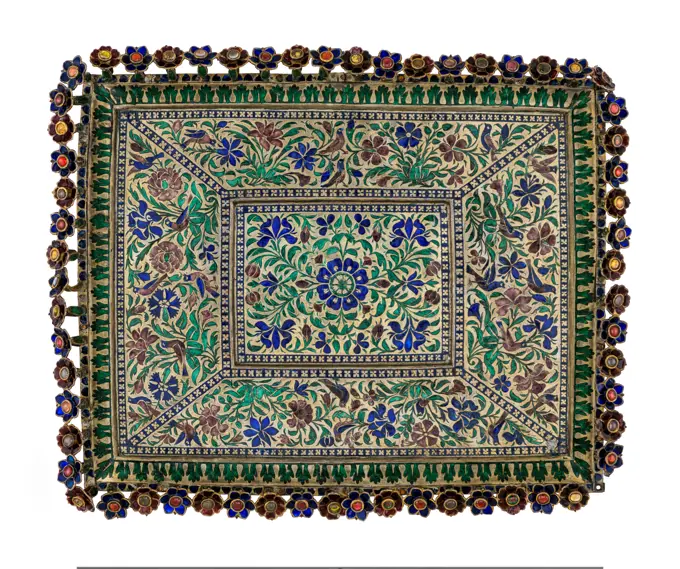
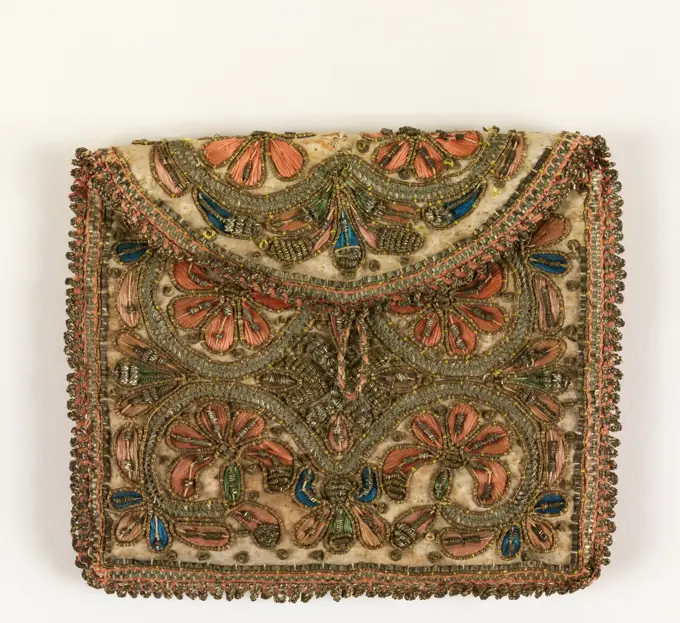
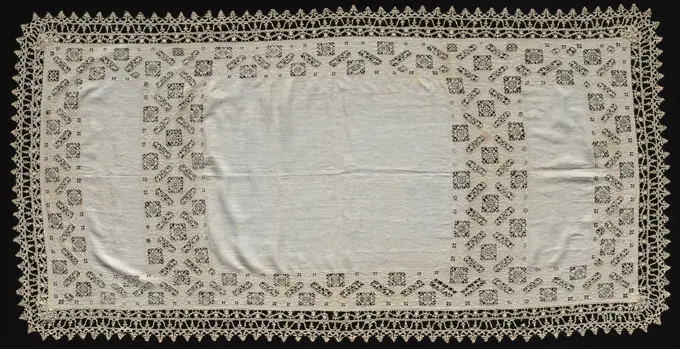
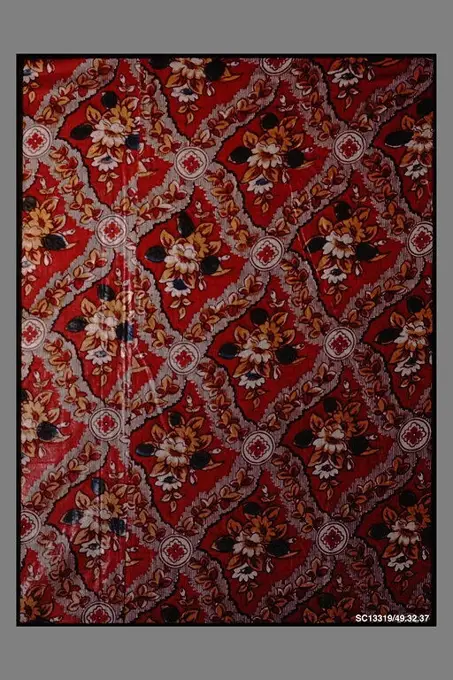
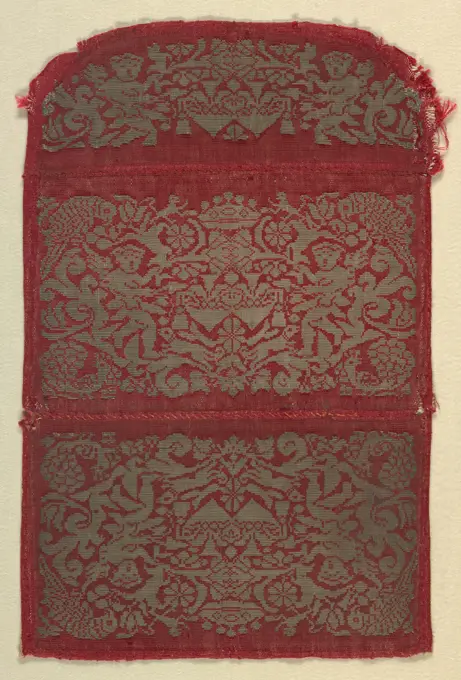
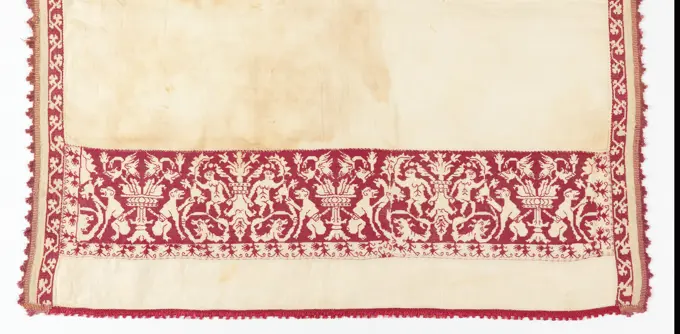
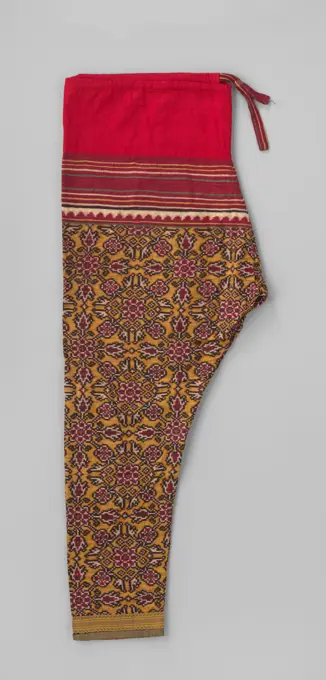
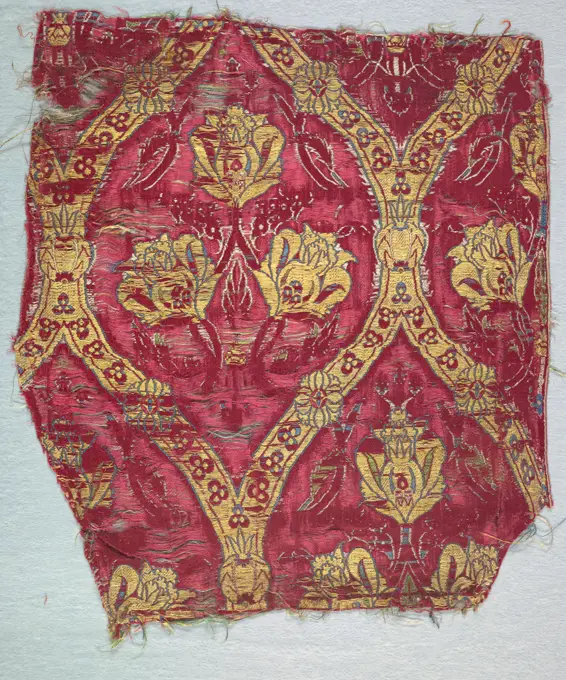
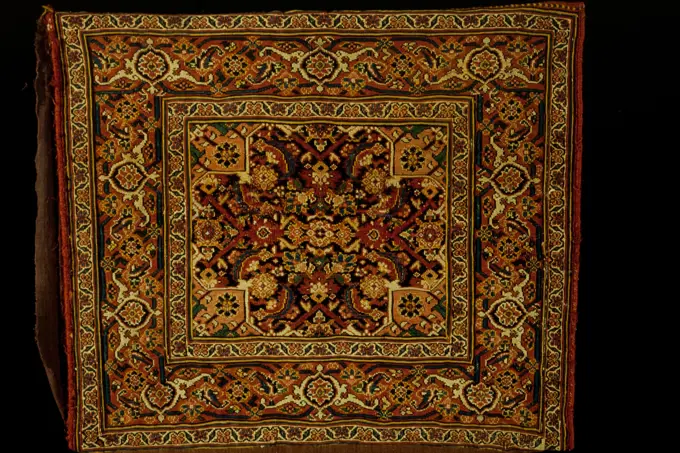
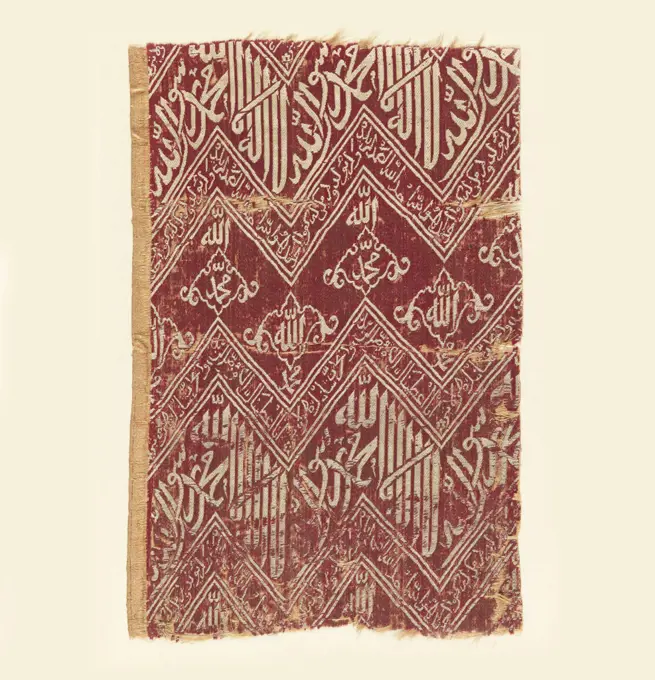
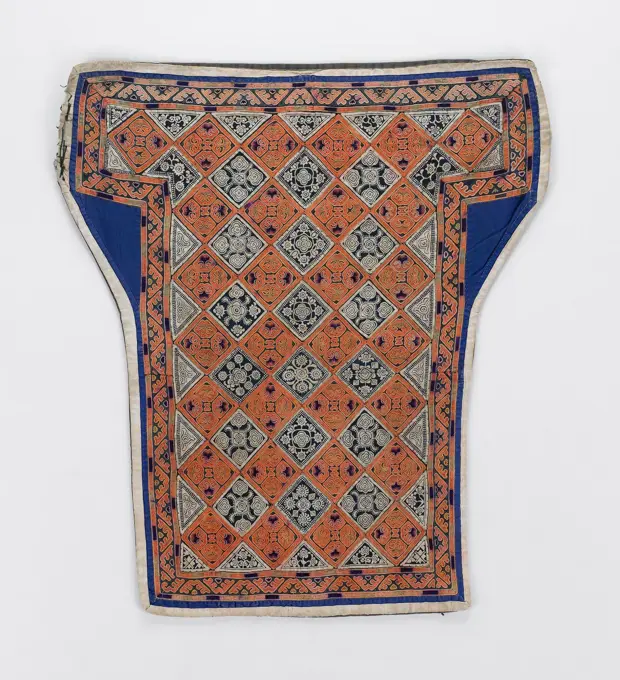
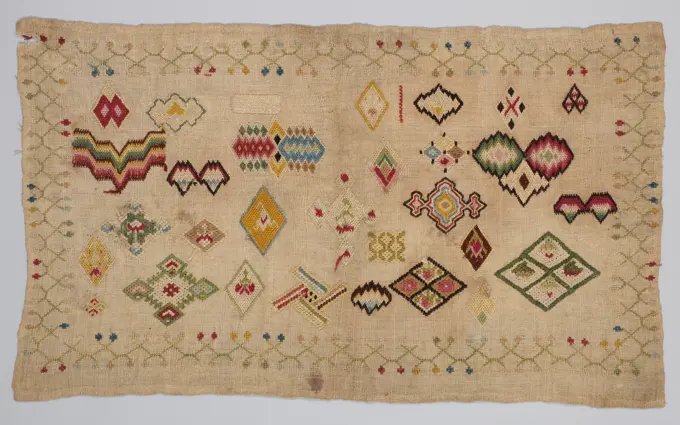
Sampler, 1788, Elizabeth Last, 12 3/16 x 10 9/16in. (31 x 26.8cm), cotton; needlework, United States, 18th centuryCushion cover, Medium: silk on linen Technique: Rococo stitch embroidery on plain weave, Cushion cover in an allover pattern of diamonds and rosettes, tassels on the edge. In red silk on linen., Italy, 16th-17th century, embroidery & stitching, Cushion coverBand from a Womans Ceremonial Skirt (Lau Pahudu)Oriental carpet ,, 1840 - 1900 Oriental carpet, prayer rug with a key hole motif. White Mihrab with a key hole pattern at the bottom. Filling with a tree of life, among other things. Triple edges, the width white with square double hooks. Button: Ghiordes Knoop. West Klein Asiabergama Necklace and impact: Wool Oriental carpet, prayer rug with a key hole motif. White Mihrab with a key hole pattern at the bottom. Filling with a tree of life, among other things. Triple edges, the width white with square double hooks. Button: Ghiordes Knoop. West Klein Asiabergama Necklace and impact: WoolSuzani, 20th century, 95 1/2 x 86 1/2 in. (242.57 x 219.71 cm), Cotton; continuous thread couching, machine chain stitch, Uzbekistan, 20th centuryBorder (possibly France); block-printed and flocked paper; 37.5 x 13 cm (14 3/4 x 5 1/8 in.)Frieze (USA); Manufactured by Janeway & Co. Inc.; machine-printed paper; 91 x 49 cm (35 13/16 x 19 5/16 in.)Fragment from a cope, Medium: silk, linen Technique: woven, Panel of brocatelle in rose, yellow and white., 17th century, woven textiles, Fragment from a copePiece second half 15th century Italian. Piece. Italian. second half 15th century. Silk. Textiles-VelvetsTurkish Rug.Bandana (Switzerland); cottonBand, Medium: silk embroidery on linen foundation Technique: embroidered on plain weave, Border of natural linen with triangular tab edge, embroidered in red silk with a stylized floral vine growing out of an urn., Morocco, 19th century, embroidery & stitching, BandWedding Bed Cover, c. 1900, 46 x 47 1/2 in. (116.84 x 120.6 cm), Cotton, China, 19th-20th centuryStar Kazak Carpet early 19th century. Star Kazak Carpet. early 19th century. Wool (warp, weft, and pile); symmetrically knotted pile. Attributed to present-day Azerbaijan, Qazakh. Textiles-RugsFragment Made 1575-1600 Italy. Plain compound cloth .Textile, Medium: cotton Technique: resist-printed on plain weave, All-over pattern of a cartouche with rosette. White design on deep red ground., India, 18th century, printed, dyed & painted textiles, TextileBorder. Date/Period: Late 16th-early 17th century. Border. Medium: linen. Technique: embroidery on plain weave using rosette chain, chain, spaced satin, satin, stem, star, and overcasting stitches; needle lace (reticella). Author: UNKNOWN.Tiraz Tapestry Fragment; linen, silk; Bequest of Marian Hague; 1971-50-525Carpet Made 1875-1900 Morocco. Wool, plain weave with supplementary wrapping wefts forming cut pile through a technique known as Turkish (Ghiordes) knots .Tissue fragment with Tabula. Natural linen tissue fragment with tabula sewn in dark blue. The plane is partly divided with transversely opposite the same geometric motif in flying wire technology with 16 compartments on the one hand with curled curl motif, on the other hand, a diagonal running angular T motif. To the whole a border with heart-shaped ornament.Shawl 1850-55 European. Shawl 82149Shawl 1840-45 probably British. Shawl 84577Gebroched and silver thread shaded Zijddamast, Anonymous, c. 1715 - c. 1725 Dress of broken and silver thread -shaded Zijddamast.Dessin: diamond pattern made of flower vines with leaf arrangements in silver, pink, yellow and red on a green stock with floral and leaves design. Lined with yellow side. Painted paper on which the letters ar. Stamped at the back: 16408. The tissue is entertained into a rug, composed of two recovered tracks. State: Color good: Repairs. France silk. damask Dress of broken and silver thread -shaded Zijddamast.Dessin: diamond pattern made of flower vines with leaf arrangements in silver, pink, yellow and red on a green stock with floral and leaves design. Lined with yellow side. Painted paper on which the letters ar. Stamped at the back: 16408. The tissue is entertained into a rug, composed of two recovered tracks. State: Color good: Repairs. France silk. damaskFragment samiet.Tissue fragment consisting of two parts. Black soil with golden diamond motif with floral pattern stylized inside on stem, where stylized leaf drinks come. On the points of the windows a circle motif with ornament.Long Shawl Made 1850-1900 France. Wool, cotton and silk, warp threads dyed in multiple colors prior to weaving; center of weft-float faced 1 3 'Z' twill weave; patterned areas of warp-float faced 3 1 'Z' twill weave with patterning wefts bound in weft-float faced 1 3 'Z' twill interlacings; main warp fringe; woven on loom with Jacquard attachment .Linen Towel. Dated: c. 1937. Dimensions: overall: 35.5 x 27.7 cm (14 x 10 7/8 in.) Original IAD Object: 36" long; 16" wide. Medium: watercolor, gouache, and graphite on paper. Museum: National Gallery of Art, Washington DC. Author: Eva Wilson.Ribbon (USA); silk, cottonCeremonial Textile (Tampan). Indonesia, South Sumatra, Lampung, Pasisir people, late 19th century. Textiles. Cotton plain weave and supplementary weft patterningPanel (India); cottonWaist Wrapper (Sarung, Tumpal Pasung LokaanNaga)Purse, Medium: silk, metallic thread, foil strips, coiled gilt wire, spangles Technique: embroidered in satin and couching stitches on plain weave foundation, Rectangular purse with half-circle flap in white silk, embroidered in pink and blue silk and gold metallic thread, strip, coiled wire and spangles, and egded with woven metallic trim. Symmetrical design of scrolls and flowers; red silk lining., France or Spain, 18th century, costume & accessories, PurseStrip for a wry with edge embroidery with four-legged border. Strip for a stray of natural-colored edge embroidery, work with pulled out wires. The pattern consists of a more or less symmetrical composition in which two elongated s vultuts are sloping against each other. A composite leaf or pine cone on a straight line comes as a motif for the left and right of the S-Volutes and vice versa in between. Under the composition with the Volutes there is a job with unilaterally directed four-legged friends, possibly dogs made. The symmetrical pattern is not completely throbbing. The strip is finished along all sides with a sloping edge of clamping edge.Fragment Made 1775-1825 Japan. .Fragments, Medium: silk Technique: plain compound weave, a) Red ground with lozenge pattern with flowers and squares. Large chrysanthemums. Patterning in blue, green, and red. Edges are finished with black fabric and white stitches., b) red ground with all over small green grid pattern of alternating circles and diamongs. The circles contain a Chinese character. Diamonds contain an illegible geometric shape., China, 18th-19th century, woven textiles, FragmentsPiece 18th-19th century Japan. Piece 65814Fragment, Medium: silk Technique: plain compound satin, Allover geometrical design in blue and tan on a gray ground., China, 18th century, woven textiles, FragmentFragment, 1700s - 1800s. India, 18th-19th century. Tapestry weave: silk, metal thread; overall: 177.8 x 144.8 cm (70 x 57 in.).Chasuble early 18th century Italian. Chasuble 461510Carpet ca. 1846 Spanish. Carpet 230709Garment medallion, Medium: Warp; S-spun two ply Z-twist linen. Wefts; S-spun linen, S-spun wool Technique: slit tapestry with sulpplementary weft wrapping., Part of a head and perhaps an animal., Egypt, 5th-6th century, woven textiles, Garment medallionBand, Medium: linen on silk Technique: cross-stitch embroidered on plain weave, Very wide horizontal repeat with symmetrical central motive with heart pierced by arrows flanked by two lizards escaping from ring supported by leaf arabesques clasped by banderole with worn letters. Fantastic stylized animals, putti, flower and leaf forms, banderoles with Greek-like inscriptions in broad area on each side. Guard band top and bottom with single row of fantastic birds. Desgins are in linen on ground of faded solid red silk long-legged cross-stitch. For short area at right end, central pattern changes to large-scale vine with leaves and flowers., late 16th century, embroidery & stitching, BandYastik Cushion Cover ca. 1600 Rectangular silk velvets, such as this textile, would have been used to cover cushions, or yastik, on a low seating platform. They feature staggered rows of dramatic floral medallions set against a crimson ground. The ends of the textiles exhibit borders of repeating floral motifs set into rows of small arched forms known as lappets.. Yastik Cushion Cover 446950Piece 18th-19th century Japan. Piece 67814Rug;  1. PO. 19th century (1801-00-00-1850-00-00);rugFragment silk tissue of a seat cladding .. Fragment yellow silk tissue, of a chair covering. The pattern has pink palmets and arabesken on a yellow ground. The fragment belongs to thirteen fragments with Invnr. BK-1992-18-A T / M BK-1992-18-m.Fragment Made 1701-1800 Spain. Silk, warp-float faced satin weave with supplementary pile warps forming cut and uncut pile-on-pile voided velvet .Band (Italy); silk on silkTextile, Medium: cotton Technique: resist-printed on plain weave, Fragment of panel with rosette-patterned field and three-part curving vine and floral borders. White design on blue ground., India, 15th-18th century, printed, dyed & painted textiles, TextileStar rack, Gendje or Karabagh. Star rack, Gendje or Karabagh. Midfield: A flets of ocheral fond is divided by a red / blue checkered grid pattern in windows, within which stars are standing, diagonally with red, blue and dark green items within which colorful blocks stand. Edge: Triple. Dark blue main beach with separate rounded star flowers, concentricly colored in brown / white, blue / red, red / cinnamon color and green / red. Homing of two equal tilt rights in dark green and red.Sampler (England); Embroidered by Sarah Barrett; silk embroidery, linen foundation; 82.5 x 21 cm (32 1/2 x 8 1/4 in.); Bequest of Mrs. Henry E. Coe; 1941-69-72Chasuble; silkIket (Headcloth) Made 1801-1900 Java. Cotton, batik dyed .Fragment, Medium: silk, metallic thread Technique: cut and uncut supplementary warp pile (velvet) with supplementary weft, Fragment of red cut and uncut velvet on yellow silk ground with extra metallic weft. Two portions of curving large-scale foliage are all that show of the design., Italy, 17th century, woven textiles, FragmentFragment; silk, metal thread; Bequest of Marian Hague; 1971-50-43Towel, Medium: silk, raw silk Technique: withdrawn element work with embroidery on plain weave, Cream-colored panel embroidered with cream raw silk and silk floss, with drawn work. One end, almost half the towel, has two stylized vines containing tulip with 8-lobed rosette on stem and two large cone-like leaves, flanking symmetrical curving ornament, the whole surrounded by drawn work borders and terminating in elaborately knotted fringe. The upper half of the towel is plain except for two large parallel zigzags., Mytilene, Greece, 18th century, embroidery & stitching, TowelTableCoverFragments; silk, linen, metallicFragment with a Simulated Silk Textile Pattern. Culture: Upper Rhenish. Dimensions: Overall: 24 3/4 x 24 3/4 in. (62.9 x 62.9 cm). Date: ca. 1450-1550. Museum: Metropolitan Museum of Art, New York, USA.Flounce 17th century French. Flounce 213246Embroidered pall unknownPiece 16th-17th century Italian. Piece 216954Border Made 1300-1400 Egypt. silk and linen . CopticInterior Hanging 19th century Mali or Ghana; Fulani () This textile, with its checkerboard-within-checkerboard pattern, is a masterful example of the art of narrow strip weaving. The fabric is kept lively by subtle changes in the woven design and by additional motifs featuring triangles and chevrons. Bundles of warp threads produce thick lines at three-quarter-inch intervals, further dividing the pattern and adding subtle richness to the surface. The cloth consists of fifteen strips woven on a horizontal double-heddle loom. Using this method, the weaver plans the patterns carefully, holding in mind an overall concept of what the finished textile will look like. Consistency is important if the strips are to align when sewn together. In this African region such weaving is usually a male occupation. Easily transportable, cloth has long been a valued trade commodity throughout West Africa. The origins of this textile are uncertain. Although purchased in the 1870s in Ghana by Joseph Upton,Table runner with monogram 'Al' or 'la'. Table runner with white embroidery on batist with deployment of needle side and filet work, deposited with intermediaries and a scalloped edge in dick edge. On the short sides twice the monogram 'Al' or 'la' in needle side intermediates. This indicates that the runner on the occasion of the marriage of Anna Leyds-Carstens, or shortly thereafter, is made. Hereby 19 paired packages of fileting and needle side, one of which is accompanied by a piece of paper of Chinese text.Towel border 1780-1820 Russian This object is from the collection of Natalia de Shabelsky (1841-1905), a Russian noblewoman compelled to preserve what she perceived as the vanishing folk art traditions of her native country. Traveling extensively throughout Great Russia, she collected many fine examples of textile art of the wealthy peasant class. From the 1870s until moving to France in 1902, Shabelsky amassed a large collection of intricately embroidered hand-woven household textiles and opulent festival garments with rich decoration and elaborate motifs. The Brooklyn Museum holdings include many fine examples including the majority of the garments. Portions of Shabelsky's collection are also housed at the Museum of Fine Arts, Boston, the Cleveland Art Museum, and the Russian Museum of Ethnography in St. Petersburg.The imperial eagle in this early piece is archaic and nearly unrecognizable from the later 19th-century depictions. The double-headed imperial eagle was adopted by Ivan IITray and Matching Box with Four Scent Vials. India, Uttar Pradesh, Awadh, Lucknow, circa 1800. Furnishings; Accessories. Enameled silver inlaid with foil-backed gemstones and pastes; enameled gilded silverFragment, Medium: silk, metallic Technique: applique on previously stamped (embossed) velvet, Applique of leaf pattern in gold-faced fabric on previously stamped red velvet., 17th-18th century, embroidery & stitching, FragmentPurse; silk, metallic thread, foil strips, coiled gilt wire, spanglesPall, embroidered, red unknownFragment goudleer, anonymous, 1500 - 1550 Square piece of gold leather, formed from pieces of "corduan" leather. The decoration in gold on a gold-blue stock divides the whole into four vertical lanes, which are closed off by narrower straight tires. A pomegranate motif is repeated five times in the tracks; The tires show roll work. A cardinal weapon is installed in the middle. Italy leather. Square piece of gold leather, formed from pieces of "corduan" leather. The decoration in gold on a gold-blue stock divides the whole into four vertical lanes, which are closed off by narrower straight tires. A pomegranate motif is repeated five times in the tracks; The tires show roll work. A cardinal weapon is installed in the middle. Italy leather.Textile late 15th century Italian. Textile 467649Fragment (From a Sampler) Made 1821 Sweden. Cotton, plain weave; cut and drawn work in back, cross, crossed back, double hem, Greek cross filling, honeycomb filling, interlocking lace, overcast, satin, and twisted buttonhole stitches; embroidered in overcast and padded satin stitches . Charlotte M. Berg (Maker)Kesa Made 1775-1800 Japan. .Arabic carpet colorful persian islamic handcraft handmadeNeedlepoint (Cutwork) and Bobbin Lace Cloth, 16th century. Italy, 16th century. Lace, needlepoint and bobbin: linen; average: 183.5 x 90.3 cm (72 1/4 x 35 9/16 in.).Piece ca. 1815 British. Piece 227436Purse (France); silk, metalSampler (Germany); Embroidered by Miss Charlotte Louise Rasche; silk embroidery on linen foundationBaby Carrier Panel, 25 3/4 x 21 3/4 in. (65.41 x 55.25 cm), Cotton; dyed, ChinaTowel; silk embroidery, linen foundationCurtain of velvet from blue, wine red, salmon color and fletschel on a white satin fond. Curtain (left) of velvet velvet, wine red, salmon color and fletschel on a white satin fond. The pattern has large symmetrical acanthus leaves, ending in volutes, and with dotted contours and small carried fields. This curtain belongs to the so-called Rosendaelbed.Pants from Ikat, Unknown, c. 1850 - c. 1950 The pants close with a cord. The top is plain red, including a dozen horizontal stripes and below that is a geometric flower pattern.  textile materials. metal ikat The pants close with a cord. The top is plain red, including a dozen horizontal stripes and below that is a geometric flower pattern.  textile materials. metal ikatBandFragment (China); silkFragment, Medium: silk, metal thread Technique: appliqué and embroidery, Pomegranate shape on two seamed pieces of velvet., Spain, 16th century, embroidery & stitching, FragmentFragment (Japan)Fragment; silkShawl. Culture: French. Designer: Attributed to Anthony Berrus; Attributed to Amédée Courder. Date: ca. 1855.When the punch-card system of the Jacquard loom was perfected in the early 19th century, one of the primary jobs to which it was applied was the weaving of "paisley" or "cashmere" shawls, some of which were made for exhibition. Such exhibition shawls frequently had little to do with common examples which carried the "cone" or "boteh" motif; rather they depicted naturalistic botanical subjects or exotic motifs populated with animal and human forms.The composition and complexity of this shawl point to its having been conceived as an exhibition piece, possibly the harlequin banded border would indicate-the 1855 Universal Exhibition in Paris. In weaving this chinoiserie fantasy, a three-by-one twill, approximately sixty wefts per centimeter was used. The Jacquard loom would have been fitted with about 200,000 punch cards to direct the wave of the pattern, which is unique over two-Pillow Cover, 19th century, 21 x 20 in. (53.34 x 50.8 cm), Wool, India, 19th centuryTextile, Medium: silk Technique: compound satin Label: silk compound satin, Fragment of woven silk with zigzag bands of Kufic script in white on a red ground. The inscriptions are translated as (top to bottom):, There is no god but Allah, Muhammad is the prophet of God (repeated), Say: He is God alone: God the Eternal! He begetteth not and is not begotten; and there is none like unto him, Allah (repeated) Muhammad (repeated), Truly we have given thee an abundance; Pray therefore to the Lord, and slay the victims. Verily whoso hateth thee shall be childless, Turkey, 16th-17th century, woven textiles, TextileBand (from Woman's Trousers or Robe) Made 1875-1900 China. .Oriental carpet, edge fragment, anonymous, 1600 - 1699 Against a blue background are (partially visible) S-Ranken, ending in lancet leaves. A palmet is placed at the intersection. The secondary edge has a running slender with rosettes and small leaf ornaments. India wool. cotton (textile) Against a blue background are (partially visible) S-Ranken, ending in lancet leaves. A palmet is placed at the intersection. The secondary edge has a running slender with rosettes and small leaf ornaments. India wool. cotton (textile)Shawl, Anonymous, 1900 - 1949 Shawl with geometric motifs and human figures. Roti cotton (textile) Shawl with geometric motifs and human figures. Roti cotton (textile)Fragments (France); cotton; A. Warp: 90cm (35 3/8in.) Weft:43cm (16 3/4in.) B. Warp: 59cm (23 1/4in.). Weft: 60cm (23 1/2in. Both pieces have a selvedge on the left.; Bequest of Elinor Merrell; 1995-50-214-a,bRug with a medallion with four curved chandelier arms, Carel Adolph Lion Cachet, 1914 Western rug. Midfield: Within a plain white piping and a Chinese -inspired meander list, in black and white, is a stretched medallion in brown and black, up and bottom with a protruding and aside with inward, sculptures of white, on which an angular meander line stands. On a smaller central medallion, in brown and beige, there are four curved chandelier arms made of white, with flower challenge as a crown. The intermediate fillings are lavishly and with arcing and meanders drawn in black/beige, black/white and black/beige/brown. Marked in large cross stitches on the back: Kinheim. Design Carel Adolph Lion Cachet. Note: Rug from the house of Mr Th.G. Dentz van Schaick, Frederiksplein 50 in Amsterdam. Beverwijk wool Western rug. Midfield: Within a plain white piping and a Chinese -inspired meander list, in black and white, is a stretched medallion in brown and black, up and bottom with a protruding and Tent Door Hanging first half 19th century. Tent Door Hanging 444971Tush kyiz (hanging), 1960, 74 1/2 x 133 7/16 in. (189.23 x 338.93 cm) (without hanging loops), Cotton, synthetic; embroidery, Kyrgyzstan, 20th century, These large wall panels were part of the interior decoration of many Kyrgyz homes and often reflected general social interests as well as the preferences of the maker. Patterning on older pieces often include abstract imagery associated with archaic motifs while many mid-twentieth century hangings are often patriotic statements that frequently include the area's enthusiasm for the cotton production that initially invigorated the economic development of the area. Commercial patterns were available and used by many women.Sampler (Norway); wool embroidery, linen foundation; 51 x 46 cm (20 1/16 x 18 1/8 in. ); Bequest of Mrs. Henry E. Coe; 1941-69-244Woman's Festival Baby Carrier, 20th century, 24 1/2 x 21 3/4 in. (62.2 x 55.2 cm), Cotton, silk, embroidery, batik, China, 20th centurySampler 18th century British. Sampler. British. 18th century. Silk on linen canvas. Textiles-Embroidered