Decorative Trophies and Vessels

Elegant and ornate silver and gold vessels including cups and wine coolers, showcasing intricate designs and historical significance.
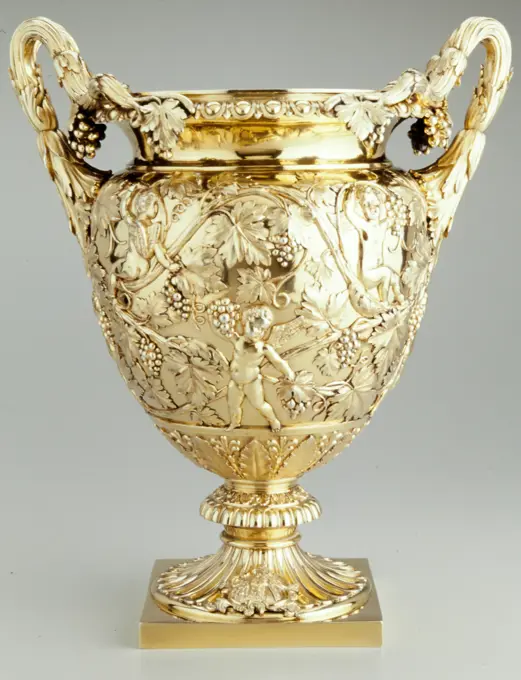
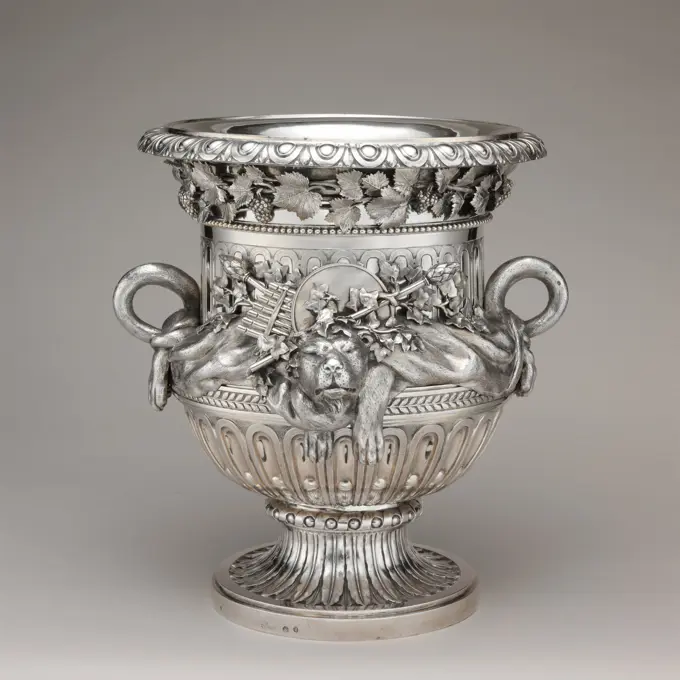
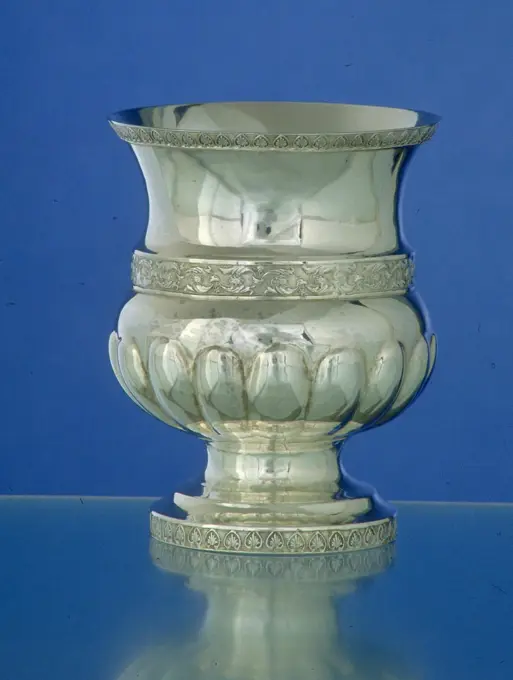
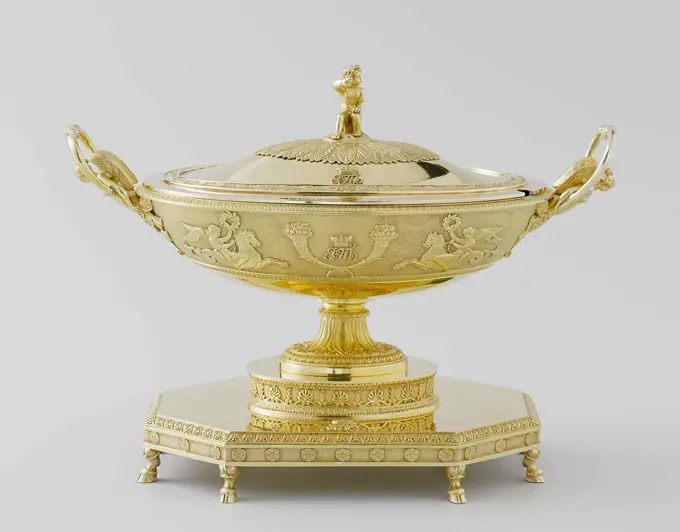
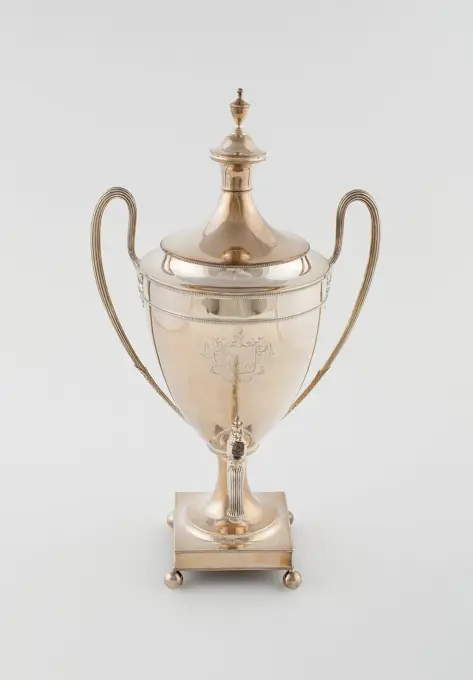
Wine cooler, one of four, 1828, Edward, Edward, James, and Barnard (a.k.a. Edward Barnard & Sons); Retailer: David Ellis, London, 14 1/4 x 12 x 8 3/4 in. (36.2 x 30.5 x 22.2 cm), Silver, gilt, England, Neoclassical
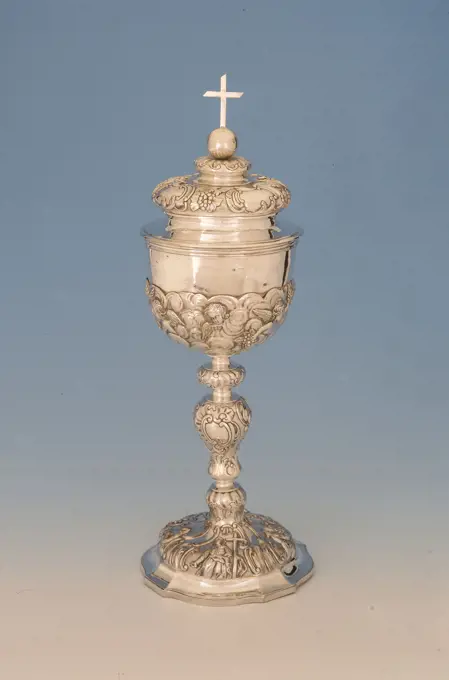
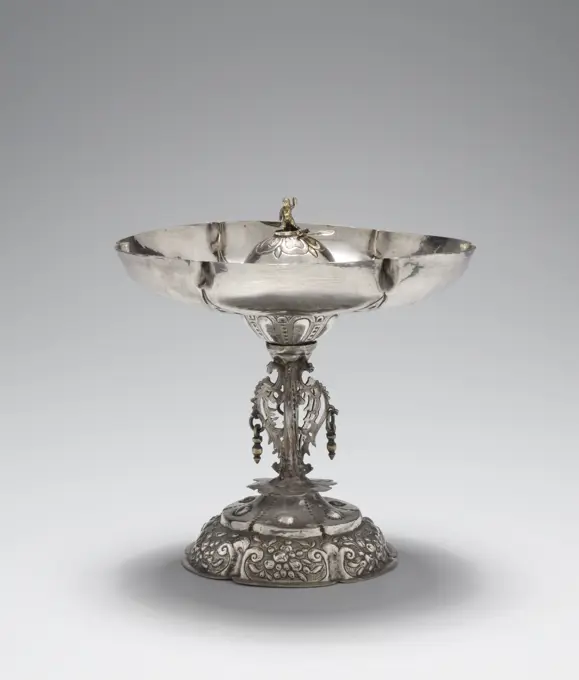
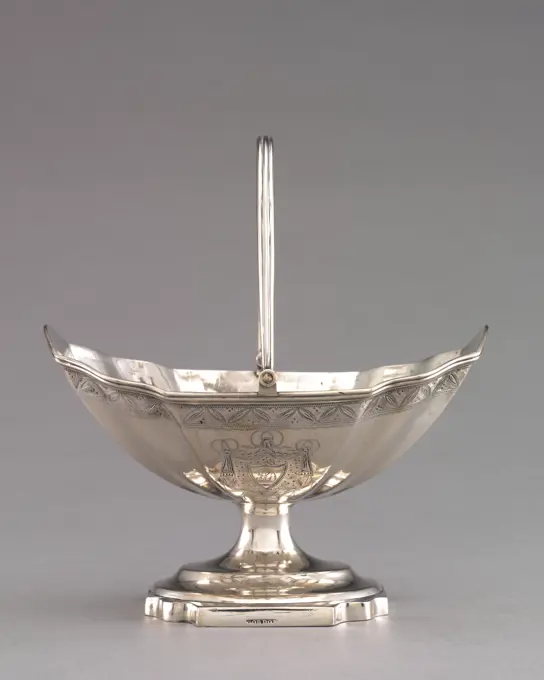
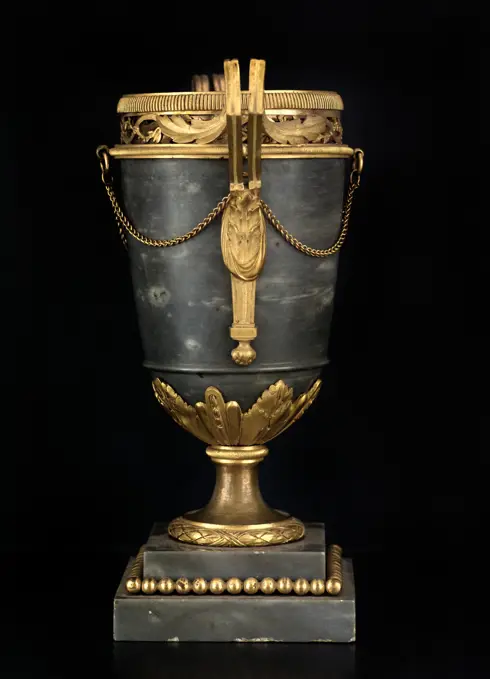
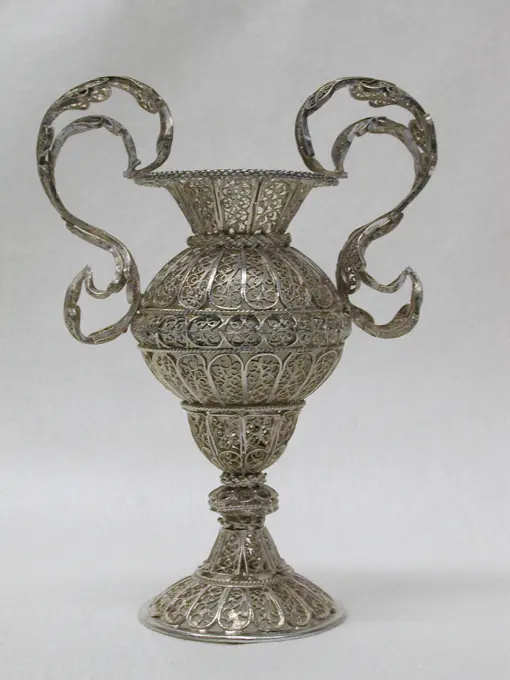
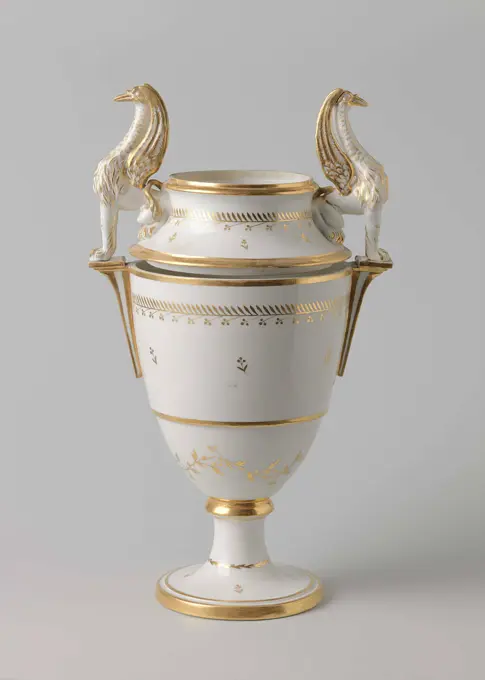
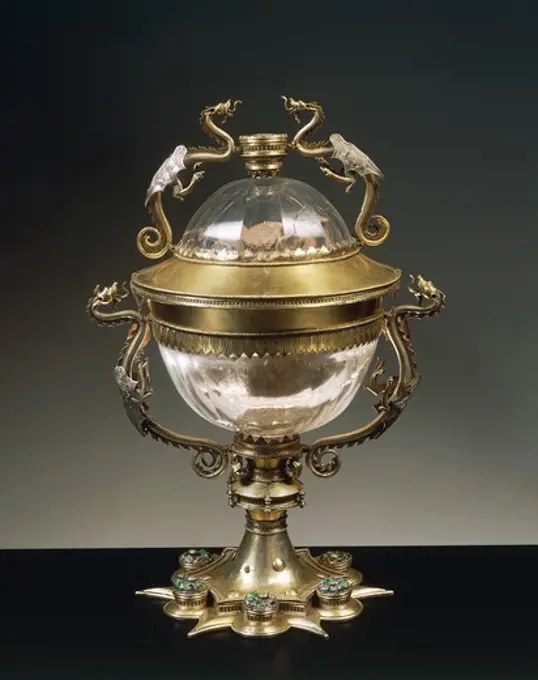
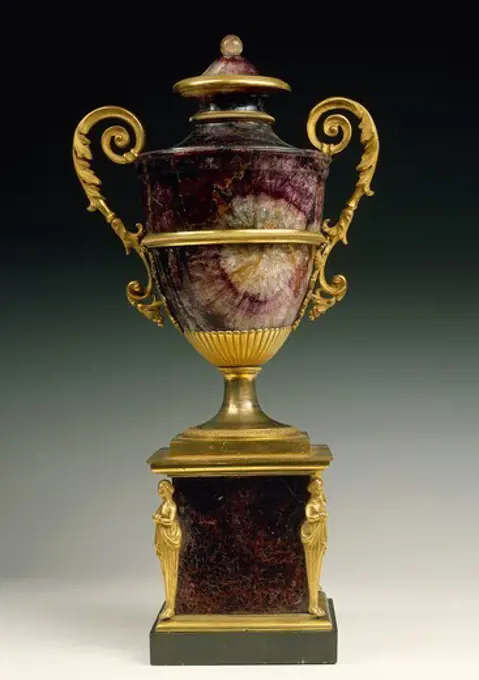
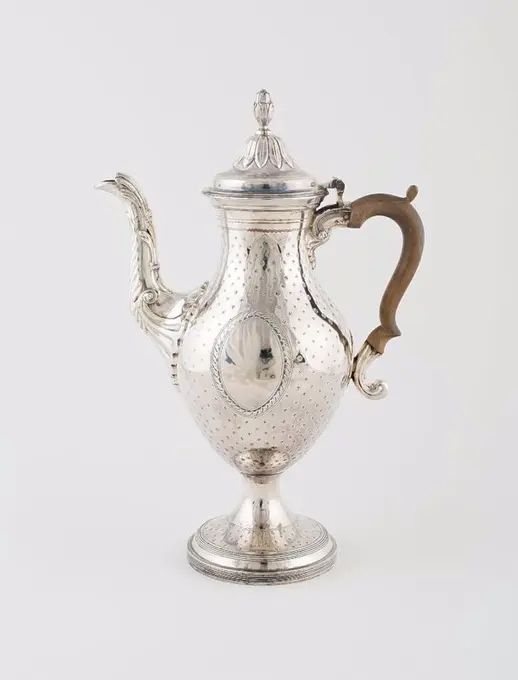
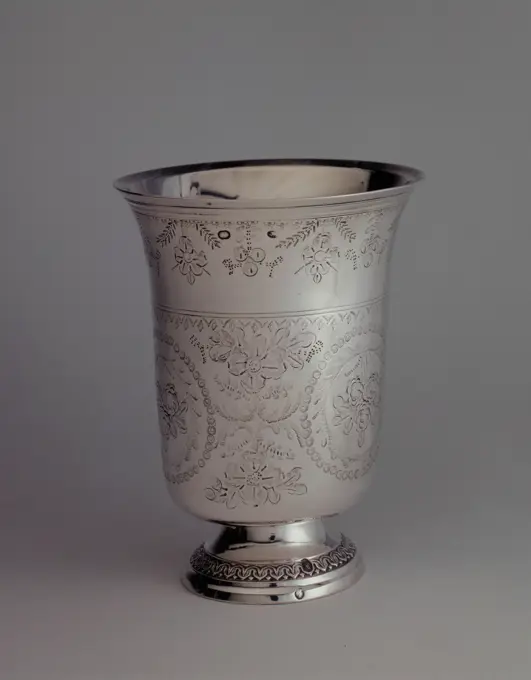
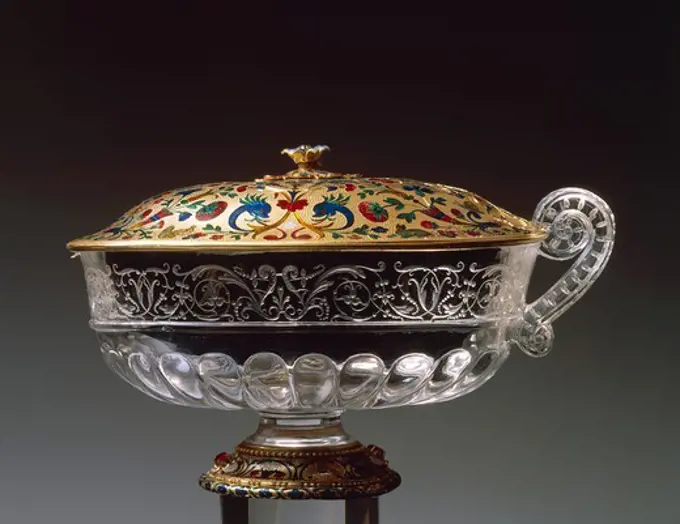
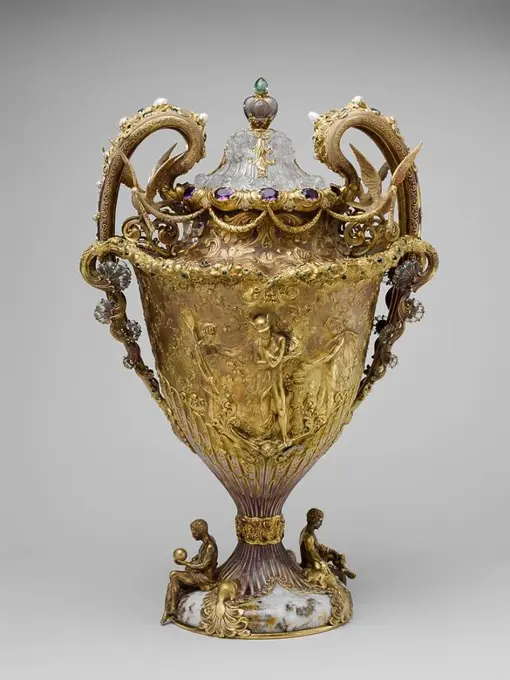
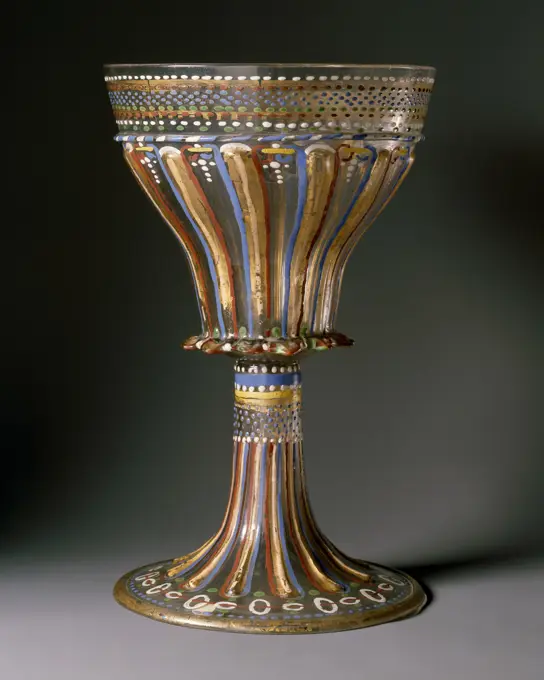
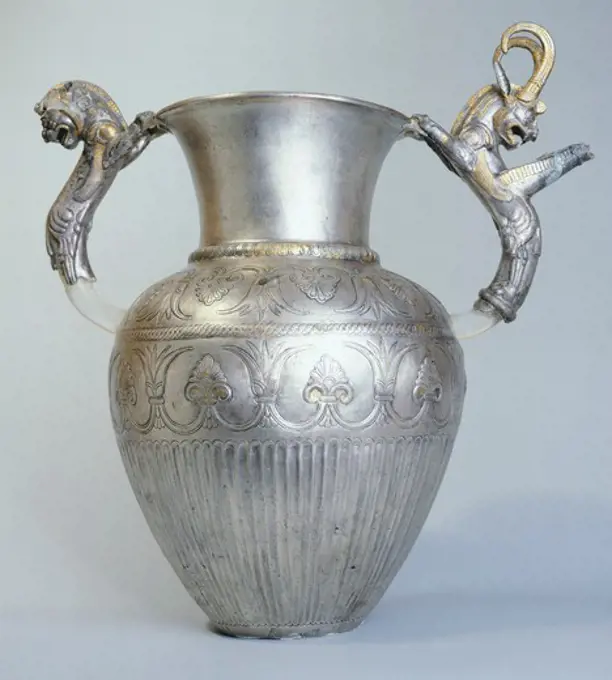
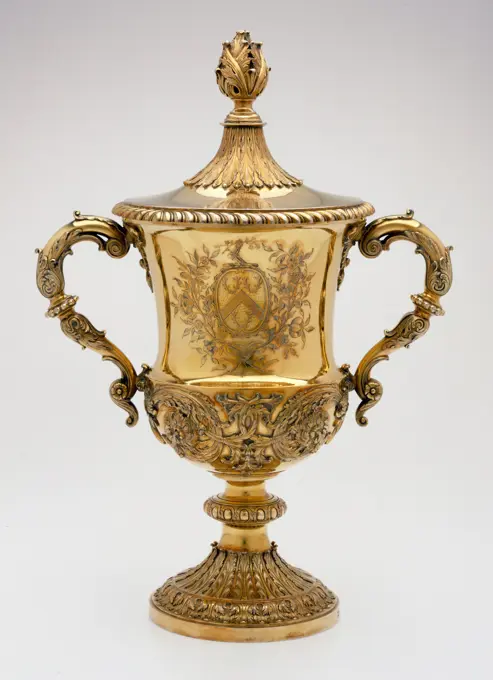
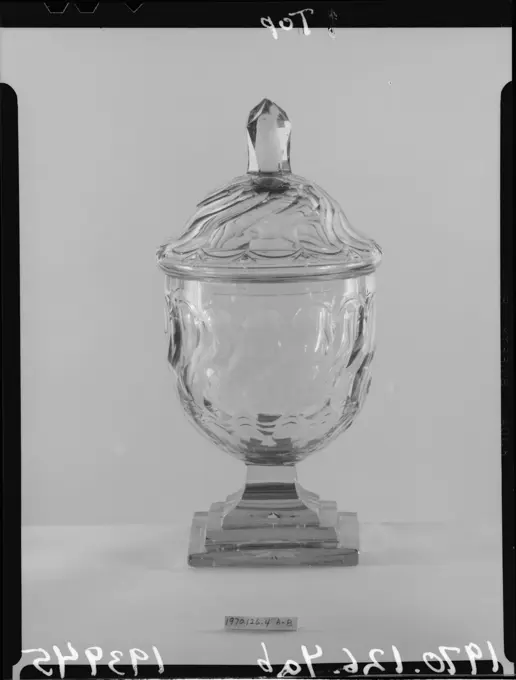
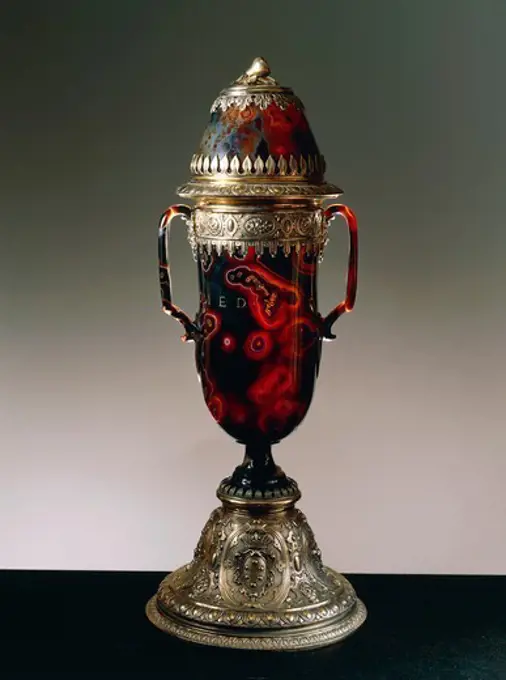
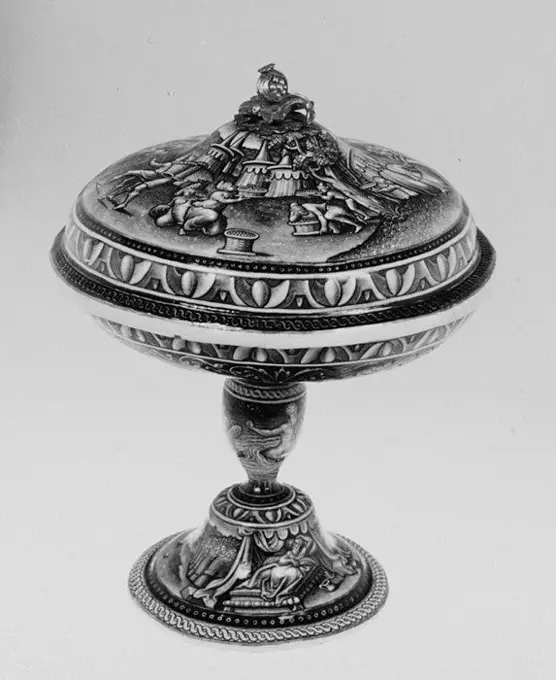
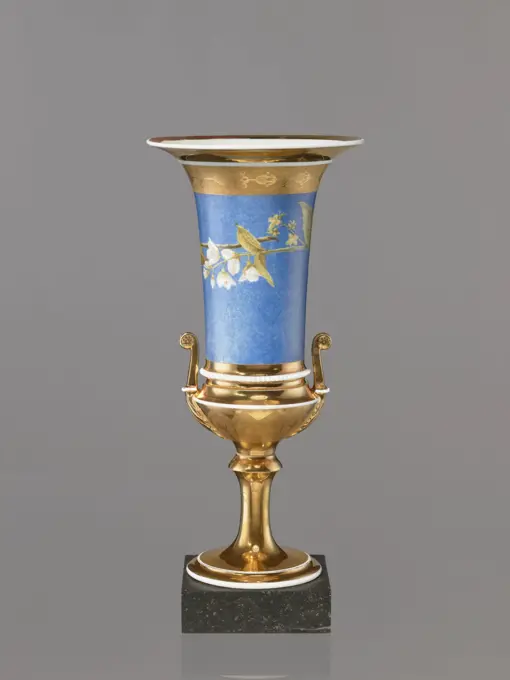
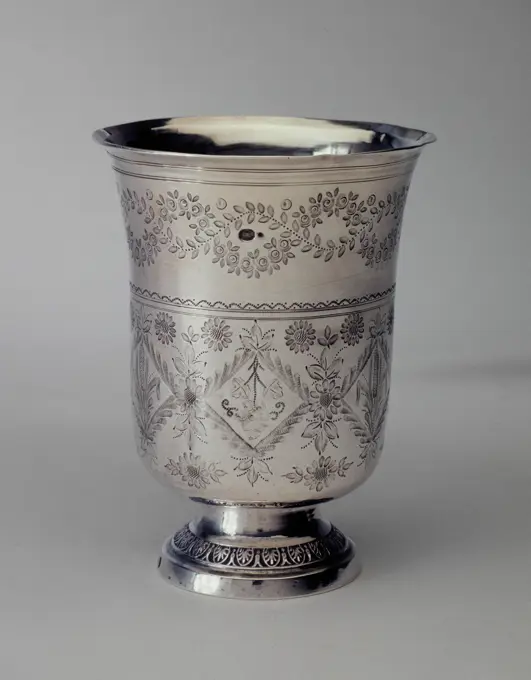
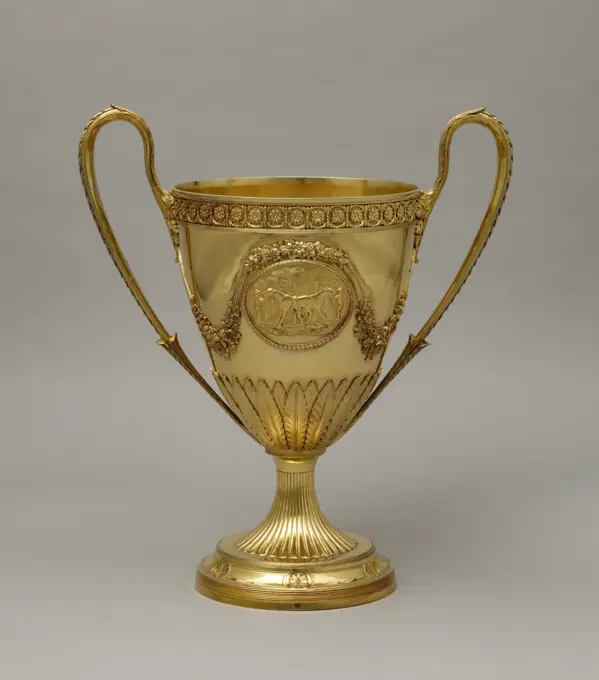
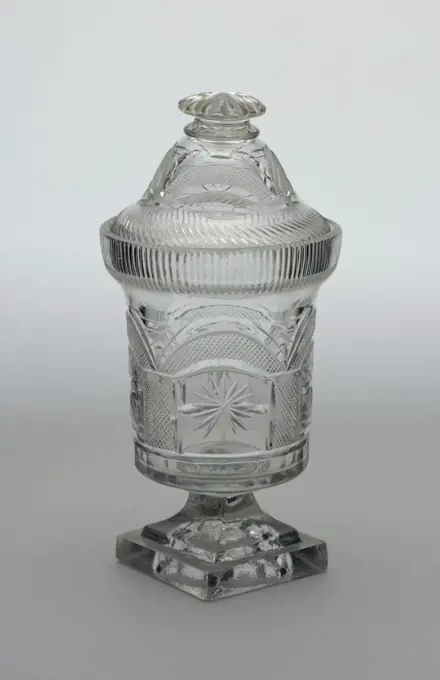
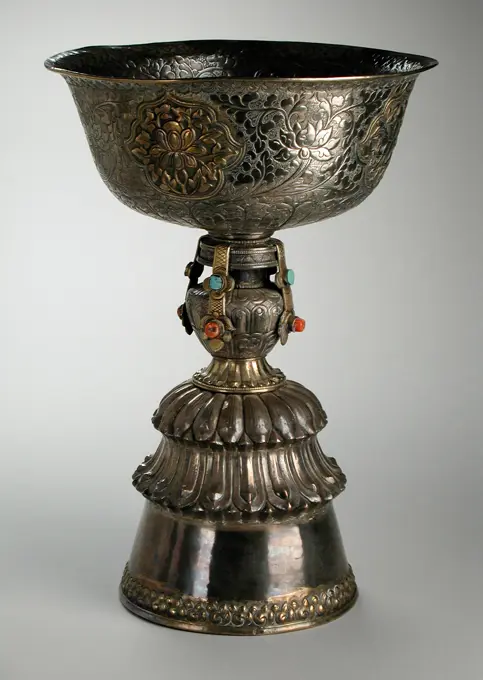
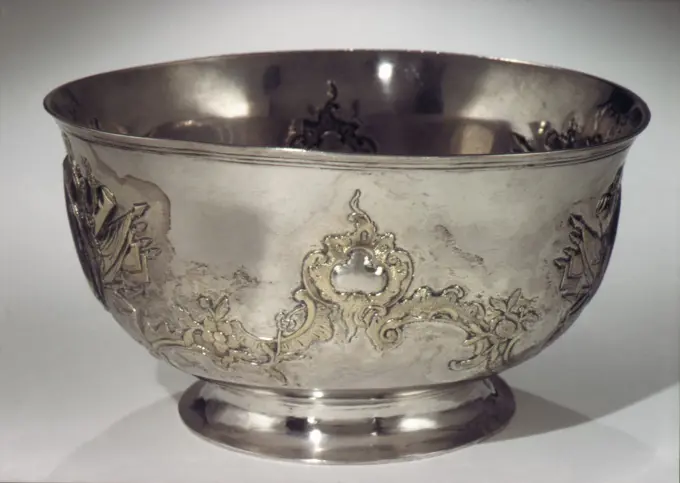
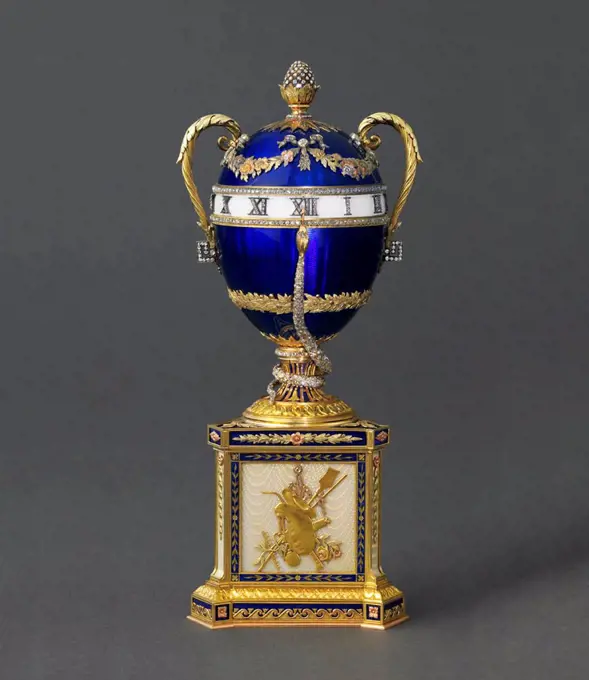
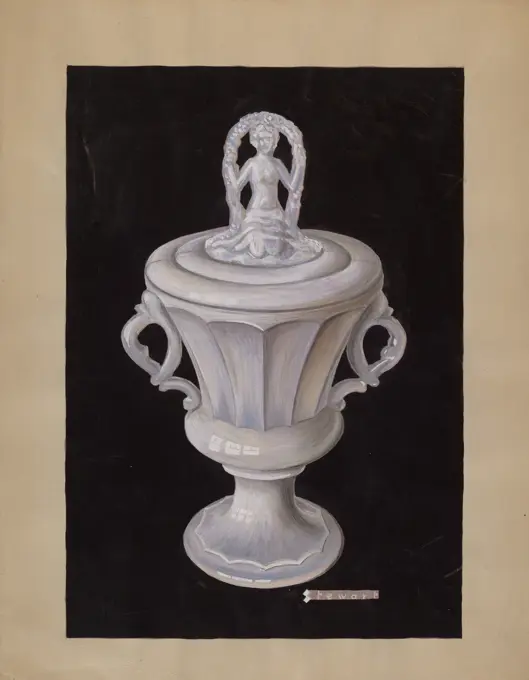
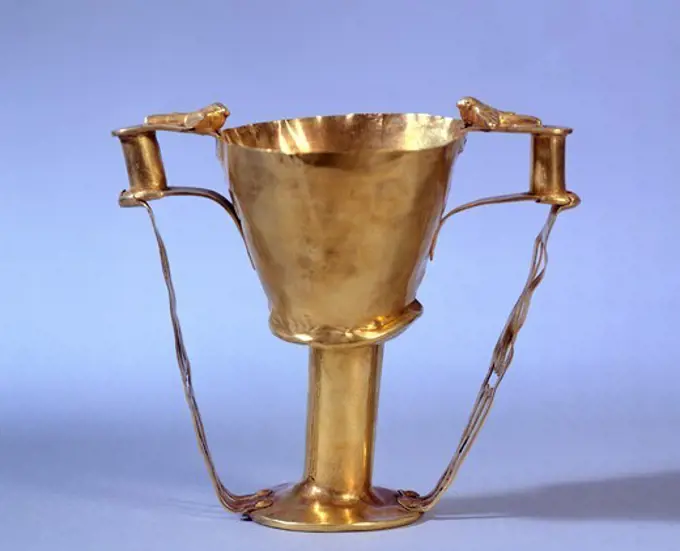
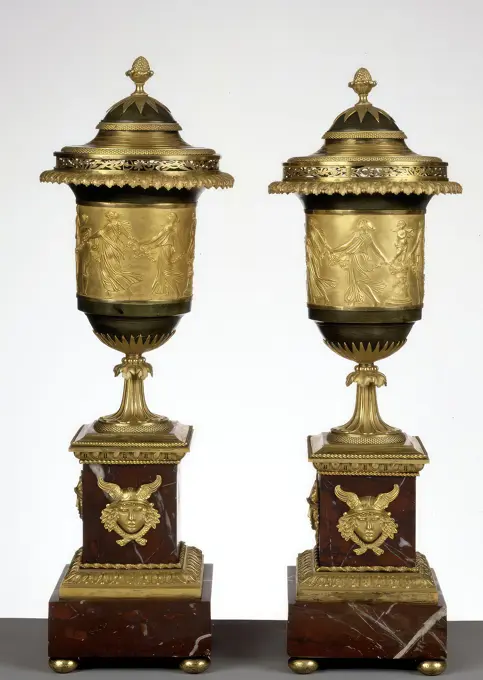
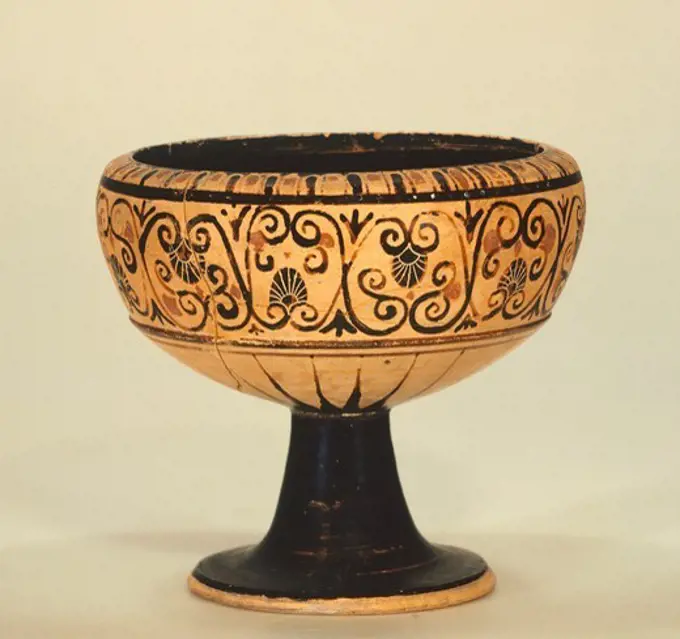
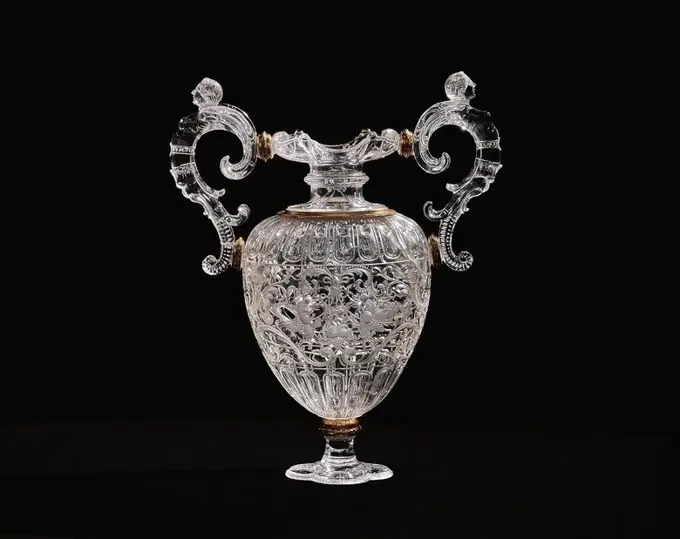
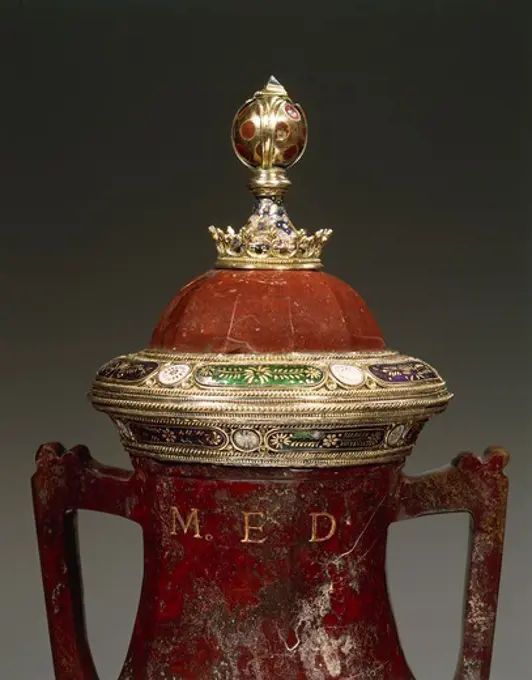
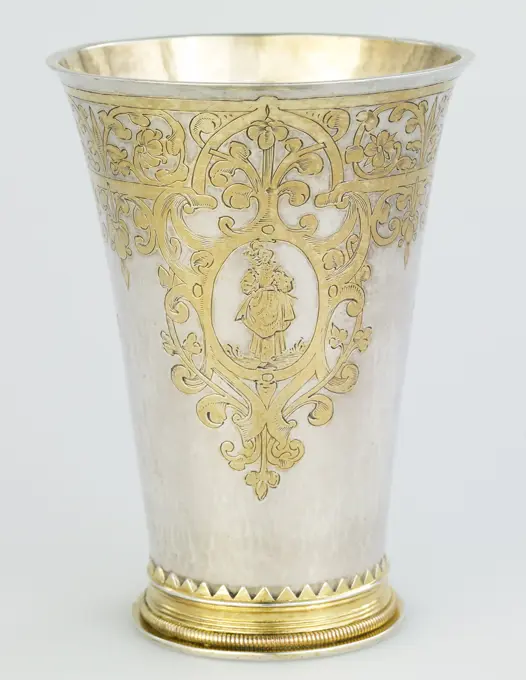
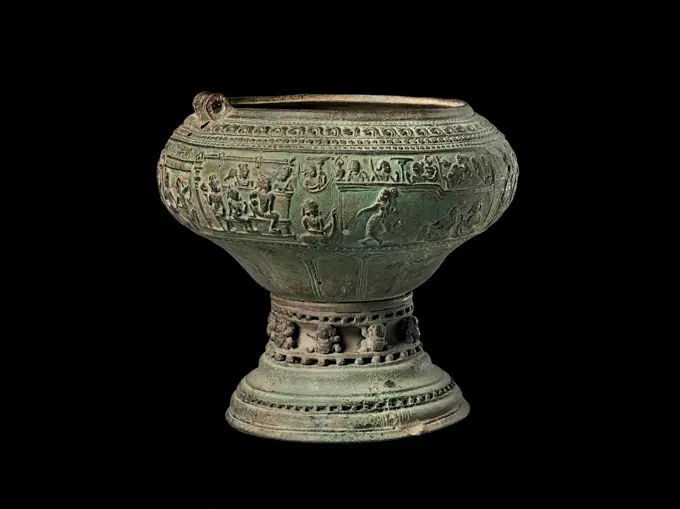
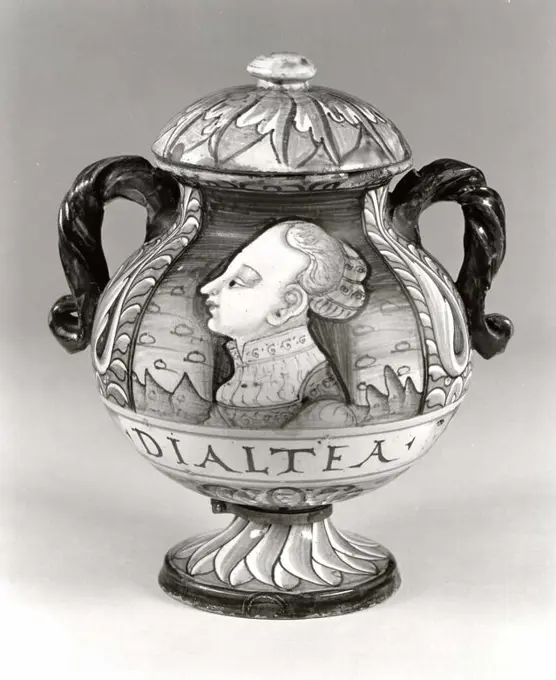
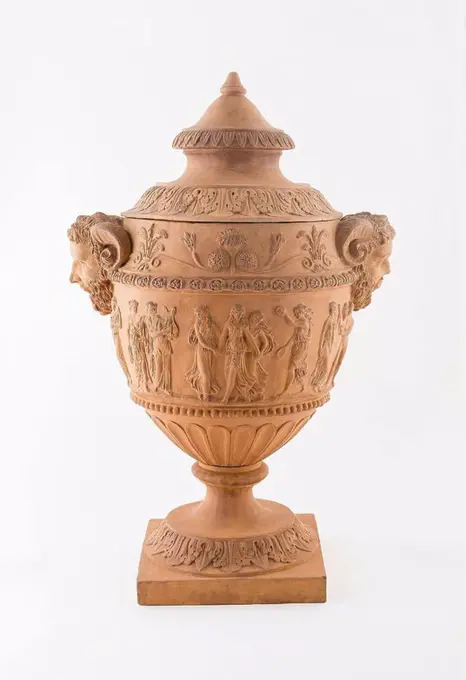
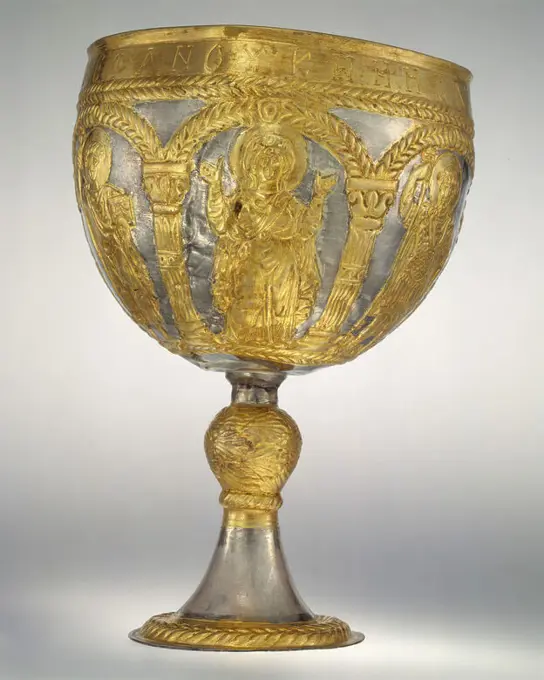
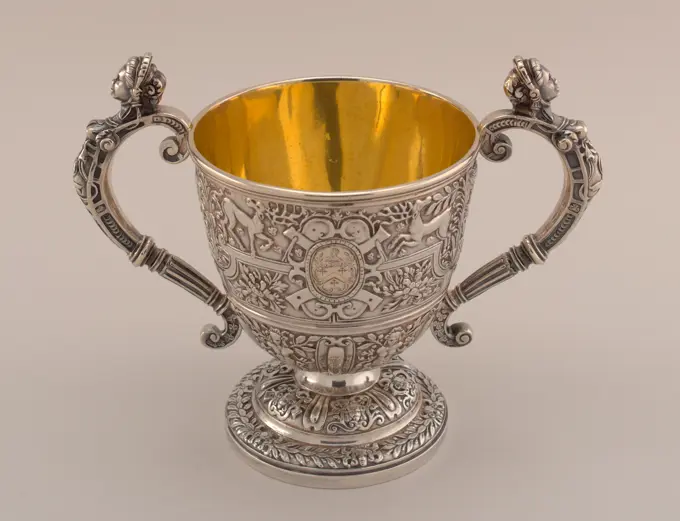
Two-handled Cup; silver; Overall: 16.5 x 21 x 11.3 cm (6 1/2 x 8 1/4 x 4 7/16 in.)Cablite with cover; Non -like Lona Huta; 2. PO. 18th century (1750-00-00-1800-00-00);Mount, 1750-1850; silvered metalWine cooler, one of four, 1828, Edward, Edward, James, and Barnard (a.k.a. Edward Barnard & Sons); Retailer: David Ellis, London, 14 1/4 x 12 x 8 3/4 in. (36.2 x 30.5 x 22.2 cm), Silver, gilt, England, NeoclassicalGilded silver ciborium, with on foot depictions of Mary, Saint Francis of Assisi, Saint Helena and Saint Anthony of Padua, ciborium liturgical vessel holder silver gold, driven molded Accented foot on which between rocaille motifs the passionate representations of Maria H. Franciscus of Assisi H. Helena (with holy cross) and H. St Anthony of Padua bottom edge foot inside (smitten) priest Eucharist religious ceremony ceremony Jesus Christ God Anthony of Padua religion church Rotterdam City Triangle Rosalia church Seen from the iconography probably from the Rotterdam Rosaliakerk.Wine cooler (one of a pair) 1781 Ignaz Joseph Würth Austrian The wine coolers formed part of the now dispersed so-called Second Duke of Sachsen-Teschen Service, which originally included all kinds of silver tableware as befit the splendor of royal dining. The overall style is indebted to French Neoclassical designs and encapsulates the strong appreciation of contemporary French art and culture by the patrons, Duke Albert Casimir of Sachsen-Teschen (d. 1822) and his consort, Archduchess Maria Christina of Austria (d. 1798), sister of Queen Marie-Antoinette and daughter of Empress Maria Theresa. Nonetheless, the vigorous design, the sparkling play of textures, and the daring juxtaposition of classical elements with whimsical sculptural details embody the freshness of the Viennese interpretation of high-style French Neoclassicism. In 1780 the duke and archduchess were appointed joint governors of the Austrian Netherlands. Imperial court goldsmith Wiirth created a magnificent service that Hansje in the basement. The scale is decorated with driven fruit trusses and has a half sphere in the middle with folding lid under which a gilded children's figure is., Gerrit Stoffels, 1600 - 1650 Silver drinking scale. The dish is decorated with driven fruit trusses and has half a sphere with a folding lid in the middle. A gilded children's figure is hidden below. Harlingen silver (metal). gilding (material) gilding Silver drinking scale. The dish is decorated with driven fruit trusses and has half a sphere with a folding lid in the middle. A gilded children's figure is hidden below. Harlingen silver (metal). gilding (material) gildingSugar urn, c. 1800, attributed to James Musgrave, 10 5/16 x 4 11/16 x 4 11/16 in. (26.19 x 11.91 x 11.91 cm), Sterling silver, United States, 19th centuryOrangeHolder.  Designer Walter F. Smith, American, 1856-after 1909 Manufacturer: Pairpoint Manufacturing Company, 1880-1958JARRON DE PORCELANA DORADA - SIGLO XIX. Author: TALLER DE NAST. Location: SENADO-INTERIOR. MADRID. SPAIN.Bokaal with lid, from rock crystal with frame of gilded silver. On dome -shaped foot a naked young man who holds the frame of the barrel with one hand., Anonymous, 1590 - 1610 Small jar with lid of rock crystal, with gold -plated silver frame. On the dome -shaped foot there is a naked young man who holds the frame of the barrel with one hand. Southern Germany silver (metal). gilding Small jar with lid of rock crystal, with gold -plated silver frame. On the dome -shaped foot there is a naked young man who holds the frame of the barrel with one hand. Southern Germany silver (metal). gildingSugar Basket, c. 1796. Or Andrew Gordon (American), James Gordon (American). Silver; with handle: 15.8 x 9.8 cm (6 1/4 x 3 7/8 in.).Vase Depicting the Triumph of Neptune and Solatea, hard paste porcelain, vitreous enamel, gold, A Triumph of Neptune and Solatea vase with a square platform bottom. Goblet like shape with a flared lip in yellow, orangle and red., France, ca. 1810, ceramics, Decorative Arts, vase, vaseAnonymous. Vase mounted. Marble, gilded bronze, 1760-1770. Paris, Cognacq-Jay museum. 79737-31 Anse, decorative art, bronze gilded, chain, gilding, marble, vase monte, 18th 18th 18th 18th 18th 18th 18 centuryGalvanoplastic reproduction of a jar with lid with scenes related to hunting. Galvanoplastic reproduction of a jar with lid, with tires with engraved scenes with subjects related to hunting interspersed with tires with rollerwork in relief; A vase with flowers forms the crowning of the lid.Miniature urn (one of a pair) (part of a set) 1675-1700 Southern German Part of set of silver miniature furniture, 31.37.1-.22, and a box, 31.37.23.. Miniature urn (one of a pair) (part of a set) 196832Goblet and Cover, Anonymous, Jacob Frölich (Edelsmid), c. 1556 - c. 1558 Bokaal with lid of rock crystal in a frame of gilded silver. As a crowning lion with coat of arms on which an inscription of later date: Marquard von Adelzhoven 1643. maker: Breisgau (possibly)maker: Neurenberg frame: Silver (Metal) gilding Bokaal with lid of rock crystal in a frame of gilded silver. As a crowning lion with coat of arms on which an inscription of later date: Marquard von Adelzhoven 1643. maker: Breisgau (possibly)maker: Neurenberg frame: Silver (Metal) gildingGoldsmith's art, Italy, 16th century. Rock crystal and gold vase. Milanese manufacture.Standing cup 1866-80 Austrian. Standing cup. Austrian. 1866-80. Rock crystal, enamel on silver-gilt. Natural Substances-Rock CrystalEgg cup 1786-87 French, Paris. Egg cup 200283Sugar bowl with cover last quarter 18th century M. H. P.. Sugar bowl with cover 191926Vase-krater; Korzec (Porcelain Manufaktura; 1790-1832); 1810-1820 (1810-00-00-1820-00-00);Skyphos. UnknownCup from the Dutch Fort of St. George d'Elmina. Cup (supper charm) From silver, baluster-shaped trunk and round, faint-vaulted foot. The chalice is decorated with the coat of arms of El Mina: a coat of arms with helmet and helmet sign with an elephant in it. Master sign: WS including a star, shield.Kastanjevaas decorated with griffins. Kastanjevaas decorated with griffins.Silversmith's art, Italy, 15th century. Rock crystal double cup with enamelled and gilded silver mount. Height cm. 33.Silversmith's Art, 19th century. Amethyst and gilded silver urn.Goldsmith's art, Italy, 15th century. Chalice from Vellano, Tuscany Region, 1400-1425.Waste Bowl ca. 1800 Joseph Lownes. Waste Bowl 9745Wine Cooler 1800-1850 France. Silver gilt . Jean Baptiste Claude OdiotTriumph of Neptune and Solatea Vase; Possibly by Sèvres Porcelain Manufactory (France); France; porcelainCoffee Pot. Charles Hougham; English, 1748-1793; London, England. Date: 1789-1790. Dimensions: 31.4 x 21.6 x 11.4 cm (12 3/8 x 8 1/2 x 4 1/2 in.). Silver and wood. Origin: London. Museum: The Chicago Art Institute, Chicago, USA.AJLC Berger. "Cup". Money. 1811-1819. Museum of Fine Arts of the City of Paris, Petit Palais. 74382-27 Money, silverware, gobletSilver reliquary, 17th century, Episcopal Palace of Girona, Girona art museum, Girona, Catalonia, Spain.Coffee Pot Made 1815-1825 Paris. Hard-paste porcelain, polychrome enamels, and gilding . Denuelle Porcelain Manufactory (Manufacturer)Goldsmith's art, Italy, 16th century. Engraved rock crystal cup with lid in enamelled gold set with rubies. Cm. 8x8x11Chalice, c. 1850-1875. Austria (Vienna), 19th century. Rock crystal, gilded and enameled silver, pearls, emeralds, precious stones; diameter: 16.7 x 10.8 cm (6 9/16 x 4 1/4 in.).CALIZ DEL S XV (ESCAVACIONES IRIA FLAVIA). Location: MUSEO DE ARTE SACRO. Padrón. Coruña. SPAIN.The Adams Vase. Culture: American. Designer: Designed by Paulding Farnham (1859-1927). Dimensions: Overall: 19 7/16 x 13 x 9 1/4 in. (49.4 x 33 x 23.5 cm); 352 oz. 18 dwt. (10977 g)Body: H. 18 7/8 in. (47.9 cm)Cover: 4 1/4 x 4 13/16 in. (10.8 x 12.2 cm); 19 oz. 6 dwt. (600.1 g). Manufacturer: Manufactured by Tiffany & Co. (1837-present). Date: 1893-95.Commissioned in honor of Edward Dean Adams, chairman of the board of the American Cotton Oil Company, this bejeweled and enameled gold vase was designed to resemble the cotton plant. The overall form and coloration emulate those of the bell-shaped cotton flower, and the rock-crystal cover represents the white boll. Upon the completion of the vase, Tiffany & Co. proudly produced a booklet detailing the process of its creation. Museum: Metropolitan Museum of Art, New York, USA.Standing cup ca. 1530 Italian, Venice (Murano) The body of blown glass was manipulated to an ogee profile with a separately blown pedestal, everted at the foot with the edge turned up and over. The vertical ribs on the bowl and pedestal were formed of tailed-on spines, which, upon reheating, fused and subsided, merging with the level of the supporting glass. Here in the very form of the object we see the combination of a late Gothic shape with vertical gadroons that evoke a common feature of glass bowls of the Roman era. In the decoration, too, there is a mixing of classical and contemporary motifs. The bands of gold leaf around the lip and at the top of the pedestal bear a scratched scale pattern, with a dentil band added at the lower edge of the gilding around the lip. These, and the enameled round and oval rings threated alternately on a string that encircles the foot, are classical elements, while the beaded dots of enamel over the scale pattern and the tied pairs of loosely curledCovered Urn. Culture: Chinese. Dimensions: 17 1/2 x 10 in. (44.5 x 25.4 cm). Date: ca. 1800. Museum: Metropolitan Museum of Art, New York, USA.Gilded silver amphora, from the Kukova burial mound in Duvanlj, Bulgaria. Detail from the handle. Thracian Civilization, 5th Century BC.Covered Vase 1785-1815 Chinese. Covered Vase. Chinese. 1785-1815. Porcelain. Made in ChinaHenri Husson / Adrien-Aurélien Hébrard. Cut. Golden money, money, silver frog. 1909-1914. Museum of Fine Arts of the City of Paris, Petit Palais. 75295-9 Silver gilded, cut, silver frogTwo-handled cup with cover, 1765, William Kent; Maker: John Swift, English, active 1725-1773, 15 1/2 x 11in. (39.4 x 27.9cm), Silver, gilt, England, George III, William Kent, one of England's most prominent 18th century designers, designed a footed, two-handled cup for Sir Thomas Pelham in the 1740s. For the next forty years, Kent's original design was copied, enhanced, and adapted by many other artists--including John Swift, who produced this superb example.Hot Water Pot 1791-93 Van Voorhis & Schanck. Hot Water Pot 4407Vase orgoblet.   Maker: John Wolfe Forbes, American, 1781-1864Pot-pourri casket, c. 1906, John Williams; Maker: Patrick Roche, English, 1877-1942, 5 3/8 x 6 in. (13.65 x 15.24 cm), Silver, England, Art Nouveauterracotta cast from the Warren Silver Cup. Roman, made about 15 BC - AD 15. found at Bittir near Jerusalem. The cup shows two male couples making love. On one side is a bearded, active lover (in Greek, the erastes), with a younger, passive lover, (the eromenos).Covered Sweetmeat Jar 1775-1800 Irish. Covered Sweetmeat Jar. Irish. 1775-1800. Glass. Made in Waterford, Ireland. Empire glass cooler with smooth insert from gold-plated silver. Along the scale a band of imposed, openwork vines. Above a band of cams. Pale Putti as a handle.Silversmith's art, Italy, 15th century. Sardonyx vase with cover, silver gilt setting. Height 45 cm. Signed LAV.R.MED.Decorative ewer.Two-handledbowl.   Maker: Jacob Boelen, American, 1654-1729Scenes from the Life of Joseph mid-16th century Pierre Reymond Not long before 1540, Limoges enamelers adopted a predominately black-and-white (grisaille) palette, perhaps in part because of their greater reliance on prints for their models. The scenes on the foot and cover were adapted from woodcuts by Bernard Salomon (ca. 1508-ca.1561) for two volumes of verse by Claude Paradin.. Scenes from the Life of Joseph 188879 Artist: Pierre Reymond, born 1513, working 1537, died after 1584, Artist: After woodcuts by Bernard Salomon, French, ca. 1508ca. 1561, Scenes from the Life of Joseph, mid-16th century, Painted enamel on copper, partly gilt; gilded metal finial of later date, Height (tazza with cover): 9 1/4 in. (23.5 cm); Height (tazza): 6 in. (15.2 cm). The Metropolitan Museum of Art, New York. The F.O. Matthiessen Collection, Gift of Mrs. Emma Matthiessen, in memory of her husband, 1904 (04.6.5a, b)The Ardagh Chalice. 8-9th century. Ireland.CERAMICA DE TALAVERA TIESTO S XVIII. Location: CONVENTO DE SAN CLEMENTE-MUSEO. Toledo. SPAIN.Lazio Roma Velletri Museo Capitolare0. Hutzel, Max 1960-1990 Medieval: Breviaries (two, 14-15th century); "The Passion" on vellum (French school, late 13th century); reliquaries. Post-medieval: Paintings, frescoes, vestments, sculpture, metalwork, panel painting Object Notes: Bibliographic material housed in Center library. Hutzel photo campaign dates: one undated, another November 9, 1985. It is likely that notes for the Pinacoteca Cattedrale (no separate Hutzel entry) describe items under this heading. TCI seems to indicate that the Museo Capitolare is adjacent to the cathedral. As well, some prints are missing; the initial Hutzel entry indicates that there are 422 prints. At this count, I can find 142. German-born photographer and scholar Max Hutzel (1911-1988) photographed in Italy from the early 1960s until his death. The result of this project, referred to by Hutzel as Foto Arte Minore, is thorough documentation of art historical development in Italy up to the 18th century, incluVase-krater; Imperial Porcelain Factory in St. Petersburg (1744-1917); around 1830 (1825-00-00-1835-00-00);JARRA DE PICO - SIGLO XVII - PLATA - ESCUELA SEVILLANA - MANIERISMO. Author: ANONIMO SIGLO XVII. Location: MUSEO DE BELLAS ARTES-CONVENTO DE LA MERCED CALZAD. Sevilla. Seville. SPAIN.. This is not just any service. These objects belong to a huge coffee and tea service that originally comprised more than a thousand pieces. The Russian tsar Nicholas I bought it from the French silversmith Biennais in 1817. The pieces are double gilded, so they look like they are made of solid gold. The geometric shapes and type of rims are typical of the early Empire style.J.G.B. Bouyot. "Cup". Money. 1810-1818. Museum of Fine Arts of the City of Paris, Petit Palais. 74383-5 Money, silverware, gobletTrophy Cup, 1792-93. Peter Bateman (British, 1740-1825), Anne Bateman (British, 1748-1813). Silver gilt; overall: 59.7 x 40 cm (23 1/2 x 15 3/4 in.). Silver fulfilled a prominent role in projecting wealth, status, power, and ritual in British life during the 1600s and 1700s. Elaborate forms such as this trophy, with its swags of flowers, neoclassical rosettes, and acanthus spears, not only represented wealth in its sheer silver weight but also provided royal and aristocratic owners a surface for displaying engraved coats of arms. Engraved on one side of this trophy cup can be found the arms of Robert Grosvenor (1767-1845), the first Marquess of Westminster, and Lady Eleanor Egerton (1770-1846), whom he married in 1794, a year after the trophys completion. The other side depicts preparations for a horserace, the most culturally significant leisure activity enjoyed by aristocratic families in the 1700s. Grosvenor owned a number of famous horses and was likely awarded this trophy followPORTA INCIENSO. Location: CATEDRAL. LUGO. SPAIN.Jar and cover, glass, Straight sided jar with projecting rim and domed lid Jar has 4 arch and pillar sections of fine diamonds which enclose 4 cut stars. Rim has fine diagonal blazes, 3 arches of fine diamonds, mushroom finial square-sided stem, square pedestal base., Waterford, Ireland, ca. 1780-1810, glasswares, Decorative Arts, Jar and coverPair of lidded vases. UnknownButter Lamp for Offerings. Eastern Tibet, Kham region, Derge, 18th century. Furnishings; Lighting. Parcel-gilt silver inlaid with gemstonesEASTBOURNE SOUTHDOWN REGATTA CUP, 1897: The handsome yachting trophy, subscribed for by the inhabitants of Eastbourne, was raced for at the Eastbourne Regatta, and was won by the German Emperor's yacht Meteor. The cup, which is vase-shaped, is made entirely of solid gold.Waste bowl (part of a set) 1773 Johan Henrik Blom Finish The service (47.51.1-.5) is thought to have been given by Empress Catherine II to Count Pyotr Rumiantsev, governor of the Ukraine and leader of the victorious Russian forces in the war with Turkey (1768-74). Enamel portraits on the utensils depict the imperial line from Peter the Great to Catherine II to her son, later Paul I. Facing are: Catherine II on the coffeepot, the empress Elizabeth on the teapot, the empress Anna on the bowl, Peter III on the cream jug, and Catherine I on the sugar-box lid. The shape and decoration recall silver utensils made in northern Germany, especially Berlin. German silver was highly esteemed in Russia, where a large German artistic community had influenced the transmission of Western forms since the time of Peter the Great. The goldsmith, born in Vyborg at the Gulf of Finland, might also have spent time in northern Germany during his journey years.Wolfram Koeppe, 2003. Waste bowl (part of a set). .Blue Serpent Clock Egg by Pershin, Michail, (Faberge manufacture) (19th century)/ Private Collection/ 1895/ Russia/ Gold, enamel, gems/ Art Nouveau/ H 18,3/ ObjectsRobert Stewart, Sugar Bowl, c 1937 Sugar BowlGlass for glasses; Bandau, Johann Georg I (1734-1812); 1781-1787 (1781-00-00-1787-00-00);Anonymous / 'Cup with a Gold Mermaid'. 1550 - 1575. Agate, Diamond, Enamel, Gold, Ruby. Museum: Museo del Prado, Madrid, España.Gold cup with bird on handles, called Nestor's cup, from the Circle of Mycenae (Greece). Goldsmith art, Mycenaean Civilization, 16th Century BC.Verspronck, Jan Cornelisz., Anna von Schoonhoven, 1645, oil on wood, painting, PORTRAIT; woman; Anna von Schoohoven; beads ;fan, 71 cm x 60 cmMonteith. Marked DB; London, England. Date: 1685-1686. Dimensions: H. 14.6 cm (5 3/4 in.); Diam. 28.6 cm (11 1/4 in.). Silver. Origin: London. Museum: The Chicago Art Institute, Chicago, USA.Louis-Jacques Berger. "Cup". Money. 1809-1819. Museum of Fine Arts of the City of Paris, Petit Palais. 74380-27 Money, silverware, gobletByzantine artefact- chalice inscribed Lord help the Orthodox Emperor Romanos, TURKEY.Pontic chalice. Black-figure pottery. Etruscan Civilisation, 6th Century BC.Standing cup. Culture: German, Breslau. Dimensions: Overall: 10 5/8 × 5 1/2 × 6 1/2 in., 2.3 lb. (27 × 14 × 16.5 cm, 1040g). Maker: Casper Bendel (German, 1575-1599). Date: base and figure late 16th century, shell and mount 19th century. Museum: Metropolitan Museum of Art, New York, USA.Goldsmith's art, Italy, 15th century. Mass chalice.COPA DE CRISTAL VENECIANO. Location: PRIVATE COLLECTION. MADRID. SPAIN.Ewer with scenes from the story of Diana and Callisto. Jupiter falls in love with Callisto, a favourite companion of the goddess Diana. Disguised as Diana, he approaches the unsuspecting young woman and seduces her. When Diana and her nymphs go bathing, Diana discovers Callistos pregnancy and casts her out. The tragic ending is depicted on the second medallion: Juno, Jupiters jealous spouse, transforms Callisto into a bear.Silversmith's Art, Great Britain 19th century. Rebecca Emes and Martin Hall, Decorated silver mug with mythological scenes.Vase with dragon heads unknownPaterka- confetrous; Radke, Emil (Fl. 1830-Ca 1867); Thirties-forty of the 19th century (1830-00-00-1849-00-00);Workshop of the Miseroni () / 'Vase with handles in the form of female hybrid figures'. 1590 - 1610. Rock crystal / Hyaline quartz, Enamel, Gold. Museum: Museo del Prado, Madrid, España. Author: TALLER DE LOS MISERONI.Vera Van Voris, Goblet, c 1936 GobletSilversmith's art, Italy, 15th century. Red jasper, enamelled gilded silver vase with two handles and lid. Height cm. 42. Signed LAV.R.MED. Detail of the lid.Beaker, 1653, Freneker, Dutch, 4 5/8 x 3 1/2 in. (11.7 x 8.89 cm), Silver, silver gilt, Netherlands, 17th century. Vase with porcelain lid, painted multicolored with flowers, a bouquet and two parrots on a branchCoffee Urn 1792-1793 London . Peter BatemanFooted Bowl with Scenes from the Gauttila Jataka ca. 5th-6th century Southern India, probably Andhra Pradesh This vessel is of great importance, not only for the near completeness of this rarely seen form but also for its pictorial content. The scenes depict the Gauttila Jataka, a story of one of the Buddhas past lives in which a musical competition is instigated by a king at his court in Varanasi after an ambitious pupil challenges his master for the position of court musician. The scenes of southern Indian court life are unique in Indian metalwork; almost no secular or religious metalwork survives from the first millennium in southern India.cat. no. 4 Listen to experts illuminate this artwork's story Listen Play or pause #7991. Censer with Scenes from Gauttila Jataka Supported by Bloomberg Philanthropies We're sorry, the transcript for this audio track is not available at this time. We are working to make it available as soon as possible.. Footed Bowl with Scenes from the Gauttila JThe gold cup of Tsar Alexis Mikhailovich, 17th century. Artist: UnknownApothecary vase (vaso da farmacia). Culture: Italian, Castelli. Dimensions: Height: 9 5/16 in. (23.7 cm). Date: ca. 1530-40. Museum: Metropolitan Museum of Art, New York, USA.Jug for the Lord's Supper. Norblin i Spółka (Warszawa ; wytwórnia platernicza ; 1831-1939), factoryVase In Gold  Roman Art(- )  Urn. England or France. Date: 1775-1800. Dimensions: 58.8 × 36.8 × 44.9 cm (23 1/4 × 14 9/16 × 17 3/4 in.). Terracotta. Origin: England. Museum: The Chicago Art Institute, Chicago, USA. Author: Wedgwood Manufactory.The Attarouthi Treasure - Chalice. Culture: Byzantine. Dimensions: Overall: 9 11/16 × 6 9/16 in., 16.7oz. (24.6 × 16.7 cm, 474g)Diam. of foot: 3 15/16 in. (10 cm)Diam. of knop: 1 5/8 in. (4.1 cm)Capacity of cup: 2000 ml. Date: 500-650.With a youthful Christ with a cruciform halo, a deacon saint with censer (probably Saint Stephen), a youthful saint with staff, the VirginMary in orant pose, a military saint in armor killing a dragon (Saint George ), and a long-haired Saint John the Forerunner, under arcadesInscribed in Greek: Of Saint Stephen of the village of AttarouthaAn unusual aspect of these chalices is their repeated representation of military saints. The figures in armor killing a dragon may be the earliest surviving depictions of Saint George, who according to tradition was martyred in the eastern Mediterranean in the fourth century or earlier. Museum: Metropolitan Museum of Art, New York, USA.